Home Blog Page 390

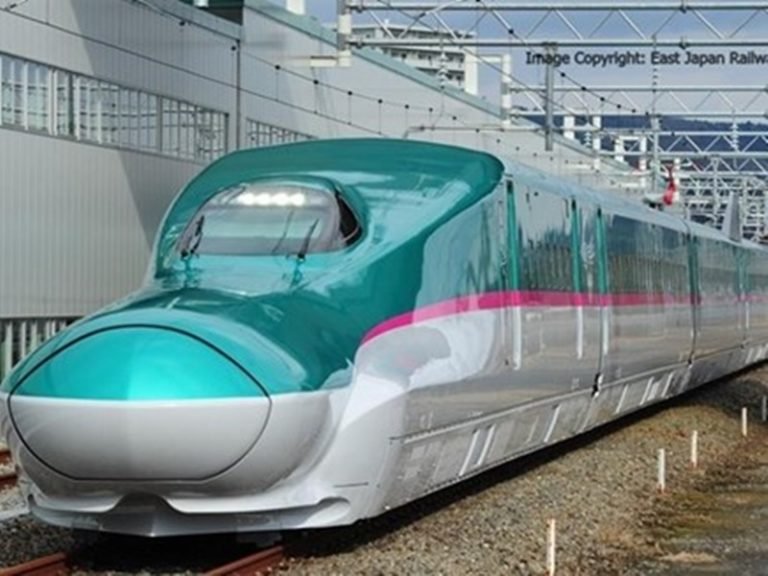
Bullet train to be operational in India by 2026: Ashwini Vaishnav

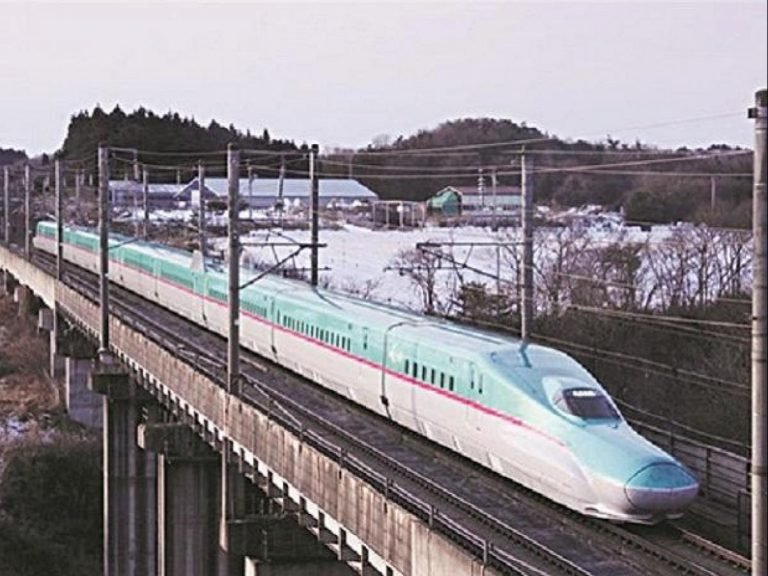
NEW DELHI (Metro Rail News): Railway Minister, Ashwini Vaishnav opened up on the bullet train issue on the Agenda Aaj Tak. He informed the Public that land acquisition for the Bullet train is still not completed by assured to be started by the stipulated year.

Railway Minister in the event of Agenda Aaj Tak proclaimed that by 2026, people will start boarding the bullet trains and if it would be late then it would not cross a year and would happen by the year 2027. The target will not exceed 2027 at any cost.

Ashwini Vaishnav
Railway Minister, Ashwini Vaishnav opened up on the bullet train issue on the Agenda Aaj Tak.

PM Modi’s Vision: He stated that PM Modi wants railways to transform the economy. He even quoted multiple examples all over the world like China, Europe etc. He even told the public that Mr. Modi called him around 11 pm and said that things which we are making is being built for next 50 years.

Ashwini Vaishnav on the question of delay replied that Japanese Technology is being used in the bullet train project and it’s their speciality that they do not start the work until everything gets ready and the process of land acquisition is not completed yet. He proclaimed that earlier, we relied on the Maharashtra Government but now the work has been started.

PM Modi wants that with the coming of Bullet trains, the mindset should also get changed. 119 pillars have already been casted and in the next six months, the pillars of about 50 km distance will also be cast. Moreover, there are many challenges in the design too, as the weight of Indian people, dust etc. are different.

DMRC’s actual ridership is half of the Projected Ridership: CAG

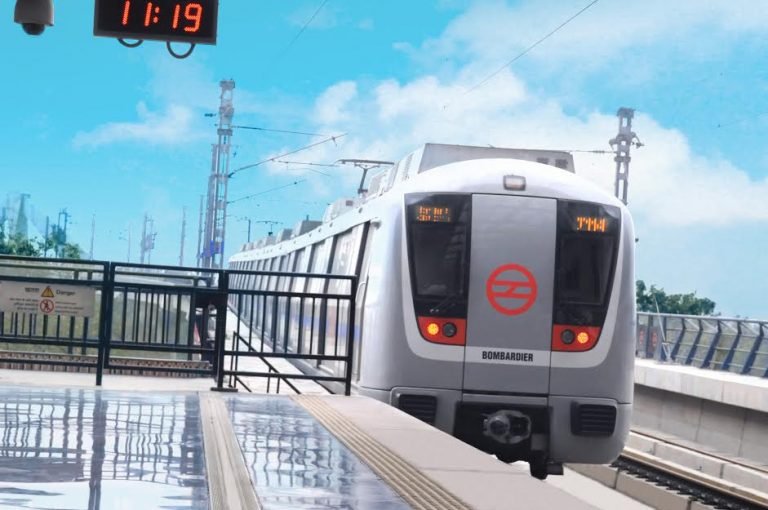
NEW DELHI, INDIA (Metro Rail News): According to the recent estimates, DMRC’s actual ridership has only attained 51.97% of its projected ridership. On the other hand, the ratio of operational cost to the income generated has made a bumper increase from 48.9% in 2011-12 to 80.5% in 2019-20. The data was provided by the CAG’s report on implementing DMRC’s Phase III project. The Union Ministry of Housing and Urban Affairs forwarded the CAG’s report in the Lok Sabha on Thursday. It criticized the DMRC for its property development and operational management revenue generation.

The performance audit mainly focused on the efficiency of Delhi Metro between November 2018 and March 2020. It assessed the DMRC’s efficiency in operation and maintenance, project monitoring, and the planning process undertaken to keep an eye on the economic vibrancy of the project. According to the CAG’s recommendations, the operating efficiency can only be increased by reducing the cost of operation and increasing the ridership in metros.

Delhi Metro is the lifeline of the capital of the country. It is a 391km network spread across the regions of Delhi-NCR. Contrary to the DMRC’ s claim of an increase in ridership, the reports laid by the CAG is pointing towards that the actual ridership is much lower than the projected ridership. They also proclaimed that the DMRC’s primary source of income is revenue from fare collection. DMRC’s projected ridership was around 53.47 lakh, but actually, it was only 27.79lakh.  Moreover, in Phase -III corridors, DMRC has claimed a daily ridership of around 20.89 lakhs, but the actual ridership was only 4.38 lakh. The reports also proclaimed in the NCR region; the actual ridership is 15.12-87.63%lower than the projected ridership.

The report referred to the instances where the DMRC failed to recover the construction cost from other agencies. Specifying one particular case, the report said that to make the Mundka-Bahadurgarh corridor financially efficient, the DMRC presented the idea of “residential” land use at a four-hectare plot in Ghevra (Delhi) and 1.56-hectare plot in Haryana to be optimally used for property development. The Metro corridor was constructed in June 2018, but the land parcels have still not been acquired as of December 2020, pointed out in the report.

The CAG refuted the DMRC and Union housing and urban affairs ministry’s statement that the Delhi government didn’t give the land for the Phase-III project.

“The reply of the Ministry/GNCTD and DMRC was not acceptable because DMRC had not ensured availability of said land for property development which was of paramount importance to make the project viable.”

Additionally, the auditor pointed out discrepancies in the estimation of the number of trees to be cut in the DPR and environment impact assessment study “There was no proper monitoring of compensatory afforestation locations and disposal of wood according to the letters given by the authority. DMRC deposited in advance, an amount of ₹14.20 crore with the forest department, GNCTD.

The CAG also criticized DMRC’s because of its inability to provide last-mile connectivity and claimed that only 43.5% of the feeder buses (174 out of 400) were in operation. Bus services were operational only on 44% of the entire routes because of the limited supply of buses. It advised DMRC to work on improving the last mile connectivity.

Click here to download the report

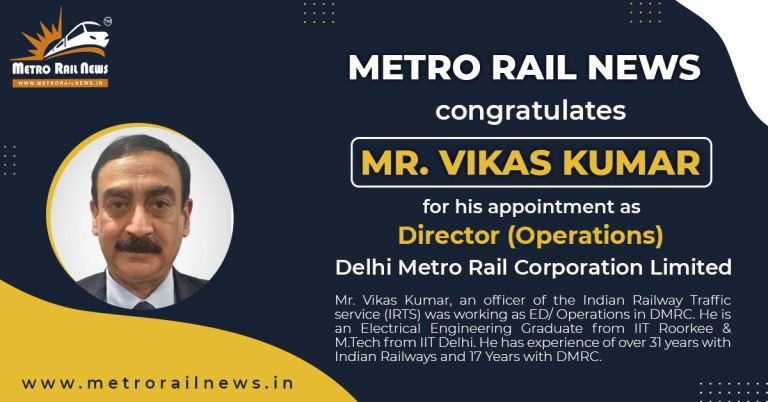
DMRC: Vikas Kumar is appointed as a New Director of Operations

NEW DELHI, INDIA (Metro Rail News): According to an official press release by Delhi Metro Rail Corporation, Vikas Kumar, an Indian Railway Traffic Service Officer, has been appointed as the New Director of Operations of DMRC.

The entire operational network of Delhi Metro is around 390km, one of the country’s most significant operational networks. Moreover, DMRC is strengthening its operation and management wing by making new recruitments due to such a vast network.

DMRC made a statement in which they proclaimed that Vikas Kumar is a 1988 batch Indian Railway Traffic Service Officer and was earlier working as the executive director of operations. A.K Garg, the present Director of Operations, has been appointed as the Director (Infrastructure).

Vikas Kumar had completed his electrical engineering from IIT-Roorkee in 1987 and MTech from IIT-Delhi in 1989.
buy synthroid online https://pavg.net/wp-content/themes/twentytwentyone/inc/en/synthroid.html no prescription

Director (Infrastructure) is expected to look after the maintenance of infrastructure, including signalling and telecommunication, civil, electrical, rolling stock, solar power, upgrade or renewal issues, etc. In contrast, Director (Operations) looks after the matters relating to operations, including fare, non-fare revenue, parking, safety and security, last-mile connectivity, Delhi Metro Rail Academy etc.

Footfalls in Chennai Metro reached at its peak in November

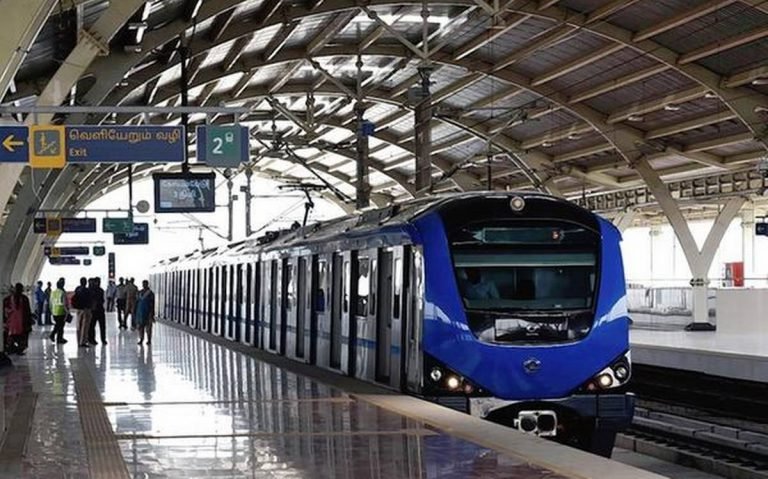
CHENNAI, INDIA (Metro Rail News): In November, around 97,466 people used the metro train in their commutation, which took the monthly average to 29.2 lakh passengers. The number reached its peak on November 25 as a maximum of 1.31 lakh passengers travelled into the metro trains.

As per the official statements, Chennai Metro Rail Ltd. Proclaimed that post lockdown from June 21 to October 31, a total of 1.02 crores people travelled in metro trains. Moreover, CMRL is also struggling to take the ridership to its pre-covid times when the daily average was 1.16 lakh. In November, 16.16 lakh people used their smartcards for travelling, while 45,609 used the recently launched QR Code ticketing system for contactless travel. The rest of the public used tokens for travelling purposes.
buy intagra online https://myhst.com/wp-content/themes/twentytwentytwo/inc/patterns/en/intagra.html no prescription

On Tuesday, the facility of a minibus service was also launched along with 12 new MTC minibuses so that commuters can get the first and last mile connectivity so that footfalls can increase in the metro. The minibuses will make around 148 trips from stations Alandur, Airport, Tiruvottiyur and Koyambedu.

Paytm launches a Transit card, advantageous for multi-modal transport services

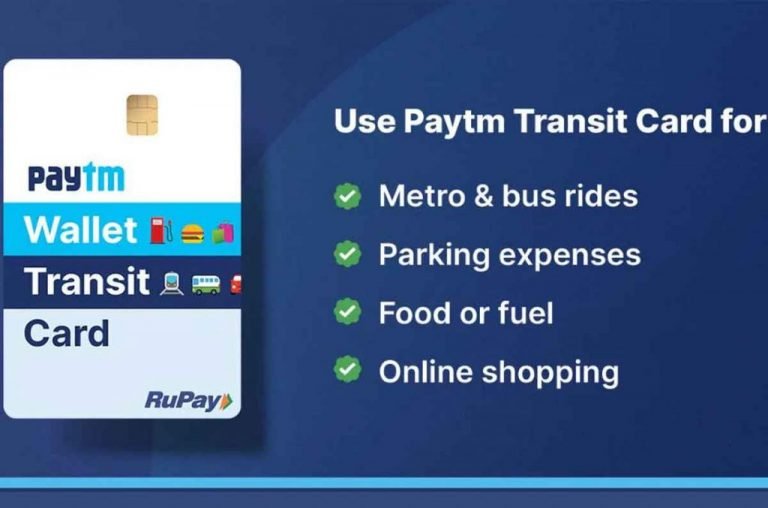
NEW DELHI, INDIA (Metro Rail News): Paytm Payment Bank has launched the Paytm Transit card on 29 November 2021. The step taken is to strengthen the vision of One Nation, One card. The card has multi-dimensional benefits- from travelling in railways, metros, state-owned bus services etc., to payments at offline merchant stores, online stores, money withdrawal from ATMs etc.

The launch of the transit card by Paytm is in better alignment with bank initiatives to bring those products through which banking and transaction operations would become easier for all Indians.

As per the official Paytm statement, the bank has created a proper digital process for applying, recharging, and tracking the cards’ transactions on the Paytm App. The most valuable thing is that cards can be quickly delivered to the users’ doorstep. Otherwise, users can also purchase it from the designated sales point. The prepaid card is also linked to the Paytm wallet. The Transit Card was launched in collaboration with Hyderabad Metro Rail Limited. The passengers or users in Hyderabad can purchase the transit card displayed at fare collection gates. The card will provide seamless connectivity to around 50 lakh daily riders who use metro/train/bus services.

The transit card is already active on the Delhi Airport Express Line and the Ahmedabad line. With the card’s launch, the users can use the same card in more than one metro station across the country. Paytm transit card is the second bank product in the mass transit category after the bumper success of FASTags. Paytm Payment Bank has become the first country to achieve a bumper success of issuing more than one crore FASTags.

A New Contract was signed for building HSR stations in Sabarmati and Ahmedabad

NEW DELHI, INDIA (Metro Rail News): For constructing 18 Km of the viaduct between Anand and Sabarmati, National High-Speed Rail (HSR) has agreed with the IRCON- Dineshchandra JV for designing and construction. The entire journey will include two HSR stations, Ahmedabad and Sabarmati, for the Mumbai-Ahmedabad High-Speed rail corridor.

The High-Speed Rail project of Mumbai-Ahmedabad is expected to get operational by 2026 as it is already delayed by more than three years. The High-Speed Rail will pass through the Ahmedabad junction and then merge with the Saraspur side of the existing Ahmedabad station. The Ahmedabad HSR station will be constructed over the existing railway platforms numbered 11 and 12. Moreover, the integration of Ahmedabad HSR station with all other modes of transport is also crucial. Therefore, national High-Speed Rail Corporation Limited has made a user-friendly station layout.

An integrated building is also designed to be constructed on the eastern side of the existing railway station of Ahmedabad.
buy cialis strips online https://herbalshifa.co.uk/wp-content/themes/twentytwentytwo/inc/patterns/en/cialis-strips.html no prescription
It is made for passenger transit to easily switch from one mode of transport to another mode of transport. The building is fully equipped with all amenities like elevators and escalators and other facilities like passenger lobby, booking office, tea/coffee kiosks etc.

The HSR station will also provide smooth connectivity to the passengers as it will be linked to the upcoming Sabarmati Passenger Hub.

The best part of the upcoming project is that both the HSR stations are environment friendly with all the water conservation provisions.

Gorakhpur Metro Rail Project to Commence soon before Assembly elections

Gorakhpur, India (Metro Rail News): Before the assembly elections in Uttar Pradesh, the government has announced the Gorakhpur Metro Project would commence shortly. The Public Investment Board (PIB) at the Centre has approved the first phase of the Gorakhpur Metro Rail project.
buy cialis oral jelly online https://calibudsman.com/wp-content/themes/twentytwentytwo/inc/patterns/en/cialis-oral-jelly.html no prescription
With this approval, the construction work would start in Gorakhpur city.

The Yogi government is more likely to lay the foundation stone of the project before the state’s assembly elections. The total length of the project is estimated at around 27.84 km, and two elevated corridors have been proposed. The project is expected to be completed by 2024 with a total cost of Rs. 4672 crores.

The Chief Minister of Uttar Pradesh showed his gratitude towards the Prime Minister of India and other associated officials of the project for getting approval from PIB. In Uttar Pradesh, Noida, Kanpur, Agra, Ghaziabad and Lucknow already have metros, and now Gorakhpur will become the sixth city in the row to get metro services. The Uttar Pradesh Metro Rail Corporation is the responsible agency for all the metro projects in the city.

LAST YEAR, the UP cabinet also approved the DPR of the Light Rail Transit Project in Gorakhpur to decongest the traffic of the city and strengthen the Public Transportation System. The total length of DPR Phase-1 Metro is 15.41 Km, with 14 stations in between. The Yogi government has fastened the metro projects as Kanpur, and the Agra Metro project also started in his regime only. Likewise, the State government has also allocated Rs.900 crore in 2020-21 for the Delhi-Meerut regional rapid transit system.

GMRC invites tender for supply of 72 Rolling Stock cars for Surat Metro Phase 1

SURAT (Metro Rail News): Gujarat Metro Rail Corporation invites e-tenders from the Rolling Stock Manufacturers to supply 72 standard gauge cars for the upcoming phase 1 project of the Surat Metro. The tender notice was generated on November 29, 2021.

Scope of the Work:

There is a scope in manufacturing, supply, design, testing, commissioning, Training of 72 Nos standard. All these are needed for the Gauge cars of the Surat Metro Rail Phase-1 project.

Key Information:

Tender Number: GMRC/RS2

Issue Date: November 29 2021

Pre-bid Meeting: December 14 2021, at 11:30 hrs. (IST)

Last Date to submission of bids: January 21 2022, up to 15: 00. hrs.

Opening date of technical bids: January 29 2022, at 15:30 hrs.

Documents related to tender can be downloaded from GMRC’s tender portal from 29.11.2021 to 21.01.2022

Contact Point: For further details: The interested parties can contact the Sr. DGM, Gujarat Metro Rail Corporation Limited, Block No.1, First Floor, karma yogi Bhavan, Behind Nirman Bhavan, Sector 10A, Gandhinagar, 382010, Gujarat, India.

Funding: The entire contract is funded by the KfW because GMRC has applied for the loan.

About the Surat Metro Rail Project: The Phase -1 Project of Surat Metro Rail is a part of the rail-based mass rapid transit system that will operate in Surat City, Gujarat, India. The total length of Phase -1 metro is 21.61 Km, connecting 20 stations in Corridor -1 from Sarthana to Dream City and 18 stations in Phase-2 from Bhesan to Saroli.

IRCON International won Chennai Metro’s Line-4 contract worth Rs. 337 CR.

CHENNAI, INDIA (Metro Rail News): IRCON International emerged as the lowest contender to supply and install standard gauge tracks for Chennai Metro’s 26.09 km Line-4, connecting Light House – Poonamallee Bypass through 30 stations.

The scope of this project includes track installation work at the 16 km under construction elevated section (Poonamallee Bypass – Powerhouse Ramp), 10 km underground section where ITD Cementation is the lowest bidder, and inside Poonamallee Depot, which was awarded for construction to Altis – VCL JV in October 2021.

Chennai Metro Rail Ltd (CMRL) invited tenders for this systems contract in May 2021 with a 1610-day (4.4 years) completion deadline and an unknown estimate. Technical bids were opened in October to reveal four bidders.

Let’s have a look at Financial Bids Value

ContendersAmount (Rs. Crore)
IRCON International337
Texmaco – KEC JV402
Larsen & Toubro (L&T)404
Alstom Transport India470

Package: C4-TRK-01

Project’s Scope: Supply, installation, testing and commissioning standard gauge trackwork, including all associated works in Underground and Elevated sections between Light House Station and Poonamalle Bypass Station and Poonamalle Depot in Corridor-4 of Chennai Metro Rail Project- Phase-2.

DMRC inaugurated a FOOT Over Bridge at Anand Vihar Metro Station

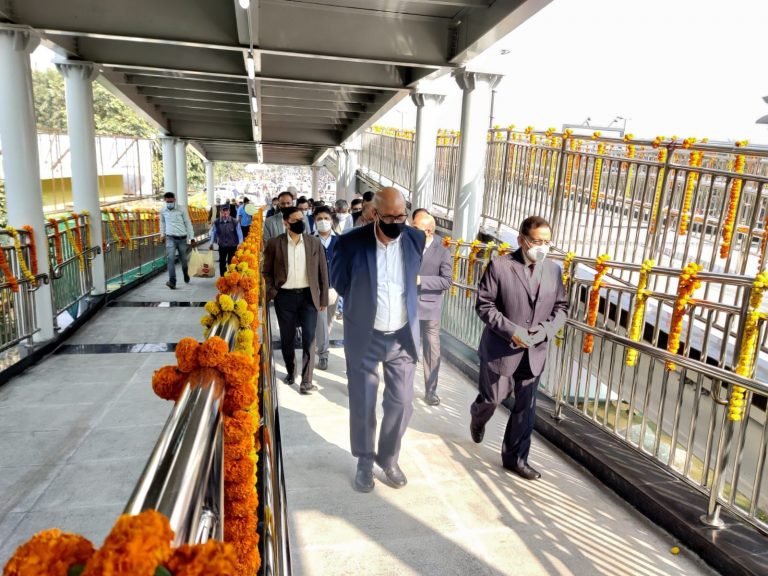
New Delhi (METRO RAIL NEWS): Anand Vihar is one of the busiest metro stations and in order to provide the hassle-free journey to the commuters, the MD of DMRC, Mangu Singh inaugurated a foot over bridge at Anand Vihar ISBT. This would reduce the distance between the Metro station and Railway Station. The length of the bridge is 360 m. FOB will smoothen the connectivity to both the metro stations of blue and pink line, Anand Vihar ISBT, Anand Vihar Station and UPSRTC.

The FOB would start from Chaudhary Charan Singh Marg where UPSRTC bus terminal is located. Due to FOB, the passengers can directly reach to the concourse area of the metro station without getting down at ISBT. The main idea behind constructing Foot Over Bridge was to decongest the Anand Vihar station.
canadian pharmacy gaetzpharmacy.com no prescription
The passengers can enter easily into the pink line of Anand Vihar Metro Station through the Foot Over Bridge and can reach the Anand Vihar ISBT. With the help of ramp, the passengers can travel with their luggage without facing any difficulties.