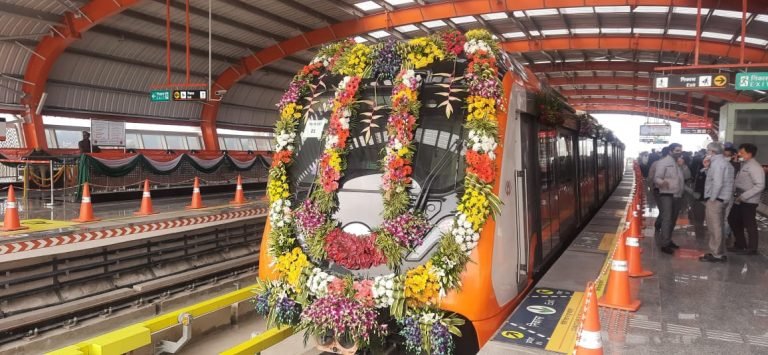
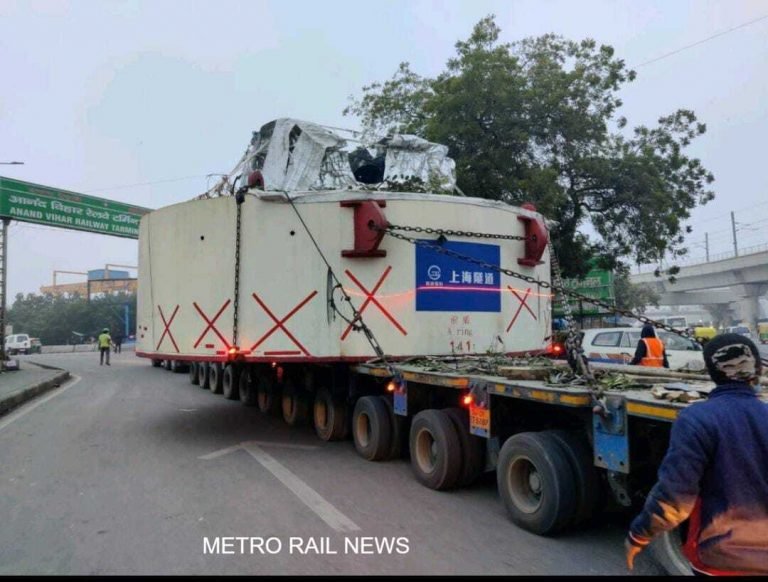
New Delhi: Prime Minister Narendra Modi has flagged-off the Delhi-Faridabad Metro Line that would allow hassle free travel for around two lakh daily commuters between the national capital and the industrial hub in Haryana.
The extension of the Delhi Metro connects Badarpur to Escorts Mujesar in Faridabad.
The total cost of the project from Badarpur to Escorts Mujesar is nearly Rs. 2,500 crore. Out of this, Rs. 1,557 crore was borne by the Haryana Government, the Centre contributed Rs. 537 crore, while the Delhi Metro provided Rs. 400 crore.
All these are elevated and located on either side of the Delhi-Mathura Road (NH-2).
“The nine-station metro corridor which was 95 per cent indigenously built will provide people a safe, affordable, quick, comfortable, reliable, environment-friendly and sustainable transport facility,” a Haryana government spokesperson said.
Haryana Chief Minister ML Khattar, addressing a press conference on Saturday, had thanked the Prime Minister for “gifting” the Metro service which would take the city to “another level of progress” with better connectivity with other NCR towns.
He had also said that the Prime Minister would be announcing the go-ahead for connecting Gurgaon with Faridabad by Metro.
Metro Rail News Managing Editor Mr. Narendra Shah conducted an email interview with Mr. Siddhartha Chatterjee, Principal Engineer (HOD) at Louis Berger India Pvt. Ltd. During this conversation, Mr. Chatterjee shared the journey and its prospects. Here’s the edited excerpt:
Q.01. Tell us something about the project – BG Rail Link between Rishikesh to Karnaprayag (Package 3) that you are leading for Louis Berger?
Rail Vikas Nigam Limited (RVNL) has spearheaded the implementation of the construction of the new 125 km long Broad-Gauge railway line from Rishikesh to Karnaprayag in the State of Uttarakhand in India. This new rail link will facilitate vastly improved mobility and connectivity for the residents of the State, in particular for those living in the mountainous areas and for those visiting the State for tourism and religious purposes. As you are aware, the new rail line will also cover the area known as “Char Dham” – the four highly sacred temples. The design and construction of the new line is being implemented in eight packages. Louis Berger SAS in a consortium with lead partner Geodata has designed the 14.263km long section of the line included in Package 3 and is presently supervising the construction of the same. This package includes over 9km of tunnels and 4 bridges (Bridge nos. 4 to 7). Of these, we have showcased “Bridge No. 6” in Bentley’s “The 2021 Going Digital Awards in Infrastructure”.
Q.02. What makes the project so unique and challenging, as we have heard about it on many occasions?
This project is unique and challenging in many ways –
It includes one of the longest railway steel truss bridges in India.
The project is located near the fault zone of the Himalayan region. Location wise it falls under the most critical seismic zone V as per the Indian seismological map. The near-fault effect is further assessed through a Site-specific Response spectrum. This has further enhanced the magnitude of the seismic force for design.
There is very limited space available closer to the abutments to carry out bridge launching related activities. In addition, launching will be conducted over live traffic adjacent to abutments with very limited space.
The steep and rugged mountainous terrain posed significant design challenges, especially foundations. Innovative bridge construction techniques had to be formulated.
Q.03. What, according to you, have been the biggest challenges before you in this project? What for you is the completion status of the project. Would you please tell us specifically? Is there any task that remains incomplete from your side that might cost any delays for the project?
The design of a steel truss bridge of 125m in a very high seismic zone in itself is a very challenging task. In addition, it is located in very difficult rugged terrain where construction is extremely challenging. Hence, developing designs suited to the rugged mountainous terrain with construction-friendly and innovative techniques was a major challenge.
As of date, the design of all project components is complete, and GFC drawings have been issued. As far as construction is concerned, foundation-related activities are ongoing at site along with fabrication of steel truss at fabrication yard.
With the design being completed and the construction of most foundations in progress, no cost escalation is foreseen.
Q.04. How important would this Rail Line Link be strategically for the country apart from tourism and Char Dham Yatra that it will certainly boost?
This new rail link between Rishikesh to Karnaprayag will undoubtedly boost tourism, and it will be a boon for people travelling for the ‘Char Dham Yatra’. In addition, it is significantly going to improve India’s strategic position in border areas because the rail link will provide a faster and more reliable mode of transport for the movement of goods and people.
Q.05. To what extent has your contribution towards the rail line link that is being developed strategically and economically important for the country? Is your work limited to designing and constructing of bridges and tunnels only for this project?
During the design stage, we endeavoured to develop optimum design solutions in terms of project cost, ease of construction, and the least possible impact on the environment, given the environmentally sensitive areas that the rail line will traverse. Our role is presently only for the design of all elements of the project, and subsequent project and construction management
Q.06. Which other major projects you are working upon of this magnitude and scale. Please tell us something about your company and your role in specific?
Louis Berger was founded in the United States in 1953 and, by December 2018, had grown into a US$ 1 billion global consulting engineering firm with over 6,000 staff worldwide. In December 2018, Louis Berger was fully acquired globally by WSP Global headquartered in Montreal, Canada. Today, we are therefore an integral part of WSP, with over CA$ 7.5 billion in annual revenues and over 55,000 professionals worldwide on six continents. WSP is ranked No. 1 in the world in transportation by ENR.
Across the globe, we provide a wide range of services from concept and feasibility studies, design, project management and construction supervision often extending into the O&M stage across diverse sectors including Transportation (Highways, Bridges, Tunnels, Rail, Metro Rail, Light Rail, High-Speed Rail, Aviation, Ports), Property and Buildings, Industrial and Energy, and Environment. We are “Future Ready” and aim to bring “Solutions for a Better World”.
Some of the other landmark ongoing projects of WSP/Louis Berger in India are as follows:
Mumbai Metro Line 3 (33km, fully underground)
Mumbai Metro Line 4 (30km, fully elevated)
Bhopal Metro & Indore Metro (60km in total, part elevated, part underground)
Versova Bandra Sea Link in Mumbai (17km of marine roadway bridges)
Mumbai Coastal Road with significant reclamation works, sea walls, complex interchanges and marine viaducts
Mumbai-Pune Expressway Missing Link with 11km of 4-lane twin tunnels and an iconic cable-stayed bridge of 350m main span
9km long twin roadway Tunnels under River Brahmaputra in Assam
Q.07. Louis Berger is one of the well known global companies in the field of engineering, architecture, structural engineering etc. What had been your experience taking up a challenging Indian project as such? Do you feel need of any addl. Technological upgrade required at your part?
Louis Berger has previously executed several rail, tunnel and bridge projects worldwide, including in challenging mountainous regions. This prior experience enabled Louis Berger to “hit the ground running” on this project, drawing on our experience and expertise across the globe. However, every project is unique in its own way and the present Rishikesh-Karanprayag project posed its own challenges, especially in terms of the high seismic zone and the difficulties anticipated with regard to construction, driving construction technique innovations. Therefore, this project has also been a learning experience, adding to our global knowledge database. With the acquisition of Louis Berger globally by WSP in December 2018, the experience database on similar projects has grown six to seven-fold. We seek continuous improvement, including the innovative use of newer technologies. We are working on introducing 5D BIM for smoother progress during construction on the present project.
Q.08. Is there any message you would like to give to our readers?
At WSP/Louis Berger, we believe in being fully accountable and taking full ownership for the work that we execute on our projects. We understand the responsibility we must bear in the design and project/construction management of public-sector infrastructure works, especially using taxpayer funds in the most optimum manner. We believe in bringing our “Future Ready” approach to our designs and processes, factoring in aspects such as climate change into our designs. Above all, we stand for “zero tolerance” where Safety is considered, operate with the highest integrity and ethics, and work towards ensuring the best quality.
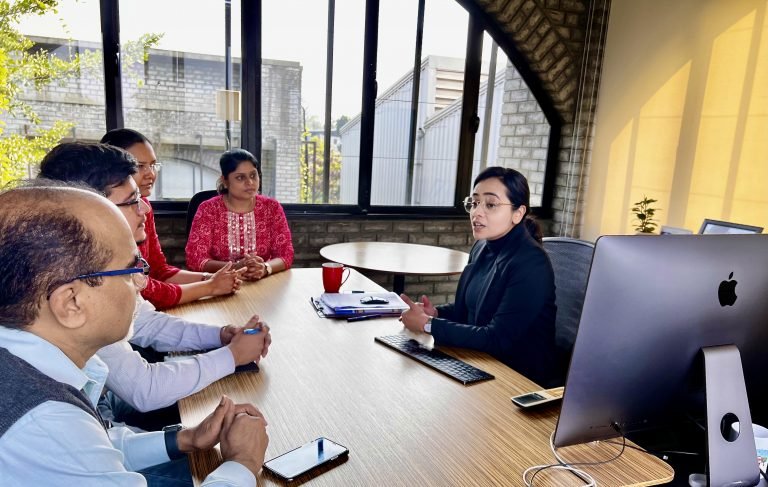
Metro Rail News Managing Editor Mr Narendra Shah conducted an email interview with Ms. Rajashri Teli, Joint Managing Director (J.M.D.), HYT Engineering. Ms Teli talks about her Journey and significant accomplishment so far. Here is the edited excerpt:
Q.1. Tell us something about your company which you are presently leading as the penultimate authority. What does it mean to you, and how does it feel. Kindly detail the OBS, including your position?
HYT engineering company Pvt Ltd was started in 1977 by our Chairman and My father, Mr Bhojraj Teli. HYT, since its inception, has always been involved in innovation and sophisticated technology.
HYTs two business verticals, one being manufacturing of special-purpose machine tools for rolling stock maintenance and the second being executing E.P.C. turnkey projects for railways, are both highly demanding and technology-driven verticals.
Till date, HYT has supplied over 800 machines to the railway sector and has more than 20 ongoing projects in the E.P.C. sector.
HYT proudly holds 99 % of the market share in Indian railways in the supply of C.N.C. surface wheel lathes and C.N.C. underfloor wheel lathes.
I joined the organisation in 2011 and became the whole time director in 2013. In 2021 I was appointed as the joint managing director.
I am equally proud and ecstatic to be leading this organisation. Proud because HYT’s products and projects are ultimately building the nation and its economy, ecstatic because over the years HYT has built a very strong technical base and tremendous market goodwill. The future possibilities for the company within India and globally are boundless.
HYT’s vision is to build railway projects, supply machine tools worldwide. Be Nation’s No. 1 project execution company and global leader in manufacturing special-purpose machine tools. Our products and projects are smart, economical and eco-friendly.
We aim to do so by developing SMART, Economical and Eco-friendly machines and Projects
Q.2. You have also worked as Vice President SAFOP S.R.L. Please tell us something about the company. Is it a separate entity, a different firm or organisation or the conglomerate of the company you are presently working as vice – president?
SAFOP S.R.L located in Pordenone, Italy, is a separate corporate entity and a 100% subsidiary of HYT engineering company, India. With a manufacturing facility of 24,000 sq. mt., SAFOP has a history of almost 100 years. Like HYT It is also a special purpose machine tool manufacturing company. It has supplied over 1400 wheel maintenance lathes, 32 ft large lathes, balmatic machines to to Energy, Steel, Paper, Oil, Aerospace, Shipyard and Heavy Industries around the world. SAFOP has a strong market base in U.S.A., Europe and Russia.
SAFOP S.r.l became a 100 % subsidiary of HYT in 2019. There are so many learning lessons that I as a vice president have learnt from delegation of authority to process structuring, From complex manufacturing project planning to thorough prototype testing and much more. Together HYT and SAFOP aim to become the powerhouse of innovation, a hub for the exchange of ideas and the world leaders in development and su pply of machine tools.
Q.3. You are leading your family business now. May be it is a bigger responsibility to you. How are you taking this opportunity? Please tell us something about your major accomplishment or key success?
Well, I don’t like to look at it as a family business anymore. I look at the business as a professional who has got this tremendous opportunity to take the company forward to realise its full potential. Our moto at HYT is to make the company independent from its investors and to make it a process and data-driven company.
One of my biggest contributions to the company has been developing the organisation and making the units and departments self-driven rather than owner driven. This has improved the efficiency of the operations taking the company’s top line from Rs. 179.59 Cr. In 2015 to Rs. 505.84 in F.Y. 2020-21 with a very strong bottom line. Today HYT has a total team of 800 people, 5 manufacturing units in Pune, 11 service centres across India and branch offices in Delhi and Chennai. HYT has now been dynamically expanding in the exports division by recent supplies to south Africa, Bangkok and France. HYT has successfully completed the supply and commissioning of C.N.C. Underfloor wheel lathe machine in France for SNCF to maintain its highspeed trains.
Q.4. Would you like to share anything about your personal life, Your school days, education etc. Is there any dream you are too much pampered with and like to achieve in future?
I have always been patriotic. I always dreamt of joining the army or police force to serve my nation as a child. However, later in my teen years, my father explained the equal importance of building a nation as equal to protecting a nation.
That was when I realised how HYT engineering was helping the Indian economy by manufacturing import substitutes. Previously India imported wheel maintenance machines at huge prices. HYT indigenously developed these machines and offered them at very reasonable prices, which has ultimately led to saving hundreds of crores of foreign exchange for the country. HYT had adopted the “Make in India” right from 1991 when it manufactured India’s First made in India wheel lathe machine making the nation ‘atmanirbhar’ in wheel maintenance technology.
Q.5. Any failure or major setbacks in your career or projects supervised or taken. Would you like to speak of anything, If any?
A major challenge that I faced was back in 2013 when I was heading the company operations as a whole-time director at the age of 24. At that time, most of the organisation was comprised by senior staff whose work experience in HYT was more than my age. So their hesitance and doubt were natural. But their apprehensions soon changed when together as a team we led the company to a growth of 65 % over last 6 years.
A second major setback I faced was in 2017 while developing a prototype machine. Again, a lot of time, money and efforts were already lost, and this prototype had started looking like a failure. It took as multiple “put out the fire” meetings to resolve the defects but ultimately, the final output was a massive success.
The third and major setback was the pandemic. The uncertainty during 2020 and early 2021 had us wondering if HYT could come out on the other end. Nationwide lockdown followed by a slow economy and volatile market conditions were making our fears come true.
This was a tough time for us but we as an organisation were tougher due to which HYT not only survived but also grew further.
Q.6. As Joint MD what major activities you look after to in Hyt Engineering. How does the organisation plan to expand the business, keeping the professional standards and being at par with globally competitive engineering conglomerates?
Presently the key areas that I focus on are operations, financial planning, Product and business development. I have spoken previously about HYT’s boundless potential to grow. With a strong technological base serving as our advantage, we are in the midst of developing more advanced import substitute machines for the Indian railways, metros and Highspeed trains. Our new C.N.C. Tandem Underfloor Wheel Lathe is one such product. The Automatic axle measuring attachment to our Vertical turning lathes has completely eliminated human intervention ultimately leading to improved accuracy and effective time-saving.
Automation and digitalisation are important but it’s important to understand that the age that we live in is a service age. Service is pivotal. I believe a golden product has zero value if not coupled with services.
HYT has already been the pioneer in providing value-based services like “MAAS – machine as a service”, “industry 4.0” along with complete comprehensive services for our products.
With HYT’s wide and reliable service network we look froward to adding more service based offerings, fundamentally adding more value to our product and eventually benefiting the customer.
HYT has 20% of its revenue contributed through export sales and all the export machines are all C.E. certified, which makes HYT machines at par with the international standards. We have recently supplied underfloor wheel lathe machine to SNCF France with DEKRA accreditation for its highspeed trains, and we are proud to share that the machines is performing at its best.
Q.7. Could you explain to our readers about the tandem underfloor wheel lathe technology ?
CNC Tandem underfloor wheel lathe is an underfloor wheel lathe where two vehicle-mounted wheelsets can be simultaneously reprofiled in situ at the same time without removing the wheelsets of the rail/metros . The structure of the machine comprises of two under floor wheel lathes where one of the machine is fixed and the other is moving to accommodate variable center distance of the bogie .. Tandem underfloor wheel lathe Is the wheel lathe of the future and is specifically designed for the VandeBharat trains, Metros, Highspeed trains and the maintenance depots where high productivity is required with high number of wheelset profiling per day.
Q.8. What are the latest trends in the railway EPC industry?
Machine as a Service: Machines as a service is a prevailing business model and a better alternative for privatisation of maintenance process in the railway depots. In the model Machines of high value are leased for long term period inclusive of the operations, spares , manpower and guaranteed production is defined in the service contract . MAAS guarantees the output and maintenance. In this model, Railways provide the input Material and the MAAS service provider guarantees the production. Railways in india are adopting it predominantly to convert the CAPEX to OPEX.
Industry 4.0 – The maintenance depots of Railways and Metros are becoming smart day by day. Industry 4.0 is the enabler of enhanced control mechanisms, remote monitoring, predictive maintenance and superior safety features. The railways and metros have started adopting centralised and remote performance monitoring systems to have less dependency on traditional manual processes. This also reduces the requirement of manpower in maintenance yard and leads to manpower reduction and controlling the cost pertaining to spares and maintenance and also the breakdown time of machines.
Wheel Shop Automation for the Railway industry: The wheel shops of various railways zones should start implementing complete process Automation on its shop floor. Overhead gantries, Turntables, automatic measuring stations, CNC controlled and traceability solutions are the main enablers for the Successful automation of wheel shop. The resultant benefits of wheel shop automation are reduction in manpower , increase in the productivity of wheel shop.it also has many safety features to avoid accidents on the shop floor.
In an all together new development of its kind the UPMRCL (Uttar Pradesh Metro rail corporation) after the inauguration of priority corridor of Kanpur Metro on Dec 28th 2021 by Prime Minister Mr. Narendra Modi stated that trail run for priority corridor of Kanpur Metro beat Lucknow’s priority corridor trails by a margin of 69 days making Kanpur Metro the fastest developed Metro rail system in the country.
The unique record became the centre of attention also because the project was halted for four and a half months during the corona pandemic period. The Corporation claimed that it took 795 days for the Lucknow Metro to start. The construction of Lucknow Metro started on September 28, 2014, and trail run was conducted on December 1, 2016. While in Kanpur Metro project, the construction started on November 15, 2019, and first official trial will begin on Wednesday post flag off by Chief Minister Yogi Adityanath. In total, it took only 726 days for Kanpur Metro to start trials.
The Kanpur Metro could achieve the feat as per officials of UPMRC for following reasons:
Used of Double T-girders to erect the station concourse – It was for the first time in India for the Metro project that girders were pre-casted at the factory floor and then brought to the construction site which was installed with the help of heavy lifter cranes. This method helped to save time.
Utilizing the vicinity and non-congestion of lockdown – For Kanpur Metro the corona pandemic lockdown was utilized as an opportunity by expediting the construction in those areas of the Metro corridor which were often heavily congested during normal days. In order to ensure that labour were available during the corona pandemic, a labour colony was constructed. Facilities like food canteen, shelter with attached toilets and drinking water facilities were provided. Although, the project was halted for four and a half months in the pandemic arrangements were made for transportation facilities for those labourers who wanted to visit their villages to meet their dear ones. Such steps helped building the confidence and motivated the labourers to return and work for the project helping to complete it in a record time.
Clear understanding with construction contractors – Confidence of construction contractors was gained. If the contractors had any issue, be it financial, material or anything else the contractors were asked to directly contact senior officials for immediate remedies.
Maintaining a uniform standard for the entire project — A uniform standard for entire project has been maintained which means that almost every girder or pillar is similar, which helped contractors to expedite the construction fast.
Kanpur Metro priority corridor is 9-km-long and stretches between IIT-Kanpur and Motijheel with nine stations, while Lucknow Metro trail stretch had eight stations in 8.7- km-long stretch between Transport Nagar and Charbagh.The Kanpur Metro project is funded by the European Investment Bank. Around 650 million euros (Rs 11076.48 crore) are being pumped into the project to construct two corridors, including a 23.7-km-long stretch between IIT-Kanpur and Naubasta and 8.6- km-long stretch between Agriculture University and Barra- sector 8. The entire cost of the Kanpur Metro project is expected to be realised within five years.
Detail
Kanpur is arguably the biggest industrial city in Uttar Pradesh. Spread across 300 sq kilometres, the city has grown at a tremendously pace, with its current population hitting over 30 lakh people. With an aim to provide Kanpur with planned development, a city that also has enormous historical and religious importance, the Kanpur Development Authority (KDA) was constituted under the UP Urban Development Act, 1973.
Prime Minister Mr. Narendra Modi inaugurated the completed section of the Kanpur Metro Rail project at around 1.30 pm, on December 28, 2021. The PM inspected the Kanpur Metro Rail Project and took a metro ride from the IIT metro station to Geeta Nagar. The completed nine-km stretch of the Kanpur Metro, is from IIT-Kanpur to Moti Jheel. Stations on the Kanpur Metro priority section, which was completed in a record two years’ time, include IIT-Kanpur, Kalyanpur, SPM Hospital, Kanpur University, Gurudev Crossing, Geeta Nagar, Rawatpur, GSVM Medical College and Moti Jheel
Once fully operational, the Kanpur Metro would provide residents of the city access to a world-class transport system. Kanpur, an industrial city in Uttar Pradesh is home to over 41 lakh people and tit population is expected to reach 46.3 lakhs in 2021, making the metro network a much-needed infrastructure project. To deal with the problem of rising number of registered vehicles in Kanpur and to provide efficient connectivity to its citizens, the authorities envisaged the construction of the Kanpur Metro. Even though building a mass transit transport network in one of the oldest industrial and densely populated cities is no ordinary feat, this dream is set to become a reality for the citizens of Kanpur. Here is a look at all the important details of the Kanpur Metro.
Project
The Uttar Pradesh government approved the Kanpur Metro project in 2016, while the centre gave a go-ahead to the project in 2019. The Kanpur Metro is jointly financed by the centre and the Uttar Pradesh government.
The detailed project report for phase-1 of the Kanpur Metro was approved by the Uttar Pradesh cabinet in March 2016. The project is being implemented by the Uttar Pradesh Metro Rail Corporation Limited (UPMRCL). The Kanpur Metro is also the first metro rail network in India to use double T-girders for a metro rail corridor, cutting down cost and time spent.
Route
The entire Kanpur metro route will be built in two phases. Under Kanpur Metro phase-1, a network spanning 32.385 kms will be built with two lines – the Red Line and the Blue Line. These lines will connect major public nodes and city cluster areas of Kanpur, thus, cutting down vehicular traffic and pollution. The transport network will also push demand for residential and commercial spaces along these corridors.
Metro Stations: Phase-1
Under phase-1, two corridors of the Kanpur Metro, the Red Line and the Blue Line will be built. The DPR for phase-1 pegs the total daily ridership in 2024 (when the proposed lines will be fully operational) at 9.4 lakhs, 10.8 lakhs in 2031 and 13.5 lakhs in 2041.
Metro Route Red Line
To run between IIT Kanpur and Naubasta, the 23.785-km Red Line of the Kanpur Metro will have 22 stations. While 15.164 kms of this line would be elevated, the remaining 8.621 kms will be underground.
Station list on Red Line
IIT Kanpur
Kalyanpur Railway Station
SPM Hospital
CSJM University
Gurudev Chauraha
Geeta Nagar
Rawatpur Railway Station
Lala Lajpat Rai Hospital
Moti Jheel
Chunniganj
Naveen Market
Bada Chauraha
Nayaganj
Birhana Road
Kanpur Central Railway Station
ISBT Jhakarkati
Old Transport Nagar
Kidwai Nagar North
Kidwai Nagar South
Yashoda Nagar
Baudh Nagar
Naubasta
Stations on 9-km priority corridor
IIT-Kanpur
Kalyanpur
SPM Hospital
Kanpur University
Gurudev Crossing
Geeta Nagar
Rawatpur
GSVM Medical College
Moti Jheel
The Red Line, with 14 elevated and eight underground stations will pass through the heart of the city, covering several prominent nodes and educational institutions in Kanpur, which is counted among the most populous Indian cities and the largest one in Uttar Pradesh. While work on Kanpur Metro Red Line is scheduled to be completed by December 2024, operation on priority corridor has been started from December 2021.
Blue Line
This 8.6-km elevated Blue Line corridor of the Kanpur Metro will run between Chandra Shekhar Azad University and Jaurali. The Blue Line will have a total of nine stations. The tender for this project is yet to be passed. The corridor, with elevated and underground stations, will provide connectivity to various densely-populated residential areas in Kanpur, including Kakadeo and Govind Nagar.
Metro Stations on Blue Line
CSA University
GSVM Medical College
Rawatpur Railway Station
Kakadeo
Vijay Nagar
Dada Nagar
Barra-7
Barra-8
Jarauli
Estimated Cost
The estimated cost of the Kanpur Metro project is Rs 11,076.48 crores. The project is expected to be completed in five years. About 40 lakh people are expected to be benefitted by the new metro rail project.
Kanpur Metro work progress
2015
September: Kanpur Metro Rail Corporation formed.
November: DPR for phase-1 is submitted to the state government by LMRC and RITES.
2016
March: Uttar Pradesh government approves phase-1 DPR.
October: Following the centre’s approval for the project, the former urban development minister, M Venkaiah Naidu, laid the foundation stone for the project along with the then Uttar Pradesh CM Akhilesh Yadav, at Brijendra Swaroop Park in Benajhabar.
2017
July: Civil work started for phase-1.
September: Centre seeks changes in the DPR.
December: New DPR is prepared.
2018
March: Uttar Pradesh cabinet approves Kanpur Metro project.
June: Finance Ministry gives in-principle approval to the Kanpur Metro.
September: DPR sent to the central government.
2019
February: Uttar Pradesh allocates Rs 175 crores in its budget, to start preliminary work; Centre approves Kanpur Metro project.
March: PM Narendra Modi lays the foundation stone for the Kanpur Metro project.
July: LMRC invites tender for construction of elevated track and stations.
September: Afcons Infra awarded tender to construct nine stations along with tracks and elevated viaduct.
November: CM Yogi Adityanath inaugurates civil work for the Kanpur Metro.
2020
February: CM Yogi Adityanath allocates Rs 358 crores towards Kanpur Metro phase-1.
September: EIB to invest 650 million euros for the project.
2021
February: Uttar Pradesh budget 2021-22 allocates Rs 597 crores for Kanpur Metro Rail Project.
May: Initial work starts for the 8.621-km underground section of Kanpur Metro.
June: UPMRC completes the track laying work for a stretch of around one km, from IIT Kanpur to Kalyanpur Railway station for the priority corridor.
The nine-km stretch from IIT-Kanpur to Motijheel, which became operational on 28th December 2021 is part of the Red Line and it will connect some landmarks in Kanpur. It is termed as the priority corridor. Recall here that Noida, Ghaziabad and Lucknow are among the cities in UP with an operational metro network.
Summary
While the entire project would take time to be completed, the government decided to proceed with the priority stretch, where the metro project is needed the most to relieve the city of traffic congestion. This priority stretch consists of nine metro stations. The second stretch of Kanpur metro would connect Motijheel to Transport Nagar area, which is scheduled to have under-ground stations.
The plan is to run six metro trains on the 9km stretch of the priority corridor in the initial phase and then add another six more trains. The project is unique in terms of using new technology. The ‘regenerative braking’ technology used in the project will save energy. It would ensure that for every 1000 units used, about 35 to 45 per cent units would be regenerated. The Kanpur Metro rail project, among other things proposes to provide about 56 USB charging points per train, talk-back button in case of emergency, long stop request button for the differently-abled. Further the train plans to use 100 per cent LED lights to reduce energy consumption. It would also have LCD panels for infotainment, along with CCTV cameras.
According to a report by Oxford Economics, a global survey organisation, Vijayawada is one of India’s top ten fastest expanding cities. It is a well-known industrial city producing vehicles, agricultural products, and consumer goods. In addition, rice and sugarcane cultivation is extensive throughout the year, making the district one of the country’s wealthiest rice bowls.
Vijayawada, earlier known as Bezawada during British days, is the second-largest city of Andhra Pradesh State. It is located on the banks of the Krishna River, and the famous Goddess Kanaka Durga Temple situated on the hill overlooks the entire city. The city is blessed with ‘Prakasam Barrage’ built by Sir Arthur Cotton about 120 years back, converting the city and surroundings very fertile and lush.
The City and the Urban Agglomeration population is 14.91 lakhs as per census of 2011 and is growing at a fast pace in the advent of the formation of the New State of Andhra Pradesh. The population as per 2021 estimations is around 20.95 lakhs by taking the population of surrounding areas into account.
Vijayawada being situated in the middle of East Coast, connecting to North India through Central India, it has become the busy Railway junction having railway lines in five directions namely to Hyderabad, Chennai, Kolkata, Benguluru via Guntur and Machilipatnam. It is the highest earning railway station in Andhra Pradesh. The largest State transport bus station is also Vijayawada. Thus the city is well connected from all corners of the country and therefore has enormous pressure on the urban transportation within the city.
A World class mass rapid transit system, a metro rail system is a much-needed mode of public transport to meet the challenges of fast-growing traffic scenario in Vijayawada and the surroundings. Therefore, the Government has decided to introduce an elegant and modern Light Metro Rail system in the city. The Metro Rail System would provide the commuters a fast, convenient, safer, comfortable, efficient and reliable, pollution-free and eco friendly transport. This would enable the city achieve a sustainable growth from the social, economic and environmental perspectives.
On coming into commercial operations, the Proposed Light Metro System is expected to cater to a passenger capacity of about 5.0 lakhs daily in 2025 and gradually to increase to 12-15 lakhs by the year 2055.
Earlier in 2015, DMRC (Delhi Metro Rail Corporation Limited) recommended for introducing Medium Metro system in two smaller corridors in the core city, of a total length of 26 km only. However, the State Government decided to go for Light Metro system keeping in view of traffic demand during the next 30 years period and considering the travel needs to expand it to the Airport/Gannavaram on one side and to the new Capital City Amaravati on the other side.
Development
Ex-CM Mr. N. Chandrababu Naidu planned a new capital for Andhra Pradesh, he planned to develop Vijayawada as a smart city & rolled out plans for metro in the city.
The metro project is implemented by a special purpose vehicle named as Amaravati Metro Rail Corporation. Amaravati Metro Rail Corporation has been renamed as Andhra Pradesh Metro Rail Corporation Ltd after the Managing Director of AMRC suggested that it might be appropriate to change the name AMRC as APMRC so as to implement the Metro Projects in other parts of the State.
The Metro rail project was proposed by N Chandrababu Naidu to reduce traffic congestion in the city. The project was awarded to E.Sreedharan led Delhi Metro Rail Corporation (DMRC), keeping in view its successful execution of the Delhi Metro Rail project. Survey work for the project began in 2014. RVR Associates was appointed to conduct household and traffic surveys. After completing these two surveys, topographical, environmental and soil surveys were also conducted.
A detailed project report on the Vijayawada Metro was submitted by the Principal Advisor of DMRC, E.Sreedharan to the Chief Minister. As a result, the AMRC floated tenders for the construction of two lines for the project on 28 November 2016. Larsen and Toubro (L&T), Afcons Infrastructure Limited (AIL), and Simplex Infrastructures Limited (SIL) submitted bids for the project.
Detail
Vijayawada Metro is a proposed light rail transit system in the Indian city of Vijayawada. The system is proposed to reduce traffic congestion in the city and consists of three corridors constructed in 3 Phases. Phase-I covers 24.5 km, phase-ll covers 12.50 Km, and phase-lll covers 28 km. The project was estimated approximately Rs. 15,000 crore. It was proposed in the form of light Metro which consists of 3 coaches.
Network & Route
The proposed interchange of two lines is Pandit Nehru Bus Station (PNBS), a bus station located at the southern side of Vijayawada city and beside the Krishna River. The proposed first line will follow Bandar Road from Pandit Nehru Bus Station to Penamaluru via Mahatma Gandhi road and the second run from PNBS along Eluru Road to Vijayawada Airport via Vijayawada Railway Station. An extension to Amaravati (state capital) is proposed in a subsequent phase. The project does not serve One Town area, where commercial locations such as KR Market, Vastralatha and the temple of Kanaka Durga are located.
The total length of alignment in 3 directions would be 66 km, as per the details mentioned below.
Phase
Line
Length
Stations
1A
PNBS-Gannavaram
24.5 Km
22
1B
PNBS- Penamaluru
12.50 Km
11
2
PNBS- Amaravati
28 Km
18
Total
66.2 Km (Approx)
51 Stations
Funding
The corridor from Pandit Nehru Bus Station (PNBS) to Nidamanur is estimated to cost Rs. 969 crore (US$130 million), and the corridor between PNBS and Penamalur will cost Rs. 831 crore (US$110 million).
German bank KfW agreed to provide a loan of Rs. 2,500 crore (US$330 million) to the AMRC in February 2017. The Andhra Pradhesh Government had previously considered taking a loan from JICA, but chose not to, as JICA’s loan proposal mandated that 30% of the loaned amount should used to procure rolling stock from Japan.
Summary & Conclusion
Vijayawada Light Metro is a Light Rail Transit (LRT) system with 2 lines and 51 stations proposed to be built in the city of Vijayawada and Amaravati, the new capital of Andhra Pradesh, by the Andhra Pradesh Metro Rail Corporation (APMRC) earlier known as Amaravati Metro Rail Corporation (AMRC).
The project was originally conceived as a heavy-rail based mass rapid transit system (MRTS), and the Andhra Pradesh government signed an agreement with the Delhi Metro Rail Corporation (DMRC) to execute its 26.03 km Phase 1 project in September 2015.
The DMRC invited civil construction bids for both lines, but cancelled procurement due to its high cost and low ridership projections which were not in line with the Government of India’s new Metro Rail Policy
In 2017-18, the state government opted for a Light Rail Transit (LRT / MetroLite). It now plans to connect Gannavaram – Vijayawada – Amravati in 3 phases with a 66.2 km network at an estimated cost of Rs. 15,000 crore, based on a recommendation by the SYSTRA – RITES – GOPA JV which submitted its revised Detailed Project Report (DPR) in April 2019.
Key Features
Operational : 0 Km
Under Construction : 0 Km
Proposed : 66.2 Km
Vijaywada Metro Phase 1A Route
Line-2 : Pandit Nehru Bus Station (PNBS) – Vijaywada Airport at Gannavaram
Length : 25.90 Km
Type : Elevated (23 Km) & Underground (2.90 Km)
Number of Stations : 22
Vijayawada Metro Phase 1B Route
Line-1: Pandit Nehru Bus Station (PNBS) – Penamaluru
Length: 12.76 km
Type: Elevated
Number of Stations: 12
Vijayawada Metro Phase 2 Route
Line-2:Pandit Nehru Bus Station (PNBS) – Amravati Reservoir.
Length: 27.80 km
Type: Elevated (4.7 km) & Underground (23.1 km)
Number of Stations: 18
Station Detail
Phase 1A (Gannavaram to PNBS)
Name of Stations : Gannavaram Bus Stand, Gannavaram, Yogashram, Airport, Kesarapalle, Velpuru, Gudavali, Sri Chaitanya College, Nidamanuru Railway Station, Nidamanuru, Enikepadu, MBT Center, Prasadampadu, Ramavarappadu Ring, Gunadala, Padavalarevu, Machavaram Down, Seetharampuram Signal, Besant Road, Railway Station East, Railway Station South, PNBS.
Phase 1B (PNBS to Penamaluru)
Name of Stations : PNBS, Victoria Jubilee Museum, Municipal Stadium, Tikkle Road, Benz Circle, Auto Nagar, Ashok Nagar, Krishna Nagar, Kanuru Centre, Tadigadapa, Poranki, Penamaluru.
Phase 2 (PNBS to Amaravathi Reservoir)
Name of Stations : PNBS, Mahanadu, Krishna Canal Junction, Polkampadu, Undavalli Centre, Undavalli, Venkata Palem (East), Venkata Palem (West), Tallaya Palem, Mandadam, Uddandrayuni Palem, Lingaya Palem, The Square Station, Central Park Station, Ceremonial Space Station, Assembly Station, FG Station, GH Station, Amaravathi Reservoir Station.
The National Rail Plan – 2030, published by Indian Railways, discusses the future of Indian Railways, which the Ministry of Railways in India envisages for freight and passenger transportation in India by the year 2030. In addition, the transformational Plan of Indian Railways has been elaborately discussed in Nation Rail Plan Policy – 2030.
The plan is to create a ‘future ready’ Railway system by 2030. The NRP aims to formulate strategies based on operational capacities and commercial policy initiatives to increase the modal share of the Railways in freight. The plan’s objective is to create capacity ahead of demand, which would also cater to future growth in demand right up to 2050 and increase the modal share of Railways to 45% in freight traffic and continue to sustain it. All possible financial models, including Public-Private Partnership (PPP), are being considered to achieve this objective.
The main features of the National Rail Plan are:
Formulate strategies based on both operational capacities and commercial policy initiatives to increase the modal share of the Railways in freight to 45%.
Reduce freight transit time substantially by increasing the average speed of freight trains to 50Kmph.
As part of the National Rail Plan, Vision 2024 has been launched for accelerated implementation of certain critical projects by 2024, such as 100% electrification, multi-tracking of congested routes, upgradation of speed to 160 kmph on Delhi-Howrah and Delhi-Mumbai routes, upgradation of speed to 130kmph on all other Golden Quadrilateral-Golden Diagonal (GQ/GD) routes and elimination of all Level Crossings on all GQ/GD route.
Identify new Dedicated Freight Corridors.
Identify new High-Speed Rail Corridors.
Assess rolling stock requirement for passenger traffic and wagon requirement for freight.
Assess Locomotive requirement to meet twin objectives of 100% electrification (Green Energy) and increasing freight modal share.
Assess the total capital investment that would be required along with a periodical break up.
Sustained involvement of the Private Sector in areas like operations and rolling stock ownership, freight and passenger terminals development/operations of track infrastructure, etc.
Implementation of the NRP has already commenced. The Indian Railways has identified and prioritised a large number of projects designated as Super Critical, Critical and Coal/Port connectivity for completion as per the Vision 2024 document, which is a subset of the National Rail Plan.
RITES has developed the plan – AECOM JV with timelines and strategies for developing and upgrading the Indian Railways’ main-line, high-speed rail (HSR) system and dedicated freight corridors (DFCs).
RITES – AECOM JV started preparing the report back in December 2018 and the Ministry of Railways finalised it in January 2021 after taking recommendations from all stakeholders.
The timelines mentioned in it are odd and not aligned with what the National High-Speed Rail Corporation (NHSRCL) is already pursuing. For example, it suggests developing 6 corridors (eg. Mumbai – Nagpur HSR) with a target of 2051, but the NHSRCL has over the past 6 months already set into motion the development of their detailed project reports (DPRs) by awarding contracts for survey & traffic study work.
The detailed plan objectives shared by the Government are as under:
To create capacity ahead of demand by 2030, which in turn would cater to growth in demand right up to 2050 and also increase the modal share of Railways from 27% currently to 45% in freight by 2030 as part of a national commitment to reduce Carbon emission and to continue to sustain it. Net Zero Carbon emission by 2030.
A yearlong survey was conducted over hundred representative locations by survey teams spread all over the country to assess the actual demand in freight and passenger sectors.
Forecast traffic growth in freight and passenger year on year up to 2030 and on a decadal basis up to 2050.
Formulate strategies based on both operational capacities and commercial policy initiatives to increase modal share of the Railways in freight to 45% by 2030.
Reduce freight transit time substantially by increasing the average speed of freight trains from 22Kmph to 50Kmph.
Reduce overall cost of Rail transportation by nearly 30% and pass on the benefits to the customers.
Map the growth in demand on the Indian Railway route map and simulate the capacity behaviour of the network in future.
Based on the above simulation, identify infrastructural bottlenecks that would arise in the future with demand growth.
Select projects along with appropriate technology in both track work, signalling and rolling stock to mitigate these bottlenecks well in advance.
Within the National Rail Plan, ‘Vision 2024’ has been launched for accelerated implementation of certain critical projects by 2024 such as 100% electrification, multi-tracking of congested routes, up-gradation of speed to 160 Kmph on Delhi-Howrah and Delhi-Mumbai routes, upgradation of speed to 130 Kmph on all other Golden Quadrilateral-Golden Diagonal (GQ/GD) routes and elimination of all level crossings on all GQ/GD routes.
High Speed Rail Timeline (Phasing)
India’s National Infrastructure Pipeline (NIP) has already set into the motion the following 6 new high speed rail corridors in addition to the Mumbai – Ahmedabad HSR (Bullet Train) which is presently under construction.
Delhi – Agra – Lucknow – Varanasi
Delhi – Chandigarh – Amritsar
Delhi – Udaipur – Ahmedabad
Mumbai – Nasik – Nagpur
Mumbai – Hyderabad
Chennai – Mysuru
In fact earlier this month, NHSRCL invited bids for 2 survey related packages encompassing the Varanasi – Howrah line as well, taking the number of corridors in the proposal stage to 7.
The NRP report proposes the following 13 corridors (existing and extensions) with a combined total of 7897 km to enhance HSR outreach and provide connectivity to other towns en route.
Sr. No.
Year
Corridor & Approx. Length
01.
2026
Mumbai – Ahmedabad (508 Km)
02.
2031
Delhi – Ayodhya – Varanasi (855 Km)
03.
2031
Delhi – Ahmedabad (886 Km)
04.
2031
Varanasi – Patna (250 Km)
05.
2031
Patna – Kolkata (530 Km)
06.
2041
Hyderabad – Bangalore (618 Km)
07.
2041
Nagpur – Varanasi (855 Km)
08.
2051
Mumbai – Nagpur (789 Km)
09.
2051
Mumbai – Hyderabad (709 Km)
10.
2051
Patna – Guwahati (850 Km)
11.
2051
Delhi – Chandigarh – Amritsar (485 Km)
12.
2051
Amritsar – Pathankot – Jammu (190 Km)
13.
2051
Chennai – Bangalore – Mysuru (462 Km)
HSR Phasing
The above mentioned recommended and proposed corridors have been prioritised for development based on need and demand forecast. Proposed HSR phasing is described in table below :
Phasing
2026
2031
2041
2051
New HSR Corridor
Mumbai – Ahmedabad, 508 Km (As per NIP also)
Delhi – Varanasi via Ajodhya, 855 Km (As per NIP also, Ajodhya included)
Hyderabad – Bangalore, 618 Km (New)
Mumbai Nagpur, 789 Km (As per NIP)
Varanasi to Patna, 250 Kms (New)
Nagpur – Varanasi, 855 Km (New)
Mumbai Hyderabad, 709 Km (As per NIP)
Patna to Kolkata, 530 Km (New)
Patna Guwahati, 850 Km (New)
Delhi – Udaipur – Ahmedabad 886 Km (As per NIP also)
Delhi – Chandigarh – Amritsar, 485 Km (As per NIP)
Amritsar – Pathankot – Jammu, 190 Km (New)
Chennai to Mysuru via Bangalore, 462 Km (As per NIP)
Length (Km)
508
2,521
1473
3485
High Speed Rail Development Suggestions
The NRP report highlights the following suggestions for new corridors to meet growing passenger demand and optimise high-speed rail connectivity between major cities / commercial / economic centres.
The below information from the NRP report has been posted verbatim:
Delhi-Chandigarh-Ludhiana-Jalandhar-Amritsar HSR Corridor is recommended to be extended to Jammu via Pathankot to enhance regional connectivity and give an economic boost to the Jammu and Pathankot Region. It will cater to the religious tourism potential of Vaishno Devi Shrine and other places.
Delhi- Agra- Kanpur- Lucknow- Varanasi- HSR corridor is recommended to route via Ayodhya due to Religious Tourism Potential.
Delhi- Agra- Kanpur- Lucknow- Varanasi- HSR corridor is also recommended to be extended to connect Patna and Kolkata.
Additional HSR Line from Patna to Guwahati via Katihar and New Jalpaiguri thereby connecting Guwahati with Delhi Varanasi Kolkata HSR Corridor.
Additional HSR Line between Hyderabad and Bengaluru by extending Mumbai Hyderabad HSR Line. This shall connect Mumbai with Chennai and also will bring North India from Jammu – Amritsar – Delhi – Jaipur – Ahmedabad – Mumbai – Hyderabad – Bengaluru – Chennai on HSR corridor and all the major towns of North, West and South India shall be connected with 1 HSR Corridor. This will help in boosting the regional economy.
Additional HSR line is proposed between Nagpur and Varanasi by extending the Mumbai – Nashik – Nagpur HSR Corridor. This shall connect Mumbai with Varanasi which will further connect with Delhi – Varanasi – Patna – Guwahati HSR corridor.
Indian Railways: Need for Transformation
Public transport is vital in India due to its large population and expansive lands. The railway is one of the most efficient and economical methods of transport for both passengers and goods. They are the economic lifeline of India, with the volume of passengers using it in their daily commute.
With India’s rapid economic growth and its ascent as a global industrial hub, the Government of India has realised the big potential of Indian Railways in contributing to the mass transportation of goods and people and the necessity to modernise the railways infrastructure with an emphasis on comfort, optimisation and safety.
Even though Indian Railways has been regarded as the lifeline of independent India, it had been plagued with multiple plights. Primitive maintenance methods, ageing track and machinery, outmoded rolling stock technology and increasing railway accidents were some grave issues apart from safety and hygiene.
Some staggering data revealed that one-fifth of the total length of railway track in the system needed replacement but was not being done for many decades. Continuous use of old and weakened track led to metal fatigue and fractures causing major accidents, rail fractures increased from 4,517 in 1980-81 to 6,272 in 1987-88, resulting in severe speed restrictions. As many as 690 railway bridges were in distress. 2,119 out of 26,277 broad and meter gauge coaches were overaged and required immediate replacement but the required number of new coaches were simply not available. Similar had been the condition of almost all sections involved in rail traffic, transportation and management leading to an overall leading to a pathetic condition of Indian Railways.
How did Railways manage to come to a year that recorded 0 deaths due to rail accidents in 2019 from 2,400 deaths between 1990-1995? The past few years have been exceptional for the Indian Railways, from eliminating deaths caused by rail accidents to inaugurating ‘Dedicated Freight Corridor’ to boost transport to introducing semi-high speed fully air-conditioned trains operated by private operators.
Infrastructure plays a major role in rail accidents. From rail fractures to weak bridges, deaths due to rail accidents remained a major cause of concern for the country. However, for the first time in history, India managed to record 0 deaths due to rail accident in 2019. Ensuring mega blocks for maintenance, using modern machinery, removing all unmanned level crossings, signalling modernisation, and delegating more power to field level officers made this feat possible.
With these initiatives, Indian Railways is sure to experience a transformation in passenger experience and freight and transportation, which certainly can be stated to be a long-awaited and required move.
Summary & Conclusion
The Indian Government is undertaking several initiatives to upgrade its aging railway infrastructure and enhance its quality of service. The Railway Ministry has announced plans to invest Rs. 5,000,000 crore (equivalent to Rs. 53 trillion or US$700 billion in 2020) to upgrade the railways by 2030.
Upgrades include hundred percent electrification of railways, upgrading existing lines with more facilities and higher speeds, expansion of new lines, upgrading railway stations, introducing and eventually developing a large high-speed train network interconnecting major cities in different parts of India and development of various dedicated freight corridors to cut down cargo costs within the country.
Research Design and Standards Organisation (RDSO) is undertaking all research, designs and standardisation work for modernisation, National High Speed Rail Corporation Limited (NHSRCL) is overlooking the implementation of high-speed train programs across the country, Dedicated Freight Corridor Corporation of India (DFCCI) is the agency undertaking development of freight corridors around the country and Indian Railway Stations Development Corporation (IRSDC) is engaged in railway stations upgrade and development programs.
Some of the key developments initiated, planned and completed for Indian Railways towards Government’s effort to make it a future centric transport system is outlined as under:
High-Speed Rail
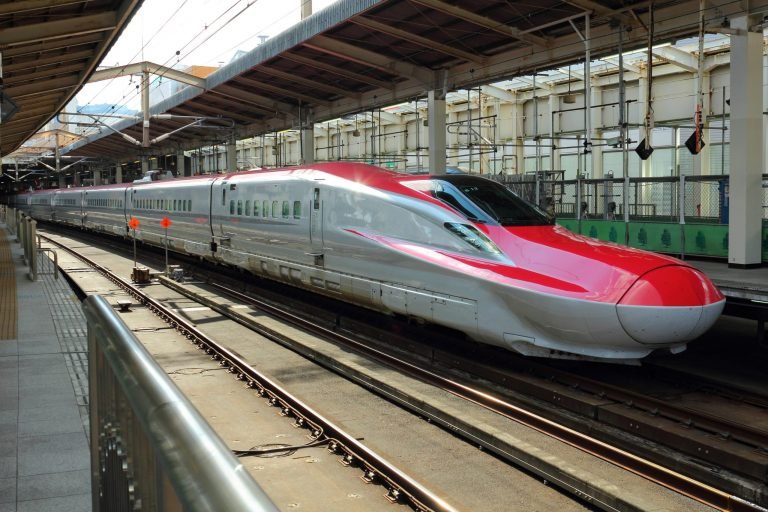
Feasibility studies for five high-speed rail corridors were conducted between 2009 and 2010. A ‘Diamond Quadrilateral’ has been planned to connect Delhi, Mumbai, Kolkata,and Chennai with a high-speed train network. The Indian Government conducted joint surveys with a Japanese government team in 2014, finally approving a corridor between Mumbai and Ahmedabad. The new high-speed service will use a Japanese Shinkansen system and rolling stock. The cost of procuring the technology is estimated to be around Rs. 110,000 crore. India and Japan signed agreements for the project in December 2015; the Japanese Government will fund 81% of the total cost with a soft loan fixed at a nominal interest rate.
A special committee has recommended the trains be run on an elevated corridor for an additional cost of Rs. 10,000 crore, to avoid the difficulties of acquiring land, building underpasses and constructing protective fencing. Indian Railways will operate the corridor for a five-year period after its commissioning and afterwards will be turned over to a private operator. Construction work of the corridor began in 2017 and will be completed by 2028.
Semi-High-Speed Rail
A semi-high-speed rail network will be introduced for connecting important routes, including Delhi–Agra, Delhi–Kanpur, Chennai–Hyderabad, Nagpur–Secunderabad, Mumbai–Pune–Solapur–Hyderabad and Mumbai–Goa. Initially, the trains will operate at a maximum speed of 160 km/h, which will be increased to 200 km/h after the rails are strengthened and fenced off. The Gatimaan Express began services on April 5, 2016, after safety clearances were obtained on its first route.
Conversion to High-Speed Passenger and Freight Corridors
IR will convert 10,000 km passenger and freight trunk routes in to High-speed rail corridors of India over 10 years with total investment of Rs. 20 lakh crore (equivalent to Rs. 24 trillion in 2020) and annual investment of Rs. 2 lakh crore (equivalent to Rs. 2.4 trillion in 2020) from 2017-2027, where half of the money will be spent on converting existing routes into high-speed corridors by leap-frogging the technology and the rest will be used to develop the stations and electronic signalling at the cost of Rs. 60,000 crore (equivalent to Rs. 720 billion in 2020) to enable automated running of trains at 5–6 minutes frequency. Dedicated freight corridors of 3,300 km length will also be completed thus freeing the dual use high demand trunk routes for running more high-speed passenger trains.
Modern Locomotive Factories
In 2015, plans were disclosed for the construction of two locomotive factories with foreign partnerships in the state of Bihar, at Madhepura (electric) and at Marhowra (diesel). The diesel locomotive works will be jointly operated in a partnership with General Electric, which has invested Rs. 2,052 crore for its construction and the electric locomotive works with Alstom, which has invested Rs. 1,293.57 crore. The factories will provide IR with 800 electric locomotives of 12,000 horsepower and a mix of 1,000 diesel locomotives of 4,500 and 6,000 horsepower each.
In November 2015, it was announced IR and GE would engage in an 11-year joint venture in which GE would hold a majority stake of 74%. IR would purchase 100 goods locomotives a year for 10 years, beginning in 2017; the locomotives would be modified versions of the GE Evolution series. The diesel locomotive works will be built by 2018; GE will import the first 100 locomotives and manufacture the remaining 900 in India from 2019 onwards, also assuming responsibility for their maintenance over a 13-year period. In the same month, a Rs. 20,000 crore partnership with Alstom to supply 800 electric locomotives from 2018 to 2028 was announced.
Indian Railways is now moving to manufacturing high-end aluminium self-propelled 160 km/hour indigenous Make in India coaches that require no locomotive and are 10% cheaper than the comparable imports. The first such self-propelled train, Train 18, was rolled out in October 2018. It is estimated to be 40% cheaper than foreign-built trains.
Railway Coach Refurbishment
The railway coach refurbishment project aims for the refurbishment of 12 to 15 years old coaches at Carriage Rehabilitation Workshop in Bhopal to enhance passenger amenities and fire safety measures.
Bio-toilets in all trains
In 2014, IR and DRDO developed a bio-toilet to replace direct-discharge toilets, which was the primary type of toilet used in railway coaches. Upgrade of all trains to bio-toilet was completed by the end of FY 2018-19.
The direct discharge of human waste from trains onto the tracks corrodes rails, costing IR tens of millions of rupees a year in rail-replacement work. Flushing a bio-toilet discharges human waste into an underfloor holding tank where anaerobic bacteria remove harmful pathogens and break the waste down into neutral water and methane, which can then be harmlessly discharged onto the tracks. IR plans to completely phase out direct-discharge toilets by 2020 or 2021.
All-new coaches were installed in 2016, with older rolling stock to gradually becoming retrofitted. After Comptroller and Auditor General of India found 200,000 complaints related to the foul smelling and blocked bio-toilets, IR announced that it will add 80,000 bio-toilets (each costing INR 1 lakh) in FY 2018-2019 and will start installing much improved ‘Vacuum Bio-Toilets’ (each costing INR 2.5 lakh) as well. By Feb 2018, over 100,000 biotoilets have been installed and the project is on target to have 100% biotoilets by 31 March 2019.
Hyperloop
Mumbai–Pune hyperloop
Mumbai–Pune hyperloop is a proposed 1000 km/hr Hyperloop system that will take 14 minutes compared to current 3 hours to commute between these two cities while carrying 10,000 commuters per hour (5,000 in each direction). The route is found feasible and can be made operational by 2026 as per the Detailed Project Report (DPR) submitted to ‘Pune Metropolitan Region Development Authority’ (PMRDA) by ‘Virgin Hyperloop company’ in January 2018.
Commuters and cargo will travel in pods traveling in the near-vacuum tubes at the speed of 1,000 km/hr. DPR provided three feasible terminal end-points options in Mumbai, namely Dadar, Santacruz and the international airport. Currently, 300,000 people commute between these two cities daily in 110,000 vehicles (including 80,000 cars and 6,000 buses).
Infrastructure: Station Redevelopment, Tracks & Geostrategic Border Rail Lines
Station redevelopment
Under a INR 1 trillion initiative, 600 railway stations will be redeveloped by monetising 2700 acres of spare railway land under the Rs. 1,070,000 crore plan undertaken by Indian Railway Stations Development Corporation by converging it with the Atal Mission for Rejuvenation and Urban Transformation and Smart Cities Mission in collaboration with Ministry of Urban Development, Rail Land Development Authority and National Buildings Construction Corporation. Following monetisation of land, Rs. 680,000 crore will be used for the commercial development, Rs. 280,000 crore for station redevelopment and the remaining Rs. 110,000 crore (US$15 billion) as surplus with the Railways. Initially A1 and A category stations will be prioritised. To begin with 22 stations will be developed by end of 2018.
In the first batch, IRSDC invited proposals in March 2018 for redeveloping 3 stations over two years, including the Chandigarh railway station, Bijwasan railway station and Anand Vihar railway station costing Rs140 crore, Rs310 crore and Rs206 crore respective.
Tracks : Dedicated freight corridors
There are 2 under implementation and 4 approved DFCs with many more planned. DFC will convert existing and implement new DFC as High-speed rail corridors of India.
Geostrategic Border Rail Lines
Ministry of Defence (MoD) a list of at least 15 new geostrategic rail lines to be constructed. In 2012, MoD had identified following 14 geostrategic new rail lines to be built near China, Pakistan and Nepal border for the rapid and easier deployment of troops while simultaneously undertaking development of 73 similar geostrategic India-China Border Roads (ICBR) roads as border rail and road transport development in India is lagging much behind China: China has built lines up to Shigatse in Tibet, with plans to connect it to Nepal and further to India. After these lines proposed by MoD in 2013, GoI approved the initial surveys of all 14 lines in 2014, of which at least 12 surveys had been already completed by 2014. Later additional “Bilaspur–Manali–Leh line” was also added to the list of strategic lines.
In 2016, the ‘Final Location Survey’ (FLS) at the cost of INR 345 crore for 4 lines to be taken up in the first phase was approved by the Cabinet, funding has been already provided by MoD and railway is undertaking survey of Missamari–Tenga–Tawang, Bilaspur–Manali–Leh, Pasighat–Tezu–Rupai and Lakhimpur–Bame–Silapathar lines. Undulating terrain of young Himalayas and difficult geological conditions affect the pace of survey.
Sr. No.
Line
Length
Border
State
01.
Murkongselek–Pasighat–Tezu–Rupai line
227 km
China (Eastern sector)
Arunachal Pradesh, Assam
02.
Missamari–Tenga–Tawang line
378 km
China, Bhutan (Eastern sector)
Arunachal Pradesh, Assam
03.
Lakhimpur–Along–Silapathar line
249 km
China (Eastern sector)
Arunachal Pradesh, Assam
04.
Bilaspur–Manali–Leh line
498 km
China, Pakistan (Western sector)
Himachal Pradesh, Ladakh
05.
Jodhpur – Jaisalmer Line Doubling
Pakistan (Western Sector)
Rajasthan
06.
Pathankot – Leh Line
China, Pakistan (Western Sector)
Ladakh, Punjab
07.
Tanakpur – Jaulijbi Line
Nepal (Central Sector)
Uttarakhand
08.
Tanakpur – Bageshwar Line
(Central Sector)
Uttarakhand
09.
Jammu – Akhnoor – Poonch Line
Western Sector
Jammu & Kashmir
10.
Patti – Ferozepur Line
Pakistan (Western Sector)
Punjab
11.
Anupgarh – Chattargarh – Motigarh – Bikaner Line
Pakistan (Western Sector)
Rajasthan
12.
Jodhpur-Agolai-Shergarh-Phalsund Line
Pakistan (Western Sector)
Rajasthan
13.
Jodhpur-Jaisalmer Line (Doubling)
Pakistan (Western Sector)
Rajasthan
Public transport is vital in a country like India owing to its large population and expansive lands. The transportation industry in India is one of the most diverse comprising of Rail, Air, Water, and Road. It accounts for 6.4% of the GDP and is vital to the economic growth of the country.
One of the key areas of the transport industry is the rail network which spreads across 67,956 km making it the largest in Asia and the fourth largest in the world. Under the solitary management of Indian Railways, it comprises 13,169 passenger trains and 8,479 freight trains in operations from 7,349 stations. The gross revenue of Indian Railways for FY-22 (until June 2021) stood at INR 39,655.25 crores while freight earnings stood at INR 33, 241.75 crore accounting for 84% of the total revenue. Earnings by the passenger segment stood at INR 4,921.11 crores being the second major contributor of the total revenue.
The railway is one of the most efficient and economical methods of transport for both, passengers and goods. They are the economic lifeline of India with the volume of passengers using it in their daily commute. Additionally, they play a vital role in transporting goods like coal, metals, petroleum, chemical manures, and food grains. Even the automobile industry heavily relies on Indian Railways as the preferred carrier.
Indian Railways is an assets-heavy entity and it requires a punctual maintenance schedule, hence the value chain is imperative in keeping the sector functioning smoothly by enabling operations, management, maintenance of railway tracks and electricity lines, services, testing, construction activities, and procurement of materials.
The Government has also pushed for significant initiatives to boost the railway industry. The National Infrastructure Master plan (Gati Shakti) will help India’s growth story. By doing away with silos of departmentalism, the infrastructure roadmap will see faster and efficient completion. Gati Shakti is expected to increase the cargo handling capacity of railways to 1600 MT by the year 2024-25 thus accelerating the construction of two dedicated freight corridors. Even metro works have picked up and we can see India having a top-notch multi-modal transport hub in the coming years. These efforts will see greater last mile connectivity and increase the pace of economic prosperity.
Furthermore, the Central Government’s National Monetization Pipeline (NMP) is a strategic move that will shore up India’s overall development and bridge the infrastructure deficit. A rise in alternative financing for infra development will not only create a wealth of employment opportunities but, most importantly, strengthen the nation’s economy. It is also expected to lead to an increase in the railway’s potential to carry goods at a higher speed and a short turnaround time with enhanced efficiency. These factors will lower the high logistical costs and drastically reduce carbon footprint as well.
The Indian Railways had also unveiled a National Rail Plan (NRP) for India – 2030 which aims to create a ‘future ready’ railway system by 2030. It will look to create capacity ahead of demand and cater to future growth in demand right up to 2050. In July 2021, the South Central Railway zone announced infrastructure development by doubling the maximum permissible speed to 100 km per hour on the Godavari Bridge. The initiative gave a major boost to the Indian Railways on infrastructure modernisation.
The Indian Railways has taken several measures in improving the infrastructure and the quality of services and by 2030 the railway upgrades include hundred percent electrification of railways, upgrading existing lines with more advanced facilities, up-gradation of railway stations, developing a large high-speed train network interconnecting major cities in India and developing various freight corridors within the country. In a recent report by IEA, it was stated that Indian railways will account for nearly 40% of the total global rail activity by 2050.
To conclude, India’s Railway Transport is getting support and advancements from the Government. On the subject of becoming the world’s largest Railway entity, the Government’s initiatives have been designed for the benefit of the supporting businesses. Never has there been a better opportunity for railways to propel themselves to be the top transport sector in the world.
Metro Rail News is conducting a 2nd Edition InnoMetro 2022 on 28-30 April 2022, virtually focusing on Seamless Mobility. Join InnoMetro 2022 for a detailed discussion on the topic “HSR: Future of Indian Rail”.
It is a Mass Rapid Transit System (MRTS) that aims to provide a comfortable, rapid, energy-efficient and less noisy transport medium in the city of Nashik. The project is proposed to be implemented by Maharashtra Metro Rail Corporation Ltd (Maha-Metro). In 2019, a feasibility report was made in consultation with the Nashik Municipal Corporation. The DPR (Detail Project Report) for the project has been prepared by M/s RITES Limited which, after approval of the State Government was sent to Government of India for sanction. The Report has identified a 32 km main route and a 24 km feeder route for the implementation of Metro-Neo project.
As per the feasibility report and DPR, the Metro Neo project at Nashik envisioned for a train service every two minutes. The main elevated corridors will have a capacity of 15,000 PHPDT (peak hour peak direction traffic). Metro-Neo stations are expected to be similar to other Metro rail stations and will house staircases, lifts, escalators, and information display for the passengers. The station entry and exit will be provided on both sides of the road.
Electric Bus Coaches
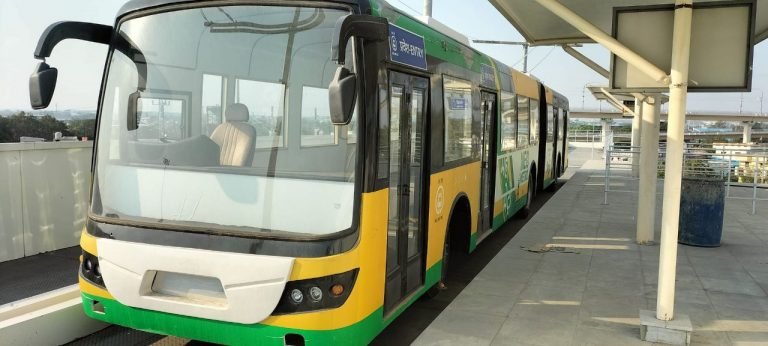
Metro-Neo service will comprise of electric bus coaches with a length of 18 to 25 metres. It will have a capacity to carry 180 to 240 passengers at a time. AC electric coaches will draw power from an overhead electric wire with 600-750 V DC supply for power supply. The buses will also comprise of automatic door closing system, level boarding, comfortable seats, passenger announcement system, and an information system with an electronic display.
Feeder Buses
The length of the feeder buses is proposed to be around 12 to 13 metres. It would have a capacity to carry 60 to 70 passengers at a time. For power supply the coaches will operate on battery on the feeder routes and will also run on the Main corridors and get charged during running by overhead traction. The Feeder buses will run on the existing roads on two feeder routes– Satpur Colony via Garware to Mumbai Naka and Nashik Road via Nandur Naka to Shivaji Nagar.
Metro-Neo in Maharashtra’s Nashik:
Metro-Neo in Nashik will have two corridors. These are as follows:
Corridor 1: A 10-km long route having 10 stations– starting from Gangapur, Jalapur, Ganpat Nagar, Kale Nagar, Jehan Circle, Thatte Nagar, Shivaji Nagar, Panchavati, CBS and ending at Mumbai Naka.
Corridor 2: A 22-km long route having 20 stations– starting from DHRUV Nagar, Shramik Nagar, Mahindra, Shaneshwar Nagar, Trimbak Rd, Satpur Colony, MIDC, ABB Circle, Parijat Nagar, MICO circle, CBS, Sharda Circle, Dwarka Circle, Gayatri Nagar, Ambedkar Nagar, Upnagar, Nehru Nagar, Datta Mandir, and ending at Nashik Road.
CBS and Gaganpur will be common interchange stations for both the corridors
Why Metro Neo
Heavy Metro rail is economical for PHPDT greater than 15,000.
Bus transit system cater upto 5,000 PHPDT which is insufficient.
Rail based LRT, tram system address traffic requirement upto 15,000 PHPDT.
Peculiar requirement of Indian cities require an innovative and cost effective solution.
Metro-Neo is India centric solution for tier 2/3 cities for 8,000 PHPDT and extendable upto 10,000
MoHUA has issued standard specifications in Nov 2020 for rubber tyredθ metro coaches running on OHE named Metro neo for use in tier 2/3 Indian cities.
Features of Metro Neo
Dedicated RoW at Grade
Tyred electric coaches on concrete slab
Length of coaches 18 m or 24 m
Can run on battery upto 20 Km
Safety and comfort at par with Metro
Depot away from alignment
Cost reduction, No AFC, No PSD, small stations
ATP signalling with anti collision features
Broad Metro Neo Specifications
Dedicated RoW of 8m
Platform width of 1.12m, emergency side evacuation
Low floor rolling stock around 10T axle load
Caters PHPDT 8,000 and extendable upto PHPDT 10,000
Upto 250 pax capacity for 24m coach and 200pax for 18m coach at AW3 loading
750VDC OHE twin wire electrification. Coaches can run on battery where OHE is not feasible.
ATP signalling with anti collision features and central control, CCTV surveillance in× stations
Above standards ensure the quality, safety, punctuality and comfort levels at par with heavy Metro.
Cost aspects of Metro Neo (Nashik DPR @ 2019 level) compared to Nagpur Metro actual costs
Sr. No.
Sub – System
Description
Metro Neo (Rs. Cr/KM)
Heavy Metro (Rs. Cr/KM)
01.
Viaduct
Smaller viaduct
31.5
36
02.
Stations
Concourse eliminated, platforms height is reduced
4.4
55
03.
Track
No track
0
9
04.
Traction & PSI
4.5
11
05.
Rolling Stock
Tyred electric coaches
7.5
26
06.
Signalling
ATP signalling with anti collision
0.5
10
07.
Depot
Less depot area
2
5.5
08.
Misc. Utilities
1
4
09.
Telecom & Security
Smaller Stations with optimal telecom services
1.5
5
10.
Ticket vending (AFC)
No AFC gates
0.5
3
11.
Taxes, Contingencies, design, charges etc.,
18.5
57.5
Total (Approx) INR
71
222
Few examples of Metro Neo Transport system globally
Zurich (Switzerland)
Riyadh University, Saudi Arabia
Lyon City (France)
Salzburg (Austria)
San Francisco (USA)
Nashik Metro Neo Project Key Features
2nos of Lines (Corridor 1 is 22km, Corridor 2 -10 km)- Total Length 32 km.
Number of stations -29; Number of depots – 1.
Total Project Cost (DPR)- Rs.2,100.60 Cr ≃ (Rs 71 Cr per km).
DPR already approved by the Government of Maharashtra (GOM).
Project currently under sanction of the Government of India (GOI)
Various other cities under consideration for implementing Metro Neo in India
Warangal (Telangana)
Bamnoli Village to Kirtinagar in Delhi
Nashik
Conclusion
Metro Neo is a trolleybus system with overhead electric traction, which runs on elevated or at-grade cement roads. It is an innovative transport system, which will be implemented for the first time in India in Nasik by Maha Metro. It is seamless, fast, reliable and cost effective. It will provide travel experience of international standards at par with Metro systems. It is an articulated / bi-articulated trolley bus system with overhead electric traction. The buses will be air-conditioned with an automatic door closing system, level boarding, comfortable seats, passenger announcement and an information system with an electronic display.
The Metro Neo would be a state-of-art, comfortable, energy-efficient, minimal noise pollution and environment-friendly system. It has been designed to negotiate sharp curves and steep gradient with minimal requirement of rehabilitation. The system can be upgraded to Light Metro with incremental cost input in future as per traffic demand. It is an innovative and pioneering project in India and will be the first MRTS to run on rubber tyres. The government of India on 21.08.2019 constituted a committee, under the chairmanship of Dr Brijesh Dixit, MD of Maha Metro, for standardization of detailed specifications for a Rubber-Tyred Mass Rapid Transportation System to implement it across India.
In another development, Kakatiya Urban Development Authority (KUDA) has asked Maha Metro to prepare the DPR of Warangal Metro. Maha Metro recommended the use of Metro Neo technology and prepared the DPR accordingly. As a result, it saved Rs 2,000 crore of KUDA and made Warangal Metro feasible. KUDA has submitted the Report to Telangana Government, which will forward it to the Central Government after vetting it.
Metro Rail News is conducting a 2nd Edition InnoMetro 2022 on 28-30 April 2022, virtually focusing on Seamless Mobility. Join InnoMetro 2022 for a detailed discussion on the topic “Metro Neo: A viable and convenient public transport system”.
Atmanirbhar Bharat Abhiyaan or the Self-reliant India campaign is the vision of new India envisaged by the Hon’ble Prime Minister Shri Narendra Modi. On 12 May 2020, PM Modi raised a clarion call to the nation giving a kick start to the Atmanirbhar Bharat Abhiyaan (Self-reliant India campaign) and announced the Special economic and comprehensive package of INR 20 lakh crores – equivalent to 10% of India’s GDP – to fight Covid-19 pandemic in India.
The aim is to make the country and its citizens independent and self-reliant in all senses. He further outlined five pillars of Aatma Nirbhar Bharat – Economy, Infrastructure, System, Vibrant Demography and Demand. The Finance Ministry further announced Government Reforms and Enablers across Seven Sectors under Aatmanirbhar Bharat Abhiyaan. The government took several bold reforms such as Supply Chain Reforms for Agriculture, Rational Tax Systems, Simple & Clear Laws, Capable Human Resource and Strong Financial System.
A Brief History
During its independence movement, India saw a push for political self-reliance, for swaraj (explained as self-governance or self-rule). Thinkers of the time such as Mahatma Gandhi and Rabindranath Tagore also explained self-reliance in terms of a nation and the self. This included the discipline of an individual and the values in a society. With the foundation of educational institutes such as the Visva-Bharati University, Tagore also brought India closer to self-reliance in education. M.S. Swaminathan writes that in his youth, “like that of most others in India of the 1930s, was a period of idealism and nationalism. Young and old shared the dream of a free and self-reliant India. Purna Swaraj (total freedom) and swadeshi (self-reliance) were our goals…”.
Economic self-reliance and dependence
The swadeshi movement (where Swadeshi is an adjective explained as ‘of one’s own country) was one of the sub-continents most impactful pre-independence movements. It was successfully implemented in the aftermath of the partition of Bengal in 1905.
Indian nationalists emphasised economic self-reliance in the years leading up to independence, of which planning was an important part. The National Planning Committee of the Indian National Congress (INC) was formed in 1938 under INC president Subhash Chandra Bose. The committee was multi-disciplinary and comprised well-known personalities from across the sub-continent. Bose lent his full support to the planning efforts to make independent India an economic unit, industrialised and self-sufficient. However, there was much opposition to these plans, including non-cooperation by noted leaders like Gandhi & Nehru, who opposed the type of industrialisation being championed and labelled the committees efforts pointless. Another pre-independence effort to chart out the course for the economic development of independent India during its years of decolonisation was the Bombay Plan, penned down by J.R.D. Tata, G.D. Birla and A.Dalal among others. The Bombay Plan sought to make India self-sufficient by increasing the state’s role in all aspects of the economy, a stark contrast to 21st century India. In the following years India took cue from economic models in the Soviet Union, later becoming aware of other models such as those of South Korea, Taiwan and Brazil.
Independent India’s first major policy document, the Industrial Policy Resolution of 1948, echoed the “national consensus” regarding how India was to proceed as a nation. This national consensus called for a mixed economy and self-reliance. Under Prime Minister Lal Bahadur Shastri, India’s Green Revolution and White Revolution (Operation Flood) paved the way for India to become self-sufficient and one of world leaders in producing various agricultural products such as milk and tea.
Defence Sector
India has seen a shift in the principles governing its defence production— self-sufficiency was followed by self-reliance, which in turn saw changes such as an emphasis in public-private co-production and independent private production. In 1992 a Self Reliance Review Committee was formed under A.P.J. Abdul Kalam, then the Scientific Advisor to the Defence Minister. The committee created an index, called the self-reliance index, to identify the degree of content that was made in India as a part of the total procurement. The ten year target to increase self-reliance in defence was never achieved. Further, this index did not take into account factors like critical components or sanctions during an actual conflict.
In 2000, K.Subrahmanyam of India’s National Security Advisory Board emphasised the need to distinguish between self-reliance and self-sufficiency in the defence sector. He laid emphasis that the most pragmatic way for India would be to go towards self-reliance and not self-sufficiency. This would lead to its own challenges such as the reliance and integrity of the supplier.
Detail
The government’s vision for an ‘Atmanirbhar Bharat’ (self-reliant India) is laudable. This is not a new idea, though. Indeed, self-reliance was a key reason for a newly-independent India to lay emphasis on a public sector that, over time, was present in virtually every sector- from aviation to zinc. During the 1980s, the emergence and development of India’s private sector were powered by buzz phrases such as ‘Import-substitution’ and ‘Be Indian, Buy Indian’.
Especially in the past three decades, as India has opened up its economy in a calibrated manner, its large domestic market attracted investments across sectors. While market size is undoubtedly an important criterion, other aspects that make it easy to do business are just as critical. As a nation, India competes with other countries. In an increasingly globalised world, when investors (foreign or domestic) commit risk capital to India, they are making a conscious choice. Other countries (e.g. Vietnam, Malaysia, Bangladesh etc.) may not have large domestic markets themselves but are attractive as hubs for manufacturing products that are then exported around the world, giving a boost to the local economy.
Through sector-specific ‘liberalisation’ and ‘reforms’, Indian governments have, since 1991, been taking steps to attract investments into the country. Modifying the legal framework governing such investments and operations is a key enabling action. The results are visible, as India has become self-reliant in many areas.
Today, the nation exports many products and services to countries worldwide- including the world’s most developed nations. But there are still many gaps that need to be plugged. Electronics are embedded in almost every industry, but India as a nation is a long way off from being self-reliant in this strategic field. Vital ingredients for the pharmaceuticals sector are also imported, as are telecom and defence equipment vital to our nation’s security.
For decades, governments and entrepreneurs have mistrusted each other. High levels of mistrust have also existed between private sector management and the labour force. In the context of India’s cooperative federal structure, as regional political parties have emerged and been elected to power, the chasm of mistrust between state and central governments too has generally widened. That is why sectors such as agriculture and education, which are both fundamental building blocks of any economy, continue to be shackled by many regulatory restrictions. India’s labour law regime also continues to be viewed as lacking the flexibility that exists in many other countries.
That India has the potential to grow rapidly is well-known. But to realise this potential, the nation needs to quickly bridge the widespread trust deficit and ensure that all stakeholders are aligned towards the overall purpose of the country’s overall development. Given India’s large population, levels of illiteracy, weak healthcare infrastructure, wide income disparity and lack of a social security net, there is no silver bullet. That is why, what is needed is a holistic approach that enables balanced, all-round development of every component of India’s economy- agriculture, manufacturing and services.
This kind of mindset will inevitably create competition amongst states to attract investment- and thus infrastructure, jobs and overall development. Such competition will force politicians, private enterprise owners, citizens, and other stakeholders to work towards a common purpose. We have started seeing this play out in bits and pieces in some parts of the country, but much more needs to be done by state governments, given that the onus for formulation and implementation of many policies that are critical to creating a welcoming investment climate lies with them.
Here are 10 examples that clearly signal the government’s intent to make it easier for companies to do business in India and thus contribute to an ‘Atmanirbhar Bharat’:
Electronic chip component on the blue printed circuit board
Introduction of the Production Linked Incentive (PLI) scheme to attract manufacturers of mobile phones, electronic components and microelectromechanical systems to make in India.
Changes to the Companies Act (e.g. decriminalisation of offences other than fraud or where the larger public interest is involved, removing imprisonment as punishment for minor offences, etc.)
Changes to labour codes relating to Industrial Relations, Social Security, and Occupational Safety, Health and Working Conditions. It is expected that these changes will give companies with less than 300 workers greater flexibility in retrenchment without obtaining prior government approval. The changes also restrict workers’ rights to strike work without giving 60 days’ notice.
Changes to the Insolvency and Bankruptcy Code.
Allowing farmers to sell agricultural produce outside the Agricultural Produce Market Committee (APMC) mandis reduces middlemen’s role and gives farmers the option to sell their produce at more remunerative prices.
Allowing companies to raise equity capital outside India by listing their shares in specified foreign jurisdictions (without requiring listing in India as well).
Allowing private sector participation in the space sector, including launching satellites, setting up control centers outside India, develop new systems and offer ‘Spacecom’ services around remote sensing, navigation, space exploration etc.
Simplifying the Environment Impact Assessment (EIA) process for certain projects.
Changes to the Food Safety and Standards Authority of India (FSSAI) regulations to make people more aware of the health risks of packaged foods and banning of e-cigarettes to ensure that our citizens can make better-informed choices around their health.
Reducing ownership of firearms by decreasing the number of firearms allowed and the validity of the license.
Many of country’s laws had been formulated several decades ago when every aspect of society was very different. The intervening period has seen myriad changes driven by technology, greater awareness of the environment and the imperatives to protect it, progress in the field of medicine and health care, etc. Perhaps the most significant change has been ushered in by the Covid-19 pandemic, which has fundamentally changed the way millions of people live and work.
As our environment evolves, it is only natural that laws too will need to evolve in tandem to ensure that they remain relevant and effective.
As the policy-makers formulate new policies and enact new laws, they would do well to be guided by the line ‘Where the clear stream of reason has not lost its way into the dreary desert sand of dead habit’ from Gurudev Rabindranath Tagore’s famous poem ‘Where the mind is without fear’. While modifying laws and framing new ones, the objective should be to enable and not just control.
Here are some additional areas that the government must urgently turn its attention to:
Enact specific data protection laws that are appropriate to India in light of the growing wave of digitalisation around us. Making tweaks is not enough; a comprehensive legal framework is needed.
Eliminate the need for multiple regulatory filings by allowing companies to upload data to one location from where regulators can access what they need. This can go a long way in easing the compliance burden. A study by Teamlease has found that Indian businesses operate under the burden of more than 65,000 compliances, including 2,500 regulatory updates and 3000 filings in a year.
Come out with a Direct Tax Code that reduces the need for frequent and large-scale changes and thus provides a higher degree of stability and predictability to companies and individuals.
Rationalise the GST regime by reducing the number of rates and further simplifying the compliance process.
The New Education Policy to encourage “critical thinking” in students and enable the creation of world-class institutions of higher education in India is an excellent step. In order to accelerate this transformation, I believe the government must enable reputed foreign universities to set up campuses in India. Perhaps this can start with online access to classes- a phenomenon the pandemic has already forced on educational institutions. In addition to creating domestic R&D capabilities in areas such as robotics, AI, healthcare, etc., such a move can also help India conserve valuable foreign exchange in the form of the money spent by Indian students studying abroad- resources that can be deployed elsewhere.
Of course, building political consensus around such policies will not be easy. But the emerging context can be said to have created a conducive environment to push forward with bold structural reforms that will help transform India holistically, and not just facilitate lop-sided development.
Make in India & Aatmnirbhar Bharat
Make in India
Athough, Make in India and Aatmnirbhar Bharat both campaigns initiated by the government aim towards strengthening the economy and help nation attain self reliance (aatmnirbharta) and become a major export hub using the manufacturing capabilities of the country through its vast workforce, both skilled and in enormous numbers for the outer world, there is categorical difference between the two.
The Aatmnirbhar Bharat campaign, which on the one hand, focuses more on attaining greater self-reliance for the nation through various initiatives. The ‘Make in India’ initiative is somewhat a broader concept where the government is inviting producers across the globe to come and invest in the country. Through the Make in India initiative the government wishes to showcase the immense opportunities lying with the Indian Sub-continent to the outer world in terms of an ideal location for production of varied goods required for global fraternity.
The Make in India campaign further, is a major national programme of the Government of India designed to facilitate investment, foster innovation, enhance skill development, protect intellectual property and build best in class manufacturing infrastructure in the country. The primary objective of this initiative is to attract investments from across the globe and strengthen India’s manufacturing sector.
It is being led by the Department for Promotion of Industry and Internal Trade (DPIIT), Ministry of Commerce and Industry, Government of India. The Make in India programme is very important for India’s economic growth as it aims at utilising the existing Indian talent base, creating additional employment opportunities and empowering secondary and tertiary sector. The programme also aims at improving India’s rank on the Ease of Doing Business index by eliminating the unnecessary laws and regulations, making bureaucratic processes easier, making the government more transparent, responsive and accountable.
Prime Minister, Mr Narendra Modi in his maiden Independence Day speech from the ramparts of the Red Fort on August 15, 2014 introduced the Make in India programme for the first time. He urged people across the globe to come and manufacture in India with a liberty to sell the finished goods in any part of the world. He asked the global fraternity to use the skill, talent, discipline and desire of the Indians to do something while giving the world an opportunity to come and make in India. The initiative was formally introduced on September 25, 2014 by Mr Modi at Vigyan Bhawan, New Delhi, in the presence of business giants from India.
The focus of Make in India programme is on 25 sectors. These include: automobiles, automobile components, aviation, biotechnology, chemicals, construction, defence manufacturing electrical machinery, electronic systems, food processing, IT & BPM, leather, media and entertainment, mining, oil and gas, pharmaceuticals, ports and shipping, railways, renewable energy, roads and highways, space, textile and garments, thermal power, tourism and hospitality and wellness. The initiative targeted 25 economic sectors for job creation and skill enhancement and transformed India into a global design and manufacturing export hub.
The ‘Make in India’ campaign has three stated objectives:
To increase the manufacturing sector’s growth rate to 12-14% per annum;
To create 100 million additional manufacturing jobs in the economy by 2022;
To ensure that the manufacturing sector’s contribution to GDP is increased to 25% by 2022 (later revised to 2025).
After the launch, India gave investment commitments worth Rs. 16.40 lakh crore (US$220 billion) and investment inquiries worth of Rs. 1.5 lakh crore (US$20 billion) between September 2014 to February 2016. As a result, India emerged as the top destination globally in 2015 for foreign direct investment (FDI), surpassing the United States and China, with US$60.1 billion FDI.
As per the current policy, 100% Foreign Direct Investment (FDI) is permitted in all 100 sectors, except for Space industry (74%), defence industry (49%) and Media of India (26%). Japan and India had also announced a US$12 billion ‘Japan-India Make-in-India Special Finance Facility” fund to push investment.
In line with the ‘Make in India, individual states too launched their own local initiatives, such as ‘Make in Odisha’, ‘Tamil Nadu Global Investors Meet’, ‘Vibrant Gujarat’, ‘Happening Haryana’, and ‘Magnetic Maharashtra’. India received US$60 billion FDI in FY 2016–17.
The World Bank’s 2019 Ease of Doing Business report acknowledges India’s jump of 23 positions against its rank of 100 in 2017 to be placed now at 63rd rank among 190 countries. By the end of 2017, India had risen 42 places on Ease of doin g business index, 32 places World Economic Forum’s Global Competitiveness Index, and 19 notches in the Logistics Performance Index, thanks to recent governmental initiatives, which include converges, synergies and enables other important Government of India schemes, such as Bharatmala, Sagarmala, Dedicated Freight Corridors, Industrial corridors, UDAN-RCS, Bharat Broadband Network, Digital India.
Make in India has not yet achieved its goals. The growth rate of manufacturing averaged 6.9% per annum between 2014–15 and 2019-20. The share of manufacturing dropped from 16.3% of GDP in 2014-15 to 15.1% in 2019-20.
Summary & Conclusion
Atmanirbhar Bharat which translates to ‘Self-reliant India’, is a phrase used and popularised by Prime Minister Mr. Narendra Modi and the Government of India in relation to the economic vision and economic development in the country. In this context, the term is used as an umbrella concept regarding making India a larger and more involved part of the world economy, pursuing efficient, competitive and resilient policies that encourage equity, and being self-sustaining self-generating.
The english phrase has been used by PM Modi since 2014 in relation to national security, poverty and digital India. The first popular mention in hindi came in the form of the ‘Atmanirbhar Bharat Abhiyan’ or ‘Self-Reliant India Mission’ during the announcement of India’s Covid–19 pandemic related economic package in 2020. Since then phrase has been used across ministries such as the Ministry of Consumer Affairs, Food and Public Distribution, the Ministry of Education and the Ministry of Defence in relation to press releases, statements and policies. The government has also used the phrase in relation to India’s new National Education Policy and the 2021 Union Budget of India. The concept under the premiership of Narendra Modi has been adapted from previous explanations and usages of the concept in the Indian sub-continent.
The swadeshi movement was one of India’s most successful pre-independence movements. The country’s former Planning Commission has used self-reliance as a phrase and concept in multiple Five-Year Plans of India between 1947 and 2014. Commentators have noted that India has been enacting policies and building institutions that promote self-reliance since the day it was created. Private companies and their products have been considered as fine examples of self-reliance in India encompassing sectors such as beverages, the automotive sector, cooperatives, the financial services and banking sector and the pharmaceutical and biotechnology sector.
In the backdrop of the Coronavirus pandemic in India, the pandemic induced lockdown, and a pre-existing slowdown in the growth of the domestic economy and the economic impact of the pandemic, the government came out with an adapted idea of self-reliance. On 12 May 2020, Prime Minister Modi used the hindi phrase popularly for the first time when he said, “the state of the world today teaches us that (Atma Nirbhar Bharat) “Self-reliant India” is the only path. It is said in our scriptures — EshahPanthah. That is — self-sufficient India.” While the speech was in Hindi, this reference by Press Information Bureau to both “self-reliance” and “self-sufficiency” caused some confusion. The Indian government came out with an economic package in the coming days labelled as the Atmanirbhar Bharat Abhiyan (Self-reliant India Mission) says the same, “atmanirbhar” can be translated as both self-reliance and self-sufficiency.
The adapted self-reliance or Aatmarnibharta that emerged was ready to associate with and challenge the globalised world, as opposed to past decades where there had been a wish to disassociate, such as during the pre-independence swadeshi movement and the matter of post-independence foreign aid. However, even swadeshi has been adapted with slogans such as ‘vocal for local’ while at the same time global interconnectedness is being promoted. The government aims to reconcile this, Economist Intelligence Unit explains, “Modi’s policy aims to reduce domestic market access to imports, but at the same time open the economy and export to the rest of the world”.
Various Initiatives
Prime Minister Modi used the phrase ‘self-reliance’ in June 2014 in relation to defence manufacturing for self-reliance in national security. He reiterated this over the years, including in 2018 and the need for India to make its own weapons. In August 2014 he connected self-reliance to Digital India and in September 2014 to making the poor self-reliant.
Its proponents, including Prime Minister Modi and cabinet ministers for finance and law, have said that this self-reliant policy does not aim to be protectionist, exclusionist or isolationist in nature. For India, self-reliance plays out as being a larger and more important part of the world economy. The concept requires policy-making that allows this to happen, including efficient and resilient policies and policies that encourage equity and competitiveness. It means being self-sustaining and self-generating. This translates to creating “wealth and values not only for ourselves but for the larger humanity”. In March 2021, Finance Minister Nirmala Sitharaman reiterated that the Atmanirbhar Bharat campaign was not bringing back socialism or import substitution, rather the intention is to boost manufacturing. The five pillars of ‘Atmanirbhar Bharat’ have been elucidated as— economy, infrastructure, technology-driven systems, vibrant demography and demand.
Metro Rail News is conducting a 2nd Edition InnoMetro 2022 on 28-30 April 2022, virtually focusing on Seamless Mobility. Join InnoMetro 2022 for a detailed discussion on the topic “Realising Atmanirbhar Bharat”.
Gurugram (Metro Rail News): RITES Limited, a leading Transport Infrastructure Consultancy and Engineering company, signed a memorandum of understanding (MoU) with SMEC Group to cooperate and explore infrastructure projects.
The MoU will enable RITES and SMEC to collaborate and cooperate to explore, identify, pursue, and jointly execute mutually beneficial business opportunities in the infrastructure sector. It will allow both companies to leverage each other’s expertise and technologies to optimise operations and expand on a global level.
The collaboration will facilitate knowledge sharing and the development of business proposals, including exploring consultancy opportunities arising at various government/semi-government/autonomous bodies or authorities/private entities/multilateral-funding agencies.
About RITES Limited:
RITES Limited is a Miniratna (Category – I) Schedule ‘A’ Public Sector Enterprise and a leading player in the transport consultancy and engineering sector in India, having diversified services and geographical reach. The company has experience spanning 47 years and has undertaken projects in over 55 countries across Asia, Africa, South America, and Middle East region. RITES Limited is the only export arm of Indian Railways for providing rolling stock overseas (other than Thailand, Malaysia and Indonesia).
About SMEC Group:
SMEC is a global engineering consultancy firm owned by Surbana-Jurong (SJ) Group – a global urban, infrastructure and management consulting firm. Leveraging its 70-year history of providing construction supervision, consultancy services & project management support, SMEC provides technical expertise and advanced engineering services to resolve complex challenges in roads, highways, rail, metro, airports, hydropower, and renewable energy markets and has delivered projects in more than 100 countries.
KOCHI (Metro Rail News): Shri Loknath Behera, managing director of Kochi Metro Rail Limited, inaugurated an 824.1 KWP ground-mounted solar plant for testing on Friday at Kochi metro’s Muttom depot (KMRL).
KMRL will be able to generate around 3,000 units of power per day as a result of this, allowing the agency to cover 42 per cent of its overall power needs on its own.
solar plant was inaugurated at Kochi metro muttom depot
By 2022, the metro agency plans to install solar panels in the Muttom track region and the surrounding land area, generating an additional 2 MW of power. Because metro operations are dependent on electrical power, “KMRL plans to develop the use of solar energy in an inclusive manner to ensure maximum usage from the existing solar potential in this region”, stated Mr Behera.
They believe that the green energy measures will reduce carbon dioxide emissions by 3,53,625 tonnes per year, comparable to planting 5,65,800 teak trees over the project’s lifetime.
DELHI (Metro Rail News): Shanghai Tunnel Engineering Co. Ltd. (STEC) received the first of four tunnel boring machines for the 82.15 km Delhi – Meerut RRTS project’s twin tunnels on Friday morning at Anand Vihar Station.
STEC’s first TBM reached at Anand Vihar on Dec 7, 2022 and It will be deployed on Package 4 (New Ashok Vihar – Sahibabad) to construct 5.6 km underground stretch of 82.15km Delhi-Meerut RRTS Corridor.
In December 2020, STEC was awarded a disputed contract to build four tunnels between New Ashok Nagar DN Ramp – Anand Vihar – Sahibabad UP Ramp for the project’s 5.6-kilometre Package 4.
In September 2021, the team completed factory acceptance testing (FAT) for this 7.5m diameter earth pressure balance machine, called Sudarshan 4.1, at their Shanghai site.
STEC’s first TBM reached at Anand Vihar on Dec 7, 2022 and It will be deployed on Package 4 (New Ashok Vihar – Sahibabad) to construct 5.6 km underground stretch of 82.15km Delhi-Meerut RRTS Corridor.
Terratec completed FAT for 3 TBMs that Afcons Infrastructure would deploy to build Package 8’s tunnels between Brahampuri and Begumpul in Meerut in Q4 2021.