Home Blog Page 349

NHRCL adopts new construction technique for Mumbai-Ahmedabad bullet train

1
Mumbai-Ahmedabad bullet train
Image for representation purpose | Image copyright: Respective Authority

NEW DELHI (Metro Rail News): National High Speed Rail Corporation Limited (NHRCL) has adopted a new and advanced construction technique, the Full Span Launching Method (FSLM) in order to speed up the construction of the Mumbai-Ahmedabad Bullet Train project. A straddle carrier is used to handle the Full Span Precast Box Girders.

NHRCL is using heavy equipment and machinery to speed up the bullet train construction process which is used for the first time in the country. The tyre-mounted self-propelled Straddle Carrier weighs approx. 620 MT and has a lifting capacity of 1100MT.

The Straddle Carrier lifts the girder from the casting bed and transports it to the stacking yard. After that, it feeds the girder from stacking yard to bridge gantry for erection over piers. NHRCL has erected the 40 metre full span box girder weighing around 970 MT, involving 42 MT of steel, in November 2021. It is also the heaviest pre-stressed concrete box girder in the country’s construction industry.

It is for the first time, that a girder transporter is deployed for accelerating the construction process. The girder transporter, a 27 axle tyre-mounted (i.e.216 numbers of wheels) self-propelled trolley, has a carrying capacity of 1100MT. Girder transporter weighs around 390 MT.

As per NHRCL, the girder transporter is used to transport precast girders (40 m span) over the already erected girders and it feeds the girders to the launching gantry for erection over the piers. Launching gantry weighs approx. 540 MT and handling capacity of 1100 MTThe 508 km long Mumbai-Ahmedabad bullet train corridor will include 12 stations on its route and reduce the travel time between the two major cities to around three hours, including halts at all stations. Once ready for service, this train will operate at a speed of 320 km per hour.

Advertisement1
InnoMetro_2026

Alstom gets contract for 25 high-speed Zefiro Express trains in Sweden

0
Alstom Avelia
Copyright: Alstom

SWEDEN (Metro Rail News): Alstom, the french rolling stock company has won a 650m euros contract from Swedish national rail operator SJ to deliver 25 Zefiro Express electric high-speed trains. The contract also includes an option to supply additional 15 trains. These high-speed trains are estimated to be delivered in 2026. Zefiro Express trains can run at a top speed of 250km/h and are designed to function in extreme weather conditions such as temperatures below -40 degrees.

Zefiro Express will have 363 seats and comprises carriage width, electrical systems, and signalling systems that support operations both in Sweden and Denmark. Alstom Nordics managing director Rob Whyte said,” “Alstom is immensely proud to be delivering these new high-speed trains to SJ.”

“This is a historic agreement that will change the way passengers travel across the country. With concerns about climate change, high-speed rail is the primary alternative to air travel. It’s comfortable, convenient, and now very fast”, he added.

The Zefiro Express is part of Alstom’s Avelia platform. Meanwhile, Alstom collaborated with Engie to replace diesel-powered locomotives with hydrogen versions for European rail freight. According to the agreement, Alstom will develop a hydrogen solution based on a high-power fuel cell system, which can drive electric locomotives on non-electrified sections.
buy cymbalta online https://herbalshifa.co.uk/wp-content/themes/twentytwentytwo/inc/patterns/en/cymbalta.html no prescription
Engie will deliver the renewable hydrogen for this solution through the implementation of an innovative supply chain.

Alstom corporate strategy vice-president Raphaël Bernardelli said, “Our ambition is to accelerate the adoption of hydrogen power in the rail industry by developing innovative solutions that help green heavy-duty mobility operations like rail freight.”

Advertisement1
InnoMetro_2026

Bentley Systems Announces Acquisition of ADINA 

0
Concrete bridge girder
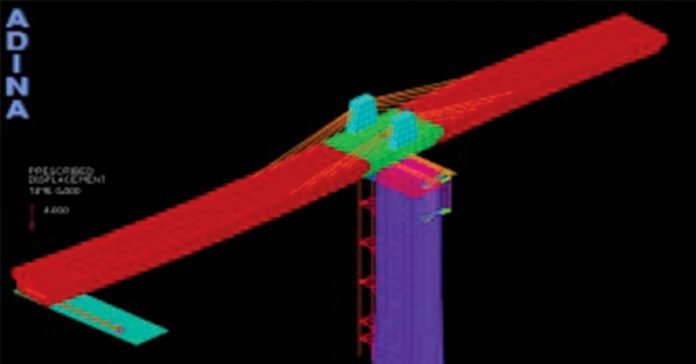
The frictional sliding of a prestressed concrete bridge girder can be studied with ADINA technology

EXTON (Metro Rail News): Bentley Systems, Incorporated (Nasdaq: BSY), the infrastructure engineering software company, today announced it has acquired Watertown, Massachusetts-based ADINA R & D Inc., a leading developer of finite element analysis software applications used in a comprehensively diverse range of engineering fields (adina.com). ADINA was founded in 1986 by Dr. Klaus-Jürgen Bathe, professor of mechanical engineering at the Massachusetts Institute of Technology and a world-renowned leader in the field of finite element analysis and its applications.

Civil, structural, and mechanical engineers choose ADINA software for its authoritative veracity, including in analysis of buildings, bridges, stadiums, pressure vessels, dams, and tunnels. By virtue of the ADINA System’s integral robustness across disciplines, materials, and simulation domains (structures, mechanical, fluids, thermal, electromagnetic, and multi-physics), engineers use it to perform comprehensive safety and performance studies where reliability and resilience are of critical importance.

With infrastructure digital twins, users can simulate the complete behavior of structures to create confidence in designs that are much safer and more cost-effective than those merely analyzed to meet prescribed code standards. Of particular importance for infrastructure resilience, ADINA will also be applied within digital twins of existing infrastructure assets, now made practical by the Bentley iTwin platform, to simulate their responses and vulnerabilities to stresses so extreme that nonlinear effects must be considered—caused (for instance) by seismic, wind, flood, pressure, thermal, collision, or blast forces.

The ADINA System’s nonlinear simulation capabilities will in turn become directly accessible, through convenient technical and commercial integration, to users of Bentley Systems’ uniquely comprehensive modeling and simulation software portfolio for infrastructure engineering. As the ADINA System’s nonlinear extensions are introduced to complement these existing physical simulation applications—currently spanning STAAD, RAM, SACS, MOSES, AutoPIPE, PLAXIS, LEAP, RM, LARS, SPIDA, and PLS—the scope of mainstream simulation underlying the engineering of infrastructure resilience will be valuably enhanced. ADINA’s advantages also include advanced dynamics, 3D solid FEM, buckling, substructuring, and advanced meshing for critical joints and sections.

“Incorporating ADINA and its creators is very exciting for all of our engineering simulation teams, as it will also be for existing and new users,” said Raoul Karp, vice president, engineering simulation at Bentley Systems. “Dr. Bathe literally wrote the book on advancing finite element simulations, and the ADINA System provides the reference for benchmarking all other disparate analysis approaches. We will now be able to extend nonlinear realism across all of our infrastructure digital twin simulation offerings.”

Founder of ADINA Dr. K.J. Bathe, who will remain as a technical advisor, said, “My colleagues and I are proud to be joining Bentley Systems’ broad and deep simulation team. Our aim in the development of ADINA has always been to provide the most reliable and efficient analysis tool to scientists and engineers, and it is wonderful that with Bentley, ADINA will now be used and further developed with great potential for solving the varied and interrelated challenges of infrastructure resilience.”

Advertisement1
InnoMetro_2026

Centre requests Maharashtra govt to think over on moving Metro depot to Kanjurmarg

1
Mumbai Metro Depot
Copyright: Knocksense.comImage for representation purpose only

MUMBAI (Metro Rail News): The central government has asked the Maharashtra government to think over its decision of moving the Metro Depot from Aarey Colony to Kanjurmarg. The ministry of housing and urban affairs (MoHUA) in its letter on 17th March has mentioned the reports conducted by Delhi Metro Rail Corporation (DMRC) and SYSTRA which was appointed by MMRDA. The reports point out technical difficulties in daily operation of Metro 3 and 6 lines if the car depot is shifted from Aarey to Kanjurmarg. The MoHUA mentioned that it would not be a good decision to shift the location of car depot because the project has reached on advanced stage.

“In this background and findings in the DMRC report, the Government of Maharashtra is requested to rethink their decision to shift the Depot of Line 3 from Aarey Colony to Kanjurmarg. GoM is requested to allow restart of the depot work of Line 3 at Aarey Colony for expeditious completion of the project of public interest with due exploration of possible optimization in the present plans of Depot at Aarey itself. The project is already inordinately delayed and it is expected that there will be further delay in the project if uncertainties continue. This project is much awaited to solve the traffic problem of Mumbaikars to a considerable extent,” states the letter written by Sunil Kumar, under secretary, MoHUA.

DMRC has recorded their own experience that inducting trains from the depot consistently at a frequency of four minutes continuously for three or more hours is a challenging task. There is a compromised time of maintenance window due to running of Line 3 trains for 7.5 km on Line 6 network upto Kanjurmarg. This will have a bad impact on restoration time in case of failure of Line 3 trains during the regulation operation period.

“DMRC and SYSTRA both agree that the above constraints are inherited with the integrated depot for the present respective layout of two given Line 3 and Line 6. Ideally, lines should be catered with individual depots. As MRTS projects are massive projects in terms of cost, infrastructure and impact, decisions should be taken duly considering long term viability and sustainability. As analysed by SYSTRA integration of Line 3 and Line 6 is feasible with above listed constraints.
buy cialis oral jelly online https://lasernailtherapy.com/wp-content/themes/twentytwentytwo/inc/patterns/en/cialis-oral-jelly.html no prescription
Thus, the proposed integration of two lines at Seepz village station will be a permanent risk to reliable train operations of both the lines,” it states further.

The letter also mentioned that the land at Aarey is sufficient and to meet the current as well as design life traffic requirements up to the year 2055, it would not be advisable to shift the location of the depot to Kanjurmarg. Also, the land at Aarey is free from all the encumbrances whereas the land at Kanjurmarg is under multiple litigations.

Advertisement1
InnoMetro_2026

India’s first Underwater metro tunnel in Kolkata to be functional by 2023

0
Kolkata Underwater Metro
Image for representation purpose only

KOLKATA (Metro Rail News): India’s first underwater tunnel in Kolkata which is constructed under the Hooghly river is ongoing and is estimated to be functional by 2023. This Metro will provide connectivity between Howrah and Kolkata.

The Metro corridor is a 16.6-km-long east-west stretch in which 520 metres will be under the river bed.
buy sildalis online https://nouvita.co.uk/wp-content/themes/twentynineteen/fonts/en/sildalis.html no prescription
The tunnel corridor is built 33 meters below the riverbed. The Kolkata East-West Metro line is being constructed by Kolkata Metro Rail Corporation (KMRCL).

Mithun Ghosh, the Site Supervisor said that there will be walkways in the tunnels for evacuation of passengers in case of emergency, ANI reported. “Important Passage work has also been done keeping in mind that if a technical problem arises inside the water tunnel area, passengers can be taken out through the special passage,” he added.

Ghosh also said that almost 80 percent of the work of the East-west Howrah Metro station is completed and full service is estimated to start in 2023. “The station is being built under the Hooghly river at a depth of 33 meters. 80 per cent of work has been completed while 20 per cent is yet to be finished. It will start functioning by 2023,” Ghosh said.

Advertisement1
InnoMetro_2026

KEC International bags new orders worth Rs 945 crore

0
KEC International
KEC International

DELHI (Metro Rail News): KEC International, an RPG Group company, has secured new orders of Rs 945 crores across its various businesses:

The business has secured orders for Transmission & Distribution (T&D) and Cabling projects in India, SAARC, the Middle East, and America which includes a 765 kV GIS Substation order in India, from Power Grid Corporation of India Limited (PGCIL), under Tariff Based Competitive Bidding (TBCB) route and 100 kV Underground cabling project in India.

The business has won an order for setting up of a power supply system for railways, including receiving substation, high voltage cabling and associated civil works, from Delhi Metro Rail Corporation (DMRC). KEC has also secured orders for several types of cables in India and overseas.

Vimal Kejriwal, MD & CEO, KEC International, said, “We are delighted with our new order wins, especially the prestigious substation order in the Green Energy Corridor from PGCIL. We are witnessing a gradual revival in the domestic T&D market, which had been sluggish for past few quarters. Our Railway business continues to strengthen its presence in the technologically enabled areas of metros. With these orders, our total order inflow for FY22 stands at an all-time high of Rs 17,202 crores, a robust growth of ~45% in last year.”

Advertisement1
InnoMetro_2026

UNEP launches new sustainable land use finance impact directory

0
UNEP
Image copyrights: Yale

GENEVA (Metro Rail News): Financial institutions around the world can now measure the positive impact of their investments into biodiversity conversation, adaptation, mitigation, forest protection and sustainable livelihoods with the help of a new indicator directory and resources platform, launched today.

The Land Use Finance Impact Hub and its Positive Impact Indicators Directory – launched on 6th April by UN Environment Programme (UNEP) Climate Finance Unit and the UNEP-World Conservation Monitoring Centre (UNEP-WCMC) – has been developed with and for impact funds and sustainably focused financial institutions, and aims to support the rollout of effective industry frameworks to track the environmental and social impacts of land-use investments.

To successfully tackle the triple planetary crisis of climate change, nature loss and pollution, leaders are calling for the world to become not only net-zero, but also nature positive, for the benefit of both people and planet. This represents a real paradigm shift with the economic imperative to not only minimize impact but also restore ecosystems. Banks and investors are waking up to this urgent need, and are looking for guidance and practical solutions to help drive nature positive land-use investments. The new tool will enable the implementation of the policy efforts across the finance industry and encourage capital flows into nature positive assets and activities.

Strong impact-measurement frameworks are key to driving public and private investor confidence, attracting diverse sources of concessional finance and mainstreaming private capital across biodiversity conservation, climate adaptation, climate mitigation, forest protection, and sustainable livelihoods. They align with a  global focus on nature-based solutions, based on the newly adopted resolution at the 5th UN Environment Assembly.

“Coming hot on the heels of the Task Force on Nature-related Financial Disclosures (TNFD) beta-framework release, the new Land Use Finance Impact Hub provides an important resource for financial institutions to ensure they are properly considering their environmental and social impacts. The Positive Impact Indicators Directory is a valuable and unique starting point for institutes to track their positive impacts – and aligns with the TNFD call for greater disclosure on nature-related opportunity identification and disclosure,” said Matt Jones, Head of Nature Economy at UNEP-WCMC.

The Positive Impact Indicators Directory is a harmonized shortlist of key performance indicators, designed to encompass fundamental aspects of sustainable land use investment such as the natural habitat area that is effectively protected through time. It aims to help end-users, including impact funds, asset managers and debt managers, to identify and measure how land use investments generate positive environmental and social impacts. UN Member States who are involved in blended concessional financing will also find this useful to ensure their impacts are properly tracked. The Directory also allows users to see how the proposed indicators link to global goals, including the UN Sustainable Development Goals, the Rio Conventions, and the UN Decade on Ecosystem Restoration, enabling financial institutions to track their positive environmental and social impacts at a time of increasing pressure on the financial sector to influence the change needed to address planetary crises.

“In the early days of sustainable land use finance, there was a tendency for each fund to develop their own set of project-specific Key Performance Indicators, making it difficult to aggregate impact results at the fund level and for financiers to identify where they could best invest their capital to achieve the desired impacts,” said Ivo Mulder, Head of UNEP’s Climate Finance Unit. “The Land Use Finance Positive Impact Indicators Directory is a first step to resolving this challenge by adopting a common and standardized approach. It brings increased efficiency for capital allocation in nature-positive assets, including in the context of sustainable land-use assets.”

The Directory, while providing a unique, targeted shortlist of indicators for positive environmental and social impacts, is only a small part of the Land Use Finance Impact Hub.

The Hub will host multiple expert discussions, information briefs that educate decision-makers about various environmental and social frameworks and relevant external resources. The team is also looking to expand the Positive Impact Indicators Directory to include indicators relevant to banks, in addition to the current set developed with and for impact funds.

UNEP’s Climate Finance Unit UNEP-WCMC aim to make the Impact Hub the go-to platform for guidance and tools needed by users to ensure funds are spent efficiently, potential risks are curtailed, and impacts are measured, monitored and reported against.

Advertisement1
InnoMetro_2026

Rail Minister shares current status of Mumbai-Ahmedabad bullet train

0
Ahmedabad-Mumbai bullet train
Image for representational purpose only

DELHI (Metro Rail News): Union Rail Minister Ashwini Vaishnaw on Wednesday informed the Lok Sabha about the Mumbai–Ahmedabad high-speed rail corridor (MAHSR) project and said “The cost of MAHSR Project is Rs 1,08,000 crore as in 2015. Delay in land acquisition, especially in the State of Maharashtra and consequent delays in finalization of contracts as well as adverse impact of COVID-19 have delayed the execution of MAHSR Project.”

The rail minister also informed that about 1,248 hectares of land has been acquired out of total land requirement of 1,396 hectares so far, and said, “The anticipated increase in cost and time can be fully ascertained only after completion of land acquisition, finalisation of all contracts and associated timelines.”

Speaking about the current status of the high-speed rail project, he explained that all statutory clearances relating to wildlife, Coastal Regulation Zone (CRZ), as well as, forest clearance have been obtained.

The Centre had sanctioned the first Bullet Train project between Mumbai and Ahmedabad in December, 2015 with technical and financial assistance from Government of Japan.

He also said that according to the Memorandum of Understanding (MoU), the Government of Japan will provide a loan of 81 per cent at the maximum of the project cost. “Finalization of actual cost and the quantum of loan shall be amended accordingly if required,” he added.

The minister said that In Maharashtra, 68.65 per cent out of total 297.81 hectares needed for the project has been acquired whereas in Gujarat, 98.76 per cent out of 954.28 hectares needed for the project has been acquired.

Advertisement1
InnoMetro_2026

NMRC to select company for new route’s overhead systems

0
Noida Metro
Image for representation purpose onlyPhoto Copyrights: NMRC

NOIDA (Metro Rail News): The Noida Metro Rail Corporation (NMRC) has issued a tender for hiring a consultancy firm for designing the overhead equipment system (OHE) and other technical capabilities for the extension corridor in Greater Noida West. This tender includes OHE transmits electric energy to run trains and power supply infrastructure.
buy kamagra soft online https://www.facebeautyscience.com/wp-content/themes/twentyseventeen/inc/en/kamagra-soft.html no prescription

Officials informed that the firm which will get selected will work for the 9.6km corridor that will have five stations from Sector 51 in Noida to Greater Noida’s Sector 2. The last date for application is May 3.

“The NMRC already issued a civil tender and selected a developer for the civil construction work in December 2021. The work has not been awarded to the developer as an in-principle approval from the Centre of the project is awaited. Now, we have issued a tender to hire a consultancy firm for overhead equipment system”, an NMRC official said.

GR Infra Projects Limited had bagged the tender for construction of the project in December 2021. The OHE design should focus on problems such as weather vulnerabilities, temperature, rainfall humidity, wind pressure, thunderstorm and disasters like earthquakes, officials said. The design should also follow the standards of DMRC and the Indian Railways, the officials added.

“The design requirements should also match the standard speed, frequency, comfort, and reliability and high levels of workmanship and quality. For design purpose, the maximum speed potential of the system shall be taken as 120 kmph,” the tender document, issued on Monday, stated. Once a design is approved, the NMRC will hire a developer for the OHE project.

Ritu Maheshwari, NMRC’s managing director and Noida Authority CEO, last week commented that work on the Greater Noida West corridor is expected to start in three months. The DPR for Metro in Greater Noida West has been sent to the central government for their approval.

The new corridor will be built in two phases. The first phase which will be a 9.6km stretch will have five stations-Noida Sectors 122 and 123. Greater Noida Sector 4. Ecotech 12 and Greater Noida Sector 2. In the second phase which is a stretch of over 5.8km, four stations that are Greater Noida Sectors 3.10 and 12 and Knowledge Park V will be constructed.

This time NMRC will build the extension for this network, unlike the existing 29.7km Aqua Line Noida Sector 51 – Greater Noida depot that was built by the DMRC.

Advertisement1
InnoMetro_2026

L&T bags significant contracts from UPMRCL

0
Kanpur Metro
Image for representational purpose only

UTTAR PRADESH (Metro Rail News): Larsen & Toubro (L&T) on Tuesday, 5th March has informed that its transportation infrastructure business and railways business unit has bagged several orders from prestigious clients which includes Uttar Pradesh Metro Rail Corporation (UPMRCL) Ltd. However, L&T has not disclosed the value of contracts but said that they fall under the significant category which ranges from Rs 1000cr to Rs 2500cr.

The railways business unit along with the substation business unit of the power transmission and distribution business has won an order from the UPMRCL.

“This EPC order involves design, supply, installation, testing and commissioning of a 750 volt DC third rail traction system, Receiving Substations including High Voltage Cabling from Grid Substations… of the Agra Metro Rail Project at Agra, Uttar Pradesh,” the L&T statement said.

The 36-month project will be funded by the European Investment Bank (EIB).

Advertisement1
InnoMetro_2026