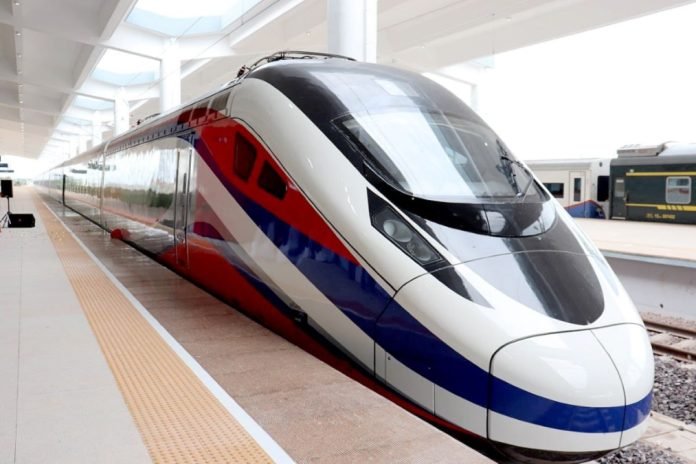
New Delhi: Prime Minister Narendra Modi has flagged-off the Delhi-Faridabad Metro Line that would allow hassle free travel for around two lakh daily commuters between the national capital and the industrial hub in Haryana.
The extension of the Delhi Metro connects Badarpur to Escorts Mujesar in Faridabad.
The total cost of the project from Badarpur to Escorts Mujesar is nearly Rs. 2,500 crore. Out of this, Rs. 1,557 crore was borne by the Haryana Government, the Centre contributed Rs. 537 crore, while the Delhi Metro provided Rs. 400 crore.
All these are elevated and located on either side of the Delhi-Mathura Road (NH-2).
“The nine-station metro corridor which was 95 per cent indigenously built will provide people a safe, affordable, quick, comfortable, reliable, environment-friendly and sustainable transport facility,” a Haryana government spokesperson said.
Haryana Chief Minister ML Khattar, addressing a press conference on Saturday, had thanked the Prime Minister for “gifting” the Metro service which would take the city to “another level of progress” with better connectivity with other NCR towns.
He had also said that the Prime Minister would be announcing the go-ahead for connecting Gurgaon with Faridabad by Metro.
UTTARAKHAND (Metro Rail News): Ministry of Railways shares its current progress Report of Rishikesh- Karnaprayag Project on its Twitter handle.
Rishikesh – Karnaprayag Project Progress Report:
1) Land Acquisition: 100% 2) Forest Clearance: 100% 3) Tunnelling Work: 58.7 km completed 4) Adits: 7 completed 5) Major Bridges: Work in progress on 17, of which 2 are near completion 6) Minor Bridges: 15 of 34 completed pic.twitter.com/IzKcyTHedX
One of the Indian Railways‘ most ambitious projects is the connection between Karnaprayag and Rishikesh. Despite geographical and technological difficulties, the project is moving quickly over Uttarakhand’s difficult terrain. The project, which aims to provide last-mile connectivity, will further the socioeconomic and cultural growth of the hill state.
The Rishikesh-Karnaprayag Rail Project, in addition to giving tourists easy access to Kedarnath and Badrinath, is crucial for the country’s defense requirements. The new line project between Rishikesh and Karanprayag was approved in the Union Budget for 2010–11. The project is expected to cost 16,216 crore rupees.
Metro Rail News conducted an email interview with Mr. Mike Muralidharan, Chief Operating Officer, Bahwan CyberTek. In the interview, Mr. Muralidharan talked about Bhawan CyberTek growth journey and digitalization in Indian Railways.
In his role as COO, he spearheads the global operations and steers the organization’s business across various geos. Muralidharan has over 26 years of experience in running various organizations in the areas of Marketing, Operations, Human Resources and Support Services along with overall enterprise management.
Here are the edited excerpts: –
Apart from various other recognitions the company has received, Bahwan CyberTek is one of the first 50 companies worldwide to be assessed at CMMI Level 5 version 1.3 company for its process and delivery excellence. From a fair start in 1999 to the present status. How do you see the growth journey of Bahwan CyberTek (BCT) Group?
Since its inception in 1999, BCT has been a product and innovation-driven organization. We specialize in value delivery for customers and help them stay relevant in a constantly evolving business landscape. Value has been a common thread driving BCT’s growth plan right from our first online product Cashswitch, to our successful innovations such as Dropthought for 360-degree digital experience feedback, rt360 for Banking sector and retina360 for the broader industry.
Adopting a future-fit mindset and razor-sharp customer focus has helped us gain market acceptance and recognition from across industry sectors. The CMMI level 5 appraisal is an acknowledgement of continuous process improvement, dogmatic compliance, and our capability to go that extra mile to deliver optimum value to customers. This strengthens our go-to-market strategy and positions BCT as an authentic and industry-leading digital transformation partner.
Over all these years, we have been committed to being a hybrid organization straddling on both product engineering and services. Both these engines have grown steadily over the years. Our journey has been marked by the launch of multiple products in different focus areas like Digital Experience, Predictive Analytics and Digital Supply Chain Management. Apart from home-grown products, we have also acquired products to expand our offerings. Today, we are serving large customers in areas such as AMS, EAM, Digital, Cloud and Data Services.
Today, we are present in 20+ locations, have 4000+ associates and have more than 1000 clients.
As a company, we focus on collaboration and connected innovation. Our journey of 23 years saw us partnering with globally acclaimed companies like TIBCO, IBM, and Oracle, with whose platforms we’ve been delivering enhanced solutions to customer-specific issues. Our collaborations share the common goal of delivering maximum value to customers and not just on bottom line improvement.
BCT today is a well-known name in providing digital transformation solutions. What major efforts is being done by the company in delivering digital innovation solutions in the areas of Predictive Analytics, Digital Experience and Digital Supply Chain Management across various sectors and destinations the organisation is offering its services?
Our digital journey started way back, before the quantum digital leap that the world was forced to, during the pandemic. We had created a strong portfolio of accelerators in the products space and were helping clients realize their digital transformation goals, while others were just getting started.
For us at BCT, digital innovation solutions are table stakes. We have invested time and resources in developing sophisticated technology for smarter operations, better results, and an improved bottom line. And this helped us develop competitive capabilities in emerging technologies like predictive analytics, AI, ML, IIoT, etc. BCT has developed a cornucopia of products.
Our products in Predictive Analytics include retina360, which is a patented AI and ML powered platform, and rt360, which is a risk management product suite that manages the entire risk portfolio of banks and financial institutions.
For enhancing Digital Experiences, we have dropthought, which uses an AI/ML-powered deep analytics NLP engine to gather instant feedback from all stakeholders, privately. Additionally, we have CueTrack, a comprehensive customer service management solution for effective management of customer complaints, and thereby improve their satisfaction levels.
Our futuristic supply chain solutions use IoT, sensors, and other digital technologies to assess, track, monitor, and manage end-to-end logistics operations. FuelTrans is an end-to-end fuel station automation and logistics solution for oil marketing companies. Our other product CueTrans is an integrated Logistics and Transportation products suite that helps manage and optimize the end-to-end process for cargo, materials and people logistics.
What does digital transformation mean for India? How do you see the future of digitalization in Indian economy especially Indian Railways?
Thanks to Digital India, our digital transformation was well on track before the onset of the pandemic. Today. Our UPI systems are probably the most mature in the world, and India is perhaps one of the biggest spenders in the digital transformation space along with the United States, Europe, and China.
Digitalization in the railways can enhance the passenger experience, improve asset management, make journeys faster and safer, and ensure comprehensive train services. Indian railways, which are among the top 5 longest railway networks, offer a huge scope for transformation.
The consequence of transformation will not be limited to the mobility industry but will have ramifications on the nation’s economy as well. Diligent Digital permeation can strengthen railway logistics with the relevant products and solutions to expand the network across the length and breadth of the country, creating a seamless trade route to bolster the economy. A sophisticated railway transport will play a crucial role in moving production materials, optimizing manufacturing and export.
Recognizing this potential, the Indian railways recently announced Rs 50 Cr investments annually to fund start-ups as part of the Indian Railway Innovation Policy. I’m confident this program will identify and enable Indian tech entrepreneurs to invest time and talent in developing sustainable, practical, scalable solutions and functional prototypes for the national transporter.
How are you contributing to the management and maintenance of railroad infrastructure in a sustainable manner, optimizing costs and enhancing safety through digital enterprise asset management?
Not just the railways, but almost all asset-intensive industries such as energy, oil & gas, transportation, telecom or logistics require smarter enterprise asset management roll-outs for effective maintenance and optimized enhancements.
BCT offers a bouquet of products and services for the transportation industry, with specific reference to rail. We offer comprehensive services around IBM Maximo, one of the world’s leading solutions for enterprise asset management. With our retina360, we have on offer effective energy management solutions. We also offer ERP, Predictive Analytics, Passenger Experience Management etc. that are helping not just in the maintenance of the railway infrastructure, but also to enhance the experience of stakeholders, reduction of breakdowns and managing the HSE aspects of employees.
Please tell us something about your recent rollout, of the prestigious CAMS project at Mumbai Metro (MMRCL). How are you delivering the expected enterprise-class EAM solutions for the project? What is the present status of the project?
BCT is delivering an integrated CAMS to optimize processes, perform lifecycle cost monitoring and improve the cost efficiency of MMRCL. BCT’s technology experts, enterprise solution architects, and integration and quality assurance experts will be engaged in the project for a total period of 4 years.
The CAMS solution will help MMRCL manage different types of assets such as rolling stock, tracks, power supply systems, traction systems, signalling and control systems, platform screen doors, telecommunication systems, plants and equipment, automated fare collection systems, escalators, and lifts, tunnel ventilation systems, security systems, infrastructure, and related system and electro-mechanical systems like fire alarms, domestic water, lightning, etc. through a single-window enterprise application.
Railways in India is going through a transformational change. The national transporter is focussing on new opportunities and future strategies to fast-track project execution. Having executed large scale EAM projects in different parts of the world, in what ways are you playing your part in this transformational journey of Indian Railways?
This is the time for Railways 4.0, a time to take full advantage of Industry 4.0. Our experience and technical expertise in predictive analytics, AI, ML, IoT, and data science can improve predictive maintenance, optimize processes, and improve cost efficiency. Our AI/ML-driven integrated asset management solutions keep critical assets operating at maximum efficiency. Our sophisticated solutions based on technologies like predictive analytics, AI and ML, bring the board rooms closer to where the action is at a time when real-time, data-driven decision-making has replaced tried-and-proven approaches and boardroom hunches, these solutions have made a huge impact in keeping the business healthy as well as establishing stakeholders’ trust.
Digitalization in rail transport can lead to safer connectivity, better passenger experience, and above all increased reliability in public transport.
While driving innovation through outcome-based business models, proven and powerful IP solutions, which major sectors amongst fortune 500 companies, are you partnering with presently? What have been the landmark innovations and major accomplishments?
Our focus on IP is based on a simple architectural concept – to sense; to analyse; to predict; and the capacity to drive business decisions. Our products, across verticals, are designed with this foundation.
In terms of Fortune500 companies, we are serving one of the world’s largest bio-tech companies, with complex integrations, and new application development. We are also empowering a large bookseller company in the US with their entire technology backbone.
Our hit product drop thought onboarded several new customers last year and witnessed a significant increase in its user base, while rt360 won multi-million deals from public sector banks in India, became cloud-ready and added a new product to cover the governance, risk and compliance space. Retina patented its ‘Intelligent Decision Synchronization Technology in real-time’ and FuelTrans had a strong year with significant wins, setup a new Network Operation Center, and had successful implementations in the African market.
You are also known to play an active role in creating knowledge pools to tackle the growing demands of emerging technologies like AI, ML and IoT. Please elaborate your efforts on the same. What have been the major accomplishments in strengthening collaboration between industry and academia by BCT group?
Employee experience is no longer a mere catchphrase. It’s a business priority. The flexibility to work from anywhere or democratized learning, enabling upskilling on the go, has become the norm. And this is what we’re catering to – building workspaces or ecosystems that augment individual strengths and thus the entire organization’s performance.
At BCT, we have embraced a culture of learning that has helped us build our knowledge capital. Employees today see value in pursuing a career with a company that invests in their development. To upskill, we developed a robust learning program called ‘Learning Gateway’ to help employees learn from anywhere, anytime. Last year alone, we had 300+ associates benefitting from this program by getting upskilled. We also have leadership development programs, certification drives and soft skill programs to enable our associates to move up the value chain. These programs help us stay in sync with the changing needs of our customers globally.
Our differentiator is our knowledge capital, and we will continue to invest in the student community to strengthen our value proposition. In Chennai, we began our first academic partnership with the launch of the ‘AU-BCT Kalam Centre of Excellence’ in the Anna University’s campus in 2012. Since then, our industry-academia partnerships in various other colleges, have given students, the access to cutting-edge technologies, and our associates, access to fresh innovative ideas. Recently, we signed MoUs with Heriot-Watt University, BITS Pilani – Dubai, and Evolvence Group in the Middle East.
Please share some details about the CSR policy of the company. Being one of the fastest growing IT companies of the world and recognized for excellence in various forums what are your efforts and contribution for New India and Atmanirbhar Bharat?
We have a strong focus on CSR. Every year, we support various initiatives, along with NGOs, across countries. We have been investing in initiatives that are helping use technologies to better life and alleviate suffering. We contribute to the care of the elderly, along with NGO’s. We partner ALERT NGO, to evangelise the knowledge of emergency response, in case of accidents or other trauma situations, by training the common people as volunteers. We are working to provide education for children fro, the economically backward segments of our society. We focus on providing vocational training for helping people use technology for furthering their career. All the initiatives we are investing in contributing towards the Atmanirbhar Bharat initiative in areas like training and education and entrepreneurship.
Please share your views about Metro Rail News. Any message for our readers?
This is the destination for news on rail mobility and I have enjoyed reading the editions online. I’ve also found your events to be impactful and made some great connections there. My best wishes to the team!
PATNA (Metro Rail News): Nitish Kumar, the chief minister of Bihar laid the foundation stone for the underground construction project of the Patna Metro Rail on Thursday. Newly appointed deputy chief minister Tejaswi Yadav was also present along with Nitish Kumar at the foundation stone laying down ceremony.
Bihar CM Nitish Kumar laid the foundation stone for Patna Metro Rail Project underground construction pic.twitter.com/UutEWo0ryv
The estimated cost of the project is Rs 19,500 crore. The proposal calls for the construction of 26 metro stations.
On February 17, 2019, Prime Minister Narendra Modi placed the first brick of the Patna Metro project. Patna Metro train line is 31 kilometres long. The project’s first line will link Danapur and Mithapur-Khemni Chak. The second line will run between Pataliputra Bus Terminal and Patna Railway Station.
Chief executive officer of the Delhi Metro Rail Corporation Vikas Kumar also paid a visit to the city in July to assess the Patna Metro project’s advancement. He stated that after the project is finished nearly a million passengers from the capital of Bihar will be benefitted from it, and it will also reduce the number of vehicles on the road and improve congestion.
Aerial of Metro Trains arrival and departures at MG Road Metro Station, after Bangalore Metro was inaugurated and was opened to public today from MG Road to Byappanahalli, in Bangalore on Thursday 20th October 2011. Express photo
India has emerged as one of the most preferred investment destinations in the world in last few years. Nation is poised for a balanced economic growth amidst tough and unprecedented times. This is backed by a 550 mn young human capital base and strong policy environment. Greener technologies and India as a manufacturing hub provides opportunities for collaboration between auto manufacturers and subsidiary industries to reduce cost and improve quality.
With the target of 100 smart cities and the rising urban population, the scenario of public transport and urban mobility needs improvement and further investment. The National Transport Development Policy Committee formed under the aegis of Government of India says that the total passenger traffic is expected to grow at about 15% per annum to reach 168,875 bpkpm in 2031-32 from 10,375 bpkpm in 2011-12. This is a significant growth. The statistics also say that growth in rail passenger traffic is expected to be around 9% per annum, and for road traffic, 15.4%. This kind of expansion requires support from the government and private funding and proper infrastructure.
In absolute terms, there is a requirement of about INR 30 trillion by 2031-32. A large portion of this investment should and can go into improving transportation by way of introducing smart technology. Developed economies around the world have understood the importance of smart transportation. And they are fast adopting various means and modes of transportation that involve the use of electric cars, use of quick, easy mass transit systems, rapid metro rails and the use of advanced technology that controls vehicular movement and mobility across the cities. These means are not just energy saving but are efficient and futuristic.
India remains no different from the use and implementation of smart transportation. Existing and upcoming metro rail network around our capital cities is just a start. India has already chalked out a plan to have electric cars for all by 2030. With ongoing technological developments and efforts at multiple levels the nation is expected to reduce carbon emission from vehicular sources, create huge job opportunities in transport and automotive industry and develop a sustainable and smart transportation system for its growing economic and public mobility requirements in coming decade. The investments in surface transportation projects will create a world class transportation infrastructure; bring best vehicle technologies, sustainable choices and intelligent transportation system in India.
The world’s third-largest rail network, IR too, is undergoing a significant transformation led by large capital investments. Digitalization around asset management and network operations are not only improving safety, on-time performance, network throughput, and asset performance but also enhancing the passenger experience and empowering the organization to move fast enough to meet the market’s changing needs.
A combination of strong policies, regulation, public and private sector investments and public awareness will bring the desired change for implementing and executing the dream of smart transportation in the country. The day is not far when India will showcase its transportation sector to the world. Sustainable choices for public transport coupled with greener fuels will greatly enhance the quality of life for the citizens and give a push to the economic activity in the long term.
The nation is evenly poised for a developing, competitive and ushering India in its 75th year of Independence and its ‘Amrit Kaal’. 25 years from now and with the same pace of development and reforms the countrymen shall surely witness a revived India in its 100th year of Independence in 2047.
Wishing the readers with happiness of 75th Independence Day, we ecstatically present you our August special issue covering the developmental works the country has witnessed in recent years in a holistic approach. Significant infrastructural work also is witnessed in railways which again is a topic of greater importance. With regular columns, insightful and informative articles, interviews etc. we also announce our upcoming 200 pages Mega September – 2022 issue which surely shall be a must possess edition for all transport news readers.
The world is experiencing unprecedented levels of urbanization as the majority of people now reside in urban areas. By 2030, three-quarters of the world’s population will be urban, and the biggest cities will be found in the developing world. As climate change threatens to change the face of the planet, mega-cities loom as giant potential flood or other disaster traps, especially for billions of the world’s urban poor – who are often in slums – and who are always the most exposed and the most vulnerable. However, it is no coincidence that global climate change has become a leading international development issue precisely at the same time and virtually at the same rate as the world has become urbanized. This is because how we plan, manage, operate and consume energy and transport in our cities is, in fact, the key driver behind the phenomenon of global warming. 75% of global energy consumption and 80% of GHG (Greenhouse Gas) emissions that cause global warming come from cities. Therefore, it is crucial to recognize that cities and urban residents are not just seen as victims of climate change in terms of sea-level rise but part of the problem of climate change. And if cities are part of the problem, that means they are also inevitably part of the solution.
Urban Transport and Urban Energy Challenges
Urban transport is the planet’s fastest growing source of GHG emissions. However, more responsible planning and management are key concepts for the search of a less polluting urban transport. This issue is compounded by the fact that millions, upon millions of urban residents living in developing country cities have virtually no access at all to any sort of motorized transport, much less a private automobile and so pollute next to nothing now. But we need to pay closer attention to the coming environmental implications when these same urban residents also demand mobility and transport just like any other urban resident.
As the world has moved into the 21st century, transport-related challenges have already grown quite severe in cities throughout the world and in countries at all levels of development. The growth of cities consumes space for natural areas; the generation of power for the cities contributes significantly to climate change and therefore, city residents are exposed to unhealthy levels of pollution. At the same time that the negative environmental impacts of urban transport consumption are manifesting themselves on local, regional and global levels, the demand for transport continues to grow. Unfortunately, the environmental externalities generated by conventional energy systems are eroding the health and productivity of citizens in many developing country cities, and so new paths towards more efficient and sustainable patterns of transport consumption must be pursued in these areas.
The Paradox of Urban Welfare
Historically, cities throughout the world have been arenas of tremendous economic and social development. The higher densities of people and material resources found in urban areas allow significant gains in productivity to be achieved, while reducing human impacts on natural ecosystems. From both a human development and environmental point of view, it makes eminent sense to encourage the continued growth of high-density population centers — provided underlying developmental problems can be addressed. However, urban structures affect energy requirements and consumption patterns in many distinct ways. Low-income rural migrant populations, generally used to relatively easy access to non-commercial fuels in their villages, find it hard to secure such fuels when they migrate to cities and are often forced to buy commercial fuels for the very first time and at great expense.
Cities, Pollution and Climate Change
The combined effects of energy overconsumption in affluent cities and inadequate energy sectors in developing cities are clearly producing serious pollution problems on local and regional levels. Though the casual connections are less obvious, it is also known that urban settlements are contributing significantly to the problem of global warming. It has been estimated that more than 1 billion people throughout the world live in urban settlements where air pollution levels exceed health standards. On top of the human toll registered in these figures, there are growing financial costs as well. In developed countries, air pollution is estimated to cost around 2 per cent of GDP; in developing nations such pollution can cost anywhere from 5 to 20 per cent of GDP. On a global scale, the health costs of urban air pollution are thought to approach US$100,000 million annually (World Energy Assessment, UNDP, 2000). Though the problems inherent in low-density, automobile-reliant cities are increasingly in evidence in more developed countries and cities, this model of urbanization is being replicated in many cities around the world. The rate of growth of motorized vehicles in the developing world can reach 10%, a rate much higher than a country like USA, the bastion of motorized vehicles. Changes in urban land use patterns can have important effects on the viability of the modes of transport that are most important to the urban poor: non-motorized transport (walking, cycling, animal traction etc) and public transport. These modes are vital to allowing low-cost mobility and hence access to a range of urban opportunities for the poor, including a wider choice of housing. Besides, these modes of transport are much more environmentally friendly since they produce almost no GHG emission.
Unfortunately, certain common trends in land use as cities motorize have a tendency to undermine these low-cost modes to the detriment of the mobility of poor and increase the GHG emissions. However, the urban poverty of the world does contribute to the problem of pollution in multiple ways. For example, the World Health Organization estimates that 1.6 millions deaths per year, of which 60 % are women and children, are associated with indoor air pollution from the use of biomass. UN-Habitat recent studies show that the urban poor and especially slum-dwellers are particularly hard hit by lack of access to modern energy. They pay more for their cooking, water and electricity than wealthier people connected to the service networks. In order to cover the need for fuel without having to pay these high prices, sometimes they reproduce rural energy production techniques in the cities, causing serious local impacts. The primary responsibility for reducing such impacts therefore should rest on those living in the wealthiest regions of the world economy. While cities in the developed world confront problems originating primarily from overconsumption, metropolitan areas in the developing world face a much more complex set of energy dilemmas.
On one hand, the vast majority of urban residents in cities throughout the Southern hemisphere suffer from inadequate access to modern energy systems. While on the other hand, even at low per capita levels of consumption many of these cities are generating very intense forms of pollution. There are a number of factors that are producing this uneven combination of low per capita consumption rates with high aggregate urban emissions throughout the developing world.
For example, the lack of a system for wastes management forces many slum dwellers to burn their own garbage in areas quite close to their own homes. This process does not only increase GHG emissions, but harms seriously the health of slum dwellers. Cities themselves are thought to be particularly vulnerable to the consequences of climate change. It is expected that infectious diseases will proliferate in a warmer world, especially in dense urban settlements. Regional temperature rises will foster more urban smog. Changes in precipitation will adversely affect urban water supplies. An increase in extreme weather events will cause damage to urban infrastructure, and a rise in sea levels will begin to threaten coastal cities throughout the world. As the financial costs of global warming begin to mount, fewer and fewer cities will have the resources to foster the diffusion of new energy technologies that could reduce environmental impacts. The time for concerted action is clearly upon us. But are there alternative energy technologies that could provide solutions to the energy-related developmental constraints that are emerging in both affluent and impoverished cities.
A variety of options exist to reduce municipal outputs of greenhouse gases in the developing world:
Pricing energy products to cover their economic costs, thus encouraging conservation;
Removing market imperfections that impede efficient energy use in households, industries, enterprises, transport, and the public sector;
(c) Reducing losses in the supply of energy, e.g., generation, transmission, and distribution losses to urban electricity consumers;
(d) Promoting the substitution of cleaner alternative fuels and technologies, e.g. crop residues for agro-industries and households, and natural gas in industry and transport;
(e) Improving transportation systems through pricing, investment, technological options, and regulatory measures to reduce urban traffic congestion; and
(f) Managing peri-urban lands to maintain green zones and increase forested areas that, through photosynthesis, are important sinks for CO2. However, even if they were successfully implemented now, these measures would not preclude the unavoidable need to develop urgent pro-poor adaptation measures in cities.
By allowing access to employment opportunities, housing quarters and services, the transport sector meets basic human needs. No city can survive without transport, so it is not about eradicating means of transport. It is about improving its management so that transport does not become a necessary disease for the city. This is why we need to take a careful look at the impacts of transport in the cities and the overall environment. Transport has substantial impacts on global life-support systems, non-renewable resource consumption, sustainability of production of renewable resources, living conditions and human health and safety. The various reasons transport system globally needs to be in congruence with changing climatic conditions can be summarized as:
Global life-support systems can be significantly affected by transport-related emission of carbon dioxide and methane which contribute to the ‘greenhouse’ effect.
Transport exerts a demand on land for the construction of infrastructure; and the production of vehicles and the construction of transport infrastructure require significant quantities of mineral and other natural resources with limited possibility of re-use.
Transport affects sustainability of renewable-resource production, because emissions of nitrogen and sulphur oxides lead to atmospheric acidity which causes water and soil pollution, degradation of vegetation and a decrease in agricultural and forestry outputs.
The movement of vehicles in the main source of noise pollution. These phenomena affect, directly or indirectly, physical and mental health.
Construction of the transport infrastructure often disrupts neighborhoods, decreases safety, degrades the amenity of public open spaces and creates visual intrusions, damaging social and community values. Yet inadequate or unaffordable transport leads to excessive building and population densities, causing deterioration of the living environment.
Transport strategies integrated with Environment Management
The demand for environmentally-friendly transport and the ways in which it can be met, depend to a large extent, on how human settlements are managed. Therefore, it is possible to reconcile requirements for transport with the standards against the adverse effects of transport-infrastructure installation and operation. In devising transport strategies compatible with the objective of sustainable development, it is necessary to consider two issues simultaneously:
What is the indispensable level of transport provision, and what kind of transport facilities should be provided to meet this development within environmental parameters of resource use?
How should the transport sector be developed and managed to be sustainable itself, thus not undermining the sustainability of other sectors of the economy?
National policies on transport in human settlements are usually lacking, and transport planning at local levels tends to adopt, for the sake of simplicity, a strictly sectoral approach. The integrated approach significantly increases the complexity of planning in technical and decision-making aspects: It is however the only way to meet development in a sustainable way. Nevertheless, to be effective, integrated planning needs close interagency co-operation and strong urban management in general: this will be extremely difficult to achieve in developing countries where institutions tend to be unarticulated. Considerable efforts will have to be made to upgrade skills and improve management systems.
The political and managerial context throughout the Third World is too heterogeneous to propose universal recommendations. However, the following lines of actions deserve to be considered in any Urban Transport Plan:
Modifying and managing the demand for transport, including making changes in travel behavior;
Making modal composition in transport supportive of sustainable development;
Improving vehicles and fuel technologies.
Controlling the impacts of investment projects in transport on the quality of life;
Increasing the efficiency of transport operation;
Improving the maintenance of existing infrastructure and of vehicle in use.
These lines of action can be fully effective only if they are well co-ordinated and undertaken simultaneously. Any programme designed to improve transport must identify measures of improvement and establish a means for monitoring progress.
Understanding Transport for a Better Urban Management
Transport is an imperfect market in which the costs borne by users of transport services and infrastructure neither reflect fully social, economic and, in particular, ecological costs. Therefore, there is a need to manage the demand for transport, by applying policies which will create such conditions for the users of transport that their behaviors become compatible with principles of sustainability. Transport needs can be reduced, and their satisfaction at lowered costs and with lessened impact on the environment can be facilitated. This can be met if city planners aim a systematic distribution of activities throughout urban space, so that travel distances are shortened and transport units avoid excessive concentration. In this context, the importance of subnational development planning and local land-use planning should be fully recognized. This pertains, in particular, to developing countries, where planning tools can be potentially effective if they are geared realistically to the current processes of structural transformation.
For example, transport networks should be developed for the benefit of all sections of the community, in such a way that indispensable access to employment opportunities, housing opportunities and services is ensured for the sectors most excluded of society (economically and spatially). Fiscal policies and other economic measures should enhance efficiency in transport, discourage excessive use of cars and make car-users pay the economic and environmental costs of their travel. At the same time, environmental-friendly travel behavior should be encouraged, e.g. by raising awareness of transport-related environmental impacts and providing education on energy-efficient driving habits.
How to reconcile Transport and Environment
The detrimental effects of the activities of the transport sector on the biosphere, including consumption of energy resources, are mainly related to road transport. It is estimated that, in the member countries of the Organization for Economic Co-operation and Development (OECD), the non-internalized social costs of the road transport amount to about 5 per cent of gross national product. Although individual transport has numerous advantages in flexibility, speed, privacy and comfort of travel, these advantages should be weighed against their impact on energy consumption, land use and amenity.
In the conditions of large cities, the need for passenger accessibility and mobility should be largely met by public-transport modes which consume less energy and emit fewer pollutants per passenger-kilometer than private modes, which are economical in use of travel-way space and which support high urban-development densities.
Travel-way space for exclusive use of public transport should be created or reallocated from automobiles to public transport, whenever the latter solution is feasible. Buses are likely to retain, for a long time, an essential share in public transport; thus, there is the need to improve the operation, maintenance and management practices of bus transport and reduce its contaminant effects and, where feasible, use of electric trolleybuses and trams.
Rail-bound high-capacity public-transport modes might become indispensable in very large cities with strong and intensively-developed centers: these modes are also preferable for environmental reasons.
The bicycle is by far the most energy-effective means of passenger transport and most affordable for the urban and rural poor. Adequate attention should be given to the provision of safe cycle routes and parking spaces. Likewise, policies must support walking as a prime mode of transport, thorough the provision and maintenance of walkways.
Freight-transport polices should explore the potential of bicycles, battery operated, simple motorized, EV and solar powered vehicles for short-distance movement within settlements. Because of the variations in characteristics between modes and conventional motorized vehicles, special traffic-management measures will be needed to avoid conflicts.
Finally, the high dependency of transport on petroleum fuels makes the search for new fuels a very important issue. Therefore, environmentally sustainable alternatives and regulation of usage of conventional fuels must be a global concern and priority for governments.
Controlling Environmental Impacts of Transport – Infrastructure Projects
Investments in transport infrastructure have often been made worldwide without considering their impact on the environment. These projects always bring several types of impacts, such as smog, noise generation, land consumption, soil contamination, disturbances in water systems, deterioration of the built environment and visual intrusions. These issues are rarely taken in consideration in transport infrastructure projects. This practice needs to be changed, by requiring each project to contain an integral environment-impact assessment. Such a requirement has already been introduced in several countries which have recognized the insufficiency of financial and economic cost/benefit analysis for justification of projects. However, the methodology of environment-impact assessment is not yet sufficiently developed, and there is usually a lack of appropriate data to carry out such an assessment. In particular, there is a lack of satisfactory indicators of the performance of transport systems, with regard to their impact on health and other quality-of-life factors.
Increasing the efficiency of transport operations
Providing for priority in traffic of public-transport vehicles, at the expense of the free movement of individual transport, is fully justified by principles of equity and sustainability. Special attention should be given to the segregation of public transport from general traffic, and the provision of busways, Metro, Trams, RRTS etc. are promising options. The objective of a public-transport development strategy is to optimize the effectiveness and efficiency of a multimodal public-transport network. This can be achieved by enhancing modal integration and by ensuring the co-operation of all transport operators. However, this should be done without introducing transport operators.
Conclusion
Rich and poor people and nations are all responsible agents of pollution and Climate Change. The responsibility for the management of the environmental impacts of transport should be addressed by the local, regional and national government. And in order to make this feasible, the different layers of public administration must re structure themselves for a real integral work with aligned objectives. It is clear that cities are dependent on transport to survive. Therefore, environmental management of the cities cannot be about reducing or eradicating transport, but to look at the impacts that it causes in order to design an agenda that improves transport as well as the living conditions of the city. Urban transport as a necessary and obnoxious experience for the cities should be a problem of the past. It is important to remark that this does not rely only on technologic improvement, but on multiple factors that cross all the layers of public management. The threat of Climate Change is radically affecting the lives of the urban dwellers, so radical structural changes have to be addressed to meet sustainable cities for the future.
Indian railways have entered into a TOT agreement for manufacture of LHB coaches from M/S LHB-Alstom Germany. Now these coaches are being manufactured in India under the Transfer of Technology. These are superior coaches with respect to passenger comfort, higher safety, speed potential, lower corrosion and better aesthetics.
With the recent plan of Indian Railways to ramp up LHB coach production and rapid replacement of old design of ICF coaches by LHB design of coaches, there is need to upgrade the maintenance facilities in Coaching Depots and make use of technology available for Coach maintenance. This will also help in improved detection of defects during train examination and possibility of reduction in examination time of coaching rakes to enable maintenance depots to handle higher number of trains examined within the existence infrastructure. This will also ease out those coaching depots not having adequate pit examination capacity to some extent by saving in manpower deployed, pit line examination and maintenance time required for Coaching Rakes.
Maintenance schedules of LHB coaches are governed by guidelines issued by Railway Board, RCF, RDSO and CAMTECH from time to time. The present maintenance regime has evolved based on the performance of LHB coaches from field and periodic review of maintenance schedules and instructions. In the present setup, primary maintenance time of 6 hours is prescribed for coaching rake examination.
With introduction of higher speed of 160 and 180 kmph trains on Indian Railways, there is need to incorporate technological aids in train examination and remove existing limitations and bottlenecks in existing coaching depots.
Historical Background
Present system of coaching rake examination has evolved from conventional four-wheeler coaching stock and later with ICF design of coaches. With the introduction of imported LHB coaches in the year 2000 and indigenously manufactured series production, number of latest and sophisticated technology items have been introduced on Indian Railways. LHB coaches are gradually replacing and phasing out ICF design of Coaches.
Examination and maintenance of LHB rakes has been introduced in existing coaching maintenance facilities by incremental augmentation within the existing infrastructure both in coaching depots and workshops. There has not been any major technological input in terms of machinery and plant, automation detection systems and re-skilling of maintenance staff in coaching depots. Maintenance schedules for LHB coaches have been devised within the existing maintenance facilities constraints. Suffice it to say that with the continual induction of the sophisticated, computer and IT based technology at a fast pace the existing norms of maintenance of LHB and other advanced coaching stock need to be immediately revisited and upgraded.
With the rapid replacement of ICF coaches with LHB coaches and Indian Railways plan to phase out ICF coaches, there is an urgent need to equip all coaching depots, sick lines, pit lines, examination yards with modern and automated train examination system consisting of state-of-the-art inspection and measurement systems on Indian Railways.
The various modes of automatic train inspection and measurements systems
Wheel Profile Measurement System
Automatic wayside system measures the wheel profiles of moving trains. These systems are used to inspect wheels for preventative maintenance, maintenance scheduling, derailment prevention, and to reduce track and rail damage caused by excessively worn wheels.
It is rugged system that operates in harsh environments as well as workshops, depots, and yards. Capable of operating without human intervention for extended periods. Wheel diameter measurements at high speeds of up to 140 km/h is possible. The other variants allow for operation in low speed for specific conditions and provide a variety of different measurements.
It is an effective system and quickly pays for itself by improving wheel maintenance practices and eliminating derailments due to worn wheels. It increases the efficiency of wheel maintenance by identifying proactive maintenance practices based on the application of wheel wear rates and early wheel defect detection.
Wheel Tread & Surface Inspection System
The system is automatic non-contact optical wheel surface inspection unit that inspects wheel tread surface, flange, and plate areas at mainline operational speeds. Visual inspection of complete wheel tread and flange surface using optical imaging and 3D laser scanning is possible. The objective of the system is to determine any surface abnormalities of the wheel that can be detected using high resolution images of the wheel and high density 3D data of the wheel surface.
State of art digital imaging and laser scanning technology for maximum data density, accuracy, and efficiency. Series of sophisticated image processing algorithms help to assess wheel tread and flange surface condition from acquired multispectral multi-illumination images. It can operate at mainline speeds up to 100 km/h for greater utilization. It can also operate at very low speed, where traditional ‘contact’ impact and force measurement-based systems fall short of detecting wheel surface problems such as flats due to restrictive speed limitations.
Brake Shoe (Block) Measurement System
Brake Shoe measurement system inspects brake shoes (blocks) at mainline operational speeds. This system is vision-based and uses a multi-camera high-speed imaging unit to take multiple images of every brake shoe for inspection and measurement. It can provide a complete and reliable assessment of the brake shoe (block) condition by highlighting obvious shoe defects. The system is fully automated and suitable for extreme conditions—indoors and out. Enclosures are installed on two short towers, one on each side of the track, mounted on two concrete or steel footings. Cameras and illumination systems are installed at a safe distance from the center of the track. Each brake shoe is viewed by two cameras, to provide a complete and reliable assessment of the brake shoe condition. Brake shoes are viewed from top and bottom perspectives. Acquired images are processed by a set of sophisticated image processing algorithms. The imaging system and processing algorithms are insensitive to ambient light conditions and can operate day or night. Brake shoe data is integrated into the data management system which gives web-based access to data including images.
Brake Pad Measurement System
Brake Pad automatic brake pad measurement system operates on passing trains at mainline operational speeds. It is a machine vision system which uses a high-speed digital imaging system to acquire images of every brake pad for inspection and measurement.
Brake pads are viewed from the bottom and the acquired images are processed by a set of sophisticated image processing algorithms. The imaging system and processing algorithms are insensitive to ambient light conditions and can operate day or night. It utilizes both laser based structural light and other illumination to produce several images concurrently for reliable measurements.
Brake Disc Profile MeasurBrake Disc Profile Measurement System
Automatic wayside brake disc inspection system operates on passing trains at mainline operational speeds. It is a machine vision system which uses a high speed digital imaging system to acquire images of every brake disc for inspection and measurement. Brake discs are viewed from the bottom and acquired images are processed by a set of sophisticated image processing algorithms. The imaging system and processing algorithms are insensitive to ambient light conditions and can operate day—or night. The system utilizes both laser based structural light and other illumination to produce several images concurrently for reliable measurement and inspection.
Wayside Truck (Bogie) Inspection System
Wayside truck (bogie) inspection system operates on passing trains at mainline operational speeds. It is a vision based system which uses high-speed and high-definition imaging to provide high resolution images of every truck for inspection and measurement.
Many truck related defects can cause serious short term and long terms problems and possible derailments. For a reliable and dependable inspection every truck is viewed from at least two angles—top and bottom. This system can inspect many features of bogies including fasteners, side frame condition, bearings and related components, friction wedges, springs, and more. Alarms are generated when issues are detected. Examples are excessive wedge rise, spring condition to find missing and broken springs, and spring compression to detect imbalanced loads.
Brake Air Hose Inspection System
Brake air hose inspection system operates on passing trains at mainline operational speeds. A vision based system uses a high-speed and high definition imaging system to provide high resolution images of every air hose arrangement for inspection and measurement.
Air hose arrangements and their diagnosis is complex and an automated system is highly beneficial as air hose separation is one of the leading causes of train stoppage in passenger and freight operations. It provides automated alarms based on the condition of the air hose arrangement and detects the ones that have the highest probability of separation.
It is designed to inspect many conditions of the air hose assembly and can detect defects like peaked air hose coupling, air hose height, air hose angle, coupling position, and more.
F-Type Coupler Securement Inspection System
It is a machine vision wayside detection system that detects defects in F-type coupler securement mechanisms. It utilizes high-speed digital line imaging cameras to acquire multiple images of every coupler pin securement for inspection. The system works at mainline speeds, even in tough environments, day or night. For F-type couplers, the system inspects the coupler vertical pin carrier plate, securement, and the corresponding fasteners. Different types of F-type securements, including ones with cushioning units can also be handled as well.
If the coupler securement fails during train operation there is a high probability that the coupler will “pull out” of the car in a draft situation. In most cases this will result in the coupler falling between the cars and into the gauge of the track. If the train is operating at mainline speeds this can result in a derailment. The system is installed on steel ties (sleepers). Cameras and the illumination system are enclosed in sealed steel boxes mounted on the gauge side of the supplied steel tie (sleeper). The securement component images are analyzed for possible failure, deformation, and missing fasteners, and plates.
E-Type Coupler Securement Inspection System
It is an automatic wayside detection system that is designed to inspect E-Type coupler securement components at mainline speeds. It uses a high-speed strobe digital imaging system to acquire multiple images of every cross key (draft key) and the surrounding area for inspection. The system is used to inspect the cross key and its securement mechanism. Failure of such securement parts is a source of delay and derailments. It operates on passing trains at mainline operational speeds up to 85 mph (140 km/h). All cross keys are imaged from both front and back—including the area under the center sill for proper E/F coupler classification.
The system’s processing algorithm classifies couplers into E and F types before the plate processing and only E-Type couplers are inspected. Cameras and illumination component are enclosed in sealed boxes mounted on the gauge side of the steel tie (sleeper). Images are analyzed for the existence of the cross key and its securement components.
Car Undercarriage Inspection System
Car undercarriage imaging and automated inspection system produces high quality images of the structural components of Coaches/Wagons/EMU/MEMU/DEMU and locomotives at mainline operational speeds. The system is highly effective for the inspection of all undercarriage components for passenger and freight trains.
It automates the inspection of undercarriage components such as brake rigging components, center and side sill, couplers and coupler components, jacking plate, and more. The inspection of car (wagon) components which are only visible from the bottom has always been a challenge for railway operators. The system operates with line scan imaging technology and produces high resolution images of virtually all visible components under the car. It is installed under the track and is housed within steel tie (sleeper) structures.
It uses multiple cameras to capture different areas of the car undercarriage with different angles of view. Specially designed lighting systems are deployed with the system to provide ample illumination and withstand the harsh railroad track environment.
Wayside Full Train Imaging, Inspection and Measurement System
It is a full scale train imaging, 3D scanning, and inspection system consists of multiple imaging and scanning units that provide images of the train at mainline speeds with high resolution. The system is designed to provide data of all externally visible components of a rail vehicle. The images and data are then assigned to individual cars based on the AEI data so that car components are then ready for viewing and analysis. The system uses multiple sensors and algorithms to pinpoint axle position, car beginning and car end positions, car components such as safety appliances, hand brake wheels, car identifiers, load limit identification, reflectors, car body condition, structural gauge and high-wide load detection, car load profile, load securement conditions, load carry back detection, etc. The train viewing software can be used to perform a complete virtual train visual inspection as well.
Angle of Attack & B2B Measurement System
Angle-of-attack (AOA) measurement system is designed to measure AOA on both wheels of a wheelset simultaneously. It provides a reliable AOA measurement as track fluctuations due to dynamic loads do not affect where the measurements are performed. It also accurately measures back-to-back distance of wheel sets with multiple measurements from both wheels of an axle. It is also capable of measuring tracking position and axle back-to-back dimension.
In addition to above, following systems are also recommended to automate the train examination activities.
Fully automatic single car test rig
Sliding Wheel Detection
High Speed Train Thermal Imaging
Roller bearing acoustic examination
Roller bearing thermal scanning examination
Hot Axle wheel detector
Automatic in-motion train washing system (ACWP)
Bio toilet cleaning, maintenance and Bio-toilet evacuation machine
Sewage/Waste disposal system and Water recycling plant
Integration of LHB coach brake system with real time online monitoring
for performance detection of Brake operation and release.
Metro Rail Continuous Automatic Train Control System
Continuous Automatic Train Control System
The Metro Rail Continuous Automatic Train Control System of working shall be adopted on the Metro Railway for the movement of trains between stations and between depot and the mainline.
The Continuous Automatic Train Control system works on the principle of target speed and target distance with Cab Signalling by means of continuous transmission between trackside and train through suitable approved means, ensuring safe movement of all trains under all operating conditions by continuously generating a maximum safe speed.
The limit of movement authority shall be the farthest point to which the train may safely proceed taking into account margins for error in speed and distance measurement, calculating braking distances, and the equipment reaction times.
The maximum safe speed shall be the maximum speed at which the train is permitted to travel without intervention by the train control and signalling system and it shall be continuously calculated in such a manner that permanent speed restrictions, the speed limits for the type of train and temporary speed restrictions shall not be exceeded and the train shall always stop without passing the limit of movement authority.
The Continuous Automatic Train Control system will provide the following modes of train operation, namely:
Automatic Mode, where provided.
Automatic Reversal Mode (if provided).
Coded Manual Mode
Restricted Manual Mode.
Cut Out Mode, and
Run On Sight Mode
Metro Rail Continuous Automatic Train Control System Automatic Mode
Automatic Mode
In the Automatic Mode, the train shall operate without intervention by the Train Operator except closing of train doors and starting from a station stop and it shall operate under the supervision and control of Automatic Train Protection functions.
In Automatic Mode, the train control and the signalling system shall–
Accelerate and decelerate the train by applying traction power, coasting and applying and releasing brakes.
Automatically control speed, acceleration, and stop the train at stations.
Provide all indications necessary to operate the train.
Determine continuously the maximum safe speed and limit of movement authority.
Prevent movement of the train in excess of the maximum safe speed and limit of movement authority.
Open train doors on the correct side when the train is docked if permitted by the Automatic Train Protection door release and the platform screen doors, where provided, open automatically on the correct side;
Prevent the train from starting if train doors, or the platform screen doors where provided, are not detected closed;
Train re-starting from a signal stop shall be automatic; and
Train starting or re-starting from a station stop shall be initiated by the Train Operator.
Automatic Reversal Mode
This mode, where provided, is used to reverse the running direction of a train automatically in areas of the section specifically defined in the special instructions which are possible only at specified track circuits of a station when the train is at standstill.
The transition from Automatic Mode or Coded Manual mode to Automatic Reversal mode is initiated automatically upon receiving the request for reversal operation from Automatic Train Supervision and has to be acknowledged by the Train Operator by pressing the Automatic Reversal button at standstill.
The onboard Automatic Train Protection unit of the leading cab activates the unit at the trailing end on arrival at a station if a reversal operation is requested by Train Operator.
The train-borne Automatic Train Protection unit shall return from Automatic Reversal mode to Coded Manual mode once the reversal operation has been carried out successfully and the Train Operator has unlocked the new leading cab for further running.
Coded Manual Mode
In Coded Manual Mode the train shall be driven by the Train Operator, obeying Cab Signals.
In Coded Manual Mode, the train control and signalling system shall-
Provide cab signals and all other indications necessary to operate the train including current speed;
Determine continuously the target speed and limit of movement authority;
Prevent train operation in excess of the target speed or limit of movement authority;
Provide audible and visual warning if the train speed exceeds the target speed or the maximum safe speed;
Enable train doors when the train is docked, enabling only the doors on the platform side of the train; and
Prevent the train from starting if train doors, or the platform screen doors where provided, are not detected closed.
Kavach : Automatic Train Protection System
Kavach is an automatic train protection (ATP) system indigenously developed by Indian Railways through Research Designs & Standards Organisation (RDSO).
It is India’s very own automatic protection system in development since 2012, under the name Train Collision Avoidance System (TCAS), which got rechristened to Kavach or ‘armour’.
Simply put, it is a set of electronic devices and Radio Frequency Identification devices installed in locomotives, in the signalling system as well the tracks, that talk to each other using ultra high radio frequencies to control the brakes of trains and also alert drivers, all based on the logic programmed into them. One of its features is that by continuously refreshing the movement information of a train, it is able to send out triggers when a loco pilot jumps signal, called Signal Passed at Danger (SPAD), a grave offence in railway operations with respect to safety, and the key to accidents like collision. The devices also continuously relay the signals ahead to the locomotive, making it useful for loco pilots in low visibility, especially during dense fog.
Development
The development of India’s own automatic protection system or collision avoidance system began in 2012. The project was titled as Train Collision Avoidance System (TCAS). The Kavach system is developed as part of the Indian Railways goal to achieve zero accident. The first field trials were carried out in 2016 and with this feedback, initial specifications of Kavach was formulated by March 2017. The Kavach was subjected to tests by an independent third party assessor in the subsequent years. The Kavach system is a safety integrity level 4 (SIL-4) certified technology. Once implemented, Kavach will be the world’s cheapest automatic train collision protection system, costing 50 lakh rupees per kilometre to operate compared to about two crore rupees worldwide.
Working
The system consists of a set of electronic devices and radio frequency identification devices installed in locomotives, tracks, railway signalling system and every stations at 1 km distance. The system currently communicates with its components via ultra high radio frequencies while development of 4G LTE based system is underway. Kavach alerts when a loco pilot jumps signal (Signal Passed at Danger -SPAD), which is the main cause for train collisions. The system can alert the loco pilot and take control of the brakes and bring train movement to a halt automatically when it notices another train on the same line within a prescribed distance. The device continuously monitor train movement and send signals ahead to the locomotives, which is helpful during adverse weather conditions such as fog. The Kavach incorporates key characteristics of European Train Control System and Indian Anti-collision device.
TCAS or Kavach includes the key elements from already existing, and tried and tested systems like the European Train Protection and Warning System, and the indigenous Anti Collison Device. It will also carry features of the high-tech European Train Control System Level-2 in future. The current form of Kavach adheres to the highest level of safety and reliability standard called Safety Integrity Level 4. In the new avatar, India wants to position Kavach as an exportable system, a cheaper alternative to the European systems in vogue across the world. While now Kavach uses Ultra High Frequency, work is on to make it compatible with 4G Long Term Evolution (LTE) technology and make the product for global markets.
Work is on to make the system such that it can be compatible with other already installed systems globally. The Research Designs and Standards Organisation (RDSO) in Lucknow along with private vendors are developing the system. India wants more private players to take up the development and subseauent production. Once rolled out, it may be world’s cheapest Automatic Train Protection System with the cost of rollout pegged at around Rs 30 lakh to 50 lakh per kilometer, a fourth of the cost of equivalent systems globally. In the next phase, the Kavach system will also be able to recalibrate as per temporary speed restrictions en route, something the system does not yet have.
Deployment
The Kavach is already implemented on 65 locomotives, 1445 km route and 134 stations in South Central Railway zone, while implementation on 1200 km is underway. The Kavach automatic protection system will be upgraded to handle 160 kmph top speed before it will be implemented on 3000 km route of New Delhi–Mumbai main line and Howrah–Delhi main line as part of Mission Raftar project of the Indian Railway. The Union budget of India for the FY 2022-23 allocated fund for speedy implementation of Kavach system on 2000 km track, and sanctioned implementation on 34,000 km track of Golden Quadrilateral rail route. Newly built WAG-9HH will be equipped with Kavach automatic protection system, these locomotives are designed for a top speed of 120 kmph.
Conclusion
An Automatic Train Examine System –ATES can thus be summarized as a wayside rolling stock health monitor to improve safety in train operations with higher reliability and cost efficiency.
The various features of an ATE System
It measures the temperature of the bearing boxes and rotating wheels.
Counts the number of axles in the rake.
Measures the instantaneous speed of each wheel.
Captures the video of under gear to observe any hanging parts.
Collects and analyzes raw data at site and the report all processed site data to an Cloud Notification System (CNS).
Report Significant defects and alarms to CNS.
Cloud Notification System (CNS):
System data transferred and analyst with cloud notification
Immediate alerts, for crisis situation
Real time monitoring and visualization of records
It would also be imperative to note that modern technologies provide solutions to combine the latest in sensors and monitoring technologies with customized software and wireless communications to quickly and accurately capture the data needed to maintain and construct rail infrastructure or to manage rail transport assets. Examination of a passenger train can be divided into areas of brake systems, traction systems, suspension systems, structural systems and the overboard systems. The detail above is an attempt to suggest means to visualise these different systems of a passenger coach by use of suitable sensors and analysis through use of Machine learning/ Artificial Intelligence. Accordingly the pre maintenance detection systems have been classified into areas of wheel, Brake, Bogie, Air hose, Coupler, Undercarriage and full train defects detection system.
The modern coaching depot should therefore be equipped with various infrastructure like complete automated train examination system consisting of acoustic bearing detector, hot axle wheel detector, wheel condition monitoring devices including laser wheel profile measurement tool, brake block condition monitoring system, hanging part detector, train view inspection system, fully automated computerised single car test rig, under gear surveillance through AI and other digital tools.
CHANDIGARH (Metro Rail News): The semi-high speed Vande Bharat train‘s newly constructed third rake arrived at Chandigarh, where tests would be run before it is implemented for passenger service.
Getting ready to roll – 3rd Vande Bharat Train reaches stabling line in Chandigarh for speed trial. pic.twitter.com/lAzab4J9W7
The train was released from Chennai’s Integral Coach Factory (ICF) and includes a number of innovative features.
Union Railway Minister Ashwini Vaishnaw on Thursday tweeted,” Getting ready to roll – 3rd Vande Bharat Train reaches stabling line in Chandigarh for speed trial.
The new Vande Bharat express train prototype was unveiled at ICF and includes amenities like automatic door opening, roomy space in the driver’s cabin for the loco pilots to work, and from the perspective of the passengers, this train has reclining chairs for passengers in addition to handicapped-accessible restrooms.
The Vande Bharat train will undergo testing that includes dynamic, static, load testing, and oscillation trials that will be done in a variety of scenarios at a speed of 180 kph while travelling 15,000 km. After the testing, ICF will produce more of these trains. After reviewing the trains, he stated that up to 475 of these trains would be produced in four years to cover all the states.
Progress of Works- 1) 162 km of Piling work completed 2) 79.2 km Pier work completed 3) Passenger Terminal Hub at Sabarmati is nearing completion. pic.twitter.com/4Ezh3lRkHy
Mumbai, Thane, and Palghar in Maharashtra will be connected to the 508.17-kilometer network, as well as Valsad, Navsari, Surat, Bharuch, Vadodara, Anand, Kheda, and Ahmedabad in Gujarat.
In a written response to a question in the Lok Sabha in March, Union Railways Minister Ashwini Vaishnaw stated that “the execution of Mumbai-Ahmedabad high-speed rail (MAHSR) has been delayed particularly due to delay in land acquisition in the state of Maharashtra and consequent delays in the finalisation of contracts as well as due to the adverse impact of COVID-19.”
The bullet train will run on a high-speed rail track between Ahmedabad and Mumbai at the speed of 320 kmph. The distance between two cities will be reduced to approximately 3 hours from 6 hours.
The project would cost a total of ₹1.08 lakhs crores, and according to the shareholding arrangement, the central government will contribute ₹10,000 crores to the NHSRCL, and the two participating states, Gujarat and Maharashtra, will contribute ₹ 5000 crores each. Japan will borrow the remaining amount and repay it with a 0.1% APR loan.
NEW DELHI (Metro Rail News): The NCRTC established Regional Rapid Transit System (RRTS), which is a rail-based, high-speed regional commuter transit system for Delhi and the National Capital Region that will also deliver goods like milk, vegetable etc. A number of warehouses will be built up to make it easier to pick up and drop off and store these items.
Transportation of products through Rapid rail in Delhi-NCR
NCRTC (Nationwide Capital Area Transport Company) will assemble specific coaches for the transportation of goods. They won’t have seats, in contrast to the passenger coaches.
It is reportedly set to be laid a network of warehouses throughout NCR. Three warehouses are to be built in the initial segment along the Delhi-Meerut road, at Modipuram, Duhai, and Jangpura.
Sources reported that agricultural and dairy farmers will be able to store their milk, greens, and other raw products at the warehouse. Farmers will find these transfers of goods to be of great value. The fast rail community will eventually take these to Delhi during its spare time.
Additionally, this will lessen traffic congestion on the roadways. The number of heavy vehicles on the road may significantly decrease. NCRTC MD Vinay Kumar Singh stated that rapid rail will become a major means in NCR for both passenger and goods transportation.
The delivery of products will take place at off-peak times throughout the day and at night when the tracks are free.
BANGALORE (Metro Rail News): Indian Railways is reportedly planning to connect the two thriving IT hubs of the country, Bengaluru and Hyderabad via a semi-high-speed railway track that is compatible with running trains at a speed of 200km per hour which will result in cutting the travelling duration to 2.5 hours.
While the total length of the existing track between the two cities is 622 km, the Railways is planning to reduce it to 503 km from Umdanagar near Secunderabad to Yelahanka in Bangalore as part of the Gati Shakti initiative and would reportedly cost around ₹30,000 crores. Currently, it takes around 10 to 11 hours for passengers to commute between Hyderabad and Bengaluru by train.
Fencing or sidewalls at both sides of the track is a must for semi-high speed trains. It has been proposed to build 1.5 metres height sidewalls along the new track to provide an exclusive right of way to the semi-high speed rail operations.
The distance between the two cities will be reduced to two hours once the Bengaluru-Chennai highway is open for commuters, as stated by Union Transport Minister Nitin Gadkari in the Rajya Sabha.