Home Blog Page 287

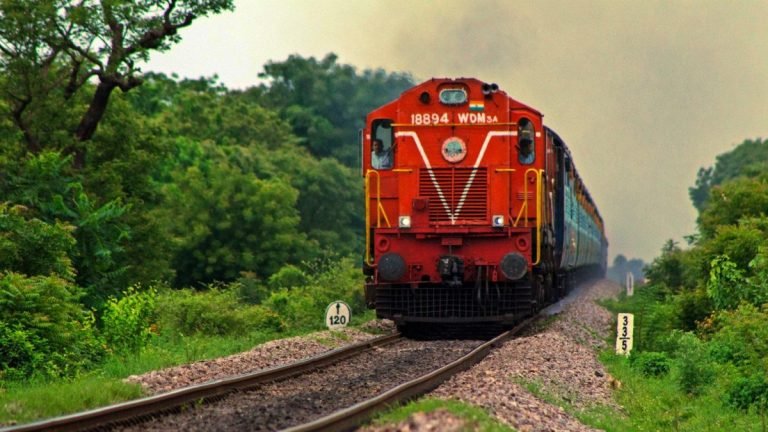
Indian Railways to observe a month long Mega Safety Drive from 28th October

0
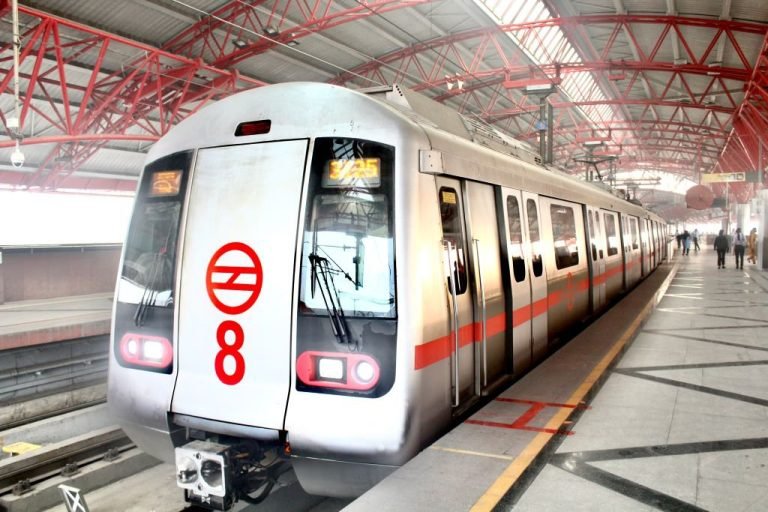
Indian Railways/Representational Image
Representational Image only

NEW DELHI (Metro Rail News): Safety continues to be the foremost priority of Indian Railways and is accorded the greatest consideration. Ministry of Railways has directed Zonal Railways to launch a month-long safety drive from 28th October 2022 to remove any gaps in maintenance of fixed assets, locomotives and rolling stock and strengthen safety on Indian Railways.

During the drive, it will be ensured that extant procedures are being conformed and monitoring of Human Factors shall be done.

Railway Board has directed all Zonal Railways to ensure that officers in Headquarters and Divisions carry out a thorough inspection and ensure the correction of deficiencies found during inspections within the drive.

At least one Headquarter officer must be on inspection on each day during the drive in each Division. Also, each major section of each division must be under Night Foot Plate Inspection by an Officer. All sections of Divisions are to be inspected by DRMs/ADRMs. General health of fixed assets is to be examined.

Directives for this mega Safety Drive from Railway Board includes regular patrolling of all tracks and the same should be monitored on day to day basis, surprise checks at stations to ensure proper operational practices are being followed; no safety system is being bypassed. Also, Gate, Station and other operating staff shall be encouraged to be vigilant.

Advertisement1
InnoMetro_2026

NCRTC floats tender for Design, Manufacturing & Supply of Derailment Containment guard for Delhi-Ghaziabad-Meerut RRTS

0
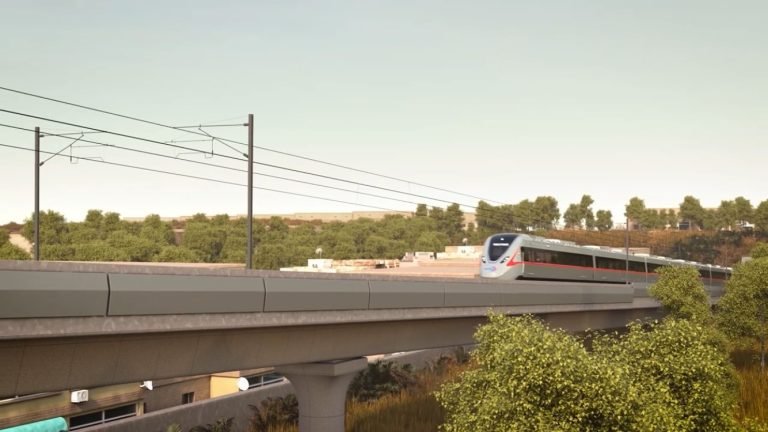
Delhi Meerut RRTS Train
Delhi Meerut RRTS Train/ Representational Image

NEW DELHI (Metro Rail News): National Capital Region Transport Corporation Limited (NCRTC) has published a tender for Design, Manufacturing and Supply Of 133 Numbers Of Derailment Containment Guard For 1 in 9 Ballastless Turn-Out For the Delhi-Ghaziabad-Meerut Regional Rapid Transit System (RRTS) Corridor.

Package-M10

Tender Reference Number: DM/TW/COR-OF/188

Name of Work: Design, manufacturing and supply of 133 numbers of Derailment containment guard for 1 in 9 Ballastless Turn-Out for the Delhi-Ghaziabad-Meerut Regional Rapid Transit System (RRTS) corridor.

EMD: INR 51,50,000 Lakhs

Completion period of work: 10 Months

Document Download / Sale Start Date: 22nd October 2022

Document Download / Sale End Date: 05th December 2022

Pre-bid Meeting: 11th November 2022

Bid Submission Start Date: 28th November 2022

Bid Submission End Date: 05th December 2022

Bid Opening Date: 05th December 2022


Advertisement1
InnoMetro_2026

NCRTC floats tender for Design, Manufacturing, Supply, Installation, Testing & Commissioning Of Travellators for Sarai Kale Khan Station Fob

0
NCRTC floats tender for Design, Manufacturing, Supply, Installation, Testing & Commissioning Of Travellators for Sarai Kale Khan Station Fob

NEW DELHI (Metro Rail News): National Capital Region Transport Corporation Limited (NCRTC) has published a tender for the Design, Manufacturing, Supply, Installation, Testing & Commissioning Of Travellators / Moving Walk for the Sarai Kale Khan Station Fob ( Foot Over Bridge ) Of Delhi- Ghaziabad- Meerut RRTS Corridor Of NCRTC.

Brief of the Tender: Tender For Package M11 Design, Manufacturing, Supply, Installation, Testing and Commissioning Of Travellators / Moving Walk For Sarai Kale Khan Station Fob (Foot Over Bridge) Of Delhi- Ghaziabad- Meerut RRTS Corridor Of NCRTC.

Tender No. : 2022_ADBNC_132298_1

The last date of bid submission: 09th December 2022

EMD: INR 1930000.0 /-
Name of Work: DM/EL/COR-OF/187: Design, Manufacturing, Supply, Installation, Testing & Commissioning of Travellators / Moving walk for Sarai Kale Khan station FOB (Foot Over Bridge) of Delhi- Ghaziabad- Meerut RRTS Corridor of NCRTC.
Completion Period: 13 Months

Only eligible bidders with the following qualifications should participate in this
bidding:
The bidder must have minimum Average Annual construction Turnover of INR
178 Million calculated as total certified payments received for contracts in
progress or completed, within the last five (5) years.
The bidder must demonstrate that its financial resources meet or exceed the total
requirement for the subject contract of INR 30 Million.
Participation as a Contractor, Joint Venture partner, or Subcontractor in similar
works pertaining to Design, Manufacture, Supply, Installation, Testing and
Commissioning of Commuter Moving Walkways/Escalators/Travellators for
Mass Rapid Transit System/ Airport/Metro Railway/Railway that has been
completed or substantially completed within the last 10 (Ten) years ending the
last day of the month previous to the month of bid submission.
For the complete eligibility and qualification requirements, Bidders should refer
to the Bidding Documents.

Advertisement1
InnoMetro_2026

Construction work on Anand Vihar and Sarai Kale Khan RRTS station are likely to complete

1
RRTS Train
RRTS Train/ Representational Image

NEW DELHI (Metro Rail News): Two stations at the core of the interstate, high-speed Regional Rapid Transit System (RRTS) rail project in the Capital — Anand Vihar and Sarai Kale Khan — are nearing completion, say officials.

The RRTS is an 82-km corridor connecting Delhi, Ghaziabad, and Meerut, of which 12 km is subterranean and 70 km is elevated. Its goal is to cut the travel time between Delhi and Meerut in half to between 40 and 55 minutes. It is anticipated to be completely operational by 2025.

The National Capital Region Transport Corporation (NCRTC), executed the project which is a joint venture between the Central and the governments of Delhi, Haryana, Rajasthan, and Uttar Pradesh.

Sharing details about the progress of the work at Anand Vihar station, a senior NCRTC official said work on its concourse has been completed and the construction of the platform level is nearing completion. The official added that the track-laying work will begin at this station over the coming days, with work at the concourse level having been completed.

The official added that work on 38 of the 39 piers of Sarai Kale Khan station, which will form the backbone of the corridor in the National Capital Region (NCR), has been completed. The NCRTC official also said that the construction of platforms — of which it has six with four tracks — is going to commence.

Phase I of the RRTS project will connect the elevated Sarai Kale Khan station to the Delhi-Panipat and Delhi-Alwar corridors, enabling travelers to travel between stations along several corridors.

The station will have 14 lifts, 18 escalators, and six entry and exit gates, and it will be 215 metres long, 50 metres wide, and 15 metres high. The ISBT, the Hazrat Nizamuddin metro station, and the Ring Road will all have one entrance.

Delhi has a total of 14 km of the corridor of which 9.22 km is elevated and 4.28 km which are underground. Anand Vihar is the only underground station, while the other two stations Sarai Kale Khan and New Ashok Nagar are elevated.

Advertisement1
InnoMetro_2026

Metro Neo pilot project soon to commence in Phase II of Nagpur metro

0
Neo Metro
Neo Metro

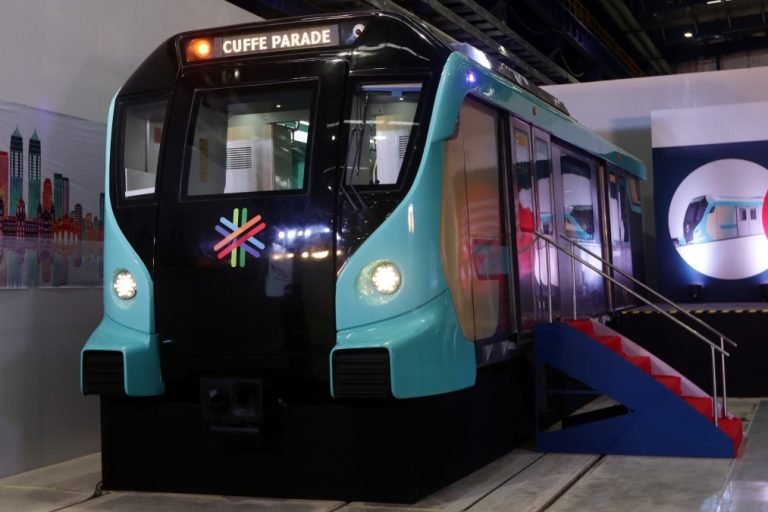
NAGPUR (Metro Rail News): Devendra Fadnavis, the deputy chief minister, announced on October 23rd that the BJP-Shiv Sena government plans to test a “Metro Neo” system in Nagpur that is identical to the one that has been proposed in Nashik.

It is intended to be piloted in Phase II of the Nagpur Metro Rail Project.

Fadnavis made it clear that Metro Neo coaches will only be introduced in very limited quantities and that the majority of metro rail coaches in the second phase would be comparable to those in the first phase.

The Maharashtra government was instructed by Prime Minister Narendra Modi to ensure that ‘Metro Neo’ parts were ‘Made in India’ which will significantly lower overall project costs.

Nagpur Metro Rail Project Phase-II consists of the following 4 extensions of two corridors of Phase-I, totaling 43.8 km

MIHAN – MIDC ESR – 18.6 km

Kanhan River – Automotive Square – 13.0 km

Prajapati Nagar – Kapsi – 5.5 km

Lokmanya Nagar – Hingna – 6.7 km

Phase II will connect the satellite cities of Nagpur and will highly benefit a population of over 10 lakh residing in these areas. It is scheduled to be completed in 2026.

The Nagpur Metro project will have a total length of 82 kilometers when it will be operational.


Advertisement1
InnoMetro_2026

First electric train runs on newly electrified Khajuraho-Udaipura section

0
First electric train runs on newly electrified Khajuraho-Udaipura section

ISHANAGAR (Metro Rail News): The segment of the North Central Railway has reached the landmark of 100% electrification. This accomplishment is noteworthy because it follows other Indian Railways divisions that have also succeeded in doing so. The Ministry of Railways shared a video on Twitter of a completely electric train on the North Central Railway’s newly electrified Khajuraho-Udaipura section passing through the Ishanagar Station.

The Ministry of Railways shared a video of the first electric train that was running on the newly-electrified section of the North Central Railway between Ishanagar and Udaipura stations. In a tweet, the Ministry of Railways mentioned, “Catch a glimpse of the first train with electric traction rushing past Ishanagar Railway Station on the newly electrified Khajuraho-Udaipura section. With the completion of electrification work on this section, North Central Railway is now 100% electrified.”

The North Central Railway is one of the 19 rail zones of Indian Railways. In total, there are 221 branch line stations and 202 mainline stations. The biggest railway station in the area is Kanpur Central. It has three divisions: the divisions for Allahabad, Jhansi, and New Agra.

A 41-kilometer, entirely electrified portion of the Eastern Railway’s network was finished. This project site was stretched on the Hansdiha-Godda section of the railway.

If the entire country’s electrical system is totally electric, the railway network will be carbon neutral by 2030, according to the official plan.

Advertisement1
InnoMetro_2026

Exclusive Interview with Mr. Kaushik Chakraborty, Vice President, Asia Pacific, Bentley Systems

0
Exclusive Interview with Mr. Kaushik Chakraborty, Vice President, Asia Pacific, Bentley Systems

Metro Rail News conducted an in-person interview with Mr. Kaushik Chakraborty, Vice President, Asia Pacific, Bentley Systems. In the interview, Mr. Chakraborty talked about Digital Twins and how it is helping to solve the problem of sustainable development of cities.
Here are the edited excerpts: –
Q.1. How is Digital Twins by Bentley Solutions helping to solve the problem of sustainable development of cities?
Ans – Technology is helping, whether it is just digital twins or any other technology. Digital twins are nothing new to manufacturing, starting from aerospace to manufacturing, companies have been using that for many years. The main reason is to optimize the planning, production, and maintenance. Take for e.g., every object in a car that one has
brought has a digital twin, which the manufacturer creates at a very early stage. So, what is going to be the behavior of that element in a car after when one has driven it for many kilometers is what digital twins do. Using the technology in a car for e.g., it can be told approximately what can be a probable failure after a certain number of kilometers. That is exactly what digital twins trying to do. The infrastructure industry today has enabled a
better RoI on infrastructure by better planning and better execution and the most important part in the evolution towards digital twins is the digitalization and the connectivity between the different parts of the process. So, traditionally design was done independently, or architecture was done, and some engineering analysis was done independently. Construction happened on the site by another company, and that company
went and reconstructed as they chose to do it. It was convenient and what was most optimal for the situation and then somebody else got that object, whether it was a train or a building or whatever, a road. What digital twin does is help connect all the mainstream
technologies and make sure it’s a continuous ecosystem with a feedback loop. So, it is a simple mathematical feedback loop that is introduced into the system. Today technologies like digital twins have things changed for us. People today can create good designs. They are maintaining it well; services are also available downstream which is helping towards sustainable development of the cities.
Q.2. When we talk about the metros specifically, how the system benefits all the stakeholders?
Ans – One of the biggest benefits of the metro is that metros run very long, they are planned assets for seventy-five years. So, one would need to know what is being built. Take the Nagpur metro, for example, the first metro in India which is very digital in its construction and planning. A lot of things have been introduced in its design cycles. The incorporation of technologies in design cycles leads to better construction and better construction leads to better operations. The metro officials also have updated all their data so that today they have a very good digital representation of what was built, why it was built, what decisions were taken, and why it was done. The same is with DMRC where they have focused a lot on more effective construction and more specifically lowering the cost of construction because they need to finish things on time as there is an increased demand for metros in Delhi and the public really wants it quickly. But they all have fixed budgets. So, how can we deliver things fast and on time if we have a fixed budget by being more effective at the same time. Hence, it can be said that technology is not a cost, it is an RoI because we are saving money which can then be used for other things. So, in summation, we can say that there is a big update. There is a good positive update and of course, much more can be done.
Q.3. What are the major efforts by Bentley towards carbon neutrality? Kindly state the work plan toward UN SDG goals. How do you think dependence on carbon fuels can be done as per UN standards in the coming years?
Ans – To be very specific a lot of things can be done. We personally can do a lot of things internally and then at the level of organization. Promoting the hybrid work-from-home, work-for-office kind of environment is one of the prominent steps where the push is to have offices that are smaller but are carbon neutral as it does not need frequent travel of employees. This is something we can do ourselves and then, of course, we are looking at various other options as to how we can reduce our own carbon footprint
by lower travel and various other initiatives like that. As an organization, what we do for our customers is always look at how they can design better materials, design more effectively and optimize designs so that they can work towards carbon neutrality.
Bentley also owns an organization called Seequent. It is a New Zealand-based company. Seequent does a lot of work in helping find renewable and geothermal sources of energy. Seequent is one of the most advanced geothermal engineering software companies in the
world. Seequent is continuously helping to look for better geothermal and green sources of energy. So, towards carbon neutrality what we think we are doing is
multi-faceted. Bentley is continuously striving towards SDG goals. One of the premier initiatives that Bentley has been doing for many years in India has been towards water
conservation where efforts have been made continuously to provide clean water to every home. The efforts need a mention because providing sustainable water solution to every Indian home need technology-based planning as the population is enormous. So, with a big population with limited resources and deliverables needed at a specific time you need to be more effective when you’re planning tasks like water conservation networks. Together, it’s
not just to optimize the network size but you also must optimize the pumping of
water from one source to tap. This is where Bentley comes in. Bentley for many years
has worked on the different method which has helped in implementing ethnological
modeling to map water conservation, supply, and other initiatives making sure that water reached places with the lowest cost. Pumping water costs, electricity is expensive, it’s not cheap. Pipes are not cheap, valves are expensive, pumps are expensive, and the whole maintenance is expensive, so the more the CAPEX cost of the infrastructure plus the running cost can be reduced the more effective it is considered. It provides more water to the end customers and accordingly it maps the various schemes of the government.
Transportation is the other SDG we support with metros and highways and
connectivity.
Q.4. In what ways ‘Digital Twin’ technology of Bentley Engineering
unique and different from other companies in a similar capacity? Kindly
 mention the benefits of the iTwin platform that you have launched recently.
Ans – The iTwin platform is our Digital Twin platform. To sum up in one word what makes us unique is that we have the vision to create a completely open platform. We are never going to be the single platform player in this world. So, for us, the most important is that our platform works with different kinds of all our competitor’s software products and all their data. So, our file formats are open-source formats, and a large part of our platform is also available to keep up as an open source. So, we want to encourage more and more people to play with it, to work with it, to use it. We have also recognized that in any infrastructure project, multiple vendor solutions will be used. Therefore, interoperability is very key for us in the foundation of our platform and it should be a platform that integrates with GIS, gets information from it, and of course integrate with components of engineering companies not just Bentley but others like Autodesk, Aviva, Graphic soft and industry format like IFC that can be read seamlessly. We believe in creating a platform where the user doesn’t need to do any file transformation. One can seamlessly work with data from our competitor integrated with ERP and IT and of course operations system. So, different SCADA systems or other operating systems integrate all the data so that we can provide you a visualization platform of a decision support platform with the iTwin platform, which allows you to work with you all the information you have here.
Q.5. More advanced technologies are being integrated to create shared visual worlds for an enhanced experience of physical and photorealism. What are the major challenges in such integration? In what ways these features can be more adaptive and user-friendly?
Ans – That is basically the whole concept of iTwin platform. To have an open platform that integrates data from all the sources, owners of projects, or asset operators who are using it. To make it simple we must understand that there is GIS, there is IT, there are technologies operations and an engineering world having the existence of Bentley and other competitor products that is being used. So, the whole concept of the iTWIN platform is to be that integration platform to connect all of this in a simple open form. For the complex system and integration to work cloud computing helps a lot. Cloud computing is what makes things adaptive and user-friendly. Users don’t need higher machines to perform complex tasks. They can work on simple android or apple to get things done. There are certain challenges like content adaptability to a vast number of users. In a world of changing technologies, this becomes a gruesome task sometimes. But as I said the biggest asset of technology is that it improves with time. Towards technology initiatives Bentley is spending a lot of time and energy trying to make things simple and more accessible via the cloud to as many people as possible.
Q.6. Infrastructural development is a continuous process. What are the major product innovations by Bentley Systems in recent years to introduce enhanced technologies in infrastructure engineering and development?
Ans – We have constant evolution every year at year-end infrastructure. We launch new products and throughout the year we keep announcing new products. Where we have focused a lot in the last few couples of years and we continue to focus is the different pillars of innovation that we have. We have new products which we build, and new industries which we are trying to address. Renewable energy for e.g., we didn’t focus much five years back. Today, renewables are big. Solar is not that complex and difficult, but wind power is challenging. Wind farms on the land are less complex. India is now going to build offshore wind farms. ONGC and NTPC are working for it which creates a whole engineering complexity because those structures must be embedded into the surface of the sea.
We have introduced a product called Occult Wind Power to help design, we have integrated geotechnical engineering from our acquisitions like Lexus and Seequent together with products like Shacks which are for offshore platforms and created something that works for the wind farms, the wind turbines and the windmills which must be erected on the seabed. We have seen a lot of success with that in Vietnam, China, and Korea on such projects where there are all picked up faster and that’s something that’s going to come to India. We have introduced a lot of products. We have focused a lot on the construction industry where we have made a local Indian acquisition. We want to do more, and we are constantly looking more at localizing our innovations and how we get more local content into our portfolio because it’s then relevant to the market. We also have a Bentley Innovation Fund, and that fund invests in small startups and innovative companies around the world.
Q.7. How are you scaling up your business in India? What are the major projects in the order book? Is there any significant development & initiative towards the ‘Make in India’ campaign?
Ans: Towards the ‘Make in India’ campaign we are doing local acquisitions. The acquisitions of Nadhi technologies in Chennai and a few other Indian groups are towards that effort. Nadhi Technologies is one of the most innovative companies in India in the construction software industry. Their products are being used across real estate, power, highways, and of course, the metro. Hopefully soon, even in the water treatment plant industry. So, to scale up our business in India we are looking for more local innovations. We also look for the industry to tell us about the good innovative companies who prefer to become part of the Bentley foundation and now when Bentley has been public for two years and as we progress and grow, we are taking the services of experts and hiring new manpower. We look for people with expertise in advanced technologies for roles and responsibilities. Therefore, we innovate, and we plan to acquire. We invest in innovation, and we create platforms where people can build solutions. Our next big push is to work and expand the digital integrator ecosystem. People shall use our platform to develop their own. We have signed up companies like WIPRO, and LNG technology services. We have become digital twin, iTWIN platform partners. They are looking on building solutions using Bentley’s platform for vertical markets. Our go-to-market is multi-prompt, so we want to get more solution-centric with partners and get IP vision support of which the platform becomes stronger.
Q.8. What would be your message to young talent and technocrats in India willing to join the industry?
Ans – My earnest appeal would be to become an engineer, study engineering, study IT and help India’s journey in the coming five or ten years in infrastructure engineering. This would be one of the most dynamic and bright spots globally. As I mentioned earlier India is forecast to become the world’s largest construction market. That means there’s so much opportunity. The national infrastructure pipeline is huge. Investments are being made across all sectors. From industrial corridors to highways, to metros, to airports, and to water every other possible sector there is a transformation going on which everyone can be part of. Therefore, it would be an exciting career path for engineers. It is also important that engineers should keep themselves up-scaling. The technocrats should enhance their skills with the usage of more advanced technologies. We should also promote women in engineering. It’s time to encourage women to power in engineering. Recognize their strength. It’s not only civil but all gambits of engineering where women talent can be of significant contribution. So, let’s unite and promote engineering. Additionally, what I think we shall soon witness an evolution would be an integrated engineering approach at the bachelor’s level which developed nations like the US already had for many years. An integrated approach doesn’t mean that we will not have mechanical, civil electrical, or other streams of engineering. But rather, these streams would be available in an integrated approach where several options would be available to learn more and prepare as per industry needs. Looking at things holistically we’ll find that civil, electrical, mechanical, and other streams of engineering have a lot of things that can co-exist. Stream-like earthquake engineering is a relatively newer concept in India and very few people opt for it. In recent years in India, there has been a very big push by the government for resilient infrastructure. We all know that the climate is changing. So, spending a stupendous amount on building things that will crumble, and fall is of no use. So, we need resilient infrastructure and for resilient infrastructure, we need more and more engineers, great engineers. We need to spend a lot more focus as a nation on studying the subsurface and doing geotechnical. So, geotechnical engineering is a very undervalued part of engineering studies in India today, given the whole infrastructure size and how many people focus on civil and mechanical and other general streams of engineering. India already has institutes like IITs and various other good universities offering the best courses in the world. So, more and more advanced courses can be added. Focus on green engineering and a lot many things which can be one.
Q.9. Any special message for our readers? We would like to know your views about Metro Rail News.
Ans – The future is bright. Things are improving. Infrastructure is built, especially metros being developed, and there would be some chaos. Roads would be dug; traffic would be congested and there would be other issues. But it would be for an interim period for a brighter scenario ahead. The Gati Shakti scheme launched recently is the first realization
that departments must be coordinated and there is a lot of focus from the prime minister’s office that coordination happens. Clearly, it’s not a static program but an initiative that would evolve and improve. Today different ministries will always talk about the concept of multi-modal connectivity with discussions on how to coordinate and work with others. So, we can expect inter-ministerial coordination to develop which is very important. It truly gives us hope that things will improve and become better with time.

Advertisement1
InnoMetro_2026

Exclusive Interview with RK Shenoy, Executive Leadership Team Member, and Senior VP, Mobility Engineering, Bosch Global Software Technologies (BGSW)

0
Exclusive Interview with RK Shenoy, Executive Leadership Team Member, and Senior VP, Mobility Engineering, Bosch Global Software Technologies (BGSW)

Metro Rail News conducted an email interview with RK Shenoy, Executive Leadership Team Member, and Senior VP, Mobility Engineering, Bosch Global Software Technologies (BGSW). In the interview, R.K. Shenoy talked about the Smart Mobility.
R.K. Shenoy is Senior Vice President of the Global Center for Powertrain Electronics and Product Engineering. He is additionally responsible for Smart City, Aero, Railways, and Off-highway Domains at RBEI. Mr. RK Shenoy has been associated with BOSCH Group since 1986 Carrying overall 31yrs of experience. Bosch Global Software Technologies Private Limited (BGSW) is a 100% owned subsidiary of Robert Bosch GmbH. They are one of the world’s leading global suppliers of technology and services, offering end-to-end Engineering, IT, and Business Solutions. With a global footprint and presence in the US, Europe, Japan, China, and the Asia Pacific region, they are at the forefront of designing, developing, and executing IoT ecosystems through our all-encompassing capability within the 3 aspects of IoT – Sensors, Software, and Services.
They have always focused on improving the quality of life of people, providing newer revenue-generating opportunities, and improving operational efficiencies for enterprises
through an array of solutions. With their unique ability to offer end-to-end solutions that connect Sensors, Software, and Services, they enable businesses to move from the traditional to digital or improve businesses by introducing a digital element in their
products and processes.
Here are the edited excerpts: –
Q. What is Smart Mobility as per Bosch Solutions? Is it correct to say that the future of IoT and connected mobility shall be powered by data-driven technologies that would create a whole new customer experience?
As I explained in the previous context, 100 years of Automotive domain expertise complemented with 10 years of Cloud technologies experience at Bosch, India, has led to the evolution of a great force of creative engineers delivering complex programs to our customers. In a similar direction, Connected Mobility Solutions with automotive Connectivity hardware and IoT-enabled Cloud based Connected Solutions will be the origin of creating enhanced and new customer experiences powered by data-driven technologies.
Q. How is Bosch helping to provide connected systems and end-to-end analytic solutions to its customers? Is it correct to say that technological afflux shall help users and customers make critical business decisions in the connected future?
Bosch was one of the early innovators in Connectivity Systems/Solutions starting from smartphone integration into vehicles to Connectivity hardware and Cloud-based Connected Solutions. The solutions were innovated in line with Bosch’s vision, “Invented for life”, to add value to end users in the areas of safety, convenience, and comfort. The data generated out of the vehicle Connected Systems is stored in a structured manner on the Cloud, which has led to the evolution of analytics and further enhancement using ML and AI technologies. Data Science Engineers at Bosch add value to our OEMs by providing insights to Engineering and Service teams in identifying and analyzing failures. The analytical solutions support the OEMs to resolve the failures with better turnaround times. The technology at Bosch has evolved to an extent where critical failures are identified, initial necessary steps to overcome or avoid a problem are communicated to end users (safety and convenience), and second software bug is fixed, and an immediate update is pushed over the air (new age ECU) or delivered to the service center (in case of conventional ECU). As explained above, by helping OEMs to quickly analysis of failures and solve errors/failures without much inconvenience to end users, Connected Systems, augmented with end-to-end analytic solutions, helps OEMs take business decisions that offer advanced
features.
Q. How are Bosch Air quality solutions helping cities to achieve sustainability goals?
Clean air concerns us all. Bosch’s motto of “Invented for life” also involves an extensive commitment to improving air quality. In addition to Bosch’s own goal of achieving CO2 neutrality in 2020, Bosch is making an even greater contribution to the sustainable, eco-friendly mobility of tomorrow by developing innovative solutions.
We recognize not only our global responsibility for climate action but also our local responsibility for combating air pollution, with technically innovative measures we are contributing to the gradual reduction of pollution in real-life scenarios, helping cities for a better & healthier life and improving the quality of life of its citizens. In this way, we can contribute to making the world a better place and help conserve natural resources. The Bosch Air Quality portfolio is focused on providing highly precise data & services to assess and improve Air Quality and identify the emission sources on a broad scale. Our working expertise focuses on determining microscopic traffic emissions to precisely measuring
& modeling the dispersion of air quality and providing high-resolution pollutant concentration maps. We use digital technologies to link different air quality expertise and offer a comprehensive view of the ecosystem. we’ve been able to demonstrate that steady traffic flows can lead to an almost 20 percent reduction in pollutants.
Q. The challenge of building such a system often lies in ensuring its security – how does Bosch intend to overcome this and design a system that is both impactful as well as secure?
AQMB (Air Quality Monitoring Box) is an IoT-enabled box that protects the devices, network, and cloud they connect to. As with any other publicly installed device, AQMB faces a hostile environment, because of which AQMB is designed with Security as an inherent requirement. The security is implemented as per the Bosch SEP which covers the complete product lifecycle from deployment to decommissioning and considers the challenges of the operating environment. Another challenge in developing security for such low-volume products lies in finding the right balance between security measures and investments.
The program team (MS/PJ-AQMS) and security expert team (MS/ECE) came together and collaborated to identify the threats, and misuse cases, define the security concepts, and security implementation including Penetration tests. The solution is supported Bosch IOT suite cloud services with its state-of-the-art security also enhancing overall
security.
To provide secure IoT solutions and products, we have followed a holistic IoT security approach, which considers the whole lifecycle of solutions and products and covers processes and organizational requirements as well as applied technologies.
Securing an IoT solution is a challenging task, and this is made more challenging by the very long lifetimes IoT devices can have in connected operations. To manage this challenge, oversight and procedures are put into place by the Bosch SEP process. It will ensure that when new vulnerabilities and threats are discovered, the foundational means and mechanisms for addressing them are already in place.
Q. A vast amount of data is being generated which is expected to grow exponentially in the connected world we live in today. How are Bosch solutions providing a user-centric solution to these issues?
When a vehicle is equipped with a Connectivity unit, depending on a number of connected features offered to end users, the vehicle data is sent to the cloud for storage and further processing. Bosch offers cost-effective and smart solutions at various stages of this process: On the Connectivity unit, edge-based algorithms process the raw data, optimize it, and then send over the relevant information to Cloud. On Cloud, the data is structured and
stored in different databases. Recent period data is stored in high-speed storage, which can be retrieved quickly based on user action without impacting the end-user experience. Beyond a period, the data is pushed to low-cost storage and retrieved based on need or upon request.
Q. What according to you is a data-driven business model? Bosch Solutions is acclaimed for its specialized domain knowledge in providing consulting services and solutions for several sectors. What have the major accomplishments in the key areas you are focusing on?
Vehicle data augmented with contextual information and advanced ML; AI led to the evolution of new features/services that can be offered to end users. And, generating leads to OEMs/partners opening new business models, which we refer to as a “data-driven business model”.

A few examples for this would be: Based on location, fuel level, and user preferences, suggest personalized POIs Prediction of vehicle functions degradation – Battery, Fuel pump, etc. The examples mentioned above are enabling OEMs, technology, and content partners to earn additional revenue by providing enhanced user experience and savings to end users with the data-driven business model. Bosch can successfully implement this model with its expertise in the Automotive domain, complemented by its Cloud technologies expertise.

Advertisement1
InnoMetro_2026

MMRC floats tender for pvt agency for maintenance of Metro 3

0
Mumbai-Metro-
Mumbai-Metro-Line-3/ Representational Image

MUMBAI (Metro Rail News): The Mumbai Metro Rail Corporation (MMRC) has floated a tender in order to find a specialised organisation to provide maintenance and operation services for the underground Metro 3 line, which will connect Colaba, Bandra, and SEEPZ and which will be partially commissioned by December next year. The first phase of this line, from SEEPZ to Bandra, will initially be accessible to the general public.

The last day for submssion of bids is December 20, 2022.

On Metro line 3, 99.2% of the tunnelling construction has been finished. According to MMRC, 43% of the track construction and 29% of the depot work have been finished, bringing the project’s overall completion rate to 75.65%.

The MMRC has already begun adding screen doors, escalators, elevators, and other passenger amenities on platforms at a number of stations.


Advertisement1
InnoMetro_2026

TexRail emerges as lowest bidder to supply and install standard gauge tracks for Indore Metro’s Phase 1

0
Indore Metro
MPMRCL/ Representational Image

INDORE (Metro Rail News): Texmaco Rail and Engineering Ltd. (TexRail) emerges as the lowest bidder for the delivery and installation of standard gauge rails (Package BH-07) for the first phase of the Indore Metro project.

The 33.53 km Gandhi Nagar Depot of the Yellow Line, the 24.06 km elevated segment (Indore Airport – Bhawrasla – Railway Station), and the 7.48 km underground section (Indore Airport – Bada Ganapati – Railway Station) tracks will be installed at these station from this contract.

The European Investment Bank (EIB)-financed Madhya Pradesh Metro Rail Corporation Ltd. (MPMRCL) bids in February with a 1274-day (3.49-year) deadline and an unidentified budget.

In July, technical bids were opened, revealing 4 bidders. RVNL and VNC were rejected because their proposals did not adhere to the requirements of the tender.

Financial Bid Values

FirmBid (Rs. Crore)
Texmaco Rail and Engineering Ltd. (TexRail)252.88
Larsen & Toubro Ltd. (L&T)262.32
Rail Vikas Nigam Ltd. (RVNL)Disqualified
Vijay Nirman Company Pvt. Ltd. (VNC)Disqualified


The work includes : Design Supply Installation Testing Commissioning of Ballastless Track of Std Gauge Yellow Line Gandhinagar Bawarshala Bengali Square and Underground from Indore Rly Station to airport Station, Corridor along with Ballasted/Ballastless Track at Depot.

This is the 4th and final track-related contract for Indore’s 33.53 km Phase 1 project.

Package & ScopeBidders
BHIN03A: 880 Grade RailsJindal Steel & Power Ltd. (JSPL) is lowest bidder
BHIN03B: Head-Hardened RailsJindal Steel & Power Ltd. (JSPL) is lowest bidder
BHIN03C: TurnoutsVossloh Cogifer is lowest bidder
BH-07: Standard Gauge TracksTexmaco is lowest bidder (this post)


Advertisement1
InnoMetro_2026