Home Blog Page 252

Prime Minister Sheikh Hasina Inaugurates Construction Work of Nation’s First Underground Metro Rail

0
Bangladesh metro.
Bangladesh Metro/Representational Image

BANGLADESH (Metro Rail News): Sheikh Hasina, the prime minister, inaugurated the construction of the nation’s first underground metro rail just a month after inaugurating the metro rail from Uttara’s Diabari to Agargaon. Addressing a civic rally at sector four at Purbachal of Pitalganj in Rupganj of Narayanganj district, the prime minister unveiled the plaque of the Mass Rapid Transit Line-1.

Accompanying Prime Minister Sheikh Hasina on December 28, when she unveiled the plaque for the 11.73 km portion of the Mass Rapid Transit Line-6 from Diabari to Agargaon, were Road Transport and Bridges Minister Obaidul Quader, Textile and Jute Minister Golam Dastagir Gazi, Dhaka North City Mayor Atiqul Islam, Japanese Ambassador to Bangladesh IWAMA Kiminori, Road Transport and Highways Division Secretary ABM Amin Ullah Nuri, and Dhaka Mass Transit Company Limited Managing Director MAN Siddique.

The government plans to finish construction of the MRT Line-1, which will have both underground and elevated sections, from the Airport to Kamalapur and Purbachal to Natun Bazar, by 2026 at an estimated cost of Tk 52,561.43 crore. In total, six metro rail routes are expected to be put into service in Dhaka by 2030.

The MRT Line-1 is to be constructed in two parts – the Airport route, an underground 19.872km line with 12 stations, and the Purbachal route, an 11.37km elevated line with seven stations Natun Bazar and Nadda will be underground.

The Bangladesh government and the Japan International Cooperation Agency will cover the project’s costs, amounting to Tk 52,561.43 crore, of which the JICA will contribute Tk 39,450.32 crore and the government will pay Tk 13,111.11 crore. A Japanese firm-led consortium will be responsible for constructing the Airport-Kamalapur-Purbachal metro line.

Per the project, the journey from Airport to Kamalapur along the MRT Line-1 will take 24 minutes and 30 seconds, with 12 stops at underground stations.

With seven stops, the trip from Natun Bazar to Purbachal will take 20 minutes and 35 seconds. Passengers can reach Purbachal from Kamalapur with an interchange in Natun Bazar in only 40 minutes and 16 stops. Once the MRT Line 1 is launched, it will be able to transport eight lakh passengers daily.

Advertisement1
InnoMetro_2026

First Factory Acceptance Test of Herrenknecht TBM Successfully Conducted at HK Factory

0
TBM Herrenknecht
TBM Herrenknecht

CHENNAI (Metro Rail News): CMRL is currently constructing the underground section of corridor 4, which comprises two portions, UG1 and UG2, each containing four km of twin tunnels.

To complete the 16 km of upline and downline tunnels, four tunnel boring machines have been planned to be used. ITD Cementation India Limited, the contractor, has procured these machines from The German company, Herrenknecht.

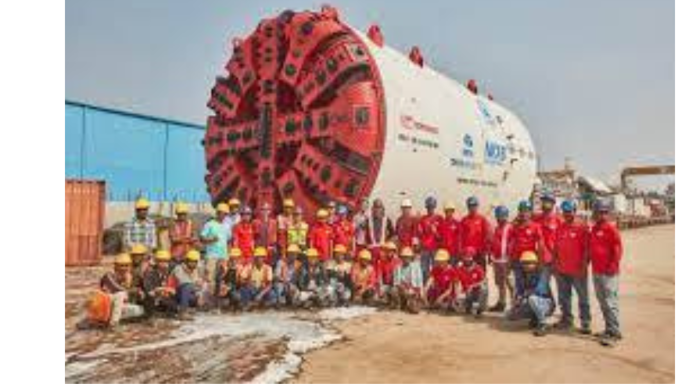
Recently, the first factory Acceptance test of the first tunnel boring machine was conducted at the HK factory in Ponnery in the presence of CMRL project director T Archunan. This TBM, known as S1073B, has a bore diameter of 6.670 metres and an earth pressure balance of 110 metres. The weight of the massive machine is approximately 700 tonnes, which will be dismantled for transportation and placed at the destination, Light House station.

Construction for a launch shaft to house the Tunnel Boring Machine (TBM) is currently in progress at Light House station and is projected to be complete by May.
This TBM will be sent down Corridor 4 and travel up to 29 metres below ground, starting from Light House, Kutchery Road, Tirumaylal, Alwarpet, Bharatidasan, until it reaches Boat Club by May 2025.
The second stage of the Metro Rail project, spanning 118.9 km and consisting of 128 stations, is currently underway.

Advertisement1
InnoMetro_2026

Reaction of Alstom on Union Budget 2023-24

0

NEW DELHI (Metro Rail News): “India’s economic growth rate is the result of a resilient economy and prudent fiscal policies of the government. The Union Budget for 2023-2024 continues its focus on this path and the commitment to ‘green growth’ approach, will further boost the economy.

Infrastructure is the most critical aspect of any economy and the highest ever capital investment outlay of 10 lakh crores is most commendable. Combined with the enhanced capital outlay of Rs 2.40 lakh crore provided for railways, these steps will go a long way in upgrading infrastructure, assets, systems, and facilities by leveraging technology and promoting a sustainable approach.

More importantly, the government is promoting greater private sector participation in infrastructure and railways. This is critical for the growth of the sector as it will help enhancing accessibility and mobility, connecting people and communities, integrating markets, and facilitating trade, and generating greater job opportunities.

We are glad to see the continued focus on infrastructure projects to improve connectivity and facilitate movement of goods and products across the country, will support in the development of indigenous industries, thereby contributing to the ‘Make in India’ ambition and making India ‘Aatmanirbhar’. This will lead to an uptake in sustainable and modern urban mobility solutions, like metros, in Tier II & III cities as well. To encourage logistics, we expect more impetus on freight movement by rail, which will create the demand for more electric locomotives of high horsepower, which will increase capacity and speed of goods transportation, while reducing emissions, to bring better efficiencies of scale and attain the vision of net zero emissions.

The National Hydrogen Mission will support India’s ambition of becoming the world’s first Green Railways, with a growing fleet of hydrogen-powered passenger trains. As the world’s first and only hydrogen train manufacturer with passenger service, we are following with great attention Indian Railway’s interest for hydrogen trains in coming years. Alstom would be glad to contribute to the transition to zero-emission solutions in India.” Said Mr. Olivier Loison, Managing Director, Alstom India

Advertisement1
InnoMetro_2026

Union Budget 2023-24: Government Allocates Rs 19,518 Crores to Metro Projects Across India

0
Delhi-Metro
Representational image

NEW DELHI (Metro Rail News): Officials declared on 1st February that the government had allotted Rs 19,518 crore to all metro projects around India in the Union Budget 2023-24. In her speech in Lok Sabha, Finance Minister Nirmala Sitharaman articulated her ambition for the ‘Amrit Kaal’, which involves a proficient technology and knowledge-based economy with strong public finances and a firm financial sector.

She also highlighted the importance of Jan Bhagidari through Sabka Saath Sabka Prayas to accomplish this.

A senior representative of the Union Ministry of Finance asserted that the total budgetary outlay for the year 2023-24 for all metro-related projects in India is Rs 19,518 crore.

This figure is over the Rs 19,130 crore allocated in the previous financial year of 2022-23, with the revised budget estimates for the same being Rs 15,628 crore, as stated in the budget documents. This year’s outlay comprises Rs 4,471 crore in equity investment, Rs 1,324 crore of subordinate debt and Rs 13,723 crore of pass-through assistance.

The National Capital Region Transport Corporation (NCRTC) has been provided with Rs 3,596 crore by the Centre for the Regional Rapid Transit System (RRTS) project, which is a decline of 23 per cent from the previous budget.

In Budget 2022-23, the government had also set aside Rs 4,710 crore for the NCRTC. According to a statement issued by the NCRTC after the Budget announcement, the Delhi-Ghaziabad-Meerut RRTS corridor is being developed rapidly in multiple areas, and the stations on the route are being constructed at a fast rate, particularly those on the priority section.

Advertisement1
InnoMetro_2026

BMRCL Alters Standard Operating Procedure Following Report on Pillars’ Collapse

0
Bangalore Metro
Bangalore Metro Rail/ Representational Image

BANGALORE (Metro Rail News): In response to the report submitted by Professor Chandra Kishen of the IISc on the collapse of the reinforcement cage on January 10, the BMRCL has altered their standard operating procedure of casting the reinforcement cage.

Anjum Parvez, the managing director of BMRCL, announced that the construction of pillars over 12 metres would be halted in the 2A and 2B Metro phases linking Central Silk Board and Kempegowda International Airport.

Parvez stated, “We are changing to two-stage casting for pillars taller than 12 metres. Additionally, we have suspended work on all reinforcement cages above 12 metres. However, work on reinforcement cages under 12 metres is still being done.”

Prof Kishen, who submitted a 27-page report to BMRCL, averred that the 18-metre structure which led to the deaths of a mother and her son was not a single component but consisted of two parts that were overlapping.

He clarified that the combination of the overlapping structure and the preliminary design of the supporting reinforcement cage caused the entire 18-metre reinforcement structure to come down. Parvez added that improvements to the standard operating procedures for constructing the pillars would be put into effect according to the report from IISc, such as switching to a two-stage casting process and concretising the structure as soon as possible.

Advertisement1
InnoMetro_2026

CMRL Awards Rs 404.45 Crores Contract to Linxon India for Phase 2 Corridors

2
Chennai metro/Representational image

CHENNAI (Metro Rail News): CMRL on 31st January granted Linxon India Private Limited a contract worth Rs 404.45 crores for installing and commissioning critical systems for the operation, remote monitoring, and control systems along the 39km of the 118.9km phase 2 corridors.

This encompasses the design, manufacture, supply, installation, testing, training, and commissioning of Receiving Substations (RSS), Auxiliary Substations (ASS), Supervisory Control and Data Acquisition (SCADA), Overhead Equipment (OHE), and switching stations for corridors 3 (9.38km from Sholinganallur to Sipcot 2) and 5 (29.05km from CMBT to Sholinganallur).

These systems will provide the power supply and OHE functions at the 37 elevated stations, including nine in corridor 3 and 28 in corridor 5.

Advertisement1
InnoMetro_2026

Nirmala Sitharaman Allocates Rs 2.40 Lakh Crore: Highest Ever Capital Outlay For Railways

0
Indian Railways/Representational Image
Representational Image only

NEW DELHI (Metro Rail News): Nirmala Sitharaman, the Finance Minister, has announced the highest ever capital outlay of Rs 2.40 lakh crore for Railways, which is almost nine times the amount allocated during the financial year 2013-14.

 The primary focus of this year’s railway budget will be on completing current projects and developing infrastructure to have high-speed trains operational shortly.

In the Union Budget 2022, Finance Minister Nirmala Sitharam emphasized the Gati Shakti National Master Plan, which is expected to remain a priority for the Government.

Funds allocated this year are expected to go towards building new tracks, increasing the number of semi-high-speed Vande Bharat trains, introducing hydrogen-powered trains, and the Ahmedabad-Mumbai bullet train project.

Advertisement1
InnoMetro_2026

Country’s first RRTS project receives budgetary allocation

0

NEW DELHI (Metro Rail News): Government of India has allocated Rs. 3596 crores to country’s first Regional Rapid Transit System (RRTS) project in the union budget presented today in the parliament.

India’s first Regional Rapid Transit System (RRTS) corridor, Delhi-Ghaziabad-Meerut is being constructed at a rapid pace at various locations of Delhi, Ghaziabad and Meerut. Stations on the corridor are taking shape specially the stations of the priority section.

More than 14,000 workers and 1100 engineers are working day and night at various sites. So far, construction of 65% elevated viaduct, in addition of 35% of underground section (tunnel) have been completed for the corridor.

The operation of the priority section of the corridor is to be started in this year for which train testing is being done on the RRTS tracks. The upcoming operation of this section will open new regional rail services in NCR and will provide a modern, air-conditioned, fast and reliable transport service to the commuters. The complete corridor will be opened for public by 2025.

With a design speed of 180 kmph and operational speed of 160 kmph, the RRTS trains will be unique and one of its kinds in India. The aerodynamic coaches will be self-propelled on electric traction with 25KV AC System. The RRTS trains are being designed with the state-of-the-art latest technology

Advertisement1
InnoMetro_2026

Chennai Metro Phase-II Corridors: Tata Projects Commemorates Assembly of Third Terratec EPBM

0
Chennai Metro Phase-II Corridors: Tata Projects Commemorates Assembly of Third Terratec EPBM

CHENNAI (Metro Rail News): Tata Projects Ltd, the contractor, commemorated the assembly of the third out of five 6.61m diameter Terratec EPBMs they ordered for use in their underground works contracts with the Chennai Metro Rail Phase-II Corridors project in India.

Terratec is providing five of the total seven TBMs needed for the package. These TBMs will be used by Chennai Metro Rail Limited (CMRL) to construct Phase 2 – Corridor 3, Package-TU01, from Venugopal Nagar Station to Kellys Station. This project entails making a pair of tunnels for a total of 18km in length, spanning 9km.

In October 2022, TBM S96 was the first to commence operations among all the TBMs, beginning excavation towards Madhavaran High Road.

TBM S97 followed suit, also beginning excavation from the same shaft – Madhavaran Colony – heading towards Venugopal Nagar (of Line-5) to Kellys Station. TBM S98 has also been dispatched, while TBM S99 is currently in the midst of the on-site assembly.

 Additionally, the fifth machine (S81B) has passed the Factory Acceptance Test (FAT) in Pune for Package TU01 of the 118.9km Chennai Metro Phase 2 project. It is noteworthy that this Ø6.61m EPBM was refabricated as per the ITA guidelines, a first-time occurrence in India.

It was initially used to construct a 2144m tunnel between Swargate and Budhwar Peth stations for the 16.6km Purple Line of the Pune Metro Phase 1 project back in 2021-2022.

Phase 2: Corridor 3 of the Chennai Metro project, Package TU01, includes the building of diaphragm walls and entrance/exit structures at Madhavaram Milk Colony Station, Murari Hospital Station, Ayanavaram Station and Purasaiwakkam High Road Station, as well as the launching and retrieval shafts at these stations.

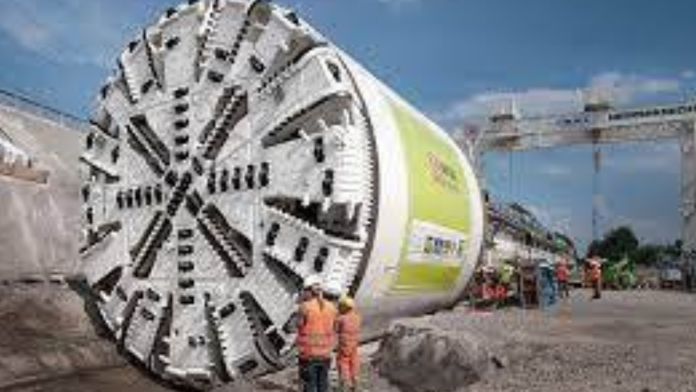
One of the significant difficulties of the project is tunnelling beneath existing structures in densely populated areas. The TBMs have a dome-style cutter head designed to work efficiently in various geologies – mainly sand, silt, clay and occasionally weathered rock. As the TBMs advance, 1,400mm wide and 275mm thick universal reinforced concrete lining rings are installed, consisting of five segments and a key.

Advertisement1
InnoMetro_2026

PM Sheikh Hasina to Launch Construction of Bangladesh’s First Mass Rapid Transit Line-1

0
Bangladesh metro.
Bangladesh Metro/Representational Image

BANGLADESH (Metro Rail News): Sheikh Hasina is slated to launch the work for the country’s first-ever Mass Rapid Transit Line-1 at 11:00 am on February 2 at Sector-4, Purbachal. This was reported on+ January 30 by the Managing Director of Dhaka Mass Transit Company Limited, MAN Siddique.

The government will be constructing a 31.241-kilometre route between Airport-Kamalapur and Purbachal-Natun Bazar-Pitalganj, Rupganj, which will be both underground and elevated.

He stated that the DMTCL had taken the initiative to initiate the mega project. Per the project specifications, the first railway depot of MRT Line-1 will be constructed in the Pitalganj area of Narayanganj, and all necessary arrangements have been made to commence the construction works.

 It was also reported that part one of MRT Line-1 is the Airport Route (from the Airport to Kamalapur), which is 19.872 kilometres long and is underground, with 12 stations. Part two is the Purbachal Route (from Natun Bazar to Pitalganj Depot, Rupganj), with 11.369 kilometres in length and is elevated, having nine stations; seven of these stations will be above-ground, while Natun Bazar and Nadda stations will be underground, as part of the Airport route.

The Managing Director declared that Natun Bazar station would offer an interchange service with MRT Line-5 (Northern Route), enabling travellers to reach the Airport route from Purbachal or Purnachal through the interchange.

The project report stated that MRT Line-1 would take twenty-four minutes from Dhaka airport to Kamalapur, with a stop at twelve underground stations, and twenty minutes to travel from Notun Bazar to Purbachal, with a stop at seven stations. Furthermore, it reported that when MRT Line 1 is launched, this route will afford eight lakh passengers to travel.

The MRT Line-1 will consist of underground and elevated stations. The ticket counter and other related facilities will be situated on the first basement level for the underground stations, and the platform will be located on the second level.

The ticket counter and platform will be on the third floor for the elevated stations. In addition, elevated and underground stations will be conveniently equipped with lifts, stairs and escalators.

The Dhaka Mass Transit Company Limited has contracted with Japan’s Tokyo Construction Company Limited and Bangladesh’s Max Infrastructure Limited for the project, which will be executed in twelve packages.

Advertisement1
InnoMetro_2026