Home Blog Page 241

Union Minister Announces New Vande Bharat Express Train between Mumbai and Goa

1
Vande Bharat Express
Representational image

THANE( Metro Rail News): In a recent meeting, the Union Minister announced that a new Vande Bharat Express train will soon operate between Mumbai and Goa. With an aim to reduce travel time, this new Vande Bharat Express train will be operational between Mumbai and Goa on the lines of the ones newly launched on Mumbai-Solarpur and Mumabi-Shirdi routes, stated Union Minister. Currently, 10 Vande Bharat Express trains run on various routes, including New Delhi-Varanasi, Gandhinagar Capital – Ahmedabad – Mumbai Central, and Howrah – New Jalpaiguri.

The Minister also informed the delegation that the Mumbai-Goa railway route has been electrified, and the new train service will be introduced soon following an inspection. During the meeting, the delegation raised several concerns related to railways in Thane and Konkan region. These included issues such as allotment of stalls to railway project-affected persons, mobile stalls for farmers at each railway station, raising platform height to reduce the gap between trains and platforms, and preventing flooding due to the railway bridge at Mahad in Raigad.

During the meeting, the delegation raised the issue of extending the Sawantwadi-Diva train service to Dadar, rehabilitating people residing along railway tracks through the Slum Rehabilitation Authority (SRA) scheme, and renaming Mumbra station in Thane to Mumbra Devi station. The Minister gave assurance that once the state government submits a proposal regarding the renaming, appropriate action will be taken.

Advertisement1
InnoMetro_2026

Pune Metro Expands with New Routes and Stations

0
pune metro
Representational Image

PUNE (Metro Rail News): Two routes in the Pune Metro cover a distance of 33 km; the Pimpri Chinchwad Municipal Corporation station to Swargate station (17 km) and Vanaz station to Ramwadi station (16 km). The Pune Metro’s elevated corridors are progressing swiftly, and three more routes are being developed. The Pimpri Chinchwad Municipal Corporation station to Fugewadi station (7 km) and Vanaz station to Garware College station (5 km) routes will be inaugurated on March 6, 2022, by the Prime Minister. The Fugewadi station to Civil Court interchange, Garware College station to Civil Court interchange, and Civil Court interchange to Ruby Hall station corridors will be fully constructed by March 2023. After the Commissioner of Metro Rail Safety (CMRS) conducts inspections, the three routes will be open to the public.

The work on 95% of the Daund-Baramati-SHIV Nagar route, which includes Dapodi, Bopodi, and Shivajinagar stations, from Phugewadi station to the Civil Court interchange station, has been completed, and the inspection for the metro route has already begun. This metro route will connect the two neighbouring cities of Pimpri-Chinchwad and Pune. The works near the Garware College station, the Civil Court interchange station, including the Deccan, Chhatrapati Sambhaji Udyan, and Pune Municipal Corporation, have been completed. With this route, the Paud road area will be directly connected to the Divani Court, Jungli Maharaj road, Gopal Krishna Gokhale Path (FC road), Shivajinagar, and Pune Municipal Corporation. Therefore, residents of this area will have easy access to travel to Pimpri-Chinchwad Municipal Corporation and the industrial estates of Bhosari through the metro route.

“The work of the metro stations near Civil Court Interchange, Ruby Hall, Mangalwar Peth (RTO), Pune Railway Station has been completed. With this, citizens can easily go to Pune Railway Station, RTO, departmental commissioner office, district collector office, new administrative building, and Pune Police Commissionerate via the Pimpri Chinchwad and Paud Road, Karve Road. This new route will also benefit students who study in educational institutions such as Wadia College, Fergusson College, MIT College, Modern College, BMCC College, MMCC College, Agarkar Institute, Gokhale Institute, Ranade Institute, FTII, and ILS Law College by providing them with easy access to travel.”

Civil court interchange station located at Pimpri Chinchwad Municipal Corporation station, is an elevated station on this route connecting Swargate station and Ramwadi station, with Bhosari station and Vanaz station being the improved stations. For travelling from the elevated station to the improved station, 10 escalators (mechanical stairs), 6 lifts (elevators), and premium stairs have been arranged. Therefore, changing tracks will be extremely easy. Parking, PMPML bus stop, drop-off zone, and go-lane will be available at the civil court interchange station. A separate independent pedestrian path will be built at the civil court interchange station to connect it to the court. This will make it easy for citizens coming to the court to not go out of the station premises or wander on the roads.

The civil court is a central location in Pune city where 30,000 to 40,000 citizens come for court work throughout the day. In addition, more than one lakh citizens meet at the Pune railway station for 24 hours. This is where the metro will be very useful. The metro will make travel convenient for passengers travelling to and from these two locations. Additionally, the use of the metro will be helpful in solving the problems of congestion and parking in this area.”

Advertisement1
InnoMetro_2026

TWL-BHEL Consortium Declared 2nd Lowest Bidder for Vande Bharat Trainset Contract

0
Vande Bharat Express
Vande Bharat Express/ Representational Image

KOLKATA( Metro Rail News): TWL-BHEL Consortium, consisting of Titagarh Wagons Limited and Bharat Electricals Limited, has been declared the 2nd Lowest Bidder (L2) for the project of “Manufacturing cum Maintenance of Vande Bharat Trainsets including Up-gradation of the Government Manufacturing Units & Trainset Depots”. The TWL-BHEL Consortium secured the L2 position with a bid of ₹139.8 crore per train. The RVNL-CJSC consortium won the tender with a bid of ₹120 crore per train. The financial bid opening held on March 1st, 2023, confirmed their L2 status. The project involves the production of 200 trainsets, and as per the tender conditions, L2 is eligible to manufacture 80 trainsets. However, the Letter of Award (LOA) is yet to be received by the TWL-BHEL Consortium. The delivery of the trains will generate ₹26,000 crore upfront payment, while the winning bidder will receive ₹32,000 crore over a 35-year period for the maintenance of the trains.

Titagarh Wagons Limited is a multinational engineering and fabrication group that specializes in manufacturing railway coaches, including EMUs and MEMUs, and wagons. It has its engineering infrastructure located across various regions, including West Bengal, Rajasthan, and Italy.

Advertisement1
InnoMetro_2026

Chennai Metro Rail to Build Dedicated Service Lanes for Commuters

0
Chennai Metro
Representational Image

CHENNAI (Metro Rail News): Chennai Metro Rail Limited (CMRL) is set to build dedicated service lanes at all stations in the phase II project to improve the mobility of commuters.

The objective, as disclosed by CMRL officials, is to establish dedicated service lanes equipped with designated drop-off and pick-up points for passengers utilizing shared transportation systems.

The service lanes will also have bus bays to provide easy access to the station entry/exit points for commuters arriving by cars, bikes, buses, or autorickshaws. The move is expected to encourage more people to use public transport systems rather than private modes.

Although not included in the initial design, modifications have been implemented to guarantee that all stations are equipped with this feature. CMRL officials have also stated that they will acquire land, if necessary, to ensure that all stations have these dedicated lanes.

According to officials, having such facilities will help commuters switch between different modes of transport easily and prevent traffic congestion on arterial roads. The first phase of the project, the Poonamallee-Porur stretch of the Light House to Poonamallee corridor, is expected to begin operations in three years. The project is estimated to cost ₹61,843 crore and will comprise 118.9 km in length, including Madhavaram to SIPCOT, Light House to Poonamallee, and Madhavaram to Shollinganallur corridors.

Advertisement1
InnoMetro_2026

L&T Commences Tunnelling for Delhi Metro’s Silver Line with TBM launch

0
TBM DZ1122
TBM DZ1122 /Photo by DMRC

DELHI (Metro Rail News): Larsen & Toubro (L&T) has initiated the first tunnelling work for Delhi Metro’s Silver Line with the commissioning of the TBM DZ1122 at Chhatarpur Station. The TBM launch shaft will be headed towards Kishangarh Station, with a 1.27 km long tunnel planned for the line’s Package DC-09, which connects Kishangarh – Saket G Block. 

Launching TBM DZ1122 to commence tunnelling work for Silver Line of Delhi Metro
Launching TBM DZ1122 to commence tunnelling work for Silver Line of Delhi Metro/Photo by DMRC


The Silver Line is part of the Phase 4 project and will connect Aerocity-Tughalakabad through 16 stations in four civil packages. The 6.51 km section by L&T, valued at Rs. 1428 crore, will be constructed with twin-tunnels in the middle of the Silver Line, connecting Kishangarh Station with a cut and cover ramp to the west of Saket G Block Station. The section includes four stations at Chhattarpur (interchange with Yellow Line), Chhattarpur Mandir, IGNOU, and Neb Sarai. The CRCHI earth pressure balance (EPB) machine’s cutter head and shields were lowered using a strand jack “mega lift” system, saving time.

Advertisement1
InnoMetro_2026

NCRTC Awaits Cabinet Approval for Second Regional Rapid Transit System Connecting Delhi with Alwar

0
RRTS-trainsets
Representational image only

New Delhi (Metro Rail News): NCRTC is presently awaiting the Union Cabinet’s approval to commence the construction of the second regional rapid transit system that will connect Delhi and Alwar in Rajasthan. The pre-construction activities for the project have been completed, marking the second of its kind after the Delhi-Meerut RRT corridor. 

An NCRTC official stated that they have relocated all utilities in Gurugram, including power lines and pipelines, and that the pre-construction work is complete. However, the Delhi-Alwar stretch will be implemented in three stages as a multi-state project. The NCRTC has set up a board comprising representatives from the concerned states to grant approval for the project. As part of the process, a detailed project report is prepared, which is reviewed by the NCRTC board before being sent to the states for implementation.

The official further stated that the Delhi government has approved the project in principle but has expressed its inability to provide the necessary funds. The NCRTC has submitted the DPR to the central government for cabinet clearance, and once approved, construction can commence immediately.

Advertisement1
InnoMetro_2026

Rolling Stock Production Begins for Hinjewadi-Shivajinagar Metro on Pune Metro Line 3

0
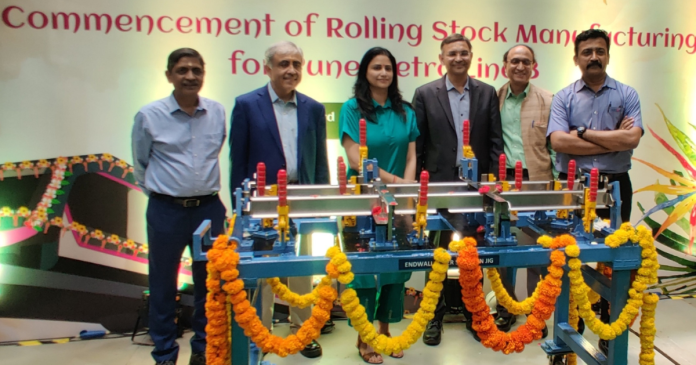
Commencement of rolling stock manufacturing for Pune Metro Line 3

PUNE (Metro Rail News): The rolling stock (metro train engines and coaches) manufacturing for Pune Metro Line 3 aka ‘Puneri Metro’, commenced today. France’s Alstom transport has been awarded the contract for this manufacturing, and the mentioned rolling stock will be produced under the ‘Make in India’ initiative at Alstom’s factory in Sri City near Chennai.

Pune Metro Line 3 project governed by Pune Metropolitan Region Development Authority (PMRDA) on Hinjewadi to Shivajinagar route is progressing in a sustainable manner. As the construction work on this line is being completed rapidly, now the production of the actual metro train (rolling stock) has started. Chief Executive Officer of Pune IT City Metro Rail Limited, the developer of this project, Mr. Alok Kapoor, flagged off the production of rolling stock today at Sri City by performing the traditional ‘Yantra Pooja’ ceremony. PITCMRL Director and Business Head Neha Pandit, PITCMRL Systems Head L. N. Prasad, and officials of Alstom Transport were present to grace the occasion.

On this occasion, Mr. Alok Kapoor, Chief Executive Officer of Pune IT City Metro Rail Ltd., said, “We are very happy to engage Alstom, a world-renowned company in manufacturing the rolling stock for ‘Puneri Metro’. We have no doubt that Pune Metro Line 3 will be an exemplary example of the ‘Make in India’ initiative and will reinforce Hon’ble Prime Minister Narendra Modi’s policy of ‘Aatmanirbhar Bharat’.”

 “The trains of Pune Metro Line 3 are now taking shape to provide the passengers on the Hinjewadi-Shivajinagar route with a comfortable and safe journey. We have awarded a contract to Alstom to manufacture a total of 22 trains for this route. Each of these trains is equipped with the latest technology and state-of-the-art facilities. We are sure that this metro train service on a very important route will enrich the daily travel experience of Pune residents,” added Neha Pandit, Director and Business Head of PITCMRL.

 Pune Metro Line 3 is an important route connecting Hinjewadi’s IT hub with Shivajinagar’s central business district. The metro trains running on this route will provide the passengers with fast, varied, and sophisticated travel facilities. The developers of the Pune Metro Line intend to present the first glimpse of this train to the people of Pune by rapidly completing the engine and coach manufacturing work as well.

 What is Rolling Stock?

The term rolling stock in the rail transport industry refers to railway vehicles, including both powered and unpowered vehicles. The motorized or trailer carriages, wagon, or rakes operated on a rail track is often called as rolling stock and it typically includes locomotives, powered and unpowered cars, wagons, multiple units, and other track-bound vehicles used on the railway for both passenger and freight operations. For Metro Trains, the entire metro rail with the main operating body and the wheelset comprises the rolling stock.

IMG 20230303 163933 scaled

 About Pune Metro Line 3:

The Pune Metro line III is a ~23 Km elevated Metro rail project connecting the IT hub of Hinjawadi to the Central business district of Shivajinagar. It is a Public Private Partnership (PPP) project awarded by Pune Metropolitan Region Development Authority (PMRDA) to a consortium consisting of Tata Group’s TRIL Urban Transport Private Limited (TUTPL) and Siemens Project Ventures GmbH. The Project would be developed & operated on Design, build, finance, operate & transfer (DBFOT) basis by a special purpose vehicle (SPV), Pune IT City Metro Rail Limited, or PITCMRL for a Concession Period of 35 years, including the construction period.


Advertisement1
InnoMetro_2026

BIM and 5G in Railway Infrastructure: The Future of Design, Construction, and Maintenance

0

The railway industry has been a crucial transportation mode for centuries, and it continues to evolve with time. The rapid advancements in digital technology have brought about significant changes in the railway industry, and two of the latest technological advancements that have been adopted in this industry are Building Information Modeling (BIM) and 5G networks. The combination of BIM and 5G is already transforming the railway industry by providing a more efficient, cost-effective, and safe way of designing, constructing, and maintaining railway infrastructure.

BIM is a digital representation of the physical and functional characteristics of a building or infrastructure, including the railway infrastructure. It is a tool that enhances collaboration, improves decision-making, and reduces risk during the entire lifecycle of a project. On the other hand, 5G networks are the fifth generation of cellular networks that provide ultra-fast internet speeds and low latency. The technology enables wireless communication between devices and machines, making it a game-changer for the railway industry.

This article will explore the benefits of BIM and 5G in railway infrastructure design, construction, and maintenance. We will also look at the challenges of implementing these technologies in the railway industry.

BIM and 5G in Railway Infrastructure Design

Depositphotos 2466189 xl 2015 original scaled

The design phase of railway infrastructure is critical as it lays the foundation for the entire project. BIM and 5G technologies can be used to design railway infrastructure, which involves creating 3D models of railway lines, stations, and other facilities. With BIM, designers can work collaboratively and share data seamlessly, making it easier to detect clashes and errors early in the design phase. 5G technology provides a fast and reliable network for designers to access large data files and collaborate remotely.

BIM technology allows designers to create a virtual model of the railway infrastructure that simulates the physical environment in a digital format. BIM models can include all the necessary data about the infrastructure, such as geometry, material, specifications, and performance. This enables the designers to optimize the design, test different scenarios, and detect any clashes before construction begins.

The use of BIM also helps reduce the risk of design errors and conflicts, which can result in cost overruns and delays. With BIM, designers can identify potential issues and conflicts in the design phase, saving time and resources.

The use of 5G networks provides a fast and reliable network for designers to access large data files and collaborate remotely. 5G also enables real-time video conferencing, which allows designers to communicate and collaborate regardless of their location. The high-speed internet connection also enables designers to access cloud-based applications, enhancing the efficiency of the design process.

BIM and 5G in Railway Construction

Railway Infrastructure Market scaled

The construction phase is one of the most crucial stages of a railway infrastructure project. BIM and 5G technologies can be used during the construction phase to improve efficiency and productivity. The 3D models created during the design phase can be used to simulate the construction process and optimize it for efficiency. BIM also helps contractors identify any issues that may arise during the construction phase, such as material or equipment shortages. With 5G, construction teams can stay connected with high-speed internet and communicate with each other and other stakeholders, regardless of their location.

BIM technology provides an accurate representation of the railway infrastructure, allowing construction teams to simulate the construction process and optimize it for efficiency. The construction team can use the BIM model to plan and coordinate the construction process, allowing them to identify and resolve issues before they occur. This minimizes the risk of delays and cost overruns during the construction phase.

The use of 5G technology during the construction phase enables construction teams to stay connected with high-speed internet and communicate with each other and other stakeholders, regardless of their location. The technology can also be used to improve safety by enabling real-time communication between workers and supervisors. For example, 5G-connected sensors can be used to monitor the health and safety of workers, alerting supervisors to any potential hazards or accidents.

In addition, 5G can be used to enable remote construction site monitoring and management. With high-speed internet, site managers can remotely monitor construction progress, track project timelines, and manage resources. This can significantly reduce the need for on-site staff, lowering costs and increasing efficiency.

BIM and 5G in Railway Maintenance

Maintenance is a crucial aspect of the railway infrastructure, as it ensures the safety and reliability of the system. BIM and 5G technologies can be used during the maintenance phase to improve efficiency and reduce costs. BIM models can be used to create a digital twin of the railway infrastructure, providing a complete and accurate representation of the system.

indian railway bridge scaled 1

The digital twin can be used to monitor and analyze the performance of the railway infrastructure, enabling maintenance teams to identify potential issues before they occur. For example, sensors can be installed along the railway track to monitor the condition of the track, identifying any signs of wear or damage. This enables maintenance teams to schedule repairs or replacements before the track becomes unsafe.

With 5G, maintenance teams can access real-time data about the performance of the railway infrastructure, enabling them to make informed decisions about maintenance and repairs. The technology can also be used to remotely control and monitor maintenance equipment, reducing the need for on-site staff and lowering costs.

Challenges of Implementing BIM and 5G in Railway Infrastructure

While BIM and 5G have the potential to revolutionize the railway industry, there are still several challenges to implementing these technologies. One of the biggest challenges is the lack of standardization in the industry. Different countries and regions may have different standards and regulations for railway infrastructure, making it difficult to implement a standardized approach to BIM and 5G.

CM20200406 2f910 33898 scaled

Another challenge is the lack of skilled personnel. BIM and 5G technologies require specialized skills and knowledge, and there may be a shortage of qualified personnel in the industry. To overcome this challenge, the industry must invest in training and education programs to build a skilled workforce.

Cost is another challenge to implementing BIM and 5G. While these technologies have the potential to reduce costs in the long term, the initial investment can be significant. The industry must find ways to balance the cost of implementing these technologies with the potential benefits.

Future of BIM and 5G in Railway

Looking to the future, BIM and 5G are expected to play an increasingly important role in the railway industry. The continued development of BIM technology will make it even easier to create detailed and accurate models of the railway infrastructure, while the expansion of 5G networks will enable faster and more reliable communication between stakeholders.

One area where BIM and 5G are expected to have a major impact is in the development of high-speed rail networks. High-speed rail is becoming an increasingly popular mode of transportation in many countries, and BIM and 5G can be used to design, construct, and maintain high-speed rail infrastructure more efficiently and effectively.

Another area where BIM and 5G are expected to have an impact is in the development of smart railways. Smart railways use technology to optimize the performance and safety of the railway system, and BIM and 5G can be used to create a digital twin of the railway infrastructure that can be used to monitor and analyze its performance in real-time.

DB192454 scaled 1

Conclusion 

BIM and 5G are transforming the railway industry by providing a more efficient, cost-effective, and safe way of designing, constructing, and maintaining railway infrastructure. BIM technology enables designers to create a virtual model of the railway infrastructure, reducing the risk of design errors and conflicts. The 5G network provides a fast and reliable network for designers to access large data files and collaborate remotely, optimizing the construction process for efficiency and safety. In the maintenance phase, BIM and 5G enable real-time monitoring and analysis of railway infrastructure performance, identifying potential issues before they occur. Despite the challenges to implementing BIM and 5G in the railway industry, the potential benefits are significant. The industry must invest in standardization, education and training programs and find ways to balance the cost of implementing these technologies with the potential benefits. Embracing these technologies will enable the development of high-speed rail networks and smart railways, allowing the railway industry to remain a vital component of modern transportation infrastructure.

 

Advertisement1
InnoMetro_2026

The Ahmedabad Metro Phase 2

2

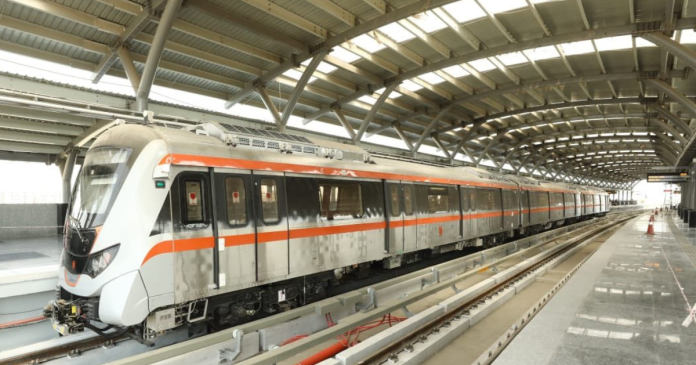
The Ahmedabad Metro Phase 2 project, which comprises two corridors covering a total distance of 28.254 km, was approved by the Indian Central Government’s Cabinet on February 19, 2019. The estimated cost of the project is Rs. 5384.17 crores. Prime Minister Narendra Modi laid the foundation stone for the project on March 4, 2019. Phase 2 involves extending Line-2 from Motera Station to Mahatma Mandir in Gandhinagar.

A notice inviting bids for civil construction was published in January 2020, technical bids were opened in June 2020, and construction work started in February 2021. 

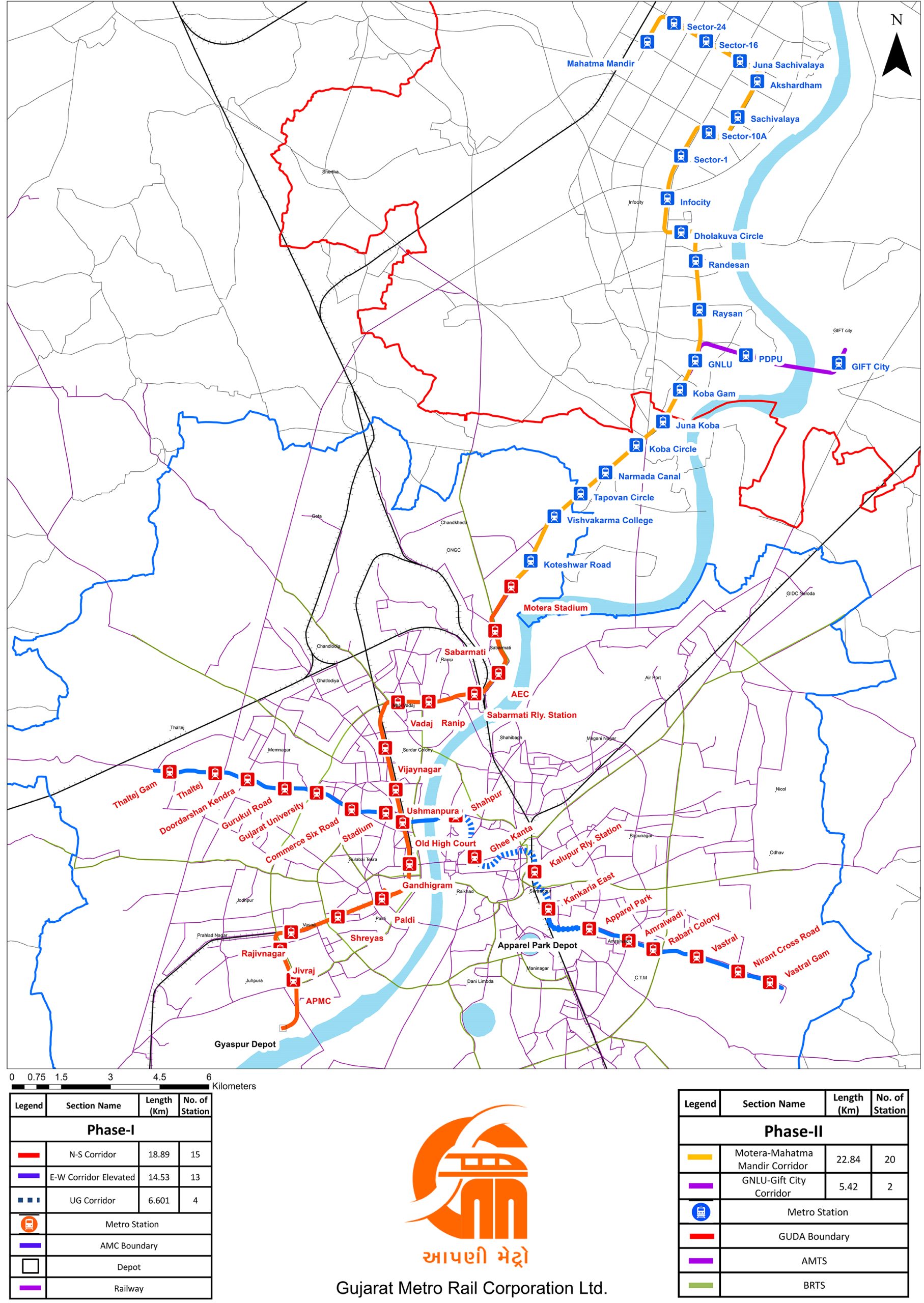
Route map

Route map scaled


The Ahmedabad Metro Phase 2 includes key figures such as 20.02 km under construction, 7.41 km approved, and 0 km proposed. While the GMRC’s Phase 2 deadline has not been revealed, my estimate for completion is 2026.

Phase 2 includes two routes: Line-2 (North-South/Red Line) and Line-3 (Eastern Spur). Line-2 is an elevated type route with a length of 22.838 km and a depot located in Indroda. It includes 20 stations with the following names: Koteshwar Road, Vishwakarma College, Tapovan Circle, Narmada Canal, Koba Circle, Juna Koba, Koba Gam, GNLU, Raysan, Randesan, Dholakuva Circle, Infocity, Sector-1, Sector-10A, Sachivalaya, Akshardham, Juna Sachivalaya, Sector-16, Sector-24, and Mahatma Mandir.

Line-3 is also an elevated type route with a length of 5.416 km and includes three stations: Gujarat National Law University (GNLU), Pandit Deendayal Petroleum University (PDPU), and Gujarat International Finance Tec-City (GIFT City).

The following is a list of major contractors involved in the construction of the Line-2 extension from Motera Stadium to Mahatma Mandir as part of the Ahmedabad Metro Phase 2 project:

  • For the detailed design consultant (DDC) of the Line-2 extension and the Viaduct, 22 stations, and depot geotechnical investigation, SYSTRA – SYSTRA MVA Consulting (India) Pvt. Ltd. JV and M K Soil Testing Laboratory were selected respectively.
  • Ardanuy Ingeniería S.A was selected as the DDC for the power supply and distribution system, 750 V DC third rail traction electrification, and SCADA system.
  • Civil Package C1, which includes the viaduct from Motera to GNLU (8.124 km) and GNLU to GIFT City (5.420 km) with 10 stations, was awarded to Afcons Infrastructure.
  • Civil Package C2, which covers the viaduct from GNLU to Gandhinagar Sector-1 (6.478 km) with 5 stations, was awarded to Ranjit Buildcon.
  • Civil Package C3, which involves the viaduct from Sector-1 to Mahatma Mandir with 7 stations, was awarded to Dilip Buildcon, which submitted the lowest bid.
  • The Rolling Stock Package RS3 for 30 coaches had bids invited in April 2022.
  • Siemens was the lowest bidder for Electrification Package EP2, which includes 750 V DC third rail.
  • VNC – KEC – Emrail JV was selected as the lowest bidder for the Track-work Package, which involves the design, supply, installation, testing, and commissioning of the ballastless track. These contractors play a crucial role in the construction of the Line-2 extension, and their efforts will be instrumental in completing the project within the expected time frame.
Advertisement1
InnoMetro_2026

DMRC Floats Tender for Iconic Underground Tunnel Connecting Patna Museum and Bihar Museum

0

DELHI (Metro Rail News): The Delhi Metro Rail Corporation (DMRC) has released a tender for the construction of underground tunnel between the Bihar Museum and the Patna Museum. The tender was released on February 23, 2023, and bids will be accepted until April 5, 2023. The underground tunnel will be 1.47 kilometres long and will connect the two museums, allowing visitors to easily move between them. The tunnel will be built using the latest technology and will ensure a safe and comfortable journey for the visitors.

The DMRC has been entrusted with the responsibility of executing this project by Urban Development & Housing Department (UDHD), Government of Bihar. The project is expected to be completed within a period of three years. An MOU has already been signed between UDHD, Govt. of Bihar and Delhi Metro Rail Corporation Ltd. (DMRC) for the underground tunnel between both the museums.

patna Museum 2
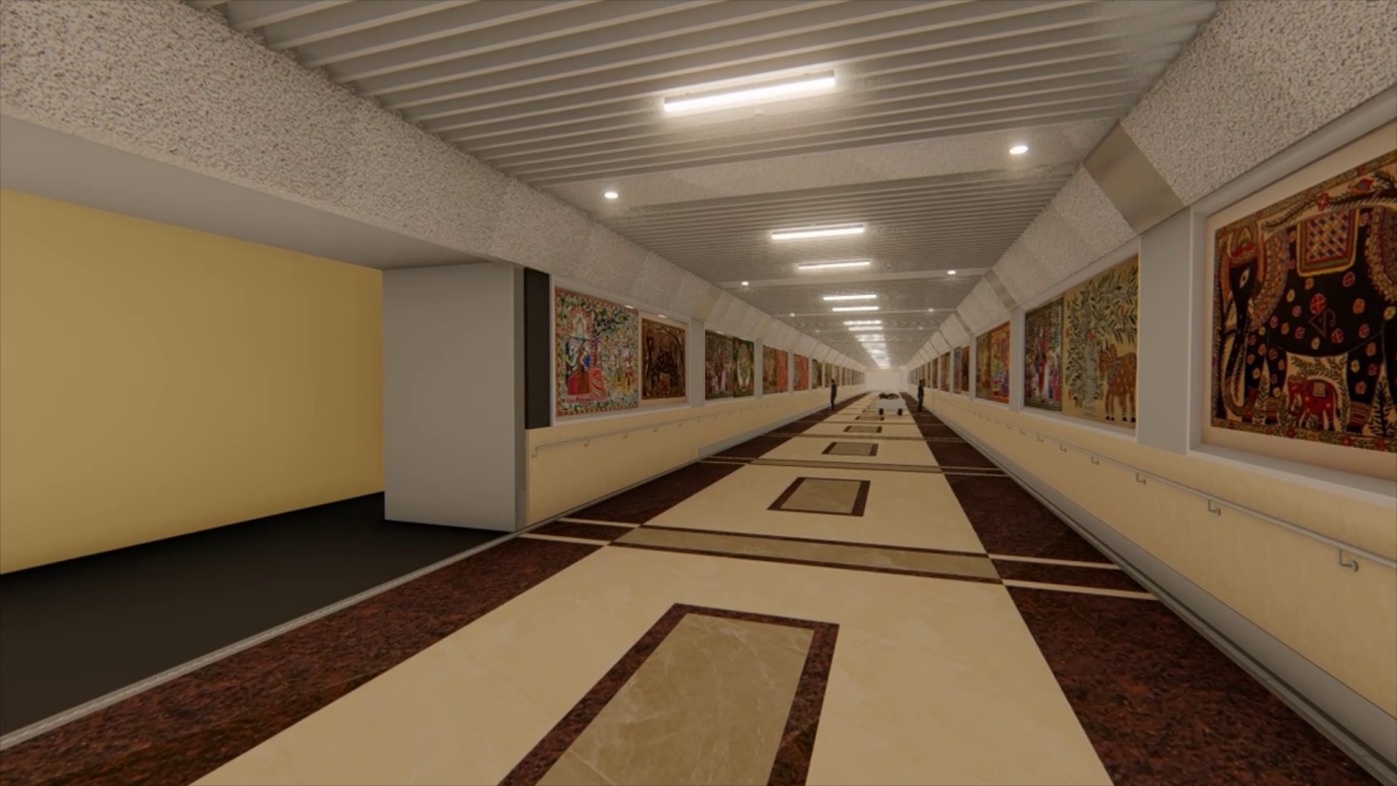
Heritage Tunnel

The underground tunnel shall provide seamless connectivity between Bihar Museum and Patna Museum. It shall be facilitated with battery-operated golf carts to aid easy and eco-friendly movement of the visitors. It will also be equipped with adequate safety measures within the fully air-conditioned structure. In order to make it more appealing, the walls of the tunnel will exhibit art, culture and heritage of Bihar state. The tunnel is expected to attract a large number of tourists and boost the local economy.

Advertisement1
InnoMetro_2026