New Delhi: Prime Minister Narendra Modi has flagged-off the Delhi-Faridabad Metro Line that would allow hassle free travel for around two lakh daily commuters between the national capital and the industrial hub in Haryana.
The extension of the Delhi Metro connects Badarpur to Escorts Mujesar in Faridabad.
The total cost of the project from Badarpur to Escorts Mujesar is nearly Rs. 2,500 crore. Out of this, Rs. 1,557 crore was borne by the Haryana Government, the Centre contributed Rs. 537 crore, while the Delhi Metro provided Rs. 400 crore.
All these are elevated and located on either side of the Delhi-Mathura Road (NH-2).
“The nine-station metro corridor which was 95 per cent indigenously built will provide people a safe, affordable, quick, comfortable, reliable, environment-friendly and sustainable transport facility,” a Haryana government spokesperson said.
Haryana Chief Minister ML Khattar, addressing a press conference on Saturday, had thanked the Prime Minister for “gifting” the Metro service which would take the city to “another level of progress” with better connectivity with other NCR towns.
He had also said that the Prime Minister would be announcing the go-ahead for connecting Gurgaon with Faridabad by Metro.
HARYANA (Metro Rail News): Indian Railways has achieved a major milestone by completing the electrification of the entire railway network in Haryana state. The existing broad gauge network of Haryana, which spans 1,701 route kilometers, is now 100% electrified. The announcement was made by Union Railways Minister Ashwini Vaishnaw on Twitter, who congratulated the people of Haryana on their achievement.
Hon’ble Prime Minister Shri Narendra Modi, also took to Twitter to congratulate the state of Haryana on achieving 100% rail electrification. He emphasized that this accomplishment would bring many benefits to the state.
According to the press release, “Haryana’s existing Broad Gauge network, covering a distance of 1,701 Route Kilometers, has been fully electrified, resulting in several benefits such as reduced line haul cost (about 2.5 times lower), increased capacity for hauling heavier loads, improved sectional capacity, and reduced operating and maintenance cost for electric locomotives. Furthermore, electrification has also made transportation more energy-efficient and eco-friendly, leading to a reduction in the country’s dependence on imported crude oil and foreign exchange savings.”
Haryana state’s territory falls under the jurisdiction of the Northern, North Central, and North Western Railways. Some of the major railway stations in Haryana are Panipat, Ambala, Kurukshetra, Gurgaon, Hisar Junction, Rewari Junction, Rohtak Junction, and Bhiwani. These railway stations offer convenient connectivity to various regions of the state and other major cities in the country. Also, several prestigious trains pass through Haryana state, including the Kalka Shatabdi Express, Kalka Mail, Himalayan Queen, Paschim Express, Golden Temple Mail, and Kalinga Utkal Express. These trains provide easy access to various parts of the state, making travel more convenient for passengers.
On the whole, the completion of the electrification of the railway network in Haryana state is a major achievement that will have numerous benefits for the state and its people. The move will provide a more energy-efficient and eco-friendly mode of transportation while saving on costs and reducing dependence on imported crude oil.
TRICHY (Metro Rail News): The Trichy Corporation has taken a major step towards improving the city’s public transportation infrastructure by identifying three high-demand corridors for a proposed metro rail network. These corridors, which span a total of 68 km, have been selected based on passenger per hour per direction (PPHPD) data and will serve as a master plan for the proposed Trichy metro.
The Comprehensive Mobility Plan (CMP) was created with the help of a Bengaluru-based consultant and is designed to serve as a long-term vision document in order to strengthen public transport infrastructure and non-motorised modes in the city. To prepare the plan, Consultants analyzed a population of 1.47 million by studying 65 wards in the city, Lalgudi and Thuvakudi municipalities, and four town panchayats, and the plan was based on 20 types of data collection and surveys conducted in an 803 sq. km area.
The proposed three metro rail networks will be integrated at the Central bus stand, railway junction, and Panchapur IBT. These corridors will be implemented in phases, and the type of metro network to be used, either Metro Lite or Metro Neo, will depend on the city’s passenger capacity.
The proposed Routes:
1. Samayapuram to Vayalur: Route One of the Proposed Trichy Metro Network will cover a distance of 18.7 km, which will connect the northern suburbs of Samayapuram to Vayalur in the west. The route will pass through Srirangam and Thillai Nagar.
2. Thuvakudi to Panjapur: Longest Route Two of Trichy Metro Network With a length of 26 km, will connect Thuvakudi to Panjapur, passing through the Central bus stand. This route will be the longest of the three.
3. Trichy Railway Junction to Panjapur: Route Three of Trichy Metro Network will cover a distance of 23.3 km, connecting Trichy railway junction to Panjapur via the international airport and semi-ring road. This route will pass through some major transportation hubs and serve as a key component of the proposed metro network in Trichy.
The Trichy Corporation has announced that they will prepare an alternative analysis report to serve as the basis for the detailed project report (DPR) for the proposed Trichy metro project. This is a promising development for the city, which is in dire need of an efficient and reliable public transportation system. The proposed metro rail network is expected to significantly ease traffic congestion and improve the quality of life for Trichy’s residents.
NEW DELHI (Metro Rail News): Indian Railways has issued a letter of award to the Russian major JSC Metrowagonmash-Mytischi (TMH) to manufacture 120 Vande Bharat trains with Sleeper coaches at Latur. The Railway Stores Executive Director stated that with the issuance of the LOA, the contract stands concluded. With a quoted price of Rs 120 crore per train, TMH-RVNL secured the position of the lowest bidder for the manufacturing of Vande Bharat trains with Sleeper coaches, while Titagarh-BHEL became the second-lowest bidder by quoting nearly Rs 140 crore per train.
Presently, the operational Vande Bharat trains are equipped with seating arrangements, while the upcoming ones will include Sleeper coaches comprising one First AC, three Second AC, and eleven Third AC coaches. The front and rear side of the train will feature an ergonomically designed driver trailer coach, which will be a Divyang-friendly facility.
The consortium of Titagarh-BHEL, was also asked to lower the price as a counteroffer. According to sources, both bidders have accepted the offer and will soon communicate with the Railways.
Now, as part of the Vande Bharat project, TMH-RVNL is required to submit a performance guarantee bond of Rs 200 crore, while Titagarh-BHEL must submit a bond of Rs 160 crore to the Railways. The project has a total worth of Rs 50,000 crore and a maintenance provision of 35 years.
CHENNAI (Metro Rail News): Chennai Metro Rail Limited (CMRL) is set to install Platform Screen Doors (PSD) at all stations of its phase 2 project to ensure passenger safety during Driverless Train Operation. The move comes as a part of CMRL’s commitment to providing a world-class experience for its commuters. The PSDs not only provide additional safety to passengers but also improve air conditioning at underground stations by preventing cool air from escaping into the tunnels.
Thiru Rajesh Chaturvedi, the Director (Systems and Operations) of CMRL, has announced that the contract for the installation of PSDs on Corridor 4 of phase 2 has been awarded to M/s Zhuzhou CRRC Times Electric Co. Ltd. for INR 100 Crores. The work is being funded by the New Development Bank. The installation will include half-height PSDs for 18 elevated stations from Poonamalle to Kodambakkam Powerhouse and full-height PSDs for nine underground stations from Lighthouse to Kodambakkam.
The PSDs will be operated automatically by the driverless signaling system of Corridor 4. The contracts for the remaining corridors 3 and 5 are also in the process of finalization. CMRL’s decision to install PSDs at all stations of phase 2 shows its dedication to ensuring the safety of its commuters. The PSDs not only prevent accidents but also offer a more comfortable and efficient travel experience.
In conclusion, CMRL’s decision to install PSDs at all stations of phase 2 is a crucial step towards ensuring passenger safety and providing a world-class travel experience. With the installation of PSDs, CMRL aims to offer its commuters a safe, comfortable, and efficient mode of transport.
Operation Control Center being developed at Aarey Car Depot, Mumbai Metro line-3/ Image via Twitter
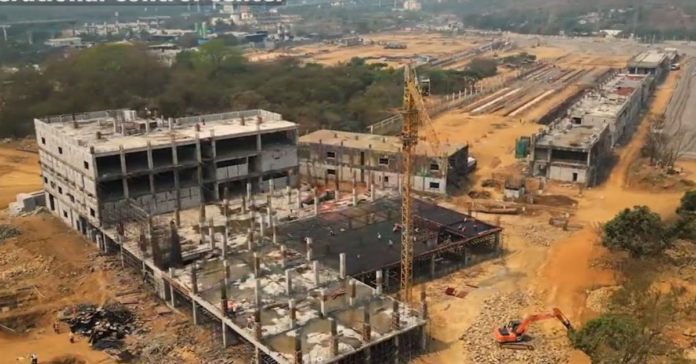
MUMBAI (Metro Rail News): Mumbai’s Aarey car depot, which is a crucial part of the Mumbai Metro Line-3, is making good progress. The MMRC (Mumbai Metro Rail Corporation), which is overseeing the project, has said that work on the car depot is 54% complete, and the project is expected to be completed on schedule. The depot has a vital role in the functioning of the Mumbai Metro Line-3, and the MMRC is keen to ensure that it is completed on time.
Workshop & Maintenance building / Image from Twitter
The Aarey car depot will play a significant role in the Mumbai Metro Line-3’s operations, providing crucial rolling stock cleaning facilities. There will also be stabling lines for 31 trains of eight coaches each, as well as an Operation Control Centre (OCC) to manage and control train operations. A total of 29 stabling lines are being developed. The OCC is a top priority, and work is underway to ensure that it is up and running as soon as possible.
Aarey car depot’s work is in progress/Image from Twitter
In addition, work on other aspects of the project, such as civil structural work for a workshop and maintenance building, mechanical engineering and plumbing, and the subterranean water tank, is also progressing well. The Aarey Metro Station, which will provide connectivity to the JVLR and Speez Station of Line 6, is also shaping up, with 15% of the work already completed. Despite the challenges, the MMRC is confident that the project will be completed on schedule, and Mumbai commuters can look forward to a more efficient and convenient Metro system.
Trial Run of 1st Diesel Locomotive between Bhestan-Sanjan section of WDFCC CTP-12 & CTP-13
GUJARAT (Metro Rail News): In a historic moment for the Indian railways, the first-ever trial run of a diesel locomotive between the Bhestan-Sanjan section of WDFCC CTP-12 & CTP-13 was completed successfully.
The trial run, which took place under the watchful eyes of Shri Manish Gupta, General Manager (co-ord) Vadodara, and Shri M.K. Soni, Technical Advisor to DFCCIL Vadodara, marks a significant step towards the modernization of India’s railway infrastructure.
SURAT (Metro Rail News): HFCL (Himachal Futuristic Communications Limited) has declared that it has secured a contract from Gujarat Metro Rail Corporation (GMRC) Limited amounting to Rs 282 crore. As per the agreement, the company will be responsible for establishing telecommunication systems for the Surat Metro Rail Project Phase-I of GMRC. The expected timeline for the project to be completed is ninety weeks.
According to HFCL, the work scope involves the production, design, testing, supply, installation, and commissioning of telecommunications systems for the first phase of the Surat Metro Rail Project. This project is a significant milestone for HFCL, as it enables the company to expand its presence in the rapidly growing Indian metro rail market.
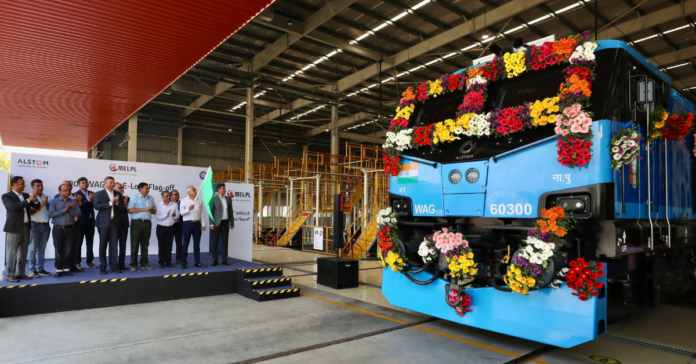
Alstom delivers 300th WAG12B electric locomotive to Indian Railways from Nagpur Depot
NAGPUR (Metro Rail News): Alstom, the global leader in smart and sustainable mobility, has successfully delivered 300 electric locomotives to the Indian Railways. This marks a significant milestone in increasing the Indian Railways’ capabilities to haul heavy freight trains at high speed, to meet its ambitious freight targets. As part of its contract worth €3.5 billion, Alstom is supplying 800 high-powered double-section locomotives of 12,000 HP (9 MW) for freight service. Designated by Indian Railways as WAG-12B, these locos are capable of hauling ~6,000 tonne rakes at a top speed of 120 km/hr.
Alstom delivers 300th locomotive to Indian Railways
Marking the milestone delivery, the 300th e-loco was flagged off from Alstom’s state-of-the-art locomotive maintenance depot in Nagpur, which was inaugurated by the Hon’ble PM Shri Narendra Modi in December of last year. This milestone was celebrated in the presence of Shri Naresh Lalwani, General Manager, Central Railway, and senior officials from Alstom, along with other key dignitaries from Indian Railways.
Addressing the audience, Shri Naresh Lalwani, General Manager, Central Railway, said, “Indian Railways is undergoing a massive transformation in its freight operations and Alstom’s contribution in powering this revolution is commendable. The Joint Venture formed between Indian Railways and Alstom, to build India’s most powerful electric locomotives for freight service is a stellar example of a successful Public Private Partnership model, it will play a key role in accelerating the growth of the freight sector. The world-class facility built here, and the quality of products and services delivered by Alstom, are well aligned with the Government’s ‘Make in India’, ‘Skill India’, and green mobility initiatives. This combined with the workplace culture nurtured by Alstom, will definitely set new benchmarks for our industry”.
Commenting on the milestone, Olivier Loison, Managing Director – Alstom India, said, “The Government of India is prioritizing reducing logistics costs in its efforts to boost the economy towards the USD 5 trillion economy target. Indian Railways will play an important role in achieving this goal, and for that, it needs to strengthen its haulage capacity. The Alstom WAG12B electric locomotive has proven to be a capability multiplier, with its ability to haul greater loads at faster speeds. The 300th loco delivery is a proud milestone for us, and as we continue to deliver more locomotives, this partnership will continue to boost the nation’s logistic capabilities.”
As part of the contract, Alstom’s Nagpur Depot will be maintaining 250 WAG12B e-loco starting from series 60251. This depot is equipped with the latest technologies and features to anticipate breakdowns, thereby enabling proactive maintenance of India’s most advanced freight locomotives at significantly lower costs. The depot has 12 tracks for maintenance with hi-tech equipment. The depot is equipped with Centred Fleet monitoring (CFM) system to remotely monitor the fleet via Health hub and Train Tracer system. The Prompt Response Team (PRT) is deployed for 24 x 7 loco attention. Green features like rainwater harvesting, zero discharge using effluent treatment plant and sewerage treatment plant, 100% LED lights, daylight panels, occupancy sensors, greenery and provisioned for 1 MW rooftop solar plant. This is the second such facility set up by Alstom, after the depot at Saharanpur, Uttar Pradesh, which houses the first 250 locomotives delivered to Indian Railways.
Nagpur Depot completes 7 months+ of operations and records 1.6+ Million service defect-free kilometres for the Nagpur Fleet. The site is a success story for the Public Private Partnership (PPP) model, where supervisors are from Alstom and technicians from Indian Railways.
The WAG-12B locos are being built at one of India’s largest integrated greenfield manufacturing facilities at Madhepura (Bihar), under a Joint Venture between Alstom and Indian Railways. This is the largest Foreign Direct Investment project in the Indian Railway sector. The facility has an installed production capacity of 120 locomotives per annum, and Alstom has progressively achieved nearly 90% indigenization. With these powerful e-Locos being manufactured within the country, India has become the 6th in the world to join the club of countries producing high-horsepower locomotives indigenously.
The WAG-12B locomotives made its inaugural run on the first fully operational sections of the Dedicated Freight Corridors two years ago. Some of the key commodities moved by these e-Locos include – coal, cement, food grains, fertilisers, petrochemical products, minerals, and posts/ parcels, across 17 States & 2 Union Territories. Equipped with Insulated Gate Bipolar Transistors (IGBT) based propulsion technology, these e-Locos will have considerable savings in energy consumption with the use of regenerative braking. The technology is also helpful towards making the acceleration process more efficient by reducing the heat generation and traction noise. Additionally, it will not only bring down operational costs, but also reduce the congestion faced by Indian Railways.
About Alstom
Leading societies to a low-carbon future, Alstom develops and markets mobility solutions that provide sustainable foundations for the future of transportation. From high-speed trains, metros, monorails, trams, to turnkey systems, services, infrastructure, signalling and digital mobility, Alstom offers its diverse customers the broadest portfolio in the industry. 150,000 vehicles in commercial service worldwide attest to the company’s proven expertise in project management, innovation, design and technology. In 2022, the company was included in the Dow Jones Sustainability Indices, World and Europe, for the 12th consecutive time. Headquartered in France and present in 70 countries, Alstom employs more than 74,000 people. The Group posted revenues of €15.5 billion for the fiscal year ending on 31 March 2022
About Alstom in India
Alstom is the only multinational sustainable mobility provider in India, to have a comprehensive portfolio of offerings to meet customer-specific needs, from cost-efficient mass-market platforms to high-end technological innovations. Synonymous with the country’s ‘Rail Revolution’, Alstom continues to be a strategic partner in supporting India’s freight revolution and passenger movement. With 6 industrial sites and 4 major engineering centres, the company not only caters to domestic project needs, but also delivers for many international projects. Supporting the government’s modernization initiatives, Alstom has been at the forefront of introducing several breakthrough technologies in India with world-class rolling stock, rail equipment & infrastructure, signalling and services. Fully aligned with the country’s vision of Make-in-India and Aatmanirbhar Bharat, Alstom remains deeply committed to strengthening its local sourcing and supply chain ecosystem.
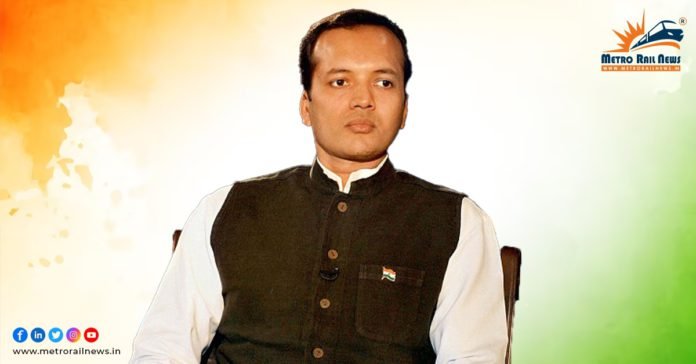
NEW DELHI (Metro Rail News): Indian industrialist Naveen Jindal has been conferred with a Lifetime Achievement Award by the University of Texas at Dallas for his remarkable achievements in industry, politics, and education. Jindal, who is an alumnus of the University’s 1992 batch, was presented with the award during a ceremony held on March 25. This award is the highest honor that the University bestows on its alumni.
Jindal’s recognition marks him as the second person to receive the Lifetime Achievement Award after Nobel Laureate Aziz Sancar from the University of Texas at Dallas. While as a student at the university, Jindal served as both the Student Government vice president and president and received the Student Leader of the Year Award. In 2010, he was also recognized with the University’s Distinguished Alumni award.
In 2011, to celebrate the success of their distinguished alumnus, the University of Texas at Dallas renamed its School of Management as the Naveen Jindal School of Management. Jindal has undoubtedly been an inspiration to many students, and this recognition highlights his exceptional contributions to society and education.
According to the release, the Lifetime Achievement Award recognizes a graduate whose exceptional contributions have made a significant impact on society, transformed the university, and inspired others to achieve new heights of excellence. Jindal’s remarkable accomplishments in industry, politics, and education have made him a deserving recipient of this prestigious award.
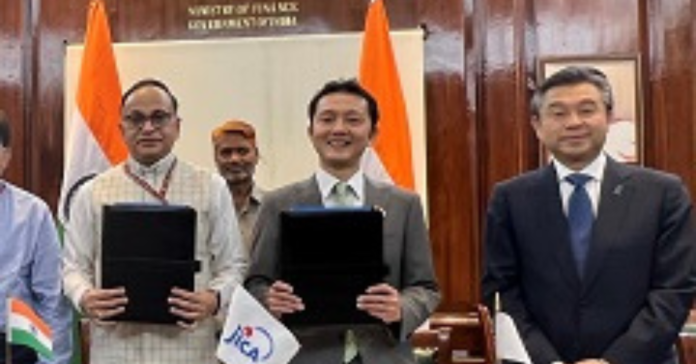
NEW DELHI (Metro Rail News): Japan has committed to fund three infrastructure projects in India, including Patna metro rail project. The announcement was made after Rajat Kumar Mishra, additional secretary of the Department of Economic Affairs, and Japan’s Ambassador to India, Suzuki Hiroshi, exchanged notes on the matter. The total amount committed by Japan for these projects is approx Rs. 7,084 crore, of which around Rs. 5509 crore is for Patna Metro Rail Project, about Rs. 520 crore for a Project for forest and biodiversity conservation for climate change response in West Bengal, and around Rs. 1055.53 crore Rajasthan Water Sector Livelihood Improvement Project, according to the official statement.
The Patna metro rail project is a significant project that aims to address the growing demand for transportation in the city by constructing the new metro corridor 1 & 2. The project is expected to contribute to the improvement of the urban environment, the development of the economy, and climate change mitigation. The Patna metro rail project’s first-ever Tunnel Boring Machine segment for Corridor II (Patna Junction-Patliputra Bus Terminal) has recently started the lowering work at Moinul Haq Stadium to construct the underground network. As part of this tunnelling drive, the machine will carve out two parallel tunnels for the up and down movement of trains in the first phase.
The underground tunnel of Corridor II is estimated to take 30 months to construct. The underground network will connect six underground stations of Corridor II, including Rajendra Nagar, Moinul Haq Stadium, PMCH, PU, Gandhi Maidan, Akashvani and Patna Junction (interchangeable station), with a total length of 7.9km set to be completed by 2026. Corridor II will be 14.5-km-long, including 6.6-km-long priority corridor of Malahi Pakri, Bhootnath, Khemnichak, Zero Mile, and New ISBT, which is part of the elevated section.
The announcement of funding for the Patna metro rail project is great news for Patna residents, who have long awaited a reliable and efficient transportation system. The project will not only improve the city’s transportation system but also contribute to the local economy’s development and create job opportunities.