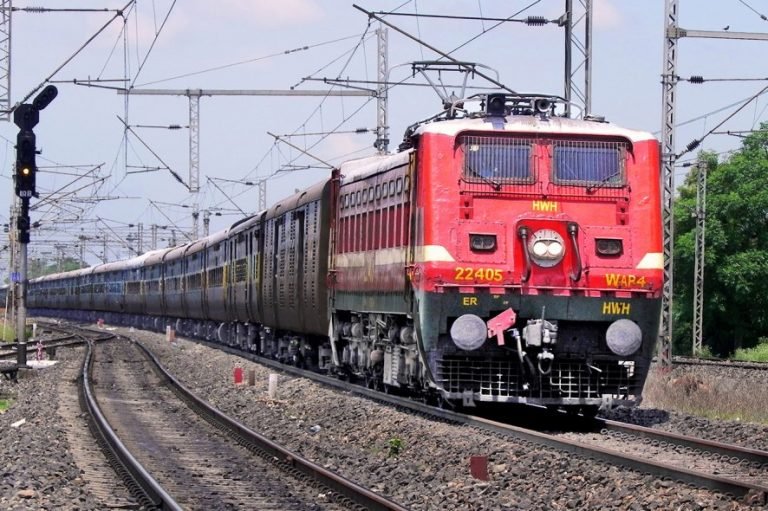
The ongoing inquiries into the incident
Two simultaneous investigations are ongoing in the Balasore train accident. One by a high-level committee headed by the Chief Commissioner of Railway Safety and the other by the Central Bureau of Investigation (CBI). Bahanaga Bazaar station has five railway tracks overall, two main lines on which express trains travel, two loop lines on which two freight trains had been held and detained to allow the express trains to pass, and one platform line beyond which the Deputy Station Superintendent’s office is located.
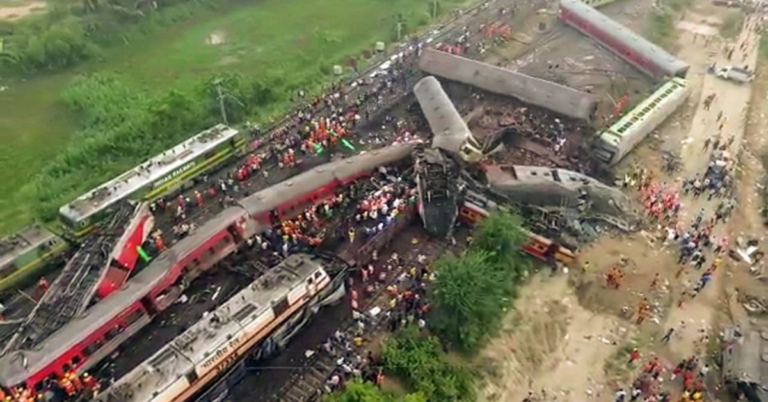
The question is how the Coromandel Express, which passed through at least 30 stations on the main line from Shalimar (Kolkata) to Chennai, crossing multiple block sections at around the same speed of just under 130 km per hour, moved from the main line to the loop line in Bahanaga Bazar on June 2. It hit the goods train’s rear guard van almost instantly, throwing its initial carriages clear off the tracks; some of the derailed coaches were then hit by the superfast Yeshwantpur-Howrah Express, which was passing on the adjacent main line at the time of the incident. As a result, one of the greatest train disasters in three decades occurred at the Bahanaga station.
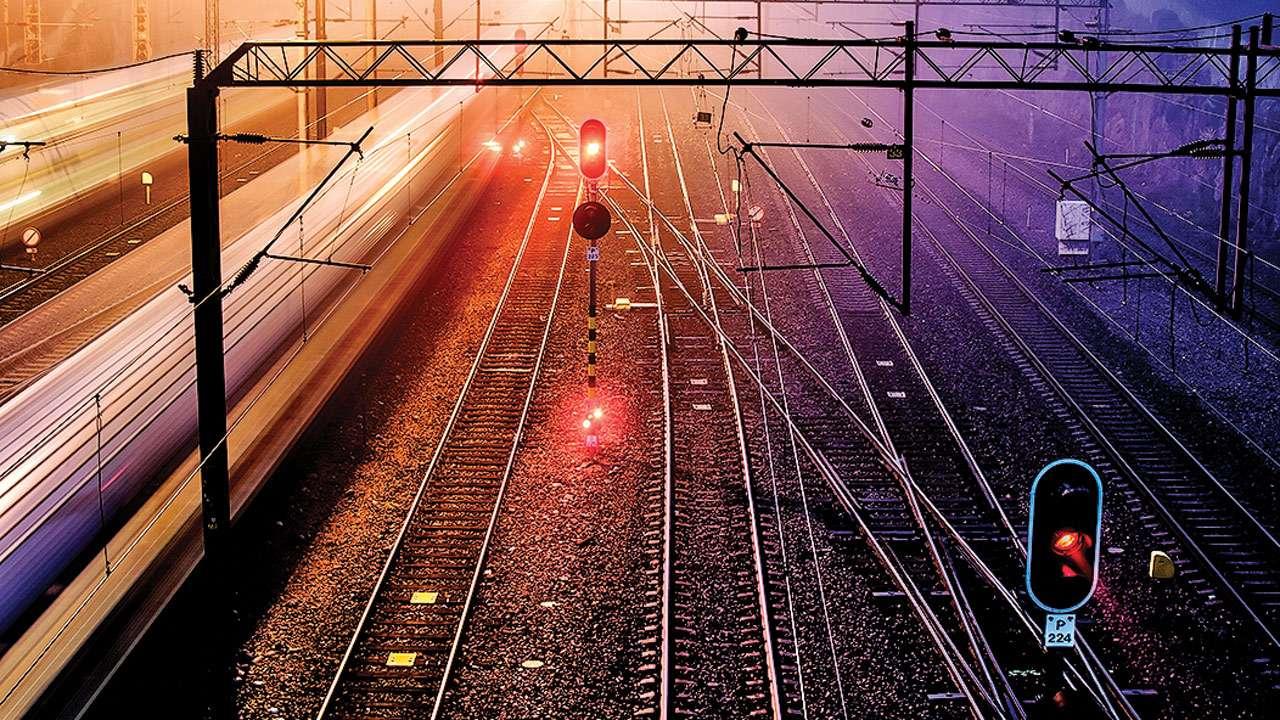
Some of the answers to the questions asked in the aftermath of the accident are expected to be available in the data logger, which is kept at all stations along with divisional and zonal headquarters, as well as in the microprocessor on board the locomotive involved in any failure or disaster occurred. To move a train into a station, loco pilots must see a green light ahead of the station. When the signal becomes green, it implies that the train’s path is ‘interlocked,’ and no other train can enter that path. Interlocking provides security. In this scenario, despite the fact that the signal was provided for the main line, was the route set for the main line or for the loop line, which had a goods train. While the Chief Commissioner of Railway Safety is examining the facts from a technical angle and standpoint, the CBI is looking for evidence to determine whether there was a conspiracy or sabotage involved.
In a communication to all Senior Divisional Operations Managers, titled ‘Action to be taken regarding safety at Stations’, through a circular issued by Y.N. Babu, Principal Chief Operations Manager, East Coast Railway stated, ‘It is known that whenever points are changed on the panel, there will be flashing of point indication (at the actual signal) for a few seconds and overall setting of points takes about 8-10 seconds.’
This can be read to suggest that, while the Coromandel Express signal was supposed to be ‘red’ by the signal staff, it may have briefly flashed and flickered to green. The train’s loco pilot also confirmed that the signal was green. Signals turn red a little after the head (engine) passes the signal on all Railway routes. This suggests that a perfect storm of negative events may have occurred: first, the light became green, probably mistakenly, because the signal staff was attempting to sidestep a minor existing problem; the driver noticed the green signal and continued driving and soon after the engine passed the signal it flashed and turned red.
Integrity failure
Abraham Jacob, former Additional Member of the Railway Board, holds similar thoughts. He claims that the light was green at the time the train passed through it. That signifies that the looping system & operation failed. It’s not just the looping; it’s a much larger failure in the sense that the underlying core premise on which the signalling system is based has failed. This can be stated to be a systemic and integral failure. Integrity problems can occur only if there has been an earlier failure that has not been addressed. One reason for the failure can be stated that there may have been some work being done in the panel room. During the course of this work, there could have been a mistake that jeopardised the system’s integrity. As per signal staffs, many small failures take place in a signalling system. These are usually transient. It is considered that it’s a system bug. The signal is looped (bypassed at spots where the indication is incorrect), and there is usually nothing wrong with this.

The train entered the loop line after the main line received a clear signal. This is the outlier. In maintenance, it is usual practice to (configure the system to) loop. If the signalling process has four steps, looping allows to skip the intermediate steps and move straight from step one to step four. Jacob further states that this might be done for a variety of reasons, most notably for the sake of punctuality, but also because of a minor unconnected issue sometimes.
Instead of looping, the signal staff at Bahanaga Bazar, a route relay interlocking station, could have sent a ‘disconnection message’ to the on-duty Deputy Station Superintendent (Station Master), which would have initiated a manual signalling process. With the manual signalling being triggered, the Deputy Station Superintendent needs to ensure that the point is physically adjusted to the correct track. Trains will have to be detained and halted at the ‘home’ signal, and a physical memo or message shall be issued to each train’s loco pilot indicating that the train can enter the block section even though the light is red. This procedure can take up to a minimum of forty-five minutes.
If numerous trains pass through at the same time, the result will be that each train will be delayed at each station. In practice, if one’s gate interlocking system fails, the Deputy Station Superintendent seeks the assistance of the signals engineer and bypasses the system. After the bypassing is completed, the signal can be turned green, and the train can proceed. It is obvious that some level crossing (LC) gate work was under progress at Bahanaga Bazar, and this could be a good starting point for understanding what went wrong. The ‘LC gate locked’ indication is required for the signal to turn and become green.
Even though boom replacement work had been performed at the LC gate, the protocol requires that a ‘sliding boom’ arrangement must be implemented to ensure interlocking and that trains can be managed as usual on signals. Instead of electrically operated lifting barriers, the sliding booms on both sides of the road are operated manually. For such booms, an electrical key locking arrangement or solution is available to emit and provide the ‘gate closed’ indication at the station panel and clear any required and applicable signal(s).
Before beginning the work, the associated relay (an essential component in electrical signalling) would have to be detached and reconnected after completion of the work. It is likely that some mistakes were done or an error occurred during this operation and process, resulting in the incorrect setting of point No. 17, which was put to the loop line. The fail-safe here is that signal staff—section engineers and technicians—are present at the site during such work, without which the operation cannot be completed. So, here again, a number of question arises, keeping everyone puzzled and perplexed.
The issue of passengers who are nearly always positioned uncomfortably near the doors of the general compartments of trains is one that requires quick action on the part of the Railways. The Coromandel Express is one of the country’s most congested trains, carrying hundreds of job seekers from the country’s eastern and north-eastern states, where employment is scarce and earnings are low, to the labour-scarce and more prosperous regions of south India.
LHB coaches

The sight of the damaged LHB waggons, which are generally described as ‘sturdy and safe,’ needs some explanation. These passenger coaches, designed by Germany’s Linke-Hofmann-Busch, are now mostly manufactured by the Rail Coach Factory in Kapurthala.
In response to a question from MPs Ravneet Singh and Su. Thirunavakkarasu on April 5, Ashwini Vaishnaw stated that the ‘salient features of LHB coaches are superior riding quality, large panoramic windows, provision of bio-toilets, sliding type fire barrier doors, higher seating capacity, FRP (fibre reinforced plastic) panels in air-conditioned coaches, sturdy and robust design to minimise damage and obviate capsizing of coaches during accidents, automatic coupling centre buffer coupler for enhanced safety and anti-climbing features, superior disc brakes & efficient brake system, superior microprocessor-based AC, etc.’
As a result of the accident, waggon design is once again taking central stage. According to a senior rail engineer, waggon and coach design is the second most leading cause of a derailment due to issues with stability and centrifugal balancing (the most prevalent cause is track quality and condition). Similarly, the problem of one train colliding with another is a function of reaction time and enhanced safety. There are issues here as well because the nature of real-time accident information is sent to the signalling system. The coaches in the Bahanaga Bazar tragedy did not just capsize, but according to one account and reports, one coach appeared to have done a half-cartwheel before landing on its side. According to the available videos and photos, the rake composition featured coaches salvaged and cannibalised from Duronto Express trains, which were introduced in 2007.
A former senior Railways official pointed out that punctuality and safety do not belong in the same sentence. He states, “The basic problem is that punctuality and safety have conflicting requirements. We have to accept that. If we want to go all out for punctuality, we shall compromise on safety. What people are doing is that they find some kind of a balance and take care of both. If we want hundred per cent safety, we will follow the rule book and end up delaying trains on the slightest doubt.”
Latest Update
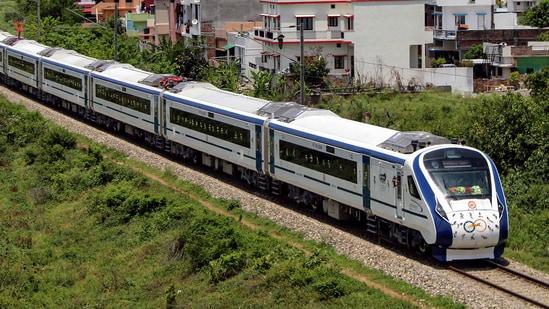
Following the Balasore train accident, the railway ministry is taking every precaution to ensure stricter vigilance and inspection of tracks, signals, and systems. A top railway official recently informed senior zonal officers that ‘nothing is fail-safe and should not be taken to be so,’ implying that entire reliance on automation is not optimal for trains, according to reports. Officials agreed that the accident has slowed down the pace at which railways had been progressing over the recent months, including the introduction of new Vande Bharat trains. Officials stated that the railways as a whole are taking all necessary precautions to prevent any accidents on the network, with senior officers being told not to let their guard down at any cost when it comes to maintenance and safety.
In a recent circular, a Railway Board member (infrastructure) recommended that all field officials designated and deployed for maintenance tasks and activities must be engaged exclusively for that activity or purpose only. To ensure safety and dependability, they must devote as much time as possible at work sites and on maintenance.
It also indicates that senior engineers must consult with their subordinates who are familiar with the flaws and strengths of the assets under their jurisdiction and control. The circular stated a complete list of failures and deficiencies with compliance deadlines to improve safety. It further stated that a summary of the items requiring compliance and the actions done shall be reviewed and evaluated in signal directorate meetings on a weekly basis. Senior officials have also been asked to inspect each aspect of maintenance and the worksites and guide the junior engineers for the proper and safe execution of the work. Pending issues and works as a consequence of joint point and crossings inspections should be compiled in a timely way by arranging necessary materials and traffic blocks. A team of operating, engineering, signalling, and telecom officials is to be constituted to monitor the progress on a daily basis until all pending and outstanding deficiencies are resolved and liquidated. In addition, it has also been ordered that all unlawful structures be removed from railway land and that heavy penalties be imposed on encroachers.
Transfer of officials
The Indian Railways transferred five senior South Eastern Railway personnel, including those in charge of operations, signalling, and safety, twenty days after the dreadful triple train collision in Odisha’s Balasore district. On the evening of June 2, a railway accident occurred at Bahanaga Bazar station, killing almost 300 people. Though the Railways stated that these were ‘regular’ transfers, the action was interpreted as an outcome of one of the most tragic train accidents in rail history, which involved the collision of three trains.
Following Railway Minister Ashwini Vaishnaw’s second visit to Bahanaga Bazar station on 20 June, the Railway Ministry transferred Kharagpur divisional railway manager (DRM) Shujat Hashmi and the South Eastern Railway (SER) zone’s principal chief signal and telecommunication engineer P M Sikdar, principal chief safety officer Chandan Adhikary, principal chief security commissioner D B Kasar, and principal chief commercial manager Md. Owais.
Despite widespread speculation over the course of events for South Eastern Railways’ general manager (GM), the zone’s highest position, Archana Joshi continues in her position and role. The positions of GM and DRM are regarded as key designations and positions for the zone and division, respectively. Earlier, the additional general manager (AGM) of the zone, Atulya Sinha, had been transferred in what has been observed as the first major action and step following the train accident.
The railways, on the other hand, insisted that all of these transfers were ‘routine.’ The Railway Board ordered the transfer of Kharagpur DRM Hashmi and was replaced by K R Chaudhari, head of the Railway Recruitment Board, Ajmer. The zone’s signalling and telecommunication operations are maintained by the zone’s principal chief signal and telecommunication engineer. The malfunctioning of the signalling equipment is prima facie considered to be the principal cause of the triple train accident at Balasore.
Sikdar has been sent to the North Central Railway as a special duty officer, while Adhikary has been transferred to the Northeast Frontier Railway. Kasar, the principal chief security commissioner in charge of all railway assets and structures, including track and fixtures, rolling stock, signalling equipment, and railway buildings and establishments, has also been reassigned. Md Owais has been transferred to Northeast Frontier Railway as a chief administrative officer. According to trusted sources, a few additional middle and junior-level officers stationed at the station and division are also likely to take the heat. The Railway Safety Commissioner’s report is pending, and additional actions are expected to be taken after obtaining the preliminary findings. The accident, which involved the Bengaluru-Howrah Superfast Express, the Shalimar-Chennai Central Coromandel Express, and a goods train, occurred around 7 p.m. on June 2 near the Bahanaga Bazar station in Balasore. The segment is part of the South Eastern Railway’s Kharagpur division. On June 20, the Railway Minister visited the station to thank the locals who came forward to assist with the rescue and relief operations during the initial time helping to save a number of injured passengers and victims of the accident.