Home Blog Page 20

Hyderabad Metro: Standing at a Critical Juncture of Expansion & Legal Knot Resolution

0
Hyderabad Metro

Introduction 

Hyderabad is the capital and largest city of the Indian state of Telangana. Spread over 650 square kilometres (250 square miles) on the Deccan Plateau, it lies along the banks of the Musi River in the northern part of Southern India. According to the 2011 Census of India, the city had a population of 6.9 million within its limits and 9.7 million in the metropolitan region, making it the fourth most populous city and the sixth largest metropolitan area in the country.

Hyderabad was known for its flourishing pearl trade until the 19th century and was nicknamed “City of Pearls”. Hyderabad was once the world’s exclusive trading centre for Golconda diamonds. Many of its historic bazaars continue to operate today, preserving the city’s rich heritage. Its strategic position between the Deccan Plateau and the Western Ghats, coupled with rapid industrialisation during the 20th century, helped attract major research institutions, manufacturing industries, and financial establishments. Since the 1990s, Hyderabad has developed into a prominent Indian hub for pharmaceuticals, biotechnology, and information technology. 

Urban Growth and the Need for Metro System in Hyderabad 

image 19

                                           Hyderabad’s Total Population By Year

Hyderabad has experienced rapid and continuous urban growth over the past several decades, as reflected in the steadily rising population shown in the graph. From a modest urban base in the 1950s, the city’s population has expanded sharply, especially after the 1990s, driven by IT sector growth, economic diversification, and large-scale migration. This surge placed immense pressure on existing modes of transportation leading to severe traffic congestion and increased pollution in Hyderabad. 

As the city continued expanding, the traditional transport modes could no longer meet mobility demands efficiently. This created a critical need for a modern, reliable, and high-capacity public transport solution. The establishment of the metro system emerged as a strategic response to these challenges.

Hyderabad Metro : Enhancing Connectivity and Urban Development

Overview 

The Hyderabad Metro Rail Project is an urban Mass Rapid Transit System (MRTS) being built to serve Hyderabad, the capital of Telangana.Currently the Phase 1 of Hyderabad Metro which spans 69.2 km covering 3 corridors is completely operational. While the Phase 2 of Hyderabad Metro spanning 76.4 km is currently under proposal stage.  

Key Specification 

Speed and Track Top Speed: 80 kmph
Average Speed: 33 kmph
Track Gauge: Standard Gauge – 1435 mm 
Electrification25 kV, 50 Hz AC overhead catenary (OHE)
Signalling Communication-based Train Control (CBTC)
image 21

Hyderabad Metro Phase 1 

Overview 

Phase 1 of the Hyderabad Metro spans 69.2 km, covering 3 operational metro corridors. The Construction for Hyderabad Metro Phase 1 started in April 2012. The estimated cost for Hyderabad Metro phase 1 was ₹22,148 crore.

Corridor Route Length Total No. of Stations 
Corridor-I (Red Line)   Miyapur to LB Nagar29 km27 Stations
Corridor-II (Green Line) JBS to MGBS11.2 km10 Stations
Corridor-III (Blue Line)   Nagole to Raidurg 29 kms23 Stations

Hyderabad Metro Phase 1: The World’s Largest Public-Private Partnership in Metro Rail

The Hyderabad Metro Phase 1 became the world’s largest Public-Private Partnership (PPP) in the metro rail sector. Larsen and Toubro Limited was awarded the Hyderabad Metro Rail Project by the then Government of Andhra Pradesh. L&T incorporated a Special Purpose Vehicle (SPV) –L&T Metro Rail Hyderabad Limited (L&TMRHL) to implement the Project on Design, Build, Finance, Operate and Transfer (DBFOT) basis. 

On 4th September, 2010, the company signed the Concession Agreement with the then Government of Andhra Pradesh and achieved the financial closure for the Project on 1st March, 2011, in a record period of six months. 

Hyderabad Metro Phase 1 Timeline 

Corridor Route Length Opening Date 
Corridor-III (Blue LineNagole – Ameerpet17.60 km29 November 2017
Corridor-I (Red Line)Miyapur – Ameerpet12.20 km29 November 2017
Corridor-I (Red Line)Ameerpet – LB Nagar16 km24 September 2018
Corridor-III (Blue LineAmeerpet – HITEC City 8.5 km20 March 2019
Corridor-III (Blue LineHITEC City – Raidurg 1.5 km29 November 2019
Corridor-II (Green Line) JBS – MGBS9.6 km7 February 2020

Hyderabad Metro Phase-I Absorption: Structural Gaps in the PPP Model

Phase 1 of the Hyderabad Metro was developed under a Public-Private Partnership (PPP) model, where was L&T responsible for financing, constructing, and operating the network, while the government provided land, approvals, and other support. Under this structure, L&T held a 90% stake in the project, and the government held the remaining 10%. The intent behind adopting the PPP approach was to utilise private-sector investment, expertise, and operational efficiency, thereby reducing the financial load on the government.

Over time, however, the model did not function as expected. The project encountered cost escalations, construction delays, and revenue levels that remained below projections. The COVID-19 period further impacted ridership and earnings, which weakened the financial viability of the PPP framework. As a result, L&T struggled to recover its investment and began incurring substantial losses. The company had also taken loans at comparatively higher interest rates, which added to its financial burden and contributed to the stress on the overall project structure.

Annual Losses Reported by LTMRHL

Financial Year (FY)Loss After Tax (₹ in Crore)
2024-25₹625.88 crore
2023-24₹555.04 crore
2022-23₹1,315.94 crore
2021-22₹1,745.85 crore
2020-21₹1,766.74 crore

L&T’s Decision to Exit Hyderabad Metro

Hyderabad’s metro network, which was among the largest in the country a decade ago, has not expanded since the completion of Phase 1. As other cities added new corridors, Hyderabad moved from the 2nd position in 2014 to the 9th position today. To close this gap, the Telangana government has prepared plans for about 163 km of new corridors under Phase 2A and 2B.

During the appraisal process, the Government of India examined how the project is proposed to be executed.The GoI also suggested that L&T join the Phase 2 project as one of the equity partners. L&T informed the government that it cannot take an equity role in Phase 2 and cannot sign the proposed integration agreement. In September 2025,  L&T officially conveyed its willingness to offer its equity stake in the project to the state or central government. 

On 25 September 2025, Chief Minister A. Revanth Reddy met L&T Group CMD S. N. Subrahmanyan along with senior officials from both sides to review the status of Hyderabad Metro’s Phase 2.

Discussion Points 

The state government expressed that it would prefer L&T to remain an equity partner in the Phase 2 expansion. L&T clarified that the company has moved out of the business of owning and operating transport concession projects and therefore cannot take up equity participation in the new phase.

The Chief Minister then asked L&T to at least sign the Definitive Agreement required for integrating operations of Phase 1 and Phase 2. This agreement is important because the Government of India has asked for clearly defined arrangements for operations, maintenance, revenue sharing, and cost allocation across the two phases. 

L&T repeated its earlier proposal that it is ready to transfer its entire equity in the Phase 1 project to the state government. If accepted, Phase 1 would shift from a PPP model to a fully state-owned system.

Final Verdict

Following several rounds of discussions, both parties arrived at an in-principle understanding on the financial settlement for Phase 1.

The Government of Telangana will assume responsibility for the debt of the Phase 1 project, which is approximately ₹13,000 crore. In addition to taking over the liabilities, the state will make a one-time payment of around ₹2,000 crore to L&T. This amount represents L&T’s equity investment in L&T Metro Rail Hyderabad Ltd (LTMRHL) and will serve as the final settlement for their involvement in the project.

Understanding Why the World’s Largest Metro PPP Project Became Unviable

1. Project Delays and Cost Overruns

The project was delayed by about 32 months due to pending right-of-way (RoW) clearances, alterations in the approved alignment, and other related issues. As a result, the overall project cost increased from the original estimate of ₹16,375 crore to a revised figure of ₹18,975 crore.

2. High Debt Burden and Interest Costs

The project followed a PPP structure, with L&T raising loans from a consortium of 10 banks at an interest rate of about 10%. Even with a daily ridership of around 4.8 lakh and annual revenues above ₹1,100 crore, the project reported a loss of ₹625 crore in FY25. Cumulative losses since inception have exceeded ₹6,600 crore. Although the Metro generates more than ₹1.5 crore per day, the revenue is not sufficient to meet its debt servicing obligations. In FY23, the system earned ₹703.20 crore from fares, station rentals, and advertising, while operating expenses stood at ₹429 crore. Despite a positive operating margin, the high interest burden continued to push the balance sheet into losses. If L&T had continued in the project, the outstanding debt of about ₹13,000 crore would have resulted in an annual interest outflow of roughly ₹1,300 crore.

3. Failure to Monetise Non-Fare Revenue

The original model had projected that 45% of its total revenue would be generated from advertising, likely through selling ad space within the large commercial complex. However, L&T developed only about 2 lakh sq. ft. (approx. 200,000 sq. ft.) of commercial space, a fraction of the planned 18.5 lakh sq. ft. (approx. 1.85 million sq. ft.). This inability to generate sufficient non-fare revenue left the project overly reliant on ticket sales, which were insufficient to cover the massive debt obligations

4. Impact of the COVID-19 Pandemic

The pandemic struck immediately after the full commissioning of the metro in February 2020. This resulted in a complete shutdown for 169 days, which reduced the daily commuter base (ridership dropped from a peak of 4.75 lakh to less than 2 lakh during some periods).

5. Lack of Sustained Government Support

L&T pointed out that the project did not receive consistent financial support from the state government. After the COVID-19 period, L&T informed the BRS administration that the project’s finances had become unsustainable and requested additional support. A discussion was held with the then Chief Minister K. Chandrashekar Rao, after which the government set up a committee to examine the issue. The committee included Minister K. T. Rama Rao and senior officers Arvind Kumar, K. Rama Krishna Rao, and Jayesh Ranjan.

L&T’s request was for a ₹3,000 crore soft loan to cover pandemic-related losses and delayed cash flows. As per a senior government official, the state agreed to provide only ₹1,000 crore. The remaining ₹2,000 crore requested by L&T was not sanctioned.

Hyderabad Metro Phase-IIA: Submission Status and Approval Clarity

Project Structure and Cost

  • The Hyderabad Metro Rail Phase-II project is planned as a Joint Venture between the Government of India (GoI) and the Government of Telangana (GoTG), with an estimated project cost of ₹24,269 crore. The Detailed Project Report (DPR), along with the required technical, financial, and environmental documentation, has been prepared in full compliance with Government of India norms. The project includes five corridors spanning 76.4 km.

State Government’s Position

  • According to the Government of Telangana, the DPR for Hyderabad Metro Phase-II was formally submitted to the Ministry of Housing and Urban Affairs (MoHUA) on 4 November 2024. The State asserts that all supporting documents were duly forwarded for central appraisal and funding approval under the new metro policy framework.

Union Minister’s Statement

  • Contrary to the State’s claim, Union Minister of Coal and Mines G. Kishan Reddy recently stated that the revised DPR for the 76.4 km Phase-II expansion has not yet reached MoHUA. His remarks suggest that the updated DPR has either not been received, not been acknowledged, or is still pending within internal processing channels.

Current Clarity Gap

  • This divergence between the State Government’s declaration of submission and the Union Minister’s assertion of non-receipt has created a clarity gap in the approval process. Until MoHUA officially confirms receipt and begins formal examination, the project cannot move to subsequent stages such as Public Investment Board (PIB) review, Cabinet approval, and finalisation of central financial assistance.
  •  The proposed five corridors, which primarily serve as extensions of the existing Phase-I network, are detailed as follows.
Corridor Route Length Total No. of Stations Estimated Cost (₹ crore)
Corridor IV: Airport Metro CorridorNagole – Shamshabad RGIA36.8 km24 Stations ₹11,226
Corridor V: Extension of Blue LineRaidurg – Kokapet Neopolis11.6 km8 Stations ₹4,318
Corridor VI: Extension of Green LineMGBS – Chandrayangutta7.5 km6 Stations ₹2,741
Corridor VII: Extension of Red LineMiyapur – Patancheru13.4 km10 Stations ₹4,107
Corridor VIII: Extension of Red Line LB Nagar – Hayat Nagar7.1 km6 Stations ₹1,877
Total 76.4km₹24,269

Hyderabad Metro Phase-IIA Funding Structure

SourceAmount (₹ crore)Share of Total Cost
Telangana Government₹7,31330%
Union Government₹4,23018%
Multilateral Development Banks (JICA, ADB, NDB)₹11,69348%
Public–Private Partnership (PPP)₹1,0334%
Total₹24,269100%

Advantages of Multilateral Financing for Hyderabad Metro

One of the major strengths of the Hyderabad Metro Phase-II financial structure is the availability of long-term, low-interest loans from Multilateral Development Banks (MDBs) such as JICA, ADB, and NDB. These institutions provide financing on terms that are more favourable than those available from domestic commercial banks.

Unlike Indian banks, which typically charge 9–10% interest for large infrastructure loans, MDBs offer financing at around 2% interest.

In addition to low interest rates, MDB loans also come with much longer repayment horizons. They generally offer:

  • A moratorium of 5-10 years, during which only minimal payments are required and no principal amount is due
  • A repayment period of up to 30 years, which allows the borrower to spread repayments across a far longer timeframe.

This means the total repayment window can stretch to over 40 years, which will give the Telangana Government ample financial flexibility. 

Hyderabad Phase II-B

In June 2025, the Telangana government approved Hyderabad Metro Rail Phase II-B. This phase covers 3 corridors with a combined length of 86.1 km. The project will be executed by Hyderabad Airport Metro Limited (HAML) under a 50:50 joint venture arrangement between the state government and the central government. The estimated cost for Phase II-B is ₹19,579 crore.

Phase II-B Corridors

CorridorRoute DescriptionLength (km)
Corridor IXRGIA to Future City (Skills University)39.6 km
Corridor XJBS to Medchal24.5 km
Corridor XIJBS to Shamirpet22 km

Proposed Funding Structure 

Funding SourceAmount (₹ crore)Share (%)
Telangana Government5,87430%
Government of India3,25418%
Loan Component (JICA, ADB, NDB, etc.)9,39848%
PPP Component7834%

Next-Phase Requirements for Hyderbad Metro Project

  1. Refinancing the High-Interest Debt

For the authorities to secure funding for the next phase of the Hyderabad Metro, it is essential to first address the outstanding liabilities of Phase 1. A major opportunity for the State lies in refinancing the high-cost commercial debt through cheaper, long-term sovereign-backed loans from multilateral development banks. 

Current Situation

  • Commercial debt: ₹13,000 crore
  • Interest rate: 10%
  • Annual interest outflow: ₹1,300 crore

If refinanced through multilateral lenders (JICA, ADB, AIIB etc.) at around 2.5%, the annual interest is expected to reduce to roughly ₹325 crore, enabling annual savings of nearly ₹975 crore.

  1. Operational Continuity and Operator Transition
image 22

Operational continuity will be a key requirement during the transition of Hyderabad Metro Phase-I. L&T Metro Rail Hyderabad, the concessionaire, has extended Keolis’ Operations and Maintenance (O&M) contract until November 2026. With this timeline in place, the Government of Telangana will need to prepare a structured transition plan for taking over O&M responsibilities. The plan should ensure that system safety standards are maintained, technical expertise is retained, and trained staff are absorbed without disruption. It will also be necessary to prevent any interruption to passenger services while establishing long-term institutional arrangements for operations.

  1. Managing Operating Costs and Revenue Gaps

The Hyderabad Metro continues to face a gap between operating costs and farebox revenue. Electricity expenses, staffing, and maintenance create a large recurring cost structure. The upcoming model must include a more predictable revenue model built on non-fare income streams such as station retail, advertisements, property leasing, and real estate development. However, these sources require structured contracts, market-linked pricing, and efficient management. It is imperative to work on these segments to reduce dependence on fare hikes, which remain politically sensitive.

  1.  Multimodal Integration

The long-term success of the metro depends on connecting it effectively with buses, MMTS, intermediate public transport (IPT), and other mobility systems. Authorities need to implement integrated ticketing, physical interchange facilities, and coordinated route planning to ensure balanced passenger distribution. Without these improvements, the metro may continue to face uneven ridership high loads in IT corridors and low usage in residential belts. 

Conclusion

The Hyderabad Metro project has reached a critical stage where expansion plans under Phase 2A and Phase 2B are moving forward while unresolved liabilities of approximately ₹13,000 crore from Phase 1 remain a major barrier. Until this liability is formally absorbed, refinanced, or restructured, it will be difficult for the implementing agencies to secure new loans or multilateral funding for the next phase of the network.

A key procedural challenge is the closure of the existing Concessionaire Agreement (CA) between L&T Metro Rail Hyderabad and the Government of Telangana. Senior officials from both sides acknowledge that the legal processes involved will be lengthy, particularly in areas related to termination conditions, compensation, asset transfer, and lender protections. These steps will need to be completed before ownership, operations, and financial responsibilities can be fully shifted to the State.

The overall progress of Hyderabad Metro in the coming years will depend on how efficiently the State is able to resolve Phase-I liabilities, complete the legal closure of the concession, secure long-term refinancing, and establish a stable operational framework. The effective handling of these components will determine the viability of Phase-II implementation and the long-term sustainability of the metro system.


Join the 6th edition of InnoMetro to explore how the progressions in AI are improving the railway systems, including ticketing, rolling stock, and signalling. Witness the innovation from 200+ exhibitors at India’s leading show for metro & railways which is going to held on 21-22 May 2026 at Bharat Mandapam, New Delhi

Register now: https://innometro.com/visitor-registration/

Advertisement1
InnoMetro_2026

Delhi-Panipat-Karnal RRTS: The Next Regional Rapid Transit in Line NCR Taking Shape

0
RRTS (Representational image)

Introduction

India is entering a new phase of urban mobility, where modern transport systems will play a key role in supporting economic growth and improving connectivity between emerging regional hubs. The Regional Rapid Transit System (RRTS) is central to this shift, as it offers higher speed, better safety and improved operational efficiency compared to existing modes. Following the implementation of the Delhi-Meerut RRTS, the Delhi-Panipat-Karnal RRTS Corridor is proposed as the next major link in the network. It is planned as a high-speed, commuter-focused rail line that will enhance regional mobility within the National Capital Region (NCR). The corridor aims to provide a fast, reliable and high-capacity connection between Delhi, Sonipat, Gannaur, Samalkha, Panipat and further up to Karnal, supported by rolling stock designed for frequent operations and higher acceleration.

This corridor holds importance because the Delhi-Panipat-Karnal stretch is one of the busiest inter-city routes in North India, as it features expanding residential areas, industrial zones, logistics hubs and educational institutions. Road traffic on NH-44 has reached saturation, which is causing longer travel times, recurring congestion, and higher vehicle emissions. A rapid regional rail system is required to shift a substantial share of daily commuters from road to rail.

The 136km Delhi-Panipat-Karnal RRTS Corridor is planned to integrate with existing and upcoming transport systems in Delhi and Haryana. It will improve overall network connectivity. It is part of the National Capital Region Planning Board’s Transport Mobility Plan 2021and supports balanced regional development by offering a dependable public transport option. The project has picked up pace after receiving approval from PIB. This article will focus on the project’s significance, current progress, technical aspects, and the key developments shaping its future implementation.

Project Background and Rationale

The Delhi-Panipat-Karnal RRTS Corridor has been identified as a priority link under the NCR Regional Plan to address rising travel demand along the Delhi-Sonipat-Panipat-Karnal belt. This corridor is one of the three priority corridors of India’s RRTS projects. This stretch has recorded sustained population growth, rapid urbanisation, and an expansion of industrial and logistics activities. As a result, daily travel volumes between these cities and Delhi have increased over the past decade.

52a7baa1 4b87 40b7 bedd 4f60acba0c08

image 17

Modal Composition of Vehicles on the Road Along the Corridor

At present, most inter-city movement depends on road transport, particularly the Delhi-Ambala section of NH-44, which experiences high congestion during peak hours. The existing rail services, including MEMU and long-distance trains, do not offer the frequency or travel times needed to serve daily commuters. These limitations have highlighted the requirement for a high-speed, high-frequency regional rail system capable of handling large passenger flows while ensuring predictable journey times.

In this context, the RRTS has been planned as a dedicated solution to improve regional mobility, reduce pressure on road infrastructure, and support the economic growth of emerging urban centres in Haryana. With RRTS in operation, the travel time between Sarai-Kale Khan in Delhi and Karnal in Haryana will be 90 minutes.

Overview of Delhi-Panipat-Karnal Route Alignment 

The Delhi-Panipat-Karnal RRTS Corridor is planned along a northbound alignment starting from Sarai Kale Khan in Delhi and extending through major urban and industrial centres in Haryana before reaching Karnal. The proposed alignment follows the general direction of NH-44 to ensure direct connectivity to high-demand locations and to integrate efficiently with existing transportation infrastructure.

StatusProposedOperational: 0 km
Under Construction: 0 km
Proposed: 136km
StationsDelhi Segment: Sarai Kale Khan, Indraprastha, Kashmere Gate, Bharoda Majra, Bhalaswa Chowk, Alipur
Delhi-Haryana Border / Kundli Region: Narela, KundliSonipat Region: KMP (Future Station), Bahalgarh, Murthal, Barhi (Future Station), GannaurPanipat Region: Samalkha, Panipat ISBT Sewah, Panipat, Panipat Sector-18 (Future Station), Ganjbar – Badauli – KohandKarnal Region: Gharaunda, Karnal By-pass (Future Station), Karnal Sector-7, Karnal New ISBT
Estimated CostRs 33,000 crore

bbba8e36 7c88 4b5b bebb 09fc85f1d177

The corridor will serve key nodes including Kashmere Gate, Burari, Alipur, Kundli, Sonipat, Gannaur, Samalkha, Panipat, and further up to Karnal. These locations have been identified based on projected ridership, current travel patterns, land use distribution, and proximity to residential, commercial, and industrial zones. The alignment is expected to use a combination of elevated and at-grade sections, depending on terrain conditions, right-of-way availability, and urban density.

Technical Features and System Design

The Delhi-Panipat-Karnal RRTS Corridor is planned with design and operational standards similar to Delhi-Meerut RRTS corridors in the NCR, to ensure uniformity across the network. The system will be developed for a design speed of 180 km/h and an operational speed of 160 km/h. 

Infrastructure will include a mix of elevated and at-grade sections, depending on the location and right-of-way availability. Power for the corridor will be supplied through an overhead electrification system (25 kV AC), ensuring energy-efficient operations.

Key System Specifications

SpeedDesign Speed: 180 km/h
Operational Speed: 160 km/h
Average Speed: 100 km/h
Track GaugeStandard Gauge – 1435 mm
Rolling StockAerodynamic, 3.2 m wide x 22 m long, stainless steel/aluminium body
SignallingEuropean Train Control System (ETCS) Level 2 of ERTMS
Traction1 x 25 KV AC overhead catenary (OHE)
Seating ArrangementTransverse
ClassesEconomy and Business (1 coach per train)

Progress on Delhi-Panipat RRTS 

image 18

2017- The National Highways Authority of India (NHAI) granted in-principle approval for the Delhi-Panipat RRTS corridor in July 2017.

January 2020 (Extension to Karnal)- The Delhi-Panipat RRTS Corridor was originally planned as a 103 km system terminating at Panipat North station. During a review meeting held on January 6, 2020, the then Chief Minister Manohar Lal Khattar directed officials to extend the corridor further north up to Karnal. The proposed extension covers an additional 25-33 km and includes new stations at Gharaunda, Madhuban (Karnal South), and Karnal (Karnal New ISBT). With this revision, the total corridor length increases to approximately 136 km. 

March 2020 – On March 13, 2020, the NCR Transport Corporation Board approved the Detailed Project Report (DPR) for the 103 km Delhi-Panipat Regional Rapid Transit System (RRTS) corridor.

December 2020 (Haryana Govt. Approval)– On December 23, 2020, the Haryana government officially approved the Detailed Project Report (DPR) for the Delhi-Panipat Regional Rapid Transit System (RRTS) corridor, a 103 km high-speed rail project with 17 stations.

2023 (₹50 Crore Released):  In 2023, the Government of the National Capital Territory of Delhi (GNCTD) released ₹50 crore as part of its share for the Delhi-Panipat RRTS Corridor. The project was originally estimated to cost ₹29,389 crore, which included GNCTD’s contribution of ₹2,443 crore. With the decision to extend the corridor up to Karnal, the total estimated cost has now increased to around ₹33,000 crore. 

July 2025 (Site Review): In July 2025, officials from the NCRTC held a meeting with Karnal Deputy Commissioner Uttam Singh to review possible land parcels for the planned extension of the Sarai Kale Khan-Panipat RRTS line up to Karnal. During the interaction, they looked at several locations where the 4 proposed stations and the maintenance depot could be developed. SDM Anubhav Mehta said that NCRTC has already submitted the revised project proposal that includes the Karnal extension. 

A few sites have now been identified for the next stage of evaluation. According to DC Uttam Singh, the discussions focused mainly on the land needed for the stations and the depot. He said that the administration is prepared to make the required land available for the project.

October 2025 (Prelimaniary Work) In October 2025, the NCRTC issued tenders to shift overhead lines and cables along the 22-km-long Narela-Murthal section. This work must be completed before construction of the viaduct and stations can begin after funding approval. The utility diversion involves relocating or modifying overhead power lines, low-tension cables, and transformers that fall within the proposed corridor alignment.

November 2025 (PIB Clearance):  The approval from Public Investment Board (PIB), an inter-ministerial panel at the Centre, has set the project in motion.  The Public Investment Board (PIB), an inter-ministerial panel of the central government, cleared the 136 km Delhi-Panipat-Karnal RRTS corridor at an estimated cost of ₹33,000 crore. With this approval, the proposal will now move to the Union Cabinet for the final nod. The project had earlier been delayed due to funding disagreements between the Centre and the previous Delhi government.

For the smooth execution, Delhi and Haryana governments have to work together on adopting value capture financing (VCF). This model helps fund public projects by using the increase in land value that results from new infrastructure. 

The Benefits of Delhi-Panipat-Karnal RRTS

Streamlined Connectivity
The Delhi-Karnal RRTS will play an important role in meeting travel demand between Delhi and Haryana. It will provide a direct and faster link, and reduce long travel times on this busy route. Once operational, the journey from Delhi to Karnal will take around 90 minutes. Passengers will also be able to travel from Kashmere Gate to Murthal in about 30 minutes, Indraprastha to Sonipat in roughly 35 minutes, and Kashmere Gate to Panipat in nearly an hour.

Boost to Economy

The alignment of the Delhi-Karnal RRTS largely follows NH-44, one of the busiest and most important road corridors in the region. By providing a faster and more reliable travel option, the project is expected to improve overall connectivity. This improved accessibility is likely to encourage businesses and industries to establish themselves along the corridor. Additionally, areas around the proposed stations are expected to see gradual development, which can boost local commerce, generate employment, and strengthen the regional economy. 

Shift to Public Transport

Once completed, the project is expected to encourage a shift from private vehicles to public transport. The RRTS system is designed for a maximum speed of 160 km/h, which will reduce travel time between Delhi and Karnal to about 90 minutes. With faster connectivity, the corridor is projected to increase the share of public transport usage from the current 37% to around 63%, marking a substantial improvement in regional mobility. 

Multi-Modal Integration 

The Sarai Kale Khan Namo Bharat station is expected to be one of the most important stations on the corridor. It will act as the meeting point for all three RRTS corridors planned in the first phase, making it a major interchange location. Along with this, the station will connect directly to the Delhi Metro and several bus services operating in the area. This combined connectivity will make transfers easier for commuters, increase accessibility, and is likely to result in higher ridership across the network.

Conclusion 

The Delhi-Panipat-Karnal RRTS is an important step toward improving mobility between key urban and industrial centres in North India. The corridor will provide faster travel, reliable schedules, and high service frequency, which is expected to ease pressure on NH-44 and existing transport systems. The corridor is likely to reduce dependence on private vehicles and support a shift toward public transport, which can help lower congestion and emissions.

Its alignment along a growing economic belt also means the system can support new business activity, improve access to jobs, and strengthen regional development. However, land acquisition and financial support will play major roles in the implementation of the project. It would require a strategic framework to ensure long-term financial sustainability. In addition to this, it would be imperative to turn the RRTS stations into commercial hubs to further improve revenue generation, attract private investment, and enhance commuter convenience through retail spaces, services, and last-mile connectivity facilities.

Such planning would help the system operate beyond fare collection and create a steady income stream to offset operational costs. If executed effectively, this approach can support economic activity around stations while providing efficient mobility for the wider region.

Once executed, the RRTS will not only shorten travel time to 90 minutes between Delhi and Karnal but will also provide a more organised and connected transport ecosystem for commuters, industries, and future urban expansion.


Join the 6th edition of InnoMetro to explore how the progressions in AI are improving the railway systems, including ticketing, rolling stock, and signalling. Witness the innovation from 200+ exhibitors at India’s leading show for metro & railways which is going to held on 21-22 May 2026 at Bharat Mandapam, New Delhi

Register now: https://innometro.com/visitor-registration/

Advertisement1
InnoMetro_2026

Aurionpro Solutions Secures AFC Contract for Bhopal & Indore Metro Projects  

0

Aurionpro Solutions Limited has secured a major contract worth ₹150 Crore from Delhi Metro Rail Corporation Limited (DMRC). The awarded firm will be responsible for implementing Automated Fare Collection (AFC) systems for Bhopal and Indore Metro Projects. 

Under this multi-year contract, Aurionpro will supply, implement, and maintain open-loop EMV card and QR-code-based AFC solutions for both metro projects. The scope of work spans end-to-end implementation followed by comprehensive maintenance and support services over a five-year period, further reinforcing Aurionpro’s strong credentials and growing leadership in India’s smart transit ecosystem.

Recently, DMRC and Madhya Pradesh Metro Rail Corporation Limited (MPMRCL) signed an Memorandum of Understanding (MoU) for providing a state-of-art AFC system for Bhopal and Indore Metro Projects.  

As part of DMRC’s collaboration with Madhya Pradesh Metro Rail Corporation Limited (MPMRCL), the project aims to deploy standardized AFC systems to enhance commuter convenience, operational efficiency, and interoperability across the upcoming metro networks in Madhya Pradesh. 

The Phase 1of Indore Metro consists of one corridor which spans 33.53 km, connecting Palasia – Railway Station – Rajwara – Airport – Bhawarsala – MR10 – Palasia (Ring Line). Currently, the super priority corridor of Indore Metro is operational.

The Phase 1 of the Bhopal Metro consists of two metro corridors. Recently, Central Minister Shri Manohar Lal and the Chief Minister Dr. Mohan Yadav flagged off the services on Priority Corridor of Bhopal Metro. The details of the corridor have been mentioned below: 

Bhopal Metro Phase 1 
Corridor Route Length Total No. of Stations 
Line-2 (Orange Line)Karond Circle – AIIMS14.99 km16 Stations 
Line-5 (Blue Line)Bhadbhada Square – Ratnagiri Tiraha 12.91 km14 Stations 

Join the 6th edition of InnoMetro to explore how the progressions in AI are improving the railway systems, including ticketing, rolling stock, and signalling. Witness the innovation from 200+ exhibitors at India’s leading show for metro & railways which is going to held on 21-22 May 2026 at Bharat Mandapam, New Delhi

Register now: https://innometro.com/visitor-registration/

Advertisement1
InnoMetro_2026

Assessing the Feasibility of the Hyperloop System in India

0

Introduction

The hyperloop concept is an emerging mode of ultra-high-speed ground transportation that is conceptualised to move passengers and freight through sealed, low-pressure tubes using magnetically levitated pods. The hyperloop system proposes to achieve travel speeds comparable to or higher than conventional high-speed rail due to its ability to minimise aerodynamic drag.

While the technology is still at a developmental stage globally, it is considered as a potential alternative where existing transport modes face limitations related to congestion, long travel times, and rising energy demands.

In India, the hyperloop idea has gained attention due to the country’s expanding mobility requirements, rapid urbanisation, and pressure on existing road and rail corridors. Institutions, technology developers, and government bodies have begun evaluating its technical attributes, economic implications, and operational suitability for Indian conditions. Early research efforts, feasibility assessments, and pilot-scale test tracks indicate a growing interest in examining whether such a system can be deployed in select high-demand corridors.

This article assesses the feasibility of hyperloop deployment in India from a technical and infrastructural standpoint. It examines the core principles behind the technology, reviews ongoing research activity, explores potential applications within the national transport framework, and highlights the constraints that may influence implementation. The objective is to provide a structured understanding of how hyperloop fits into India’s mobility landscape, the extent of challenges involved, and the conditions under which practical adoption may be achievable.

Understanding the Hyperloop Technology

image 16

Hyperloop technology is based on the principle of minimising physical and aerodynamic resistance to enable faster travel than conventional modes. It consists of a guided transport system where pods or capsules move through partially evacuated tubes, which works on magnetic levitation technology. The system integrates propulsion, tube infrastructure, control systems, and terminal interfaces into a single continuous network. Theoretically, the pods in the Hyperloop System can achieve the speed of about 1,100km/h. These core components include:

1. Tube Infrastructure

The system operates within steel or reinforced concrete tubes which are engineered to maintain low air pressure. By limiting air density, the tubes minimise drag which acts on the moving pod. The alignment of the tube can be elevated, at-grade or underground depending on land conditions, safety requirements, and urban planning needs.

2. Pod or Vehicle Unit

Pods are lightweight vehicles that are especially engineered to operate in low-pressure environments. They incorporate passenger or cargo cabins, levitation systems, linear induction or synchronous motor systems for propulsion, onboard power elements, and braking mechanisms. The aerodynamic design of the pod is essential to minimise residual drag at higher speeds.

3. Levitation and Propulsion Systems

Levitation is typically based on magnetic forces or air bearings that remove mechanical contact between the vehicle and the track. Propulsion is achieved through linear motors or electromagnetic propulsion, with stationary power elements embedded along sections of the tube. The controlled pulses facilitate the acceleration and deceleration of pods.

4. Vacuum and Pressure Control

Maintaining low pressure within the Hyperloop tubes is fundamental to achieving efficient and safe system performance. This process demands careful engineering, continuous surveillance, and reliable infrastructure. The Hyperloop system uses vacuum pumps that are deployed along the corridor to create and sustain the desired low-pressure environment.

Equally important are the monitoring and control units that continuously track pressure levels, detect anomalies, and identify potential leakages. These units form the backbone of system safety, as any pressure imbalance or breach can compromise vehicle stability and overall operational integrity.

Given that a failure in pressure regulation could result in severe consequences, including operational disruptions and safety hazards. Therefore, maintaining low pressure is not merely a technical requirement but a critical safety function that underpins the reliability and viability of the Hyperloop system.

5. Guidance, Control, and Communication Systems

The system requires continuous monitoring and control for speed regulation, emergency response, and network coordination. It utlises advanced signaling technologies, active braking systems, redundant communication networks, and software-based safety layers that are integral for operational integrity.

Global Developments in Hyperloop Technology and the Indian Context

Hyperloop technology is still in its developmental stage, and the hyperloop concept has undergone parallel development streams across academic institutions, technology startups, and government-backed initiatives. 

Virgin Hyperloop (formerly Hyperloop One):
Founded in 2014, Virgin Hyperloop emerged as one of the most prominent organisations pursuing Hyperloop development. The company established a dedicated test site in Nevada, USA, where it executed the first full-scale Hyperloop test in May 2017. In a landmark achievement, it conducted the world’s first human passenger trial in November 2020, during which a prototype pod reached a speed of around 160 km/h. While this trial marked an important milestone, the attained speed remained below the projected commercial targets of over 1,000 km/h, which reflects the considerable technological progress still required.

By 2022, Virgin Hyperloop reoriented its strategy toward freight applications rather than passenger transport. This shift was caused by regulatory constraints, financial uncertainties, and the engineering complexities associated with ensuring safe and scalable passenger services.

Globally, early Hyperloop exploration has been led by private companies, academic institutions, and government collaborations. In parallel, regional authorities in the United States, the United Arab Emirates, and European nations have undertaken prefeasibility studies for potential corridors. These assessments typically evaluate aspects such as alignment, rights-of-way, capital investment needs, and regulatory frameworks.

Despite these efforts, Hyperloop technology remains largely at the experimental or demonstration stage worldwide. Today, the core engineering elements continue to evolve, and comprehensive operational validation is yet to be achieved.

Hyperloop in India: Adapting High-Speed Transport to Domestic Conditions

The Indian context introduces unique considerations, including high population density, uneven land availability, multi-modal interdependence, and contrasting weather patterns. These factors require adaptation of global hyperloop technology frameworks to local realities. Therefore, India’s hyperloop development is primarily positioned as an exploratory effort, with feasibility, safety validation, and cost assessment forming the basis for future planning rather than immediate deployment.

image 15

Key Developments and Progress in India 

image 1
  • Asia’s Longest Test Track: Union Minister for Railways, Information and Broadcasting, and Information Technology, Shri Ashwini Vaishnaw, visited the IIT Madras Discovery Campus in March 2025. During this visit, he announced that India features a 410 metre test track at the IIT Madras Discovery Campus. The project was carried out jointly by Indian Railways, L&T Construction, and Avishkar Hyperloop. This facility is recognised as the longest Hyperloop test track in Asia. The track enables controlled experimentation on pod design, propulsion, braking systems, and vacuum operations, which positions India among the early players actively progressing from conceptual studies to testing capabilities within the Hyperloop domain.
  • Plans for Commercial Test Track: Following the success of the initial test track, plans are readied for the development of a 40-50 km commercial-grade test segment, which would be the world’s longest, to evaluate commercial viability and safety parameters. 
  • Hyperloop Corridor Between JNPT and Vadhavan Port: Maharashtra is expected to be among the first regions in the world to test hyperloop technology beyond laboratory conditions, with a proposed high-speed cargo corridor connecting Jawaharlal Nehru Port Trust (JNPT) in Navi Mumbai and the planned Vadhavan Port in Palghar. On 19 August 2025, the Maharashtra government signed an agreement with TuTr Hyperloop Pvt. Ltd., a startup supported by IIT Madras, to develop a Linear Induction Motor (LIM)-based hyperloop mobility system linking the two ports. 
  • Industry and Academic Collaboration: The project is a consortium effort involving IIT Madras, the deep-tech startup TuTr Hyperloop (incubated at IIT Madras), and Indian Railways.
image 2
  • Indigenous Technology: The Railway Ministry is supporting the Hyperloop project with financial and technical resources. The electronics technology for the system will be developed at the Integral Coach Factory (ICF) in Chennai. According to the Minister, ICF’s skilled teams will be responsible for developing the electronics for the Hyperloop project.
  • Global Recognition at European Hyperloop Week 2025:  The Avishkar Hyperloop team from IIT Madras has made progress in Hyperloop research and development.At the European Hyperloop Week 2025, the team was ranked first in Asia and 4th worldwide. 

During the event, the team presented its 8th prototype, called Hyperloop Pod 8.0. This version represents the most advanced stage of their work so far. Key features include:

  • A hybrid propulsion setup that uses a Linear Synchronous Motor (LSM) for acceleration and a Linear Induction Motor (LIM) for steady cruising.
  • In-house developed motor controllers and DC-DC converters designed to improve operational reliability and energy efficiency.

Barriers to Implementation of Hyperloop in India 

Despite growing interest, the practical deployment of hyperloop systems in India faces several critical challenges, which range from technology, infrastructure, regulation, financial feasibility, and societal acceptance. These constraints influence both short-term experimentation and long-term commercial adoption of Hyperloop technology.

1. Technology Readiness and Reliability

Most Hyperloop technologies have only been tested in laboratories or on short demonstration tracks. These trials help validate basic components only however, large-scale, continuous operations over long distances are yet to be demonstrated. To move forward, the system must be evaluated under real-world conditions, including varying passenger or freight loads, pressure stability, leakage control, and high-speed safety requirements.

In addition, emergency response procedures, evacuation strategies, and failure recovery mechanisms need to be verified. Only after these practical tests establish consistent reliability can major investment decisions be justified. Therefore, proving operational performance is a crucial step before large-scale deployment.

2. Absence of Supply Chain & High Investment Risks

Hyperloop infrastructure requires dedicated tubes, propulsion systems, pressure regulation equipment, and advanced control systems. However, cost estimation for such a system remains highly uncertain because there are very few global reference projects and no established supply chains for key components. As a result, capital requirements are expected to be high, while long-term operating costs are still difficult to predict. This uncertainty makes it challenging for both public and private stakeholders to commit funding, as investment risks remain very high. 

3. Land Acquisition and Corridor Alignment

In India, major transport projects such as metro systems and the country’s first high-speed rail corridor have experienced delays due to land acquisition challenges, particularly near urban terminals and densely populated areas. Similar issues are likely to affect Hyperloop development. Hyperloop infrastructure will require coordinated planning with multiple agencies, negotiations for right-of-way, and in some cases, resettlement of affected communities to identify the corridor alignment. These processes can increase project timelines, escalate costs, and introduce implementation risks.

4. Regulatory and Institutional Frameworks

Hyperloop technology does not yet fit into existing transport regulatory frameworks. There are currently no defined standards for safety requirements, pressure management, electromagnetic systems, certification methods, or evacuation procedures. As a result, authorities need to create new guidelines and institutional structures to govern its development. Until such frameworks are in place, project approvals are likely to be slower, and roles and responsibilities among agencies may remain unclear, which will definitely lead to uncertainty in implementation and oversight.

5. Integration with Existing Transport Systems

For Hyperloop to be viable, it must connect effectively with existing transport networks such as metro systems, railway stations, and logistics hubs. The effectiveness of a Hyperloop corridor will depend on factors like terminal layout, passenger transfer time, and how well it can work with other systems. Because Hyperloop technology is structurally and operationally different from conventional transport modes, integrating it into current networks may present complexities. If its integration is not planned early, there is a risk that Hyperloop infrastructure will operate in isolation instead of functioning as a complementary layer within the broader mobility system, which can affect its large-scale adoption.

6. Environmental and Climatic Factors

Hyperloop infrastructure in India will need to perform reliably under diverse environmental conditions. Environmental factors, including temperature fluctuations and seismic activity all influence the design and durability of the system. In such it is imperative to ensure that the components like tube alignment, support structures, and expansion joints must be evaluated and tested for their ability to withstand these stresses. Additionally, maintaining low pressure inside the tubes under changing weather conditions adds to operational complexity, which makes environmental adaptation an important consideration in system planning.

7. Public Acceptance and Risk Perception

Since Hyperloop is a new and unfamiliar technology, public awareness of its safety, reliability, and cost implications is limited. For authorities, it will be imperative to prove that the system can operate safely and consistently to build confidence among passengers. In addition, affordability remains a major factor in the adoption of public transport, especially in India. To facilitate large-scale acceptance of Hyperloop technology, responsible agencies will need to regulate fares in a way that makes the system competitive and appealing compared to existing transport options.

Conclusion

In conclusion, Hyperloop technology opens a new era of mobility due to its potential to operate at speeds exceeding 1,000 km/h. However, the technology remains at an experimental stage globally, meaning its practical deployment in real-world conditions will require extensive research, careful planning, and the establishment of safety standards and an institutional framework.

In India, a 410-meter-long Hyperloop test tube at IIT Madras, Asia’s longest, provides a platform for testing and development. Furthermore, to establish a high-speed cargo corridor connecting Jawaharlal Nehru Port Trust (JNPT) in Navi Mumbai and the planned Vadhavan Port in Palghar, the Maharashtra government signed an agreement with TuTr Hyperloop Pvt. Ltd. in August 2025. This initiative strengthens India’s progress toward making the Hyperloop vision a reality.

Despite these advancements, challenges such as financial viability, investment risk, system reliability, and public acceptance will be critical factors in determining the success of Hyperloop systems. Addressing these challenges systematically will be essential for the technology to move from experimental demonstrations to a fully operational and sustainable transport network in India.


Explore how AI-integrated systems are improving comfort, connectivity, and accessibility for passengers across metro and rail networks at the 6th edition of InnoMetro, India’s leading expo for the Metro & Railway industry which is going to held on  21-22 May 2026 at  Bharat Mandapam, New Delhi

Register now: https://innometro.com/visitor-registration

Advertisement1
InnoMetro_2026

Ahmedabad Metro: Stimulating Economic Growth with Sustainable Transit Solution

0
Ahmedabad Metro

Introduction 

Ahmedabad, the largest city in Gujarat and the seventh-largest urban agglomeration in India, has a population of around 7.4 million. Situated on the banks of the Sabarmati River, it serves as the administrative headquarters of the Ahmedabad district. 

The city was the capital of Gujarat from 1960 until 1970, after which the capital was shifted to Gandhinagar. Historically, Ahmedabad played a leading role in India’s struggle for independence during the early 20th century. It became the epicenter of several movements advocating civil disobedience, workers’ rights, and political freedom. 

Founded in 1411 by Sultan Ahmed Shah as the capital of the Sultanate of Gujarat, the city holds a rich architectural and cultural legacy. Over time, Ahmedabad emerged as a major centre of the textile industry, earning the title “The Manchester of India.” 

Reasons Behind the Development of the Ahmedabad Metro

1. Rapid Urbanisation: Ahmedabad experienced rapid urbanisation over the past few decades, which led to a sharp rise in population and expansion of city boundaries. As shown in the graph, the city’s population had grown steadily since the 1950s. This fast-paced growth placed immense pressure on existing road infrastructure and public transport, creating the need for a modern, efficient, and sustainable metro system to support urban mobility. 

image 5

                                      Ahmedabad’s Total Population By Year

2. Traffic Congestion: Ahmedabad began facing severe traffic congestion, especially during peak hours due to the rising number of private vehicles. The city’s major roads and junctions became overcrowded, resulting in longer travel times and higher pollution levels. The Ahmedabad Metro system was therefore introduced as a reliable mass transit solution to ease road traffic and reduce dependency on private vehicles.

Historical Background of Ahmedabad Metro

  • 2003 – Initial Study

The Gujarat Infrastructure Development Board initiated an urban transport study exploring a potential metro link between Ahmedabad and Gandhinagar. 

  • June 2005 – DPR Preparation and Approval

A Detailed Project Report (DPR) was jointly prepared by Delhi Metro Rail Corporation (DMRC) and RITES Limited. The DPR was approved by the Central Government the same year.

  • 2005 – Project Temporarily Suspended

Due to high estimated costs of around ₹4,295 crore and concerns over project feasibility, the metro proposal was deferred. The state government prioritised the Ahmedabad Bus Rapid Transit System (BRTS) and suburban railway improvements instead.

  • 2008 – Project Revival

The metro proposal was revived with revised alignments and corridor plans to improve its practicality and financial sustainability.

  • 4 February 2010 – Formation of SPV (MEGA)

The Government of Gujarat established a special purpose vehicle (SPV) named Metro Link Express for Gandhinagar and Ahmedabad Company Limited (MEGA) with an initial capital allocation of ₹202 crore to execute the project.

  • 2014 – Central Government Partnership

The Central Government joined as an equal partner by taking a 50 percent equity share in the SPV, making it a joint venture project.

  • 2018 – Renaming to GMRC

To consolidate operations and expand metro projects across Gujarat, the SPV was renamed Gujarat Metro Rail Corporation Limited (GMRC). 

image 14

Ahmedabad Metro: Driving Modern Urban Transit

Overview

Ahmedabad Metro is an Urban Mass Rapid Transit System (MRTS) developed to enhance public transportation in the Ahmedabad-Gandhinagar region. Initially known as the Metro-Link Express for Gandhinagar and Ahmedabad (MEGA), the project is implemented and operated by the Gujarat Metro Rail Corporation (GMRC) Limited. The Ahmedabad Metro Rail Project consists of 2 Phases. Currently the Phase 1 of Ahmedabad Metro which spans 39.26 km covering two metro corridors is completely operational. The Phase 2 of Ahmedabad Metro which spans 28.254 km is partly operational and partly under construction. 

image 13

Key Specification 

Authorized Authority Gujarat Metro Rail Corporation (GMRC) Limited. 
Speed and Track 
Top Speed: 80 kmphAverage Speed: 33 kmphTrack Gauge: Standard Gauge – 1435 mm 
Electrification750 V DC Third Rail
Signalling Communication-based Train Control (CBTC)
Daily Ridership 90,000/day (March 2023)
Rolling Stock Phase 1: 96 coaches (32 train sets x 3) supplied by Hyundai RotemPhase 2:  30 Coaches ( 10 train sets x 3)  will be supplied by Titagarh 

Ahmedabad Metro Phase 1 

Overview 

Phase 1 of the Ahmedabad Metro consists of two operational corridors spanning a total length of 39.26 km. The Detailed Project Report (DPR) for Phase 1 was prepared by the Delhi Metro Rail Corporation (DMRC) in February 2014, and the project received central government approval on October 18, 2014.  with an estimated cost of Rs. 10,773 crore.

CorridorRoute Route Length (km)Total no. of Stations
Line-1 (East-West /  Blue Line): Vastral Gam – Thaltej Gam21.1618
Line-2 (North-South / Red Line):Motera – APMC18.8715

Route Details 

Line-1 (East-West Corridor /Blue Line): Vastral Gam – Thaltej Gam

  • Length: 20.737 km
  • Type: Elevated & Underground (6.83 km between Apparel Park and Sabarmati River)
  • Depot: Apparel Park
  • Number of Stations: 18
  • Status: Operational 
  • Station Names: Thaltej Gam, Thaltej, Doordarshan Kendra, Gurukul Road, Gujarat University, Commerce Six Roads, Stadium, Old High Court Interchange, Shahpur, Gheekanta, Kalupur Railway Station, Kankaria East, Apparel Park (Depot), Amraiwadi, Rabari Colony, Vastral, Nirant Cross Roads, Vastral Gam

Line-2 (North-South Corridor /Red Line): Motera – APMC

  • Length: 18.522 km
  • Type: Elevated
  • Depot: Gyaspur
  • Number of Stations: 15
  • Status: Operational
  • Station Names: Motera Stadium, Sabarmati, AEC, Sabarmati Railway Station, Ranip, Vadaj, Vijay Nagar, Usmanpura, Old High Court Interchange, Gandhigram, Paldi, Shreyas, Rajiv Nagar, Jivraj Park, APMC
image 10

Phase 1 Timeline   

Line Route  Length Operational Date
Line 1 (Blue Line)Vastral – Apparel Park6 km6 March 2019
Line 1 (Blue Line)Apparel Park – Thaltej 13.34 km30 September 2022
Line 2 (Red Line)APMC – Motera18.52 km30 September 2022
Line 1 (Blue Line)Thaltej – Thaltej Gam 1.4 km08 December 2024

Major Contractors Involved in Phase 1 

Contract Contractor 
General Consultant (GC) Service for Ahmedabad Metro Phase 1 SYSTRA – RITES – Oriental – AECOM JV
Supply and manufacture of 96 Coach Rolling Stock for Phase 1 Hyundai Rotem
design, supply, install, test and commission ballastless tracks for Ahmedabad Metro’s Phase 1 project.Larsen & Toubro
Signalling and Train Control Systems Nippon Signal
Telecommunication System for Phase 1 of Ahmedabad Metro Larsen & Toubro
Power Supply Receiving & Distribution System, 750 V DC Third Rail Traction Electrification and SCADA SystemSiemens Ltd. (India) – Siemens AG (Germany) JV
Construction of 6 km viaduct between Vastral Gam and apparel ParkJ Kumar Infraprojects
Construction of 6 stations from Vastral Gam to Apparel ParkDRA – CICO JV
Construction of a 4.62 km viaduct and 4 stations between Gyaspur Depot and ShreyasIL&FS Engineering
Construction of a 4.85 km viaduct from Motera to  RanipRanjit Buildcon
Construction of 5 stations between Motera   and RanipPratibha – Ranjit JV
Construction of an 8.94 km viaduct and 6 stations between Shreyas and  RanipSimplex Infrastructure
Construction of a 2.45 km tunnel and 2 stations between East Ramp and  KalupurAfcons Infrastructure
Construction of 4.38 km tunnels and 2 stations between Kalupur and West RampLarsen & Toubro
Thaltej Gam to West Ramp(Viaduct, Sabarmati Bridge  &7 stations – 8.21 km)Tata – CCECC JV

Ahmedabad Metro Phase 2 

Overview 

The 28.254 km Phase 2 of Ahmedabad Metro consists of the north extension of Line 2 (Red Line) from Motera Station to Mahatma Mandir, which spans 22.8 km covering 20 stations. Currently, the 17.3km route from Motera to Sachivalay covering 15 stations is operational. The Ahmedabad Metro Phase 2 also consists of the operational eastern spur of this line, which spans 5.4 km from GNLU to Gift City, covering 2 stations. On 19 February 2019, the Central Government of India approved the Phase 2 expansion of the Ahmedabad Metro project. 

Funding Mechanism of Phase 2 

S.No.SourceAmount (Rs. in Crores)% Contribution
1Equity by GoI757.1115.28%
2Equity by GoG757.1115.28%
3SD for Overall Taxes (Post GST) by GoG (2/3)468.069.44%
4SD for Overall Taxes (Post GST) by GoI (1/3)234.034.72%
5Loan from bilateral/ multilateral agencies2739.3855.28%
6Total cost excluding Land, R&R and PPP component4955.69100.00%
7Subordinate Debt for Land, including R&R cost by GoG262.48
8Sub Total5218.17
9PPP component (AFC for Stations)92.00
10Sub Total5310.17
11IDC for the Loan to be borne by the GoG74.00
12Total completion cost5384.17

Ahmedabad Metro Phase 2 Routes (Operational)

Line-2 (North-South / Red Line): Motera Stadium – Sachivalay 

  • Length: 17.3 km 
  • Type: Elevated
  • Number of Stations: 15 

Line-3 (Eastern Spur): Gujarat National Law University – Gujarat International Finance Tec-City (GNLU – GIFT City)

  • Length: 5.416 km
  • Type: Elevated
  • Number of Stations: 2
  • Stations Names: Gujarat National Law University (GNLU), Pandit Deendayal Petroleum University (PDPU) and Gujarat International Finance Tec-City (GIFT City)

Ahmedabad Metro Phase 2 Routes (Under Construction)

Line-2 (North-South / Red Line): – Sachivalay – Mahatma Mandir

  • Length:5 km
  • Type: Elevated
  • Depot: Indroda
  • Number of Stations: 5 
  •  Stations: Akshardham, Old Secretariat, Sector-16, Sector-24 and Mahatma Mandir.
Recent Update: In October 2025, Gujarat Metro Rail Corporation (GMRC) conducted a successful trial run between Sachivalay and Mahatma Mandir covering 5 stations. Following the successful trial, a proposal will be submitted to the Commissioner of Metro Rail Safety (CMRS) for the required approvals. Upon receiving clearance, metro services up to Mahatma Mandir are expected to commence for the public by the beginning of 2026. 

Expansion of Ahmedabad Metro Phase 2

In November 2025, The Gujarat Metro Rail Corporation floated a tender for appointing a detailed design consultant for Ahmedabad Metro Phase 2 expansion project. The appointed Detailed Design Consultant (DDC) will be responsible for providing comprehensive design and engineering services for 2 metro extensions under the Ahmedabad Metro Rail Project Phase 2A and Phase 2B.

Ahmedabad Metro Phase 2A

  • Route: Koteshwar Road- Sardar Vallabhbhai Patel Airport 
  • Length: 6 km 
  • Estimated Cost: ₹1,800 Crore
  • Stations:

Ahmedabad Metro Phase 2B

  • Route: Internal Connectivity within GIFT City
  • Length: 10 km 
  • Stations: 3 
  • Note:Out of the proposed 10-kilometre alignment, construction will initially focus on the first 3.3-kilometre stretch, with an estimated cost of ₹900 crore.

Construction activities for both Phase 2A and Phase 2B are scheduled to begin in the 2026–27 financial year. The overall completion is targeted for the end of 2028, marking another milestone in Ahmedabad’s urban transit development. 

Ridership Trend in Ahmedabad Metro 

image 7

The graph mentioned above shows a consistent and positive ridership growth in the Ahmedabad Metro over three years.  

Improvement in Travel Time

The Ahmedabad Metro has brought a measurable improvement in travel time along major routes such as Vastral-Thaltej and Motera-GIFT City. Since the system runs on an elevated and underground alignment, trains do not face delays that are common on city roads. This grade-separated operation provides consistent and predictable travel times, which is especially beneficial for daily commuters. The reliability of metro services has encouraged many users to switch from slower and uncertain road-based modes.

Shift in Commuter Patterns

The Ahmedabad-Gandhinagar route has registered a steady rise in daily ridership, increasing from an average of nearly 35,000 passengers in 2019 to about 1.5 lakh commuters per day in 2025. With an impressive on-time performance of 99.84%, the system has maintained high operational reliability. To date, more than 10.38 crore passengers have travelled on the metro. It shows a gradual shift in commuter behaviour is visible as more people prefer the metro for routine point-to-point travel. Two-wheeler and auto-rickshaw users are increasingly opting for the metro on routes where stations are easily accessible. Ahmedabad Metro recorded its highest-ever monthly ridership in July 2025, with 44.04 lakh commuters travelling on the Ahmedabad–Gandhinagar corridor. This shift is still developing but is already noticeable during peak hours, where metro ridership patterns reflect growing trust in its punctuality and operational stability. 

Better Connectivity Across Key Urban Corridors

The metro has strengthened connectivity between major residential, commercial, and employment zones. Areas such as Apparel Park, Stadium, Vastral, Vastrapur, Thaltej, Motera, and GIFT City now have predictable transit access, which streamlines overall urban mobility. By linking eastern and western parts of the city and connecting emerging employment hubs, the metro supports more balanced urban movement and reduces dependence on long, circuitous road routes.

Influence on Land Use and Local Development

The development patterns around several metro stations have become more structured. The increase in footfall and improved accessibility have led to the growth of commercial activities within walking distance of stations. While Ahmedabad already had strong real estate growth, the presence of metro infrastructure has encouraged more organised development around key corridors. This includes small businesses, offices, and residential projects that are benefiting from proximity to reliable mass transit.

Multimodal Integration

Another major impact is the improvement in multimodal coordination. The metro’s integration with BRTS, feeder auto-routes, and pedestrian pathways has made transfers easier. This has reduced the need for private vehicles for certain trip lengths. The city is now moving towards a more connected transport network where different modes complement each other instead of operating in isolation.

Road Traffic and Emissions

Even with moderate ridership levels, the metro has contributed to fewer vehicles on the road along key corridors. This has resulted in lower fuel consumption and a reduction in local emissions. The metro’s energy-efficient systems and solar installations on stations further support sustainable operations. Over time, as ridership grows, the cumulative environmental benefit is expected to increase.

Safety and Travel Experience

The metro has set a higher benchmark for safety and service quality. Stations and trains are equipped with CCTV monitoring, emergency communication systems, and trained staff, which cumulatively form a more controlled environment compared to road-based travel. The consistent service frequency, cleanliness, and organised station layout have raised expectations for quality across Ahmedabad’s transport systems.

Long-Term Benefits for Urban Mobility

In the long term, the metro supports a more sustainable mobility framework for Ahmedabad by minimising the city’s reliance on road-based transport. The infrastructure is designed to support future expansions and higher ridership levels. As the network matures, the metro is expected to play a central role in the way people move across the city.

Conclusion

The Ahmedabad Metro has emerged as a practical and dependable mobility solution for a rapidly growing urban region. Its development spread across two phases, which reflects a systematic approach to easing congestion, improving city-wide connectivity, and supporting long-term urban planning goals for Ahmedabad and Gandhinagar.  The steady rise in ridership and a high on-time performance record indicate that the system is functioning as designed and meeting core operational objectives.

The project’s impact is visible across several dimensions. The multimodal integration has strengthened last-mile connectivity, and transit-oriented development around stations is beginning to take shape. These improvements demonstrate how a structured mass transit system can support economic activity while providing a reliable alternative to road-based modes of transport. The system’s progress also highlights the importance of continuous investment, coordinated planning, and timely execution, especially as Phase 2 extensions and future corridors move forward.

However, to fully utilise the existing infrastructure and further increase ridership, it is necessary to strengthen last-mile connectivity through reliable feeder services and integrated transport options. In addition, long-term financial sustainability will require systematic monetisation of metro assets, including station areas, commercial spaces, and transit-oriented development zones. As the network extends toward Mahatma Mandir, the airport, and GIFT City, Ahmedabad is expected to achieve more balanced and efficient urban mobility. In this manner, the metro will continue to support daily travel needs while contributing to the region’s broader economic and developmental objectives.


Explore how AI-integrated systems are improving comfort, connectivity, and accessibility for passengers across metro and rail networks at the 6th edition of InnoMetro, India’s leading expo for the Metro & Railway industry which is going to held on  21-22 May 2026 at  Bharat Mandapam, New Delhi

Register now: https://innometro.com/visitor-registration

Advertisement1
InnoMetro_2026

13 Firms Bid for Civil Contract of Jaipur Metro Phase 2

0
Jaipur Metro

JAIPUR (Metro Rail News): The Rajasthan Metro Rail Corporation Limited (RMRC) has received bids from 13 firms for the first civil contract of Jaipur Metro Phase 2. In October 2025, RMRC floated a tender worth Rs. 1145.14 crore for this contract and it comes under Package NCB: 2C-01. 

The bidders for the contract have been mentioned below: 

  • Afcons Infrastructure Ltd.
  • Ashoka Buildcon Ltd. (ABL)
  • Ceigall India Ltd. (CIL)
  • Dineshchandra R.Agrawal Infracon Pvt. Ltd. (DRAIPL)
  • G R Infraprojects Ltd. (GRIL)
  • HG Infra Engineering Ltd. (HGIEL)
  • J Kumar Infraprojects Ltd. (JKIL)
  • Kalpataru Projects International Ltd. (KPIL)
  • KEC International Ltd.
  • Larsen and Toubro Ltd. (L&T)
  • NCC Ltd.
  • Rail Vikas Nigam Ltd. (RVNL)
  • Ranjit Buildcon Ltd. (RBL)

Tender Details

Opening Date23 Oct 2025
Closing Date3 Dec 2025
EMD₹ 1,00,00,000
Tender Id2025_JMRC_508748_1
Tender NoNCB/2C-01
Completion period of the Work34 months
Pre-bid Meeting07.11.2025

Brief Scope of Work: Design and Construction of Elevated Viaduct and 10 Elevated Stations viz. Prahladpura, Manpura, Bilwa Kalan, Bilwa, Goner Mod, Sitapura, JECC, Kumbha Marg, Haldighati Gate, and Pinjrapole Gaushala (excluding Architectural finishing) from Chainage (-) 600 m to 11400 m, including spur line towards Depot of Jaipur Metro Phase-II MRTS.

According to a PIB announcement, the Ministry of Housing and Urban Affairs has put forward plans for Jaipur Metro Phase II, centred on a 42.8 km North–South corridor connecting Prahladpura with Todi Mod. The corridor is planned with 36 stations, of which 34 will be elevated and two will be underground, passing through prominent areas such as Haldi Ghati Gate, the Sitapura Industrial Area, SMS Hospital, Ambabari and Vidhyadhar Nagar.

By following Tonk Road and traversing the Sitapura industrial belt, the proposed alignment aims to improve access to some of Jaipur’s fastest-developing residential and employment hubs.

Network integration has also been built into the plan, with a direct interchange at Chandpole Station on the existing East–West line, along with a foot-over-bridge connection at Jaipur Junction Metro Station to facilitate smooth transfers for commuters.


Explore how AI-integrated systems are improving comfort, connectivity, and accessibility for passengers across metro and rail networks at the 6th edition of InnoMetro, India’s leading expo for the Metro & Railway industry which is going to held on  21-22 May 2026 at  Bharat Mandapam, New Delhi

Register now: https://innometro.com/visitor-registration/

Advertisement1
InnoMetro_2026

CMRL Conducts Trial Run on Corridor 4 of Chennai Metro Phase 2

0
Chennai metro
Chennai metro

CHENNAI (Metro Rail News): Chennai Metro progressed as Chennai Metro Rail Limited (CMRL) conducted a trial run on Corridor 4 of Chennai Metro Phase 2 which spans 26.1 km from Light House to Poonamallee Bus Depot covering 28 stations. 

CMRL conducted a trial run on the 5.5 km stretch of  Chennai Metro Phase 2’s Corridor 4. The trials were initiated from Porur Junction to Vadapalani. The train departed around 11.15 am from Porur and reached Vadapalani at 12.10 pm on 11 January 2026. 

Earlier in June 2025, CMRL also conducted trials on the 10 km Downline stretch of Line 4 which connects Porur Junction Metro Station to Poonamalle Bypass Metro Station through 10 stations. 

Phase 2 of the Chennai Metro spans 118.9 km and consists of three new metro corridors.

Line Route Elevated Length Underground Length Total Length 
Line 3 ( Purple Line) Madhavaram – SIPCOT 219.1 km 26.7 km 45.8 km 
Line 4 (Orange Line) Light House – Poonamallee Bus Depot16 km 10.1 km 26.1 km 
Line 5 (Red Line) Madhavaram – Sholinganallur41.2 km 5.8 km 47 km 

Explore how AI-integrated systems are improving comfort, connectivity, and accessibility for passengers across metro and rail networks at the 6th edition of InnoMetro, India’s leading expo for the Metro & Railway industry which is going to held on  21-22 May 2026 at  Bharat Mandapam, New Delhi

Register now: https://innometro.com/visitor-registration/

Advertisement1
InnoMetro_2026

Ahmedabad Metro Phase 2 Becomes Fully Operational with Inauguration of Last Section

1
Ahmedabad Metro Phase 2 Becomes Fully Operational

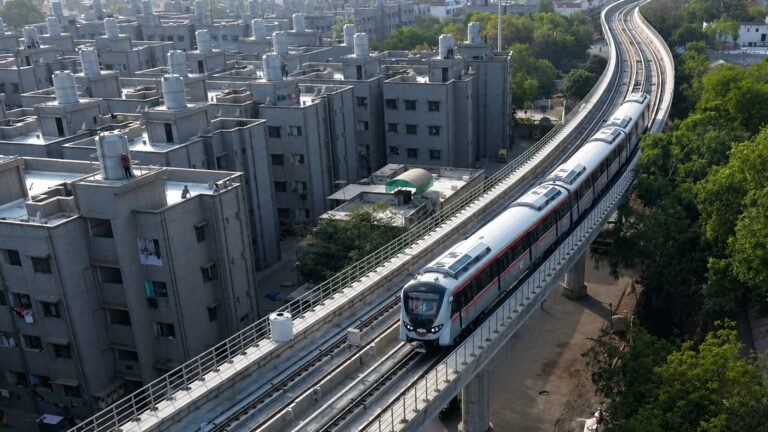
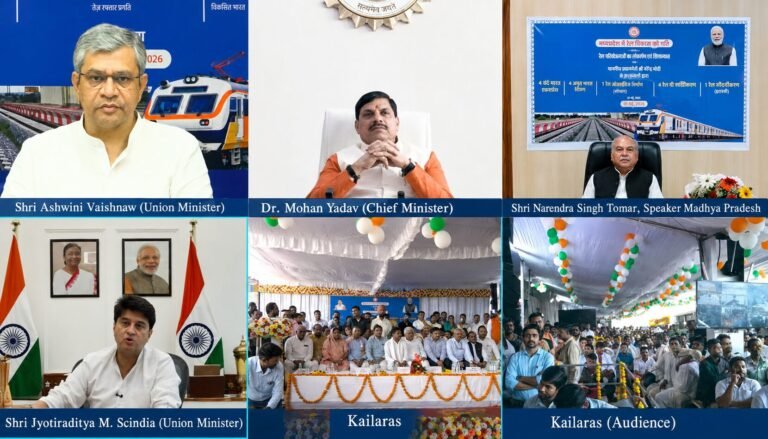
AHMEDABAD (Metro Rail News): Ahmedabad Metro Project reached a major milestone as Prime Minister Narendra Modi flagged off the services on the remaining 5 km stretch between the Sachivalay and Mahatma Mandir of the Ahmedabad Metro Phase 2. The inauguration of this section marks the completion of the Ahmedabad Metro Phase 2. 

image 2

The Ahmedabad Metro Phase 2 includes the northern extension of the existing Line 2 (Red Line) of Phase 1.This northern extension spans 22.8 km from Motera Station to Mahatma Mandir featuring 20 stations. Earlier, the 17.3 km stretch between Motera Stadium and Sachivalaya was operational. The Ahmedabad Metro Phase 2 also consists of the operational eastern spur of this line. 

The Ahmedabad Metro Phase 1 consists of two metro corridors covering a total length of 39.26 km. The details of the corridors have been mentioned below:

CorridorRoute Route Length (km)Total no. of Stations
Line-1 (East-West /  Blue Line): Vastral Gam – Thaltej Gam21.1618
Line-2 (North-South / Red Line):Motera – APMC18.8715

Prime Minister Narendra Modi commented “Our commitment to boosting Ahmedabad’s infrastructure is visible in the various development works initiated. Today, the remaining stretch of Phase 2 of Ahmedabad Metro from Sector 10A to Mahatma Mandir was inaugurated. This will boost ‘Ease of Living’ for the people of Ahmedabad and Gandhinagar.”


Explore how AI-integrated systems are improving comfort, connectivity, and accessibility for passengers across metro and rail networks at the 6th edition of InnoMetro, India’s leading expo for the Metro & Railway industry which is going to held on  21-22 May 2026 at  Bharat Mandapam, New Delhi

Register now: https://innometro.com/visitor-registration/

Advertisement1
InnoMetro_2026

Trial Runs Conducted on Bangalore Metro’s Pink Line 

1
Bangalore Metro Pink Line

BANGALORE (Metro Rail News): Bangalore Metro Project progressed as trial runs were conducted on the Bangalore Metro’s much awaited Pink Line. The Pink line of Bangalore Metro Phase 2 spans 21.386 km between Kalena Agaraha and Nagawara covering 18 stations. 

The trial run occured between Kalena Agrahara and Tavarekere station of the Pink line. Officials stated that trial runs have been initiated to assess track alignment, signalling systems, and overall safety standards as reported by News First Prime. 

BMRCL is planning to make the first phase of Bangalore Metro’s Pink Line operational very soon. The Phase 1 of Pink Line covers 7.5 km elevated section from Kalena Agrahara to Tavarekere covering 6 stations. The remaining Tavarekere to Nagawara stretch will be fully underground, featuring 12 stations. Operations on this section are expected to begin by November 2026.  


Witness the innovations & AI- powered solutions in railway & metro systems from over 200 exhibitors at the 6th edition of InnoMetro. Join India’s dedicated show for the rail transit sector which is going to held on 21-22 May 2026 at Bharat Mandapam, New Delhi.

Register now: https://innometro.com/visitor-registration/

Advertisement1
InnoMetro_2026

Colossus Infra Projects Receives LoA for Providing Train Operation Services for Nagpur Metro 

0
Nagpur Metro

NAGPUR (Metro Rail News): Colossus Infra Projects Pvt. Ltd has received a Letter of Acceptance (LoA) from Maha-Metro (Maharashtra Metro Rail Corporation Limited) for providing train Operation and station control services for the Nagpur Metro Rail Project. 

Screenshot 2026 01 10 111315

Maha-Metro invited bids for this contract. Technical bids were opened on 26 May 2025 revealing that only 2 firms have submitted bids.The technical evaluation of the bids occurred on 16 Jul 2025. However, during the technical evaluation round one firm’s bid was rejected and financial bids were opened for the qualified bid. On 9 Jan 2026, financial evaluation of the bid took place and Colossus Infra Projects was declared as the lowest bidder for the contract and subsequently Maha-Metro issued LoA to the firm. 

Colossus Infra Projects Bid Value: ₹ 21.2 Cr 

Contract Duration: 730 Days

Contracts Scope of Work: Providing train operation and station control services for Nagpur Metro Rail Project for a period of Two years. 

The Phase 1 of Nagpur Metro spans 38.215 km and consists of 2 metro corridors. Currently the Phase 1 of Nagpur Metro is completely operational.

Line CorridorRoute Length
Line 1 ( Orange Line) North–South CorridorAutomotive Square – Khapri19.658 Km
Line 2 ( Aqua Line) East–West CorridorLokmanya Nagar – Prajapati Nagar18.557 Km

The Phase 2 of Nagpur Metro spans 43.8 km and is under construction. The phase 2 of Nagpur Metro aims to extend the two operational lines of Phase 1 to Kanhan in the north, Butibori MIDC in the south, Transport Nagar (Kapsi) in the east and Hingna in the west.

Nagpur Metro Phase-II consists of the following 4 extensions of 2 corridors of Phase I. 

Line Route Length 
Orange Line Khapri – MIDC ESR 18.5 Km
Orange Line Automotive Square – Kanhan River13 km
Aqua LinePrajapati Nagar – Transport Nagar5.6 km
Aqua Line Lokmanya Nagar – Hingna6.7 km

Witness the innovations & AI- powered solutions in railway & metro systems from over 200 exhibitors at the 6th edition of InnoMetro. Join India’s dedicated show for the rail transit sector which is going to held on 21-22 May 2026 at Bharat Mandapam, New Delhi.

Register now: https://innometro.com/visitor-registration/

Advertisement1
InnoMetro_2026