Home Blog Page 197

Parliamentary Committee Announces Termination of 16 Contracts of RLDA

0
Indian Railways is likely to lease out 84 surplus plots worth more than ₹7,500 crore to private companies over the next 18 months.
Representational image only

NEW DELHI (Metro Rail News): A Parliamentary Standing Committee on Railways has stated the termination of 16 contracts for commercial projects led by the Rail Land Development Authority (RLDA).

According to the report submitted by the standing committee on railways, the railway ministry informed them that the Letter of Acceptance (LoA) for 16 commercial sites had been revoked.

The Railways Ministry revealed that contracts were terminated due to developers defaulting on lease premium payments. Additionally, developers encountered problems securing project financing from financial institutions. Furthermore, the National Green Tribunal (NGT) did not give its approval on specific grounds.

The Railways Ministry noted that adjustments to RLDA regulations are being considered to tackle these challenges. Once these adjustments are implemented, developers are anticipated to overcome problems in obtaining project funding from financial institutions. The Committee emphasized the need for prompt issuance of these adjustments to prevent future cancellations.

The report also spotlighted concerns related to obtaining no objection certificates (NOC) from municipal bodies. Current guidelines dictate that Indian Railways and RLDA must collaborate with urban local bodies or other statutory authorities during plan approvals.

Advertisement1
InnoMetro_2026

Boosting Rail Safety: Rs 4,198 Cr Allocated for Signalling Works, says Vaishnaw

0
Indian Railways
Indian Railways/ Representational Image

NEW DELHI (Metro Rail News): In the financial year 2023-24, the Ministry of Railways has allocated Rs 4,198 crore to enhance signalling systems. This decision showcases the railway ministry’s dedication to upgrading these systems to improve safety and efficiency in train operations.

Shri Ashwini Vaishnaw, the Minister of Railways, Communications, and Electronic and Information Technology, shared this information in response to a question in the Lok Sabha. This allocation of funds highlights Indian Railways‘ dedication to delivering a great and safe travel experience while embracing advanced technologies.

The modernization of signalling systems has been ongoing, with Indian Railways adopting new approaches to stay up-to-date with technology. Railways has decided to implement Electronic Interlocking (EI) at all installations, which uses digital tech to improve train operations and safety. By May 31, 2023, an impressive 3108 stations have already been equipped with Electronic Interlocking.
Most stations have transitioned to Electrical/Electronic Signalling Interlocking Systems by May 31, 2023. This move from traditional to electronic systems enhances safety.

The introduction of Axle Counters for Automatic Clearance of Block Sections (BPAC) showcases Indian Railways’ push for automation. These systems allow trains to arrive without manual help, streamlining operations. As of May 31, 2023, 6397 block sections have been equipped with Axle Counters.

Vaishnaw shared that safety at Level Crossing (LC) gates has been notably strengthened by interlocking them with Signals. This important measure has been applied at 11093 Level Crossings by May 31, 2023, providing an extra safeguard for passengers and railway staff.

An impressive accomplishment is the creation of the indigenous Automatic Train Protection (ATP) system named Kavach. This innovative system helps train operators in maintaining prescribed speed limits by automatically applying brakes when needed. Kavach has been installed on 1465 route kilometers and 121 locomotives, proving its effectiveness in ensuring secure train journeys, especially in challenging weather conditions.

Moreover, a strong emphasis has been placed on standardizing signalling systems. The introduction of standard typical circuits for Electronic Interlocking (EI) systems, including Version-1 in 2019 and Version-2 in 2022, has facilitated consistent logic circuit application across the Indian Railways network.

Continuing the quest for improvement, work is underway to develop a direct driving feature in Electronic Interlocking. This advancement holds the potential to further streamline train operations and enhance the overall system efficiency.

Advertisement1
InnoMetro_2026

Augmenting Rail Network, Future Urban Mobility and Climate Change

0
Indian railways
Representational Image only

Urban Transport: An Introduction

The urban transport system is a collection of transport infrastructures and modes that facilitate passenger and freight mobility in cities. It expresses the level of accessibility in general. The three broad categories of urban mobility or transportation are collective, individual, and goods or freight transport. While passenger mobility is determined by individual decisions based on a number of variables, freight mobility is determined collaboratively by freight owners and transportation service providers. Urban locations are the most challenging environments for passenger and freight mobility. Passengers and freight movements are complementary in different conditions, but they may compete for the use of available land and transportation infrastructures outlined as:

Collective Transport (Public Transit): The goal of communal and collective transportation is to provide public transportation in specified areas of the city. The networks are often owned and operationalised by the agency, and access is free to all as long as a fare is paid; hence, they are called as public transportation. The efficiency of public transport networks is predicated on the ability to convey huge numbers of people while obtaining economies of scale. Trams, buses, trains, subways, and ferries are examples of such modes.

Individual Transportation: Any kind of mobility that is the result of personal choice and means, such as automobiles, walking, cycling, or motorcycling, is included. Most people walk to meet their fundamental mobility needs, but this number varies depending on the city. Individual mobility may be preferred in some cases, while in others, it may be hampered.

Freight Transportation: Since cities are prominent centres of production and consumption, urban activities are accompanied by vital movements of goods and freight. Delivery trucks generally moving between industries, distribution centres, warehouses, and retail activities, as well as significant terminals such as ports, rail yards, distribution centres, and airports. The expansion of e-commerce has been linked to an increase in parcel home deliveries. Freight mobility within cities is often underestimated, yet it is an important aspect of the burgeoning area of urban logistics.

Rapid urbanisation in most parts of the world has increased passenger and freight mobility in cities. Mobility also involves wider distances, but evidence suggests that switching times have remained rather consistent over the last century; on average, 1 to 1.2 hours per day are spent. This means that commuting has increasingly transitioned to speedier modes of transportation, allowing for greater distances to be covered in the same period of time. Every mode of urban mobility, whether walking, driving, or taking public transportation, requires a certain level of fitness to meet mobility requirements. Various transport technologies and infrastructures have been deployed, resulting in a diverse set of urban transport systems worldwide. In developed nations, there have been four major phases of urban growth, each associated with a different type of urban mobility, with a fifth phase currently underway.

Climate Change

Climate change is one of the most pressing issues confronting humanity in the 21st century. Human activity has significantly increased global atmospheric concentrations of ‘greenhouse gases,’ such as carbon dioxide (CO2), methane (CH4), and nitrous oxide (N2O). The primary causes of these increases are human activities such as the use of fossil fuels and land use changes such as deforestation and agriculture. Greenhouse gas emissions are most likely the primary contributor to current and future climate change.

Climate change is one of the most pressing issues confronting humanity in the twenty-first century. Human activity has significantly increased global atmospheric concentrations of ‘greenhouse gases,’ such as carbon dioxide (CO2), methane (CH4), and Nitrous Oxide (N2O). The primary causes of these increases are human activities such as the use of fossil fuels and land use changes such as deforestation and agriculture. Greenhouse gas emissions are most likely the primary contributor to current and future climate change.

However, if action is taken now, the worst impacts can be avoided until the middle of the century. The effects will be very diverse in different parts of the planet. The effects are projected to be more severe in the south, especially in developing countries where topography and a lack of adaptation of resources make them more vulnerable.

Urban Transport and Climate Change

The transport sector is vital to the social and economic growth of society. Today, life is nearly impossible without access to modern transportation systems. Almost every human activity pertains to transportation, including bringing students to schools and colleges, workers to their employment and workplaces, selling to consumers, and facilitating participation in social and recreational activities, to name a few. Because it is mostly powered by fossil fuels, the industry is liable for environmental externalities such as greenhouse gas emissions. 

In 2022, global energy-related CO2 emissions increased by 0.9%, or 321 Mt, hitting a new high of more than 36.8 Gt. Following two years of unusual oscillations in energy use and emissions, exacerbated in part by the Covid-19 pandemic, last year’s increase was substantially slower than six per cent return expected in 2021. Energy combustion emissions climbed by 423 Mt, but industrial process emissions declined by 102 Mt, with road transport accounting for roughly eighty per cent of overall transport emissions. It contributes to traffic congestion, noise pollution, and road accidents, in addition to greenhouse gas emissions. Rapid economic growth in the Asia-Pacific region in recent decades has resulted in increased motorisation and, as a result, increased ownership of two- and four-wheel motor vehicles, particularly in urban areas.

Cities in the Asia-Pacific generally account for approximately 75% of the region’s greenhouse gas emissions, which are expected to rise amidst growing urbanisation. Privately owned two-wheelers and four-wheelers have become the favoured mode of daily commuting in these cities in the absence of an integrated and planned transport options and in the backdrop of rising income levels. This has put a burden on urban transport infrastructure, often resulting that it cannot keep up with the increase in private vehicles.

Carbon dioxide (CO2) accounts for the majority of the greenhouse gas emissions included by the Kyoto Protocol. Transport carbon dioxide emissions have risen faster than all other industries over the last three decades and are expected to rise even faster in the future. Carbon dioxide emissions from the world’s transport industry climbed by 46% between 2010 and 2022. Over the same time period, emissions from road transport climbed by more than forty per cent in developed countries and exceeding nearly fifty per cent in developing countries.

Currently, developed countries are among the principal contributors to transport emissions. However, the proportion of emissions produced in developing countries is rapidly increasing, particularly in China, India, and Indonesia. Global CO2 emissions from the transport industry are expected to rise by 140% between 2000 and 2050, with developing nations bearing the brunt of the increase. Road travel accounts for the bulk of transport fuel emissions (76%). The most prominent source is light-duty vehicles (LDVs), which are four-wheel vehicles such as cars, sports utility vehicles (SUVs), compact passenger vans (up to 8 seats), and personal pick-up trucks. Air travel accounts for around 12% of total CO2 emissions and is constantly increasing. Various modes of transport contribute to global warming in ways other than direct CO2 emissions, such as upstream CO2 emissions from oil refineries, power needed by electric trains, and increased climatic force of aviation due to contrails and other impacts.

A rapid increase in two-wheeled vehicles is expected in developing countries, particularly China, India, Latin America, and other Asian countries. Two-wheeler fuel consumption is expected to more than double between 2000 and 2050, increasing the proportion of road vehicle fuel consumption attributed to two-wheelers from 2% to 3%.

Fact Sheet – Climate Change

  • The transport industry accounts for roughly one-quarter of all greenhouse gas emissions.
  • 95% of the world’s transport energy is still derived from fossil fuels.
  • Transport is the leading source of energy-related emissions in 45% of countries and the second greatest source in the remaining countries.
  • Transport CO2 increased in all regions except Europe, which declined by 2% between 2000 and 2019.
  • The fastest growth rates were seen in developing countries, with Asia being the largest emitter in absolute terms in 2019.
  • The transportation industry was responsible for 57% of global oil demand and 28% of total energy usage and consumption.
  • The Global Fuel Economy Initiative (GFEI) is assisting 40 additional countries in realising the financial and CO2 benefits of better and improved vehicle fuel economy.
  • The Airport Carbon Accreditation Scheme presently has 173 recognised airports throughout the world, including 26 carbon-neutral airports; 36% of air passengers now commute through an Airport Carbon Accredited airport.
  • Between 2010 and 2019, international shipping emissions increased by around 0.85% on a yearly basis. In 2018, the overall GHG emissions from shipping (international, domestic, and fisheries) were close to 3% of the total global figures.
  • In 2018, aviation contributed to around 12% of total CO2 emissions from transportation. Aviation emissions increased at a 2% yearly average between 2000 and 2019, relating to nearly five per cent annual growth in commercial passenger flights. Tourism-related CO2 emissions account for 22% of total emissions.
  • Currently, CO2 emissions from the transportation sector account for around 30% of total CO2 emissions by humans in developed nations and approximately twenty-three per cent emissions worldwide.
  • More than 60 billion tonnes of CO2 might be saved between now and 2050 if battery-electric and plug-in hybrid vehicles account for 60% of all vehicles on the road.
  • The contribution of transport to total national GHG emissions ranges from up to 30% in high-income economies to less than 3% in LDCs.

Railways as an option for reduced carbon emissions: An Overview

Global transportation demand is rapidly increasing. Passenger and freight traffic will more than double by 2050 if current trends continue. Such expansion is a sign of social and economic success, but it comes at the expense of increased energy demand, CO2 emissions, and air pollutants. A higher reliance on rail could reduce such growth. Rail travel is well suited to urban needs in an increasingly urbanised world. High-speed rail can replace short-distance air travel, while conventional and freight rail can also complement and support other forms of transportation to provide efficient mobility. 

The transportation sector accounts for more than half of worldwide oil demand and approximately one-quarter of total CO2 emissions from fuel combustion. As a result, changes in transport are vital and crucial for reaching global energy transitions. Despite the fact that rail is one of the most energy-efficient modes of freight and passenger transport, it is sometimes overlooked in public debate. The rail sector has the potential to deliver significant benefits to both the energy and environmental sectors. Rail can minimise carbon dioxide and local pollutant emissions by diversifying energy sources and offering more efficient mobility.

Future Rail

Future of Rail shall be determined and shaped by how it responds to both expanding transportation demands and rising pressures through competition from alternative modes of transportation. Rising incomes and populations in developing and emerging countries, where cities are expanding at an exponential rate, are expected to drive substantial demand for more efficient, faster, and cleaner transportation, yet the need for speed and flexibility favours vehicle ownership and air travel.

Enhanced income opportunities also drive freight demand growth, where rising incomes have substantially boosted demand for faster delivery of higher-value and lighter goods. The rail industry has significant competitive advantages to leverage to compete for business. However, this will necessitate greater strategic investments in rail infrastructure, increased efforts to improve commercial competitiveness and technical innovation. The future of rail explains, under a base scenario, how the railway system and its energy requirements are expected to evolve through 2050 based on announced policies, rules, and projects.

A more ambitious High Rail Scenario is built on three pillars: minimising costs per passenger-kilometre or tonne-kilometre moved, increasing revenue from rail systems, and ensuring that all modes of transport pay not only for the infrastructure they require but also for the negative impacts they produce. This scenario depicts the extent to which a large shift in passenger and freight travel to rail transport could be realised, highlighting and emphasising the environmental and economical effects as well as policy instruments that could be used.

In 2050, total energy consumption for the rail sector is expected to be approximately 42% more than in the base scenario. Nonetheless, despite the increased activity, rail transport will only account for 4% of overall transport energy consumption by 2050. In all stages, the rail system is heavily electrified, resulting in energy diversification. Rail movement also gets almost totally electrified in all major countries and regions under the base scenario. The exception is North America, where freight diesel is expected to maintain its dominance.

In the High Rail Scenario, passenger rail activity rises to 15 trillion passenger kilometres by 2050. Other modes of public transit, particularly bus travel, shall also be on the rise. This is largely due to the advancement of transport systems that allow for better integration of rail services with other modes of public transport. In the high rail situations, total transport energy consumption shall exceed 3300 Mtoe in 2050. In comparison to the base scenario, this represents a 565 Mtoe reduction in energy demand by 2050. This reduction includes 510 Mtoe of oil or nearly 10 million barrels per day.

Trends in conventional, high-speed, urban and freight rail

Conventional rail covers medium- to long-distance journeys with a top speed under 250 kph, as well as suburban train journeys. The majority of conventional rail networks exist now in North America, Europe, China, Russia, India, and Japan. These regions account for over 90% of global passenger movements on conventional rail, with India leading the way with 39%, followed by China (27%), Japan (11%), and the European Union (9%). However, conventional rail has changed little in these areas during the last few decades.

Conversely, substantial investments in high-speed rail and metros have been made. High-speed rail refers to rail services that travel vast distances between stations at speeds above 250 kph. Metro rail refers to high-frequency, high-capacity urban services that are completely segregated from traffic and are often underground or elevated, whereas light rail refers to tramways and other smaller-capacity, lower-speed urban transport systems, most often at street level.

High-speed rail is an important alternative to aviation, while urban rail is a solution for cities plagued by traffic and pollution. Growth has been especially noticeable in China, which has surpassed all other countries in terms of network length of both forms in less than a decade.

Over the last two decades, freight train activity has steadily increased. It is described as the transportation of products on specially designed goods trains. Today, rail freight movement is concentrated in China and the United States, each accounting for over one-quarter of worldwide rail freight activity, and Russia accounts for one-fifth. The bulk of total freight rail traffic consists of minerals, coal, and agricultural products.

Electrification

Today, electric trains account for three-quarters of passenger rail transport activity, up from 60% in 2000; the rail sector is the only mode of transport that is widely electrified today. Because of its dependency on electricity, the rail sector is the most energy-diversified source of transportation. Europe, Japan, and Russia have the highest percentage of electric train activity, whereas North and South America continue to rely mainly on diesel. In almost all regions, passenger rail is notably more electrified than freight rail, and regions with greater emphasis on urban rail and high-speed rail have the highest share of passenger kilometres served by electricity.

Indian Context

The railway system in India has been important to the country’s growth, carrying people and goods throughout its enormous territory, integrating markets, and connecting communities. Rail passenger travel in India has expanded over 200% since 2000, while freight traffic has increased by nearly one hundred fifty per cent; nonetheless, India’s latent demand for mobility remains enormous. For example, each Indian drives roughly three kilometres per day over privately owned road vehicles, compared to 17.5 kilometres in Europe. In fact, rail activity in India is expected to grow faster than in any other country.

Today, India’s conventional rail system has a total route length of over 68000 km, divided between passenger and freight transportation. There are metro systems in 20 Indian cities, with approximately 859 km of track in operation and an additional 980 km of track under construction in 27 cities. In the coming years, 600 kilometres of new metro lines are planned. For the time being, India lacks high-speed rail. However, in 2015, India and Japan signed a deal to build a high-speed rail line between Ahmedabad and Mumbai, which is scheduled to open in 2024. Seven additional high-speed lines are being considered. They would connect the four cities that make up the Golden Quadrilateral (Delhi, Mumbai, Kolkata, and Chennai), as well as other intermediate cities, once completed.

Efficient Mode

Rail is one of the most energy-efficient forms of freight and passenger transport; while it transports 8% of worldwide passengers and 7% of global freight, it accounts for only 2% of overall transport energy consumption. Direct CO2 emissions from rail are not expected to rise above 100 Mt CO2 after their peak in 2019. Direct CO2 emissions from diesel rail operations increased by less than 1% per year on average during the last two decades (electric rail, which accounts for over 80% of passenger train activity and half of freight movements, emits no direct CO2 emissions). To meet the Net Zero Emissions by 2050 Scenario, emissions must fall by around 6% per year, a target that necessitates electrifying diesel operations wherever possible, as well as blending biodiesel and implementing a variety of other efficiency measures.

Urban Rail Networks: Metros & Light Rail

Metro and light rail networks have much lower emissions than other motorised urban transport modes, particularly private cars. Rail emissions per passenger km are currently around one-sixth of those of air transport as measured on a ‘well-to-wheels’ (wing/wake) basis. Electric passenger rail emits significantly less pollution, especially when fuelled by renewables or nuclear energy. Some of the important considerations related to augment rail networks globally, especially high-speed rail corridors, are to support Net Zero Scenario and effectively manage climate change with a fast-transforming urban mobility landscape.

  • Push and Pull policies and modal shifting: Making rail viable and easier to use necessitates not only a focus and concentration on trains and tracks but also traffic-control measures. Fiscal measures such as congestion charges and pollution taxes, which are primarily applied to automobiles and airlines and are based on transportation network use and externalities, can directly boost rail’s competitiveness. Internalising the environmental and social externalities of aviation, for example, through a tax on aviation fuels, would help level the playing field and make high-speed rail more cost-competitive for long-distance travel. Adopting ‘push’ and ‘pull’ policies, including fiscal tools, to boost rail competitiveness and induce modal change appears to be a modern-day requirement.
  • Further, electrify, improve efficiency and invest in digital technologies: The cost of investing in rail infrastructure is high. High passenger or freight throughput is required for a rail construction project to be profitable. The adoption of digital technologies could improve train operations and connect rail more thoroughly with other modes of transportation, making rail more accessible, flexible, convenient, and desirable. As a result, digital technologies are vital for increasing throughput and improving operational and energy efficiency, helping to lower costs and increase revenues.
  • Upgrade rolling stock, raise efficiency and enhance digital technologies: Traditional rail companies and organisations will need to modernise its rolling stock and electrify services further, beginning with the busiest routes. Energy efficiency techniques would lessen environmental implications while also improving economic viability. 
  • Enhance rail networks through integrated planning: Rail development funding does not have to be solely dependent on taxation. Capturing the benefits of land value can also help to offset high capital investment costs. For example, network developers may gain from higher land values by developing and undertaking high-margin residential and commercial structure and projects near railway nodes and stations. Furthermore, financial and regulatory systems should incentivise rail organisations and institutions to seek out sustainable financing options such as green bonds. 
  • High Passenger Throughout on Urban Rail: Policies that encourage high-density living and incorporate mobility into urban development planning can assist urban rail networks in achieving high passenger throughput. Commuting times can be reduced by using an integrated transit solution. Furthermore, land use planning and design should accommodate and account for city logistics by including strategically placed multi-modal hubs. These should connect rail and freight, as well as cycling infrastructure and zero-emission fleets. Transit-oriented development has the potential to integrate urban rail with bus networks, as well as pedestrian and cycling pathways.
  • Regional Policies, cost mitigation: Regional strategies prioritise rail modernisation and expansion, as well as digitalisation and low-carbon technologies: Several recent policies and initiatives have set aside and provisioned for public funds to expand railway infrastructure, modernise fleets, and improve digital operations (including software and equipment). Meanwhile, a portion of the cash collected by fuel taxes, parking fees, road pricing, and tolls can be spent in rail infrastructure, which can stimulate a modal shift by making private vehicle use lesser appealing and desirable. Similarly, proceeds from transport taxes (such as automobile purchase and registration fees) might be utilised and allocated for train enhancements and extensions. 

Conclusion

(i) Countries around the world, particularly in Europe, are planning significant investments in rail transit to make it more desirable to travellers, particularly over short-haul flights. Expansion and utilisation of rail networks will be vital for achieving emission reductions and moving towards the Net Zero Scenario. Rail is the least polluting means of passenger transport; extending it under the Net Zero Scenario will help cut overall emissions.

(ii) In the Net Zero Scenario, electric train expansion has been increasing and enhancing, particularly in the replacement of diesel-powered freight trains. The overall final energy mix of rail is now divided almost equally between diesel and electricity, with diesel use slightly greater than electricity in 2021. In the Net Zero Scenario, electricity accounts for approximately two-thirds of total final energy demand by 2030, with diesel still accounting for roughly a quarter and biodiesel accounting for the remainder, with low penetration of hydrogen. Diesel, in particular, plays a substantially larger role in freight rail, accounting for around two-thirds of total energy consumption worldwide in 2021. In the Net Zero Scenario, continued progress on freight electrification will reduce this proportion to roughly 40% by 2030.

(iii) Over one-quarter of the world’s operating metro networks began running in the past five years. The world’s operating metro systems cover over twenty-thousand Kilometers. More than one-quarter of these were put into operation in 2017-2021, and nearly eighty per cent of these new metro lines were built in Chinese cities. The picture for light rail, which has lower capacities and speeds, is similar, if less stark: 10% of operating lines were put in place in the same five years, with just under half of them in China. The resulting efficiency of urban mobility in China results in far lower per-capita transport emissions than in cities of the rich world that are not served by metro, and can help China realise its net zero CO2 emission commitments.

(iv) The most effective way to reduce flying over short and medium distances is to expand high-speed rail networks. Over 25 countries have built high-speed rail networks totalling over 45000 kilometres of track. China now has more than 60 per cent of the world’s track length, with a goal of having 38000 km operational by 2025. According to the Net Zero Scenario, high-speed rail activities need to rise to nearly sixty per cent by 2030.

(v) Hydrogen projects are on the rise, verifying and cementing the fuel position as an essential and key component in the broader energy shift. Demonstration projects in the Netherlands and Japan aim to examine the efficiency and viability of hydrogen as an alternative to diesel rail lines with poor utilisation and as a low-carbon fuel for rail in particular activities, including conventional (intercity) passenger and freight trains. Proponents of fuel cell trains claim and point to their ability and potential to travel long distances (up to 1000 km at a top speed of 140 km/h) without refilling. They also indicate the possibility of quick refilling times.

(vi) Germany just started operating 14 hydrogen trains on a 100-kilometre track in the state of Lower Saxony for passenger transportation recently. Alstom, the train manufacturer, has delivered the first of a larger order of 41 trains. Hydrogen projects have frequently been grouped and clustered among advanced economies, which have more financial means and resources to invest in innovative and breakthrough technologies. This year has also seen various rising and developing economies engage in hydrogen rail projects, most notably India’s 89-kilometre-long Sonipat-Jind link. 

(vii) Night rail services can also help increase network throughput, minimising the per-passenger cost of railway operations. Renewed interest has resulted in an expansion of night rail links, suggesting that this mode of transport is gaining popularity and contending with aviation for short- and medium-distance trips. Several new night routes have opened in Europe.

Advertisement1
InnoMetro_2026

Bengaluru Commuter Rail: Transforming city’s infrastructure for comfortable & convenient travel

0
Representational image only

Overview

Bengaluru Suburban Railway (also known as Bengaluru Commuter Railway) is a suburban rail network currently under construction in Bengaluru. The city’s Suburban Rail system was originally proposed in 1983. Several route plans have been recommended since then, but no Suburban Rail project could be materialised and took place. It was eventually approved and included in the 2019 Railway Budget. Nirmala Sitharaman, the finance minister, stated in her budget on 1 February 2020 that the project will cost Rs 18,600 crores to implement. The central government would provide twenty per cent of the equity and facilitate and promote external funding for up to sixty per cent of the project cost. 

On completion, it is expected to be the first of its kind and unique in India, with metro-like facilities and rolling stock. However, the proposed transport system is said to have the slowest design speed among all suburban rail projects presently being developed in the country. Nagpur broad-gauge metro and the National Capital Region Transport Corporation are constructing train tracks with a design speed of 200 kilometres per hour with an operational speed of 160 kilometres per hour. Suburban rail, together with the Hyperloop, High-Speed Airport Train, Intercity trains, Metro rail, Metro Neo, and Metrolite, would provide rail-based public transportation to the people of Bengaluru.

Project Development

In Bengaluru, a suburban rail service existed as early as 1963 for HAL employees to commute from KSR Bengaluru to Vimanapura Railway station. A formal Suburban Rail system for Bengaluru was first proposed in 1983 by a team from Southern Railway led by then Railway Minister C. K. Jaffer Sharief and Bengaluru Member of Parliament. Their recommendation was to invest in three suburban rail lines as well as a 58-kilometre ring railway. The package was projected to cost Rs. 6,500 million over a 25-year period in 1983. In 1993, C. K. Jaffer Sharief was appointed Minister of Railways in India. He then Influenced the State of Karnataka to constitute and set up another committee to look into mass rapid transit prospects in the city. 

This group advocated essentially the same circular railway proposed by Southern Railway in 1983. The plan was rejected by India’s then-Prime Minister in both 1983 and 1993. The Government of Karnataka commissioned RITES (Rail Indian Technical and Economic Services) in 2007 to conduct a CTTP (Comprehensive Traffic and Transportation Plan) for the city of Bengaluru. Their report proposed ten Suburban Rail routes totaling 204.0 km. According to the analysis, Suburban Rail (along existing rail lines) was envisaged to cost substantially lesser compared to traditional mass rapid transit undertakings for the city.

Praja Bengaluru made a proposal in a ‘Call To Action’ report in July 2010. This design and plan were supported and presented at the Indian Institute of Science (IISc) ‘s Centre for Infrastructure, Sustainable Transportation, and Urban Planning (CisTup). The concept was for a 376-kilometre network with 42 new stations centred on three hubs (Yesvantpur Junction, Benniganahalli, and Yelahanka Junction). One significant recommendation was to use the busy KSR Bengaluru station only as a pass-through station.

RITES completed a feasibility study, especially for suburban rail services in Bengaluru, in November 2011, and their final report was submitted to the Directorate of Urban Land Transport (DULT) in November 2012. The 179-page study examined each of the existing train routes totaling 440.8 km in and around the city, as well as the development of Suburban train services across three phases. On 5 July 2013, the state government approved the suburban rail system. The proposed system was approved by Chief Minister Siddaramaiah in the 2013-14 state budget, which was presented on 9 July 2013. The budget proposed and suggested the formation of the Bengaluru Suburban Rail Corporation Limited, a special purpose vehicle (SPV) to carry out the Rs. 87.59 billion project.

The then Union Railway Minister, Mr. Suresh Prabhu declared and announced partnering with the Karnataka government for a Rs. 9000-crore Suburban Rail network for Bengaluru in the 2016-17 Railway budget; however, no funds were allocated. The state government submitted a modified version of the original RITES plan on 3 February 2016, which seemed to be intended to kick-start the project with a Rs. 1,000-crore investment connecting Mandya with Kengeri, Whitefield with Baiyappanahalli, and Tumakuru with Yeshwanthpura Junction. The state government provided 100 crore for this purpose. The state commissioned RITES to conduct another feasibility assessment on the project, and the latter’s survey determined that the project was feasible. However, Railways indicated that Phase Two of the project (which would connect Tumakuru and Yeshwanthpura Junction) was not possible.

RITES submitted a revised plan for a 161 km network in November 2018, which was modified and amended again in August 2019 to lower the cost and expenses. Twenty-nine of the 82 stations were eliminated, the route length was decreased to 148 kilometres, and the costs were reduced to Rs. 16,000 crores. The Government of India finally agreed to this and accepted the proposal.

Slow Pace

Though the project had been approved in principle by the Government of India, financial allocations and other progress had been slow for many years. The project was approved by the Prime Minister’s Office and the Cabinet Committee on Economic Affairs (chaired by the Prime Minister) on 7 October 2020. The State Government commenced budgetary support for the Suburban Rail project, with 500 crores sanctioned in the 2020-21 budget. Meanwhile, K-RIDE has begun the Suburban project by soliciting bids for land survey, hiring staffs and personnel, and other formalities. With the major thrust and momentum provided to the project, two priority lines had been proposed to be taken up first as per the Government of Karnataka’s advice. These are the Mallige Line and the Kanaka Line. The routes of the suburban rail system are named after local flowers. Prime Minister Narendra Modi laid the groundwork for the start of the project’s construction on 20 June 2022.

Project Specification & Key Features

Bengaluru Suburban Rail Project (BSRP) is a 149.348 km commuter rail network in Bangalore, Karnataka, featuring sixty-four stations. RITES prepared the feasibility report and final detailed report of the project proposing four lines/corridors. The central Government approved the project to begin construction in October 2020 at a cost of Rs. 15,767 crore. However, the foundation stone for the project’s construction work to commence was laid by Prime Minister Narendra Modi in June last year. Rail Infrastructure Development Company (Karnataka) Limited (K-RIDE) is implementing the project, which has a scheduled completion date of 2026.

  • Operational: 0 km
  • Under Construction: 0 km
  • Approved: 149.348 km
  • Elevated Routes: 45.392 km
  • At-Grade Routes: 103.856 km
  • Maximum Speed: 90 kmph
  • Operational Speed: 35 kmph
  • Track Gauge: Broad Gauge

Route Information

Corridor 1: Sampige Line

  • Route: KSR Bengaluru – Yelahanka – Devanahalli
  • Length: 41.478 km
  • Type: Elevated (19.22 km) & At-Grade (22.278 km)
  • Depot: Akkupet Depot
  • Number of Stations: Fifteen (8 elevated & 7 at-grade)
  • Station Names: KSR Bengaluru City (interchange), Srirampura (future), Malleswaram, Yesvantpur (interchange), Muthyal Nagar, Lottegollahalli (interchange), Kodigehalli, Judicial Layout, Yelahanka, Nitte Meenakshi, Bettahalasoor, Doddajala, Airport Trumpet, Airport Terminal, Airport KIADB, Devanahalli
  • Note: A suburban rail link is proposed to Bengaluru International Airport

Corridor 2: Mallige Line

  • Route: Baiyyappanahalli Terminal – Chikkabanavara
  • Length: 24.866 km
  • Type: Elevated (7.723 km) & At-Grade (17.143 km)
  • Depot: Jalahalli Depot
  • Number of Stations: Fourteen (6 elevated & 8 at-grade)
  • Station Names: Chikka Banavara, Myadarahalli, Shettyhalli, Jalahalli (future), Yesvantpur (interchange), Lottegollahalli (interchange), Hebbal, Kanaka Nagar, Nagawara, Kaveri Nagar (future), Banaswadi, Seva Nagar, Kasturi Nagar, Baiyapanahalli (interchange)

Corridor 3: Parijaata Line

  • Route: Kengeri – Whitefield
  • Length: 35.52 km
  • Type: Elevated (10.40 km) & At-Grade (25.12 km)
  • Number of Stations: Fourteen (4 elevated & 10 at-grade)
  • Station Names: Kengeri, RV College (future), Jnanabharati, Nayandahalli, Krishnadevaraya, Jagjeevanram Nagar, KSR Bengaluru City (interchange), Kumara Park, Bengaluru Cantt, Bengaluru East, Baiyapannahalli, Krishnarajapura, Hoodi, Whitefield

Corridor 4: Kanaka Line

  • Route: Heelalige – Rajankute
  • Length: 46.285 km
  • Type: Elevated (8.049 km) & At-Grade (39.716 km)
  • Depot: Silkboard Depot
  • Number of Stations: Twenty-One (2 elevated & 19 at-grade)
  • Station Names: Rajakunte, Muddana Halli, Yelahanka (interchange), Jakkur, Hegde Nagar, Thanisandra, Hennur, Horamavu, Channasandra, Benniganahalli (interchange), Kagadaspura, Doddanekundi, Marathahalli, Belandur Road, Carmelaram, Ambedkar Nagar, Hsukur, Singena Agrahara (future), Bommasandra (future), Heelalige

Depots

Two depots have been planned for being constructed. Jnanabharathi depot would extend over 56.9 acres, whereas Devanahalli depot shall cover around 61.2 acres. These, however, do not fall on priority routes 2 and 4. As a result, the viability of a depot at Huskuru along the Kanaka Line, in addition to other options, is being investigated.

Features

DPR for the project features a number of unique and one-of-a-kind characteristics in the proposed system. Many stations have been planned to serve as commercial hubs. Many other stations shall be developed as Intermodal Integration Hubs, allowing users to easily switch to other means of transportation such as Metro. Automated fare collection systems and platform screen doors shall be installed at stations. DPR recommends Metro Train Sets (EMU) – RS 13 series, which are used in Delhi Metro and manufactured by M/s BEML. The DPR also suggests Bengaluru to be most suitable for the Commuter Rail system.

Last Mile Connectivity

The Bengaluru Comprehensive Mobility Plan lays forth a road map for an integrated public transport experience. As in European cities, Bengaluru Suburban Rail stations will be connected with other forms of transportation, allowing seamless movement across different modes of transportation. Public Bus Service, Metro trains, Inter-city buses, Inter-city trains, Metrolite, Metro Neo, Hyperloop, BRTS, Peripheral Ring Road, Bus priority corridors, Airport metro, Airport Bus service, and High-speed Airport Train all have been planned to be incorporated into the suburban train network.

To provide last-mile connectivity to suburban rail stations, the Public Bicycle Sharing (PBS) and Shared Micro-Mobility System programmes have been developed. All 57 K-RIDE stations will be transformed into integrated commercial centres (smart station hubs) where people may work, park, shop, eat, and trade. Suburban train stations will be accessible from all directions. The suburban train station plan will not only focus on the development of a modern station but also on traffic circulation and road improvement, easy transition to other modes of public transportation, widening of approach roads and ramp-based multi-level access, similar to the New Delhi Railway station redevelopment model.

Latest Update

The Bengaluru Suburban Rail Project (BSRP) is being implemented in stages. On-the-ground work has already begun in several areas. The Rail Infrastructure Development Company (Karnataka) Limited (KRIDE), which is in charge of the project, recently revealed that it had received bids from three different companies to supply coaches for the venture. A total of three companies expressed their interest in responding to Request for Qualification bid and proposal to supply coaches/rolling stock for the Bengaluru Suburban Rail Project (BSRP), the organisation stated in a statement. Construcciones y Auxiliar de Escales (CAF), Bharat Heavy Electricals Limited (BHEL), and Bharat Earth Movers Limited (BEML) are the companies. This is the first stage of the two-phase tender process, in which bidders must submit an expression of interest by meeting the technical and financial qualifying criteria. Shortlisted bidders from the first list shall be eligible to participate in the second round for their proposal towards the financial bid. 

On the basis of the proposal submitted in the financial bids, the lowest bidder shall be awarded the contract for supplying and maintenance of the BSRP trains as well as make available trained personnel and staff, according to the KRIDE. Earlier, the Indian Air Force (IAF) signed an MoU (Memorandum of Understanding) with KRIDE to hand over its territory at Jalahalli to BSRP. The forest department also gave its permission for the removal of nearly six hundred trees along the project’s path. The Bengaluru Suburban Rail Project, popularly known as the Bengaluru Commuter Rail Project, has been planned to include four corridors and routes.

The BSRP project is aimed towards developing a rapid rail network that connects the centre of the town to its outskirts and satellite communities. The network will also be extended to rural areas nearby. Ashwini Vaishnaw, Union Minister of Railways, described it as a ‘world-class suburban system on the lines of Mumbai suburban rail for Bengaluru with modern coaches at a lower cost.’ The BSRP will span 149.348 kilometres across four routes and shall include fifty-seven stations. The overall cost has been expected to be Rs 15,767 crore. The commuter rail will run in six directions: Devanahalli (Kolar), Kengeri (Mysuru), Rajanukunte (Doddaballapura), Chikkabanavara (Tumakuru), Whitefield (Bangarapet), and Heelalige. 

  • Corridor-1 (Sampige Line): KSR Bengaluru City (Majestic) to Devanahalli, with fifteen stations covering 41.40 kilometres.
  • Corridor-2 (Mallige Line): Baiyappanahalli Terminal to Chikkabanavara, covering 14 stations and running across 25 kilometres. The stations in this stretch include Byappanahalli, Kasturinagar, Sevanagar, Banaswadi, Nagawara, Kanakanagar, Hebbal, Lottegollahalli, Yeshwantpur, Jalahalli, Shettihalli, Myadarahalli, and Chikkabanavara. 
  • Corridor-3 (Parijata Line): Kengeri to Whitefield covering 35.52 kilometres with nineteen stations. 
  • Corridor-4 (Kanaka Line): Heelalige to Rajankute with nineteen stations along the 46.24-km-long rail route. This stretch will have 19 stations: Rajanakunte, Muddenahalli, Yelahanka, Jakkur, Hegde Nagar, Thannisandra, Hennur, Horamavu, Channasandra, Bennigenahalli, Kaggadaspura, Marathahalli, Bellandur Road, Carmelaram, Ambedkar Nagar, Huskur, Singara Agrahara, Bommasandra and Heelalige. 

The BSRP is estimated to assist around ten lakh commuters by helping to remove congestion from city roads significantly. In June last year, Prime Minister Narendra Modi laid the foundation stone of the project.

Advertisement1
InnoMetro_2026

Chennai Light Rail: A Light Rail to Connect Velachery with Tambaram

11
Light Rail Transit
Representational image only

Chennai Light Rail

Light Rail is a planned urban rail transit system in Chennai, along with the Chennai Metro, Chennai Suburban Railway, and MRTS. Light Rail between Tambaram and Velachery has been declared feasible by CMRL. The path for Chennai Monorail was originally planned between Vandalur and Velachery. It was later taken over for Light Rail.

Project Detail

The Chennai Metrolite project with one line is a 15.5 km light rail transit (LRT) system proposed by the Chennai Metro Rail Ltd. (CMRL) to be developed in Chennai, Tamil Nadu. Chennai’s Metrolite line, which connects Tambaram and Velachery, is planned on a route where an expensive heavy-rail metro line might be a surplus in terms of cost and technical aspects. The system has been planned to be designed and developed in conformity with the Government of India’s metrolite specifications 2019, and it will be relatively inexpensive to construct (about Rs. 100 crore/km), operate and maintain due to its smaller size and lower capacity compared to regular heavy-rail metro systems. 

Metrolite trains will primarily operate at-grade (road level) in dedicated/fenced-in lanes, serving as an excellent feeder to the Chennai Metro and local MRTS (Indian Railways-owned) train system. In February 2020, Systra MVA Consulting started preparing the feasibility report for Chennai Metrolite in order to assess the project’s cost, construction period, and the various advantages.

System Specification & Key Information

Operational: 0 km

Under Construction: 0 km

Approved: 0 km

Proposed: 15.5 km

Current Deadline: Not Finalized (Pending Approval)

Track Gauge: Standard Gauge – 1435 mm

Electrification: 25 kV, 50 Hz AC OHE

Signalling: Communications-based train control (CBTC)

Total Capacity: 300-425 passengers (3 coach train)

Route Information

Line-1: Tambaram – Velachery

Length: 15 km

Type: At-grade (primarily) and possibly elevated/underground for short distances

Number of Stations: To be determined

Station Names: To be determined

Catchment Area: Alignment Option-1: Velachery, Ram Nagar South, Maxworth Nagar, Indirapuri, Kovilambakkam, Keelkattalai, Old Pallavaram, Chromepet, Tambaram

–  Alignment Option-2: Velachery, Pallikaranai, Medavakkam, Gowrivakkam, East Tambaram

Summary

Chennai Metro has a new project in the works, the city’s first Light Rail project, which will connect Velachery and Tambaram. This length is expected to be about 15 kilometres long. Unlike the Metro Phase 1 project, which covers 45 kilometres, and the Phase I extension project, which covers 9 kilometres, the light rail will most likely be built at grade (on the ground). The feasibility study, like the phase I extension projects, shall also be assigned to a private firm. The procedure is likely to take 6-8 months. The study will consider numerous route alternatives for the section. Upon that, discussions will take place to determine which approach is the best, following which the comprehensive project report will be prepared. The CMRL plans to look into various options, including one touching and incorporating Pallikaranai, Meda vakkam, Gowrivakkam, and finally, East Tambaram. The aim and idea is to run the light rail through dense residential areas and locations in the city’s southern portions and outskirts.

Linking MRTS

The idea is also to connect it to the Velachery MRTS system so that passengers who wish to switch systems and travel to places connected by the network can do so with ease. One of the key reasons for choosing Light Rail versus Metro Rail is that it would be less expensive than a traditional metro. For example, constructing one km of the elevated metro will cost roughly Rs 200-250 crore and underground would cost around Rs 500-550 crore. A light rail system, on the other hand, could be developed for Rs. 100 crores per kilometre. Unlike the metro, the light rail can also take sharp turns and curves and pass through close, squeezed and narrow areas.

The Chennai Light Rail is planned to run along two corridors:

Corridor 1

Corridor 1 connects Tambaram and Velachery via Selaiyur, Sembakkam, Gowrivakkam, Medavakkam, Pallikaranai, and Velachery.

Corridor 2

Corridor 2 includes the route from Pallavaram to Poonamallee via Pammal, Anakaputhur, Kundrathur, Mangadu, and Kumanan Chavadi on SH 113A Pallavaram-Kundrathur-Poonamallee Road. It had originally been planned to be a 54-kilometre-long Chennai Monorail route between Vandalur and Puzhal. It is scheduled to be taken over for Light Rail between Pallavaram and Poonamallee. According to the Chennai Metropolitan Development Authority’s Chennai Comprehensive Transportation Study, a light rail from Pallavaram to Koyambedu through Pammal, Kundrathur, Poonamallee, and Ambattur Industrial Estate is proposed.

According to the Chennai Comprehensive Mobility Plan, Light Rail has been planned to run along the Airport-Avadi-Redhills Corridor. The corridor connects Pallavaram to Redhills through Pammal, Anakaputhur, Kundrathur, Mangadu, Kumananchavadi, Avadi, and Redhills.

Advertisement1
InnoMetro_2026

CMRL Phase II: TBM S96 Achieves Breakthrough at Madhavaram High Road

0
TBM Nilgiri Achieves Breakthrough at Madhavaram High Road

CHENNAI (Metro Rail News): Chennai Metro Rail Limited (CMRL) is expanding the city’s metro rail network under Phase II after completing Phase I and Phase I Extension Corridors.

With the increasing ridership in Corridors 1 and 2, CMRL is now venturing into an extensive infrastructure development project encompassing three additional corridors of the metro rail, totaling 116.1 km in length. This expansion initiative is being financed by various multinational funding agencies, including the Japan International Cooperation Agency (JICA), Asian Development Bank (ADB), Asian Infrastructure Investment Bank (AIIB), and New Development Bank (NDB).

The Phase II project comprises three distinct corridors:

  1. Corridor 3: This alignment spans a total length of 45.4 km, stretching from Madhavaram Milk Colony to Siruseri Sipcot. It traverses the north-to-south direction of Chennai and features 28 underground stations and 19 elevated stations.
  2. Corridor 4: Spanning 26.1 km, this corridor is an east-west alignment linking the beachfront from Light House station to the Depot at Poonamallee. It includes 9 underground stations and 18 elevated stations.
  3. Corridor 5: Starting at Madhavaram Milk Colony, this corridor links various residential and commercial developments of the city, passing through Koyambedu, Porur, and Alandur, and culminating at Shollinganallur. It covers a total length of 44.6 km and features 6 underground stations and 39 elevated stations.

    The construction of the initial 9 km underground section of Corridor 3, extending from Madhavaram Milk Colony to Kellys, is currently underway by Tata Projects Limited.

    The TBM, named Nilgiri (S96), embarked on its tunnel drive on October 13, 2022, from Madhavaram Milk Colony Station to Madavaram High Road. The inauguration of this drive was graced by the Hon’ble Chief Minister of Tamil Nadu, Thiru. M.K.Stalin. Covering a tunnel length of 1.4 km, TBM Nilgiri achieved a significant breakthrough a Madhavaram High Road on August 7, 2023.
image 1


During the breakthrough event, dignitaries including Additional Chief Secretary for Special Initiatives of the Government of Tamil Nadu, Thiru. Ramesh Chand Meena, I.A.S, CMRL Directors Thiru. T. Archunan and Thiru. S. Ashok Kumar, Tata Project Vice President Thiru. Ramen Kapil, and other officials and staff from CMRL, Tata Projects, and General Consultants were in attendance. This achievement marks a crucial milestone in Chennai’s metro rail network expansion, enhancing connectivity and transportation options for the city’s residents.

Advertisement1
InnoMetro_2026

BMRCL Awards ₹3177 Crore Contract to BEML for 318 Metro Coaches

2
BMRCL issued LOA to BEML for Bid No. 5RS-DM to supply 318 cars with 15years comprehensive maintenance

BENGALURU (Metro Rail News): BEML, a renowned company, has been awarded a significant contract worth approximately Rs. 3177 crores by BMRCL (Bangalore Metro Rail Corporation Ltd). This contract involves the manufacturing of 318 new metro coaches to contribute to the expansion of Bangalore Metro’s Phase 2 (73.92km), Phase 2A (18.23 km), and Phase 2B (37km).

The contract not only involves the production of the metro coaches but also includes a comprehensive maintenance arrangement spanning over a duration of 15 years. This signifies BEML’s commitment to providing reliable and efficient metro services to the city’s residents.

These coaches will be put into service as part of Package 5RS-DM, forming 6-car trains on two major lines: the 21 km Pink Line (Reach 6) and the 56 km Blue Line (ORR Line & Airport Line).

The process leading up to this contract involved a thorough bidding procedure. The bidding process commenced in September 2022, and it culminated in the opening of technical bids in February 2023. Following this, financial bids were opened in May 2023. Among the participating firms, BEML emerged as the lowest bidder, securing the contract with a competitive bid value of Rs. 3176.43 crore.

The scope of this contract encompasses various critical aspects, including the design, manufacturing, supply, installation, testing, and commissioning of the 318 standard gauge metro cars. Additionally, BEML is tasked with providing training for personnel involved in the metro operations for a period of fifteen years.

Notably, the financial support for this project is facilitated by the Japan International Cooperation Agency (JICA). The Government of India and JICA signed a loan agreement in March 2021, amounting to Rs. 3,717 crore. This funding is intended to facilitate the acquisition of critical systems, including rolling stock, platform screen doors, and CBTC signaling.

Advertisement1
InnoMetro_2026

Hassle-Free Commuting: Patna Metro’s Interchange Stations

0
Patna Metro's Khemnichak Interchange Station

PATNA (Metro Rail News): Patna Metro Rail Project is committed to providing its passengers Hassle-free commuting. Accordingly, interchange metro stations have been planned, which would be connected with other existing Bus and railway terminals and metro stations. Passengers will be able to change from one line to another line of Metro at these interchange stations.

There will be two interchange stations in Patna Metro, which has been proposed for both the Corridors I and II. The typical interchanges stations Khemni Chak is elevated station where Patna Station is underground interchange station.

Passengers coming Danapur, Sagunamore, Bailey Road, if they want to travel towards Frazer Road, Gandhi Maidan, PMCH, PU and vice-versa, can change Metro at Patna station. They can change Metro from line one to line two without coming out of the station. Likewise, passengers coming from Ramkrishna Nagar, Mithapur, who want to travel towards Frazer Road, Gandhi Maidan, PMCH, PU or Gulzarbagh and vice-versa can change Metro at Patna station. They can change Metro from line one to line two without leaving the station.
Accordingly, passengers coming from Ramkrishna Nagar, Mithapur, who want to travel towards PMCH, PU and vice-versa can change Metro at Khemnichak in the elevated section.
Also, Passengers coming from ISBT, zero mile, Bhoothnath, if they want to travel towards Ramkrishna Nagar, Mithapur and vice-versa, can change Metro at Khemnichak. They can change Metro from line Two to line One without leaving the station.
New Patliputra Bus Terminal is an Interstate Bus Terminal where passengers coming from various parts of the state can take the Metro from the ISBT metro station. Likewise, passengers coming by railway can take the Metro from Patna station.

These Interchange stations will have
i)Pedestrian facilities with proper pedestrian subways and foot-over bridges.
ii)They will have adequate traffic dispersal facilities.
iii) Demarcated Parking and Pick and Drop areas.
iv) The intermodal integration facilities

It is to be noted that an interchange station is done for more than one line in a public transport system that allows passengers to change from one line to another, often without having to leave a station or pay an additional fare.

Advertisement1
InnoMetro_2026

Phase 2 of Pune Metro Receives Green Signal from PMC

0
pune metro
Pune Metro/ Representational

PUNE (Metro Rail News): Pune’s Metro is moving ahead with its first phase nearing completion, and now the Pune Municipal Corporation (PMC) has given the green light for the second phase.

The detailed project report (DPR) for the extended route proposed in the second phase of Pune Metro was submitted to the PMC by the Maharashtra Metro Rail Corporation Ltd (Maha-Metro), which is responsible for implementing the project.

This proposed project would include the service from Khadakwasla to Kharadi via Swargate and Hadapsar, Paudphata to Manikbaug via Warje, Ramwadi to Kharadi, and Vanaz to Chandni Chowk.

To finance the second phase, the estimated cost for the Khadakwasla to Kharadi via Swargate & Hadapsar and Paudphata to Manikbaug routes is Rs 9,074.24 crore. Maha-Metro will raise a loan of Rs 4,354.84 crore, and the remaining cost will be shared by the Centre, State, and PMC. For the Vanaz to Chandni Chowk and Ramwadi to Wagholi routes, which are 1.112 km and 11.633 km long, respectively, the estimated cost is Rs 3,609.27 crore. Maha-Metro will raise a loan of Rs 1,895 crore, and the Centre and State will also contribute to the project’s funding.

The Pune Municipal Corporation ( PMC ) will give 209.41 sq meters of land on a temporary basis and 2,297.17 sq meters at locations like Sarasbaug, Nehru Stadium, and Ganesh Kala Krida Manch on a permanent basis to Maha-Metro, which is worth Rs 6.77 crore.
The detailed project report (DPR) for the extended route, which will be entirely elevated, was initially submitted in September last year and was later revised before being sent to PMC for approval. The funding pattern was also submitted for approval.

With PMC limits now expanded to around 500 sq km and a population of approximately 45 lakh, Pune has become the second-largest city in the country. This necessitates the development of an efficient mass public transport network to reduce road traffic and inconvenience for citizens.

The proposal for the second phase of Pune Metro will now be sent to the state government for approval and then to the Centre before the actual implementation begins. Also, the proposal to extend the route from Swargate to Katraj and Pimpri Chinchwad to Nigdi is currently waiting for approval from the Central Government.

The second phase of Pune Metro aims to increase the rail network by 82.5 km, connecting various important locations such as Vanaz to Chandni Chowk, Ramwadi to Wagholi, SNDT to Warje, Swargate to Hadapsar, Hadapsar to Kharadi, and Khadakwasla to Swargate on the proposed HCMTR route.

Advertisement1
InnoMetro_2026

Sustainable & Green Mobility: Green Initiatives of Metro & Railways in India

1
Railways
Representational Image

Abstract

India has a population of more than 1.3 billion people split and spread across a large geographical area. With urbanisation and the development of cities, mobility has become even more important and crucial. The transport industry shall continue to be one of the vital enablers of development and, therefore, needs to keep growing in order for the country to accomplish its developmental goals. Transport accounts for more than half of all petroleum consumption in India and more than a quarter of total energy requirements. It accounts for approximately thirteen per cent of total GHG emissions. Given the relative efficiency of rail-based transport, increasing the share of rail for both passenger movement (regional, suburban, and urban) and freight movement is of greater importance for increasing the energy efficiency of the transport sector, thereby lowering and mitigating the country’s GHG emissions.

Rail-based transportation is the most environmentally friendly mode of mass transportation due to the inherent benefits it delivers in terms of energy efficiency and resource optimisation. When compared to road transport, railways are approximately 12 times more efficient in freight traffic and 3 times more efficient in passenger transportation. Mobility shall be an important component as the Indian economy transforms, with economic growth and sustainable development as twin goals. It has been projected that for the Indian economy to develop sustainably, the intermodal share and proportion of freight transportation by rail should increase from the current thirty-six per cent to an estimated forty-five per cent by 2030. Hence, Indian Railways is planning a significant expansion and growth to accomplish such an increase in inter-modal share by expanding its network and rolling stock fleet, as well as increasing productivity.

An integrated approach, with resource efficiency at its core, would thus be necessary for the railways and metro systems in the country to be a low-carbon mass transportation system working for a green environment. As the nation’s lifeline, the national transporter established the Environment Directorate in the Railway Board in January 2015 to oversee all environmental management programmes across the Indian Railways. Since then, the railways and metro systems have taken steps to streamline their environmental management efforts, with notable initiatives including Energy Efficiency, Renewable and Alternate Energy, Water Conservation, Afforestation, Waste Management, and Green Certifications.

Developments in Energy Efficiency in Rail Transportation 

  • Energy Efficiency in Electric Traction: Energy-efficient initiatives are being implemented. The use of three-phase locomotive technology has been projected to save 500 tonnes of CO2 per year. These locomotives are outfitted with regenerative braking, which allows the engines to regenerate electricity when brakes being applied and feed it back into the grid. Regenerative braking has been introduced in Conventional Electric Locomotive WAG7 as well, and the first such locomotive was manufactured by BHEL Jhansi in February 2019.

The first ‘Made in India’, 12000 HP WAG12 electric locomotive manufactured by Madhepura Electric Locomotive Pvt. Ltd. (MELPL), is yet another step. This is a cutting-edge IGBT-based, three-phase drive, 12000 horsepower electric locomotive with regenerative braking that saves significant energy during operation. These high-horsepower locomotives will help to decongest the overcrowded lines by increasing goods trains’ average speed and loading capacity.

  • ESMON Systems: Energy cum Speed Monitoring (ESMON) systems have been installed across all electric locomotives to monitor the performance of Loco Pilots in terms of energy conservation. Loco Pilots are encouraged to use regenerative brakes on three-phase electric locomotives to lower traction energy bills. The Crew Management System monitors energy use and regeneration in each trip by every single crew.

Improvement in Fuel efficiency in Diesel Traction

(i) Auxiliary Power Units (APU) have been installed in almost a thousand diesel locomotives to save fuel while idling. When the loco idles for more than 10 minutes, the APU system shuts down the main engine and starts a small 25 HP engine to charge the batteries and air brakes pipes. The APU uses only 5 litres of diesel per hour, compared to the main engine’s 18 litres. Other than fuel savings, there would be a reduction in lubricating oil use and engine wear and tear. It also reduces CO emissions and other pollutants such as HC, NOx, and CO.

(ii) A computerised fuel management system (FMS) has been built, and RCDs have begun entering all HSD issuance and receipt data into the FMS system on a daily basis. The technology is being improved to allow for real-time data entry. This improves data processing, which aids in managing and regulating diesel consumption for traction purposes.

(iii) Diesel Consumption Reduction – In comparison to the previous fiscal year, the Railways cut its diesel use by more than half in 2020-21. The Railway’s diesel consumption was 26,41,142 kilolitres in 2018-19, which was reduced by nearly eleven per cent in 2019-20 and further lowered by 50.29 per cent to 11,75,901 kilolitres in 2020-21. 

(iv) Reduced Carbon Emission: IR has taken on the responsibility of further decreasing diesel locomotive emissions and standardising them in accordance with international & worldwide emission practices and procedures. Diesel locomotives for Indian Railways are now being constructed exclusively at the Diesel Locomotive Factory/Marhowra, which meets UIC-624-I Emission Standards.

(v) Dual-mode Locomotive – There are a number of stations/yards/sidings where traction changes occur owing to a mix of diesel and electric tractions. It is significantly easier to develop an electro-diesel locomotive (Dual mode) with modern electronics that can run at prescribed speeds on both electrified and non-electrified territories. In case of a major crash, accident or natural calamity, such as a cyclone, or at locations where the OHE gets disrupted, a dual-mode loco will provide excellent operational flexibility by operating on diesel until normalcy is restored. RDSO has designed and created a dual-mode loco prototype which was readied in March 2020 at DLW, Varanasi. The prototype shall now be put through necessary operational and safety tests and trials.

Improving Energy Efficiency with Rolling Stock:

(i) In 2018-19, BFNSM waggons were introduced for Steel Coils, increasing rake output to 4100 tonnes per rake, thirty-five per cent greater than standard BFNS and BRN waggon rakes. BFNV waggon has been designed to allow forklift loading of steel coils from the side.

(ii) A dwarf container has been developed that can travel with double stack loading even in electrified areas and sections, allowing for increased throughput.

(iii) In August of 2018, the commercial operation of multimodal Road-Railers began.

(iv) These solutions shall increase throughput and/or shift some road traffic to rail, resulting in lower GHG emissions for the same freight traffic.

  • Coaches: Enhanced design Coaches made of stainless steel have a greater carrying capacity. As the share of such coaches increases, the PKM to GTKM ratio gets better, resulting in lower GHG emissions for carrying the same passenger volume.
  • Train Sets: Train-18 (later renamed Vande Bharat), India’s first semi-high speed train set produced under the ‘Make in India’ initiative by ICF in 2018-19, is an energy-efficient train. It has three-phase IGBT-based underslung propulsion equipment, an innovative and advanced regenerative braking system, with the elimination of the need of power cars. These features can save as much as thirty per cent of energy. In addition, the train’s aerodynamic design assists to reduce air drag and, consequently, energy consumption.
    A picture containing transport, train, public transport, vehicleDescription automatically generated
  • EMU/MEMU: The use of an energy-efficient three-phase IGBT-based propulsion system with regenerative braking was first introduced and has since been maintained.

Head on Generation System

End-on-Generation (EOG) LHB trains require power cars equipped with Diesel Alternator (DA) units to feed air conditioning, train lighting, and other electrical requirements in the coaches. Each such train has two power cars, each with two DA sets. This technology has the problem of causing air and noise pollution. Power is drawn through converters provided in locomotives in the HOG system. The electrical power drawn by the locomotive’s pantograph is appropriately converted and supplied for air conditioning, train lights, and other electrical loads in the train. 342 trains have already been converted to HOG till date. This has helped in saving nearly Rs 800 crore. The way ACs work and power is supplied in train compartments is going through new developments. New innovations and technical transitions are expected to save approximately 1400 crore rupees in foreign exchange every year.

Energy Conservation Initiatives

Given the vast magnitude of its operations, it is not unexpected that the Indian Railways has a growing demand for power usage. Indian Railways consumes roughly 20 billion kWh of electricity each year, accounting for approximately two per cent of overall power consumption in the country. With rail traffic expected to increase in the next years, it is anticipated that the Indian Railways’ demand for energy will rise during the next decade.

Indian Railways has undertaken a number of measures to conserve energy, procure power under Open Access, and harness Renewable Energy to reduce its energy consumption and rationalise its energy procurement process. Railways also conduct regular energy audits at various spots of power consumption. The use of 5-Star electrical equipment is being encouraged and promoted.

  • Complete LED replacement at all railway stations (over 8,000) and all railway facilities and structures (over 20,000). LED lighting has been provided on a one-time basis in all residential quarters (about 5 lakh quarters). The hundred per cent LED fitting across all railway infrastructure and facilities is expected to save around ten per cent of total energy consumed on non-traction, resulting in savings of approximately 240 million units of power, accounting to a saving of Rs 180 crore per year. 
  • CFL/FL lights in TL/AC and self-propelled (EMU/MEMU) coaches have been replaced with energy-efficient LED lights by Zonal Railways. LED light fixtures are being provided in all newly constructed coaches from production units. On an average, each such coach helps in saving approximately Rs. 25000/- every year.

Harnessing Renewable Energy

Since Indian Railways consumes a substantial amount of energy, identifying cost-effective options for achieving and realising an energy system with the least environmental impact is essential. Indian Railways has taken a number of initiatives to implement clean and efficient energy. The Indian Railways’ Vision 2020 document specifies that the primary objective of railways is to obtain and utilise at least ten per cent of its energy requirements from renewable sources.

Some of the key steps taken in this regard are as under :

  • Harnessing Solar Energy to be used in various ways by IR
  • Solar Plants along the Railway Track for traction purposes
  • Harnessing the wind energy
  • Hundred per cent green-powered station
    A picture containing outdoor, track, sky, urban areaDescription automatically generated

Alternate Fuel and Clean Energy initiatives – IROAF

With a growing global population and increased energy consumption, the expanding usage of coal and oil poses a threat to the continued existence of humanity. These fuels are the major emitters of GHGs and pollutants such as NO2, SO2, Volatile Organic Compounds (VOCs), and particulate matter (PM). The Indian Railways Organisation for Alternate Fuel (IROAF) has been established to look into the possibility of expanding new sources of environmentally friendly fuels and energy in Indian Railways. IROAF has made the following initiatives in this direction:

  • Blending of Bio-diesel with HSD – Bio-based fuels made from renewable biomass and other natural resources are environmentally friendly because the CO2 emitted by burning these fuels is absorbed and captured again by trees and plants, neutralising the negative environmental impact. Pollutants produced by the combustion of traditional fossil fuels because of Sulphur and other toxic elements included in fossil fuels are absent in bio-fuel, resulting in significantly lower emissions. H.S.D. substitution with bio-diesel leads in a 44% reduction in hydrocarbons (HCs), an 89.3% reduction in carbon mono oxide (CO), and no sulphur content in exhaust. On June 5, 2015, Indian Railways began blending 5% biodiesel with HSD. Bio-Diesel blends of as much as five per cent have begun at nearly a hundred Indian Railways RCDs across the country.
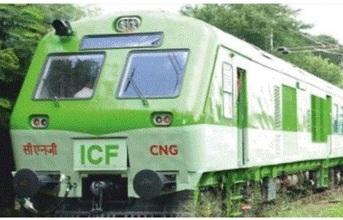
  • CNG/LNG-based Dual Fuel Diesel Engines for DEMU Trains – Indian Railways is the only railway in the world that uses CNG-powered locomotives for passenger transportation. IROAF is pioneering the use of CNG-based dual fuel fumigation technology on 1400 hp CNG DEMUs DPCs to achieve up to 20% diesel substitution. At the Shakurbasti and Vijayawada Diesel Sheds, a number of DEMU diesel power cars have been converted into CNG-based dual-fuel engines.

IROAF is now progressing to the next phase of forty per cent HSD substitution with CNG/ LNG. Contracts have been issued for the conversion of ten dual-fuel DPCs with a forty per cent substitution of CNG and ten dual-fuel DPCs with a forty per cent substitution of LNG.
railways-iroaf-e

Various Solar Energy based solutions for Rolling Stock of IR

Indian Railways has taken a number of initiatives to provide solar energy-based solutions for rolling stock and passenger services, including the following: 

(a) Provisions of Solar Panels on trains

(b) Solar energy-based solution for guards of freight trains

(c) Solar panels on rail workshops and stations

 The other initiatives include – 

(i) Use of Natural Gas at Workshops / Production Units / Railway Premises

(ii) Use Fuel Cell Technology

Indian Railways is also working on energy conservation projects, which include as follows:

  1. Water Recycling Plants are provided in major consumption centre locations (stations/sheds, etc.) where there is a high demand for water and the provision of the same is economically viable.
  2. Water Bodies – The Ministry of Railways has decided to access and review the water bodies existing on railway land, including those that are currently non-functional, and take actions to make sure that all existing water bodies are safeguarded and nurtured and that all non-functional water bodies are restored as soon as possible.
  3. Water Audit – To minimise the waste of water, Zonal Railways have been instructed to conduct water audits at significant water consumption sites by a third party for both quality and quantity and to begin work on water recycling plants based on the water audit report. 
  4. Rain Water Harvesting – To improve water conservation, Indian Railways has installed Rain Water Harvesting (RWH) systems at various locations in accordance with existing policy. Railways received instructions in 2001 to employ rooftop rainwater collection to recharge groundwater, particularly in areas experiencing seasonal water shortages, and to seek support from Regional offices of the Ministry of Water Resources.

In 2013, it was decided that the RWH scheme would be an essential subset of all project estimates for built assets such as service buildings, hospitals, station buildings (including remodelling), railway quarters, workshops/sheds, yard modelling, as well as doubling, new line and gauge conversion, and sidings. Roof Top Rain Water Harvesting installation is being monitored across all railway zones. 

  1. Deployment of Quick Watering Systems – Quick Watering Systems have been introduced across Indian Railways for watering coaches at stations. The Quick Watering System conserves water by reducing waste. 
  2. Afforestation – Railway departmental afforestation on vacant railway land in between sections is carried out in order to protect Railway land from illegal and unauthorised occupation.

Green Built up Spaces

IR has taken the lead in pursuing Green Rating Certification for a number of Railway establishments, including industrial operations. Such certification primarily assesses factors that have a direct influence on the environment, such as energy-saving measures, the use of renewable energy, the impact on GHG emissions, water conservation, solid and liquid waste management, green cover, and so on.

(a) Green Buildings- Green Buildings can be stated to be attempts to lessen the negative environmental impact of buildings and structures during construction and use. The aim and objective of green buildings are to reduce demand for non-renewable resources, improve and enhance resource utilisation efficiency, and maximise the reuse, recycling, and utilisation of renewable resources.

(b) Green Railway Stations – The Confederation of Indian Industry (IGBC-CII) has set up Green Railway Stations Rating system to analyse, access, and facilitate the redevelopment, transformation and conversion of existing railway stations into environmentally friendly ones.

Few Other Key Initiatives

In order to fulfil its goal to become a green transportation system, Indian Railways has undertaken the following efforts as additional measures to establish itself as an eco-friendly and non-hazardous transportation system:

  1. Environment-Friendly Bio-Toilets for Passenger Coaches
  2. The use of Bio Vacuum Toilets
  3. Focus and emphasis on Solid Waste Management
  4. Environment Management Shield
  5. Drinkable water at an affordable price
  6. EMS (Environment Management System) and IMS (Integrated Management System) Certification
  7. Efforts to reduce noise in power cars
  8. Implementation of e-office operations
  9. TPaaS (Telepresence-as-a-Service) provisions
  10. Centralised Traffic Control with Electrical/Electronic Interlocking

Green Initiatives in Metro Railways

Indian Railways and Metro Rail Corporations are working tirelessly to transform the country’s railways, metros, RRTS and MRTS transportation systems into ‘green’ transportation systems that reduce carbon footprints through efficient power consumption, rainwater harvesting and other processes. It is mandated to provide passengers with an entirely different experience each time they ride and use the transportation system. The operation of the transport system is intended to contribute to and develop an environmentally friendly environment. Some of the benefits of the country’s ‘green’ Metro project are highlighted below:

  • Use of rainwater harvesting in the premises to charge groundwater.
  • Efforts to reduce volatile organic compounds from the environment using various techniques such as regenerative braking systems, the planting of trees in and around stations and depots, residential complexes, solar roofs, and so on, thereby significantly reducing carbon footprints.
  • The use of innovative rolling stock helps to reduce CO2 emissions, making metros a more viable public transport choice and option.
  • Use of environmentally friendly chemicals and materials for housekeeping and artwork at metro stations to save energy consumption. The use of LED lights and energy-efficient electric equipment to cut energy consumption is one of the various techniques being used and undertaken by the railways and metro systems in the country towards their green initiatives and projects.
    A picture containing transport, train, public transport, train stationDescription automatically generated

Conclusion

Energy consumption in India has risen by nearly seven hundred per cent in the last 40 years, and it is expected to increase by threefold further by 2030. This necessitates action by the urban transport sector, which consumes the most energy, to work towards energy savings and environmental sustainability. Metro corporations in India already have a few methods in place, such as minimising their carbon footprint by installing solar power systems across their networks, creating roofs of highly reflecting material, and insulating the walls and roofs of stations. Almost all metro systems being built in the country intend to generate one-sixth of their power from solar energy within the next five years, supporting renewable energy.

Global energy demand is constantly increasing, with consumption expected to double and even triple in the coming years. With major countries such as China, India, and the United States at the vanguard of this use, it has become important to act. Fortunately, India has taken the first step towards reducing its ecological footprint and burden on the environment by attempting to make the metro systems green and sustainable. Conforming to the initiatives, the Delhi Metro, the nation’s capital metro system, has been made completely green.

The Delhi Metro has also been designated as the ‘World’s First Green Metro’ as a result of the Delhi Metro Rail Service’s (DMRC) ongoing efforts to construct an eco-friendly and energy-efficient metro system. It has achieved this coveted status by adhering to the Indian Green Building Council’s (IGBC) green building standards. In addition, the Delhi Metro was the first in the world to acquire carbon credits from the United Nations in 2008 for its efforts and contribution to reducing greenhouse gas emissions. The DMRC also became the first metro to be included in the United Nations’ Clean Development Mechanism in 2015. Further, the DMRC has received various green certifications for its Phase III and Phase IV stations, substations, and depots. Similar efforts and initiatives are being taken by other metro systems being developed in the country. The metro systems being constructed in other cities are also being developed in an environmentally friendly manner, advocating and prioritising environmentally friendly initiatives. The Indian Railways is already working towards its goal of becoming more sustainable and environment-friendly by 2030.

As a result, it goes without saying that the overarching goal of adopting green initiatives in a metro is to satisfy the dual goals of sustainable development and low emissions while mitigating climate change concerns. With characteristics such as conservation practices, power efficiency, renewable energy utilisation, rainwater harvesting, material sustainability and elevated commuting facilities, these green metro projects provide consumers with a one-of-a-kind experience. Green metro is also a ‘smart’ answer for our future smart cities.

The major goal of green projects is to pave the way for long-term sustainability. The green impact stipulated through these commute-based projects is to reduce the effects of natural disasters and human-made mistakes in nature. These also provide access to green spaces while also addressing the environmental effects of urban areas. Breakthrough inventions have the potential to change the way we commute by providing more efficient, environmentally friendly, and convenient forms of transportation. Green metro initiatives strive to nest their presence inside nature without interfering with it; they have multiple good effects.

Latest Update

Vande Bharat has transformed the train travel experience for the common middle-class commuter. Vande Bharat trains, a fine instance of ‘Make in India,’ have come a long way from their debut in 2019. Vande Bharat has proven to be an initial uplift towards a faster and enhanced travel experience, with a minimum speed of 160 kmph and facilities superior to Shatabdi trains. The years ahead are expected to be important for Indian Railways, with Vande Metro trains leading the way. Following the success of the high-speed Vande Bharat Express trains, the launch of Vande Metro trains in 2023 is expected to augment commuters’ journey and travel time with the best of services. 

India’s First Hydrogen-Powered Vande Metro Trains

The Indian Railways has begun manufacturing hydrogen-fuel cell-powered eco-friendly Vande Metro trains to replace the ageing trains developed in the 1950s and 1960s. Railway Minister Ashwini Vaishnaw recently stated that these trains will be a significant step forward because the focus will not be on the end user. Vande Metro trains fuelled by hydrogen will serve the middle and lower classes. It is safe to state that these trains will have a profound impact on every Indian’s daily life.

This is one of the most significant ecological and green initiatives undertaken by the Indian Railways, as hydrogen trains require less fuel and produce low noise, resulting in nearly no pollution. According to reports, these trains will only generate steam and evaporated water. This will be India’s first and the world’s second hydrogen train, with Germany having debuted the world’s first hydrogen-powered trains. Although the specific launch date is yet to be announced, the Railway Minister has stated that the design should be available between May and June 2023.

image

Vande Bharat 3.0: Sleeper-Class Vande Bharat Express

The Indian Railways is developing the Vande Bharat-3 design, which will include sleeper class and make longer-distance travel easier. According to official information released by the Ministry of Railways, a tender for the production of 200 new rakes of these new-generation Vande Bharat trains has been issued. All 200 Vande Bharat rakes will be developed solely for the sleeper class. According to reports, these trains will most likely have an aluminium body and will be 2-3 tonnes lighter than previous Vande Bharat variants. The sleeper class coaches would include Wi-Fi and LED panels that will display passenger information. The trains will also include automatic fire sensors and GPS systems to make travel easier, safer, and more enjoyable.

Amrit Bharat Station Scheme: Revamping the railway stations

The Indian Railways has inaugurated the Amrit Bharat Station scheme, with the long-term goal of upgrading the infrastructure of more than 1,000 stations on a continuous basis. According to the official announcement, the project would ensure that all station categories have high-level platforms (760-840 millimetres). In fact, the Master Plans created under this concept will fundamentally transform the appearance of stations. This would entail widening roads, demolishing unsightly constructions, correctly designed signage, dedicated pedestrian walkways, well-planned parking areas and improved lighting. Considering the limited space at railway stations, efforts will be made to combine different grades/types of waiting areas and provide good cafeteria/retail facilities as much as feasible. In waiting rooms, suitable low-level partitions can be constructed.

Advertisement1
InnoMetro_2026