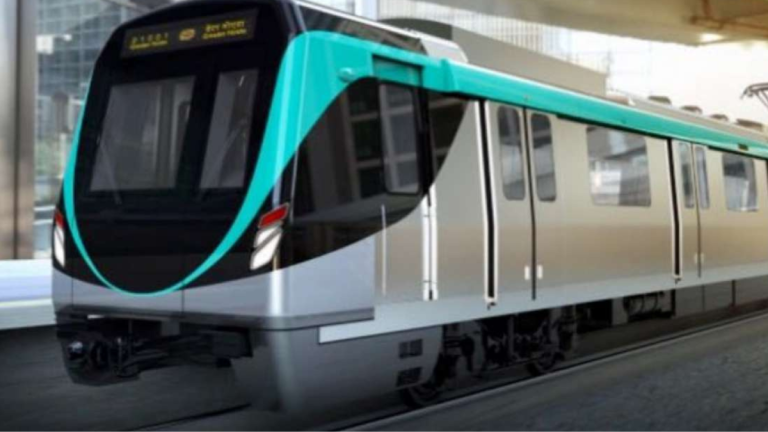
New Delhi: Prime Minister Narendra Modi has flagged-off the Delhi-Faridabad Metro Line that would allow hassle free travel for around two lakh daily commuters between the national capital and the industrial hub in Haryana.
The extension of the Delhi Metro connects Badarpur to Escorts Mujesar in Faridabad.
The total cost of the project from Badarpur to Escorts Mujesar is nearly Rs. 2,500 crore. Out of this, Rs. 1,557 crore was borne by the Haryana Government, the Centre contributed Rs. 537 crore, while the Delhi Metro provided Rs. 400 crore.
All these are elevated and located on either side of the Delhi-Mathura Road (NH-2).
“The nine-station metro corridor which was 95 per cent indigenously built will provide people a safe, affordable, quick, comfortable, reliable, environment-friendly and sustainable transport facility,” a Haryana government spokesperson said.
Haryana Chief Minister ML Khattar, addressing a press conference on Saturday, had thanked the Prime Minister for “gifting” the Metro service which would take the city to “another level of progress” with better connectivity with other NCR towns.
He had also said that the Prime Minister would be announcing the go-ahead for connecting Gurgaon with Faridabad by Metro.
Delhi (Metro Rail News): The eagerly anticipated RAPIDX Regional Rail system is set to transform regional commuting in the Delhi-Ghaziabad-Meerut corridor. With its first 82 km corridor currently under construction, this groundbreaking transit system promises unparalleled facilities for passengers. The Priority Section, spanning 17 km between Sahibabad and Duhai Depot, will open its doors to commuters on October 21, 2023, marking a significant milestone in the regional transport landscape.
Riding in Comfort and Style
RAPIDX trains are designed for safety and comfort. Operating at an impressive speed of 160 kmph, these fully air-conditioned trains boast a range of passenger-centric features. Commuters can look forward to ergonomically designed 2×2 transverse seating, generous standing space, luggage racks, CCTV cameras, laptop/mobile charging facilities, dynamic route maps, ambient lighting control, and a Heating, Ventilation, and Air Conditioning System (HVAC).
Trains will run from 06:00 am to 11:00 pm, with departures at both ends, ensuring that commuters can conveniently travel during most hours of the day. The initial train frequency is set at 15 minutes, with the flexibility to increase it as demand dictates.
Each RAPIDX train, consisting of 6 coaches, can accommodate approximately 1700 commuters, with standard and premium coaches available. One coach is reserved for women, and seats are designated for women, specially-abled individuals, and senior citizens in each coach. Premium coaches offer additional amenities, such as reclining seats, coat hooks, magazine holders, and footrests.
A Premium Experience
For those seeking an elevated experience, a Premium Coach is available, accessible through a Premium Lounge on the platform. The lounge is equipped with comfortable seating and vending machines for snacks and drinks. A dedicated Train Attendant in the Premium Coach ensures passengers are well-informed and safe throughout their journey.
Efficient Ticketing Options
A range of ticketing options is offered to passengers, including paper QR code-based journey tickets, UPI-enabled Ticket Vending Machines (TVMs), National Common Mobility Cards (NCMC), and digital QR code-based tickets through the ‘RAPIDX Connect’ mobile application. Customer Care Centers are readily available to assist with ticketing issues.
Accessibility and Assistance
Commuters with special needs are well catered to, with designated spaces for wheelchairs and stretchers in the last coach. Stations are equipped with electronic public displays, seating areas, drinking water and washroom facilities, and diaper-changing stations. Information desks at stations, the ‘RAPIDX Connect’ mobile app, and the RAPIDX Customer Service Centre ensure passengers are well-informed and supported throughout their journey.
Safety and Security
Safety is paramount on RAPIDX. Platform Screen Doors (PSD) at stations enhance safety by preventing access to the tracks and reducing accidents. AI-enabled Door Frame Metal Detectors (DFMD) screen commuters for security, while luggage scanners with AI dual-view technology help ensure baggage safety.
A dedicated Security Control Centre (SCC) and CCTV surveillance provide constant monitoring of the system, with security responsibilities split between the Uttar Pradesh Special Security Force (UPSSF) and the Central Industrial Security Force (CISF) in Uttar Pradesh and Delhi, respectively.
Aesthetic and Traffic Management
The stations are adorned with beautiful hand-painted wall murals, creating an inviting and vibrant atmosphere. To decongest station areas and prevent traffic jams, station entry/exit points are located on the sides of roads, with dedicated passages to ensure smooth traffic flow. Multiple entry/exits and Foot Over Bridges improve station accessibility and road safety.
Feeder Services for the Last Mile
Recognizing the importance of the final stretch in a commuter’s journey, RAPIDX has partnered with mobility operators to provide Para Transit-based Feeder services. Electric Auto Rickshaws will operate from RAPIDX stations, bridging the last-mile gap and offering passengers convenient and flexible transportation options.
The launch of the RAPIDX transit system in the Delhi-Ghaziabad-Meerut corridor marks a significant milestone in the region’s transportation landscape, promising unparalleled comfort, safety, and accessibility for commuters. This innovative transit solution not only seeks to revolutionize the way people travel but also sets a new standard for regional rail services across India.
PUNE (Metro Rail News): ThePune Metro Project is faced with a cost overrun issue that came up during the District Development Coordination & Monitoring Committees (DISHAs) under the guidance of the Minister of State, External Affairs V Muralidharan.
It can be attributed to Pandemic-induced Delays as well as ascending expenses in land acquisition that have increased the cost of the project.
“This additional expenditure of around two thousand crores of rupees has sparked concerns, with the approval process for the escalated cost currently underway. The cost has increased due to taxes and land cost. Land cost increases as the economy rejuvenates after the Covid-19 pandemic”, Muralidharan said.
Pune metro is a rapid transit system for the city of Pune that has three lines running in the city with a combined length of 54.14 Km, of which two lines are operational as of now. The three lines are:
Purple Line: PCMC Bhavan to Swargate
Aqua Line: Vanaz to Ramwadi
Line 3: Hinjawadi to Civil Court via Balewadi
Intrigued by the future of Metro and its impact on our city? Join us at our upcoming InnoMetro event to delve deeper into this vital issue. Stay informed, get involved, and let’s ride the Metro towards a brighter, more sustainable future together.
NEW DELHI (Metro Rail News): The Steel Authority of India plans to begin the trial production of Head Hardened rails by the October end. These rails are generally used in metro rails & dedicated freight corridors.
It was looking to begin the same in August itself, but an order of normal rails like 880 from the Indian Railways had kept them busy. HH rails are built in order to fathom 50% higher pressure as compared to normal rails.
SAIL has already got all the arrangements done at its newly built Universal Rail Mill at Bhilai Steel Plant at Chattisgarh, for which the cold trials have already been completed. With this, the PSU will become 2nd company in India to do so after Jindal Steel Power Limited (JSPL).
In the midst of pedalling production for the HH rails, it becomes imperative for SAIL to make sure of an uninterrupted supply of coking coal for which SAIL aims to double the production of its Mozambique JV, taking it from 2MTPA to 4 MTPA.
Mozambique-based ICVL is a Special Purpose Vehicle of SAIL, RINL, NMDC, CIL & NTPC for acquiring coal mines and assets overseas. SAIL is India’s largest steel manufacturing company with a capacity of over 21 MTPA.
Discover the endless possibilities of our city’s Metro at InnoMetro, our flagship Expo and Conference. Be an active participant in shaping its future towards a more sustainable tomorrow. Stay informed and join us to take a step towards a brighter future.
MUMBAI (Metro Rail News): J Kumar Infrastrucfute has bagged a Rs 99.29 Crore contract from the Mumbai Metropolitan Region Development Authority (MMRDA) as the sole bidder.
The contract involves the design, supply, fabrication and erection of the pre-engineering building, structural steel works, and execution of internal and external architectural finishings and plumbing works, including Interior fit-outs.
The above-mentioned work is to be done for five stations, namely, Diamond Garden, Shivaji Chowk, BSNL Metro, Mankhurd & Mandale, all of which fall on the Metro Line 2B. The exact figure of the contract is Rs 99,29,71,000/- including all taxes except GST.
Metro Line 2B runs from DN Nagar to Mandale, covering a distance of 23.64 Km(s) with 20 stations. It aims to provide seamless & convenient connectivity between Eastern and western suburban Mumbai. It aims to reduce the travel time by anything between 50%-75%.
Discover the endless possibilities of our city’s Metro at InnoMetro, our flagship Expo and Conference. Be an active participant in shaping its future towards a more sustainable tomorrow. Stay informed and join us to take a step towards a brighter future.
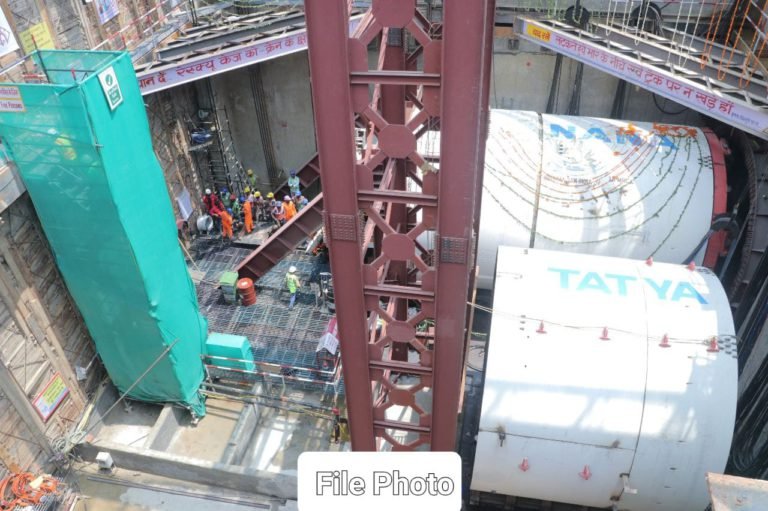
KANPUR (Metro Rail News): Afcons commissioned its first Tunnel Boring Machine – TBM Azad (S-640B), for constructing Kanpur Metro’s underground package KNPCC-06.
This is Kanpur metro’s Third TBM to be deployed so far for constructing 23.785 Km line 1 between IIT Kanpur & Naubasta. Afcons had started lowering the tunnel into the Kanpur Central shaft in August 2023.
Package KPNCC-06 connects Nayaganj Station & Transport Nagar ramp with three stations in between namely Kanpur Central, Jhakarkatti, and Transport Nagar, at an estimated cost of Rs 1087.67 Crores. The contract was awarded to Afcons-SAM JV in March 2022 with a deadline of 36 months.
This is the very same machine that had constructed the Kolkata Metro’s 16.34 Km line-2 passing under the Hoogly River.
Discover the endless possibilities of our city’s Metro at InnoMetro, our flagship Expo and Conference. Be an active participant in shaping its future towards a more sustainable tomorrow. Stay informed and join us to take a step towards a brighter future.
PM Modi is likely to inaugurate the Delhi-Meerut Rapidx on 20th October
NEW DELHI (Metro Rail News): The 17 km long priority corridor of the 82.15 Km Delhi-Meerut RAPIDX (RRTS) will be inaugurated by Prime Minister Shri Narendra Modi on 20th October, 2023. The line will also be opened for commercial operations on the very same day.
The 17km long corridor will connect Duhai-Sahibabad with four stations, namely, Duhai, Guldhar, Ghaziabad and Sahibabad. Commuters will be facilitated to board Delhi Metro’s Red Line from Ghaziabzd’s RRTS station.
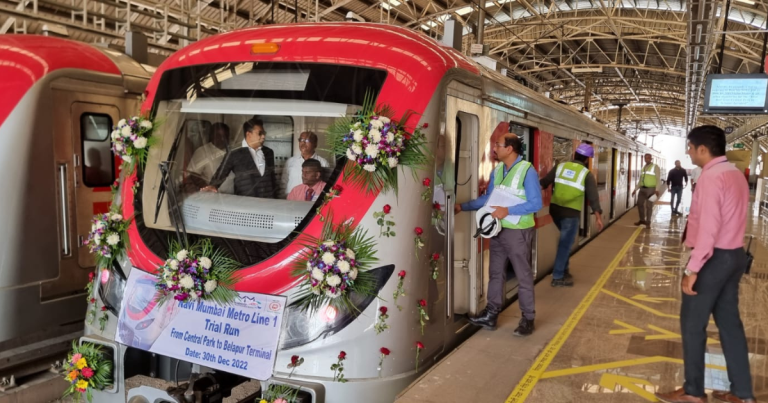
The trail runs on the elevated patch started back in December 2022 with an average speed of 100 kmph. The civil systems were inspected & approved by the CMRS in June 2023. The line will be serviced by 30 6-coach trains supplied by Alstom Trains, designed in Hyderabad & built in Gujarat.
Are you intrigued by the future of Metro and its impact on our city? Join us at our upcoming InnoMetro event to delve deeper into this vital issue. Stay informed, get involved, and let’s ride the Metro towards a brighter, more sustainable future together.
DELHI( Metro Rail News): NCRTC has suggested some significant amendments in the route of the Rapidx trains on the Delhi-Gurugram route. The Rapidx trains will now run along the NH8 motorway near Gurgaon.
Earlier, the route followed the Old Delhi- Gurgaon road connecting the NH8 only at Signature Towers. The Rapidx train will enter Gurgaon from Aerocity & the first station will be Cyber Hub.
Earlier, NHAI was hesitant to allow for this owing to their plans regarding expansion and development along the expressway. However, NHAI has now permitted the RAPIDX trains to run along the NH8.
This will significantly impact the lives of the daily office-goers and travellers in and around NCR. It will reduce travel time by many folds, decreasing people’s stress and disappointment with the coverage of longer distances.
NCRTC, the governing body of RRTS, is now preparing a new DPR, considering the suggestive route changes. This is likely to delay the project’s timeline.
Are you intrigued by the future of Metro and its impact on our city? Join us at our upcoming InnoMetro event to delve deeper into this vital issue. Stay informed, get involved, and let’s ride the Metro towards a brighter, more sustainable future together.
Autonomous trains have some level of automation, such as automatic train protection (ATP) and automatic train operation (ATO). Different levels of automation are available in autonomous trains. The fundamental level of train automation includes ATP, ATO, and automatic trains that stop and cruise at speed on their own. Driverless and unattended train operations are examples of greater levels of train automation. Fully autonomous trains, like self-driving cars and automobiles, are experimental.
There are, however, a few trains that are fully autonomous and operational. Autonomous trains are an efficient and cost-effective means of transportation because they emit zero pollution, can move huge cargo, and cover long distances in less time. Autonomous trains go faster over large distances as they have train-to-train and train-to-server communication, allowing them to measure the exact distance between themselves. As a result, the safe distance between two trains travelling on the same track can be efficiently shortened, reducing travel time. This aspect significantly drives the Autonomous Trains Technology Market, along with improved passenger and train safety, by removing accident-causing variables along the train track.
Several train accidents occur each year around the world due to train derailment, which can be avoided by
implementing autonomous technologies such as CBTC (Communication Based Train Control), ERTMS (European Railway Traffic Management System), ATC (Automatic Train Control), and PTC (Positive Train Control). These technologies are dependable and precise in avoiding train accidents. Rising passenger safety concerns are driving the Autonomous Trains Technology Market.
However, the considerable expense necessary to establish infrastructure and develop and manufacture components is majorly constraining the Autonomous Trains Technology Market. The development of advanced electronic components, continuous research and development to introduce advanced technologies, less expensive and more accurate LiDAR technologies and fusion sensors, and increased investment in autonomous technologies will all likely provide lucrative opportunities for the Autonomous Trains Technology Market.
Grade of Automation
Levels 1 and 2 of the Grade of Automation (GoA) have the highest penetration of all levels. The low cost of upgrading trains to this level of automation is boosting demand for the GoA1 and GoA2 levels. Increased concern about passenger safety, a stronger government emphasis on safety and well–managed railway transportation, and reduced time with automation are driving up demand for GoA1 and GoA2
levels. As a result, the segments are likely to account for a sizable portion of the market throughout the forecast period. The introduction of autonomous technology in metro trains is growing and expanding. Metros are a high-speed means of transportation with a wide range of applications in urban passenger transit. Significant growth in urbanisation, an increase in passenger numbers, and a need for connectivity drive demand for metros and other high-speed trains, such as bullet trains. Governments encourage automation in metros and high-speed trains to ensure safe and proper operation. Suburban trains are the most popular means of transportation for connecting urban centres with surrounding rural and suburban areas. The number of passengers utilising suburban trains continually increases, driving up demand for automation in suburban trains.
Different components are required for a fully or partially autonomous train to undertake automated operations. Sensors are essential among the components required to automate the train. In terms of revenue, the Autonomous Trains Technology Market has been dominated by LiDAR modules and optical sensors, owing to the high cost of LiDAR modules and the high number of optical and camera sensors required. However, the cost of a LiDAR module is predicted to fall significantly over the forecast period. Yet, its market size in revenue is expected to grow at a CAGR of more than five per cent throughout the forecast period. A precise railway traffic management system is required to control autonomous and conventional trains’ smooth, accurate, and safe operation. Although several railway traffic management systems have been developed and established, few have proven highly effective and successful. The adoption of these technologies varies by area. Positive railway Control (PTC) technology has been established as standard in North America, with a mandate that all railway tracks must be equipped with a PTC system by December 31, 2018. The European Union has embraced and adopted the European Railway Traffic Management System (ERTMS) throughout Europe. ERTMS is also in high demand outside Europe. China and numerous nations in the Gulf Cooperation Council (GCC) and the Pacific have implemented ERTMS on their train routes.
Train automation is becoming increasingly popular in China and Japan. Due to the enormous number of high-speed and automated trains in China, Japan, and Pacific countries, Asia Pacific accounts for a significant portion of the global Autonomous Trains Technology Market. The Chinese government is focusing on creating new high-speed train tracks, with the majority scheduled to be
automated. India has also launched its first driverless train in the capital city, Delhi, and additional autonomous trains are anticipated to be ordered on various other routes. The nation is developing fast, with the first high-speed bullet train project expected to be operational by 2025 between two prominent cities, Mumbai and Ahmedabad, separated by more than five hundred kilometres. The nation is also becoming self-reliant in S-HSR train operations. The indigenously developed semi-high-speed Vande Bharat trains are already operational. The first S-HSR Regional Rapid Rail System (RRTS) between Meerut and Delhi is also expected to be operational along its entire route length by next year. The train is planned to run on its priority corridor soon. These developments are helping the Asia Pacific region flourish and will likely maintain its worldwide market leadership during the projected period.
Enhanced government support and backing for train automation, an increase in automation level adoption
and acceptance, and the development of advanced technologies provide numerous prospects for companies working in the Autonomous Trains Technology Market. Thales Group, Alstom S.A., Bombardier Transportation Hitachi Ltd., CRRC Corporation Limited, Ansaldo STS, SIEMENS AG, and Mitsubishi Electric are key global Autonomous Trains Technology Market companies. Alstom
S.A., in France, has also developed an automated freight train in the Netherlands.
The rapid rise of smart cities and increased spending on transport infrastructure by many countries are expected to improve the Autonomous Trains Technology Market’s growth prospects.
The market for autonomous train technology is expected to expand and grow significantly as transportation technology advances worldwide. Rising urbanisation levels and the emergence and development of smart cities in many areas are expected to benefit and help the growth of the autonomous trains technology market.
Autonomous trains, often known as driverless trains, operate automatically and without human interference. A dedicated control station oversees these trains. The growing demand for stronger transportation mechanisms with the world’s rising population shall provide enormous growth possibilities and prospects for the autonomous trains technology sector.
The advantages of autonomous train technologies over regular trains in speed and functionality are expected to act as growth drivers for the autonomous train technology market. The growing number of incidents and casualties caused by human error will function as a demand generator for the autonomous train technology market.
The initiative and effort of various governments to reduce reliance on fossil fuels is expected to help raise the growth rate of the autonomous trains technology market. Additionally, these trains have higher safety standards than traditional trains, further propelling the autonomous trains technology market. Considering the number of initiatives related to public transportation projects and substantial investment in transport infrastructure, developed countries are expected to contribute significantly to expanding the autonomous trains technology market and industry.
The COVID-19 pandemic harmed the railroad sector. Due to the pandemic, most rail and metro services globally were put on hold. The lockdown and interim ban on the railroad sector created a problem for the market for autonomous trains. The lockdown restrictions imposed by many countries owing to the rapid transmission capabilities of the COVID-19 virus affected the growth of the autonomous trains technology market. The epidemic also led to a significant increase in personal transportation. However, with gradual control over the disease, the train market started to expand and reinstate its original state amidst growing worries about pollution and the demand for public transit and carpooling.
The Autonomous Trains Technology Market has been segmented as follows:
S. No
Topic/issue
Sub-type/Example
Grade
• GoA1 + GoA2• GoA3• GoA4
Train Type
• Long Distance Train• Suburban• Tram• Monorail• Subway/Metro
• North America– U.S – Canada• Europe– Germany – U.K- France – Italy- Spain – Russia- Rest of Europe• Asia Pacific– China – India- Japan – ASEAN- Rest of Europe• Middle East & Africa– GCC- South Africa- Rest of Middle East & Africa• Latin America– Brazil- Mexico- Rest of Latin America
Automatic Train Control Market Analysis
Over the projected duration of 2023 to 2030, the Automatic Train Control Market is expected to grow and develop at a CAGR of 12.3 per cent. Developing government support through funding and financial assistance for constructing and developing technologically advanced trains drives and pushes the automatic train control market globally. Additionally, growing and enhanced demands for pollution mitigation and safety, hyper-urbanisation, high demographic growth, technological advancements for improving passenger convenience, and the rising trend of smart cities are among the prominent factors driving the global automatic train control market over the forecast period.
The support and maintenance segment is expected to grow during the forecast period. The support and maintenance services assist the installed ATC system within the firm’s infrastructure. Troubleshooting assistance, problem-solving, repairing, replacing old components, upgrading the existing ATC solution, and testing scenario management, including facility inspection and training, are all part of the support and maintenance services.
The growing standardisation of rail signalling solutions is one of the most significant trends affecting the market today. Standardisation enables suppliers to improve core, standards-based global architectures, allowing the interoperability required to meet local safety obligations and giving a common, reliable platform for creating local solutions.
Concerning its high-speed rail network, China is expected to generate a lucrative potential for the ATC market. China owns more than half of the world’s total HSR route length.
Countries such as India, where Metro rail is expected to account for more than 70 per cent of the railway
market, have permitted a hundred per cent foreign direct investment in new rail sectors such as suburban corridors, high-speed train systems and freight line projects implemented through a public-private partnership.
SIL4 Systems, based in the United States, develops onboard embedded control systems that enable automated train protection (ATP) and automatic train control (ATC). The organisation offers a dual-purpose platform with an event recorder and ATP and ATC support. It also includes twin WiFi, GPS, 3G, and dual Gigabit Ethernet (GbE) connectors for vehicle communications.
Several Chinese groups, companies and suppliers are receiving projects outside China, while a group of smaller competitors is competing for sections of each rail transport project, forming a congestion-ridden and competitive market. Systems that meet the European Rail Traffic Management
System (ERTMS) and Communication-Based Traffic Control (CBTC) standards have significant potential.
Nonetheless, the high initial investment and the requirement for frequent maintenance may limit the
growth of the global automatic train control market in the coming years. However, the rising demand for autonomous trains in densely populated Asian economies such as China and India will keep the automatic train control market humming in the coming years.
Automatic Train Control Industry Segmentation
Automatic train control (ATC) is a broad category that includes railway train protection systems comprising a speed control mechanism that responds to external inputs for train protection. ATC systems typically incorporate different cab signalling mechanisms and use more granular deceleration patterns than the inflexible and static stops encountered with conventional automatic train stop technology. ATC can also be used with automatic train operation (ATO) and is typically regarded as the system’s most important safety component. The Grades of Automation (GoA) system of the International Association of Public Transport (UITP) defines the degree of automation based on the level of responsibility assigned to the train control system.
Mainline Trains to Propel the Market Growth of Automatic Train Supervision
The growing demand for efficient and effective mainline railway operations, including passenger and freight trains, propels the market for automatic train supervision. To deal with problems and emergencies, the automatic train supervision system provides train management features such as automated routing, dispatcher intervention, and train scheduling in passenger train services. Additionally,
the growing digitalisation of passenger services due to internet usage contributes to the market expansion of automatic train supervision. Further, the innovative technologies offered by players in the market to optimise railway operations and service reliability are helping the market for automatic train supervision to grow substantially. In addition, the development of automated trains for enhanced safety and performance is expected to benefit the market for automatic train supervision in the years ahead.
The Asia Pacific to Account for a Substantial Share in the Market for Automatic Train Supervision
The Asia Pacific region’s massive rail network system, combined with demographic growth, is helping the market development of automatic train supervision systems to accelerate. Further, the growing acceptance of technology and government measures promoting metro automation, particularly in Malaysia, China, India and Japan, is driving the market’s steady expansion.
Market Segmentation
Automatic train supervision is a railway control and management system assigned with the
responsibility of centralised monitoring and controlling of train movements to lower and mitigate the effect and impact of train delays on the operating schedule. It also meets the railways’ security requirements. The system comprises track-side equipment and software, equipment rooms, regional control facilities, and onboard trains. By train type, the market for automatic train supervision is
segmented into
• Mainline
– Passenger
– Freight
• Urban
– High Speed
– Metro.
Based on service type, the market is differentiated as:
• Consulting
• System Integration
• Support and Maintenance.
Based on function type, the market is classified as follows:
• Automatic Route Setting
• Link to Passenger Information Display System for Online Information
• Computation of Train Schedules and Timetable
• Automatic Train Regulation
North America, Europe, Asia Pacific, Latin America, and the Middle East and Africa are the regional markets for automatic train supervision.
Expanding Rail Network System to Drive Automatic Train Supervision Market Growth
The automatic train supervision businesses have benefited from growing urbanisation, digitalisation, and substantial growth of rail network services. Government attempts to embrace computer-based solutions for efficient train operations management are catalysing market expansion significantly. With the deployment of i-ATS — the first Made-in-India signalling system — in 2020, the Delhi Metro Rail Corporation established an indigenously developed communication-based train control system in India. The Indian government has also developed an Automatic Train Protection system with SIL-4 technology named ‘Kavach’ to be installed across all its route lengths. ‘Kavach’ has been designed and developed by RDSO in collaboration with three Indian vendors indigenously. The automatic train supervision system plays a key role in guaranteeing safety during natural disasters or other unexpected events by detecting problems early through remote monitoring, driving the market growth.
Further, with automated remote routing and supervision, the system helps in the smooth availability of railway services and high-speed train operation management functions, thereby contributing to market growth. Technological improvements in the rail industry, such as train automation and investments made by prominent industry players, are expected to drive market expansion throughout the forecast period.
Automatic Train Control Industry – Conclusion
The market for automatic train control is highly fragmented, involving many key manufacturers, suppliers, and businesses. To expand their footprints in this market, these organisations have used various techniques such as expansions, agreements, new product releases, joint ventures, acquisitions, partnerships, and others for product development. General Electric Company (GE), Hitachi, Bombardier, Siemens, Thales, Kyosan Electric Manufacturing Ltd (Kyosan), Toshiba Corporation (Toshiba), Alstom SA (Alstom), Tech Mahindra, WSP, Cisco Systems (Cisco), Mermec, Advantech, Mipro, and ADLINK Technology are some of the major units and enterprises currently operating in the global automatic train control market.
The increased demand for efficient train operation management drives the global autonomous train
supervision market. The market is predicted to grow at an 11.4% CAGR from 2023 to 2028, aided by technological advancements in railways. Several factors are driving market growth. High statistical growth, higher urbanisation, mechanical advancements for expanding traveller accommodation, and a rising pattern of brilliant urban communities are required to drive the global market. The mainline segment is expected to significantly support the Automatic Train Control (ATC) showcase
development within the forecast time frame.
The market for automatic train supervision is divided into two categories based on train types: mainline and urban. The market is divided into three segments based on service type: consultation, system integration, and support and maintenance. The market is divided into four function types: automatic route Setting, link to passenger information display system for online information, computation of train Schedules and timetables, and automatic train regulation. The key regional markets for automatic train supervision are North America, Europe, Asia Pacific, Latin America, and the Middle East and Africa. Hitachi, Unittec, Toshiba, Traffic Control Technology, Bombardier, CRSC, and Alstom are
the leading organisations in the market.
The term ‘mainline train’ refers to both passenger and freight trains. Mainline trains, for the most part, include extensive routes that span nearly every intersection in the country. These trains are purposefully designed for longer and extended distances. Mainline trains are gradually being outfitted with cutting-edge technology. Most railway administrators use and deploy ATC for mainline trains because it reduces impact while maintaining train routes. Some noticeable market patterns include semi-autonomous and autonomous trains, introducing less expensive and precise lidar improvements, and increasing assignments focused on overhauling and establishing cargo foundations.
Different organisational contexts are usually highly complicated, with various IT frameworks connected
and associated to carry out day-to-day assignments and responsibilities. Therefore, associations’ most recent ATC arrangements need to be modified for better and improved rail activities. The help and support administrations assist the introduced ATC structure within the project’s foundation. The help and upkeep administrations encompass every minute of everyday investigation help, advancement of the present ATC system, critical thinking, repairing, supplanting obsolete segments, proactive services, specialised help by professionals, and test situations on the board.
During the forecast period, the GoA 2 portion of the automation segment is expected to represent and
constitute a significant share of the Global Automatic Train Control (ATC) market. The GoA 2 segment needs to possess the highest and most substantial market share in the ATC market through computerisation. GoA 2 includes semi-computerized train activities. GoA 2-based frameworks provide total ATP and ATO and a training administrator at the control cab.
ATO frameworks manage and control train development by directing train acceleration and deceleration.
The ATP structure and framework direct the train’s development. Under GoA 2, the train administrator monitors trackside conditions in front of the train and is answerable and responsible for closing traveller entryways and operating the train in the event of a disruption.
However, commencing, starting, or halting the train are handled and executed naturally. During the forecast period, the North American region is expected to account for the lion’s share of the Global Automatic Train Control (ATC) Market. North America includes developed economies like the United States (US) and Canada, which contribute considerably to the local market. The early appropriation of advancements and the globalisation of joint administrations in the regions may be considered critical explanations towards considerable businesses of the overall industry.
The solid fiscal condition of the region enables its member nations to invest much in driving ATC arrangements and advancements. The growing number of projects focused on modernising and establishing freight structures and rapid railway lines are key growth drivers for this region. The in-depth analysis of the ATC markets provides the growth potential, upcoming trends and statistics of Automatic Train Control (ATC) market size, forecast and potential. With ATC & ATCS being an integral and mandatory component of rail operations, such studies with industry insights help decision-makers make sound strategic decisions towards efficient and safe passenger and freight travel through rail. Additionally, such studies and research also help to analyse the market drivers and predict the challenges and competitive analysis of the market.
Exclusive interview with Mr Deepankar Ghosh, MD Knorr Bremse
Metro Rail News team Conducted an email interview with Mr Dipankar Ghosh that entails a very significant issue of improvements in Rolling stock. The interview also aims to explore the current trends like Make in India & AI for the Indian Rail Sector, along with underlining the future plans of Knorr Bremse for the production and mobility sector in India.
Mr Dipankar Ghosh, MD of Knorr Bremse India and Chairman of the Railway Equipment Division of CII, possesses 30+ years of diverse experience encompassing manufacturing, engineering management, and business development. As an ex-IRSEE officer and former CEO of Escorts Railways Division, he led major global initiatives, facilitating technology transfers and adopting frugal innovation strategies. Holding a postgraduate engineering degree from BITS Pilani and a management qualification from the Indian School of Business, he is also an Advanced Global Leadership alumnus of the London School of Economics. Mr. Ghosh is passionate about new technologies and a dedicated proponent of value engineering.
Here are the edited excerpts
Q.1. Where do you think IR still needs to make enhanced and continued improvements in its rolling stock fleet for superior train operations both for its passenger and freight transportation?
Answer: My personal opinion is that given the operational challenges for the size and the spread of the Indian Railway network and the stringent safety requirements, Railways, even globally, are very conservative in technology adoption and for a passenger operation of primarily within 160KMPH, IR does have a decent technology infusion in the Rolling stock space starting with LHB coaches Technology Transfer way back in 2000s, while the new Vande Bharat Platform Trainsets with different configurations (both Stainless Steel and Aluminum Car body) and with the Private Sector both Indian car builders like TWL, and the global players like AT and TMI do fill up the gaps in Rolling Stock Technology canvas for the passenger segment.
The upcoming MAHSR High-speed project will give a massive fillip to the High-Speed Segment, which is absent now, and hopefully usher in more high-speed corridors in the country in the coming years.
In the Loco segment, the 3 phase Electric Locomotives built at CLW, BLW and other Railway factories and now the 12000 HP Double loco from the Alstom Madhepura project, the GE Wabtec Marhowa Project and the recent upcoming 9000 HP Siemens Loco to be manufactured in Dahod, Gujarat almost completes the gap in Locomotive segment.
For the freight segment, the Indian Private Wagon Builders, together with RDSO, have the required depth in the Freight Wagon design, which is sufficient with the present operating speeds till maybe another decade when the freight operating speeds reach above 160KMPH, even though Wagon designs tailored for specific Industry use and use of innovative material for lighter Tare weight wagons is a need.
The major bottleneck for increasing operating speed in IR is still the mixed mode traffic, much slower Freight Trains slowing down the Faster express Trains in the same route, so network debottlenecking through the upcoming Dedicated Freight Corridor is critical. Railways have more than 60% of routes being more than 100% utilized.
Besides better signalling infrastructure like the ETCS Level 2 or similar homegrown systems for much higher Throughputs, increase the use of KAVACH for safety, the elimination of Road Crossings, use of high-speed turnouts, reduction of curves and gradients with Tunnels and Viaducts and improving the bridges and other permanent way infrastructure to cater to a higher average speed of operations for both passenger and freight segments besides ensuring safety.
Q2. As a veteran in the Railway Industry, how do you see the future of Mobility evolve in India vis-a-vis European Rail Market?
Answer: The world is witnessing a trend of massive urbanization – While the world’s total population is expected to increase from 7 to 8.3 billion people in 2030, the urbanization growth rate is expected to be 2 % per year, representing 60 % of the world population or 5 billion people in 2030. With the Increasing urbanization ~ Growth of “megacities” with more than 50 million people across different countries, particularly India, China will be a reality soon.
This urbanization trend will continue to create massive and rapid pressure on mass transit systems since, as per the OECD and World Bank reports, around 80% of the world’s population will live in cities by 2050.
Along with this Urbanization, we would have a growing urban middle class who would be increasingly sophisticated and web-connected consumers who will demand a better customer experience in Mobility, leading to another dimension for this challenge. Fast, inexpensive, and efficient transportation will be vital to meeting those population growth demands.
The millions of Smartphones with passengers will create opportunities to provide personalized services to individual users and be rich data sources for Mobility Solution algorithms to optimize and customize the mobility solution offerings.
Imagine the disruption when the Sensors installed in cities get a more precise vision of their “context” or Data augmented in Smart cities like Open data Maps and Real-Time Transport data is integrated into these mobility algorithms, which will create the magic of passenger experiences.
The trend in Mobility with this backdrop, which is already seen in Europe, China would become a reality in India in the next few years is as follows:
Changing Passenger expectations –
• From when and where people travel to the Quality of Service & Passenger Experience.
• Transport to be delivered as an on-demand, multi-modal service that allows passengers to travel door-to-door conveniently and seamlessly.
Sharing economy and co-existence of different transport modes –
• From sole ownership to temporary ownership.
• Co-existence of Shared electric cars and minibuses, electric bikes as well as more traditional public transport services, support easy both first and last mile(s) access,
• Seamless multiple shared-mobility options where private, shared, and public transport boundaries are blurred.
This convergence through digitalization would evolve into Mobility as a Service (MaaS), where Mobility would be delivered through a combination of self-driving, shared vehicles, with high-quality public transit like Railways Metros, RRTS and other Mass Transit Systems as the main backbone.
Given that Railways and Metros are fixed transport systems, the rail industry will not replicate the success of Uber so that consumers can summon trains.
Railways & Metros, RRTS, by adopting a user-centric approach that focuses more on its passengers, can unlock Seamless and Frictionless travel, solve the ‘Last mile’ & the First-mile puzzle, and integrate with other modes of Transport.
It is already a reality in many countries of Europe and has been very successful and has improved the usage of Railways and Metros significantly.
The Mobility of the future will be flexible and integrated and offer on-demand services to serve customer demand. It would be enabled by combining public and private transportation services through a unified gateway by Mobility Aggregator. It will help the customer create and manage the end-to-end trip, which users can pay with a single account.
Customers can choose and pay for an entire end-to-end journey using different transport modes, buses, distance Trains, Metros and an Uber or Ola cab as the last mile portion, all through a single platform.
Q.3 What have been your major initiatives under the ‘Make in India’ and ‘Atmanirbhar Bharat Abhiyan’?
Knorr-Bremse India (KBI), a wholly-owned subsidiary of the German MNC – Knorr-Bremse AG, has been in India for almost 40 years.
KBI has been the pioneer for the last 26 years in bringing high-end technology from across the world for Indian Railways and Metros for Braking Systems, Passenger Doors, Sanitary Systems, HVACs and Power Electrics and is a true example of our Honorable Prime Minister’s vision for Make in India.
We also have the privilege of partnering with Indian Railways for the very prestigious projects of Vande Bharat Trains and Alstom Madhepura Double Locomotives. We are very proud that ICF has given us the privilege to be one of the major suppliers for the Vande Bharat trains for Brakes, Doors, Sanitary Systems and now also different TCMS solutions.
We have introduced high-end vacuum toilet systems similar to the Aircraft toilet systems in the Vande Bharat Trains with European quality but at Indian prices through extensive localization.
We have also introduced some of the latest technology, like the Linear Induction motor Door drive system in India for the Medha Mumbai Monorail Project.
With our ongoing expansion plans, KBI would even set the example for “Local for Global” as we are manufacturing in India for many global railway projects from our factory in Palwal, Haryana, besides contributing to the Railway modernization plan through continuous Technology infusion.
In the coming years, as we complete our new factory, we will be manufacturing Doors, HVAC, Sanitary Systems, and other subsystems for many of our Global Railway projects across the world from our KB India plant.
Q.4 How do you see the use of DATA and AI transforming the Railways both in India and Globally?
Globally, Railways are also in the midst of a profound transformation, driven by the confluence of emerging digital technologies like 5G, Big Data, the Internet of Things and now the Internet of Trains, AI, Blockchain and the use of Augmented Reality/Virtual Reality.
With the confluence of 4 Global megatrends, namely the availability of inexpensive sensors, robust yet cheap Cloud computing through Amazon Web Services, Microsoft Azure, the symbiotic convergence of Big Data and AI to analyze enormous datasets into actionable insights and the availability of the wireless connectivity has helped the Railways operators globally to shift from a reactive traditional Time-based monitoring to condition-based monitoring and predictive maintenance of all their critical railways assets.
Railway Operators have troves of raw data which, combined with powerful and sophisticated analytics and AI Machine learning like Deep Learning tools, can yield valuable insights so that their decisions no longer have to be made in the dark or based on gut instinct; they can be based on evidence, experiments, and more accurate forecasts and incorporate data-driven insights into day-to-day business processes.
Smart detectors fitted in axle counters, track circuits, point machines, signals, Axles, Bogies and brakes, Door Systems, HVAC Filters, Wheels, Wheel bearings, and Pantographs can sense any flaws or abnormal behaviour that can be detected.
Piezoelectric axle-mounted sensors can measure the peak load exerted by railway carriages as they pass over the tracks. As a function of time and location, historical data is available in track geometry and fluctuations underneath the carriages. The data is translated into defect measurements. Hence, any developing faults are sensed well in advance. The remaining life of tracks and wheels is predicted almost accurately.
The sensors, embedded into various train subsystems, potentially measure and monitor the behaviour of almost all subsystems and generate vast volumes of data, which can be collected and analyzed 24 hours a day, seven days a week, creating a Digital Nervous System of the Train using Wireless Sensor Nodes or the internet of Trains.
Track condition monitoring using a combination of fibre optic sensing and other wireless sensor nodes, Railway Bridge health monitoring through Wireless sensor nodes and related Analytics.
With the present predictive analytics technology available, it’s possible to proactively manage maintenance and improve operational efficiency by discovering the chance of a failure before it takes place, leading to predictive insight for reducing operational risk, controlling maintenance costs, and discovering patterns related to recurring problems by using machine learning to predict KPIs such as Remaining Useful Life, Time to Failure, and Failure within a specific time, etc.
Q.5 As an experienced railway industry professional and an ex-IRSEE officer,what would be your message to young technocrats willing to join the mobility market, the metro and rail industry? Also, kindly share your views on Metro Rail News and our annual tech event InnoMetro.
Today, India is at the confluence of several megatrends like massive internet penetration across the country in both rural and urban sectors – Internet penetration in India has increased fourfold in the past decade, rising from 12.6 per cent penetration nationwide in 2012 to 48.7 per cent penetration in 2022 to almost 700Mn users, on the other hand, price of data has fallen exponentially & use of smartphones increased exponentially in the country.
The Massive surge in Digital Payments, formalization of the economy, and Networking of the whole Indian economy have opened up multiple opportunities for the government and the private sector to bring innovative business models to the Railway sector.
India has also emerged as the 3rd largest Tech Startup ecosystem in the world and has produced over 180 unicorns with billion-plus valuations in the last few years. With this vibrant tech startup ecosystem, finding innovative solutions to the present-day mobility challenges in India would be easy.
The Demographic Dividend, or the working age population from 20 to 55 years in India, will be the maximum globally for the next 2/3 decades – the same sweet spot enjoyed by Japan in 1964, South Korea in 1967 and China in 1994. We have the most significant English-speaking STEM graduates in the world now.
With this backdrop and since each of these triggers reinforces each other, we have an ecosystem ripe for both the Govt and the private sector and the individual entrepreneur to look for the different gaps in the existing ecosystem in the consumer experience and safety solutions.
Given the resilience and persistence of the average Indian entrepreneur to overcome different challenges in the business ecosystem, I feel we can create many innovative solutions for Indian consumers. My advice to both the young entrepreneurs and the people in the government sectors is that with such an environment and the fact that the present government and the Railways and Metros are very open to looking for newer solutions to the different existing gaps -the sky is the limit in this mobility segment with substantial future growth possibilities.
PM Modi Likely Top Inaugurate RAPIDX Trains This Week
DELHI(Metro Rail News): There’s a buzz about the inauguration of the much-awaited RAPIDX trains on the Ghaziabad-Sahibabad priority corridor of 17 kms. It is substantiated by the visit of the Chief Minister of UP to inspect the Sahibabad station of RAPIDX. He also held a meeting with the officials of NCRTC, which has been entrusted with the task of implementing the RRTS project across the NCR.
After the inauguration of Phase:01, the RAPIDX trains will be covering 5 stations:
Sahibabad
Ghaziabad
Guldhar
Duhai
Duhai Depot
It will cover a distance of 17 kms in just 12 mins that usually takes 35 minutes to cover by road. It will run at a speed of 160km/hr. A total of ten trains will be operational on this route with a capacity of 1700 passengers each. It’s gonna be a first-of-its-kind rapid rail facilitating easy and hassle-free commutation.
According to some reports, the project is expected to be operational by 2025. The project is being developed at a cost of Rs 30,274 Crore with an expected footfall of 8 lakh users every day, once the project is fully operational.
Intrigued by the future of Metro and its impact on our city? Join us at our upcoming InnoMetro event to delve deeper into this vital issue. Stay informed, get involved, and let’s ride the Metro towards a brighter, more sustainable future together.