Home Blog Page 170

Pune Metro Line 3 Depot Steers onto the Right Track

0
Pune Metro Line 3 Depot Steers onto the Right Track

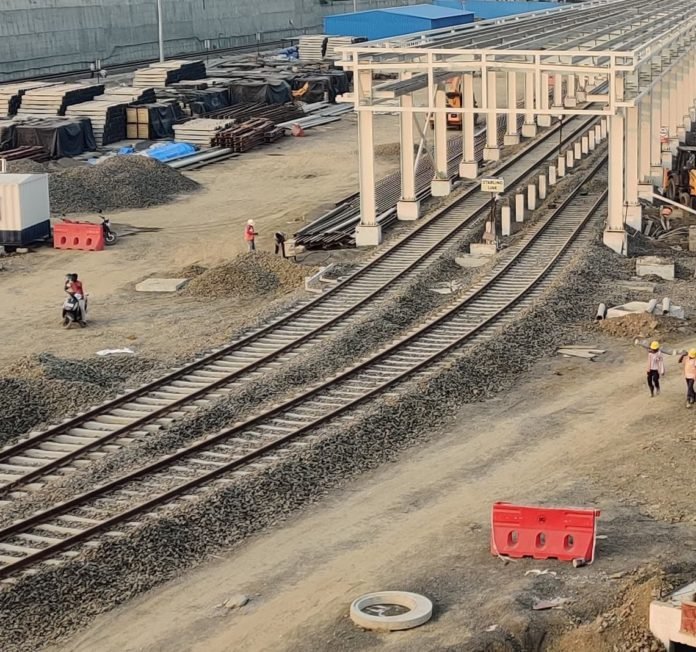
PUNE (Metro Rail News): With the civil construction gearing up quickly, Pune Metro Line 3 is now preparing for its next step of procuring, testing, and installing the rail tracks. Connecting the IT hub of Hinjawadi to the central business district of Shivajinagar, Pune Metro Line 3 – fondly known as Puneri Metro – is now gearing up to lay the rail tracks on its 23.3 kms route. Preliminary trials of the rail tracks began today at the Depot of Pune Metro Line 3 at Maan village, Hinjawadi, Pune. After successful preliminary testing at the depot, the rail tracks will be out for installation on the Puneri Metro route.

The work of Pune Metro Line 3 on the Hinjewadi to Shivajinagar route has been undertaken by Pune Metropolitan Region Development Authority (PMRDA) on Public Private Partnership (PPP) basis, and Tata Group has established Pune IT City Metro Rail Limited (PITCMRL) as a special purpose company (SPC) for its implementation.

“Tata Group’s commitment to quality and safety remains unwavering throughout all phases of this project, a true testament to its dedication to serving the community. Therefore, various preliminary tests of the tracks are being conducted under the watchful eye of Puneri Metro project partners AECOM and SGS. Hinjewadi- For the 23.3 km route of Shivajinagar Metro, we have started preliminary discussion and internal planning on the important aspects of total rail track requirements, their scaling, maintenance of these tracks, etc. After agreeing on all our criteria then the actual work of laying rail track for the ‘Puneri Metro’ project will be started,” informed Alok Kapoor, Chief Executive Officer of Pune IT City Metro Rail Ltd.

Advertisement1
InnoMetro_2026

Unveiling Innovations in Air Conditioning Solutions: An Exclusive Interview with Mr. Amit Agarwal, Senior Vice President of Sidwal Refrigeration Industries Pvt. Ltd.

0
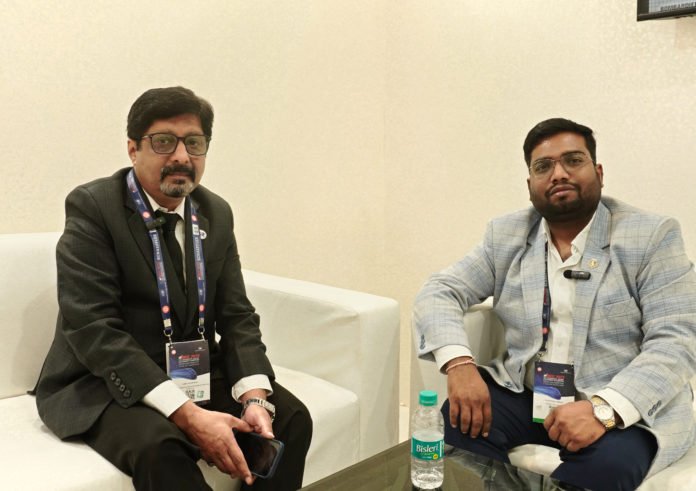
Managing Editor of Metro Rail News Interviewing Senior VP, Sidwal Group of Industries

Metro Rail News Team interviewed Mr Amit Agarwal during IREE 2023. He is the Senior Vice President of Sidwal Refrigeration Industries Pvt. Ltd. This interview explores the latest innovations and technologies ushered by Sidwal in the Indian mobility sector, with special emphasis on Railways. This interview also unravels the company’s commitment towards sustainability and an environmentally friendly approach to business.

Mr Amit Agarwal, the Senior Vice President of Sidwal Refrigeration Industries Pvt. Ltd., is a dynamic leader steering the company to new heights in air-conditioning solutions. In an exclusive interview, Agarwal highlights Sidwal’s recent successes, securing major projects like RRTS, DMRC RS17 and Chennai Metro Phase II. Here are the edited excerpts:

Q.1 Would you like to tell us about your journey and role as a Senior VP in Sidwal Refrigeration Industries?

With great pleasure, we report our successful participation in the IREE Exhibition, where we showcased our capabilities and new product line, including Gangways and Doors. Our recent TOT with our European collaborators, a global organisation, has enabled us to expand our offerings beyond HVAC. We are proud to announce that we have secured our first contract for Gangways from Alstom for Chennai Metro phase two, a significant accomplishment that marks the beginning of an exciting journey towards many more opportunities for our new product line. 

We are expanding our business and product line, including setting up a new plant in Faridabad, where we will establish the manufacturing base for Gangways and Doors. We understand that our growing list of projects requires us to scale up our production. We will establish state-of-the-art HVAC, Gangway, and Door manufacturing facilities.

Q2: Today, Sidwal is a trusted name for turnkey air-conditioning solutions for various industries. What are the major orders on the book and projects undertaken? Kindly highlight the most significant achievements of the company.

Sidwal has been successful in acquiring new projects. The order book is going well, and we are ahead of the competition in all the recent projects. We have been selected for DMRC RS17 and Chennai Metro Phase II by Alstom and the Siemens WAG-10 Loco mega project.  We also successfully secured the first order of Gangways for the Chennai Metro Phase II Project. Moreover, the company is looking for new business opportunities for Vande Bharat Trains with TMH and Titagarh, i.e. for 200 EMU Rakes. The company is determined to continue the journey of success and achieve new heights.

Q3: What major innovations and tailored solutions for the mobility sector make you a one-stop solution provider for various operational requirements of modern-day transport options?

We aim to increase the company’s wallet size for sub-systems in railways. Being present in the rolling stock industry, the company is currently involved in the manufacturing of HVAC, Pantry equipment, Gangways, and Doors and is also exploring opportunities to provide interior solutions for rolling stock

Q4: In what ways would you like to introduce and better explain the company’s growth journey? Although having reached a recognizable milestone, which developmental phase of the company inspires you the most and keeps you motivated?

The promoters of Amber Group are quite dynamic and are expanding their business both organically and inorganically. The Managing Director of Sidwal is also pushing hard and making efforts for the organisation’s growth. Since Amber acquired Sidwal, the business has been growing at a very high rate, and Sidwal is also collaborating with partners outside and expanding its wings. The recent announcement with Ultimate is just the beginning, as there are many more opportunities to come, although we won’t make any announcements until they are finalised. We’re quite confident that we will be able to contribute significantly to the railway industry in the near future.

Q5: What are your efforts towards carbon mitigation? Kindly share the waste management and CSR policy of the company.

The company has implemented a corporate policy to address carbon footprint reduction and energy conservation. This policy is being implemented across all the subsidiaries of Amber Group. The group is committed to making all its plants solar-efficient within the next two years. To this end, the company has upgraded all manufacturing sites to become solar-efficient. The group is closely monitoring the progress of this initiative at all its manufacturing sites.

Regarding CSR, the group company is a listed organisation and operates under government policies and regulations. The group has various CSR initiatives, such as  

  • Promoting education, including special education and employment, enhancing vocation skills

especially among children, women, the elderly and the differently abled and livelihood enhancement projects;

  • Eradicating hunger, poverty and malnutrition, promoting health care, including preventive health care’’ and sanitation, including contribution to the Swachh Bharat Kosh set up by the Central Government to promote sanitation and make safe drinking water available.

Q6: What are your views about the Metro Rail News magazine and any message for our readers?

My heartfelt appreciation to you and your team. You people have recently organised a symposium that featured notable speakers and provided essential insights into industry developments. Your commitment to informing us through magazines and timely updates on business tenders and industry progress is highly commendable. Your efforts have proven invaluable in helping us make informed decisions and stay connected in the railway fraternity.


Discover the endless possibilities of our city’s Metro at InnoMetro, our flagship Expo and Conference. Be an active participant in shaping its future towards a more sustainable tomorrow. Stay informed and join us to take a step towards a brighter future.

Advertisement1
InnoMetro_2026

Seamless Travel Experience, Unprecedented Convenience: NCRTC Introduces Groundbreaking Ticketing Feature

0
Namo Bharat Train
Namo Bharat Train

NEW DELHI (Metro Rail News): In a first-of-a-kind initiative, NCRTC has introduced a “one-tap ticketing” feature to commute in Namo Bharat trains through the ‘RRTS Connect’ Mobile App. This feature allows commuters to generate a QR code swiftly on their RRTS Connect app from anywhere within 300 meters of the RRTS station premise, with just one tap, without bothering about the destination, saving them time and effort to book tickets in advance. This is the first time in the world that such a ticketing feature is being provided in any public transport system.

In today’s day and age, time is scarce, and people are so busy that their schedule sometimes doesn’t allow them to plan a journey. In line with NCRTC’s efforts to ensure a seamless and hassle-free travel experience, this initiative lets commuters travel spontaneously and allows flexibility in changing destinations during the journey. 

RRTS One Tap Booking

This innovative one-tap booking feature makes ticketing fast and convenient for commuters. It eliminates the hassle of buying tickets or going through the whole process of generating a digital QR code by selecting the origin and destination. Generally, any such app requires origin & destination selection at the start of the journey, limiting the flexibility of changing destination during the journey. 

To avail of this new-age feature, commuters need to download the ‘RRTS Connect’ mobile application and ensure a few simple prerequisites to avail this new-age feature. Commuters need to link the E-Wallet to the mobile application, and the E-Wallet is required to have a minimum balance. Then, they need to enable the Location Services of their mobile phone while using this app. This setup is a one-time process which will enable single-tap ticket booking for all future Namo Bharat journeys. 

Following this process, a QR code is generated with a single tap on the RRTS connect mobile application, enabling the commuter to board the train from his origin station. The fare is deducted at the destination station once the commuter exits by scanning the QR code on the AFC gate. 

For the convenience of commuters, NCRTC provides various ticketing options like Digital QR code-based Ticket through the NCRTC Mobile Application, ‘RRTS Connect’ by ‘one-tap’ or origin-destination selection, Paper QR code-based tickets, which can be generated via Ticket Vending Machines (TVMs) or bought from UPI-enabled ticket vending machines. These TVMs also recharge the National Common Mobility Card (NCMC). Apart from this, commuters can buy the RRTS commuter card. Aligned with the Government of India’s “One Nation, One Card” vision, this commuter card is a National Common Mobility Card (NCMC), which allows the usage of one card in all transit systems and anywhere card payment is feasible. The RRTS system will allow commuters to use any NCMC card for travelling from the first day of operations.

RRTS One Tap Booking hindi

The 17km long Priority Section of the Delhi-Ghaziabad-Meerut RRTS corridor between Sahibabad and Duhai Depot is now operational for people. It has five stations: Sahibabad, Ghaziabad, Guldhar, Duhai and Duhai Depot. Hon’ble Prime Minister flagged off India’s first Namo Bharat Trains and Inaugurated India’s first RRTS corridor last month on 20th October. The entire corridor is targeted to be operational by June 2025.


Discover the endless possibilities of our city’s Metro at InnoMetro, our flagship Expo and Conference. Be an active participant in shaping its future towards a more sustainable tomorrow. Stay informed and join us to take a step towards a brighter future.
Advertisement1
InnoMetro_2026

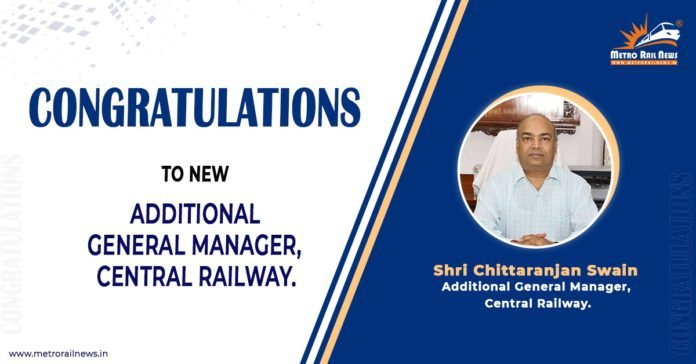
Shri Chittaranjan Swain takes Over as Additional General Manager, Central Railway

0
Shri Chittaranjan Swain , Additional General Manager, Central Railway

MUMBAI (Metro Rail News): Shri Chittaranjan Swain has become the Additional General Manager of Central Railway, Mumbai. Before this, he was the Principal Chief Operations Manager of Western Railway. Shri Chittaranjan Swain succeeds Shri Alok Singh, who superannuated from the Railway service on 31st October 2023.

An officer from the Indian Railway Traffic Service 1989 Batch, Shri Chittaranjan Swain, has vast and rich railway experience working in various Zonal Railways in various capacities. He has worked in various posts such as Divisional Operating Manager Adra Division of South Eastern Railway, Senior Divisional Operations Manager at Khurda Road, East Coast Railway, Chakradharpur Division, South Eastern Railway and Bilaspur Division, South East Central Railway, Dy. Chief Operating Manager (Goods), Bhubaneswar,  East Coast Railway, Chief Freight Operations Manager, Bilaspur, South East Central Railway, Chief Transportation Planning Manager, Secunderabad, South Central Railway and Western Railway.

In his distinguished career, Shri Chittaranjan Swain, an expert in train operations, has studied passenger business management in Japan, underwent training in long haul operations in China, and underwent o­ne-year training in logistic management freight operations in Germany.


Discover the endless possibilities of our city’s Metro at InnoMetro, our flagship Expo and Conference. Be an active participant in shaping its future towards a more sustainable tomorrow. Stay informed and join us to take a step towards a brighter future.

Advertisement1
InnoMetro_2026

3,000 New Trains to Hit the Tracks in the Next Five Years 

0
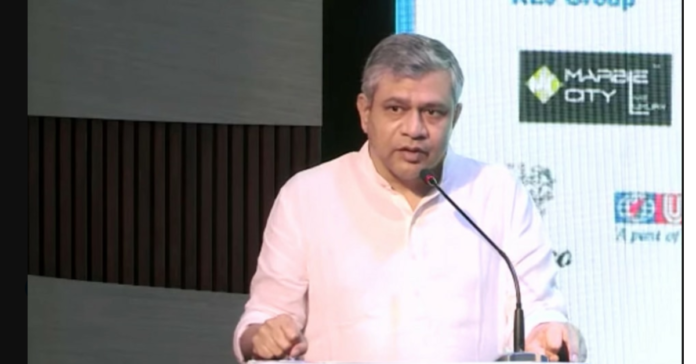
Hon'ble Minister of Railways Shri Ashwini Vaishnaw

NEW DELHI (Metro Rail News): On Thursday, the railways minister informed that the IR plans to introduce 3,000 new trains in the next five years to accommodate an annual passenger tally of 1,000 crore. 

Rising Passenger Traffic 

As per the Indian railways, its current passenger capacity is 8,000 Crore. Indian railway aims to increase the passenger capacity to 1,000 Crore in the coming years to accommodate the daily increment in passenger traffic. 

To accommodate the increasing passenger traffic, Indian railways plan to introduce 3,000 extra trains. These trains will facilitate the accommodation of passenger traffic along with making multiple trips. 

Enhanced Efficiency 

Decreasing travel time is another task that marks the to-do list of Indian railways. Railways believe that despite scheduled stoppages, long-route trains are bound to decrease their speed at several curves & cautions that contribute to inefficiency and higher travel time. This composite acceleration and deceleration decreases the average speed of the train. 

Trains like Vande Bharat have four times better acceleration and deceleration than any other mail or express trains, which makes it way more efficient by decreasing travel time & increasing the average speed. 

Push-Pull Configuration Mode 

Railways plan to deal with the problem of acceleration and deceleration by using a push-pull configuration that they plan to introduce on all the coaches that are being manufactured now. This technology will have a considerable impact on the overall travel time of long-distance trains. 

Integrated Coaches

Other than the Push-pull configuration & vande Bharat trains, IR plans to introduce the entire trains on the route rather than introducing separate coaches owing to security reasons. Integrated coaches are better suited and better equipped to face safety measures. 

It also contributes to the convenience of the passengers by allowing them access to a comfortable and smooth journey. 


Discover the endless possibilities of our city’s Metro at InnoMetro, our flagship Expo and Conference. Be an active participant in shaping its future towards a more sustainable tomorrow. Stay informed and join us to take a step towards a brighter future.
Advertisement1
InnoMetro_2026

DPR for the Extension of Mumbai Metro Line 3 Submitted to the State Government 

0
(Representational Image)

MUMBAI (Metro Rail News): The Mumbai Metro Rail Corporation (MMRC) has finished the Detailed Project Report for the Extension of Mumbai Metro Line 3 to Navy Nagar. 

Extension 

The Mumbai metro Line 3 will be extended by 5 Kilometers, 2.5 Kms in each direction, as per the newly prepared DPR by MMRC. The extension has been planned considering the request from the Indian Navy Office to the state government. It was announced by the then Deputy Chief Minister & Finance Minister in the budget speech of 2022-023. 

Planning 

Its planning began with the then government, the MVA government, receiving a request from the Indian Navy office.  The then Maha Vikas Aghadi (MVA) government had considered the proposal to ensure that the concerned location was also roped into the metro chain for better connectivity.  

Commencement 

The project is expected to commence in 2025 after the completion and commencement of commercial operations on Line 3. 

Enhanced Connectivity & Transit Experience 

The proposed extension will benefit the people in the densely populated region. This area includes residential quarters for central government employees and more. It will allow these residents to experience seamless commutation and A-level connectivity across Mumbai. 

Metro Line 3 

The Mumbai metro Line 3 covers 33 km, connecting Colaba to SEEPZ via the Bandra Kurla complex (BKC) and has been divided into 2 phases. 

Phase:01- BKC to SEEPZ

Phase: 02- BKC to Colaba

Phase 1 operation is expected to commence early next year, while phase 2 operations will commence in 2024. MMRC conducted a long-distance train movement last month from MIDC to Vidyanagari and back to SEEPZ. 


Discover the endless possibilities of our city’s Metro at InnoMetro, our flagship Expo and Conference. Be an active participant in shaping its future towards a more sustainable tomorrow. Stay informed and join us to take a step towards a brighter future.
Advertisement1
InnoMetro_2026

Good News! Navi Mumbai Metro Line 1 to Hit the Tracks this Afternoon at 3 

0
Navi Mumbai Metro Line 1

MUMBAI( Metro Rail News): CIDCO, the managing authority for the Navi Mumbai metro, announced the opening of the long-awaited Navi Mumbai metro 16 hours ago. CIDCO announced it after the order of the Chief Minister of Maharastra 

CMRS Inspection

All the trials, like oscillation, electrical safety, emergency brakes, etc, for Line 01 have been successfully conducted. CMRS certificate to start the passenger traffic was received back in June.

Opening

CIDCO, in a tweet, said, ” Keeping the interest of the citizens in mind, Mr. As per the order of the Chief Minister, Metro Navi Mumbai will be operational from 17th November”. As per the circular of the CIDCO, The metro services will commence at 3:00 PM from 17th November 2023 and the last round at 10:00 PM. 

The metro trains will run between 6:00 A.M. and 10:00 P.M. from 18th November onwards at 15-minute intervals between 2 trains on Line No. 01 

Metro Fares 

Eight 3-wagon coaches on Line 1 will grace the Navi Mumbai metro. The fares of metro tickets on this route will be as follows: 

Distance Fare 
0-2 KmsRs 10 
2-4 KmsRs 15 
4-6 KmsRs 20 
6-8 Kms Rs 25 
8-10 KmsRs 30 
Beyond 10 Kms Rs 40 

Metro fares have been kept reasonable, considering the relevance of a mass rapid transit system in today’s growing landscape of urban spaces. It also keeps in mind the amount of effort and energy that goes into running such a system efficiently for the service of people. 

Stations 

The Line 1 will cover a distance of 11.1 Kms. Under the Phase 1, Line 1 will be covering stations like: 

Station Cumulative Distance (in Kms) 
CBD Belapur 0.06
Sector 7 0.77 
CIDCO Science Park 2.04 
Utsav Chowk 3.41 
Sector 114.12 
Sector 14 5.12 
Central Park 6.12 
Pethpada 7.44 
Sector 34 8.67 
Panchanand 10.67 
Pendhar 11.10 

Facilities

Navi Mumbai metro boasts state-of-the-art Air-conditioned coaches and entry and exit arrangements on both the north & south sides of the metro stations. Shops in the concourse area for commercial purposes are a crucial feature of the Navi Mumbai Metro. The platforms have been equipped with CCTV, a passenger announcement system, and special toilets for Disabled persons.

Better Connectivity 

Navi Mumbai will be the 16th city in India to experience metro connectivity that will ensure efficient and robust connectivity across all the city’s regions, ensuring that the people can experience the best possible urban transit system. 

Additionally, Line 1 connects with the Vasai Road-Roha Line and the NH 48, making a well-connected transit model taking shape in the future. 


Discover the endless possibilities of our city’s Metro at InnoMetro, our flagship Expo and Conference. Be an active participant in shaping its future towards a more sustainable tomorrow. Stay informed and join us to take a step towards a brighter future.
Advertisement1
InnoMetro_2026

Exploring the Future of Rail Fastening Systems: A Conversation with Mr. Sven Haag, CEO of Vossloh Rail Fastening Systems

0

Metro Rail news interviewed Mr Sven Haag during the IREE, 2023. In the interview, he outlined Vossloh’s commitment to quality, sustainability, and achieving carbon neutrality by 2030. The discussion spotlighted the W 30  system, solidifying Vossloh’s role in India’s rail track modernisation.

Mr. Sven Haag, CEO of Vossloh Rail Fastening Systems, is a visionary leader driving innovation in rail infrastructure. With a legacy of over six decades, Mr. Haag’s leadership focuses on tailoring cutting-edge solutions to diverse track conditions, particularly in the Indian Railway Networks undergoing modernisation and semi-high Speed to high-speed rail markets.

Here are the edited excerpts: 

Q1: Mr. Sven Haag, can you tell us about Vossloh’s portfolio in providing specialised solutions in rail fastening systems, offering a wide scope in the superstructures of rail infrastructure?

Our company offers a wide range of fastening systems for the rail industry, specifically designed to suit different track conditions. We understand the importance of track stability and safety, especially passenger and freight transportation. In India, the current track infrastructure may not be suitable for semi–high speed & high-speed trains or heavy hauls, which calls for an improvement in the durability and safety of the track. Our company is committed to bringing safety on track and making train journeys enjoyable instead of being a cause for concern. Our dedicated efforts save the lives of thousands commuting on the trains daily. 

Q2: What makes Vossloh a leading global company for rail fasteners, and what innovations is the company bringing to future mobility?

The history of the W design Clamps is nothing short of impressive, with a heritage spanning over 55 years. The first Clamp was launched in the ’60s, and since then, the company has been providing Clamps that cater to different speed ranges. From standard commuter train quality with a maximum limit of 18 tons and a speed of 160 kmph to Clamps that can now support up to 400-kilometre speed, the company has established itself as a dominant market leader in the high-speed section. With a decent market share in the largest high-speed market in the world – China, the company enjoys the trust of its customers and is known for its capabilities worldwide. Additionally, in the US, where heavy haul is a big thing, the company provides Clamps with tonnages up to 40-ton axle loads to ensure safe transportation. 

The future is already here, and the company is ready to tackle the challenges that come with it. The W series, which is 55 years old, has been replaced by the new M series. The M technology is the answer to the increase in rail buckling and natural frequency of the track due to self-driving drains and other factors. The track’s stress will increase, and the company has already provided a solution – the M 300 system. The clamps are available in different series for different applications, whether heavy haul or Urban Transport Systems. The company has a wide portfolio of adjacent products, making it unique in the market and capable of making transportation much easier in the future.

Q3: Can you elaborate on the defined innovation process at Vossloh, ensuring the maintenance of the highest efficiency and quality standards? What is the workflow management at the organisation?

As a company, we consider quality a hygiene factor, which is a must and non-negotiable. We are an ISO-certified company with manufacturing sites across the globe, including three in India, with more to come. We have a standardised system for fastening types, ensuring quality is our highest priority. Our focus is primarily on the end-users’ needs and problems, and we strive to provide solutions that eliminate any issues they might face. Our product development process is well-defined and involves significant testing, ensuring that the end product meets the highest standards. For instance, our W 30 system, already in use worldwide, has proven to be the most reliable in the market. We constantly strive to improve our products and processes to provide the best possible solutions to our customers.

Q4: Briefly, could you provide an overview of Vossloh’s heavy-haul rail fastening system, W 30, and how it could benefit the Indian rail industry?

The Indian Railway has started modernising all its tracks, with a clear trend toward investing in new trains. In particular, the Vande Bharat trains have been ordered in large numbers, indicating a significant shift toward higher speeds, up to 120 kilometres per hour for freight or even higher for passenger trains. However, the current system is not designed to accommodate this level of speed and tonnage. As a result, the railway is looking to invest in a proven system capable of achieving speeds of 120 kilometres per hour with a 25-ton load or more than 200 kilometres per hour with a 22.8-ton load.

We are proud to be part of this modernisation effort, and we can assure our customers that they will not be disappointed with the results. Our system has been proven in different countries, with more than 1000 kilometres in track across various temperatures and economic zones. Above all, our system will bring security to the tracks, saving lives and ensuring a safer and more efficient railway.

Q5: What major innovations has Vossloh introduced in the switch market, particularly for ballasted and slab tracks catering to different load profiles?

At Vossloh, we firmly believe that there are better approaches than a one-size-fits-all approach for addressing the varying needs of different individuals. We understand that the speed and load of the track, as well as the presence of slabs or ballast, can significantly impact the system’s performance. Therefore, it is imperative to have a specialised system implemented that is tailored to specific needs. This is especially important when considering the vibration level on the track, which can cause issues not just with the fastening system but also with bridges, burnouts, and even the safety and comfort of passengers. 

Safety is a crucial factor that should not be taken lightly, especially in light of the numerous accidents that have occurred in the past, resulting in injuries and fatalities. Ensuring that the systems in place are reliable and trustworthy is of utmost importance. While there may be discussions regarding cost-cutting measures, it is crucial to prioritise safety over these concerns. Even small cost reductions can lead to significant problems down the line, and it is essential to adhere to strict quality standards and specifications to ensure the safety of all involved. 

In India, following the same safety standards as most other countries and investing in reliable and high-quality systems is vital. While there may be costs associated with these investments, it is crucial to believe in companies that prioritise quality and standards, as the safety and well-being of all individuals must remain the top priority.

Q6: Could you outline Vossloh’s sustainability strategy and management approach, detailing carbon mitigation and environmental protection efforts?

Our company’s goal is to become carbon neutral by 2030, which is aligned with Indian Railways’ target. Vossloh is making significant progress towards this goal by focusing on energy efficiency and reducing carbon emissions in all of our plants worldwide. We are actively working on finding ways to reduce our gas consumption, but unfortunately, there is still a lack of green gas available. However, we continuously research and explore new technologies to help us achieve our goals. For instance, we are already producing sleepers made out of 100% recycled plastic, which can be fully recycled again in the future. Our M series has already achieved a 90% carbon reduction using fully recycled steel. This demonstrates our high pace in moving towards carbon neutrality. We have signed the Charter of being carbon neutral in 2030, but we are determined to reach this goal even sooner. This commitment is shared across all our divisions, including the sleeper, turnout, and service divisions. It is our responsibility to ensure a sustainable future for the next generation.

Q7: With a diverse range of rail fastening and turnout systems signalling products, how is Vossloh supporting the Indian rail industry, especially in metro and high-speed rail operations?

In the context of urban transit, addressing the environmental concerns stemming from traffic-induced pollution and smog is paramount. Simultaneously, the noise and vibration challenges associated with trains passing through residential areas must be noticed. Vossloh is committed to continuous improvement in this domain as the originator of the widely-used 300-1 fastening system for high-speed rail. The introduction of the M series represents a groundbreaking advancement, enabling train speeds to approach the design specifications of 400 kilometres per hour. This innovation places Vossloh at the forefront of the industry and significantly enhances rail travel, as demonstrated by successful speed tests reaching 450 kilometres per hour.

In practical terms, this means that, for instance, in China, where our system is utilised, train operators can achieve 350 kilometres per hour. Conversely, when a different system is employed, the maximum allowable speed is capped at 320 kilometres per hour. Vossloh’s innovations effectively elevate the velocity of rail transport, providing customers with a genuinely expedited travel experience. We are conducting tests at speeds of up to 450 kilometres per hour, a testament to our commitment to further advancing this realm.

Furthermore, the Indian railway sector vigilantly monitors the prospects of high-speed and semi-high-speed tracks within the nation. It is noteworthy that in the context of India, an expansive and diverse country, high-speed rail infrastructure is pivotal for efficient connectivity between cities. However, this endeavour necessitates heightened security within the system. It entails constructing elevated tracks, which invariably come with substantial financial costs. In situations where elevation is not feasible, protective fencing is required.

It is indisputable that the transition to high-speed rail is an imperative transformation for India. To exemplify, when contemplating travel from Mumbai to Pune, Mumbai to Bangalore, or Mumbai to Delhi, the prospective reduction in travel time to two and a half to three hours, coupled with the elimination of the logistical complexities associated with air travel, renders high-speed rail an increasingly attractive choice. My recent journey to China is a compelling illustration of the advantages of high-speed rail, where I enjoyed a comfortable and efficient trip spanning 1,200 kilometres from Shanghai to Anyang, with a mere 6 hours and 20 minutes of travel time. The journey was marked by the ease of a comfortable seating arrangement and a delightful lunch, devoid of the usual stressors and inconveniences of air travel.


Discover the endless possibilities of our city’s Metro at InnoMetro, our flagship Expo and Conference. Be an active participant in shaping its future towards a more sustainable tomorrow. Stay informed and join us to take a step towards a brighter future.

Advertisement1
InnoMetro_2026

UPMRC Has Invited Bids for Kanpur Metro’s KNPCC-12 Package 

0
Kanpur metro
Kanpur Metro

LUCKNOW (Metro Rail News): Uttar Pradesh Metro Rail Corporation (UPMRC) has invited bids for the Kanpur Metro’s KPNCC-12 Package on 8.38 Km Kanpur Metro Line 2 running between Agriculture University & Barra-8.  

Scope of Work: 

Design and Construction of elevated viaduct and 5 elevated stations: Agriculture University Station, Vijay Nagar Chauraha Station, Shastri Chowk Station, Barra-7 Station & Barra-8 Station. The contract also includes Architectural Finishing, E&M work and special spans from the end of the ramp after Double Pulia Station to Barra-8 Station. 

KNPCC-12 Package: 

The KNPCC-12 package runs along 4.3 Kilometers. It is made up of two disjointed sections on either end of underground Package KNPCC-11. The southern sections viaduct will connect the Double Pulia Ramp & Barra-8 with 4 elevated stations at Vijay Nagar Chauraha, Shastri Chowk, Barra-7 & Barra- 8 stations. On the northern end of the line, a mall 557.8 meters viaduct will be built with one Elevated Station at Agriculture University. 

Key Details

  1. Approximate Cost of Work: Rs 484 crores 
  2. Tender Security: Rs 9.68 Crore 
  3. Completion Period: 24 months 
  4. Pre-Bid Meeting: 28-11-2023 
  5. Bid Submission Deadline: 26-12-2023 at 3 PM 
  6. Technical Bid Opening: 27-12-2023 at 3 PM 

Minimum Eligibility Criteria: 

The  tenderers  will  be  qualified  only  if  they  have  successfully  completed  or substantially  completed  similar  work(s)  as  a  prime  contractor/  member  of  JV,  completion  date  (s)  of  which falls during the last  seven  years  ending the last  day  of  the  month  previous  to  the  month  of  tender  submission  end  date  as  given  below  (Value shall be rounded off to two decimal places): 

  1. At least one “similar work” of the value of INR 387.20 Crore or more

or 

  1. At least Two “similar works” each of value of INR 242.00 Crore or more.  

or

  1. At least three “similar works” each of value of INR 193.60 Crore or more. 

Similar  Work(s)  for this tender shall be  “Construction of  Viaduct  (which may include station along with viaduct  /Bridge  /Flyover  (excluding approaches  &  embankments) having a pre/post-stressed concrete super-structure” while “Substantial”  completion shall be based on  80  (eighty) per cent (value wise)  or more works completed under the contract of the work.  

Line 02, Kanpur Metro 

Line 2 of the Kanpur metro is 8.6 Km long with 8 stations running from agriculture university to Barra-8. It is also referred to as the Blue Line. The KNPCC-12 package is the 7th and second last package of Phase 1’s main line & depots.


Discover the endless possibilities of our city’s Metro at InnoMetro, our flagship Expo and Conference. Be an active participant in shaping its future towards a more sustainable tomorrow. Stay informed and join us to take a step towards a brighter future.

Advertisement1
InnoMetro_2026

Construction Underway for India’s First Undersea Tunnel in Mumbai-Ahmedabad Bullet Train Project  

0
MAHSR Undersea Rail Tunnel

MUMBAI (Metro Rail News): Afcons infrastructure has already begun with the piling work for shaft-2 at Mumbai’s Vikhroli to facilitate the construction of a 21 Km-long Tunnel from BKC station to Silphata with an approximate depth of 25-65 meters. 

Four shafts

It is one among the four shafts to be built for the entire 21 km long underground stretch of the Mumbai-Ahmedabad Bullet Train Project. The Shaft-2, being prepared, will be used to launch 2 TBMs—one towards the BKC station’s east end and another towards Sawli, Navi Mumbai. 

The remaining Shaft-1 and Shaft-3 will be built at BKC station’s east end and Sawli, Navi Mumbai, while the 4th Inclined shaft will be constructed at Ghansoli, facilitating NATM tunnelling works. 

MAHSR Undersea Rail Tunnel
Shaft Depth (in meters) 
Shaft 01 (BKC) 36 
Shaft 02 (Vikhroli) 56 
Shaft 03 (Sawli, Navi Mumbai) 39 
Inclined Shaft (Ghansoli)  42 

The tunnels will be used to deploy and retrieve 3 Mega TBMs with an approximate diameter of 13.1 meters. 

Scope of Work

Shaft-02 is located on 3.95 hectares of land in Vikhroli. Of the total stretch, 2 hectares of the land will be used to construct a traction substation & distribution substation, while the rest will be employed for an approach road, segment stacking yard, shaft, etc. 

Package C-02 

Package C-02 is a 21 Km-long underground stretch in the Mumbai-Ahmedabad Bullet train Project awarded to Afcons Infrastructure at an estimated cost of Rs 6397.27 Crore with a 5.17-year deadline. 

Mumbai-Ahmedabad Bullet Train project 

The MAHSR project is being built between Ahmedabad & Mumbai as a High-Speed Rail Project employing Japan’s Shinkansen Technology at an estimated cost of Rs 1.10 lakh Crores. Services for the project are expected to begin by 2026. 

New Possibilities 

The undersea tunnel construction, a pivotal project component, is set to significantly reduce travel time, enhance regional connectivity, and stimulate economic growth. The seamless connectivity offered by high-speed rail is anticipated to open new avenues for trade, commerce, and tourism, fostering a more integrated and dynamic socio-economic landscape between the two major cities. 

Better Paradigms 

The construction of the undersea tunnel represents a significant stride in modern infrastructure, heralding a future where the amalgamation of speed, efficiency, and connectivity will redefine the travel experience for generations to come.


Discover the endless possibilities of our city’s Metro at InnoMetro, our flagship Expo and Conference. Be an active participant in shaping its future towards a more sustainable tomorrow. Stay informed and join us to take a step towards a brighter future.

Advertisement1
InnoMetro_2026