Home Blog Page 141

Kochi Water Metro Gearing Up For Trials on Fort Kochi Route

0
Kochi Water Metro
Kochi Water Metro

KOCHI (Metro Rail News): The trials on the long-awaited Fort Kochi route of Kochi Water Metro are likely to commence soon, as terminal work at Fort Kochi is nearing completion.

Fort Kochi is the city’s major tourist centre. The commencement of operations between the High Court and Fort Kochi is expected to give a major boost to the city’s tourism sector.

“The trial run on parking boats near the floating pontoon at Fort Kochi terminal has been completed, and the boats will be tested on the route between High Court and Fort Kochi in the coming days,” said Loknath Behera (Managing Director, KWML). 

Installation of concrete floating pontoons

Kochi Water Metro Ltd. (KWML) has built concrete floating pontoons and a marine platform at the Fort Kochi Water Metro terminal.
The Fort Kochi terminal is at the meeting point of the Arabian Sea and backwaters, and installing ordinary floating pontoons may risk the safety of passengers. Hence, concrete floating pontoons are constructed at all the boat jetties of the ferry services. The installation of concrete floating pontoons allows convenient and safe onboarding and deboarding, irrespective of high or low tide.

Kochi Water Metro Route
Kochi water metro route map

Construction of a marine platform

Construction of a marine platform for receiving boats has already been completed as part of the final phase of the terminal.
Construction work for the terminal building is also in the finishing stage.

Operational routes

Currently, Kochi Water Metro Ltd. (KWML) uses 13 boats to operate services on the following routes:

  • High Court – Bolgatty
  • High Court – Vypeen
  • High Court – South Chittoor
  • South Chittoor – Cheranelloor
  • Vyttila – Kakkanad

Soon, one more boat will be delivered by the Cochin Shipyard to KWML.

Kochi Water Metro

The Kochi Water Metro Project aims to reduce pollution and traffic congestion in Kerala’s commercial capital, Kochi. Its plan is to connect 10 islands with 15 routes spanning 78 km, benefiting over 33,000 islanders. 


Discover the endless possibilities of our city’s Metro at InnoMetro, our flagship Expo and Conference. Be an active participant in shaping its future towards a more sustainable tomorrow. Stay informed and join us to take a step towards a brighter future.

Advertisement1
InnoMetro_2026

Challenges and Solutions in Implementing Data Secure CCTV Cameras in Indian Railways

0
Matrix IP Cameras
Matrix IP Cameras

The absence of CCTV cameras at most railway stations and coaches poses significant security challenges within the Indian Railways network. Despite the Ministry of Railways’ approval to install CCTV cameras at all stations and doorway areas of coaches, progress has been limited. As of now, only 557 air-conditioned (AC) coaches under the Southern Railway are equipped with surveillance cameras, a fraction of the total coaches in operation.

Moreover, rural railway stations remain largely devoid of security cameras, exacerbating security concerns. The delay in implementing video surveillance systems at stations further underscores the pressing need to address these security gaps. This article examines the challenges faced in deploying data-secure CCTV cameras across Indian Railways and proposes strategic solutions to enhance security measures within the railway network.

Challenges in Implementing Data-Secure CCTV Cameras

Legacy Infrastructure: Indian Railways grapples with the challenge of legacy surveillance systems, often lacking inbuilt data security features.These outdated systems, prevalent across stations and trains, present vulnerabilities susceptible to cyber threats. According to Inc 42, India witnessed 13.9 Lakh cybersecurity incidents in 2022, emphasizing the urgent need for modernization.

Scale and Complexity: The vast expanse of India’s railway network, spanning over 65,000 kilometers, poses unique challenges in maintaining uniform data security standards. With thousands of stations and surveillance points distributed across diverse terrains, ensuring consistent security measures becomes a daunting task. The complexity of railway networks makes them prime targets for cyber attacks, underscoring the critical need for robust data security measures.

Regulatory Compliance: Indian Railways grapples with navigating a multifaceted regulatory landscape, particularly concerning video surveillance, data security and privacy standards. Compliance with stringent regulations such as OWASP ASVS 4.0 L2 for Data Security, RDSO 6.0 for video surveillance systems installed on stations, and RDSO 2.1 for CCTV cameras installed in railway coaches, adds layers of complexity. Ensuring adherence to these regulations is paramount, as failure to comply can lead to legal repercussions. Therefore, railway authorities must prioritize regulatory compliance to uphold the integrity and security of their surveillance systems.

Complex Procurement Processes: Procuring modern surveillance equipment and hiring cybersecurity experts often involves complex procurement processes in the Indian bureaucracy. Lengthy procedures and bureaucratic hurdles may delay the allocation of funds and hinder timely implementation of cybersecurity initiatives.

Human Factor: The human element remains a critical aspect of challenges faced by Indian Railways. Resistance to change, coupled with a lack of cybersecurity awareness among staff, poses significant risks. Insider threats, whether intentional or unintentional, also contribute to the vulnerability of surveillance systems.

Solutions and Strategies for Implementing Data Secure CCTV Cameras

Modernization Efforts: To address the challenge of legacy infrastructure, Indian Railways must prioritize modernization efforts aimed at upgrading surveillance systems with advanced cybersecurity features and protocols. This includes replacing outdated equipment with modern CCTV cameras that incorporate robust security measures such as encryption, secure authentication mechanisms, and regular software updates.

Risk-Based Approach: Implementing a risk-based approach to cybersecurity is particularly pertinent for Indian Railways when it comes to their video surveillance systems. By conducting thorough risk assessments specifically tailored to these systems, railway authorities can identify vulnerabilities and threats unique to video surveillance infrastructure.

For instance, risks may include unauthorized access to surveillance footage, data breaches involving sensitive passenger information, or tampering with surveillance equipment. By analyzing these risks in the context of video surveillance systems, railway authorities can prioritize resources and efforts to address the most critical security concerns effectively. This tailored approach ensures that cybersecurity measures are aligned with the specific challenges and requirements of video surveillance systems, thereby enhancing their resilience against potential threats.

Training and Awareness: Railway staff should be made aware of the potential cyber threats that video surveillance systems may face, such as hacking attempts, malware infections, or physical tampering with cameras. Training programs can educate them on recognizing and responding to these threats, including reporting suspicious activities or security incidents promptly. Given that video surveillance systems capture and store sensitive data, including footage of passengers and railway assets, it’s crucial to educate staff on data security best practices. This includes ensuring the secure handling, storage, and transmission of surveillance footage to prevent unauthorized access or data breaches.

Budgetary Requirements: Railway authorities must allocate funds for the procurement of modern surveillance equipment with built-in cybersecurity features, such as encryption and secure authentication mechanisms. Additionally, budgetary allocations should cover cybersecurity training programs tailored to staff involved in operating and managing video surveillance systems, ensuring they have the necessary skills to mitigate security risks effectively. Lastly, funds should be allocated for hiring cybersecurity experts or engaging third-party cybersecurity firms to conduct regular audits and assessments of the video surveillance infrastructure.

Timely Execution: Top-level commitment within Indian Railways is essential to prioritize data security initiatives, reflected in strategic planning and budget allocation processes. This commitment ensures adequate budgetary resources are allocated for acquiring modern video surveillance equipment and data security solutions through streamlined procurement processes. This involves establishing dedicated procurement teams and leveraging digital technologies for efficient procurement. Concurrently, robust monitoring mechanisms are implemented to track the execution of video surveillance systems, ensuring compliance with budget allocations and assigning accountability for outcomes. Regular reviews and audits further enhance the effectiveness of video surveillance systems and strategies.

Why Matrix IP Cameras Are an Ideal Choice for Indian Railways?

Matrix IP Cameras adhere to OWASP ASVS 4.0 L2 for cyber-secure surveillance, a standard endorsed by the RDSO. The cameras have been certified by STQC Delhi Lab for compliance with RDSO 6.0, ensuring cyber-secure surveillance products for the Indian market.


When you invest in Matrix CCTV Cameras you can rest assured for

  • Data Privacy and Protection: Video surveillance systems collect a vast amount of data. It is critical to ensure privacy and protect the data while storing, analyzing, and sharing it.
  • Network Vulnerabilities: Video surveillance systems are susceptible to hacking attempts due to Weak passwords, outdated firmware, and unpatched software.
  • Potential for Exploitation: Cybercriminals manipulate video feeds or gain unauthorized access to cameras, leading to privacy breaches or physical security threats.
  • Legal and Regulatory Compliance: Many regions have strict regulations regarding the use of surveillance systems, Non-compliance can lead to legal consequences.

In conclusion, prioritizing data security for Indian Railways’ extensive video surveillance systems is imperative for several reasons. The increasing awareness of data privacy concerns, coupled with regulatory requirements, emphasizes the need for robust cybersecurity measures. The evolving cyber threat landscape and integration with IT networks expose vulnerabilities that demand proactive measures.

Furthermore, adherence to industry best practices and standards is crucial for developing cyber-secure solutions. Choosing Matrix IP Cameras, endorsed by RDSO and complying with OWASP ASVS 4.0 L2, ensures a reliable defence against potential threats. Safeguarding data privacy, addressing network vulnerabilities, preventing exploitation, and maintaining legal compliance is pivotal in securing the railways’ surveillance infrastructure.

To stay informed, also read: .

Advertisement1
InnoMetro_2026

Surat Metro Phase I: TBM Narmada Achieves Breakthrough At Central Warehouse Station

0
TBM Narmada breakthrough at Central Warehouse Station

SURAT (Metro Rail News): Gulermak – Sam India Builtwell JV achieved a tunnel breakthrough at the Central Warehouse Station on Line-1 (Sarthana – Dream City) of Surat Metro Phase 1 under Package CS2 / UG1 on Tuesday.

A refurbished Terratec EPB (Earth Pressure Balance) Machine S78, nicknamed Narmada, travelled roughly 600 m toward the central warehouse three months after mining at Labheshwar Chowk metro station box. As per Deniz Buyukgokmen (Project Manager, Gulermak), Narmada has erected 1642 precast rings to build a 2298m long tunnel.

surat metro braekthrough 4

Gujarat Metro Rail Corporation (GMRC) awarded Package CS2 / UG1 in March 2021, which involves building six tunnels spanning 3.46 km from Kapodra to Surat Railway Station. Tunnel boring machines S94 (Tapi) and S78 (Narmada) are on duty. This is Narmada’s second and third tunnel breakthrough for the project.

surat metro braekthrough 1

TBM Narmada completed its first assignment, building a 1.5 km tunnel from Kapdra to Labeshwar Chowk in January 2024. However, the breakthrough was hidden as the soil excavation was still underway. So, this is the first time the face of S78 Narmada is visible after it started its journey in December 2022. 

surat metro braekthrough 3

Contract

  • Tender No: GMRC/CONS/UG-1/PKG-CS2/PH-1/2020.
  • Issue Date: 10th July 2020.
  • Estimated Tender Value: Rs 929.46 crore.
  • Security Money Deposit: Rs 9.29 crore.
  • Work Completion Period: 40 months.

Scope of the project

The project’s scope involves the design, construction, and completion of underground stations and tunnels, along with finishes, spanning 3.46 km from Kapodra Ramp to Surat Railway Station. Construction of underground tunnels between the Northern Ramp and Surat Railway Metro Station. 

The project also includes constructing three underground stations: Kapodra, Labheshwar Chowk, and Central Warehouse, with entry/exit points and connecting subways.

TBM Narmada’s next and final assignment will be building an extension to Surat Railway Station’s eastern shaft of 388m. 

Surat Metro Phase I

Phase I encompasses the construction of two corridors totalling 41.93 km and featuring 38 stations, 32 elevated and 6 underground. Maintenance facilities, solar energy utilization, and advanced ticketing and train operations technologies are key components of this transformative metro project.


Discover the endless possibilities of our city’s Metro at InnoMetro, our flagship Expo and Conference. Be an active participant in shaping its future towards a more sustainable tomorrow. Stay informed and join us to take a step towards a brighter future.

Advertisement1
InnoMetro_2026

Kolkata Metro Hits the Tracks for Trials on Noapara-Dum Dum Stretch

0
Kolkata Metro
Kolkata Metro

KOLKATA (Metro Rail News): Metro Railway Kolkata tweeted information about a trial run conducted between the Noapara and Dumdum Cantonment Metro stations (Yellow line) for the first time on March 24 at 18:18 hrs. The designated trial rake completed two round trips in the presence of top Metro officials, ensuring operational standards and safety protocols. 

According to sources, the trial run achieved 74km/h speed.

The Project and Challenges

The Metro Railway Kolkata decided to extend its service from Dum Dum to Noapara with a length of 2.091 kms of metro line on 10th July 2013. The construction contract for building a viaduct between Kestopur Khal (Canal) and the pre-existing ramp of the former Circular Railway’s viaduct was awarded to Senbo Engineering at Rs. 127 crore in June 2011.

This route has encountered numerous hurdles, including land acquisitions along the canal’s path and encroachments.

Purpose of The Project

The purpose of conducting this journey by a Medha train in Kolkata was primarily to validate the Schedule of Dimensions (to specify the maximum height, width, and other dimensions for trains to ensure they can safely pass through tunnels, bridges, platforms, and other infrastructure without any issues) clearances and to observe how the train interacted with the surrounding civil structures. 

The aim was to ensure no physical obstructions along the route.


Discover the endless possibilities of our city’s Metro at InnoMetro, our flagship Expo and Conference. Be an active participant in shaping its future towards a more sustainable tomorrow. Stay informed and join us to take a step towards a brighter future.

Advertisement1
InnoMetro_2026

URC Commence Construction on Line 3 of Chennai Metro Phase II

0
Pooja at Thousand lights metro crossover

CHENNAI (Metro Rail News): URC Construction Pvt. Ltd. kickstarts the construction work on Metro Line-3 of Chennai Metro Phase II with a Pooja ceremony at Thousand Lights Metro Crossover under Package UG03. The diaphragm wall (D-wall) construction has already begun at Thousand Lights metro Crossover using a Trench cutter, tweeted by Rail Vikas Nigam Limited on March 25.

GJhV8B6XMAAFvqc.jpeg

Rail Vikas Nigam Limited (RVNL) has subcontracted the construction work to URC for an undisclosed amount after the Chennai Metro Rail Limited (CMRL) awarded RVNL the contract under Package UG03-RT01 for Rs. 1328.89 crore in July 2023, with a 1725-day (4.72 Years) deadline.

Scope of Package:

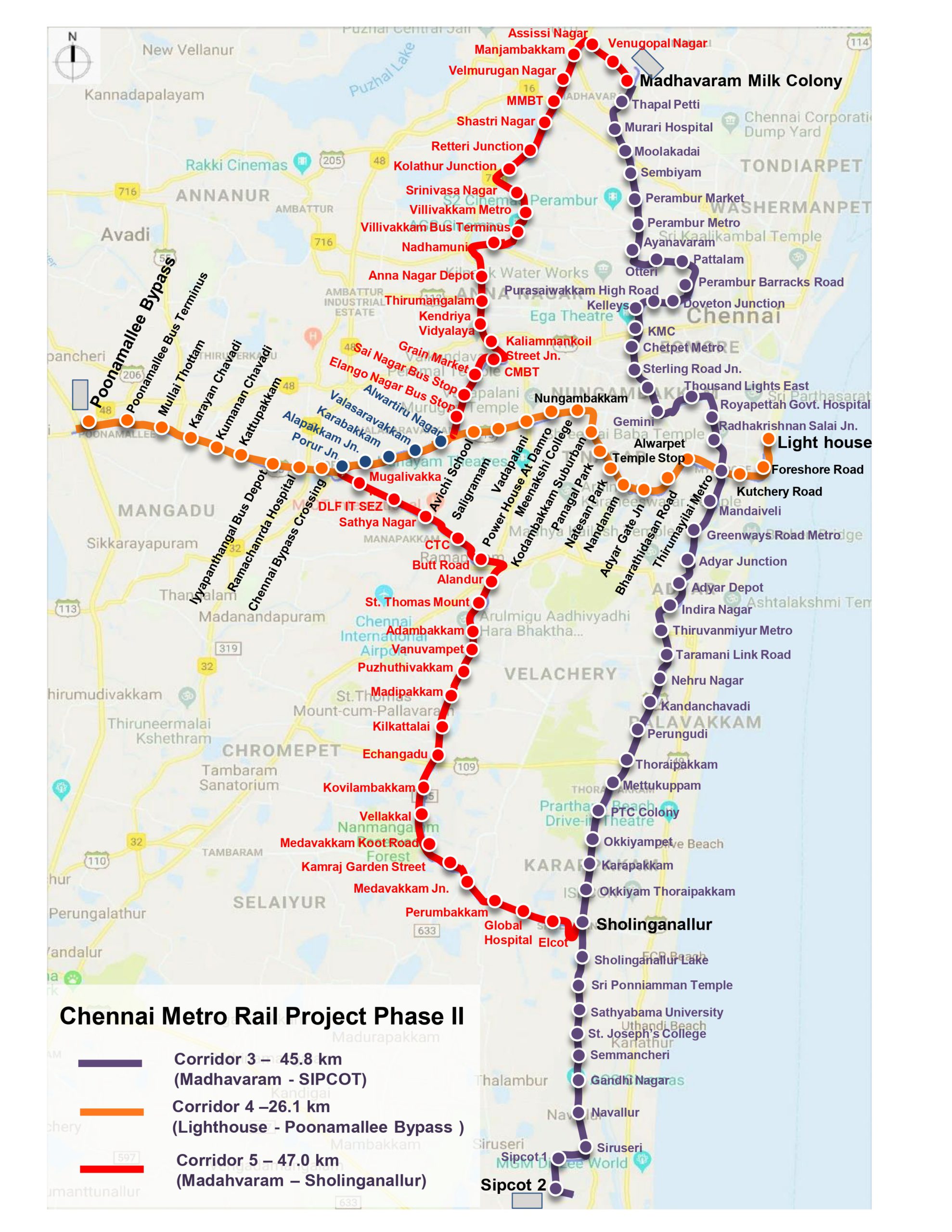
The package’s scope entails the complete civil construction of five underground stations: KMC (Kilpauk), Sterling Road Junction, Nangambakkam, Gemini, Thousand Lights, and Thousand Lights Crossover. Partial work on two stations entails the construction of a diaphragm wall (D-wall) at Chetpet Metro and Royapettah Govt. Hospital.

New Interchangeable connection:

KMC’s new station box will be interchangeable with the Green Line (Line 2-22 km), which connects St. Thomas Mount to Chennai Central, and a new station box at Thousand Lights will be interchangeable with the Blue Line (Line 1-23.10 km), which connects Wimco Nagar to Chennai Airport.

Fv71rNWXoAELOQS
Chennai Metro

CMRLS’s phase 2 project deadline is December 2025. It’s part of Chennai’s metro expansion endeavour, promising efficient and eco-friendly transportation. It will also ease the city’s long-standing traffic congestion issue.


Discover the endless possibilities of our city’s Metro at InnoMetro, our flagship Expo and Conference. Be an active participant in shaping its future towards a more sustainable tomorrow. Stay informed and join us to take a step towards a brighter future.

Advertisement1
InnoMetro_2026

Pune Metro: Maha Metro Unveils Plans to Boost Revenue

0
pune metro
Representational Image

PUNE (Metro Rail News): Officials of Maha Metro have announced their plans to boost revenue through branding and advertising strategies on Line 1 and Line 2 of Pune Metro. The officials aim to bring sustainable additional income to Maha-Metro through non-ticket fare revenue. These advertising strategies will benefit local businesses and advertisers in Pune.

Advertisers have received co-branding rights for several metro stations, including Nal Stop, Garware College, Phugewadi, Pune Railway Station, Ruby Hall Clinic, and Kalyani Nagar. Additional advertisement spaces inside and outside the metro stations have been marked off and allotted to contractors.

Maha-Metro released a proposal for licensing semi-naming rights, train wrapping, and advertisement rights for a 15-year period. These rights include spaces at entry-exit points, walls, exteriors, pillars, bridges, foot-overbridges, and train sets. The estimates for these rights vary from station to station.

Current Annual Revenue

The current annual revenue of Maha-Metro is ₹55 to ₹72 lakh from stations on line 2 and line 1. These lines serve 80,000 to 85,000 passengers daily. The fare structure on the Vanaz to Ramwadi corridor ranges from ₹10 to ₹35, while the fare structure on the PCMC to Civil Court corridor ranges from ₹10 to ₹30. The Khadki, Budhwar Peth, Mandai, and Yerawada metro stations are under construction. It is planned that these metro stations will function within six months.

The available areas for external advertising in underground stations will include entry-exit structures, parking spaces, and designated areas.

Maha-Metro expects a significant boost in revenue in the upcoming years with the increase in advertising opportunities along with the increasing ridership in Pune Metro.


Discover the endless possibilities of our city’s Metro at InnoMetro, our flagship Expo and Conference. Be an active participant in shaping its future towards a more sustainable tomorrow. Stay informed and join us to take a step towards a brighter future.

Advertisement1
InnoMetro_2026

Nevomo and Umeandus Technologies Amplifying India’s Transportation System with MagRail Booster

0
Wladyslaw T. Bartoszewski, Wybren van der Vaart, Ravneet S. Phokela, Edvardas Bumsteinas, Kamal Bali

NEW DELHI (Metro Rail News): Nevomo, a European deep-tech company and the developer of innovative, MagRail technology, and Umeandus Technologies, an Indian company specializing in the development of an Automated Container Evacuation System (ACES) have launched a partnership aimed at identifying, piloting and deploying their combined technologies to increase virtual capacity across India’s ports railways, and freight distribution facilities.

‘We are very pleased to work with Nevomo to transform surface transportation and logistics infrastructure with next-generation technologies of e-FTS, Carri-Port and Directport. Technology intervention is important to achieve resource optimization for the sustainable circular economy. Umeandus’s efforts are focused on enhancing land and space productivity, and reducing the energy intensity of surface transportation especially for freight in helping achieving net zero targets faster’, said Rajeev Chanan-CEO & MD Umeandus Technologies.

The use of MagRail Booster technology for this market segment will enable ports to achieve significantly higher capacity, performance and sustainability in the foreseeable future. This type technology intervention will assist in India developing low-cost solutions to aid its aim of becoming a $5 trillion economy by 2027 and the third largest economy in the world. This collaboration will enable additional infrastructure capacity needed for the quick, easy, clean and efficient movement of goods and materials essential to the new trade corridor between India the Middle East and Europe.

‘The development of 21st Century technology retrofitted to existing infrastructure will enable India to upgrade and get ‘’more for less’’ from its existing ports and rail infrastructure. This collaboration between India and Poland, exemplifies the cooperative effort envisioned to support the trade link announced during last year’s G20 Summit which consists of a crucial land sea-bridge corridor to enable the smooth flow of trade and bolster supply chain resilience necessary to strengthen trade ties between India, the European Union’, said Harj Dhaliwal, Chief Business and Capital Programmes Officer atNevomo.

MagRail allows a unique incremental approach to modernizing and improving existing networks. Nevomo’s technology is a major technological breakthrough allowing railways to significantly increase their capacity and efficiency at low cost and assist in reducing CO2 emissions in transport networks terminals and ports. The deployment of MagRail technology within the existing rail infrastructure, allows it to be to be considered as the preferred technology for legacy transport systems making them greener, faster, more efficient and interoperable ready for the 21st century.


Discover the endless possibilities of our city’s Metro at InnoMetro, our flagship Expo and Conference. Be an active participant in shaping its future towards a more sustainable tomorrow. Stay informed and join us to take a step towards a brighter future.

Advertisement1
InnoMetro_2026

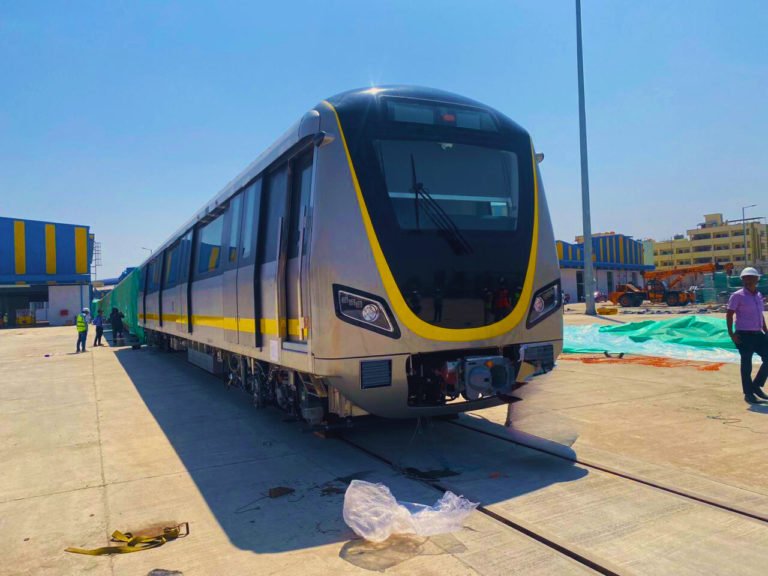
BMRCL Leasing Out Excess OFC to Expand Revenue

0
Bangalore Metro
Representative Image/ Photo credits: Systra

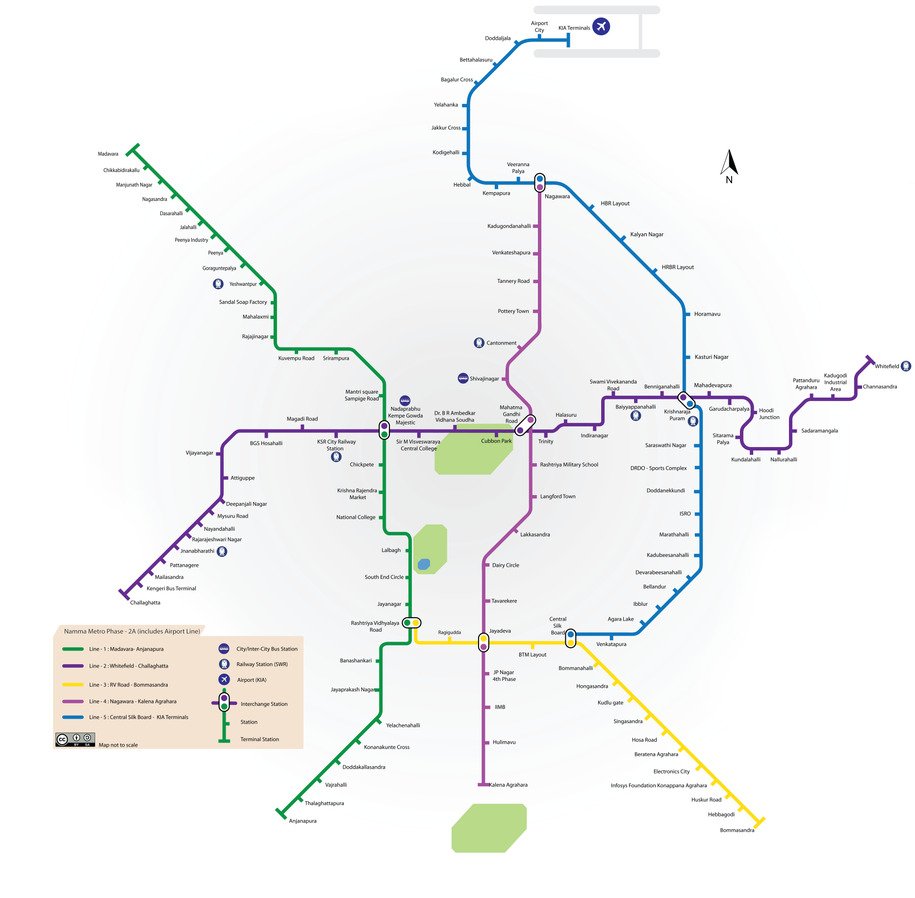
BANGALORE (Metro Rail News): From April 1, BMRCL (Bangalore Metro Rail Corporation Limited) will initiate a five-year contract to lease its excess optical fiber cables to internet service providers, multi-system operators, and telecom operators. This arrangement will cover the metro network entailing Phase-I, Phase-I extensions, and Phase-II (Reach-5), comprising Purple, Green, and Yellow lines.

Chief Public Relations Officer, BMRCL, BL Yashwanth Chavan, said that the current 5-year contract for seven contractors using BMRCL cables to provide connectivity to their customers using the Metro network will expire on March 31st. Additionally, the Bangalore Metro made an annual non-fare box revenue of Rs 4.5 crore.

Name of the telecom firms getting new contract:

  • Hathway Digital Ltd.
  • Sify Technologies
  • Shyam Spectra
  • Hathway Cable
  • Datacom Ltd.

The new contract covers the Bommasandra line to RV Road ranging 42.3km Phase 1 and all extensions launched afterwards.

Operators’ deployment of each cable tray per station costs Rs 17,00 per month, while the maintenance charges per pair of Kilometres are Rs 700 per month.

Chavan adds that Sify Technologies has quoted the highest bid of Rs 5,040 per pair km per month, implying the rate for the rest of the companies. BMRCL is looking forward to an enhanced revenue of Rs 5 crore.

Leasing out the space for commercial establishments inside Metro stations or parking contractors, along with leasing out optical fiber cables, is expected to fetch a decent amount of revenue.


Discover the endless possibilities of our city’s Metro at InnoMetro, our flagship Expo and Conference. Be an active participant in shaping its future towards a more sustainable tomorrow. Stay informed and join us to take a step towards a brighter future.

Advertisement1
InnoMetro_2026

RVNL and YFC-BBG JV Bids for Civil Construction Contracts C-06 & C-08 of Nagpur Metro Phase 2

0
Nagpur metro / Representational Image

NAGPUR (Metro Rail News): Rail Vikas Nigam Limited (RVNL) and YFC Projects—BBG Infrastructure JV are the only two bidders for the Nagpur Metro Phase 2 civil construction contracts C-06 and C-08.

The civil construction contracts floated by Maharashtra Metro Rail Corporation Limited (MAHA-METRO) include the construction of 16 elevated metro stations, with Reach 2B, 3A, and 4A in the Kemptee corridor, Hinga corridor, and Kapsi corridor, respectively.

Separate packages will be issued to construct elevated viaducts connecting these stations.

Both bids were invited between Jan – Feb 2024, with a deadline of 900 days (i.e. 2.5 years).

Nagpur Metro's Phase II Map
Nagpur Metro’s Phase II Map

Package C-06

  1. Estimated cost: Rs. 307.34 crore
  1. Scope: 
  • Construction of 7 elevated metro stations, Aqua Line (Reach 3A). The stations’ names are Mount View, Rajiv Nagar, Wanadongri, APMC, Raipur, Hingna Bus Station, and Hingna.
  • Construction of 3 elevated metro stations, Aqua Line (Reach 4A). The stations’ names are Pardi, Kapsi Khurd, and Transport Nagar.

Package C-08

  1. Estimated cost: Rs. 203.75 crore
  1. Scope: 
  • Construction of 6 elevated metro stations in Orange Line’s northern extension (Reach 2B). 
  • The stations’ names are Cantonment, Kamptee Police Station, Kamptee Municipal Council, Dragon Palace, Golf Club, and Kanhan River Metro Station.

Bids submitted for technical evaluation can take a couple of months to process.


Discover the endless possibilities of our city’s Metro at InnoMetro, our flagship Expo and Conference. Be an active participant in shaping its future towards a more sustainable tomorrow. Stay informed and join us to take a step towards a brighter future.

Advertisement1
InnoMetro_2026

Afcons Infrastructure Secures Contract for Kochi Metro’s Pink Line Phase 2 Project

0
Kochi Metro
Kochi Metro

KOCHI (Metro Rail News): Afcons Infrastructure emerged as the selected bidder for the Kochi Metro Rail Limited’s (KMRL) Phase 2 construction project, specifically for Package KBC3, which focuses on developing the new Pink Line. The announcement came after Afcons was identified as the sole technically qualified contender, placing them in a favorable position for the contract ahead of the financial bid opening. Competing bids from the consortium of KEC International and Sadbhav Engineering, along with Rail Vikas Nigam Limited (RVNL), were disqualified in December 2023 for not meeting the technical requirements outlined in the tender.

The Phase 2 expansion introduces an 11.2 km elevated line, dubbed the Pink Line, which will feature 11 new stations stretching from JLN Stadium to Kakkanad and Infopark, often referred to as Smart City. The specific segment of the project, Package KBC3, includes the construction of a viaduct and ten stations between Palarivattom Junction and Infopark, excluding certain elements like architectural finishes and entry/exit structures, which will be addressed in subsequent packages.

KMRL had initially called for bids in September 2023 without disclosing the estimated cost, setting a completion deadline of 600 days. Though not officially confirmed, it’s understood that Afcons placed a bid of Rs. 2137.01 crore. The final approval of the contract is pending, awaiting confirmation of a USD 122.3 million loan from the Asian Infrastructure Investment Bank (AIIB), which had conducted its final appraisal review on February 29, 2024, following a concept review on November 7, 2023.

The stations planned along the Pink Line include a new station box at Jawaharlal Nehru Stadium adjacent to the Blue Line, and stops at Palarivattom Junction, Alinchuvadu, Chembumukku, Vazhakkala, Padamughal, Kakkanad Junction, Cochin SEZ, Chittethukara, KINFRA Park, and Infopark/Smart City, which will link to the Kochi Water Metro. The timeline and detailed financial implications of Afcons’ bid relative to KMRL’s estimates remain uncertain, pending formal contract approval and loan acquisition from AIIB.

Advertisement1
InnoMetro_2026