Home Blog Page 14

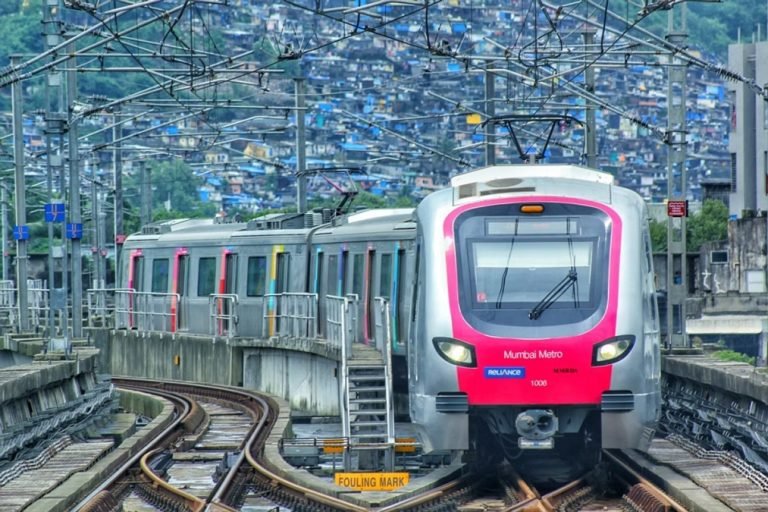
3 Bids Received for Interim Consultant Contract of Mumbai Metro Line-11 

0
Mumbai Metro
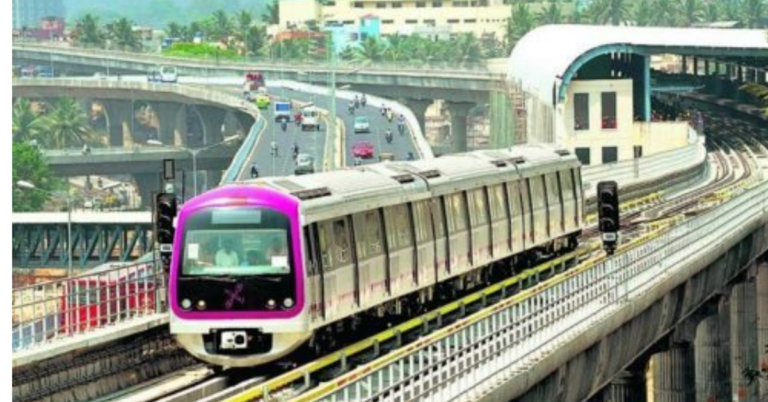
Representational Image

MUMBAI (Metro Rail News): Mumbai Metro Rail Corporation Ltd. (MMRC) has received 3 bids for the interim consultant contract of Mumbai Metro Line-11 (Green Line). The Mumbai Metro Green Line spans 18 km from Anik Bus Depot to Gateway of India covering 14 underground stations. 

MMRC has continued to fine-tune the project’s alignment over the past year. The most recent configuration provides for 14 underground stations, compared to 16 proposed earlier. As part of these revisions, stations earlier planned at Crawford Market and Coal Bunder have been removed from the alignment.

Bidders 

  • Oriental Consultants Global Co. Ltd.
  • PADECO Co., Ltd
  • SYSTRA MVA Consulting (India) Pvt. Ltd.

MMRC’s Brief Scope: Selection of Interim Consultant for Mumbai Metro Line 11 (Anik Depot to Gateway of India).

The consultants appointed under this short 6-month contract will assist Mumbai Metro Rail Corporation Ltd. (MMRC) in initiating early, pre-construction activities for Mumbai Metro Line 11. Their primary role will be to prepare tender documents for key consultancy packages that will remain in force throughout the full implementation period of the project.

The tendering process for the interim consultancy of Mumbai Metro Line 11 has progressed to the technical evaluation stage, where submitted bids are currently being examined. This stage generally takes several weeks, after which the financial bids of those meeting technical requirements will be opened to identify the lowest bidder for the contract. 

Once completed, Line 11 will stand as Mumbai’s third fully underground metro corridor, following Line 3 (Aqua Line) and Line 7A (Red Line).


Join the 6th edition of InnoMetro to explore how the progressions in AI are improving the railway systems, including ticketing, rolling stock, and signalling. Witness the innovation from 200+ exhibitors at India’s leading show for metro & railways which is going to be held on 21-22 May 2026 at Bharat Mandapam, New Delhi. 


Register now: https://innometro.com/visitor-registration/

Advertisement1
InnoMetro_2026

Ceigall India Becomes L1 for Civil Contract of Jaipur Metro Phase 2

0
Jaipur Metro

JAIPUR (Metro Rail News): Jaipur Metro Rail Corporation (JMRC) has announced Ceigall India Limited as the lowest bidder for the first civil contract of Jaipur Metro Phase 2. 

In October 2025, JMRC issued a tender for the first civil contract of Jaipur Metro Phase 2. Technical bids were opened on 15 Dec 2025 announcing that 13 firms have submitted bids for the contract. The technical evaluation of the submitted bids occurred on 16 Jan 2026. After the technical evaluation round, financial bids were opened on the same day and JMRC revealed that Ceigall India is the lowest bidder for the contract. 

Financial Bid Values 

Bidder NameBid Value
Ceigall India Limited857.1 Cr 
M/s. Dineshchandra R. Agrawal Infracon Pvt. Ltd954.3 Cr 
J Kumar Infraprojects Ltd955.9 Cr 
Ashoka Buildcon Ltd964.7 Cr 
Rail Vikas Nigam Limited1062.3 Cr 
HG Infra Engineering Limited1069.7 Cr 
Afcons Infrastructure Limited1075.3 Cr 
Larsen and Toubro Limited1085.5 Cr 
Ranjit Buildcon Limited1162.2 Cr 
G R Infraprojects Limited1244.3 Cr 
NCC Limited1252.6 Cr 
KEC International Limited1403.9 Cr 
Kalpataru Projects International Limited1559.5 Cr 

Contract Duration: 1020 Days

Brief Scope of Work: Design and Construction of Elevated Viaduct and 10 Elevated Stations viz. Prahladpura, Manpura, Bilwa Kalan, Bilwa, Goner Mod, Sitapura, JECC, Kumbha Marg, Haldighati Gate, and Pinjrapole Gaushala (excluding Architectural finishing) from Chainage (-) 600 m to 11400 m, including spur line towards Depot of Jaipur Metro Phase-II MRTS.

The Jaipur Metro Phase 2 Project consists of one North-South corridor which spans 42.8 km connecting Prahladpura with Todi Mod covering 36 stations. Out of 36 stations planned for the corridor, 34 will be elevated while the remaining two stations will be underground. 


Join the 6th edition of InnoMetro to explore how the progressions in AI are improving the railway systems, including ticketing, rolling stock, and signalling. Witness the innovation from 200+ exhibitors at India’s leading show for metro & railways which is going to be held on 21-22 May 2026 at Bharat Mandapam, New Delhi. 

Register now: https://innometro.com/visitor-registration/

Advertisement1
InnoMetro_2026

Mumbai One App: Enabling the Vision of a Unified Digital Ticketing System for the City

0
Interview with Mr. Sanjay Mukherjee, IAS, Metropolitan Commissioner of MMRDA

During an interaction with Metro Rail News, Mr. Sanjay Mukherjee, IAS, Metropolitan Commissioner of MMRDA, explained how the Mumbai Metro has progressed from a predominantly paper-based ticketing system to a fully digital model. He emphasised India’s first unified ticketing platform, the “Mumbai One App”, which brings metro, railways, buses, and monorail services together on a single interface. Mr. Mukherjee expressed that moving from paper tickets to digital options has improved system availability, eased station-level congestion, and lowered operational costs. He reiterated that digital ticketing is no longer just a convenience feature; it has become a core component that strengthens operations, improves revenue, and makes public transport more convenient. Here are the edited excerpts:

Q1. What has been the scale and pace of Mumbai Metro’s transition from paper-based ticketing to digital platforms?

Over the last 3 years, the Mumbai Metro has undergone a rapid shift from a system that relied almost entirely on paper-based QR tickets to one where digital transactions form the majority of ticketing activity. According to Maha Mumbai Metro Operation Corporation Limited (MMMOCL), Metro Lines 2A & 7 now record more than 67% of daily ticketing through digital modes, compared to a more than 90% dependence on paper QR tickets in 2022.

This transition has helped reduce congestion at station counters, as fewer passengers now need to queue for paper tickets. It has also lowered the operational effort involved in handling physical tickets. As per the officials, this digital shift has not only improved day-to-day station management but has also positioned the system to support integrated and multimodal travel across the Mumbai Metropolitan Region (MMR).

Q2. What operational challenges did the metro face when it began with paper-only ticketing in April 2022?

When Phase 1 of Metro Lines 2A and 7 (Aarey–Dahanukarwadi) began operations in April 2022, the system depended entirely on paper-based QR tickets. These were issued through station counters, customer care points, and Ticket Vending Machines (TVMs). 

A very high volume of paper QR tickets had to be printed every day, which created steady pressure on both staff and equipment. Long queues were common at counters during peak hours, as every transaction involved issuing a physical ticket. The large consumption of paper rolls added to day-to-day operational costs, and the continuous printing of QR codes caused frequent wear and tear of the AFC equipment.

Additionally, the old system relied on heavy manpower that had to be deployed for cash handling, crowd control, and ticketing support, adding to operational load. According to officials, these early difficulties indicated that a shift to digital ticketing would be necessary to manage growing ridership and improve system efficiency.

Q3. How did the launch of the Mumbai 1 NCMC card support the vision of paperless ticketing?

The turning point came in January 2023, when the Hon’ble Prime Minister launched the Mumbai 1 National Common Mobility Card (NCMC) while inaugurating Mumbai Metro Line 2A & 7. Unlike closed-loop cards used in some other metros, Mumbai opted for an open-loop, bank-issued model, which allows wider usage and supports nationwide interoperability.

Key commuter products introduced:

Tourist Pass (Unlimited rides):

  • 1-Day Pass-80
  • 3-Day Pass-200

Store Value Pass:

  •  5% discount on weekdays
  •  10% discount on Sundays & national holidays

Trip Passes:

  • 45 trips-15% discount
  • 60 trips-20% discount
  • 25% discount for senior citizens, persons with disabilities, and students (up to Class 12)

Simultaneously, the Automatic Fare Collection (AFC) system was upgraded to accept about 30 NCMC variants issued by different banks, ensuring the system could support multiple card types. This phase resulted in around 35% adoption of paperless ticketing, along with reduced queues and quicker gate validations.

Q4. What additional initiatives were taken to widen access and support high-frequency commuters?

To make metro travel more accessible and convenient for regular commuters, MMRDA introduced several initiatives. One of the key steps was the launch of NFC-enabled wearable devices such as smartwatches, wristbands, rings, and keychains. These wearables allowed commuters to pass through entry gates quickly without needing to handle a card, making travel faster and more convenient.

In addition, MMRDA made its ticketing system more widely available by opening its APIs through the ONDC (Open Network for Digital Commerce) platform. This allowed third-party apps to integrate metro ticketing directly, creating more options for commuters to buy tickets without relying solely on the metro’s own infrastructure. Eight apps, including Pelocal, One Ticket, Yatri Railways, Red Bus, Trip Ozo, EaseMyTrip, Tummoc, Highway Delite, and Nav,i were connected through this system. According to officials, this integration helped in reducing marketing costs, reaching more users, and building a multi-partner ticketing ecosystem for commuters.

Q5. How did the introduction of WhatsApp ticketing in October 2024 change commuter behaviour and digital adoption rates?

MMRDA conducted detailed studies on commuter behaviour and found that passengers preferred using platforms they were already familiar with for daily transactions. Based on these insights, WhatsApp ticketing was introduced in October 2024 to provide a simpler and more convenient way to purchase metro tickets. The adoption of this service was immediate: within a few months, WhatsApp accounted for 23% of total ticketing, paper ticket usage decreased proportionally, and queues at ticket counters were noticeably shorter. When combined with other digital ticketing modes, over 67% of all tickets were being purchased digitally. Officials described this development as Mumbai reaching a “digital tipping point,” showing that familiarity and ease of access were key factors in increasing digital adoption.

Q6. What operational improvements were observed after digital adoption increased?

MMRDA reported that the rise in digital ticketing led to noticeable improvements in revenue, AFC performance, and manpower utilisation across the metro system.

Ticketing Mode Shift

The rise in digital adoption brought a clear change in how commuters purchased tickets. Paper ticket usage dropped by around 33%, while NCMC cards grew to about 43% of the overall share. WhatsApp, which had no presence earlier, quickly reached nearly 22%, and mobile app-based options and other digital modes also increased from almost zero to a noticeable share.

Revenue Improvements

According to MMRDA, digital ticketing directly contributed to revenue performance. Peak-hour transactions became faster, helping convert more passengers quickly. The issues, including ticketing leakage and cash-handling discrepancies, led to a decline in cash transactions. The digital platforms, such as NCMC and ONDC-linked channels, also encouraged more recurring travellers, which improved revenue stability.

AFC System Benefits

The improvements were also visible in the Automatic Fare Collection system. Lower QR ticket printing reduced strain on AFC equipment, which led to fewer failures and less maintenance. NFC-based ticketing enhanced gate throughput and faster validation times, which optimised crowd movement during peak periods.

Manpower Optimisation

The shift to digital modes lowered the need for staffing at physical ticket counters, as fewer commuters depended on paper tickets. This transition also decreased the cash-handling tasks. As per the officials,  these operational changes not only extended AFC equipment life but also reduced the cost incurred per ticket.

Q7. Why is the Mumbai One App being seen as a game-changer for Mumbai, and how does this app improve the overall travel experience for people across the region?

The Mumbai One Unified Mobility App was introduced in October 2025, and it is India’s first platform to unify ticketing and travel information across Metro, monorail, suburban rail and bus services. The app integrates 11 operators, including Metro Lines 1, 2A, 7, 3 and the Navi Mumbai Metro, the Western, Central, Harbour and Trans-Harbour railway networks, bus services such as BEST, NMMT, MBMT and TMT, and the Monorail. More services like auto-rickshaws, radio taxis and other feeder modes are planned to be added.

Through this app, commuters can plan routes based on cost, time or convenience. They can also purchase tickets for different modes in a single transaction, which supports easy movement across the metro, bus and train systems. The app also covers first- and last-mile requirements and provides a unified wallet and a common QR system for all available transport modes.

Officials have described this platform as the foundation of “One MMR Mobility,” where the focus is on giving commuters one continuous travel experience rather than separating services by operator.

Q8. What does the Mumbai Metro’s ticketing transformation indicate for future urban mobility systems?

The ticketing transformation on Mumbai Metro Lines 2A and 7 shows how urban mobility systems are moving toward greater efficiency, financial stability, and commuter-focused design. The shift from lakhs of paper QR tickets to NCMC cards, NFC wearables, WhatsApp ticketing and, most recently, the Mumbai One app illustrates how a corridor can evolve into a fully integrated digital mobility model. According to officials, this journey proves that digital ticketing is no longer just an add-on for convenience. Instead, it has become a fundamental element that strengthens operations, supports revenue growth, and makes public transport more reliable..

In what ways the platforms like the Mumbai One app changing commuter behaviour and improving the overall travel experience across the city?

Digital ticketing isn’t just a tech upgrade, it is a behavioural shift. When our systems work seamlessly together, the city moves with far greater ease. And when mobility becomes intuitive through familiar platforms like WhatsApp and a single unified app, travel suddenly becomes simpler and far less stressful. Mumbai One App brings all operators together on one platform is already changing the way Mumbai moves, simplifying decisions, speeding up journeys, and reducing the stress of daily travel. At its heart, One MMR Mobility is about respecting people’s time and giving them one smooth journey across the entire region, no matter which mode they choose.


Join the 6th edition of InnoMetro to explore how the progressions in AI are improving the railway systems, including ticketing, rolling stock, and signalling. Witness the innovation from 200+ exhibitors at India’s leading show for metro & railways which is going to held on 21-22 May 2026 at Bharat Mandapam, New Delhi

Register now: https://innometro.com/visitor-registration/

Advertisement1
InnoMetro_2026

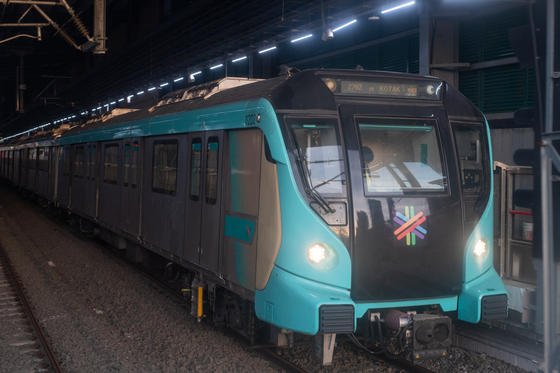
Univastu India Bags E&M Work Contract for Mumbai Metro Line 4 & 4A

0
Mumbai Metro

MUMBAI (Metro Rail News): Univastu India has secured an electrical & mechanical works  contract worth ₹391.76 Crores for Mumbai Metro Line 4 & Line 4A. The 32.32 km Mumbai Metro Line 4 (Wadala to Kasarvadavali) and its 2.7 km extension, also known as Line 4A (Kasarvadavali to Gaimukh), form the “Green Line,” a major elevated corridor connecting central Mumbai (Wadala) through Thane to the northern suburbs.

Originally, Mumbai Metropolitan Region Development Authority (MMRDA) awarded the Package CA-298 of Mumbai Metro to Larsen & Toubro (L&T). But now L&T has subcontracted this package to Univastu India. 

Contract’s Scope of Work: The contract includes the Construction of Design, Manufacture, Supply, Installation, Integration, Testing and Commissioning of Electrical & Mechanical works including 5 Years of Comprehensive Maintenance after 2 years of Defect Liability Maintenance Period for Mumbai Metro Line 4 and Extension Corridor (4a) of MMRDA against CA-298. 

The Scope also covers training, DLMP & CMP including supply of spares, special tools, testing and diagnostics equipment, jigs and fixture etc. for maintenance and repairs of the E&M for 32 Stations at main line and Depot for 5 Years of Comprehensive Maintenance after 2 years of Defect Liability Maintenance Period for Mumbai Metro Line 4 & 4A project-– E&M Works (22 Stations & 1 Depot).

Also Read: https://metrorailnews.in/electrification-contract-of-mumbai-metro/


Discover how AI is bringing the next phase of sustainable urban rail mobility for Viksit Bharat at InnoMetro 2026, India’s prime exhibition and conference for metro & railways which is going to held on 21-22 May 2026 at Bharat Mandapam, New Delhi.

Register now: https://innometro.com/visitor-registration/

Advertisement1
InnoMetro_2026

Hyderabad Metro: Demonstrating System Excellence Despite PPP Model Stress and Revenue Limitations

1
Exclusive interview with Mr. K.V.B. Reddy, MD & CEO of L&TMRHL

Metro Rail News conducted an exclusive interview with Mr. K.V.B. Reddy, MD & CEO of L&TMRHL. In the discussion, Mr. Reddy outlined the operational performance of Hyderabad Metro, highlighting its 99.99% punctuality and overall system reliability. He also detailed the measures undertaken to improve ridership, including last-mile connectivity initiatives, multimodal integration through feeder services, and partnerships in e-mobility solutions.

Mr. Reddy explained that L&TMRHL’s decision to exit the project was based on long-term financial sustainability considerations. He further discussed the need to strengthen the ecosystem for PPPs in large infrastructure projects. According to him, policymakers should continue to develop frameworks that combine private-sector operational expertise with public-sector stability, while private entities must account for long gestation periods and the service-oriented nature of urban transit systems. He said that with transparent processes and shared accountability, PPPs can remain a viable model for urban mobility in India. Here are the edited excerpts: 

1. Could you walk us through your illustrious professional journey spanning over 4 decades?

My journey over the last four decades has spanned power, infrastructure, and large-scale public mobility systems. I began in 1983 with NTPC Delhi as an Engineering Executive Trainee and spent over 12 years building a strong foundation in planning and systems operations. After rising to Manager (Planning & Systems – NCR), I moved to Essar Group in 1995, where I spent 22 pivotal years leading diverse EPC and power-sector projects, eventually heading Essar Power Limited as CEO. In 2017, I took charge of L&T Metro Rail (Hyderabad) Limited, leading the ₹20,000-crore Hyderabad Metro Rail Project world’s largest PPP metro system. Under this journey, the Metro has grown into a backbone of Hyderabad’s mobility, having carried 780 million commuters until 31st October 2025. Professionally, the transition from power systems to urban mass transit gave me the opportunity to apply technical, commercial, and strategic experience to a project that directly serves citizens daily. It reinforced my belief that integrity, fairness, and disciplined execution remain the timeless pillars of impactful leadership.

2. What have been your key learnings from handling a project of this scale and complexity under constant public and political scrutiny?

Managing Hyderabad Metro has shown me that transparency, responsiveness, and operational excellence are non-negotiable when you serve millions. A metro system is evaluated every minute by its users, and that shapes a leadership environment where accountability becomes instinctive. The Metro’s steady ridership growth crossing 780 million cumulative journeys has reaffirmed that when you consistently deliver safety, on-time performance, and reliability, public trust becomes your strongest asset. With Hyderabad ranking No. 1 in India for On-Time Performance at 99.99% in FY24, ahead of every other member metro system, it became clear that delivering service excellence under scrutiny requires relentless discipline, constant feedback loops, and empathy for daily commuter realities.

3. Hyderabad Metro, the world’s largest metro project built on a PPP model, has reached a critical juncture with  L&T’s decision to exit the project. Could you walk us through the primary commercial and operational factors that led to this decision?

Hyderabad Metro’s operational success has been unquestionably reflected in industry-leading KPIs such as Operating Revenue to Operating Cost ratio of 3.22, the highest among all Indian metros in FY24. The system is also highly cost-efficient, with a Service Operations Cost of just ₹4,861 per train hour, the best performance nationally.

However, PPP viability depends on long-term financial alignment, and evolution rate of ridership or rate of model shift across India including Hyderabad have evolved slower than originally forecasted. Even with good ridership the revenue curve of a ₹20,000-crore capital-intensive PPP project remains extended. Constraints in unlocking non-fare revenue in India, unlike global metros where it contributes nearly half of total income, also impacted long-term financial balance. The pandemic further disrupted early-year projections, creating structural imbalance. L&T’s decision was therefore a responsible business call ensuring that the system transitions into a framework that supports its long-term sustainability while safeguarding commuter experience.

4. Could you elaborate on L&TMRHL’s initiatives for first- and last-mile connectivity and sustainability?

Our philosophy has always been that a metro is only as strong as its accessibility. Over the years, we have strengthened multimodal integration through feeder services, e-mobility partnerships, expanded pedestrian access, and re-engineered interchange flows. These access improvements have played a major role in Hyderabad Metro reaching 216.77 million passenger journeys in FY24, making it one of the highest-utilised metro systems in the country. 

From a sustainability standpoint, Hyderabad Metro has emerged as one of the top performers in India, reflected in its Energy Efficiency KPI ranking among the top metros for FY24, driven by regenerative braking systems, LED-covered stations, rainwater harvesting structures, and solar capacity across depots. These infrastructural choices ensure that even as ridership grows, the environmental footprint per commuter continues to decrease, positioning Hyderabad Metro as a resilient, future-ready transportation system.

FOZJsXCVcAIbOO

5. What are the key successes of the PPP model that L&T demonstrated, despite the financial outcome?

Hyderabad Metro is a compelling showcase of what the PPP model can achieve even under financial headwinds. The project delivered engineering outcomes at par with global standards while maintaining India’s No. 1 On-Time Performance (99.99%), No. 1 Maintenance Performance, and the best Service Operations Cost in the country (₹4,861 per train hour). Its Cost per Passenger Journey of ₹20.04 is the second-best in India, demonstrating exceptional operational efficiency even when benchmarked against older, government-funded systems. Public acceptance has been equally strong, with the Metro crossing 780 million passenger rides. Beyond operational excellence, the Metro has catalysed urban transformation in IT corridors, business districts, and residential zones, validating the larger urban-development thesis behind PPP in transit.

6. What structural and policy gaps must India address to make PPPs more sustainable?

If India wants more PPPs in urban transit, financial and institutional frameworks must evolve to reflect ground realities. Metro projects require decades to mature, and ridership projections across Indian cities including Hyderabad have consistently stabilised more slowly than initial models anticipated. Even with strong KPIs, such as Hyderabad’s Operating Revenue to Operating Cost ratio of 3.22 (No. 1 nationally), farebox income alone cannot sustain a capital-intensive PPP system. India needs more enabling policies for non-fare revenue generation, land value capture, station commercialisation, and integrated urban planning. Flexible concession models capable of absorbing shocks like pandemics—are essential, as are ridership forecasting standards aligned with actual commuter behaviour. PPPs thrive when public and private expectations align around shared risk, long-term viability, and adaptive financial frameworks.

7. How is L&TMRHL coordinating with the Telangana government to maintain service continuity during this transition?

Our coordination with the Government of Telangana and HMRL has been structured, transparent, and continuous. Detailed system documentation, technical audits, and operations mapping are being conducted collaboratively to ensure the transition does not impact daily service. Even during this phase, the Metro continues to maintain India’s top performance standards, including 99.99% punctuality, best-in-country maintenance performance, and consistently high car availability. With cumulative ridership reaching 780 million by October 2025, the priority is to ensure that commuters experience absolute continuity. Every operational team signalling, rolling stock, station management, and safety is aligned with government bodies to keep service delivery smooth, reliable, and completely unaffected during transition.

KVB Reddy 1

8. What financial structuring lessons can future PPP metro projects in India learn from Hyderabad Metro?

Hyderabad Metro highlights that long-term financial sustainability of PPP metros depends on diversified revenue, conservative ridership assumptions, and built-in flexibility. Despite having one of the strongest operational profiles in India ₹20.04 cost per journey (2nd best), ₹2.22 cost per passenger-km (2nd best), and the lowest service cost per train-hour (₹4,861) farebox-dependent PPP frameworks remain vulnerable to macro disruptions. 

Financial models must therefore explicitly factor multi-year gestation periods and allow periodic restructuring. Non-fare revenue and transit-oriented development must be central to the model rather than supplementary. Hyderabad Metro’s experience reinforces that PPP success rests not just on operational excellence but on financial constructs that evolve alongside the city and the economy.

9. What message would you like to convey to policymakers and private players exploring PPPs in urban transit?

PPPs are powerful engines for accelerating India’s transit infrastructure, but they demand long-term vision, calibrated risk-sharing, and policy ecosystems that evolve with real-world conditions. Hyderabad Metro’s operational performance top national rankings in punctuality, maintenance, and operating efficiency demonstrates what private-sector engineering, strategy, and discipline can deliver. The ridership of 780+ million ridership is proof of the social impact such partnerships can create. Policymakers should continue to foster models that blend private-sector expertise with public-sector stability, while private players must recognise the long gestation and public-service ethos intrinsic to urban transit. When rooted in transparency and shared accountability, PPPs can redefine mobility outcomes in India.

10. How do you envision the future of private-sector participation in India’s metro ecosystem?

The future will likely shift toward hybrid models where the private sector participates deeply in EPC, operations, technology, fare collection, and commercial development, even if full DBFOT structures evolve. India’s metros will require private innovation in areas such as AI-driven operations, energy management, digital ticketing, demand forecasting, and passenger experience. The performance benchmarks Hyderabad has set such as leading the country in punctuality, maintenance, and service cost efficiency show how private-sector capability elevates transit systems. As Indian cities grow denser and mobility needs intensify, public–private co-creation will become essential for delivering high-quality, financially resilient, and commuter-centric metro networks.


Join the 6th edition of InnoMetro to explore how the progressions in AI are improving the railway systems, including ticketing, rolling stock, and signalling. Witness the innovation from 200+ exhibitors at India’s leading show for metro & railways which is going to held on 21-22 May 2026 at Bharat Mandapam, New Delhi

Register now: https://innometro.com/visitor-registration/

Advertisement1
InnoMetro_2026

Indian Railways to Launch 9 New Amrit Bharat Trains

0
Amrit Bharat trains

Railway Minister Ashwini Vaishnaw recently announced that nine new Amrit Bharat Express trains will be flagged off very soon. The new Amrit Bharat Express train will link West Bengal and Assam with Bihar, Uttar Pradesh, Karnataka, Tamil Nadu and Maharashtra. 

The 9 new Amrit Bharat Express has been mentioned below: 

1 Guwahati (Kamakhya) – Rohtak Amrit Bharat Express

2 Dibrugarh – Lucknow (Gomti Nagar) Amrit Bharat Express

3 New Jalpaiguri – Nagercoil Amrit Bharat Express

4 New Jalpaiguri – Tiruchirappalli Amrit Bharat Express

5 Alipurduar – SMVT Bengaluru Amrit Bharat Express

6 Alipurduar – Mumbai (Panvel) Amrit Bharat Express

7 Kolkata (Santragachi) – Tambaram Amrit Bharat Express

8 Kolkata (Howrah) – Anand Vihar Terminal Amrit Bharat Express

Amrit Bharat Express trains offer affordable, non-air-conditioned long-distance sleeper-class travel. PM Modi stated “The new Amrit Bharat trains mark a significant step in improving passenger comfort and connectivity. Other benefits include boosting commerce and tourism!”

Indian Railways launched the Amrit Bharat Express in December 2023 and has already operationalized 30 services. Indian Railways plans to expand the network further by adding new routes.


Discover how AI is bringing the next phase of sustainable urban rail mobility for Viksit Bharat at InnoMetro 2026, India’s prime exhibition and conference for metro & railways which is going to held on 21-22 May 2026 at Bharat Mandapam, New Delhi

Register now: https://innometro.com/visitor-registration/

Advertisement1
InnoMetro_2026

Wabtec Expands Locomotive Services Capabilities in India

0
Wabtec Expands Locomotive Services

Wabtec Corporation and Indian Railways celebrated the start of locomotive service operations at the Siliguri Maintenance Shed in West Bengal, India. The shed expands Wabtec’s locomotive service capabilities in the eastern part of the country and marks a new service model in India by leveraging existing Indian Railways infrastructure and staff.

“The Siliguri Maintenance Shed represents another milestone in our partnership with Indian Railways,” said Sandeep Selot, Managing Director and Vice President, Wabtec Freight Business. “It will play a critical role in supporting reliability and availability of state-of-art locomotives deployed for border and strategic operations in the Northeast region of India and the gateway to Southeast Asia. This shed adds to our existing maintenance operations at Roza, Gandhidham, and Gooty, which combined will service Indian Railways’ 1,000 Wabtec locomotives across the country.”

The Siliguri Maintenance shed will support an Indian Railways’ fleet of 250 Wabtec Evolution Series locomotives. Wabtec will provide regular maintenance, supervision, material and warehouse management, shed control, logistics, and remote diagnostics. These services will support the locomotive fleet deployed on critical freight operations hauling commodities like food grains, fertilizers, cement and containers along the strategic gateway to 8 Northeastern states of India. 

“The Siliguri shed represents a unique partnership where Indian Railways provides the infrastructure and manpower, while Wabtec leads the technical supervision to ensure the fleet meets the key performance metrics including availability, reliability, and fuel efficiency,” said Rajneesh Sah, Senior Director, Freight Services, Wabtec. “We are focused on implementing maintenance practices that drive faster turnaround for the locomotive fleet in the critical Northeast region.”


Discover how AI is bringing the next phase of sustainable urban rail mobility for Viksit Bharat at InnoMetro 2026, India’s prime exhibition and conference for metro & railways which is going to held on 21-22 May 2026 at Bharat Mandapam, New Delhi

Register now: https://innometro.com/visitor-registration/

Advertisement1
InnoMetro_2026

DMRC to Introduce Integrated Last Mile Connectivity Services in Collaboration with Sahkar Taxi Cooperative Ltd. 

0

NEW DELHI (Metro Rail News): The Delhi Metro Rail Corporation (DMRC), in line with the vision of the Ministry of Housing and Urban Affairs (MoHUA), is set to introduce Integrated Last Mile Connectivity (LMC) services from metro stations to enhance passenger convenience and ensure seamless end-to-end urban mobility across the National Capital Region (NCR). 

The initiative is aimed at strengthening first- and last-mile access to the Delhi Metro network and addressing the growing concern of air pollution in Delhi by promoting the use of environment-friendly and efficient modes of transport.

image 43

Delhi Metro has emerged as the backbone of public transportation in the National Capital Region, catering to millions of commuters every day. While the metro network provides fast, safe and reliable mass transit, access to convenient and affordable last mile connectivity remains a critical factor in ensuring a truly end-to-end travel experience. Recognizing this need, DMRC has taken a significant step towards improving passenger convenience by integrating organized last-mile mobility services with metro operations.

In this regard, DMRC has executed a Memorandum of Understanding (MoU) with Sahkar Taxi Cooperative Ltd. (STCL), a multi-state cooperative society and a cooperative based mobility service provider operating the mobility platform branded as “Bharat Taxi”. The “Bharat Taxi” platform is an initiative of the Ministry of Cooperation, Government of India, and is designed to promote cooperative based economic models while ensuring fair and transparent service delivery.

The collaboration between DMRC and Sahkar Taxi Cooperative Ltd. aims to provide affordable, reliable and safe last mile connectivity services from DMRC metro stations through bike taxis, auto-rickshaws and cab services. These services will offer commuters multiple travel options based on distance, time, affordability and convenience, thereby reducing dependence on unorganized or informal modes of transport.

Under the proposed arrangement, Sahkar Taxi shall operate Bike taxis, Auto Rickshaws and cab services on a marketplace (aggregator) model for Last Mile Connectivity initially from 10 identified metro stations. In addition, as part of the initial pilot phase, dedicated bike taxi services shall be deployed at two metro stations, namely Millennium City Centre and Botanical Garden, by 31st January 2026. The pilot deployment will help assess commuter response, operational feasibility and service effectiveness before further expansion.

A key feature of this initiative is digital integration to ensure a seamless passenger experience. The “Bharat Taxi” mobile application, available for download on Android and IOS platform, shall be integrated with the DMRC Sarthi application. Following this integration, door-to-door mobility services will be made available to DMRC commuters through a unified digital platform, allowing passengers to plan, book and access metro and last mile services in a single journey flow.

The integration of Apps will enable passengers to identify available last mile options at metro stations, obtain fare estimates, track vehicles, and complete their journeys conveniently. This digital approach is expected to improve transparency, reduce waiting time, and enhance overall service reliability for metro commuters.

Fare rates under this initiative shall remain competitive in comparison to existing market offerings. While peak-hour pricing may apply in line with demand variations, peak-time fare surges shall be capped to ensure affordability and protect passenger interests. The fare structure is designed to strike a balance between passenger convenience and the economic sustainability of service providers.

To ensure effective dissemination of information and enhance passenger awareness, appropriate signages shall be installed at metro stations informing commuters about the availability of last mile connectivity services, booking options and service locations. These measures will help passengers make informed travel choices and improve adoption of the services.

The introduction of integrated last mile connectivity services also aligns with DMRC’s commitment towards sustainable urban transportation. Road transport is a major contributor to air pollution in the National Capital Region, and inadequate last mile connectivity often leads to increased dependence on private vehicles. By facilitating easy access to organized bike taxis, auto rickshaws, and cabs, this initiative is expected to contribute towards reducing private vehicle usage, lowering vehicular emissions, and improving overall air quality in Delhi.

Through this initiative, DMRC aims to further strengthen its role as the backbone of environmentally responsible and passenger centric urban transportation in the National Capital Region. The integrated last mile connectivity framework is expected to enhance the overall attractiveness of public transport, encourage modal shift from private vehicles to metro based travel, and support broader national objectives related to sustainability, digital integration and cooperative development. 


Join the 6th edition of InnoMetro to explore how the progressions in AI are improving the railway systems, including ticketing, rolling stock, and signalling. Witness the innovation from 200+ exhibitors at India’s leading show for metro & railways which is going to be held on  21-22 May 2026 at Bharat Mandapam, New Delhi.

Register now: https://innometro.com/visitor-registration/

Advertisement1
InnoMetro_2026

Bullet Train Project: NHSRCL Awards Independent Safety Assessment Consultancy to Italcertifer S.p.A.

1
BEML to Supply High Speed Train

Italcertifer S.p.A. has received a Letter of Acceptance (LoA) from National High Speed Rail Corporation Limited (NHSRCL) for undertaking consultancy services related to the Independent Safety Assessment (ISA) for the Mumbai–Ahmedabad High Speed Rail (MAHSR) Project. 

PHOTO 2026 01 15 12 53 35

NHSRCL invited bids for this contract with a 2558 Days- deadline. Technical bids were opened on 1 Oct 2025 revealing that only 2 firms have submitted bids for the contract. The technical evaluation of the submitted bids occurred on 14 Nov 2025 and both the firm’s bids qualified. Then financial evaluation of the bids took place on 14 Jan 2026. During the financial evaluation round Italcertifer s.p.a was declared as the lowest bidder for the contract and received LoA from NHSRCL. 

Financial Bid Values 

Firms Bid Value 
Italcertifer S.P.A.₹ 53.6 Cr 
Aether Engineering Solutions Pvt Ltd₹ 147.4 Cr

Contract Duration: 2558 Days

Contract Scope Of Work: Selection of Consultant for Independent Safety Assessment (ISA) of Mumbai- Ahmedabad High Speed Rail (MAHSR) Project. 

The Mumbai–Ahmedabad High-Speed Rail (MAHSR) Project is a 508.17 km long under-construction high-speed rail line which connects Mumbai in Maharashtra with Ahmedabad in Gujarat through 12 stations. The stations have been mentioned below:

Stations: Mumbai (Bandra Kurla Complex), Thane, Virar, Boisar, Vapi, Bilimora, Surat, Bharuch, Vadodara, Anand/Nadiad, Ahmedabad, and Sabarmati


Join the 6th edition of InnoMetro to explore how the progressions in AI are improving the railway systems, including ticketing, rolling stock, and signalling. Witness the innovation from 200+ exhibitors at India’s leading show for metro & railways which is going to be held on  21-22 May 2026 at Bharat Mandapam, New Delhi.

Register now: https://innometro.com/visitor-registration/

Advertisement1
InnoMetro_2026

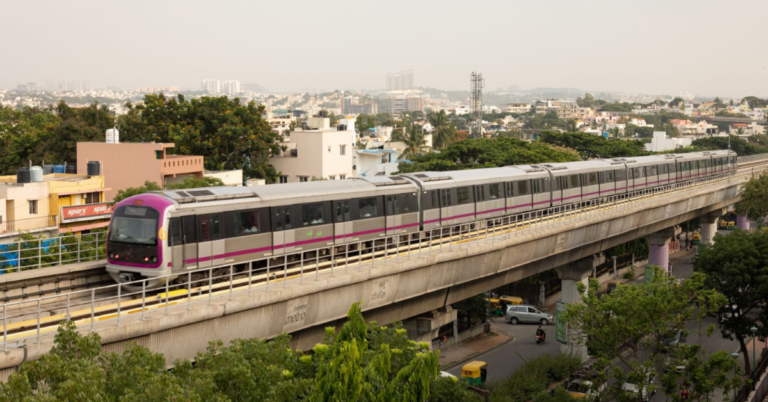
BMRCL Floats Worth Rs.4,187 Cr Civil Tenders for Bangalore Metro Phase 3

0
Bangalore Metro
Image Source: BMRCL

BANGALORE (Metro Rail News): Bangalore Metro Rail Corporation Limited (BMRCL) has floated tender for 3 major civil contracts of Bangalore Metro Phase 3. 

The Bangalore Metro Phase 3 spans 44.65 km and consists of two new metro corridors. The Phase 3 of Bangalore Metro aims to enhance connectivity in western Bangalore. The details of the corridors  have been mentioned below: 

Corridor Route  Length Total No. of Stations
Corridor 1Kempapura – JP Nagar 4th Phase32.15 km22 Stations 
Corridor 2Kadabagare – Hosahalli12.5 km9 Stations 

Tender 1 

Opening Date14 Jan 2026
Closing Date25 Feb 2026
Tender Id2026_BMRCL_262932_1
Tender NoBMRCL/Ph3/DD/P3/2026/145
Pre-Bid Meeting28.01.2026
Tender Security (EMD)Rs. 14.16 Crores 

Contract Value: Rs. 1415.65 Crores 

Contract Duration: 48 Months

Contract’s Scope of work: Construction of Elevated structures (Metro Viaduct, Rail cum Road Flyover & Stations) for a length of approx. 6.652 Km (5.012 Km in Corridor-1 & 1.64 Km in Corridor2) from Ch: +11.734 Km to Ch: +16.746 Km in Corridor-1 and from Ch: +4.620 Km to Ch: +6.260 Km in Corridor 2 and 3 Nos of Elevated Double Decker Metro Stations (Central Portion) viz . Vinayaka Layout, Papareddy Palya, BDA Complex Nagarbhavi in Corridor-1 and 1 No. of Elevated Station (Single Decker) at Sunkadakatte in Corridor-2 and Rail cum Road Flyover for a Length of 5328m including Depot Entry line (1.217 Km) from Corridor-1 to Sunkadakatte Depot and Corridor-2 to Sunkadakatte Depot and Depot Exit line, Loops and Ramps, Road widening, Utility diversion and other allied works of Bengaluru Metro Rail Project, Phase 3”.

Tender 2

Opening Date14 Jan 2026
Closing Date25 Feb 2026
Tender Id2026_BMRCL_262930_1
Tender NoBMRCL/Ph3/DD/P2/2026/144
Pre-Bid Meeting28.01.2026
Tender Security (EMD)Rs. 13.96 Crores 

Contract Value: Rs. 1396.10 Crores

Contract Duration: 48 Months

Contract’s Scope of work: Construction of Elevated structures (Metro Viaduct, Rail cum Road Flyover & Stations) for a length of 5.408 Km from Ch: +6.326 Km to Ch: +11.734 Km and 4 Nos of Elevated Double Decker Metro Stations (central portion) viz. Hoskerehalli , Dwaraka Nagar, Mysore Road and Nagarbhavi Circle including Rail cum Road Flyover for a Length of 5408m, Loops and Ramps, Road widening, Utility diversion and other allied works of Bengaluru Metro Rail Project, Phase 3”

Tender 3 

Opening Date14 Jan 2026
Closing Date25 Feb 2026
Tender Id2026_BMRCL_262879_1
Tender NoBMRCL/Ph3/DD/P1/2026/143
Pre-Bid Meeting28.01.2026
Tender Security (EMD)Rs. 13.76 Crores 

Contract Value: Rs. 1375.66 Crores 

Contract Duration:  48 Months

Contract’s Scope of work: “Construction of Elevated structures (Metro Viaduct, Rail cum Road Flyover & Stations) for a length of 6.521 Km excluding JP Nagar 4th Phase station from Ch: -0.330 Km to Ch: +6.326 Km and 4 Nos of Elevated Double Decker Metro Stations (central portion) viz. JP Nagar 5th Phase, JP Nagar, Kadirenahalli and Kamakya Junction including Normal Viaduct for a length of 826m and Rail cum Road Flyover for a Length of 5695m, Loops and Ramps, Demolition of Dollars Colony Junction Flyover, Road widening, Utility diversion and other allied works of Bengaluru Metro Rail Project, Phase 3”.


Join the 6th edition of InnoMetro to explore how the progressions in AI are improving the railway systems, including ticketing, rolling stock, and signalling. Witness the innovation from 200+ exhibitors at India’s leading show for metro & railways which is going to held on  21-22 May 2026 at Bharat Mandapam, New Delhi.


Register now: https://innometro.com/visitor-registration/

Advertisement1
InnoMetro_2026