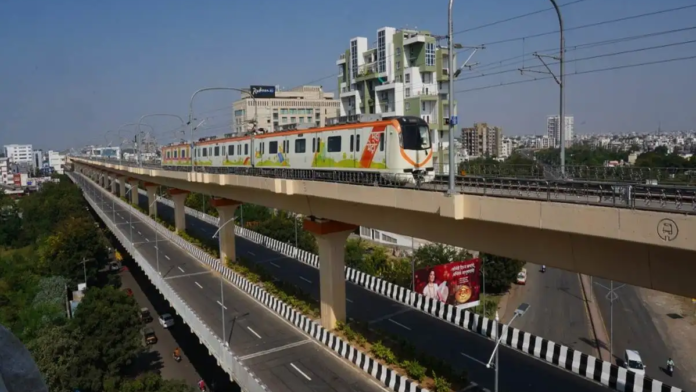
New Delhi: Prime Minister Narendra Modi has flagged-off the Delhi-Faridabad Metro Line that would allow hassle free travel for around two lakh daily commuters between the national capital and the industrial hub in Haryana.
The extension of the Delhi Metro connects Badarpur to Escorts Mujesar in Faridabad.
The total cost of the project from Badarpur to Escorts Mujesar is nearly Rs. 2,500 crore. Out of this, Rs. 1,557 crore was borne by the Haryana Government, the Centre contributed Rs. 537 crore, while the Delhi Metro provided Rs. 400 crore.
All these are elevated and located on either side of the Delhi-Mathura Road (NH-2).
“The nine-station metro corridor which was 95 per cent indigenously built will provide people a safe, affordable, quick, comfortable, reliable, environment-friendly and sustainable transport facility,” a Haryana government spokesperson said.
Haryana Chief Minister ML Khattar, addressing a press conference on Saturday, had thanked the Prime Minister for “gifting” the Metro service which would take the city to “another level of progress” with better connectivity with other NCR towns.
He had also said that the Prime Minister would be announcing the go-ahead for connecting Gurgaon with Faridabad by Metro.
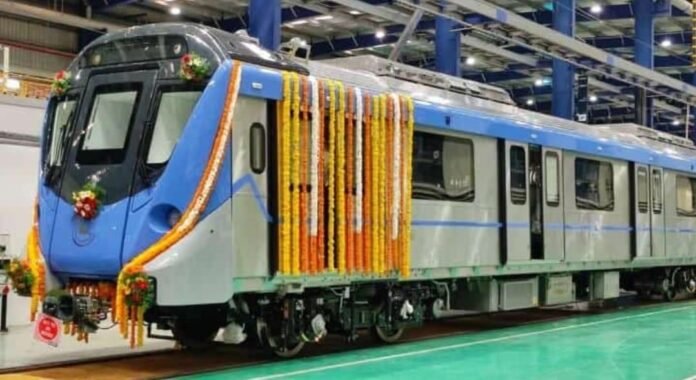
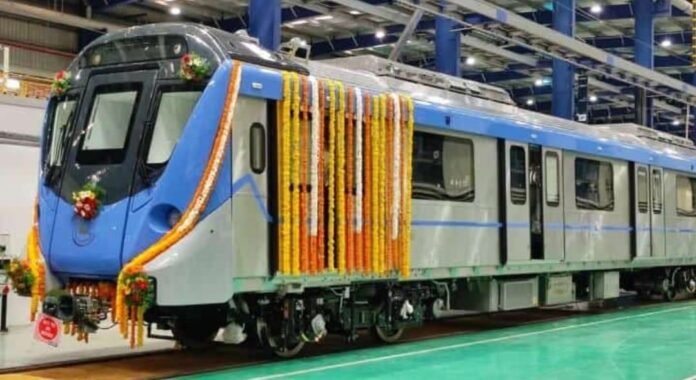
Chennai (Metro Rail News): The Chennai Metro Phase 2 project is going to witness a significant development as the first three-coach driverless train for Phase 2 is likely to have its first trial run on 26 October.
According to sources, Chief Minister MK Stalin and Union Minister of Housing and Urban Affairs Manohar Lal Khattar have been invited to flag off the trains after the commencement of successful trials.
The train set manufactured by Alstom arrived from Sri City, their Andhra Pradesh manufacturing facility and reached Poonamalle, the depot facility for Phase 2, on October 17.
Testing Procedure
According to an official statement, the 3 coaches arrived separately and each part of the train is being inspected at the Poonamalle Depot.
The train is currently stationed at Inspection Bay Line (Track) and is being tested for the functioning of circuits, brakes, ventilation, air conditioning and other systems.
For the further testing procedure, the trains will be operated at a speed of 10-15 kmph on the same track multiple times and then will be moved to the test track.
Furthermore, to enhance the passenger experience, the Chennai Metro Rail Limited (CMRL) has implemented several new features, such as new digital displays for route information and charging points in these trains.
Chennai Metro Phase 2
Chennai Metro Phase 2, spanning 116.1 km consisting of 3 corridors, was approved by the Tamil Nadu government in 2019 at an estimated cost of Rs. 69,180 crore.
Line 3 ( Purple Line )
Madhavaram station– SIPCOT 2 station
45.4 km
Total no. of Stations: 49
Line 4 ( Orange Line )
Light House station – Poonamallee Bus Depot station
(Metro Rail News): As per the Release, Hon’ble Minister of Housing and Urban Affairs (MoHUA), Shri Manohar Lal, rides Namo Bharat Trains marking the one-year successful operations of India’s first RRTS- Namo Bharat Trains, serving over 4 million passengers. Shri Manohar Lal, took a ride on the Namo Bharat train and visited key stations along the Delhi-Ghaziabad-Meerut RRTS corridor.
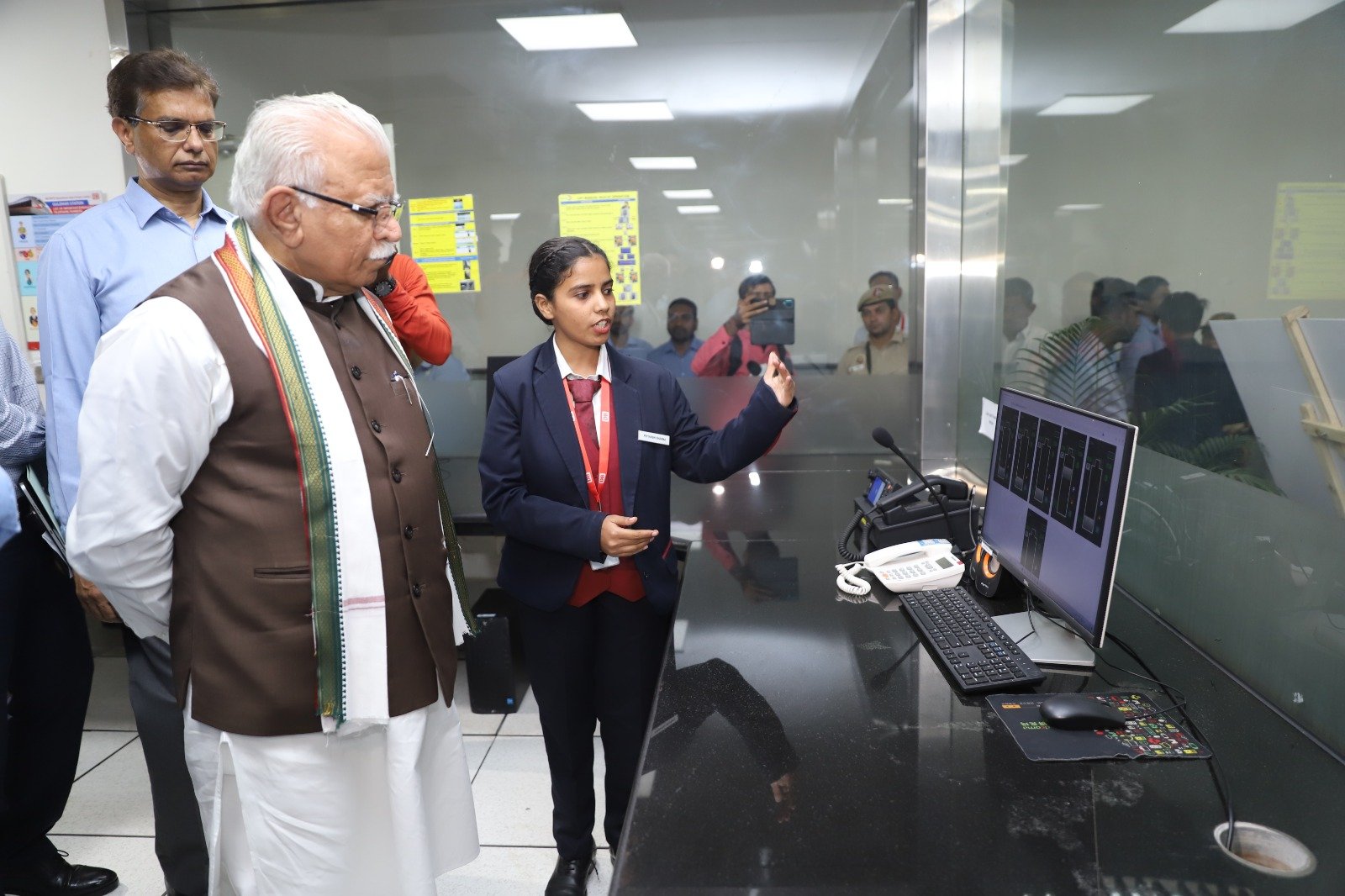
Hon’ble minister boarded the Namo Bharat train from Sahibabad station in a driving cab, where he interacted with the women train operators, acknowledging their vital contributions to the operations of India’s first RRTS corridor. He also engaged with passengers, gathering first hand feedback on their experiences with the Namo Bharat service.
He expressed satisfaction with the overwhelmingly positive response from passengers, who praised the convenience, speed, and comfort of Namo Bharat trains. Many highlighted how this new mode of transportation has significantly improved their daily commute, offering a hassle-free and reliable alternative to traditional modes of transport.
Additionally, NCRTC celebrated the one-year anniversary of Namo Bharat train operations with a special visit from school students in the morning. The children enjoyed speedy and joyful rides, fulfilled with chocolates. Commuters were welcomed with festive dhol beats, chocolates, and mementos as tokens of appreciation for their continued support. The stations were adorned with entry gates for Namo Bharat Diwas, creating a festive atmosphere.
Shri Manohar Lal started his visit from Anand Vihar RRTS Station, where he was received by NCRTC MD, Shri Shalabh Goel. The Hon’ble minister received a detailed briefing on the station’s unique design and its significance within the overall RRTS network.
He was informed about the strategically designed Anand Vihar RRTS Station, constructed just one level below ground to ensure ease of access and seamless integration with multiple modes of transport, positioning it as a vital commuter hub. With its proximity to two Metro lines, a railway station, and two inter-state bus terminals (ISBTs) in Delhi and Kaushambi, Uttar Pradesh, Anand Vihar is set to become one of the region’s busiest transit hubs. The station’s multimodal connectivity facilitates smooth transitions between various modes of transportation, enhancing convenience and accessibility for daily commuters and creating a comprehensive network of networks.
The trial run of the Namo Bharat trains have recently commenced to connect New Ashok Nagar and Anand Vihar RRTS station with already operational Sahibabad station. Hon’ble Minister then proceeded to Sahibabad RRTS Station, where he saw the various passenger-centric amenities developed for the commuters. He was presented with live models demonstrations, which offered an immersive understanding of the innovative infrastructure, advanced technologies, and services being employed in the development of the RRTS.
From the very first day of Namo Bharat’s operations, passengers have benefited from the convenience of the National Common Mobility Card (NCMC), enabling seamless travel across multiple modes of transport under the Government of India’s “One Nation, One Card” initiative.
The Hon’ble Minister was apprised that since their launch on October 21, 2023, Namo Bharat trains have significantly transformed commuting across Ghaziabad, Sahibabad, and the surrounding regions, successfully serving over 40 lakhs passengers in their first year of operations. Ghaziabad RRTS Station registered the highest footfall over the past year, followed closely by Sahibabad and Modinagar North RRTS Stations.
The Minister was also apprised of several groundbreaking technologies, many being used for the first time globally, are part of the implementation of the Namo Bharat project under the ‘Make in India’ and ‘Aatmanirbhar Bharat’ initiatives. These cutting-edge developments, aligned with the Hon’ble Prime Minister’s vision, are driving the transformation of public transport infrastructure in India.
The Honourable Prime Minister of India inaugurated the first 17-kilometre Priority Section between Sahibabad and Duhai Depot on October 20, 2023, marking the historic launch of India’s first RRTS. On March 6, 2024, another 17-kilometre stretch between Duhai and Modinagar North was inaugurated, followed by the operationalization of Meerut South RRTS Station on August 18, 2024.
Currently, Namo Bharat services operate on a 42-kilometre stretch covering nine stations, including Sahibabad, Ghaziabad, Guldhar, Duhai, Duhai Depot, Muradnagar, Modi Nagar South, Modi Nagar North, and Meerut South. The corridor will soon extend to 54 kilometres with the addition of the Sahibabad to New Ashok Nagar section, which includes key stations such as Anand Vihar and New Ashok Nagar.
RRTS distinguishes itself from other modes of transport by providing high-speed connectivity between suburban areas, significantly reducing commuting times for longer distances. This system is especially effective in addressing the challenges posed by urban expansion into new regions, such as the National Capital Region (NCR). By enabling travellers to cover greater distances in a shorter time frame, RRTS enhances accessibility and convenience, making it an ideal solution for commuters navigating the growing urban landscape.
Once the entire 82-kilometer corridor is completed by June 2025, passengers will be able to travel from Delhi to Meerut in under an hour, revolutionizing regional connectivity and enhancing the overall commuter experience.
Metro Rail News: Recently, NHSRCL released information that stations of the Mumbai—Ahmedabad High-Speed Rail (MAHSR Bullet Train) project will have all the most cutting-edge facilities and information technology.
Services at stations of the bullet train project
Facilities include- ticket offices, lounges for business travellers, a nursery, waiting places, restrooms, information booths, retail stores, and more.
photo credit to NHSRCL
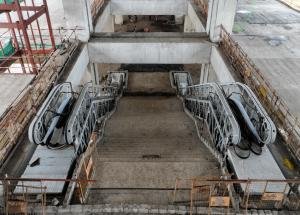
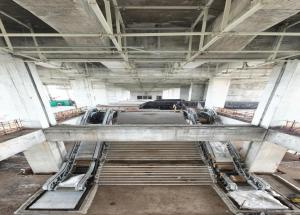
There will be 90 energy-efficient escalators constructed in total at the corridor’s 12 stations.
48 at 8 (Gujarati stations)
42 at 4 (Maharashtra stations)
Details about the escalators that will be installed at the stations of Gujrat:
Stations name
Total escalators
Directions
Sabarmati
12
8 ( from platform to concourse) 4 ( concourse to the first floor)
Ahmedabad
8
From platform to concourse
Anand
6
2 (ground to concourse)4 ( concourse to platform level)
Vadodara
4
2 (from ground to concourse )4 ( from concourse to platform level)
Bharuch
4
From ground to platform level;
Surat
6
2 (from concourse to ground level )4 (from platform to concourse)
Bilimora
4
From ground to platform level
Vapi
4
From ground to platform level
At the Anand Bullet Train station, two escalators will be installed as the first set and utilised to move people from the concourse level to the ground.
The escalators will be equipped with emergency stop buttons for quick action in the event of an emergency, a handrail finger guard safety device to prevent fingers from accidentally becoming trapped in the handrails, a dress guard (brush-style device) to prevent clothing and accessories from getting caught in the escalators, and other features to create a secure environment for passengers.
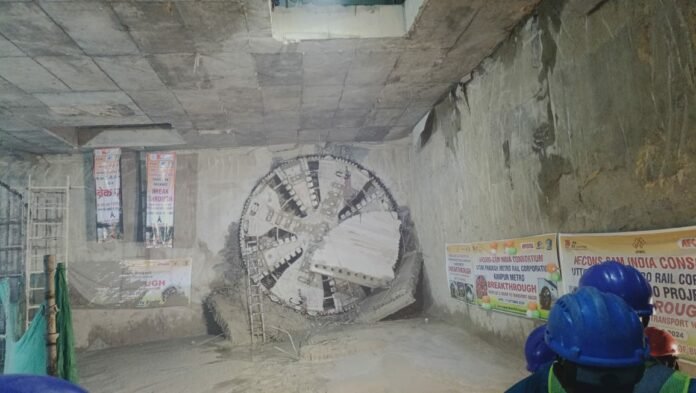
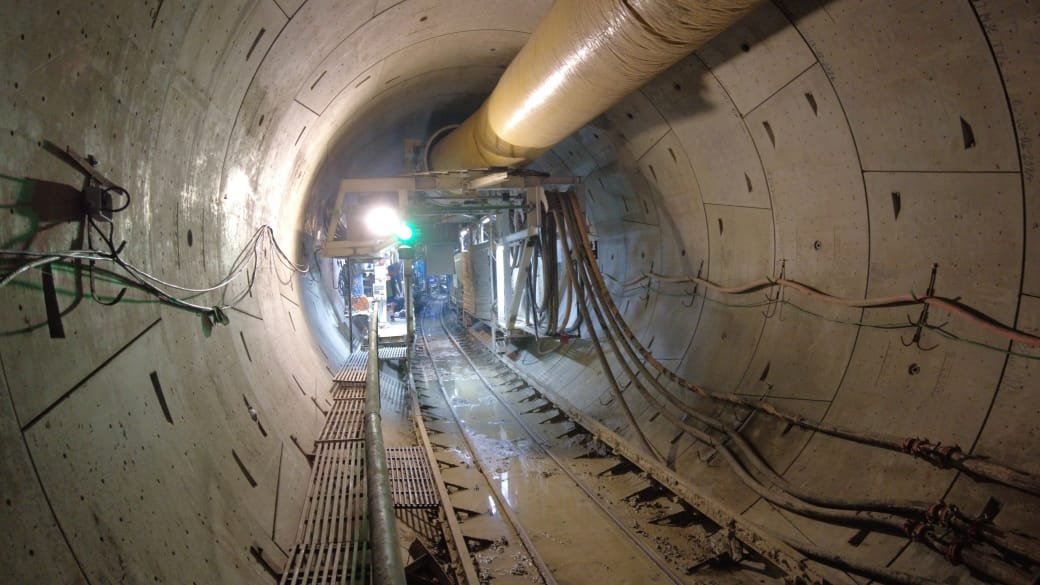
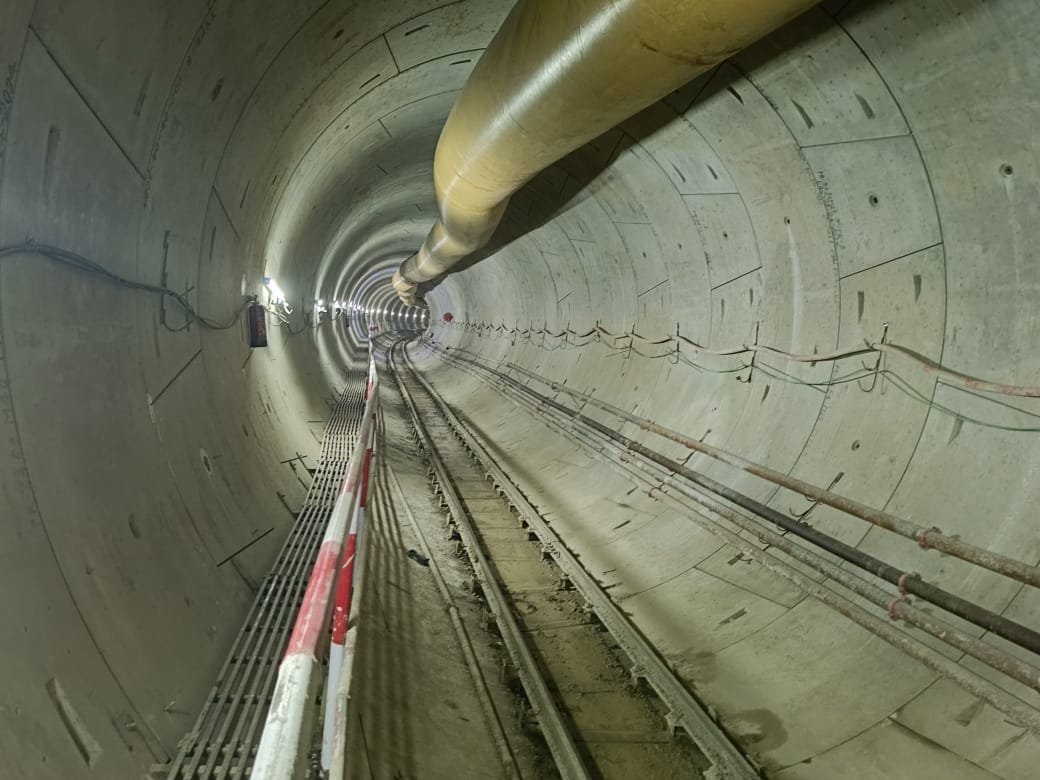
Kanpur (Metro Rail News): Kanpur Metro progressed with the second tunnel breakthrough of Tunnel Boring Machine (TBM) Azad at Transport Nagar Station under package KNPCC-06, which connects Nayaganj Station with the Transport Nagar Ramp. Afcons – Sam India Consortium celebrated the achievement.
TBM Azad (S-640 B)
TBM Azad (S-640B) is a Herrenknecht Earth Pressure Balance machine, commissioned in October 2023 as the third tunnel boring machine (TBM) in the Kanpur Metro Phase 1 project. It will construct twin tunnels on package KNPCC-06, which connects Nayaganj Station with the Transport Nagar Ramp on 23.78 km of Line-1 between IIT Kanpur and Naubasta.
photo credit to UPMRC
This is TBM Azad’s second assignment on package KNPCC-06, which will connect Nayaganj to the Transport Nagar Ramp via 3 underground stations –
Kanpur Central
Jhakarkatti
Transport Nagar
The machine took about 92 days to complete its journey after it was put into service in the middle of July.
From Kanpur Central Station towards Nayaganj Station.
Second Assignment
TBM Azad built a 330m tunnel.
From the ramp area at Swadesh Cotton Mills to Transport Nagar Station.
In March 2022, the Uttar Pradesh Metro Rail Corporation (UPMRC) awarded a contract worth Rs. 1087.67 crore to Afcons – SAM JV for a 4.65 km stretch of KNPCC-06. The contract had a 36-month deadline.
Additionally, TBM Vidyarthi (S-639B), was re-commissioned in August on a parallel down-line, from the ramp to Transport Nagar. To construct the final set of twin tunnels leading to Kanpur Central Station, both machines (TBM Azad S-640 B and TBM Vidyarthi S-639B), will be hauled via the station box of Transport Nagar, and build tunnels to Jhakarkatti Staton.
With this change, Afcons-Sam India has now achieved 3 out of 8 breakthroughs. The first two took place in March and June of 2024 at Nayaganj Station.
Ruturaj Govilkar has been appointed as the managing director of Mott MacDonald’s South Asia business.
Ruturaj will be the charge of enhancing the consultancy’s capacity to provide important clients with advisory projects and strategic infrastructure. He replaces Ashley Taylor, who will remain managing director of Mott MacDonald’s global design centre.
Mr Govilkar’s Work experience
Previously, he served as a manager director for India at Black & Veatch. With more than 32 years of experience in the engineering and construction sector, he brings an enormous amount of knowledge to the role.
Ruturaj Govilkar said: “South Asia including India, is witnessing huge investments, offering multiple growth opportunities. As multinational firms expand their operations in the region, we are seeing a growing demand for high-quality project management consultancy, advisory and engineering design expertise. Our team at Mott MacDonald combines technical know-how with a laser focus on social impact and I am looking forward to working closely with them as we build on the solid foundations that Ashley has set out.”
In Praise of Ruturaj Govilkar
Doug Wilson, Mott MacDonald’s regional managing director for international development, South Asia, Middle East and Africa at Mott MacDonald said: “I am delighted to appoint someone of Ruturaj’s calibre to this position. His outstanding track record in building business in South Asia, as well as his expertise and insight into operations, will be invaluable as we continue to expand our services for our diverse range of clients. I want to thank Ashley for her tireless commitment to transforming the South Asia business over the past year and look forward to seeing our global design centre go from strength to strength under her leadership.”
Mott MacDonald’s overview
With over 20,000 employees spread across 50 countries, Mott MacDonald is an employee-owned engineering, development, and management consultant. Infrastructure that is essential to people’s everyday lives, such as buildings, energy, transportation, and water, is planned, designed, built, and maintained by us. Delivering transformative outcomes for our customers and the communities they serve is our unwavering commitment. Our primary strength is overcoming obstacles with unsurpassed technical skills and digital innovation.
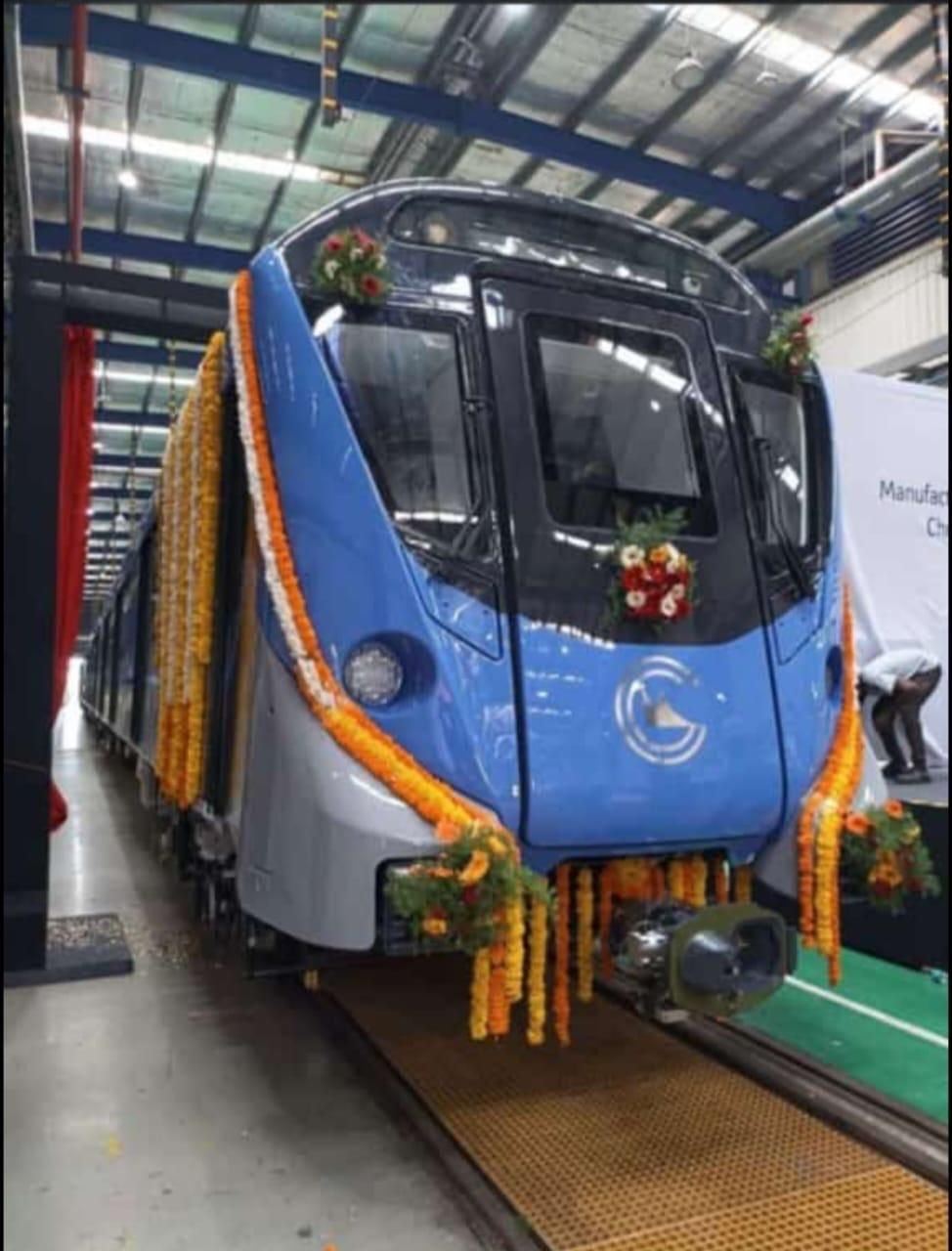
Metro Rail News: The first Metropolis metro train for the Chennai Metro Phase II has been delivered by Alstom (a global leader in smart and sustainable mobility), from its top-notch production facility in Sricity, Andhra Pradesh.
Chennai metro
These driverless Metropolis cars are part of the ‘Make in India’ and ‘Atmanirbhar Bharat’ initiatives. Intended to run at 80 kmph and reach a safe speed of 90 kmph.
When production was finished, the mock-up automobile was unveiled in front of dignitaries from the Tamil Nadu government, CMRL, and Alstom during an event held at Alstom’s Sri City site on September 22, 2024.
Olivier Loison, Managing Director of Alstom India shared his views on this momentous milestone,
“Chennai Metro has become a beacon of efficient and reliable transportation, transforming daily commutes for its residents. We are proud to support this vision by delivering world-class, made-in-India driverless metro trains that not only elevate the commuter experience but also drive sustainable mobility by reducing emissions and easing road congestion. As India’s trusted partner in advancing sustainable transportation, Alstom is committed to strengthening this partnership and reshaping Chennai’s mass transit landscape for a greener future”
Production on this innovation, which already began in February 2024, is scheduled to produce 36 trains, each with three cars. The 26 km corridor of Chennai Metro Phase 2, connects Poonamallee Bypass to Light House via 28 stations—18 elevated and 10 underground.
Salient Features of driverless trainset:
The project costs a high value of 124 million euros and also involves operation and maintenance training for Chennai Metro staff. These metro trains are built and engineered to operate automatically.
Unattended Train Operations (UTO)
Grade of automation level 4 (GOA 4)
Automatic Train Operation (ATO)
Automatic Train Protection (ATP)
Chennai commuters will have an effective, eco-friendly, and comfortable metro option with these trains because of the regenerative braking mechanism, which ensures significant energy savings. These Metropolis trains are being manufactured at the Sri City (Andhra Pradesh) manufacturing facility and were entirely developed in Bangalore, Karnataka, as part of the “Make in India” project.
Alstom’s Contribution to Chennai Metro
In 2010, Alstom supplied 208 metro cars for the Chennai Metro’s phase as it was the first contract by Chennai Metro Rail Limited (CMRL). In addition, 45 kilometres of track have been designed, tested, and put into service by Alstom along these corridors.
Alstom is further demonstrating its dedication to changing Chennai’s transportation environment and advancing the city’s transition to a more sustainable and interconnected future with the delivery of the first trainset of Chennai Metro Phase II.
Alstom’s Metropolis Metro
For almost 60 years, Alstom’s contemporary metro trains have been meeting the various needs of passengers all around the world. Metropolis metro trains are built to match new and old infrastructure and may be customized to meet various capacity requirements. Alstom Metros come in a variety of configurations ranging from 2 to 9 cars, small to large gauge profiles, various voltage systems, and customizable interior designs. They can be driven manually or autonomously. Metropolis metros have minimal environmental impact due to their high recycling rates, low noise levels, and optimized energy efficiency. In more than 70 cities across 40 nations, more than 35,000 metro cars have been ordered or are now in use.
Key Facts About Alstom
Alstom pledges to help create low-carbon futures through developing and advocating eco-friendly transportation options.
Alstom offers its varied clients the widest range of products and services in the industry, from high-speed trains, metros, monorails, and trams to complete systems, services, infrastructure, signalling, and digital mobility.
The company concentrates its design, innovation, and project management talents where mobility solutions are most needed thanks to its presence in 64 countries and talent pool of over 84,700 individuals from 184 nationalities.
Alstom, which is listed in France, generated €17.6 billion in sales during the fiscal year that ended March 31, 2024.
Alstom in India
Alstom is the sole global provider of sustainable mobility in India. Associated with the nation’s “Rail Revolution,” Alstom is a vital ally in bolstering India’s freight and passenger transportation revolutions.
The corporation serves numerous worldwide projects in addition to meeting the needs of domestic ones due to its six industrial locations and five significant engineering centres. Alstom has been at the forefront of implementing various ground-breaking innovations in India with world-class rolling stock, rail equipment & infrastructure, signalling, and services, supporting the government’s modernization plans.
Fully in line with the nation’s Make-in-India and Aatmanirbhar Bharat initiatives, Alstom is steadfastly dedicated to enhancing its local sourcing practices.
Pune (Metro Rail News): For the Phase 1 Extension (Phase 1A) project of Pune Metro, STUP Consultants – RITES JV awarded a contract worth Rs. 2.92 crore to provide Detailed Design Consultant (DDC) services.
Pune metro
In March 2024, the Maharashtra state government approved the construction of the extensions, at an estimated cost of Rs. 3756.58 crore.
Package DDC-03 (Pune Metro phase 1A)
For Package DDC-03, STUP RITES JV is responsible for designing 13 additional elevated stations on Pune Metro’s Aqua Line (Line-2), which will be expanded in both directions.
Western extension Vanaz – Chandni Chowk : (1.12 km, 2 stations )
Kothrud Bus Depot
Chandni Chowk
Map of Pune metro
Work description
Maha-metro describes the work scope for Package DDC-03, Detailed Design Consultancy Services for 11 (eleven) elevated stations in Line 2B-Ramwadi to Wagholi and for 2 (two) elevated stations in Line 2A-Vanaz to Chandni Chowk, excluding Viaduct in station parts of Pune Metro Rail Project.
The responsibilities of STUP – RITES JV will encompass the creation and submission of substitute designs for all civil, architectural, building services, electrical, and mechanical projects.
In July 2023, MahaMetro invited bids for Package DDC-03, which has a 4-year contract period and an estimated cost of Rs. 2.36 crore. Out of 3 bidders, 2 bidders were found to be qualified and one was disqualified.
STUP – RITES JV ( L1)
SYSTRA MVA Consulting (India)
With this accomplishment, Maha-Metro has completed the composition of its three DDCs project for the Phase 1 Extension. The other two projects will be carried out upon the extension of the Purple Line.
Package
Scope
Firms
DDC-01
Detailed Design Consultant for 3 elevated stations at Chinchwad, Akurdi and Nigdi
LKT Engineering
DDC-02 R
Detailed Design Consultant for architectural and E&M Services and proof checking of Swargate to Katraj corridor
PINI Group
DDC-03 (current )
Includes designing 13 new elevated stations on Pune Metro’s Aqua Line which will be extended in both directions.
STUP – RITES JV
Hence, Pune Metro Extension Phase 1 A is under construction and has been witnessing major achievements and is expected to be completed by 2029.
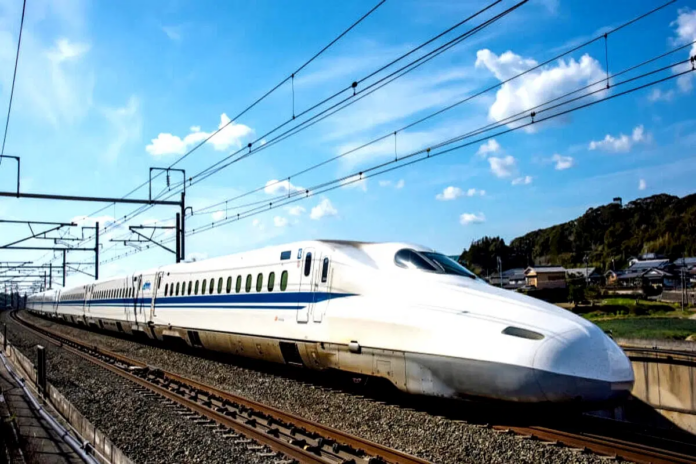
BEML Ltd. has secured a Rs. 866.87 crore contract from Integral Coach Factory (ICF) to supply two high-speed train sets for the 508 km Bullet train project from Mumbai to Ahmedabad.
ICF floated a tender for the 2 train-set contract on 5 September. Technical bids were opened on 19 September, revealing that BEML was the only firm to bid for the contract, making it the lowest bidder.
BEML will be collaborating with Medha Servo Drives for the development of propulsion systems in the 2 prototype trains.
Train specifications:
The prototype train set will comprise 8 coaches, and each coach will be manufactured at an estimated cost of 27.86 crore.
These 2 train sets will be designed for standard gauge tracks and manufactured at the Bengaluru rail coach complex, which is situated in CV Raman Nagar.
These train sets will be engineered to operate at a maximum speed of 280 km/h and an average speed of 250 km/h. They will be fully air-conditioned with reclining and rotatable seats.
As per the tender notice, the prototype train sets will be designed to operate with the European Train Control System (ETCS) Level 2 signalling system.
The tender notice clearly states that the trials for the prototype trains will be conducted on the Surat-Bilimora section of the Bullet train.
Kanpur (Metro Rail News): Kalpataru Projects International Ltd. (KPIL) – Gulermak deployed their first TBM S-1408A at Rawatpur station of Kanpur Metro’s Line 2 spanning 8.38 km from agriculture university to Barra 8 under package KNPCC-11 on 15 October.
TBM S-1408A
TBM S-1408A, nicknamed TBM Gomati, is the first of two TBM machines for the underground Package KNPCC-11, which connects the Agriculture Depot to the Double Pullia Ramp.
TBM Gomati is the fifth TBM to be deployed for constructing the 32.385 km Kanpur Metro Phase 1 project’s underground twin tunnels.
TBM Gomati will complete the following Assignments for Line 2 of Kanpur Metro:
First assignment
Rawatpur station – ramp at Agricultural University
622m Tunnel
Second assignment
Rawatpur station- Kakadeo station
772m Tunnel.
Third assignment
Kakadeo Station -Double Pullia Station
1005m Tunnel
Package KNPCC-11
KPIL – Gulermak JV secured Rs. 762.50 crore package KNPCC-11 from Uttar Pradesh Metro Rail Corporation (UPMRC) for Line 2’s underground section from Agriculture Depot to Double Pullia Ramp spanning 4.08 km in December 2023 with a 30 months deadline.
Package KNPCC-11’s scope of work includes the construction of twin tunnels from the Agriculture Depot to the Double Pullia Ramp and 3 underground stations.
Nagpur (Metro Rail News): Rail Vikas Nigam Ltd. (RVNL) has emerged as the lowest bidder to construct the civil package C6 of the 43.8 km long Nagpur Metro Phase 2 project.
Contract C-06 (Nagpur Metro phase 2)
This contract covers the construction of 10 elevated metro stations on the new 6.6 km (Reach 3A) and 5.5 km (Reach 4A) western and eastern extensions of the 19.4 km Aqua Line.
Reach 3A (Lokmanya Nagar to Hingna) consists of 7 elevated stations
Hingna Mount View
Rajiv Nagar
Wanadongri
APMC
Raipur
Hingna Bus Station
Hingna.
Reach 4A (Prajapati Square to Transport Nagar) consists of 3 stations
Pardi
Kapsi Khurd
Transport Nagar
Bidding process
In January 2024, Maha-Metro invited bids for constructing all 10 stations, with an estimated cost of Rs. 307.34 crore and a duration of 900 days.
2 bidders submitted the bids :
RVNL (Rs. 255 crore)
YFC Projects and BBG Infrastructure JV (disqualified)
RVNL’s bid of Rs. 255 crore was significantly less than Maha-Metro’s estimate of Rs. 307.34 crore. A contract should be issued in the upcoming weeks without a drawn-out financial bid evaluation process.
Nagpur-metro-Rail
So far, RVNL has secured 4 major achievements in Phase 2 including:
Package C-01 (the 6.92 km viaduct in Reach 2A)
Package C-05 (the eight stations and viaduct in Reach 1A & 2A)
Package C-08 (6 stations on Reach 2B)
Package C-06 ( 10 elevated stations on Reach 3A and Reach 4A)
Moreover, Nagpur Metro Phase 2 is currently under construction and is expected to be completed by 2026. Asian Development Bank (ADB) will finance Nagpur Metro Phase 2 with a USD 200 million (about Rs. 1678 crore) loan that was authorised in July 2024.
Furthermore, an additional loan of €210.72 million, or around Rs. 1943 crore, is presently under evaluation by the European Investment Bank (EIB).