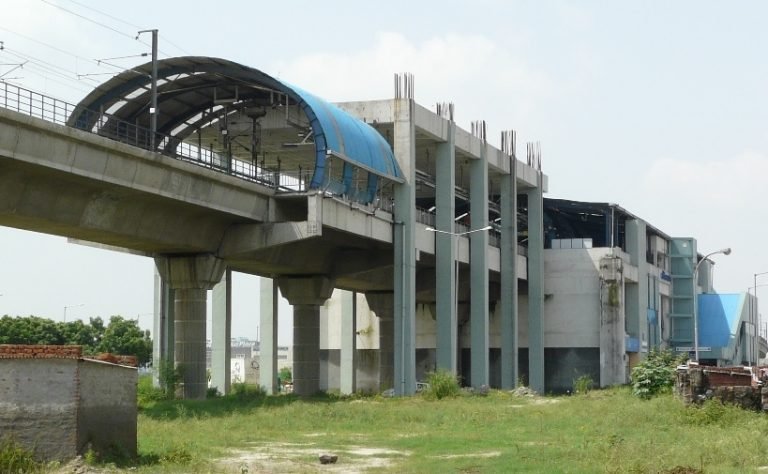
Kolkata: Plagued by delays caused by land acquisition, slum relocation and route alignment issues, the project cost of the Kolkata East West Metro has now shot up 1.85 times over the original estimate of Rs 4,875.85 crore, officials said here on Saturday.The 16.6 km long metro, part of which passes under the Hooghly river – the first such river crossing in the country, is now estimated to cost Rs 8996.96 crore, according to authorities of the implementing agency Kolkata Metro Rail Corporation Limited.“The revised cost of the two-phase project is Rs 8996.96 crore, up from around Rs 4.900 crore, Rs 4875.85 crore – to be exact,” KMRC managing director Satish Kumar told media persons here.The original project cost was sanctioned on July 30, 2008, when the KMRC was registered.Kumar said the first phase of the project covering 9.4 km and connecting the IT hub of Salt Lake Sector V with Sealdah station, is expected to be completed by June 2018.The target date for completion of the second phase, traversing a distance of 7.2 km and connecting Sealdah with Howrah Maidan, is August 2019.The Metro project – connecting two of the world’s busiest railway stations Sealdah and Howrah – was originally slated to be operational by 2012, but the date was later pushed back to October, 2014, and then to 2015.
buy kamagra effervescent online https://gilbertroaddental.com/wp-content/themes/twentyseventeen/inc/en/kamagra-effervescent.html no prescription
Over 50 percent of the work in phase 1 and six percent in phase two has been completed.The first phase had run into problems at Duttabad in Salt Lake after several of the slum dwellers refused relocation, but the hurdle has now been cleared and work was in progress for constructing permanent rehabilitation centres for them.In the second phase, problems had cropped up with regard to the route running close to heritage buildings like Raj Bhavan. The route also fell under the blue zone of the army.“Now we have gone for a realignment between Mahakaran and Sealdah stations. This has moved the route further from the heritage structure. And it now falls under the area earmarked as yellow zone by the army.“We have applied for the necessary permissions from the Eastern Command and the Archaeological Survey of India. We think now there shouldn’t be any problem,” said Kumar.The realignment cost an additional Rs 780 crore.Also, relocation of some shops of Sri Market in Howrah was also on.He said the Sealdah station will be completed by December 2017.In line with the Make In India initiative of the central government, the tender for procurement of 84 coaches – 14 cars with six coaches in each – was awarded to Bharat Earth Movers Limited in February this year. AThe total cost would be Rs 900 crore.“The rakes will start coming by September next year. Hopefully, if we can reduce the timing, then we can start the trial run earlier. And then the first phase can be completed before schedule,” he said.The project has a total elevated portion of 5.8 km, while the underground part covers 10.8 km. The entire phase two runs underground.After the realignment, the projected daily passenger load is expected to go up to seven lakh in 2020, 8.10 lakh in 2025 and nine lakh in 2035. The total number of stations is 12 – six elevated, six underground.In phase one, the authorities have completed entire twin tunneling of 2.73 km upto Sealdah and construction of elevated and underground stations are in progress.A salient feature of the project lies in the fact that it is the first metro in India under a river. The crown of tunnel below water level of Hooghly will be 26 m and the length of river crossing around 520 m.“We have started first of the twin tunnels at Howrah Maidan from April, and this tunnel will cross river Hooghly at a depth of 30 m from ground level where depth of water is 13 m. This unique tunnel of continuous drive of 2.9 km will break through at Mahakaran station in June, 2017,” said Kumar.
NGT says, all Metro rail projects need environmental clearance
New Delhi: The National Green Tribunal today held that all metro rail projects need environmental clearance after conducting proper Environment Impact Assessment.A bench headed by NGT Chairperson Justice Swatanter Kumar said Noida Metro Rail, whose construction was challenged in the plea before it, fell under Schedule 8(b) of Environment Impact Assessment Notification, 2006, relating to buildings, construction and development projects which are mandated to get prior environmental clearance.The green panel also directed upcoming Noida-Greater Noida metro project to obtain environmental clearance from State Level Environment Impact Assessment Authority (SEIAA).The order was passed on the plea filed by environmentalist Vikrant Tongad seeking directions to Noida Metro Rail Corporation (NMRC) to obtain environmental clearance for its project from Noida to Greater Noida after conducting proper Environment Impact Assessment of the project.“From the detailed project report (DPR), it is clear that the total land requirement for the project of metro rail from Noida to Greater Noida is around 2,84,762.01 sq m. However, no Environment Impact Assessment (EIA) report was prepared. This fact was verified by the applicant by inspecting the records of the project under Right to Information Act, 2005.“It is submitted that as per 8(b) of the Schedule of EIA Notification, 2006 project having covering area more than 50 ha or built up area more than 150,000 sq m requires environmental clearance and is to be appraised as category B1 project,” the plea, filed through advocate Rahul Choudhary, had said.Tongad had stated that the metro from Noida to Greater Noida will pass through Hindon and piers would be constructed on the river bed which can significantly harm aquatic habitat of the river.(Source: PTI)
Delhi Metro | Center notifies panel to revise Delhi Metro fare
New Delhi: The Ministry of Urban Development, on Monday, announced it has informed the Fare Fixation Committee for recommending revised fares of Delhi Metro Rail Corporation (DMRC).DMRC fares were last revised in 2009, despite repeated requests by the company for relief in the wake of rising electricity charges and other costs.“Set up under sections 33 and 34 of the Metro Railway (Operations and Maintenance) Act 2002, the committee has been given three months time from the date of assumption of charge by the Chairperson of the committee Justice M L Mehta for submission of its report and recommendations to DMRC,” says a statement by the ministry.DMRC has reportedly been reeling under financial crunch owing to non-revision of fares for the past many years. The operator of Metro trains in the national capital had been pressing the government to set up the FFC (Fare Fixation Committee).DMRC fares were last revised in 2009. The committee is responsible for recommending passenger fares for DMRC network in Delhi and its extension in the National Capital Region (NCR).Delhi Metro is a 50:50 partnership between the Delhi government and the Union government. According to the media reports, DMRC had written at least thrice to the ministry in the past few years requesting setting up of the committee.
Chennai Metro | Underground tunnel likely to be ready ahead of schedule
Chennai: The city’s first underground metro line is likely to be ready way before its deadline in December 2016, as it has reached the final stages of inspections.A trial run with a four-car train was conducted on the 2.7km stretch between Shenoy Nagar and Tirumangalam recently after electrification was completed. Work at the four underground stations is almost nearly complete with minor work like setting up of emergency stairs and plastering being done.CMRL officials say they are likely to receive an approval from the commissionerate of metro rail safety in the next four months. Getting a safety certification from the commissionerate is a pre-requisite for getting the final go-ahead to run the services.
The stretch, which will give residents of upmarket localities access to the mass transit system, will link Koyembedu through a ramp, which in turn will give connectivity to the Chennai airport. The elevated stretch between Saidapet and Chennai Airport is also undergoing trial runs.
Metro rail was launched in June 2015 with the inauguration of the 10km elevated line between Koyembedu and Alandur.With the lines between Shenoy Nagar and Tirumangalam, and Saidapet and Airport reaching final stages of approval, officials hope it will increase their patronage.
Rapid MetroGurgaon | Phase 2 project set to miss September deadline
Gurgaon: Rapid Metro’s second phase will miss the revised deadline of September 2016. The Phase 2 construction, happening at a cost of Rs 2,143 crore, started in April 2013.Rapid Metro has extended the deadline twice now. While it first said operations would begin by mid-2016 and months later gave out the date as September 2016, on Tuesday, a spokesperson for Rapid Metro said, “The commercial operations will start by the last quarter of 2016.”Phase 1 of the country’s first fully privately fiananced Metro service, a loop beginning and ending at Sikanderpur, has officially brought in a ridership of 35,000-40,000, far lesser than the expected 1 lakh in the first year of operation. So, Rapid Metro is banking on Phase 2 to make up for the shortfall in ridership.The latest deadline of end-2016 is unrealistic as, by its own admission, about 25% of construction work is yet to be completed.A source, on condition of anonymity, said that given the realities, it was impossible to meet the deadline.The Rapid Metro spokesperson said work was progressing at a fast pace for the south extension of Rapid Metro. “We have completed approximately 75% of our project. We are pretty much on track for starting commercial operations by the last quarter of 2016,” he said, adding that external factors had led to some delays.
Meerut Metro | Construction of Metro Project to begin by March 2017
Meerut: City residents’ dream to have a Metro is all set to come true. Divisional commissioner Alok Sinha cleared the final detailed project report (DPR) for the Meerut Metro project in a meeting on Friday.
The proposal will be sent to the state government in July and construction is likely to begin by March 2017. Both corridors will have a combined total of 29 metro stations. The total cost of the Meerut Metro project is Rs 11,450 crore.
“Apart from convenience, the Meerut Metro will also provide new employment opportunities for thousands of city residents. It will also boost tourism and industry in the city.
buy priligy online https://blackmenheal.org/wp-content/themes/twentytwentytwo/inc/patterns/en/priligy.html no prescription
By July, the state government will most likely give its nod to the project and construction will begin by March 2017. The work will be completed by 2022,” the commissioner added.
buy priligy online https://blackmenheal.org/wp-content/themes/twentytwentytwo/inc/patterns/en/priligy.html no prescription
By July, the state government will most likely give its nod to the project and construction will begin by March 2017. The work will be completed by 2022,” the commissioner added.
Rail India Technical and Economic Service (RITES) general manager Piyush Kansal said, “Corridor I (Partapur-Modipuram) will be 19.7 km in length. In this corridor, 11.6 km will be elevated and 7.2 km will be underground. It will have a total of 16 stations, 11 of which will be elevated and five will be underground.”
He further added, “Corridor – II (from Shraddhapuri phase – II to Jagriti Vihar extension) will have a total of 13 stations. Ten of these will be elevated and three will be underground. The length of this corridor will be 15 km, of which 10.7 km will be elevated and 3.5 km will be underground.”
(Source: TOI)
Delhi Metro | Traffic Advisory to General Public and Vehicle Drivers
New Delhi: Traffic on the Ring Road towards Mathura Road (along the Ashram flyover) and Bhogal (below Ashram flyover) from the DND expressway side has been diverted since this morning as a precautionary measure after a gantry crane functioning at the under construction Ashram Metro station was dislocated last night due to the heavy storm and wind. The gantry will be dismantled with the help of specialised equipments.All vehicles desirous of going towards Mathura Road or Bhogal from the DND expressway side will have to take the Ashram flyover and then take an u-turn from below the Sriniwaspuri flyover. Small vehicles going towards Mathura Road can also do so via New Friends colony. Adequate traffic marshals and temporary signage have been put up at all crucial intersections to inform the motorists.
buy lariam generic bloonlineandnew.com/lariam.html over the counter
Varanasi Metro | Centre approves Varanasi Metro Rail Project plan
New Delhi: The Centre has approved a plan for a metro service in the Prime Minister’s constituency of Varanasi – estimated to cost Rs 12,350 crore – by extending ‘provisions of the Metro Railways Act to the city . This follows a letter from the Akhilesh Yadav government to Urban Development Minister M Venkaiah Naidu last month asking for the official notification to be issued for metro rail projects in Varanasi and Kanpur because the state plans to commence construction in December.The Centre, in consultation with the Uttar Pradesh government, has now extended the provisions of the Metro Railways (Construction of Works) Act, 1978, to the metropolitan areas of Varanasi and Kanpur, paving the way for construction to start as per the detailed project reports prepared.“Ahead of the 2017 UP elections, the Varanasi metro could be a positive issue both for the Centre, given it is the PM’s constituency, as well as the Samajwadi Party, which could showcase its development projects by way of an operational metro in Lucknow by 2017 and work commencing in Varanasi and Kanpur. The Centre has wasted no time in approving the Varanasi project,” a top central government official told Media.The UP government has alloted Rs 50 crore each for the project in Varanasi and Kanpur metros in the last budget. Kanpur’s MP is senior BJP leader Murli Manohar Joshi.
RITES Ltd., a state-owned transportation and infrastructure consultancy organisation, was engaged to prepare the project report for the Varanasi metro. It estimated the total cost of the project, including central taxes and land, at Rs 12,350 crore.
Two metro corridors are planned in the city – BHEL to Banaras Hindu University (19.35 km) and Benia Bagh to Sarnath (almost 10 km). Benia Bagh will be the interchange station on both corridors, most of which will be underground. Of the 26 stations, 22 will be underground, given the congestion in Varanasi city.
Bookmark or read metro rail stories offline – Download Metro Rail News App
Delhi Metro | Recruitment of Assistant Managers & Junior Engineers in various discipline
Delhi Metro Rail Corporation (DMRC) Limited advertised for following positions from the eligible persons on regular/contact basis jobs:-DMRC Vacancy Details:
Total No. of Posts: 99
Name of the Post:
1. Assistant Manager/Electrical: 12 posts
2. Assistant Manager/Signal & Telecom: 08 posts
3. Assistant Manager/Electrical: 15 posts (for VIJAYWADA/MUMBAI/NOIDA-GR. NOIDA Project)
4. Assistant Manager/Signal & Telecom:07 posts (for NOIDA-GR. NOIDA Project)
5. Junior Engineer/Electrical: 54 posts (for VIJAYWADA/MUMBAI/NOIDA-GR. NOIDA Project)
6. Junior Engineer/Electronics: 18 posts (for NOIDA-GR. NOIDA Project)Age limit: 18-28 years as on 01.01.2016Eligible candidates may apply online from 26-05-2016 at 18:00hrs to 27-06-2016 by 23:59hrs.Other details like age, educational qualification, selection process, how to apply please visit DMRC’s website delhimetrorail.comTo get sure success in written examination buy Success Kit Online.Bookmark or read metro rail stories and job updates offline – Download Metro Rail News App
Delhi Metro | NGT seeks details of groundwater use by DMRC
New Delhi: The National Green Tribunal has taken exception to Delhi Metro Rail Corporation’s (DMRC) use of groundwater for washing of metro trains and directed it to submit details of the permission granted to it for extraction of groundwater.A bench, comprising Justice UD Salvi and expert-member Ranjan Chatterjee, which had earlier issued notices to DMRC, Delhi Jal Board (DJB) and Delhi Pollution Control Committee, also sought details regarding the use of groundwater by Delhi Metro.“Respondent No 1 (DMRC) should come out with a clear stand as to the permission regarding extraction of groundwater, its use made and the duration of its use”, the bench said.The order came while hearing a plea filed by Delhi resident Kush Kalra who had alleged that DMRC was extracting groundwater instead of using wastewater to wash its trains resulting in depletion of water table.Advocate Kush Sharma, appearing for Kalra, said that at a time when water crisis has hit 12,000 villages across Latur in Maharashtra, DMRC is busy shining its trains by “illegal” extraction of groundwater. The plea had sought directions to DMRC to compensate as per “Polluter Pays Principle” for exploiting the groundwater for washing metro trains without any permission from the requisite authorities.Referring to a RTI reply, the plea said that DMRC’s water requirement is met through borewells and DJB connection. It also said that in order to draw water from the borewell, 3 to 5 HP pump was used. “No bottled water is used, groundwater after treatment as per requirement is used for train washing…Borewells have been provided in the depots from where water is sourced.“Around 400 to 500 liters of groundwater is used for washing of one metro train. The water, after washing of metro train, is sent to Effluent Treatment Plant (ETP). The treated water is then used for gardening and excess is sent to drains,” the RTI reply had revealed.Further, another RTI response received from Delhi Jal Board said that no permission had been granted to DMRC for digging the borewells. However, in another response, a list of metro stations that had been granted such permissions was provided to DMRC, the plea said while referring to contradiction between the responses.Bookmark or read metro rail stories offline – Download Metro Rail News App
Delhi Metro | DMRC to install 50MWp Solar PV Plant in the upcoming phases
New Delhi: A workshop on “Latest development in field of Solar Energy and challenges thereof” was organized by the Delhi Metro Rail Corporation (DMRC) in collaboration with Institution of Railway Electrical Engineers (IREE), Institution of Engineering and Technology (IET – Delhi Chapter) at the India International Centre (IIC) today. Sh. Ashwani Kumar Kapoor, Member (Electrical), Railway Board was the Chief Guest for the event and Dr.Mangu Singh, Managing Director (DMRC) was the Guest of Honour. The event was attended by the senior DMRC officials, Railway officials, and the officials from other Metro rail Organisations of India.Speaking at the occasion, Dr. Mangu Singh said ‘The workshops like this provide an effective platform to deliberate on the challenges being faced by all the stakeholders in realising the ambitious plan of Govt. of India to achieve 40 GW roof top Solar power generation capacity by 2021.’ Dr. Singh further added, ‘Delhi Metro is dedicated to provide Environment friendly system to the nation. As part of it, DMRC has set its own solar mission, for which DMRC is installing Solar PV(Photo Voltaic) power plants at various locations in the existing and upcoming networks of DMRC.As on date, DMRC has commissioned 6.3 MWp of Roof top Solar Plants. Further, DMRC has signed Power Purchase Agreements (PPA) for 32 MWp roof top Solar power plants. Delhi Metro Rail Corporation Ltd has a target to implement 50 MWp Solar PV Plant on flat/curved roof of the stations, Train Depots and other buildings owned by DMRC inclusive of upcoming Metro stations by 2021. In addition, DMRC is also planning to have electricity from offsite solar power plants of approx. capacity 500 MWp located in other parts of the country like MP, Rajasthan to be carbon neutral for its total electrical energy requirements for next 25 years.The workshop was addressed by many distinguished speakers from The Energy Research Institute (TERI), Delhi Technological University (DTU), Solar Energy Society of India (SESI), followed by presentations and Panel discussions from experts, Senior officers from Indian Railways, Metro Systems, IIT Delhi and Solar Energy Corporation of India (SECI).Bookmark or read metro rail stories offline – Download Metro Rail News App
Bengalore Metro | Bangalore Metro Station will soon have startups spaces to business work
Bangalore: Bangalore also called the Silicon Valley of India, is a major tech-hub of the country and attracts a lot of geeks from around for its booming startup culture.It comes as no surprise that the Government in Karnataka is promoting startups to such an extent that spaces at metro station will soon be rented to budding entrepreneurs for their ventures. In a report by Media, the Bangalore Metro Rail Corporation is planning to send out notification to startups for renting space at large metro stations in the city.Bangalore’s metro service is still under construction and only recently a small patch of 4.8kms underground was made open to the public for transportation. There have been certain roadblocks on the way preventing the metro to expand as quickly as planned.Owing to low ridership in the beginning, the plan had taken a backseat, but with the new stations opened recently, the metro officials have come out with the idea of staging startups at the stations to utilize the whole area properly.A statement from BMRC read, “Some of the stations have ample spaces that can be allowed to given to start-ups for for commercial activities. Earlier, they wouldn’t have got good rentals because of insufficient footfall but now investors or mentors of these start-ups are keener about it. This is for a purely commercial purpose wherein the investors are examining the feasibility of their projects and are the decision makers of whether to go ahead with or not.”BMRC was quick to confirm that these startups will only be operational if they reduce the inconvenience to riders in terms of getting access to electronics, groceries, meals, jewellery, art and craft and repair shops etc.Effectively, these small startups will cater to the riders at these stations or around the stations to get their daily fix without the hassles of travelling to far off areas, considering the traffic in Bengaluru is hectic.An excellent initiative from BMRC to give entrepreneurs exposure to the daily riders on the metro. In case you missed your morning coffee, you know where to get it before reaching the office, or let’s say your phone stopped working last night, you could get it repaired at a metro station close to you.
Green Metro Systems | DMRC’s Jahangirpuri-Samaypur Badli section and RSS at Mukundpur Depot gethighest rating
New Delhi: The DMRC’s newly opened Jahangirpuri-Samaypur Badli Section and the Receiving Sub Station(RSS) at Mukundpur Depot of the Delhi Metro have been awarded the highest possible rating (Platinum) for adherence to green building norms, by the Indian Green Building Council (IGBC), which has devised a rating mechanism for Metro stations and buildings on a scale of platinum, gold, silver etc for following the green building specifications. The Platinum ratings were also awarded to the DMRC residential Complex Metro Enclave at Saket while the DMRC headquarters at Metro Bhawan received ‘Gold’ ratings for maintaining the green building norms.The awards were given today during the 2nd National Conference on ‘Green Metro Systems’ at Metro Bhawan, organised by DMRC and IGBC, a part of the Confederation of Indian Industries (CII). A Web Application for monitoring Solar Energy Generation by DMRC was also launched during the inaugural session of this daylong conference.IGBC’s Green Mass Rapid Transit System (MRTS) Rating is the World’s first exclusive rating system to address sustainability in new Mono Rail and Metro Rail systems. This rating system is a tool to enable new Rail based MRTS to apply green concepts during design & construction, so as to further reduce environmental impacts that are measurable. The overarching objective of IGBC Green MRTS Rating is to ensure environmental sustainability, while enhancing commuter experience.Delhi Metro is developing all its stations of Phase 3 as green buildings. Adhering to green building norms, 12 metro stations of the Delhi Metro network in phase III of the project have already been awarded with platinum, the highest possible rating by the Indian Green Building Council. This achievement will help stations to reduce their power consumption by 35%.DMRC’s Managing Director and the chief guest for the occasion, Dr. Mangu Singh stressed on the importance of adopting green technologies and said,” Metro being a mass transit rail based system is in any case environment friendly, but we are continuously striving to make it more and more energy efficient with focus on greater care for the environment.” Dr. Singh emphasized on the water recycling and solar initiatives carried out by Delhi Metro which reflects the organizations efforts at the micro level.Applauding DMRC for its various green initiatives, Dr. Prem C Jain, Chairman, IGBC said, ”Sustainability and enhanced commuting experience is built-up in DMRC system by design. DMRC has set a benchmark in maintaining the ‘Green’ norms and has inspired other upcoming Metro systems in the country to follow its path of sustainable development.Sh. A K Gupta, Director (Electrical), DMRC and the Chairman for the occasion highlighted on the different green initiatives by DMRC. He said that adherence to green building norms in Delhi Metro starts as early as in the construction phase itself.The National Conference on ‘Green Metro Systems’ was attended by delegates from other Metro Systems in the country and renowned speakers on Sustainable Urban Development from different sectors. All the senior officers from DMRC were also present during the conference.To read our news story offline – Download Metro Rail News App