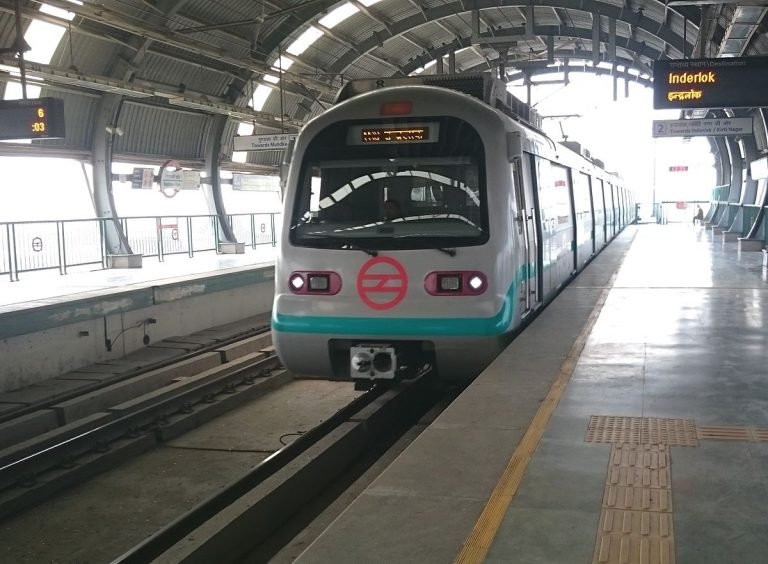
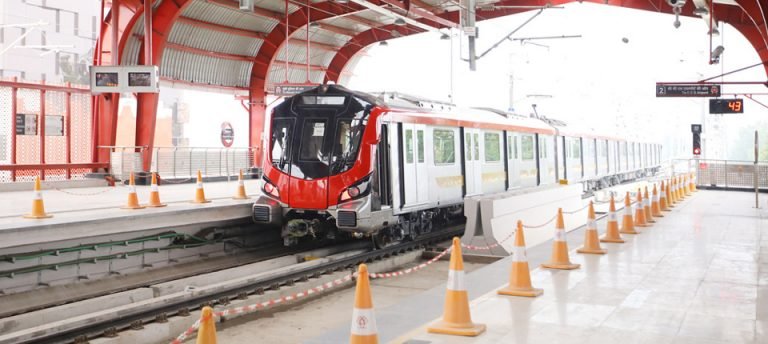
Commissioner for Metro Railways Safety (CMRS) issued his safety clearance to DMRC to open section between Janakpuri West to Kalkaji Mandir of Line-8
In his detailed report, he directed DMRC to after fulfillment of all conditions and rectification of observations given in Inspection report DMRC should open metro services on this section before 30th June 2018.
After opening of this section entire Magenta line of DMRC will be in service of public.
DMRC feels that the present metro compartments already have one compartment reserved for women. With introduction of first-class compartments in metro, the carrying capacity is likely to be affected.
Reserved Coach for Women in Delhi Metro
A DMRC official had expressed that out of six coaches that will be part of Mumbai Metro, MMRDA is planning to reserve half a coach for first class compartment. This move might impact the carrying capacity and also discourage commuters to take metro over other public transport. DMRC plays an instrumental role in metro rail projects as it build Metro Corridors across the country. It is also helping MMRDA in construction of metro corridors in the Mumbai Metropolitan Region (MMR).
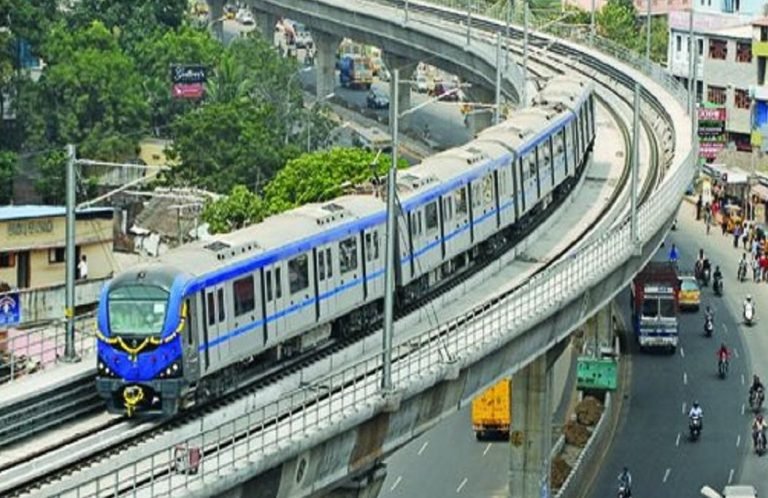
MMRDA officials feel that by introducing first class compartments, it will be able to attract car riders to take metro, thereby reducing traffic. DMRC officials on the other hand explained that similar initiative was taken by Chennai Metro and it was not successful.
Additional Metropolitan Commissioner, MMRDA, Pravin Darade in media briefing shared that introducing first class compartments will not impact carrying capacity. He further explained that if traffic increases, they plan to add two more coaches to accommodate the rush. Darade also shared that they planned to offer advance booking facilities along with Wi-Fi connectivity as well as USB charging ports within metro stations and coaches.
MMRDA is making steady progress in terms of laying down metro lines. It has already started the process of procuring metro trains for three corridors for metro stations. These include DN Nagar-Mandale Metro-2B corridor, the Dahisar East-Andheri East Metro-7 corridor and Dahisar – DN Nagar Metro-2A corridor. Together these three metro stations will handle 15 lakh passengers on daily basis.
Surat: After the commencement of the metro in the city, the surcharges on the Surat Metro project will be equally divided into the state government and Surat Municipal Corporation (SMC). In the amendment of the DPR, the Municipal Administration has recommended Metro surcharge. The decision will be made in the meeting of the Standing Committee on Thursday.
The metro train for the city may be a good dream right now, but when this dream will come true, its surcharge is set to hit the Suratians. The SMC administration has written letter to government to introduce surcharge for metro services. After the approval from the Standing Committee, the formalities of the execution will be done. In view of the provision of Metro Rail to the Suratians, the Municipal Administration has prepared a proposal for charging surcharges.
A view of Surat City in Night
According to this, 10 percent of Metro surcharge will be levied on the property’s registry. Half of this will go to the State Government and some part on the account of Municipal Corporation. The Municipal Administration has recommended Metro surcharge on the taxes levied on property. Its rate is not fixed at the moment, but this amount will come to the part of the corporation.
After the change in the central government’s metro policy, the executive body Delhi Metro Rail Corporation (DMRC) had sent the revised DPR to the SMC. While making policy modifications at the local level, the draft administration draft prepared by the SMC has sent it to the Standing Committee for approval.
This will be decided in the meeting of the committee which will be held on Thursday. After approval from the revised DPR, the state government agency will be sent to Mega.
Apart from this, a proposal to remove the barrier coming in the Tapi bridge connecting Pal-Umra was also included in the meeting agenda. The land has to be amended to complete the work of this bridge stuck for years. The decision to settle the matter of the affected people and the proposal for land acquisition has to be decided. A proposal for supply of 24 times seven water supply in Pal Palanpur and Vesu will also be discussed. In the Agenda, a proposal to run a battery operated trolley has been included in the Zoo Museum located in Saratana.
Chandigarh: Chandigarh metro rail entangled in files for more than 11 years of spending crores rupees on the survey, will ever come on track? After spending around Rs 1.5 crore on DPR and preparation of surveys, Urban Development Ministry and MP Kirron Kher have questioned its practicality.
Now MP Kirron Kher said that there is no requirement to run metro rail in the City. Earlier, former MP Pawan Bansal also used to argue the same, but now he is advocating Metro Rail due to the increasing traffic problem in the city. Former MP Satpal Jain is also supporting metro rail project in the city.
Kirron Kher Member of Parliament from Chandigarh
In a meeting of the committee held under the chairmanship of Union Home Minister Rajnath Singh in July last year, MP Kher also opposed the metro rail project in Chandigarh. The meeting was also attended by City Administrator VP Singh Bandour and other members. There is no clearance from Urban Development Ministry.
Discussion started in the year 2006 to start metro rail project for Chandigarh. In 2012, Delhi Metro Rail Corporation (DMRC) had also prepared a detailed project report (DPR) for Chandigarh Metro rail project. According to the DPR, initial project cost including land cost and tax was estimated to be approximately Rs 10,900 crores. A 37-km metro track was proposed for the city, whereas for Punjab there was a track length of 7.8 km and 6.41 km for Panchkula. The Memorandum of Understanding (MoU) between Haryana, Punjab and UT Administration was also signed, but the Ministry of Urban Development has not yet given its approval for the project.
Proposed Route Map for Chandigarh Metro Rail Project
Past development in the Chandigarh Metro rail project
In 2012, Delhi Metro Rail Corporation prepared a detailed project report (DPR) and handed over to the Administrator of Chandigarh
In the presence of Capt. Singh Solanki, the then Administrator of Chandigarh and Governor of Haryana in 2015, Additional Chief Secretary of Haryana and Secretary of the Planning Department P Raghavendra Rao signed the MoU. Secretary, Town and Planning, Punjab, A Venu Prasad, Advisor to Administration, Vijay Kumar Devne, three parties have named a special purpose vehicle (SPV) to execute the project in the form of the Greater Chandigarh Transport Corporation (GCTC)
GCTC’s initial equity was fixed at Rs 100 crores, which was to contribute 25 percent equally by Central Government, Administration, Haryana and Punjab.
In the first phase, 37.573 km Metro Rail network was to be constructed, in which 23.468 km of at ground level and 14.105 km of underground corridor was to be constructed.
Chennai: The ambitious and first underground metro station stretch in Chennai Metro is most likely to be other stations on Anna Salai. It was last year the project was kick started for the Thirumangalam and Nehru Park via Poonamallee High Road stretch, now the CMRL officials post inspection would soon open other stations on route together with a part of Central Metro as well as stations on Anna Salai.
CMRS completed safety inspection of Chennai Metro
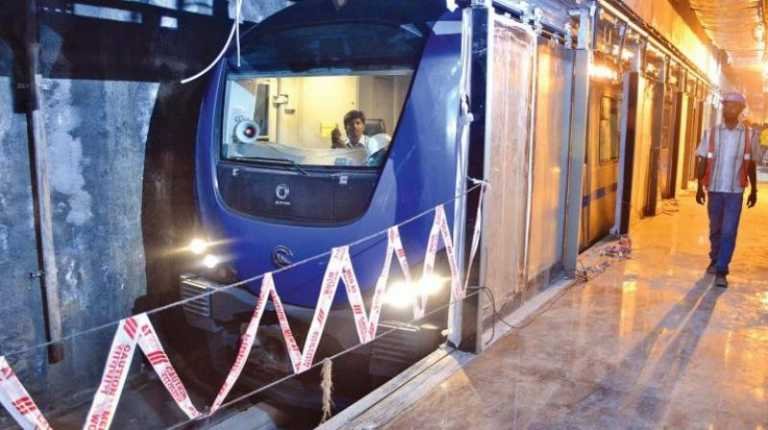
It was on Monday that the first leg of inspections of these lines was started by the commissioner of metro rail safety. If the inspection reports are satisfactory, the routes will get a go-ahead by the CMRL officials.
CMRL further informed that they will unlock metro rail stretches from Nehru Park to Central Metro and Little Mount to AG-DMS before the end of this month.
CMRS completed safety inspection of Chennai Metro Underground Section
The CMRS officials have informed that they had verified all documents connected to the stations and tunnels that CMRL had furnished prior to the inspections. Prior to the CMRS inspection, an independent safety evaluation was also and metro rail have received a certificate for the line between Shenoy Nagar and Central stations.
At Central Metro, the team will verify the upper track to Egmore and beyond on Poonamallee High Road and the concourse level. The lower track level linking Washermenpet on one side and Anna Salai via May Day Park on the other is not yet completed.
K A Manoharan shared that his team will be accessing various parameters with regards to safety. They will check tunnels, calibrations of the trains as well witness mock fire fighting drills to determine the competence of the tunnel aeration and exhaust system.
When the lines are made operational, commuters will be able to take a direct ride on the transit system from Central Metro to Koyambedu and the airport via stations on Poonamallee High Road. Travellers from Anna Salai will manage to get through the airport in 30 minutes or carry on to CMBT after changing corridors at Alandur.
Bahadurgarh: Mundka-Bahadurgarh metro rail line of Delhi Metro Rail corporation (DMRC) is not on the metro yet but there are new controversies coming out on the day. Now villagers of Sankhol village have given a symbolic one day sign for the demand to change the name of the City Park Metro Station. In fact, villagers demand that the City Park Metro Station be renamed after the martyr Brig Hoshiar Singh metro station.
Residents protesting for change of name of City Park Metro Station on Line-5 (Mundka-Bahadurgarh)
It is explained that the martyr Brig Hoshiar Singh was a resident of Sankhol village in Bahadurgarh, who died in the Indo-China war in 1962. The entire family of Martyr Brig Hoshiar Singh lives in Bahadurgarh and the villagers want to keep the city park metro station named after him in memory of his martyrdom. Brigadier Hoshiar Singh will also be encouraged by the services of the coming generations.
Previously the villagers have met DMRC officials and Chief Minister Manoharlal Khattar several times, but due to lack of concrete assurance they had to start protest. The villagers have demanded to change the name of the City Park Metro station before running the metro trains between Mundka-Bahadurgarh Line (Green Line). The villagers have also warned the government that if this metro station is not renamed after the name of Brig Hoshiar Singh, then they will start a big movement.
New Delhi: Delhi Metro Rail Corporation (DMRC) notified tender notice for Design, Manufacture, Supply, Installation, Testing and Commissioning of Train Control, Signalling and Telecommunication system for Mumbai Metro line 2A, 2B and 7 for Mumbai Metro Rail Investment Project.
MS01: Design, Manufacture, Supply, Installation, Testing and Commissioning of Train Control & Signalling and Telecommunication system for Mumbai metro line 2A, 2B and 7.
The Tender Document shall be available for sale during office hours (IST 1030 hrs. to IST 1730 hrs.) from 21.05.2018 to 22.06.201 in the office of CGM/Contracts, Delhi Metro Rail Corporation Ltd., 5th Floor, A-Wing, Metro Bhawan, Fire Brigade Lane, Barakhamba Road, New Delhi-110001.
A pre-bid meeting will be held on 28th May 2018 at 15:00 hours IST at above mentioned address. Last to submit the Bid is fixed 25.06.2018.
Mumbai Metro Rail Network (Source: MMRDA)
Mumbai Metropolitan Region Development Authority (MMRDA) is the Owner of the
Project and the Executing Agency for the proposed financing from Asian development Bank (ADB). MMRDA has entered into an Agreement with Delhi Metro Rail Corporation Limited
(DMRC) for carrying out the procurement process and implementing this contract on
behalf of MMRDA.
New Delhi: After receiving directives from Delhi Police, Delhi Metro Services will not be available at four metro stations. The four metro stations where the services will be not be available include Khan Market Metro station (on Line-6 i.e, Central Secretariat to Badarpur), Udyog Bhavan, Jor Bagh (on Line-2 i.e, HUDA City Centre to Jahangirpuri) and Race Course.
The four metro stations will be closed from 03:00 PM onwards today for public till further directions. Commuters travelling on either of four routes can take note of the update and plan their travel accordingly.
The Delhi Police has only asked to close down four metro stations; services at other metro stations will be available as per the regular schedule.
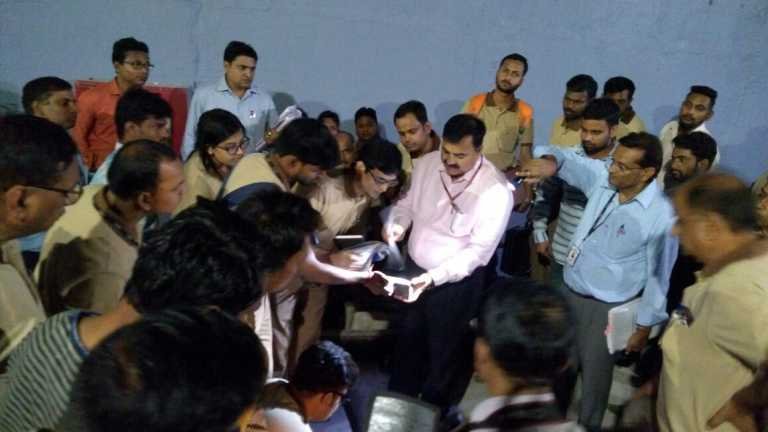
Chennai: The team headed by the commissioner of metro rail safety (CMRS) has started its inspection drive for the Chennai Metro Rail Limited (CMRL) from Monday morning onwards. In the first phase the team will begin inspection of the upline between Shenoy Nagar-Central Metro lines.
The upline Shenoy Nagar-Central Metro line is approximately 5.62km stretch. Whereas, the downline which is 2.5km falls between Central Metro and Nehru Park will also be checked by the team. The inspection will be also cover the 4.5km stretch that falls between Little Mount and AG-DMS, once the inspection for Shenoy Nagar-Central Metro lines are done.
K A Manohar, Railway safety commissioner, southern circle in a press briefing before the inspection had communicated that various parameters are inspected like the passenger safety as well as other amenities offered to commuters. The team will carry out checks of stations, firefighting systems, tunnels and calibration of the trains.
Railway safety commissioner will authorise the operation of the new lines once the inspection is over and satisfactory. These inspections are mandatory procedure before the officials authorise operations of the metro lines.
If the report of inspection meets all necessary parameters commuters will have a huge relief. They will then be able to board direct train from Central metro to Koyambedu and Airport through stations on the Poonamallee High Road.
As per further update the Central and the upper track that connects Egmore Metro with Nehru Park will also be inspected alongside with the public space level. The lower track linking Washermenpet on one side and Anna Salai on the other is yet to be completed.
Chennai: In a bid to offer hassle free travel to commuters of metro rail, the authorities are mulling to offer direct train connectivity from Central Metro to airport. In order to initiate the project, Commissioner of Metro Railway Safety (CMRS) will first conduct inspection of the Shenoy Nagar line to the Central stretch this week. In second phase Little Mount to AG DMS stretch will be inspected by the end of the week.
A detailed project report will be prepared post inspection to decide on the feasibility of the plan.
The report will be handed over to Metro Rail authorities who will then take a call on the project. The final announcement will be made after the reports are scrutinized and necessary changes are carried to be incorporated before the project is officially launched for the public.
Chennai Metro has been used by over 34,000 commuters on a daily basis and the number of commuters is likely to touch one lakh once the Chennai Central project is made operational. As per the initial reports during the peak hours on the Central to Airport route, the frequency of train is expected to be five minutes. This is to ensure that commuters don’t have to wait for long to board the metro.
The Chennai Central metro project is one of the most awaited by commuters from Egmore. The reason being that many trains depart from Tamil Nadu from the main stations; besides the Egmore bus terminus in the vicinity attracts large number of commuters. At the Egmore suburban railway junction over one lakh commuters come on a daily basis.
With the new metro line at the Central line project now catching momentum, commuters are hoping for a hassel free travel from the suburban railway station. The commute though costly will save a lot of time and also help in streamlining the traffic in the area. With metro rail just walking distance from the railway station, travellers can off board the train and take metro to their desired route within few minutes.
Meerut: While the process of Rapid Rail is accelerating these days, the Meerut Metro rail project is currently making dust in the files. Meerut Development Authority is arranging Rs 10 crore for contributing on the instructions of Commissioner Prabhat Kumar for Rapid Rail. National Capital Region Transport Corporation (NCRTC) has asked the Authority to provide funds for the earliest while the Meerut Metro is waiting for the central government’s approval. MDA Vice President Sahab Singh said that MDA to contribute Rs 10 for Rapid Rail, as initial fund and the will be paid soon. At present, the revised DPR of Meerut Metro i.e. pending before the Central Government for approval, after approval from the UP Cabinet.
The work on Central government’s ambitious Delhi-Meerut Rapid Rail Project is going very fast. The centre is ready to fund Rs. 32,000 crore for this rapid rail project. Recently, tender of civil work has also been opened for construction of 4 stations between Duhai from Sahibabad. After Ghaziabad, the NCRTC has started a large scale survey to finalize the alignment of the manufacturing firm in Meerut. The corporation is in touch with the State Government for land acquisition, soon the process of land acquisition will be started.
Meerut Development Authority (MDA) has to arrange Rs 10 crore for as initial fund for the RRTS project. MDA VC Sahab Singh said that this money will be given to the NCRTC soon for the funding of the installation fund. Let the Ghaziabad Development Authority pay 40 crores to NCRTC.
Important things about Delhi – Meerut Rapid Rail Transit Project:-
Rapid Rails will cover a total distance of 90.6 km.
60 km track will be elevated and rest 30 km will be underground.
Rapid Route will decide the underground distance of 10 km in Delhi and 20 km in Meerut.
In the first phase, 52 km will be started from Sahibabad to Pratapur.
The second phase will be started from Vaishali to Sarai Kala Khan.
The third phase will be started from Paratapur to Modipuram.
Rapid rails will run at 5.5 meter height from the road.
The maximum speed of Rapid Rail will be 180 kmph.
The average speed of Rapid Rail will be 80 kmph.
The distance from Meerut to Sarai Kale Khan will cover in 62 minutes.
Each coach will be AC with seating capacity of 225 passengers.
Nearly 2 months ago, revised DPR of Meerut Metro has been sent to the Central Government for approval. At present, the Metro project is on threshold of the Central Government for approval. In the meantime, due to the arrival of Rapid Rail Project, the nature of the metro has also become smaller in Meerut. At the moment, metro rail project between Shraddhapuri and Medical College is proposed in second phase. Since the last two months, no correspondence has been done with the Meerut Development Authority by the government.
Kanpur Metro construction work will start after getting NOC from Central government
Tata Projects and Afcons have submitted their bids for the construction of Priority Section of Rs. 734 crores project cost
Lucknow Metro officials engaged in completing tender process for the metro project
According to RITES, they will get center’s approval in this month
Kanpur: Even after the tendering of construction of priority section of Kanpur Metro, the construction work of the Metro stations will not be started right now. Actually, the construction of Elevated Viaduct of Priority Corridor and 9 Metro Stations can be started only after getting the NOC from the Central Government. RITES and LMRC officials are expecting NOC in this month.
Kanpur Central Railway Station
Lucknow Metro Rail Corporation (LMRC) had made tender calls in February to construct 9 Metro stations and Viaduct between IIT Kanpur to Motijheel under the priority section of Kanpur Metro. In addition to Tata Projects, AFCONS has also submitted its bid in response to tender notice issued by LMRC. Technical Bid has opened now. According to LMRC officials, who took charge of Kanpur Metro Rail Project, financial bid of tender have not yet opened. After technical evaluation, opening of financial bid take about 20 days. In spite of this, LMRC will not award work to any company to start work till the NOC from Central Government not issued.
According to the LMRC officials, RITES has prepared the revised detailed project report (DPR) of Kanpur Metro according to the new metro rail policy 2017. According to the RITES, the State Government has approved the revised DPR on December 24 last year. The project also has 50 percent stake in the Central Government. Due to which the state government has sent the proposal to the Central Government for approval.
According to the RITES official, Kanpur Metro has to get NOC from central government in this month. However, this project has not yet received a green signal from the Central Government. The Institute of Urban Transport (IUT) has sent the observation report on Kanpur Metro Rail Project to Lucknow Metro Rail Corporation (LMRC) twice. The replies were sent by LMRC. No observation or query has come right now. Due to this, LMRC officials are hoping to get the NOC from the Central Government in this month. LMRC officials said that Technical and Financial bid of priority section will also be evaluated. As soon as the NOC of the Central Government gets, the construction work of the Viaduct and Metro stations can be started.
“Two years ago the observation report were sent by Institute of Urban Transport of Central Government to LMRC. Those who have been answered. No queries were made again. It is expected that NOC will be received from the Central Government in this month according to timeline set by RITES”, said Ravi Jain, Lucknow Metro Rail Corporation.
Kanpur Metro Project Summary:
Priority Section – IIT Kanpur to Moti Jheel
Works – Construction of 9 Metro Stations, Elevated Viaduct.
Estimated Cost – Rs 734 crores
Completion Target – 24 Months (After issue of Letter of Award)
New Delhi: The Delhi Metro Rail Corporation (DMRC), which has made a significant contribution in facilitating people to travel in Delhi, has made a new record. Actually, Delhi Metro has installed India’s longest escalator ever. This escalator is installed at the Janakpuri West Metro station of Magenta Line. So far, the Escalator located at Terminal 2 of Mumbai Airport is the longest in India, with a length of 11.6 meters. At the same time the length of the Escalator at Janakpri West Metro station is 15.
Janakpuri West Metro Station gets India’s largest Escalator (Image: TOI)
The spokesman said that this work was not so easy. A special crane was procured for it to be made, which weighed 250 tons. Explain that this escalator is 17 meters below the ground level. Until then, the escalator at Kashmiri Gate was the longest. DMRC estimates that around 53,700 additional passenger will use interchange points. At present, this station uses about 15,000 passengers.
The world’s longest escalator (69 meters) is located in Russia’s St. Petersburg metro. The second number comes from Moscow (63 meters).
Explain that the safety of the 25.6 km new Metro section between Janakpuri West and Kalkaji temple has been done. It got green signal last week. There are 16 new Metro stations in this section, two stations, Hauz Khas and Janakpuri West will provide interchange facility to the passengers.
With the opening of this section, many areas of Vasant Vihar, Munirka, IIT, Greater Kailash, Chirag Delhi and South Delhi will be on the map of Delhi Metro. Also, the distance between the capital’s Noida and West Delhi will decrease. Apart from this, Terminal-I of Indira Gandhi International Airport will also get the Metro link for the first time.
After survey of project, RITES also completed the survey of the routes in the city
29.4 km metro route will cost Rs 17000 Crore
Varanasi: The RITES Limited has almost completed the Detailed Project Report (DPR) of Varanasi Metro Rail project in PM’ Narendra Modi’s parliamentary area i.e. Varanasi. After a month-long survey, RITES has completed the survey of the routes in the city. After the survey of the routes, the rights will submit the interim report to the Varanasi Development Authority (VDA). After that VDA will send the final report to the Government after complete drafting.
Varanasi, the Ancient City
The Government had directed the RITES and VDA to prepare the revised DPR by December 30. The Vice President of the VDA invited the team of RITES two times by writing a letter. After that the Principal Secretary fixed the date of submission of the DPR to 31 January. The revised DPR will be sent to the Government by May 30. VDA Vice President Rajesh Kumar told that the RITES has completed the survey. RITES will also submit an interim report by next week.
He further explained that RITES had prepared the DPR for running a metro train in 29.4 km last year with the help of VDA, at a cost of around 17 thousand crore. But the central government, returning the DPR to the State, asked to make a proposal again as per the new Metro Rail Policy 2017. Now the Yogi Government is engaged in preparing revised DPR with the help of RITES.
In view of visit of the high population traffic daily, RITES has also been explored to connect the metro with the ghats. The team has done a survey to connect the metro to the proposed inter-model station at Kashi station. They also planning to make the station and terminal in the front of ghat.
Connecting the metro in the Ramnagar city will get its speed.