Delhi Metro | High court ask justification to DMRC on non availability of free water at station

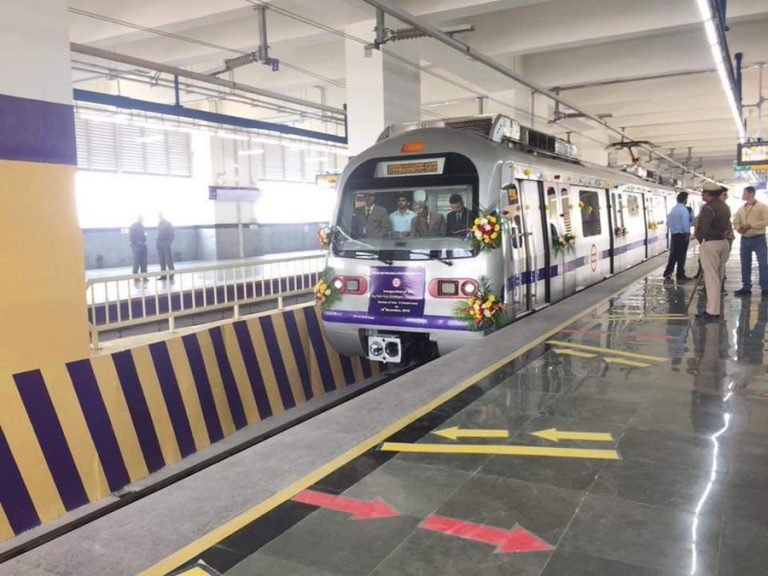
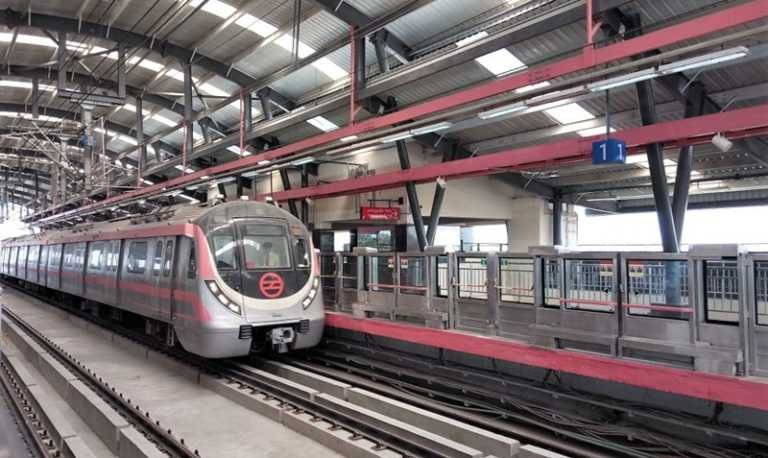
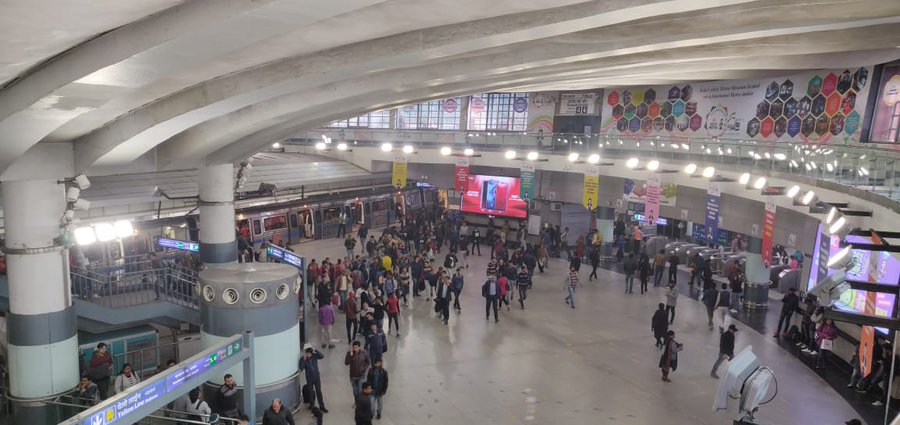
New Delhi: On Monday Delhi High Court asked to Delhi Metro Rail Corporation (DMRC) to justify the not availability of free water to the passengers. While other metros are servicing free water for passengers, some of the metros are Kochi, Jaipur, Lucknow and other cities metro.Chief Justice Rajendra Menon and Justice V.K. Rao’s bench asked DMRC how they are going to provide drinking water to the passengers at one place within the metro stations so that everyone can reach them. The court said that make clear how DMRC will implement it. Explain whether free drinking water can be provided at a particular place within the station, where all the passengers have access. After this, the court fixed the next hearing of the matter on October 12.According to the news agency language, the court sought this information when the DMRC stated in an affidavit that the person, who felt the urgent need of water in the stations where there is no water, can contact his officials of water ATMs machine or kiosks.Advocate Kush Sharma, on behalf of petitioner Kush Kalra, told the High Court that metro services in other cities provide free water to the passengers, but the Delhi Metro does not do this, while it is the advisor in all those projects.Looking at this plea, the High Court asked DMRC, “What is your right justification? In revert to this, DMRC told the court that it will provide information on the metro stations where water in an emergency is available.The Metro official also said that it has installed water ATM machine at its stations where water is provided by two rupees per glass. He also said that the passengers are free to take their drinking water.DMRC had earlier told the court that a very small fee is charged for water and toilets at metro stations so that the good facilities can be given.The court was hearing Kalra’s appeal against the order of a single judge. The single judge had said that the passengers traveling in the metro have no right to free drinking water.

Nagpur Metro | NMC faces trouble in rail work, delay in demolition of Tekdi Flyover

Nagpur: The metro work which was expected to run on smooth lines in Nagpur has hit a roadblock. The Nagpur Municipal Corporation (NMC) has already transferred land and given nod for demolishing Tekdi flyover. But looks like the concerned metro officials have forgotten to bring down the structure before starting metro work.With Tekdi flyover standing tall in front of the Nagpur Railway Station, the overall traffic situation in the area has worsened. This callousness comes despite Union Minister Nitin Gadkari asking authorities to fasten up metro work. NMC which has already received permission to raze down Tekdi Flyover but the concerned authorities have forgotten about the approval.Ironically, the proposal was passed and cleared by authorities for over two months now. Incidentally, the authorities haven’t begun any procedure; whereas the Metro Rail department has received permission to transfer 70,424 square meters of land.Are there coordination issues between Nagpur Metro Rail and NMC?Given the current state of affair, it is evident that there is a lack of coordination between NMC and Metro Rail. NMC has made a decision on transferring land to Metro Rail. But the corporation has not initiated any process of land transfer which is causing the imminent delay in metro work.Sources in the city share that this lack of coordination is the case of delay. The development works, planned to be taken up on the road subsequent to the demolition of the flyover, have also not been premeditated and finalized.As per information, NMC was to first bring down the flyover and then hand over the land to Metro officials for metro work.Is NMC working at a slow pace?As per the understanding, Metro Rail Corporation has to first provide 5 percent of total project cost to NMC in lieu of land transfer. NMC will receive 50 percent of the revenue generated from malls to be built by Metro officials.In a meeting, the market department did inform NMC that it had given around 1109 licenses to shop owners at Tekdi flyover. Out of 1109around 135 shop owners are running their businesses from these shops.

Ahmedabad Metro | Underground tunnel construction work halt due to sinkhole

Ahmedabad: Work on Ahmedabad metro which is in full swing was halted after the sinkhole appeared. Underground construction work is going when the sinkhole appeared and authorities were forced to stop the on-going work. Around 176 people residing in the nearby area were relocated to safer zone as a precaution.Currently, underground tunneling construction work is going on for Ahmedabad Metro rail. Apparently, the metro officials spotted a sinkhole near the site. The authorities as a precautionary measure had to stop work and evacuate 176 people residing in Gomtipur.In the last few days, residents were relocated to safer areas. This sinkhole came to surface post heavy rainfall. The sinkhole already poses a threat to residential buildings located in the vicinity.A senior official from Metro-link Express for Gandhinagar and Ahmedabad (MEGA) – the company building the metro project informed that have evacuated 27 families. The official added that in last couple of days they have relocated 176 residents.The houses located in this area are about 100-150 meters from the underground segment that starts from the Apparel Park on the East-West corridor of the project.A senior official while interacting with Indian Express explained, “The tunnel begins at this place and so it is shallow. In other words, the tunnel which is usually at a depth of 15 meters is at a depth of 8-10 meters from the surface. One of the two tunnels has already been dug for 500 meters and work on the second one was at 150 meters when the incident occurred yesterday (Friday).The officer also authorities are trying their level best to fill up the sinkhole.Ahmedabad Municipal Corporation (AMC) has already declared the buildings in the area as dangerous. The residents were notified that the homes are in bad conditions owing to lack of repair.A metro official shared that when the tunneling work going on, they evacuated over 15 families. This was done to take necessary precautions due to heavy rainfall.An alternative accommodation is arranged for those who have been those evacuated.MEGA officials on Saturday had paused tunneling work. They first carried out a physical inspection of the structures located near the sinkhole.As per the design plan, the 6.83 kilometer-long underground section is the only underground route that lies on the 20.5 kilometers of the East-West corridor of the Phase – I of Ahmedabad metro rail project.

Noida Metro | Trial run for aqua line between sector-71 to sector-83

Noida: On Monday, a trial started on the aqua line between Sector-71 to Sector-83 running from Noida to Greater Noida. This line will facilitate people living in Greater Noida can easily travel to Delhi-NCR.According to the sources, Noida Metro Rail Corporation (NMRC) executive director PD Upadhyay said that the trial began on Sector-71 to Sector-83 between about 4.5 and 5 km long track. This is being done by the Trial Research Design and Standards Organization (RDSO). He told that the trial will now be started simultaneously from the Sector-71 to the Greater Noida Depot, on a total of 29.707 km long Metro track.Upadhyay also said that the trial of the Metro was started in three phases. He said that the trial began in April from Greater Noida Depot to Sector-147. On July 25, the trial began from Sector-147 to Sector-83. On Monday, testing has begun from Sector-83 to Sector-71 Noida Depot. He said that it is our effort that the aqua line should be started from Noida to Greater Noida Depot for the month of November. He told that small technical work is being done. The citizens of the aqua line metro between Noida and Greater Noida are waiting for a long time. The Metro is being built with the help of Noida Metro Rail Corporation, Delhi Metro Rail Corporation.
Aqua line map for noida (photo: proptiger)
 Earlier on 11, August official said that the Aqua Line connecting the twin cities of Noida and Greater Noida is expected to become operational in October 2018. After missing the deadline for the month of September.  Noida Metro Rail Corporation (NMRC) said on Friday that they would be sending a final request for the final inspection by the commissioner for metro rail safety by September end and it’s expected that the network shall be operational in October.According to NMRC officials, six remaining trains are expected to arrive from China by September-end. The Aqua Line requires 11 trains for the track to open; only five trains have reached so far, said on 11, August.

JICA guidelines violated in Mumbai – Ahmedabad Bullet Train Project ?

Ahmedabad: Well-known Environment Activists Rohit Prajapti from Gujarat shares his thoughts on the upcoming Bullet Train project and why it is violating JICA’s guidelines.
Here is an excerpt he has shared with Metro Rail News:
The Japanese Government’s investment agency, the Japan International Cooperation Agency (JICA) is signatory to the Memorandum of Understanding (MoU) with the Indian Government for the Mumbai-Ahmedabad High-Speed Rail Project (MAHSR), popularly known as the ‘Bullet Train Project’. There are two sets of government norms that the ‘Bullet Train Project’ has to adhere to: one, as per the Indian laws and second, as per the JICA Guideline of the Japanese Government.
The JICA Guidelines, April 2010, make clear the principles and procedures, repeatedly stressing on environmental and social impacts, which must be followed for ensuring assistance in the form of technical cooperation, loan, or grant aid for projects that are applicable to the MAHSR – the Bullet Train Project. While the final responsibility for environmental and social considerations for projects lies with the project proponents, host country governments including local governments, borrowers, etc., JICA recognizes certain crucial baselines principles and lays out a set of definite guidelines for environmental and social considerations that need to be followed for execution of projects like the ‘Bullet Train Project’. If during the execution JICA finds that relevant environmental and social impacts have not been considered in letter or spirit, it will withdraw loan aid, grant aid, or technical support to the project.
There has been much debate about how the Bullet Train Project violates the Indian Constitution, laws, and due processes. At the same time, the JICA Guidelines for investing in international projects are also being violated as much, if not more. And, to no one’s surprise, these violations are by the Indian Government and its agencies responsible for carrying out the MAHSR. The violations are in public domain and known to almost everyone who cares to know. The concerned authorities might have some “explanations” and “excuses” to offer, but they cannot deny certain facts and ground realities.
It is also pertinent to note that the Japan’s Official Development Assistance (ODA) Charter, August 2003 assures fairness and attention to environmental and social impacts while contributing to sustainable development in developing countries.
When a project like Bullet Train for India is proposed, Government of India and its concerned authorities are bound as signatories to implement the following guidelines, policies, principles, and procedures of JICA and ODA of Government of Japan to ensure that it meets or addresses social, economic, and environmental concerns and core principles in letter and spirit before it can get or continue to receive loan, technical cooperation, or grant aid.
JICA Policy
At the onset, the JICA guidelines  state: “Japan’s ODA Charter states that in formulating and implementing assistance policies, Japan will take steps to assure fairness. This will be achieved by giving consideration to the conditions of the socially vulnerable and to the gap between rich and poor, as well as the gaps among various regions in developing countries.”
In absence of such considerations, can JICA offer other sustainable and financially viable options to the Bullet Train? For example, retrofitting and upgrading the existing rail system, since rail transit is a necessity. It is therefore vital to revisit the project proposal submitted to JICA by MAHSR that justifies the need for a Bullet Train Project over other inter regional and multi-modal transit options. If such a need study exists, then has it been put in the public domain and discussed with the stakeholders? The Bullet Train venture has been promoted in spite of existing reports calling for the strengthening and upgrading the existing rail system, which have been postponed due to lack of resources.
The JICA Guidelines for Environmental and Social Considerations, April 2010, explicitly state the significance of environmental and social considerations in extending its support and aid towards any project in a developing country. At various stages in the process, right from inception to implementation, the guidelines clearly and repeatedly suggest ways and means to communicate, incorporate, and mitigate environmental and social considerations and impacts. In doing so, JICA endeavors to ensure transparency, predictability, and accountability in its support for examination of environmental and social considerations. JICA has a policy of actively supporting the enhancement of environmental and social considerations in developing countries, to achieve its goal JICA provides support to the project proponents in a number of ways to help them abide by its set guidelines. However, it is clear that there are discrepancies, deviations, and violations observed during the Bullet Train Project planning and decision making process. The following is sections and points highlight and give details of the same.
Advisory Committee for Environmental and Social Considerations
JICA Guidelines commit to the establishment of an Advisory Committee for Environmental and Social Considerations as an independent body comprising of external experts having the necessary knowledge to provide advice regarding support for and examinations of the environmental and social considerations of cooperation projects. JICA reports to this committee and seeks advice as needed for the environmental and social monitoring of the project. Meetings of the Advisory committee are open to the public and minutes of each meeting are duly prepared and disclosed to public.
There has not been an announcement of such an advisory body in the public domain. If this body exists, then the details of the members, their expertise and deliberations are also not available for reference by the stakeholders. No information regarding the meetings is available on the websites nor have the minutes been made public.
Disclosure of Information
The Guidelines clearly state that adequate information needs to be provided by the project proponents in order for JICA to assess impacts on the environment and local communities. JICA not only assists project proponents to help with this disclosure but JICA itself also discloses information on environmental and social considerations in collaboration with project proponents, in order to ensure accountability and to promote the participation of various stakeholders. The main project proponent, the National High Speed Rail Corporation Limited (NHSRCL), a joint venture of Government of India, bears the ultimate responsibility of the environmental and social considerations of the project and must disclose all information about the same to JICA as well as to all the stakeholders in public domain.
The response by JICA to the reports prepared by the project proponents is not available in the public domain. Hence, there is no transparency in the process of planning and decision-making.
The Environmental and Social Impact Assessment reports of 2010 do not address majority of these factors. Surprisingly, in the Joint Feasibility Study for Mumbai Ahmedabad High Speed Railway Corridor, July 2015, prepared by JICA and Ministry of Railway, Government of India, four chapters, namely, Chapter 12 – Project Cost of the High-speed Railway System, Chapter 13 – Project Implementation Plan, Chapter – 14 Project Scheme Financial Option, and Chapter 15 – Economic and Financial Analysis, are missing for reasons best known to them.
Though JICA begins reviewing the project through information disclosed by the project proponents, when necessary it consults with the proponents to conduct field surveys and such and also applies a Strategic Environmental Assessment (SEA) while working out the Preparatory Survey. All final drafts are duly disclosed on its website promptly after completion. Specifically for category A projects, whenever JICA concludes Preparatory Surveys, the final reports and equivalent documents are disclosed on its website. These are not made public.
As per the Guidelines, alternatives to the MAHSR – Bullet Train Project are also to be presented, but details of the same are not available, at least, in public domain either in any of JICA’s or Government of India’s public document.
Project proponents are supposed to disclose all information well in advance of the meetings with local stakeholders in cooperation with JICA. To achieve this, JICA supports project proponents in the preparation of documents in an official or widely used language and in a form understandable by local people. In response to third party requests, JICA ensures fair disclosure by providing all information related to environmental and social considerations.
In stark contrast to the JICA mandate, the Joint Feasibility Study for Mumbai Ahmedabad High Speed Railway Corridor, July 2015, report remains unavailable in Gujarati and Marathi, the primary languages of the affected stakeholders, even on the JICA website.
Additionally, the subsequent impacts of projects, as well as impacts associated with indivisible projects, will also need to be assessed with regard to environmental and social considerations, so far as it is rational. The life cycle impacts of a project period are also to be considered.
This information and consideration is not available in public domain.
Terms of Reference
The principal violators are the Government of India (GoI), Government of Maharashtra (GoM), Government of Gujarat (GoG), National High Speed Rail Corporation Limited (NHSRCL), and Mumbai – Ahmedabad High Speed Rail Corporation Limited (MAHSRCL) who deliberately or otherwise are neither adhering to the Indian constitution and laws nor the JICA Guidelines. Government of India (GoI) has created a special vehicle National High Speed Rail Corporation Limited (NHSRCL) for the Bullet Train Project, but the Terms of Reference are not made public. Interestingly, the Ministry of Environment, Forest and Climate Change (MoEF&CC) which is intrinsic to all the environment and public consultation process and impact assessments universally for all industrial – investment projects is completely missing from the entire public consultation processes being held in the project affected region in the states of Gujarat and Maharashtra.
Categorisation
Once adequate information is available, JICA classifies projects into four categories according to the significance and extent of environmental and social impacts taking into account an outline of the project, scale, site condition, etc. The guidelines also assert that JICA can change the category after screening and in cases where the category has not been clearly specified at the Master Plan stage, the categorization will be based on the likely significant impacts on all the considerations – environmental, social, derivative, and cumulative.
The Bullet Train Project is classified as ‘Category A’ project as it is likely to have significant adverse social, economic, and environmental impacts since it passes through severely and critically polluted, ecologically sensitive, and socio-economically vulnerable areas. For Category A, projects like the Bullet Train, the project proponents must submit, in addition to the preparatory survey, Environment Impact Assessment (EIA) and Social Impact Assessment (SIA) reports. The Environment Impact Assessment and Social Impact Assessment Report (SIA) submitted are for the year 2010. In the same area, various projects like Delhi-Mumbai Industrial Corridor (DMIC), Western Dedicated Freight Corridor (WDFC), and Express Highways are coming up. The cumulative impacts of all the projects together must be considered while determining the category of the Bullet Train Project.
The Bullet Train Project’s public consultations have been undertaken in the year 2018. As per international and even national norms and in the interest of just and fair environment and social outcomes, consultations should be based upon the most recent studies and reports. If this is not done, the project will not be just illegal but also unscientific because such consultations were conducted based on eight-year-old reports of 2010. These reports have to be based on more recent and due assessment processes since the Bullet Train’s route is passing through severely and critically polluted clusters of Gujarat as well as some ecologically most critical and socio-economically vulnerable areas, both in the states of Gujarat and Maharashtra.
Environmental Impact Assessment and Social Impact Assessment
JICA clearly states that the impacts, assessed with regard to environmental and social considerations, include impacts  on human health and safety, as well as on the natural environment, that are transmitted through air, water, soil, waste, accidents, water usage, climate change, ecosystems, fauna and flora, including trans-boundary or global scale impacts. These also include social impacts, including migration of population and involuntary resettlement, local economy such as employment and livelihood, utilization of land and local resources, social capital such as social and decision-making institutions and processes, existing social infrastructures and services, vulnerable social groups such as poor and indigenous peoples, equality of benefits and losses, equality in the development process, gender, children’s rights, cultural heritage, local conflicts of interest, infectious diseases such as HIV/AIDS, and working conditions including occupational safety. The subsequent and cumulative impacts along with the project lifecycle impacts should also be considered.
The EIA and SIA reports of 2010 lack any of the impacts and considerations regarding health, safety and quality of life of not just the human beings as well as for the health of the natural ecosystems. It is also pertinent to note that since 2010, many other initiatives and projects like the WDFC, DMIC, Vadodara – Mumbai Expressway have been undertaken by the Government at National, State and Local level. The influences of these projects have not been taken into account in the 2010 EIA and SIA and, therefore, these should be redone.
In the EIA and SIA consultation processes, not only people’s participation is missing in a proper and real sense but the authorities  have also not considered the crucial report of (i) Gujarat Ecology Commission – ‘State Environmental Action Programme Industrial Pollution, Phase III – Sectoral Report, Volume I dated April 2002, (ii) Order dated 07.05.2004 of the Supreme Court in Writ Petition (Civil) No. 695/1995 pursuant to the Supreme Court Monitoring Committee’s report, (iii) ‘Comprehensive Environmental Assessment of Industrial Clusters’ of Central Pollution Control Board, of 2009, 2011 and 2013, (iv) various crucial important investigations report of Central Pollution Control Board and Gujarat Pollution Control Board, and (v) various High Court and Supreme Court’s order regarding current statues of environment degradation of the area. These reports and orders of the courts record and reflect the severely degrading state of the environment for the majority of the Bullet Train Project area.
JICA conducts environmental and social surveys at EIA level for Category A projects and prepares draft of mitigation measures, monitoring plan, and an institutional arrangement. At every stage when project proponents consult local stakeholders during and after the information disclosure, JICA monitors the process and incorporates the feedback of these consultations into its survey results. It also analyzes alternatives including ‘without project’ scenarios. Over the course of the project, JICA closely monitors items that have significant environmental impacts in order to keep a check on the proponent’s claims of including and addressing environmental and social considerations. The project proponents are required to supply necessary information for monitoring by appropriate means, including in writing. JICA conducts its own investigations when necessary. Once the draft reports are prepared, they are discussed with the project proponents and consultations with local stakeholders are carried out as well. Once it is concluded that the proponents have met the environmental and social consideration guidelines, JICA prepares and submits the final reports to the proponents. The results of the monitoring process are disclosed on the website, including in local languages, to the extent they can be made public.
Even though the entire EIA-SIA public consultation proceedings were video recorded, that too have not been shared in public domain. The minutes of EIA-SIA are required to be made public, especially to be made available to its stakeholders but they have been neither uploaded on JICA or any of Government of India’s website nor placed in any of the public domain yet.
Consultation with Local Stakeholders
The prime project proponent, the Government of India, needs to work with JICA to create agreeable frameworks for consultation with stakeholders. To assure fair participation, project proponents are required to publicize consultations in advance and pay special attention to the people who are severely and directly going to be affected by this project. For projects with adverse impacts like in the case of the Bullet Train, JICA insists on consultation with local stakeholders at an early stage to discuss their views on the project, their development needs, and environmental and social impacts of the proposal as well as analysis of alternatives. It also encourages that minutes of each meeting are prepared for perusal by the stakeholders. To ensure democratic decision-making, JICA insists local stakeholder participation and encourages project proponents to disclose information well in advance when they have meetings. JICA offers support in preparation of disclosure information in a form and language understandable by local stakeholders. Additionally, JICA also discloses information on its website in Japanese, English, and local languages.
Almost all stakeholder consultations, both environment and social, were announced on a very short notice for the public and the concerned stakeholders for them to participate at all, let alone effectively. The advance notice period has varied from 24 hours (1 day) to few weeks. There is no coherent approach towards the announcement of stakeholder consultations. At times, they were announced for district level and conducted for taluka levels. There was no clarification as to whether the stakeholders invited to the consultation should represent social concerns or environmental concerns or both. In fact, it became apparent that the confusion was caused intentionally. Two different public advertisements were published by NHRSCL for the same venue and same timing, but for different purposes. The epitome of the disorder was that even the concerned authorities conducting the consultations were not clear as to under which Indian law and provisions the consultations were conducted!
In case of Environmental Consultations, the Supplementary EIA copies are kept for public viewing at different places which are 100s of Kms away at offices of NHRSCL. The nearest place being the District Collector office. In many cases, this is about 30 Kms away. The supplementary EIA copies are being conspicuously made available only to certain chosen individuals. At the same time, in some districts, there is no mention of the EIA or a copy made available to the public. The reports are available in English language, while most of the stakeholder participants can neither read nor understand English. The reports and documents should have been made available in the local languages, Gujarati and Marathi, for the public to be able to represent and participate effectively. Farmers (who are mostly illiterate or semi-literate) were not allowed to raise questions/queries. Environmental activists/experts were deliberately shunned out of the consultation venue with use of police force. This is open violation of basic human rights of the people and also as per Section 2.5 of the JICA guidelines – Concern about Social Environment and Human Rights. For the organisers the stakeholders were mere spectators attending the consultation. Even farmers organisations and other social/environment groups are kept out of the process. Elected representatives who can potentially raise uncomfortable queries regarding the project were manhandled and taken away by force before the start of consultations. The Surat consultation is one such example. The queries raised during the consultations were very casually addressed and there is no written response to the written submissions or oral queries raised at the consultations.  The minutes of the consultations and the video documentation are also not made public. These are essential for a transparent and accountable process.
As if all this was not enough, some of the public announcement for the stakeholder consultations for the districts of Navsari and Valsad (both in the state of Gujarat), published invitation in local newspapers specifically mentioning that ‘unauthorised people would not be allowed at the consultation’. We fail to understand what criteria are prescribed under JICA guidelines or even Government of India’s policies to segregate attending stakeholders as “authorised” and “unauthorised”. Even Supreme Court of India had clearly stated that all citizens, including those not directly affected by a project, should be allowed to participate in environmental public hearings. Therefore, not allowing some citizens to speak at public hearings would be also a violation of the Supreme Court order.
From the manner in which the stakeholder consultations were conducted, it appears that these are just paper arrangements; that is, bureaucratic paper work or attempts to divert and delay the consultations, with no serious concern for the people and the environment. It seems that, in the case of these consultations for the proposed MAHSR project, participation, transparency, respect for basic human rights of people, and such are just words to throw around and mislead. Trampling of basic human rights through police force seems to be a part and parcel of the conducting of stakeholder consultations. It is to be noted that at several places, due to the apprehensions of affected people arising out of the high-handed and opaque functioning for the consultation, the atmosphere was vitiated and the consultations had to be postponed or rescheduled.
There are claims by the concerned authorities that the consultations of 2018 comprise the second round of consultations. They claim that the first consultation was conducted but details of first consultation are not available in the public domain and people at large are not aware about such consultations at all. The people only know of the consultations that were held from April 2018 onwards. Therefore, the MAHSR authorities should make clear the details, if any, of the first consultation, the dates when it was held, the participants, the outcomes, suggestions, and reports.
It is also quite surprising that during EIA-SIA hearing, we found no Indian official taking any notes. This is almost unprecedented in any of EIA-SIA public consultations being held for any development project.
Concern about Social Environment and Human Rights
JICA necessitates the inclusion of social and institutional conditions of the host country and actual site conditions while examining environmental and social factors likely to be impacted through the project. JICA also upholds internationally established human rights standards and pays special attention to the human rights of vulnerable social groups including women, indigenous peoples, persons with disabilities and minorities during the decision-making process.
In most places, police were deployed in large numbers during the EIA and SIA public hearings and, at places, activists and local participants were detained creating an atmosphere of terror. The intimidation through use of police in guise of maintaining law and order has acted as a deterrent in ensuring meaningful public dialogue and clearly indicates that authorities and instruments of Government of India intend to browbeat any dissent or relevant queries.
Laws Regulations and Standards of Reference
JICA confirms that the project complies with environmental and constitutional / social laws of the central and local governments of host countries. The project must also adhere to the government’s policies and plans on the environment and society. JICA necessitates that projects comply to a large extent with the World Banks’s Safeguard Policies and refer to the standards of international finance organizations, internationally recognized standards, treaties declarations, and such. JICA also emphasizes the importance of good governance of projects and encourages the proponents to raise the performance levels, where inferior local regulations exist.
The MoEF&CC officials are found to be completely missing in all the public consultation processes, even as JICA officials are participating diligently. The complete absence of Indian officials from the MOEF&CC, despite required by the Indian laws is unprecedented and also very disturbing as it appears that it is absolving itself or is being made to absolve itself of its inherent mandatory duties, especially the ones required for such projects of massive and grim environmental and social impacts.
Decision – making by JICA
JICA takes into account outcomes of its environmental reviews when making conclusive decisions regarding proposals. In projects where the environmental and social considerations are not adequate, JICA insists that project proponents rectify their approach. If the proposal still does not comply with required standards, JICA will not undertake or support the project. For projects that necessitate enforcement of environmental and social considerations or rules, the project proponents must report to JICA on the measures and monitoring they undertake related to environmental and social considerations. Project proponents are required to hold discussions with local stakeholders regarding any problems related to environmental and social considerations and reach consensus.
JICA can make changes to the agreement or suspend loan aid, grant aid, or technical cooperation in case the project proponents do not meet the guidelines set out or the project will have adverse impact on the environment because of the failure of the proponents to supply adequate and correct information during the review process. In cases where JICA concludes non-possibility of environmental and social considerations despite adequate measures, it will recommend the Ministry of Foreign Affairs of Japan (MOFA) to discontinue the project.
As all levels and kinds of the Indian authorities are violating all the basic norms, procedures, and requirements of the JICA Guidelines for Environmental and Social Considerations 2010, in letter and spirit, this attitude clearly invites necessary, appropriate, and prompt action from JICA.
In 2014, the Government of India introduced amendments to ‘The Right to fair Compensation and Transparency in Land Acquisition, Rehabilitation and Resettlement Act, 2013’ (a Central Act) diluting the stringent provisions of social impact assessment and consent clauses in the 2013 Act by the promulgation of the Land Acquisition Ordinance under Article 123 on the last day of December 2014. The provisions of the ordinance were sought to be kept alive by repeated promulgation on April 3 and May 30 of 2015. The Central Ordinance eventually lapsed on August 31, 2015. The stage then shifted to the states. Several states including Gujarat and Maharashtra then sought to implement the content of the Ordinance by routing it through their respective state legislatures. The Right to Fair Compensation and Transparency in Land Acquisition, Rehabilitation and Resettlement Act, 2013, whereby the basic structure of the Original central Act has been unconstitutionally changed to give exemption to large categories of projects from consent provisions, Social Impact Assessment, Objections by affected citizens and participation of local bodies.
With the advent of the NDA government in 2014, the crisis in environment policies in India has reached unparalleled proportions and worsened by leaps and bounds. There has since been a spate of changes in environmental laws in order to allow for urbanization, industrialization, and unfettered development to the detriment of the environment and, often, the local and regional public.
Ensuring Appropriate Implementation of and Compliance with Guideline
If there is an objection raised regarding noncompliance with the guidelines laid out by JICA, an independent body separate from the project execution departments will be formed that will review the case. JICA also verifies the status of the implementation of the guidelines and revisits its way of procedures within 5 years of their enforcement by way of hearings of the concerned people.
Many objections have been raised by various stakeholder groups regarding the conduct of the stakeholder consultations. However, as far as the stakeholder groups are aware of the situation, no independent body to investigate or address the discrepancies or violations of JICA guidelines or Government of India’s laws and rules has been formed.
Overall, the stakeholder groups assert that the process conducted so far has failed to follow the JICA Guidelines for the Bullet Train Project in its true intent and spirit. The manner in which the project is conceptualised, proposed, and planned, it grossly contradicts the sustainable development promises and policies of the Japanese Government and Indian Constitution. Such a situation will bound to set wrong precedents at the national and international levels.
If serious issues and questions are not raised at this time in the process for this project, all the national or international human rights and environmental values, treaties, laws, and regulations will prove to be paper tigers only.
We owe an apology to the Earth – Air, Mountains, Hills, Valleys, Rivers, Ravines, Tributaries, Ponds, Lakes,  Sea, Forests, Land, Farmlands, Wetlands, Grasslands, Deserts, Physical and Biodiversities …  Entire Nature, Other Life on Earth and all farm produce for having failed to protect and nurture them from the effects of climate change, human greed and abuses, irreversible damage, contamination, and pollution. The present “Development Model” rests on the severe exploitation of Nature, and the have-nots whose voice isn’t heard. We need to redefine “Development” to be more holistic, comprehensive and inclusive.

Soon cab service on call for Chennai Metro commuters

Chennai: Commuters looking to reach out to their nearest metro station in Chennai will be able to board a cab on call. As per recent development, Chennai Metro is all set to launch affordable cab services for metro riders.This service will be exclusively for metro commuters who wish to reach nearest metro station. Rider will have to call and hop on to a cab and reach the destination station within minutes.As per the information provided by the Chennai Metro Rail Limited (CMRL), the commuters have to call the customer care number 18604251515 to book the cab. To start with this cab on call facility will be made accessible only for riders residing within 3 km radius of five Chennai Metro Rail stations. These stations are – Alandur, AG-DMS, Anna Nagar East, Vadapalani, and Koyambedu.Explaining the process, a Chennai Metro officials shares with media that if a commuter who is waiting at Saligramam location and wants to take a train from the nearest metro station – Vadapalani in this case, he can call the customer care number and give his location. The cab driver will reach the spot and bring him to the desired metro station.Making the ride affordable for commuters, the metro officials have kept a fixed amount for the pickup and drop services. Riders will have to shell out only Rs. 15 per ride. But this service is only available within 3km radius of the metro station.Initially, this service will be offered at five stations but then it will be extended to other stations as well. The five stations selected for cab on call service already offers cab services at the station. This is service is offered to commuters who wish to reach home after de-boarding from metro.Commuters want an ‘app’ interfaceChennai Metro commuters are happy with the cab on call services initiative. But they feel that they should be able to book a cab using the app instead of calling customer care number.Commuters feel this feature should be added in app wherein the cab driver can located the rider via GPS. This will help commuters track the driver too and vice-versa.Chennai Metro officials however might not include the facility on app immediately. They will be exploring to incorporate the feature in app too but cannot set a time frame to it, shares the official.Offering last mile connectivity, Chennai Metro introduced cabs and autos to make travel easy for commuters. This facility was recently started at various stations. The metro stations where this was started are Thirumangalam, Ashok Nagar, Ekkatuthangal, Alandur, St. Thomas Mount, Guindy and Koyambedu.  

Mumbai Metro | DMRC awards contract to BMC blacklisted contractor for Metro 2A project

Mumbai: The contract award of worth Rs 1,300 crore has been given to a contractor who has been banned by the BMC for seven years on grounds of corruption and shoddy. This contract has been awarded by Delhi Metro Rail Corporation (DMRC), which is also consulting the MMRDA on the work the Mumbai Metro 2A project from Dahisar to DN Nagar.Before awarding a contract for these projects to this contractor, earlier J Kumar Infra Projects was one of the seven tainted contractors indicted in the Rs 350-crore roads scam that came to light last year. But in a classic case of the left hand not knowing what the right-hand does, DMRC appointed this blacklisted contractor and it is us.
buy Revatio generic infoblobuy.com over the counter
The Andheri Link Road, which is one of the busiest arterial roads in the suburb, is riddled with crater-sized potholes merely 25 days after it was relaid by J Kumar Infra Projects as part of the ongoing work they are doing for the 18.60 kilometer-long Metro.Prashant Rane, activist and branch head of MNS ward 60 has said to the DMRC raising these points. “They (the contractor) has not learned any lessons and used inferior quality of materials for road work at Andheri Link Road where the utility services have been shifted. This road work was done just 25 days back. It couldn’t sustain eight days of Mumbai rains. Already there are huge craters seen. If the contractor is unable to handle simple roadworks, how will commuters feel safe about this Metro line project? We, as residents, are scared after the recent Andheri Gokhale bridge collapse.”On its part, the DMRC has reverted back to Rane’s concern. They wrote back to him saying that, “It is accepted that potholes have developed in the recently completed Dense Bituminous Macadam (DBM) works at Adarsh Nagar and in front of Laxmi Industrial Estate. This is because the seal coat could not be provided over DBM before heavy rains. However, efforts are being made to ensure that potholes are being addressed in time so as to cause minimum inconvenience to commuters and provide seal coat as soon as sunny days are available. Their maintenance and rectification will be done by the executing agency at its cost. We regret any inconvenience to you and commuters of Mumbai and assure you that smooth road surface shall be available at above locations within next 15 days.”A DMRC spokesperson told that the roads which have developed potholes were done at the behest of MMRDA and the BMC, one month prior to monsoon.“This contractor has been given civil works of Metro via-ducts and this roadwork wasn’t to be carried out by us because it was outside the Metro’s barricade area. It was only this year, on MMRDA’s insistence that we did the roadwork before monsoon outside the barricaded area. The last layer which is a superior layer of Bitumen Macadam wasn’t put by the contractor before completing the work which led to potholes. But it will be rectified and traffic will not be disrupted,” DMRC Project Director PK Sharma said.He further added that just because they are blacklisted by the BMC doesn’t mean other agencies cannot appoint them. When he was blacklisted the tender contract was still in process. J Kumar Infra project was the lowest, eligible bidder as per tender. MMRDA has also appointed this contractor for other works. This contractor is awarded Rs 1300 crore project and will be responsible for the entire Metro 2A project–for pillars, superstructures (bridges and viaducts) and station buildings.“We are doing the Metro 2A work and wherever excavation is required we are reinstating it as per the contract requirement. The bitumen work to fix potholes cannot be done during rains. After the intensity of rains reduces, we will fix the potholes,” Kulkarni, Vice President, J Kumar Infra projects said.

Kochi Metro lends a helping hand to those affected by floods

Kochi: The Kerela floods have brought the entire country together. In times of crisis each and everyone is doing its bit to help those affected by floods.
buy xifaxan online https://www.ecladent.co.uk/wp-content/themes/twentyseventeen/inc/en/xifaxan.html no prescription
Kochi Metro in its bid to help and strengthen rescue operations in Kerela has been working tirelessly to bring relief to those affected.The Kochi Metro social media feed is informing, educating and helping people to help those who have been affected.Here are some Twitter feeds that public should take note of: As general public and those who are commuting via Kochi Metro, Metro Rail News wishes to make a humble request. It is important to help the Kochi Metro officials and staff members who are proactively working to collect and distribute relief materials to those affected by the floods. Commuters are requested not to board metro to get a glimpse of the flood.Commuters can instead help in dropping relief material or extend helping hand to Kochi Metro in easing out the situation. As public we should our bit in this time of crisis and help those who need it the most.

Monorail | MMRDA to re-start Monorail services from Chembur to Wadala

Mumbai: There is good news for people dwelling near Chembur and Wadala area. Monorail services are to re-start from Chembur to Wadala, Mumbai Metropolitan Region Development Authority (MMRDA) has announced its re-starting date which is on September 01, 2018.But till now there are only three trains out of the total nine are available. The MMRDA is expecting to get at least two more trains fit to play in the next 15 days.The official sources said that to maintain a frequency of 15 minutes, three trains are not enough. This also signifies that the frequency of Monorail services hardly to be better than before.
buy light pack online https://healthcoachmichelle.com/wp-content/themes/twentytwentyone/inc/en/light-pack.html no prescription
According to the plan, there is a need to have four coaches in each monorail train, and it was estimated to have ferry around 15,000 passengers daily between Chembur and Wadala. There was a halt in monorail services due to a fire incident in an empty train.As per official information, the trial runs for the first phase of Monorail started from Wednesday, and currently, it is being carried only with three trains for six hours daily between 12 and 6 pm.“It is not possible to start operations with mere three trains but at least a total of four to five trains are required considering a minimum of one train has to be on standby for emergencies,” senior official reveal.An official further added that out of the total 10 trains, one train was damaged due to fire in November 2017, and out of the remaining nine trains, only three are functioning while the rest need repairs and maintenance. “We will get two more trains within the next 15 days from Malaysian operator Scomi Engineering and rest of the trains are to be repaired by February 2019.”The above are major reasons behind MMRDA not being able to start the services on the second phase of Monorail between Wadala and Jacob Circle.“For operations on the whole 18-km-long corridor, we will require at least 7-8 trains in functional condition. While the remaining trains now will be repaired, Scomi Engineering has to deliver us the balance five trains, as per the plans in 2008,” MMRDA official inform.The contract for these projects was given in 2008 and the project has been in controversy since its inception due to technical glitches, fire occurs in the train, lack of efficiency etc.

Chennai Metro | CMRL officials start installing critical system at Anna Salai route

Chennai: The Chennai Metro Rail Ltd (CMRL) officials are eyeing trail run in September on Anna Salai route. Preparations are in full swing to prepare the route for trial run. The officials have started installing critical system on route which includes signals in the section beneath Anna Salai line.As per recent updates, civil works and laying down of tracks at the stations are headed towards completion. Virtually 10km stretch starting from Washermenpet to AG-DMS via Central Metro is likely to be made operational by end of 2018 or early next year.CMRL official informs that they have wrapped installation of signal system between Washermenpet and Central Metro. On Central and AG-DMS work is going on and is expected to be completed soon.The official added that they have not fixed a date in September to conduct trail runs on the track.Out of the 45km phase-1, the Washermenpet to AG-DMS line (10km) is the last section to be concluded. As per the plans this stretch from Washermenpet to AG-DMS has eight underground stations. It also includes a transit hub at Central Metro, where the line will function in the third deck.
buy viagra sublingual online no prescription
With this line becoming operations it would be easier for commuter to reach airport in flat 45 minutes. Commuters can get on board at Central Metro and reach airport via Anna Salai. They will not longer have to take the roundabout route via Poonamallee High Road and and Koyambedu.The Washermenpet and Central Metro which is a 3km stretch were ready much earlier. It could however, not opened for operation as CMRL had not finished the rest of the line between Central to AG-DMS, as per Chennai Metro official.Signalling systems is critical Signalling systems play in very significant role in automating the functioning of the metro rail network. These systems are necessary in the operation of the platform screen doors at the stations and operating trains.

BEST Bus damaged when an Iron mesh of Metro rail falls on it Kandivali

Mumbai: Last week a concrete chunk from metro pillar in Kochi fell on a passing auto rickshaw. On Thursday, iron mesh of Mumbai metro rail network in Mumbai fell on a moving BEST bus. Fortunately, no passenger was hurt with only the bus damaged.The incident took place in Kandivali when an iron mesh part of under-construction pillar fell on BEST Bus. The pillar is erected as part of the ongoing elevated Metro rail work.The iron mesh fell around afternoon when the bus was passing by the area. Thankfully, no passenger was hurt in the accident but the roof of the bus was damaged. This could have lead to a bad accident leading to several casualties.As per the eye witness present at the spot the iron mesh fell down on the roof of Bus number 781. This occurred at Thakur Complex on Western Express Highway at around 12.30 pm on Thursday. The bus had to carry commuters from Dindoshi to Bhayander.A BEST spokesperson informed the media stating, “The bus was on its way when the mesh fell. Commuters were present in the bus but fortunately no one got injured,” said a BEST spokesperson.
buy viagra super fluox force online no prescription
The commuters alighted from the bus immediately. An onlooker said there was a panic for a while.”The traffic police and other officials present at the spot sprung into action. The damaged BEST Bus was cleared off the road in few hours itself. But the clearing lead to traffic jams on the road.The unpleasant incident took place underneath the Kandivali flyover. This stretch has only one lane traffic towards Borivali given that the other is occupied for Metro work.Currently, work on the Dahisar East-Andheri East Metro-7 corridor is being carried out. This falls on the Western Express Highway near Kandivali. The partially-elevated corridor of 33.5 km is likely to be completed by mid-2019.

Indian consultancy companies perform better than foreign one in Railway sector

New Delhi: The Rail India Technical and Economic Service (RITES) is performing better than other consultancy companies like Systra, Egis Group etc. RITES  is an engineering consultancy company established in 1974 by the Government of India. Which is specializing in the field of transport Infrastructure, at initial the Company aim was to provide the consultancy services in rail transport management to operators in India and abroad.Some of the ongoing projects of RITES are:
  • General Consultancy Contract for Delhi Metro Rail Corporation.
  • Consultancy for the seven flyovers in Delhi for Delhi development Authority.
  • Feasibility study for High Speed Capacity mass.
  • Traffic Management for Kanpur city India.
India is one of the leading developing countries where transport sector has made total 6.4% to the GDP of the Country. In India there are some 30 top foreign and Indian based companies. Some of them are Larsen & Tourbo, Jaiprakash Associates, Lanco Infratech, Reliance Infrastructure Limited, GMR Infrastructure, Hindustan Construction Company, NCC etc.SYSTRA and Egis Group are France based company. SYSTRA is an international engineering and consulting group specializing in rail and public transport. With total number of approximately 5, 400 employees. And Egis Group which is involved in the areas of infrastructure and transport systems, planning, water and environment. It is also deal with the projects like roads and airports operation.India which is one of developing Nation, most of the people live in urban areas who are highly rely on urban transportation for their daily communication. Government should focus more Indian based company rather than foreign which are benefiting to their GDP, even not able to give good output to Indian.Recently Systra has won the contract for General Consultant (GC) for Phase-1 of the Pune Metro Rail Project. As per popular business news portal, Business Line, the contract was awarded without the competitive bidding process.The Pune Metro Phase-1 project which is estimated at ₹11,420-crore. Work for the project is taken up by Maharashtra Metro Rail Corporation (Maha Metro) – a joint venture company between the Government of India and the Government of Maharashtra. SYSTRA is not able to complete detailed project report (DPR) for Jaipur Metro Phase-II project, the have once again sought for 6 weeks extension. This extension has been required in order to evaluate all reports which have been submitted before the end of contract set on the 03.08.2018.The main question here arises that how the SYSTRA has won the contract for General Consultant (GC) without the competitive bidding. And does India really needs foreign Company to continue even if they are not able to give good output?

Ahmedabad Metro | ASI approves the underground construction work

Ahmedabad: The Ahmedabad Metro Rail Project corridor which is passing close to the area of  Archeological Survey of India (ASI) protected monuments got permission for its underground construction work, the total distance of Metro track which is passing from monumental area is 106 to 289 meter. The Managing Director of the Ahmedabad Metro Rail Project I.P Gautam said that we are expecting trial run from Vastral by first week of January.He further said that after detailed review the National Monuments Authority has approved the Underground section passing through the regulated zone of 10 ASI Protected Monuments.He also added that detail vibration studies had been carried out and the National Monoments Authority was satisfied with the arrangements and future plan for protecting ASI monuments in the world heritage city.The Ahmedabad Metro Rail projects for underground section began work from Kalipur side of fourth Tunnel boring Machine (TBM). It was launched near Klupur Metro station, where the proposed integration of bullet train (high speed rail), metro and railway has been planned as it will become an important public transport hub.The tunnel boring machine completes tunneling a maximum distance of 15 meters each day.
buy vibramycin generic onlineandnewblo.com/vibramycin.html over the counter
All the necessary security measures were taken for smooth operating and the three tunnel boring machine have so far bored nearly o.6 km.The work at the Apparel park depot is nearly completed and it will be ready for operation by first week of October 2018.In North- South corridor which is running from APMC to Motera, the construction work has been already started from both the ends, even elevated corridor has been completed of 5 km stretch.The construction work of RCC of three stations are also at an advanced stage.And the East-West corridor which is from Vastral Thaltej, more than 2 km of elevated corridor has been completed and another 2km corridor is also at good stage. The bridge is being Constructed which is parallel to Gandhi Bridge, from where an elevated viaduct will be passes underground near shahpur after crossing the river

Hyderabad Metro | HMRL with other conducts the “Smart mobility start-up festival”

Hyderabad:  On 11 August, 2018 Hyderabad Metro Rail Limited (HMRL) conducted “Smart mobility start-up festival” at Hyderabad Metro Rail Bhavan.  HMRL with World Resources Institute (WRI) of India, Toyota Mobility Foundation (TMF) and L&TMRHL conducted this festival. This is a culmination day of the Station Access and Mobility Program (STAMP) challenge approximate of 85 interesting products / solutions received from young entrepreneurs. In the second round 11 were selected and the  final pitch was made by them to a distinguished jury at Metro Rail Bhavan .A motivational lecture was given to the young entrepreneurs by the Cyient Founder Chairman Dr.B.V.R.Mohan Reddy.  When  the panel discussion with HMRL MD Mr.NVS Reddy, Director General of Police Mr. M.Mahender Reddy, Phoenix Chairman and Honorary Consul General to South Korea Mr. Suresh Chukkapalli, Shantha Biotec Chairman Padmabhushan Dr.K.Varaprasad Reddy, Cyberabad Commissioner of Police Mr.V.C.Sajjanar, WRI Director, India Mr. Madhav Pai, and Director, Toyota Mobility Foundation Mr. Pras Ganesh was discussed  on the problems of traffic congestion in Hyderabad. After this panel discussion aggravated .At Metro Rail Bhavan approximate 30 start-up products/solutions were also displayed  which mainly  consist electric vehicles (cycles, scooters and cars), shared mobility and app based mobility solutions. Mr.NVS Reddy, Dr.B.V.R. Mohan Reddy, Mr.Suresh Chukkapalli, Principal Secretary, Transport Mr. Sunil Sharma, Commissioner of Police, Hyderabad Mr. Anjani Kumar, Addl. Commissioner of Police Ms Shikha Goel and other senior officers and several industrialists visited the stalls, keenly observed the products displayed and interacted with the aspiring entrepreneurs.During the day long deliberations, the jury reviewed the pitches made by the 11 young entrepreneurs and finally selected the following three winning solutions:
  1. Mobycy, a dockless multimodal shared mobility app that deploys smart bicycles, ebikes and e-scooters through QR code access, with facilities for anyplace pickup and drop-off.
  2. Three Wheels United (TVU) & Bykerr provides on-demand integrated smart electric auto rickshaws as first and last-mile solutions to the metro with a one-time booking for an end-to-end ride.
  3. The Journee, an integrated ticketing and analytics solution that enables seamless multimodal integration through pre-booking services and optimized public transport operations based on real-time data.
All the participants, industrialists and experts from other cities have hailed the initiative of HMRL as unique and thanked Mr.NVS Reddy for implementing innovative ideas to address traffic congestion problem and to give Hyderabad a competitive edge.