ABU DHABI (Metro Rail News): World’s first graduate-level, research-based artificial intelligence (AI) university, Mohamed bin Zayed University of Artificial Intelligence (MBZUAI) and the California-based, Virgin Hyperloop, a leader in hyperloop development have signed a Memorandum of Understanding (MoU) to initiate a collaborative approach to research and innovation in the field of AI.
In a virtual ceremony, the MoU was signed by Dr. Sultan Ahmed Al Jaber, UAE Minister of State and Chairman of the Board of Trustees at MBZUAI, and Sultan Bin Sulayem, Group Chairman and CEO of DP World and Chairman of Virgin Hyperloop, in the presence of Professor Sir Michael Brady, Interim President at MBZUAI; Dr. Ling Shao, Executive Vice President and Provost at MBZUAI; Dr. Behjat Al Yousuf, Executive Vice President for Outreach and Engagement at MBZUAI, and Harj Dhaliwal, Managing Director Middle East and India at Virgin Hyperloop.
MBZUAI and Hyperloop will engage the best AI minds of both teams to seek three core purposes: joint fundamental research in several key AI domains, such as computer vision; massively parallel cloud computing initiatives and a range of solution-oriented commercial projects in the smart transportation industry.
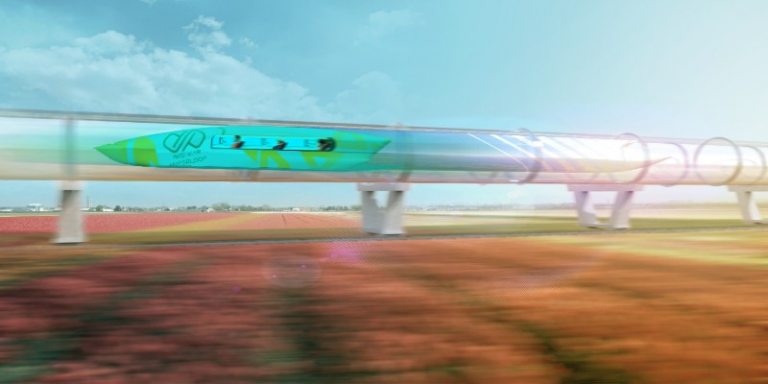
Transporting passengers and goods at speeds exceeding 1,000km/h, hyperloop is a completely new form of transport with the aim to become the most sustainable means of mass transportation of the 21st century. The potential of AI, which is fundamental to Virgin Hyperloop’s future operations in the Middle East, will form the core basis to explore knowledge exchange opportunities between MBZUAI and Virgin Hyperloop.
Speaking on the release, Dr. Sultan Al Jaber said: “This partnership exemplifies the immense capacity of AI to reshape the world around us by breaking boundaries. Virgin Hyperloop will change the way we move around the world. MBZUAI will help enable this by providing access to some of the world’s most talented AI professionals, as well as superior research facilities, which can contribute to realizing Virgin Hyperloop’s vision.”
Sultan Bin Sulayem said:
“Our region has great potential to emerge as a global powerhouse from the current economic situation. The transportation and technology sector – and that includes advancements in AI in particular – will define our regional capabilities in the long-term. Supported by AI, we are ultimately offering time with this disruptive, completely new, and sustainable technology that will help us to create an on-demand economy. We seek to revolutionize regional transport and trade sectors through a passenger and cargo hyperloop-enabled system, powered by AI. We can transport people and high-priority goods at the speed of an airliner, moving them between economic zones, cities and emirates. The UAE’s education sector, through partnerships such as our new collaboration with MBZUAI, will have a meaningful role in enabling and driving this very exciting and growing industry.”
Mr. Dhaliwal said:
“With hyperloop, we find ourselves at an important crossroads of transport innovation. AI will play an important part and it promises to transform the customer experience, from seamless check-ins to smooth system operations. Together with our institutional partners at MBZUAI, we want to further accelerate the global hyperloop development, leading to the commercialization of the most sustainable means for mass transport in the 21st century.”
MBZUAI will offer Master of Science, MSc, and PhD level programs while also engaging policymakers and businesses around the world so that AI is harnessed as a force for positive transformation.
The University has already begun the process of vetting the applications for 2021 intake, with thousands of applications received from over 80 countries.
Graduate students can apply to MBZUAI via the University’s website for 2021 registration. The first class of graduate students will commence coursework at MBZUAI’s Masdar City campus in January 2021.
HYDERABAD (Metro Rail News): The Telangana government will begin efforts to bring a high-speed train between Hyderabad and Vijayawada, industries minister KT Rama Rao said.
The high-speed train is realised it would immensely benefit both the states, especially towns abutting the national highways said the minister, who participated in various developmental works and Haritha Haram programme in Huzurnagar assembly constituency in Suryapet and Nalgonda districts.
The minister is interested in getting high-speed trains connecting Hyderabad with Vijayawada Last year, he had expressed annoyance when the Centre did not include Hyderabad in 10 new high-speed train corridors and tweeted to the Piyush Goyal, railway minister how did the Centre neglect Hyderabad (the fifth largest city in the country) in the High-speed train corridor. The AP government had also shown interest in a high-speed train route between Hyderabad and Vijayawada.
Although, the minister inaugurated the RDO office and laid the foundation stone for an urban park and a skill development centre in Huzurnagar. He said chief minister K Chandrasekhar Rao had brought administrative reforms for the convenience of the people by creating more revenue divisions, mandals and districts.
“Though the government was going through a financial crisis due to Covid-19 pandemic, it had released Rs 7,000 crore to 54 lakh farmers under Rythu Bandhu scheme apart from continuing schemes such as Kalyana Lakshmi, Aasara pensions and Shaadi Mubarak,” KTR said in the presence of TPCC chief N Uttam Kumar Reddy and MP B Lingaiah Yadav.
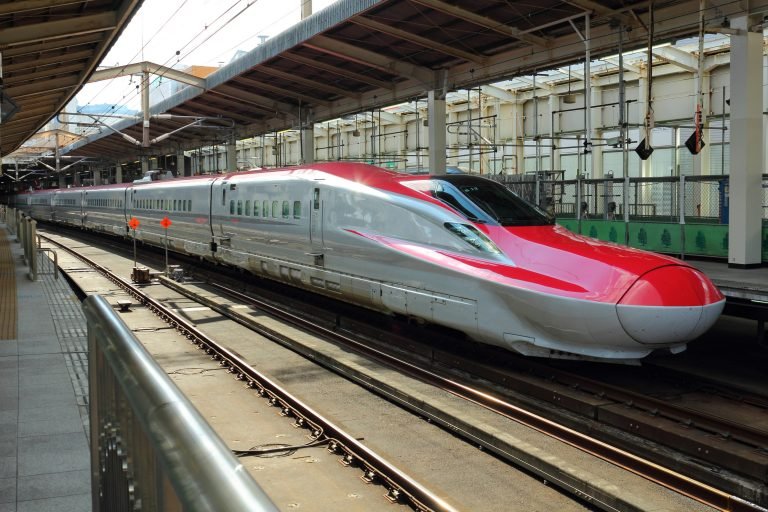
NEW DELHI (Metro Rail News): Indian Railways, the world’s fourth-largest network is seeking investments from private firms to operate passenger trains for the first time. The Ministry of Railways today invited request for qualifications (RFQ) from the private companies submit their interest to run passenger trains over 109 pairs of routes by introducing 151 modern trains on Public-Private Partnership. The project will entail an investment of about Rs 30,000 crore.
The 109 pairs have been formed into 12 Clusters across the Indian Railway network. Every Train will have a minimum of 16 coaches. The 12 clusters are Mumbai-1, Mumbai-2, Delhi-1, Delhi-2, Chandigarh, Howrah, Patna, Prayagraj, Secunderabad, Jaipur, Chennai and Bengaluru.
“The majority of Trains to be manufactured in India under the “Make in India” initiative. The private entity shall be responsible for financing, procuring, operation and maintenance of the trains” Said Railway Board.
Trains will be designed for a maximum speed of 160 kmph. There would be a substantial reduction in journey time. The running time taken by a train shall be comparable to or faster than the fastest train of Indian Railways operating in the respective route.
The aim of this initiative is to propose modern technology rolling stock with controlled maintenance, reduced transportation time, support job creation, provide enhanced safety, provide world-class travel experience to passengers, and also reduce the demand-supply deficit in the passenger transportation sector.
The Concession Period for the project shall be 35 years. The private companies shall pay to Indian Railways fixed haulage charges, energy charges as per actual consumption and a share in Gross Revenue determined through a transparent bidding process.
These trains shall be operated by the Driver and Guard of Indian Railways. The operation of the trains by the private entity shall conform to the key performance indicators like punctuality, reliability, upkeep of trains etc.
Operation and maintenance of the passenger trains would be governed by standards & specifications and requirements specified by Indian Railways.
A pre-bid meeting has been scheduled on 21 July 2020 at 11.30 hrs at 2nd Floor, Conference Room, Rail Bhawan, Raisina Road, New Delhi – 110001.
RFQ documents can be uploaded from Govt. of India’s CPP portal from 1st July 2020 to 8th September 2020 up to 1100 hrs (IST) on payment of Rs 2,36,000/- towards cost of tender documents.
The bids can be submitted by or before 8th September 2020 till 1100 hrs (IST) and the tender will be opened on same day at 1130 hrs (IST).
Asia’s third-largest economy has been clobbered by the pandemic and a months-long lockdown, growing at its slowest pace in at least two decades last quarter.
The shutdown, which put millions out of work overnight, is broadly expected to fall the country into recession. Fears for the economy prompted the government to allow many businesses to resume operations starting last month despite an ongoing increase in infections, which have now crossed 600,000. Even before Modi announced the lockdown in late March, the economy was struggling to gain traction with sluggish growth, record unemployment and a flurry of bad loans making banks reluctant to lend
Private train operations may begin by April 2023
These companies could be running trains in India
The first bidding process noticed about 20 companies in infrastructure and transportation business express interest. These include Adani Ports, Tata Realty and infrastructure, Essel Group, Bombardier India and Macquarie group. However, it was before the coronavirus pandemic.
At this point, In the post-pandemic world, will the same player’s bid? it is not clear yet, though, given that these players have implemented multiple infrastructure projects of the government and with the financial muscle they possess, they could be potential contenders.
Adani Ports
Adani group owns one of the largest private railway lines in India that spans 300 km connecting ports and other business hubs for cargo movement. This is in addition to the large scale infrastructure projects the company handles.
The company also has worked with the Ministry of Railways and Metro corporations in different states. In 2019, the company set up its own subsidiary to focus on metro rail projects.
Essel Group
If there is one other group that has the capability and the bandwidth to bid, it would be Subhash Chandra-led Essel Group. The group has been involved in multiple government infrastructure projects for decades.
The group’s foray into railways came in 2018 when it won its first Railway projects.
In 2018, the group’s infrastructure arm Essel Infraprojects Ltd won the first railway project for Rs 17.06 billion on the Eastern Freight Corridor connecting Howrah and Chennai mainline. Its competitors at that time included IRCON International, an Indian Railways infrastructure arm.
Tata Realty and Infrastructure Ltd
It is a 100 percent subsidiary of the Tatas and is the infrastructure arm of the group. The firm was qualified for the Hinjewadi-Shivajinagar Metro in Pune and participated in the bid to lay the underground stretch for Delhi-Meerut Regional Rapid Transit System.
Foreign players
Bombardier
The German firm is the first foreign multinational company to set up a wholly owned railway vehicle manufacturing facility in India, more than 50 years ago. They are one of the largest locomotive suppliers to Delhi Metro and have delivered close to 776 metro cars till date. In May, the company won the contract to supply 210 commuter and metro cars for the Delhi-Meerut Regional Rapid Transit System.
Given their long-standing relationship with the railway ecosystem, they are strong contenders as well.
Alstom
Alstom is a global transportation solutions provider with a strong presence in India. It offers a complete range of equipment and services, from high-speed trains, metros, trams and e-buses to integrated systems, infrastructure, signalling and digital mobility solution. Today, Alstom employs ~5600 people in India and has four manufacturing facilities, located in Sri City, Coimbatore, Madhepura and Kolkata. The company has also setup its second largest Global Engineering Centre in Bengaluru. In line with Government of India’s ‘Make in India’ initiative, the company has been investing heavily in the country to produce world class rolling stock, components, design, research and development to serve the domestic as well as international markets. With this, the company is well-positioned to participate in railway projects.
In this regard, Alain SPOHR, Managing Director, Alstom India & South Asia Said:
“Alstom offers a complete range of equipment and services, from high-speed trains, metros, trams and e-buses to integrated systems, infrastructure, signalling and digital mobility solutions. Our ambition is to partner with all transportation stakeholders in meeting tomorrow’s mobility challenges. Alstom supports Indian Railways’ move to introduce modern technology Rolling Stock at maximum speed of 160 km/h, with reduced maintenance and enhanced safety. Many countries, including Japan, Germany, US and Canada have successfully managed such railroad privatisation. The first move of privatising 151 trains will add to this effort by bringing world-class travel experience to Indian passengers. While the tendering for this project is at initial stages, Alstom will be interested in exploring this opportunity, as we have innovative solutions for enhanced passenger experience along with the right product expertise to address the Indian market.
Alstom has been associated with India’s progress for many decades now and has a long-standing reputation for providing highly innovative and sustainable solutions for meeting the country’s transport requirements. In line with the Make-in-India policy and the Prime Minister’s recent call for Atmanirbharta (Self-reliance), Alstom has indigenous production for metro trainsets, electric locomotives, electrical traction and control equipment. Alstom also has a strong track record of running several projects successfully across India. With 4 domestic factories, we are geared to address the Rolling Stock and component needs of Indian Railways.”
The discussion paper titled ‘Private Participation: Passenger Trains’ has identified 100 routes, including Mumbai Central-New Delhi, New Delhi- Patna, Allahabad-Pune and Dadar-Vadodara. Other prominent routes include Howrah-Chennai, Howrah-Patna, Indore-Okhla, Lucknow-Jammu-Tawi, Chennai-Okhla, Anand Vihar-Bhagalpur, Secunderabad-Guwahati and Howrah-Anand Vihar
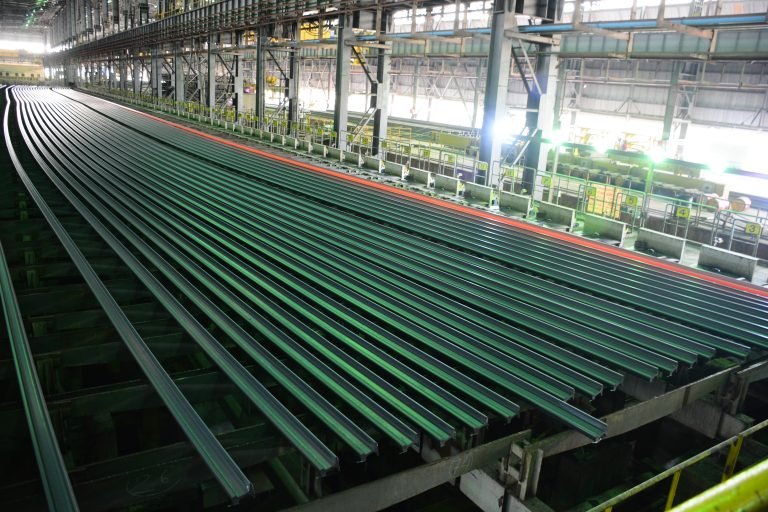
BHILAI (Metro Rail News News): The Steel Authority of India Limited (SAIL) has begun production of vanadium rail tracks at its Bhilai Steel Plant (BSP) for high-speed trains. SAIL becomes first European grade tracks manufacturers in India with the start of production at Bhilai
On 28 June 2002, The production of European grade vanadium rail has begun at BSP’s Universal Rail Mill. This track includes a composite of vanadium elements, which is alleged to double the life of the track. This will improve the speed of the train and prevent the tracks from corrosion.
There will be no fear of train friction, derailment of the train due to the high load-bearing strength of new tracks. Bhilai Steel Plant has prepared R-260 grade track. It is being told that initially 300 numbers of rail track will be produced. After this, its regular production will continue. After dispatching the 300-piece rail track, only R-260 grade rail tracks will be produced regularly at Bhilai Steel Plant.
Officials said that for the first time, a mixture of vanadium has been made. It is found in China, Russia, Africa, Austria and some areas of India.
Track strength will increase
The Bhilai Steel Plant currently forming 880-grade tracks. Presently the new grade-260 is available. Officials are stating that the capacity of this track is high. Also, the strength inside the rail track will also increase.
Railways will benefit the most from the production of R-260 grade rail tracks. Will help financially. It will save crores annually by doubling the life of the railway track.
Rail tracks will be anti-corrosion
It will be suitable that the amount of carbon in it has been reduced further. Carbon causes cracks in the tracks. Due to the quantity of carbon in the steel, vanadium is being mixed to increase its toughness. Its biggest advantage will be that the speed of the train will increase. It will also be corrosion resistant. There will also be protected from rust. An official even told that the 10-year railroad will be able to run for 20 years. At the same time, they will be able to tolerate more load of goods trains.
Rail tracks rolling longer and harder
It has been being said that the rolling of the rail track will be more difficult now than before with the start of railway track production. The railways are going to be more closely watched after the changes in the vanadium composite steel and rail tracks. Tough jobs are also being done with good steel and a good profile. The BSP team is all set to meet the demand of Railways. Soon, common rail tracks from vanadium alloy steel will be sent to Indian Railways, which will make it easier to run high-speed trains. Until now, vanadium is used in Europe.
Blooms built in SMS-3 for the track
First-time steel was made from hot metal. In steel melting shop-3, vanadium blends and new grade blooms were prepared. The rail tracks are being produced by casting. This production of vanadium alloy steel is being done under very stringent standards. The Bhilai Steel Plant has produced rails in keeping with the requirements of Indian Railways from time to time, in line with the increasing quality standards. To ensure availability of best and best quality rails to Indian Railways, Bhilai Steel Plant has made new efforts and established production units equipped with modern technology.
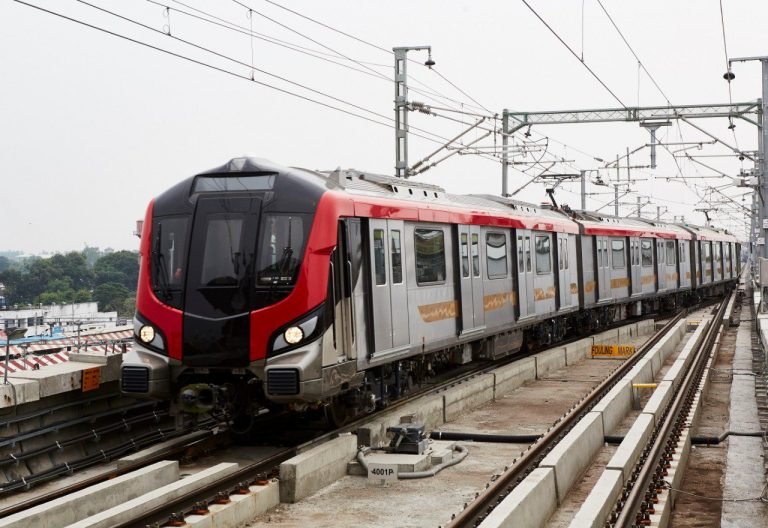
LUCKNOW (Metro Rail News): Canadian multinational firm Bombardier Transportation emerged as the lowest bidder (L1) for providing 201 coaches (rolling stock) and signalling & train-control system for Phase 1 of Kanpur and Agra Metro Rail project.
Uttar Pradesh Metro Rail Corporation (UPMRC) on Monday opened the price bid of all three bidders who are technically qualified after the opening of technical on February 18, 2020.
Currently UPMRCL’s estimate is unknown.
As per result of financial bids shared, the position of each participant bidder is as under:
Bidder
Position
Bombardier Transportation India Pvt. Ltd. – Bombardier Transportation GmBH
L1
BEML Limited – Hitachi STS
L2
Alstom Transport India Ltd. – Alstom Transport S.A.
L3
Although the price bid of chines firm CRRC was not opened as it was not found technically qualified bid was rejected, so their financial bid was not opened. Bid values quoted by each firm yer to disclose so it will be added soon when available.
Bombardier Transportation will start production coaches at its Rolling Stock facility located at Vadodara, Gujarat, India once the letter of acceptance (LoA) received from UPMRC. Total of 67 metro trains (with three coaches) will be supplied to Kanpur and Agra Metro projects under this contract.
Tender (Contract KNPAGRS-01) for design, manufacture, supply, testing, commissioning and training of 201 nos. Standard gauge cars, including Train Control & Signalling System for Agra and Kanpur Metro Rail Project, was invited on 5 December 2019 and technical bids were opened on 18 February 2020.
Earlier to this, the Bombardier had been awarded the Rolling Stock contract worth Rs 2,577 crore to supply 30 regional commuter trainsets of six cars each and 10 intracity mass transit trainsets of three cars each, together with 15 years of rolling stock maintenance for NCRTC’s Delhi-Meerut RRTS corridor.
For more updates, check out the Kanpur & Agra sections of Metro Rail News.
For more updates, check out the Kanpur & Agra sections of Metro Rail News
UTTAR PRADESH (Metro Rail News): The railway ministry said that Uttar Pradesh govt started utilising train coaches as isolation wards for 59 suspected patients in Mau.
Indian Railways has begun implementing care to corona patients referred for admission in COVID coaches deployed in many states. On June 20, 2020, 42 suspected patients were admitted in isolation coaches deployed at Mau Junction in Varanasi division and 17 cases were admitted on June 21, 2020.
Eight patients have already been released, as per the official statement. Indian Railways is set to offer almost 5,231 isolation coaches to the states. Zonal railways have turned these coaches as lockdown facilities.
The coaches can be utilised for quite mild cases that can be clinically indicated to the COVID care centres according to the guidelines issued through the health ministry. Train coaches have been changed into isolation wards.
In which, 503 isolation coaches have been deployed in Delhi, twenty in Andhra Pradesh, sixty in Telangana, 372 in UP and 5 in Madhya Pradesh.
Earlier, Indian railways have used almost 960 isolation coaches over 5 states in Delhi, Uttar Pradesh, Andhra Pradesh, Telangana & Madhya Pradesh to facilities in the country.
NEW DELHI (Metro Rail News): The Indian Railways has declared all tickets cancellation booked on or before 14th of April on regular trains. An order issued on 22nd of June that it has been finalised, all train tickets booked on or prior to April 14 for regular timetabled trains should be cancelled and complete refunds generated.
As per Railway reservation rules, permit commuters to book tickets up to 120 days in advance for every classes and train within advance reservation period. Whoever have booked tickets till mid-August will now have their tickets automatically cancelled and they will receive the refunds for the booked tickets, with the new order.
An individual can apply for payments within 6 months from the date of journey, for PRS counter tickets. Now, the national transporter runs fifteen pairs of Special AC trains and 200 timetabled trains from 20th of May and 1st of June.
To transport the stranded migrant workers, students, pilgrims along with tourists, railways has also been working Shramik Special trains from May 1. Since then, the Railway has run over 4,450 Shramik Special trains to ferry over sixty lakh people.
NEW DELHI (Metro Rail News): On Thursday Indian Railways declared the cancellation of all regular trains till 12th of August. As per the Railway Board notification, it has been decided that normal timetabled passenger services with Mail or Express, passenger and suburban services still cancelled till 12.08.2020.
It has also been finalized that all the ticket booked for the normal timetabled trains for the journey date from 01/07/20-2/08/20 will be cancelled and total fares will be refunded to the passengers.
The 230 special trains that have been come into motion meanwhile the lockdown will continue to run, as per the national transporter said.
Special Rajdhani, Express services were commenced on 12 May and 1st June respectively.
This time the cancellations of trains come in the background of an impact in Covid-19 cases across the country. In a declaration on 15th of May, the Railways had cancelled each train listed for travel till 30th of June 2020 and chose to refund the tickets.
Because of the lockdown, all the trains were cancelled across the country that started on the 25th of March to contain the spread of coronavirus. It was only on the 16th of May that restricted commuters train services restarted in the country.
MUMBAI (Metro Rail News): Mumbai Metro Rail Co Ltd (MMRCL) invites online application for the post of Assistant General Manager (Legal).
Name of the Post – Assistant General Manager
Total No of post – one
Pay scale – 70,000 to 2,00,000
Required Qualification:
LLB or Bachelor of Law from any Recognized university with min 55% marks or equivalent CGPA of 03/05 years.
At least 7 years of experience of Post qualification in executive grade in govt entities in the desirable domain for the post.
At least 7 years of experience of Post qualification in administration cum legal work on a responsible or executive position in a solicitors firm of repute or applicant practising in city civil court and high court with minimum CTC of Rs 8 lacs.
Jr. Scale officer having a minimum of 5 years of service with grade pay of Rs 5400/-.
Currently working in Sr. scale with grade pay of 6,600/-, IDA pay scale Rs 60,000 to 1,80,000/- with at least 2 years post qualification experience.
Applicants must possess knowledge of drafting and deeds, affidavits etc. Bar council registration.
KANPUR (Metro Rail News): Kanpur Metro rail construction work has gained momentum after the lockdown. Workers are now returning from their village back to the city. A total of 570 labourers are involved including the casting yard & corridor.
With the help of bus and pickup vehicles of the contractor company, the workers are being taken back to the work. Camps are being developed in the casting yard for labourers to stay.
104 rooms are to be built, out of that almost sixty has been finished. Workers who have returned to work have also commenced living in the room. Since the 15th of May, almost 400 workers have turned to work.
Managing director of Uttar Pradesh Metro Rail Corporation, Kumar Keshav says that now the metro construction in Kanpur is picking speed. UPMRC is trying their best to recover the loss of time caused due to the lockdown and the construction should be completed within the time limit.
The work of placing the Pier Caps on the pillars which have been made on the road under the nine km long stretch of the corridor, being built from IIT to Motiljhil has commenced. The casting of twenty pier caps was made prior to the lockdown.
Currently, almost 400 of the 600 workers employed are from Uttar Pradesh. Constant efforts are being done to take them back to the workers from elsewhere.
DEHRADUN (Metro Rail News): The Delhi Metro Rail Corporation Limited (DMRC) invited online bids for providing consultancy services for the preparation of a detailed project report (DPR) of Ropeway project in Dehradun. DMRC is committed to making a detailed project report (DPR) for 25 km of Ropeway Project in Dehradun.
In December 2019, Uttrakhand Metro Rail Corporation (UkMRC) and DMRC had signed a Memorandum of Undertaking (MoU) for developing two Ropeway project in Dehradun, Uttarakhand.
The Government of Uttarakhand has recommended three ropeway corridors to meet urban transportation demand and reduce traffic in Dehradun city.
Prem Nagar to Rispana Bridge
ISBT to Jakhan and
Survey Chowk to Karanpur
Scope of Work
The scope of work includes Preparation of concept plan of the ropeway route including tentative stations, tower locations, horizontal alignment, vertical alignment.
Preparation of index plan for the ropeway network finalized for Dehradun City. Field survey for identification of above-ground utilities along the proposed ropeway route and also listing of buildings along the route if any.
Geometric design of route alignment covering horizontal as well as vertical profile on actual topography survey including Drone survey and furnishing the XYZ coordinates of ropeway network.
Finalizing location of stations, towers and general lay out plan for stations and integration area. Preparation of land plans for the stations as well towers location showing Government and private land. Requisite help in the identification of land (Government/Private) will be extended by Revenue Department of Uttarakhand Government.
Technology Selection for the Ropeway System including spans, rope dia, type of Towers, diameter and shape of Towers etc.
Conceptual plan for a maintenance depot
Estimation of construction costs, operation and maintenance cost (Break up of manpower cost, energy cost, maintenance cost). Approximation of fare structure and recommendation thereof.
Periodicity of renewal of various components of the ropeway system giving their life and cost thereof. Submission of codes and Good Practices (soft copy) of the Ropeway System in India and Abroad.
Key Knowledge
Tender Notice No.: NIQ/06/ED(CS)/2020
Issue Date: 25 June 2020
Estimated Tender Value: NA
Work Completion Period: 12 weeks
Last Date to Submit Bids: 8 July 2020 up to 1500 hrs.
Opening Date of Bids: 8 July 2020 at 1530 hrs.
Tender Document
Tender papers can be downloaded from the Govt. of India’s CPP portal from 25th June 2020 to 8th July 2020 at free of cost.
Contact Below for more details
The Principal Advisor, Delhi Metro Rail Corporation Limited 25 Ashoka Road, New Delhi – 110001
JAIPUR (Metro Rail News): After preparing a Detailed Project Report for the Jaipur metro phase-II proposed project among Sitapura-Ambabari, the state govt will be taken discussions to start the project. On June 24, the urban development and housing minister has called a meeting.
The Jaipur Metro Rail along with DMRC revised the phase- II DPR, conducted a series of exercises to take down the expense to almost Rs 5,500 cr.
A JMRC official stated that in the state cabinet meeting, approval DPR will be made. The project is now intended on the elevated corridor and the expense is decreased to almost half from earlier estimation.
In 2014 the DPR made, it was mentioned that project needed land of Rs 2,000 cr. Whatever the amount mentioned it the earlier DPR, it would require less amount than mentioned in the previous DPR. The expected cost for acquiring land will be decreased to Rs 500 cr, as per a source.
An official said, “While construction cost of an elevated corridor is Rs 200 crore per km, it goes up to Rs 550 crore per km underground,” said a senior official.
As Jaipur Metro also got the conditional safety clearance certificate by the commissioner of metro railway safety to start the 2.4 km underground metro railway section in the Walled City location and the final decisions will also take place to the project inaugurate.
DUBAI (Metro Rail News): Serco Middle East has published its new Managing Director appointment of Wallace Weatherill, for the Dubai Metro & the Dubai Tram, operations, that the company operates and manages on behalf of Dubai’s Roads & Transport Authority (RTA).
According to the Serco’s announcement, Weatherill has worked in the Middle East rail industry for almost 6 years, commencing with mobilising the North-South high-speed commuter railway in Saudi Arabia. Wallace re-joins Serco, having earlier worked as the director for rail in Saudi Arabia.
In the UK, Weatherill has managed passenger railway businesses, like Southeastern, London Commuter Railway & London Midland and also leads with him infrastructure management experience obtained with the UK infrastructure operator Network Rail of 1999-2006. My concept is to make on the success that has already been achieved through the RTA and Serco on the progress of the iconic RTA rail transit systems in Dubai, said Weatherill.
It declared in the statement from Serco, with almost twenty years of experience in the critical rail systems operations in the UK and the Middle East, Wallace leads with him the knowledge and expertise needed to successfully maintain the award-winning Dubai Metro services both Serco & the RTA are recognised for.
Weatherill stated that we also integrate the new Red Line Extension seamlessly, opening new journey possibilities and building the resilience needed to welcome the traveller’s increase. Serco’s plan to empower nationals in our business will resume; our people are our assets & at Serco, we are all proud to be producing important services to the UAE.
The CEO of Serco Middle East, Phil Malem, added that I am overwhelmed to see Wallace is back to Serco Middle East at a globally tricky time. I am confident that Wallace will be an asset to our team and continue Serco’s award-winning delivery of service across the RTA transport systems.
BENGALURU (Metro Rail News): Bengaluru Underground Metro Phase-II demolition work for Metro stations Corridor is now under process in 3 of the 4 stations scheduled that was stopped for over 2 months because of the lockdown.
As per the official, almost a hundred buildings have been destroyed to build the Arabic College, Tannery Road and Nagawara Metro stations, including a 35 flat living complex at ‘Akshay Residency’ near the junction of Outer Ring Road (ORR) and Nagawara.
BMRCL General Manager, Land Acquisitions, M S Channappa Goudar responded that during the lockdown we could not ask people to shift at other places.
Therefore, we paused till it was relaxed, and Eid was over.
A total of 2,662 parts have been taken for the Nagawara, and Gottigere line and a compensation of Rs 2,016 cr has been given to the land losers.
The demolition work is almost done at Tannery Road, as per the official. Barring 3 properties where tenants or owners have moved outside the state, we have demolished virtually everything, including several tannery units that had been here for decades, he further added. The process of getting properties is in the process at Arabic College, the official said.
The only problem in getting land for Venkateshwara station. He also added that along with giving compensation amount, we had received 2 acres of land from the BDA. Now, another person alleging ownership of the property has received BDA to court, and this has stopped us from moving ahead with the demolition.