How will you pay DAMEPL: Delhi High Court to DMRC

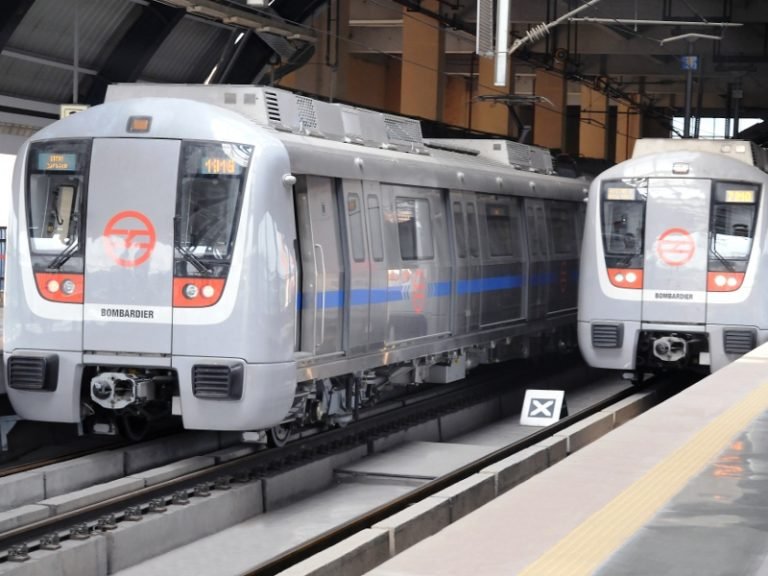
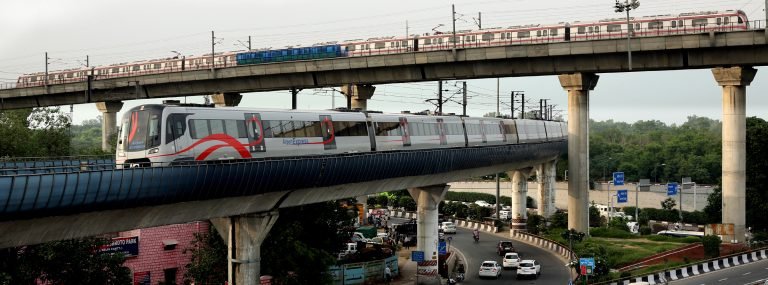
DELHI (Metro Rail News): On Monday, the Delhi High Court ordered the Delhi Metro Rail Corporation to explain how it plans to repay money owed to Anil Ambani’s Reliance Infrastructure-backed Delhi Airport Metro Express Pvt Ltd. (DAMEPL).

“On the next day of the hearing, I don’t want to hear anything here and there,” Justice Suresh Kumar Kait declared while hearing a case related to the 2017 arbitral ruling pertaining to the Delhi Airport Metro Express Line. Otherwise, you may be subjected to an unfavourable order.

While the Reliance Infra-led firm is requesting that the DMRC pay Rs 6,305.40 crores into the Project Escrow Account immediately, the DMRC has already told the court that it only has a total of Rs 6,208.03 crores in its bank accounts, including Rs 1,014.69 crore in profits.

The Supreme Court upheld the 2017 arbitral judgement, which relates to the Delhi Airport Metro Express Line, in September 2021. Only revenues of the metro railway administration can be attached by a court in the execution of a decree or order, according to Section 89 of The Metro Railways Act, 2002.

The DAMEPL said in the latest application before the court that “The non-payment of Termination Payment since 2013 (for over eight years) by the Judgement Debtor [DMRC] has caused immense damage to the Decree Holder [DAMEPL] and its Promoter, Reliance infrastructure Limited. Reliance Infrastructure Limited has infused/funded Rs 2,513.04 crore to the DAMEPL until March 31, 2018, by taking loans from public sector banks. Accordingly, proceedings for liquidation have been initiated against Reliance Infrastructure Limited.”

Despite the Supreme Court’s upholding of the verdict, Reliance Infra has been suffering an enormous and irreparable loss on a daily basis, according to the statement. The DAMEPL has also said in the application that it does not agree to any debt assignment or takeover by the DMRC.

The DMRC said in an affidavit filed with the court earlier this month that it has a total of 1642.69 crore in earnings, but that Rs 514 crore is committed liability “due to employees on the account. Of leave salary and post-retirement expenses.” In addition, rs 114 crore is a portion of smart card security deposits refundable to commuters.

According to the information given to the court, the balance of the 6,208.03 crores available with the DMRC has already been allotted for its different projects, both within and outside Delhi. A significant sum – Rs 2,869.33 crores – has been aside for the Metro’s build stages III and IV.

The DMRC had claimed before the court on December 22 that paying the payment to the DAMEPL right away was a matter of national interest and that if the Metro is stopped, there will be a significant difficulty.
Three metro stations in Gurugram to be equipped with facial recognition cameras

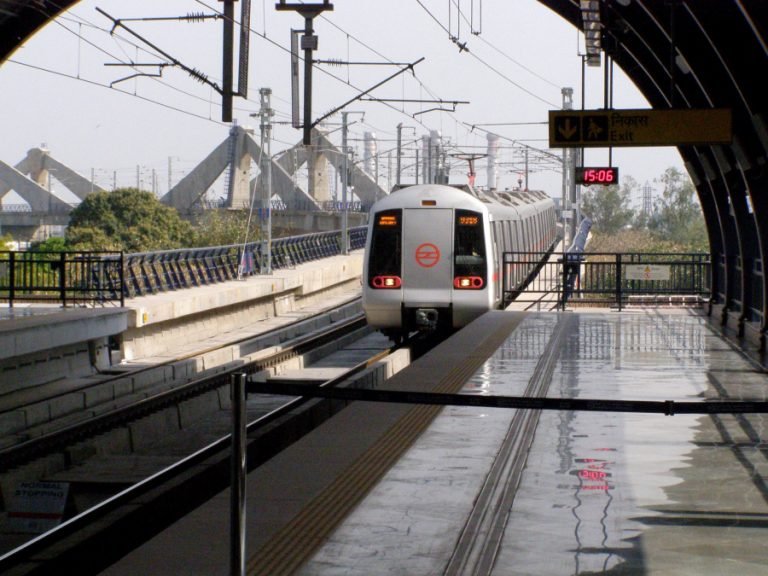
GURUGRAM (Metro Rail News): The Gurugram Metropolitan Development Authority (GMDA) will deploy facial recognition cameras at three Metro stations in the city to boost security systems, authorities announced on Monday.

The Delhi Metro Rail Corporation has given approval for facial recognition cameras to be installed at Sikanderpur and MG Road Metro stations, according to authorities, while talks are underway to get permission for cameras to be installed at Huda City Centre station.

According to a senior official from the smart city division of GMDA “By February end, we will install facial recognition cameras at Sikanderpur Metro Station and MG Road Metro station with all permissions in place. Eight such cameras will be installed at these two metro stations. At Huda City Centre station, initially two cameras will be installed and we will increase the numbers later on. With both facial recognition cameras and other CCTV cameras in the city, crime and traffic surveillance will improve further.”

On Saturday night, Chief Minister Manohar Lal Khattar conducted a surprise inspection at the offices of the GMDA and the Municipal Corporation of Gurugram. Khattar performed a thorough investigation into the operation of the city’s CCTV cameras, which are monitored by the integrated command and control centre (ICCC).

During his meeting with senior GMDA personnel, the chief minister requested that a facial recognition system be implemented to monitor questionable individuals. According to Khattar, such a system is already operational in Karnal, which is also his hometown. He also advised that the city bus service’s activities be monitored from the control centre.

According to GMDA officials, a meeting between the IT and police departments will be held to explore how the project may be implemented. At the moment, ten facial recognition cameras have been put in Gurugram at Sheetla Mata Mandir and the Gurugram bus stand. The authority plans to install 50 facial recognition cameras across the city, according to officials, though no deadline has been set as areas are identified.

According to Sudhir Rajpal, GMDA’s chief executive officer “We are working with the departments concerned to find out if any specific software is required for enhanced surveillance, and how the tracking from ICCC can be improved. “The chief minister has requested that there be 24-hour surveillance and that traffic fines be levied for night movement, as well as the monitoring of the city’s sanitation vehicles.”

For the monitoring process, the smart city team obtains criminal data from the police department. Officials previously stated that if 60-70 percent of a person’s facial features match, an alarm is sounded at the ICCC, and a team is dispatched to the scene to identify the person.

To identify a particular individual, face recognition technology compares facial traits to the information stored in databases. However, there is a risk of incorrect recognition in these systems due to a variety of factors such as poor lighting and image perspective, according to the officials.

Country’s first RRTS project receives Rs. 4710 cr in Union Budget 2022

DELHI (Metro Rail News): In a major boost to regional connectivity in NCR, the Government of India has allocated Rs. 4,710 crores to the country’s first Regional Rapid Transit System (RRTS) project in the union budget presented today in the parliament.

Construction work on the entire 82 Km long Delhi-Ghaziabad Meerut RRTS corridor is in full swing. The corridor will have 25 stations, including two depots and one stabling yard.

More than 14,000 workers and 1100 engineers are working day and night at our sites. Despite the challenges brought in by the COVID-19 pandemic, the progress of the project has been as per scheduled timelines.

So far, 16 km viaduct of priority section, 1200 piers, and 9,900 piles have been concreted. Foundation work has been completed for 56 km of the corridor.

The 17 km priority section between Sahibabad to Duhai is scheduled to be operational by March 2023 and trial runs is expected to begin this year. The complete corridor will be opened to the public by 2025.

“RRTS is a strategic investment of the Governments to transform the mobility in NCR in line with the GatiShakti masterplan. The continued allocation to RRTS reinforces government’s focus on infrastructure expenditure to catalyse the economic revival after the impact of pandemic.” said Mr Vinay Kumar Singh, MD, NCRTC.

“Despite the impact of pandemic on the pace of work and capital expenditure, we are committed to work with our construction partners and other stakeholders to uphold the responsibility bestowed upon us by the Government in keeping the implementation of RRTS as per schedule”, he added

With a design speed of 180 kmph and an operational speed of 160 kmph, the RRTS trains will be unique and one of its kinds in India. The aerodynamic coaches will be self-propelled on electric traction with 25KV AC System. The RRTS trains are being designed with the state-of-the-art latest technology

NCRTC is a joint venture of the Government of India (50%) and State Governments of Haryana (12.5%), NCT Delhi (12.5%), Uttar Pradesh (12.5%) and Rajasthan (12.5%). It is mandated to design, construct, finance, operate and maintain RRTS in NCR and works under the administrative control of Ministry of Housing & Urban Affairs, GoI.

2nd Edition of InnoMetro: Global Platform to Showcase technology & Innovation for Metro and Railway

New Delhi (Metro Rail News): After a huge success of the 2021 edition, InnoMetro is now coming back with a 2nd edition to serve as a global event platform for the discussion and presentation of ideas and innovations by some of the most eminent leaders and experts from the industry. The event is scheduled to be held from 28th to 30th April 2022 and aims to serve as a forum for all those willing to showcase their ideas, vision, and knowledge in the industry.

With an improved vision and approach to address the latest technology, implementation of innovative ways for building metro systems. The second edition of InnoMetro opens up the door to new and enhanced business opportunities, one-on-one networking systems and an excellent level of interactivity for future growth. 

Some of the key topics that the event focuses on include-

  • Realisation of Atmanirbhar Bharat
  • Make in India: Make for World
  • New modes of Transportation: Metro Neo, Metro Lite
  • Workforce Diversity & Technical Skill Gaps in Metro & Railway
  • Covid Protocol & Difficulties in Rail Transport
  • Ticketing and Payment Innovations
  • Automated Train Examination System: ATES
  • Asset Maintenance and Predictive Analysis
  • Transport Infra Financing: Public-Private Partnership (PPP)
  • Indigenous Exports of Rolling Stock
  • Advancements in Artificial Intelligence for Metro & Railway
  • Increased revenue systems and cost-cutting measures
  • Sustainable & Green Mobility
  • Improving Passenger Experience on ‘Moving Wheels’
  • Metro railways: Promoting Low carbon Transportation in India
  • Data-driven Mobility Systems
  • MaaS- Increasing the sustainability of Transport System

InnoMetro brings together delegates from Central & State government authorities, Ministry of Railways, Metro Rail operators, Architecture Consulting Firms, Smart Cities Development Authorities, Research & Development Organizations and other like-minded citizens & Urban Mobility Experts.

With a record of 100+ speakers, the 2nd edition now focuses on giving a platform to the views of more than 150+ speakers presenting their ideas and knowledge at a global forum to provide valuable insights into the metro and rail industry.

As a whole, the event serves as the perfect blend of product innovations and technologies with new rail infrastructure systems and informed decisions. Thus, the 2nd edition of InnoMetro invites all the industry experts to come, showcase, understand and experience the latest advancements that hold the capacity of shaping the future of the rail industry in the long run.

For more information about the event and to participate as an exhibitor, speaker or delegate, please click on the link below-

InnoMetro 2022 Teaser

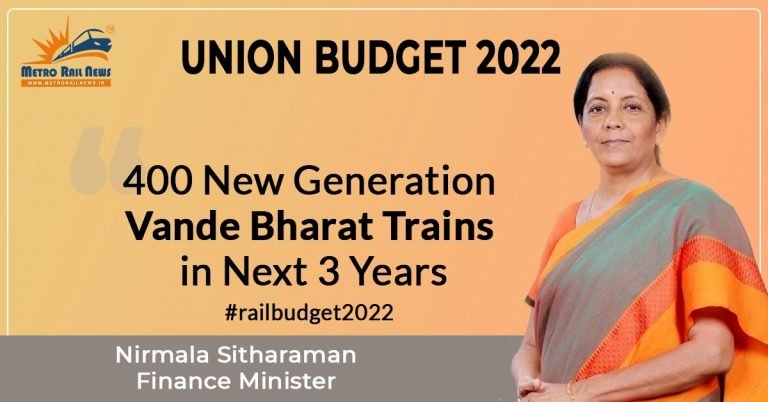
Union Budget 2022: FM Nirmala Sitharaman announces 400 Vande Bharat train in next three years

DELHI (Metro Rail News): On Tuesday, Nirmala Sitharaman, the Union Finance Minister, stated that 400 Vande Bharat Express would be introduced in the next three years. “One product, one railway station would be popularised,” Sitharaman said in her Budget 2022-23 speech. 

As per FM Sitharaman in Lok Sabha, “400 new generation Vande Bharat trains with better efficiency to be brought in during the next three years; 100 PM, Gati Shakti Cargo terminals, to be developed during next three years and implementation of innovative ways for building metro systems.”

Moving forward on this parallel track, we lay the following four priorities – PM Gati Shakti, inclusive development, productivity enhancement and investment, sunrise opportunities, energy transition and climate action & financing of investments, said Finance Minister while presenting the Union Budget for 2022-23 in the Lok Sabha.

An integrated approach to planning and coordinated implementation of infrastructure connectivity projects in the form of Gati Shakti touching on energy transition, climate action, logistics, and connectivity may arrest the bugbear of cost overruns and time overruns synonymous with Indian infrastructure.” The initial allotment of 20,000 crores towards the 100 lakh crores is commendable and a much-needed step.

However, it needs to be seen how the money will be implemented, and progress on infrastructure projects will be digitally enabled and monitored to eliminate infrastructure delivery bottlenecks. The sluggish pace of implementation has been attributed to several factors, including a siloed approach and environmental issues. However, the National Infrastructure Pipeline offered the initial building brick for rebuilding India’s energy and infrastructure.

According to Vishnu Sudarsan, Partner, J. Sagar Associates (JSA), “Integration and updation of National Infrastructure Pipeline with Gati Shakti with real-time updation on infrastructure projects will boost investor confidence, and rev up the private sector participation.”

Anritsu Introduces vTAP Support for 5G Standalone NEMs on MasterClaw for Encrypted Traffic Monitoring

In collaboration with a major European Network Equipment Manufacturer, Anritsu announced the availability of Encrypted Traffic Monitoring from Network Functions’ Virtual TAPs (Terminal Access Points) in the MasterClaw 5G Standalone (5G SA) Service Assurance solution (NEM).

This enhancement to MasterClaw’s capabilities allows visibility into natively encrypted traffic in a 5G Standalone (5G-SA) Core Network, specifically into the sections deployed according to the 3GPP’s Service-Based Architecture.

“Because the 5G SA architecture offers so many benefits, Communication Service Providers are eager to deploy it in their live networks as soon as feasible,” says Angelo Baccarani, Senior Product Manager for Virtual Probes and Data Acquisition at Anritsu.

 However, these benefits come at the cost of increased complexity in monitoring network function interactions” (NFs). As a result, ensuring that subscribers receive the optimum Quality of Experience is difficult. The encrypted nature of communications between 5G Core Network Functions in Service-Based Architectures is one difficulty (SBA). Monitoring of the network is made difficult, if not impossible. Anritsu now offers a solution to this problem.

NEMs are meeting this challenge by providing Virtual TAPs, integrated with their Network Functions, capable of forwarding clear (not encrypted) HTTP2 traffic (also known as the L7-layer) from the Service-Based Interfaces (SBI) to 3rd-party probes for monitoring.

Although the format and transport of such data are not yet standardised, this approach is gaining traction as a solution to the so-called “SBI visibility problem.” Anritsu now offers a software option for ingesting L7-layer traffic into the MasterClaw Service Assurance solution for 5G in its physical or virtual probe (MPA, Multi-Protocol Analyzer).

It will be correlated with all other protocol processes visible on non-encrypted interfaces (Point-to-Point, Access, or Edge), providing a consolidated end-to-end view of the subscribers’ activities. As per Anritsu, they are excited to engage with current and future clients and partners who are planning or deploying a 5G SA Core based on Service Based Architecture to enable them to maintain deep visibility into their networks.

Agra metro rail stations to reflect city’s heritage

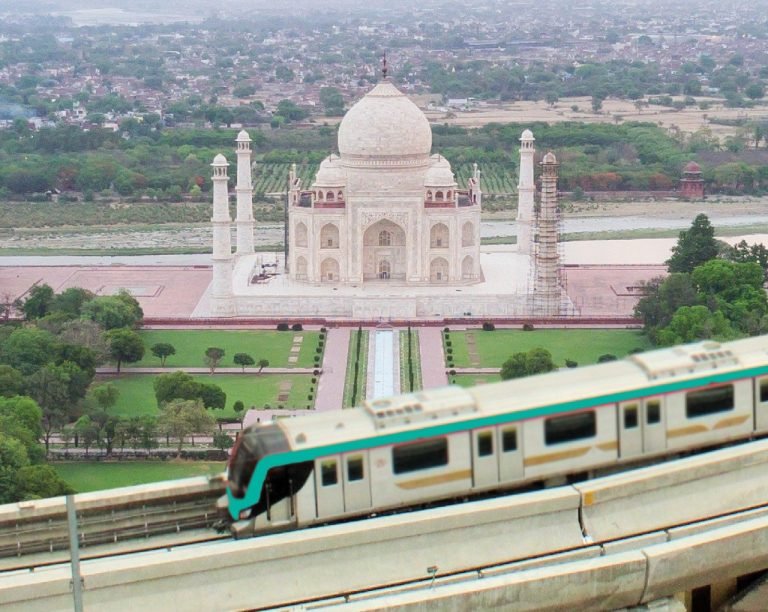
AGRA (Metro Rail News): The metro train stations in Agra will be equipped with cutting-edge technology and automated systems and will represent the city’s heritage and beauty according to a press release by Kumar Keshav, managing director of the Uttar Pradesh Metro Rail Corporation (UPMRC).

The MD also stated in the announcement that work on the Taj East Gate metro station’s station control room (SCR) has begun, and work on the track, lifts, and signalling systems will follow soon.

As per the press release it stated “The station control room is the most important part of a metro station as from here the station controller monitors all the activities of the station as well as the train operations. The room is fully equipped and automated to receive prompt signals from the operations command centre, the central unit which monitors overall operations of the metro trains.”

Work on railway tracks and lifts, as well as other signalling systems, will begin soon. “Work on the Taj East Gate metro station’s station control centre has commenced, and the metro station’s platform level has also begun to take shape,” he added. The civil construction work for the 3 kilometre elevated part of the first corridor’s priority stretch is currently underway. Taj East Gate, Basai, and Fatehabad Road are the three metro stations on the elevated segment.

In a record period, the Agra Metro team has finished the construction of 684 piles and the erection of all 144 Double T Girders, he added. On December 7, 2020, Prime Minister Narendra Modi virtually launched the Agra metro project in the presence of Chief Minister Yogi Adityanath

DAMEPL asked High Court to order DMRC to deposit Rs 6,208 cr into an escrow account immediately

DELHI (Metro Rail News): The Delhi Airport Metro Express Pvt Ltd (DAMEPL) has filed a new suit with the Delhi High Court, seeking that the Delhi Metro Rail Corporation Limited (DMRC) deposit Rs 6,208 crores into the project escrow account as soon as possible. DAMEPL has denied any out-of-court settlements or assignment of debt to the DMRC in its new application.

According to the DAMEPL plea, “The Decree Holder is adamant about not settling the case outside of court. As a result, Decree Holder rejects DMRC’s alternate plan and insists on a merits-based execution as soon as possible.”

The plea further claims that DMRC’s late payment is costing DAMEPL and its Promoter, Reliance Infrastructure Limited, significant harm. The Decree Holder may suffer irreparable loss and injury if the requested reliefs are not granted.

In the last hearing on January 24, 2022, DAMEPL mentioned the same position in the Supreme Court. The Delhi High Court will hear the Delhi Airport Metro-DMRC Case tomorrow, January 31, as ordered by the Supreme Court on January 24. In its order dated January 24, the Supreme Court declared, “The parties must appear in front of the High Court on January 31, 2022, to request an adjournment of the hearing.

We request the High Court to take up the matter at the earliest and dispose of the application without any further delay, as consequences of the pendency of the said application are detrimental to the interest of the petitioner as well as respondent.” Pursuant to this SC order, DAMEPL’s fresh application requests Delhi High Court to fix an early date in the first week of February for the final hearing and disposal of the execution petition.

Reliance Infrastructure injected Rs 2513 crores into DAMEPL through public sector bank loans, and the banks have begun liquidation proceedings against the business. DAMEPL and Reliance Infrastructure Ltd may suffer major consequences if the Arbitral Award is not satisfied.

The delay in satisfying the arbitral judgement is causing DMRC to accrue incremental daily interest of Rs 1.76 crores per day, totaling Rs 260 crores for the period September 10, 2021, to January 31, 2021.

DAMEPL had previously filed an execution case in the Delhi High Court on September 12, 2021, requesting that the court direct DMRC to comply with the SC ruling and pay the business Rs 7,200 crores. DMRC has paid only Rs 1000 crores out of a total of Rs 7200 crores.

The Supreme Court (SC) upheld the arbitration judgement of Rs 7,200 crores in favour of DAMEPL on September 7, 2021. The Delhi High Court had previously stated that Anil Ambani’s Reliance Infrastructure and its subsidiary, Delhi Airport Metro Express Private Limited (DAMEPL), are hiding from the Court and have not come before it with clean hands.

The statements were made while Justice Suresh Kumar Kait was hearing a DAMEPL execution petition seeking implementation of a Rs 7200 crore arbitration award it won against the Delhi Metro Rail Corporation (DMRC). The award was upheld by the Supreme Court as well.

The Bench, on the other hand, stated that whenever the DAMEPL is before the Court, they take a different stance, and that they are continuing to talk to the DMRC outside of the Court, and that the case would be heard again on March 29. DAMEPL signed a deal with DMRC in 2008 to operate the airport metro line until 2038. Due to disagreements between the parties, DAMEPL halted service on the airport line and invoked the arbitration clause against DMRC, alleging contract violations and seeking a termination fee.

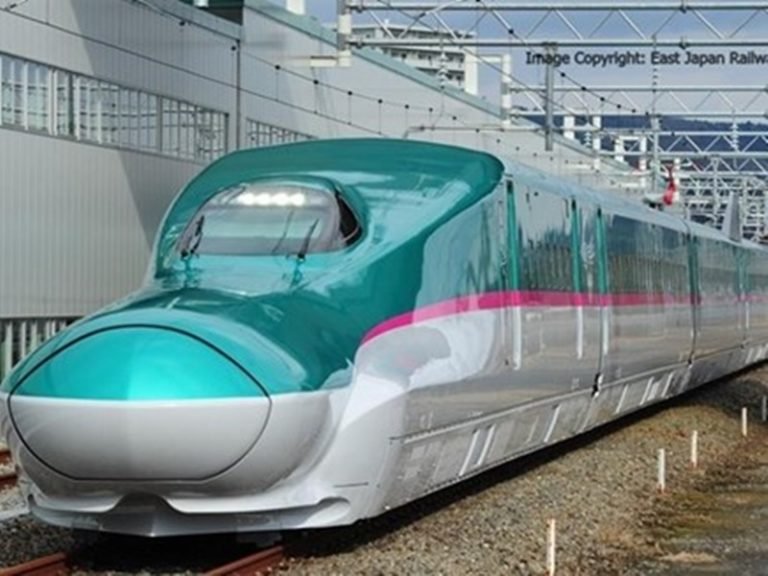
PM Modi’s dream project – when will the bullet train start running on the track?

DELHI (Metro Rail News): On February 1, Finance Minister Nirmala Sitharaman will propose the budget for the fiscal year 2022-23 to Parliament. Naturally, everyone’s attention is drawn to the budget, which is being presented in the shadow of Corona. However, people also anticipate the Rail Budget with bated breath.

The railway budget was previously issued separately, but the Modi government made modifications in 2017 and integrated the railway budget with the general budget. The Modi government has demonstrated the dream of a bullet train to the country.

In 2014, Sadananda Gowda unveiled the bullet train while presenting the Modi government’s first rail budget. At the time, the government had set a goal of having a bullet train running on track by 2023. The bullet train will go at 320 kilometres per hour with a top speed of 350 kilometres per hour.

The Indian government is working quickly on the Mumbai-Ahmedabad High-Speed Rail (Bullet Train) project with the assistance of Japan. The Mumbai-Ahmedabad Bullet Train (Mumbai-Ahmedabad Bullet Train) will travel at a top speed of 320 km/h.

The bullet train between Mumbai and Ahmedabad will have its own high-speed track. This train will also travel beneath the waves. On this route, the bullet train will travel a total distance of 508 kilometres in an average of 2 hours.

According to Union Railway Minister Ashwini Vaishnav, the work on the Mumbai-Ahmedabad High-Speed Rail Corridor Project Corridor for the country’s high-speed bullet train is progressing quickly. He stated that the bullet train will begin operating on the railway in 2026.

According to the National High-Speed Rail Corporation Limited (NHSRCL), a bullet train trial will begin in 2026 on the segment built between Surat and Bilimora for the first time. This section is 63 kilometres long. the most work is done under this project is Surat-Navsari-Vapi.

There are also plans to run a bullet train between Delhi and Ahmedabad. The bullet train travel from Delhi to Ahmedabad will take only four hours. Currently, It takes roughly 14 hours to get from Delhi to Ahmedabad.

The Delhi-Ahmedabad bullet train project will have a total track length of 875 kilometres. Rajasthan will construct 75% of the track, totalling 657 kilometres. The bullet train track will also pass over five rivers. Aside from that, there is a plan in the works to run bullet trains on a number of routes.

The survey of bullet train scheme is going on these routes-

  • Varanasi-Howrah (approx 760 kms)
  • Mumbai-Nagpur (approx 753 kms)
  • Delhi-Ahmedabad (approx 875 kms)
  • Chennai-Mysore (approx 435 kms)
  • Delhi-Amritsar (approx 459 kms)
  • Mumbai-Hyderabad (approx 711 kms)

All of these routes are currently being surveyed. National High-Speed Rail Corporation Limited would send over the DPRs for all of these routes to the Ministry of Railways in a phased manner by December 2023, once the survey is done. In today’s world, there are several trains (India high speed trains) that travel at speeds of more than 150 kilometres per hour. The Made in India Vande Bharat Express train has a top speed of 180 kmph.

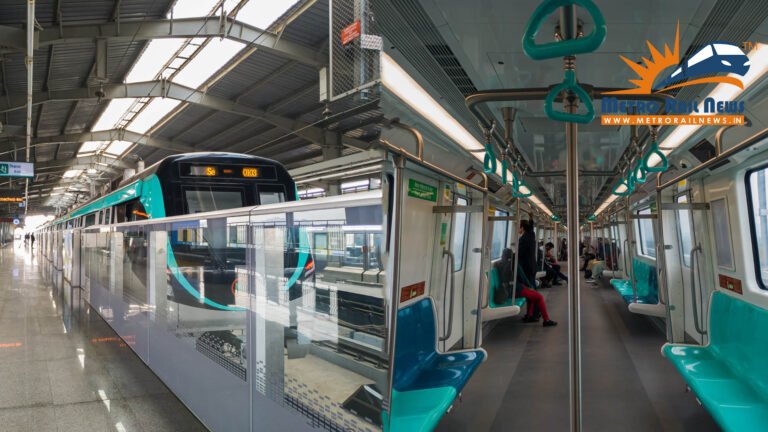
One more station for fast trains on Aqua Line of Noida Metro

NOIDA (Metro Rail News): From February 1, one extra station — Sector 148 — has been added to the number of halts for rapid trains on the Aqua Line, according to officials. Only four stations remain on the line where fast trains will not stop due to low footfall, out of a total of twenty-one.

Sectors 144, 145, 146, and 147 are the stations in question. In February of last year, the Noida Metro Rail Corporation (NMRC) inaugurated fast trains on the Aqua Line to minimise commuter travel time. During peak hours, the fast trains were supposed to skip 10 of the 21 stations.

The metro line was shut down for approximately 40 days in May due to the Covid-induced lockout.  When trains resumed service on June 9, 2021, the fast trains continued to skip the 10 stations. However, due to public demand and a concurrent drop in the number of Covid cases, the Noida Metro began allowing rapid trains to pause at the Sector 81 station on August 2.

On August 31, four more stations — sectors 50, 101, 83, and 143 — were added to the list. The Noida Metro evaluated station footfall on January 28 and decided to allow a pause at Sector 148 starting February 1. “The fast trains will now halt at the station from February 1 due to popular public demand and rising development near the Sector-148 station,” said Ritu Maheshwari, managing director of NMRC.

According to a spokesperson for NMRC “With this, now only four stations remain which the fast trains will continue to skip.” On weekdays, fast trains on the NMRC’s Aqua Line run from 8 a.m. to 11 a.m. and 5 p.m. to 8 p.m. On weekends and gazetted holidays, they do not run. During peak hours, Monday through Friday, the fast train frequency is 10 minutes; during non-peak hours, it is raised to 15 minutes.

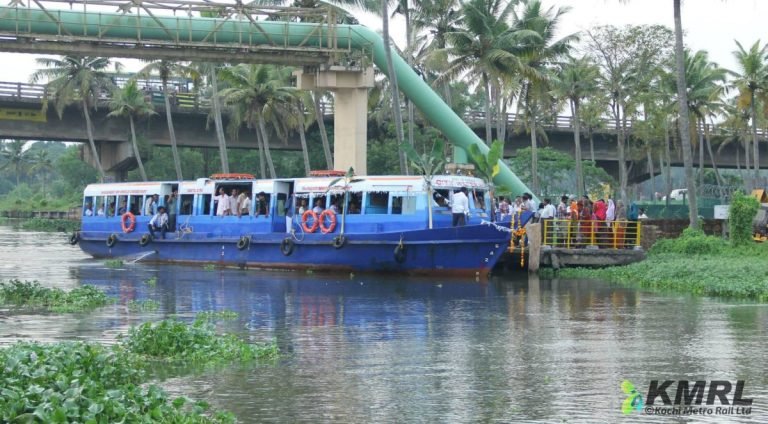
Water metro to provide world-class public transport to Cochin: Kochi Metro MD

KOCHI (Metro Rail News): It was concluded to use the inland waterways to launch a socially inclusive public transportation system – water metro – in order to reduce traffic congestion and pollution on Kochi roads, as well as to provide easy access to business areas on the mainland for urban households located along the Kochi lakeshore.

In an interview with The Economic Times – Kochi Metro Rail Ltd’s Managing Director, Loknath Behera, discusses the revolutionary water metro project and Kochi Metro‘s future goals.

What was the idea behind the water metro and what are the financial implications of the project?

It’s a creative and ecologically friendly idea that’s been in the works for a while. It’s a project of the state government. The project’s anticipated cost is Rs 700 crore, however, it may require additional cash in the future. It was conceived in 2017 and the work was outsourced to consultants.

Kerala’s government and Germany’s KfW have partnered to fund it, with KfW committing Rs 579 crore. The water metro’s goal was to deliver world-class transportation to Cochin, Kerala’s commercial centre and one of the state’s oldest ports. There are 62 waterways in Cochin. The water metro service could be extended to such canals if they can be made navigable.

Will, there be some kind of boat or some other type of coach will be used to ferry people?

There are electric boats that have diesel backup support. The Cochin Shipyard is responsible for its production. Other players are anticipated to use the space as well. The boats built by the Cochin Shipyard have been tried and tested, and any flaws have been ironed out. We’re modifying the tender for smaller boats based on it, and we’ll proceed with a global tender. These electric boats will cruise at 8.5 nautical miles per hour, compared to solar-powered boats’ 5 nautical miles per hour.

When is the project expected to be ready in all respects?

We hoped to launch it in 2021, but we had to wait for the new boats to arrive since we needed to induct them. By the end of April next year, we should be able to start with five vessels. By the end of the month, deliveries of one-of-a-kind boats will likely begin all over the world.

There were reports of environmental concerns over this project. Can you elaborate on that?

Although some environmental clearance is required for the construction of jetties, it is a mistake to imply that the project is not environmentally friendly. We are attempting to address the issues as soon as possible.

Moving on to Kochi Metro, has there been an increase in ridership and has it reached the pre-Covid levels?

We need to attain one lakh ridership, according to our projections, otherwise, there will be operational losses. Not only us, but every metro rail system in the country is losing money. Despite the existence of alternative funding options, ridership is the lifeblood of any metro system.

 At the time of my arrival, the ridership was 11,000, and since then, we’ve held a number of promotional activities to encourage people to use public transportation. The initiatives have yielded some results, but not to the extent that was anticipated. Ridership has now surpassed 50,000, and we are now focused on strengthening last-mile connectivity to attract more riders.

We’re also considering purchasing electric buses for last-mile connectivity and equipping students with shareable bicycles. We also provide fare discounts to certain groups of travellers, particularly ladies. We expect that as a result of all of this, more people will use the metro.

There are women who can pay the fares and there are men in the economically weaker section who can’t. Isn’t reducing fares on a gender basis a little unfair?

It’s not a matter of gender; it’s a matter of convenience and cash generation. Many housewives leave their homes during off-peak hours when ridership is at its lowest, and it is at this time that we want to offer such low fares.

Delhi Metro services resume on weekends as per regular timetable

DELHI (Metro Rail News): The Metro trains in Delhi will resume their regular weekend schedule on Saturday, officials said, after the national capital removed Covid-19 restrictions due to a decrease in the number of infections. To comply with the weekend curfew that was lifted on Thursday, Metro services have been limited at a 15-minute gap frequency on the yellow and blue lines, and 20 minutes on all other lines.

When the Omicron-dominated third wave began to soar in the capital city on January 8, a weekend curfew was implemented in Delhi. Delhi Metro Rail Corporation (DMRC) tweeted “In view of the latest guidelines issued by the Govt. for the containment of Covid-19 in NCT Delhi, Metro services on weekends (Sat/Sun) will again resume as per routine weekend timetable on all Lines starting tomorrow i.e, 29th January 2022.”

The Metro trains will run at 100 per cent seating capacity, with no standing provision. The DMRC also indicated that entry to stations will be limited based on the current scenario to guarantee compliance with Covid rules. On Thursday, the Delhi Disaster Management Authority (DDMA), chaired by Lieutenant Governor Anil Baijal, met with the Delhi government and decided to lift the weekend lockdown and halt the city’s odd-even method of opening non-essential shops.

In light of the better Covid situation, the DDMA also permitted restaurants, pubs, cinema halls, and theatres to reopen with a 50% capacity. As previously mentioned, there will be a modest modification in Metro services on the Yellow Line today in honour of the Beating Retreat event. The DMRC has previously announced that Metro services at the Central Secretariat and Udyog Bhawan Metro stations on Line 2 will be suspended from 2 pm to 6.30 pm on January 29.

During this time, travellers can transfer from Kashmere Gate to Raja Nahar Singh and vice versa at the Central Secretariat Metro station. After 6:30 p.m., normal services will be resumed, according to the statement.

Elevated metro line on OMR to run parallel to proposed IT expressway

CHENNAI (Metro Rail News): When you will take the metro to work on OMR in a few years, chances are you’ll see your boss or a coworker whizzing by in their automobile on the road beside you. The elevated metro rail line has been rebuilt to run parallel to the projected elevated IT Expressway, reducing construction and operations costs and allowing the line to be built faster.

With 19 stops, the metro train route will travel 20 kilometres from Nehru Nagar to Siruseri Sipcot. The makeover, which has been authorised by the government, is estimated to save around 250 crores in construction costs and operations costs. Phase 2 of the 118.9-kilometre project is planned to be finished in 2025. 

A top CMRL official stated, “Our work on OMR will commence soon. But we do not know when the elevated Expressway will become operational. If we are going to be on level two, future operational costs, including elevators and escalators, will be very high. So, we have redesigned the metro corridor.”

While the 10km stretch from Nehru Nagar to Sholinganallur and most elevated stretches of phase-2 are scheduled to be completed in 2025, the line from Sholinganallur to Siruseri Sipcot might be completed in a matter of months, depending on the contractor’s efficiency.

Commuters can expect a roller-coaster ride on the new line, which begins 15 metres above road level and rises to a maximum height of 25 metres. Starting at Nehru Park, the reconstructed metro line will be in the heart of OMR, with a minimum height of 12m to 15m. On either side of this corridor, the Expressway will run. “The columns will have a diameter of about 1.

2 metres.” As a result, the elevated highway will not affect the width of the OMR service road

CMRL developed an elevated corridor on OMR that would run on level two above the intended vehicular Expressway on level one when phase-2 was started. However, the intention was to leave some provisions for future construction of the Expressway. “We can complete our corridor with the new design, and the Expressway can be built at any time,” the official stated.

According to experts, the Expressway might potentially add to the number of vehicles on the road. “However, if CMRL provides adequate first- and last-mile connectivity across the stretch, it will encourage car and bike users to park their cars at metro stations and take trains to work,” said Sivasubramaniam Jayaraman of the Institute for Transportation and Development Policy.

Delhi metro gets land allotted by North civic body

DELHI (Metro Rail News): The North Delhi Municipal Corporation passed a resolution on Thursday allocating eight land pockets to the Delhi Metro Rail Corporation (DMRC) on a permanent and temporary basis to construct the Mass Rapid Transit System Project Phase-IV from Janakpuri to Majlis Park.

According to the civic body’s information, some pockets are located in Mangolpuri and Peeragarhi, while others are located between Madhuban Chowk and Prashant Vihar. The total land area in these permanently designated areas is 9455.
buy viagra super active online no prescription
61 square metres.

As per senior North MCD officials, the land allocated on a temporary basis is merely for construction. However, the area allotted on a permanent basis, which will involve the installation of access gates, will now belong to the DMRC and the land rate was 14,165 per square metre, according to the report.

The civic body also voted a decision to develop multi-level parking in the city’s Karol Bagh district, which includes Bank Street, Old Rajender Nagar, Shastri Park, and Pusa Lane. The first phase of work on the multi-level parking at Bank Street, which will have a capacity of 500 cars, will begin soon, according to a senior North MCD official, and will be completed under a public-private partnership (PPP) model.

According to the official, “We are yet to receive tenders for the remaining projects, the capacity of vehicles at the Shastri Park will be 600, while the Rajender Nagar and Pusa Lane projects will have a capacity of 450 and 400, respectively.”