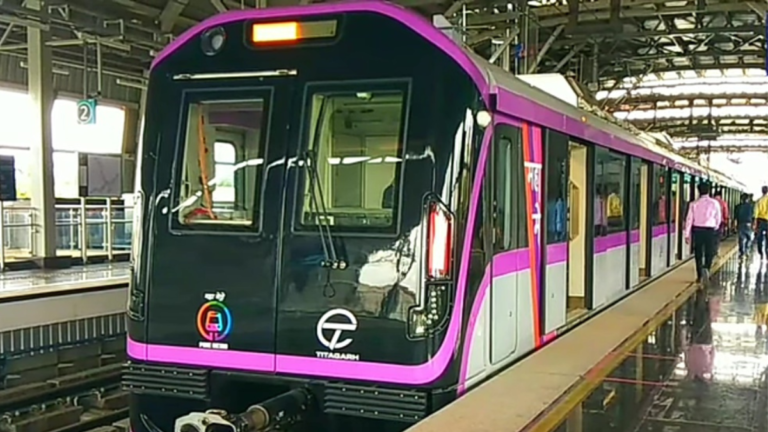
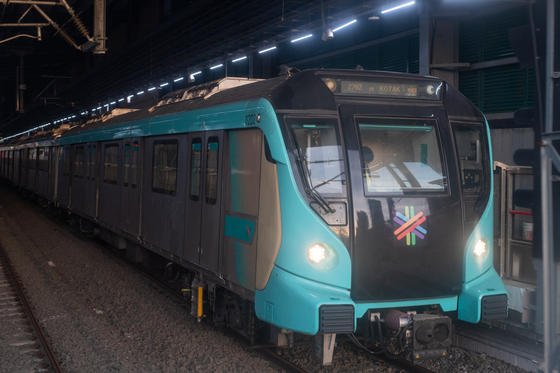
Kolkata Metro: From India’s First Metro Rail to a 21st Century Urban Rail Transit Network

Introduction

Kolkata, the capital of West Bengal, is located on the eastern bank of the Hooghly River. Kolkata is known for its cultural and historical significance; the city has long been regarded as the cultural centre of India. Kolkata is the third most populous metropolitan area in India, with an estimated 2025 population of around 15.5 to 15.8 million people, which places it behind Delhi and Mumbai. This city serves as the primary financial and commercial hub for eastern India.

During the colonial period, Kolkata served as the capital of British India from 1772 to 1911 and played a central role in the country’s administrative and economic activities. After independence, the city underwent major demographic and infrastructural changes, particularly following the partition of Bengal in 1947, which brought a large influx of refugees from East Bengal.

By the late 1960s, Kolkata faced increasing challenges related to traffic congestion and inadequate road capacity. The existing transport infrastructure could not keep pace with the city’s growing population and economic activities. To address these issues, the Government of India and the Government of West Bengal proposed the development of a metro rail system to provide a reliable, fast, and sustainable mode of urban transport.

This initiative led to the establishment of the metro system in Kolkata. Kolkata Metro holds the distinction of being India’s first metro railway. It was designed to ease traffic pressure, improve urban mobility, and modernise the city’s transport network. Since the opening of its first 3.4 km section between Esplanade and Bhowanipore (now Netaji Bhavan) in 1984, the Kolkata Metro has gradually expanded and now forms a crucial part of the city’s transport infrastructure. It continues to evolve through new corridors and technological upgrades to meet the demands of a growing urban population.

Kolkata Metro: Journey from Concept to Operation

Early Proposals 

The concept of a metro system in Kolkata dates back to the early 20th century. In the September 1919 session of the Imperial Legislative Council at Shimla, a committee led by Sir William Erskine Crum recommended the construction of a metro line beneath the Hooghly River. The proposed route was to connect Bagmari in the east to Benaras Road in Howrah, which spanned approximately 10.4 km. However, due to financial constraints and the complexities of implementing such a project during colonial times, the proposal was shelved. 

Establishment of the Metropolitan Transport Project (MTP)

In 1969, recognising the escalating traffic issues, the Government of India and the Government of West Bengal established the Metropolitan Transport Project (MTP). The MTP aspired to develop a comprehensive urban transport plan for Kolkata. A master plan was developed in 1971, outlining the construction of five metro lines totaling 97.5 km. Based on traffic studies, three corridors were prioritised for construction:

  • Line 1 (North–South Corridor): This line was designed to connect Dum Dum to Tollygunge. This line was identified as the highest priority due to its high traffic volume.
  • Line 2 (East–West Corridor): This corridor connects Bidhannagar to Ramrajatala. This line was planned to serve the eastern parts of the city.
  • Line 3: This line was designed to connect Dakshineswar to Thakurpukur. This line was later divided into two sections: Line 1 (Noapara to Dakshineswar) and Line 3 (Joka to Esplanade).

Foundation Stone and Construction Challenges

On 29 December 1972, Prime Minister Indira Gandhi laid the foundation stone for the metro project in Kolkata. The construction commenced in 1973–74, with the Soviet Union providing technical assistance. The project faced several challenges, including land acquisition issues, shifting of underground utilities, and coordination among various agencies. Despite these hurdles, the project made steady progress.

Inauguration of the First Line

After years of construction, the first section of the Kolkata Metro, covering a 3.4 km stretch between Esplanade and Bhowanipore (now Netaji Bhavan), was inaugurated on 24 October 1984 by Prime Minister Indira Gandhi. This was the beginning of India’s first metro railway service. The metro system in Kolkata had set a precedent for urban transit systems across the country.

Key Specifications of Kolkata Metro

Speed and Track 
Top Speed: 80 kmphAverage Speed: 34 kmphTrack Gauge: Broad Gauge – 1676 mm (Line-1) & Standard Gauge – 1435 mm (Line-2)
Safety and ElectrificationElectrification: 750 V DC Third Rail

Kolkata Metro: A Comprehensive Overview of Operational Network, Ongoing Expansions, and Upcoming Corridors

image 10

Overview

The Kolkata Metro network spans approximately 74 kilometers with 57 stations, which positions it as the third-largest metro system in India by route length. 

Operational Network of Kolkata Metro

Blue Line: Dakshineswar – Kavi Subhash (New Garia)

  • Length: 32.25 km
  • Depot: Noapara and New Garia
  • Number of Stations: 26
  • Station Names: Dakshineswar, Baranagar, Noapara, Dum Dum, Belgachhia, Shyambazar, Shobabazar, Shobhabazar Sutanuti, Girish Park, MG Road, Central, Chandni Chowk, Esplanade, Park Street, Maidan, Rabindra Sadan, Netaji Bhavan, Jatin Das Park, Kalighat, Rabindra Sarobar, Mahanayak Uttam Kumar, Netaji, Masteda Surya Sen, Gitanjali, Kavi Nazrul, Shahid Khudiram, Kavi Subhash (New Garia)

Yellow Line: Nopara-Jai Hind Bimanbandar

  • Length: 6.77 km
  • Type: At-grade, elevated & underground
  • Number of Stations: 4
  • Station Names: Noapara, Dum Dum Cantt., Jessore Road,  Jai Hind Bimanbandar

Note: PM Shri Narendra Modi commissioned the Nopara-Jai Hind Bimanbandar stretch of the Yellow Line on 22 August 2025 from Jessore Road Metro Station.

image 12

Orange Line: Kavi Subhash (New Garia) – Beleghata

  • Length: 9.79 km
  • Type: Elevated
  • Depot: New Garia
  • Number of Stations: 9
  • Station Names: Kavi Subhash, Satyajit Ray, Jyotirindra Nath Nandy, Kavi Sukanta, and Hemanta Mukherjee, VIP Bazar, Ritwik Ghatak, Barun Sengupta, Beleghata.

Timeline of the Orange Line

Operational date   Section Length 
6 March 2024Kavi Subhash – Hemanta Mukhopadhyay 5.68 km
22 August 2025Hemanta Mukhopadhyay- Beleghata4km

Purple Line: Joka – Majerhat

  • Length: 7.74 km
  • Type: Elevated
  • Depot: Joka
  • Number of Stations: 7
  • Station Names: Joka, Thakurpukur, Sakherbazar, Behala Chowrasta, Behala Bazar, Taratala, and Majerhat

Timeline of Purple Line

Operational Date Section  length  
30 December 2022Joka – Taratala 6.5 km
6 March 2024Taratala – Majerhat1.25 km

Green Line: Salt Lake Sector V – Howrah Maidan (East-West Corridor)

  • Length: 13 km
  • Type: Elevated (5.3 km) & Underground (7.7 km)
  • Depot: Central Park in Bidhannagar (Salt Lake)
  • Number of Stations: 12
  • Station Names: Howrah Maidan, Howrah, Mahakaran, Esplanade, Sealdah, Phoolbagan, Salt Lake Stadium, Bengal Chemical, City Centre, Central Park, Karunamoyee, Salt Lake Sector V

Timeline of Green Line

Operational date   Section Length
13 Feb 2020Sector V – Salt Lake Stadium 5.3 km
05 Oct 2020Salt Lake Stadium – Phoolbagan  1.7 km
14 July 2022Phoolbagan – Sealdah2.1 km
6 March 2024Howrah Maidan – Esplanade3.9 km
22 August 2025Esplanade – Sealdah2.6 km
Total16. 55km
image 11

Note: The Green Line of the Kolkata Metro network became completely operational on 22 August. The corridor features India’s first underwater metro stretch spanning 520m from Howrah Maidan to Esplanade. 

Under Construction Routes of Kolkata Metro

Yellow Line: Jai Hind Bimanbandar – Barasat

  • Length: 11.36 km
  • Type: Underground and Elevated
  • Number of Stations: 6
  • Station Names: Birati, Michael Nagar, New Barrackpore, Madhyamgram, Hridaypur, and Barasat

Note: The Yellow Line (Line 4) of the Kolkata Metro is slated for a 2.5-kilometre extension from the current airport terminal to Michael Nagar. This development, expected to be completed within the next three years, will further strengthen the metro’s connectivity to the northern suburbs.

Orange Line: Beleghata – Jai Hind Bimanbandar

  • Length: 22.28 km   
  • Type: At-grade, elevated & underground
  • Depot: New Town, New Garia
  • Number of Stations: 15
  • Station Names: Beliaghata, Gour Kishore Ghosh, NICCO Park, Saltlake Sector V, Technopolis, Nazrul Tirtha (formerly Bidhan Nagar), Swapno Bhor (formerly Sub CBD-1), Biswa Bangla Convention Centre (formerly CBD-1), Kala Kshetra, Mother’s Wax Museum (formerly New Town), Eco Park (formerly Convention Center), Siksha Tirtha (formerly Sub CBD-2), City Centre II (formerly Titumir), Chinar Park (formerly Rabindra Tirtha), VIP Road/Teghoria (Haldiram), Biman Bandar (Airport).

Purple Line: Majerhat to Esplanade

  • Length: 7.55 km
  • Type: Elevated (2.5 km) & Underground (5.05 km)
  • Number of Stations: 5
  • Station Names: Mominpur, Kidderpore, Victoria Memorial, Park Street, and Esplanade.

Planned Routes of Kolkata Metro

Pink Line: Baranagar – Barrackpore

  • Length: 12.50 km
  • Type: At-grade & elevated
  • Number of Stations: 11
  • Station Names: Baranagar, Kamarhati, Agarpara, Panihati, Sodepur, Subhash Nagar, Khardaha, Tata Gate, Titagarh, Talpukur, Barrackpore

Purple Line: Joka – Diamond Park

  • Length: 3.63 km
  • Type: Elevated
  • Number of Stations: 3
  • Station Names: Joka, Diamond Park, IIM

Note: In September 2025, Rail Vikas Nigam Limited (RVNL) issued a tender valued at over ₹377 crore for the construction of a viaduct and an elevated metro station on this section of the Kolkata Metro’s Purple Line. The project, estimated at ₹377,82,01,812.74, covers the 3.63-kilometre stretch from Joka to Diamond Park. This development is part of the ongoing efforts to enhance connectivity in southwestern Kolkata and expand the operational reach of the Purple Line.

The Gaps in Growth of India’s Oldest Metro System

  • Infrastructure failures: Managing old infrastructure remains a challenge for Kolkata Metro. Critical failures continue to affect operations. For example, in July 2025, Kavi Subhas station, the terminal station of the North–South Blue Line and one of the city’s busiest hubs, was found to have irreparable cracks in its supporting columns. Due to the severity of the damage, Metro Railway has decided to demolish and completely rebuild the station. Commuters may have to wait up to a year before the station becomes operational again.
  • Outdated systems: Older parts of the network suffer from outdated technology. The system is still in the process of upgrading from an older third-rail power system to a more modern and efficient one that will allow for closer train intervals.
  • Financial Performance: Though Kolkata metro has witnessed a surge in ridership yet financial increasing financial losses remain a major concern. According to a statement by Metro Railway, Kolkata Metro recorded a loss of ₹224.7 crore up to January 2025, compared to a loss of ₹207.9 crore during the same period in the previous financial year. The increase in losses reflects the ongoing financial challenges faced by the metro, including operational costs, infrastructure maintenance, and limited revenue recovery from ridership and fares
  • Expansion delays and cost overruns: The construction of new lines has been plagued by delays, which have led to budget revisions. For example, the Barasat extension project saw its costs grow from ₹2,397.72 crore to ₹4,829.57 crore.

Signs of improvement

Positive Ridership Trends Across Kolkata Metro Network

Kolkata Metro ridership trends show a recent surge, with daily passenger counts exceeding 8.69 lakh in late September 2025. This increase follows the recent launch of new lines and extensions, which boosted ridership by over 1 lakh in a single day.

  • Traffic on Blue Line: Among the stations on the Blue Line, Dum Dum recorded the highest footfall, with over 66,000 passengers. Esplanade and Rabindra Sadan followed with around 57,000 and 41,000 passengers, respectively. These numbers indicate that the Blue Line remains the busiest corridor in the Kolkata Metro network, handling the majority of the city’s daily metro travel.
  • Traffic on Green Line: On the Green Line, more than 2.04 lakh passengers traveled between Salt Lake Sector V and Howrah Maidan. The Sealdah Metro station recorded the highest usage on this corridor with over 49,000 passengers, followed closely by Howrah Metro station with around 48,700, and Howrah Maidan with about 25,500 passengers.
  • Orange Line: With extensions, this line has begun to show growth, recording around 4,800 daily commuters in September 2025.
  • Yellow Line: The newest addition is still in its early phase of operation, but is serving approximately 7,600 daily riders.

Growing non-fare revenue: The metro has successfully increased its earnings from sources other than tickets, with one report from 2023–24 noting an 80.5% increase in non-fare revenue.

Conclusion

Kolkata Metro, India’s oldest and third-largest metro network, continues to play an important role in meeting the growing demand for sustainable urban transport in the city. Over the past four decades, the system has expanded and evolved to serve a wider population. The ongoing expansion of the Kolkata Metro is expected to improve traffic conditions and reduce congestion across the city.

According to the former General Manager of Metro Railway, Kolkata, Shri P. Uday Kumar Reddy, the network is expected to reach over 130 km by 2027. However, to fully realise the potential of the system, it is essential to address several key challenges. Persistent delays in project execution have led to cost overruns, while financial losses remain a concern for long-term sustainability.

Despite these challenges, the Kolkata Metro has set a strong precedent for other metro systems in India by demonstrating the importance of early urban rail development and consistent public investment in sustainable transport.


Join the 6th edition of InnoMetro to explore how the progressions in AI are improving the railway systems, including ticketing, rolling stock, and signalling. Witness the innovation from 200+ exhibitors at India’s leading show for metro & railways which is going to be held on 21-22 May 2026 at Bharat Mandapam, New Delhi

Register now: https://innometro.com/visitor-registration/

Jaipur Metro Phase 2 Receives Approval from PIB

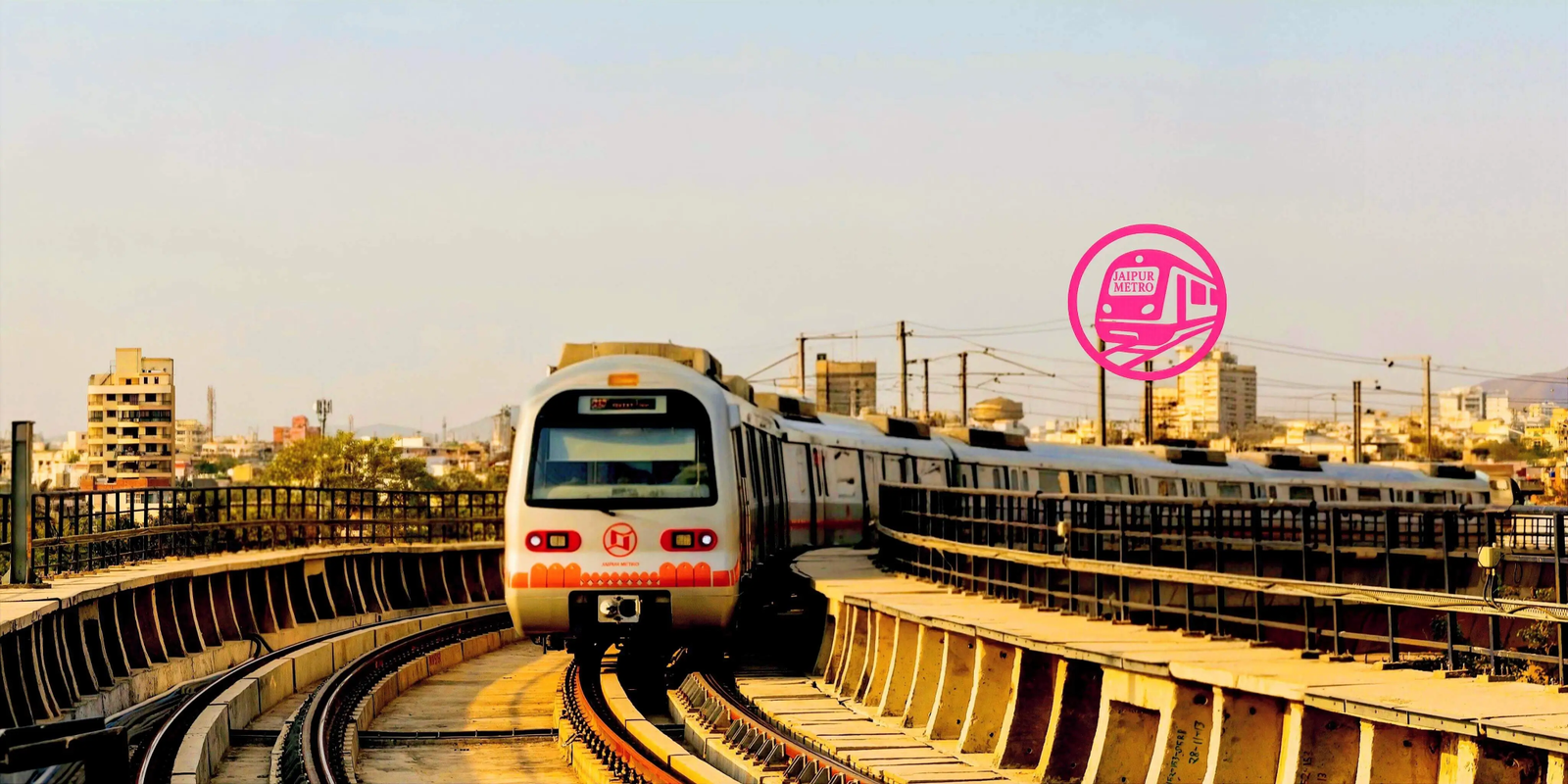
JAIPUR (Metro Rail News): Jaipur Metro Project progressed as the Detailed Project Report (DPR) for Phase-2 of the Jaipur Metro Rail Project received approval on 11 December during a Public Investment Board (PIB) meeting chaired by the Secretary of the Department of Expenditure in the Union Ministry of Finance. 

The Detailed Project Report (DPR) of Jaipur Metro Phase 2 covers a north-south main transit corridor which spans 42.80 km from Todi Mod to Prahladpura covering 36 proposed stations.

Jaipur Metro Rail Corporation (JMRC) managing director Vaibhav Galriya said “PIB’s approval Thursday means the project currently has the green signal from the finance ministry and the ministry of housing and urban affairs. We remain in constant touch with the Union govt and are making all efforts to move the process forward swiftly,” as reported by Times of India. 

With the PIB’s clearance, the DPR of Jaipur Metro Phase 2  will now be sent to the Union Ministry of Housing and Urban Affairs for approval, after which it will be sent to the Union Ministry of Finance.

The proposal will then be sent to the Prime Minister’s Office (PMO), and only after the PMO’s clearance it will be presented before the Union Cabinet for the final approval.


Join the 6th edition of InnoMetro to explore how the progressions in AI are improving the railway systems, including ticketing, rolling stock, and signalling. Witness the innovation from 200+ exhibitors at India’s leading show for metro & railways which is going to be held on 21-22 May 2026 at Bharat Mandapam, New Delhi

Register now: https://innometro.com/visitor-registration/

Kochi Metro: A Model for Sustainable and Integrated Urban Rail Transit in India 

Introduction 

Kochi, also known as Cochin, is a major port city on the Malabar Coast of the Arabian Sea in the southwestern Indian state of Kerala. It is part of the Ernakulam district and includes a cluster of islands and towns like Fort Kochi, Mattancheri, Willingdon Island, and Vypin Island. Kochi has a rich history as a spice trading center dating back to at least the 14th century, with trade links to Arabs, Romans, Chinese, and later European powers such as the Portuguese, Dutch, and British. Known as the “Queen of the Arabian Sea,” Kochi evolved from a fishing village into an important commercial hub. 

Why is the Metro System Essential for Kochi ?

  • Rapid Urbanization: The graph mentioned below shows the rapid population growth of Kochi from 1950 to 2025, rising from less than 100,000 to over 3 million. This sharp increase, especially after 2000, highlights the city’s fast urbanization and economic expansion. With such growth, existing road networks became overcrowded, causing traffic congestion, delays, and pollution. 
image 4

                                                   Kochi Total Population By Year 

  • Traffic Congestion: Kochi has been facing severe traffic congestion driven by the rapid growth in private vehicle ownership and inadequate road infrastructure. Recently, Ernakulam, the city’s central business district was ranked 50th globally for traffic congestion, attributed to its narrow roads, poorly designed junctions, and widespread encroachments. 

To address these challenges, the Kochi Metro was introduced as an essential solution. The establishment of the metro system provides faster and more reliable mode of transportation and supports sustainable urban development in Kochi. 

image 5

Kochi Metro: Redefining Urban Mobility in Kerala

Overview

Kochi Metro is an urban Mass Rapid Transit System (MRTS) developed to serve Kochi, the commercial capital of Kerala. The Kochi Metro Project is being managed and implemented by  Kochi Metro Rail Limited (KMRL). 

Currently the one metro corridor (Blue Line) spanning 27.96 km from Aluva – Tripunithura is completely operational. The construction for the Phase 1 of Blue Line spanning 25.16 km connecting Aluva to Petta with 22 stations started in June 2013. In 2014, the extension of Blue Line ( Phase 1A &1B) was approved with 3 new elevated stations. 

Kochi Metro Blue Line 
Phase Route Length Total No. of Stations Status 
Phase 1 Aluva to Petta25.16 km22 stationsOperational 
Phase 1APetta – SN Junction1.8 km2 stations Operational 
Phase 1B SN Junction – Tripunithura1.2 km 1 station Operational 

The Phase 2 of Kochi Metro consists of one metro corridor (Pink Line) which is currently under construction. The Pink Line of Kochi Metro spans 11.2 km from JLN Stadium to  Infopark II through 11 stations. 

The Phase 3 of Kochi which is currently under implementation involves a 14 km northern extension of 27.96 km Line-1 from the operational Aluva Metro Station to Angamaly via Cochin International Airport (COK) at Nedumbassery. 

Key Specification of Kochi Metro

Authorised Authority Kochi Metro Rail Limited (KMRL) 
Speed and Track Top Speed: 80 kmph
Average Speed: 34 kmph
Standard Gauge: 1435 mm
Electrification 750 V DC Third Rail
SignallingCommunication-based Train Control (CBTC)
Power Supply 110 KV AC
Fare Collection Automatic fare collection system with combination of smart cards &RFID/ QR Code tickets  

Phase 1 , 1A & 1B of Kochi Metro 

Currently Phase 1, Phase 1A and Phase 1B of Kochi Metro is operational. The Phase 1 of Kochi Metro consists of the Blue Line which spans 27.96 km from Aluva – Tripunithura. The Phase 1A & 1B are the  eastward extension of the existing Line 1 of Phase 1. 

Route Details

Line-1 (Blue Line): Aluva – Tripunithura

  • Length: 27.96 km
  • Type: Elevated
  • Depot: Muttom (23.6 hectares)
  • Number of Stations: 25
  • Station Names: Aluva, Pulinchodu, Companypady, Ambattukavu, Muttom, Kalamassery, Cochin University (CUSAT), Pathadipalam, Edapally, Changampuzha Park, Palarivatom, JLN Stadium, Kaloor, Lissie, M.G. Road, Maharaja’s College, Ernakulam South, Kadavanthra, Elamkulam, Vytila, Thykkoodam, Petta, Vadakkekotta, SN Junction, Tripunithura

Timeline of Blue Line 

Section Length Operational Date 
Aluva – Palarivattom 13.2 km19 June 2017
Palarivattom – Maharaja’s College5 km4 October 2017
Maharaja’s College – Thaikoodam5.65 km3 September 2019
Thaikoodam – Petta1.12 km7 September 2020 
Petta – S.N. Junction 1.78 km1 September 2022
S.N. Junction – Tripunithura1.16 km6 March 2024 

Phase 2 of Kochi Metro 

The Kochi Metro Phase 2 is currently under construction. The Phase 2 of Kochi Metro consists of one metro corridor (Pink Line) which spans 11.2 km between JLN Stadium and  Infopark featuring 11 stations.

The Government of India granted in-principle approval for Phase II of the Kochi Metro Rail Project  at an estimated cost of ₹1,957.05 crore on 26 February 2019.

The foundation stone for Phase II was laid by the Hon’ble Prime Minister on 1 September 2022, in the presence of the Hon’ble Governor and Chief Minister.

Subsequently, the Union Cabinet gave its formal approval to the project on 7 September 2022, and the Ministry of Housing and Urban Affairs issued the sanction order on 21 November 2022.

Project Cost and Funding as per Approved DPR 

S.No.SourceAmount (Rs. in crore)% Contribution
1GoI Equity274.9016.23%
2GoK Equity274.9016.23%
3SD for CT by GOI (50%)63.853.77%
4SD for CT by GOK (50%)63.853.77%
5Loan from bilateral/multilateral agencies1016.2460.0%
Total cost excluding Land, R&R and PPP component1693.74100.00%
6SD by GOK for Land Including R&R cost82.68
7State Taxes to be borne by GoK94.19
8IDC for Loan & Front End Fee39.56
9PPP Component46.88
Total Completion Cost1957.05
  • Loan from AIIB 

On 21 August 2024, the Asian Infrastructure Investment Bank (AIIB) sanctioned a USD 122.32 million loan which is approximately Rs 1025.21 crore loan for the Kochi Metro Phase 2. 

Phase 2 Contractor’s  List 

ContractContractor
Detailed Project Report (DPR) PreparerRITES
Detailed Project Report (DPR) RevisorUrban Mass Transit Company (UMTC)
General Consultant (GC)SYSTRA S.A. – SYSTRA MVA Consulting (India) Pvt. Ltd. JV
Detail Design Consultant (DDC) for Power Supply And Distribution System, 750 V Dc Third Rail Traction Electrification And Scada SystemSYSTRA MVA Consulting
KBC-3: Design and Construction of Elevated Viaduct and 10 Elevated StationsAfcons Infrastructure
image 8

Route Details 

Line-2 (Pink Line): JLN Stadium – Infopark II

  • Length: 11.2 km
  • Type: Elevated
  • Number of Stations: 11
  • Station Names: Jawaharlal Nehru Stadium (new station box), Palarivattom Junction, Palarivattom Bypass, Chembumukku, Vazhakkala, Padamughal (formerly Kunnumpuram), Kakkanad Junction, Cochin SEZ (Special Economic Zone), Chittethukara, KINFRA (formerly Rajagiri), InfoPark 1 / Smart City 1, and InfoPark 2 / Smart City 2
Latest Update on Phase 2 According to Shri Loknath Behera, Managing Director of Kochi Metro Rail Limited (KMRL), the project is planned in two phases. The first phase will include the initial five stations along the corridor from JLN Stadium to Kakkanad, with completion targeted for June, 2026. The remaining five stations are scheduled for development in the second phase, which is expected to be finished by December 2026.

Phase 3 of Kochi Metro 

The ongoing Phase 3 of the Kochi Metro project entails a 14 km northern extension of the existing 27.96 km Line-1, stretching from the operational Aluva Metro Station to Angamaly, with a key stop at Cochin International Airport (COK) in Nedumbassery.

Latest Update on Phase 3 
Systra MVA Consulting India Pvt Ltd has commenced the preparation of the Detailed Project Report (DPR) for Kochi Metro Phase 3.  

Ridership Trend in Kochi Metro Rail Project 

The Kochi Metro Rail Project has exhibited a consistent upward trend in ridership, underscoring its rising acceptance as a preferred mode of urban transport in the city. The data provided below demonstrates the consistent ridership growth in both 2024 and 2025, achieving milestones in passenger volume and financial performance. Each month in 2025 saw higher ridership compared to the corresponding month in 2024, with August 2025 witnessing a record 34.1 lakh passengers, an increase of almost 4 lakh over the previous year.

Monthly Rider 
Month Ridership 
YEAR 2024YEAR 2025
January28,78,36031,59,874
February24,98,79626,22,156
March24,43,81025,69,732
April27,77,66528,05,294
May30,67,11731,58,565
June27,61,82028,94,116
July31,01,58932,14,193
August30,27,75034,10,250
September30,67,563
October30,21,371
November30,44,678
December32,34,436

Kochi Water Metro Project 

image 7

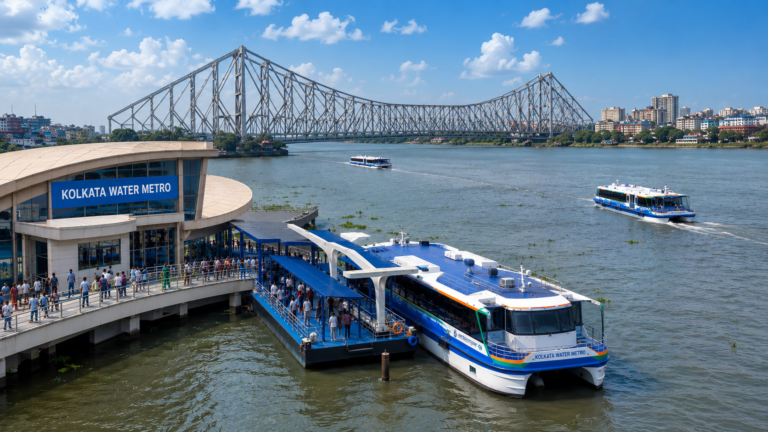
The Kochi Water Metro is India’s first water metro project. The project is implemented by Kochi Metro Rail Ltd. The operation and management of the Water Metro is handled by Kochi Water Metro Limited (KWML), a joint venture with a 74% share from the Government of Kerala (GoK) and a 26% share from Kochi Metro Rail Limited (KMRL).The project was inaugurated by the Honorable Prime Minister of India, Shri Narendra Modi, on April 25, 2023. 

image 6

The Kochi water metro project envisages the development of 15 identified routes, connecting 10 islands along a network of routes that span 78 km with a fleet of 78 fast, electrically propelled hybrid ferries plying to 38 jetties. The overall length of the line lengths of these 15 routes is 76.2 line kilometers.

Project Cost and Funding 

The project has a total value of INR 1136 crores and major part of which is financed by KfW development bank under Indo-German financial cooperation with a long-term loan agreement.

image 9

Conclusion 

The Kochi Metro Project stands out as a transformative project in urban transit, redefining commuting in Kerala’s commercial center. The Kochi Metro Rail Project has transformed mobility in the city by addressing issues such as rapid urbanization and traffic congestion and providing residents with a reliable and eco-friendly mode of transport. Managed by Kochi Metro Rail Limited (KMRL), currently the one metro corridor of Kochi Metro Project is completely operational. The Phase 2 of Kochi Metro which features one metro corridor is presently under construction while the Phase 3 of the project is currently under implementation.Additionally, the innovative Kochi Water Metro Project complements the rail network, further enhancing accessibility across the city’s islands while promoting clean and energy-efficient transportation. The Kochi Metro Rail Project and Kochi Water Metro Project together highlights the Kochi’s efforts to provide efficient, sustainable, and accessible transportation for its citizens.


Join the 6th edition of InnoMetro to explore how the progressions in AI are improving the railway systems, including ticketing, rolling stock, and signalling. Witness the innovation from 200+ exhibitors at India’s leading show for metro & railways which is going to be held on 21-22 May 2026 at Bharat Mandapam, New Delhi

Register now: https://innometro.com/visitor-registration/

BEML Rolls out Prototype of New Driverless Metro Trainset for BMRCL’s Phase-2 Network

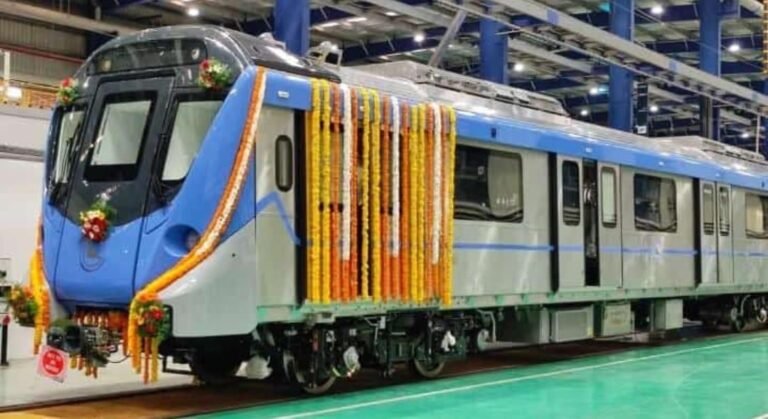
BEML Limited rolled out the prototype of its state-of-the-art Driverless Metro Trainset (5RS-DM), developed for the upcoming corridors of BMRCL Phase 2, 2A and 2B. The prototype for the pink line was formally rolled out by Dr. J. Ravishankar, IAS, MD, BMRCL, in the presence of Shri Shantanu Roy, CMD, BEML Ltd, along with senior leadership from both organisations. The dignitaries also witnessed the test run of the train at the BEML Rail Complex, marking a major milestone in the project’s progress.

2beb3462 55d8 4911 b14d 315c5964cbbb
e4f780b5 2d04 4d8f 9045 38392e7c8833

Under this prestigious contract, BEML will supply 318 Standard Gauge metro cars, designed, engineered and manufactured at its Bengaluru facility for Blue line (Airport line) and Pink line. The trainsets will undergo a detailed programme of testing and commissioning in line with BMRCL’s implementation timeline , followed by comprehensive maintenance support for up to 15 years. This rollout marks a significant step toward the execution of the ₹3,177-crore contract, awarded to BEML through a highly competitive bidding process.

The newly rolled out prototype reflects BEML’s expanding contribution to India’s metro ecosystem, especially in the domain of driverless (GoA4) urban transit systems. All design and engineering activities have been executed by BEML’s in-house teams, demonstrating the organisation’s capability to deliver world-class, self-reliant mobility solutions for major urban transport projects.

73a3bc52 d66c 455b a7a1 b45b6ea9b63a
2b22cb1b 39db 4484 906f 10dcc534ac10

Speaking on the occasion, Shri Shantanu Roy, CMD, BEML Ltd, said: ““The unveiling of this driverless metro prototype marks yet another significant milestone in BEML’s journey toward delivering next-generation mobility solutions for India’s growing cities. Bengaluru is expanding rapidly, and reliable, efficient, and modern transit systems are essential to sustaining this growth. We sincerely thank BMRCL’s management for their continued support and for placing their trust in BEML’s metro capabilities as we work toward a truly futuristic metro ecosystem.”

Sharing his thoughts on the occasion, Dr. J. Ravishankar, IAS, MD, BMRCL, said, “With the roll out of this first proto type marks a commitment by BEML to supply, the state-of-the-art trainsets which will enhance commuting experience. This is a milestone towards fulfilling the aspirations of metro commuters traveling on the upcoming R6 line and the ORR Airport line. I congratulate all the teams involved in this achievement and look forward to continued cooperation as we progress towards successful commissioning of the metro corridors which support reduction in traffic congestion, lowering carbon emissions, contributing to the city’s economic growth and quality of life.”

0f7ab1b0 b736 4fa0 bb74 b82a825ae52c

Key Features of the New Driverless Trainset:

• Modern, contemporary interiors for enhanced passenger comfort 

• Energy-efficient systems with upgraded passenger information features

• Extra Wide gangways for seamless passenger movement between coaches

• USB charging ports, ergonomic seating, and improved accessibility provisions

• Compliance with advanced fire safety, crashworthiness, and international safety standards

• Compatibility with CBTC (Communication-Based Train Control) for fully driverless operations

The roll out of the prototype marks the beginning of the delivery milestones for the project, with serial production set to proceed in alignment with agreed timelines. With this rollout, BEML continues its steadfast support to Bengaluru’s rapidly expanding metro network, contributing to a smoother, safer, and more efficient commute for the city’s growing population. The prototype underscores BEML’s commitment to advancing transformative, self-reliant urban mobility solutions under the spirit of Aatma Nirbhar Bharat.

8f1160b9 8d3b 4ed6 87c1 a8774a774cc9 2

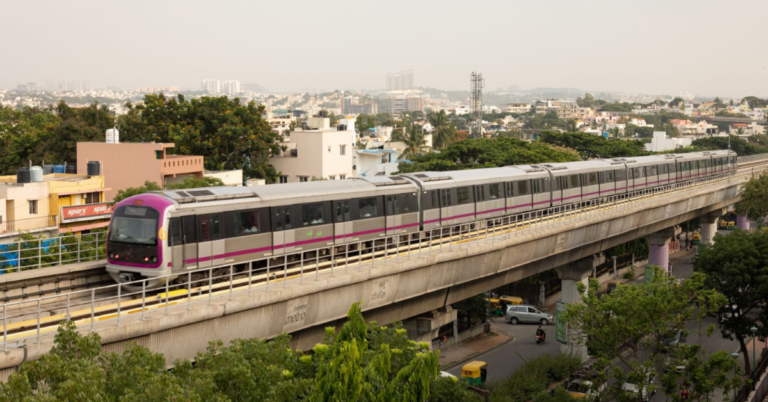
Recently, BEML has secured additional  order worth ₹414 crore from Bangalore Metro Rail Corporation Limited (BMRCL).  Under this top-up order, BEML will supply six additional driverless metro trainsets (36 cars) for the Bangalore Metro Rail Project, Phase 2 (Reach 5, yellow line). Earlier, during March 2025, BEML also secured  the  additional order worth 405 crores for 42 additional cars for Reach 6 of Bangalore metro. With this, total supply has increased from 53 trainsets (318 cars) to 66 trainsets (396 cars). It is to be noted that BEML is the largest rolling stock supplier to Bangalore metro and in the past has  supplied to the Green line and Purple line.


Join the 6th edition of InnoMetro to explore how the progressions in AI are improving the railway systems, including ticketing, rolling stock, and signalling. Witness the innovation from 200+ exhibitors at India’s leading show for metro & railways which is going to held on 21-22 May 2026 at Bharat Mandapam, New Delhi

Register now: https://innometro.com/visitor-registration/

Bids Invited for Ticket Vending Services in Chennai Metro Phase 2

CHENNAI (Metro Rail News): The Delhi Metro Rail Corporation (DMRC) has issued a tender inviting bids for providing Ticket Vending Services for Phase 2 of the Chennai Metro Rail Limited (CMRL) network. 

Tender Details 

Opening Date10 Dec 2025
Closing Date31 Dec 2025
EMD₹ 10,30,000
Tender Id2025_DMRC_889290_1
Tender NoDMRC/CMRL/Phase-II/TVS/2025/01
Pre-Bid Meeting18.12.2025

Contract Value: Rs. 31.76 Crores

Contract Duration: 37 Months

Contract Scope of Work: Providing Ticket Vending Services to Delhi Metro Rail Corporation (DMRC) for Phase 2 of Chennai Metro Rail Limited (CMRL). 

The Phase 2 of the Chennai Metro spans 118.9 km and includes three new metro corridors. The Detailed Project Report (DPR) of Phase 2 was prepared by RITES and  finalized in December 2018. In October 2024,  the Union Cabinet approved the project with a total estimated cost of Rs. 63,246 crore

Line Route Elevated Length Underground Length Total Length 
Line 3 ( Purple Line) Madhavaram – SIPCOT 219.1 km 26.7 km 45.8 km 
Line 4 (Orange Line) Light House – Poonamallee Bus Depot16 km 10.1 km 26.1 km 
Line 5 (Red Line) Madhavaram – Sholinganallur41.2 km 5.8 km 47 km 

Join the 6th edition of InnoMetro to explore how the progressions in AI are improving the railway systems, including ticketing, rolling stock, and signalling. Witness the innovation from 200+ exhibitors at India’s leading show for metro & railways which is going to held on 21-22 May 2026 at Bharat Mandapam, New Delhi

Register now: https://innometro.com/visitor-registration/

MMRDA Begins Monetisation of Metro Depots with Mogharpada Depot

Chief Minister Devendra Fadnavis has instructed the Mumbai Metropolitan Region Development Authority (MMRDA) to monetise all metro depot lands by adopting a mixed-use development model.

The Maharashtra government aims to generate revenue by utilising nearly 100 hectares of land in the Mumbai Metropolitan Region (MMR) that has been earmarked for depots across several metro corridors. This approach is intended to optimise land use, reduce the financial burden on metro projects, and support long-term urban development in the region.

The first project under this initiative is the Mogharpada depot in Thane. This depot will cater to four metro corridors Lines 4, 4A, 10, and 11. The Mogharpada depot spreads across 45 hectares and it is being taken up as the pilot location for this model before the approach is applied to other metro depots. It is planned as one of the largest car sheds in Mumbai’s metro network, with the capacity to accommodate 64 trains.

According to officials from the Mumbai Metropolitan Region Development Authority (MMRDA) and various industry experts, metro depots have not been used for commercial purposes until now. Although many railway and metro stations already have offices, malls, or other commercial facilities built alongside or above them.

The utilisation of depot land for commercial purposes will strengthen non-fare revenue for the metro system. By monetising these large land parcels, the authorities can generate additional income without increasing ticket fares which will increase the adoption of the metro system. 


Join the 6th edition of InnoMetro to explore how the progressions in AI are improving the railway systems, including ticketing, rolling stock, and signalling. Witness the innovation from 200+ exhibitors at India’s leading show for metro & railways which is going to held on 21-22 May 2026 at Bharat Mandapam, New Delhi

Register now: https://innometro.com/visitor-registration/

MAHA Metro Invites Bids for Construction of 6 Stations on Thane Metro

THANE (Metro Rail News): The Thane Integral Ring Metro Project has received a big push after the Maharashtra Metro Rail Corporation Limited issued bids for a ₹223.70 crore civil work contract. The contract involves the construction of six elevated stations.

As part of the scope of work, the appointed contractor will construct six elevated stations: Dr. Kashinath Ghanekar Natyagruha, Manpada, Dongripada, Vijay Nagari, Waghbil, and Waterfront, which form a key segment of the Thane Integral Ring Metro Project.

Tender Information:

Tender NoT1-023/C-02/2025
Pre-bid meeting22- Dec-2025
Bid Submission Deadline22-Jan-2026
Cost of Work₹223.70 Crore
Completion Period30 months

Maha Metro’s Brief Scope of Work: Construction of 06 (Six) numbers of Elevated Metro Stations of Thane Integral Ring Metro Project (1. Dr. Kashinath Ghanekar Natyagruha, 2. Manpada, 3. Dongripada, 4. Vijay Nagari, 5. Waghbil and 6. Waterfront).

The Thane Metro Phase 1 project, officially known as the Thane Integral Ring Metro, is a 29-kilometre mass rapid transit system featuring a single circular line with 22 stations. The corridor will trace a 29-kilometre route along the western periphery of Thane city.


Discover how AI is bringing the next phase of sustainable urban rail mobility for Viksit Bharat at InnoMetro 2026, India’s prime exhibition and conference for metro & railways which is going to held on 21-22 May 2026 at Bharat Mandapam, New Delhi

Register now: https://innometro.com/visitor-registration/

Sensonic Becomes Lowest Bidder for Digital Twin Contract for Sahibabad-Anand Vihar RRTS Stretch

DELHI (Metro Rail News): The National Capital Region Transport Corporation (NCRTC) has announced Sensonic In India Private Limited as the lowest bidder for the commissioning of a Digital Twin system for the Sahibabad-Anand Vihar section of the Delhi-Meerut RRTS corridor.

Brief Scope of Work: Design, Development, Procurement and Installation, Testing and Commissioning of Digital Twin solution for Sahibabad-Anand Vihar stretch of NCRTC Delhi Meerut Namo Bharat Corridor

Contract Amount₹9.1 crore
Contract Period120 Days

A total of three firms participated in the bidding process. During the technical evaluation, the proposals of two firms were rejected, leaving Sensonic as the only technically qualified bidder for the contract. Sensonic submitted a bid of ₹9.1 crore, emerging as the lowest bidder (L1) for the contract.

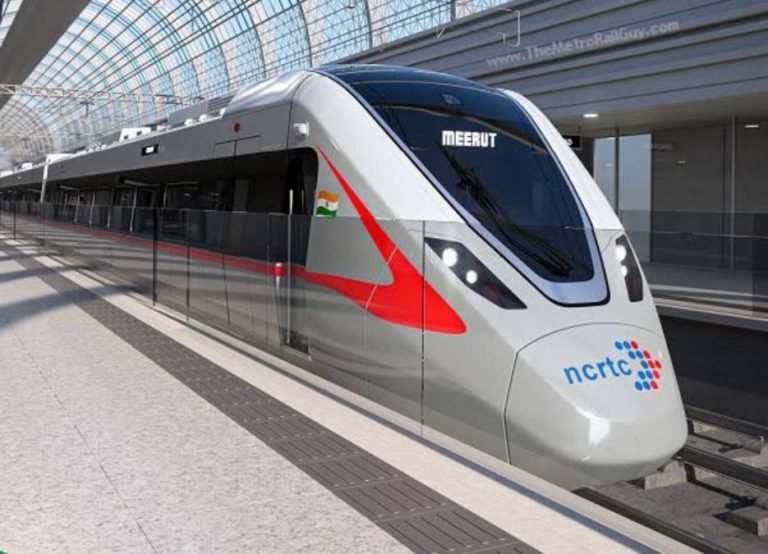
The Delhi-Meerut Namo Bharat RRTS corridor is partially operational (55 km from New Ashok Nagar to Meerut South). The remaining section is expected to become operational by the end of 2025.


Join the 6th edition of InnoMetro to explore how the progressions in AI are improving the railway systems, including ticketing, rolling stock, and signalling. Witness the innovation from 200+ exhibitors at India’s leading show for metro & railways which is going to held on 21-22 May 2026 at Bharat Mandapam, New Delhi

Register now: https://innometro.com/visitor-registration/

Mumbai Suburban Rail: 4 Firms Bid for Signalling Contract of 5th & 6th Line between Borivali-Virar

MUMBAI (Metro Rail News): The Mumbai Railway Vikas Corporation Ltd. (MRVC) has disclosed the list of bidders that submitted proposals for undertaking the signalling works associated with the proposed 5th and 6th lines between Borivali (BVI) and Virar (VR) in the Mumbai Suburban network under the MUTP-IIIA project. The contract is worth Rs 316.1 crore. 

Tender Information

Tender ID2025_MRVC_881720_1
Tender No. MRVC-W-274
Cost of WorkRs 316.1 crore
Completion period36 Months
Tender AuthorityMumbai Railway Vikas Corporation Ltd. 

Brief Scope of Work: Design, Supply, Installation, Testing and Commissioning of Signaling equipments/gears in connection with Construction of Proposed 5 TH & 6TH line in between Borivali (BVI)-Virar (VR) section in Mumbai Suburban under (MUTP-IIIA).


Bidders’ Detail

Bidder NameStatus
Kiran Infra Engineers Ltd.Accepted – Technical
Konkan Railway Corporation LimitedAccepted – Technical
Siemens LimitedAccepted – Technical
Texmaco Rail and Engineering Ltd.Accepted – Technical

The Borivali (BVI)-Virar (VR) 5th and 6th Line Project is an important expansion under the Mumbai Urban Transport Project (MUTP)-IIIA. It involves adding 26 km of new railway lines on the Western Railway network to separate slow and fast suburban services. This project is expected to ease congestion on one of Mumbai’s busiest rail corridors. The project has an estimated cost of ₹2,184 crore and is scheduled for completion by March 2028.


Witness the innovations & AI- powered solutions in railway & metro systems from over 200 exhibitors at the 6th edition of InnoMetro. Join India’s dedicated show for the rail transit sector which is going to held on 21-22 May 2026 at Bharat Mandapam, New Delhi

Register now: https://innometro.com/visitor-registration/

NCRTC Inducts High-Speed Catenary Maintenance Vehicle for Delhi-Ghaziabad-Meerut RRTS Corridor

National Capital Region Transport Corporation (NCRTC) has inducted a high-speed Catenary Maintenance Vehicle (CMV) to strengthen OHE maintenance across the 82-km Delhi–Ghaziabad–Meerut corridor.

Indigenously built and designed for 120 kmph, the CMV enables rapid movement of maintenance teams, ensuring quicker inspection, faster rectification, and improved uptime of the overhead power system. 

image 2

For the first time in India, a CMV is integrated with ETCS Level 2 – Hybrid Level 3 signalling, allowing operation in Automatic Train Protection (ATP) mode. This ensures safe, efficient inspection even during narrow maintenance windows. 

With its induction, NCRTC further strengthens system reliability, minimises service interruptions, and ensures a smoother, punctual, and high-quality travel experience for all Namo Bharat commuters.

image 3

The  Delhi–Ghaziabad–Meerut RRTS Corridor spans 82 km connecting  Delhi, Ghaziabad, and Meerut. Currently,the 55 km section between New Ashok Nagar and Meerut South, comprising 11 stations, is operational . 

Recently, The Public Investment Board (PIB), also approved two new Namo Bharat (RRTS) corridors connecting Delhi with Gurgaon, Rewari, Sonipat, Panipat, and Karnal. To know more about this news: Click Here.


Discover how AI is bringing the next phase of sustainable urban rail mobility for Viksit Bharat at InnoMetro 2026, India’s prime exhibition and conference for metro & railways which is going to be held on 21-22 May 2026 at Bharat Mandapam, New Delhi

Register now: https://innometro.com/visitor-registration/

DMRC & IIT Hyderabad’s TiHAN Ink Pact for Autonomous Navigation Technologies

NEW DELHI (Metro Rail News): Delhi Metro Rail Corporation (DMRC)  has signed a Memorandum of Understanding (MoU) with IIT Hyderabad’s Technology Innovation Hub for Autonomous Navigation (TiHAN) to collaborate on the development and deployment of advanced autonomous navigation technologies.

G7o0zXXaEAAwTjs

The MoU was signed by Shri Shobhan Chaudhuri, Advisor/R&D at DMRC, and Dr. Santosh Reddy, Hub Executive Officer of TiHAN at IIT Hyderabad. The signing ceremony was attended by Dr. Vikas Kumar, MD of DMRCL, Shri Manuj Singhal, Director of Infrastructure, other DMRC Directors, as well as Prof. Malla Reddy, Dean of Innovation, and Prof. P. Rajalakshmi from IIT Hyderabad.

This MoU will leverage each other’s strength and knowhow in implementation of Autonomous Navigation which is a Safe Smart and Next Gen Mobility solution for last mile connectivity in major metros and public transit in Tier II & III cities. 

Through this initiative, DMRC and TiHAN will integrate their respective expertise in autonomous navigation, sensing technologies, and data acquisition systems. This will support the development of vehicles, robots, drones, and other mobility platforms capable of operating and collecting data without human intervention.

TiHAN is a hub set up by Department of Science & Technology (DST) National Mission in the Cyber Physical Systems for development of Autonomous Navigation and Data Acquisition Systems that enables Ground vehicles, Robots, Unmanned Aerial Vehicles / Drones or other autonomous platforms to navigate and collect data without human interventions.


Discover how AI is bringing the next phase of sustainable urban rail mobility for Viksit Bharat at InnoMetro 2026, India’s prime exhibition and conference for metro & railways which is going to  

Be held on 21-22 May 2026 at Bharat Mandapam, New Delhi

Register now: https://innometro.com/visitor-registration/

Indian Railways Prepares DPR for 750km Network Expansion in Kerala

Indian Railways is preparing a Detailed Project Report (DPR) for the development of more than 750 km of new railway lines in Kerala. This initiative is designed to enhance train operations, increase service frequency, and stimulate regional economic growth by improving connectivity.

For the fiscal year 2025-26, Indian Railways has allocated Rs 3,042 crore for rail projects in Kerala. Railway Minister Ashwini Vaishnaw, in a written reply to the Lok Sabha on December 3, highlighted that over the past three years, including the current fiscal year, nine surveys have been sanctioned in Kerala covering 1,124 km. These include surveys for three new lines and six doubling projects, underscoring a focused approach to expanding rail capacity in the state.

Minister Vaishnaw announced that Detailed Project Reports (DPRs) are currently being prepared for multiple railway line projects in Kerala. These include: 

  • Kasaragod-Kozhikode-Shoranur: 261 km (3rd & 4th line)
  • Shoranur-Ernakulam: 106 km (3rd line)
  • Shoranur-Coimbatore: 99 km (3rd & 4th line)
  • Ernakulam-Kayankulam: 115 km (3rd line)
  • Kayankulam-Thiruvananthapuram: 105 km (3rd line)
  • Thiruvananthapuram-Nagercoil: 71 km (3rd line)

In addition to these projects, Indian Railways is also undertaking several other railway line initiatives totaling 232 km to enhance connectivity within Kerala. These include:

  • Angamali–Sabarimala new line (111 km) with an estimated cost of Rs 3,727 crore
  • Ernakulam–Kumbalam doubling (8 km) costing Rs 595 crore
  • Kumbalam–Thuravur patch doubling (16 km) at Rs 803 crore
  • Trivandrum–Kanyakumari doubling (87 km) valued at Rs 3,786 crore
  • Shoranur–Vallathol doubling (10 km) with a budget of Rs 367 crore

The Union Minister said.“Railway had deposited Rs 1,975 crore for land acquisition to the Government of Kerala. Support of the Government of Kerala is needed to expedite the land acquisition,” as reported by The Indian Express. 


Explore how AI-integrated systems are improving comfort, connectivity, and accessibility for passengers across metro and rail networks at the 6th edition of InnoMetro, India’s leading expo for the Metro & Railway industry which is going to be held on 21-22 May 2026 at Bharat Mandapam, New Delhi

Register now: https://innometro.com/visitor-registration/

Railway Minister Launches 2 New MEMU Services Between Delhi and Shamli

Railway Minister Ashwini Vaishnaw flagged off two new MEMU (Mainline Electric Multiple Unit) train services running between Delhi and Shamli from Badaut railway station in Uttar Pradesh. The trains will run on the Delhi Junction-Shamli-Delhi Junction and Delhi Shahdara-Shamli-Delhi Shahdara routes.

These trains will serve students, daily commuters, farmers, and professionals, improving regional connectivity and boosting the local economy. Vaishnaw and Minister of State for Skill Development and Entrepreneurship Jayant Chaudhary jointly inaugurated the services.

image

Vaishnaw addressed the large gathering, saying , “Under the guidance of Prime Minister Narendra Modi, Indian Railways is consistently working to improve passenger services. These two new MEMU train services will greatly benefit daily passengers, students, farmers and professionals across this region.” as reported by ET Infra. 

Railway Minister Ashwini Vaishnaw  also mentioned that the Indian Railways is redeveloping Shamli railway station into a modern, world-class facility with an investment of Rs 25 crore under the Amrit Bharat Station Scheme, fulfilling a long-standing demand of the Shamli-Baghpat region, Vaishnaw said.

image 1

Since 2014, Uttar Pradesh has added 5,272 km of new railway tracks, equivalent to the entire rail network of Switzerland, Vaishnaw highlighted. The state has fully electrified its railway lines and built 1,460 flyovers and road underbridges to improve traffic flow.

Vaishnaw also noted that Uttar Pradesh currently operates 34 Vande Bharat Express and 26 Amrit Bharat Express train services, demonstrating the state’s rapid railway expansion. 


Explore how AI-integrated systems are improving comfort, connectivity, and accessibility for passengers across metro and rail networks at the 6th edition of InnoMetro, India’s leading expo for the Metro & Railway industry which is going to be held on 21-22 May 2026 at Bharat Mandapam, New Delhi

Register now: https://innometro.com/visitor-registration/

Railway Ministry Approves Installation of Kavach on East Central Railway’s Key Routes

The Ministry of Railways has approved a major safety enhancement project to install the indigenous ‘Kavach’ Automatic Train Protection (ATP) system on crucial sections of the East Central Railway (ECR), including the DDU-Patna-Jhajha mainline. The initiative aims to substantially reduce collision risks and improve train operation safety.

The project has been sanctioned at an estimated cost of Rs 1,822 crore. ECR’s chief public relations officer (CPRO) Saraswati Chandra mentioned that The approval has been granted under the “umbrella safety on tracks” scheme which focuses on modernizing and strengthening India’s railway safety infrastructure and about 2,200km within ECR’s jurisdiction will come under the coverage of the “kavach” system,

For the fiscal year 2024-25, Indian Railways has allocated a total budget of Rs 27,693 crore towards various safety-related works nationwide, underscoring its commitment to deploying advanced technologies and upgrading infrastructure to protect passengers.

As per the Railway officials, the Kavach project will be implemented in phases. Tenders for the work are expected to be announced soon, with installation starting within this fiscal year. The railways have already successfully installed Kavach on the 417-kilometer stretch between DDU and Gaya-Pradhankhunta Junction on the Grand Chord route within the ECR.


Join the 6th edition of InnoMetro to explore how the progressions in AI are improving the railway systems, including ticketing, rolling stock, and signalling. Witness the innovation from 200+ exhibitors at India’s leading show for metro & railways which is going to be held on 21-22 May 2026 at Bharat Mandapam, New Delhi

Register now: https://innometro.com/visitor-registration/