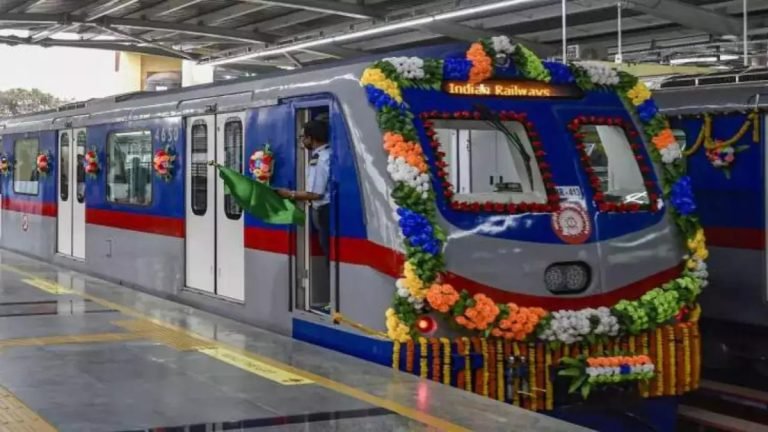
New Delhi: Prime Minister Narendra Modi has flagged-off the Delhi-Faridabad Metro Line that would allow hassle free travel for around two lakh daily commuters between the national capital and the industrial hub in Haryana.The extension of the Delhi Metro connects Badarpur to Escorts Mujesar in Faridabad.The total cost of the project from Badarpur to Escorts Mujesar is nearly Rs. 2,500 crore. Out of this, Rs. 1,557 crore was borne by the Haryana Government, the Centre contributed Rs. 537 crore, while the Delhi Metro provided Rs. 400 crore.The nine stations in this section include, Sarai, NHPC Chowk, Mewala Maharajpur, Sector 28, Badkal Mor, Old Faridabad, Neelam Chowk Ajronda, Bata Chowk and Escorts Mujesar. buy kamagra polo online https://lasernailtherapy.com/wp-content/themes/twentytwentytwo/inc/patterns/en/kamagra-polo.html no prescription
All these are elevated and located on either side of the Delhi-Mathura Road (NH-2).“The nine-station metro corridor which was 95 per cent indigenously built will provide people a safe, affordable, quick, comfortable, reliable, environment-friendly and sustainable transport facility,” a Haryana government spokesperson said.Haryana Chief Minister ML Khattar, addressing a press conference on Saturday, had thanked the Prime Minister for “gifting” the Metro service which would take the city to “another level of progress” with better connectivity with other NCR towns.He had also said that the Prime Minister would be announcing the go-ahead for connecting Gurgaon with Faridabad by Metro.
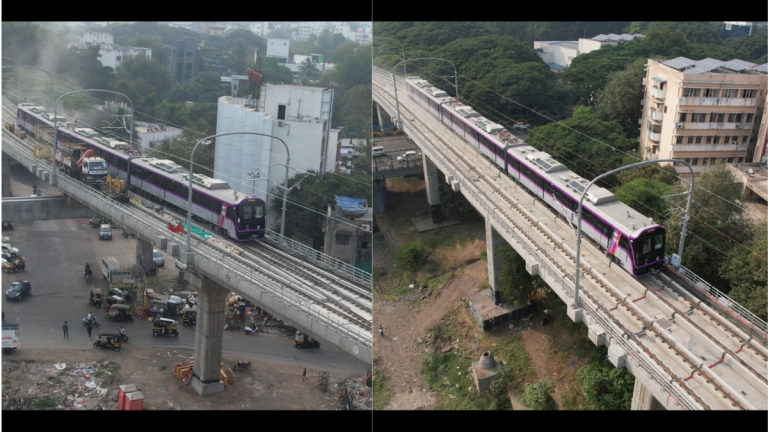
PUNE (Metro Rail News): On 25th November 2022, Pune Metro conducted a trial run from Garware College Metro Station to Civil Court Metro Station. The Metro train left the Garware college station at 2.30 pm. After crossing Deccan Station, Chhatrapati Sambhaji Udyan Station, and Pune Municipal Corporation Station (PMC), it reached the Civil Courts metro station at 3.10. Civil Court metro station is the interchange station where both the lines of the Pune metro meet. The length of this trial run route was 2.74 km. Metro officials celebrated this milestone with great enthusiasm and greeted the train with cheers upon its arrival at the Civil Court station. Track Department, Viaduct Department, O & M Department, Traction Department, Signal Department, Telecom Department, and Rolling Stock Department worked round the clock for this test. On 25th November test was conducted per the schedule and planned objectives. In the next few days, more trial runs will be conducted to check and inspect the systems’ working.After the trial run from Garware College Station to Civil Court Station, a similar trial run will soon be conducted from Phugewadi Station to Civil Court Station. The work of Pune Metro stations is going in full swing on both lines of the Pune metro. Once the work on both lines comes to completion, the CMRS inspection will happen. These routes would be opened for citizens after the observations of CMRS are met.On this occasion, the Managing Director of Maha Metro, Dr Brijesh Dixit, said, “Today’s trial from Garware College Station to Civil Court Station is a very important milestone. Civil Court Station is an interchange station connecting both lines of the Pune Metro. Soon Phugewadi Station to Civil Court Station will be tested, and this route will be opened for the public in the next few months.”
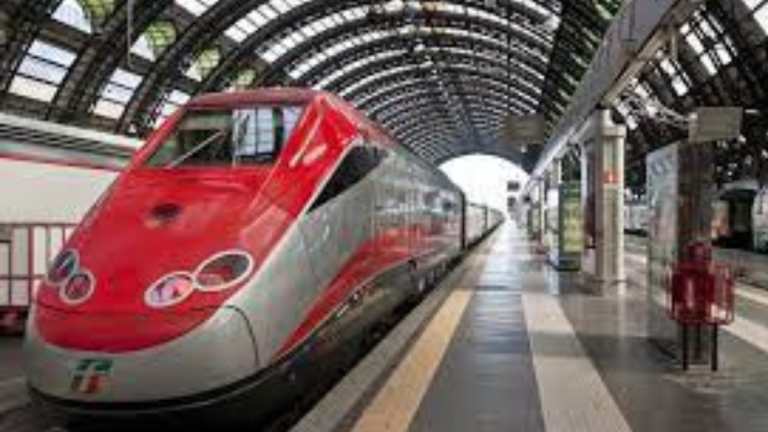
ITALY (Metro Rail News):Hitachi Rail has been awarded a Framework Agreement worth €867 million as the leader of a consortium of companies to design and deliver European Rail Transport Management System (ERTMS) digital signalling on 1,885 km of the Italian rail network.The new contract covers central and northern Italy – including Emilia Romagna, Tuscany, Piedmont, Lombardy, Liguria, Veneto and the Friuli-Venezia-Giulia regions.The contract, awarded by Ferroviaria Italiana (RFI), follows the award of a €500 million framework agreement to Hitachi Rail for the design and implementation of ERTMS digital signalling on 700 km of rail lines across Italy in November 2021.ERTMS is the most advanced system for the digital control of railways, allowing more trains to use the lines while improving speed and reliability. In addition, the technology will allow trains from neighbouring European countries to operate on Italian lines without interruption, creating one seamless rail system throughout Europe. ERTMS is already used on Italy’s high-speed rail lines, with the benefits extending to regional lines.The technology includes a radio system enabling communication between the train and the track and automatic activation of emergency brakes in case of danger or if trains exceed the track’s speed limit. By regulating speed, acceleration and braking, the technology enables trains to travel across the network more efficiently, reducing energy consumption and the railway’s carbon footprint.Hitachi Rail is a global industry leader in digital signalling and is the first provider to introduce ERTMS technology in Europe – in the UK, Italy, Spain, Sweden, and France – and the highly competitive markets of China and India.Michele Fracchiolla, Executive Director, Europe & Australia – LoB Rail Control Hitachi Rail, said:“We are delighted with this contract, which will allow us to implement digital signalling technology on an additional 1,885 km of the Italian railway network. ERTMS technology will bring huge benefits to passengers by enhancing train reliability, punctuality and frequency, with the aim of creating- an integrated European rail network.”
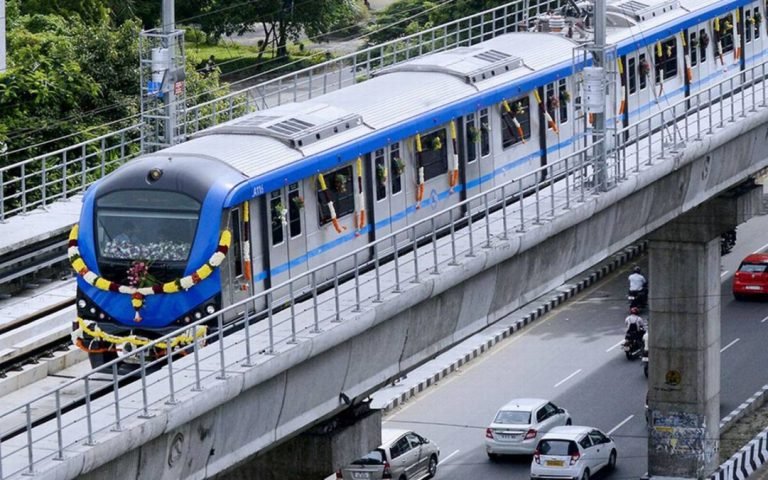
CHENNAI (Metro Rail News): The 15.5-kilometre airport-Kilambakkam Metro rail line has been approved for construction by the Chennai Unified Metropolitan Transport Authority (CUMTA).With this, the project’s work will start soon. Intermodal connectivity would be available to commuters, allowing them to seamlessly transition between various means of transportation such as metro trains, MTC and outstation buses, and airports.An estimated Rs 4,080 crore will be spent on the airport to Kilambakkam Metro train extension line.It will connect several southern suburbs, notably the Kilambakkam under-construction bus terminus, with city core locations beyond Tambaram.Localities in the southern suburbs, including Pallavaram, Chromepet, Tambaram, Irumbuliyur, Peerkankaranai, Perungalathur, Vandalur, and Kilambakkam, would be traversed by the extension line.
KARNATAKA (Metro Rail News): The Karnataka Government has given prior permission to the Namma Metro Phase III plan in Bangalore. The total length is almost 45 kilometres; corridor one will be roughly 32 km long, with 22 stations along the route, while Corridor 2 will be 12.5 km long, with nine stops.Twenty-two stations will be located along Corridor 1, including Kempapura, JP Nagar phase IV, Kadirenahalli, Kamakhya Junction, Hosakerehalli, Dwaraka Nagar, Mysuru Road, Nagarbhavi Circle, Vinayaka Layout, Freedom Fighter’s colony, Sumanahalli Cross, Chowdeshwari Nagar, B.E.L. Circle, Nagashettyhalli, Bangalore Development Authority (BDA) Complex, JP Nagar phase V, JP Nagar, Papireddypalya, Kanteerava Nagar, Peenya, Muthyala Nagar, Hebbal Railway Station, and Kempapura.Hosahalli, KHB Colony, Kamakshipalya, Sumanahalli Cross, Sunkadakatte, Herohalli, Byadarahalli, Kamath Layout, and Kadabagere are the nine stations that will make up Corridor 2.The 11 interchange stations along both corridors will be linked to local bus, rail, and suburban railway stations for seamless connectivity. JP Nagar Phase IV, JP Nagar, Kamakhya Junction, Mysuru Road, Sumanahalli Cross, Peenya, BEL Circle, Hebbal Railway Station, and Kempapura are the nine interchange stations on ORR West. In addition, Hosahalli and Sumanahalli Cross are two interchange stations along the length of Magadi Road.By 2028, the ORR West corridor is forecast to have roughly 4.6 lakh riders, compared to an estimated 1.7 lakh for the Magadi Road corridor. An estimated Rs 16,430 crore will be needed to complete the project. Since both corridors share Sunkadakatte, it will act as the depot.The SPV (JV) model is used to carry out the project. The Karnataka and Indian governments each contribute 20% of the money, with the remaining 60% coming from other sources. Value-capture finance and creative financing through private engagement will also be promoted as part of the financing strategy.The Karnataka government has also suggested two double-decker flyovers, one at Kamakhya Metro Station and the other at JP Nagar Metro Station. Each would be 1.5 kilometres long. The integrated structures (Flyover at level 1 and Metro at level 2), whose construction is expected to cost just over Rs 507 crore, will be built by BMRCL, with costs shared in a 3:1 ratio between BMRCL and BBMP.
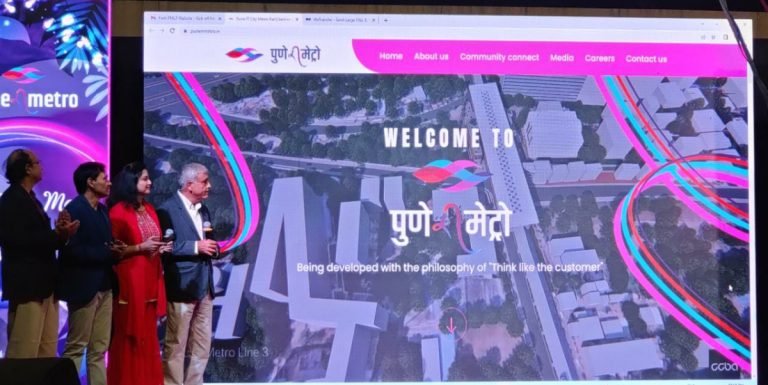
PUNE (Metro Rail News): The work of Pune Metro Line 3, aka Puneri Metro, on the Hinjewadi to Shivajinagar route is progressing rapidly. Pune IT City Metro Rail Limited (PICTMRL), a special purpose vehicle company of the Tata Group, and Pune Metropolitan Region Development Authority (PMRDA) are working on the 23-km stretch of the Project.A website has been developed to provide comprehensive information about the Hinjewadi to Shivajinagar Metro Line 3, and it was unveiled on 24th November by Alok Kapoor, Chief Executive Officer of PITCMRL. Neha Pandit, Business Head of PITCMRL and Vivek Kharwadkar, Chief Engineer of PMRDA; Rinaj Pathan, Superintending Engineer PMRDA; Bharatkumar Baviskar, and other officials were present on occasion.“For Hinjawadi to Shivajinagar Metro Line 3, this website is developed with a special focus on providing all information at one click. While designing and developing the mentioned website, special efforts are put into making it user-friendly and attractive, and simultaneously providing all the necessary information in an integrated form,” informed Neha Pandit, Business Head and Director of Pune IT City Metro Rail Limited.
“Since “the Hinjewadi to Shivajinagar metro line will be known as the Pink Line, it has been given special consideration in the website’s colour scheme. Currently, the website provides basic information about the route, community connection, and traffic management efforts and planning to the citizens. However, as the Project progresses, the website and the content will be updated accordingly, added Neha Pandit.
The formal unveiling of this website (preview) took place on 24th November. After completing some technical aspects, this website will be made open for all citizens within the next month.
About Pune Metro Line 3:
The Pune Metro line III is a ~23 Km elevated Metro rail project connecting the IT hub of Hinjawadi to the Central business district of Shivajinagar. It is a Public Private Partnership (PPP) project awarded by The Pune Metropolitan Region Development Authority (PMRDA) to a consortium consisting of Tata Group’s urban Transport Private Limited (TUTPL) and Siemens Project Ventures GmbH. The Project would be developed and operated on a Design, build, finance, operate and transfer (DBFOT) basis by a special purpose vehicle (SPV), Pune IT City Metro Rail Limited, or PITCMRL, for a Concession Period of 35 years, including the construction period.
MUMBAI (Metro Rail News): Commuters of the Mumbai Metro One Versova-Andheri-Ghatkopar line may purchase tickets over WhatsApp without going to a ticket counter. The ticket will be delivered as a QR (Quick Response) code.Commuters must send a WhatsApp “Hi” to 967000 8889. A direct link will be immediately sent that may be utilised to buy tickets.The QR code will be sent once the payment has been made, and it must be verified at the Automated Fare Collection gate before being allowed to enter the platform.The QR code will include information on the trip’s type (single/return), origin and destination, fare, and the date and time the ticket was issued.Previously, commuters had to provide an OTP at the ticket counter to receive the QR code on their mobile device. According to a Metro official, the goal is to increase the number of riders who use digital ticketing methods.
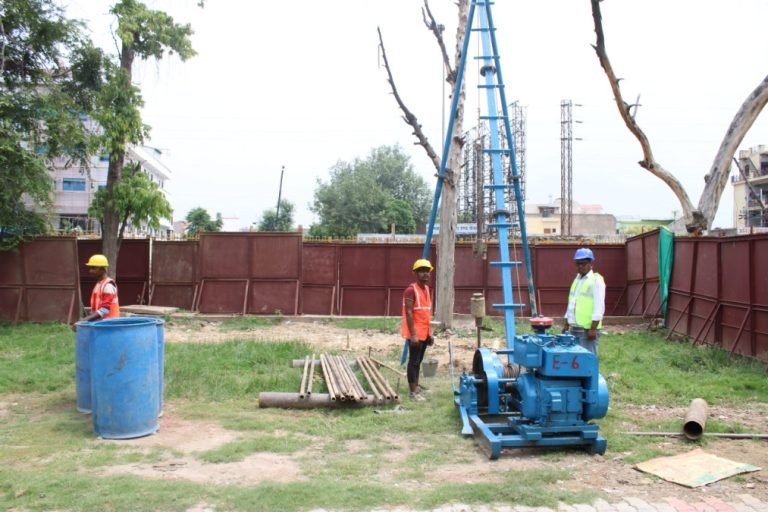
PATNA (Metro Rail News): Preliminary construction on the Patna metro rail project has started. The metro rail depot will be constructed on about 76 acres of land at SH-1, Bairiya Chak in Paijawa, 47.4 acres of the area are proposed for a rail depot, while the remaining portions are for property development.The depot will serve as the hub of the Patna metro rail project. It will accommodate both of the proposed corridors, Corridor I (Danapur-Khemnichak) and Corridor II (Patna Station-Patliputra Bus Terminal), by housing several essential amenities like parking, train repair and maintenance, testing track, stabling yard, depot workshop, operational control room, and an exclusive sub-station.The project would cost Rs 13,925.50 crores, and the entire work should be finished by March 2025.By 2027, the 17.9 km long Corridor-I will pass through 7.3 km of elevated and 10.5 km of underground metro lines. The metro stations will pass through Rukkanpura, Raja Bazaar, Patna Zoo, Vikas Bhawan, Vidyut Bhawan, and Patna Station.
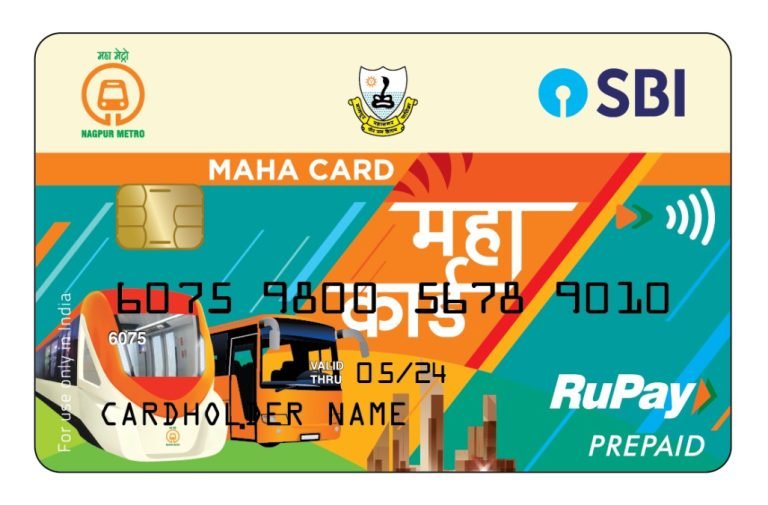
NAGPUR (Metro Rail News):Maha Metro has always promoted digital means for fare payment. It has provided several options, including a mobile app and Maha Card. Maha Card is being extensively bought and used by the commuters of Maha Metro. Till now, 31,886 Maha Cards have been sold. The Card was launched and operated with the State Bank of India (SBI).
On average, every month, roughly 1,800 Maha Cards are sold. Thus, while making travelling more accessible in the City through its multiple initiatives, Maha Metro has taken a step forward to simplify the very process of travelling. Maha Metro Nagpur has adopted the EMV (Euro Master Visa) smart card-based Open loop Automatic Fare Collection (AFC) system, which has been implemented across all metro stations in Nagpur.
Maha Card users get a 10 % rebate on journey fares. This system has enabled smart cards as other fare media for commuters to pay for the intended travel. Passengers must tap their cards on the Automatic Fare Collection (AFC) Gates at metro Stations while boarding and deboarding the train to pay their journey fare. The fare is deducted in the process. Maha Card can be bought from any Metro station. Maha Card and the state of art AFC system ensure fair and transparent revenue collection and settlement. This also avoids fraud and leakages. EMV standard-based Smart Card-oriented Automatic Fare Collection System (AFC) is an end-to-end solution for commuters to pay for travel fares. The state-of-the-art solution is uniquely designed with the demand for revenue services while keeping the current transit operation in mind.
Some of the main features of MAHA CARD are:
a. Easy payment by tapping at Metro stations.
b. Highly secured Chip based dual interface (contact and contactless) smart card.
c. Dip and swipe interface.
d. Compatible with web and mobile-based transactionse. Personalized Card on proven EMV (Europay, Master, Visa, Rupay) platform.
The Maha Card and AFC System, which Maha Metro Nagpur has embraced, have made commuting simpler and ensured that Metro train ride becomes hassle-free for every passenger.
KOLKATA (Metro Rail News): The Joka-Taratala corridor of the Kolkata Metro gets approved by CMRS for commencing commercial operations. It will connect the city’s southwest suburbs.According to a senior official, six stations — Joka, Thakurpukur, Sakherbazar, Behala Chowrasta, Behala Bazar, and Taratala are prepared to begin commercial operations.Mandatory clearance for the project from the Commissioner of Railway Safety (CRS) has been obtained,’ Metro Railway General Manager Arun Arora said.He said preparations are in full swing to start commercial operations on the Joka-Taratala stretch of the Joka-Esplanade Metro project.The CRS inspection was held on November 10 after trial runs on the section since September.Arora said the Indian Railways spent Rs 2,477.25 crores to finish the 6.5-kilometre section.
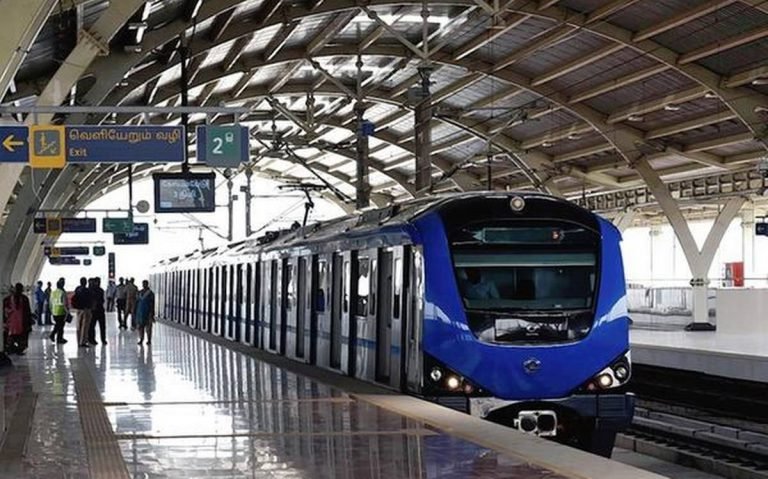
CHENNAI (Metro Rail News):CMRL has ventured into extensive infrastructure development in the city comprising three more metro rail corridors for a total length of 118.9 km & 128 no’s of stations being funded by several multi-national funding agencies, including the JICA, ADB and AIIB.The first TBM tunnel drive in Phase II has already commenced, and CMRL has undertaken several safety measures in TBM tunnelling to ensure the public’s safety. Thiru. T. Archunan, Director(Projects), has said, “Several safety measures are being undertaken during the tunnel drive as there are various parameters to be monitored while the TBM is being operated like water pressure adjustment considering the water table in the area, even the slightest modification will impact the roads on the Surface and nearby buildings. Hence its most crucial that we monitor every 50m to ensure smooth and safe working space in the area without creating impact.”
Safety Preventive measures in TBM Tunnelling
Ground Monitoring instruments are installed in-ground Surface above the tunnel alignment.
Structural monitoring instruments are installed in the buildings above the tunnel influence zone.
The instrument readings are recorded daily during TBM Tunnelling.
The Surface monitoring team ensures ground distortion observation during tunnelling.Existing building surveys, including Structural & Plastering cracks, are recorded and acknowledged by residents.
The building cracks that are found widen after the TBM crossing are entirely repaired.
All bore wells/Open wells in the influence zone properties are considered for Temporary/Permanent plugging.
Permanently plugged bore wells are provided with alternate bore wells.Open wells must be closed and provided with alternate bore wells.
Bore wells which are plugged temporarily during TBM pass-through, adequate water supply is ensured for the residents.
In case buildings are listed as unsafe, evacuation of occupants is ensured with alternate accommodation for two months or as required.
In the event of any old-age building being structurally unsafe after tunnelling, new
construction will be considered.
About RDSORDSO is the sole R&D organization of Indian Railways and functions as the technical advisor to the Railway Board, Zonal Railways and Production Units and performs the following essential functions:
Development of new and improved designs.
Development, adoption, and absorption of new technology for Indian Railways.
Development of standards for materials and products especially needed by Indian Railways.
The technical investigation, statutory clearances, testing and providing consultancy services.
Inspection of critical and safety items of rolling stock, locomotives signalling & telecommunication equipment and track components,
RDSO’s diverse activities have also attracted the attention of railway and non-railway organizations in India and abroad.
RDSO Website
QUALITY ASSURANCE I & L Offices
Quality Assurance activities, including product inspection, are performed mainly through field units- located in Delhi, Kolkata, Mumbai, Jaipur, Bhopal and Hyderabad. At the Lucknow office, mostly R&D activities and new items/ specifications development are done. In addition, online software is developed and used for better monitoring transparency and accountability.IREPS Website
CHARTER OF QUALITY ASSURANCE I & L
To commence the inspection within 15 days of getting the inspection call.
Issuing of Inspection Certificate within 7-10 working days for most of the items after inspection completion.
Regular publication of Expression of Interest (EOI) to develop new vendors for items with added emphasis on existing vendors less than three.
Conducting Quality Audits of Vendors to ensure consistency in quality and continuance of the firm’s name in RDSO Vendor
Conducting Quality Audit of Railway units (Production units, Workshops and Maintenance Depots) “as per the advice of Railway Board”.
Approval of wagon prototypes within 20 days (RDSO times) from the time of the offering of prototype wagon for inspection.
VENDOR APPROVAL
Design Directorates undertake vendor approval of RDSO-controlled items for the assigned items. All items controlled by RDSO are grouped into the following four Categories:Civil Directorates: Bridge & Structures, Track Machine, Track Design-1, Track Design-2, WorksElectrical Directorates: Electric Loco, PS&EMU, Traction InstallationMechanical Directorates: Carriage, Wagon, Motive Power-Diesel Loco and M&CS&T Directorates: Signal & TelecomHowever, regular Purchase Inspection of all assigned items is undertaken mainly by the QA Directorate and one field unit of the Electric Loco Directorate located at Bhopal.
Steps in Applying and Processing for Vendor Approval
1IREPS login ID: New Vendor can get themselves registered free of charge by filling up the online registration form, which can be accessed through the New Vendors/Contractors (E-Tender) link available in the Quick Link Section on IREPS portal, i.e. https://www.ireps.gov.in.2 Please refer to the User Manual for Registration of New Vendors & Contractors for details of the registration process on IREPS, available on the website.3 Please ensure the following before proceeding with the submission of a request for Registration-
Obtain a Digital Signing Certificate (DSC) from any Certifying Agencies
Install JAVA (JRE) on your computer.
Fresh Vendor Approval: Requests of ‘Fresh vendor approval’ for supply material for Indian Railways use can be submitted after login through the Unified Vendor Approval Module (UVAM) of the IREPS website.
If The form submission is successful, the User gets a confirmation message.
The User can check the status of registration at any point in time by using his request ID.
Fresh Vendor Registration Fee (Plus GST as an appropriate time to me) as per RDSO apex ISO Document No: Q0-D-8.1-14, Version No: 2.4 Dt.: 28.07.2022 Document Title: Vendor registration schedule of charges. A. Rs. 10,000/-for Micro/Small Enterprises.
B. Rs. 15,000/-for other than Micro/Smal Enterprises.C. Rs.40,000/-for overseas firmsFee payment shall be made through e-payment to RDsO on the IREPS website (U-VAM Portal).
Documents To be Uploaded (RDS0apexISO Document No: QO-F-8.1-5):
Documents in proof of the firm’s legal status,
Mandatory declaration/affidavit as per the format available in RDSO apex ISO Document No: QO-F-8.1-7.
Compliance with related Specification (s), Quality Assurance Plan made by the firm,
Copy of Factory License/NSIC/SSI registration,
Copy of ISO & Latest Electricity Bill,
Letter of authorization to communicate with RDSO duly signed by Director/Proprietor/Partner of the firm,
Ownership of the factory,
Compliance of Schedule of Technical Requirement and Specification(s),
Screening of Application & Capability Assessment (RDSO apex ISO Document No: QO-F- 8.1-7 & Document No: QO-F-8.1-8: After document scrutiny is found satisfactory, RDS0 officer will visit the firm’s premises for:
STR verification and Capability Assessment,
If non-conformity is found in STR/Spec. During CCA, the case would be closed,
The firm may re-apply if, within six months, it would be restarted from where it closed (as a one-time exception); for Re-registration 50% fee shall be payable.
Initial Approval by Directorate Head (RDSO apex IS0 Document No: Q0-F-8.1-6): After successful verification for documents and Capacity & Capability Assessment (CCA) of the Vendor, approval is given by Directorate Head with status as List of Vendors for Developmental Orders for 24 months with restrictions i.e.
Technical Clearance of Prototype/Test Samples and their approval by RDSO, if required.
Successful Field Trials of the Specified Quantity (as indicated by the Directorate) for the item, if required.
If the respective Specification requires a field trial, then the mandated period of a field trial of a specified quantity has to be completed before regular supply to Railways.
Samples, as applicable, are to be offered by the firm.
Testing of the sample (or prototype) at Film’s premises, RDSO or NABL accredited lab.
Testing charges for testing at NABL accredited lab are to be borne by the firm.
No testing charges for testing in RDSO.
Approval as ‘RDSO Vendor for Developmental Orders’ with no restriction: After Technical Clearance of the Prototype/Test sample and successful field trials as specified for items, Vendor approval is given by the Directorate Head with status as ‘RDsO Vendor for Developmental Orders’.
Up-gradation to Status of Regular Approved Vendor: After manufacturing and supply of a specified number of items and satisfactory performance, the Vendor shall be eligible for approval as “Approved Vendor’ as per ISO document Q0-D-8.1- 11, ‘Changes in approved status.
All specifications, STR, Qty. Field Trials are available on UVAM ota at https://www.ireps.gov.in, and the applicable ISo documents for approval policy for RDSO are available at RDSO https://rdso.indianrailways.gov.in.
RDSO-list items Having Less than three sources
S.N
SN
Department
Sub Directorate
Item Id
Item Description
Vendor Count
Approx.Annual Potential Business (In Cr.)
1
electrical
electric loco
3100091
Axle Box Bearing For WAP5 locomotives
2
4
2
Electrical
electric loco
3100127
Brake system for 3-phase locomotive
2
230
3
Electrical
TI
3100208
25KV composite section insulator (1050 mm CD)
2
0.2
4
Electrical
TI
3100086
Higher diameter (22.5 mm to 26 mm dia. ) continuous cast copper (ccc) Wire Rod (Manufactured by South Wire Process )
1
40
5
mechanical
M&C
3100265
Portable Digital Ultrasonic Flaw Detector with A-Scan Storage
2
1.82
6
mechanical
WAGON
3100453
automatic Twist Lock (ATL)
1
6
7
mechanical
M&C
3100580
digital ultrasonic double rail tester with nine probes on each rail and a minimum of two baselines coloured signal and real A- Scan plus echo with continuous recording of B- Scan storage of echo probe along with data setups
0
DRT with 9 Probes is in the process of development and implemented in Indian Railways.
8
mechanical
M&C
3100581
digital ultrasonic signal Rail tester with nine probes, coloured signals and real A-Scan Pulse echo with continuous recording of B- Scan storage of echo probe along with data setups.
0
SRT with nine probes is in development and has Not yet been introduced.
9
S & T
Signal
3100006002
SSBPAC (DIGITAL) For Double Line and Single Line
2
11
10
S & T
Signal
3100245001
Universal Fail safe block interface
2
21
11
S & T
Signal
3100260001
Advanced Axillary Warning system (AAWS)
2
—
12
S & T
Signal
3100148003
Plush Button TLBI with UFSBI
1
1
STEPS TAKEN TO ENHANCE
“EASE OF DOING BUSINESS”
Online Vendor registration and payment through the U-VAM website started in MAY
2021.
Time for vendor approval was reduced substantially after the implementation of online Vendor
registration.
To simplify the procedures to ensure faster registration, a significant policy initiative has been recently taken which enables a Vendor to appear as a Developmental Source in RDSO Vendor Directory once RDSO Official has completed the verification of Documents and Capacity and Capability Assessment.
Research Design and Standards Organization (RDSO) organized 06 Vendor Meets to encourage industry participation in expanding the vendor base.
Important focus points during these Vendor Meets:
To encourage industry participation in Indian Railways.
To explain in detail the process for Approval of Vendor followed at RDSO.
Third, to encourage the participation of Micro and small industries.
Finally, to inform about various incentives for encouraging Vendors to register.
Mega Vendor Meet at RDSO Auditorium on 20.04.22
A list of items having limited sources is placed on the RDSO portal to encourage new Vendors in these items.
The vendor registration fee has now been revised and reduced to Rs 10,000 by MSME firms, Rs 15,000 by Non-MSME firms and Rs 40,000 by foreign firms.
Testing charges during vendor registration sample testing have been waived off.
A system of video recording and involving vendors in the sample testing process has been created, which leads to transparency in the sample testing process.
A system of periodic review and revision in RDSO ISO procedures related to the vendor approval process by a Standing committee is in place.
ISO procedure regarding Changes in approved status was revised on 22.09.2022 to simplify the process of upgradation to Approved Status.
CHENNAI (Metro Rail News):Chennai Metro Rail Limited has commenced the expansion of Chennai city’s metro rail network as a part of Phase II after the successful completion of Phase I and Phase I Extension Corridors in stages since June 2015 and the growing ridership in Corridors 1&2.
Now, CMRL has ventured into extensive infrastructure development in the city, comprising three more metro rail corridors for a total length of 118.9 km & 128 nos of stations being funded by several multi-national funding agencies, including the JICA, ADB and AIIB.
The Salient & Unique features of Phase II
Elevated Section
CMRL will have a Double-decker line & station standing in a single pillar for a stretch of about 5 km. The double-decker stretch will have four stations developed at two levels; Alwarthirunagar, Valasaravakkam, Karambakkam and Alapakkam will have a common concourse (ticketing level) with two different platforms. To execute the same, a special Launching Girder is fabricated and ready for use.
Many Balanced Cantilever method spans are adopted as great spans to suit the site conditions. Out of all, the most challenging location is Kathipara Junction. 5 spans continuous BCM (1 x 58m + 3 x 100m + 1 x 95m) with a 125m radius curve. Integrating with State Highway flyover at Thoraipakkam, Sholinganallur, Kattupakkam, Majambakkam & MIOT flyover location.
Underground Section
Stacked station: CMRL has planned to go with underground stations with a stacked-up platform design at locations where the width of the roads is as narrow as 10m. Pattalam, Thirumayilai, Kutchery, Alwarpet, and Bhardhidhasan road stations have staked tunnels.
Intersection of Tunnel: At Kilpauk, Thousand light and Nandanam, Phase II tunnels pass below the Phase I running tunnels. More challenging to execute the same.
Crossing of Adyar River: Corridor 3 crosses Adyar River near Adyar Junction (UG). The Crown of the Tunnel is 7 m below the bed level.
Multi-Modal Integration will integrate the Phase-II Network with other public transport modes, namely Suburban Rail, MRTS, City Bus Service, etc., at 21 different locations to ensure hassle-free and seamless connectivity.
NEW DELHI (Metro Rail News): The Ministry of Railways is participating in the 41st India International Trade Fair (IITF) – 2022, organised from 14th to 27th November 2022 at Pragati Maidan, New Delhi. The Ministry has set up a pavilion in Hall no. 5 with the theme of ‘Ayodhya Railway Station.Many facets of Indian Railways have been highlighted, where various themes have been displayed with their technological & structural advances through photos, translates, models, etc.The Railway pavilion boasts the grandeur of the new look of Ayodhya Railway Station in Uttar Pradesh, a sports gallery exhibiting various awards triumphed by the Railway sportspersons, the outer fascia depicting the journey from steam engine era to Vande Bharat and heading towards bullet train, side walls based on the theme of ‘Azadi Ki Rail Gadi aur Stations’ showcasing the connect between Freedom Struggle & Indian Railways, along with many models including:• Redeveloped Ayodhya Railway Station, with the design inspired by Shri Ram Janmabhoomi Temple.• Sabarmati Multimodal Passenger Hub & Casting Yard of India’s first Bullet Train Project, Mumbai-Ahmedabad High-Speed Rail Corridor.• World’s highest Railway Arch Bridge, the iconic Chenab Bridge, is part of the national project Udhampur-Srinagar-Baramulla Rail Link.• Bina Solar Power Plant, a first-of-its-kind solar project that generates & supplies solar power directly at 25 kV OverHead Electrical Equipment to haul trains.• India’s first Underwater (Subaqueous Tunnel) rail system part of the East-West Metro corridor of Metro Railway, Kolkata.• Vande Bharat Express, India’s first indigenous Semi High-Speed Train.In the Railway pavilion, one can find something of interest for every age group. Interactive console-based screens displaying Station Redevelopment videos, Flipbook to learn more about Indian Railways, and an interactive quiz with attractive prizes to be educational, informative, and fun will keep children entertained.A visit to the Railway Pavilion at IITF 2022 would be informative. It will make visitors aware of the new initiatives being undertaken and bring into focus the progress of Indian Railways.Each visit can be memorable by clicking pictures at the special selfie booth ‘I am at Railway Pavilion’.
AGRA (Metro Rail News): The Uttar Pradesh Metro Rail Corporation (UPMRC) has started construction track work on the Agra Metro Priority corridor. Authorities working on the Agra Metro Rail project are optimistic about the trial run shortly because track work is currently being done at the mainline.“There is one crossover section (where the train changes track) at Taj East Gate Station, and the other crossover section on priority corridor is at Ramlila Maidan near Jama Masjid,” the press statement read.The ballasted track will be used at the Agra metro depot, while a track without ballast will be manufactured for the Agra Metro corridor. A track without ballast needs less maintenance and is more suitable for metro rail projects, a news release from the UPMRC public relations office.The depot’s test track is also finished and will be used for a test trial of the metro trains as soon as they arrive.The construction of track work will be carried out first on the priority corridor’s elevated segment (from Taj East Gate to Fatehabad Road Metro Station), then will undergo track work toward the underground portion.The first corridor of the Agra Metro Project, which connects Taj East Gate to Sikandara, is currently under construction. The Agra Metro Project will consist of two corridors, each measuring about 29.4 kilometres and having 27 stops.Six stations will be in the priority corridor, three elevated and three underground.