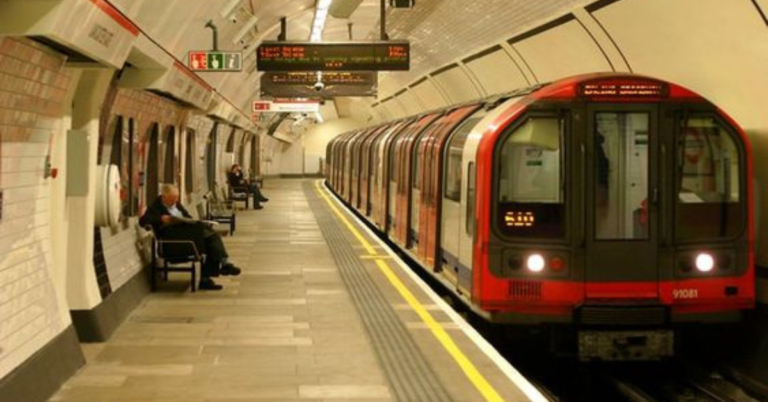
New Delhi: Prime Minister Narendra Modi has flagged-off the Delhi-Faridabad Metro Line that would allow hassle free travel for around two lakh daily commuters between the national capital and the industrial hub in Haryana.The extension of the Delhi Metro connects Badarpur to Escorts Mujesar in Faridabad.The total cost of the project from Badarpur to Escorts Mujesar is nearly Rs. 2,500 crore. Out of this, Rs. 1,557 crore was borne by the Haryana Government, the Centre contributed Rs. 537 crore, while the Delhi Metro provided Rs. 400 crore.The nine stations in this section include, Sarai, NHPC Chowk, Mewala Maharajpur, Sector 28, Badkal Mor, Old Faridabad, Neelam Chowk Ajronda, Bata Chowk and Escorts Mujesar. buy kamagra polo online https://lasernailtherapy.com/wp-content/themes/twentytwentytwo/inc/patterns/en/kamagra-polo.html no prescription
All these are elevated and located on either side of the Delhi-Mathura Road (NH-2).“The nine-station metro corridor which was 95 per cent indigenously built will provide people a safe, affordable, quick, comfortable, reliable, environment-friendly and sustainable transport facility,” a Haryana government spokesperson said.Haryana Chief Minister ML Khattar, addressing a press conference on Saturday, had thanked the Prime Minister for “gifting” the Metro service which would take the city to “another level of progress” with better connectivity with other NCR towns.He had also said that the Prime Minister would be announcing the go-ahead for connecting Gurgaon with Faridabad by Metro.
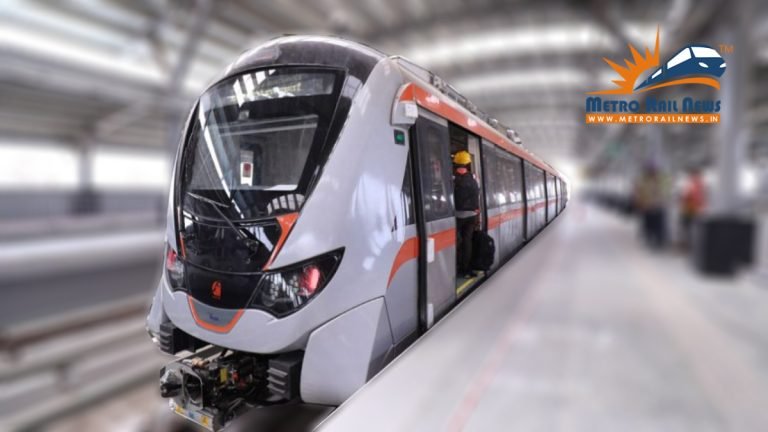
SURAT (Metro Rail News): HFCL (Himachal Futuristic Communications Limited) has declared that it has secured a contract from Gujarat Metro Rail Corporation (GMRC) Limited amounting to Rs 282 crore. As per the agreement, the company will be responsible for establishing telecommunication systems for the Surat Metro Rail Project Phase-I of GMRC. The expected timeline for the project to be completed is ninety weeks.According to HFCL, the work scope involves the production, design, testing, supply, installation, and commissioning of telecommunications systems for the first phase of the Surat Metro Rail Project. This project is a significant milestone for HFCL, as it enables the company to expand its presence in the rapidly growing Indian metro rail market.
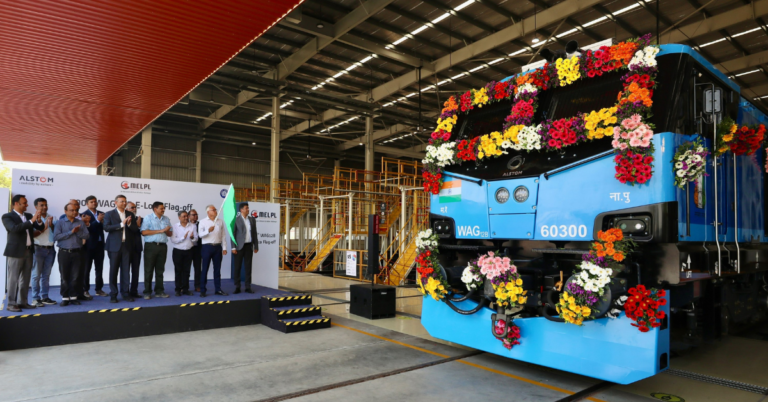
NAGPUR (Metro Rail News): Alstom, the global leader in smart and sustainable mobility, has successfully delivered 300 electric locomotives to the Indian Railways. This marks a significant milestone in increasing the Indian Railways’ capabilities to haul heavy freight trains at high speed, to meet its ambitious freight targets. As part of its contract worth €3.5 billion, Alstom is supplying 800 high-powered double-section locomotives of 12,000 HP (9 MW) for freight service. Designated by Indian Railways as WAG-12B, these locos are capable of hauling ~6,000 tonne rakes at a top speed of 120 km/hr. Alstom delivers 300th locomotive to Indian RailwaysMarking the milestone delivery, the 300th e-loco was flagged off from Alstom’s state-of-the-art locomotive maintenance depot in Nagpur, which was inaugurated by the Hon’ble PM Shri Narendra Modi in December of last year. This milestone was celebrated in the presence of Shri Naresh Lalwani, General Manager, Central Railway, and senior officials from Alstom, along with other key dignitaries from Indian Railways.Addressing the audience, Shri Naresh Lalwani, General Manager, Central Railway, said, “Indian Railways is undergoing a massive transformation in its freight operations and Alstom’s contribution in powering this revolution is commendable. The Joint Venture formed between Indian Railways and Alstom, to build India’s most powerful electric locomotives for freight service is a stellar example of a successful Public Private Partnership model, it will play a key role in accelerating the growth of the freight sector. The world-class facility built here, and the quality of products and services delivered by Alstom, are well aligned with the Government’s ‘Make in India’, ‘Skill India’, and green mobility initiatives. This combined with the workplace culture nurtured by Alstom, will definitely set new benchmarks for our industry”.Commenting on the milestone, Olivier Loison, Managing Director – Alstom India, said, “The Government of India is prioritizing reducing logistics costs in its efforts to boost the economy towards the USD 5 trillion economy target. Indian Railways will play an important role in achieving this goal, and for that, it needs to strengthen its haulage capacity. The Alstom WAG12B electric locomotive has proven to be a capability multiplier, with its ability to haul greater loads at faster speeds. The 300th loco delivery is a proud milestone for us, and as we continue to deliver more locomotives, this partnership will continue to boost the nation’s logistic capabilities.” As part of the contract, Alstom’s Nagpur Depot will be maintaining 250 WAG12B e-loco starting from series 60251. This depot is equipped with the latest technologies and features to anticipate breakdowns, thereby enabling proactive maintenance of India’s most advanced freight locomotives at significantly lower costs. The depot has 12 tracks for maintenance with hi-tech equipment. The depot is equipped with Centred Fleet monitoring (CFM) system to remotely monitor the fleet via Health hub and Train Tracer system. The Prompt Response Team (PRT) is deployed for 24 x 7 loco attention. Green features like rainwater harvesting, zero discharge using effluent treatment plant and sewerage treatment plant, 100% LED lights, daylight panels, occupancy sensors, greenery and provisioned for 1 MW rooftop solar plant. This is the second such facility set up by Alstom, after the depot at Saharanpur, Uttar Pradesh, which houses the first 250 locomotives delivered to Indian Railways.Nagpur Depot completes 7 months+ of operations and records 1.6+ Million service defect-free kilometres for the Nagpur Fleet. The site is a success story for the Public Private Partnership (PPP) model, where supervisors are from Alstom and technicians from Indian Railways.The WAG-12B locos are being built at one of India’s largest integrated greenfield manufacturing facilities at Madhepura (Bihar), under a Joint Venture between Alstom and Indian Railways. This is the largest Foreign Direct Investment project in the Indian Railway sector. The facility has an installed production capacity of 120 locomotives per annum, and Alstom has progressively achieved nearly 90% indigenization. With these powerful e-Locos being manufactured within the country, India has become the 6th in the world to join the club of countries producing high-horsepower locomotives indigenously.The WAG-12B locomotives made its inaugural run on the first fully operational sections of the Dedicated Freight Corridors two years ago. Some of the key commodities moved by these e-Locos include – coal, cement, food grains, fertilisers, petrochemical products, minerals, and posts/ parcels, across 17 States & 2 Union Territories. Equipped with Insulated Gate Bipolar Transistors (IGBT) based propulsion technology, these e-Locos will have considerable savings in energy consumption with the use of regenerative braking. The technology is also helpful towards making the acceleration process more efficient by reducing the heat generation and traction noise. Additionally, it will not only bring down operational costs, but also reduce the congestion faced by Indian Railways. About AlstomLeading societies to a low-carbon future, Alstom develops and markets mobility solutions that provide sustainable foundations for the future of transportation. From high-speed trains, metros, monorails, trams, to turnkey systems, services, infrastructure, signalling and digital mobility, Alstom offers its diverse customers the broadest portfolio in the industry. 150,000 vehicles in commercial service worldwide attest to the company’s proven expertise in project management, innovation, design and technology. In 2022, the company was included in the Dow Jones Sustainability Indices, World and Europe, for the 12th consecutive time. Headquartered in France and present in 70 countries, Alstom employs more than 74,000 people. The Group posted revenues of €15.5 billion for the fiscal year ending on 31 March 2022 About Alstom in IndiaAlstom is the only multinational sustainable mobility provider in India, to have a comprehensive portfolio of offerings to meet customer-specific needs, from cost-efficient mass-market platforms to high-end technological innovations. Synonymous with the country’s ‘Rail Revolution’, Alstom continues to be a strategic partner in supporting India’s freight revolution and passenger movement. With 6 industrial sites and 4 major engineering centres, the company not only caters to domestic project needs, but also delivers for many international projects. Supporting the government’s modernization initiatives, Alstom has been at the forefront of introducing several breakthrough technologies in India with world-class rolling stock, rail equipment & infrastructure, signalling and services. Fully aligned with the country’s vision of Make-in-India and Aatmanirbhar Bharat, Alstom remains deeply committed to strengthening its local sourcing and supply chain ecosystem.
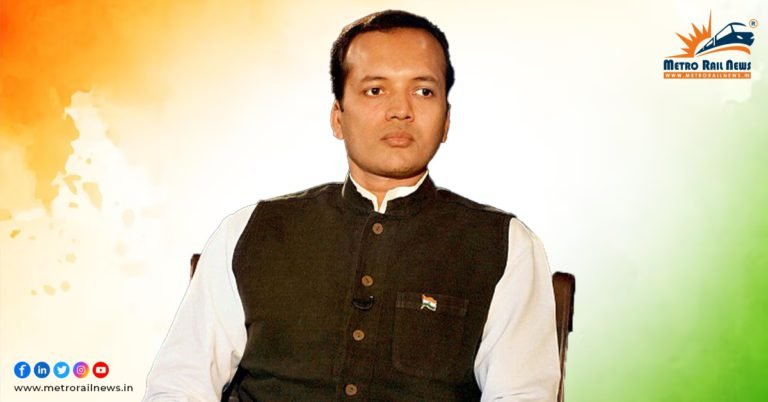
NEW DELHI (Metro Rail News): Indian industrialist Naveen Jindal has been conferred with a Lifetime Achievement Award by the University of Texas at Dallas for his remarkable achievements in industry, politics, and education. Jindal, who is an alumnus of the University’s 1992 batch, was presented with the award during a ceremony held on March 25. This award is the highest honor that the University bestows on its alumni.Jindal’s recognition marks him as the second person to receive the Lifetime Achievement Award after Nobel Laureate Aziz Sancar from the University of Texas at Dallas. While as a student at the university, Jindal served as both the Student Government vice president and president and received the Student Leader of the Year Award. In 2010, he was also recognized with the University’s Distinguished Alumni award.In 2011, to celebrate the success of their distinguished alumnus, the University of Texas at Dallas renamed its School of Management as the Naveen Jindal School of Management. Jindal has undoubtedly been an inspiration to many students, and this recognition highlights his exceptional contributions to society and education.According to the release, the Lifetime Achievement Award recognizes a graduate whose exceptional contributions have made a significant impact on society, transformed the university, and inspired others to achieve new heights of excellence. Jindal’s remarkable accomplishments in industry, politics, and education have made him a deserving recipient of this prestigious award.
NEW DELHI (Metro Rail News): Japan has committed to fund three infrastructure projects in India, including Patna metro rail project. The announcement was made after Rajat Kumar Mishra, additional secretary of the Department of Economic Affairs, and Japan’s Ambassador to India, Suzuki Hiroshi, exchanged notes on the matter. The total amount committed by Japan for these projects is approx Rs. 7,084 crore, of which around Rs. 5509 crore is for Patna Metro Rail Project, about Rs. 520 crore for a Project for forest and biodiversity conservation for climate change response in West Bengal, and around Rs. 1055.53 crore Rajasthan Water Sector Livelihood Improvement Project, according to the official statement.The Patna metro rail project is a significant project that aims to address the growing demand for transportation in the city by constructing the new metro corridor 1 & 2. The project is expected to contribute to the improvement of the urban environment, the development of the economy, and climate change mitigation. The Patna metro rail project’s first-ever Tunnel Boring Machine segment for Corridor II (Patna Junction-Patliputra Bus Terminal) has recently started the lowering work at Moinul Haq Stadium to construct the underground network. As part of this tunnelling drive, the machine will carve out two parallel tunnels for the up and down movement of trains in the first phase.The underground tunnel of Corridor II is estimated to take 30 months to construct. The underground network will connect six underground stations of Corridor II, including Rajendra Nagar, Moinul Haq Stadium, PMCH, PU, Gandhi Maidan, Akashvani and Patna Junction (interchangeable station), with a total length of 7.9km set to be completed by 2026. Corridor II will be 14.5-km-long, including 6.6-km-long priority corridor of Malahi Pakri, Bhootnath, Khemnichak, Zero Mile, and New ISBT, which is part of the elevated section.The announcement of funding for the Patna metro rail project is great news for Patna residents, who have long awaited a reliable and efficient transportation system. The project will not only improve the city’s transportation system but also contribute to the local economy’s development and create job opportunities.
HYDERABAD ( Metro Rail News): Hyderabad Airport Metro Ltd (HAML) has commenced the testing process to determine the soil-bearing capacity of the 31 km airport corridor that connects Mindspace Junction and Rajiv Gandhi International Airport in Shamshabad. The testing will be conducted for 100 metro pillar locations that stretch from the IKEA junction at Raidurg up to Shamshabad airport, taking up to two months to complete.The ground survey for the airport metro project has been completed by HAML, and it has begun peg marking of its alignment on the ground. HAML’s engineering team is supervising the entire exercise, which will be conducted alongside other pre-construction activities. The results from the soil testing exercise will help determine various aspects of the project, such as the type of foundation, allowable bearing pressure, and the required depth of the foundation.N.V.S. Reddy, the Chairman and Managing Director of HAML, explained that borehole samples would be taken up to a depth of approximately 40 feet from the road surface at each of the 100 locations. HAML is taking all the necessary measures to prevent any inconvenience to the general public, including proper barricading of soil investigation locations, providing information on the presence of underground utilities, and placing retro reflective boards in the road medians at various sites in the city. The soil testing exercise is expected to be completed in two months.HAML is a joint venture between the Hyderabad Metro Rail Limited (HMRL), Hyderabad Metropolitan Development Authority, and the Telangana State Industrial Infrastructure Corporation. The project, which is fully funded by the Telangana government, is an elevated fast metro to the international airport, which will make commuting very convenient for lakhs of commuters.The commencement of the soil testing process is a significant step in the construction of the Hyderabad Airport Metro project. HAML’s efforts to ensure a smooth and safe testing process are commendable, and the successful completion of the project will undoubtedly benefit a large number of people in the region.
NEW DELHI (Metro Rail News): The central government has proposed an amendment to the Metro Rail (Operation and Maintenance) Act, seeking to prevent any metro rail administration’s assets, properties, or bank accounts from being attached in the case of a court order.There has been a long legal dispute between a Reliance Infrastructure (RInfra) subsidiary owned by Anil Ambani and the Delhi Metro Rail Corporation (DMRC). Following a judiciary warning, the Ministry of Housing and Urban Affairs has taken steps to modify the Metro Railways Act with the intention of safeguarding the assets of DMRC from being attached.The proposed change in the law would provide significant relief to Metro Rail entities across India, as it ensures that no properties or bank accounts of such entities can be attached ever. To prevent any properties or bank accounts of such entities from being seized, Union minister Hardeep Singh Puri instructed officials to review the attachment provision in the Metro Rail Act and make necessary changes. According to sources, the Ministry has shared the suggested revisions to Section-89 of the Act with various other ministries and has requested their input within a two-week period.As per the suggested modification, none of the stock, machinery, plant, fittings, materials, or effects used or supplied by the metro railway administration for the purpose of traffic on its railway, stations, workshops, earnings, offices, or any parcel of land held by the Metro Rail Administration would be taken in execution under any decree or order issued by a court, local authority, or person with the legal authority to confiscate or impound property.
Currently, the attachment of any Metro Rail property requires the sanction of the central government. However, the suggested modification in the Act will guarantee that no confiscation of Metro Rail assets, including financial assets, will take place in response to execution procedures initiated by any court in the country. Moreover, the addition of “earnings or any parcel of land” to the Act, which is not presently included, will provide greater safeguarding for Metro Rail establishments that are currently struggling to generate sufficient revenue to operate their services.The government intends to eliminate Section 89(2) from the current Act, which permits courts to seize the earnings of Metro Rail entities in execution. The Ministry refused to authorize the attachment of DMRC properties to settle a dispute with a company that abandoned its contract for the airport metro line. The Ministry highlighted to the High Court that such an action would result in the closure of DMRC, which would cause significant public inconvenience and pose a risk to law and order in the city. The central government, as a guardian of public welfare, cannot permit such a dangerous situation to occur.
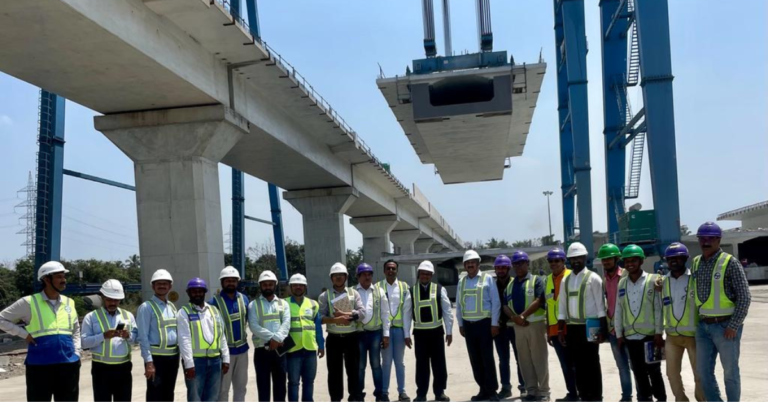
SURAT (Metro Rail News): Roop Narayan Sunker, Member Infrastructure, Railway Board, Ministry of Railways, recently visited the construction site of the Mumbai-Ahmedabad High-Speed Rail C-4 package at Surat. The Member Infrastructure was impressed with the progress of the bullet train work and praised the team for maintaining good quality in work.
As part of the C-4 package, the construction of a 237.1 km stretch involves viaducts, stations, major river bridges, depots, and other auxiliary works. This package represents 46.6% of the total length of the corridor, making it the longest among all the packages. The package will run elevated from Zaroli Village on the Maharashtra-Gujarat border to Vadodara Station through four stations at Vapi, Surat, Bilimora, and Bharuch in Gujarat.
Moreover, the Mumbai-Ahmedabad Bullet Train is one of India’s most anticipated projects. The high-speed train will connect the two cities via 12 destinations. The 12 stations on the route are Mumbai (Bandra Kurla Complex), Thane, Boisar, Virar, Vapi, Bilimora, Surat, Bharuch, Vadodara, Ahmedabad, Anand/Nadiad, and Sabarmati.
The first section of the Mumbai-Ahmedabad Bullet Train project in Gujarat is likely to open in 2026. Although the Indian government had initially set a deadline of December 2023 for the project, it could not be completed due to land acquisition issues in Maharashtra. Hence, the project is now expected to be completed by 2026.The Mumbai-Ahmedabad High-Speed Rail Project is being implemented with technical and financial assistance from the Government of Japan. The bullet train project is expected to boost economic growth in the region and provide a faster and more efficient mode of transportation between the two cities. Additionally, the project is expected to create employment opportunities and promote the development of related industries along the corridor.
BHUBANESWAR (Metro Rail News): The Odisha government has not submitted any proposal for the operation of a metro rail service in the two cities of Bhubaneswar and Cuttack, as per the Union Minister of State for Housing and Urban Affairs, Kaushal Kishore. This announcement was made in a written reply in Rajya Sabha on Monday in response to a question asked by Rajya Sabha MP Manas Ranjan Mangaraj.Kishore stated that the central government considers providing financial assistance for metro rail projects in urban agglomerations based on the feasibility of the proposal and the availability of resources whenever the concerned state government or Union territory posts it. However, the Odisha government has not submitted any proposal for Metro rail in Bhubaneshwar and Cuttack so far.
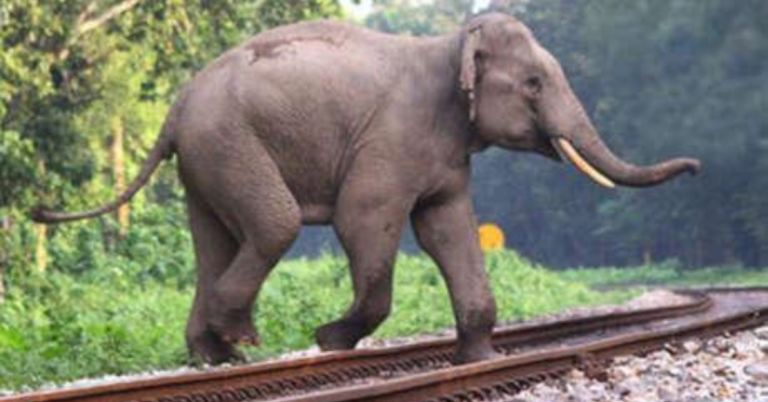
GUWAHATI (Metro Rail News): The Northeast Frontier Railway has been taking numerous initiatives to prevent and detect the movements of wild animals, especially elephants, that could approach railway tracks. The installation of IDS (intrusion detection system) is one such initiative. Northeast Frontier Railways has signed MoU with RaiTel Corporation of India to install IDS to reduce potential disasters and prevent train-elephant collisions.G.R. Das, Chief Communication Engineer of N.F. Railway, and Zakir Siddiqui, Executive Director/Eastern Region/Railtel, signed the MoU in the presence of Shri Anshul Gupta, General Manager/N.F. Railway, and Shri Sanjai Kumar, Chief MD/RailTel.The IDS is based on Artificial Intelligence (AI) and uses existing optical fibers as sensors to identify the movements of wild animals and alert control offices, station masters, gatemen, and loco pilots. The system relies on a fiber optic-based acoustic technology that operates on the dialysis scattering phenomenon to detect the real-time presence of elephants on the track. The software based on Artificial Intelligence (AI) can detect abnormal movements up to a distance of 60 kilometers.The N.F. Railway has decided to gradually install the IDS system in all other elephant corridors spread over the railway network, following the 100% success of the pilot project on IDS in the Chalsa-Hasimara section of the Dooars area, which is under Alipurduar Division in West Bengal and the Lanka-Hawaipur section under Lumding Division in Assam.
Apart from avoiding collisions between trains and elephants, the Intrusion Detection System (IDS) will also identify railway track fractures, intrusions on railway tracks, and warn about disaster mitigation in case of unauthorized excavation near railway tracks or landslides in the vicinity of the tracks.The success of the pilot project has been remarkable, as it has prevented numerous train-elephant collisions and saved the lives of these animals approaching railway tracks. The IDS system will ensure the safety of both the animals and the passengers travelling on the train.The installation of IDS is a great step towards making railway travel safe for everyone and ensuring the preservation of the natural habitat of wild animals. It is hoped that this system will be implemented on a larger scale to prevent accidents and protect wildlife.
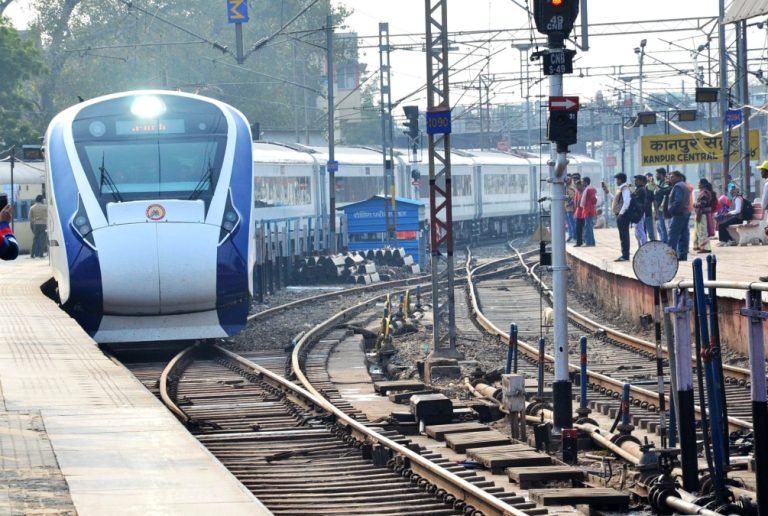
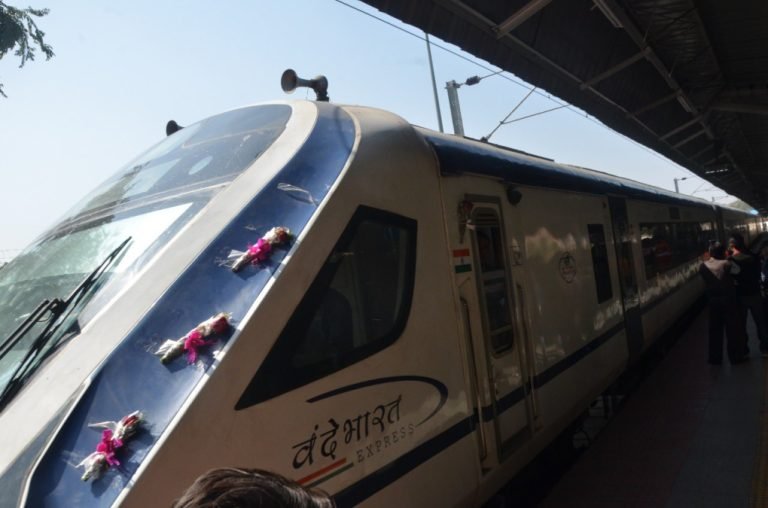
NEW DELHI (Metro Rail News): Indian Railways to start operating the 11th Vande Bharat Express train from April 1, which will connect Bhopal to New Delhi via Agra Cantt station, covering a distance of 709 km in 7 hours and 50 minutes.With a proposed schedule that includes a departure time of 5.55 am from Rani Kamlapati railway station, a five-minute halt at Agra Cantt railway station at 11.40 am, and reaching New Delhi at 1.45 pm, this express train will operate at a maximum speed of 160 kmph over Palwal-Agra section, 130 kmph between Agra-Lalitpur section, and 120 kmph between Lalitpur-Bina section of the North Central Railway (NCR) zone.The Vande Bharat Express is not only expected to be one hour faster than the current Shatabdi Express, but it will also fulfill a long-standing demand of commuters by operating from the Bhopal division in the early morning hours. This change is significant because commuters had previously been required to visit the national capital a day in advance to catch international flights departing in the afternoon.The proposed schedule and fare chart for Vande Bharat Express train operation are yet to be approved by the railway board, said an official. With the launch of this new express train, passengers can now travel more efficiently and quickly to reach their destinations.
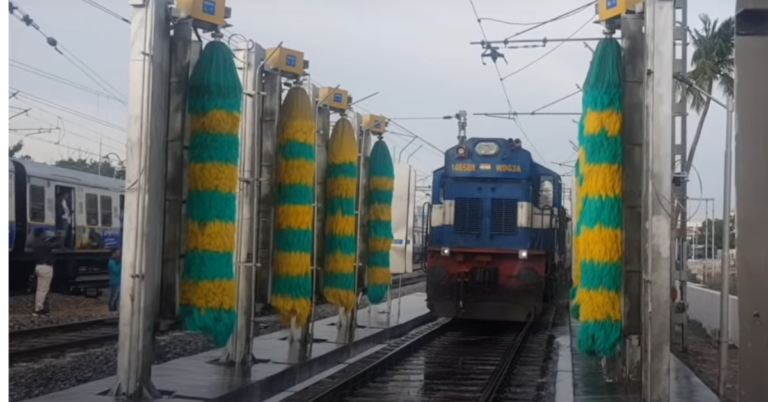
NEW DELHI (Metro Rail News): Godrej & Boyce, the flagship company of Godrej Group, has teamed up with JCW Japan which is a renowned Japanese manufacturer of vehicle cleaning machines, for developing an automated and sustainable washing system for Indian Railways and metro trains. The objective of this partnership is to bring advanced technology to India and promote the localization of different automated washing systems.It is anticipated that over 50 new maintenance depots are to be constructed in the next three years, which would result in increasing demand for washing systems in the Indian market; hence, the estimated opportunity from railways and metro rail corporations for automated washing systems is around Rs. 200 crore over the next five years.The latest technology washing systems will offer a sustainable cleaning solution that assures efficient use of resources and time. The Automatic Train Wash Plant puts the train through a set of programmed cycles, such as soaking, rinsing, foaming, washing, and drying, which differ based on the type of coach. The entire cleaning process will take only 5 to 10 minutes, depending on the train’s length. The sustainability will be enhanced as the automated washing systems will recycle a greater amount of water and consume less energy.According to Pankaj Abhyankar, who is Senior Vice President and Business Head, Godrej Tooling, “The collaboration with JCW Japan will play a significant role in boosting the efficiency and quality of railway and metro coaches’ maintenance and servicing, ultimately resulting in increased safety. Initially, Godrej Tooling will begin with indigenization of 20-30%, aiming to enhance local capabilities to 80% within the next five years.”These sustainable washing systems are a move towards a greener India. Indian Railways has been making several efforts, From electrification of gauge networks to hydrogen trains, in order to ensure green mobility and sustainable development. Hence, these washing systems with the latest technology will contribute to a sustainable future for the Indian Railways and Metro.
MADURAI (Metro Rail News): Aarvee Associates Architects Engineers & Consultants Pvt. Ltd. has been declared the lowest bidder to prepare a Detailed Project Report (DPR) for the Madurai Mass Rapid Transit System (MRTS) project in Tamil Nadu. The decision was announced on Thursday after technical bids were opened earlier this month, revealing 4 bidders.Balaji Railroad Systems (BARSYL) prepared the DFR (Detailed Feasibility Report) for the project and submitted it to Chennai Metro Rail Limited (CMRL) in November 2022, which proposed building a 31 km transit line between Thirumangalam – Othakadai. The proposed line includes 20 stations and a train maintenance depot to be constructed on a 45-acre site at Thirumangalam. After reviewing the feasibility report, Tamil Nadu’s state government approved the preparation of a DPR in January 2023.In February, CMRL invited bids for the DPR contract with a Rs. 3 crore estimate and a 75-day completion deadline. Aarvee Associates submitted a bid of Rs. 1,35,93,600, which was way below CMRL’s budgeted estimate (just 45% of it). On the other hand, Balaji Railroad Systems submitted a bid of Rs. 1,64,24,420; RITES Ltd. submitted a bid of Rs. 3,29,22,000, and SYSTRA MVA Consulting (India) Pvt. Ltd. submitted a bid of Rs. 3,50,46,000.The creation of the DPR for Madurai MRTS project will help determine whether a heavy-rail metro system or a “metro-lite” light-rail transit (LRT) system should be built, as well as provide other system specifications such as the location of stations and the depot.
CHENNAI (Metro Rail News): The DFR (detailed feasibility report) for the extension of the Chennai Metro Rail’s Phase 2 project is expected to be ready soon. The project covers several key locations, including Kelambakkam, Kilambakkam, Avadi and Parandur, where a second airport is proposed.The extension of the Chennai Metro Rail’s Phase 2 project comprises three segments: a 50-km corridor from Poonamallee to Parandur, an extension of corridor 4, a 17-km corridor from Koyambedu to Avadi via Thirumangalam and Mogappair, an extension of corridor 5, and a 26-km corridor from Siruseri to Kilambakkam via Kelambakkam, an extension of corridor 3.The CMRL officials said that the consultant for the project has already started work, with the report expected to be ready within 3 months. The report will include a suitable system suggestion, travel demand forecast and financial models. The officials will then take suggestions from stakeholders and organize a few meetings. After the final report is ready, it will be submitted to the government. The report will help determine whether the extension will use a metro or metrolite system.The extension of Chennai Metro Rail’s Phase 2 project is expected to provide much-needed connectivity to key locations in the city, improving transportation options for commuters.
JAMMU (Metro Rail News): The completion of the Udhampur-Srinagar-Baramulla Rail Link Project (USBRL) and the operation of a Vande Bharat train between Jammu and Srinagar is excellent news for the residents of Jammu and Kashmir. The announcement by Hon’ble Minister of Railways, Ashwini Vaishnaw that the project will be completed by December 2023 or January 2024 has been met with excitement as it promises to make the journey between the two cities faster and more comfortable. Once the project is fully operational, the travel time between Jammu and Srinagar is expected to be reduced to just 3.5 hours.The Vande Bharat metro train, which will operate once the project is fully operational, will run at specific frequencies, making it easier for passengers to plan their journeys. Furthermore, the railway service will simplify the conveyance of apples and other agricultural commodities from Jammu and Kashmir, resulting in a substantial economic upliftment for the region.The National Transporter will be introducing three Vande Bharat Trains on different routes- Chennai to Coimbatore, New Jalpaiguri to Guwahati and Ajmer-New Delhi via Jaipur in the next month. So far, there is a total of 10 Vande Bharat Trains, which are operational on different routes across India. This Semi-high-speed train with modern amenities is gaining attraction by the commuters as it will reduce the time travel by 25 to 45 percent. It has a top speed of 180 Kmph while its operational speed is 130kmph making it the fastest train in the country. Overall, the completion of the Udhampur-Srinagar-Baramulla Rail Link Project (USBRL) promises to bring significant improvements to the region’s infrastructure, economy, and tourism potential, which will benefit the people of Jammu and Kashmir for years to come.




 As part of the C-4 package, the construction of a 237.1 km stretch involves viaducts, stations, major river bridges, depots, and other auxiliary works. This package represents 46.6% of the total length of the corridor, making it the longest among all the packages. The package will run elevated from Zaroli Village on the Maharashtra-Gujarat border to Vadodara Station through four stations at Vapi, Surat, Bilimora, and Bharuch in Gujarat.
Moreover, the Mumbai-Ahmedabad Bullet Train is one of India’s most anticipated projects. The high-speed train will connect the two cities via 12 destinations. The 12 stations on the route are Mumbai (Bandra Kurla Complex), Thane, Boisar, Virar, Vapi, Bilimora, Surat, Bharuch, Vadodara, Ahmedabad, Anand/Nadiad, and Sabarmati.
As part of the C-4 package, the construction of a 237.1 km stretch involves viaducts, stations, major river bridges, depots, and other auxiliary works. This package represents 46.6% of the total length of the corridor, making it the longest among all the packages. The package will run elevated from Zaroli Village on the Maharashtra-Gujarat border to Vadodara Station through four stations at Vapi, Surat, Bilimora, and Bharuch in Gujarat.
Moreover, the Mumbai-Ahmedabad Bullet Train is one of India’s most anticipated projects. The high-speed train will connect the two cities via 12 destinations. The 12 stations on the route are Mumbai (Bandra Kurla Complex), Thane, Boisar, Virar, Vapi, Bilimora, Surat, Bharuch, Vadodara, Ahmedabad, Anand/Nadiad, and Sabarmati. The first section of the Mumbai-Ahmedabad Bullet Train project in Gujarat is likely to open in 2026. Although the Indian government had initially set a deadline of December 2023 for the project, it could not be completed due to land acquisition issues in Maharashtra. Hence, the project is now expected to be completed by 2026.The Mumbai-Ahmedabad High-Speed Rail Project is being implemented with technical and financial assistance from the Government of Japan. The bullet train project is expected to boost economic growth in the region and provide a faster and more efficient mode of transportation between the two cities. Additionally, the project is expected to create employment opportunities and promote the development of related industries along the corridor.
 As part of the C-4 package, the construction of a 237.1 km stretch involves viaducts, stations, major river bridges, depots, and other auxiliary works. This package represents 46.6% of the total length of the corridor, making it the longest among all the packages. The package will run elevated from Zaroli Village on the Maharashtra-Gujarat border to Vadodara Station through four stations at Vapi, Surat, Bilimora, and Bharuch in Gujarat.
Moreover, the Mumbai-Ahmedabad Bullet Train is one of India’s most anticipated projects. The high-speed train will connect the two cities via 12 destinations. The 12 stations on the route are Mumbai (Bandra Kurla Complex), Thane, Boisar, Virar, Vapi, Bilimora, Surat, Bharuch, Vadodara, Ahmedabad, Anand/Nadiad, and Sabarmati.
As part of the C-4 package, the construction of a 237.1 km stretch involves viaducts, stations, major river bridges, depots, and other auxiliary works. This package represents 46.6% of the total length of the corridor, making it the longest among all the packages. The package will run elevated from Zaroli Village on the Maharashtra-Gujarat border to Vadodara Station through four stations at Vapi, Surat, Bilimora, and Bharuch in Gujarat.
Moreover, the Mumbai-Ahmedabad Bullet Train is one of India’s most anticipated projects. The high-speed train will connect the two cities via 12 destinations. The 12 stations on the route are Mumbai (Bandra Kurla Complex), Thane, Boisar, Virar, Vapi, Bilimora, Surat, Bharuch, Vadodara, Ahmedabad, Anand/Nadiad, and Sabarmati. The first section of the Mumbai-Ahmedabad Bullet Train project in Gujarat is likely to open in 2026. Although the Indian government had initially set a deadline of December 2023 for the project, it could not be completed due to land acquisition issues in Maharashtra. Hence, the project is now expected to be completed by 2026.The Mumbai-Ahmedabad High-Speed Rail Project is being implemented with technical and financial assistance from the Government of Japan. The bullet train project is expected to boost economic growth in the region and provide a faster and more efficient mode of transportation between the two cities. Additionally, the project is expected to create employment opportunities and promote the development of related industries along the corridor.