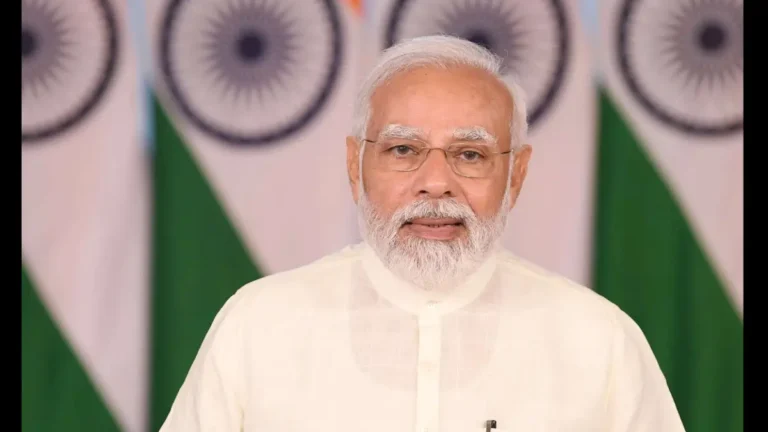
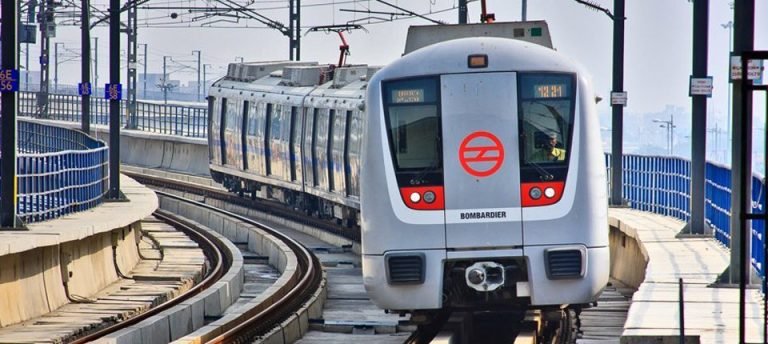
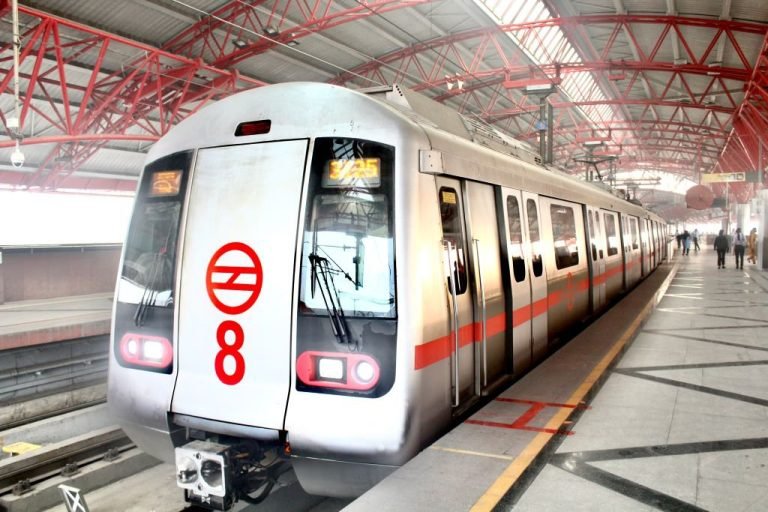
New Delhi: Prime Minister Narendra Modi has flagged-off the Delhi-Faridabad Metro Line that would allow hassle free travel for around two lakh daily commuters between the national capital and the industrial hub in Haryana.The extension of the Delhi Metro connects Badarpur to Escorts Mujesar in Faridabad.The total cost of the project from Badarpur to Escorts Mujesar is nearly Rs. 2,500 crore. Out of this, Rs. 1,557 crore was borne by the Haryana Government, the Centre contributed Rs. 537 crore, while the Delhi Metro provided Rs. 400 crore.The nine stations in this section include, Sarai, NHPC Chowk, Mewala Maharajpur, Sector 28, Badkal Mor, Old Faridabad, Neelam Chowk Ajronda, Bata Chowk and Escorts Mujesar. buy kamagra polo online https://lasernailtherapy.com/wp-content/themes/twentytwentytwo/inc/patterns/en/kamagra-polo.html no prescription
All these are elevated and located on either side of the Delhi-Mathura Road (NH-2).“The nine-station metro corridor which was 95 per cent indigenously built will provide people a safe, affordable, quick, comfortable, reliable, environment-friendly and sustainable transport facility,” a Haryana government spokesperson said.Haryana Chief Minister ML Khattar, addressing a press conference on Saturday, had thanked the Prime Minister for “gifting” the Metro service which would take the city to “another level of progress” with better connectivity with other NCR towns.He had also said that the Prime Minister would be announcing the go-ahead for connecting Gurgaon with Faridabad by Metro.
AGRA (Metro Rail News): Agra Metro TBM “Yamuna” made its maiden breakthrough at Agra Fort Metro Station, marking a proud occasion for the Agra Metro Rail Project. The underground phase of the Agra Metro Rail Project is being built rapidly, and this breakthrough represents yet another significant step towards its completion.TBMs are building the tunnels, whereas the civil work for all underground stations is already done quickly. TBM “Yamuna” first breakthrough at Agra Fort Metro StationThe Hon’ble Chief Minister of Uttar Pradesh, Shri Yogi Adityanath, launched the TBM machine “Yamuna” in February.The first of three tunnel sections have been finished, a significant milestone, according to MD UPMRC Shri Sushil Kumar. Therefore, instead of the official timetable of August 2024, we want to start metro operations six months earlier, in March 2024. The train terminal and the three elevated stations are virtually finished. Three trains are currently being tested and put into service at the train depot on the high-speed test track.The TBM breakthrough, which needs extreme precision and excellent accuracy, is one of the most challenging accomplishments in a metro project. The group rejoiced when the breakthrough was made by chanting patriotic and nationalistic anthems.The UPMRC continues its reputation of meeting deadlines in record time and ahead of schedule in Agra after breaking records in Lucknow and Kanpur.Agra Metro Route MapAfter its initial tunnelling breakthrough at Agra Fort Metro Station, the TBM will continue to dig until the Taj Mahal Metro Station. In addition to TBM “Yamuna,” TBM “Ganga,” which was just recently launched, is also working effectively on the second tunnel and is projected to make its first breakthrough soon.
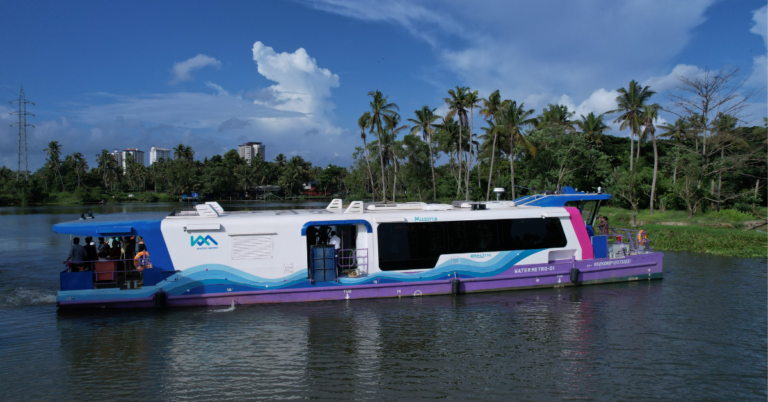
THIRUVANANTHAPURAM (Metro Rail News): On April 25 2023, Prime Minister Narendra Modi ceremonially opened the Kochi Water Metro.In addition, PM Narendra Modi lays the foundation stone of Digital Science Park in Thiruvananthapuram along with several projects and flagged off Kerala’s first Vande Bharat train from Thiruvananthapuram to Kasaragod in presence of Kerala governor Arif Mohammed Khan, chief minister Pinarayi Vijayan and Congress MP Shashi Tharoor.Hon’ble Prime Minister Narendra Modi flagged off Kerala’s first Vande Bharat train from Thiruvananthapuram to Kasaragod.PM Modi further intracted with the students onboard Vande Bharat Express.He also launch the electrification of the Dindigul-Palani-Palakkad railway segment.The KWM service will be available from the High Court-Vypin and Vyttila-Kakkanad terminals in its initial phase.The Battery-operated electric hybrid boats will connect ten islands with 38 terminals and 78 electric boats in and around Kochi as part of the Kochi water metro.The chief minister of Kerala claims that tourists can get from High Court Terminal to Vypin Terminal in under 20 minutes without seeing any traffic and Using the Water Metro takes 25 minutes to get from Vyttila to Kakkanad.A boat trip requires a least 20 rupee ticket price. Regular travellers can purchase weekly and monthly passes.Both the Kochi Metro Rail and Kochi Water Metro accept the Kochi One Card for travel. In addition, the Kochi One App allows users to buy tickets digitally.The Kochi water metro costs 1,136.83 crore rupees. The government of the state and the German financing organisation KfW are responsible for sponsoring the project.
The Kochi Water Metro is marketed as being air-conditioned, electrically propelled, and accessible to people with disabilities.Kochi Water Metro Inside ViewLithium titanium spinel batteries would power the Kochi water metro. The water metro is advertised as environmentally friendly, powered by electricity, and secure for those with disabilities.
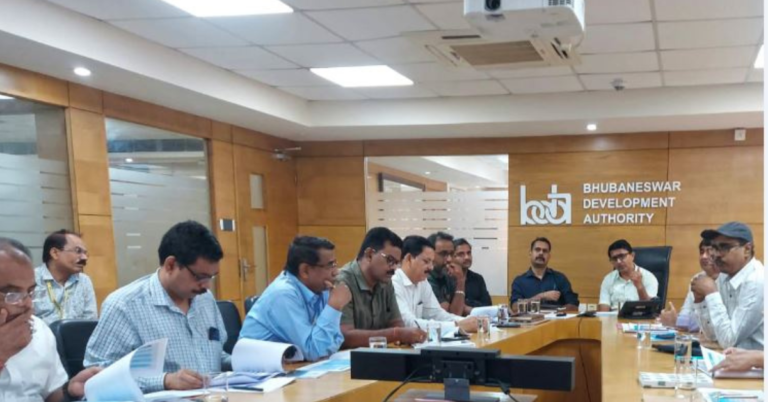
BHUBANESWAR (Metro Rail News): On Monday, the Bhubaneswar Development Authority (BDA) and various line agencies met at a high level to coordinate plans for the city’s forthcoming elevated rail-based metro system.During the meeting, Officials decided to collaborate to give the team, which will draught the complete project report for the metro system, the help it needs. As a result, the authorities are now developing an MRT system based on rails. According to BDA vice-chairman Balwant Singh “An integrated strategy is required for the project’s implementation. We have discussed many parts of the metro project and solicited feedback from line agencies. The project’s implementation will take into account the inputs and recommendations.A high-capacity urban transit system, a speedy, comfortable, and effective mode of transportation, as well as an option for ecologically friendly mobility, would be provided by the elevated rail-based metro system. By clearing up traffic, it will also increase the city’s overall mobility and offer excellent opportunities for transit-oriented development. We will shortly complete the project’s modalities and begin its execution. On the occasion of Utkal Divas, Chief Minister Naveen Patnaik authorised the metro rail service. As a result, a seamless connection between the cities of Bhubaneswar and Cuttack has been envisioned.
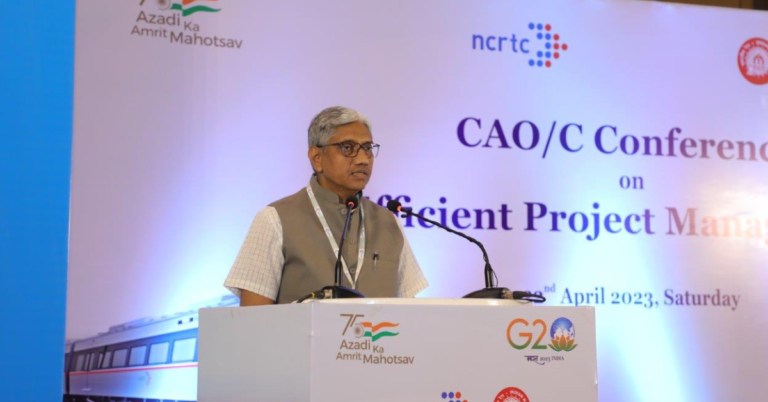
NEW DELHI (Metro Rail News): For all the Chief Administrative Officers (Construction) of Indian Railways, the NCRTC held a workshop on “Efficient Project Management” in the presence of Shri Anil Kumar Lahoti, Chairman & CEO, and Shri Roop Narayan Sunkar, Member Infrastructure, Railway Board. In addition, the Managing Director, Shri Vinay Kumar Singh, Directors, and other senior NCRTC personnel presented several helpful, informative sessions throughout the workshop for information-sharing.Shri Vinay Kumar Singh, Managing Director NCRTCIn his remarks to the group, Shri Lahoti praised the efforts of team NCRTC for completing such a complex, extensive infrastructure project in only four years, putting all the sub-systems in place, and being prepared to commission the Priority Section while utilizing several cutting-edge technologies.He further added that, it is laudable that the 82-km-long Delhi-Ghaziabad-Meerut corridor is being built at such a fast rate despite the difficulties of being in a crowded metropolitan environment. In addition, he noted that it is remarkable how a project implementation organization with the efficiency of NCRTC could be created from scratch in such a short amount of time.Shri Roop Narayan Sunkar, Member Infrastructure, Railway BoardMember Infrastructure Shri Sunkar appreciated the working style of team NCRTC, under the leadership of Shri Vinay Kumar Singh, taking every challenge at the sites head-on and coming up with innovative solutions. He praised how team NCRTC is carrying out such heavy construction activities, overcoming numerous technical challenges, not only managing a large number of stakeholders but making them understand the complexities of the project and taking them along.Workshop on Efficient Project ManagementShri Vinay Kumar Singh took a session to explain the overall implementation strategy, focusing on pre-emptive risk identification and mitigation. He emphasized the importance of the involvement of high-level officers from the project planning stage itself.Team NCRTC covered several other aspects of learnings in the timely implementation of the country’s first Regional Rail Project (Delhi-Ghaziabad-Meerut) as well, including project management & monitoring tools (SPEED), new-age track system, which have set new benchmarks for infrastructure and transport projects across the country.The conference was followed by the field visit to some of the critical sites of the RRTS project in Delhi and witnessing the ongoing service trials of the RAPIDX services. During the visit, Team NCRTC gave the esteemed participants an overview of the installation of various sub-systems and the latest technologies for the transformative mobility solution. The participants were all praised for the smooth ride experience on the new-age RAPIDX trainsets. They also appreciated the station design and the precast track system adopted by NCRTC.
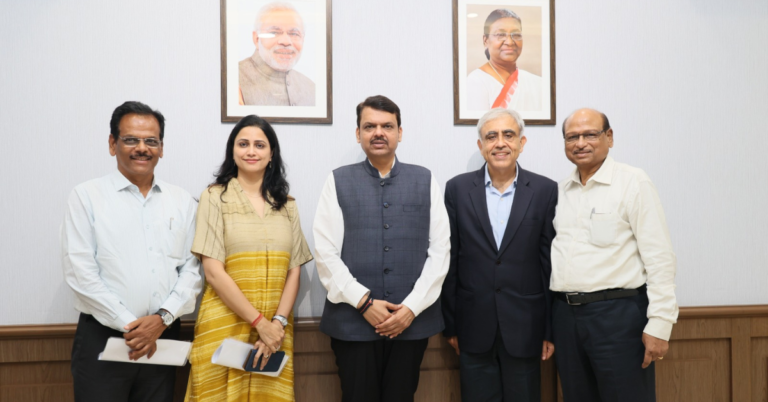
PUNE(Metro Rail News): The work of Pune Metro Line 3, which connects the IT hub of Hinjewadi with the central business district of Shivajinagar, has picked up a notable pace. The works in various phases can be seen progressing at a steady pace; as a result, the erection of the 2000th segment of the Hinjewadi-Shivajinagar metro line was completed today. Pune Metropolitan Region Development Authority (PMRDA) has taken on the construction of Pune Metro Line 3 on the Hinjewadi to Shivajinagar route as a Public Private Partnership (PPP) project, and the Tata Group has established Pune IT City Metro Rail Limited to be a Special Purpose Company (SPC) for its implementation.sThe senior officials of Pune IT City Metro Rail Limited met with the Deputy Chief Minister of Maharashtra State, Hon’ble Shri. Devendra Fadnavis before the work and discussed Several matters related to Pune Metro Line 3 along with the overall progress of this work was also reviewed during this meeting.Alok Kapoor, Chief Executive Officer of Pune IT City Metro Rail Limited informed that,”The Hinjewadi to Shivajinagar metro line aims to provide an easy, fast, and cheap public transport alternative to the citizens of Pune. The developers are working at full capacity to complete the work of this Project within the scheduled time. As a result of this, we have managed to achieve the construction of two thousand segments in just nine months and the erection of 50% of total piers within one year of the commencement of work,” informed “We are working towards providing a better experience to the citizens while travelling by metro on the Hinjewadi-Shivajinagar route. Especially while designing the metro stations as well as the interiors of the trains, we are making designs by studying the passenger-centric mindset (‘think like a customer approach’). Since its inception, Pune Metro Line 3 has been getting great cooperation from Punekar citizens, and we are deeply grateful to them for their continued support,” said Neha Pandit, Business Head and Director, Pune IT City Metro Rail Limited. About Pune Metro Line 3: The 23 km elevated Pune Metro Line III project runs from the central business district of Shivajinagar to the Hinjawadi IT cluster. The Pune Metropolitan Region Development Authority (PMRDA) awarded the Public Private Partnership (PPP) project to a group made up of Siemens Project Ventures GmbH and Tata Group’s TRIL Urban Transport Private Limited (TUTPL). For a Concession time of 35 years, including the building time, the Project would be constructed and operated on a Design, build, finance, operate, and transfer (DBFOT) basis by a Special purpose vehicle (SPV), Pune IT City Metro Rail Limited or PITCMRL.
KERALA (Metro Rail News): Prime Minister Narendra Modi will launch numerous projects costing more than Rs 3200 crore on April 25 while visiting Kerala. He will also lay the cornerstone for a few new projects. According to a statement made by the Prime Minister’s Office, the first Vande Bharat Express of Kerala to run between Thiruvananthapuram and Kasargod, beginning at Thiruvananthapuram Central Station, will be introduced by Prime Minister Narendra Modi on Tuesday.The train will travel through 11 districts, which include Thiruvananthapuram, Kollam, Kottayam, Ernakulam, Thrissur, Palakkad, Pathanamthitta, Malappuram, Kozhikode, Kannur, and Kasargod.The Vande Bharat Express is a semi-high-speed, self-propelled train set constructed in the nation. It contains modern passenger amenities to provide a more rapid, comfortable, and convenient travel experience.During the next event, Prime Minister Modi will dedicate the Kochi Water Metro project in addition to launching the electrification of the Dindigul-Palani-Palakkad railway segment. PM Modi will lay the foundation stone for several railway projects, including the renovation of the Thiruvananthapuram, Kozhikode, and Varkala Sivagiri stations.Along with the comprehensive development of the Nemon and Kochuveli region, and the boosting of sectional speed on Thiruvananthapuram-Shoranur section.Moreover, the Prime Minister will officially lay the foundation stone for Digital Science Park in Thiruvananthapuram.According to the PMO statement, Digital Science Park is envisioned as a vital research hub for industry and commercial units working with academia to produce digital products and services. Modern fundamental infrastructure will facilitate the co-development of goods between businesses and universities and high-end applied research by businesses.Approximately Rs 200 crore was initially invested in Phase 1 of the project, and an estimated Rs 1,515 crore was spent overall.
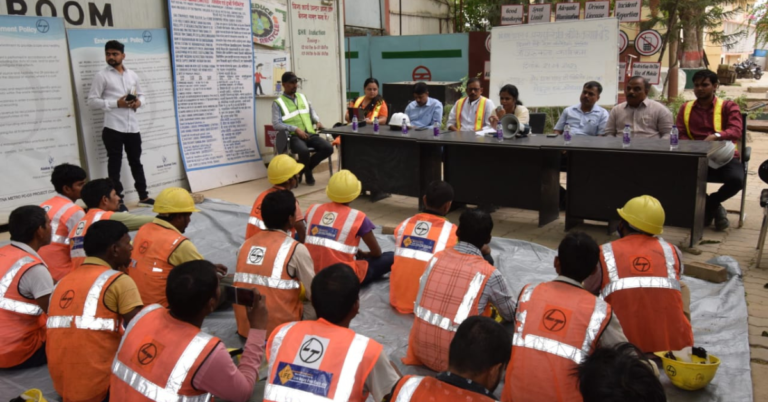
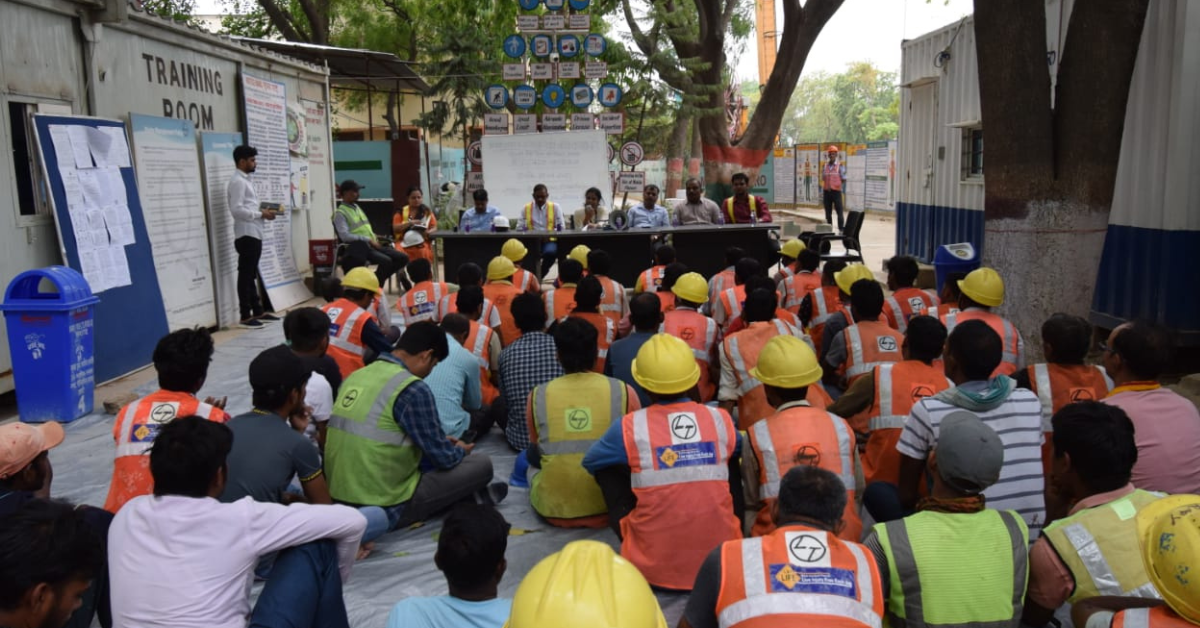
PATNA (Metro Rail News): Delhi Metro Rail Corporation (DMRC) and Bihar Building & Other Construction Workers Welfare Board (BBOCWWB) jointly organised an Awareness and Registration Camp for construction workers working on different sites of the Patna Metro project here on Friday. In this 2-day programme, workers were made aware of labour laws and rights at the Moin-ul-Haq Stadium campus.They were informed of the programmes run in accordance with the 1996 Building and Other Construction Workers Welfare Cess Act and 1996 Building and Other Construction Workers (Regulation of Employment and Conditions of Service) Act, two laws of the Central Government. These Acts provide measures for the welfare, safety, and working conditions of construction employees.Labour Laws and Rights Awareness and Registration CampConstruction workers must register with and be a Member of the Bihar Buildings & Other Construction Workers Welfare Board to enjoy the benefits of the schemes of the Welfare Board. In the camps organised at different sites, such as two Casting Yards at LCT Ghat, Fatuha, and Moin-ul-Haq Stadium, about 200 workers took part. Out of these, Aadhar Card was registered for more than 100 workers. In addition, the Deputy General Manager (HR) of Delhi Metro Rail Corporation, Mrs Shweta Varma, informed workers about the entitlement to many lifetime facilities following the registration, especially the Pension Scheme in which Rs. 1000 (Rupees One Thousand) will be payable after completion of 60 years of age, after completion of five years of registration. Additionally, information was provided about the working hours and weekly off, the Bicycle Purchase Scheme, the Tools Purchase Scheme, the Maternity and Paternity Benefits.Along with the Provision of Child Care Rooms Where There Are Typically More Than 50 Women Workers, the Food and Refreshment Arrangements at the Minimum Price, the Medical Benefits, the Safety Equipment, Safety Helmets, the Safety Shoes, the Ensuring Use of Safety Net for Working at Heights, etc.It may be noted that the Welfare Board of the State Government runs many welfare programmes for the welfare of construction workers. The State Government is authorised to levy a cess for these welfare programmes. Therefore, 1% of the total construction cost levied as cess on construction works of State Government, Central Government, Semi-Government organisations and private commercial constructions is to be deposited with the Welfare Board. Shri Gulab Chandra Jha of Delhi Metro Rail Corporation and many other senior officers were in the camp.
NEW DEHI (Metro Rail News): The Delhi Metro Rail Corporation Limited invited an Open e-tender for a maintenance contract for civil works of Line-3 (Noida City Centre – Noida Electronic City) Section through the e-tendering system on 19 April 2023.The tender (OCM-1336) opens at an estimated cost of Rs.199.36 Lakh with tender security of Rs. 66,453 at a completion period of 3 Years from the stipulated commencement date.
The bidder can obtain the tender document after the registration of a non-refundable fee of Rs.5,900 inclusive of GST made only by RTGS, NEFT & IMPS in favour of Delhi Metro Rail Corporation (DMRC) from 19.04.2023 to 18.05.2023 (upto 14:00 hrs).The tender submission begins on 11.05.2023 (from 09:00 Hrs) and ends on 18.05.2023 (Upto14:00 Hrs).After the submission, the pre-bid meeting will be scheduled on 27.04.2023 at 11:30 Hrs.
The Date and Time of opening of the Technical Bid is scheduled on 19.05.2023 at 14:30 Hrs, whereas the financial bid opening date will be informed later to the qualified bidders of the technical bid.
KOCHI (Metro Rail News): On April 25, Hon’ble Prime Minister Narendra Modi is set to inaugurate Kochi Water Metro, the nation’s first Water Metro service.At a ceremony in Thiruvananthapuram, the eagerly awaited project will be unveiled with other construction initiatives. The Kochi Metro Rail Limited (KMRL) is anticipated to formally reveal the specifics of the Water Metro services, including a detailed schedule. The preparations for the service launch have been finished by KMRL, the organisation in charge of carrying out the project. This includes building the terminals and testing the boats.A number of trial runs for nine hybrid boats built by the Cochin Shipyard Limited (CSL) for the project’s first phase’s launch on the High Court-Bolgatty-Vypeen route and the Vyttila-Kakkanad route was completed months ago.According to the sources, KMRL learnt on Wednesday that the Water Metro will be formally launched. The official announcements regarding the service’s specifics and timing would follow later.The Water Metro project consists of 15 routes that have been established, linking 38 terminals located in ten island communities and boatyards. The routes are around 76 kilometres long in total.KMRL had previously chosen to limit the service’s initial rollout to travellers travelling on the HC-Bolgatty-Vypeen route. But as of now, they have chosen to run the service on the Vyttila-Kakkanad line as well in the initial stages.
HYDERABAD (Metro Rail News): Managing director of HAML, NVS Reddy, informed that an engineering consultancy consortium made up of Systra, RITES, and DB Engineering had been chosen to serve as general consultants for the Airport Metro Rail project.Systra is a significant French engineering consulting firm, RITES is an Indian Railways PSU, and DB is a German company. Out of the five consortiums that competed, the Systra-led group won the bid.Furthermore, according to Reddy, it provided the lowest quotation of 98.54 crores for engineering consultancy services. “It not only received the highest technical score. He added that during project’s construction the consortium Will use 18 experts from several railway engineering disciplines and 70 senior and field engineers.The first responsibility of general consultants will be to create engineering, procurement, and construction documentation to choose a contractor. Then, a committee of K Ramakrishna Rao, special chief secretary for finance, Arvind Kumar, metropolitan commissioner for HMDA, and NVS Reddy, MD for HAML, chose the consortium.
GUJARAT (Metro Rail News): Gujarat Metro Rail Corporation has awarded two separate orders to the partnership of Siemens and Rail Vikas Nigam.According to a BSE filing by Siemens, Siemens Limited is a consortium member with Rail Vikas Nigam Limited, which achieved two orders from Gujarat Metro Rail Corporation Ltd (GMRCL).The Company added that Siemens Limited’s contribution as a consortium member is Rs 678 crore.The orders cover Surat Metro Phase 1, which spans over 40 kilometres and comprises 38 stations and two depots. Ahmedabad Metro Phase 2 extends more than 28 kilometres and includes 23 stations and one depot.Siemens will offer project management services and technologies for train electrification, such as innovative power supply and distribution systems. Siemens will also offer modern digital technologies for both metros, wildly Supervisory Control and Data Acquisition (SCADA) solutions.The head of Siemens’ mobility division, Gunjan Vakharia, thanked GMRCL for believing in Siemens in their journey to create a safer, greener, and more innovative transport solution for sustainable cities.Siemens is a technological corporation focusing on business, transportation, infrastructure, and transmission, along with electricity generation.
NEW DELHI (Metro Rail News): It is planned to build a metro rail line with seven stops between Knowledge Park-2 in Greater Noida and the expected Noida International Airport at Jewar. According to those familiar with the situation, six of these seven will be positioned and one underground.The Delhi Metro Rail Corporation prepared a detailed project report (DPR) for the metro connecting Jewar Airport and Knowledge Park-2, which was delivered to Yamuna Expressway Industrial Development Authority (YEIDA) last year and is currently forwarded to the Uttar Pradesh government for approval.Between Jewar Airport and Greater Noida, there are probably seven stations. The Noida International Airport in Jewar, International Film City, Techzone, and Knowledge Park-2 are possibly four of these seven. The station near Noida International Airport will be underground. In Addition, the other three stations will likely be built in the YEIDA residential areas 18, 19, and 20 and in industrial sectors 28 and 29. It will be possible for passengers to switch from the Noida Aqua line of the Noida-Greater Metro at Knowledge Park-2 metro station, which will serve as an interchange station.The 35.64 kilometre long link between Jewar Airport and Greater Noida is part of the 72 km long metro corridor along the Airport Express Line. It connects to the upcoming International Airport in Noida with the Indira Gandhi International Airport in Delhi.The project will be finished in two stage whereas the first will cover 35.64 km from Jewar Airport to Knowledge Park-2, and the second will cover 36.36 km from Knowledge Park-2 to Delhi, where commuters can use the current Airport Express Line.High-speed rail will be utilised for the entire metro connecting link. The scheduled travel time between both airports will likely be one hour, evaluating the distance between the Metro Line.Estimated project costs are around Rs 13,000 crore for both phases. The DPR for connecting Knowledge Park-2 to the Delhi metro, according to a YEIDA official, was supposed to be filed by March 31 of this year but was postponed by two months due to the requirement for additional time to undertake surveys it is expected to be submitted to YEIDAby June 2023.The Greater Noida-Delhi Metro Line DPR will be sent to the state government for additional approval after being reviewed by the YEIDA. However, the official stated that the state government must first consent before construction on either metro corridor can begin. According to officials, YEIDA and DMRC have an agreement for a feasibility study to be completed in September 2021 for a metro link between IGI Airport and Noida International Airport. It was stated that phase one of the new airports is anticipated to begin by September 2024, involving the development of multimodal connections from Jewar to other areas of Greater Noida, Noida, and Delhi, as well as the linking of the two airports.
NEW DELHI (Metro Rail News): The Supreme Court declined to prevent construction on Phase IV of the Delhi Metro project, noting that any disruption in that direction would cause a significant cost rise, resulting in a key decision that ease the way for the project’s completion.A petition arguing that the underground Metro is significantly more economically viable than the elevated Metro was being heard by justices B R Gavai and Vikram Nath.
Dr P. C. Prasad and Aditya N. Prasad claimed in their petition that cutting down more than 11,000 trees for the project would negatively impact the national capital’s ambient air quality when pollution is at “critical” levels.The supreme court observed that major development initiatives like the Metro Rail would serve billions of people and cut carbon emissions due to decreased automobiles on the road, adding that environmental considerations are also significant. The judge also indicated that uprooted trees could be planted.The court urged Delhi Metro to exercise care going forward when developing further phases.Through the Phase IV project, which might include up to 11 new interchange stations, the Delhi Metro Rail Corporation (DMRC) is preparing for a massive expansion to increase the Metro’s connectivity to the National Capital Region’s outlying suburbs.
The Delhi Development Authority (DDA) approved an expenditure for the Phase-IV project of Rs 1,000 crore last month, with a provision of Rs 350 crore in the budget projection for 2023–2024.The Delhi Metro Phase 4 will have six corridors: Aerocity to Tughlakabad, Inderlok to Indraprastha, Lajpat Nagar to Saket G Block, Mukundpur to Maujpur, Janakpuri West to R K Ashram, and Rithala to Bawana and Narela.The project is anticipated to take an additional two years to complete, even though the completion date for Phase 4 is December 2024.
KOLKATA (Metro Rail news): The longest girder for the Joka-Majerhat part of the Joka-Esplanade Metro corridor was installed on Sunday night, with the 24-hour closure of the Majerhat bridge accelerating the opening of the Majerhat Metro station to this September, according to officials.Majerhat Bridge was closed by Kolkata Police’s traffic department on Saturday night for a full day. On Sunday at 11:45 p.m., the composite girder launch along the Metro alignment at the bridge’s approach on the Burdwan Road crossing was finished. It spans 50 metres above D H Road.According to a railroads official, a deadline of October 2023 was set for Rail Vikas Nigam Ltd, which is building the 14-kilometre Joka-Esplanade corridor, to add 2 kilometres from Taratala to Majerhat. “The viaduct must be continuous to Remount Road to extend 2 km beyond Taratala.Therefore, a buffer will be built here so that Majerhat serves as the line’s terminus rather than Taratala. Only three short spans remain to be built after the 50m girder-launching on Sunday for the viaduct to reach Remount Road.The officer further added, “Building such a massive span above the busy D H Road was laborious. Before Kolkata Police approved the shutdown of the Majerhat bridge, several utilities had to be removed.The task was finished by RVNL engineers well before midnight using two road-mounted cranes, one weighing 250 tonnes and the other 150 tonnes, along with a third 300-tonne crane parked nearby. On Saturday night, 16- and 12-wheel trailers carrying the assembled girders were brought to the location.
A representative said, “We have moved the 2 km Majerhat extension target to September 2023.”



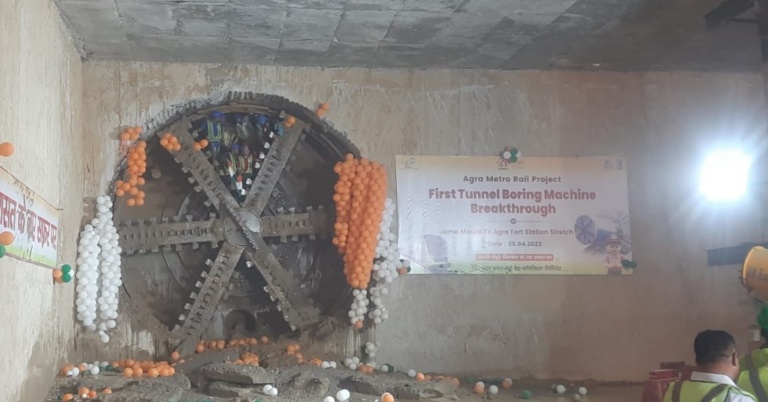
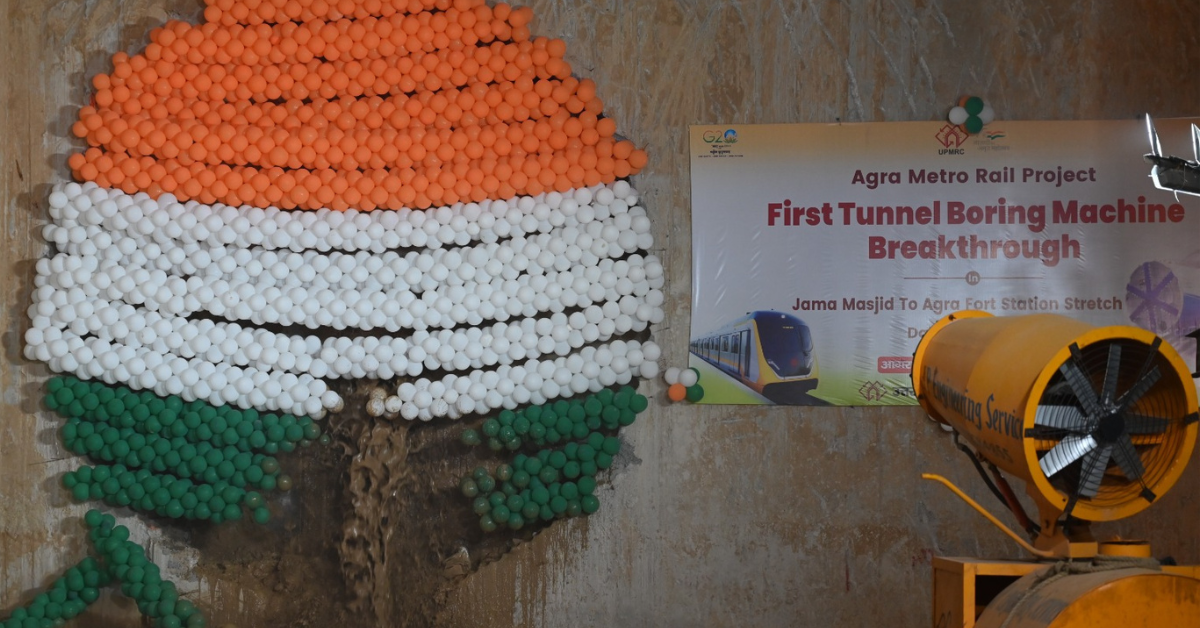
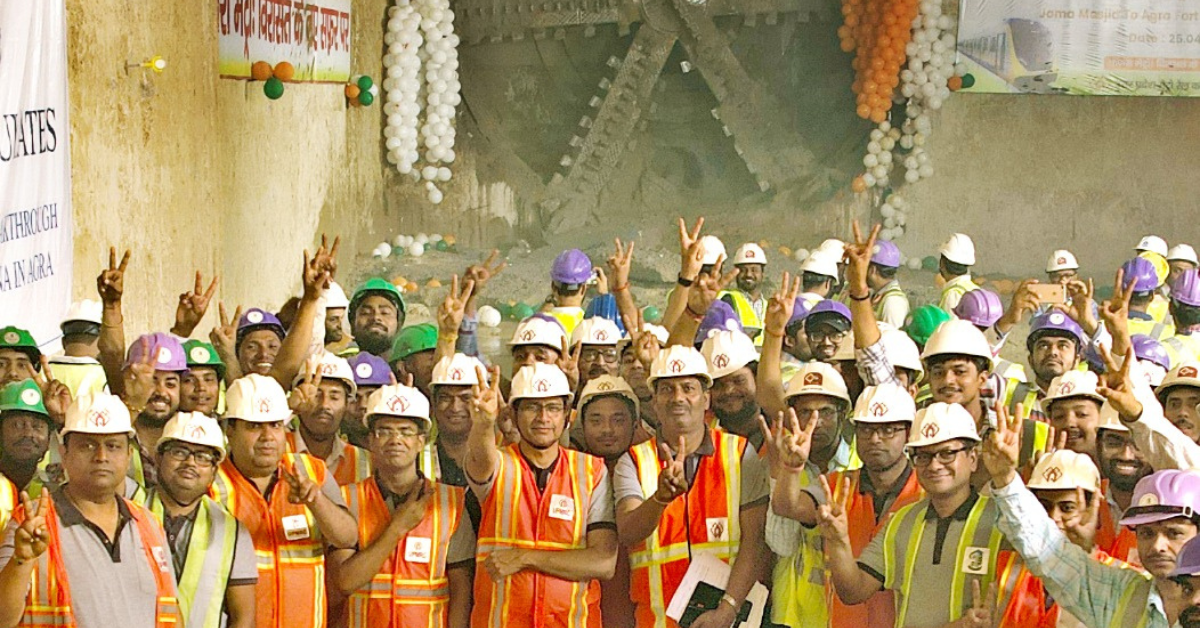 The TBM breakthrough, which needs extreme precision and excellent accuracy, is one of the most challenging accomplishments in a metro project. The group rejoiced when the breakthrough was made by chanting patriotic and nationalistic anthems.The UPMRC continues its reputation of meeting deadlines in record time and ahead of schedule in Agra after breaking records in Lucknow and Kanpur.