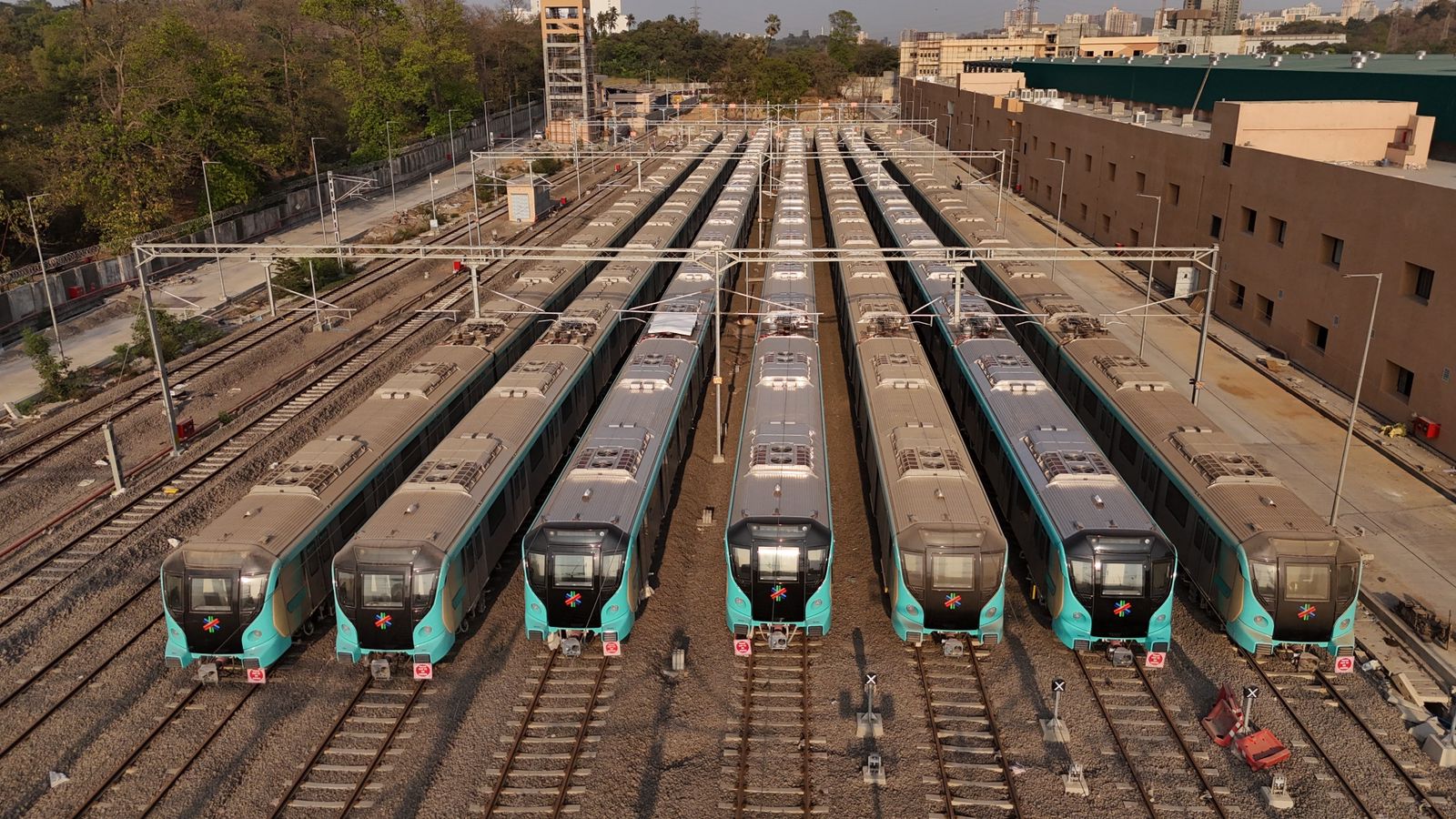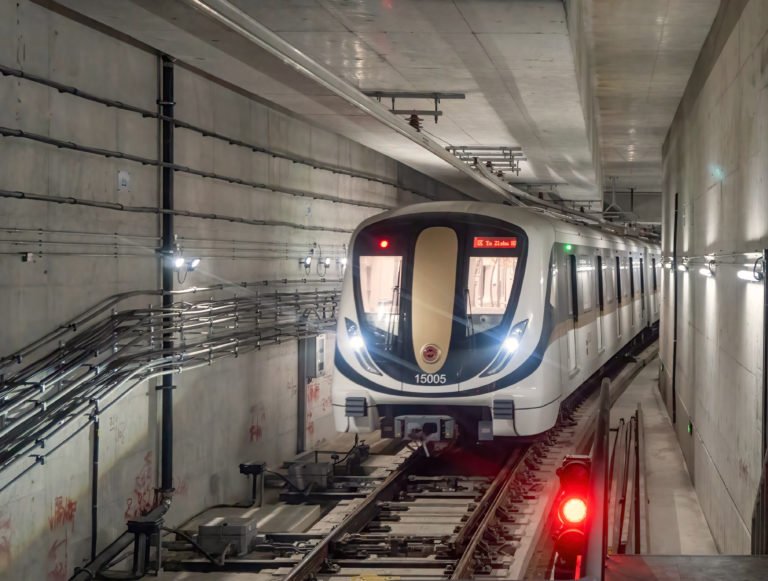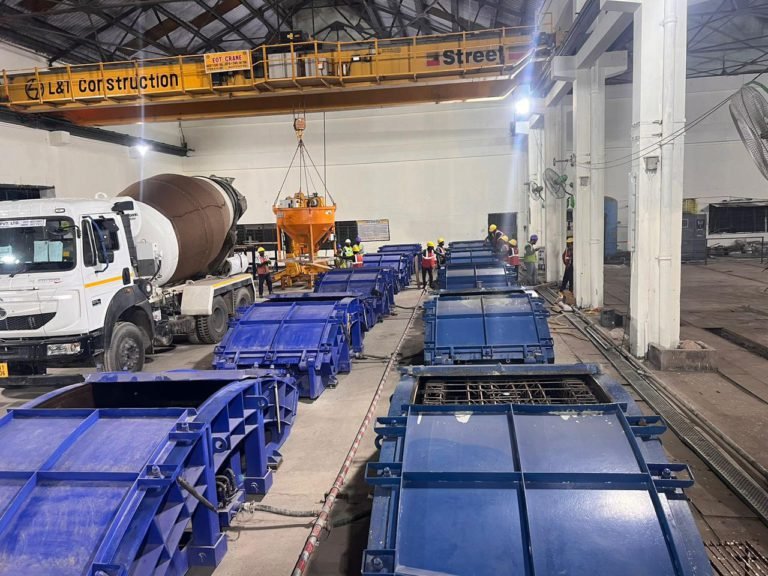
DMRC Advisor (Special Works) makes a courtesy visit to the Director General of Bihar Museum

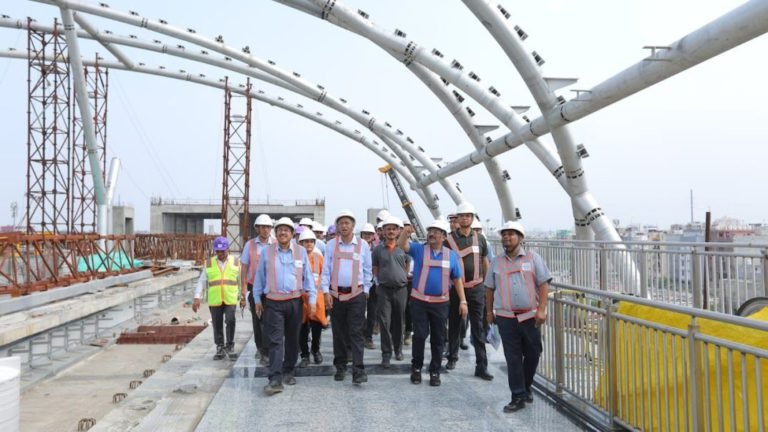
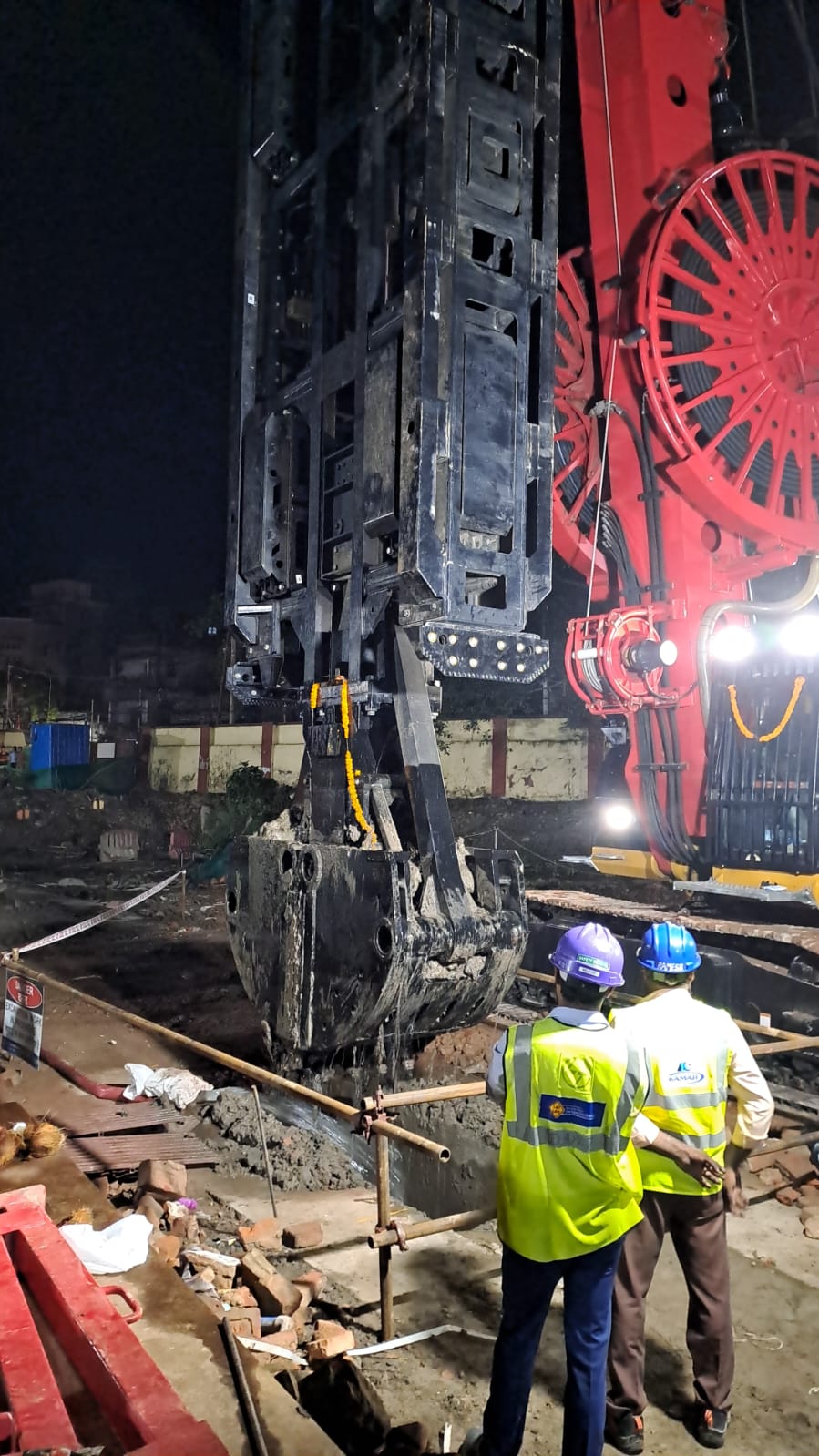
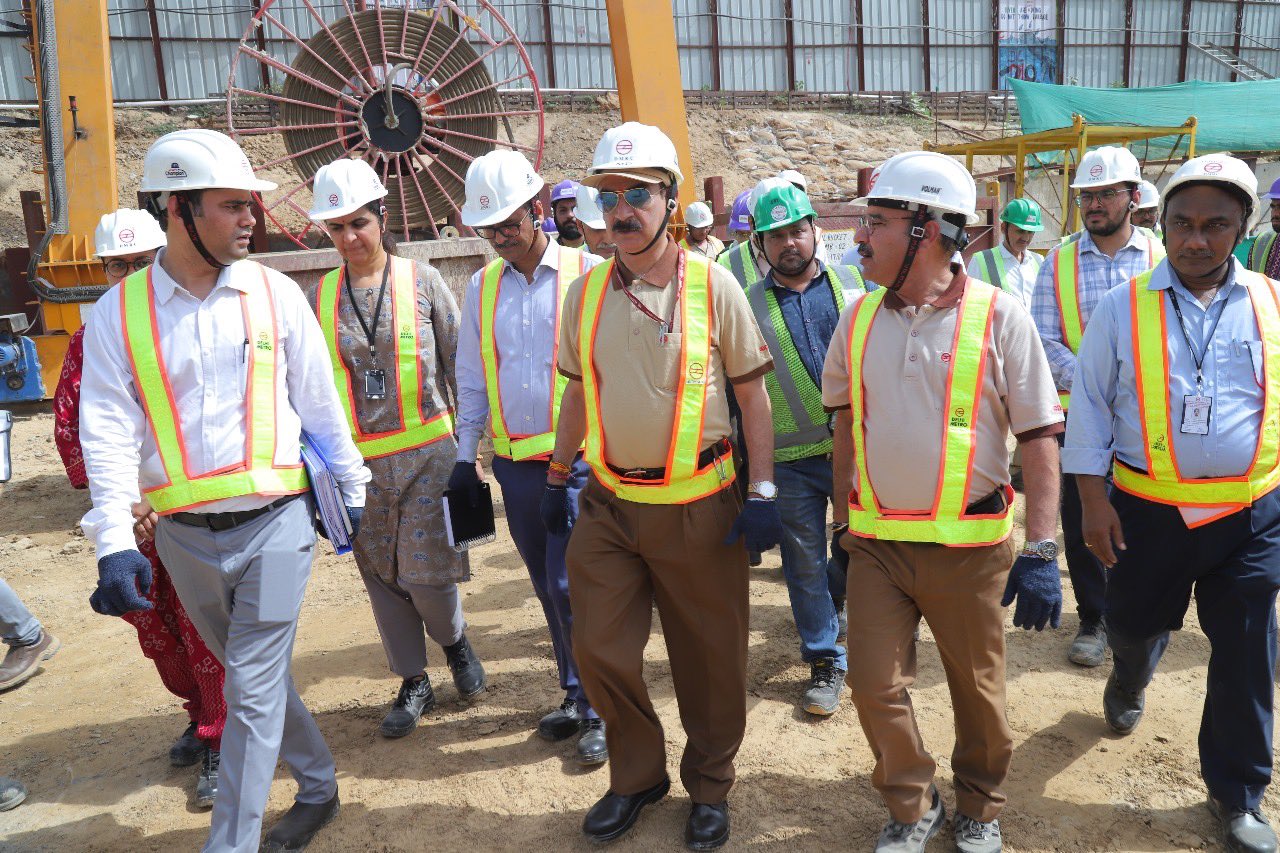
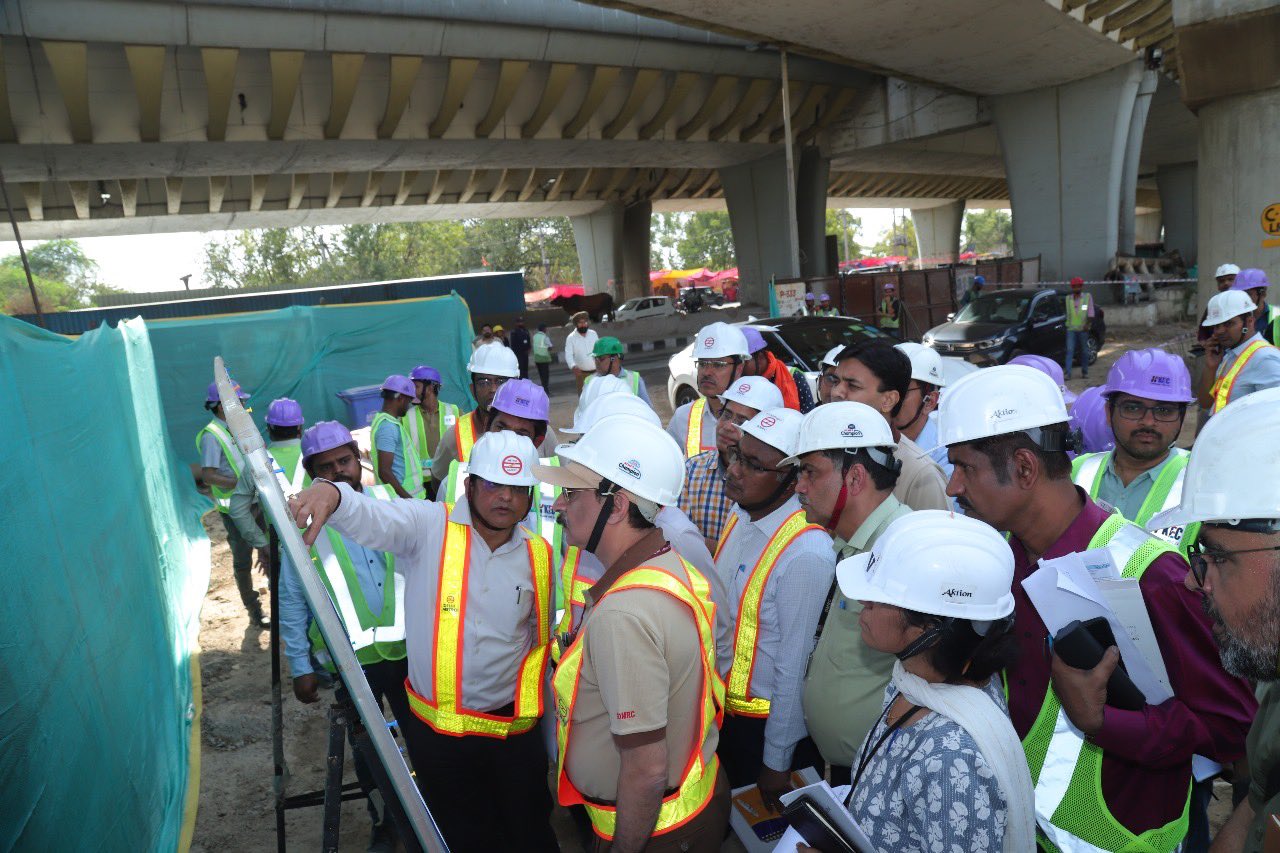
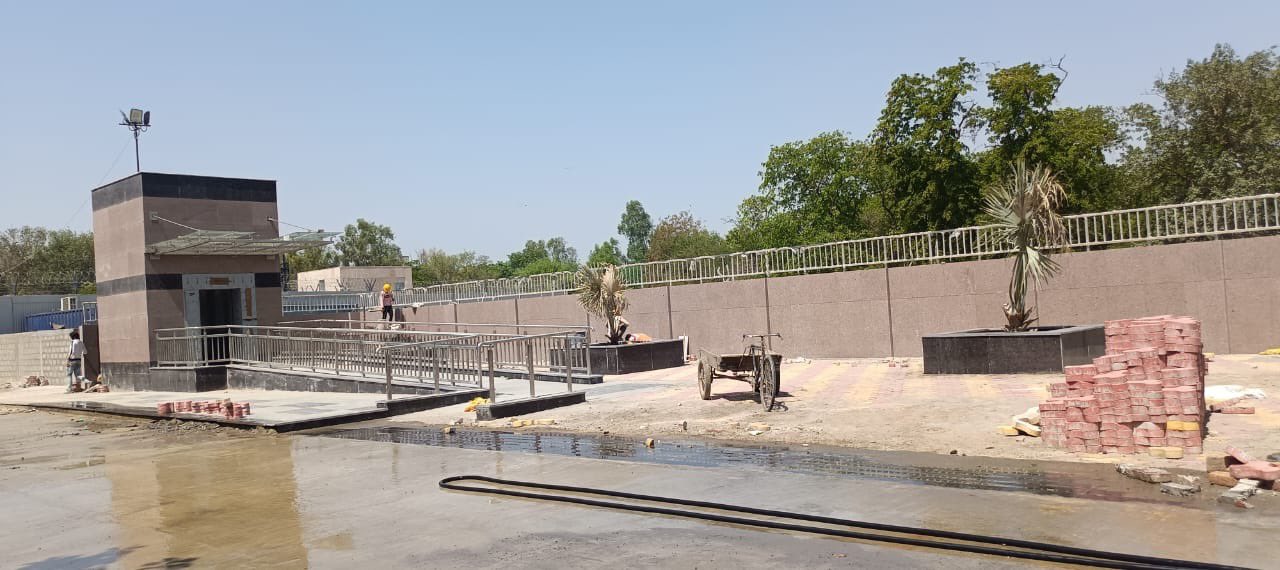
Shri Daljeet Singh, Advisor (Special Works), Delhi Metro Rail Corporation (DMRC), said that the Patna metro is committed to constructing sites within defined safety parameters. During his inspection of various Patna Metro Rail Project construction sites, he inspected the ongoing civil, electrical and track-related works at places like Malahi Pakdi, Khemnichak, Bhootnath Road, ISBT Depot, etc.

DMRC advisor Visits Patna metro 02


Besides assessing the progress and development work of the Patna Metro Rail Project, Shri Singh’s inspection centred on adhering to his directives aimed at ensuring public safety and facilitating pedestrian and vehicular movement by clearing encroachments along construction sites and parallel routes. Directives were also issued to remove barriers at completed construction sites, reducing congestion and ensuring smoother traffic flow. He stressed that besides the quality of work, DMRC is committed to minimal inconvenience for citizens near Patna metro construction areas. Regular inspections aim to accelerate construction and ensure safety and orderly progress in the construction processes.

DMRC advisor Visits Patna metro 05


Additionally, he inspected the preliminary mobilization work of the Heritage Art tunnel from Bihar Museum to Patna Museum. On Wednesday, Singh inspected construction sites at Gandhi Maidan, PMCH, Akashvani, Saguna More, Danapur, Rukanpura, and Patliputra metro stations. Besides expediting construction, he directed DMRC officials to ensure compliance with contractors regarding proper zebra crossings for pedestrians in areas where road configurations change due to construction.

DMRC advisor Visits Patna metro 07


Shri Daljeet Singh further directed officials to ensure the placement of appropriate signage lighting arrangements for people and vehicles, remove unnecessary hindrances, and subsequently recommence work at all Patna Metro Rail Project sites.


Intrigued by the future of Metro and its impact on our city? Join us at our upcoming InnoMetro event to delve deeper into this vital issue. Stay informed, get involved, and let’s ride the Metro towards a brighter, more sustainable future together.

DMRC advisor Visits Patna metro 06

NCRTC Installs Solar Power Plants at Sahibabad and Duhai Depot RRTS Station

0

Mr Vinay Kumar Singh, Managing Director, NCRTC, inaugurated state-of-the-art Solar Power Plants installed at Sahibabad RRTS station and Duhai Depot RRTS station today, on Friday, 22 December 2023 at Sahibabad RRTS station in the presence of all the Directors and senior officials of NCRTC. This inauguration marks another step towards sustainability by the National Capital Region Transport Corporation (NCRTC).

With a total capacity of 729 kW, the Solar Power Plant established at Sahibabad station is equipped with 1620 high-efficiency solar panels. The plant will generate about 10 lakh units of electricity per annum against the annual consumption of about 7.3 lakhs per annum for the auxiliary load of the station, thus making the Sahibabad Station a ‘Green Station with the distinction of being Carbon Negative’. On the other hand, the solar plant at the Duhai Depot Station is equipped with 320 solar panels with an installed capacity of 108 kW.

Earlier in July this year, a solar power plant was also established at RRTS Depot in Duhai with an installed capacity of 585kWp, making this Depot a Green Depot.

Solar Plant at RRTS 02

This initiative represents a significant stride towards sustainability, as these solar power plants are expected to reduce approximately 1600 tonnes of carbon dioxide (CO2) emissions per year together. The reduction is achieved by substituting conventional fossil fuel-based power sources with clean and green solar energy. This transition to solar energy aligns with NCRTC’s commitment to reducing its carbon footprint while optimizing operational costs.

Solar Plant at RRTS 04

These solar initiatives of NCRTC are in line with its Solar Policy adopted in March 2021, aiming to increase the share of renewable energy by generating approximately 11 MW peak of in-house solar power across its stations, depots, and other facilities for traction and non-traction purposes over the next five years.

To contribute towards a clean and green environment, NCRTC has also taken a step towards achieving the highest rating of the Indian Green Building Council (IGBC) Certification. In this direction, NCRTC has recently been honoured with the highest rating of the prestigious ‘Project Award for IGBC’, a Platinum Rating for the Ghaziabad Receiving Sub Station (RSS) and Sahibabad RRTS station. Further, RRTS equipped with a green energy and minimum water consumption system will enhance the overall commuter experience on this green transport model and encourage greater public transport use.

Solar Plant at RRTS 03

Installing these Solar Power Plants is a testament to NCRTC’s unwavering commitment to sustainability and clean energy practices. This initiative aligns with the objectives of the National Solar Mission. It reinforces NCRTC’s role in promoting clean, sustainable energy sources to benefit the region and the nation.

KPIL Bags Delhi Metro Phase 4’s Electrification Contract Worth Rs 279 Crores

NEW DELHI (Metro Rail News): Kalpataru Projects International Limited (KPIL) has won Delhi Metro’s Package DE-08, which entails electrification for the magenta and silver lines. 

Scope of Contract 

Scope of the package includes Design, Detail Engineering, Manufacture, Supply, Installation, Testing and Commissioning of 25KV AC Traction, 33KV Auxiliary Sub Stations (ASS), Associated Cabling and SCADA Systems for Underground Corridors of Magenta Line extension, specifically Line-8 Extension & Underground and Elevated corridor of Silver Line of Delhi Metro Phase 4. 

Detailed Scope

For Magenta Line: 25 kV AC traction, 33 kV Auxiliary Sub Stations (ASS), associated cabling and SCADA systems will be installed.

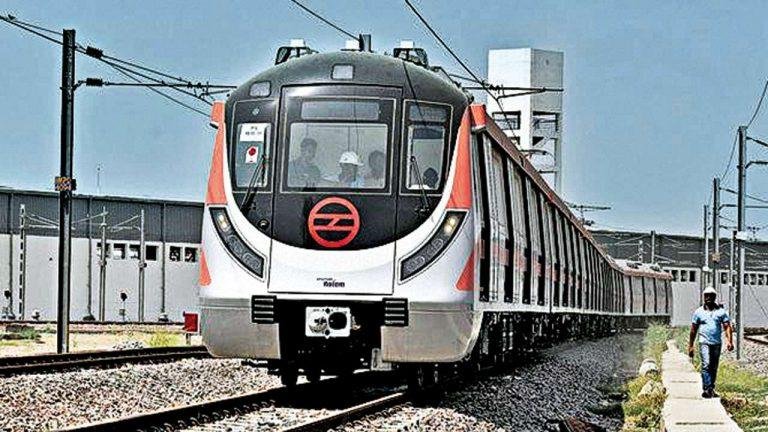
For Silver Line: Rigid OHE (ROCS) will be installed on the three underground packages, while flexible OHE (FOCS) will be installed on one elevated package. DC-04. 

Tender

DMRC invited the bids for the concerned package in April this year. The tender includes a deadline of 3 years from the date of issuance of the LoA, while the technical bids for the mae were opened in July to reveal the bidders. 

Further Developments 

A contract for Delhi Metro Phase 4’s package DE-08 can be expected to be awarded in the coming months as KPIL’s bid is way below DMRC’s estimated project cost of Rs 359.78 crore. 

Delhi Metro Phase 4 

Phase IV of the Delhi Metro is a network expansion to new housing areas in the National Capital Region. On March 7, 2019, the union cabinet approved three ‘priority corridors’ out of six corridors of Metro’s Phase 4: 

Total length of approved ‘Priority Corridors‘: 61.679 km 

Estimated project cost: Rs 24,948.65 crore

Total length of six corridors: 103.93 km

Total Estimated Project Cost: Rs 45,000 crore

Expected Ridership: 1.5 million passengers per day

Phase – IV

Approved New Lines

Line 10 (Silver Line): Aerocity – Tughlakabad

Length: 23.622 km

Type: Elevated (4.279 km) & Underground (19.343 km)

Depot: Sarita Vihar (shared with Violet Line) & possibly Vasant Kunj

Number of Stations: Sixteen

Stations: Aerocity, Mahipalpur, Vasant Kunj, Kishangarh, Chhatarpur, Chhattarpur Mandir, IGNOU, Neb Sarai, Saket G-Block, Ambedkar Nagar, Khanpur, Sangam Vihar, Maa Anandmayee Marg Junction, Tughlakabad Railway Colony (Pul Prahaladpur) and Tughlakabad

Approved Extensions

Line 7 (Pink Line): Mukundpur – Maujpur

Length: 12.558 km

Type: Elevated (12.58 km)

Number of Stations: Eight

Stations: Burari Crossing, Jagatpur Village, Surghat, Khajuri Khas, Bhajanpura, Yamuna Vihar and Maujpur

Line 8 (Magenta Line): Janakpuri West – R.K. Ashram (28.92 km)

Length: 28.92 km

Type: Elevated (21.18 km) & Underground (7.74 km)

Number of Stations: 22

Station Names: Krishna Park Extn, Keshopur, Paschim Vihar, Peeragarhi, Mangol Puri, West Enclave, Pushpanjali, Deepali Chowk, Madhuban Chowk, Prashant Vihar, North Pitampura, Haiderpur Badli Mor, Bhalaswa, Majlis Park, Azadpur & Ashok Vihar, Derawal Nagar, Rajpura, GG Sabji Mandi, Pulbangash, Sadar Bazar, Nabi Karim and RK Ashram Marg

Silver Line, Delhi Metro 

The silver line of the Delhi Metro runs from Delhi Aerocity to Tughlaqabad. It is a 23.62 Km long line with four elevated & 11 underground stations. It has a total of 15 stations as Tughlakabad, Tughlakabad Railway Colony, Anandmayee Marg Junction, Tigri, Khanpur, Ambedkar Nagar, Saket G Block, Saket, Lado Sarai, Mehrauli, Kishangar, Masoodpur, Vasant Kunj (Sec-D), Mahipalpur and Delhi Aerocity. 


Intrigued by the future of Metro and its impact on our city? Join us at our upcoming InnoMetro event to delve deeper into this vital issue. Stay informed, get involved, and let’s ride the Metro towards a brighter, more sustainable future together.

Kochi Metro Unveils Bidders for the Phase 2 Construction 

KOCHI (Metro Rail News): Kochi Metro Rail Limited (KMRL) has unveiled the names of the bidders who have submitted bids for the Kochi Metro’s Phase 2 contract. 

Scope of Contract 

The contract entails the design and Construction of an elevated viaduct and 10 Elevated Stations, Excluding Architectural Finishes, Building Services, Link Bridges and Entry-Exit Structures of Phase II of the Kochi Metro Rail Project from JLN Stadium to Infopark.

Bidders 

The bidders for the package are: 

  1. Afcons Infrastructure Ltd.
  2. KEC International Ltd.
  3. Rail Vikas Nigam Ltd. (RVNL)

Further Process 

The bids would further go for technical evaluation, which would furnish us with the name of the lowest bidder for the package in the coming times. 

Pink Line, Kochi Metro 

It entails an 11.2 Km long Pink Line connecting Jawaharlal Nehru Stadium with InfoPark at an estimated cost of Rs 1,957.05 Crores. The phase will likely be funded by a loan from the Asian Infrastructure Investment Bank (AIIB) with around a 3% interest rate. 

Stations on the Pink Line 

The stations of the Pink Line include  Jawaharlal Nehru Stadium ( next to Blue Line), Palarivattom Junction, Alinchuvadu, Chembumukku, Vazhakkala, Padamughal, Kakkanad Junction, Cochin SEZ, Chittethukara, KINFRA Park, and InfoPark / Smart City (connected to Kochi Water Metro).

It is expected to be ready for commercial operations in 2028. 

With Particular Emphasis on women Passengers 

The 11.2 km line has been named the Pink Line to emphasise the safety of Women working at Infopark. This will ensure a safe and convenient transit system to ease their stress and ensure a safe and sensible environment, especially at night. 

KMRL 

Kochi Metro Rail Corporation is the governing body for the Kochi metro, which has been set up as a 50-50 joint venture between the Kerela Government and the Central government. 


Curious about the future of our city’s Metro system and its influence on urban life? Join us at the upcoming InnoMetro event to explore this crucial topic. Stay abreast of developments, actively participate, and collectively propel the Metro towards a more sustainable and promising future.

Chennai Metro Signs Contract with ST Engineering for Platform Screen Doors

CHENNAI (Metro Rail News): Chennai Metro Rail Limited (CMRL) has officially entered into a contract with ST Engineering Urban Solutions Ltd. for the implementation of the Platform Screen Doors (PSD) System. The contract, valued at INR 159.97 crores, is set to cover two elevated sections of Corridor-3 (Sholinganallur Lake to Sipcot 2) and Corridor-5 (Grain Market to Elcot) as part of the Phase-II project.

The signing ceremony took place in the presence of Thiru. M.A.Siddique I.A.S., Managing Director of CMRL, marked a significant milestone in the development of the metro rail infrastructure. Thiru. Rajesh Chaturvedi, Director (Systems & Operations), CMRL, and Ramaswamy Muthuraman, Vice President/Head PSD, Mobility (Rail & Road), ST Engineering Urban Solutions Ltd., inked the agreement, emphasizing the commitment to enhancing passenger and operational safety.

The scope of work outlined in the contract includes the provision of half-height Platform Screen Doors for 36 elevated stations. CMRL’s decision to introduce half-height platform screen doors aligns to enable driverless train operations, ultimately bolstering safety measures for both passengers and operations.

Under the agreement, ST Engineering Urban Solutions Ltd. will be responsible for the design, manufacture, supply, verification, delivery, installation, testing, commissioning, training, and providing technical support for a complete integrated Platform Screen Door System. This encompasses all control centers, platforms, equipment room sub-systems, and associated interfaces.

Thiru. A. Sankaramurthi (Deputy Advisor S&T, CMRL), Thiru. C. Murugamoorthy (Team Leader, General Consultant), along with other senior officials from CMRL and ST Engineering Urban Solutions Ltd., were present during the contract signing ceremony. The collaboration between CMRL and ST Engineering Urban Solutions Ltd. marks a strategic step towards advancing the metro rail network and elevating the standards of safety and efficiency in public transportation

Agra Metro: TBM Shivaji achieves Second Breakthrough at Taj Mahal Ramp Area

AGRA (Metro Rail News): The Afcons Infrastructure – SAM India Consortium marked a significant milestone last Wednesday as the tunnel boring machine (TBM) Shivaji (S-718C) achieved its second breakthrough at the ramp area, (near the cut and cover ramp area ) for the Agra Metro Phase 1 project, covering a total distance of 29.40 km.

The Ø6.63m diameter Herrenknecht Earth Pressure Balance machine, refurbished for this endeavour, is the third machine employed to construct twin underground tunnels spanning 14.25 km on Line-1’s 7.93 km RBS College Ramp – Taj Mahal Ramp section (Package AGCC-02).

TBM Shivaji has successfully constructed tunnel from Taj Mahal Metro Station to Ramp Area (Cut and Cover ramp)

TBM Shivaji, operational since early August 2023, initially completed a 228m tunnel in just 54 days for the up-line between Taj Mahal Station’s launch shaft and the cut & cover ramp on Fatehabad Road, with the breakthrough event occurring on October 1.

Following this, the machine was disassembled, transported back to Taj Mahal Station, and relaunched on November 2 to construct the 236m down-line tunnel. Impressively, the machine returned after a mere 42-day journey.

Speaking on the same, MD UPMRC Shri Sushil Kumar said, “This is an important milestone as the tunnel section for three underground stations has been completed. We are striving to commence metro operations ahead of schedule instead of actual deadline of August 2024. The three Elevated stations & train depot are ready. The testing of metro trains is being conducted successfully on the mainline.”

The Uttar Pradesh Metro Rail Corporation (UPMRC) had granted Afcons – SAM Consortium the civil construction contract for this section, valued at Rs. 1819.79 crore, in March 2022, with a 48-month deadline. This section spans from chainage 3630.000 to 11564.485, encompassing twin tunnels that connect seven stations, including Taj Mahal, Agra Fort, Jama Masjid, SN Medical College, Agra College, Raja ki Mandi, and RBS College.

This accomplishment marks the seventh breakthrough for Afcons – SAM JV in the project’s 5.2 km Priority Corridor, linking Jama Masjid to Taj East Gate. Only one more breakthrough, led by TBM Ganga at Taj Mahal Station, is pending to complete the Priority Corridor. Subsequently, approximately 10 more breakthroughs are anticipated between Jama Masjid and RBS College Ramp, connecting to the elevated 3.725 km Package AGCC-05, for which bidding is currently underway.

The TBM breakthrough is one of the most challenging achievements in a metro project which requires high accuracy and ultimate precision. The TBM has come from Chennai and is equipped with high tech features and various safety parameters. It is to be noted that other two TBM’s Yamuna and Ganga have already carried out the contruction of tunnel work of the Underground section of the 6 km Priority stretch of Agra Metro Project. The TBM has constructed the tunnel till the ramp area and the process of construction of underground section of priority corridor, Agra Metro Rail Project has reached its completion.

Alstom Launches Its Largest Digital Experience Centre for Next-Generation Signalling Solutions Development in India

NEW DELHI (Metro Rail News): Alstom, a global leader in intelligent and sustainable mobility, launched India’s first Digital Experience Centre built by a rail OEM today. Located in Bangalore and spread over 5000 sq.ft., the Digital Experience will be the hub for executing urban, mainline, freight, mining (specific market) projects, and the integrated cybersecurity, security telecom, and SCADA features. With this centre, Alstom has its most extensive signalling lab infrastructure spread over 60000 sq. ft. in India. This will aid the company’s vision of making India a global hub for technology and innovation. The dedicated experience centre will support more than 7 million hours of engineering work for Indian and global projects.

Commenting on the launch of the Digital Experience Centre, Olivier Loison, Managing Director, Alstom India, said, “The rail network in India, both urban and mainline, is becoming highly modernised and complex, this makes it more important than ever to develop advanced Signalling solutions to drive safety, efficiency, and improved passenger experience. In addition to our excellent manufacturing and engineering capabilities, we are proud to be now leading the charter of rail technology innovation with the launch of this centre in India. As the leaders in sustainable mobility, we look forward to developing modern signalling solutions by harnessing the country’s vast talent pool, moving forward the innovation goalpost in our industry.’’ 

Alstom India Digital Experience Centre

As per a study by GII, the market for railway signalling systems is expected to witness significant growth. The global railway signalling systems market is expected to grow at a CAGR of 9.5% over the forecast period from 2022 to 2030. Alstom’s signalling lab infrastructure in India today addresses more than 40% of its worldwide R&D needs. 

Highlights about the Digital Experience Centre: The centre will facilitate learning, adaptation, experimentation, simulation, and validation of Alstom’s new signalling solutions and advanced industry hardware and software innovations. It will conduct complete simulations of world-class signalling technologies, including the one developed for the NaMo Bharat, India’s first semi-high-speed regional train. Moreover, the centre will leverage IoT, IoB for Security and Telecom-related domains, GenAI applications (OpenAI-based), and blockchain for innovation projects in railway applications. These initiatives aim to enhance Alstom’s business capabilities and efficiency and inspire a culture of innovation within the organisation. The centre’s extensive infrastructure will speed up localisations of solutions and R&D programs, drive innovation in India, and support the government’s ‘Make in India’ initiative. Other key highlights include:

  • Centralised demonstration of Operation Control Centre depicting all train movements in a project
  • Remote system monitoring and troubleshooting
  • Display of safety-critical hardware, trackside equipment, innovation booths, and interactive information on all signalling gears
  • Complete end-to-end tests for projects and R&D software delivered from India.
  • Built leveraging emerging technologies such as AI, Big Data, intelligent maintenance, LTE, and cybersecurity.
  • Mobile app-enabled solutions.
Alstom India Digital Center 1

Intrigued by the future of Metro and its impact on our city? Join us at our upcoming InnoMetro event to delve deeper into this vital issue. Stay informed, get involved, and let’s ride the Metro towards a brighter, more sustainable future together.

Plans Underway to Extend Delhi Metro’s Silver Line to Terminal 1 

NEW DELHI (Metro Rail News): Delhi Metro Rail Corporation (DMRC) has sent a DPR to the Government to extend the Delhi Metro’s Silver Line to Terminal 1. 

Increasing Passenger Traffic 

The passenger traffic at Terminal 1 is expected to increase from 1.5 Crore Passengers annually (CPA) to 4.5 CPA in the coming months. 

The current capacity of the IGI airport is as follows: 

Terminal Capacity 
T11.7 Cr 
T21.5 Cr 
T34.2 Cr 

The combined capacity of the airport is expected to increase to 13.4 CPA in the coming 6-8 years. 

Need for Metro 

The increasing number of passengers daily necessitates a  robust transit system to meet traffic needs as roads remain busy and logged. In such a case, the metro must cater to heavy passenger outflow.

Other initiatives 

Other initiatives to support the increasing Passenger outflow include developing check-in facilities at metro stations like Botanical Garden for passengers flying out of T1. Delhi International Airport Limited (DIAL) has also sought arrangements for the same from DMRC. 

Current Scenario 

The Delhi metro is Currently connected to the Airport through two lines 

  1. Magenta line with a stop at T1
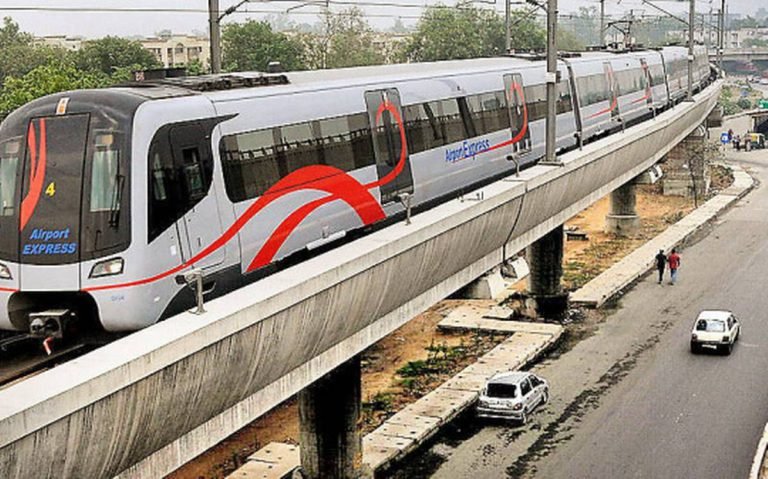
  2. Airport Express Line with a stop at Aerocity & T3. 

Connectivity Boost with Silver Line 

Delhi Metro’s 23.622 Km long silver line runs between  Aerocity and Tughlakabad to cover major locations like Tughlakabad, Tughlakabad Railway Colony, Anandmayee Marg Junction, Tigri, Khanpur, Ambedkar Nagar, Saket G Block, Saket, Lado Sarai, Mehrauli, Kishangar, Masoodpur, Vasant Kunj (Sec-D), Mahipalpur and Delhi Aerocity. 


Intrigued by the future of Metro and its impact on our city? Join us at our upcoming InnoMetro event to delve deeper into this vital issue. Stay informed, get involved, and let’s ride the Metro towards a brighter, more sustainable future together.

CMRS Inspection of the Howrah-Esplanade Stretech of Kolkata Metro Suspended Midway 

KOLKATA (Metro Rail News): The CMRS team in Kolkata to inspect the underwater metro stretch for safety and specifications of the Structure on the Howrah-Esplanade stretch of the Kolkata Metro has suspended the inspection midway. 

Aberrations 

The team has been disappointed with the dire state of the eastbound tunnel of the Esplanade-Sealdah Section. The tunnel will be used to transport rakes from the Central Park Depot. In Addition, the team is also unhappy with the incomplete shaft at Esplanade station made for lifting out construction material. 

Some stretches even needed more tracks and the concrete casting used for laying tracks. 

The Inspection  

According to earlier reports, the Commissioner of Railway Safety (CRS) was set to undertake an extensive week-long examination. The survey would have been split into two separate teams, with the first working from Friday to Monday and the second from Tuesday to Thursday. Notably, under the CRS, the Chief Commissioner of Railway Safety (CMRS) would have attended the final inspection phase on Wednesday.

It was the first time that a CMRS team was there to conduct the inspections. 

The Bowbazar Complication 

The 800 m Bowbazar stretch of the East-West Metro Corridor has witnessed three incidences of water seepage and subsidence since 2019. This happened for One of the eight cross packages, each 250 meters apart,  between Esplanade & Sealdah, which led to the subsidence in October 2022. 

A cross-package aims to connect two tunnels. Thus, emergency or contingency situations can be tackled well. Later, the number of cross-packages was reduced to 5, separating 360 meters between each. 

The State of East-West Metro 

The East-West Metro currently covers a distance of 9.2km, extending from Sector V to Sealdah. The Kolkata Metro Rail Corporation (KMRC), responsible for the 16km corridor between Sector V and Howrah Maidan, has encountered challenges leading to the decision to limit operations to a truncated route from Esplanade to Howrah Maidan starting at the end of this year, bypassing further extension beyond Sealdah.

Given the absence of a depot on the Howrah side, empty train sets would have travelled from the Salt Lake depot to the operational Sealdah Station. From there, these sets would be conveyed through the eastbound tunnel of the Sealdah-Esplanade Stretch, currently under construction, to reach the Esplanade Station


Discover the endless possibilities of our city’s Metro at InnoMetro, our flagship Expo and Conference. Be an active participant in shaping its future towards a more sustainable tomorrow. Stay informed and join us to take a step towards a brighter future.

Government of India and ADB sign 37 billion Japanese Yen loan for Delhi-Meerut Regional Rapid Transit System Corridor

0

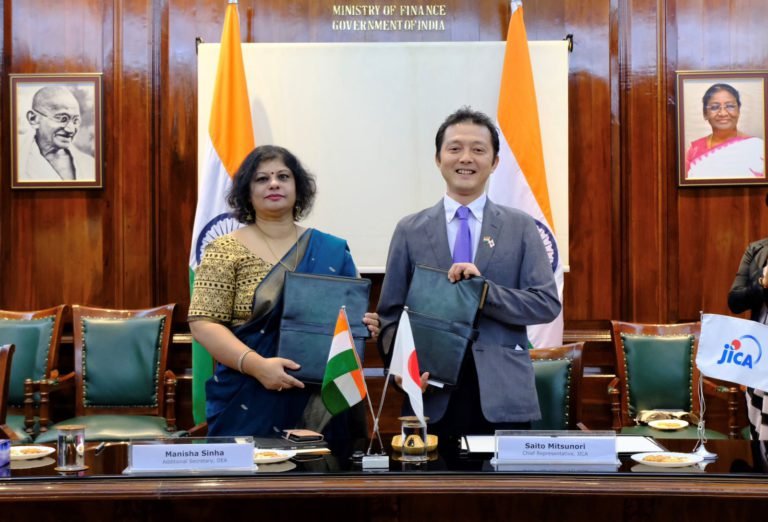
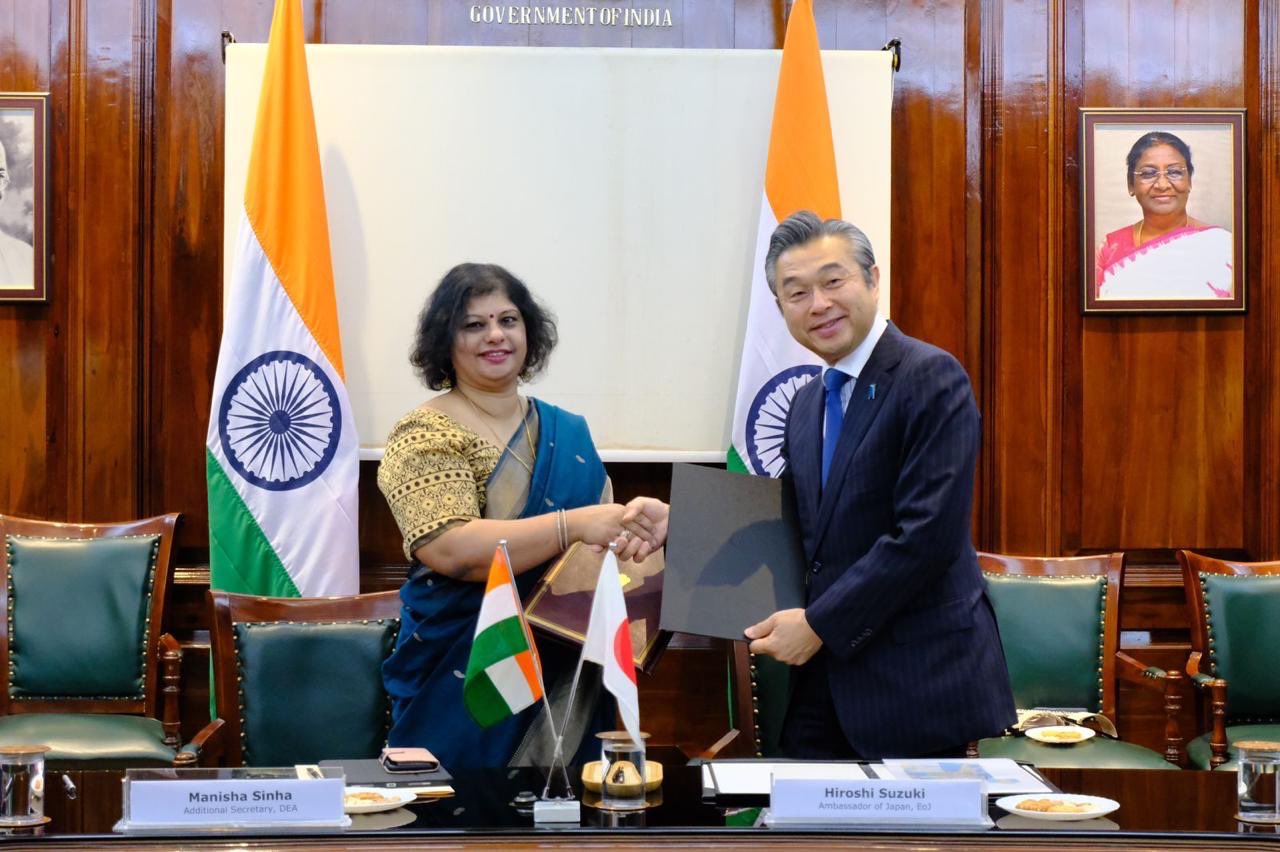
NEW DELHI (Metro Rail News): The Government of India and Asian Development Bank (ADB) on 15th December 2023 signed an agreement for a 37 billion Japanese Yen ($250 million) loan that will continue financing the construction of the 82-kilometre Delhi-Meerut Regional Rapid Transit System (RRTS) corridor.

Signatories 

The signatories to the loan agreement were Ms. Juhi Mukherjee, Joint Secretary, Department of Economic Affairs, Ministry of Finance, for the Government of India, and Mr. Hoe Yun Jeong, Deputy Country Director and Officer-in-Charge of the India Resident Mission, for ADB.

Previous Tranches 

Earlier, ADB had approved a $1,049 million Multi-tranche Financing Facility (MFF) for the project in 2020 to support the construction of RRTS, the first of three priority rail corridors planned under the NCR Regional Plan 2021, to connect Delhi to other cities in adjoining states. The RRTS will have multi-modal hubs to ensure smooth interchange with other transport modes. The first tranche of the ADB loan amounted to $500 million, with another $500 million co-financed by AIIB.

Improve Urban Mobility 

After signing the loan agreement, Ms Mukherjee stated that the investment project will enable the RRTS to improve urban mobility, and the project’s economic impacts will also benefit women and the differently abled.

Reduce Carbon Emissions

“ADB financing is helping the construction of the corridor which will allow people to travel by a low carbon and efficient railway system and save millions of tons of CO2 emissions and play a significant role in climate change mitigation,” said Mr. Jeong.

Efficient Commutation 

Passing through the populated sections of the national capital region, the 82-km corridor will provide fast, safe, and high-capacity commuter transit services, expanding economic and employment opportunities by cutting travel time from 3-4 hours to about 1 hour.


Discover the endless possibilities of our city’s Metro at InnoMetro, our flagship Expo and Conference. Be an active participant in shaping its future towards a more sustainable tomorrow. Stay informed and join us to take a step towards a brighter future.

Administration Greenlights the AAR by RITES  for Phase 1 Chandigarh Metro  

CHANDIGARH (Metro Rail News): The Chandigarh administration has greenlighted the AAR prepared by RITES, suggesting an 89-long metro Route for Phase 1 of the MRTS Project. 

Unified Metropolitan Transport Meeting 

The meeting was held at the Sector 9 secretariat with Chandigarh, Punjab, Haryana, and Himachal representatives, with Chandigarh administrator Banwarilala Purohit presiding over the meeting. The council discussed the proposed plan for the Chandigarh MRTS and the extension of the length of Phase 1 from 79.5 Km to 89 Km. 

Sub-Committee 

A sub-committee has also been set up to look into the location of metro stations in respective states and align them strategically. While the stations must be finalised, the council has agreed to convey the underground and elevated alignments to the MoHUA. 

Phase 1 Corridors  

The proposed 89-km-long Phase 1 of the Chandigarh Metro entails three corridors: 

  1. Paraul (New Chandigarh)-Sarangpur-ISBT Panchkula to Panchkula Extension – 34 km
  2. Rock Garden to Zirakpur ISBT via Industrial Area and Airport- 42 km
  3. Grain Market Chowk, Sector 39, to Transport Chowk, Sector 26- 13 km

Among these, the 3rd Corridor along the Madhya Marg, running from Sector 26 to Sector 39, will be fully elevated. In contrast, the other two will be mostly elevated, with only a few sections underground. 

Phase 2 Corridors  

As per the submitted AOR, Phase 2 of the Chandigarh Metro will be around 25 Km divided into two corridors: 

  1. Airport Chowk to Manakpur Kallar (5 km)
  2. ISBT Zirakpur to Pinjore (20 km)

Development work on Phase 2 will begin only once the development works on the corridors of Phase 1 end by 2034. 

Finance 

The overall estimated cost for the metro corridor is Rs 11,000 Crore, which would be acquired  in the following manner: 

Source Fund (in %) 
Govt of Punjab & Haryana 20
Central Government 20 
Lending 60 

Need 

Chandigarh urgently requires the establishment of a metro rail system due to various factors, including:

1. Elevated Traffic Volume: The substantial increase in vehicles on the roads necessitates an efficient public transportation alternative.

2. Population Surge: The rising population near Chandigarh underscores the need for a convenient and extensive metro network to accommodate the growing commuter demand.

3. Economic Prosperity and Investments: With escalating affluence and heightened investments in Chandigarh, the city benefits significantly from a well-structured metro system.

Anticipating the advent of a robust public transport system, the residents of Chandigarh eagerly await the implementation of a metro service in the city.


Discover the endless possibilities of our city’s Metro at InnoMetro, our flagship Expo and Conference. Be an active participant in shaping its future towards a more sustainable tomorrow. Stay informed and join us to take a step towards a brighter future.

MMRCL Invites Bids for 4.5 Km Extension of the Pune Metro 

PUNE (Metro Rail News): Pune Metro has invited bids for the design and construction of an Elevated Viaduct of Length 4.519 Kms from between PCMC and NIGDI on the North-South Corridor of Pune Metro Rail Project- Reach1 – Extension. 

Key Details

The critical details for the tender are listed below: 

Bid Security (EMD): INR: 1.74 Crores 

Completion Period: 130 Weeks 

Pre-Bid Meeting: 09/01/2024

Date of Submission: 22/01/2024

Date of Opening of Tender: 22/01/2024

Extension 

In October, the Ministry of Housing & Urban Affairs approved the extension of the Pune metro’s Purple line, spanning 4.413 km, with an estimated cost of Rs 910.18 Crore. The Detailed Project Report (DPR) obtained approval from the Maharashtra Government in February 2021 and received sanction from the Public Investment Board (PIB) in September 2023.

This proposed extension will increase the length of the Pune metro by 4.413 km. Currently, the Pune metro spans 54.14 km across three lines, with 27.15 km already operational.

Stations to be Built 

This expansion plan encompasses the construction of elevated stations at Chinchwad, Akurdi, and Nigdi. 

Pune Metro 

Pune metro is a rapid transit system for the city of Pune that has three lines running with a combined length of 54.14 km, of which two lines are operational as of now. The three lines are:

  1. Purple Line: PCMC Bhavan to Swargate
  2. Aqua Line: Vanaz to Ramwadi 
  3. Line 3: Hinjawadi to Civil Court via Balewadi 

Intrigued by the future of Metro and its impact on our city? Join us at our upcoming InnoMetro event to delve deeper into this vital issue. Stay informed, get involved, and let’s ride the Metro towards a brighter, more sustainable future together.

LOGOS – ATPL – RENMAKCH Consortium Bags Driving Cab Simulator Contract from Gujarat Metro Rail Corporation

AHMEDABAD (Metro Rail News): LOGOS – ATPL – RENMAKCH Consortium has won the Contract for Designing, Manufacturing, Supply, Installation, Commissioning and 5 Year Comprehensive Annual Maintenance Contract of Driving Cab Simulator from Gujarat Metro Rail Corporation (GMRC). The Contract Agreement was signed today at GMRC, Ahmedabad. 

Renmakch contract with GMRC 02

The Scope of Supply includes One Function Driving Simulator with 3 Degrees of Freedom, Motion Simulation for Rolling Stock (Titagarh Rail Systems ) Surat Corridor, One Multi-Purpose Driving simulator for Rolling Stock (Hyundai Rotem) Ahmedabad Metro Rail Project Phase-I Corridor, One Instructor Station, One Observer Station, 12 nos. of Train Sub-system Maintenance Simulator, 15 nos. General Simulator Modules & 18 no. of Computer Based Tutorials. 

The project also involves the development of high-end Virtual Reality (VR) graphics of the entire route of both metros to simulate the actual driving experience for training purposes. 

Renmakch contract with GMRC 03

RENMAKCH, one of the Consortium Members of this project and Pioneers in the Manufacturing of Depot Equipment under the Make in India Policy, will be manufacturing this Simulator in their factory near Mumbai under a Transfer of Technology Agreement with LOGOS from Russia. 


Intrigued by the future of Metro and its impact on our city? Join us at our upcoming InnoMetro event to delve deeper into this vital issue. Stay informed, get involved, and let’s ride the Metro towards a brighter, more sustainable future together.

K-RIDE Enters Into an Agreement with KfW to Boost Airport Corridor 

BANGALORE (Metro Rail News): Rail Infrastructure Development Company (Karnataka) Limited, or K-RIDE, has agreed with the KfW, the German Development Bank, to facilitate the Bengaluru Suburban Rail Project. 

The Corridors 

The fund will facilitate the two corridors of the Bangalore sub-urban rails, which are : 

  1. Majestic to Devanahalli line linking KIA
  2. Kengeri-Whitefield line

The Agreement 

The agreement was signed between the both in Delhi on Friday in the presence of the officials. It will be tasked with developing a 148 Km extended Suburban rail network on four corridors. 

Total Fund & Fund Usage

K-RIDE will get a total of 500 Million Euros as a loan component and 4.5 Million Euros as a grant. K-RIDE will use the funds to float tenders for corridors other than 2 & 4 and in traction, signalling, overhead power supply, etc. 

BSRP- Bengaluru Sub-Urban Rail Project 

Bengaluru Suburban Rail Project (BSRP) is an approved 149.348 km long commuter rail network with 64 stations in Bangalore. It is being built at an estimated cost of Rs 15,767 Crore. It consists of 4 corridors: 

  1. Corridor 1: Sampige Line- 41.478 km with 15 Stations 
  2. Corridor 2: Mallige Line- 24.866 km with 14 Stations 
  3. Corridor 3: Parijaata Line- 35.52 km with 14 Stations
  4. Corridor 4: Kanaka Line – 46.285 km with 19 Stations  

The project is being implemented by Rail Infrastructure Development Company (Karnataka) Limited (K-RIDE) with a deadline of 2026.


Intrigued by the future of Metro and its impact on our city? Join us at our upcoming InnoMetro event to delve deeper into this vital issue. Stay informed, get involved, and let’s ride the Metro towards a brighter, more sustainable future together.