

Introduction
The hyperloop concept is an emerging mode of ultra-high-speed ground transportation that is conceptualised to move passengers and freight through sealed, low-pressure tubes using magnetically levitated pods. The hyperloop system proposes to achieve travel speeds comparable to or higher than conventional high-speed rail due to its ability to minimise aerodynamic drag.

While the technology is still at a developmental stage globally, it is considered as a potential alternative where existing transport modes face limitations related to congestion, long travel times, and rising energy demands.
In India, the hyperloop idea has gained attention due to the country’s expanding mobility requirements, rapid urbanisation, and pressure on existing road and rail corridors. Institutions, technology developers, and government bodies have begun evaluating its technical attributes, economic implications, and operational suitability for Indian conditions. Early research efforts, feasibility assessments, and pilot-scale test tracks indicate a growing interest in examining whether such a system can be deployed in select high-demand corridors.
This article assesses the feasibility of hyperloop deployment in India from a technical and infrastructural standpoint. It examines the core principles behind the technology, reviews ongoing research activity, explores potential applications within the national transport framework, and highlights the constraints that may influence implementation. The objective is to provide a structured understanding of how hyperloop fits into India’s mobility landscape, the extent of challenges involved, and the conditions under which practical adoption may be achievable.
Understanding the Hyperloop Technology
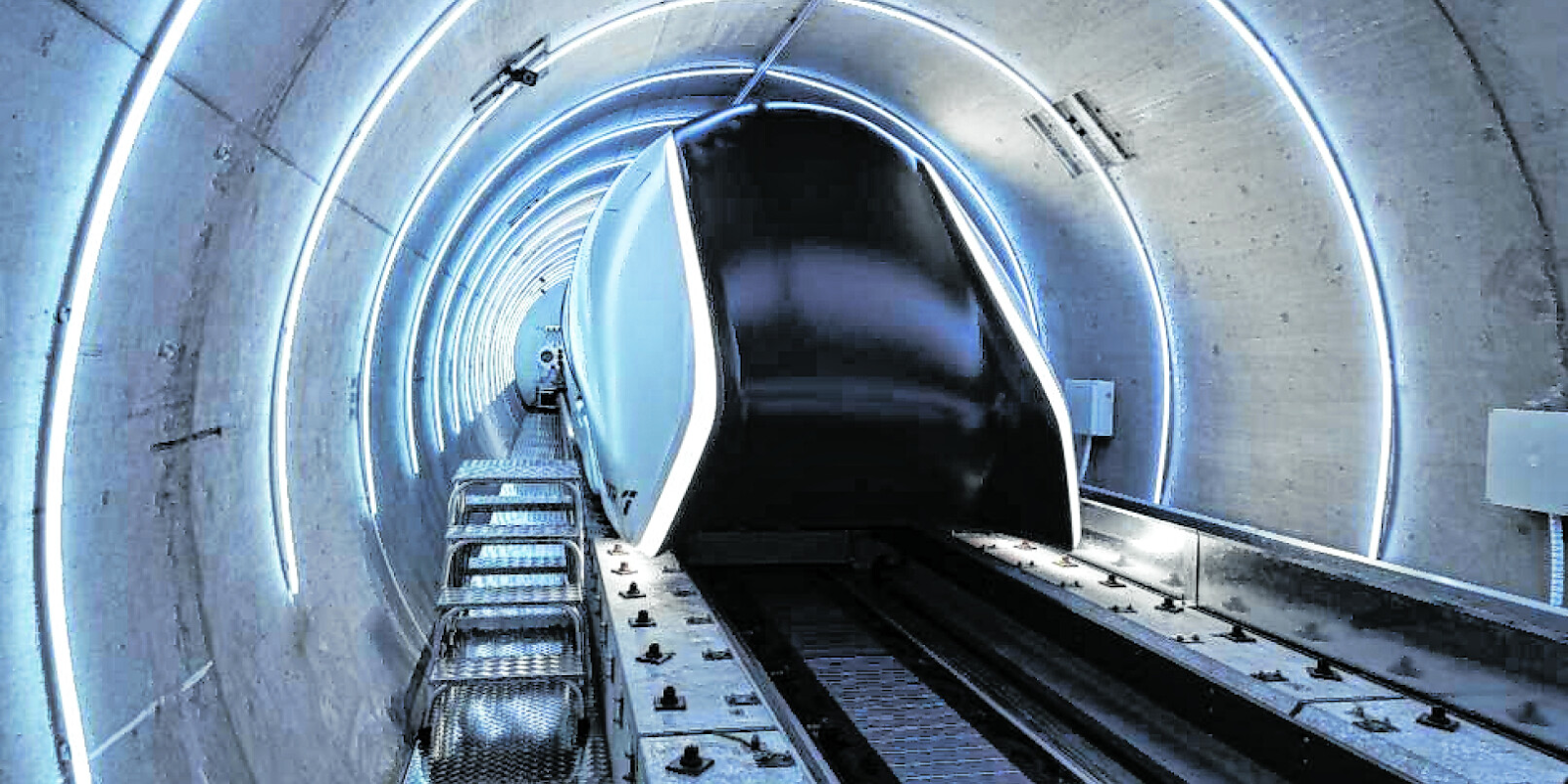
Hyperloop technology is based on the principle of minimising physical and aerodynamic resistance to enable faster travel than conventional modes. It consists of a guided transport system where pods or capsules move through partially evacuated tubes, which works on magnetic levitation technology. The system integrates propulsion, tube infrastructure, control systems, and terminal interfaces into a single continuous network. Theoretically, the pods in the Hyperloop System can achieve the speed of about 1,100km/h. These core components include:
1. Tube Infrastructure
The system operates within steel or reinforced concrete tubes which are engineered to maintain low air pressure. By limiting air density, the tubes minimise drag which acts on the moving pod. The alignment of the tube can be elevated, at-grade or underground depending on land conditions, safety requirements, and urban planning needs.
2. Pod or Vehicle Unit
Pods are lightweight vehicles that are especially engineered to operate in low-pressure environments. They incorporate passenger or cargo cabins, levitation systems, linear induction or synchronous motor systems for propulsion, onboard power elements, and braking mechanisms. The aerodynamic design of the pod is essential to minimise residual drag at higher speeds.
3. Levitation and Propulsion Systems
Levitation is typically based on magnetic forces or air bearings that remove mechanical contact between the vehicle and the track. Propulsion is achieved through linear motors or electromagnetic propulsion, with stationary power elements embedded along sections of the tube. The controlled pulses facilitate the acceleration and deceleration of pods.
4. Vacuum and Pressure Control
Maintaining low pressure within the Hyperloop tubes is fundamental to achieving efficient and safe system performance. This process demands careful engineering, continuous surveillance, and reliable infrastructure. The Hyperloop system uses vacuum pumps that are deployed along the corridor to create and sustain the desired low-pressure environment.
Equally important are the monitoring and control units that continuously track pressure levels, detect anomalies, and identify potential leakages. These units form the backbone of system safety, as any pressure imbalance or breach can compromise vehicle stability and overall operational integrity.
Given that a failure in pressure regulation could result in severe consequences, including operational disruptions and safety hazards. Therefore, maintaining low pressure is not merely a technical requirement but a critical safety function that underpins the reliability and viability of the Hyperloop system.
5. Guidance, Control, and Communication Systems
The system requires continuous monitoring and control for speed regulation, emergency response, and network coordination. It utlises advanced signaling technologies, active braking systems, redundant communication networks, and software-based safety layers that are integral for operational integrity.
Global Developments in Hyperloop Technology and the Indian Context
Hyperloop technology is still in its developmental stage, and the hyperloop concept has undergone parallel development streams across academic institutions, technology startups, and government-backed initiatives.
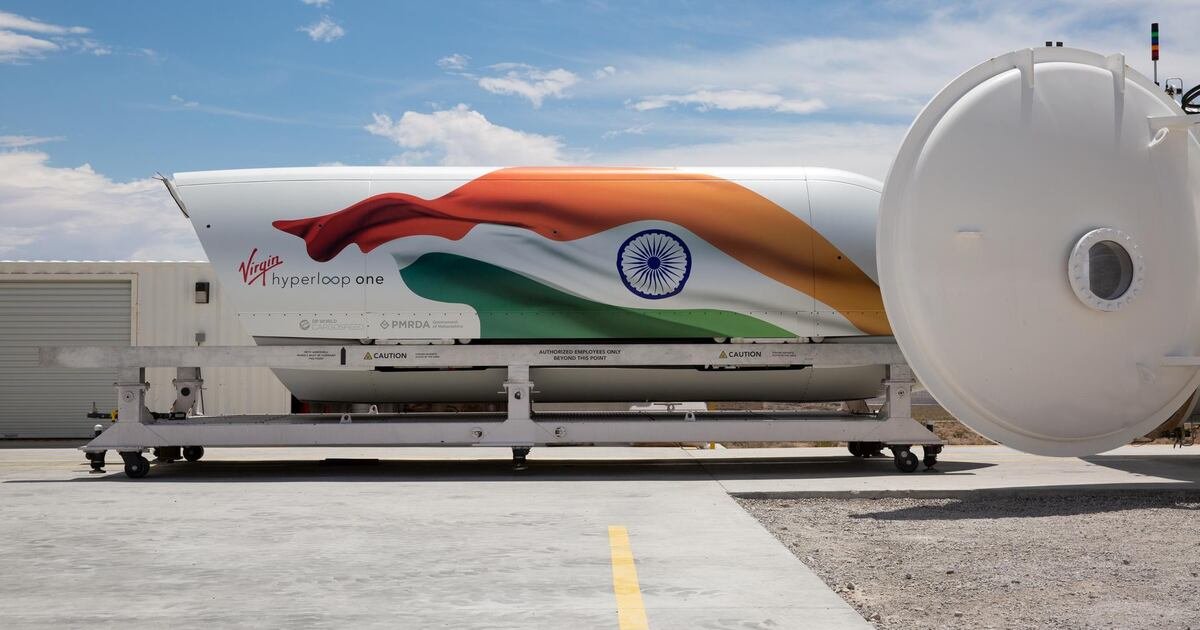
Virgin Hyperloop (formerly Hyperloop One):
Founded in 2014, Virgin Hyperloop emerged as one of the most prominent organisations pursuing Hyperloop development. The company established a dedicated test site in Nevada, USA, where it executed the first full-scale Hyperloop test in May 2017. In a landmark achievement, it conducted the world’s first human passenger trial in November 2020, during which a prototype pod reached a speed of around 160 km/h. While this trial marked an important milestone, the attained speed remained below the projected commercial targets of over 1,000 km/h, which reflects the considerable technological progress still required.
By 2022, Virgin Hyperloop reoriented its strategy toward freight applications rather than passenger transport. This shift was caused by regulatory constraints, financial uncertainties, and the engineering complexities associated with ensuring safe and scalable passenger services.
Globally, early Hyperloop exploration has been led by private companies, academic institutions, and government collaborations. In parallel, regional authorities in the United States, the United Arab Emirates, and European nations have undertaken prefeasibility studies for potential corridors. These assessments typically evaluate aspects such as alignment, rights-of-way, capital investment needs, and regulatory frameworks.
Despite these efforts, Hyperloop technology remains largely at the experimental or demonstration stage worldwide. Today, the core engineering elements continue to evolve, and comprehensive operational validation is yet to be achieved.
Hyperloop in India: Adapting High-Speed Transport to Domestic Conditions
The Indian context introduces unique considerations, including high population density, uneven land availability, multi-modal interdependence, and contrasting weather patterns. These factors require adaptation of global hyperloop technology frameworks to local realities. Therefore, India’s hyperloop development is primarily positioned as an exploratory effort, with feasibility, safety validation, and cost assessment forming the basis for future planning rather than immediate deployment.
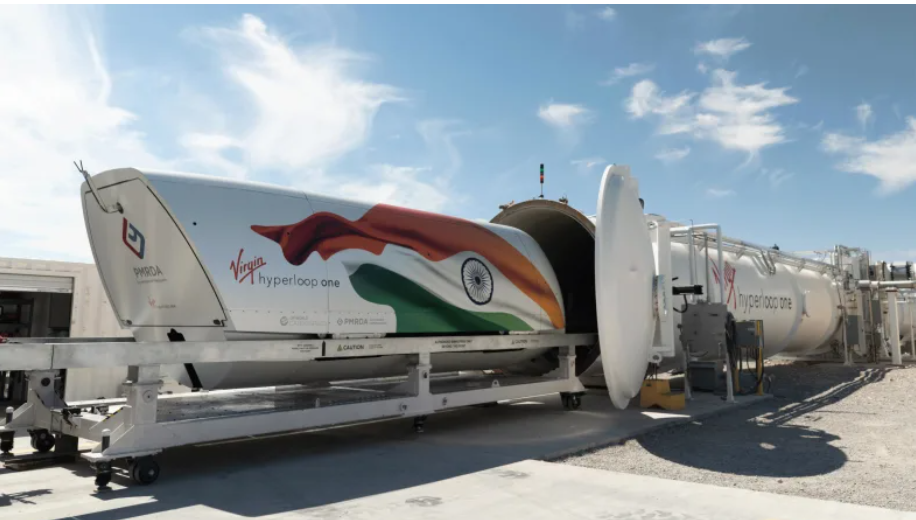
Key Developments and Progress in India
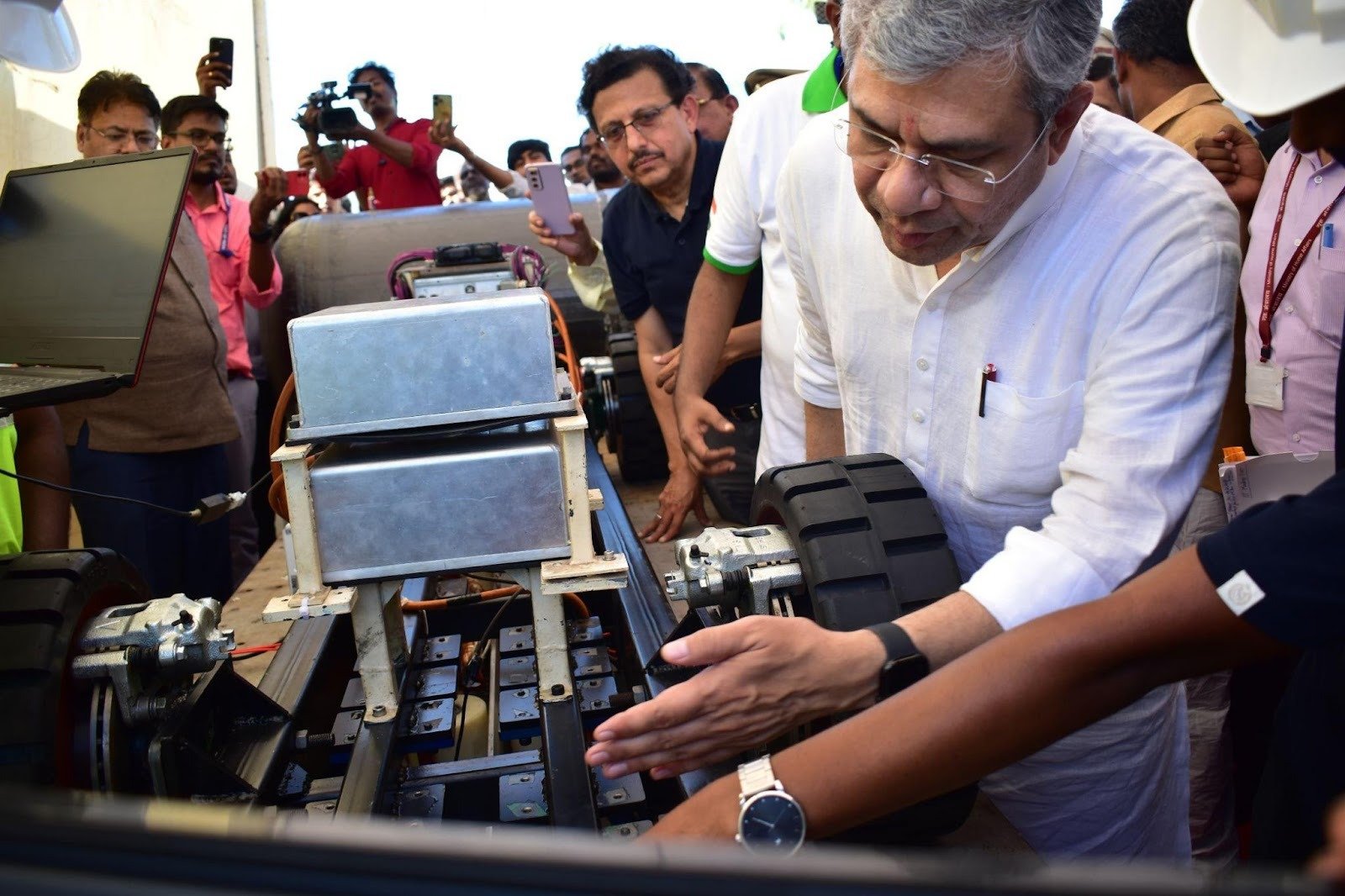
- Asia’s Longest Test Track: Union Minister for Railways, Information and Broadcasting, and Information Technology, Shri Ashwini Vaishnaw, visited the IIT Madras Discovery Campus in March 2025. During this visit, he announced that India features a 410 metre test track at the IIT Madras Discovery Campus. The project was carried out jointly by Indian Railways, L&T Construction, and Avishkar Hyperloop. This facility is recognised as the longest Hyperloop test track in Asia. The track enables controlled experimentation on pod design, propulsion, braking systems, and vacuum operations, which positions India among the early players actively progressing from conceptual studies to testing capabilities within the Hyperloop domain.
- Plans for Commercial Test Track: Following the success of the initial test track, plans are readied for the development of a 40-50 km commercial-grade test segment, which would be the world’s longest, to evaluate commercial viability and safety parameters.
- Hyperloop Corridor Between JNPT and Vadhavan Port: Maharashtra is expected to be among the first regions in the world to test hyperloop technology beyond laboratory conditions, with a proposed high-speed cargo corridor connecting Jawaharlal Nehru Port Trust (JNPT) in Navi Mumbai and the planned Vadhavan Port in Palghar. On 19 August 2025, the Maharashtra government signed an agreement with TuTr Hyperloop Pvt. Ltd., a startup supported by IIT Madras, to develop a Linear Induction Motor (LIM)-based hyperloop mobility system linking the two ports.
- Industry and Academic Collaboration: The project is a consortium effort involving IIT Madras, the deep-tech startup TuTr Hyperloop (incubated at IIT Madras), and Indian Railways.
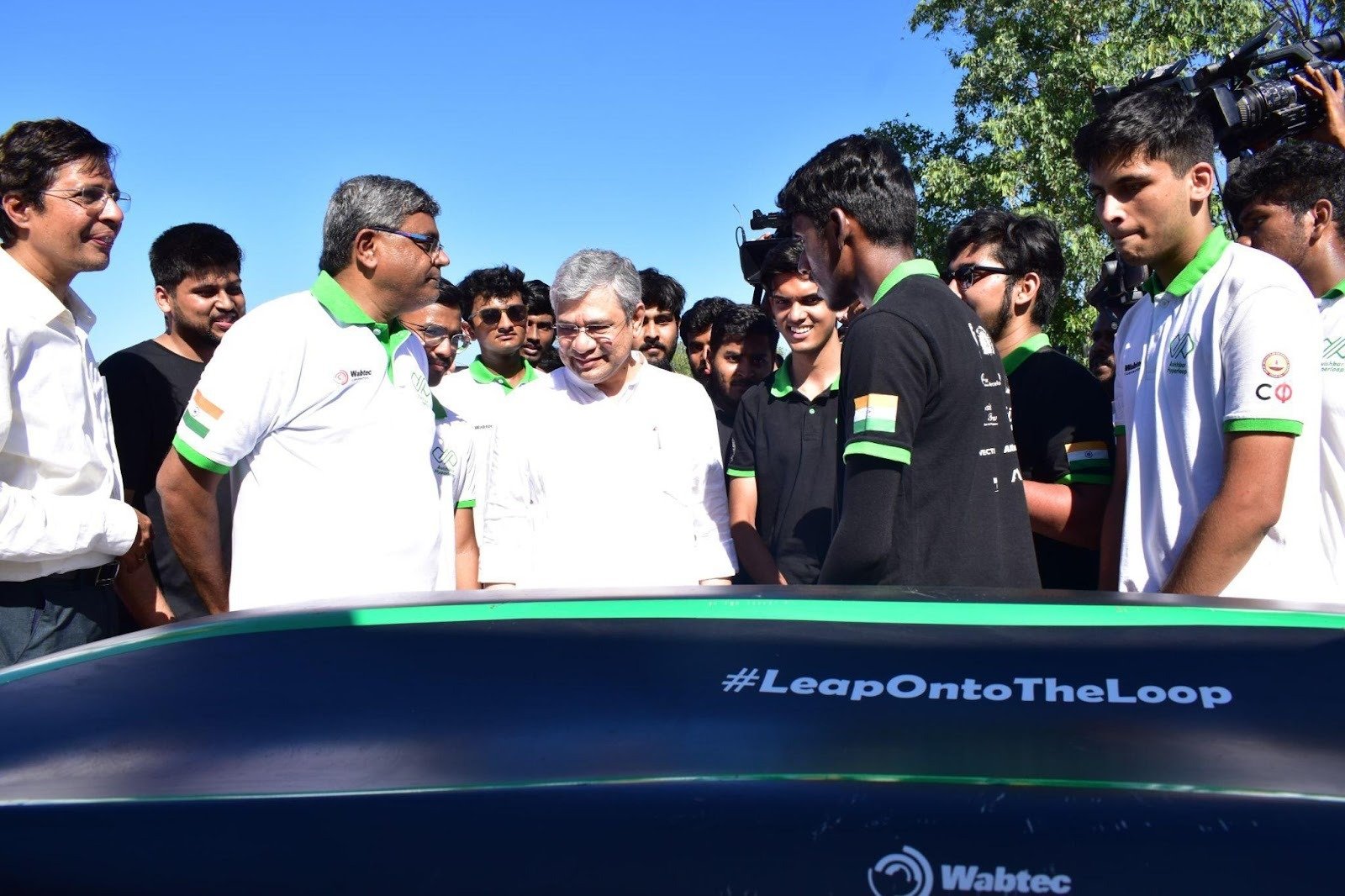
- Indigenous Technology: The Railway Ministry is supporting the Hyperloop project with financial and technical resources. The electronics technology for the system will be developed at the Integral Coach Factory (ICF) in Chennai. According to the Minister, ICF’s skilled teams will be responsible for developing the electronics for the Hyperloop project.
- Global Recognition at European Hyperloop Week 2025: The Avishkar Hyperloop team from IIT Madras has made progress in Hyperloop research and development.At the European Hyperloop Week 2025, the team was ranked first in Asia and 4th worldwide.
During the event, the team presented its 8th prototype, called Hyperloop Pod 8.0. This version represents the most advanced stage of their work so far. Key features include:
- A hybrid propulsion setup that uses a Linear Synchronous Motor (LSM) for acceleration and a Linear Induction Motor (LIM) for steady cruising.
- In-house developed motor controllers and DC-DC converters designed to improve operational reliability and energy efficiency.
Barriers to Implementation of Hyperloop in India
Despite growing interest, the practical deployment of hyperloop systems in India faces several critical challenges, which range from technology, infrastructure, regulation, financial feasibility, and societal acceptance. These constraints influence both short-term experimentation and long-term commercial adoption of Hyperloop technology.
1. Technology Readiness and Reliability
Most Hyperloop technologies have only been tested in laboratories or on short demonstration tracks. These trials help validate basic components only however, large-scale, continuous operations over long distances are yet to be demonstrated. To move forward, the system must be evaluated under real-world conditions, including varying passenger or freight loads, pressure stability, leakage control, and high-speed safety requirements.
In addition, emergency response procedures, evacuation strategies, and failure recovery mechanisms need to be verified. Only after these practical tests establish consistent reliability can major investment decisions be justified. Therefore, proving operational performance is a crucial step before large-scale deployment.
2. Absence of Supply Chain & High Investment Risks
Hyperloop infrastructure requires dedicated tubes, propulsion systems, pressure regulation equipment, and advanced control systems. However, cost estimation for such a system remains highly uncertain because there are very few global reference projects and no established supply chains for key components. As a result, capital requirements are expected to be high, while long-term operating costs are still difficult to predict. This uncertainty makes it challenging for both public and private stakeholders to commit funding, as investment risks remain very high.
3. Land Acquisition and Corridor Alignment
In India, major transport projects such as metro systems and the country’s first high-speed rail corridor have experienced delays due to land acquisition challenges, particularly near urban terminals and densely populated areas. Similar issues are likely to affect Hyperloop development. Hyperloop infrastructure will require coordinated planning with multiple agencies, negotiations for right-of-way, and in some cases, resettlement of affected communities to identify the corridor alignment. These processes can increase project timelines, escalate costs, and introduce implementation risks.
4. Regulatory and Institutional Frameworks
Hyperloop technology does not yet fit into existing transport regulatory frameworks. There are currently no defined standards for safety requirements, pressure management, electromagnetic systems, certification methods, or evacuation procedures. As a result, authorities need to create new guidelines and institutional structures to govern its development. Until such frameworks are in place, project approvals are likely to be slower, and roles and responsibilities among agencies may remain unclear, which will definitely lead to uncertainty in implementation and oversight.
5. Integration with Existing Transport Systems
For Hyperloop to be viable, it must connect effectively with existing transport networks such as metro systems, railway stations, and logistics hubs. The effectiveness of a Hyperloop corridor will depend on factors like terminal layout, passenger transfer time, and how well it can work with other systems. Because Hyperloop technology is structurally and operationally different from conventional transport modes, integrating it into current networks may present complexities. If its integration is not planned early, there is a risk that Hyperloop infrastructure will operate in isolation instead of functioning as a complementary layer within the broader mobility system, which can affect its large-scale adoption.
6. Environmental and Climatic Factors
Hyperloop infrastructure in India will need to perform reliably under diverse environmental conditions. Environmental factors, including temperature fluctuations and seismic activity all influence the design and durability of the system. In such it is imperative to ensure that the components like tube alignment, support structures, and expansion joints must be evaluated and tested for their ability to withstand these stresses. Additionally, maintaining low pressure inside the tubes under changing weather conditions adds to operational complexity, which makes environmental adaptation an important consideration in system planning.
7. Public Acceptance and Risk Perception
Since Hyperloop is a new and unfamiliar technology, public awareness of its safety, reliability, and cost implications is limited. For authorities, it will be imperative to prove that the system can operate safely and consistently to build confidence among passengers. In addition, affordability remains a major factor in the adoption of public transport, especially in India. To facilitate large-scale acceptance of Hyperloop technology, responsible agencies will need to regulate fares in a way that makes the system competitive and appealing compared to existing transport options.
Conclusion
In conclusion, Hyperloop technology opens a new era of mobility due to its potential to operate at speeds exceeding 1,000 km/h. However, the technology remains at an experimental stage globally, meaning its practical deployment in real-world conditions will require extensive research, careful planning, and the establishment of safety standards and an institutional framework.
In India, a 410-meter-long Hyperloop test tube at IIT Madras, Asia’s longest, provides a platform for testing and development. Furthermore, to establish a high-speed cargo corridor connecting Jawaharlal Nehru Port Trust (JNPT) in Navi Mumbai and the planned Vadhavan Port in Palghar, the Maharashtra government signed an agreement with TuTr Hyperloop Pvt. Ltd. in August 2025. This initiative strengthens India’s progress toward making the Hyperloop vision a reality.
Despite these advancements, challenges such as financial viability, investment risk, system reliability, and public acceptance will be critical factors in determining the success of Hyperloop systems. Addressing these challenges systematically will be essential for the technology to move from experimental demonstrations to a fully operational and sustainable transport network in India.
Explore how AI-integrated systems are improving comfort, connectivity, and accessibility for passengers across metro and rail networks at the 6th edition of InnoMetro, India’s leading expo for the Metro & Railway industry which is going to held on 21-22 May 2026 at Bharat Mandapam, New Delhi
Register now: https://innometro.com/visitor-registration