Home Blog Page 853

Mumbai Metro| MMRDA, MMRC mull merging Metro corridors

0

Mumbai: Forget local trains, in the future you may be able to travel from Dahisar to Churchgate directly via Metro. The Mumbai Metropolitan Regional Development Authority (MMRDA) and the Mumbai Metro Rail Corporation (MMRC) are considering integrating (merging) the Colaba-Bandra-SEEPZ Metro-3 corridor and the Dahisar (East) to Andheri (East) Metro-7 corridor by constructing a common passageway for both the lines at the proposed Chhatrapati Shivaji International Airport (CSIA) Metro station.

“This means now if any given commuter is travelling from Dahisar and wants to travel up to Churchgate or Colaba, he or she may be able to take Metro-7 from Dahisar and get down at airport Metro station. The commuter can, after that, using the interchange passageway get into Metro-3 underground corridor between the Colaba-Bandra-SEEPZ, which is being implemented by the MMRC,” said an MMRDA official.

“The initial plan for Metro-7 was up to Andheri (East) a Metro station for Andheri (East) near the Andheri railway station and the Metro-3 was to end at Seepz, but now we are considering to construct a common integrated platform at airport Metro station which means extending the Metro-7 up to Mumbai airport,” added MMRDA official.

This comes after the Delhi Metro Rail Corporation (DMRC), had earlier recommended to MMRDA in a detailed project report that Mumbai is the commercial capital of India with fast growth, especially in the suburbs. It therefore proposed to extend Metro-7 from Andheri (East) up to the Mumbai airport complex which will increase connectivity for commuters travelling from Dahisar to Colaba as the Metro-3 underground corridor constructed by MMRC will pass by the airport. DMRC is the interim consultant for the construction of Metro-7 corridor and the work will be executed by the MMRDA.

Meanwhile, Dilip Kawathkar, joint metropolitan commissioner, MMRDA, said, “We are considering the plan of integrating the Metro-7 and Metro-3 corridors by making the airport Metro station the interchange station.
buy viagra pack online no prescription

It will help to decrease the traffic on roads in the city and also help the people who are currently travelling via local trains on from the western suburbs and travelling to South Mumbai.”

It is interesting to note that the airport Metro station is not the only planned interchange Metro station in the city. The DN Nagar Metro station of the Metro-1 corridor between Versova-Andheri-Ghatkopar (VAG) will act as an interchange Metro station after Metro-2 corridor between Dahisar and DN Nagar and the Metro-2B corridor between DN Nagar-Mankhurd are constructed. The DN Nagar-Mankhurd Metro corridor is a part of the Metro-2 (Dahisar-Charkop—Bandra-Mankhurd), which was earlier planned underground, but was later turned into an elevated corridor. The line was also divided into three parts namely Dahisar-DN Nagar, DN Nagar-BKC (Bandra Kurla Complex) and BKC-Mankhurd.

Advertisement1
InnoMetro_2026

Amaravati Metro| AP Govt sanctions Rs.5 Crore to Amaravati Metro Rail Corporation

0

Amaravati: AP Government on Wednesday sanctioned Rs 5 crore to the Amaravati Metro Rail Corporation. Fast tracking the project, the state government is looking into the fact that the money won’t constraint the implementation of the project.

The government has been periodically releasing funds for the Amaravathi Metro Rail Corporation ever since it has been set up in order to meet the preparatory expenditure.
buy doxycycline online http://padstyle.com/wp-content/languages/new/doxycycline.html no prescription
Amaravathi Metro Rail Corporation set up in August this year had N P Ramakrishna Reddy appointed as the Managing Director for three years and the government had released an amount of Rs 10 crore to Delhi Rail Metro Rail Corporation in September 2015 in order to begin the preparatory action on Amaravati Metro Rail Corporation in Vijayawada. Also, Rs 50 lakh has been accorded for the operational cost of AMRC by the state government.
Advertisement1
InnoMetro_2026

Kochi Metro| KMRL plans to overhaul ferry service rules

0

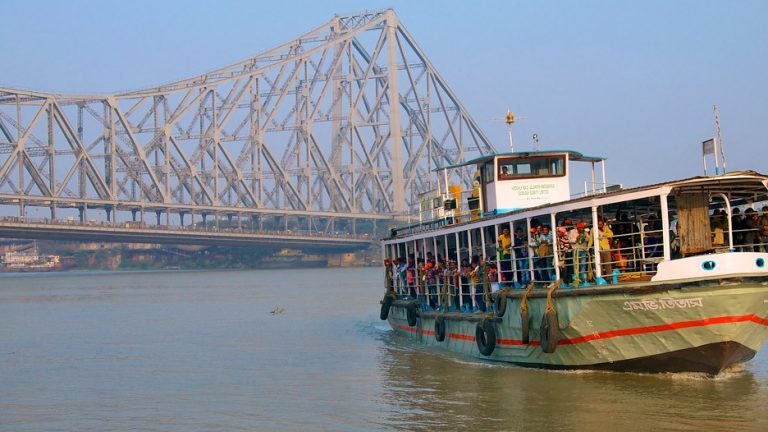
Kochi: Taking cue from the tragedy of ferry MV Bharat which met with an accident near Fort Kochi on August 26 the Kochi Metro Rail Ltd (KMRL) has decided to put in place “protocols for effective regulation of ferry operations” before they start the ambitious water metro project in 2017.

In the initial stage, KMRL will put forward suggestions to unify the rules and regulations for operating boats. The agency will then take up the task of drafting protocols to strengthen existing rules and regulations associated with design, inspec tion and testing of boats, issu ing licence, safety of passengers and crew and a mechanism to settle insurance claims of pas sengers.

“We will give our suggestions and draft protocol to the state government on operat ing the water transport system The government will have to take it up from there,” said KMRL managing director Elias George. He said the Metro agen cy would introduce a fleet of 78 fuel-efficient and air-condi tioned ferries.

Rear admiral (retired) B R Menon, who attended a discus sion on KMRL’s water transport project, said it “would not be possible to successfully operate water transport without having stringent regulations”.

Advertisement1
InnoMetro_2026

Jaipur Metro| No rise in Metro fares for next 3 months

0

Jaipur: In a bid to encourage more commuters to travel by Metro, the Jaipur Metro Rail Corporation (JMRC) has decided not to increase the fares for the next three months.

The decision was taken in the 25th board meeting on Tuesday that fares will be revised in a meeting scheduled on March 31. Earlier, it was proposed to increase the fares every six months, however, after witnessing the low ridership, JMRC is apprehensive of increasing the fares.

A senior official informed, “Jaipur Metro is still the cheapest mode of transportation in terms of fares. The fares would remain same and minimum fare for plying in Metro would be Rs 5 while maximum fare has been fixed at Rs 15 by the Jaipur Metro Rail Corporation (JMRC).
buy propecia online https://gilbertroaddental.com/wp-content/themes/twentyseventeen/inc/en/propecia.html no prescription

Advertisement1
InnoMetro_2026

Govt spent Rs 7,637 crore for metro projects so far this fiscal till November

0

New Delhi: The Urban Development Ministry has shelled out Rs 7,637 crore towards metro rail projects in five states and the national capital in the current financial year till November, Lok Sabha was informed on Tuesday.

Urban Development Minister M Venkaiah Naidu said during the Question Hour that various measures are being taken to improve public transport and parking spaces in various cities.

In the current fiscal till November, the Ministry spent Rs 7,636.98 crore for metro rail projects in the national capital and five states — Tamil Nadu, Karnataka, Maharashtra, Kerala and Gujarat, he said.

For Delhi, the expenditure stood at Rs 4,160.
buy vardenafil online https://blackmenheal.org/wp-content/themes/twentytwentytwo/inc/patterns/en/vardenafil.html no prescription

82 crore and for the project in Chennai, it touched Rs 1,773.59 crore, the Minister said.

He said the Ministry’s expenses towards Bangalore project (Karnataka) stood at Rs 857.97 crore.

For the metro rail projects in Kochi (Kerala) and Ahmedabad (Gujarat), the expenditure till November stood at Rs 599.08 crore and Rs 100 crore, respectively.

In Maharashtra, there are metro rail projects in Mumbai and Nagpur. For Mumbai project, an expenditure of Rs 108.52 crore has been incurred by the Ministry till this November, while for the Nagpur project, the expense stood at Rs 37 crore during the same period.

According to the Minister, metro rail projects are implemented in partnership with the states.

To a query about the fourth phase of Delhi Metro Rail project, Naidu said the proposal is pending with the Delhi government.

Advertisement1
InnoMetro_2026

Lucknow Metro| Cabinet nod to Lucknow metro rail project phase-1A

0
Lucknow-Metro

New Delhi: The union cabinet on Tuesday approved the Lucknow Metro Rail Project Phase-1A, which will cover a length of 22.878 km with 22 stations, an official statement said.

The decision was taken at a cabinet meeting chaired by Prime Minister Narendra Modi.

The cost of the project will be Rs.6,928 crore which will be supported by the central government with Rs.1,300 crore in the form of equity and subordinate debt.

The project, stretching from the Chowdhary Charan Singh Airport to the Munshi Pulia, will be implemented by Lucknow Metro Rail Corporation (LMRC), which will be reconstituted into a 50:50 jointly-owned company of the central government and Uttar Pradesh government.

Out of the total route length, the elevated stretch will be 19.438 km while underground route length will be 3.440 km. It will have 19 elevated and three underground metro stations.

The project will come under the legal framework of the Metro Railways (Construction of Works) Act, 1978, the Metro Railways (Operation and Maintenance) Act, 2002, and the Railways Act, 1989, as amended from time to time.

Lucknow has been experiencing mounting pressure on its transport infrastructure.
buy levitra oral jelly online https://healthcoachmichelle.com/wp-content/themes/twentytwentyone/inc/en/levitra-oral-jelly.html no prescription

The population of Lucknow Metropolitan Area is over 50 lakhs, and the city has 14.24 lakh vehicles, 80 percent of them being two wheelers and 14 percent cars. The city is witnessing an annual growth of 8.35 percent in vehicular population.

Advertisement1
InnoMetro_2026

Patna Metro| Bihar CM Nitish Kumar approves Patna Metro Rail project

2
(For representational purpose only)

Patna: Bihar Chief Minister Nitish Kumar approved the long awaited Patna Metro Rail project’s proposal on Tuesday while directing that it be sent for the central government’s clearance, officials said.

He approved the proposal for the metro rail project at a meeting called to review the performance of the state urban development department here.

Bihar Urban Development Minister Maheshwar Hazari said the Detailed Project Report (DPR) of the Patna Metro Rail project would be presented to the state cabinet for approval soon.

“The Metro project is our priority. The state government is keen to speed up the process to begin construction as soon as possible,” he said.

The Rail India Technical and Economic Service (RITES) last year submitted the DPR on the project to the Bihar government, reducing the project estimates to Rs 14,000 crore from Rs 17,000 crore earlier.

An urban development department official said the Bihar government would now work to declare Patna a metropolis, as it would help speed up the Metro project, which initially would have two routes.

A corporation on the lines of Delhi Metro Rail Corporation would be formed for monitoring the construction of the project in Patna, he added.

Advertisement1
InnoMetro_2026

Kochi Metro| Kochi Metro agency promises water transit corridor in 2017

0
Kochi Metro
Image Representation Only

Kochi: After Metro, Kochi Metro Rail Ltd (KMRL) is now focusing on implementing an integrated water transport system. By January 2017, KMRL plans to link mainland Ernakulam with major jetties on the islands surrounding it and the agency will place boat procurement orders by August 2016. In a workshop held on Saturday, KMRL unveiled the plan for the ‘water Metro’ project that envisages the development of 16 identified routes, connecting 38 jetties across 10 islands covering a 76km network.

KMRL MD Elias George said the project, which would be implemented in two phases, would become fully operational in 2019. The agency intends to introduce a fleet of 78 fast, fuel efficient, air-conditioned ferries. Of the 38 jetties, 18 will be developed as main boat hubs, while the remaining 20 will be minor jetties for transit services. The project will be integrated with Kochi Metro, road and rail network.

“The project is a bigger game changer than Metro. Our intension is to start the project in 2016 and finish it within three years. We expect the German development bank -KfW (funding agency) – to clear the loan of Rs 819 crore by February so that we can begin works in March,” he said. Phase I will see 43 boats being operated on seven routes in 2017, with the remaining routes being completed in phase II with 27 boats.

In the detailed discussion held on boats and docking system, integration of transport system, land, environment and dredging, operation and growth potential; experts and people’s representatives gave suggestions that have to be incorporated in the detailed project report. The discussion panel recommended fibre-reinforced plastic boats (FRP), on board and off board cameras and a reliable helpline system. The panel put the capacity between 50 and 100 for boats, while asking the survey department to look into dredging and related matters.

A survey showed that people are willing to shift to water transport if they are assured of an effective service. The daily crowd is estimated to be 40,316 by 2019, and 53,592 by 2025. “It is better we use FRP boats that have a speed of 10 knots. A diesel-electric hybrid propulsion system is preferred. The encroachments by Chinese fishing nets have to be removed and proper dredging is required at regular intervals,” said Rear Admiral (retd) B R Menon, who headed the panel.

Former mayor KJ Sohan – who headed the panel on integration of transport systems – said parking areas will have to be developed at boat jetties and there should be feeder services. Director of Inland Water Authority of India Unni N said that the agency has completed dredging on a 55km-stretch of the project area as it is part of national waterway 3. KMRL said there should be provisions for cycle rental and cycle tracks at the jetties.

Advertisement1
InnoMetro_2026

Mumbai Metro| Work to begin on Mumbai Metro’s costliest corridor early 2016

0
Mumbai Metro
Mumbai Metro

Mumbai: The Mumbai Metro Rail Corp. Ltd (MMRC), which is building Mumbai Metro’s longest corridor between Colaba in south and Seepz in west, plans to clear all hurdles delaying the project in the next two months.

Work on the 33.5km Colaba-Bandra-Seepz corridor is likely to start early 2016, said MMRC’s managing director Ashwini Bhide. The MMRC is a joint venture between the government of India and the government of Maharashtra formed to execute the Rs.23,136-crore metro corridor between Mumbai’s two business districts Seepz and Bandra Kurla Complex with the city’s southern tip.

Measuring 146km, the Mumbai Metro is one of the shortest such projects in the world. The Shanghai Metro which opened in 1993 is the longest in the world—538km. The world’s oldest metro system, the Tube in London, is 402km long.

However, its relatively smaller specifications do not mean the Mumbai Metro project is easier to execute, Bhide argued. “This corridor is not just the longest of the eight metro lines in Mumbai. It is also an entirely underground corridor,” Bhide said. It is also Mumbai’s costliest stand-alone infrastructure project.

The MMRC, after delays caused by environmental concerns and resettlement issues, is in a position to fast-track the project by February 2016. The MMRC plans to build this corridor by 2022. “This is the deadline the state government has set and we are very confident of meeting it,” Bhide said.

The Mumbai Metro plan proposes to construct eight corridors in Mumbai and another line connecting Mumbai with Thane. The first line connecting Versova-Andheri-Ghatkopar is already operational. The plan is being implemented in three phases and the Colaba-Bandra-Seepz corridor is part of phase one. The MMRC has further split the corridor in eight different packages, each involving a track of 3-4km. It has received about 31 bids from eight consortia to construct different packages. Of the estimated total cost of Rs.23,136 crore, MMRC has contracted 57.2% (Rs.13,235 crore) from the Japan International Cooperation Agency, while the rest will come from various stakeholders in the form of equity.

Two main problems have confronted the project so far.

The first is the construction of a Metro car shed first proposed near Aarey Colony in Goregaon where the city’s western periphery meets the Sanjay Gandhi National Park. Environmentalists and citizens opposed this plan since the green patch in Aarey Colony is one the very few such open spaces in Mumbai and the car shed plan over 30 hectares involved cutting nearly 2,300 trees.

Chief minister Devendra Fadnavis formed a six-member committee under Mumbai metropolitan commissioner U.P.S. Madan with representatives from the Nagpur-based National Environmental Engineering Research Institute (NEERI) and IIT Mumbai as members to propose alternative sites.

This committee came up with six options, of which the state government and MMRC chose the land in Kanjur. “It is a government land but there are a few private claimants who have contested it through litigations. We hope to get a clear claim over this land soon,” Bhide said.

The six-member committee also suggested an alternative plan for the car shed in case the MMRC does not get the Kanjur land in two to three months. The committee has proposed a smaller piece of land—10 hectares—in Aarey itself, but a double-decker car shed would cost an additionalRs.750 crore.

“This is not the option the committee and even the state government would ideally prefer since the cost involved is quite high. Ideally we are in favour of a smaller shed at Aarey and the main shed at Kanjur since the Kanjur land is one contiguous piece of land which has a more clear government title,” a committee member said. As per this plan, the Kanjur car shed will have around 25 stabling lines and the smaller shed at Aarey will have 16. These two car sheds have been proposed to cater to all the metro cars under the Mumbai metro project and so are critical to the entire plan.

The second concern confronting the Colaba-Seepz corridor has been the resettlement of 1,780 hutments and 709 families which will be affected by the project along the 33.5km track. The Shiv Sena has opposed what it alleged as the planned “demolition” of 28 buildings in Girgaon and Kalbadevi. “We are not demolishing these buildings. We have in fact agreed to rehabilitate people living in these buildings in the same area and a consultant has been appointed to propose a holistic resettlement plan,” Bhide said, adding that the MMRC was confident of finding a solution acceptable to all stakeholders.

Advertisement1
InnoMetro_2026

Lucknow Metro| LMRC MD Kumar Keshav wins Shaan-E-Lucknow Award

0

Lucknow: Shri Kumar Keshav, Managing Director, Lucknow Metro Rail Corporation (LMRC), was today bestowed with the Shaan-E-Lucknow award by the organisers of the Lucknow Book Fair.
buy forzest online https://www.mydentalplace.com/wp-content/themes/twentytwelve/inc/en/forzest.html no prescription

Shri Keshav, received this prestigious award in the presence of Shri Raj Shekhar, District Magistrate, Lucknow and other distinguished guests. On the occasion, a special postal envelope cover bearing the logo, symbol and mnemonic of Lucknow Metro along with the symbol of Lucknow Book Fair was also released to commemorate the event.

This a unique feat for the team of Lucknow Metro Rail Corporation (LMRC) under the leadership of Shri Kumar Keshav, Managing Director, as the good works done so far is being recognised in such a memorable and historic way. It a special and momentous occasion for the whole team as their efforts are being reflected in public domain through such award and recognition.

Speaking at the occasion, the Managing Director said “Such an award and recognition further inspires us to work harder to achieve new feats in Metro construction so as to accomplish the dream project of the Hon’ble Chief Minister Shri Akhilesh Yadav and the people of Lucknow in the shortest possible time. Lucknow Metro will add a new feather to the glorious history of Lucknow.”

“The Indian Postal department’s association with Lucknow Metro is a very unique and special recognition to LMRC. No other Metro has achieved such a recognition so far”, he added.

All system contracts have also been awarded by LMRC in a very fast manner and the system contracts are in process. The detailed designs of these systems are in process and these works will also commence shortly for the overall completion for commissioning of trial runs by December, 2016 as per the set target.

The Lucknow Metro has already achieved the distinction of being the fastest Metro project execution ever been undertaken in the country. So far, almost 56 per cent of the civil works of the project has been completed and LMRC aims to complete the civil infrastructure work by October, 2016 in order to commission the trial runs of Metro train by December, 2016.

Advertisement1
InnoMetro_2026