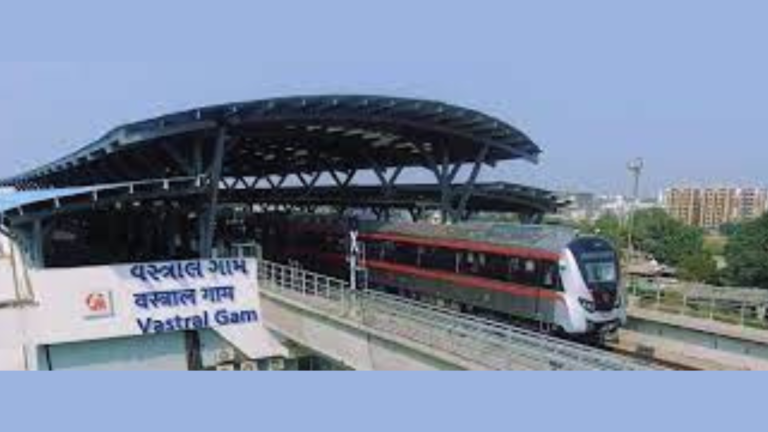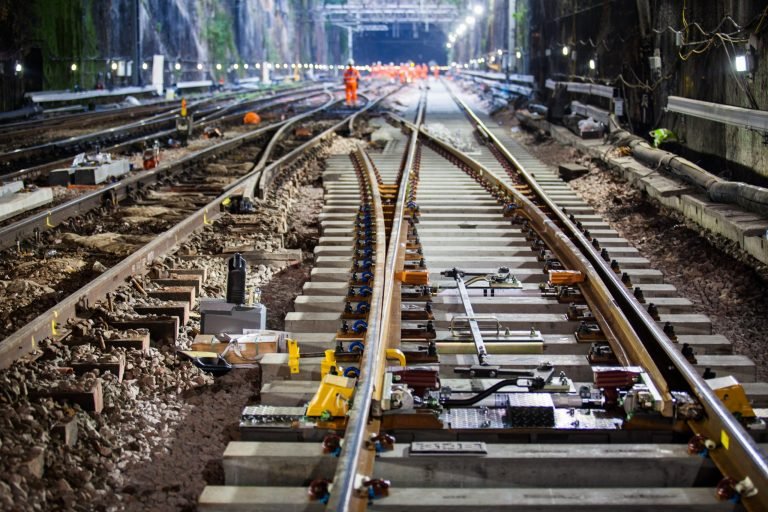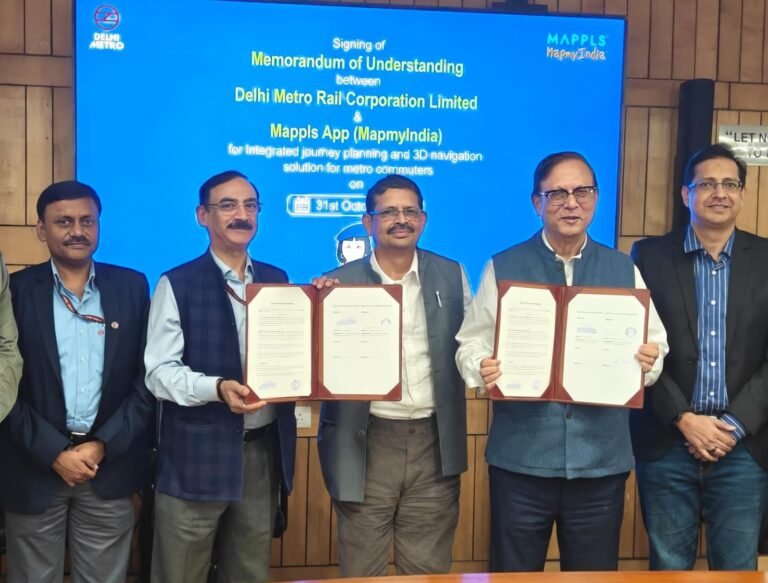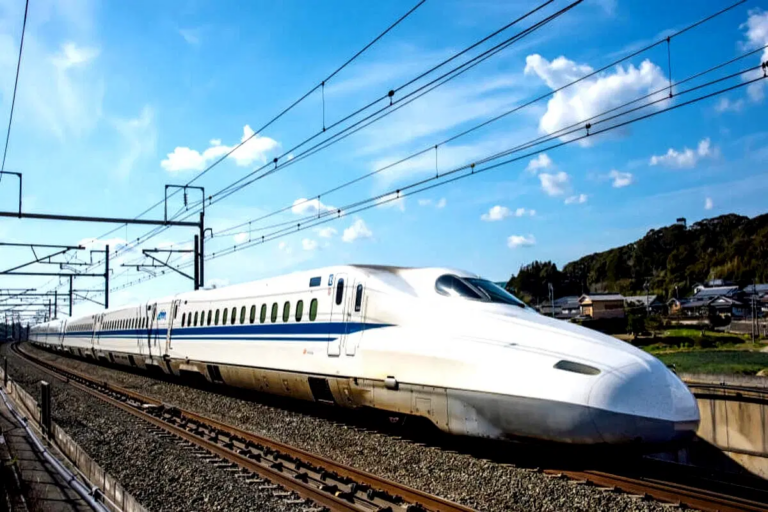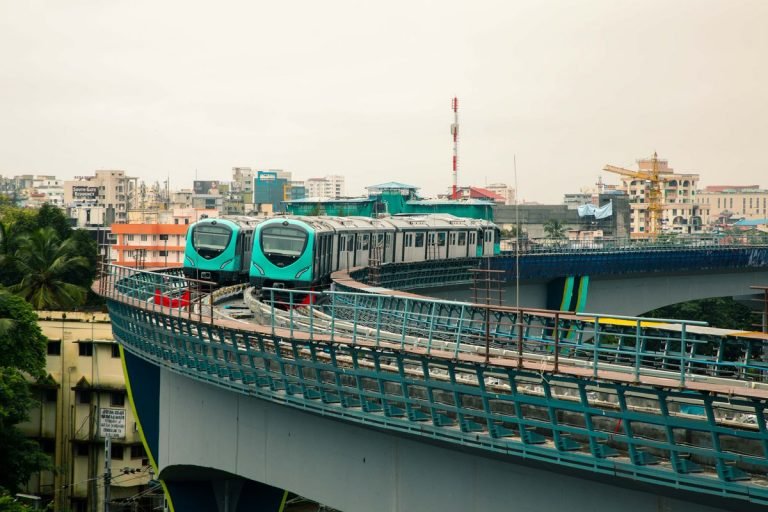
New Delhi: Prime Minister Narendra Modi has flagged-off the Delhi-Faridabad Metro Line that would allow hassle free travel for around two lakh daily commuters between the national capital and the industrial hub in Haryana.
The extension of the Delhi Metro connects Badarpur to Escorts Mujesar in Faridabad.
The total cost of the project from Badarpur to Escorts Mujesar is nearly Rs. 2,500 crore. Out of this, Rs. 1,557 crore was borne by the Haryana Government, the Centre contributed Rs. 537 crore, while the Delhi Metro provided Rs. 400 crore.
All these are elevated and located on either side of the Delhi-Mathura Road (NH-2).
“The nine-station metro corridor which was 95 per cent indigenously built will provide people a safe, affordable, quick, comfortable, reliable, environment-friendly and sustainable transport facility,” a Haryana government spokesperson said.
Haryana Chief Minister ML Khattar, addressing a press conference on Saturday, had thanked the Prime Minister for “gifting” the Metro service which would take the city to “another level of progress” with better connectivity with other NCR towns.
He had also said that the Prime Minister would be announcing the go-ahead for connecting Gurgaon with Faridabad by Metro.
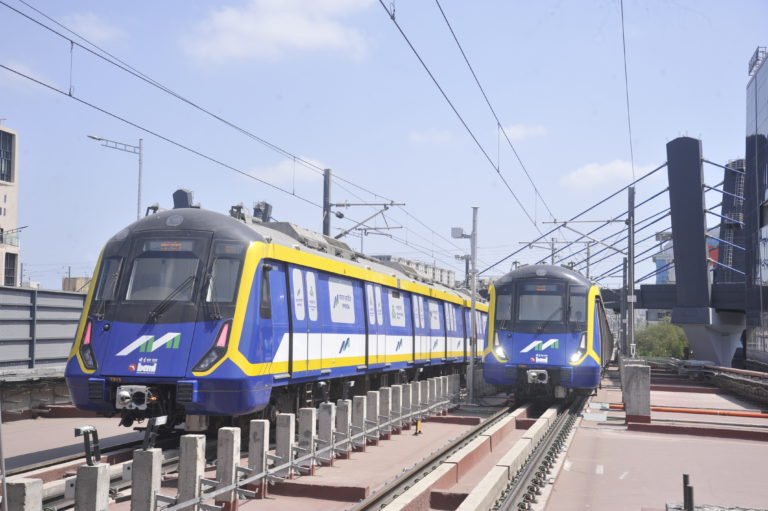
Madhya Pradesh Chief Minister Shri Mohan Yadav flagged off BEML’s 2,100th metro coach from its rail coach manufacturing facility in Bengaluru. This advancement highlights India’s growing expertise in providing modern rail technologies.
Chief Minister Shri Mohan Yadav mentioned, “The launch of the 2100th metro coach manufactured by BEML symbolises India’s advanced manufacturing capabilities, engineering excellence, and the growing influence of indigenous technology,”.
About the 2,100th Metro Coach By BEML
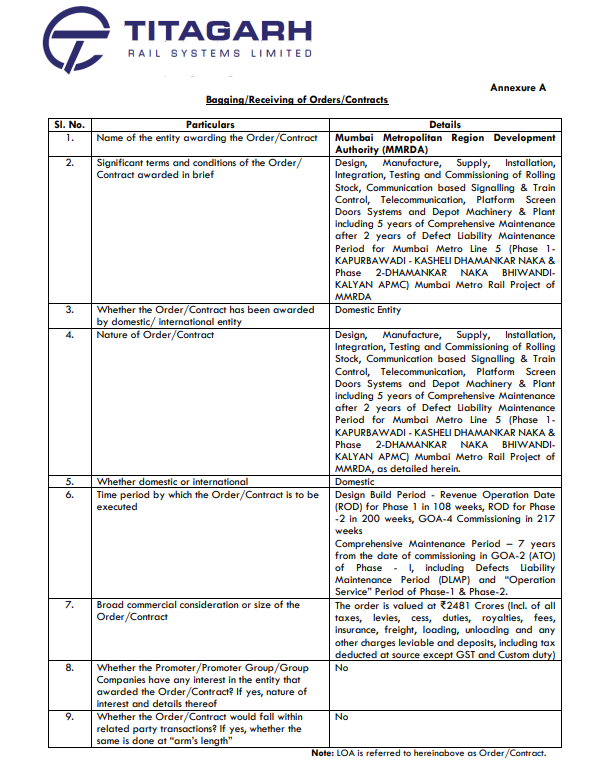
The 2,100th coach manufactured by BEML is built for the Mumbai Metropolitan Region Development Authority (MMRDA) via the Delhi Metro Rail Corporation (DMRC).
This coach features Grade of Automation Level 4 (GoA4) specifications, which enable it to support fully unattended operations.
This coach is also equipped with an Onboard Condition Monitoring System (OCMS), implemented for the first time in India. The OCMS enables real-time automatic diagnostics of key components, including rail tracks, overhead electrification (OHE), and other onboard systems, to support condition-based maintenance and improve system reliability.
Land Allotment Letter Received By BEML
Additionally, Chief Minister Mohan Yadav also handed over the official land allotment letter to BEML chairman and MD Shantanu Roy for setting up a facility for the manufacturing of rolling stocks in Umeria, Raisen district.
Recently, the Madhya Pradesh Government approved the allotment of 60.063 hectares (approximately 148 acres) of land to BEML in Umeria, Raisen district.
Visit InnoMetro 5th Edition: India’s Leading Expo for the Rail Transportation Industry and Experience the Latest Technologies & Innovations in Rail Safety, Infra, Signalling, and AI.
Mumbai (Metro Rail News): The Mumbai Metro Project progressed as the Mumbai Metropolitan Region Development Authority (MMRDA) commenced a trial run on Phase 1 of Mumbai Metro Line 9, marking the first-ever metro line in the Thane district.
Thane District Gets Its First Metro: Trial Run of Metro Line-9 Phase-1 Commences
Metro Line-9, Connecting Mira Bhayander to Western Suburbs, eastern Suburb and International airport
In a historic development for the Mumbai Metropolitan Region (MMR), the trial run of Phase-1 of… pic.twitter.com/Yp19NBF8JZ
The Hon’ble Chief Minister, Shri. Devendra Fadnavis, the Hon’ble Deputy Chief Minister & MMRDA Chairman, Shri Eknath Shinde, and the Hon’ble Deputy Chief Minister, Shri Ajit Pawar, inaugurated the trial run on Mumbai Metro Line 9.
About the Trial Run
The trials were conducted on the 4.4-km stretch from Dahisar (East) to Kashigaon, comprising four stations. This section was energised on 10 May.
Stations
Dahisar
Pandurang Wadi
Miragaon
Kashigaon
The under-construction Mumbai Metro Line 9 is the extension of the Mumbai Metro Red Line (Line 7). The Line 9 spans 11.38 km from Dahisar East and Mira Bhayandar through 7 stations.
Further Information
Hon’ble Chief Minister, Shri. Devendra Fadnavis, Hon’ble Deputy Chief Minister & MMRDA Chairman, Shri Eknath Shinde, and Hon’ble Deputy Chief Minister Shri Ajit Pawar, also carried out a technical inspection of the same section.
Visit InnoMetro 5th Edition: India’s Leading Expo for the Rail Transportation Industry and Experience the Latest Technologies & Innovations in Rail Safety, Infra, Signalling, and AI.
New Delhi( Metro Rail News): We are thrilled to welcome Balaji Railroad Road Systems Pvt. Ltd. (BARSYL) as the Branding Partner for the 5th edition of InnoMetro, a globally recognized exhibition and conference dedicated to shaping the future of rail transport.
With about 40 years of deep-rooted expertise in railway consulting, BARSYL has earned its place as a leading global engineering and design consulting firm. Having successfully delivered 1000+ projects across 19+ countries; the company stands as a trusted ally in transportation infrastructure development worldwide.
Pioneering Partnerships in India
BARSYL has collaborated with industry giants, including RVNL, CMRL,NCRTC, IRCON, Indian Railways, DFCCIL, DMRC, MMRDA, NTPC, NCML RLDA, MRVC, RITES, AFCONS, SIEMENS, GE, Tata Group, HMRL, GMR, GVK, Reliance, JSW Group, L&T, Dalmia Bharat, Adani, Aditya Birla Group, SBI, Axis Bank, Bank of Baroda, Essar, HPCL, BPCL, Vedanta, Crisil et al.
A Global Footprint in Rail Innovation
Internationally, BARSYL works with prestigious organizations such as Network Rail, Jarvis Rail Ltd., Alstom, MRCB, SMRT, Nacala Logistics Corridor (Mozambique) CORYS, ILFS, MTR, Tanzania Railways Corporation, Bangladesh Railway, Sri Lanka Railways, Bintulu Development Authority (Malaysia).
BARSYL delivers multidisciplinary consulting solutions in Railways ecosystem across Civil Engineering, Structures, Transport Planning, Mechanical Engineering, Signalling & Telecommunications, Track & Bridge Engineering, and Information Technology.
From the USA to Hong Kong, BARSYL has been instrumental in engineering and development of over 12,000+ kms of railway networks, driving innovation, efficiency and global connectivity.Join us in exploring cutting-edge rail transport solutions by BARSYL at InnoMetro 2025, set to take place on 21–22 May 2025 at Bharat Mandapam, Hall No. 4, New Delhi, India.
Visit InnoMetro 5th Edition: India’s Leading Expo for the Rail Transportation Industry and Experience the Latest Technologies & Innovations in Rail Safety, Infra, Signalling, and AI.
Chennai (Metro Rail News): Chennai Metro Phase 2 progressed as Tata Projects Ltd’s TBM Kalvarayan has achieved a breakthrough at Perambur station of Line 3. This line spans 45.813 km between Madhavaram to SIPCOT under TU-01 contract.
Officials from Chennai Metro Rail Limited (CMRL), General Consultant and Tata Projects were present during the breakthrough event.
About TBM Kalvarayan
The TBM Kalvarayan (S 1331) is the 7th TBM deployed by Tata Projects Limited under TU-01 contract.
The TBM Kalvarayan (S 1331) started its construction drive from Ayanavaram Station to Perambur Station and constructed a 867 m up-line tunnel, achieving a breakthrough at Perambur South Shaft.
Contract TU-01 Of Chennai Metro Phase 2
In 2021, Tata Projects Limited bagged Contract TU-01 from Chennai Metro Rail Limited ( CMRL) with a 42-month deadline.
The contract included the construction of twin tunnels for the first 9 km underground section of Corridor 3 from Madhavaram Milk Colony to Kelly’s.
Scope of TU01: Construction of approximately 9 km twin bored tunnels (total = 18 km) from the TBM Retrieval Shaft near Venugopal Nagar (of Line-5) to Kellys Station, and the construction of diaphragm walls, entry/exit structures of Madhavaram Milk Colony Station, Murari Hospital Station, Ayanavaram Station and Purasaiwakkam High Road Station, including launching and retrieval shafts at the above stations.
So far, 11 breakthroughs have been achieved in Phase 2 of Chennai Metro.
Visit InnoMetro 5th Edition: India’s Leading Expo for the Rail Transportation Industry and Experience the Latest Technologies & Innovations in Rail Safety, Infra, Signalling, and AI.
The Mumbai-Ahmedabad Bullet Train Project is progressing at a rapid pace near Vadodara, with the Track Slab Laying Car actively placing precast track slabs along the alignment.
Once this phase is completed, the Cement Asphalt Mortar (CAM) Injection Car will follow, injecting cement asphalt mortar between the reinforced concrete (RC) track bed and the track slabs.
Using the advanced Track Slab Laying Car, precast track slabs are being installed with high precision to ensure stability and long-term durability of the track structure, which is essential for high-speed operations.
About the Mumbai-Ahmedabad Bullet Train Project
Mumbai-Ahmedabad High-Speed Corridor (MAHSR) is an under-construction high-speed rail line spanning 508 km ( 348 km in Gujarat, 04 Km in DNH & 156 km in Maharashtra) between Mumbai and Ahmedabad via 12 stations.
Out of 12 stations planned for the Mumbai-Ahmedabad High-Speed Corridor (MAHSR), 8 stations are located in Gujarat, while the remaining 4 stations are located in Maharashtra.
Latest Update on Mumbai-Ahmedabad Bullet Train Project
In April 2025, NHSRCL launched the 7th Open Web Girder (OWG) bridge spanning 70 meters over two Dedicated Freight Corridor (DFC) tracks located near Vadodara, Gujarat. This was the 7th steel bridge out of 28 steel bridges planned for the Mumbai-Ahmedabad Bullet Train corridor.
Visit InnoMetro 5th Edition: India’s Leading Expo for the Rail Transportation Industry and Experience the Latest Technologies & Innovations in Rail Safety, Infra, Signalling, and AI.
Mumbai (Metro Rail News): The Mumbai Metropolitan Region Development Authority (MMRDA) is gearing up to conduct trial run on Phase 1 of Mumbai Metro Line 9.
About the Trial Run On Mumbai Metro Line 9
The trials will be conducted on the 4.9-km stretch between Dahisar (East) and Kashigaon, which includes four stations. This section was energised on 10 May.
Stations
Dahisar
Pandurang Wadi
Miragaon
Kashigaon
About Line 9 of the Mumbai Metro
Line 9 of the Mumbai Metro is the extension of Line 7 (Red Line ). The under-construction Line 9 spans 11.38 km between Dahisar East and Mira Bhayandar through 7 stations. As per an official’s statement, “96.7 per cent of the work on the entire corridor is complete.”
Latest Update about Mumbai Metro
In April 2025, MMRDA initiated trial runs on the Mandale-Mankhurd stretch of Mumbai Metro Line 2B. The trials are underway on a 5.3 km stretch between Diamond Garden and Mandale, featuring 5 stations.
Visit InnoMetro 5th Edition: India’s Leading Expo for the Rail Transportation Industry and Experience the Latest Technologies & Innovations in Rail Safety, Infra, Signalling, and AI.
The Madhya Pradesh Government has approved the allotment of 60.063 hectares (approximately 148 acres) of land to Bharat Earth Movers Limited (BEML) in Umeria, Raisen district.
The land allotted to BEML will be used for setting up a facility for the manufacturing of rolling stocks and coaches for the Railways and Metro projects.
Recent Rolling Stock Contract Awarded to BEML
In April 2025, Bangalore Metro Rail Corporation Limited (BMRCL) awarded BEML an additional rolling stock contract worth ₹405 crore.
The contract included the supply of 7 additional metro trains consisting of 42 coaches in total for the Reach 6 of the Bangalore Metro Rail Project Phase 2.
Further Information
The Chhattisgarh cabinet has also given the green light for the allocation of 100 acres of land in the Janjgir-Champa district to BEML at a nominal rate of Re. 1 per acre.
This land will be used to set up a manufacturing plant for Heavy earth-moving equipment in the state.
Visit InnoMetro 5th Edition: India’s Leading Expo for the Rail Transportation Industry and Experience the Latest Technologies & Innovations in Rail Safety, Infra, Signalling, and AI.
Metro systems play a crucial role in meeting the transportation needs of rapidly urbanising cities. To improve efficiency and passenger convenience, operators are adopting technological solutions. One such development is the Automatic Fare Collection (AFC) system, which automates the payment process, facilitates cashless transactions and helps to streamline transit operations.
The AFC system eliminates the need for cash handling and manual ticketing, which saves time for passengers and reduces operational costs for transit authorities.
Moreover, AFC systems furnish valuable data and insights that help improve transit planning and management. The metro operators can gain a deeper understanding of travel patterns, peak hours, and popular routes from the data collected by AFCs. This information can further assist operators to optimise service schedules, allocate resources efficiently, and identify areas for improvement
In an AFC system, passengers can use smart cards, mobile devices, and contactless bank cards to complete their journeys faster and more efficiently.
The global AFC market is estimated at $11.6 billion in 2024 and is expected to grow to $45.1 billion by 2034
Key Components of an Automatic Fare Collection System
Automatic Fare Collection (AFC) systems rely on a network of interconnected components that work together to facilitate fare transactions. The key components of an AFC system include:
Fare Media: The term “fare media” refers to the methods employed by passengers to remit payment for their transportation services. Within an Automatic Fare Collection (AFC) system, the predominant fare media options include both open-loop and closed-loop solutions:
Contactless Smart Cards: Smartcards enable passengers to pre-load monetary value, which facilitates tap-in and tap-out transactions at the commencement and conclusion of their journeys. These prepaid smart cards use RFID technology and are widely adopted in modern metro systems.
Mobile Ticketing & QR Codes: Contemporary automated fare collection (AFC) systems now facilitate ticketing through mobile applications that generate QR codes. Additionally, the implementation of contactless EMV cards enables passengers to complete their travels without the need to pre-load funds onto specifically designed transport cards.
Magnetic Stripe Cards: Older AFC systems used magnetic stripe cards that required swiping through a reader. These cards are primarily used in the New York and Paris Metro Systems.
Validation Devices: Validation devices ensure that only authorised passengers enter & exit the transit system.
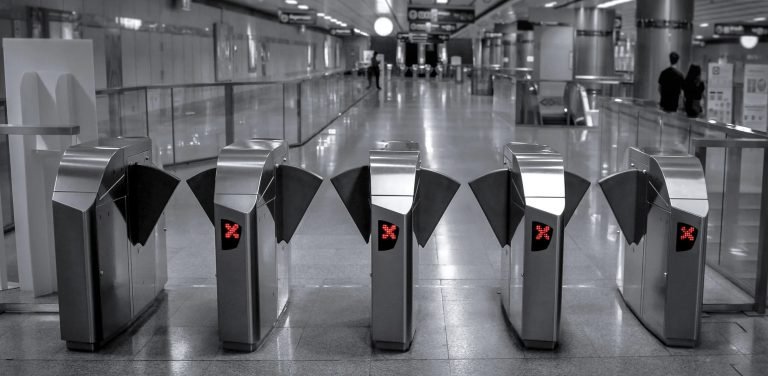
Turnstiles & Automated Gates
These are physical barriers installed at metro stations to validate tickets before allowing entry.
They use RFID, QR, or NFC readers to authenticate fare media.
Some metro systems are testing biometric authentication for seamless travel.
Example:China and Japan are experimenting with facial recognition-based entry systems.
Transaction Processing & Back-End System: The central processing system serves as the core element of any Automatic Fare Collection (AFC) system. It is tasked with performing fare calculations, processing transactions, and managing data from fare validation devices. The integration of these functions is essential for ensuring the efficient and secure operation of the entire system.
Interoperability & Integration: Interoperability allows a single payment method to work across different transport modes.
National Common Mobility Card (NCMC)
Introduced by the Government of India to enable seamless travel across metros, buses, suburban rail, and even toll plazas.
Multi-Modal Integration: This ensures that AFC systems are linked across various transport networks.
Open Loop Payment Systems: This allows passengers to pay using regular bank-issued debit/credit cards instead of metro-specific smart cards.
Example: London’s TfL (Transport for London) allows contactless payments with Visa, Mastercard, and Apple Pay
Benefits of Automated Fare Collection System
Improved Efficiency: One of the primary advantages of an Automated Fare Collection (AFC) system is its capacity to enhance operational efficiency. It diminshesh the dependence on manual collection methods, these systems effectively minimize the potential for human error, and eliminate queues.
Enhanced Passenger Experience: Automated Fare Collection (AFC) systems enhance the overall efficiency of transit services. The availability of contactless payment cards, smartphones, and EMV payment methods simplifies the process for passengers. It eliminates the necessity of purchasing tickets in advance or reloading fare cards at designated locations
Data-Driven Decisions: The AFC systems collect data from passenger journeys reveals which enables metro operators to perform in-depth analyses of their networks. Operators use this data to gain insights into ridership patterns, identify strategies for service optimization, and understand passenger routes.The authorities can utilise this data to effectively plan new routes and improve overall operational effectiveness
Cost Savings: Although Automated Fare Collection (AFC) systems necessitate a significant initial investment, they ultimately contribute to reduced labor costs and lower maintenance expenses compared to traditional fare collection machines. Furthermore, AFC systems are designed with scalability in mind, which enables them to adapt and grow alongside the expansion of the transit network.s
Roadblocks in Implementing Automated Fare Collection Systems
Although there are numerous benefits associated with the implementation of an automatic fare collection solution, there are specific challenges that may arise during its adoption.
High Set-up costs: The high initial setup cost is the most common obstacle to implementing AFC systems. These systems necessitate numerous interdependent components, leading to higher costs. These components include equipment like gates and validators, software updates, and ensuring compatibility between existing infrastructure and various fare media. Nevertheless, these initial costs are frequently mitigated by substantial long-term savings.
Integration with Legacy Systems: Upgrading Automated Fare Collection (AFC) systems presents a challenge, as it necessitates integration with existing fare collection systems. It is imperative to ensure compatibility and facilitate smooth data transfer between the legacy and modern systems.
Data Privacy Concerns: An Automated Fare Collection (AFC) system is responsible for gathering extensive passenger data. Therefore, safeguarding the security and privacy of this information is of paramount importance. That’s why AFC systems require heavy investment in strong cybersecurity measures to protect sensitive data effectively.
Case Study: MTR Hong Kong’s AFC System Upgrade – A Model for Modern Metro Fare Collection
Formed in 1975, MTR Corporation Limited of Hong Kong is among the world’s most efficient metro networks. The organization has 10 operating railway lines and 93 railway stations in Hong Kong. The organization has revealed investment ofover $1.3 billion in its Automatic Fare Collection (AFC) system enhancement. This modernization program seeks to bring in new gates with a credit card payment facility, thus enhancing passenger convenience and transaction speed.
Current AFC System and Need for Upgradation
The current AFC system is mainly dependent on the Octopus card, a contactless smart card accepted throughout Hong Kong’s transport network. The current system was inflexible in the payment method. With this new upgrade, MTR hopes to diversify its fare collection system by adding open-loop payments such as Visa, Mastercard, and mobile wallets, keeping with international transit payment trends
Upgrades in the New System
Advanced Sensors
The new AFC gates are provided with sophisticated sensors and quicker response systems to allow unproblematic access. The inclusion of credit card payments also favors tourists and occasional users who do not carry an Octopus card, thus promoting access to the metro system by more people.
Improved Security
From a safety point of view, the newer AFC system contains end-to-end encryption and real-time validation of transactions in order to prevent secure and hassle-free payment acceptance. With this shift to open-loop, MTR has a better interoperability feature, under which passengers utilize their normal cards instead of holding stored-value ones. This removes the necessity of having large amounts of physical hardware for card issues and re-charge kiosk stations.
Lesson for Indian Metro Systems
The model used by MTR showcases the benefits of a successful Automatic Fare Collection (AFC) system. The experience of MTR Hong Kong in revamping its AFC system is a relevant reference point for Indian metro systems that are increasingly implementing similar technologies.
Integrating Smart Ticketing in Delhi Metro: AFC System Upgrade
Delhi Metro, India’s largest metro system, operates across a 390.14 km network with 288 stations, 12 operational corridors, and 367 trainsets. It serves a daily ridership of 6.7 million passengers. With increasing passenger volumes and the adoption of advanced ticketing methods such as smart cards,QR-based ticketing, and the National Common Mobility Card (NCMC), DMRC decided to upgrade its existing Automatic Fare Collection (AFC) system. This upgrade aims to enhance transaction speed, improve system interoperability, reduce congestion at entry and exit points, and integrate with emerging digital payment technologies.
Need for Upgradation
The Delhi Metro Rail Corporation (DMRC) upgraded the Automatic Fare Collection (AFC) system to accommodate the following:
Interoperability: DMRC uses DESFire-based contactless smart cards (ISO-14443) and contactless smart tokens, which work only within the DMRC network. The upgraded AFC system enables an integrated ticketing solution for seamless travel.
Introduction of Digital Tickets: DMRC has introduced mobile-based QR-Ticketing, allowing passengers to buy tickets online. This reduces reliance on physical ticketing and helps manage queues at stations. To facilitate this transition, DMRC upgraded its AFC system to support secure QR code validation.
Implementation of the National Common Mobility Card (NCMC): The NCMC, based on EMV (Europay, Mastercard, Visa) standards, works under the “One Nation, One Card” initiative. It allows passengers to use a single card for metro, bus, and other transit payments, improving convenience.
Intricacies in Upgrading the Existing AFC System
Technical Complexity: The Delhi Metro Rail Corporation (DMRC) operates Automatic Fare Collection (AFC) equipment from three different Original Equipment Manufacturers (OEMs). Each OEM utilises distinct hardware and software specifications as well as proprietary protocols. This diversity introduced a level of complexity that hindered the uniform integration of new functionalities across all variants.
Operational Continuity: Another key challenge for DMRC was maintaining continuous metro operations while upgrading the AFC system.
Staff Training and Passenger Awareness: An additional task for DMRC was training staff to operate the upgraded system and informing passengers about new features to ensure a smooth transition.
Upgrade Details:
A total of 2,889 Automatic Fare Collection (AFC) gates have undergone upgrades, encompassing 9 distinct variants from 3 different Original Equipment Manufacturers (OEMs).
Given the diverse hardware and software configurations associated with each gate type, the upgrade process necessitated reverse engineering and modifications to accommodate new functionalities, including the National Common Mobility Card (NCMC) and Quick Response (QR) ticketing, in addition to the existing DMRC smart card.
DMRC carried out the upgrade in phases, beginning with two gates at each station to maintain regular operations.
Modernisation of Ticket Vending Systems
The Delhi Metro Rail Corporation (DMRC) has completed the upgrade of 1,170 Ticket Vending Machines (TVMs). This process involved updating both hardware and software components.
The upgraded TVMs now include:
Dispensing of Paper QR Tickets.
Dispensing of Contactless Smart Cards and National Common Mobility Cards (NCMC) (under implementation).
Recharge functionality for Contactless Smart Cards and NCMC (under implementation).
Upgradation of Add Value Machines (AVMs)
DMRC has upgraded 1,130 Add Value Machines (AVMs), which were primarily designed for the online recharge of smart cards.
The upgraded AVMs now offer:
Online recharge for Contactless Smart Cards (CSC) and National Common Mobility Cards (NCMC) using cashless payment modes.
Issuance of Paper QR Tickets through cashless transactions (under development).
Conclusion
The introduction of Automatic Fare Collection (AFC) systems is an important milestone towards the modernization of metro travel, improving efficiency and passenger convenience. Through the incorporation of contactless payment, digital ticketing, and interoperable solutions such as the National Common Mobility Card (NCMC), metro operators can optimize fare collection and enhance commuter convenience. Yet, deploying and upgrading AFC systems is fraught with challenges, such as high capital expenditure, integration with the existing infrastructure, and data security issues.
In the future, ongoing developments in AFC technology will increasingly improve transit performance, assisting metro rail systems in coping with rising ridership and enhancing service delivery.
Agra, a city in the northern Indian state of Uttar Pradesh, is situated along the banks of the Yamuna River. It holds historical significance due to its association with the Mughal era and is known for its architectural heritage. The city is home to several notable monuments, including the Taj Mahal, Agra Fort, and Fatehpur Sikri, which reflect its rich cultural and historical legacy.
Agra is also famous for its renowned Mughal architecture, such as Agra Fort and Fatehpur Sikri, which make it a major tourist hub. The city is recognised for its thriving tourism sector and its production of leather goods and handicrafts. Geographically, Agra is situated approximately 230 kilometres southeast of Delhi and 378 kilometres west of Lucknow, the capital of Uttar Pradesh.
The economy of Agra is predominantly sustained by small-scale industries, commercial enterprises, and tourism. Lately, the city has been taking major infrastructure development initiatives like the Agra Metro Rail Project, which aims at transforming the urban mobility and transportation landscape of the city.
Agra’s Growing Population: The Need for a Metro System
Agra, the 3rd most populous city in Uttar Pradesh, has experienced massive population growth and urban development over the decades. The city’s role as an industrial and tourism hub has significantly contributed to population growth, particularly due to the influx of migrant workers over the years.
However, the increase in population, combined with insufficient infrastructure, gave rise to several challenges for the city. This article highlights the major issues which led to the implementation of a Metro Rail System as a sustainable solution for the city.
Population Growth and Urban Expansion
According to the 2011 Census, the population of Agra was approximately 1.59 million. The average decadal growth rate from 1921 to 2011 was approximately 27.0%, with an average annual growth rate of 2.4%.
The average annual population growth rate increased to 3% during the period from 1991 to 2001, compared to an average annual growth rate of 2.4% during the preceding decade of 1981 to 1991. The decadal population growth of Agra from 1921 to 2011 is shown below:
Decadal Population Growth Trends In Agra City
S. No.
Year
Population
Average Annual Growth Rate (%)
Decadal Growth (%)
1
1921
185,532
–
–
2
1931
229,764
2.2
23.8
3
1941
284,149
2.1
23.7
4
1951
375,665
2.8
32.2
5
1961
508,680
3.1
35.4
6
1971
634,622
2.2
24.8
7
1981
747,318
1.6
17.8
8
1991
948,063
2.4
26.9
9
2001*
1,275,000
3
34.5
10
2011*
1,585,704
2.2
24.4
According to the Detailed Project Report (DPR) prepared for the Agra Metro project, the population within the study area was recorded at 2.37 million in the base year of 2017. The projected population figures for the study area for the horizon years 2017, 2021, 2031, and 2041 are detailed in the following table.
Year
Population (Lakh)
2017
23.7
2021
25.5
2031
31.3
2041
36.2
The data presented above indicates that the rapid population growth in Agra has exerted substantial pressure on the city’s infrastructure. Additionally, the increasing urban expansion also resulted in major traffic congestion on the roads of the city as the number of private vehicles increased in Agra due to insufficient public transportation options.
In response to these challenges, the Agra Metro Rail Project was proposed for the city to enhance the urban mobility of the city and resolve issues like traffic congestion.
Agra Metro Rail Project: From Research to Reality
June 2016: The Detailed Project Report (DPR) for Phase 1 of the Agra Metro was prepared by RITES and submitted to the Uttar Pradesh State Government.
2017: The Uttar Pradesh Metro Rail Corporation (UPMRCL) was assigned as the ‘coordinator’ to bring all stakeholders together and get the project started.
December 2017: RITES revised and prepared the final DPR of the Agra Metro Rail Project.
January2019: The supplementary DPR of the project was prepared.
February 2019: The Central Government’s Cabinet approves the Agra Metro Rail Project.
July 2020: The Supreme Court cleared the project for construction with a list of 11 conditions that have to be followed by UPMRCL.
March 2019: The Hon’ble Prime Minister of India Shri Narendra Modi laid the foundation stone of the Agra Metro Rail Project.
Agra Metro: A New Era of Urban Transit
Overview
Agra Metro is an urban Mass Rapid Transit System (MRTS) spanning 29.40 km comprising 2 corridors and 28 stations. The Agra Metro Rail Project is managed by the Uttar Pradesh Metro Rail Corporation Limited (UPMRC) which is a Special Purpose Vehicle (SPV) created for the management and execution of all Metro projects in Uttar Pradesh.
Currently, the 5.2 km priority corridor of Phase 1 is operational which was inaugurated by Hon’ble Prime Minister of India Shri Narendra Modi in March 2024. The entire Phase 1 of the Agra Metro project is expected to be completed in 2026.
Key Specification
Speed and Track
Top Speed: 80 kmphAverage Speed: 34 kmphTrack Gauge: Standard Gauge – 1435 mm
Electrification
750 V DC Third Rail
Signalling
Communications-Based Train Control (CBTC)
Estimated Ridership
7.36 lakh/day (2031)
Funding Mechanism
Estimated cost of the project:Rs. 8,379.62Cr
The Agra Metro Rail project will be financed partly by the Government of India and the Govt of Uttar Pradesh on an equal equity basis and a loan from the European Investment Bank ( EIB).
Loan from EIB
In December 2021, an approx Rs. 4860 Crore ( 450 million Euro) loan from the European Investment Bank was approved for the Agra Metro Rail Project.
Contractor’s List
Contract
Contract Details
DDC: Detailed Design Consultant for Agra Metro Line-2
AGCC-01: construction of 3 stations between Taj East Gate and Taj Mahal Ramp and 3 km viaduct.
Sam (India) Builtwell Pvt. Ltd.
AGCC-02: Construction of 7 stations between Khandari Ramp and Taj Mahal Ramp and a 7.9 km Ramp
Afcons – SAM India JV
AGCC-03: Construction of PAC Grounds Depot for Line-1
Lisha Engineers Pvt. Ltd.
AGCC-07: Construction of 14 stations between Agra Cantt. and Kalindi Vihar and a 15.09 km viaduct
Larsen & Toubro (L&T)
KNPAGRS-01: Supply of 201 standard gauge cars (rolling stock) including Train Control & Signalling System
Alstom Transport
AGE-1 & 2: 750 V DC 3rd Rail Traction System, 33kV Cable Network, ASS, TSS and SCADA System
Larsen & Toubro (L&T)
Agra Metro Route Information
Operational:
5.2 Km
Under Construction:
9 Km
Approved:
15.4 km
Phase 1
Line-1: Sikandra – Taj East Gate
Length: 14.25 km
Type: Elevated (6.569 km) and underground (7.681 km)
Depot: PAC Depot (16.3 hectares) – shared with Line-2
Number of Stations: 14
Station Names: Sikandra, Guru Ka Taal, ISBT, Shastri Nagar (future), RBS College, Raja Ki Mandi, St. John’s (Agra University), Medical College, Mankameshwar (Jama Masjid), Agra Fort, Taj Mahal (Purani Mandi), Fatehabad Road, Basai & Taj East Gate
Status: 5.2 km Taj East Gate – Mankameshwar section was inaugurated on March 6, 2024.
Recent Update: TBM Breakthrough Afcon-Sam India Consortium’s TBM S-115 recorded the final breakthrough at Agra College station under Package AGCC-02 of Agra Metro’s Line 1.S115 is a refurbished Terratec Earth Pressure Balance (EPB) machine and Afcons’ fourth TBM. This was TBM S-115’s third and final breakthrough for the Package AGCC-02.
Recent Update: In February 2025, Larsen & Toubro (L&T) made significant progress on the Agra Metro Phase 1 project by pouring concrete for the first set of four U-girders under Package AGCC-07 of Line 2 Additionally, L&T also poured concrete to cast the first pile cap for the same package AGCC-07.
Recent Update on the Agra Metro Rail Project
Cabinet Approval for Land Transfer
In March 2025, the State Finance Minister, Suresh Kumar Khanna announced that the cabinet had sanctioned the free transfer of land from the Horticulture and Food Processing Department to the Housing and Urban Planning Department for the initial corridor of the Agra Metro Rail Project, as managed by the Uttar Pradesh Metro Rail Corporation Limited. This decision was made during a cabinet meeting presided over by Chief Minister Yogi Adityanath.
Minister Khanna indicated that 8,684.68 square meters of land, which was previously allocated to the Horticulture and Food Processing Department, will be leased to the Housing and Urban Planning Department for a duration of 90 years at a token rate of Rs 1. The lease agreement includes provisions for renewal every 30 years.
Furthermore, the cabinet has approved the transfer of 20,753 square meters of land from the Home Department for the second corridor of the Agra Metro Rail Project. This land will similarly be leased for 90 years under identical terms and conditions.
Impacts of the Agra Metro Project
1. Improved Connectivity
Once fully operational, the Agra Metro project will enhance the connectivity in the city by linking the major key tourist destinations with the suburb areas of the city. The extensive metro network will provide residents with a more convenient and reliable mode of public transportation. Furthermore, the metro system will reduce the traffic congestion on the roads of the city by improving intra-city connectivity.
2 Economic Growth
The metro system will increase the economic rate of the city as more businesses and industries will be established near the metro stations. This will furthermore generate more employment in the city hence boosting the local economies.
4. Ridership Level: A Concern for Agra Metro
Although the metro connectivity in the Taj City is strategically planned to increase connectivity and support the city in multifaceted ways, achieving adequate ridership remains a concern for the project.
According to a whitepaper by The Infravision Foundation, metro systems across India are operating far below their projected ridership levels:
Delhi Metro – 47% of projected ridership
Mumbai & Kolkata Metros – 30% of projected ridership
Bengaluru Metro – 6% of projected ridership
A Parliamentary Committee reviewing the Lucknow Metro found that while the project requires 200,000 daily riders to remain financially viable, actual ridership stands at only 85,000.
These figures raise serious concerns about the financial sustainability and optimal utilisation of the Agra Metro Project. Ensuring adequate ridership will be critical for the project’s long-term success.
Conclusion
The Agra Metro project is a key initiative to improve urban mobility in the city. Covering 29.4 km with two corridors, it aims to provide a reliable public transport system, reducing road congestion and travel time. The project is funded by the European Investment Bank and is being executed by UPMRCL, with the priority corridor already in operation.
Once fully operational, the metro is expected to improve public transport accessibility and reduce reliance on private vehicles. Challenges remain in execution and integration with existing transport systems, but the project represents a crucial step toward a better-organized urban transport network for Agra.
West Central Railway’s Bhopal division has achieved a major milestone by implementing a state-of-the-art signal control technology that operates entirely on optical fibre at its Nishatpura yard, effectively replacing the traditional wiring system
Senior Divisional Commercial Manager Saurabh Kataria indicated that this cutting-edge technology has recently been commissioned on two signal posts within the Nishatpura yard.
About the New Signal Technology
The newly deployed system utilises optical fibre cables, which enable faster, more secure, and highly reliable signal transmission in comparison to conventional methods. The fundamental component of this upgrade is the ‘Lamp Output Module’ (LOM), which transmits signal commands directly from the control room to the signal posts via optical fibre.
This innovative approach allows for signal management along the railway track to occur directly through fibre lines rather than through conventional wiring. Importantly, even in the event of a component failure, the signal remains visible to approaching trains.
The system also incorporates an automatic cooling fan that activates as necessary to prevent equipment overheating. In the case of a failure in the primary fibre line, an auxiliary line immediately assumes responsibility, guaranteeing uninterrupted service.
Future Projection
A phased implementation has commenced along the Bhopal-Bina railway section. According to current plans, the entire section is anticipated to be fully upgraded with this new system by June 2026.
Visit InnoMetro 5th Edition: India’s Leading Expo for the Rail Transportation Industry and Experience the Latest Technologies & Innovations in Rail Safety, Infra, Signalling, and AI.