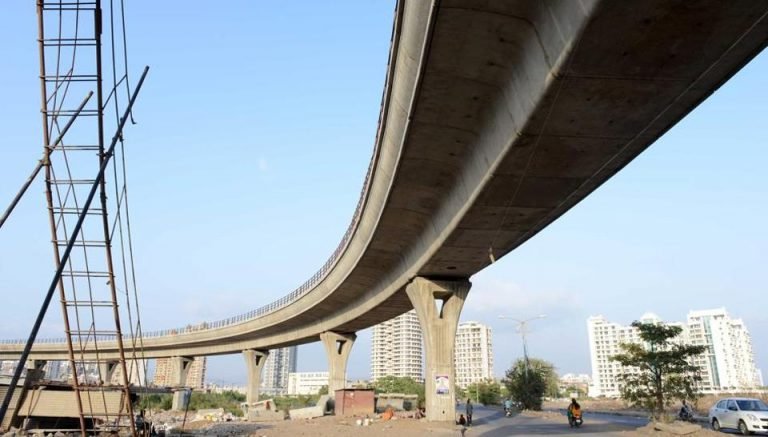
Pune: After introduction of new Metro Rail Policy and reviewing the proposal submitted by the state, the Central government on Wednesday, approved long awaited metro corridor between Shivajinagar and Hinjewadi in Pune on a public private partnership (PPP) basis.
“The nod has been received for the Hinjewadi-Shivajinagar Metro corridor by the Central government and they have approved Rs.1,300 crore as viability gap funding for the same. The Maharashtra government had already cleared this project which will be executed by the PMRDA”, Chief Executive Officer (CEO) of PMRDA Kiran Gitte said.
He further said that the secretary of economic affairs, officers from the urban development department, Niti Aayog , department of finance and other ministries were present at a meeting, along with PMRDA officials, to clear the project. Now PMRDA will be able to start administrative work and the tendering process.
Maharashtra Chief minister Devendra Fadnavis is being seen as the driving force behind the clearance for this Metro line happening on the fast track. Fadnavis wrote a letter to the finance ministry and requested the Centre to give priority to the Hinjewadi-Shivajinagar route, for which the state cabinet gave its nod on January 2 of this year.
This corridor covers 23.3km stretch between Hinjewadi and Shivajinagar and is expected to cost Rs.8,313 crore. Work is already on for the first two lines, between Pimpri-Chinchwad and Swargate, and Vanaz to Ramwadi. This corridor is projected as line-3 of Pune Metro Rail Project.
Bengaluru: In only five years since the market entry in 2013, Frauscher Sensor Technology has achieved strong growth in India. Approximately 100 employees research, develop, produce and sell innovative railway sensor technology systems, successfully addressing the specific challenges of the Indian market with newly designed and adapted products. To meet increasing demands, the staff in Bengaluru recently moved to a new office in the Prestige Khoday Tower, No. 5, Raj Bhavan Road, where visitors will now be welcome in representative premises for discussions and trainings.
State-of-the-art test rigs: The Frauscher India R&D team optimises and develops products for the Indian market in cooperation with the Austrian colleagues. (PC: Frauscher India)
By moving to a new office in Bengaluru, Frauscher India has strengthened its ability to meet the requirements it faces. “The potential that we discovered in India is in fact even greater than we initially thought. Additionally, we have established our product presence in SEA countries, such as Malaysia, Indonesia, Myanmar and Korea”, Alok Sinha, Managing Director of Frauscher India said.
“Within only five years, the location grew from two to approximately 100 employees. We established a dedicated R&D team and increased our order backlog to 40 million euros.” The opening of the new office was celebrated on 15 February 2018. After a meet and greet, which was followed by the official inauguration, all participants gathered at the Shangri-La Hotel Bengaluru for an evening event. There, Michael Thiel, CEO Frauscher Sensor Technology spoke about the visions of Frauscher. Akhilesh Yadav, COO Frauscher Sensor Technology India Private Limited gave a speech on the latest innovations in axle counting, partially produced in Frauscher India’s own production plant in Mysuru. Another office in Delhi provides customers in India with additional support.
Unique products for specific requirements
Frauscher offers wheel detection systems, axle counters and tracking solutions based on inductive sensor technology and Distributed Acoustic Sensing (DAS), making it easier for system integrators and railway operators to obtain the information they need to run, monitor and protect their operational network. The Frauscher axle counting products differ substantially from the systems of other providers. This includes the options to mount sensors to the track without the need for drilling work and without having to install any active electronics near the track. They also allow establishing an automatic failover, i.e. a hot-standby structure, via redundancies. “Another key feature is the innovative diagnostic tool which we provide with our axle counters,” Mr. Sinha said.
“From a strategic point of view, India is extremely important for us. It is also classed as one of the core markets for the Frauscher Tracking Solutions FTS, which are based on DAS”, Michael Thiel said.
FTS offers solutions for fundamental requirements such as continuous train tracking, the monitoring of train and infrastructure components and the detection of unauthorised movements in certain areas. In pilot projects and close cooperation with Indian Railways, Frauscher is developing a system for the ongoing real-time monitoring of components and the transfer of information for the planning of preventive and acute maintenance works.
Prestigious India projects
Frauscher has been chosen as a partner for the “Dedicated Freight Corridor” projects. These major infrastructure initiatives comprise more than 9,000 counting heads for the establishment of a signal technology system on a track length of more than 1,600 km. Another flagship project in India is the cooperation with the Mumbai Railway Vikas Corporation (MRVC) on the Mumbai Urban Transport Project (MUTP). Six million commuters per day, increasing passenger traffic and train frequencies as well as floods and heavy rain made this project particularly challenging. The solution was based on a combination of the Frauscher Axle Counting System ACS2000 and the Wheel Sensor RSR180. The system has proven to work efficiently under extreme conditions: Axle counters have improved the performance of Mumbai’s railway system significantly. Signal incidences due to track vacancy detection have fallen to almost zero.
Strong in the metro sector
Over the course of the past five years, Frauscher India was also able to make a name for itself in the metro sector: “Virtually all projects which are implemented in this segment now rely on our axle counters. There are currently around 1,300 detection points in use on the respective lines”, Mr. Sinha explained.
R&D in and for India
In close cooperation with the specialists in Austria, the R&D team of Frauscher India develops products specifically for the Indian market and optimises existing products to meet local requirements. Examples are the optimisation of the Wheel Sensor RSR180, the further development of the Frauscher SK150 rail claw, the enhancement of the Counting Head Control CHC principle and the Fixing Bracket BK270, which has been specifically developed for the use in India.
Based on this strong fundament, Frauscher eyes further growth: “In the coming years, we aim to reinforce our position as a leader in the fields of axle counting and wheel detection in India and other global railway markets”, Mr. Thiel, said.
New Delhi: Reliance Infrastructure owner of Delhi Airport Metro Express Private Limited (DAMEPL) won its case against the Delhi Metro Rail Corporation (DMRC) in the Delhi High Court on Tuesday.
According to DAMEPL, “The Delhi High Court has upheld the arbitration award of Rs 2,950 crore as compensation along with interest to Delhi Airport Metro Express Private Limited (DAMEPL), a subsidiary of Reliance Infrastructure Limited (RInfra), by a three-member Arbitration Tribunal. Reliance Infrastructure stands to get Rs 5,060 crore from the award, which it would entirely utilise to reduce its consolidated debt. This amount is arbitration award amount plus interest till March 31, 2018.”
Delhi High Court has directed DMRC to deposit Rs 3,502 crore in escrow account within four weeks.
“Now that the Delhi High Court has upheld the award by the arbitration tribunal, we expect the compensation to be paid expeditiously, which we shall utilise to retire the outstanding debt of RInfra and DAMEPL,” Reliance Infrastructure spokesperson said.
In September 2013, the three-member Arbitration Tribunal, was formed out of the DMRC-nominated panel as per the Concession Agreement. It gave its award in May 2017 after hearing the case for almost four years.
The tribunal heard the submissions made by both the parties and after detailed proceedings in 68 hearings, it had issued its final order whereby it had awarded the compensation to DAMEPL.
It is pertinent to mention here that the three-member Arbitration Tribunal had found irregularities in execution of airport line metro project. Its operations were suspended in July 2012 after DAMEPL complained of construction defects in the rail lines built by DMRC.
Delhi Metro built the infrastructure under the supervision of present MD/DMRC, Mangu Singh then Director (Project) for Airport line and DAMEPL brought in the rolling stock and was supposed to run it for 30 years. The project was built on a shared cost of about Rs 6,000 crore.
“The Aam Aadmi Party-led city government was sitting on the project, which is pending for the last three years. We are finding a solution. The solution is where we are not getting support from the Delhi government over the metro projects, we have decided that we will do it ourself. Rail corridors, we will do on our own. If they (Delhi government) are not willing to approve a project or provide funding, we are finding out the solution for it,” Hardeep Singh Puri, Union Minister of housing and urban affairs told media on Monday.
According to union minister, the delay had pushed the cost of Metro Phase IV by Rs12,000 crore, adding that the cost of Delhi-Meerut Rapid Rail Transit project had also gone up by Rs1,000 crore. Meanwhile, an official at the chief minister’s office said the Delhi government had given in-principle approval to DMRC’s phase IV project, but the files were pending with bureaucrats at the finance department.
Puri said the Delhi Metro Rail Corporation have approved a subsidiary company which will provide last-mile connectivity from metro stations.
In the meeting of executive committee of the MMRDA contractors appointed to construct elevated viaduct and stations on two metro corridors.
The works awarded include Rs 10,986 crore worth of contracts on the Mumbai Metro 2B corridor that will connect DN Nagar in the north-west suburb of Andheri with Mandale in the north-east, and Rs 14,549 crore for the north-south Metro-4 corridor which will run between Kasarwadavali in Thane and Wadala.
“By appointing contractors for the entire corridors the committee has only underlined the need of metro corridors for the city and its metropolitan region,” Mumbai Metropolitan Commissioner UPS Madan said.
A Joint Venture consortium of Reliance Infrastructure and ASTALDI was awarded the Rs 540 crore ‘package-8’ on the Metro-4 corridor which consists of Bhakti Park, Wadala TT, Anik Nagar Bus Depot, Suman Nagar, Siddharth Colony and Amar Mahal junction stations.
The same consortium also won the Rs 531-crore ‘package 12’, comprising Kapurbawdi, Manpada, Tikuji-ni-wadi, Dongripada, Vijay Garden and Kasarvadavali stations.
A Joint Venture (JV) consortium of Tata Project and China Harbour Engineering won the Rs 5,320-crore ‘package 9’ for seven stations on the same line.
Noida: Chinese company CRRC Corporation Limited has dispatched two more trains to Noida Metro Rail Corporation (NMRC) and they are expected to reach in Noida by March 20, 2018.
On December 13, 2017, the NMRC had received its first aqua line train of four coaches, paving the way for a test trial run that started on January 2. The new trains that will arrive also have four coaches each. The NMRC is procuring trains from China at an estimated cost of ₹800 crore.
According to NMRC Spokesperson, they are to get a total 19 trains for the 30km Noida-Greater Noida Metro Link, which will be ready for trial run in April. But they will get all these 19 trains by 2019. They need 11 trains to start their commercial operations on Noida-Greater Noida metro link, which is almost ready. Presently they are busy in testing the electrical work and signals, and giving finishing touches to the Metro stations.
The 30 km stretch connecting Noida-Greater Noida has total 21 Metro stations in sectors 52, 51, 50, 78, 81, Dadri Road, sectors 83, 137, 142, 143, 144, 147, 153, 149, Knowledge Park 2, Knowledge Park 1, Pari Chowk, Alpha 1, Alpha 2, Delta 1 and Depot Station. It is expected to 15 lakh people from surrounding areas will be benefited after opening of the line.
Noida-Greater Noida Metro Map
It is estimated to have a ridership of 1.2 lakh a day which will rise to 4 lakh people per day by 2031. One train has a capacity to accommodate 1,034 passengers and 16 differently abled persons.
According to NMRC officials, work on the aqua Metro link is 100% complete and the DMRC is busy completing electrical and signalling work so that the project is ready for the trial in April this year. Officials added that they will try to make the link operational as soon as possible but the exact date of its inauguration depends on the safety clearance, which will be given by CMRS. NMRC has already written to the Research Designs and Standards Organisation (RDSO) in Lucknow for inspection of this link.
“The RDSO officials will check the design, structure and technical details of coaches as per Indian standards before giving clearances. We will begin oscillation trials only after RDSO gives us a go-ahead,” PD Upadhyay said.
“We have also written to CMRS for inspection and clearances. The CMRS clearance is crucial because the track cannot be opened to public before their clearance. Therefore, opening date of this track now depends upon clearances from CMRS,” Upadhyay added.
The Noida Metro Rail Corporation, which was formed on November 14, 2014, owns this ₹5,503cr-project, including land cost. In 2015, the NMRC had signed MoU with DMRC to start work on this project in May 2015 with a completion deadline of 2017 end.
The center is also ready to provide 50% fund to Noida Metro Rail Project.
Gurugram: The Haryana government has asked RITES to prepare detailed project report (DPR) for the nearly 12- km-long Metro rail route between the Huda City Centre (HCC) Metro station to Gurgaon railway station. The project is part of the Metro expansion plan in Gurgaon. The agency is expected to submit the report within six months, state government officials privy to the project details said on Wednesday.
The metro route is planned to cater to the commuting needs of old Gurgaon residents whose demand for Metro connectivity is pending for years.
The Delhi Metro Rail Corporation (DMRC) opened its Yellow Line with an aim to connect central Delhi to Gurgaon. Five stations on the Yellow Line — Guru Dronacharya, Sikandarpur, MG Road, Iffco Chowk and Huda City Centre — enables commuters to shuttle between the two cities. All five stations are located to the east of the National Highway, thereby depriving residents living on the west of the national highway of its advantages in the absence of Metro feeders and last mile connectivity.
The government preferred the shorter 12 km Huda City Centre-Gurgaon railway station route, said an executive of Haryana Mass Rapid Transport Corporation Limited (HMRTC). The state transport body is supervising the Metro project along with the Haryana Urban Development Authority (Huda).
Nadim Akhtar, chief town planner, Huda, said, “Rites will submit the DPR in six months, by the end of August. This route between the Huda City Centre and the Gurgaon railway station spans nearly 12km.”
In the first ever meeting of the Gurugram Metropolitan Development Authority (GMDA), chaired by chief minister Manhor Lal Khattar on January 31, the proposed Metro routes were discussed at length.
In their response to the feedback sought by the GMDA last year, more than 85 % residents had voted in favour of the HCC-Dwarka Sector 21 route. Officials said that the route spans 27.5km and involves higher capital costs.
The 27.5-km route from Huda City Centre to Dwarka Sector 21 was to cover Subhash Chowk on Sohna Road, Hero Honda Chowk, sectors 10A,10,9,9A, ESI Hospital, the chowk of Sector 4 and 5 (including the railway station and adjoining area), Sector 23, Chauma rail crossing and the Bijwasan border.
The projected cost of the 12-km HCC-Gurgaon railway station route is ₹2,751 crore against the estimated cost of the 27.5-km Dwarka to Sector 21 route, which is ₹5,491 crore.
For residents seeking Metro connectivity, the move to rope in an agency to file the project report has come as a sigh of relief.
“We wish this (the project) becomes a reality soon. Over the last three years, there have only been discussions on the proposed routes,” Rajesh Patel, a resident of Rajendra Park, said.
The tender has been released as three packages, each one consisting of viaduct (the series of arches on which rail tracks are laid) and station work.
Package 1 has called for constructions between Silk Board and Bellandur (four Metro stations) running to a length of over 7 km at a cost of Rs.427.29 crore. The deadline to submit bids is 13th April 2018.
“Construction of Elevated Structures (Viaduct &Stations) of length 7.086 Km (approx.) from Silk Board(ORR) to Bellandur Station(excluding) (Chainage 0.00m to 7086.00 m) including road widening & allied works and 4 Numbers of Metro Stations viz, Silk Board(ORR), HSR Layout (ORR), Agara lake, Ibbalur in ORR line of Bangalore Metro Rail Project, Phase-2A.”
Package 2 calls for structures between Bellandur to Doddanakundi (five Metro stations) for a length of nearly 6.5 km estimated to cost Rs.416.66 crore. The deadline to submit bids is 17th April 2018.
Package 3 has called for elevated structures from Doddanakundi station to K R Puram Interchange and till Baiyappanahalli depot (four Metro stations) at a cost of Rs.386 crore. The deadline to submit bids is 20th April 2018.
According to Managing Director Mahendra Jain, BMRC is targeting completion of the line by 2021. The tenders would be finalised in three months and they will try to expedite the process.
Summary of the project:-
Estimated cost of this Reach 2 (A) project: Rs. 4,202 crore
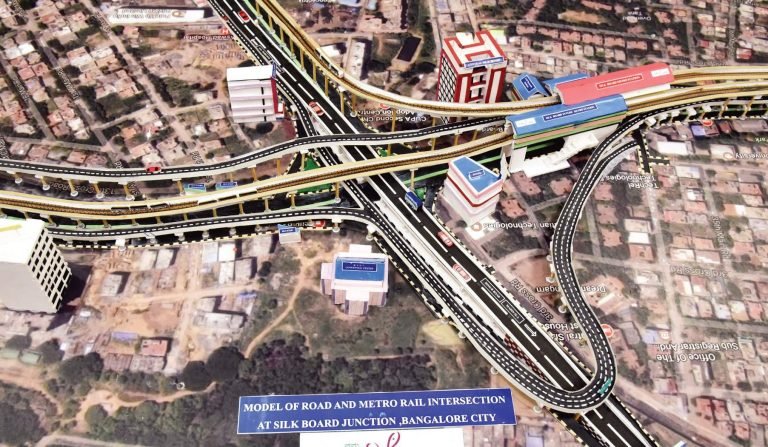
This stretch has 13 stations: K R Puram Interchange station, Mahadevapura, DRDO Sports Complex, Doddanakundi, ISRO, Marthahalli, Kodibisanahalli, Kadubeesanahalli, Bellandur, Iblur, Agara Lake, HSR Layout, and Silk Board Interchange
Silk Board Intersection will connect Whitefield and Electronics City
Two companies have agreed to chip in Rs.100 crore each: Intel for Bellandur station and Embassy Group for Kadubeesanahalli station
Vijayawada: The Amaravati Metro Rail Corporation (AMRC) on Tuesday identified five infrastructure development firms as eligible to execute the Visakhapatnam Metro Rail Project under Public Private Partnership (PPP). The firms are Adani Enterprises Limited, TRIL Urban Transport Private Limited, Shapoorji Pallonji and Company Private Limited, Essel Infraprojects Ltd and IL&FS Rail Ltd. The final call is likely to be taken in five months.
As per the terms agreed to, the government will fund the civil infrastructure development and the private firm will earn its revenue through the management of the venture for a period of 35 years.
Though some of the firms do not have any experience in executing metro rail projects, AMRC officials said they had developed urban transit rails in India and abroad.
“Since the firm will be operating and maintaining the project for 35 years, it is important that it has experience in operation and maintenance, not just construction. However, we have specified that if the prospective bidder has no prior experience, a tie up with another firm is mandatory,” said AMRC managing director NP Ramakrishna Reddy. He cited the example of Hyderabad Airport, saying its developer GMR Group, had no prior experience, but had done a wonderful job.
Hyderabad: In a recent metro rail project review meeting, Municipal Administration and Urban Development Minister KT Rama Rao instructed the Hyderabad Metro Rail Limited (HMRL) to start work on the six km Metro stretch in the Old City.
Rao directed HMRL to explore the possibility of state government taking it up on its own with external funds, if project concessionaire L&T does not show interest due to land acquisition and viability issues.
The Old City route falls under Corridor II of the Hyderabad Metro Rail project that stretches from Jubilee Bus Station to Falaknuma. The alignment was opposed in 2013 by MIM which suggested changes in route alignment due to about 1,100 properties are likely to be affected in the route.
The new alignment route was from the Musi river, high court, City College, Hussaini Alam, Kalapathar and Bahadurpura. However, the project developer, L&T stated that the new alignment was not feasible financially and would increase the distance by two kilometres apart from the environmental issues to crop up since the alternative route passes along the Musi.
The six-km stretch in the Old City was left out of the 72 km Metro Rail project.