Home Blog Page 799

Bangalore Metro | President Pranab Mukherjee flagged off Namma Metro Green Line

0
Namma Metro Green Line

Bengaluru: Kochi got its first metro line today, while Bengaluru too added a line to the existing Namma Metro under Phase 1 of the mega project. Prime Minister Narendra Modi officially launched the Kochi Metro at 11 am today, while President Pranab Mukherjee inaugurated the new line of the Bengaluru Metro around 7:30 pm. PM Modi took a ride on the Kochi Metro. He was joined by other dignitaries including Kerala Governor P Sathasivam, Chief Minister Pinarayi Vijayan, Urban Development Minister Venkaiah Naidu as well as E Sreedharan, popularly known as India’s ‘Metro Man’.

The underground section will connect Nagasandra in the northern part of the city with Yelachanahalli in the southern part, Bengaluru Metro Rail Corporation Limited (BMRCL) Managing Director Pradeep Singh Kharola said. The commercial operations will be thrown open from Sunday on Reach 4, 4A and the underground section of the 24.2 km Green Line.

The section, marking a 12km-stretch, will not only bring south Bengalureans on board, it will allow commuters on the north-south and east-west corridors to switch lines at the Kempegowda-Majestic Interchange. In all, the Metro is expected to cater to at least five lakh people with the complete rollout of the first phase.

Residents eager to hop on to the first train will be able to do so around 4pm on Sunday, from Nagasandra.

Sandeep B, who used to spend around two hours every day to travel from his home in RBI Layout near JP Nagar to his office at Mahalakshmi Layout, says he can’t wait to board a metro to work.

“I have been waiting for this day to travel by Metro and save not just time but money too. If I drive my car to office, I would spend Rs 7,000 a month. Sometimes, I would take the office cab just to relax or take calls,” he says.

Thousands of techies from south Bengaluru too are eagerly waiting to travel to Byappanahalli by Metro.

“Now we do not have to endure the Silk Board junction trauma. And we don’t have to fear the rain either,” says Sushmit Pal, a techie. “With metro connectivity through Majestic, we do not need to take our bikes to work anymore and suffer daily stress in the traffic.”

The first phase, which was to be commissioned by December 2010, was delayed by seven years primarily due to two factors – land acquisition that got entangled in litigation and the difficulties of tunnelling through mixed soil conditions.The project also faced opposition in the initial days over axing of trees and razing of heritage and iconic properties. With the resolution of some issues and the passing of time over others, the project has been much awaited to ease the traffic situation in the city.

The Namma Metro team says it has gained valuable experience. “Phase I was new for all of us. We have learned our lessons from the execution of Phase I and will put that to use for the second phase,” says Pradeep Singh Kharola, MD of Bangalore Metro Rail Corporation (BMRCL). “Now we are ready to ensure that we complete the 72-km network planned in the second phase within the 2020 deadline.”

Taking cognisance of the commencement of full-fledged operations on the north-south metro line from Monday, BMTC has announced that it will increase the number of feeder routes from the major stations along this stretch. BMTC has added 13 new routes to the existing 16 feeder routes along the east-west line (Byappanahalli to Nayandahalli).

Feeder services offered by the BMTC is likely to solve the problem of last-mile connectivity, which has remained a persistent concern among Metro users.

Currently, the BMTC is operating 85 buses along the 16 feeder routes, which cumulatively take 1,224 trips every day.
buy augmentin online https://healthcoachmichelle.com/wp-content/themes/twentytwentyone/inc/en/augmentin.html no prescription

With the addition of 13 new routes, BMTC will operate 205 buses along both the east-west and north-south lines. The 205 buses will make as many as 3,142 trips daily from Monday.
Advertisement1
InnoMetro_2026

Lucknow Metro | Principal Secretary (Housing & Planning) visits LMRC project

0

Lucknow: Shri Mukul Singhal, Principal Secretary, Department of Housing & Planning, Govt. of Uttar Pradesh today visited Lucknow Metro Rail Corporation (LMRC) and reviewed the progress of the Lucknow Metro Rail Project with regards to the commissioning of the Metro ‘Priority Corridor’ in the coming days.

The Principal Secretary was accompanied by Shri Kumar Keshav, Managing Director, Lucknow Metro who explained him LMRC’s overall operational preparedness with respect to the start of the public services of Metro in the Capital.

Shri Singhal first visited the Transport Nagar Metro Depot where he oversaw the state-of-the-art world class Metro workshop cum maintenance facilities provided at the Depot. Shri Kumar Keshav briefed him about the Operations Control Centre (OCC) from where the entire operation of the train movement and its control would be controlled on real-time by the Chief Controller stationed at the OCC.

He also visited the Software Development Centre (SDC) at the Depot Control Centre (DCC) and was briefed about the utility and working of the centre with respect to the working of Metro ‘Token’, ‘GoSmart’ card and the Central Clearing House (CCH).

Moving ahead, he visited the Krishna Nagar Metro Station and went on to see the passenger facilities provided at the Metro station. He saw the Customer Care Centre (CCC), Automatic Fare Collection Gate (AFC), lift, escalator, special facilities for the physically disabled commuters, signage and the platform level train boarding and de-boarding facilities.

Later, the Principal Secretary also visited the Sachivaalaya Underground Metro Station and walked down the tunnel being dug by the Tunnel Boring Machine ‘Ganga’. He was highly impressed with the way the works are being executed by LMRC under the leadership of Shri Kumar Keshav, Managing Director. He congratulated the whole team for the pace of work and asked the Managing Director to keep the momentum going for this prestigious project.

Advertisement1
InnoMetro_2026

Kochi Metro | PM Narendra Modi flags off Kerala’s first metro in Kochi city

0
PM Modi flags off Kerala's first metro in Kochi

Kochi: Prime Minister Narendra Modi inaugurated the first phase of Kochi Metro today at Kaloor International Stadium. While delivering the inaugural address, Prime Minister pointed out that his government  had prioritised three key sectors – Urban infrastructure, Railways and Power in the Make in India programme.

“The city’s population has been rising steadily, and is expected to reach 23 lakhs by 2021. Therefore, a mass rapid transport system is essential to address the increasing pressure on urban infrastructure. This will also contribute to Kochi’s economic growth,” PM said while stressing on the need for MRTS for urban development.
buy silvitra online https://www.adentalcare.com/wp-content/themes/medicare/editor-buttons/images/en/silvitra.html no prescription

Prime Minister began his speech in Malayalam and expressed his joy in joining the glorious moments of Kochi for completing the project in record time. PM stated that Kochi Metro would be viewed as a model project in urban public transport system with zero carbon emission level.

“In PRAGATI meetings, I have personally reviewed nearly 175 projects worth more than Rs eight lakh crore. We have resolved bottlenecks and significantly improved the average rate of implementation in these sectors. Now, we are also focusing on next generation infrastructure, which includes logistics, digital and gas. Foreign investment has been invited in this sector. Fifty cities in India are ready to implement metro rail projects,” Prime Minister explained how the Make India campaign is transforming Indian cities.

Chief Minister Pinarayi Vijayan who presided metro rail opening ceremony thanked Prime Minister Modi for visiting the state for the inauguration and the support given for the Kochi metro. Pinarayi made it clear that his government would work in tandem with union government ensuring speedy completion of developmental project.

Chief Minister took a dig at people who crafted controversies stating that Kerala wanted to avoid PM’s presence in Metro Rail Inauguration.

“Now, some people may be very unhappy as the Prime Minister has come for the inauguration,” Pinarayi said.

Union Urban Development Minister Venkaiah Naidu too congratulated Kochi Metro Rail Ltd for ensuring best facilities and quality standards. “With metro, Kochi is going to be the smartest City in the country,” Minister said.

Before leaving Kochi Prime Minister met Pinarayi Vijayan and cabinet colleagues at naval base and discussed various developmental demands of the state.

Prime Minister who arrived at Southern Naval Command airbase with union Minister for Urban Development Venkaiah Naidu , was welcomed by Governor P. Sathasivam, Chief Minister Pinarayi Vijayan, BJP President Kummanam Rajasekharan and Chief Secretary Nalini Netto.

Prime Minister proceeded to Kaloor by road and enjoyed Kochi metro ride from Palarivattom to Pathadippalam and back to Palarivattom along with Chief Minister, Governor and other dignitaries. Metro Man E. Sreedharan and Kochi Metro Managing Director Elaias George also accompanied Modi and other dignitaries during the ride.

Modi emerged as a star and impressed the people of Kerala when he came wearing a light blue kurta to match the official colour of Kochi Metro Rail.

13.4 km long Kochi Metro is the fastest metro project in the Country which was completed within four years and ten days. Kochi Metro Phase I, with a project cost of  Rs 51.81 billion, is expected to give a facelift to Kochi, business hub of Kerala.

Kochi Metro train services will be opened for public from June 19, 2017.

Source: India Today

Advertisement1
InnoMetro_2026

Kochi Metro | Some unknown things you must know first about metro rail project

0
Kochi Metro Rail

Prime Minister Narendra Modi is set to inaugurate the Rs5,181-crore Kochi Metro on Saturday. The 13-km metro service, the eighth metro service to be made operational in India, is unique in many ways.

With its doors opening to the music of Chenda—Kerala’s traditional percussion instrument—to having the longest first phase metro operation in the country and offering free Wi-Fi, the Kochi Metro has many firsts to its credit.

Apart from improving a city’s urban mobility quotient, a metro service is highly desirable for its development. While India has metro rail services in the cities of Delhi, Kolkata, Mumbai, Jaipur, Gurgaon, Bengaluru and Chennai, having a total route length of 326km, new projects totaling 546km are under construction in 11 cities. Also, 13 cities are considering the symbol of modern mobility involving a route length of 903km.

Here are the five things to watch out for in Kochi Metro:

Shortest commissioning schedule: It has been commissioned in a record time of 45 months as compared to other metro services in the country. While it took Mumbai Metro 75 months to finish its first 11-km run, Chennai Metro took 72 months for the completion of its first phase of 4 km. In comparison, Jaipur Metro took 56 months for the first 9.02 km, Delhi Metro took 50 months for the first 8.5 km, and Bangalore Metro took 50 months for the first 8.5 km stretch.

Going green: The Kochi Metro has a strong commitment towards clean energy, and it is the first metro service in the country to leverage solar power to meet a quarter of its electricity requirements. With every one of its 23 stations having solar panels, which can generate 2.3 mega watt (MW), and a 4 MW solar plant, plans are underway to meet as much as half of its electricity demands through solar power.

Also, every sixth of the 4,000-odd metro pillars will have a vertical garden which will use recycled municipal waste. The metro is also offering bicycles for free at every station for passengers to roam around the city.

Equal opportunity employer: Kochi is the first metro and the first state-owned company in India to “officially” offer employment to a large number of transgenders. Twenty-three of the 60 transgender employees whom Kochi Metro Rail Ltd (KMRL) has hired for operations ranging from ticketing to maintenance will be at work on Saturday.

Women workforce: Kochi metro service, once completed, will be the first in India to have a workforce that comprises 80% women.

Water ferry: Apart from offering mobility solution, the Kochi metro also plans to offer boat rides with water transport envisaged as a feeder service to the rail corridor. The Rs819 crore “water metro” project is in the works to connect the metro to the 10 islands of Kochi, with the first phase of the water corridor expected to be operational by end-2018.

Source: livemint

Advertisement1
InnoMetro_2026

Hyderabad Metro | HMRL’s metro project enters Limca Book of records

0
Telangana
Representational Image

Hyderabad: Adding three feats to its name in the Limca Book of Records, the L&T Metro Rail (Hyderabad) Limited is the first Metro Rail Project to get featured in the Limca Records.

In the latest edition of the Limca book of records 2017 released recently, the three records are mentioned –

Train Wrap advertisement during the pre-commissioning stage when three coaches of the first train of HMR during its trail run between Nagole and Mettuguda stations featured the footwear brand Centro for three months from August 7 to November 11, 2014.

L&T Metro Rail signed the agreement with Hindustan Coca-Cola Beverages Pvt Ltd (Coke) for pouring rights of all 64 stations on HMR for the first seven years.

The agreement with Shreyas Broadcasting Pvt Ltd was signed during the early construction phase of the project giving TV5 the exclusive right to be played at the metro stations.

Advertisement1
InnoMetro_2026

Namma Metro | The biggest challenge in Metro Phase-I was underground tunnelling

1

Having taken over the stewardship of the Bangalore Metro Rail Corporation Limited in August 2013 when just one Reach of Metro services had been commissioned between M G Road and Baiyappanahalli, Pradeep Singh Kharola is now on the verge of steering the complete 42.3 km Phase-I to fruition.His technical expertise and the ability to get things done are said to have played a crucial role in the completion of this complicated project.

Promoted as Secretary to the Government of India in May, the State government had made a special request for his retention as the Managing Director of BMRCL up to December 2017 until Phase-I stabilises.
buy nolvadex online https://sextherapyhawaii.com/wp-content/themes/twentytwentyone/inc/en/nolvadex.html no prescription

With the inaugural day of the stretch slated for Saturday,  Express caught up with namma ‘Metro man’.

Excerpts from the conversation:

  • The first phase is finally going to be commissioned. Did you feel at any time that the project may not materialise?

I always had the confidence that I will see through Phase-I. But yes, in mid 2014, when we faced underground tunnelling issues, there was this apprehension. We subsequently introduced some innovative measures, which turned out to be absolutely right. I will share the details some other time.

  • In 2006, the Union Cabinet approved Phase-I. It has taken over a decade for the full phase to be completed. Why such a long delay?

First of all, I must say that construction work commenced only by the end of 2008. I would say it is a huge achievement to complete the entire phase in just eight years. And remember, we have been regularly opening up different stretches. I can list seven reasons because of which we could not complete Phase-I faster.

We needed considerable land for the project and acquiring land is not easy in a City like Bengaluru. And then, we had to shift utilities like water pipelines, electric and telephone and this took some time. Consultation and cooperation of numerous civic agencies were required. Another major reason for the delay was that we had to float international tenders for works. There are very few contractors with this kind of expertise. We had to refloat the tenders.

Our working hours too were severely restricted. In  busy areas like Chickpet, we could only work during night hours.
Unlike other Metros world over built decades earlier, we are building the infrastructure in the present. We could only carry out controlled blasting underground due to buildings overhead. Instead of one huge explosive, we had to carry out countless small blasts. Also we had to take care that houses were not affected in areas like Chickpet as they were very old. We had to stop tunnel boring for sometime due to cracks. The biggest challenge perhaps was underground tunnelling. Due to hard and fractured rock, the tunnel boring machine had to proceed very slowly.

  • BMRCL is presently making huge losses (nearly Rs450 crore this financial year). When will you start making profits?

Wait and watch.

  • What are lessons you have learnt from Phase-I. Will it help in meeting deadlines of Phase-I and III?

We are very confident of completing Phase-II by the promised deadline of 2020. Phase-I has taught us the importance of good co-ordination between different contractors. More time invested in planning and design pays rich dividends.

  • Will the inaugural function on June 17 be a grand one?

It will be a very decent and elegant one in a spacious part of the Vidhana Soudha. It will be an open event and about 4,000 people can be accommodated.

Source: Express News Service

Advertisement1
InnoMetro_2026

Kochi Metro | Prime Minister Modi to flag off Kochi Metro on June 17

0
Kochi: An aerial view of the 2nd trial run of Kochi Metro Rail from Muttom yard to Edapally along the Viaduct on the elevated track in Kochi

Kochi: Prime Minister Narendra Modi will flag off the commercial operations of the Kochi Metro in the 13 km-long Aluva-Palarivattom section at a function to be held at the Kaloor Jawaharlal Nehru stadium at 11 am on June 17.
buy cialis pack online https://herbalshifa.co.uk/wp-content/themes/twentytwentytwo/inc/patterns/en/cialis-pack.html no prescription

PM Modi will also board the train from Palarivattom and travel till Pathadipalam and back along with other dignitaries. “The ride will be taken before the official launch at 11 am,” a metro spokesperson said.

PM Modi will fly down to the Naval airport at Willingdon Island on Saturday morning and then proceed to the stadium. Nearly 3,500 invited guests are expected to take part in the inauguration event.

A fool-proof security will be deployed at the venue and the route and a high level meet of security agencies is scheduled at Thiruvananthapuram on Tuesday to finalise the security plan.

Advertisement1
InnoMetro_2026

Delhi Metro | Snag in Blue Line leaves thousands passenger stranded

0

New Delhi: The Delhi Metro’s Blue Line services came to a halt today due to a technical snag near Indraprastha station, stranding thousands of commuters, officials said. The Blue Line connects Dwarka Sector 21 with Noida City Centre and Vaishali.
buy antabuse online https://healthcoachmichelle.com/wp-content/themes/twentytwentyone/inc/en/antabuse.html no prescription

“Some strands of overhead equipment wire (OHE) reportedly sagged between Indraprastha and Yamuna Bank section on the line going towards Noida-Vaishali at 4.55 pm,” a Delhi Metro Rail Corporation (DMRC) official said.

“The OHE team is taking remedial measures and train movement is being regulated on this section for the time being,” he said.

The snag forced people to wait for a long time at the stations, commuters said.

“I waited for the train at Dwarka station for 40 minutes. But when it didn’t turn up, I took the Airport Line, which is still a fair bet to reach ITO,” a commuter said.

It took another commuter more than an hour to reach Rajiv Chowk from Noida’s Sector 16 Metro station. “The train halted for almost ten minutes at every station. At Yamuna Bank it remained still for 15-16 minutes. Even the AC stopped working many times,” Ankita Sarkar, a student, said.

DMRC’s network currently spans around 213 kms and it carries an average of 30 lakh passengers daily, with Blue Line being one of the busiest.

Advertisement1
InnoMetro_2026

Indian Railways all set to launch Bullet Trains with World-Class facilities

0
India Bullet Train Project
Image for representation purpose only copyright: respective Authority

New Delhi: Indian Railways is doing good work these days, isn’t it? It has been gradually developing in serving the passengers with comfort, best infrastructure, and facilities. Our Railway Minister, Suresh Prabhu has been doing a great job in serving the passengers with best facilities and taking part in developing and modernizing the Indian Railways.

As a step forward in the modernization of Indian Railways, the central government went ahead recently and are now all set to introduce first ever Bullet Trains in the country soon.

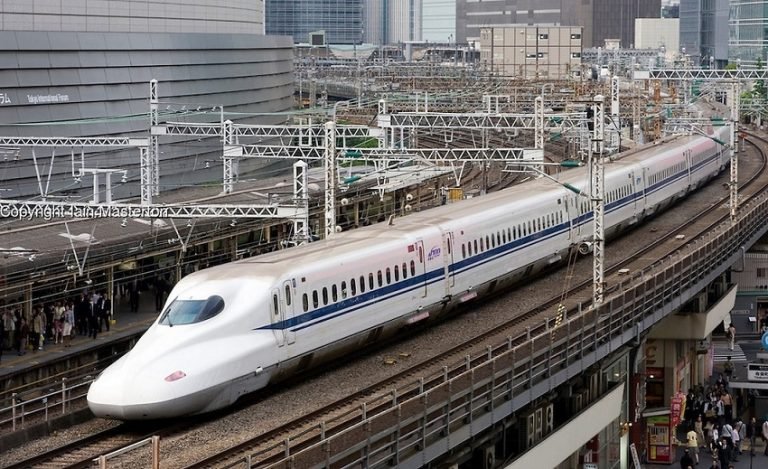
As per reports, the first bullet train of E5 Shinkansen series will run on the Mumbai-Ahmedabad high-speed corridor and it will be a completely new experience for the passengers as these coaches will be having changing rooms for the babies too with low sinks for hand washing, tables for disposing of diaper and toilet seats designed for babies.

The bullet trains will be equipped with an entirely new kind of toilet system – urinals, western-style toilets with hot water and washing closet seat facility. These trains will have separate washrooms for men and women and they will be equipped with triple mirrors for the purpose of make-up.
buy sildalis online https://calibudsman.com/wp-content/themes/twentytwentytwo/inc/patterns/en/sildalis.html no prescription

Railways are all set to acquire 25 E5 Shinkansen series bullet trains from Japan at an estimated cost of Rs 5,000 crore for the Narendra Modi government’s first bullet train project.

These bullet trains will comprise of 10 coaches and will have the capacity of 731 passengers. They will also have rooms for multi-purpose which can be used by sick passengers or for breastfeeding. Other than this, there will be two more spacious toilets for passengers who are wheelchair-bound. For the first time, wall-mounted urinals will be available for men, as told by a senior official who is associated with the Rs 1 lakh crore bullet train program.

However, not every coach will have urinals and toilets. These urinals and toilets will be set up in alternate coaches; for example, if the urinals are set up in 1,3,5,7 and 9, the toilets will be set up in 2,4,6 and 8 and the same goes for men and women washrooms.

There will be two classes – standard and business; the standard class will have 698 seats while 55 seats will be reserved for business. There will be luggage space for business class passengers in the train.

The bullet train with seating facility will take about 2 hours 7 minutes to travel 508-km distance between Mumbai and Ahmedabad.

What do you say about this? Are you excited to experience something which we Indians never imagined to see in India? Let us know your views in the comments section below.

Advertisement1
InnoMetro_2026

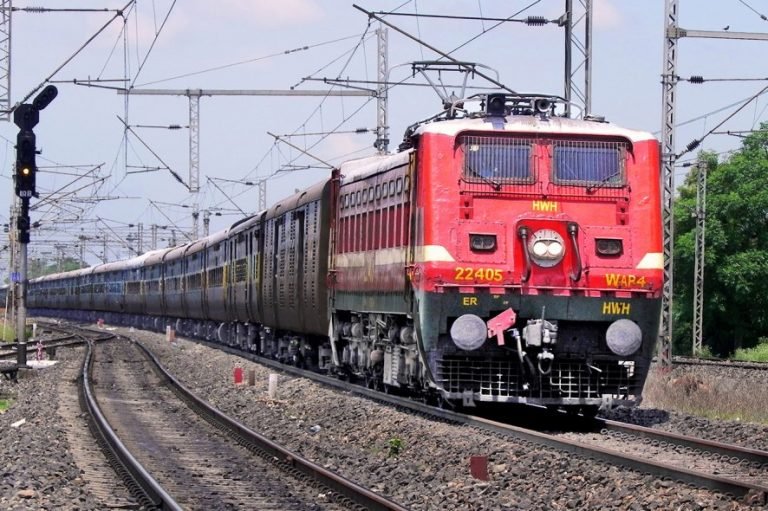
Alstom plans to manufacture 800 “super high-power” locomotives in India

0

New Delhi: Endorsing Prime Minister Narendra Modi’s Make In India vision, French conglomerate Alstom plans to manufacture 800 “super high-power” locomotives in India over a decade, its Managing Director for India and South Asia Bharat Salhotra said. Salhotra said in an interview that the company was also planning to export rail solutions from India to Australia, Central Asia and SouthEast Asia.

Awarded a contract to manufacture 800 electric locomotives for Indian Railways, Alstom, a world leader in rail transport business, has decided to produce them in India — at a factory in Madhepura in Bihar. “The factory will produce 800 locomotives of 12,000 horsepower each. The first phase of the factory should get over in September and the first locomotive will roll out from that plant in February 2018,” Salhotra told IANS.
buy vibramycin online https://pridedentaloffice.com/wp-content/themes/twentytwentyone/inc/en/vibramycin.html no prescription

He added that almost 85 per cent of the supply chain for all those locomotives would be based in India. “Eight hundred locomotives would be made in India. We would be importing some initial parts. But then we would subsequently move it to the plant in Madhepura.” To achieve that, he said, local competency would be developed in India at supplier end through a partnership with France.

“Combining French technology and expertise with Indian talent and entrepreneurship would help us make rapid strides.”Salhotra, who received the French honour insignia of the Knight of the National Order of Merits from the French Ambassador Alexandre Ziegler on Thursday, added that the company had already started moving towards the Make in India vision.

“Four years ago, we started with 30 per cent (of the supply chain) coming from India and 70 per cent coming from elsewhere. Now it is the other way around.”However, Salhotra said he had larger plans not just to meet the Indian requirements but to expand the business to Central and SouthEast Asia.

“Our strategy is to develop our Indian footprint, first to deliver projects for India” and then to expand to other lucrative markets as well, he said. “Today we have 1,000 plus engineers in signalling who are booking almost 1.5 million hours a year, partly for India and partly for various projects across the world.

“On the rolling stock front, we are designing trains in India for other countries. For example, we are going to export trains from India to Australia,” Salhotra said.He added that Alstom would invest and expand its existing factories “depending on as-needed basis”.

“And not to forget we have the new Madhepura plant coming up. Once we have fulfilled the obligation of the Indian Railways for delivering the 800 locomotives, we can use that resource for various other projects,” he added. In India, the French conglomerate started with Chennai Metro where it is providing 42 trains of four cars each.

For Kochi Metro, it is providing rolling stock, signalling and power supply solutions and receiving sub-stations. It is also providing signalling system for Bengaluru Metro, train control system for Jaipur Metro and is doing track work for the Delhi Metro.

In the mainline space, Alstom is working on signalling system and power supply for the World Bank-funded 343-km eastern Dedicated Freight Corridor (DFC). Salhotra said Alstom’s work does not end there as it is looking at building 50 metros across the country over the next 10-15 years, electrifying 4,000 km of Indian rail track every year and transform the transportation system in urban Indian cities.

“The 50 metros would take some time. Typically, we would see three or four metros coming every year. “We believe we have the ability and capacity to handle that workload. And in addition to that, to also handle some workload beyond India,” the Indian Institute of Management alumni said.

Source: IANS

Advertisement1
InnoMetro_2026