Home Blog Page 774

Haryana Metro | State asks for report on Gurugram-Faridabad Metro link

0
Gurgaon Rapid Metro Phase-II launched

Gurgaon: The Haryana Mass Rapid Transport Corporation (HMRTC) has been asked to prepare a feasibility report on a proposed Metro route between Sector 45 in Gurgaon and Bata Chowk in Faridabad via Gwalpahari.

The instruction was passed on during a high-level meeting chaired by chief secretary DS Dhesi in Chandigarh on Tuesday, in keeping with chief minister Manohar Lal Khattar’s announcement earlier.

During the meeting, another proposed route to connect Rapid Metro’s Section 55-56 station with Dwarka Expressway via SPR also came up for talks.

Talking about the proposed Gurgaon-Faridabad route, officials, privy to the minutes of the meeting, said the proposed route would start at Sector 45 in Gurgaon, run along Gurgaon-Faridabad road via Gwalpahari and culminate at Bata Chowk in Faridabad.

“Initially, we had thought of connecting the two cities via Tughlakabad. Accordingly, last June, we had asked the Delhi Metro Rail Corporation (DMRC) to conduct a feasibility test. But, in its report, DMRC had claimed that the existing Violet line (line 6) was running almost parallel to the one being planned and therefore, there was no point constructing one more route. Now, we are considering an alternative route via Gwalpahari and HMRTC has been asked to look into its feasibility,” said a senior official.

“However, the exorbitant cost that would be required to connect the two cities of Haryana remains a matter of huge concern. Besides, there may not be enough commuters as major parts along the proposed route have very less population. So, we want to get a feasibility study done before finalising the route,” he said.

Advertisement1
InnoMetro_2026

Hyderabad Metro | PM Modi expected to flag off metro services on Nov 28

1
Hyderabad Metro
Photo Copyrighted: HMR

Hyderabad: Municipal Administration and Urban Development Minister KT Rama Rao on Monday informed that Prime Minister Narendra Modi is expected to launch the Hyderabad Metro Rail on November 28.

The final confirmation is awaited from the Prime Minister’s Office. However, with the Prime Minister’s confirmed visit to the city on November 28 for the Global Entrepreneurship Summit, the Metro Rail could also be inaugurated on the same day.
buy cialis oral jelly online https://herbalshifa.co.uk/wp-content/themes/twentytwentytwo/inc/patterns/en/cialis-oral-jelly.html no prescription

Previously, KTR said that feeder services connecting residential colonies to the Metro Rail stations will include both electric vehicles and conventional buses that will be operated to cover a distance of three to four kilometres from the stations.

The Minister at the valedictory session of the 10th Urban Mobility Conference in Hyderabad stated that bicycles also will be available at the stations to promote cycling and encourage eco-friendly transportation mode.

Advertisement1
InnoMetro_2026

Bangalore Metro | BMRC to sign a € 300-m loan deal with AIIB

0

Bangalore: The Bangalore Metro Rail Corporation (BMRCL) is expected to finalise a 300-million loan (Rs 2,275 crore) from the Asian Infrastructure Investment Bank (AIIB) in the next two days. The loan will have a 15-year tenure and comes with a 2.2% rate of interest.

The Beijing-headquartered bank is owned by several Asian countries and India is its second largest stakeholder. The BMRCL’s response follows AIIB’s offer of loan to fund Phase II of the Namma Metro project on reasonable terms.

The AIIB team has already had four rounds of discussions with BMRCL officials in Bengaluru. A BMRCL delegation led by managing director Pradeep Singh Kharola is in Beijing to close the deal. The final round of negotiations is scheduled for Nov 8-9.Once the terms are finalised, the Department of Economic Affairs (DEA) of the Union government is expected to sign the finance contract in about two months paving way for the flow of funds.

The Luxembourg-based European Investment Bank (EIB), which is cofinancing the project along with AIIB, has committed a loan of 500-million (Rs 3,770 crore).

The DEA and EIB signed the contract for the first tranche of 300 million last month for reach six (R6) of Metro Phase II. This apart, BMRCL has also borrowed 200 million (1,508 crore) from AfD, France. All these loans have flowed in through the DEA channel.

Phase II is being financed jointly by EIB (500 million) and AIIB (300 million). The project envisages extension of east-west and north-south lines covering a length of 72 km, including the underground length of 13.8 km. The project will have 61 stations with 12 underground. The project is implemented over a five-year period from the date of launch.

The BMRCL has estimated Phase II to cost Rs 26,000 crore. Of the project cost, 60% will come from loans, while the Union and the state governments will chip in the rest by equally sharing the project equity . Work under Phase II is progressing in full swing, Kharola said. The BMRCL, he added, will complete the first reach next year and has targeted to complete Phase II in 2020.

The work on both Kanakapura Road and Mysuru Road extensions are according to schedule and will be completed next year.
buy amoxicillin online https://blackmenheal.org/wp-content/themes/twentytwentytwo/inc/patterns/en/amoxicillin.html no prescription

The spinoffs of the project, a DEA press release last month said, would include job opportunities, a drop in the number of vehicles on road, reduction in air pollution, faster travel and improvement in the aesthetic value of the city, among others.

Vice President M Venkaiah Naidu, at a conference on Saturday, mentioned how Bangalore Metro is pursuing innovative ways to finance its project by trying to capture the land value that are going to be benefited by the project.

Advertisement1
InnoMetro_2026

Mumbai Monorail halts services due to fire in a monorail, no casualties

0
Mumbai Monorail

Mumbai: A monorail train caught fire at Mysore Colony station in Chembur on Thursday morning. Services have been stopped immediately after the incident took place, and are likely to resume only in the afternoon.
buy prednisone online https://nouvita.co.uk/wp-content/themes/twentynineteen/fonts/en/prednisone.html no prescription

Sources said that the fire broke out at 5.20 am and was brought under control in around 40 minutes. Three fire brigade vehicles were rushed to the spot to put it out.

Mono Rail fire

As it was early morning, there was no rush at the station when the fire broke out. No commuters were injured.

On condition of anonymity a fire brigade official said, “Prima facie, it looks like the fire was caused by a short circuit.”

Currently, the Mumbai has one monorail line which runs along a 9 km route, covering seven stations, from Chembur to Wadala. The trains run from 5am to midnight daily.

Advertisement1
InnoMetro_2026

MEGA Metro | Hyundai Rotem bags contact for supply of 96 metro cars

0

The METRO-Link Express for Gandhinagar and Ahmadabad (MEGA) has awarded Hyundai Rotem a US 159 m contract to supply 96 metro cars for Ahmadabad Metro Line 1.

The metro cars will be assembled at Hyundai Rotem’s plant in Changwon, Korea. Delivery of the ordered cars excepted between April 2019 and July 2020.

The first phase of the metro network in Gujarat’s largest city comprises the 20.7km Line 1 from Vastral Gaam in the east to Thaltej Gaam in the west, and the 18.5km north-south Line 2 from Motera to APMC. Construction began in 2015 and Phase 1 is due to be completed by 2023.

Advertisement1
InnoMetro_2026

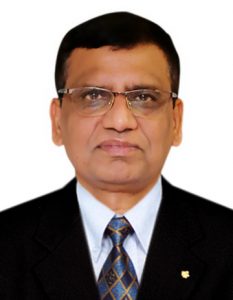
Delhi Metro | DMRC appoints Daljeet Singh as Director (Works)

0
Delhi Metro Rail

New Delhi: The Delhi Metro Rail Corporation (DMRC) has appointed Mr. Daljeet Singh as Director (Works). The post was lying vacant after resignation of former Director Mr. Jitender Tyagi who took charge of Uttarakhand Metro Rail Corporation (UMRC).

Daljeet Singh DW
Mr. Daljeet Singh, Director (Works), Delhi Metro Rail Corporation

Mr. Singh is a civil engineer who did his B.Tech from I.I.T. (BHU) Varanasi and M.Tech. from I.I.T. Kanpur . He joined CPWD in 1988 through Indian Engineering Services (IES) exam and was posted in various wings of CPWD. He also worked with DMRC from 1998 to 2014 and held various roles and position.

In DMRC, he was involved in the construction of first Delhi Underground Metro Corridor from Central Secretariat to Vishwavidyalaya (11 Km) of Phase-I during 1998-2004.  He was also involved in the construction of I.T. Park buildings as a part of DMRC Property Development and ‘Metro Bhawan’, the Headquarter building of DMRC.  He was involved in the design and construction of 15 Km Elevated Corridor from Qutab Minar to HUDA City Centre under Phase-II, design and construction of 13 Km Underground Metro Corridor from Kalkaji to Vasant Vihar under Phase-III of Delhi Project.

Mr. Singh, before assuming charge as Director (Works) of DMRC, was working as Director (Works & Infrastructure) in Lucknow Metro  and  was involved in the planning, design and construction of 23Km of North-South Corridor of Phase IA of Lucknow Metro Project. He was instrumental in commissioning of Priority corridor of 8.5 km in less than three years.

Advertisement1
InnoMetro_2026

The Economic Times Smart Mobility Summit 2017 | Nov 27-28 2017 | New Delhi

0
The Economic Times Smart Mobility Summit 2017

As one of the pillars of economic development for any country, the transportation network is critical to the national infrastructure. With Indian transportation industry growing at a CAGR of 15 percent and a budget outlay of almost Rs. 4 trillion in the next fiscal in creating and upgrading transportation infrastructure, India’s transportation sector is undergoing a boom. However, it has frequently been a source of greenhouse gas emissions and a major cause of concern for the government as they are trying to reduce the carbon footprint to address environmental issues and decrease their dependence on oil as a source of fuel. India is still following BS IV as against EURO 6 implemented in European countries, which is equivalent to BS VI.

The Second Auto Fuel Vision and Policy 2025 notified by Government of India in May 2014 lays the map for fuel emission norms up to 2025. In order to adopt the latest emission standards, Government of India has decided to completely skip BS V norms and has announced to adopt and implement BS VI norms from April 2020.

Therefore, besides vehicular technologies and emission norms, other two important factors to be considered in India for reducing carbon emission are periodic inspection, maintenance of in-use vehicles and better road and traffic management. All this can only be achieved by discussing the latest technologies, government policies, success stories and facing the current environmental situation with complete seriousness.

The Economics Times in association with Metro Rail News is going to conduct Smart Urban Mobility Summit on November 27-28, 2017 in New Delhi, India. The summit aims to lay down a blueprint for the future, driven by innovation and the vision to provide cleaner, safer and faster transportation infrastructure.

The summit is a movement to unite the visionaries who believe carbon emission has no place in the future and going ahead the key is to have smart road and traffic management systems. It is also a platform to showcase success stories from across the world that will inspire the key stakeholders to promote the cause and ensure that everything is being done to meet their respective national goals for smart and green transportation.

The Economic Times Smart Mobility Summit will focus on Hybrid vehicles, KERS systems, alternate fuels, smart parking, its (intelligent transportation system ), tolling, telematics, safety & security, mass transportation, road infrastructure & construction. The increasing demand for vehicles, coupled with citizens adopting a healthy lifestyle and growing environmental concerns will likely makes us adopt to this change for smart green mobility.

As India prepares for the future of transportation which is smart, secure and sustainable, the Intelligent Smart Mobility Awards will honor and recognize the visionaries and early movers who set the precedent and have laid the foundation for the same.

The awards will celebrate the successes and it will highlight the efforts of industry leaders from the government and the private sector from across the region as they help their respective governments and industries to align themselves to their future needs and goals led by innovation and technology.

For more details, please click here to download Event Brochure

Advertisement1
InnoMetro_2026

Kochi Metro | KMRL looks to boost revenue from property and advertising business

0
Over 200 out of 311 kiosk spaces auctioned at Kochi Metro in just three days
Photo Copyrighted: KMRL

Kochi: In what can be seen as a thumbs up from the city’s residents, daily ridership on the Kochi Metro has doubled to 30,000 since the Kochi Metro Rail Ltd (KMRL) threw open in early October a 5-km stretch that extends the network to the heart of the city. Of the 25.6-km Phase 1 project, the first 13-km stretch was made operational in June this year. To be sure, the Kochi Metro, which boasts a number of firsts, and was built at a cost of just over Rs 5,000 crore, is still finding its feet. It does not expect to achieve its target of 300,000 daily commuters for at least five-six years, until its Phase II (11.2-km) becomes operational and a host of initiatives are implemented. Until such time, however, the KMRL is banking on innovative channels to boost revenue. First, on a recommendation from Ernst & Young, KMRL decided against spending on the automatic fare collection system, instead inviting bids from banks in exchange for the right to issue a co-branded card to commuters. The Kochi-1 smart card gives people a discount on tickets. The smart cards can also be used to pay for internet transactions, besides doubling up as a bus and ferry ticket. Axis Bank paid KMRL a premium of Rs 209 crore for the rights to issue the card. The sweetener? KMRL receives 20% of the card charges that Axis Bank bills its customers. Elias George, MD, KMRL, tells Media, “This is not just a transit card or services card. We also get a revenue stream from it.”

Kochi Metro Train

Following Kochi’s example, the Nagpur Metro has tied up with SBI for co-branded cards while the Ahmedabad Metro is also believed to be planning something similar. Second, KMRL plans to auction off to realty developers 17 acres of prime land that it was given as a grant from the government. While KMRL is eyeing about Rs 600-700 crore from the auctions, it would also earn some annual recurring revenue from recreation centres, etc.

The third thing that KMRL has done is to award station naming rights to winning bidders. Already, Chinese company Oppo has been given exclusive branding rights for the Edapally and MG Road stations, for which KMRL is earning Rs 6.60 crore and `5.50 crore per year, respectively. South Indian Bank, too, has picked up a station for Rs 2 crore annually. “The Metro is a new toy, so it attracts a lot of advertising revenue. Station naming rights is a great opportunity,” says George. KMRL is inviting bids for branding opportunities inside the trains as well. With 22 stations that are planned on the 25.6-km route in Phase I, the advertising revenue potential is not insignificant.

In fact, the innovative ways the Kochi Metro is employing to boost revenue could serve as the way forward for other metro systems. While its template could be a ready reckoner for tier-II towns, even metros in big cities stand to gain from it. For instance, the Delhi Metro that continues to make operating losses and has had to double fares since May this year is yet to tap properly the non-fare revenue streams.

Advertisement1
InnoMetro_2026

Noida Metro | DMRC completes the viaduct on Noida-Greater Noida corridor

0

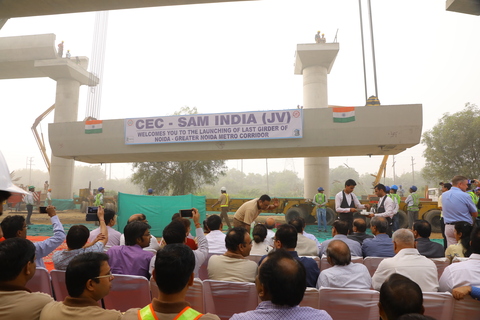
New Delhi: The Delhi Metro Rail Corporation (DMRC) today erected the last girder of the Noida – Greater Noida Corridor in the presence of Dr. Mangu Singh, MD/ DMRC, Shri Alok Tandon, MD / NMRC and CEO Noida Authority and other senior DMRC and NMRC officials. With the erection of this Girder, the viaduct of this approx. 30 km long corridor has been completed.

Noida Girdar
(Launching of last Girdar while completing the Noida-Greater Noida corridor)

The Civil Work on this corridor began in May 2015 and the first girder was launched in December 2015 and within a span of 22 months DMRC has erected a total of 2830 Girders (2035 U- Girders and 795 I – Girders). This last U- girder was launched today between Sector 143 and Sector 144 stations of the corridor.

DMRC had successfully executed the task of erecting 200 U-Girders on the Noida – Greater Noida corridor in the month of May 2016. . This is the maximum number of U-girders ever launched in any Metro corridor in India within a month. DMRC used six special trailers to transport the girders and six special cranes of around 350/400 Tonnes capacity to launch the 27 mts long and 5.05 mts wide U-Girders. DMRC had also entered the prestigious Limca Book of Records for this feat and Dr. Mangu Singh was formally handed over the Certificate from the Limca Book of Records on 2nd March 2017.

The viaduct on the NOIDA – Greater NOIDA corridor was constructed by specialised technique of pre-cast pier caps and precast U-girders. The main challenge of girders is precision in casting as well as launching which required specialised cranes of 350/400 tons capacity to launch these girders.  Also, the transportation of girders from the casting yards to the site was another challenge because of its length and width. Accordingly, specialised trailers were mobilised for transporting these girders.

All the Girders were pre fabricated at the two Casting Yards located in Noida Sector 149 and Depot Station in Greater Noida, and each weighed approx. 153 Tonnes.

The Noida–Greater Noida corridor is approx. 30km completely elevated corridor having 21 stations. This corridor is on Standard Gauge and is crossing beneath the Dedicated Railway Freight Corridor. It is also crossing above the Yamuna – Agra Flyover at 21 mts. which is the highest point of the corridor near the Knowledge Park – II metro station. All stations of this corridor will have Platform Screen Doors, Water Harvesting Facility and Solar Panels. The first set of trains has left China and is expected to arrive at the Greater Noida Depot by mid – December 2017.

The entire corridor had lots of challenges like shifting of 400 KV overhead transmission lines, Hindon Bridge, Irrigation drain ands and shifting of other utilities like water lines, gas pipeline, sewers, cables, etc.

This project has been executed by DMRC on behalf of Noida Metro Rail Corporation (NMRC) Ltd.  through its civil contractors Continental Engineering Corporation & SAM India Builtwell Pvt. Ltd. Joint Venture along with Design support from Systra, Ayesa and TCPL.

Advertisement1
InnoMetro_2026

Mumbai Metro | Mumbai citizens decides to move court against elevated Metro 2B corridor

0

Mumbai: After holding protests and meetings with officials, residents from western suburbs have been preparing to move court against the elevated metro corridor 2B between DN Nagar and Mankhurd.

The residents’ petition comes after a public interest litigation (PIL) was filed last week by a socio-political activist and Bharatiya Janata Party (BJP) member from Bandra.

According to the committee of activists and experts, who are demanding that the metro 2B line be made underground in Juhu and Bandra (West), citizen groups will be filing two PILs and individual writ petitions by next week.

Anandini Thakoor, trustee of H/W Federation, told media that funds needed for the legal recourse are being collected through funding.

Residents of SV Road had also sent letters of appeal to PM Narendra Modi after carrying out a massive signature campaign that has gained at least thousands of supporters.

Gautam Rao, chairman of Gazdar Scheme Residents’ Trust, said, “Schools, housing societies and religious institutions on SV Road are supporting the appeal for an underground Metro instead of an elevated one. About 20 groups have come forward to help financially.”

BJP member Ajit Manyal, a Bandra resident himself, filed an PIL about a month ago, stating that an underground metro will allow future development.

“I met with the authorities concerned and decided to go ahead with the PIL on my own. The hearing for the same may be held next month.”

The Mumbai Metropolitan Region Development Authority (MMRDA) officials stated the various technical reasons, including the high cost for an underground corridor, for going ahead with the commissioning of the elevated corridor from DN Nagar to Mankhurd in phases.

Advertisement1
InnoMetro_2026