Home Blog Page 765

A New Year’s Greeting from the Managing Editor of Metro Rail News

0

Dear Friends,

I am very pleased to take this opportunity to wish our readership, members of the Editorial Team, members of the Editorial Advisory Board, all our independent expert referees, and all members, officers and staff of the Metro Rail News, the publication of Symbroj Media Pvt. Ltd., New Delhi a Very Happy New Year. On behalf of the Editorial Team, I would like to express my gratitude to our contributing readership and our Editorial Advisers and independent referees for their valuable contributions to the success of Metro Rail News Portal and Monthly Magazine.

3 years ago, Metro Rail News had started its journey from the 26th January 2015 as a news portal with aim to provide real development story and updates to the citizens of India, members of metro and rail fraternity and other concerns. From, April 2017 we have started publishing a monthly magazine with depth focus on Metro Rail projects, High-speed rail projects, Urban Mobility, Smart public transportation in Smart Cities and other MRTS projects from India and rest of world.

India has achieved lot of milestones in this sector from starting three new metro rail network (Chennai, Kochi and Hyderabad) for people to laying stone of first Bullet train project of the country. Also most of cities has been finalised to develop as Smart Cities under the “100 Smart Cities Mission” of the Central Government led under the Prime Minister Narendra Modi. We are making detailed coverage on year review in our Metro Rail News Magazine January Edition. We are also pleased to say that the number of subscribers and contributes during 2017 has increased by at least 40% and we are fully confident that this trend will continue.

Metro Rail News prides itself on being a truly international magazine (with about half its content being from outside India) and the premier multidisciplinary journal in the field. The Editorial Team and all those involved are determined to maintain and enhance the status of the journal and its leading position, but we believe that this can only be achieved with the continued cooperation of our contributing readership worldwide. The Editorial Team believes that the key to the success of this journal depends on the equal partnership we have with the contributing readership.

We promise to improve and promote out role in this partnership and therefore look forward to your valued contributions to the journal in 2018 and beyond.

I would like to express my deepest appreciation to you, our valuable authors, reviewers, and readers, for your contributions, service, and interest.

A new year is not just about changing the calendar; it is also about commitment. We, the Metro Rail News editorial team, will continuously work hard to better serve our authors and users.

I wish everyone a rewarding, joyous new year and look forward to working with you in 2018.

Sincerely yours,

Mamta Shah
Managing Editor
editor@metrorailnews.in

Advertisement1
InnoMetro_2026

Hyderabad Metro | HMRL to close deal with German Bank KfW for Rs 1,000 crore loan

0
Hyderabad Metro
Photo Copyrighted: HMR

Hyderabad: One month after its launch, the Hyderabad Metro Rail project is still stabilizing in its first phase of operation, but the administration is already preparing funds for further development. The administration is near an agreement with the German development bank KfW for a loan of Rs 1,000 crore for urban rejuvenation along with the rail metro project. “We are in talks with the German Development Bank KfW to raise around Rs. 1,000 crore for the urban rejuvenation project, without a high interest burden, say less than 2%, and a long repayment period.”, NVS Reddy said.

Hyderabad Metro
Hyderabad Metro Rail

The initial negotiations have been completed and it is expected that a detailed project report (DPR) will be ready soon. The funds will be used for urban rejuvenation activities, including the installation of sidewalks, rails, FOB and other services after the construction of the subway, Reddy added.

Media had previously reported that talks were also held with the Japan International Cooperation Agency (JICA) seeking official development assistance (ODA) for its second expansion phase for another 100 km. The initial phase of the 72 km elevated metro project, 30 km long stretch with 24 stations, was launched on November 28, 2017. It is expected that the remaining stretch of the project will start at the end of next year.

Being the largest metro rail project under the public-private partnership (PPP) model, Hyderabad Metro expects to reach break-even in 2022. “Of the 250 meter rail projects in the world, only four are making money. Hong Kong, Tokyo and Taipei, while 50% of revenues come from passenger tickets, 45% from real estate development and 5% from advertisements and others, “said Reddy.

“It’s too early to say about traffic, passenger figures are growing slowly and we expect it to stabilize in the next two months, on average, a lakh of passengers travel every day and we expect to reach a break-even point after five years when The whole stretch is completed”, He added. The data indicate that about 32.25 lakh passengers have been transported by Hyderabad Metro and more than 1.5 lakh of smart cards have been issued to date.

“The smaller stations, which are in high-density areas, are seeing minimal crowds, which means that the metro rail is not preferred for short-haul trips, and some central stretches are still to be completed where there are a lot of people, “said one observer.

For starters, some observers say that the rates have to be lower than the current ones. L&T Metro Rail Hyderabad (LTMRHL) said rates will start from a minimum of 10 rupees for a distance of up to two kilometers and the maximum fare is `60 for a distance of more than 26 km.

HMRL also has to fill many deficiencies, such as the construction of parking areas, toilets, drinking water and other facilities to gather people, according to one observer. Technical problems such as defective doors, signal problems and maintenance problems have caused delays in your daily services, even up to 20 minutes, sometimes.

Apparently, train schedules are not published regularly and a timetable has not yet been published. Larsen & Toubro received the Hyderabad Metro Rail project from the government of Andhra Pradesh. LTMRHL, a special purpose vehicle (SPV), was formed to implement the project based on design, construction, operation and transfer of financing (DBFOT). The company signed the concession agreement with the former government of Andhra Pradesh in 2010 and completed the financial closure for the project in 2011.

A consortium of 10 banks led by the State Bank of India has sanctioned the total debt requirement for the project. This is the largest bond fund in India for a non-energy infrastructure PPP project. The cost of the project at the time of signing the dealership contract in 2010 was Rs 14,132 crore. Around Rs 16,511 crore have been spent so far on LTMRHL projects and the Telangana government. On average, `60 million rupees was spent per station and Rs 250 million per exchange station.

Advertisement1
InnoMetro_2026

Delhi Metro | DMRC receives eleven EOIs for supply of 25 Metro trains in response to a bid

0
Driverless Metro Train in India

New Delhi: The Delhi Metro Rail Corporation (DMRC) has floated a tender to deploy 25 trains, each with six coaches, under lease, have come one step closer to reality, and the entity received 11 expressions of interest (EoI) of six possible financiers. and five possible manufacturers of rolling stock. They are willing to sign a tripartite agreement with DMRC to manufacture, finance and lease buses for a period of 30 years. This lease proposal is based on a new public-private partnership (PPP) model, which Indian Railways is testing for the first time. Invest India, created under the Department of Industrial Policy and Promotion (DIPP), analyzed metro systems around the world before recommending the hire of buses under the PPP model to the DMRC. These models to finance and hire trainers exist in Australia, the United Kingdom and throughout Europe.

delhi

The advantage of the leasing model is that the DMRC will not have to make an initial capital investment or incur any maintenance costs during the coaches’ entire 30-year life cycle. Instead, it will pay the concessionaire the rented trains for hours. HS Anand, director – rolling stock, DMRC, said that the private partner would not be required to assume any risk, a key concern of the private sector in PPP projects. He told Media, “DMRC is guaranteeing the hourly requirement of the trains, whether I have a passenger or not, it is not their risk, they will be paid as long as they make the trains available according to our requirements and bring them on time.”

By the way, the number of passengers in the Delhi metro exceeded 100 million rupees in a single fiscal year in fiscal year 17, and averaged 30 lakh daily, according to the data available on the DMRC website. Financial entities such as Mitsubishi Financial Group, Mitsui & Co, Equus Asia, the National Infrastructure Investment Fund (NIIF), IL & FS Financial Services and I Squared Capital have presented EoIs. Among the manufacturers of rolling stock, the companies evaluated for the second bidding round are: Bombardier of Canada, the French multinational Alstom, Construcciones y Auxiliar de Ferrocarriles de España, BEML of India and the manufacturer of electric locomotives of China CRRC Zhuzhou Locomotive Company.

HS Anand

Anand explained that the winning bidder will be paid by the hour. He said: “Bidders will have to present the hourly availability rate of the trains, based on this and the other criteria mentioned in the tender, the net present value (NPV) will be calculated, who is able to offer the best NPV. will be the preferred provider and will be selected. ” Anand said that the evaluation of the EoIs would end in March, and then the selected ones will be asked to submit their requests for proposals (RFP). “This will take around two months, and we hope to finish the winning bidder in July or August of 2018.” If the first pilot is successful, the DMRC can request another 100 coaches under the terms of the contract, bringing the total number of leased coaches to 250.

The DMRC currently does not reach some 916 coaches, which would imply a capital expenditure of approximately 13,000 million rupees if purchased directly. If successful, the model could have a significant impact on metro projects being executed across the country. In fact, the American infrastructure consultant Louis Berger already recommended this lease model under a PPP contract for the proposed metro projects in Bhopal and Indore.

Kshitish Nadgauda, ​​vice president and general manager (Asia), Louis Berger, told Media: “This model is ideal since smaller cities require only about 100 buses and the basic maintenance equipment required could be too expensive for an operation On the contrary, maintenance can be taken care of by manufacturers that are in a better position to do so and that can provide a lot of efficiency, being able to avoid this type of capital expenditure can make a big difference to guarantee the viability of a project “.

Advertisement1
InnoMetro_2026

Delhi Metro | DMRC to add 120 km Metro Rail network in phase-III in 2018

0

New Delhi: Starting in March 2018, many new lines of the Delhi metro network will begin to operate. With the completion of the Phase III expansion of Delhi Metro Rail Corporation, the metro rail system of the Indian capital would become the fourth largest in the world with more than 350 km of corridors. Its current network covers 231 km after the recent opening of the Botanical Garden-Kalkaji Mandir section of the Magenta Line.

corridor
(Source: TOI)


Anuj Dayal, executive director (corporate communications) of DMRC, said that the Delhi Metro has 173 operating stations at this time, making it the ninth largest metro system in the world. “After the completion of Phase III, we will have a network of over 375 km, including the Noida-Greater Noida corridor, and it would be the largest after Shanghai, Beijing and London,” Dayal said. The Noida-Greater Noida corridor would be part of the Delhi metro network with an exchange at the next Noida Sector 52 station. Although built by DMRC, this corridor would be operated by Noida Metro Rail Corporation.

It is expected that the next Delhi Metro corridor to be opened will be the Kalkaji Mandir-Janakpuri West corridor of the Magenta Line, whose first section was opened by Prime Minister Narendra Modi on December 25. The corridor has already approached Noida to the south of Delhi, but when the line extends to Janakpuri West, the distance between Noida and Gurgaon would also be reduced with the availability of interchange at the Hauz Khas station with the Yellow Line (HUDA City Center-Samaypur Badli). DMRC is committed to completing the section by March 2018, although its opening for commercial operations will depend on the safety clearance of the Metro Rail Safety Commissioner.

The Kalkaji Mandir-Janakpuri West corridor would also bring the Domestic Terminal 1 of the Indira Gandhi International Airport on the subway map. Currently, IGIA is connected to the city center through the Express Express high-speed line, but the corridor has no direct connectivity with Terminal 1 that handles domestic flights.

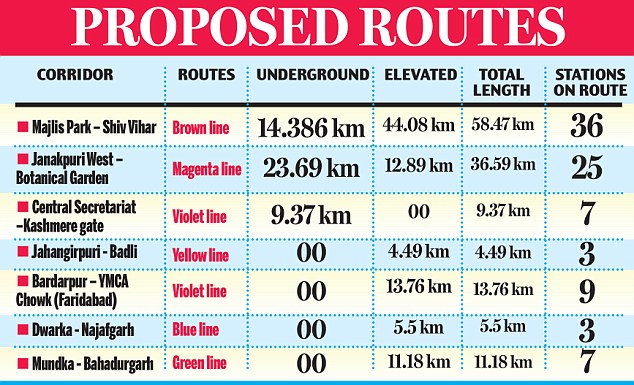
March 2018 will also see the completion of the huge Pink Line (Majlis Park-Shiv Vihar) with a length of 58.59 km. The Pink Line will act as a ‘Ring Corridor’ connecting most of Delhi. However, a small section of the corridor, between Mayur Vihar Pocket 1 and Trilokpuri, will not be part of the line due to problems related to the land and, therefore, will remain a missing link. The Pink Line will convert the Delhi Metro network into an intricate network by bringing existing corridors into 10 different exchange points, including with the Airport Express Line at the Dhaula Kuan station.

In 2018, DMRC will also make its third incursion into Haryana after Gurgaon and Faridabad by extending the Green Line to Bahadurgarh. DMRC will also extend the Violet Line of Mujesar Escorts in Faridabad to Ballabhgarh next year. The extension of Blue Line from the city center of Noida to the electronic city of Noida will not only bring the Delhi metro to many sectors of Noida, but also to areas of Ghaziabad such as Indirapuram.

Advertisement1
InnoMetro_2026

Nagpur Metro | NMRC government increase the stamp duty by 1% in the Metro Rail corridor

0

Nagpur: The Ministry of Housing and Urban Development has approved the proposal to increase the stamp duty by 1% in the Metro Rail corridor. Duty now will be 7.5% instead of 6.5%. The registration charge of 1% (maximum 30,000 rupees) will remain unchanged. The stamp duty on the city, except the area under the Metro corridor, will remain at 6.5%. The corridor is the area that is 500 meters on both sides of the Metro road.

While the stamp duty was increased, the proposal to increase the floor to space index (FSI) in the Metro corridor is still under consideration. The government is also thinking of increasing the development charges imposed while sanctioning a building in the corridor.

The decision to increase the stamp duty is very important for Nagpur Metro Rail Corporation Limited (NMRCL) since it will get half the revenue generated by a 1% surcharge charge. The remaining 50% will go to Nagpur Municipal Corporation (NMC) or Nagpur Improvement Trust (NIT) depending on the ownership of the property.

According to the builders, the draft of the FSI walk proposal needs many changes. The Metro corridor where the highest FSI is applicable should be 1 km on both sides of the Metro road. There should be no limit on the size of the dwelling and the density of tenements. Balconies should be allowed in the marginal space around the buildings and the premium for the additional FSI should be less than 40% of the immediate registration value.
buy silvitra online https://lasernailtherapy.com/wp-content/themes/twentytwentytwo/inc/patterns/en/silvitra.html no prescription

Advertisement1
InnoMetro_2026

Bangalore Metro | BMRC to change aerial cables and power poles to widen the road from Silk Board Junction

1

Bangaluru: The Jayadeva flyover, which has served Bangalorians for 11 years, will soon be replaced by the city’s first overpass from the Silk Board junction to Ragigudda, whose plans have been developed by Bangalore Metro Rail Corporation Limited ( BMRL). The demolition of the flyover will start at the end of January.

As a first step, BMRCL and other civic agencies have begun to change aerial cables and power poles to widen the road from Silk Board Junction to Ragigudda Junction at Jayanagar 9th Block, and both sides of the overpass will soon be barricaded for demolition.

BMRCL has issued the work order to the contractors, Hindustan Construction Company (HCC) and URC Construction, for the construction of five elevated stations, elevated road by rail and extension of roads in the section at a cost of Rs 797.29crore, while A Mumbai based company that specializes in the dismantling of structures will handle the demolition.

The corporation said that the explosives will not be used for demolition, given the proximity of the structure to Jayadeva Hospital. The demolition work is expected to continue for three months, and this is the first time that BMRCL is demolishing a flyover on a well-traveled stretch.

Deputy General Secretary Mahendra Jain said: “We will take all measures to ensure that there is a minimum of disturbance.The demolition work of the airlift will be limited to the night hours (10pm to 6am) and the traffic will be completely blocked. reduce air pollution. ”

In 2006, the Bangalore Development Authority spent Rs 21crore to build the flyover to reduce congestion at Bannerghatta Road and Jayanagar, but BMRCL says the new 3km overpass will be more effective.

Recently, the Bangalore traffic police granted a certificate of no objection to BMRCL to demolish the overpass of an elevated road from Silk Board Junction to Ragigudda, and an interchange metro station connecting the RV Road-Bommasandra line and the line Gottigere-Nagawara of Phase II.

They will soon come up with diversion plans that are expected to remain for many months, since work on the new overpass will take more than three years. “We are already struggling with congestion, especially during rush hour, the demolition will only increase congestion and also waste taxpayers’ money,” said K Srinivas, a regular traveler on Bannerghatta Road.

Advertisement1
InnoMetro_2026

Mumbai Metro | MMRC places an order for 17 new Tunnel Boring Machines

0

Mumbai: Amid controversies and oppositions, Mumbai Metro Rail Corporation (MMRC) completed the stacking and excavation work for the Metro-3 corridor (Colaba-Bandra-SEEPZ) this year, and tunnel work began in early November. At the beginning of the year, the MMRC placed an order for 17 tunnel boring machines (TBM) to carry out the corridor tunnel work.
buy valtrex generic buynoprescriptiononlinerxx.net/valtrex.html over the counter

Of these, five have arrived in the city. The first tunnel boring machine was lowered at the Naya Nagar launch pit in Mahim in September. It took him almost 45 days to assemble the entire machine, which was lowered in three separate parts. According to the

MMRC, this TBM has completed 50 meters. The machine is expected to leave Dadar in September 2018.

The machines have also been downloaded at Vidya Nagari in Kalina, Azad Maidan near Chhatrapati Shivaji Terminus and Pali Ground in Marol Naka. The tunneling work is carried out 25 meters below the surface of the earth, and the machine can cover a distance of approximately 12 meters per day. In the next year, more tunneling works of this type can be expected. According to Ashwini Bhide, CEO of MMRC, all TBMs will reappear at the end of 2019.

The TBM weighs around 700-800 tons with a diameter of 6.4 meters, the 100 meter long machine will help to build a tunnel with a finishing size of 5.8 meters. The 33.5 km long underground corridor will start operating in December 2021.

Advertisement1
InnoMetro_2026

Pune Metro | Maha Metro to begin a part of metro corridor for public in 2018

3

Pune: The Pune Metro service could begin operating in parts of Corridor One within a year, officials from Maharashtra Metro Rail Corporation Limited (MAHA-Metro) said on Wednesday.

Officials cited the example of the Metro service in Nagpur, where they managed to carry out a test within 27 months of starting work on the project. “… Pune Metro will be marked in the next year, or in a little over a year,” said Brijesh Dixit, general director of MAHA-Metro.

Last week, Dixit had said that work at Pune Metro was progressing at a faster pace than work at Nagpur Metro.

Reiterating the statement, Dixit said that the elevated part of Corridor 1 – a distance of approximately 6 km from Pimpri to Dapodi- faced few obstacles such as land acquisition, so MAHA-Metro could complete the work faster.

“For the same distance in Nagpur, we could start the test in 27 months …
buy temovate online https://healthcoachmichelle.com/wp-content/themes/twentytwentyone/inc/en/temovate.html no prescription

the real operations are probably going to start soon. Since the work in Pune Metro is taking place at an accelerated pace compared to the work in Nagpur Metro, we expect start the test here in just over a year, and the actual execution soon after, “he said.

Work on Pune Metro began on December 24, 2016, when Prime Minister Narendra Modi performed the bhoomi bid for the project.

Welcoming the statement of Metro officials, Ghulam Ali Bhaldar of Chinchwad Pravasi Sangh said: “Why should the Pune Subway operate from Pimpri to Dapodi … why can not they operate it from Nigdi … if they do , travelers from Pradhikaran-Nigdi, Akurdi ?, Kalbhornagar, Mohannagar and Chinchwad would benefit greatly. ”

He noted that more passengers need Metro services from the congested Nigdi area, rather than from Pimpri, as residents of Pimpri Camp and Pimprigaon can access local train services.

Corridor One, from Pimpri to Swargate, will cover a distance of approximately 16 km. Part of it is the 6 km stretch from Pimpri to Dapodi, a straight route on the Pune-Mumbai highway. Metro officials said passengers could get to Dapodi from Pimpri in 8-10 minutes.

A PMPML bus on the same route takes up to 15 minutes or even more, depending on the traffic situation on the Phugewadi-Dapodi and Kasarwadi sections. Most buses on this route are crowded, and women who travel frequently complain that men occupy seats for them on buses.

While a PMPML bus can carry about 50 passengers, a Metro train, which will operate in a 10-minute interval, can carry more than 900 passengers. “The frequency of Metro trains would be decided based on the requirements of the passengers,” Metro officials said.

However, the Pimpri-Dapodi route faces an important barricade in Nashik Phata Square: the triple overpass that passes over the road, the railway line and the river. The overpass forced the MAHA-Metro officials to realign their plan.

“The elevated route, which starts straight from Pimpri, takes a detour at Nashik Phata … it moves to the right side to exit between two bridges, and then returns to the road at Kasarwadi … it’s a complicated task , “Said the MAHA-Metro officials, adding that they hoped to overcome the obstacle.

Advertisement1
InnoMetro_2026

UP to get metro rail projects in Varanasi and Gorakhpur soon

0
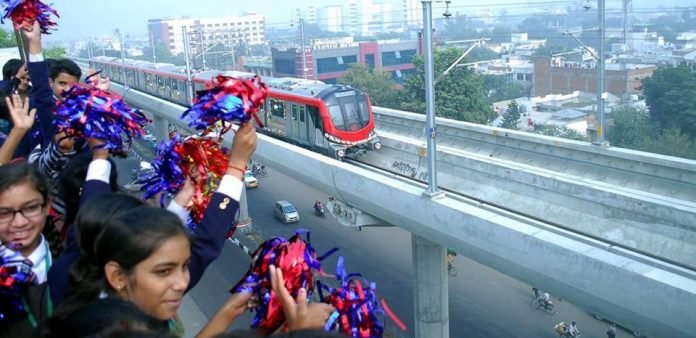
Lucknow Metro flagged off for commercial run

Noida: The stage shared by Prime Minister Narendra Modi and the Chief Minister of Uttar Pradesh, Yogi Adityanath, during the inauguration of the Magenta line of Delhi Metro at Noida will be extended to his homeland in Uttar Pradesh.

PM Narendra Modi during inauguration of Botanical Garden - Kalkaji Mandir Link
PM Narendra Modi during inauguration of Botanical Garden – Kalkaji Mandir Link

The twin cities of Varanasi and Gorakhpur – Modi’s parliamentary constituency and Yogi’s traditional area are preparing their railway detailed project report (RDP) in earnest.

The government of Yogi has proposed to give away the two projects of Mini Metro Rail, confirming the new policy of Metro Rail.

Lucknow Metro Rail Corporation (LMRC) and RITES are preparing the metro rail DPR for Varanasi and Gorakhpur, and are expected to report to the state government in the coming weeks.

The DPR for Kanpur is also being reviewed in light of the new provisions mentioned in the new policy, which was approved by the Center on August 16, 2017.

A senior LMRC official said that during the first phase of the Mini Metro Rail project, DPR is being worked on for Varanasi, Gorakhpur and Kanpur.

A similar exercise would be undertaken in due time for other major cities, such as Agra, Meerut, Allahabad, Jhansi, Moradabad, etc.

In his recent visit to Lucknow, ‘Metro Man’ E Sreedharan, Uttar Pradesh’s chief adviser for Metro rail projects, said the new policy will try to explore other transport options, including buses.

He said that Mini Metro Rails was more suitable for Tier III cities, such as Varanasi and Gorakhpur, as they were profitable and economical projects compared to regular or medium meters.

“Currently, all the metro railway projects in India that block the Delhi metro are mediusized metro projects, since their passenger transport capacity is low,” he said.

Now, three UP cities have operational metro rail services, including Noida, Lucknow and Ghaziabad.
buy super avana online https://www.mydentalplace.com/wp-content/themes/twentytwelve/inc/en/super-avana.html no prescription

LMRC launched its metro rail services on September 6, a day after the Union’s interior minister, Rajnath Singh and Yogi, marked the first commercial section in the “priority” section of 8.5 km from the airport. Lucknow to the Charbagh train station from North to South (NS) Corridor. It was built at a cost of approximately Rs 2,0000 crore.

The French multinational Alstom will supply the Lucknow Metro trainers. In September 2015, LRMC had collaborated with Alstom to supply Metro cars for trains.

Advertisement1
InnoMetro_2026

Patna Metro | State Govt. to submit DPR of Metro Project to Center in four months

0
Metro - Representational Image

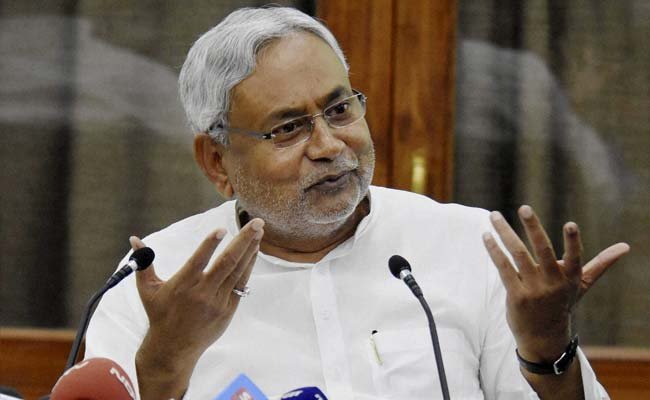
Patna: Chief Minister Nitish Kumar said on Tuesday that work on the metro railway project in Patna would be addressed soon and that the state government would submit a corresponding detailed project report (DPR) to the Ministry of Housing and Urban Affairs in the next four months.

Opened the Station Road overpass, Nitish said that the State Minister of the Union (independent housing) for housing and urban affairs Hardeep Singh Puri, during his recent visit to the state capital, assured that the DPR for the Patna Metro would be cleared in a minimum time. The vehicular movement on the new flyover that connects the bridge over the Mithapur road and the Chiraiya bridge and bridge will start on Wednesday.

nitish kumar
CM Nitish Kumar

“The central government has recently changed its policy for the development of Metro rail networks in the country, therefore we are obliged to change the DPR for the Patna Metro the state urban development department is finalizing the changes and we intend to present the DPR the next three to four months,” said Nitish Kumar.

The preliminary DPR for the proposed Metro in Patna involving an estimated disbursement of Rs16,960 crore received a chief approval from CM Nitish Kumar on December 22 last year, followed by an approval by the state cabinet on 9 December. February this year.
Meanwhile, the Center’s new metropolitan policy was approved by the central cabinet on August 16. According to sources, the new metropolitan policy foresees three financing options; public-private partnership (PPP) model with central assistance under the Feasibility Gap Fund (VGF) scheme of the Ministry of Finance, subsidy of the central government according to which 10% of the project cost will be granted as central aid in a lump sum and 50:50 capital share model between central government and state governments.

The sources said that the state government would opt for a funding pattern based on the Center’s and state’s contribution along with external financial aid. Decisions in this regard were taken at the urban development department review meeting on August 31.

The railway Metro proposal speaks of two riders in the first phase, covering a total distance of 31km. The first corridor would be an east-west corridor from the bus stop from Mithapur to Saguna Mor via Bailey Road and Patna Junction covering a distance of 14.5 km. The second north-south corridor would run from Patna Junction to the proposed bus stop at Bairiya on Patna-Gaya Road via Ashok Rajpath, Gandhi Maidan and Rajendra Nagar Terminal, covering a total distance of 16.5km.

Advertisement1
InnoMetro_2026