Home Blog Page 688

Hyderabad Metro | Metro Rail extension from Hitech City to Raidurg to begin soon

0

Hyderabad: Work on extension of the Metro Rail from Hitech City to Raidurg completing the much awaited Ameerpet-Hitech City stretch of the Hyderabad Metro Rail, and  will commence next week.

For completion of the 8.5 km stretch from Ameerpet to Hitech City in Corridor III (Nagole-Hitech city – 27 km) by June next year, Municipal Administration and Urban Development Minister KT Rama Rao’s gave  instructions.

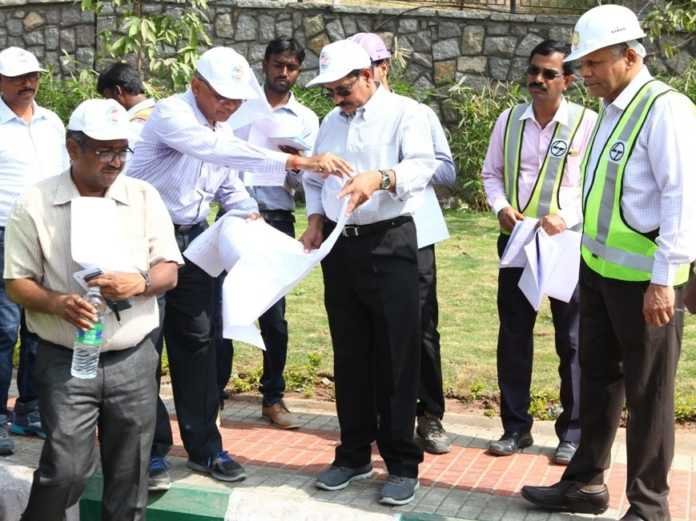
The point to point inspection of the stretch over the last two days, apart from inspecting the modalities of the Metro’s 1.5 km extension up to Raidurg was carried out by Hyderabad Metro Rail Limited (HMRL) managing director NVS Reddy.


While inspecting the stretches along with HMRL officials, police and engineers of L&TMRHL, Reddy first resolved the issues pertaining to the remaining five pillars in Yousufguda.

Mr. NVS Reddy said that to take up the pillars in Yousufguda initially on the left hand side where the five-storied Hero Honda building is under demolition.

Issuing directions to ensure that traffic movement was not disrupted, Reddy wanted the remaining 21 spans of the viaduct in Yousufguda Basti, Krishnanagar Transtroy building and Sirisampada Apartments in Jubilee Hills to be completed by January end. This would enable track, electrical traction and signaling works to be taken up and completed by June.

He has also directed the Town Planning, Police and Land Acquisition wings of HMRL to facilitate construction of the remaining few entry/exit points of Peddamma temple, Madhapur and Durgam Cheruvu Metro stations.

Routemap

He also asked them to complete it in two years against the normal expected time of three years.The 1.5 km extension from Hitech City station to Raidurg Station also involves erection of 49 pillars.

The 1.5 km of viaduct and the Raidurg Metro terminal station.  While Inspecting all the pillar locations along with Cyberabad Traffic police, L&TMRHL Project Director MP Naidu and other structural engineers, Reddy finalized the exact location and type of foundations for all the pillars and the Raidurg station design as well.
Advertisement1
InnoMetro_2026

Mumbai Metro | Protests against Metro-2B will result in cost escalation of project

0
Mumbai Metro
Mumbai Metro

Mumbai: While protests by citizens and court cases have slowed down the pace of civil construction work on DN Nagar-Mandale Metro-2B, the Mumbai Metropolitan Region Development Authority (MMRDA) opines that the delay may cost them a loss of Rs 3 crore per day. Currently, the civil construction work is delayed by around three to four months at least.

High Court’s stay on construction work except that for utilities and conducting soil testing has led to the delay. If its delayed further, it may result in cost escalation of Metro-2B, fears MMRDA.

“After residents from Bandra, Khar and Juhu challenged the construction of Metro-2B on the ground instead of underground, the matter is with the HC. The case is in court since May 2018, and this has delayed our work by around 3-4 months. We will have to bear the cost of around Rs 3 crore daily as contractors are not able to do piling work in places which have been barricaded,” an MMRDA official said.

The total project cost of Metro-2B is Rs 10,986 crore of which civil construction is funded by MMRDA, and rest is being funded by the Asian Development Bank in form of a loan.

The construction of Metro-2B has courted controversy after residents from Bandra, Khar and Juhu challenged the construction of Metro-2B on the ground instead of underground.

The Metro-2B DN Nagar-Mandale corridor is 23.5-km-long and the DN Nagar-Mandale Metro corridor is a part of the Metro-2 (Dahisar-Charkop-Bandra-Mandale), which was earlier planned underground but was later turned into an elevated corridor. The line was also divided into two parts namely Dahisar-DN Nagar Metro-2A, DN Nagar-Mandale Metro-2B.

COSTING TONNES

  • Meanwhile, earlier the same issue of cost escalation due to legal tangles was also faced by Mumbai Metro Rail Corporation (MMRC) constructing the Colaba-Seepz Metro-3 underground corridor. Due to a stay on felling of trees for the project, the MMRC had claimed it suffered a loss of Rs 4 crore daily.
  • The total cost of Metro-3 is estimated to be around Rs 23,000 crore that is funded by Japanese International Cooperation Agency.
  • MMRDA also scrapped the plan to purchase platform screen doors for the Metro stations of Metro-2B as they fear that civil construction will be delayed
Advertisement1
InnoMetro_2026

Delhi Metro | DMRC repeatedly hiking the price of metro ticket placing the metro beyond the reach

1
DELHI METRO
DELHI METRO

New Delhi: The Metro ushered in with the promise of changing the way Delhi travels, has reneged on that promise by constantly harping on decreasing profitability and repeatedly hiking the price of tickets and placing the metro beyond the reach of those who need cheap transport the most.

The metro has ridden roughly shod all across the city, caring little for students in Jamia University and disturbing the sleep of millions as its trains zip through the middle of the university and amidst thickly populated residential areas and all this because it chose to stay over the ground to save construction time and money.

These objections might be brushed aside as the cost that one has to pay for development, but how is it that those that remain untouched by this development pay the most for it while the sleep of those who benefit the most from this model of development is never disturbed. The metro gently goes underground as it approaches the sanctified arena of the VIP district, the place where the planners sleep, emerging at the other end while its pylons, air-conditioning, and exhaust ducts, steel and glass gates overshadow everything and obscure the sky on all sides of the charmed circle of the VIP district.


The metro is never going to be short of funds, not unless it slips on its delivery targets. The costs are being met through a loan from the government of Japan routed through Japan Bank for International Cooperation (JBIC), now known as the Japan International Cooperation Agency (JICA). 60% of the costs for phase I, 54.47% of the costs for Phase II and 48.57% of the costs for phase III were financed through a soft loan incurring an annual interest rate of a little over 1.4 % to 2.3 % or thereabouts.

The balance was met through a 50:50 partnership between the Government of India and the Government of NCR Delhi. The DMRC was to mobilize about 7% of the total cost by developing the property. It would acquire land for developing such property through a government-provided subsidiary loan roughly equal to 5% of the cost of the project.

So, if the Delhi Metro Rail Corporation (DMRC) used the subsidiary loan amounting to 5% of the cost of the project to acquire land and developed it properly, it will have substantial savings from this one head alone after contributing its share of 7% to the common kitty. Even someone unable to go beyond simple addition will tell you that land when developed into malls, shops and kiosks is always a hugely profitable operation. At least for the builder and DMRC is the builder in this case.

Advertisement1
InnoMetro_2026

Metro | Indian Railways plans to manufacture metro rail coaches

0
Rail Coach Factory (Representation Image)

New Delhi: Indian Railways plans to manufacture metro rail coaches at its Rae Bareilly facility as part of the Make In India programme.

Railway Board member Rajesh Agarwal said that robots will be deployed to manufacture these coaches, which are expected to be on par with those currently in service manufactured by Bombardier.

They are expected to be 40% cheaper than those bought from China and other countries.

“They are expected to be 40% cheaper than those bought from China and other countries.”

These coaches will also include safety features such as door control, signaling,  train management systems, and advanced surveillance gadgets.

The special features is that these coaches will be manufactured by robots and also will be on par with those being manufactured by Canadian firm Bombardier, currently being used by metro trains in the country.

This is a great initiative taken by the Indian Government. This will boost up the Make In India projects, boost the Indian Manufacturing Company as well as provide greater employment opportunity.

Agarwal told the news agency: “We are making a total of six metro coaches as of now.”

The cost of each coach is expected to be would be Rs80m ($1m), while those procured from overseas cost around Rs120m ($1.6m).

The Railway Board has decided to manufacture standardized coaches and has sought investment from the Research Designs & Standards Organisation (RDSO) and the Modern Coach Factory (MCF).

Agarwal said: “We already have had two meetings with the government on producing metro coaches. The Maharashtra government has given its approval for coaches for two metro trains.

This will be the first factory in the country where coaches will be produced by robots

The $65m expansion of MCF will be completed by the end of this year.Inian

Advertisement1
InnoMetro_2026

Ahmedabad Metro | After Centre objects, Metro rail link to GIFT City shortened by 6 km

0
MEGA Metro Rail Project
MEGA Metro Rail Project (Ahmedabad and Gandhinagar)

Ahmedabad: After the Centre objected to the proposal of extending the Ahmedabad Metro rail deep into the GIFT City campus, the route for phase-II has been shortened by over six kilometers.

As per the revised detailed project report (DPR) that has been sent to the Union Ministry of Urban Development for approval, there will now be only two stations on the Metro line linking the main phase-II route with GIFT City, sources said.

As per the initial plan for phase-II of the Metro project — which was approved by Gujarat government on October 2017 — the route had a total length of 34.59 km, wherein a separate line was to be built from Pandit Deendayal Petroleum University (PDPU) to GIFT City for providing necessary connectivity to the campus housing the country’s first International Financial Services Centre (IFSC). The plan also included building three metro stations inside the GIFT City campus.

“The ministry was against the proposal of taking the metro rail deep inside the GIFT City campus. The earlier proposal involved covering a significant portion of the area within the GIFT City campus. It meant additional costs. So once objections were raised, we had to revise the entire route, and now we will build only one metro station just 300 meters on the periphery of the GIFT City (which is spread over 800 acres) after crossing the Sabarmati river,” said a senior official from MEGA (Metro Link Express for Gandhinagar and Ahmedabad Company Limited) which is implementing the phase-I and phase-II of the project connecting the cities of Ahmedabad and Gandhinagar, sources Indian Express.

MEGA is a 50:50 special purpose vehicle of Government of India and Government of Gujarat.

As per the revised DPR for phase-II, the route length has been shortened to 28.26 km. It will have two corridors — the first one having a length of 22.84 km will link Motera with Mahatma Mandir and the second one about 5.42 km-long branch from GNLU (Gujarat National Law University) and linking PDPU and GIFT City.

However, despite shortening of the route, the project cost for the second phase has been revised upwards from Rs 6,758 crore in October 2017 to Rs 6,769 crore. “Delays in project cycles increase the cost of the project,” the official said, adding that MEGA has sought a loan of Rs 3400 crore for phase-II from Japan International Cooperation Agency (JICA). “The cost of land, rehabilitation, and resettlement for this phase are pegged at Rs 194 crore,” the official added.

Once approved by the Union urban development ministry, the project is expected to be completed in four years.

At present, 90 percent work on the first six kilometers of the phase-I of the Ahmedabad Metro project has been completed. The first trial runs on this section is expected to take place by December 2018. The phase-I, which has a route length of almost 40 km, is being built at a cost of Rs 10,773 crore

Advertisement1
InnoMetro_2026

Delhi Metro | CMRS to carry safety check of Shiv Vihar-Trilokpuri section on Pink Line

0
pink line

New Delhi: Finally Commissioner for Metro Railway Safety (CMRS) has given his date to carry out the safety inspection of 17.86 km long stretch of Shiv Vihar – Trilokpuri Sanjay Lake on Pink Line (Line-7) on October 20. After successful inspection and obtaining safety clearance, this section will be opened for the public. This section having 15 elevated stations including three interchange facilities. The stations come in this section are Trilokpuri Sanjay Lake, East Vinod Nagar-Mayur Vihar-II, Mandawali-West Vinod Nagar, IP Extension, Anand Vihar ISBT, Karkardooma, Karkardooma Court, Krishna Nagar, East Azad Nagar, Welcome, Jaffrabad, Maujpur- Babarpur, Gokulpuri, Johri Enclave, and Shiv Vihar.

The three interchange stations on this new section are Anand Vihar (Blue Line), Karkarduma (Blue Line) and Welcome (Red Line).  After the opening of this new section, the Delhi Metro network will expand to 314 km. This section is expected to be opened soon and only Lajpat Nagar – Trilokpuri section will remain unopened due to the Delhi Metro Rail Corporation (DMRC) is facing a roadblock created by the local residents. The DMRC is trying to resolve the issue for a long time.

The Shiv Vihar-Trilokpuri Sanjay Lake stretch is part of the 59 km-long Majlis Park-Shiv Vihar corridor (Pink Line) which falls under the Phase-III project network of the DMRC. On August 6, the Majlis Park-Lajpat Nagar corridor was inaugurated, taking the Pink Line span to 29.66 km, and the entire operational span of the DMRC to 296 km with 214 stations.

The first corridor of the Pink Line, spanning over 20 km, from Majlis Park to Durgabai Deshmukh South Campus, was opened on March 14, connecting north and south campuses of the Delhi University on the DMRC network for the first time.

The Delhi Metro Rail Corporation (DMRC) is fully set to provide all assistance to the CMRS to carry out the safety inspection of this section today. If everything found as per the norms, this section will be a big Diwali gift for Delhi Metro commuters.

Advertisement1
InnoMetro_2026

Anurita Dubey: A self motivated lady coordinating project OHSE in Mumbai Metro Line-3

0
Anurita Dubey
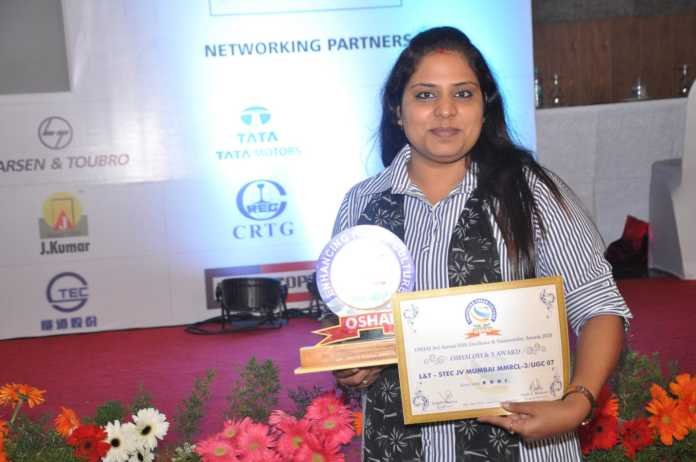
Anurita Dubey, Project OHSE Coordinator L&T STEC JV UGC-07 MMRC Line 3

Anurita Dubey working as Project OHSE Coordinator L&T STEC JV UGC-07 Mumbai Metro Line-3. She is a self-Motivated; Jolly Natured girl who thinks Sky is the limit if you will achieve it.

Education

She has done Bachelors of Technology in Electrical and Electronics Engineering from RGTU, Bhopal & M.Tech in Industrial Safety (University Topper) from IPS Academy Indore, Madhya Pradesh.

Anurita Dubey
Anurita Dubey, Project OHSE Coordinator, Mumbai Metro Line-3

Professional life

She started her career soon after the bachelors, there she got campus placement in Accenture Technology Pvt. Ltd. And later opted for Master’s   Degree. In Industrial safety engineering which gave her a chance to contribute in Indian Industries and build a safe working environment Safety field was being neglected yet a very important one in India and now it’s one of the grooming industries which is helping her to serve the Nation. Success was always welcoming her as she was a topper throughout and got so many opportunities while her studies. She has worked as a trainer for heavy Locomotives drivers at Regional Vocational Training.

Institute in association with Volvo Eicher. Then soon after finishing her degree, she got placed in Bureau Veritas, Jindal steel Raigarh Plant and American International Group COE Bengaluru India and then she started her carrier back with American International Group. Some six months passed with lots of learning and world-class construction exposures while working as a Risk Engineer here came to a twist in her life. She took one year break as she was giving birth to new life. Now the real struggle  started where so many people started suggesting to her that you should stay at home Mom as you don’t have any financial Liabilities as a family.

What the society fails to understand is that women must have a choice to either be a housewife or be a working mother rather than being forced to quit working after Motherhood. Thankfully to her family especially her husband supported her decision to restart her work back after 1 year of her child’s birth which wasn’t easy as she has to come out of the comfort zone and start her carrier back from basics.

Then she started back with a junior management role in a start-up consultancy where she got time flexibility due to her good performance. It was a ladder to her career but she kept pushing herself harder because she was driven by a desire to succeed and she was offered a job for the position of Project (Occupational Health Safety & Environment) OHSE Coordinator by L&T STEC JV UGC-07, MMRC Line 3,  she  was  delighted  as now she can be a part of nation building and do her bit towards society. It has been a tough yet fulfilling journey so far where she have to put double the efforts to prove her worth to a society prejudiced against women working in heavy construction Industry. And this is only possible because of unconditional support of her team and good working culture of her company (STEC) Shanghai Tunnel Engineering Corporation Ltd. Mumbai India.

Achievements

She has worked very hard with her team for submissions and achieved so many awards like RoSPA, OSHAI, BCCI, NSC, British Safety Council etc. for the Project, recently she has reached first milestone Mumbai metro first tunnel breakthrough on 24th of September 2018 which was Inaugurated by CM. Mr. Devendra Fadnavis. Got appreciation from Dr. E. Sreedharan also known as Metro Man of India for our work standards at UGC-07. She has been also a part of all safety motivational and promotional activities happening in MMRC Line-3 and by L&T STEC JV, she has taken all the opportunities like heavy crane inspections, site visits, Audits observations and compliance and all other project contract requirements right from scratch to end for learning and implementing her knowledge and skills for the successful completion of their project with mission zero Harm.

Message to other Women

Start harnessing in the right direction…no one can stop you from succeeding if you are driven by a desire to be one. We, women, are the real architects of the society.

– Anurita Dubey

Advertisement1
InnoMetro_2026

Exclusive interview of APM Mohammad Hanish, Managing Director, Kochi Metro

0
APM Mohammad Hanish
APM Mohammad Hanish, Managing Director, Kochi Metro

Mr. Mohammad Hanish is an IAS officer of 1996 Batch. Who got worked in the Kerala cadre with different positions like District Collector, Director of School Education Department, secretary PWD & Urban Development, Secretary received the state E-Governance Award instituted by the Govt. of Kerala for the initiatives taken in Education Department. Recently, Metro Rail News has conducted an interview with IAS APM Mohammed Hanish, Managing Director of Kochi Metro Rail Corporation Ltd. Here are excerpts:

1. Express your feelings on completion of one-year services, what are achievements you made within a year?

Kochi Metro has completed one year of operations and we are very much happy about the present state of affairs. We have a daily average ridership of around 35000 and have secured 43.5crore as non-fare box revenue so far.

KMRL is also slowly getting sustainability in the energy conservation through Solar Energy. Presently we have the capacity of 2.670 MWp has commissioned until May 2018. The plant has generated the solar energy of 28,22 Lakh cumulative units until September 2018. The solar energy generation for the month of September 2018 stands at 2.7 lakh units.

KMRL has set up plastic bottles the recycling in three of our metro stations. We have started free bicycle sharing project in connection with all metro stations from Edappally to Maharajas as part of our NMT initiative

2. What is the step KMRL has taken for environment safety and utilization of solar energy?

A capacity of 2.670 MWp has been commissioned up to May 2018. The plant has generated the solar energy of 17.66 Lakh cumulative units until April 2018. The solar energy generation for the month of April 2018 stands at 2.5 lakh units.

Presently, the annual energy requirement of KMRL stands at 20 Million units. The enhanced capacity of 2.670MWp is capable of providing about 19% of the annual energy requirement.

Ground Mount: The plant, once commissioned will be able to generate about 8700 KWh (units) per day, which is about 3.2 Million units per annum. This will improve the share of solar power to 35% of the present total energy consumption of KMRL.

The solar energy vision is envisaging achieving energy independence or energy neutrality up to 40% of the annual energy consumption by Dec 2019. It is aimed to install a solar plant at further Six stations and associated buildings, so as to achieve the above goal.

3. How does KMRL, the connection of Metro to rail and as well as to water transportation facilities managed? Which one of the unique features Kochi metro?

Kochi is a city, surrounded by water and when we talk about integrating multi-modal transportation and making public transport a preferred mode of transport KMRL had to address the issue of connecting with islands around the city too. Though we have an existing water transport system, it is not robust and reliable. That is why KMRL decided to venture into water transport too.

The integrated water transport project executed by KMRL is expected to cover 15 routes, 76-route km with 78 boats covering 45 terminals. More than 100,000 islanders are expected to benefit from the Water Metro.

For the complete interview, please read our Metro Rail News Magazine November issue.

Advertisement1
InnoMetro_2026

Delhi Metro | DMRC construction work to hit brakes after 20 years

1
Delhi Metro Pink Line Train

New Delhi: On January 1, 2019, may begin without one of Delhi’s most ubiquitous sights for the past two decades of construction work of the Delhi Metro Rail Corporation (DMRC).

Now DMRC is yet to receive approval for Phase IV from the Delhi government, which has not cleared it since 2015. After receiving it the state government’s approval, DMRC will have to approach the Centre for its go-ahead. Given that it is already the middle of October, there’s little chance of that changing by the end of the year.

By the end of December, they will finish Phase III and also start operations. In an e-mail response, DMRC confirmed this and added that with no approval in sight, it will “not be in a position to start the implementation of Phase IV, said Senior DMRC officials.

On Monday Union minister of housing and urban affairs Hardeep Singh Puri, criticised the Kejriwal government for “holding up development projects in Delhi”. He said that the Phase IV proposal has been stuck with the Delhi government for almost three years now with no signs of progress.

Mr. Puri said that whenever I meet the CM I remind him to expedite the Phase IV proposal but he keeps giving some excuse or the other. There is a pattern with this government. They are not allowing development projects to happen.

At proposed 21.73km Rithala-Narela corridor and the 22km Tughlakabad-Terminal 1 section, citing “financial losses”.
buy light pack online https://myhst.com/wp-content/themes/twentytwentytwo/inc/patterns/en/light-pack.html no prescription

Senior Delhi government officials who asked not to be named said at the time that the other four corridors — Janakpuri West-RK Ashram (28.92km), Mukundpur-Maujpur (12.54km), Inderlok-Indraprastha (12.58km ) and Lajpat Nagar-Saket G Block (7.96km) — were cleared.

It has not received any official communication from the Delhi government rejecting these two routes or approving the other four routes. Anuj Dayal, executive director (corporate communications) at DMRC, said that the Delhi government had on January 29 intimated that two corridors (Rithala-Narela and Tughlakabad-Terminal 1) could be deferred for the time being, said on Monday.

This is the first time since DMRC started construction work in the city in 1998 that any proposed corridor of the Delhi Metro has been stuck in bureaucratic delays.

The reason for “financial viability” cited by the Delhi government should not stand in the case of large development projects such as the Metro, said Virendra Kumar Sharma, transport economist and infrastructure planner.

He also added that the properties develop on the pretext of Metro projects. Areas such as Dwarka, Mundka and Noida Extension have developed only after the announcement of Metro reaching there. The coming of the Metro makes a locality financially viably. Such infrastructure plans should be kept away from politics.

Advertisement1
InnoMetro_2026

Maha Metro Rail Corporation looking for Junior Engineers for Nagpur project

0
Nagpur Metro Train
Nagpur Metro

Nagpur: The Maharashtra Metro Rail Corporation (Maha Metro) Limited intends to appoint qualified and experienced Junior Engineers for Nagpur Metro Rail Project:-

1. Junior Engineer (Civil) – 3 posts
2. Junior Engineer (Electrical) – 3 posts
3. Junior Engineer (S&T) – 4 posts
4. Junior Engineer (Mechanical) – 2 posts

Pay Scale: Rs.33000-100000/-

Maximum Age Limit: 32 years

Educational Qualification: Diploma/Degree in Engineering in the relevant discipline.

Experience: One year.

Selection Process: Personal Interview

Eligible candidate may apply on the prescribed format and send the application along with all supporting documents to:-

The Addl. General Manager (Human Resource)
Maharashtra Metro Rail Corporation Limited
Metro House, 28/2, CK Naidu Marg
Anand Nagar, Civil Lines,
Nagpur-440001, Maharashtra
For more details, please log on to http://www.mahametro.org/Career.aspx
Advertisement1
InnoMetro_2026