Home Blog Page 687

Indian Railway all set to run first engine-less semi high speed train on track

0
Train 18
Train 18

New Delhi: The Indian Railways is all set to replace their 30 years old Shatabdi Trains with new loco-less fully facilitated Train 18 series. These trains are being manufactured in Indian Railway’s Chennai stated Integral Coach Factory (ICF). The first trial run of these train 18 series will be started from October 29.

The trains have no engine line of metro trains and will be driven by a self-propulsion module sans a separate locomotive and the train can run with the speed of up to 160 km per hour, with advanced technical features for enhanced quick acceleration.

The swanky 18 coach prototype without a locomotive (engine) will cut travel time by 15 percent compared to the Shatabdi. The train 18 will be fully air-conditioned with smart look of driver’s cabin. The train can be driven from both sides like metro trains.

According to ICF General Manager Sudhanshu Mani, the one train 18 costs nearly Rs 100 crore to build the prototype and subsequent production would bring down the cost. It will be unveiled on October 29, then it will do 3-4 days of trial outside the factory after that will be handed over to the Research Design and Standards Organisation (RDSO) for further trials.

These self-propelled trains are fitted with CCTV cameras, would have two executive compartments in the middle with 52 seats each, whereas trailer coaches would have 78 seats each.

The train 18 has the potential speed of 160 km per hour as compared to 130 km per hour of Shatabdi and would result in the travel time being reduced by around 15 percent once the tracks are fit to suit its speed.

In addition to GPS-based Passenger Information System, Train 18 has diffused lighting, automatic doors, and footsteps. The footstep in a coach’s doorway slides outward when the train stops at a station enabling passengers to alight safely with comfort in view of the variation in height between a train’s floor and the platform.

The Indian Railways has introduced Shatabdi Express in 1988 and these trains are presently running on over 20 routes connecting metros with other important cities of the country.

Advertisement1
InnoMetro_2026

Why Hyperloop is so dangerous and difficult, with Scientific explanation here

0
Hyperloop Technology

There are multiple reasons why the first Hyperloop test is likely to fall short of its promise. First, infrastructure. For the technology to be viable, any Hyperloop system needs extensive infrastructure – and building that costs a lot of money. Any large-scale implementation of electric cars would face the same obstacle. How difficult this is with charging stations for electric vehicles, but with Hyperloop the cost would be significantly higher. Overground routes could be problematic in urban areas, so would be required to be underground, which further adds to the cost.

Another technological challenge for a full-scale Hyperloop is maintaining the vacuum within the Hyperloop system, as any air leaks will impact the pods’ maximum speed. There would have to be large vacuum pumps positioned periodically throughout the route to maintain the vacuum, and these will need to be powered. But building a hundred or so mile-long vacuum or near-vacuum chamber is almost impossible. A British scientist currently at the Institute of Organic Chemistry and Biochemistry in the Czech Republic – adding that the two core problems are expansion issues on a straight tube and atmospheric pressure.

Advertisement1
InnoMetro_2026

Lucknow Metro | ALSTOM dispatches last metro train set to LMRC from Sri City factory

0
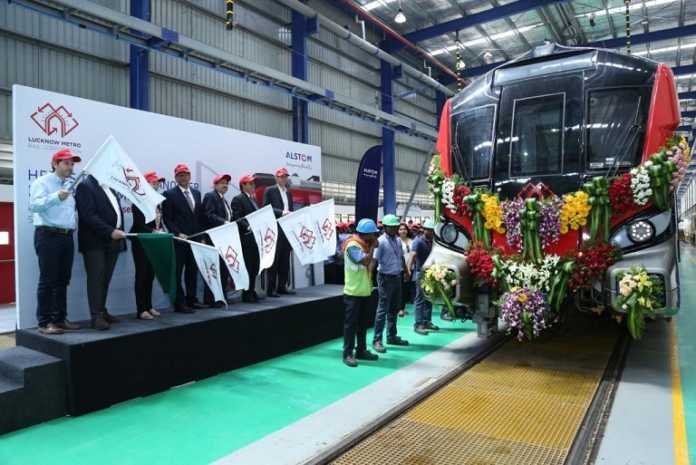
Alstom dispatched last train set to Lucknow Metro

Sri City: Finally ALSTOM has dispatched its last train set to Lucknow Metro Rail Corporation (LMRC) from Sri City facility Centre. Lucknow Metro Managing Director witnessed the ceremony in a grand style in the presence of Mr. Henri Poupart Lafarge, CEO, Alstom (France) and other officials. The train is expected to reach Lucknow in next ten (10) days and will be received at the Transport Nagar Metro Depot.

With this, LMRC has ensured that all the twenty (20) Rolling Stocks required for commissioning of the 22.878 km long North-South (Phase 1A) Metro corridor is delivered within the stipulated time by the contractor.  All the trains will be subjected to trial on the mainline before the inauguration of the commercial services which is expected to take place early next year (2019) as desired by the Government.

The fast delivery of the train sets was made possible only because of the close coordination; time-bound design approvals and continuous review of the project by the Lucknow Metro officials. All the four cars of the Rolling Stock (Metro train) have been despatched today by road through special trailers. The Managing Director also thanked M/s Alstom for timely manufacturing, supply, and commissioning of the Metro trains.

The state of the art trains are quite comfortable for passengers in terms of minimizing noise levels in cabins, providing wide passenger doors for entry/exits and inter-car gangways for swift passenger movement, ergonomically designed handrails & grab handles system for easy & comfortable standing, communicative Public Announcement System with all around visible Display System inside as well as on sides and in front of trains. Apart from this, there are digital information display panels, large windows, and scratchproof stainless bucket type seats for comfortable and convenient seating or passengers.

These trains have the unique feature of continuous monitoring of pantograph through a roof-mounted camera integrated to train which is CCTV implemented for the first time in the world.

The trains have been provided with the latest Communication Based Train Control Signaling system (CBTC) with Automatic Train Protection (ATP) for automatic braking to prevent and avert any kind of collision thereby giving topmost priority to passenger safety. The Automatic Train Supervision (ATS) system further ensures the automatic management of train movement by continuous supervision particularly in case of abnormalities.

All necessary trials have been conducted successfully at the manufacturing plant. Only dynamic trials of the train are required to be done in the Depot upon its arrival in Lucknow.

Advertisement1
InnoMetro_2026

Delhi Metro | DMRC invites bids for supply of 80 broad gauge Rolling Stock coaches

0
Rolling Stock
Delhi Metro Train

New Delhi: Delhi Metro Rail Corporation Ltd. (DMRC) invites open e-tenders from agencies on international competitive bidding (ICB) basis for the design, manufacture, supply, testing, commissioning and training of Broad gauge cars (Rolling Stock) for the project. The Tender Documents describing the Scope of Work and the Terms and Conditions for the contract is enclosed with this Notice of Invitation. Proposals for this Tender are being called by the Delhi Metro Rail Corporation Limited.

The scope of Work:

DESIGN, MANUFACTURE, SUPPLY, TESTING, AND COMMISSIONING OF 80 No. BROAD GAUGE CARS COMPATIBLE WITH EXISTING ‘RS1’ TYPE TRAINS SUPPLIED BY MRM CONSORTIUM.

Key details:
  • Approximate cost of work: INR 8410 Million (excluding taxes and duties)
  • Tender Security amount: INR 85 Million
  • Expected Completion period of the Work: 106 weeks
  • Tender documents Download/Sale date: From 17.10.2018 to 19.12.2018 (up to 10:00
    hrs) on e-tendering website https://eprocure.gov.in/eprocure/app
  • Cost of Tender documents: INR 23,600/- (inclusive of 18% GST)
  • Last date of Seeking Clarification: 05.11.2018
  • Pre-bid Meeting: 12.11.2018 at 11.00 hrs
  • Last date of issuing addendum and DMRC’s response to queries: 5.12.2018
  • Date & time of Submission of Tender: 19.12.2018 up to 11:00 Hrs.
  • Date & time of opening of Tender: 20.12.2018 @ 11:05 Hrs.
  • Authority and place for submission of Tender Document cost and seeking
    clarifications: Chief Electrical Engineer/Rolling Stock-III, Delhi Metro Rail Corporation Ltd., 3rd Floor, NBCC Place, Bhishma Pitamah Marg, Pragati Vihar, New Delhi – 110003

REGISTRATION PROCESS

1) Bidders are required to enroll on the e-Procurement module of the Central Public Procurement Portal (URL: https://eprocure.gov.in/eprocure/app) by clicking on the link “Online Bidder Enrollment” on the CPP Portal which is free of charge.
2) As part of the enrolment process, the bidders will be required to choose a unique username and assign a password for their accounts.
3) Bidders are advised to register their valid email address and mobile numbers as part of the registration process. These would be used for any communication from the CPP Portal.
4) Upon enrolment, the bidders will be required to register their valid Digital Signature Certificate (Class II or Class III Certificates with signing key usage) issued by any Certifying Authority recognized by CCA India, with their profile.
5) Only one valid DSC should be registered by a bidder. Please note that the bidders are responsible to ensure that they do not lend their DSC’s to others which may lead to misuse.
6) The bidder then logs in to the site through the secured log-in by entering their user ID/password and the password of the DSC /e-Token.

Advertisement1
InnoMetro_2026

Mumbai Metro| MMRDA Upcoming metro lines to have same fares as existing one

0
Mumbai Metro
Mumbai Metro

Mumbai: The fare structure of the upcoming metro lines in Mumbai will be same as the one which is in force for the corridor currently in operation, said an official Tuesday.

The Mumbai Metropolitan Region Development Authority (MMRDA), the nodal agency of metro lines, said the fares charged to passengers of the Mumbai Metro One corridor will be extended to the upcoming lines of the rapid transport system.

Mumbai Metro One, the city’s first 11.4km long corridor, operates on the high-traffic Versova-Andheri- Ghatkopar section and it currently has a fare slab of Rs 10 to 40.

Two more metro lines are under different stages of construction.

MMRDA Commissioner R A Rajeev said, “The fare structure of the upcoming metro lines will be same as currently applicable in Metro One line.

“Fare slab of Rs 10 to 40 is quite justifiable and fare. The fare slab of Rs 10, 20, 30 and 40 are quite reasonable.”

Speaking at an event organized by the Aaj Tak news channel in a hotel here, the IAS officer said there is some confusion about Metro One running into a loss.

“If you set aside the capex of Metro One and if you see only the operation cost, then its EBITA is positive. I also want to stress out that financial aspect is not going to affect the execution of other big-ticket projects anyway.”

The existing metro line has a daily ridership of over 4.5 lakh. All the metro lines will surely prove to be a game changer,” he said.

Speaking at the event, Brihanmumbai Municipal Corporation (BMC) commissioner Ajoy Mehta defended the provisions made in Development Plan (DP) 2034.

He said four major issues, including affordable housing and creation of jobs, have been addressed in the DP 2034.

The first and foremost issue is housing. Other issues are creating additional jobs in the financial capital of the country, facilitating qualitative life and not compromising on open spaces, green cover etc, said Mehta.

“The fourth major issue is to improve the life of marginalized sections of the society by helping them to maintain pace with development. For this, we have made a number of provisions for various sections like working women and divyangs,” he said.

Advertisement1
InnoMetro_2026

Metro Projects are rolled out without proper assessment of economic viability and the transportation needs of cities, India need to think

0

After the first metro project in Kolkata, it took two decades for India to plan and execute its second metro rail project in Delhi in 2002. But afterward, there was a surge in metro rail projects across Indian cities. In the past decade, more than 13 cities in India have sanctioned for metro rail systems and many more States are still vying to seek clearance from the Central government for metro rail projects.

While State governments and even the Central government political leaders are touting metro rail systems as a one-size-fits-all solution to traffic congestion and environmental problems of Indian cities, the ground reality is incongruous with both international experiences on metro rail systems, and the so far generated returns by metro systems in India.

Despite the lack of evidence in support of metro rail projects to effectively contribute to public transportation needs in developing countries, there is a rush amongst States to adopt metro rail systems for their cities. This can be attributed to what political economists have described as an increased competition for investments between States after the liberalization of the economy in the 1990s, whereby States seek opportunities to attract investments within their territory often through infrastructure development.

Metro systems also cater to the visions of Indian urban elites and political class as a means of transport that is both “ultra-modern” in its appeal and provides the comfort of air-conditioned travel that is infused with values of “discipline” and “cleanliness.” There, thus, seems to be an aesthetic segregation that operates between the adoption of metro systems over the expansion of other travel modes such as buses.

Implementing metro rail projects come with significant economic costs, however. They are among the most expensive forms of mass rapid transit systems and involve extensive land use changes for their implementation. As a result, metro projects require significant leveraging of financial and administrative resources for their execution.

Based on evidence from my own research study of two metro projects in Karnataka and Kerala, along with findings gleaned from previous studies on urban transport in developing countries, there is the need for a more thoughtful consideration of the adequacy of metro systems prior to their adoption. The current trends in implementation of metro systems across various Indian cities, irrespective of the city size and population mark, point in the direction of a rather hasty approach towards urban planning that lacks earnest assessment and consideration of public transportation needs of our cities.

Question about applicability:

The studies on transport projects from both developed and developing countries have raised questions on the universal applicability of metro rail projects as a mode of public transport that, in itself, can lead to the decline in the use of private vehicles. While there is a mix of success and failure rates, most studies suggest that metro rail projects can be advantageous only when carefully implemented in integration with other public conveyance modes.

Furthermore, the effective utilization of metro systems depends on the spatial attributes of cities such as the concentration of business districts and population size and density. However, even the most extensive and densely networked metro system in India, the Delhi Metro, has not fully incorporated related measures of inter-transport integration. This has led to underutilization of its capacity — at least 20 percent less than its available capacity. There are other projects, such as the Chennai metro, which runs way below their carrying capacity, to an extent that certain stations are almost deserted. Similarly, most metro projects in other cities have fallen short of expected ridership capacity.

In terms of economic viability, owing to high investments, all over the world metro systems generally receive subsidies from the state. This stands true for India as well, where the government has substantially contributed to metro projects through subsidies and equities. Revenues have also been leveraged through loans from international donor agencies. For instance, for both Bengaluru and Kochi metro systems, the government has contributed through equities and loans, and additional financial assistance has been sought from agencies like the Japanese International Cooperation Agency.

Expensive for the masses:

However, as long as the public transport needs are met by the projects, the subsidies and debts are justified. But then, the mass of urban poor in

However, as long as the public transport needs are met by the projects, the subsidies and debts are justified. But then, the mass of urban poor in India cannot afford to travel by metros. Even amongst the middle-class users of private vehicles in the country, the use of metro systems is not very encouraging. Moreover, in practice, the construction of metro projects in developing countries tends to drive out investments from other cheaper modes of public transport such as bus systems, which cater to the majority of lower middle and urban poor segments. Also, for the same amount of expenditure the bus systems can cover a much larger area.

The entitlement of huge subsidies to metro projects also comes at the cost of other welfare schemes. The debts incurred from external agencies often pile up as projects are delayed due to land acquisition or other legal issues. Private participation in the projects must also be considered warily. In the absence of robust land regulations, private participation can lead unbridled conversion of public lands adjoining metro corridors for commercial purposes as private actors would seek to maximize their gains.

For instance, for Bengaluru and Kochi metro projects, land parcels have been acquired in addition to project requirements that are converted for profit generating real estate activities primarily targeted at higher income groups.

Again, the diversion of significant resources as land occurs at the cost of welfare activities such as affordable housing, education or healthcare systems. Elsewhere, corrupt practices pervade public-private partnerships in metro projects in India due to the inefficiency of the State to regulate such partnerships.

Metro rail systems, once executed, are difficult to dismantle and the incurring operational costs are high and, in practice, irretrievable. Although the government has issued guidelines for the evaluation of metro systems, the rate at which metro projects are being sanctioned seems to defy any of these guidelines.

Hence, incorporation of assessment systems to gauge the need of metro systems, which should be based on requirements of individual cities, must also be accompanied by a comprehensive follow-up system to ensure these assessments find a place in actual policy implementation.
buy suhagra online https://blackmenheal.org/wp-content/themes/twentytwentytwo/inc/patterns/en/suhagra.html no prescription

There must also be an effort to develop and strategize urban planning schemes that are based on holistic visions of transportation needs of cities through the adoption and integration of different modes of conveyance within cities. Lastly, investments must be channeled to enhance the capacity and efficiency of low-cost transport modes that can cater to the vast majority of urban residents, rather than diverting substantial investments in pursuit of high-end infrastructure projects that can cater to limited segments of the urban population.

Source: THBL

Advertisement1
InnoMetro_2026

Lucknow Metro | LDA, Ropeway will run instead of Metro in Gorakhpur-Varanasi

0

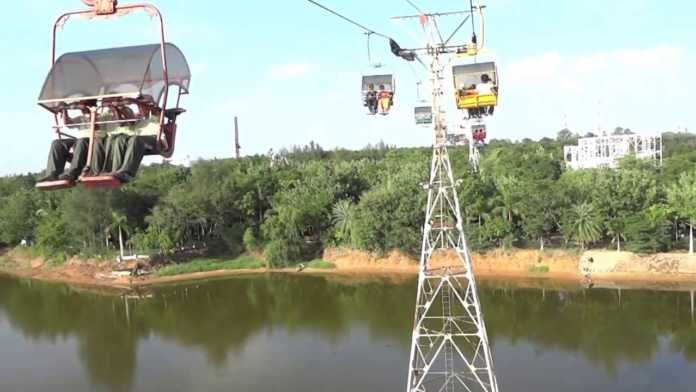
Lucknow:  Rope wheel/cable car will be run in Varanasi and Gorakhpur. Its exercise has been accelerated very rapidly. Lucknow Development Authority (LDA) on the directions of the government had sought the offer from the companies for its survey. A company has come up for study in both cities. RITES is doing the work of Metro survey and DPR in Varanasi.

Prime Minister Varanasi and Chief Minister Yogi Adityanath’s proposal to run the first metro in Gorakhpur area was ready but now with this rule, the government is also searching for the option of the ropeway.

The Housing Department of the Government had given responsibility to the LDA to find a company for the survey of ropeways in Gorakhpur. The LDA invited Tender for this. A company has come forward for this.

In the meeting held on October 17, it was decided to give the responsibility of preparing the Ropeway Survey, a railway project working in Metro Project in Varanasi and DPR. However, there was no desire to survey the Roots Rope Way. At present, in both cities, the focus of the Metro is being focused on Rope Way. After the report of both Metro and Rope reports, the government will take a final call on this. Officials say that there is no authority in this country nor any policy has been made for this.

Cost of construction of ropeway will be 10 times lower than metro

The construction of ropeway will cost less than the metro. The LDA superintendent, Engineer Chakresh Jain, said that the cost of construction of Metro is very high, while Sky Taxi / Ropeway can be constructed within 10 times of Metro. That’s why the ropeway is going on. Studies are being done in both the cities of Gorakhpur and Varanasi. After the report comes the picture will be clear.

Advertisement1
InnoMetro_2026

Mumbai Metro | MMRC awards Escalators Works contracts for 14 Stations for Metro Line-3

0
Mumbai Metro with four coaches
Mumbai Metro Update: Rahee Emerges as the Lowest Bidder for Track Work on 11.38 Km-long Line 9 (Representational image)

Mumbai: The Mumbai Metro Rail Corporation (MMRC) awarded Contract for the Escalators works for 14 Stations (Siddhivinayak to Cuffe Parade) for Colaba-Bandra-Seepz Metro 3 project after obtaining clearance from JICA as per procurement norms, on 9th October.

M/s Johnson Lifts Pvt Ltd. India & M/s SJEC Corporation, China Consortium’ has been awarded the Escalators works for Package 16A (Lot-2) being the most competitive amongst the respective prequalified bidders.

For the 14 stations, the works consist of design, manufacture, supply, installation, testing and commissioning along with other associated works for 205 nos. of Escalators.

The Escalators are being planned in such a way for heavy duty, with compact size having Variable Voltage Variable Frequency (VVVF) Regenerative Drives for power saving, Radio Frequency Identification (RFID) based system for real-time web-based monitoring and maintenance with the latest technology in the field of Escalator systems.

While commenting on the same, escalators works is a critical component of Metro 3 implementation for Passenger comfort and safety. Need to aim to implement robust and technologically advanced Escalator system for Metro-3 and complete the works in time so that Line-3 project can be completed in stipulated timelines, said, Managing Director MMRC, Ms. Ashwini Bhide.

Recently Mumbai Metro also flagged for civil work to install 10 TBM machine. Mumbai’s people are facing lots of noise and pollution problem due to civil work. But are waiting for good results when Mumbai Metro project-3 will be completed, will provide the best transport facility to commuters.

Mumbai Metro Managing Director tweets this successful commissioning of 10th TBM to people through her twitter account.

Mumbai Metro line-3 also referred to as the Colaba-Bandra-SEEPZ line. This is a part of the metro system for the city of Mumbai. The metro line-3 will connect Cuffe Parade business district in the extreme south of the city to SEEPZ in the north-central with 26 underground and one at-grade station.

Advertisement1
InnoMetro_2026

Delhi Metro | AAP Government may finally clear Phase-IV Plan In 10 Days

0
Electrification system in Metro Railways

New Delhi: Delhi Metro’s phase IV, which has been long pending clearance with the Delhi government, may be approved by the state in the next 10 days.

Delhi Chief Minister Arvind Kejriwal, on the sidelines of his door-to-door campaign for the 2019 Lok Sabha elections, said phase IV of the Delhi Metro will be approved by his administration.

According to the report, Kejriwal said that approval will be given to “all” proposed corridors of phase IV, but it was not clear whether all six proposed corridors will be given the go-ahead or just the three corridors which were found viable by the government.

Earlier, the state government had deemed three corridors – Tughlaqabad-Aerocity (20.20 km), Rithala-Narela (21.73 km), Inderlok-Indraprastha (12.58 km) – proposed under the phase IV financially unviable.

The government found – Janakpuri West-RK Ashram (28.92 km), Lajpat Nagar- Saket G-Block (7.96 km), Mukundpur-Maujpur (12.54 km) – viable financially.

Delhi government had, in January 2017, given in-principle approval for phase IV of the Delhi metro project, but the Delhi Metro Rail Corporation (DMRC) is still awaiting final approval and financial commitment by the state government for the project.

Phase IV will cost Rs 55,208 crore and both the Delhi government and the Union government have an equal stake in the DMRC. The Central government can only approve the project after it is approved by the Delhi government.

The central government given the in-principle approval for phase-IV projects. But still seeking state government approval. Now two years had over but Delhi government is not responding to the projects.

About Metro Phase-IV:

The phase-IV consists 104-kilometer network proposed in this phase is expected to cater to 1.5 million passengers daily.

delhi metro phase 4 iv map 2

The 104 Km extension includes different station viz. Rithala to Narela (21 km), Inderlok to Indraprastha (12 km), Tughlakabad to Aerocity (20 km),Lajpat Nagar to Saket G-Block (8 km), Janakpuri to RK Ashram (28 km), Mukundpur to Maujpur (12 km) ,HUDA City Centre to Gurgaon Railway Station (29 km) ,IFFCO Chowk to Dwarka Sector 21 (12.5 km), Gurgaon Railway Station to Palam Vihar (23 km)

Advertisement1
InnoMetro_2026

Job opportunities in India’s first High Speed Rail (bullet train) project

7
India Bullet Train Project
Image for representation purpose only copyright: respective Authority

New Delhi: There is good news for the job seekers who want to work with India’s first High Speed Bullet Train project that the National High Speed Rail Corporation Limited (NHSRCL) has advertised recruitment notification for appointment for the following technical and non-technical posts:-

Vacancy details:

  1. Assistant Manager/Safety & Health – 06 posts
  2. Consultant/HR – 01 post
  3. Assistant Manager/Environment – 06 posts
  4. Assistant Manager/Manager (S&T) – 02 posts
  5. Manager/Senior Manager (Design) – 01 post
  6. Dy. Chief Project Manager (PS&TL/OHE) – 02 posts
  7. Assistant Manager/Manager (OHE/PS&TL) – 04 posts
  8. Assistant Manager/Manager (Finance) – 06 posts
  9. Assistant Manager/Manager (Contract) – 01 post
  10. Assistant Manager/Manager (Civil) – 14 posts
  11. Assistant Manager/Manager (Electrical) – 03 posts
  12. Manager (OHE/PS&TL) – 03 posts
  13. Dy. CPM (Civil/Bridge Work/Building Work/Planning) – 08 posts
  14. Manager/Senior Manager (S&T) – 02 posts
  15. Joint General Manager/Deputy General Manager (Design) – 01 post
  16. Manager/Senior Manager (Rolling Stock Design) – 01 post
  17. Manager/Senior Manager (Electrical-General & Substation) – 01 post
  18. Manager (Track) – 04 posts
  19. Manager/Senior Manager(Civil) – 06 posts

The last date for submitting the application: 31.10.2018.

How to apply

Eligible candidates may forward their application in prescribed proforma to-

The General Manager (HR),
National High Speed Rail Corporation,
Asia Bhawan, Road No. 205, Sector -9, 
Dwarka, New Delhi-110077

Shortlisted candidates will be called for personal interview.

For more details please visit the official website of the National High-Speed Rail Corporation.

Advertisement1
InnoMetro_2026