Home Blog Page 677

MoHUA Share Year-end review reports on Metro Rail for 2018

0
Year-end review reports on Urban Transport for 2018 by MoHUA


New Delhi , Metro Rail News: The Ministry of Housing & Urban Affairs (MoHUA), Govt. of India has today shared year-end review report for 2018 and summarized the development activities carried out in Urban Transport sector in the year.

Metro Lines Commissioned/Operational

At present, about 536 kms of Metro Rail lines are operational in 10 cities i.e. Delhi & NCR, Bangalore, Hyderabad, Kolkata, Chennai, Jaipur, Kochi, Lucknow, Mumbai and Gurugram. Since May, 2014 to till date, about 287 Kms of metro rail lines have been commissioned in Delhi & NCR, Bangalore, Chennai, Kochi, Lucknow, Mumbai, Jaipur, Hyderabad and Gurugram. In 2018 (from January, 2018 to till date), about 110 Kms of metro rail lines have been commissioned in Delhi & NCR, Hyderabad and Chennai.

Metro Projects approved

Since May, 2014, 13 new metro projects with a total length of about 248 Kms at a total cost of Rs. 68,021 crore have been approved for Nagpur, Ahmedabad, Gurugram, Lucknow, Chennai Extension, Pune, Delhi Metro Extensions, Noida – Greater Noida, Bhopal and Indore. In 2018 itself, 3 new projects with a length of about 66 Kms at a total cost of Rs. 16,408 crore have been approved for Bhopal, Indore and Delhi Metro Extn from Noida City Centre to Noida Sector 62.

Metro Inauguration

Foundation of 6 metro projects has been laid since May, 2014, for Nagpur, Pune, and 4 lines in Mumbai. Several new  metro lines have been inaugurated since May, 2014 in Delhi, Hyderabad and Kochi. Delhi Metro extension from Mundka to Brigadier Hoshiyar Singh (11.18 Km) and Delhi Metro extension from Escort Mujesar to Raja Nahar Singh Ballabgarh (3.205 km) was inaugurated during 2018.  Around 650 kms of metro rail projects are at various stages of implementation in Delhi & NCR, Kolkata, Bangalore, Chennai, Kochi, Jaipur, Mumbai (including State initiatives by MMRDA), Hyderabad, Nagpur, Ahmedabad, Lucknow, Pune, Noida, Bhopal and Indore. About 750 kms of metro rail systems and 373 km of Rapid Rail Transit Systems (RRTS) are under planning in various cities.

In order to promote “Make in India” and indigenization of various metro rail system, standard specification of rolling stock, signalling system, electrical & electromechanical metro rail components and civil engineering structures have been issued. Further, eligibility criteria for procurement of rolling stocks has also been issued.  I-Metros (Indian Metro Rail Organisations’ Society) – a platform to exchange ideas, pooling of knowledge and sharing of experience, best practices, innovations etc. among the Indian metro rail companies to nurture excellence in performance was launched in March 2018.

With PIB Inputs

Advertisement1
InnoMetro_2026

Uber partners with Delhi Metro to make last mile connectivity easier

0
Uber partners with Delhi Metro to make last mile connectivity easier

New Delhi, Metro Rail News: On-demand ride-sharing company Uber announced the second phase of partnership with Delhi Metro Rail Corporation (DMRC). Under this partnership, the company will install kiosks on 50 more metro stations till the first half of 2019. In the first phaseof this partnership, Kiosks have been installed at Sikandarpur, Dwarka Sector-21 and Rajiv Chowk to facilitate the passengers. This partnership will facilitate the last-mile connectivity.

As part of this partnership, Uber will appoint Uber Rider Assistant on the proposed Metro Stations for the convenience of its riders, who will be able to book Uber Ride without any app. Dr. Mangu Singh, Managing Director of Delhi Metro Rail Corporation (DMRC) said, “DMRC has always kept the interest of its passengers in the center of their work. Facilitate our agenda mobility and make feeder transport accessible to the passengers in a convenient way.

He said, ” With this partnership with Cab aggregators like Uber and Ola , we will encourage more and more people to travel from the metro so that they can get convenient connectivity to the corner.” Madhu Kanan, Chief Commercial Officer (Asia Pacific) of Uber, said, “By simplifying the journey of various places from the metro stations, we can reduce the need of parking and make corner connectivity easier.”

He said, “We are excited to work with DMRC and expand the reach of public transport in Delhi-NCR.” This will define the future urban mobility. It is the first participation of Uber with one of the world’s largest transit networks. ‘

Advertisement1
InnoMetro_2026

Mumbai Metro 3 corridor achieve Second TBM breakthrough at SEEPZ station

0
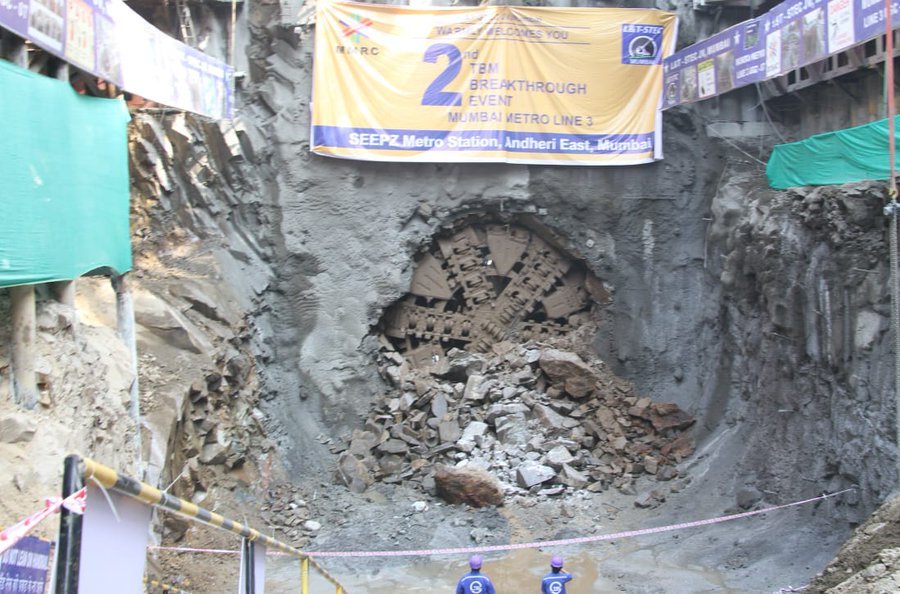
Image for representation only.

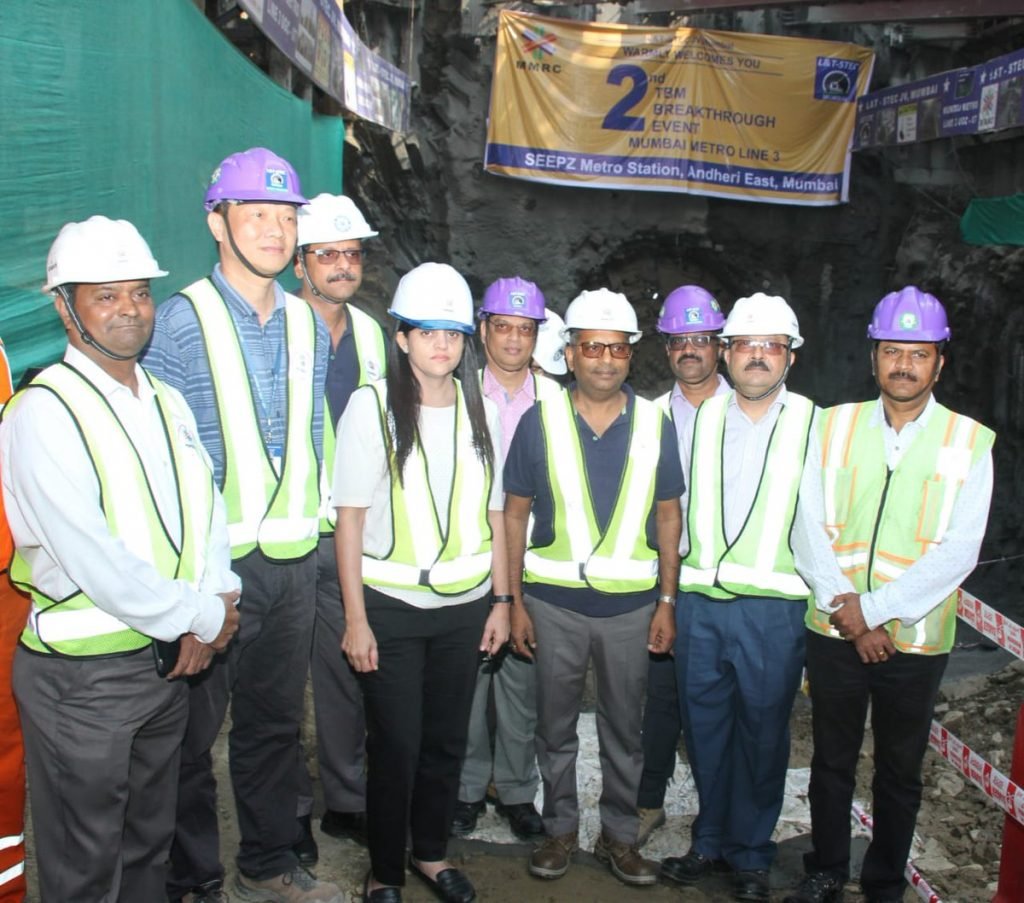
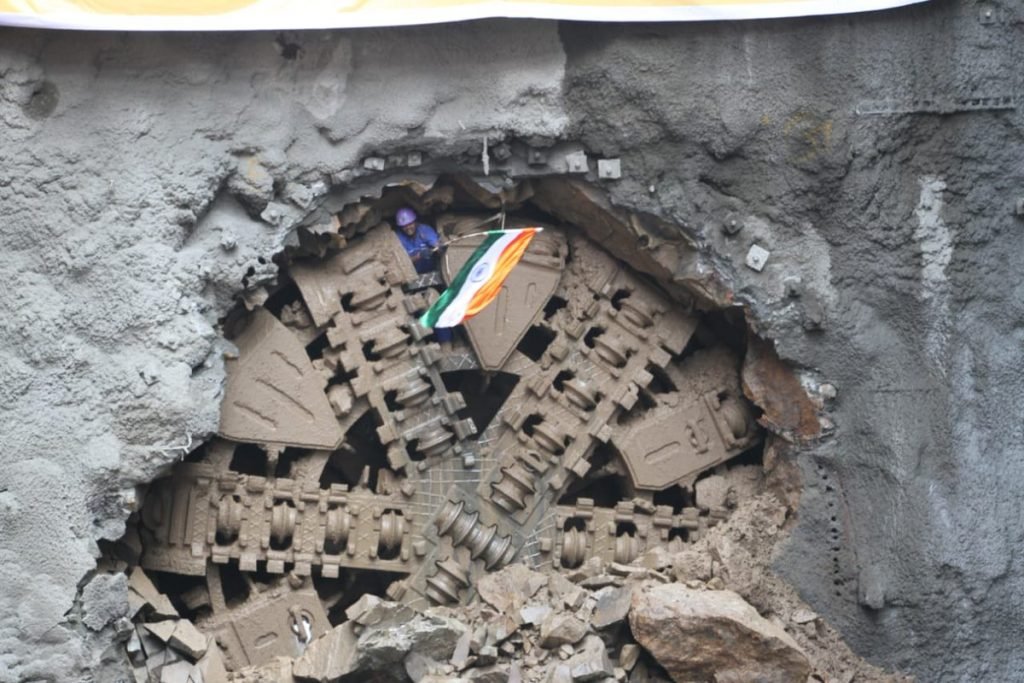
Mumbai. Metro Rail News:The Mumbai Metro Rail Corporation (MMRC) today achieve the breakthrough of the second TBM of Colaba-Bandra-SEEPZ Metro-3 corridor at SEEPZ station. The first breakthrough was achieved on September 24 at the Chhatrapati Shivaji Maharaj International Airport (CSMIA) Terminal 2 station.


The Tunnel Boring Machine (TBM), named Wainganga 2, tunneled from the launching shaft at Sariput Nagar, near Aarey Colony to SEEPZ station. It was was commissioned on 23rd August 2018 from Sariput Nagar launching shaft completed its tunnel drive of 568 metres in package 7 to see the light at its end at SEEPZ station. One more time it marks the achievement of an important milestone towards the steady completion of the 33.5-km long Metro-3 corridor. It is the result of consistent and continuous effort by a team of nearly 250 engineers, technicians and workers together to make this reach of tunneling successful.

“This is a second big milestone for the MMRC. We are delighted on completing another challenging achievement. The credit equally goes to the engineers and other stakeholders involved in the project.” said, Ashwini Bhide, managing director of the Mumbai Metro Rail Corporation (MMRC)

Wainganga 2, made its way through the rocky strata made of Basalt drilling relentlessly for exactly 125 days to attain the breakthrough. It has charted its course from under Jogeshwari – Vikhroli link road. The 92-meter long Wainganga-2 bored, on an average, 4.5 meters daily, with a peak rate of 10-12m per day, shaping the tunnel with 405 RCC cement rings.

The first two breakthroughs are part of the Package 7 of the project, which runs from Marol Naka to SEEPZ via MIDC. The first breakthrough was also achieved by Wainganga 1, which was launched for Marol Naka. The package will provide crucial linkages to the other Metro corridors, the existing Mumbai Metro One at Marol Naka station and the upcoming Swami Samarth Nagar-Vikhroli Metro 6 at Aarey station.

It will also provide rail connectivity to commercial hubs of SEEPZ and MIDC. The 4.16-km-long package is being executed by the consortium of Larsen & Toubro and the Shanghai Tunnel Engineering Company.

All 17 TBMs have been commissioned at 10 TBM shafts and tunneling for around 15 km of the 52.21 km has been completed. The first TBMs were lowered at Naya Nagar in Mahim, which are expected to achieve breakthrough in the first quarter of 2019 in Dadar.

Metro-3 corridor in its reach between CSMIA T 2 station to the ramp at Aarey colony will provide access to Versova-Andheri-Ghatkopar Metro-1 at Marol Naka and Swami Samarth Nagar-JogeshwariKanjurmarg-Vikhroli Metro-6 corridor at Aarey Station and also to business hubs like MIDC and SEEPZ which today are not connected by suburban rail.

MMRC, as of today, has completed about 15-km of tunnelling. For the purpose, 17 Tunnel Boring Machines have been commissioned at ten TBM shafts.

On the occasion Ashwini Bhide, Managing Director, MMRC said “This is a second big milestone for Mumbai Metro Rail Corporation (MMRC). We are extremely delightful for completing another challenging achievement and the credit equally goes to the engineers and other stakeholders involved in this Project. Without their hard work and continuous efforts reaching this milestone is unimaginable”

M/s Larsen & Toubro and Shanghai Tunnel Engineering Co. Ltd. are consortia partners for the construction of Package-7 which runs from Marol Naka to SEEPZ via MIDC. The total length of the tunnel is 7.07-km and the contractors expect about eleven lakh cubic meters of muck to be generated. The generated muck will be disposed of at Talawali-Pise, a government land spared for dumping the muck. As of today the contractors have disposed of 4.2 lakhs cubic meters of muck.

Advertisement1
InnoMetro_2026

Delhi Metro Pink Line Lajpat Nagar-Mayur Vihar Pocket 1 Corridor to open on 31 Dec 2018

0
Delhi Metro Pink Line Train

New Delhi, Metro Rail News: A New year gift from Delhi Metro to Delhi – NCR People. Finally, Delhi Metro Rail Corporation (DMRC) has announced the opening date of 9.7 km long stretch between Lajpat Nagar-Mayur Vihar Pocket 1 of Pink Line. This section is all set to start the 9.7-km Lajpat Nagar-Mayur Vihar Pocket 1 corridor of the Pink Line on 31st December 2018. The train services for the public will start from the same day at 4 pm onwards. “The route underwent safety inspection on 24 Decmebr 2018 paving way for its opening” Said Metro officials.

The DMRC has shared this information through its newly opened official Twitter handle.

The inauguration of the train service between Lajpat Nagar – Mayur Vihar Pocket 1 will be done through the video conferencing from the DMRC Headquarters Metro Bhawan on 31st December 2018 at 11 am by the Hon’ble Minister of State for Housing & Urban Affairs Shri Hardeep Singh Puriand Delhi Deputy Chief Minister Manish Sisodiya. The train services for the public will start from the same day at 4 pm onwards.

The new stretch of the 59-km-long Delhi Metro Pink Line, which spans from Majlis Park to Shiv Vihar, is part of the Phase-III of the DMRC network. ‘

“The Commissioner of Metro Railway Safety (CMRS) inspected the Lajpat Nagar-Mayur Vihar Pocket 1 corridor of the Pink Line. The 9.7-km segment has five stations, three underground and two elevated,” a senior DMRC official said.

The 6 stations are — Lajpat Nagar, Vinobapuri, Ashram, Hazrat Nizamuddin, Mayur Vihar Phase-I and Mayur Vihar Pocket-1. Mayur Vihar Phase-I and Mayur Vihar Pocket-1 are elevated stations, the official said.

The Lajpat Nagar-Mayur Vihar Pocket 1 corridor will boost connectivity between south Delhi shopping hubs such as Lajpat Nagar, Sarojini Nagar, INA and South Extension and east Delhi. It will also make Hazrat Nizamuddin railway station more accessible, besides offering an interchange at Mayur Vihar I, connecting Pink and Blue lines. With completion of this route, the entire Pink Line will be 59 km long. Meanwhile, the Delhi Metro completed 16 years of its operations on Monday.

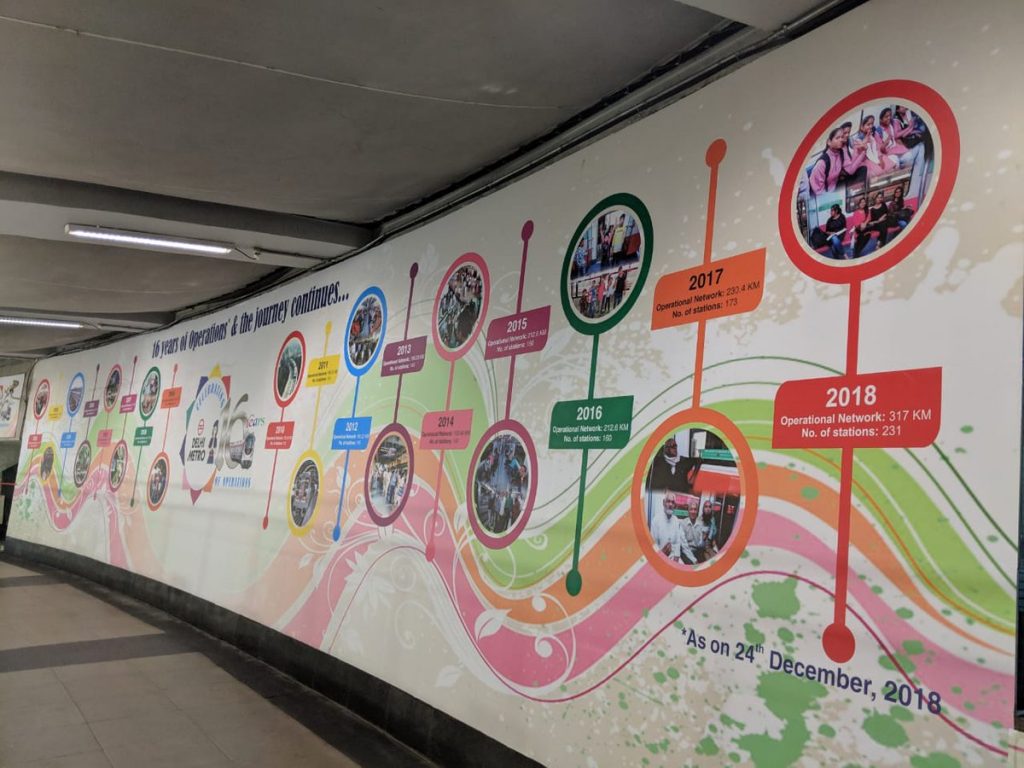
Former prime minister late Atal Bihari Vajpayee had inaugurated the DMRC’s first-ever corridor — an 8.2-km stretch between Tis Hazari and Shahdara stations of the Red Line — on December 24, 2002, fulfilling a long-cherished dream of the capital city. The 3.2 km-long Escorts Mujesar-Raja Nahar Singh (Ballabhgarh) section of the Violet Line was opened to public in November, taking the entire span of the Delhi Metro network to 317 km. While the Shahdara-Tis Hazari section had six stations, DMRC now boasts of 231 stations, with an average daily ridership of about 28 lakh.

The official said, as part of Ph-IV of the DMRC, a 103 km-long project has been proposed and Delhi Metro will continue to serve people with greater amenities and efficiency. On December 20, the DMRC had also launched its Twitter account, which now has over 3,200 followers.

Better Inter-City Connection

The Lajpat Nagar-Mayur Vihar Pocket 1 corridor increase connectivity between shopping hubs in south Delhi like Lajpat Nagar, Sarojini Nagar, INA and South Extension and east Delhi. It will also make Hazrat Nizamuddin railway station more accessible, besides offering an interchange at Mayur Vihar I.

Advertisement1
InnoMetro_2026

Delhi Metro Celebrated 16 years of operation on Monday

0
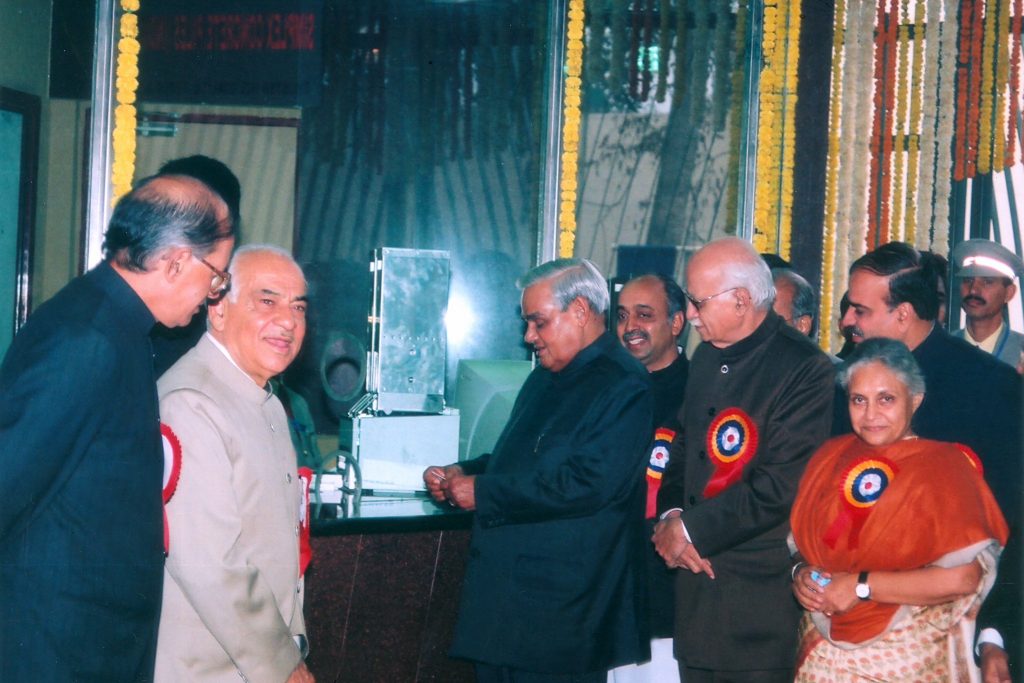
On December 25, 2002, when the Delhi Metro was inaugurated by Atal Bihari Vajpayee, the then prime minister, along with the then Delhi Chief Minister Sheila Dikshit.

New Delhi, Metro Rail News: The Delhi Metro has changed the public mode of transport for the ordinary man in Delhi over the years and continues to expand its reach, having added nearly 100 km of network this year.

It was on December 24, 2002, when the Delhi Metro was inaugurated by Atal Bihari Vajpayee, the then prime minister, along with the then Delhi Chief Minister Sheila Dikshit. Now Delhi Metro is a massive metro network of 314 kms and 229 metro stations across Delhi and national capital region.

HIGHLIGHTS

  • The metro has spread its network across 317 km
  • The Delhi Metro ferries approximately 26-27 lakh riders every day
  • It has eight colour-coded lines: Red, Yellow, Blue, Violet, Orange, Green, Magenta and Pink

The Delhi Metro, which began its journey with a mere 8-km-long Red Line connecting Shahdra and Tis Hazari, has turned 16 on Monday.

The metro has gone strength to strength since then and will soon boast of being one of the largest metro networks in the world, after Shanghai and Beijing, and is expected to even overshadow the London Underground.

During its construction in three phases, the metro has spread its network across 317 km of the city and its suburbs.

By the time the Phase-III winds up next year, it will have expanded to 349 km, and with Phase-IV, which has just been given the green signal and is expected to be completed by 2022, the Delhi Metro will cross the 400-km mark.

In words of the Delhi Metro Rail Corporation, the current year was “historic” in terms of construction of several new stretches, totalling a length of a “record” 87 km.

The expansion of the metro has not been a cakewalk along the years, with the transport system facing all kinds of roadblocks, from acquiring land– as in the case of Shakurbasti and Trilok Puri– to tunnelling around the Old Delhi area, known for its historical monuments.

At present, it has eight colour-coded lines: Red, Yellow, Blue, Violet, Orange, Green, Magenta and Pink, with the last two being the latest addition to the fleet.

The phase-IV, still to go on floor, is no less ambitious and aims to touch some of the harder to reach outskirts of the city, like Bawana and Narela in northwest Delhi.

With 231 stations over and below ground across the network, the Delhi Metro ferries approximately 26-27 lakh riders every day.

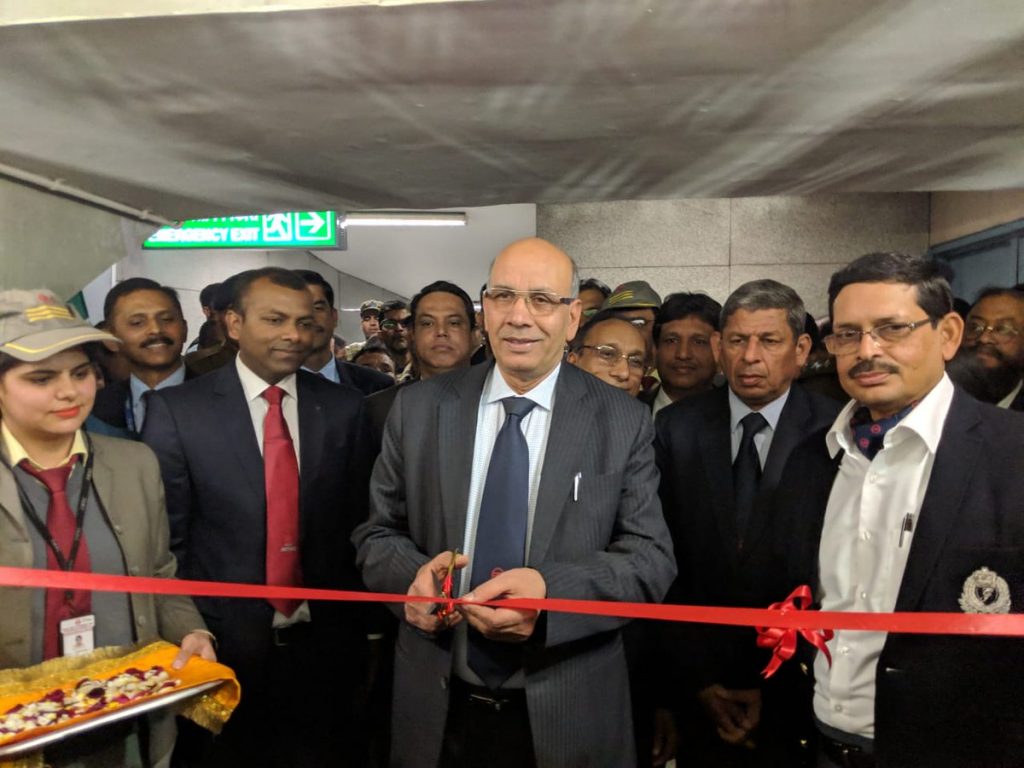
To commemorate the 16th anniversary of Delhi Metro’s operations on December 24, 2018, the Delhi Metro Rail Corporation (DMRC) has put together an exhibition showcasing metro’s journey so far since the commencement of operations in 2002. The exhibition was inaugurated by DMRC’s managing director Mangu Singh at the Rajiv Chowk Metro station on Monday.

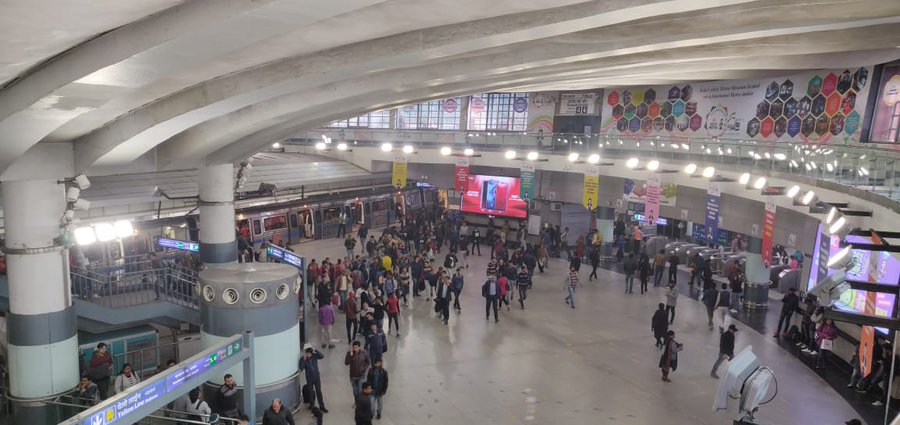
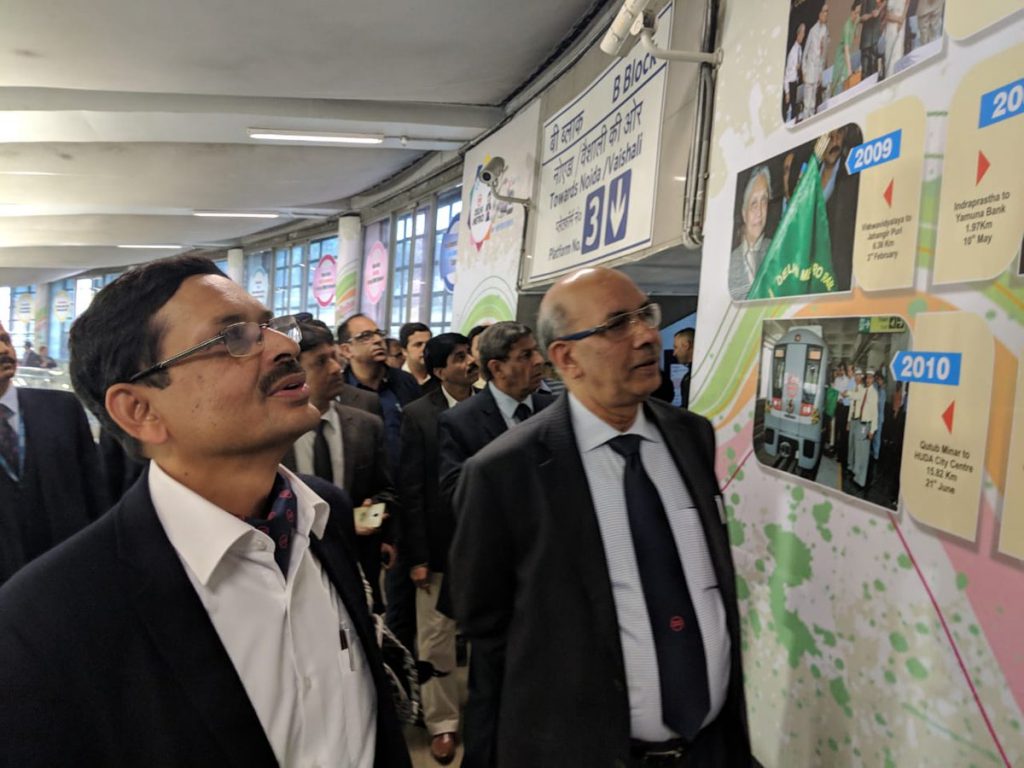
The exhibition is in the form of colourful panels that showcase the journey and year-by-year growth of Delhi Metro. The panels have been installed at the viewer’s gallery at the metro station, which is usually accessed by commuters to cross from one side of the platform on Blue Line (Dwarka-Vaishali/Noida City Centre) to another. Apart from panels, banners have also been put up by DMRC at the station. While the panels showcase metro’s journey, interesting facts and trivia about Delhi Metro have also been displayed as part of the exhibition, including major landmarks such as the beginning of reserved coach for women, first eight-coach trains etc.

Advertisement1
InnoMetro_2026

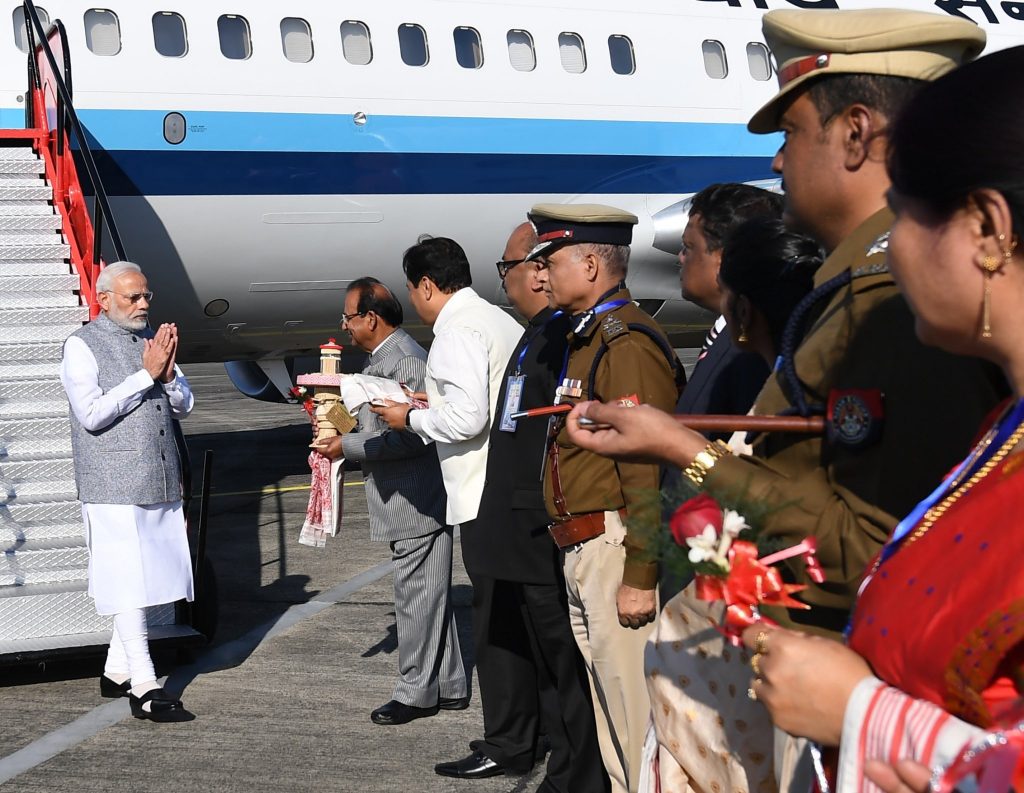
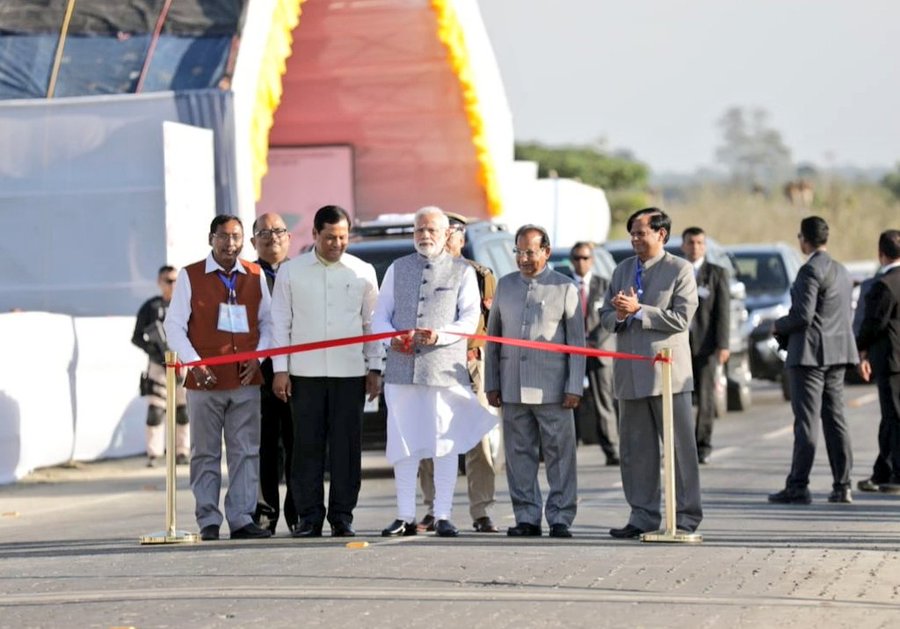
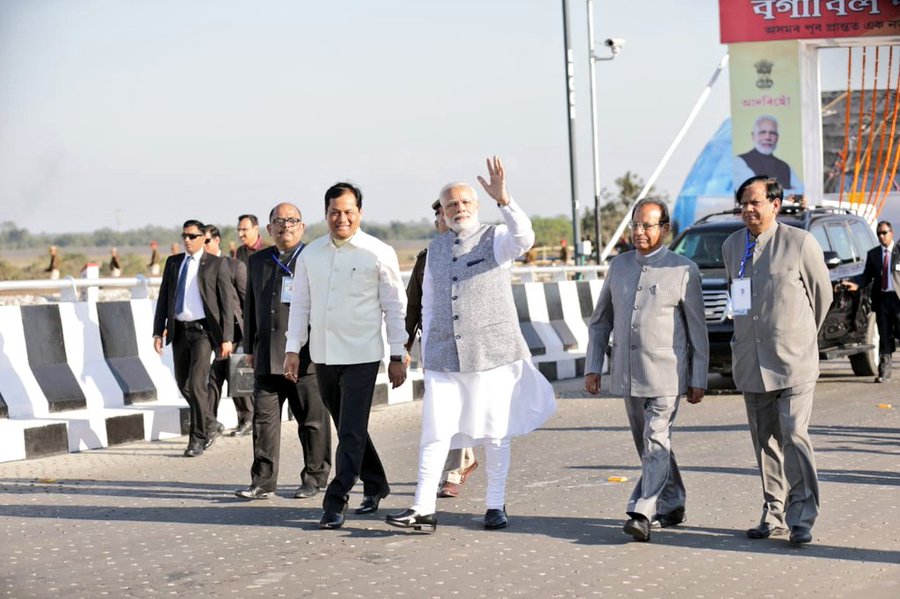
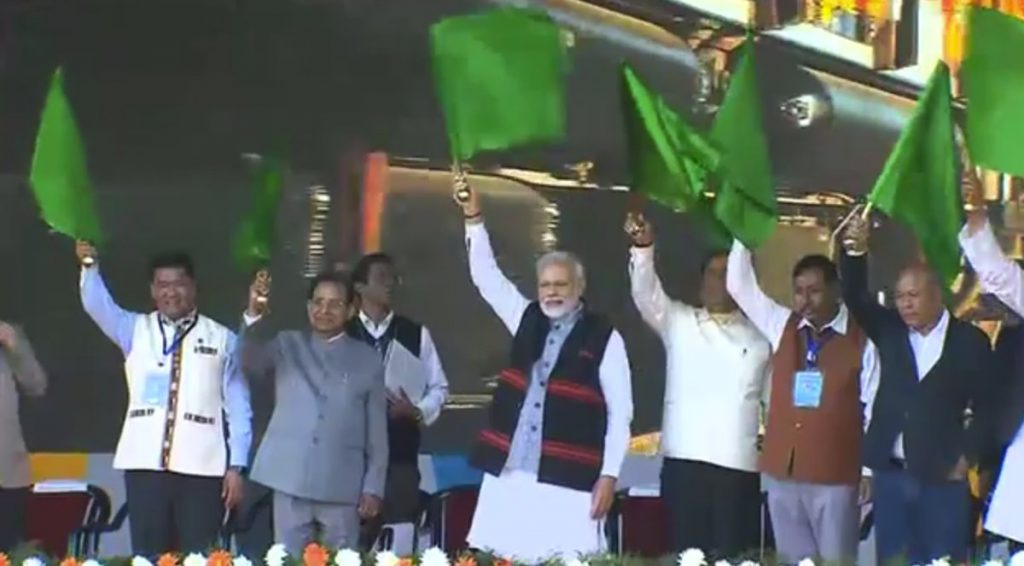
Hon’ble PM Modi inaugurate Bogibeel bridge

0
PM Narendra Modi Unveiled Bogibeel Bridge

Dibrugarh, Metro Rail News: This Christmas Day, Prime Minister Narendra Modi celebrates the completion of a Bogibeel Bridge project his predecessor Atal Bihari Vajpayee inaugurated 16 years ago.

All you need to know about Bogibeel Bridge

Bogibeel Bridge is India’s first and only fully welded bridge construction. Which combined road and rail bridge over the Brahmaputra river in the state of Assam between Dhemaji district and Dibrugarh district. The bridge has double rail line and 3 lane road on the upper deck, built 17km downstream of Dibrugarh in the south and Dehmaji to the river’s north, spans 4.98km, and emerges as a vital link between Assam and Arunachal. The bridge will provide connectivity to nearly 50 lakh people residing in Upper Assam and Arunachal Pradesh, giving direct access to north bank from the rest of the country. This is the 4th longest bridge in India after Dhola Sadiya Bridge, Bandra-Worli Sea Link and Mahatma Gandhi Setu.


The Bogibeel Bridge Now Open for Public Today

Prime Minister Narendra Modi Inaugurate India’s longest rail-cum-road Bogibeel bridge Today. The bridge is, in many ways, considered a dream come true for the people of Assam and Arunachal Pradesh.

Tight security has been arranged on both sides of the bridge for the inaugural programme. The 4.94 km-long bridge over the mighty Brahmaputra river is situated 17 km downstream of upper Assam’s Dibrugarh city.

The Bogibeel bridge project was a part of Assam Accord 1985. Former Prime Minister HD Deve Gowda had laid the foundation stone of the bridge on January 22 in 1997. Former prime minister Atal Bihari Vajpayee had inaugurated the construction work of the bridge on April 21, 2002.

The project was initially sanctioned at a cost of Rs 3,230.02 crore and the final cost was revised to Rs 5,920 crore.

“Completing the Rs 5,900-crore project over two decades (the foundation was laid in 1997) has been but a daunting task, especially taming and bridging the unpredictable and flood-prone river during monsoons,” said Mahendra Singh, chief engineer, Northeast Frontier Railway’s Bogibeel project. The bridge built 17km downstream of Dibrugarh in the south and Dehmaji to the river’s north, spans 4.98km, and emerges as a vital link between Assam and Arunachal. “Once the bridge is opened, troops and supplies can move faster to Arunachal Pradesh, which is India’s eastern-most state sharing border with China,” said an Army official.


The bridge reduces travel time from Assam to Arunachal Pradesh to four hours because all this time, one had to detour via Tinsukia covering an additional 170km. The current route through Guwahati in the south bank is long and torturous.

“Located just 20km away from the Assam-Arunachal border, it now becomes the most preferred alternative to the Kolia Bhomora Setu in Tezpur,” said Singh.

Bogibeel Bridge falls in Seismic Zone-V, which is most vulnerable to earthquakes with magnitudes more than 7.0. To offer good stability, the heavy spans (1,700MT) are provided with seismic restrainers.

Glimpse of Bogibeel Bridge Inugration

Advertisement1
InnoMetro_2026

Delhi Metro Year End Review Report for 2018

0

New Delhi, Metro Rail News: The year 2018 was a historic year for the Delhi Metro Rail Corporation (DMRC). This year, a record, 86.72 kilometres of new sections of phase III were opened by Delhi Metro. E-Rickshaws were also launched from some stations as part of efforts to increase the last mile connectivity from the stations.

       2nd January:   The Delhi Metro started the test runs on the Noida – Greater Noida Corridor on 2nd January. The train was flagged off by Dr. Mangu Singh, Managing Director, DMRC and Mr. Alok Tandon, Managing Director, NMRC. 

       14th March: The Majlis Park – Durgabai Deshmukh South Campus Pink corridor of the Delhi Metro was formally inaugurated for passenger services by the Union Minister of State (Independent Charge) for Housing and Urban Affairs, Sh. Hardeep Singh Puri and the Chief Minister of Delhi, Sh. Arvind Kejriwal in the presence of Union Minister for Science and Technology, Earth Sciences, Environment, Forests and Climate Change, Dr. Harsh Vardhan and many senior dignitaries.   

       28th May:  The 24.82 kilometre long Kalkaji Mandir – Janakpuri West Metro corridor was flagged off on 28th May, 2018 (Monday) by the Hon’ble Union Minister of State (Independent Charge), Ministry of Housing and Urban Affairs, Sh. Hardeep Singh Puri and the Hon’ble Chief Minister of Delhi, Sh. Arvind Kejriwal from the Nehru Enclave Metro station.

        24th June: The 11.18 kilometre long City park (Bahadurgarh) – Mundka Metro corridor was flagged off via remote by the hon’ble Prime Minister, Sh. Narendra Modi on 24th June, 2018. Bahadurgarh became the third city in Haryana to be connected by the Delhi Metro.

        3rd August: Hon’ble Lt. Governor of Delhi, Shri Anil Baijal flagged off a fleet of 100 e-rickshaws, called SmartE, from Dwarka Sec-10 Metro station to boost the last mile connectivity service in Dwarka sub-city for Metro commuters. These E-rickshaws ply from 8 Metro stations of Dwarka sub-city namely, Dwarka, Dwarka Sec-14, Sec-13, Sec-12, Sec-11, Sec-10, Sec-9 and Sec-8 from 6 AM to 11 PM.

     6th August:  The 8.10 kilometre long Durgabai Deshmukh South Campus – Lajpat Nagar Metro corridor was formally flagged off on 6thAugust for passenger operations by Sh. Hardeep Singh Puri, Union Minister of State (Independent Charge), Housing and Urban Affairs and Sh. Arvind Kejriwal, Chief Minister, National Capital Territory of Delhi in the presence of the Sh. Anant Kumar, the Union Minister for Chemicals & Fertilizers and Parliamentary Affairs. 

      16th September: The Delhi Metro introduced QR code based ticketing facility for travel on Airport Express Line from 16th September. With the introduction of this facility, commuter’s using Delhi Metro’s Airport Express Line can use the QR Code generated on their smart phones instead of smart cards or tokens to travel.

      31st October: The 17.8 kilometre long Trilokpuri Sanjay Lake – Shiv Vihar Metro corridor was formally flagged off on 31st October for passenger operations by Sh. Hardeep Singh Puri, Union Minister of State (Independent Charge), Housing and Urban Affairs and Sh. Manish Sisodia, Deputy Chief Minister, National Capital Territory of Delhi.

        19th November: The 3.2 km long Raja Nahar Singh (Ballabhgarh) – Escorts Mujesar extension of the Kashmere Gate – Escorts Mujesar corridor (Violet Line) of Delhi Metro was formally flagged off via remote by the hon’ble Prime Minister of India, Sh. Narendra Modi on 19th November, 2018. 

Source: DMRC

Advertisement1
InnoMetro_2026

Now Hyderabad Metro will run every 6 minutes during peak hours

0
Now Hyderabad Metro will run every 6 minutes during peak hours

Hyderabad, Metro Rail News: Good news for Hyderabad people, A train is now being operated every six minutes during peak hours on the route, To reduce the waiting time for Metro Rail passengers, especially those travelling on the Miyapur-LB Nagar route.

On 22 December 2018, The L&T Metro Rail Hyderabad announced that the service frequency of Metro trains on the Miyapur-LB Nagar route is now for every six minutes during peak hours i.e. from 8 am to 12 noon and 5 pm to 9 pm. The service frequency during non-peak hours has reduced to 7 minutes against earlier which was 8 minutes.

Hitec City Metro work may take more time

A majority of the eight stations on the Ameerpet-Hitec City Metro Rail line is yet to get staircases and lifts. Staircases have been built at Durgam Cheruvu, the demolition of buildings on the other side was still taking place on Friday.

The staircase construction is in progress at Madhapur and Jubilee Hills Road No. 5 . Construction of piers and viaduct uptil Cyber Towers is underway.

An official on condition of anonymity stated that not only access to the commuters but also the signalling system would take time to be synchronised.

As work on the Cyber Towers piers for train reversal facility has not been completed, HMRL has hit upon the technical solution of “twin single line method” wherein double line railway track functions as two separate single lines. 

But the twin single line needs a lot of testing. Additionally, since Metro Rail systems involve highly complicated signalling systems, they have to be synchronised for proper functioning. The Commissioner of Metro Rail Safety (CMRS) will conduct an inspection, only after which the final approval will be received.

Governor E.S.L. Narasimhan had asked Metro Rail officials to start the Ameerpeet-Hitec City services from this month. While that looks unlikely, officials, while not wanting to divulge a date, said they were targeting an inaugural with basic amenities in January. 

However, it appears that the works would seem to take longer than that. The official pointed out that land acquisition had been completed across the stretch. The deadline for making the line operational is March.

Advertisement1
InnoMetro_2026

Nizamuddin Railway station ready to connect with Delhi Metro Link

0
Nizamuddin Metro station front view

New Delhi, Metro Rail News: In the coming days, a new transport hub will come up after Delhi Metro links the city’s third busiest railway station at Hazrat Nizamuddin and the Inter-State Bus Terminus at Sarai Kale Khan. The new Hazrat Nizamuddin metro station, part of the Lajpat Nagar-Mayur Vihar Pocket-1 stretch of the Pink Line, is expected to become operational later this month

Sources in Delhi Metro Rail Corporation (DMRC) revealed that a safety audit of the 9.7-km Lajpat Nagar-Mayur Vihar Pocket-1 section of the Pink Line’s Majlis Park-Shiv Vihar corridor will be likely conducted next week by the Commissioner of Metro Rail Safety. Once this is through and cleared, DMRC is expected to open the section to the public this month itself.

“The nearest metro stations at the moment are 3-4 kilometres away, but the new station at Hazrat Nizamuddin will change that,” observed Anuj Dayal, executive director (corporate communications), DMRC.

Delhi Metro’s presence will only add to the importance of the location as a transport hub, given the plans to have the three high-speed corridors of the proposed Regional Rapid Transit System converging at Sarai Kale Khan and connecting Delhi with Keeping in mind the integration with the RRTS station, DMRC has made one of the three entry gates wider. “Gate No 3 is 13 metres wide instead of the usual 7-8 metres,” said a DMRC official. “The entry point has extra-wide staircases and two escalators, with provisions for the addition of two more escalators in the future.”

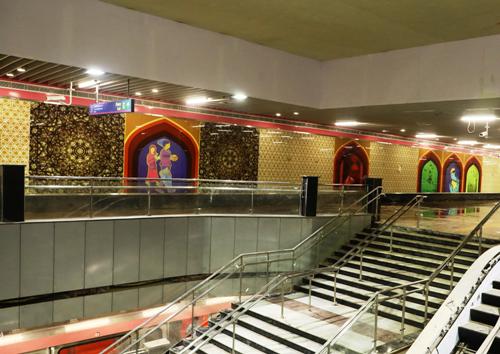
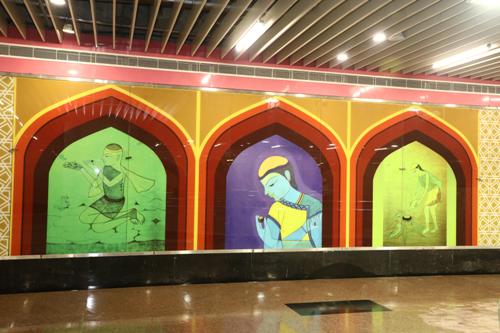
Around 50,000 people are expected to use this metro halt, so the station has three atria unlike the two in most other son the Pink Line. The station has the history of the nearby areas reflected in the 30 artworks that adorn its interiors. Thematic impressions and ‘jharokhas’, apart from motifs from the architecture of Humayun’s Tomb, mark the station. But the beauty aside, there are a few drawbacks here. While Gate No 1 leads commuters to the Hazrat Nizamuddin railway station, the second gate is close to the bus terminal. Commuters travelling between the railway station and the metro station will, therefore, have a 250-metre trek from one to the other.

Paucity of land forced the construction of the underground metro station at a considerable distance from the railway station. DMRC couldn’t even create a dedicated pathway connecting the railway station with the metro station because the road between them belongs to PWD. As soon as commuters exit the metro premises, they will be bang in the middle of traffic, crowds and encroached pavements. “We have provided whatever facilities we could wherever possible for commuters,” a DMRC official insisted. “There are two elevators, apart from escalators at the entry/exit point closest to the railway station so that passengers don’t have to carry their luggage.

Ominously, even before the station is officially open, many of its entry/exit point walls have been taken over by hawkers. “We have put up fences wherever possible to ensure there is no encroachment and also put up bollards on our premises so that vehicles don’t enter the area without authorisation,” the official claimed.

Advertisement1
InnoMetro_2026

Lucknow metro to run on airport-Munshipulia route from April 2019

0
Lucknow metro to run on airport-Munshipulia route

Lucknow, Metro Rail News: From April 2019, commuters in the capital city Lucknow will have the option of taking a Metro ride from the airport to Munshipulia.

Currently, Lucknow Metro running on an 8-km stretch from Transport Nagar to Charbagh, the Metro will be operational on the entire 23-km stretch from Chaudhary Charan Singh Airport to Munshipulia (North-South corridor), said LMRC officials. The passenger load, which is around 10 lakh per year, is expected to increase 10 fold, they added.

“Now, the entire 23-km stretch would be available for the ride so more commuters are expected to board the Metro train. We have all the rolling stocks with us and they all would be pressed in according to the traffic on the route,” said an official.

The LMRC has completed all its engineering work, including construction of tunnels, track-laying work, signaling, well before time just to start Metro operations on time.

Lucknow Metro Rail Corporation (LMRC) will complete overhead wiring in two days. It has completed civil construction work near Polytechnic crossing, which further leads to the joining of the complete section from Chaudhary Charan Singh Airport to Munshipulia.

Besides, the corporation is focused on clearing the remaining installation work in this corridor by the end of this year. This would pave way for the test of Lucknow Metro by the Commissioner Railway Safety.

LMRC has also completed the track laying work from CCS Airport to Munshipulia Metro Station about a week back.

“The completion of all the work from CCS Airport to Munshipulia in such short duration could only be possible because of the highly skilled work force and dedication, expertise and right guidance,” said Kumar Keshav, MD, LMRC.

The LMRC has already moved an application for the clearance by the Commissioner Railway Safety. It will start testing the track, signalling, OHC work from next week or from the first week of the January, said an official.

Recently, Lucknow metro MD Kumar Keshav inspected the work from Lucknow University station to Munshipulia Station. The university metro station is one of the three stations in this corridor to have a radio tower with Badshah Nagar and Indira Nagar metro stations.

The tower installed here helps in the signalling of Metro that will help in making operational functioning like surveillance, tetra connectivity smoother. These towers will work on the frequency between 380 mhz-385 mhz.

The installation work for the glasses at the ticket office machine (TOM) has also started and it would be completed in the last week of this month.

The civil work of KD Singh & RS Mishra Metro Station is also progressing. Metro has developed a commercial space (property development area) on both sides of KD Singh Metro Station along with one side at all other seven elevated Metro stations.

The artwork at the outer side of Ram Sagar Mishra Metro Station has also started.

TRACK TESTING SOON

The LMRC has already moved an application for clearance by the Commissioner Railway Safety.

It will start testing the track, signalling, OHC work from next week or from the first week of the January, said an official.

The installation work for the glasses at the ticket office machine (TOM) has also started and it would be completed in the last week of this month.

Advertisement1
InnoMetro_2026