Home Blog Page 676

Opinion: Metro rail policy 2017 could be effective with few amendments

0
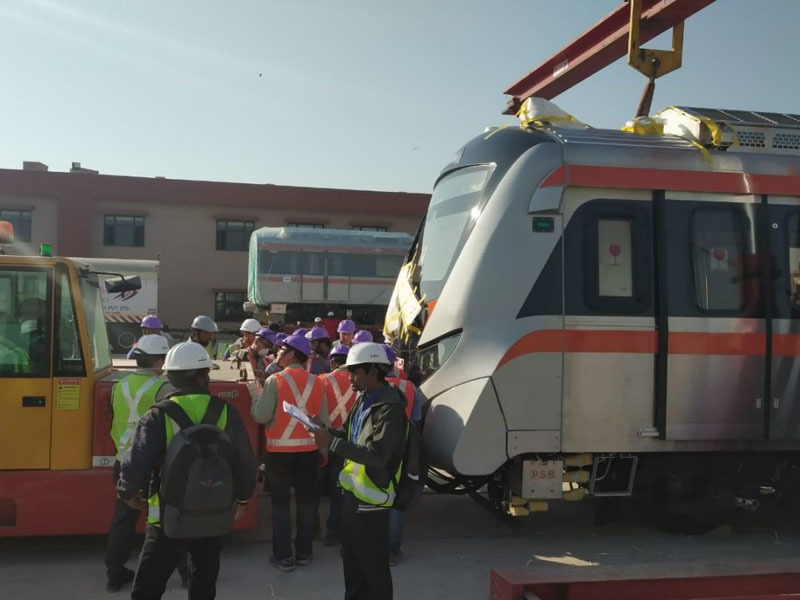
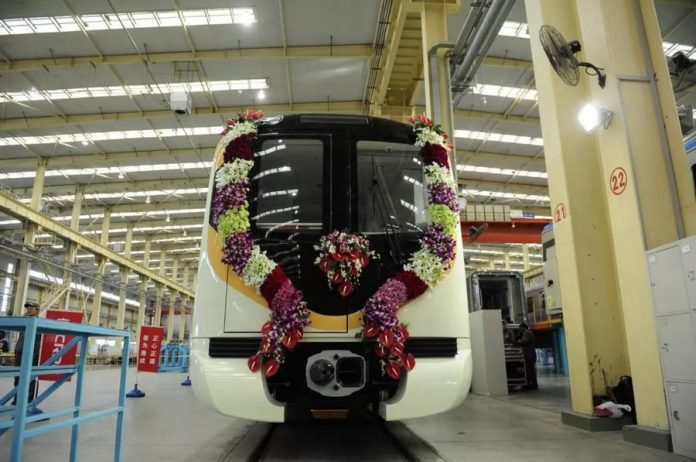
CRRC Manufactured and designed Nagpur Metro Train

A sturdy urban transport mechanism is a very important constituent of a happy and comfortable urban experience. In India it becomes all the more essential because it has been one of the most neglected facets of governance under various governments. The rapid pace at which India is urbanizing since the 1990s has further accentuated this neglect.

Issuance of a long-awaited Metro rail policy by the Union government in 2017 was hence a welcome change from the meandering development in this sphere happening all over the country till now. The policy contains some very clear directives for undertaking Metro rail projects in various urban centres. Details of how Metro projects should be developed, funded and sustained have been well thought out and spelt. Yet it has left some gaps which are bound to pull down the whole process.

The Metro Rail Policy 2017 has laid out three significant conditions for catalyzing development of Metro rail systems. One, hitherto it will be the responsibility of the state governments to explore and choose various options for urban mobility and then implement the project. Two, a comprehensive mobility plan (CMP) is a mandatory prerequisite for planning Metro rail in any city. And, three, there should be a statutory body called Unified Metropolitan Transport Authority (UMTA) for ensuring an integrated approach in planning and management of urban transport.

It is said that there is always a devil in details. And, that is where this policy of 2017 slips. There should be a condition in the policy that unless UMTA is created as a statutory body and adequately staffed, no Metro project should be taken up in that state. Also, the CMP should be prepared and issued by the statutory body only, and no other agency. An accurate CMP can help in assessing the viability of a Metro rail project, since, it is critically dependent on integration of secondary and tertiary transport feeder services. UMTA should ideally have powers to regulate fares for all urban transport units and prepare, monitor and audit the CMP.

Fixing fares in a Metro system is of paramount importance. No Metro line anywhere in the world is financially remunerative. The policy has rightly directed that social and economic viability, too, should be assessed and be a part of the whole analysis. But, more clarity is needed on how the viability gap will be bridged, while ensuring Metro fares do not become a pawn in a political slugfest. It should be clearly stated that any state government desirous of implementing a Metro project in the state must first put a fare fixation committee in place in accordance with the Metro Railways Act, 2002. No effort in bringing PPP investments can be fruitful unless this is done.

The policy has listed various options that could be adopted to serve any urban town with a mass rapid transit system (MRTS). But, the experience of the last one year shows that every state government is going in for only Metro railsystems irrespective of the anticipated passengers per hour per direction (PPHPD) figure. The policy has correctly guided that this option suits only those routes where a PPHPD figure of 40,000-80,000 is expected. It is apprehended that many projects of Metro rail sanctioned in 2018 may become unviable after completion and require financial support. This is happening since a realistic CMP is not in place. The Metro Rail Policy 2017 should have prohibited any such move and it devolves upon the central government to hold back all such projects.

There is an urgent need for introducing these amendments to the policy to ensure that the MRTS projects are finalized after a holistic assessment. This will also ensure that projects run smoothly once they are put into operation.

Advertisement1
InnoMetro_2026

Rs. 11216 CR Nagpur Metro Phase-II approves by CM Devendra Fadnavis

0
CM Devendra Fadnavis chaired a meeting in Mantralaya, Mumbai to see detailed presentation of Nagpur Metro Phase 2

Nagpur, Metro Rail News: Chief minister Devendra Fadnavis,
Maharastra’s urban development department (UDD) has approved Rs. 11,216 crores Nagpur Metro Rail phase-II.

Maha metro will raise 60% of the total expenditure of the project through loans and central and state governments will bear the share of 20% each. CM Devendra Fadnavis chaired a meeting in Mantralaya, Mumbai to see detailed presentation of Nagpur Metro Phase 2 and asked to prepare DPR for the same. Total cost is ₹11,216 crore and this phase is to be completed in 4 years.

Nagpur Metro Phase 1 and Phase II Corridors

Fadnavis confirmed that the state UDD has cleared the project. “Detailed project report (DPR) has been forwarded to state cabinet for its approval,” he said.

The cabinet is likely to clear the project in its next meeting to be held on January 8. After cabinet’s nod, the DPR will be forwarded to the central government for final approval.

The UDD could clear the project as the NMC general body on December 20 approved city’s revised comprehensive mobility plan (CMP). Maha Metro sources said the state cabinet and the center will take a final decision on funds sharing pattern. “Pattern of Rs7,000 crore through loans and Rs2,000 crore each from center and state can also be finalized,” sources said.

As per sources, NMC, NIT and NMRDA have expressed helplessness to bear the share in Metro Rail phase-II. “It was discussed in Tuesday’s meeting whether NMRDA can contribute some money for phase-II.

Corridors finalized under phase-II fall under Metro region. However, NMRDA is beginning works of Metro region now and will not be able to give funds. NMC is in cash-strapped condition. NIT had contributed in various projects and is left with no money,” sources said. Under phase-I of Rs8,680 crore, NMC and NIT are bearing share of 5% each. The shares of the central and the state is 20% each.

Maha Metro had obtained loans for the remaining 50% expenditure. The NMC and NIT are giving most of its shares through transferring lands to Maha Metro. Later, Fadnavis chaired the meeting of NMRDA. Officials of NMRDA showed logo to Fadnavis. But Fadnavis, also chairman of NMRDA, reportedly suggested some changes. Minutes of the last meeting of NMRDA were approved in the detailed presentation on the progress of Metro region was also done before Fadnavis.

Fadnavis directed MahaMetro to prepare mass rapid transit system for Nashik. Additional chief secretary to CM Praveen Pardeshi, additional chief secretary (finance) UPS Madan and principal secretary of UDD Nitin Karir were present in the meeting. From district, guardian minister Chandrashekar Bawankule, Ramtek MP Krupal Tumane, Umrer MLA Sudhir Parwe, municipal commissioner Abhijit Bangar, NIT chairperson Sheetal Ugale, MahaMetro MD Brijesh Dixit, NIT superintending engineer SS Gujjelwar and otherswere present

CM Devendra Fadnavis Also directed MahaMetro to submit DPR for Nashik Metro in 2 months.
Advertisement1
InnoMetro_2026

First train for Ahmedabad Metro Project finally arrives

0
First Train set for Ahmedabad Metro Project

Ahmedabad, Metro Rail News: The first metro train of three coach with a carrying capacity of 90 passengers finally arrived in the city on Tuesday. The first train had been shipped from South Korea in first week of December and had arrived at Mundra Port on December 28. According to Gujarat Metro Rail Corporation officials, the first train of three Coaches of Ahmedabad Metro Project (MEGA) moving from Hyundai Rotem local port facilitates from South Korea will make it trail run from January 15 after which the state is expected to take a call on the inauguration.

The train according to Metro-Link Express for Gandhinagar and Ahmedabad will be ready to be rolled on the six km elevated corridor between Vastral Gam and Apparel Park in Maninagar by March end of April. After the trial run the train will have to be cleared for safety measures by various department of the Union Government Prime Minister Narendra Modi is likely to flag of the train. GMRC officials says the Urban Development department has been conveyed that the MEGA will be ready by January 15 and they can plan the inauguration accordingly. The 6 km stretch will have four other stations apart from Apparel park and Vastral Gam. The other station includes Nirant Crossroads, Vastral, Rabari Colony and Amraiwadi. The officials said that from Apparel park the metro will go underground and will be underground till Shahpur. The mock coach has arrived in October and has been on display at the riverfront for public viewing. The officials that the second train is likely to arrive by March end or early April. The officials further said that the authorities plan to start the second stretch on the APMC to Motera stretch also by April this year.
buy amoxicillin online gaetzpharmacy.com/amoxicillin.html no prescription

GMRC officials says the Urban Development department has been conveyed that the MEGA will be ready by January 15 and they can plan the inauguration accordingly. The 6 km stretch will have four other stations apart from Apparel park and Vastral Gam. The other station includes Nirant Crossroads, Vastral, Rabari Colony and Amraiwadi. The officials said that from Apparel park the metro will go underground and will be underground till Shahpur. The mock coach has arrived in October and has been on display at the riverfront for public viewing. The officials that the second train is likely to arrive by March end or early April. The officials further said that the authorities plan to start the second stretch on the APMC to Motera stretch also by April this year.

Advertisement1
InnoMetro_2026

Vinod Kumar Yadav takes charge as Chairman Railway Board

0
Mr, Dinesh Kumar Yadav,Chairman Railway Board

New Delhi, Metro Rail News: Shri Vinod Kumar Yadav, IRSEE has been appointed as Chairman, Railway Board (Ministry of Railways) and ex-officio Principal Secretary to Govt of India vice Shri Ashwani Lohani. Prior to this assignment, Shri Vinod Kumar Yadav was serving as General Manager, South Central Railway. He will replace Ashwani Lohani, who retired on Monday after a brief one and a half year term.

VK Yadav, a 1980 batch officer of the Indian Railway Service of Electrical Engineers (IRSEE), has been selected as the seniormost among all the General Managers. Although many members of the Railway Board were the claimants of this position. Members of the Board include Engineering Engineer Vishesh Choubey and Member Rolling Stocks Rajesh Agrawal. But in addition to the qualification, experience, due to the remaining hours remaining, Yadav wrestled.

Yadav, native of Gorakhpur, has obtained an MBA from La Trobe University of Australia and an Electrical Engineering degree from Allahabad University. They have special experience in Project Management, General Management, Industrial Policy Formulation, Foreign Cooperation and Foreign Direct Investment. He has also closely watched programs and schemes related to the funding of the World Bank’s international technical coordination and Japan International Cooperation Agency – Zika.

In 1982, Yadav, who started his career as an Assistant Electrical Engineer, has served in the Northern Railway as Chief Electrical Engineer, Lucknow DRM, Delhi’s ADRM Lucknow Loco Workshop, Deputy Chief Electrical Engineer. He has also worked as Group General Manager in Dedicated Freight Corridor Corporation.

Not only that, he has also served as a Project Director in the International Center for Advancement of Manufacturing Technology in the United Nations and Deputy Managing Director of IRCON in Turkey. Prior to becoming the GM of the South Central Railway, he was working as Railway Director of Railway Development, Railway Electricity Projects.

With the formation of the head of the Railways of Yadav, the development projects of the Railways, especially Uttar Pradesh, are expected to get more speed. Along with this the work of electrification, freight corridor, bullet train and train-18 will also move in a coordinated manner.

As far as Ashwani Lohani is concerned, it is a discussion about whether he can start a new innings in the form of a CEO in a private airline. Or the government can give them an important responsibility in Air India. Railway Minister Piyush Goyal and Minister of State for Railways Manoj Sinha gave him best wishes for a happy future

Advertisement1
InnoMetro_2026

A New Year’s Greeting from the Managing Editor

0
Narendra Shah, Managing Editor, Metro Rail News
Mr. Narendra Shah, Managing Editor, Metro Rail News

Dear Friends,

I am very pleased to take this opportunity to wish our readership, members of the Editorial Team, members of the Editorial Advisory Board, all our independent expert referees, and all members, officers and staff of the Metro Rail News, the publication of Symbroj Media Pvt. Ltd., New Delhi a Very Happy New Year 2019. On behalf of the Editorial Team, I would like to express my gratitude to our contributing readership and our Editorial Advisers and independent referees for their valuable contributions to the success of Metro Rail News Portal and Monthly Magazine.

3 years ago, Metro Rail News had started its journey from the 26th January 2015 as a news portal with the aim to provide real development story and updates to the citizens of India, members of metro and rail fraternity and other concerns. From, April 2017 we have started publishing a monthly magazine with depth focus on Metro Rail projects, High-speed rail projects, Urban Mobility, Smart public transportation in Smart Cities and other MRTS projects from India and rest of world.

India has achieved a lot of milestones in new project development of metro rail network in tier 1 cities and construction of the new metro project is already started in tier 2 cities. Prime minister Narendra Modi ambitious project bullet project land acquisition completed, While the construction of the bullet train corridor is slated to begin in Mid of January 2019. the services are expected to begin only in 2022We are making detailed coverage on year review in our Metro Rail News Magazine January Edition. We are also pleased to say that the number of subscribers and contributes during 2018 has increased by at least 60% and we are fully confident that this trend will continue.

Metro Rail News prides itself on being a truly international magazine (with about half its content being from outside India) and the premier multidisciplinary journal in the field. The Editorial Team and all those involved are determined to maintain and enhance the status of the journal and its leading position, but we believe that this can only be achieved with the continued cooperation of our contributing readership worldwide. The Editorial Team believes that the key to the success of this journal depends on the equal partnership we have with the contributing readership.

We promise to improve and promote our role in this partnership and therefore look forward to your valued contributions to the journal in 2019 and beyond.

I would like to express my deepest appreciation to you, our valuable authors, reviewers, and readers, for your contributions, service, and interest.

A new year is not just about changing the calendar; it is also about commitment. We, the Metro Rail News editorial team, will continuously work hard to better serve our authors and users.

I wish everyone a rewarding, joyous new year and look forward to working with you in 2019.

Sincerely yours,

Narendra Shah
Managing Editor
editor@metrorailnews.in

Advertisement1
InnoMetro_2026

Shri Ajay Kumar Singh, IRSME takes charge as General Manager of ICF

0
Shri Ajay Kumar Singh, IRSME takes charge as Gneral Manager of ICF
Shri Ajay Kumar Singh, IRSME takes charge as General Manager of ICF

Chennai, Metro Rail News: Shri Ajay Kumar Singh, IRSME, has taken over as General Manager, ICF, 01.01.2019, after the retirement of Sri S. Mani, GM, ICF, who demit his office on superannuation on 31.12.2018. Shri Ajay Kumar Singh is at present the General Manager of South Western Railway, Hubbali, charge of GM, ICF, till further orders.

Born on 21st March 1961, Shri Singh is a Graduate in Mechanical Engineering from AMIE (India) under Special Class Railway Apprentices Scheme/Jamalpur.
buy avanafil online https://www.facebeautyscience.com/wp-content/themes/twentyseventeen/inc/en/avanafil.html no prescription
He joined Indian Railway on 5th March 1983.

An Officer of 1981 batch of Indian Railways Service of Mechanical Engineering (IRSME), Shri A.K. Singh has held various important posts on Indian Railways, such as Principal Chief Mechanical Engineer in North Eastern Railwa Workshops Engineer and Chief Motive Power Engineer in North Eastern Railway/Gorakhpur. Divisional Railway Manager of Jabalpur Division of West Central Railway, Chief Mechanical Engineer/Planning in North Frontier Railway/Guwahati, Chief at Jhansi, and also as a Officer on Special Duty at Southern Railway, Chennai.

Shri Ajay Kumar Singh has undergone training for Senior Managers at Carnegie Mellon University in USA and Computerized Measuring Machines in Germany.

Advertisement1
InnoMetro_2026

Delhi Metro’s Pink Line from Lajpat Nagar to Mayur Vihar Pocket 1 Section open today

0
Hardeep Singh Puri, Manish Sisodia flag off Delhi Metro's Pink Line
Union Minister of Housing and Urban Affairs Hardeep Singh Puri and Deputy Chief Minister flag off Delhi Metro's Pink Line

New Delhi, Metro Rail News: The new section of the Delhi Metro’s Pink Line Lajpat Nagar-Mayur Vihar Pocket 1 was flagged off by Union Minister of Housing and Urban Affairs Hardeep Singh Puri and Deputy Chief Minister of Delhi Manish Sisodia at the Metro Bhawan Auditorium today (December 31). The line will officially start at 4 pm today.

This 9.7 km stretch on the Pink Line will link seven stations, including Lajpat Nagar, Vinobapuri, Ashram, Hazrat Nizamuddin, Mayur Vihar Phase 1 and Mayur Vihar Pocket 1. with the opning of the new corridor, all stations, except 1.4 km stretch between Mayur Vihar Pocket 1 and Trilokpur Sanjay Lake, will open for public on the Delhi Metro Pink Line.

The new Metro line was flagged off by Union Minister of State (Independent Charge) Hardeep Puri and Delhi Deputy Chief Minister Manish Sisodia from Metro Bhawan at Barakhamba.

The Metro service at this new stretch from Lajpat Nagar to Mayur Vihar Pocket 1 will officially start from 4 pm on Monday.

Two stations, Mayur Vihar Ph-I and Mayur Vihar Pocket-1, on this corridor are elevated, while the rest of the Metro stations have been constructed underground.

There’s only one interchange station at the new corridor at Mayur Vihar Phase-1, connecting Delhi Metro’s Pink Line with Blue Line, which stretches from Dwarka Sector 21 to Noida City Centre.

As per the DMRC, the new Mayur Vihar Phase-1 station is an engineering marvel as it has been constructed on a narrow road with only 13 metres of width. The viaduct adjacent to the station passes at a height of 23 metre and goes above the Dwarka-Noida Blue Line viaduct as well as a road flyover.

The Mayur Vihar Phase-1 station is just 140 metre long and has 11 escalators and six lifts.

Trains will operate between Majlis Park and Mayur Vihar Pocket 1 at a peak hour frequency of 5 minutes and 12 seconds. During the non-peak hours, the frequency will be five minutes and 45 seconds.

A total of 29 trains will be operational on the Delhi Metro Pink line. The Hazrat Nizamuddin Metro station on the Majlis Park-Shiv Vihar Pink Corridor of Delhi Metro’s Phase-3 will become one of the Metro network’s major transit hubs as the station would provide direct connectivity with the Hazrat Nizamuddin Railway Station as well as the Sarai Kale Khan Inter State Bus Terminus.

As per the DMRC, the Hazrat Nizamuddin Metro station will have dedicated entry/exit points connecting to the Hazrat Nizamuddin Railway Station and the ISBT at Sarai Kale Khan.

The DMRC started its first ever operations in 2002 and currently, its network spans 317 km with 231 stations.

Advertisement1
InnoMetro_2026

Dehradun Metro Comprehensive Mobility Plan Ready, To Ply Over 1.69 Lakh Passengers Daily

0
Uttarakhand’s First Metro Project: Comprehensive Plan Ready For Dehradun, To Ply Over 1.69 Lakh Passengers Daily
Image for representation.

Dehradun, Metro Rail News: After the construction of a Metro Rail Project based on Light Rail Transit System (LRTS), more than 1.69 lakh passengers will travel daily on the two corridors of Doon. This has been mentioned in the Comprehensive Mobility Plan (CMP). Also, according to the plan, the conductor from ISBT and the FRI from Raipur in Doon is considered to be more favorable. 

Uttarakhand Metro Rail Corporation’s Managing Director Jitendra Tyagi said that CMP has given two different options for the two corridors of Doon. In both options the first corridor was kept from ISBT to Kandoli, while two corridors were given two options. In this one, the FRI was given the option to connect the RSPNA bridge and the other with the FRI in Raipur area. In both options, the passenger number is almost identical, while the length of the respasement bridge is reduced by two kilometers. In this way, the total cost will be reduced by about Rs 280 crore, but in this area, a suitable place for the maintenance depot is not available.

At the same time, the place for making a maintenance depot in the Raipur region will be easily available. Technically, getting a place for a depot is more important. In this way, the project will be carried forward only on the second corridor (from FRI to Raipur). In the extension of the corridor, Mussoorie is also mentioning the future of extension of Condolee Corridor from ISBT in future Mobility Plan. In this sense, two options for this corridor were given from Kandoli to Canal Road and Kandoli to Mussoorie Road. In both, the length of the extension portion is 3.51 km, but in the number of passengers, on the part of the Mussoorie road, the number of passengers is reported to be around 10 thousand  

However, the technical glare is also stuck here. There is a shortage of place for the mentin depot in the canal road, while this place will be available on Mussoorie Road. However, this deficiency can be completed after the creation of the Mussoorie Ropeway project. 

Minimum fares for Metro will be 13 rupees 

Uttarakhand Metro Rail Corporation’s Managing Director Jitendra Tyagi said that the rent has been fixed for the year 2023 for Doon Corridor. The minimum fare will be 13 rupees.

The rent will decide like


Kilometers

Rent (in Rs.) 

0-02

13


2-06


27 

while the maximum fare will be 40 rupees. 

672 crores earnings as soon as the Metro starts 

According to Manager Director Tyagi, revenue of about 672 crore rupees will be made annually as soon as the operation of the metro begins. While the total expenditure will be around Rs 524 crore. In this way, the LRTS-based project will run in benefits from the beginning and the cost of construction (around Rs 4 thousand crore in Doon Corridor) will not require any financial support from the government in the future.

Advertisement1
InnoMetro_2026

RRTS Special – Metro Rail News Magazine December 2018 Issue Out

0
Metro Rail News December 2018 Issue

Our December edition has special sections for the readers which cover interesting developments such as Regional Rapid Transit System (RRTS), Chennai Metro Project, Train 18, Talgo Trains, Safety on Railways. An Exclusive interview with Achal Khare, MD, NHSRCL. It also includes upcoming tenders, events, latest technologies, section on Women in Metro Rail, new development and business opportunities, our trademark “Industry Watch” section and so more…

Highlight of Metro Rail News December 2018

  • Honorable PM Shri Modi inaugurates Escorts MujesarBallabhgarh section of the Delhi Metro Violet line (Editor’s Desk)
  • News Highlights of November 2018 (Round Up-Catch up with the Industry’s to top stories)
  • Most highlighted stories of the month (Editor’s Picks)
  • Interview with Mr. Achal Khare, MD, NHSRCL (Interview)
  • Railway Safety & Disaster (Articel on Railway Safety)
  • Leaders Series – Mr. N. V. S. Reddy, MD, HMRL
  • Cover Story – RRTS Project
  • Technology Update – AFC System & MAHA CARD
  • Project Of The Month – Chennai Metro
  • New Development – Metro Railway Project
  • InnoRail 2018 and CILT India Post Event Coverage
  • Meet With Ms. Nimisha Singh: Women In Metro Rail Project
  • Train 18 Exclusive; Route and news update
  • Industry Watch: Egis Group Appoints Sandeep Gulati as the Managing Director, Egis India
  • Talgo high-speed trains update
  • Latest status of Metro Rail projects in India (Progress Report as on 15.12.2018)
  • Live tender notices in Metro and Railways industry. (Live Tender)
  • A round-up of upcoming Industry Events. (Event Diary)

Advertisement1
InnoMetro_2026

MMRDA Year End Review Report for 2018

0
MMRDA Review Report 2018

Mumbai, Metro Rail News: The Mumbai Metropolitan Region Development Authority (MMRDA) has released its year-end review report for the year 2018 recently. According to the report, the MMRDA in the year 2018, has once again showcased its commitment and intent to undertake many mega infrastructure projects and paved the way forward towards completing them on a war footing. A cursory look at the progress it has achieved in the year 2018 is proof enough of its credibility –

  1. The two Metro corridors – 18.5-km Dahisar-W to DN Nagar Metro-2A (Rs.6,410 crore) and 16.5-km Andheri-E to Dahisar-E Metro-7 Corridor (Rs.6,208 crore) – are being implemented on a war footing. Both projects are looking at completion of civil construction in 2019.
  2. The Authority has also begun the construction of the 23.5-km DN Nagar to Mankhurd Metro2B (Rs.10,986 crore) and 32-km Wadala-Ghatkopar-Mulund-Thane-Kasarvadavali Metro-4 Corridor (Rs.14,549 crore). The work on 14.5-km Swami Samarth Nagar-JogeshwariKanjurmarg-Vikhroli Metro-6 corridor (Rs.6,672 crore) has also started this year.
  3. The Authority approved Detail Project Reports (DPRs) for Gaimukh to Shivaji Chowk (Mira Road) Metro-10 (Rs.4,476/- crore), Wadala to Chhatrapati Shivaji Maharaj Terminus Metro-11 (Rs.8,739 crore) and Kalyan-Taloja Metro-12 (Rs.4,132/- crore) corridors. All the three DPRs will now be recommended to the State Government for approval.
  4. The establishment of Mumbai Metro Operation Corporation Ltd. is another step forward as the State expects to throw open Andheri (East) to Dahisar (East) Metro-7 and Dahisar to DN Nagar Metro-2A corridors next year. The Corporation will be an autonomous body and will deal with operation and maintenance of Metro Lines as also Monorail. In addition, the decision to create more than 1,000 posts has also been taken.
  5. The crucial decision of establishing Project Implementation Unit (PIU) to implement the Multi-Modal Navghar to Belavli corridor was taken in view of the various daunting tasks, such as land acquisition, resettlement and rehabilitation of the project affected families, appointment of contractors, handling legal hassles, coordination with different state and central government entities for various permissions, security arrangement etc.
  6. The Authority also appointed MMRDA as the Special Planning Authority for the Mumbai University’s Kalina Campus. MMRDA is constructing two roads, A 2-km long elevated road connecting BKC and Hans Bhugra marg and the other 690-meter road to facilitate entry/exit from and to Bandra-Kurla Complex, which construction will require some land owned by the University.
  7. The Chief Minister Devendra Fadanvis also released a series of heritage circuit maps covering heritage properties (built/natural) within the Mumbai Metropolitan Region (MMR). The task was commissioned by the MMR-Heritage Conservation Society. These maps represent perhaps the first such attempt to record and make accessible to the public heritage properties and natural sites in the MMR, several of them relatively unknown and neglected.
  8. The Authority further widened its region by including the entire Palghar Taluka, the remaining region of Vasai Taluka, Alibaug, Pen, Panvel, and Khalapur in Raigad District in the MMRDA’s jurisdiction. This decision will help develop these regions in a planned way. “These areas have tremendous development potential and prone to fast unplanned growth if left as it is. This decision will now see these regions not only develop in a planned manner but also sustain the development on its own”, said the Chief Minister. There will be an emphasis on the development of “Growth Centers”, which will work as a catalyst for the development of the region.
  9. Chief Minister also inaugurated the “War-Room and Innovation Center” at MMRDA much on the guidelines of a war-room that is set up in Mantralaya by himself. War Room’s need was felt by the Metropolitan Commissioner keeping in mind the large number of projects undertaken by MMRDA. The War-Room will be busy not only to streamline mega projects, discuss and take quick decisions with regard to any and all emergencies, it will also undertake critical research activities to pave the way towards “total development” of the city and its metropolitan region.
  10. MMRDA, in the month of September 2018, successfully restarted the first phase of Monorail from Chembur to Wadala and will start operations of the second phase in the next year.
  11. MMRDA successfully conducted the bid process and received lowest quotes for coaches, lifts, escalators and auto fare collection machines. This year the Authority inaugurated 1.4-km Ghansoli-Talavli flyover and a 575-m long flyover from Savita Chemicals towards Belapur. The Bhoomipujan for the 796-m ROB at Kopri, Thane; and 3.5-km Road connecting Thane-Belapur Road was also performed.
  12. The New MMRDA Logo was launched by the Chief Minister which is indicative of the nature of varied projects the Authority has been implementing in the recent past. “The change in Logo was pertinent in the wake of the changed and enhanced scope of work undertaken by MMRDA over a period of time. It conveys the diverse development activities MMRDA undertakes today and the way forward the Authority has planned”, expressed Mr.Fadnavis.

Besides Metro-2A & 7 MMRDA is looking at completing many other projects in 2019 –

  1. After taking over the operations of the Monorail, MMRDA has been running it quite successfully and is now aiming completion of phase-2 of Monorail. MMRDA, in the larger public interest, has terminated the contract with M/s. LTSE for their failure to perform and fulfill contractual obligations, in turn, causing great inconvenience to the Monorail commuters. The Monorail is expected to carry a number of commuters daily once the second phase from Wadala to Sant Gadge Maharaj Chowk is commissioned.
  2. Nearer home, MMRDA is keen to introduce smart parking in the Bandra-Kurla Complex with the help of RTO and Traffic Police. There will be parking patrolling vans operating within the complex to deter illegal parking which invariably causes traffic chaos in the peak hours.
  3. There are three more projects that MMRDA has vowed to complete in 2019. The first is 1.6- km long Bandra-Kurla-Chunabhatti (EEH connector) of which the estimated cost is Rs.156 crore. This Connector crosses Mithi, LBS Road, Central and Harbour Rail tracks to help motorists save 30 minutes and 3-km drive. Motorists will be able to avoid traffic congestion and pollution in the Sion-Dharavi area.
  4. Then there are two flyovers (Estimated cost Rs.163 crore) and a road coming up to clear BKC Junction. The total length of the two flyovers – one from BKC to the Sea Link and two Sea Link to BKC is 1,888 meters. Also planned is a 300-meter long and 12 feet wide road running through the government land to streamline traffic from Dharavi to Sea Link.
  5. MMRDA is also working on a war footing to de-congest BKC and SCLR junctions by constructing two roads at an estimated cost of Rs.449 crore. The 1.3-km elevated road running from MTNL junction to LBS Flyover will clear Bandra-Kurla Complex and another 3.89-km elevated road from Kurla (Kapadia Nagar) to Vakola near Western Express Highway will help decongest SCLR junction.
  6. Yet another project that MMRDA intends to undertake is an improvement of signages on Western and Eastern Express Highway as also in the Bandra-Kurla Complex. While implementing this project MMRDA will pay special attention to the positioning, placement, and information on the signages.
  7. Two other projects that are at the final stage are – The 650-meter long Mankoli bridge and 655- meter long Rajnoli bridge (Rs.121 crore). These two bridges will prove crucial to clearing congestion and road rages at Mankoli and Rajnoli junction on the Mumbai-Nasik National Highway and provide faster connectivity. After terminating the contracts with the contractors for their failure to perform and fulfill contractual obligations, the new contractors are in the process of being appointed and these two much-awaited bridges will be thrown open to the public by the end of 2019.

In the year 2019, MMRDA also is looking at undertaking the “Access Control System” to achieve signal-free WEH for which MMRDA will be interacting with consultants in the field. There are suggestions to break down a flyover or two to make the WEH congestion free. The consultants may also suggest a few elevated roads and or underpasses at particular junction. MMRDA is keen to undertake this project.

Source: MMRDA

Advertisement1
InnoMetro_2026