Home Blog Page 670

Mumbai Metro-3 Complete 20 km of tunneling

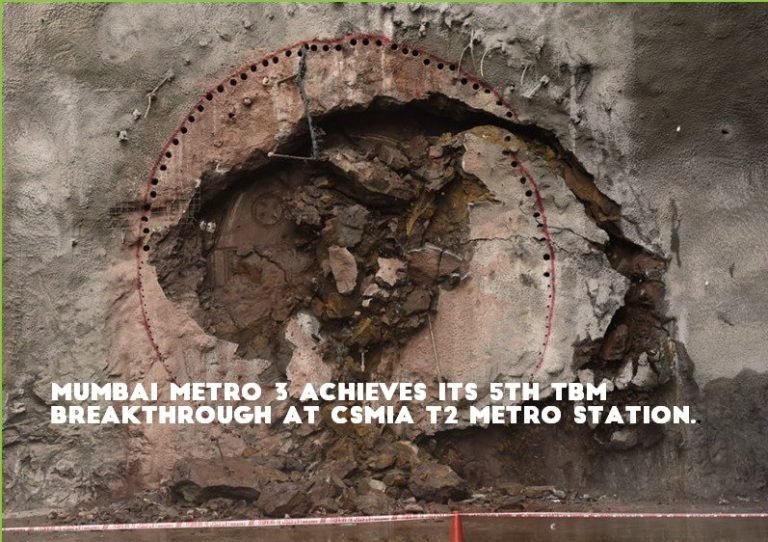
Mumbai, Metro Rail News: The Mumbai Metro Rail Corporation (MMRC) has completed 20 km of the total 52 Km tunnelling, which is around 38%, of the Colaba-Bandra-SEEPZ corridor. This was the 5th breakthrough achieved by a tunnel boring machine (TBM) Wainganga-3 at the Chhatrapati Shivaji Maharaj International Airport (CSMIA)-T2 Metro station on February 13, 2019. TBM Wainganga-3 completed tunneling of 1.31 Kms within 318 days of commissioning.

S.K. Gupta, director (projects), MMRC, Who was present at the site said, “We have completed around 38% of tunnelling and 35% civil works of the project. In all, there will be 32 breakthroughs. These are all major milestones for our project.”

“There are 17 TBMs deployed to construct the entire length of the 33-km corridor, for which the tunnelling work spans across 52.21 km.” he added.

The Tunnel Boring Machine (TBM), named Wainganga 3, was commissioned on April 2, 2018, and built a 1.31-km tunnel from the launch shaft at Marol Naka, in 318 days. It is a part of package 7, which is being constructed by the consortium of Larsen & Toubro and Shanghai Tunnel Engineering Co. Ltd.

Starting it’s course under Metro Line 1 at Marol Naka The 92 meter long TBM Wainganga-3 tunneled at an average of 4.2 meters daily through the rocky strata made of Basalt, volcanic Breccia shaping the tunnel with 937 RCC cement rings.

Of the five TBM breakthroughs, three have occurred in this package, which will connect the international terminal of the airport to SEEPZ via MIDC and Marol Naka. The total length of the tunnel in the package is 7.07 km of which 50% of tunnelling has been completed till date. In January, the MMRC achieved a twin tunnel breakthrough at Dadar station. Officials said the next one is likely to be at Sahar.

Speaking on the occasion Mrs Ashwini Bhide,MD,MMRC said “Ths is a big milestone & we are ecstatic about completing another tunnel breakthrough in this package Ths route will offer interchanging facility to commuters where it will get connected with 2 Metro Corridors Metro line 1 & Metro line 6”

COLABA-BKC-SEEPZ LINE IN FIGURES

  • Total Length: 33-km
  • Operational by: 2022
  • Ridership: 15-20 lakh daily
  • Stations: 27 underground stations

PROJECT STATUS

  • Civil work: 35% completed
  • Tunnel length: 52-km
  • Completion of tunneling: 20 km (38%) Crucial link
  • It will connect major central business districts (CBD) such as Nariman Point, Bandra-Kurla Complex (BKC) and Seepz in Andheri.

Haryana Cabinet approves Delhi-Gurugram-SNB RRTS corridor

New Delhi, Metro Rail News: To Provide hassle-free connectivity and in a major boost for regional mobility in the National Capital Region (NCR), the Haryana Cabinet has approved the detailed project report (DPR) of the Delhi-Gurugram-SNB (Shahjahanpur-Neemrana-Behror Urban Complex) Regional Rapid Transit System (RRTS) corridor yesterday.

For the financial year 2019-20, the Cabinet approved a seed capital of Rs 500 crore which will come from the state exchequer. The Cabinet also approved the gross contribution of Rs 6,436 crore for the project.

In addition, the slab of purchasable floor area ratio (FAR) was raised to 1.25 within 1.5 km of the RRTS corridor. The National Capital Region Transport Corporation (NCRTC) Board, which is the implementing agency for the project, had approved the Delhi-Gurugram-SNB corridor (106km) detailed project report in December 2018.

One of the three RRTS corridors prioritized for implementation, Delhi-Gurugram-SNB corridor is planned to be implemented in three phase.

In Phase 1, Delhi-Gurugram-SNB Urban Complex will be constructed. In Phase 2, it will be extended from SNB Urban Complex to Sotanala and in Phase 3 SNB Urban Complex to Alwar will be constructed.

Pre-construction work is already started such as geotechnical investigation has recently commenced in Gurugram. Tenders for pile loading test have also been floated by NCRTC for Delhi-Gurugram-SNB corridor.

Delhi-Gurugram-SNB corridor will be elevated for 71 km (11 stations) and the remaining 35 km (5 stations) will be constructed underground, primarily in Delhi and Gurugram formely know as Gurgao

This corridor will connect with other RRTS corridors in Sarai Kale Khan and will be ability, facilitating commuters’ movement from one corridor to another hassle free of changing trains.

Likewiase, with an intent to incentivise the use of public transport, Delhi-Gurugram-SNB corridor will be seamlessly integrated with other modes of transport in NCR.

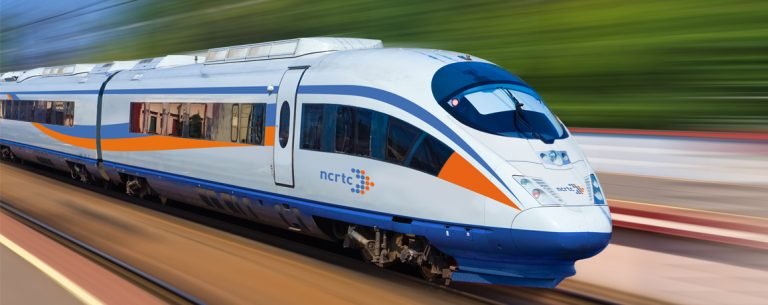
The operation speed of RRTS trains will be 160 km/ph and an average speed will be 100 km/ph. It will be available at a frequency of every 5-10 minutes.

The RRTS trains will be air-conditioned with transverse seating and overhead luggage space for commuter comfort. There would be priority seating arrangements for people with special needs and a business class coach and ladies coach in every train.

The RRTS smart line will pass through the urbanised and industrialised areas of Haryana and connect Delhi airport with the RRTS network, increasing the overall productivity of NCR.

The corridor will strengthen the regional transport infrastructure by providing a fast, safe, comfortable and reliable mobility option to the residents of Delhi, Gurugram, Rewari, Manesar, Daruheda, Bawal, and nearby areas.

The fast commute connecting Delhi to nearby regions will be immensely beneficial in decongesting Delhi and its roads, providing citizens the choice to live and work in different regions, according to a press release.

Once constructed, the corridor is expected to bring down the travel time between Delhi-SNB to about 70 minutes.

This corridor will not only offer mass transit benefits but also bring in the wide range of economic benefits to the society, including effectively curbing pollution, improving safety and reliability of commute and creating employment as well as new economic opportunities, the release said. 

Hyderabad metro rail set to open Ameerpet to Hitec City stretch

Hyderabad, Metro Rail News: City commuters who eagerly await the commercial operation of metro operations between Ameerpet and Hitec City will be soon after the Commissioner for Metro Rail Safety (CMRS) inspect the stretch.

L&T Metro Rail Hyderabad Ltd, the concessionaire implementing the 72-km-long metro rail project in Hyderabad, is set to commission the much-awaited link to Hitec City. Trial runs have been under way for the past few weeks.

Inspections of rolling stocks

The Chief Electrical Inspector for Hyderabad metro, DVS Raju, today conducted the statutory inspection of rolling stocks (train sets) in the metro depot. The train sets have been procured from Hyundai Rotem Company of South Korea.

Safety features Checked

Following the inspection, “ This inspection will facilitate the commissioning of the stretch between Ameerpet and Hitec City line of the Corridor 3. We have checked all safety features of the rolling stock, including emergency evacuation process.” said DVS Raju.

The commissioning of this line will enable L&T management to fully operate two lines of the three corridors it has taken up for development.

3rd corridor will take some more time

Although, the third corridor, which connects Secunderabad with the Old City at Falaknuma will take some more time.

While the main stretch up to the Central Bus Stand on the Musi river will be commissioned later this year, the line which terminates at Falaknuma is likely to take more time as there have been some right of way issues. This is being negotiated by the State.

The commissioning of the link up to Hitec City is likely to ease the traffic congestion on the busy line up to the IT hub where lakhs of people commute for work daily.

.

PM Modi headed Union cabinet approves Patna Metro Rail Project

Patna, Metro Rail News: In a major boost to public transport in Patna, Narendra Modi government has Approves Patna Metro Rail Project comprising of two corridors on February 13, 2019. Patna Metro will be Bihar’s first metro and the mass rapid transit will surely become the major mode of communication in Patna. A Cabinet meeting chaired by PM Shri Narendra Modi has taken the decision. The cost of the project is estimated at Rs 13411.24 crore. The project is scheduled to be completed in 5 years.

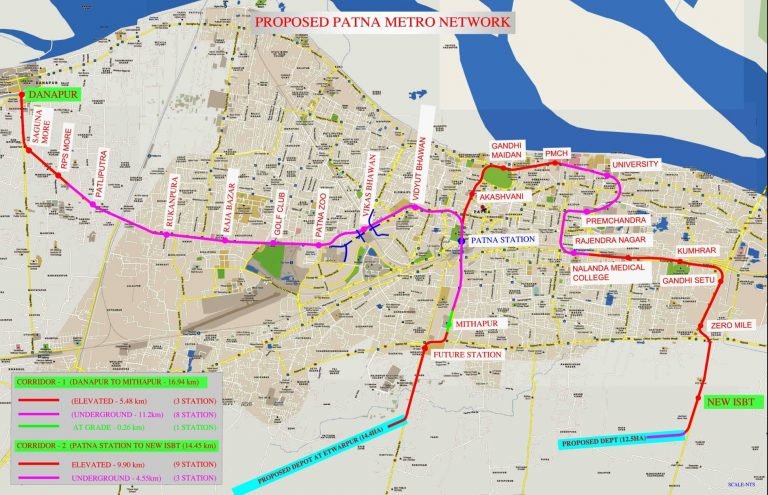
Proposed Patna Metro Network

Patna Metro rail project will have two corridors – Danapur to Mithapur and Patna Railway Station to New ISBT. It will cover a vast area of around 42 km. Danapur to Mithapur corridor will cover 26.94 km stretch,
Patna Railway Station to New ISBT corridor will pass through 14.45 km stretch.

Patna Metro Rail Project: All you need to know

The Danapur Cantt-Mithapur corridor will cover the areas located in the heart of Patna. The people residing in densely populated areas will have access to Patna Metro. Patna Metro stations will come up at Raza Bazar, the Secretariat, the High Court and the Law University Railway Station.

The second corridor from the Patna Railway Station to ISBT corridor will pass through key locations such as iconic Gandhi Maidan, PMCH, Patna University, Rajendra Nagar, Mahatma Gandhi Setu, Transport Nagar and ISBT.

Providing details regarding the Patna Metro rail project, the central government said the Danapur-Mithapur corridor will be mostly underground and partly elevated. The Danapur-Mithapur section of Patna Metro will have 11 stations. Out of these 11 stations, three will be elevated and 8 would be underground.

The 14.45 km-stretch of Patna station to New ISBT corridor will see an elevated stretch of 9.9 km and partly underground 4.55 km. This section Patna Metro will have 12 stations. Out of these 12 stations, 9 will be elevated and 3 will be underground.

Patna Metro will provide an alternative mode of communication to a population of 26.23 lakh. They are likely to be benefitted by the Patna Metro Rail Project directly and indirectly. The central government said that people residing in these areas will be able to travel on metro trains from one spot to different areas of the city conveniently.

The approved corridors will have multi-modal integration with railway stations and ISBT station and will have feeder network of bus, Intermediate Public Transport (IPT) and Non Motorised Transport (NMT).

Patna Metro will also focus on the last-mile connectivity as there will be multi-modal integration with railway stations and ISBT. Patna Metro will also run feeder network of bus, Non-Motorised Transport (NMT) and Intermediate Public Transport (IPT).

The central government has stated that the Patna Metro rail project will have non-fare box revenue from rental and advertisement. Apart from these, there will be Value Capture Financing (VCF) through mechanism of Transit Oriented Development (TOD) and Transfer of Development Rights (TDK).

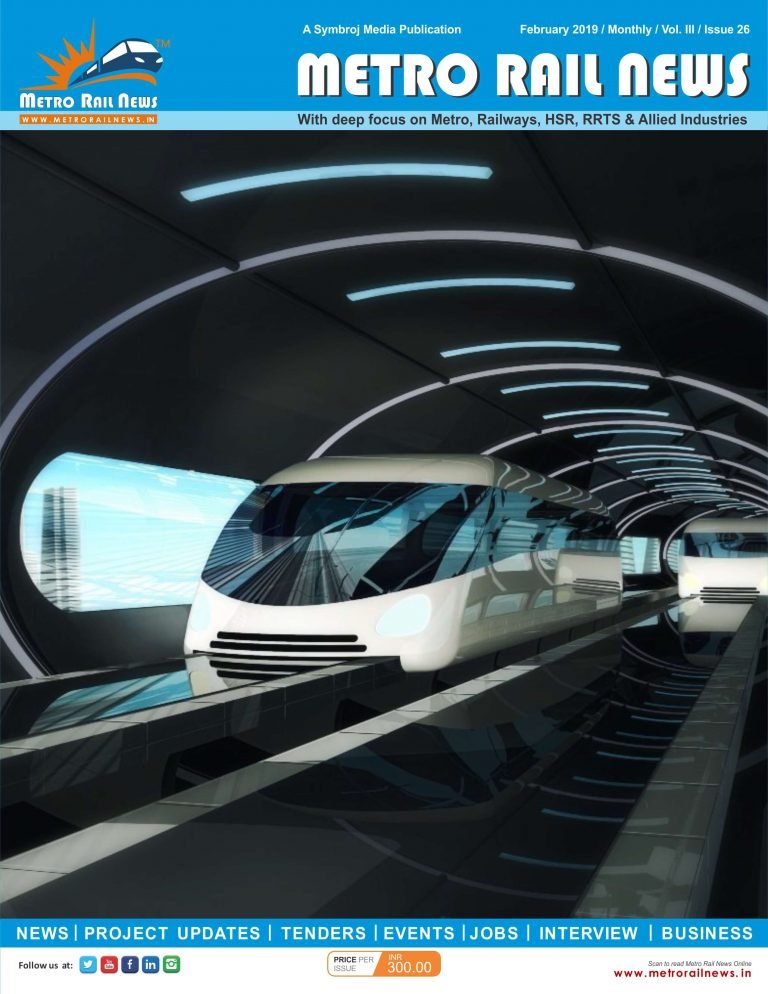
Hyperloop Special: Metro Rail News February 2019 issue publish

Dear Readers

Our February issue has focused on Hyperloop technology and cover story of Mumbai & Navi Mumbai Metro along with monthly specials such as exclusive interview, new development in Metro Project, technology update, pre-event coverage, opinion, industry leaders, industry watch, live tender, upcoming event, and current jobs opening.

The highlight of Metro Rail News January 2019

S. No.IndexPage no
1Editor Note6
2Round Up10
3Editor Choice13
4Cover Story: Hyperloop Technology18
6Interview with Mrs. Ashwini Bhide, IAS, MD at MMRC22
7Interview with Mr. S.K. Chaudhary, Chairman and 

MD, Ircon International Limited
24
8New Development: Aqua Line Metro open for public26
9Project of the Month: Mumbai Metro28
10
Featured Project: Navi Mumbai Metro
33
11Opinion: A – Failure of Mumbai Monorail holds lessons for Urban planner
Planners. B– Urban Mobility Challenges in India
37
11Technology Update: Evaluation of Heat Stress40
12Pre Event Coverage: Rail Live 201945
13Metro & Railway Job Openings47
14Article: Propulsion systems48
15Metro Rail Project Status51
17Upcoming Event53
18Live Tender54

PM Shri Narendra Modi inaugurates last leg of Chennai Metro Phase 1

Chennai, Metro Rail News: Prime Minister Shri Narendra Modi inaugurated the last stretch of the first phase of 45-km Chennai Metro rail network through video-conferencing from Tiruppur in Tamil Nadu.

The Last stretch of the Chennai Metro Rail Project from AG-DMS to Washermenpet of 10 kms has been completed and was inaugurated by the Hon’ble Prime Minister of India, Shri. Narendra Modi and the Hon’ble Chief Minister of Tamil Nadu, Shri. Edappadi K Palaniswami via video conferencing at Thiruppur, Tamil Nadu on 10.02.019 in the august presence of the Governor of Tamil Nadu, Thiru Banwarilal Purohit, Deputy Chief Minister of Tamil Nadu, Shri. O.Panneerselvam and other dignitaries participated at the event.

The Last stretch of the Chennai Metro Rail Project from AG-DMS to Washermenpet of 10 kms has been completed and was inaugurated by the Hon’ble Prime Minister of India, Shri. Narendra Modi and the Hon’ble Chief Minister of Tamil Nadu, Shri. Edappadi K Palaniswami via video conferencing at Thiruppur, Tamil Nadu on 10.02.019 in the august presence of the Governor of Tamil Nadu, Thiru Banwarilal Purohit, Deputy Chief Minister of Tamil Nadu, Shri. O.Panneerselvam and other dignitaries participated at the event.

At Chennai Central Metro Station, Hon’ble Union Minister (Independent Incharge), Thiru Hardeep Singh Puri, Ministry of Housing and Urban Affairs, Hon'ble Minister for Fisheries, Personnel and Administrative Reforms, Thiru. D.Jayakumar, Minister for Social Welfare, Dr. V. Saroja, Hon'ble Minister for Industries, Thiru. M.C.Sampath. participated in the video conference function and undertook a metro ride post inauguration from Chennai Central to AG-DMS via Washermenpet.

At Chennai Central Metro Station, Hon’ble Union Minister (Independent Incharge), Thiru Hardeep Singh Puri, Ministry of Housing and Urban Affairs, Hon’ble Minister for Fisheries, Personnel and Administrative Reforms, Thiru. D.Jayakumar, Minister for Social Welfare, Dr. V. Saroja, Hon’ble Minister for Industries, Thiru. M.C.Sampath. participated in the video conference function and undertook a metro ride post inauguration from Chennai Central to AG-DMS via Washermenpet.

In this function and the metro ride, Consul General of Japan Thiru Kojiro Uchiyama , Chief Representative ,JICA India Thiru Katsuo Matsumoto, Members of Parliament Thiru S.R. Vijayakumar, Thiru T.G.Venkatesh Babu, Dr. J. Jayavardhan and Additional Chief Secretary to Government, Special Initiatives Department, Dr.T.V.Somanathan, I.A.S, OSD(UT), Ex.Officio Jt. Secretary MOHUA, Thiru Mukund Kumar Sinha, Director (Systems & Operations), Thiru L. Narasim Prasad, Director (Finance), Tmt. Sujatha Jayaraj, Director (Projects). Thiru Rajeev Narayan Dwivedi also participated.

The Metro cross through some of the densely populated areas in the city and with the inauguration of the new line, one can travel from Chennai Central to Airport in about 30 minutes.

The metro will also connect the northern part of the city, considered undeveloped, with other parts of the city through Metro Rail enabling thousands of people from the area to enjoy a comfortable ride.

The project was executed by the Govt of India and Tamil Nadu Government with assistance from the Japan International Cooperation Agency (JICA). With the Phase-I over, the focus has now shifted to Phase-II which expect to connect another 100-km through the new age transport system. The Phase-II is expected to connect the IT corridor, residential areas of the city and suburbs like Poonnamalle and Tambaram.

Glimpse of Chennai Metro Rail’s final leg Inauguration

Datamatics wins Automated Fare Collection contract for Mumbai Metro Line 2A, 2B and 7

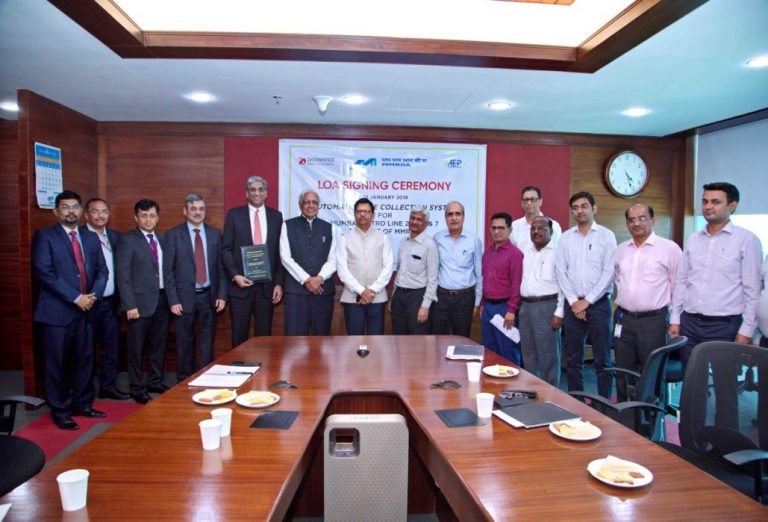
Mumbai, Metro Rail News: The Consortium led by of Datamatics Global Services Limited (DGSL) and AEP Ticketing solutions S.R.L, Italy (AEP), have been issued the letter of acceptance (LOA) for implementing Automatic Fare Collection (AFC) system for 52 stations of Mumbai Metro Line 2A (Dahisar to DN Nagar Metro), 2B (DN Nagar to Mankhurd Metro) and 7 (Andheri (E) to Dahisar) of the Mumbai Metro Rail project. The LOA was issued by Mumbai Metropolitan Region Development Authority (MMRDA) to the Consortium for approximately Rs. 160 crores.

The LOA between the Consortium and MMRDA was signed in the presence of Shri. R. A. Rajeev, IAS, Metropolitan Commissioner, MMRDA; Shri. Sanjay Waghmare Director(Systems), Metro PIU, MMRDA, Mr. O.P.Nebhnani, Officer on Special Duty(S&T), Metro PIU  MMRDA, Dr. Lalit Kanodia , Chairman , DGSL , Shri Rahul Kanodia, Vice Chairman & CEO – DGSL; Shri Sanjeev Subhedar,  EVP and Global Head Engineering Services and other top officials from MMRDA and DGSL.

On the occasion, Shri. R. A. Rajeev, IAS, Metropolitan Commissioner, MMRDA said “The ticketing system for the Mumbai Metro should be implemented taking into consideration ease of use for the commuters of the city of Mumbai. At the same time it should be state of art supporting future of the growing metro network and supporting upcoming fare media technologies.”

Commenting on the occasion, Dr. Lalit S. Kanodia, Chairman, Datamatics, said “Over the years,Datamaticshas invested and built expertise in Automated Fare Collection technology and has been a part of large global AFC mandates. We are headquartered in Mumbai and therefore winning Mumbai Metro project is special and a very proud moment for us.”

Automated Fare Collection (AFC) has been a focus area for Datamatics and over the last 25 years, the company has been instrumental in successfully executing over 25 marquee projects in the tier 1 metropolitan cities across the globe including Sydney, Hong Kong, London, Chicago, Melbourne, etc.

Rahul L. Kanodia, Vice Chairman & Chief Executive Officer, Datamatics, said “Datamatics is the only Indian company to have AFC solution. We have put in our best efforts for making the Lucknow Metro a successful project and we are delighted to be a part of prestigious Mumbai Metro Line 2 and 7 projects.”

In India, Datamatics is also implementing AFC system for Lucknow Metro Project which includes design, supply, installation and end-to-end testing of the ticketing, gates, servers, hardware networks and software components. The first phase of this project has already gone live with 8 stations. This is the fastest rolled-out AFC system in India till date.

Sanjeev Subhedar, EVP & Head – Engineering Solutions, Datamatics, said “Datamatics is committed to Indian customers to provide most advanced AFC solution suitable for Indian conditions within project timelines. Datamatics assures its customer of continued upgrades and long term support to protect the investment made by our customers.

Budget provision for Regional Rapid Transit System (RRTS) by UP Govt.

Lucknow, Metro Rail News: The Uttar Pradesh budget presented today by state Finance Minister Rajesh Agarwal gave Regional Rail project a major boost with the allocation of 400 crores to National Capital Regional Transport Corporation (NCRTC) for RRTS project. Earlier in the Union Budget, Central Government has allocated a sum of Rs. 1000 crores to this project.

Delhi – Ghaziabad – Meerut RRTS Corridor is 82 km long and will have 22 stations. The DPR of the project has already been approved by UP Government, while In-principal approval of Delhi Government has been received recently. Pre-construction activities such as Geotechnical Survey, Road widening work, Utility diversion work, Initial Pile Load Testing etc are in full swing for construction of this corridor.

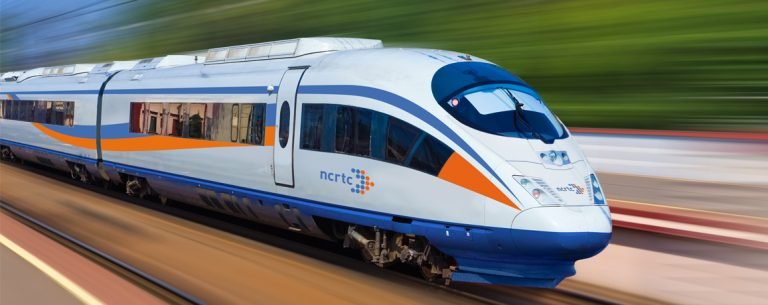
The high-speed rail will cover the distance from Meerut to New Delhi in less than 60 minutes. It is a new, dedicated, high speed, high capacity, comfortable commuter service connecting regional nodes of NCR to Delhi.

The NCRTC has already established its field offices in Ghaziabad, Meerut, and Delhi and posted officers and mobilized resources. This corridor is expected to be completed by the year 2025.


NCRTC is a joint venture of the Union government, Haryana, Delhi, Uttar Pradesh, and Rajasthan and is executing three prioritized RRTS corridors — Delhi-Alwar, Delhi-Meerut, and Delhi-Panipat in the first phase. Eight such corridors have been identified under the Integrated Transportation Plan 2032 prepared by the National Capital Region Planning Board (NCRPB).

For more details, please visit www.ncrtc.in

Alstom regrets European Commission’s prohibition decision for the merger of its business with Siemens Mobility

The European Commission (EC) has announced today its decision to prohibit the proposed merger of the Siemens and Alstom mobility businesses. As a result of this prohibition, the merger will not proceed.

Alstom regrets that the remedies offered, including recent improvements, have been considered insufficient by the Commission. The remedies were extensive in scope and addressed all the concerns raised by the Commission in respect of Signaling or Very High Speed trains. In addition, a number of credible and well-established European players expressed strong interest for the remedy package, thereby fully confirming its viability.

This is a clear set-back for Industry in Europe. Alstom, together with Siemens, is convinced that the transaction would have created substantial value for the global mobility sector, the European railway industry, customers, travelers and commuters, without harming European competition. It would also have allowed the creation of a European player having the ability to cope with the growing competition from non-EU companies.

The Board of Directors has unanimously thanked Alstom’s team for its outstanding management of this project and has highlighted the company’s very strong performance during this period.

Looking ahead, Alstom will focus on pursuing its growth path as a global leader in the mobility sector supported by excellent business fundamentals: a global footprint, a record €40 billion backlog, sales constantly outperforming market growth, and a very solid balance sheet. With a successful 2020 Strategy that delivered results ahead of target, Alstom remains today uniquely placed to offer customers and ultimately passengers, competitive, clean, and innovative mobility solutions.  Alstom will now project itself into a new future and define a strategic roadmap including appropriate capital allocation.

Dilshad Garden-New Bus Adda corridor gets CMRS Approval

New Delhi, Metro Rail News: The Commissioner of Metro Rail Safety has granted the mandatory approval for commencement of operations on the Dilshad Garden – New Bus Adda section. Sources said the new corridor is likely to be inaugurated soon.

Delhi Metro's Dilshad Garden-New Bus Adda corridor map

Delhi Metro’s Dilshad Garden-New Bus Adda corridor map

This entirely elevated 9.41 kms long section comprises of 08 stations namely; Shahid Nagar, Raj Bagh, Rajendra Nagar, Shyam Park, Mohan Nagar, Arthala, Hindon River Station and New Bus Adda. This section will be an extension of the Rithala – Dilshad Garden Red Line.

“Commissioner for Metro Rail Safety S K Pathak inspected the Dilshad Garden-New Bus Adda section of metro on February 5 and has granted the approval,” a senior official said.

This section will immensely benefit the people of Ghaziabad and connect the satellite city with the national capital. Passenger services on the section will be started soon after meeting all necessary compliances and formalities, he said.

This section will be an extension of the 25.09-km Rithala-Dilshad Garden corridor or Red Line, which has 21 stations.

After the opening of this section, the Delhi Metro network will span 336.5 km with 244 metro stations.

The Delhi Metro’s current operational span is 327 km with 236 stations.