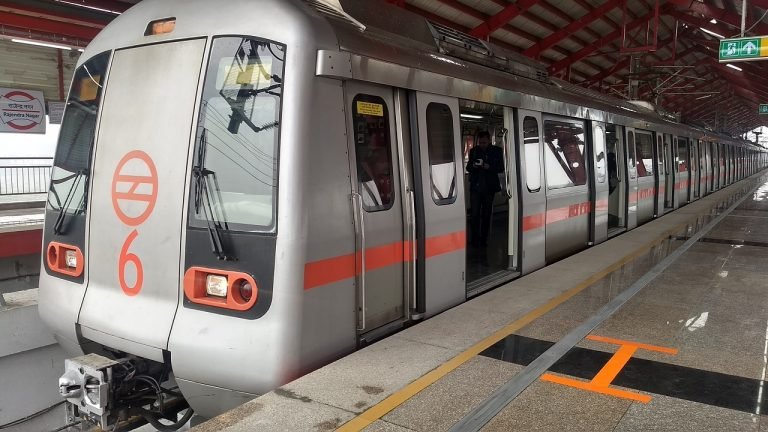
New Delhi: Prime Minister Narendra Modi has flagged-off the Delhi-Faridabad Metro Line that would allow hassle free travel for around two lakh daily commuters between the national capital and the industrial hub in Haryana.
The extension of the Delhi Metro connects Badarpur to Escorts Mujesar in Faridabad.
The total cost of the project from Badarpur to Escorts Mujesar is nearly Rs. 2,500 crore. Out of this, Rs. 1,557 crore was borne by the Haryana Government, the Centre contributed Rs. 537 crore, while the Delhi Metro provided Rs. 400 crore.
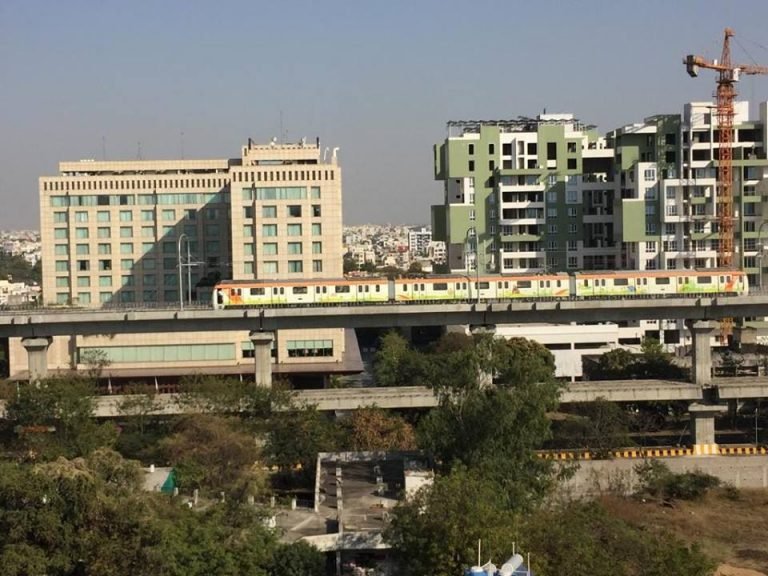
All these are elevated and located on either side of the Delhi-Mathura Road (NH-2).
“The nine-station metro corridor which was 95 per cent indigenously built will provide people a safe, affordable, quick, comfortable, reliable, environment-friendly and sustainable transport facility,” a Haryana government spokesperson said.
Haryana Chief Minister ML Khattar, addressing a press conference on Saturday, had thanked the Prime Minister for “gifting” the Metro service which would take the city to “another level of progress” with better connectivity with other NCR towns.
He had also said that the Prime Minister would be announcing the go-ahead for connecting Gurgaon with Faridabad by Metro.
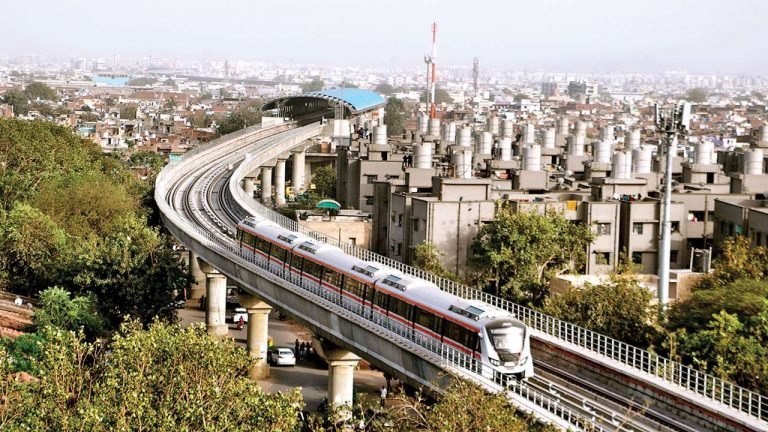
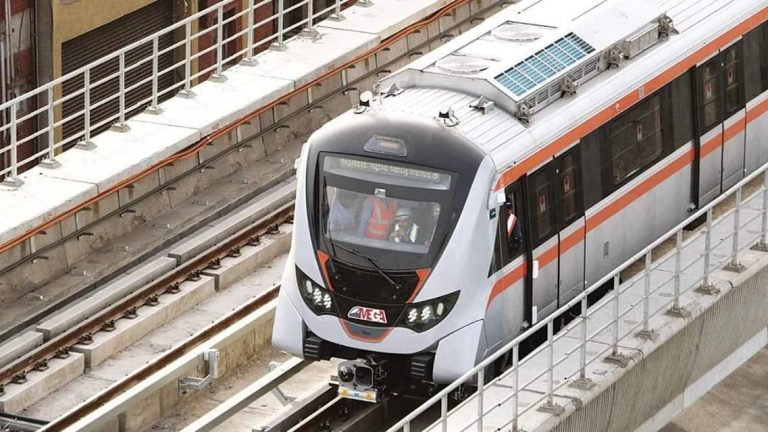
Ahmedabad, Metro Rail News: Good news for residents of Ahmedabad! Honorable Prime Minister Shri Narendra Modi is all set to inaugurate the first phase of the Ahmedabad Metro Rail Project on March 4. The trial for the 6.5-km long track has been completed recently. The 6.5 km-long section connects Vastral Gam to Apparel Park. Ahmedabad Metro project is is implementing by Gujarat Metro Rail Corporation (GMRC).
Ahmedabad Metro Fare: According to source, the minimum fare may start from Rs 15 for a ride of up to 2 km and the maximum fare may be around Rs 51 for a ride of up to 31 km
Ahmedabad Metro Phase I Route Map :
Phase 1 Ahmedabad Metro Route Map
Ahmedabad Metro Phase II
Also, the Union Cabinet in a meeting chaired by PM Modi has approved the Ahmedabad Metro Rail Project Phase II on February 19, 2019. The Ahmedabad Metro Rail Project Phase-II comprises two corridors of total length 28.254 kilometres. It has two corridors – Corridor 1 from Motera Stadium to Mahatma Mandir comprising for a length of 22.838 km and Corridor 2 from GNLU to GIFT City for a length of 5.416 km. The total completion cost of the project will be Rs 5384.17 crore.
The Cabinet has also approved the institutional arrangement and legal framework for the project.
Ahmedabad Metro Phase II Map:
Ahmedabad Metro Phase II Map
Implementation of the Ahmedabad Metro Rail Project Phase II project will provide the much-needed additional public transport infrastructure to Ahmedabad and Gandhinagar.
Varanasi, Metro Rail News: ABB won a 270 crore contract to supply converters for electric locomotives from Diesel Locomotive Works (DLW), in Varanasi. The converters are custom designed for Indian Railways and will be manufactured at one of ABB’s largest factories for locomotive applications in Nelamangala, near Bengaluru, in Southern India.
Traction equipment
ABB’s traction solution is based on the latest technology to bring more reliable trains to passengers, while increasing sustainable transport use by moving from diesel trains to electric. This helps rail operators to achieve significant operational improvements.
“We are delighted to be contributing to the electrification of India’s rail network with ABB’s locally manufactured solutions,” said ABB CEO Ulrich Spiesshofer. “By adopting advanced technologies, India is achieving rapid improvements in growth and productivity and shaping its economy for the era of digitalization.” He added.
“We are privileged to work with DLW and Indian Railways on the electrification of the domestic rail network in India – the fourth largest rail network in the world,” said Sanjeev Sharma, Managing Director, ABB India. “This order will help to improve rail efficiency so that passengers travelling in India will reach their destination on time and in comfort.” he added.
ABB factories for locomotive applications in Nelamangala, near Bengaluru, in Southern India.
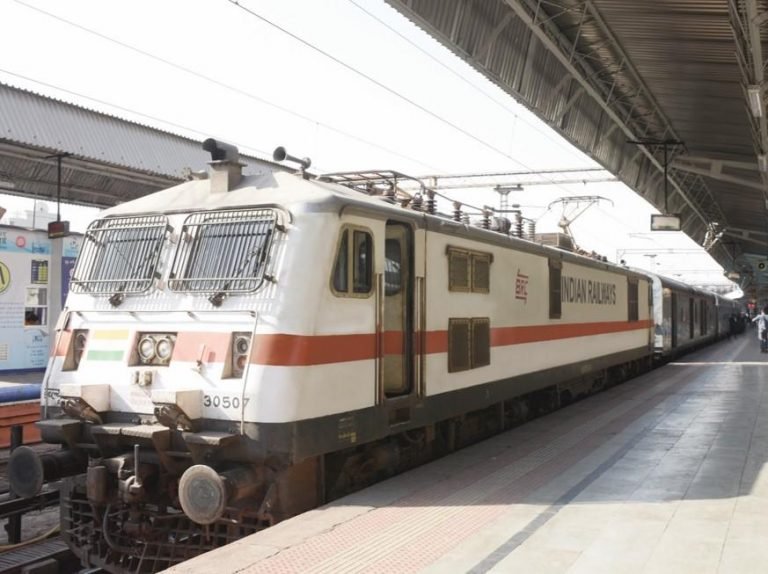
ABB has delivered traction equipmen more than 250 electric locomotives operated by Indian Railways for both passenger and freight services. In India, more than 20 percent of three-phase electric locomotives are equipped with traction converters from ABB. Last year, the Indian government approved plans to fully electrify the Indian Railways by 2022.
New Delhi, Metro Rail News: The Union Cabinet chaired by Prime Minister Narendra Modi has approved implementation of Ahmedabad Metro Rail Project Phase-II on February 19, 2019.
The project comprises two corridors. One from Motera Stadium to Mahatma Mandir and second from GNLU to GIFT City. Total completion cost of Phase-II metro is estimated at Rs 5,384.17 crore.
The Union Cabinet approved the following proposals:
Implementation of Ahmedabad Metro Rail Project Phase-II, which comprises two corridors of total length 28.254 i.e. Corridor 1 from Motera Stadioum to Mahatma mandir for a length of 22.838 km. and Corridor 2 from GNLU to GIFT City for a length of 5.416 km at a total completion cost of Rs. 5384.17 crores.
The institutional arrangement and legal framework for the project.
Conditions of sanction of the project.
The project will provide the much-needed additional public transport infrastructure to Ahmedabad and Gandhinagar.
The second phase of metro rail project is aimed at streamlining the urban transportation system in Ahmedabad and Gandhinagar. which is stressed due to intensive developments, increase in the number of private vehicles and heavy construction in the city putting stress on travel infrastructure and industrial activities, and by providing the people a safe, secure, reliable and comfortable public transport.
The Metro Rail project itself is an innovation over the conventional system of urban transport. The project involves integration with other urban transport systems in an efficient and effective manner which is possible only by adopting innovative methods of designing, technology and institutional management.
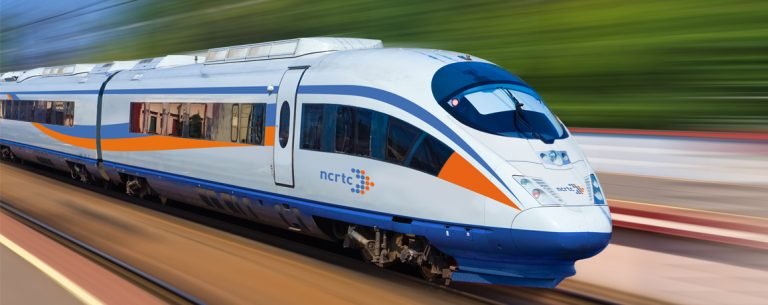
New Delhi, Metro Rail News: Union Cabinet today approved India’s first Regional Rail between Delhi-Ghaziabad-Meerut with Metro in Meerut. This 82km stretch will be covered in less than 60 mins by high-speed, high-frequency, safe, reliable, comfortable & green public transit.
Joining city centre to city centre, RRTS trains will reduce pollution and road congestion taking more than one lakh private vehicles off-road. High speed mobility will also drive balanced socio-economic growth with increased economic activities and will improve quality of life of citizens.
Metro services with 12 stations on 18 kms. stretch between Modipuram and Meerut South stations on RRTS infrastructure will meet the local mobility needs of Citizens of Meerut besides providing efficient regional connectivity.
RRTS Trains will be equipped with modern features like CCTV surveillance, Mobile/Laptop Charging points, Luggage space etc. All station and trains will have universal accessibility for specially-abled. Each train will have a Business Class and a Ladies coach.
RRTS stations will be seamlessly integrated with other transport modes like Airport, Railway, Metro, ISBTs etc. and will be inter-operable ensuring that change of train is not required for moving from one RRTS corridor to another.
Delhi-Ghaziabad-Meerut RRTS corridor is first of the three prioritized corridors planned for implementation in Phase-1. The other two are Delhi-Gurugram-Alwar and Delhi-Panipat Corridors.
Geotechnical investigation
Pre-construction activities such as Geo-Technical investigations, Pile Load Tests, Road Widening and Detailed Engineering are already in advance stage and NCRTC, the implementing agency for the project is ready to begin construction of the corridor. Tenders for the civil construction have already been invited.
Total project cost is Rs 30,274 Crores.
NCRTC is mandated to design, construct, finance, operate and maintain RRTS in NCR and works under the administrative control of Ministry of Housing and Urban Affairs, Government of India.
Delhi-Ghaziabad-Meerut Corridor Map
Delhi-Ghaziabad-Meerut Corridor Map and Station List
Mumbai, Metro Rail News: The Mumbai Metro Rail Corporation (MMRC) has awarded Contract for the ‘Tunnel Ventilation system and Environmental control system’ Phase 1 works for the section Aarey to BKC for its Colaba-Bandra-Seepz Corridor of Mumbai Metro Line-3 (MML-3) project after obtaining clearance from JICA (Japan International Co-operation Agency) as per procurement norms.
‘Shanghai Tunnel Engineering Corp Ltd. (STEC)’ has been awarded the Tunnel Ventilation system and Environmental control system” works for Package 15 (Phase 1) being the most competitive amongst the respective bidders.
The works consist of design, manufacture, supply, installation, testing and commissioning along with other associated works for the section Aarey to BKC.
Tunnel Ventilation System (TVS) is critical life safety system that will protect passengers during fire and smoke emergencies in the stations/tunnels. Tunnel Ventilation System (TVS) lowers tunnel air temperature during normal and congested conditions and provides smoke management in tunnel during train fire emergency. Environmental Control System (ECS) Supplying fresh air for the physiological needs of passengers, removing body heat, obnoxious odours and harmful gases like carbon dioxide exhaled during breathing, 24×7 cooling system for critical operating rooms, smoke extraction at station during emergency conditions.
“Tunnel Ventilation and Environmental Control System” is a critical component of Metro Line 3 implementation for Passenger comfort and safety. We aim to implement robust and technologically advanced system and complete the works in time so that Metro Line-3 project can be completed in stipulated timelines. Said Ashwini Bhide, MD, MMRC
Patna, Metro Rail News: “The 31.39-km long Patna metro rail, the foundation stone for which was laid by Prime Minister Narendra Modi in Begusarai, would become operational by 2024” Said Sate Urban Development and housing department (UDHD) minister Shri Suresh Kumar Sharma on February 17, 2019.
“We will start the process of site investigation and selection of agency for loan this year. The bidding process will also start soon and the tenders will be awarded to the selected firms by mid-2020,” Sharma said. While laying the foundation for the project at a parallel function at gate number 1 of Patna zoo “work on the Rs 13,365.77- crore project would begin in six months” He Added.
Patna Metro Rail Corporation Limited, has been approved by the cabinet as a company and UDHD special secretary Sanjay Dayal has been nominated as its director.
On this occasion, Mr. Sany Dayal, Director PMRCL, Said “The construction of viaduct and tunnels will start from next year and complete by the end of 2022. Similarly, construction of stations and depots will also be done. Work related to coaches and their running on the track has been targeted to be completed by 2023 and commercial operations will begin in the next five years”.
As per the detailed project report (DPR), revenues will be generated through an automated fare collection system, advertisement and parking. The target for revenue collection is Rs 1,228 crore by 2024. The metro trains will run at a speed of 85km/hour. Its average speed limit will be 35km/hour.
The metro rail will run in two corridors — the 16.94km-long-east-west corridor covering Danapur, Patna Junction, Bailey Road and Mithapur bus stand. The 14.45km-long-north-south corridor will connect Patna Junction with the proposed bus stand at Bairiya via Gandhi Maidan, Patna Medical College and Hospital and Rajendra Nagar Terminal railway station.
Around 5.43 lakh passengers are expected to travel from the east-west corridor on a daily basis by 2024. The number is expected to touch 12.32 lakh by 2051. Similarly, in north-south corridor, around 3.31 lakh passengers are likely to travel per day.
Union housing and urban affairs minister Hardeep Singh Puri said the urban population is expected to reach 60 crore by 2030. “Metro will be an important mode of communication in the city,”
Nagpur, Metro Rail News: The The MahaMetro conducted its first trial run on February 18, 2019, with the three-coach train that covered 11.5 km distance between Khapri and Ajni stations, at a speed of 45 km per hour.
The trial run took place under the supervision of an 11-member team of Research Design and Standards Organisation, functioning under the Ministry of Railways.
“The team checked compliance markers, such as safety, braking system, acceleration and deceleration, among others. It will submit a report, following which a team of the Commissioner of Metro Rail Safety (CMRS) will undertake a visit for the final certification of safety to pave the way for the commercial run,” said Akhilesh Halve, DGM Corporate Communication
Stretching 39 km over the two corridors, the work for the project began in 2014.
“The Nagpur Metro will have the distinction of being the fastest completed Metro project in the country, the deadline for which is December 2019.” said Brijesh Dixit, MD of MahaMetro,
Begusarai, Metro Rail News: Prime Minister Narendra Modi lays the foundation stone for Patna Metro Rail Project in Barauni via video conferencing. The project will take an estimated 5 years for completion with more than 13 thousand crores of funding. Bihar Chief Minister Nitish Kumar also present. The project which will give a boost to transport connectivity and add to ease of living for the people of Patna and adjoining areas.
In a statement the government said, around 26 lakhs of Patnaites are expected to get benefit from the project directly or indirectly. The corridor is supposed to connect densely populated areas of the city like Raja Bazar, High court, Secretariat, Patna Junction among many other areas.
Project Details:
The Project will be completed in five years.
Danapur Cantt to Mithapur corridor will pass through the heart of city and connect densely populated areas Raza Bazar, Secretariat, High Court, Law University Railway Station.
Patna Jn. to ISBT corridor will connect Gandhi Maidan, PMCH, Patna University, Rajendra Nagar, Mahatma Gandhi Setu, Transport Nagar and ISBT.
The Metro will provide Eco friendly and sustainable Public Transport to residents, commuters, industrial workers, visitors and travelers.
Patna Metro Project Highlights:
The length of Danapur to Mithapur corridor is 16.94 km, which is mostly underground (11.20 km) and partly elevated (5.48 km) and comprises of 11 Stations (3-Elevated and 8-Underground).
The length of Patna Station to New ISBT corridor is 14.45 km, which is mostly elevated (9.9 km) and partly underground (4.55 km) and comprising of 12 stations (9-Elevated and 3-Underground).
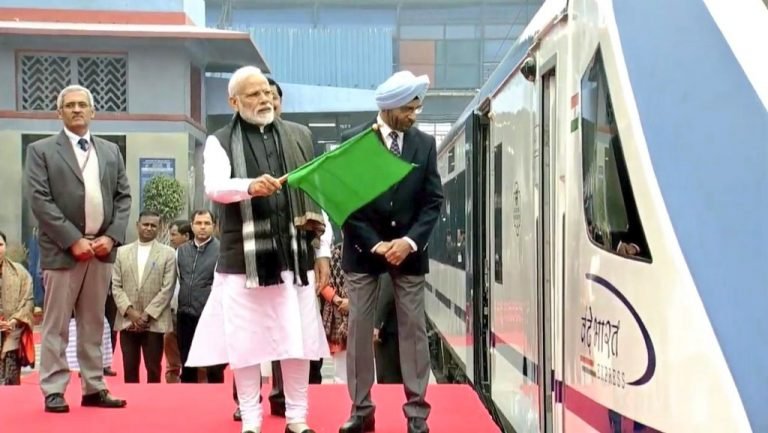
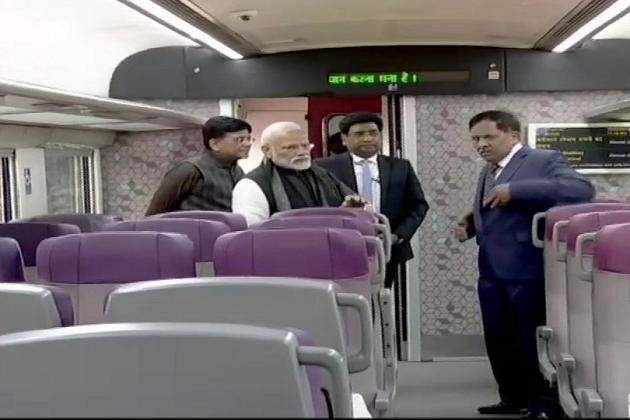
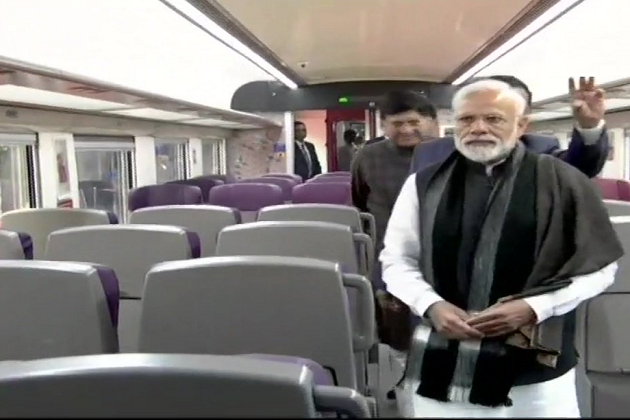
New Delhi, Metro Rail News: Prime Minister Shri Narendra Modi on February 15, 2019, flagged off the Vande Bharat Express from New Delhi Railway Station in the presence of Railway Minister Shri Piyush Goyal and other senior officials from the railways.
The mood of the ceremony was muted in the backdrop of the 14 February Pulwama, counted among the bloodiest in Kashmir terror attack that left 44 CRPF jawans martyred. PM Modi, speaking at the event, said the country will give a “strong response” to this attack.
Before flagging off the train, PM Shir Narendra Modi spoke to senior officials associated with the construction of the Vande Bharat Express formally Train 18.
PM Shri Narendra Modi on board of Vande Bhart Express
He also took a tour of one of the coaches and inspected the driver’s cabin. The PM was seen enquiring about the design and the facilities provided to the passengers. He was shown how the driver of the train can see the happenings inside the coaches with the help of on-board CCTV cameras.
PM Said “I am grateful to designers and engineers behind Vande Bharat Express which will take its first trip from Delhi to Varanasi today. With our sincerity and hard work in the last 4.5 years we have tried to improve railways,”
The train that was flagged off by the PM today will travel from Delhi to Varanasi in nine hours and forty-five minutes. This includes stoppage time of 40 minutes each at Kanpur and Allahabad where there will be special programmes.
According to report the Railway Minister Piyush Goyal and members of the Railway Board will be on board the train on its inaugural journey
The Vande Bharat Express, India’s first semi-high speed train, has been produced indigenously at the Integral Coach Factory, Chennai, in 18 months under make in India initiative on the cost of 100 cr.
Previously called Train 18, the Vande Bharat Express is engineless and can run up to a maximum speed of 160 kmph though it clocked 180 kmph during a trial run.
Train 18 is Designed and constructed by Integral Coach Factory (ICF), the train was flagged off by Railway Board Chairman Ashwani Lohani on 29 October.
Vande Bharat Express has 16 coaches and the same number of seats as in a Shatabdi Express, which it will replace. The total seating capacity is 1,128 passengers.
The fares of the train are 40 per cent higher than that of Shatabdi.
Passenger comfort has been given detailed attention. Features include CCTVs, onboard Wi-Fi and infotainment, rotational seats, modular and disabled-friendly toilets with bio-vacuum systems, automatic doors with retractable footsteps among other features.
Every coach has a pantry facility to serve hot meals and, hot and cold beverages. The insulation is meant to keep heat and noise to very low levels for additional passenger comfort.
Besides the speed, Vande Bharat Express has an advanced array of features including energy-efficient coaches which leave less carbon footprint and braking system which can save up to 30 per cent of electrical energy. Every alternate coach is motorised to ensure even distribution of power in the train.
Loco Pilots Kamal Kumar Chitkara (R) and Sanjay Kumar Singh (L) on the inaugural run of Train 18 on Feb 15, 2019 at New Delhi Station
The train has driver coaches at both ends – like metro and local trains across the country.
The bookings for the train have begun and it will run commercially from 17 February from Delhi to Varanasi five days a week.
Time-Table of Vande Bharat Express Vande Bharti Express will run five days a week on Sundays, Tuesdays, Wednesday, Fridays and Saturdays.
Delhi, Metro Rail News: Delhi Metro’s 9.6 km Red line extension link between Dilshad Garden station in New Delhi to New Bus Adda station in Ghaziabad is expected to be inaugurated in February end.
Commuters can travel The total journey from Dilshad Garden to New Bus Adda will in 16 minutes.
The section will comprise of eight elevated Metro stations which are Shaheed Nagar, Raj Bagh, Rajendra Nagar, Shyam Park, Mohan Nagar, Arthala, Hindon River Station and New Bus Adda This section is a extension of the Rithala – Dilshad Garden Red Line and will
After opening of this 9.63 km long section, the Red Line will be 34.72 km in length. The 25.09 km long Red Line is operational between Rithala to Dilshad Garden.
As many as six stations along this route, Raj Bagh, Rajendra Nagar, Shyam Park, Mohan Nagar, Arthala, and New Bus Adda, have station buildings on both sides interconnecting at the concourse level and with station platforms through Foot Over Bridges (FOB).
Shaheed Nagar has building on one side (Ghaziabad to Delhi) and the other side is connected through FOB.
The Hindon River station is off-road with four floors, a lower ground level for parking, the upper ground level for the main station, an entry/exit and a concourse level for entering the paid area and connection of another entry/exit areas across GT-Road through the FOB and platform level.
After Vaishali, This would be the second Metro Line in Ghaziabad and the first Metro link connecting the interiors of Ghaziabad.
The extension of Metro line will connect residents of Ghaziabad City with various parts of Delhi / NCR region. This corridor will pass through the Sahibabad Industrial Area and will significantly impact the residential areas lying in proximity.
With the extension of the Metro, the connectivity to Mohan Nagar from Dilshad Garden would also improve considerably. Currently, commuters have to rely on other modes of transport from Dilshad Garden to reach Sahibabad and Ghaziabad.
The Delhi Metro Rail Corporation (DMRC) carried out most of the construction activities and launching operations during the night for four to five hours. The non-stop traffic on the GT road was a major challenge while constructing this section.
“Trains will be available at a peak hour frequency of six minutes and 12 seconds on the Dilshad Garden – New Bus Adda section. buy augmentin online https://www.facebeautyscience.com/wp-content/themes/twentyseventeen/inc/en/augmentin.html no prescription
A total of 35 six coach trains will be used on the entire Rithala – New Bus Adda Red corridor” Said Mr. Anuj Dayal.
Trial runs for the project started in August 2018 and it was cleared by the Public Investment Board on January 11. The Union Cabinet cleared the project on January 23 and approved the Centre’s grant of Rs 324.87 towards the project.
The total cost of the project is estimated to be around Rs 1781.21 crore.
After the opening of this section, the DMRC will have a 336.5 km network with 244 metro stations.