Home Blog Page 66

Advancing Rail Passenger Experience and Safety With Technology

0

The evolution of passenger experience in Rail

The rail industry has undergone significant transformations over the past few decades, driven by evolving passenger needs and expectations. Historically, rail travel was often viewed as a utilitarian mode of transportation, primarily focused on efficiency and cost-effectiveness. However, as society has progressed, so too have the expectations surrounding passenger experience. Today’s travellers seek a journey that offers reliability, comfort, engagement, and safety. They expect transportation that goes beyond just getting them from point A to B, with an experience that enhances their overall travel.

The importance of enhancing the passenger experience within the rail ecosystem cannot be overstated. As competition intensifies from other modes of transport— such as air travel and private vehicles—rail operators must prioritise passenger satisfaction to retain and grow their customer base. Quest Global stands at the forefront of this transformation, leveraging its engineering expertise and innovative solutions to redefine what it means to travel by rail. This article examines how innovations are transforming passenger experience and safety in the rail industry. Key stakeholders are advancing AI-driven personalisation, sustainable practices, and collaborative solutions to shape the future of rail travel.

 The key factors that contribute to a positive rail passenger experience

A positive rail passenger experience is shaped by a blend of factors that prioritize comfort, convenience, and safety. High-quality seating with ample legroom and adjustable features ensures physical comfort, while amenities like Wi-Fi, power outlets, and entertainment options elevate the journey. Cleanliness and regular maintenance of trains contribute to a welcoming atmosphere, reinforcing passengers’ confidence in the service. Rail operators that focus on these elements enhance passenger satisfaction and position themselves as leaders in the competitive transport ecosystem.

Service quality plays a pivotal role in shaping passenger perceptions. Attentive, well-trained staff who provide clear communication and responsive assistance can transform routine trips into pleasant experiences. Smooth ticketing processes—via mobile apps or kiosks—and accessible infrastructure for passengers with reduced mobility further enhance convenience. Rail operators can address these needs to create a more inclusive environment that caters to a diverse passenger base.

Safety, punctuality, and reliability are fundamental to passenger trust. Visible safety measures, real-time updates on train schedules, and adherence to timeliness standards are critical. Personalized services, such as tailored meal options and loyalty programs, add a distinctive touch to the travel experience. For rail operators, focusing on these interconnected elements is key to fostering long-term loyalty and positioning rail travel as a preferred mode of transport globally.

AI-driven use cases transforming rail passenger experiences

AI technologies are revolutionising the rail industry, enhancing passenger experiences while driving efficiency and revenue. Use cases like AI-driven revenue management allow operators to analyse historical trends and optimise pricing dynamically. A European rail operator leveraging this approach saw a 3-8% revenue increase and higher ridership by aligning fares with demand. Security innovations (fraud and incivility prevention) using artificial vision and predictive algorithms have also streamlined operations, reducing security costs by 10% and boosting customer confidence. Real-time intermodal information systems provide journey updates and intermodal connectivity, increasing customer satisfaction by up to 15%.

 Innovative pilot programs are further transforming rail travel. Thales Group’s DIVA system uses intelligent video analytics for effective Passenger flow management. They monitor crowd density and guide passengers, reducing congestion and ensuring smoother station operations. AI-powered personalisation tools, like Deutsche Bahn’s SEMMI, enhance customer interactions through digital avatars and automated support, improving issue resolution rates by 15% and cutting marketing costs by up to 15%1. These advancements are setting new standards in passenger experience, ensuring rail travel remains a preferred, innovative mode of transport.

Innovations in passenger cabin design for personalised experiences

As passenger demographics shift, so too do expectations regarding comfort and personalisation in rail travel. Recent advancements in passenger cabin design have elevated the travel experience to cater to diverse passenger needs. Modular passenger cabin layouts allow rail operators to adapt cabin spaces dynamically, transforming traditional seating areas into collaborative workspaces or lounges. This flexibility appeals to both business and leisure travellers, creating tailored environments that optimise space and enhance the overall experience.

A.  Redefining comfort and luxury in rail travel: Smart seating solutions further this trend, with seats now offering lumbar support adjustments, customizable recline angles, and even heating or cooling options to suit individual preferences based on the climatic conditions. The emphasis on passenger-centric facilities is crucial, particularly for those with reduced mobility who require accessible options.

 Some trains even provide luxury facilities like showers, foldable beds, and lounge bars, creating an ambiance akin to luxury hotels, which is particularly valued on long-haul routes. Real-life examples illustrate this trend effectively. In Europe, matrimonial coaches have been introduced to cater to couples traveling together, while some operators have implemented “work-from-train” facilities that allow business travelers to conduct meetings or work remotely during their journeys. Such innovations enhance comfort and improve overall satisfaction among passengers.

B.  Lighting and ambiance innovations add another layer of personalization. Dynamic lighting systems enable passengers to adjust LED lighting to match the time of day or their mood, fostering a relaxing atmosphere. Through mobile apps or onboard interfaces, travelers can customize their environment with ease. Privacy is also a growing priority in cabin design, as new features such as partitioned spaces and soundproofing materials create quiet, semi-private areas for families and business travelers.

C.  Sustainability and accessibility are also driving forces in modern rail cabin design. Eco-friendly materials are increasingly used in cabin furnishings, and energy-effi- cient layouts maximize natural light and ventilation to reduce energy consumption. Accessibility innovations ensure inclusivity, with designated spaces for wheelchair users, automated doors, and tactile signage making rail travel more convenient for passengers with reduced mobility. Embracing these forward-looking design elements, the rail industry is creating a more comfortable, connected, and environmentally responsible journey that meets the evolving expectations of passengers worldwide.

Advancements in rail safety and passenger experience

 Safety is the cornerstone of passenger trust, and innovations in collision avoidance systems like Communication-Based Train Control (CBTC) and Connected Driver Advisory Systems (CDAS) are revolutionizing rail operations. These technologies enhance safety, efficiency, and reliability, addressing critical challenges faced by modern rail networks.Compliance with stringent safety standards—including fire, smoke, and toxicity requirements—ensures passengers feel secure throughout their journey.

A. CBTC, a state-of-the-art signalling system, allows trains to communicate directly with one another and with centralised control systems. Unlike conventional

fixed-block signalling, CBTC uses continuous wireless data exchange to determine a train’s exact location in real-time. This enables dynamic adjustments to train speeds and distances, ensuring safe intervals between trains. Widely adopted in urban metros, CBTC significantly boosts capacity by allowing more trains to operate on the same tracks without compromising safety. Moreover, its ability to reduce human error and optimise energy consumption makes it an invaluable tool for modernising rail systems globally.

 B. CDAS complements CBTC by focusing on providing real-time guidance to train drivers. This system analyses data from onboard sensors, tracks, and environmental conditions to deliver actionable insights, such as optimal speed adjustments, braking points, and energy-efficient driving techniques. CDAS enhances safety by ensuring compliance with operational parameters while improving efficiency and punctuality. In long-distance and freight operations, where human fatigue or environmental variability can impact decision-making, CDAS serves as a vital aid, reducing risks and maintaining schedule integrity.

 Predictive analytics and AI-driven diagnostics are further strengthening rail safety. Analysing data on track and train conditions, these technologies can identify potential failures—such as traction motor issues or signal faults— before they escalate, minimising downtime.

Together, CBTC and CDAS exemplify how advanced technology can harmonise safety and operational excellence. Integrating these systems ensures passenger protection while simultaneously enhancing capacity, reliability, and sustainability—key pillars of the future rail ecosystem.

C. Tilting technology – Redefining speed and comfort on curved tracks: Tilting technology revolutionises rail travel by allowing trains to navigate curves at higher speeds without sacrificing passenger comfort. The system counteracts centrifugal forces during turns, enabling smoother journeys and reducing travel time by up to 30% on conventional tracks. This innovation minimises the need for extensive infrastructure modifications, offering a cost-effective solution for enhancing operational efficiency.

 Pendolino trains, renowned for integrating tilting mechanisms, are designed to maximise performance on both high-speed and conventional rail networks. Operating across multiple countries, these trains demonstrate versatility through features like distributed traction, advanced thermal insulation, and real-time passenger information systems. With tilting technology, rail operators can deliver faster, more comfortable journeys, positioning rail as a competitive choice in modern mobility.

 D. AI and IoT – Redefining safety and efficiency in rail travel. The integration of artificial intelligence (AI) and the Internet of Things (IoT) is transforming rail travel, making it safer and more efficient. Utilising real-time monitoring and predictive analytics, rail operators can anticipate and address potential hazards before they escalate. IoT sensors installed across trains, tracks, and stations continuously collect data on critical parameters such as vibrations, temperature, and structural integrity. AI-driven analytics then process this data to identify risks, enabling timely interventions. For instance, predictive maintenance systems can detect and track anomalies or equipment malfunctions, reducing the likelihood of accidents and ensuring smooth operations.

 AI-powered surveillance systems monitor passenger behaviour in real-time, detecting unusual activities and enabling rapid responses. These advancements are supported by passenger-centric innovations like emergency communication tools and mobile applications that deliver real-time alerts, ensuring passengers are informed and equipped to act during critical situations.

 Case studies from global rail leaders highlight the tangible benefits of integrating AI and IoT. Network Rail in the UK has significantly reduced track failure-related incidents by deploying IoT sensors and AI for predictive maintenance. Similarly, SNCF’s “Smart Train” initiative in France uses IoT data to optimise maintenance schedules, resulting in fewer service interruptions and enhanced passenger confidence. These examples show how the fusion of AI and IoT advances safety measures while fostering greater operational efficiency and trust, making rail travel a secure and reliable choice worldwide.

Connectivity and last-mile solutions 

Last-mile connectivity is essential for smooth transitions from train stations to final destinations, with studies indicating that inadequate solutions deter up to 40% of passengers from using public transport. To address this, rail operators are collaborating with ride-sharing services, shuttle providers, and micromobility options like e-scooters, bridging transit gaps and offering greater convenience.

Mobile applications further enhance connectivity by integrating real-time tracking, arrival times, and payment options, empowering passengers to plan efficient,

end-to-end journeys. Embracing multimodal integration, rail operators can deliver superior passenger experiences while advancing sustainable transport solutions. 

Global perspectives on passenger experience – Diverse strategies, shared goals

Global rail operators adopt distinct strategies to enhance passenger experience, shaped by regional priorities, technological infrastructure, and cultural expectations. In Japan, the Shinkansen (high-speed rail system) exemplifies precision and luxury, with spacious seating, onboard dining, and an unwavering focus on punctuality. Meanwhile, India’s regional rail services emphasize affordability and accessibility, catering to diverse demographics with essential amenities while progressively improving comfort and connectivity.

Similarly, European operators like Eurostar and Thalys leverage tiered service classes to offer passengers flexibility, balancing premium features with cost-effective options.

These variations reflect a spectrum of operational goals, from exclusivity to inclusivity, tailored to regional demands.

A. Technology integration also reveals marked differences. Deutsche Bahn in Germany sets a high standard with robust mobile applications for booking, tracking schedules, and accessing onboard services, while Scandinavian operators excel in accessibility, ensuring step-free boarding and dedicated mobility assistance. Conversely, developing regions may face challenges in implementing digital and accessibility-focused solutions at scale. Cultural nuances significantly influence rail services. Japan’s tradition of omotenashi focuses on exceptional passenger comfort, while North American operators like Amtrak prioritise commuter productivity with features such as onboard Wi-Fi.

B.  Sustainability initiatives further underscore regional contrasts. European leaders are at the forefront of green technology, investing in hydrogen and battery-powered trains and carbon footprint reduction. In contrast, operators in emerging markets often prioritise expanding service coverage to meet growing demand, with sustainability as a longer-term goal. Despite these differences, a shared commitment to innovation, safety, and passenger-centric practices unites rail operators globally. Learning from one another, they can adopt best practices, striking a balance between efficiency, comfort, and sustainability to redefine the future of rail travel.

Energy efficiency is a critical area where sustainability and comfort converge. Advanced trains featuring regenerative braking systems and lightweight materials significantly reduce energy consumption while maintaining high-performance standards. Smart energy management systems further optimise power usage by adjusting HVAC and lighting systems based on passenger occupancy, ensuring a comfortable journey with minimal environmental impact.

Meanwhile, onboard amenities such as locally sourced food and biodegradable utensils add a sustainable touch to passenger services, enriching the travel experience while lowering the carbon footprint.

Navigating challenges to meet rising passenger expectations

Rail operators face mounting challenges to meet rising passenger demands for connectivity, convenience, and accessibility. The ageing and maintenance-intensive nature of railway infrastructure presents a significant challenge to increasing ridership. Frequent service disruptions due to maintenance reduce reliability, eroding passenger trust and satisfaction. This directly impacts operational efficiency and financial performance, as unplanned downtime increases costs and deters potential commuters from choosing rail as a dependable mode of transport. Legacy systems often lack essential amenities like Wi-Fi, USB charging ports, and infotainment, requiring significant investment to retrofit. Upgrading is vital for remaining competitive in a market where passengers favour connected travel experiences. 

Punctuality is another critical concern as urbanisation drives increased reliance on rail networks. Managing growing demand requires advanced digital tools like AI-powered scheduling and predictive maintenance to pre-empt delays and optimise operations. Moreover, smooth intermodal integration remains a key challenge. Passengers increasingly demand connected travel across different modes of transport, yet fragmented data systems and a lack of standardised platforms hinder progress. To address these hurdles, rail operators are investing in real-time data sharing and intelligent mobility platforms, which enhance passenger experiences while reducing inefficiencies.

Redefining the future of passenger experience in rail

The future of rail travel will centre on passenger-centric design paired with transformative technologies. Innovations like smart windows are redefining rail interiors, offering scenic views and doubling as digital displays with potential augmented reality features to provide real-time travel information. These enhancements create a more engaging and interactive journey. 

Autonomous trains represent a significant leap forward, aiming to minimise human error and ensure smooth, efficient operations. Equipped with advanced AI systems, they promise enhanced reliability and precision in scheduling. Emergency evacuation systems, powered by real-time data analytics, will further elevate passenger safety with faster responses and dynamic protocols during crises.

 Focusing on innovations that enhance safety, comfort, and engagement will enable rail operators to set new standards for passenger satisfaction and establish rail as the preferred choice in modern mobility.

Pioneering passenger experience with Quest Global

The rail industry is at a pivotal moment, where rising passenger expectations meet advancements in technology and sustainability. Focusing on safety and passenger experience is critical for building loyalty and staying competitive. Rail leaders who prioritise these areas can drive satisfaction and long-term success in a rapidly evolving market.

Quest Global empowers rail operators, integrators and OEMs to excel with innovative solutions enhancing safety, digitalization, sustainability, and passenger experiences.

Why global rail leaders choose Quest Global

Quest Global is a trusted partner for stakeholders across the railway ecosystem, offering transformative solutions that address evolving industry demands.

•    Industry expertise: Decades of experience in advanced signalling systems like CDAS and CBTC

•    Innovative solutions: Specialising in human factors-centric interior design and emergency evacuation systems, ensuring superior passenger experiences and operational safety

•    Sustainability focus: Expertise in eco-friendly technologies, integrating sustainability with passenger-centric designs

  • Passenger-centric approach: Experience in advanced onboard signaling and passenger information systems to ensure engaging and reliable journeys

About the Authors 

Mr. Durai Murugan Kannan

Chief Engineer, Quest Global

Mr. Sendhil Kumar,

Principal Engineer, Quest Global

For further information, contact info@quest-global.com.

Advertisement1
InnoMetro_2026

Railways Intends to Deploy 2000 Trains in the Next 4 Years

0
Indian Railways
Representational image only

Indian Railways is embarking on an ambitious initiative to introduce approximately 2,000 additional trains per day over the next four years, to ensure confirmed berths for passengers and eliminate wait-listed tickets. 

This initiative aims to accommodate 1,000 crore passengers annually, an increase from the current figure of 800 crore, as stated by a senior official from the Railway Ministry.

Currently, the Railways records about 5 crore wait-listed passengers each year due to the limited availability of berths in the reserved category. Presently, 10,748 passenger-carrying trains are operating daily, and the proposed addition of 2,000 trains is intended to provide confirmed tickets to all passengers.

The plan includes the introduction of 450 Vande Bharat trains and 200 push-pull trains, among other Mail and Express services, that are expected to be introduced in the next 4 years. 

The railways have been expanding line capacity to accommodate more trains, and  DFC operations have also taken off the load from the rail network.

To facilitate the faster movement of trains, Indian Railways is also constructing 1,000 Rail Over Bridges and Rail Under Bridges throughout the rail network in the current fiscal year. 

Indian Railways has implemented a key reform by limiting the issuance of waitlisted tickets to 25% of a coach’s capacity, applicable across all classes and zones. This move is aimed at promoting greater transparency in ticketing.

Under the new initiative, the 25% cap on waitlisted tickets is uniformly applicable across all classes, including Sleeper, AC First, AC Second, AC Third, Chair Car, and Executive Chair Car. As per this rule, only one-quarter of the confirmed-available berths in each coach will be allocated for waitlisted status.

In the past, waitlists frequently extended beyond 300 passengers in Sleeper class and over 150 in AC coaches, especially during high-demand periods. These long queues varied by zone and often left passengers uncertain about their travel plans. The new initiative will restrict waitlisted booking capacity to 25% of a coach’s total available seats. 

Advertisement1
InnoMetro_2026

Namo Bharat Trial Successful on Entire Delhi-Meerut RRTS Corridor

0
Namo Bharat Trial Successful on Entire Delhi-Meerut RRTS Corridor

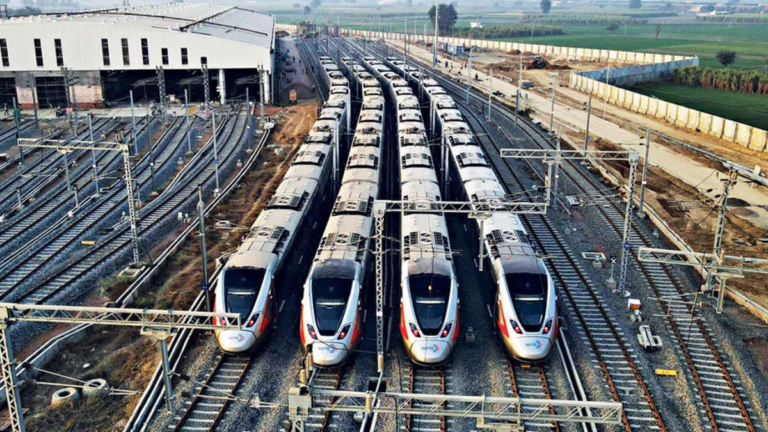
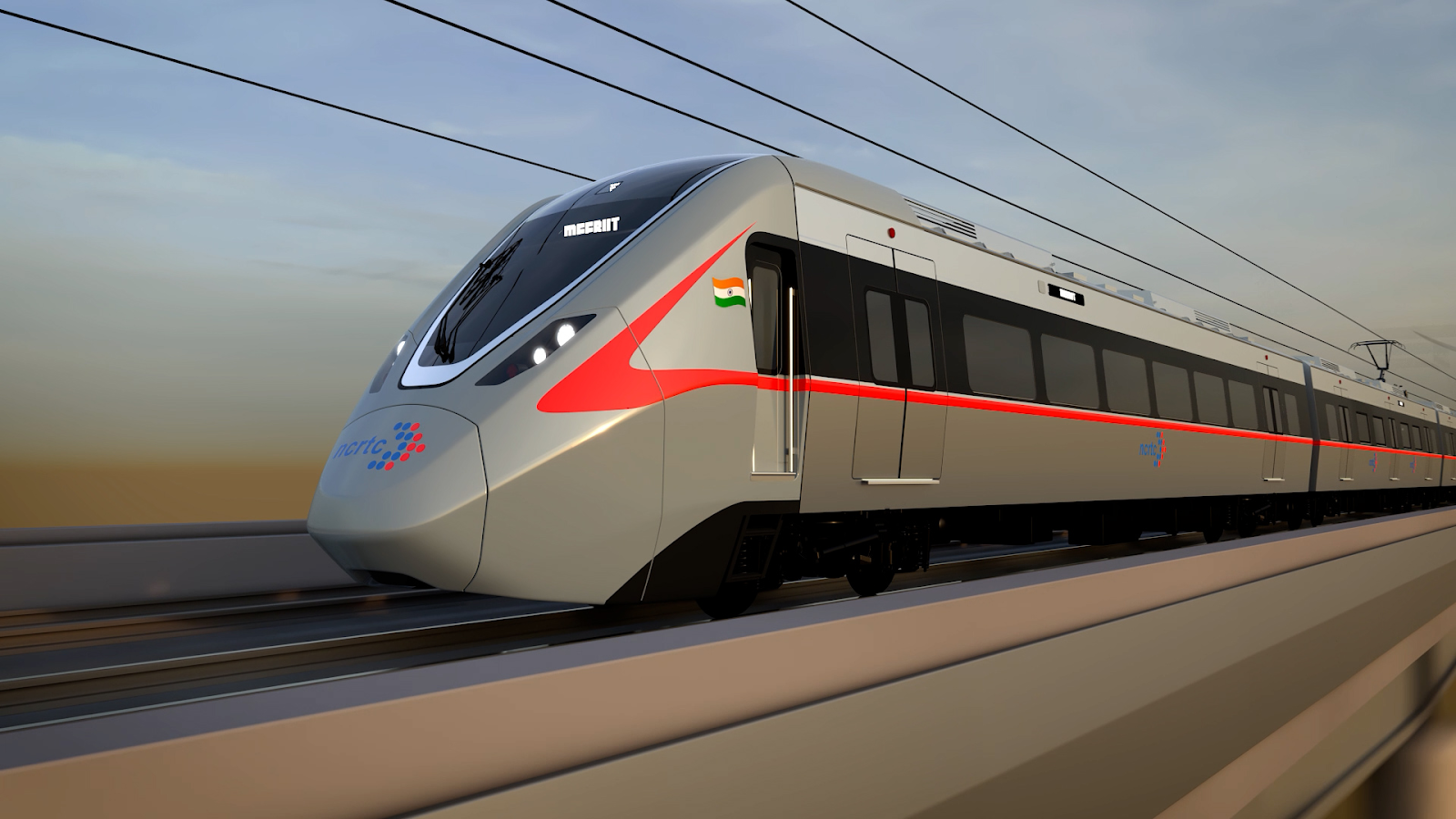
In a major development in India’s first RRTS Corridor, the National Capital Region Transport Corporation (NCRTC) successfully conducted the timetabled trial run of the Namo Bharat train across the entire Delhi-Meerut RRTS Corridor spanning 82 km between Sarai Kale Khan and Modipuram. The train completed the full 82 km journey in less than an hour. 

The Namo Bharat trains operated at their maximum design speed of 160 km per hour along the full 82-km stretch, making stops at every station between Sarai Kale Khan and Modipuram, following the timetable prepared by the NCRTC. 

The Namo Bharat Corridor is equipped with a state-of-the-art European Train Control System (ETCS) Level 3 hybrid signalling system utilising LTE backbone technology, marking a world-first implementation.

PHOTO 2025 06 23 10 47 35

The signalling system functioned without interruption during the trial run. This successful trial run underscores the system’s readiness for operational use. 

Currently, 55 km of the corridor, comprising 11 stations, is operational for passenger service. The final finishing works, as well as trial runs, are progressing rapidly on the remaining sections of the corridor, which include a 4.5km segment between Sarai Kale Khan and New Ashok Nagar and approximately 23 km between Meerut South and Modipuram in Meerut. 

Furthermore, the trial run of the Meerut Metro on the segment between Meerut South and Modipuram Depot is also advancing rapidly. This initiative represents a pioneering effort in the country, as local metro services will be integrated within the same infrastructure as the Namo Bharat trains.

Advertisement1
InnoMetro_2026

Bangalore Metro: BEML to Supply 20 Trains for Pink Line by March 2026

0

BANGALORE (Metro Rail News): Commercial operations on the Pink Line of the Bangalore Metro are expected to commence by 2026, as work on the first trainset is in advanced stages. BEML has announced the delivery of 20 coaches by March 2026. 

Currently, the civil work on the 7.5 km elevated section of the Pink Link is complete. However, the construction is underway on the 13.76 km underground section.

BEML bagged the rolling stock contract from BMRCL in 2023 at Rs 3,117 crore. As per the contract requirement, BEML will supply a total of 318 coaches, which will form 53 trainsets for both the Pink Line and Blue Line (Phase 2A+ Phase 2B of Bangalore Metro. 

The Pink Line will receive 96 coaches for operations, and the rest of the coaches will be used for the Blue Line of Bangalore Metro. The prototype train is expected to roll out by September 2025.

The propulsion system for the initial 3 trainsets will be supplied by the Japanese company Mitsubishi. In addition, the trainsets will be equipped with an advanced CBTC signalling system. The trains will be able to run in the UTO mode, enabling driverless operations.  

Advertisement1
InnoMetro_2026

IRFC to Support Metro Project with Rolling Stock Financing

0
Vizag Metro
Metro Representational image.

In an effort to diversify its core financing mechanisms for Indian Railways, the Indian Railway Finance Corporation (IRFC), a specialised non-banking financial company (NBFC) dedicated to supporting Indian Railways, is now seeking to finance the procurement of rolling stock for metro systems.

Manoj Kumar Dubey, Chairman & Managing Director and Chief Executive Officer of IRFC mentioned ” We are on the verge of signing one agreement with one of the metro railway (project) where we are going to finance their rolling stock for the first time in the similar manner as we are doing for the Indian Railways,” as reported by ET Infra. 

Mr. Dubey also indicated that the development of rail infrastructure across the country, including the Indian Railways network, metro systems, and rapid rail systems, entails an annual financing requirement ranging from ₹4 lakh crores to ₹25 lakh crores, demonstrating IRFC’s intent to capture this major financing opportunity. 

Mr. Dubey also said, “In January this year, we changed our motto from being the financing arm of Indian Railways to the financing arm of the railway ecosystem… anything having backwards-forward linkages with the railways,”. 

As the budgetary allocations for Indian Railways have progressively increased, with an allocation for the financial year 2025-26 (April to March) set at ₹2.52 lakh crores, IRFC is now focusing on lending to various segments within the rail sector to achieve enhanced net interest margins.

Advertisement1
InnoMetro_2026

PM Modi flags off Vande Bharat Train on Patliputra-Gorakhpur Route

0
Vande Bharat Train on Patliputra-Gorakhpur Route

BIHAR (Metro Rail News): In a major boost to connectivity in North Bihar, Prime Minister Narendra Modi flagged off the Vande Bharat train between Patliputra and Gorakhpur on June 20. 

https://twitter.com/AshwiniVaishnaw/status/1936136289134461166

The eight-coach Patliputra-Gorakhpur Vande Bharat Express is equipped with a Level-II safety integration certification that enhances train control, alongside improved fire safety protocols. These advancements include aerosol-based fire detection and suppression systems installed in all electrical compartments and restrooms.

The Vande Bharat train will operate six days a week, with service suspended on Saturdays. The train is scheduled to depart Patliputra at 3:30 PM and arrive in Gorakhpur at 10:30 PM, covering a total distance of 384 km in approximately seven hours. It will include two-minute stops at Hajipur, Muzaffarpur, Motihari, Sagauli, Bettiah, Narkatiaganj, Bagaha, and Kaptanganj, and finally terminate at Gorakhpur.

Currently, there is only one direct train linking these two destinations, namely the Gorakhpur Ranchi Express, which operates exclusively on Saturdays. 

This newly inaugurated service represents the seventh Vande Bharat route in Bihar, which includes the Tatanagar-Patna, Howrah-Gaya, Howrah-Bhagalpur, and Varanasi-Deoghar (via Gaya) routes. With this addition, the total number of operational Vande Bharat services across the country has reached 71.

Additionally, Prime Minister Narendra Modi also flagged off the indigenously manufactured diesel locomotive built for export to Guinea, a coastal country in Africa. 

Advertisement1
InnoMetro_2026

PM Modi flags off Indigenously Built Locomotive for Guinea 

0
indigenously built locomotive for Guinea,

In a strategic effort to enhance India’s position in the global export of rolling stock, Prime Minister Narendra Modi flagged off the indigenously manufactured diesel locomotive built for export to Guinea, a coastal country in Africa, on June 20.

https://twitter.com/AshwiniVaishnaw/status/1935987669252854068

This 4,500 horsepower (HP) locomotive was manufactured at the Marhowrah Diesel Locomotive Factory, located in the Saran district of Bihar. The factory was established as a joint venture between Indian Railways and the American company General Electric, now known as Wabtec. 

The locomotive manufacturing facility secured the contract to supply a total of 150 locomotives at a total cost of 411 million dollars (approximately Rs 3,533 crore). The unit cost of each locomotive is 2.74 million dollars, or approximately Rs 23.55 crore. 

These locomotives are specifically designed to facilitate freight transportation operations. Each unit is equipped with a 4,500 HP engine and incorporates several modern features aimed at enhancing operational performance and crew comfort.

Read all the details about this newly built locomotive for the African country of Guinea.

Additionally, Prime Minister Modi also flagged off a Vande Bharat train from Patliputra (Bihar) to Gorakhpur (Uttar Pradesh). Know more about this development.

These developments underscore the success of the Make in India initiative and the Make for World initiative, further highlighting India’s expanding footprint in the international railway market.

Advertisement1
InnoMetro_2026

India’s 2nd Longest Railway Viaduct to be Ready by August 2026

0

BHUBANESWAR (Metro Rail News): The East Coast Railway (ECoR) has announced that the second-longest railway viaduct, currently under construction between the Buguda and Banigochha stations as part of the Khurda Road-Balangir new line project, is projected to be completed by August 2026. This viaduct spans 4.77 km, with its tallest pier reaching a height of 26 metres.

This viaduct is part of efforts to improve rail connectivity across the interior regions of Odisha. The contract for this section of the project was awarded to Rahee Group, which is executing the work at a cost of ₹268.92 crore. The scope of work includes the construction of viaducts, major bridges, road overbridges (ROBs), and associated works over a 20 km stretch between KM 123 and KM 143 in the Buguda–Banigochha section.

In addition to the viaduct construction, Rahee Group is also responsible for the execution of ROB No. 229, a composite girder structure located at chainage KM 105.06 between the Nuagaon and Daspalla sections. The contract also covers the provision of construction vehicles, site facilities, and other allied support services required for the completion of the project.

The viaduct extends from Jamusahi to Gurah village in the Nayagarh district, falling under the Buguda and Banigochha stations. As of now, the railway authorities have completed 98 foundations, 62 bed blocks, and erected 41 span girders. 

Shri Rajesh Kumar Das, deputy chief engineer of ECOR, mentioned, “Construction of this viaduct is currently underway and upon completion, it will become the second longest railway bridge in the country, surpassed only by Bogibeel bridge over the Brahmaputra river in Assam,” as reported by Times of India (TOI). 

Shri Das also mentioned that the proposed alignment of the railway line is set to intersect with the forthcoming Brutang irrigation project in Nayagarh district, thereby introducing additional complications to the development process. “A significant length of the railway route was affected by the planned reservoir. After detailed consultations with Odisha’s water resources department, the alignment was revised to include a 4.77 km long viaduct to prevent interference with the reservoir’s structure.” 

Additionally, another viaduct measuring 1,257.6 meters is under construction in the Boudh district as part of this new line project. Shri Das emphasised that the 75 km segment from Daspalla to Purunakatak will provide a picturesque journey for passengers, featuring this viaduct along with seven tunnels situated within the dense forests of Nayagarh and Boudh districts.

Advertisement1
InnoMetro_2026

Kochi Metro Rail Ltd. Submits FSR for Mumbai Water Metro

0
Kochi water metro
Kochi water metro/Representational Image

MUMBAI (Metro Rail News): Kochi Metro Rail Limited (KMRL) has submitted the feasibility study report for the proposed water metro project in Mumbai to the Government of Maharashtra on 16 June 2025. 

KMRL’s consultancy division presented the report to the Maharashtra Ports Minister, Nitish Rane. The Minister directed the relevant departments to commence steps towards the implementation of the project, indicating that the government would soon initiate the preparation of the detailed project report (DPR).

The findings of the study were shared during a high-level meeting chaired by Minister Rane in Mumbai. The KMRL team was led by Chief General Manager Shaji P. Janardhanan, accompanied by other officials from KMRL.

According to the KMRL authorities, the proposed water metro project in Mumbai, modelled after the Kochi Water Metro, will cover the entire Mumbai Metropolitan Region (MMR), integrating various water bodies such as Vaitarna, Vasai, Manori, Thane, Panvel, and Karanja creeks, thereby effectively covering the entire MMR. KMRL mentioned that the report suggests a 250-km waterway network with 29 terminals and a fleet of 10 routes. 

This project represents the first instance where Kochi Metro Rail Limited (KMRL) has secured a consultancy assignment through a competitive bidding process. The development reinforces KMRL’s position as an emerging national-level player in the sector. Likely, KMRL may soon be entrusted with preparing the Detailed Project Report (DPR) for the same project.

Currently, KMRL is undertaking feasibility studies for water metro systems in 21 other cities across 11 states and two Union territories in India, as mandated by the Union Ministry of Ports, Shipping, and Waterways (MoPSW).

Advertisement1
InnoMetro_2026

Third Rail Testing Begins on Bangalore Metro’s Pink Line

0
Bangalore Metro
Bangalore Metro (representational Image)

BANGALORE (Metro Rail News): The Bangalore Metro Phase 2 is advancing as the Bangalore Metro Rail Corporation Limited (BMRCL) has commenced third rail testing, a critical electrification trial that energises locomotives on the elevated segment of the Pink Line. This testing is currently underway on the Pink Line’s section between Jayadeva and Tavarekere metro stations.

The Pink Line of Bangalore Metro is an under-construction metro corridor spanning 21.386 km between Kalena Agaraha and Nagawara through 18 stations.

These tests signal the initial preparations required for commissioning the Kalena Agrahara – Nagawara stretch. The testing of the third rail is currently being carried out on the elevated section of the Pink Line.  In line with safety protocols, BMRCL has released a public advisory urging people to stay away from the viaduct areas to prevent unauthorised access during the testing period.

A BMRCL official has indicated that once the third rail testing is completed, the next stage will include signal system validation, telecommunication trials, and loading tests. 

These technical assessments are projected to take approximately four months. Once concluded, safety inspection reports will be submitted to the Commissioner of Railway Safety (CRS). The CRS will provide the final nod for commercial operations only after a thorough review of the reports.

These technical evaluations are anticipated to require approximately four months. Upon their completion, safety inspection reports will be submitted to the Commissioner of Railway Safety (CRS), who will grant final approval for commercial operations after a thorough review of the reports.

The Pink Line of Bangalore Metro is being launched in two phases. 

Pink Line Route Length Station 
Phase 1 Kalena Agrahara- Tavarekere7.5-km6 Stations 
Phase 2 Dairy Circle – Nagawara13.76-km12 Stations 
Advertisement1
InnoMetro_2026