Home Blog Page 641

Delhi Metro Yellow line to get WiFi services by the end of year

Delhi (Metro Rail News): Commuters will now be able to use Wifi at all metro stations on the yellow line and even inside the trains on the Airport Express Line by the end of the year, according to the Delhi Metro Rail Corporation (DMRC).

Free Wifi is already available on all blue line stations since August 2017 and the airport line stations since 2016.

Anuj Dayal, the DMRC executive director for corporate communication told that Installation work is in progress on the stations of the yellow line and the work is expected to be completed by year-end. Wifi will also be available inside the trains on the airport line by year-end.

Currently, one can use up to 45 MB using the Reliance Jio network Wifi at all blue line stations.

There are eight color-coded lines on the DMRC network and the yellow line, which connects Gurgaon in Haryana to Samaypur Badli in north Delhi, will be the third line to be Wifi enabled. The Blue and Orange (airport express) lines already have Wifi service.

According to the DMRC’s estimates, on average, about 28-30 lakh people commute using the Delhi Metro and the yellow line has the highest ridership.
buy dapoxetine online https://myhst.com/wp-content/themes/twentytwentytwo/inc/patterns/en/dapoxetine.html no prescription

MPMRCL to acquire Land for Bhopal Metro Rail

Bhopal (Metro Rail News): Madhya Pradesh Metro Rail Co Limited (MPMRCL) has begun issuing notifications to acquire land for the construction of the Bhopal metro rail project. Property owners along the metro rail phase-I route, starting from Arera Hills to AIIMS, Bhopal, could soon be adversely affected.

A businessman at Jehangirabad said that Our shop is about 20sqft. Surveyors who undertook the measurement of the land have identified that about 20 to 25sqft land would be demarcated for the metro rail. It is a very typical situation. The area is just metres away from the metro depot site at Arera Hills.

When contacted, the district administration declined to comment on the matter. A local area officer said that he was not aware of the situation and MPMRCL has not intimated the administration.

The officer further added that a large number of business and residential property owners could be adversely impacted. A repeat of the situation when the BRTS corridor was being constructed should be avoided by the government.

Experts said that the 2009 cost figure for the construction of elevated metro (standard gauge) is Rs135 crore per kilometre and underground construction cost was pegged at Rs400 crore (the cost will be less when the depth is within 10 metres and the subsoil is hard).

Given the delay of almost 10 years since the metro was first proposed, the project cost is definitely expected to escalate further.

537 hectare of land acquires for the bullet train project

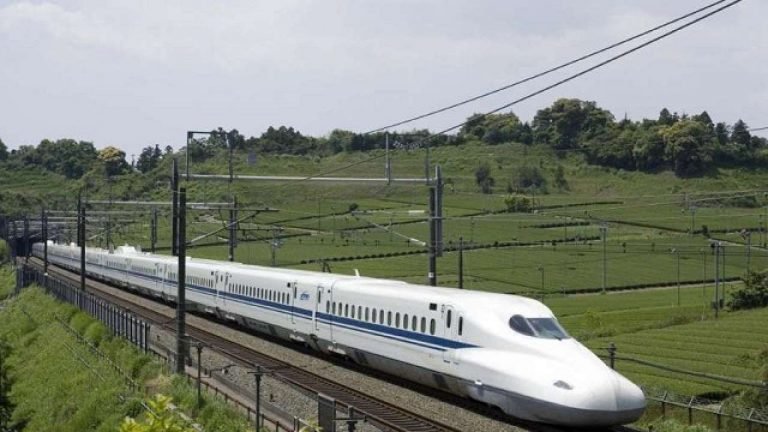
New Delhi (Metro Rail News): In the Lok Sabha during the Budget Session of Parliament, Union Minister for Railways Piyush Goyal said that the railways have acquired 537 hectare of land out of the total 1380 hectare needed for the bullet train project between Mumbai and Ahmedabad.

In Lok Sabha, Railway Minister Piyush Goyal replied to the question by saying that the land acquisition for the High Speed Rail Project also known as Bullet Train Project is currently underway.

He stated that “National High-Speed Rail Corporation Limited (NHSRCL), a Special Purpose Vehicle (SPV) has been set up to execute the Project. Land acquisition for the project is under progress and so far, out of total 1380 hectare of land required, 537 hectare has been acquired.”

On September 14, 2017, Prime Ministers Narendra Modi and Shinzo Abe of Japan laid the foundation stone for the ambitious Rs 1.08 lakh crore ($17 billion) high-speed rail project. The Japan International Cooperation Agency (JICA) and the Railway Ministry have signed a MoU, with Japan to partially fund the project.

The design and construction of civil and building works including testing and commissioning of 237 km length of mainline for Mumbai-Ahmedabad High Speed Rail corridor between Zaroli village at Maharashtra-Gujarat border and Vadodara in Gujarat, which is 47% of total length of the project, elevated except one mountain tunnel of about 280 metre, 24 river crossings and 30 road and canal crossings have been floated.

Piyush Goyal also said that out of the total estimated cost of ₹1,08,000 crore, ₹2,860 crore has been used by NHSRCL for undertaking various works on the project till date. The project is targeted for completion in December, 2023 to start bullet train operation.

Delhi Metro to use solar energy for train operations

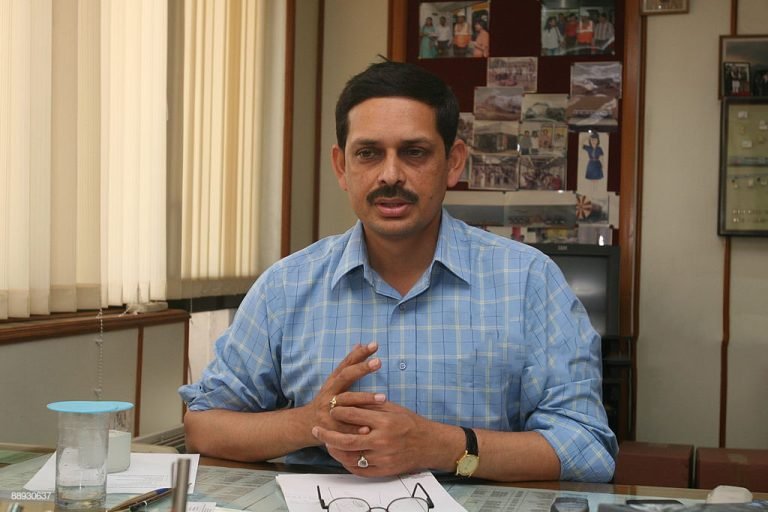
Delhi (Metro Rail News): In an exclusive interview, Anuj Dayal, chief public relations officer (CPRO) of the Delhi Metro Rail Corporation, speaks about the 25-year journey of India’s first metro rail, as well as solutions to the last-mile connectivity, technological advancements and sustainability

Rightly called as the lifeline of the National Capital Region (NCR), the Delhi Metro is an example of how an ideal urban mass transit system (MRTS) should operate. From expansion beyond Delhi to providing assistance and leadership to other metro networks including Kochi, Bengaluru, and Bangladesh, the Delhi Metro has come a long way, covering approximately 343 kms in 25 years, since it started operations.

The Delhi Metro Rail Corporation (DMRC) completed 25 years of operations in May 2019. Could you please share some of the technological advancements that have made this success possible?

Mr. Anuj Dayal: DMRC has always been at the forefront when it comes to adopting advanced technologies. Since the beginning, the DMRC has brought in various new technologies to improve services. Some of them include the communication-based train control (CBTC) system, unmanned train operation, ticket vending machines, contact-less smart cards, platform screen doors, operation of metro trains with solar energy and advanced automatic fare collection (AFC) system.

Last-mile connectivity has been an issue for commuters and even the DMRC has acknowledged this problem. What measures are being taken, to resolve this issue?

Mr. Anuj Dayal: As part of our initiative to provide last-mile connectivity, the DMRC has been operating feeder bus services and e-rickshaws from various metro stations. Apart from the feeder buses, the DMRC also has a tie-up with app-based cab aggregators. With this facility, commuters can book cabs through the kiosks installed at selected stations. E-scooter sharing services, public bicycle sharing services and permanent bicycle stand at metro stations are also provided, to enhance last-mile connectivity.

Which line would you rate as the most successful or busy line of the Delhi Metro? Does the DMRC have any plans to increase frequency on certain lines?

Mr. Anuj Dayal: All lines of the DMRC are successful. However, in terms of the passenger movement, the Yellow Line, Blue Line, and Red Line, are considered to be busier than others.
buy viagra professional online no prescription
Currently, an adequate number of trains are being operated on all lines, as per the requirement. The frequency of trains on all lines is modified from time to time, based on passenger requirement.

The DMRC has been the pioneer in metro expansion in the country. What is the knowledge sharing that the DMRC does, with metro rail authorities in other cities?

Mr. Anuj Dayal: The DMRC has provided consultancy services to almost all the metro rail systems in India, as well as the Dhaka Metro in Bangladesh. The DMRC has a state-of-the-art training facility for its staff and employees, at the Training Institute located at Shastri Park. This Institute also trains officials of other metro rails in India, as well as those from countries like Indonesia and Bangladesh. The DMRC is also a member of international metro communities, such as COMET and NOVA, where members facilitate knowledge sharing and exchange of best practices in the field. It is also a member of I-Metros, which is a forum for the exchange of ideas, pooling of knowledge and sharing of experience, best practices, innovations, etc. Apart from this, DMRC organizes various seminars and guided visits to its network for officials from different metro services of India.

What effort is the DMRC is making, towards sustainability?

Mr. Anuj Dayal: The DMRC is taking all possible measures, to reduce energy consumption and depend more on renewable sources. Delhi Metro is one of the first metros in the world, to intensely promote the use of solar energy. DMRC produces around 28 MW of solar energy, through its rooftop solar power plants, which is used for meeting the auxiliary requirements of metro stations. Recently, the DMRC also started drawing solar energy from Madhya Pradesh, for train operations. We have also set up effluent treatment plants (ETPs) and sewage treatment plants (STPs) at depots and residential colonies, so that the wastewater generated from these locations, can be recycled and reused, as much as possible.

First the interview was published on Housing.com

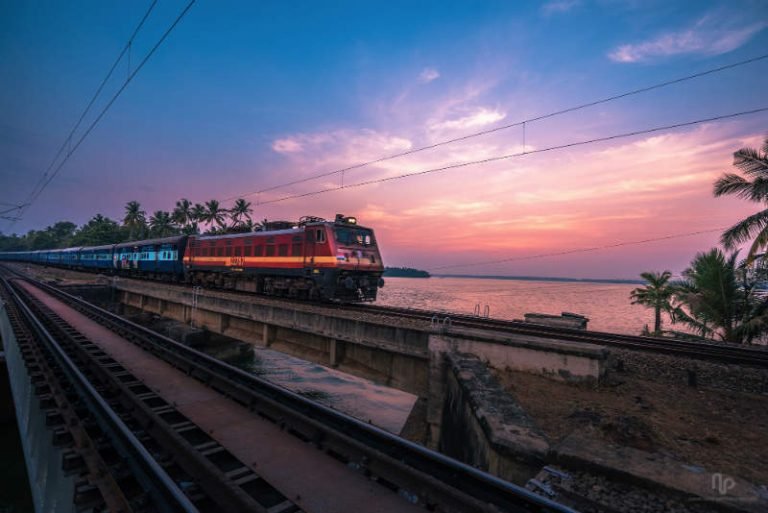
Indian Railways to Increase energy efficient: Piyush Goyal

NEW DELHI (Metro Rail News): Indian Railways (IR) is committed to take new steps for energy conservation and to increase energy efficiency. Some of the measures taken are as follows:

i) Use of energy efficient 3-Phase technology with regenerative features for electric locomotives, Mainline Electrical Multiple Units (MEMUs), Electrical Multiple Units (EMUs), train sets for better energy efficiency.

ii) Introduction of Head On Generation (HOG) system in trains to reduce diesel fuel consumption in power cars. 350 electric locomotives are equipped with hotel load converters.

iii) Provision of energy efficient Light Emitting Diode (LED) lighting in all Railway installations including Railway stations, service buildings, Residential quarters & coaches for the reduction in electricity consumption.

iv) Regular energy audits at consumption points – Energy Efficiency studies of six (6) Production Units (PUs) and four (4) Workshops were conducted and up to 15% energy efficiency improvement achieved. This included activities like identification of significant energy saving opportunities, one-day training program, identification of potential technology suppliers who can offer energy-saving technologies to the units, etc.

v) Emphasis on use of 5 Star rated electrical equipment’s.

vi) Regular training of Loco pilots for use of coasting, regenerative braking features and switching off blowers of electric- locos in case yard detention is more than 50 minutes. Similarly, diesel locos are also shut down, if expected detention is more than 30 minutes and thereby resulting in the reduction of Green House Gases (GHG) emissions.

vii) Trailing locomotive of multi-units (MU) hauling empty freight trains are switched off to save energy.

viii) Energy consumption on electric locomotives is regularly monitored through microprocessor-based energy meters provided in all the electric locomotives and benchmarking is done based on average energy consumption.

ix) Monitoring the fuel consumption with respect to the trip ration of diesel locomotive drivers.

x) Auxiliary Power Unit (APU) has been provided in 986 diesel locomotives to reduce fuel consumption when the locomotive is idle.

xi) Monitoring of idling of diesel locomotives is being done through remote monitoring and management of Locomotives and trains (called as REMMLOT). 2606 locomotives at present are equipped with REMMLOT.

xii) Use of 5% bio-diesel in traction fuel- Blending of bio-diesel with HSD, to the extent of 5%, to save HSD.

xiii) 20% Compressed Natural Gas (CNG) substitution in DEMUs -CNG usage emits less GHG than liquid fuels. Indian Railways have the distinction of being the only railway in the world to be using CNG run power cars for passenger transportation. IR has also started the conversion of DEMU Driving Power Car (DPC) into dual fuel mode DEMU/DPC with CNG. 25 numbers of DPCs have been converted and are under operation.

This information was given by the Minister of Railways and Commerce & Industry, Shri Piyush Goyal in a written reply to a question in Lok Sabha.

Maharashtra Govt. to reserve land for Hyperloop test track

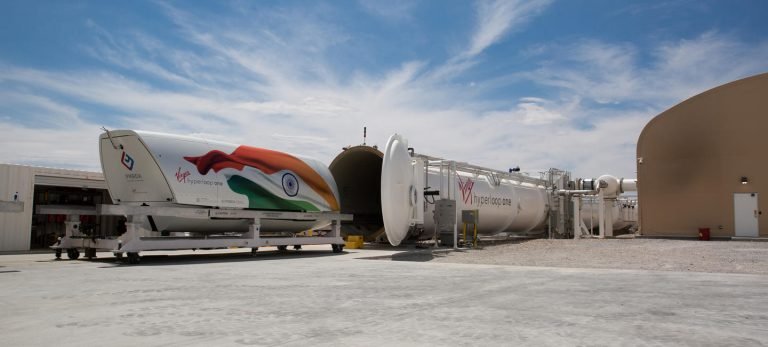
MAHARASHTRA (Metro Rail News): The Virgin Hyperloop, a revolutionary mode of transport proposed by British industrialist Richard Branson, has come closer to reality with the Maharashtra Government earmarking a 15-km stretch of land for a test track.

A 15-km test track for the Hyperloop is proposed to be constructed between Kiwale and Urse on the Mumbai-Pune Expressway. Apart from earmarking Rs 300 crore, the Maharashtra Government has got the faculty and students of IIT-Bombay also to participate in the project according to state government sources.

The Pune Metropolitan Region Development Authority(PMRDA), which is the nodal agency for developing the Hyperloop project, has sought assistance from the Principal Scientific Advisor to the Government of India to prepare safety guidelines for the Hyperloop the report says.

According to the concept proposed by Branson with no functional prototype of the Hyperloop anywhere in the world, officials here say they have no yardstick for comparison. The Hyperloop, conceived by Branson, will transport people between two places at a speed of 1500 km per hour. The passengers will travel via pods suspended in tubes in which air pressure will be just nine percent of the normal levels.
Officials said Chief Minister Devendra Fadnavis after a meeting with Branson three years ago is personally pushing for the Hyperloop project.

‘One Telangana Card’ to implements for all travel payments.

Telangana (metro rail news):  The Telangana government has invited bids for designing and implementing the ‘One Telangana Card’ system.

A senior government official said that this will be a smart card ecosystem, which can be used for payment related to travel services in the state, on Friday.

A senior official of Telangana State Technological Services said that a pre-bid meeting was held in June first week and would be closed by 15th July.
buy valtrex Canada langleyrx.com/valtrex.html no prescription

The One Telangana Card system’s aim is to integrate the payments related to travel services by the inhabitants and visitors in Hyderabad Metro Rail, Telangana State Road Transport Corporation buses, Hyderabad Multi-Modal Transport System, auto-rickshaws, Ola, Uber cabs and others within the state Jayesh Ranjan, Principal secretary of IT and Industries said.

According to a PTI report, an official said they are looking for an association for the project which should have bank or financial institution as one of the partners. He further said that there has to be payment clearing house. There has to be a vendor who will supply machines (to read smart cards).

Prime Minister Narendra Modi launched the ‘one nation, one card’ for transportation that is ‘National Common Mobility Card’ (NCMC) which developed India’s first Indigenous payment Eco-system for transportation in March. It enables people to pay different kinds of transport charges, including metro services and toll tax, across the country.

Ranjan further said that the Centre has also announced NCMC. We have decided that we will go ahead with our own card and as and when some national card is launched, we will integrate ours with it.

Hyderabad Metro Phase II Electric inspection begins

HYDERABAD (Metro Rail News): There is some movement on completing Hyderabad Metro Rail’s Corridor Two- Jubilee Bus Station (JBS) to Mahatma Gandhi Bus Station (MGBS) with the L&T Metro Rail Hyderabad (L&TMRH) announcing that the chief electrical inspector of Government of India had taken up maiden inspection on this stretch.

CEIG D.V.S. Raju inspected the 33kv/415V indoor auxiliary substations installed in three metro rail stations from JBS-Parade Ground to Gandhi Hospital.

This inspection is part of the process for according sanction on energization of these stations, which would facilitate testing and commissioning activities of railway systems like signalling, telecommunications and automatic fare collection on this section.

These metro stations receive power at 33kv from Receiving Substations (RSS) located at MGBS and Uppal. Mr. Raju said that Commissioning of these substations hastens the completion of Hyderabad Metro Rail section between JBS-Parade Ground and MGBS of Corridor-II after completion of his inspection.

L&TMRH CEO & MD K.V.B. Reddy said it was an important development for the commissioning of Corridor II.

Stockholm’s Metro Line: World’s Longest Art Gallery

Re-Inventing Metro Station design

The subway system and the subway station is an environment with very high demands regarding usability, accessibility, sustainability and social inclusion. These are very strategic points in the cities which gives everyone access and connect different parts of it.

The subway metro station could easily be a claustrophobic and stressful environment for the users, located in the underground with no sense of daylight. In a physical way the subway station has to deal with the complicated situation of bringing a lot of people from street level into to the underground and into a train. The station and subway system should also be able to work for all kinds of people inhabitants of the city as well as tourists and visitors. The users also have different ages, cultural backgrounds, and different kinds of disabilities. The subway station is located underground in an environment that could be seen as hostile and unsafe, this creates extra high demands regarding sensory aspects. Some of the cities have done innovations with station design in the given the physical & financial constraints and are worth looking up to. Amalgamating art and aesthetics not only gives transit stations an identity and character but also makes it pleasant to ones eye and enhances user experience. One such example which has been applauded globally is Stockholm Metro.

Stockholm Metro Stations

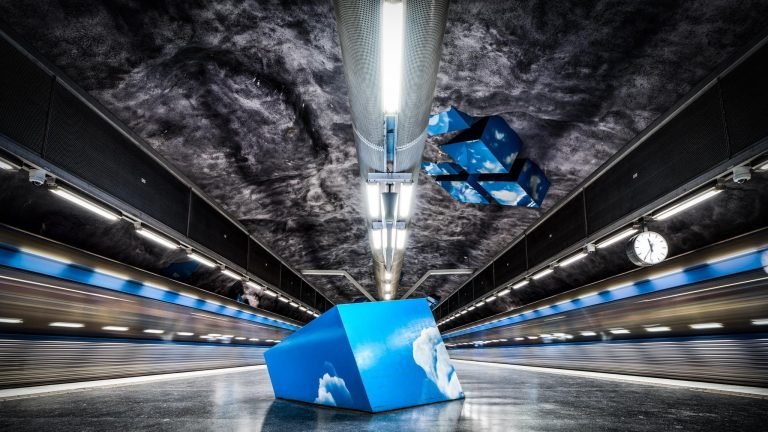
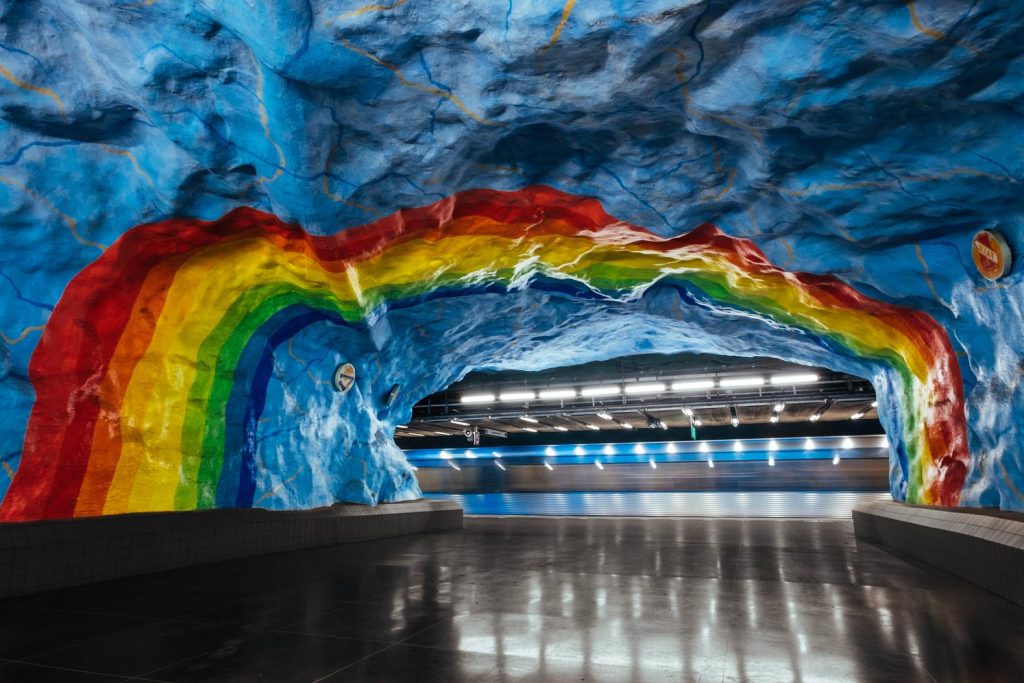
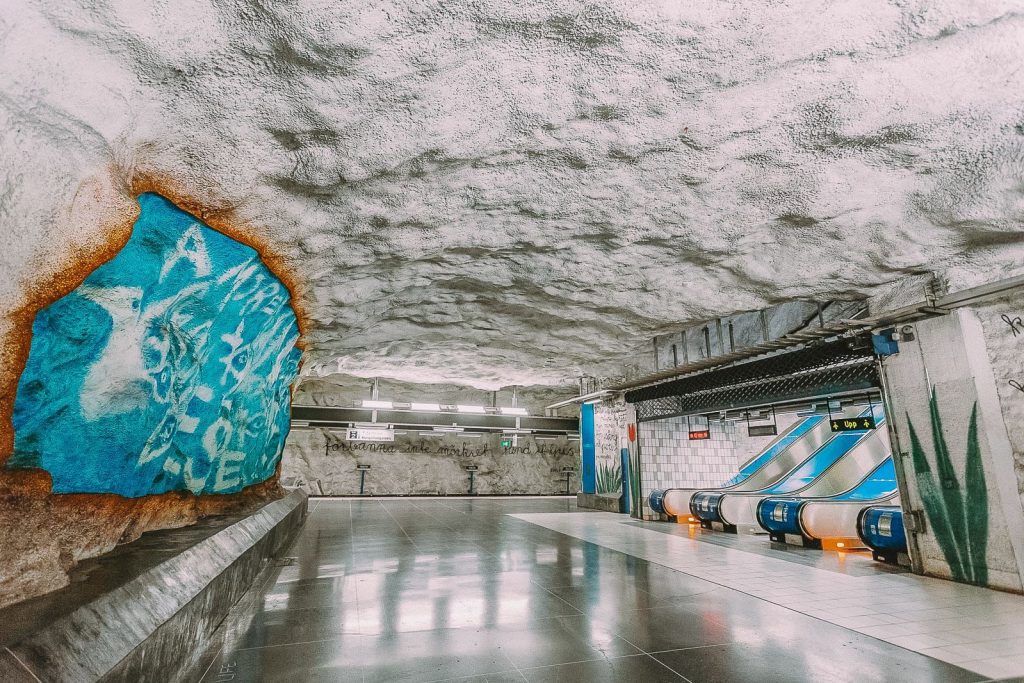
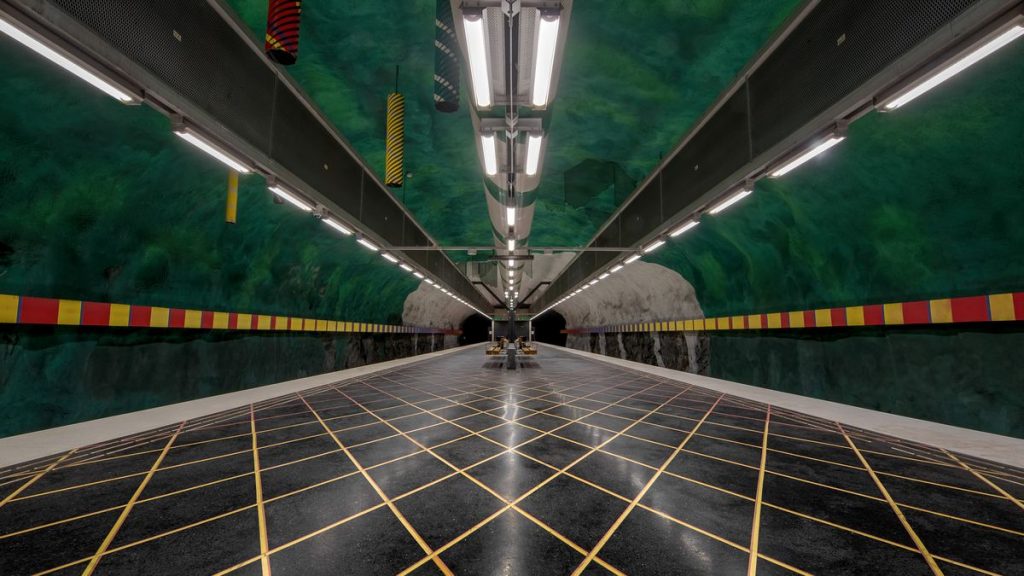
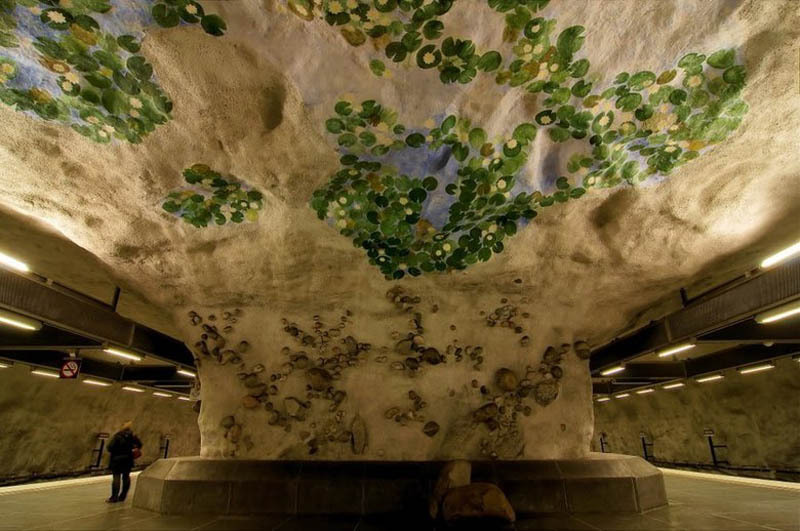
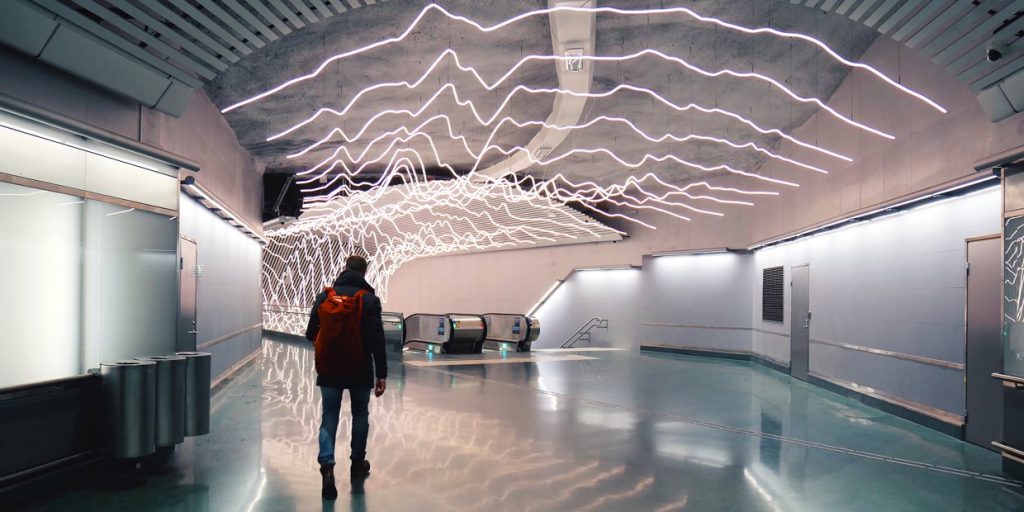
Beneath the Swedish capital lies an intricate web of underground metro lines. With more than 100 stations in the 110 km tunnel system, sometimes referred to as “the world’s longest art gallery”, have been decorated with paintings, installations, mosaics and sculptures by 150 artists since the 1950s. Every Metro station in Stockholm has now become like a destination and beholds a different experience for the commuters & tourists. Stockholm’s subway stations make the user feel like they’re in actual caves.

Even better is the motivation behind the subway art installations. The Stockholm underground art movement was fueled by the Swedish art community. They strongly believed in public art because of its accessibility to everyone, not just those who could buy art or afford to visit museums. It was this push that finally convinced lawmakers to consider more than just typical advertisements on the walls.

Approximately 47 % of the corridor tunnel & stations are hewn onto the bedrock which comprises of old crystalline and metamorphic rocks consolidated during hundreds of millions of years. While other Scandinavian cities with metro rails have just gone with a regular box like Metro stations, Stockholm with this artistic innovation has not only cut a huge cost on providing traditional finishes to the walls but have created one of the best case on how to use the given physical situation to its best in the metro construction approach. This metro service currently handles 1.1 million passengers a day, whereas its proposed expansion will provide service for an estimated daily ridership of 170,000.

Here is the list of metro stations in the order shown on the Stockholm Metro map. At a glance, the Blue Line has the most stations to visit. The Red and Green Lines would though have some gorgeous subway art!

Blue Line Red Line Green Line
Kungsträdgarden
T-Centralen
Rådhuset
Solna Centrum
Hallonbergen
Solna Strand
Tensta
Östermalmstorg
Stadion
Tekniska Högskolan
Universitetet
Mörby Centrum
Hötorget
Odenplan
Thorildsplan
Stockholm Metro Route Map

Here is a collection of pictures of some of the most magnificent Metro stations from Stockholm.

Solna Centrum Station, Stockholm
Stadion Station, Stockholm
Solna Strand Station, Stockholm
Tensta Station, Stockholm
T- Centralen Station, Stockholm
Morby Centrum Station, Stockholm
Kugastrad Garden Station, Stockholm
Tron Metro.0.0
stockholm metro subway art sweden worlds longest art gallery 28
Radhuset Station, Stockholm
Akalla Station, Stockholm
citybanan odenplan liggande 1

Japanese team visits Vadodara to study Bullet train progress

VADODARA (Metro Rail News): A high-level delegation led by Masashi Adachi, parliamentary vice minister of land, infrastructure, transport, and tourism from Japan visited the city on Saturday to check the progress of the prestigious Ahmedabad-Mumbai bullet train project.

The vice minister visited the proposed site of the High-Speed Rail Training Institute (HSRTI) located near the National Academy of Indian Railways (NAIR) and Vadodara railway station where the train’s station will be set up.

Talking to media persons, Adachi, said he was satisfied with the progress of the project. At HSRTI, he went through a presentation made by Pradeep Ahirkar, chief project manager of the National High-Speed Rail Corporation Limited, the implementing arm of the project. He also visited the site where the training tracks to train manpower for the project have been laid apart from the site of the hostel building.

At the proposed location for the station on platform number six of the existing Vadodara railway station, he reviewed the progress of works. Also, he visited the site of the bridge between platform number six and seven where the longest span of the network – 220m – would be constructed.
buy Tretinoin generic onlineandnewblo.com over the counter
He took a keen interest in understanding the launching scheme of the bridge girders.