Home Blog Page 639

Property owners in Kasturinagar seek full acquisition for Namma Metro

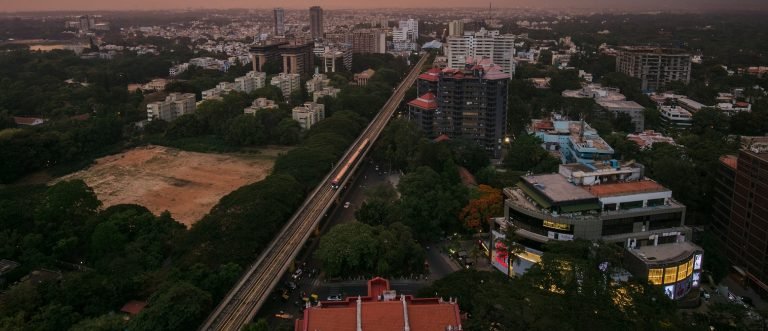
BANGALORE (Metro Rail News): Owners of properties in Kasturinagar have demanded that Bangalore Metro Rail Corporation Limited (BMRCL) acquire whole properties for the Namma Metro project. They fear that the partial acquisition of their properties will cause hardship and result in financial losses too.

BMRCL has reportedly identified several properties on the Ring Road in Kasturinagar to build the metro elevated line as part of the K.R. Puram to Kempegowda International Airport (KIA) route. Property owners, in their requisition to BMRCL, said the present width of the road, where BMRCL is planning to build the elevated line, is 18 ft on the southern side and 28 ft on the northern side. Building metro piers would worsen traffic congestion, they added.

The owners also claimed that the presence of a water pipeline under the road and hard rock will make the construction a difficult task for BMRCL.

Chandrashekar H.M., a property owner, said, “The proposal to build the metro line has jeopardized our future. If they go for partial acquisition, we are going to lose property value. The metro project will also block access to our buildings. Already some tenants have already stopped paying rent.”

On the same line, near HBR Layout, property owners had earlier opposed the construction of HBR station citing that it would contest the service road.

Responding to the demand, a BMRCL official said: “BMRCL is acquiring identified properties as per the requirement. During acquisition, the owners do come with various suggestions on exempting their properties from the acquisition or fully acquiring their properties. The BMRCL will acquire the properties as per the requirement for the line.”

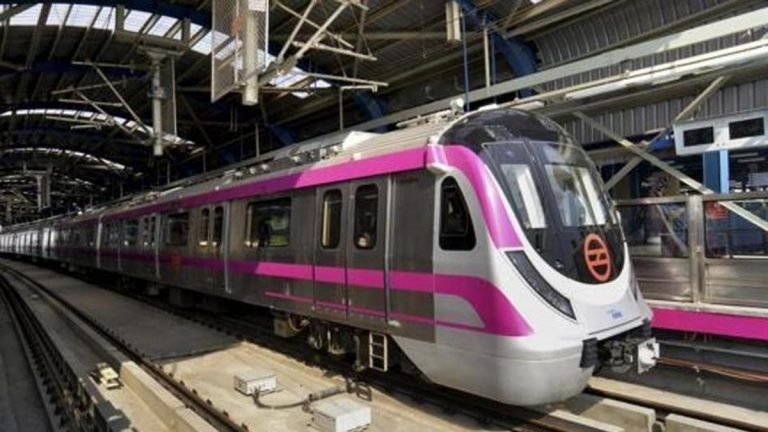
Delhi Metro Phase-IV project can’t wait: Supreme Court

NEW DELHI (Metro Rail News): Delay between the Centre and the Delhi government over financial aspects of Delhi Metro’s 104-km phase-IV came under the scanner of the Supreme Court it said on Monday that it would pass the order in the matter as the “project cannot wait”.

A bench comprising Justices Arun Mishra and Deepak Gupta was told by senior advocate Aparajita Singh, who is assisting the top court as an amicus curiae in pollution matter, that the project is “critical” and the pending issue should be resolved soon.

Aparajita Singh referred to a recent report of Environment Pollution Control Authority (EPCA) which said that the approval for “103.94 km phase IV of the Delhi Metro has been held up since 2014 when the project was submitted to the Union government for its approval”.

“There is a stalemate in the discussions between the Union Government and the Delhi government on different financial aspects of the project. The Delhi government has on April 10, 2019, communicated its direction that DMRC (Delhi Metro Rail Corporation) would not start work of Delhi Metro phase-IV till these issues are resolved”, the report said.

The amicus told the bench that issues which are not resolved are — bearing of the operational loss, repayment of Japan International Cooperation Agency (JICA) loan in case of default, sharing of land cost and taxes.

Additional Solicitor General A N S Nadkarni, appearing for the Centre, told the bench that project financing has been done in consonance with the Metro Rail Policy of August 2017 and metro projects of other cities like Bhopal, Indore, Kanpur, Patna, and Agra have been sanctioned on the same financial pattern as of Delhi metro phase-IV.

The bench asked Nadkarni about the past practice on the liability of taxes among the Centre and states as well as regarding who bears the cost of land.

Nadkarni said he would take instructions on these aspects and get back to the court.

The bench posted the matter for hearing on July 12 and said, “You take instructions. We will pass the order. This project cannot wait”.

The EPCA, in its report filed in the court, has said that phase-IV of the Delhi Metro is “critical as it will add another 104 km to the network” and “it is designed to join the current network and will densify it and make the system more viable and attractive to commuters.”

Thailand’s Pan-Asia bullet train routes to connect Beijing and Singapore

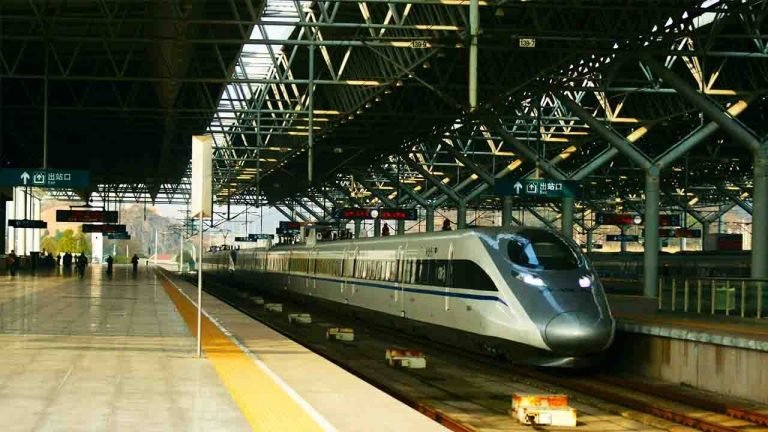
BANGKOK (Metro Rail News): Thailand has begun constructing routes for its planned Trans-Asean bullet train line that will connect Beijing, Laos, and Singapore. The proposed modern transport system is part of the government’s plan to make Thailand the logistics center for ASEAN. The railway project is part of China’s Belt and Road Initiative along with Thailand’s Transportation Ministry.

2.07 trillion baht or S$91.4 billion is the estimated cost for the entire project .

The first route is the Thai-Sino project which links Bangkok to Nong Khai in Laos. The line is expected to be completed by 2023 and is estimated to be 608km long. Additional connecting lines to Vientiane and to the Chinese province of Mohan shall also be constructed.

The bullet train will reduce travel time from Vientiane to Mohan from two days to only three hours, said by a Thai transport official.

Bang Sue will be the grand station and central point of convergence for all the lines according to the State Railway of Thailand. The massive four-story central station shall be linked to Thailand’s Blue Line, Airport Rail Link, and other train routes to provinces.

Thailand is also in talks with Malaysia, Vietnam, and Indonesia regarding the preparation of railway industry standards and financials for bullet trains and subways.

Once the planned routes are completed train travel to Beijing and Singapore through Thailand will be possible

The Central Route includes stations at Kunming in China, Yuxi, Mohan, Vientiane in Laos, Bangkok in Thailand, Kuala Lumpur in Malaysia, and Singapore.

The Eastern Route includes stations in Kunming, Yuxi, Mengzi, Hekou, Hanoi an Ho Chi Minh in Vietnam, Phnom Penh in Cambodia, and Bangkok.

The Southern Route which is currently under study plans a line from Bangkok to Kuala Lumpur and Singapore.

Deputy Transport Minister Pailin Chuchottaworn said that “Thais will be able to take high-speed trains to the Chinese capital and Singapore from a railway station in Bang Sue in the future”.

Exclusive Interview with Sanjeev Subhedar, EVP & Head – Engineering Solutions, Datamatics Global Services

Metro Rail News has conducted Exclusive Interview with Mr. Sanjeev Subhdar, EVP & Head Engineering solution, Datamatics Global Services Limited, to know about new trends & technology in ticketing. Here is an excerpt from the interview:

What is your vision for Metro Rail?

Ans: The Metro Rail transits that are being built in India are quite advanced and futuristic in many aspects. Datamatics is a contributor for Automated Fare Collection (AFC) in this domain. We provide state-of-the-art technology in our projects, which is better off than many places in the western world. This is mainly because the latter were installed few years ago. In comparison, the technology that we provide today is quite advanced.

Datamatics’ vision is to provide ‘futuristic AFC solutions’ by using cutting edge technologies, such as Face Recognition, Blockchain for accounting, Account Based Ticketing system, Artificial Intelligence (AI) / Machine Learning (ML) driven journey support, and Big Data. We also envision providing far superior user experience using Augmented Reality (AR) and Virtual Reality (VR) in this field.

What are the Challenges of Multi-modal transport Ticketing?

Ans: The current maturity of technology is quite capable of handling multi-modal ticketing. The real challenge is that the different transport operators do not participate in the initiative of common ticketing initiatives. Many reasons exist for their staying away from such initiatives, for example, they serve different segments and price points, face issues related to profitability and social responsibility compelling them for Fare structure. Such Fare structure restricts sharing revenue, transaction fees, etc. Hence the common ticketing commercial agreement amongst the different transport operators has not culminated so far and the initiative has not taken-off.

Do you have any comment on One Nation-One Card?

Ans: ‘One Nation One Card’ is a very good initiative. Lot of work is needed from the government and regulatory authorities to realize this vision. At present, even a fully-operational multi-modal city-wide system is not functional. So we have a long way to go. It is a significant beginning and hopefully we will collectively achieve this vision sooner than later.

What is the future of Biometric based ticketing system in India?

Ans: At present the Biometric based ticketing is not fully ready to meet the requirements of ticketing scenarios mainly due to the speed of biometric recognition and some other technical limitations. But it will catch up. As far as India is concerned, the problem becomes more complex as the crowd and footfall at transit points is humongous. 

What are the features of ticketing solution deployed for Lucknow Metro?

Ans: Lucknow Metro is the fastest executed AFC project so far in India while abiding with all the quality parameters and setting new benchmarks in the process. The state-of-the-art AFC system is designed to be highly secure, scalable, and reliable. The system uses smart gates, which accept contactless fare media. The Ticket Vending Machines (TVMs), Add Value Machines (AVMs), Ticket Office Machines (TOM), and Excess Fare Office (EFO) machines are very user-friendly and modern, powered by the latest technology. The high usage of TVMs is a clear indicator of its user-friendly design. The modularity of the system allows integration with new technologies and fare media, such as Quick Reference Code (QR Code), Near Field Communication (NFC), etc. thus enhancing the overall capability of the system and reducing the total cost of ownership (TCO) for the transit operators. The transactions are made fully secure through the use of unique security keys and secure access module (SAM). This inhibits editing or copying of the fare media thus preventing fraud.

The system significantly reduces operational costs, ensures zero revenue leakage, along with monitored access and transit. The system is integrated with a Central Clearing House System (CCHS) at Lucknow, India and is capable of extending the fare media / smart card, christened ‘GoSmart card’, for multi-modal transit all over Lucknow thus making the ‘One City One Card’ paradigm a powerful venture for the near future.

The system is highly scalable and can cater to many transit agencies within and outside Lucknow. This card can also be used for non-transit service payments, such as property tax, BSNL mobile payment, etc. The card can even be extended to fulfill the ‘One Nation One Card’ exemplar or multi-modal transit all over the country, in the long run.

Do you think mobile ticketing will capture smartcard ticketing market?

Ans: Mobile is changing many things in our lives. It is expected that smart cards such as credit/debit, ID, Access, etc., will be replaced by ‘the mobile’ as it can emulate a smart card. As the mobile progressively replaces such smart cards, the same will happen to smart cards related to ticketing as well. However, it is a gradual process and will take some time. NFC and QR code will however speed-up the replacement of smart card tickets even before the mobile emulation method is used in AFC solutions.

What is virtual ticketing concept? Does it really work?

Ans: Virtualization is happening to so many things and will happen to ticketing media as well.  Virtual Ticketing is another form of fare collection to manage rush hour traffic and footfall in order to avoid congestion and bottlenecks. Like many other changes it is also a change that would happen at certain pace and will take its own time. With appropriate technology and implementation there is no reason it will not work.

How Artificial intelligence (AI) and Machine Learning(ML) can be implementedin AFC?

Ans: There are many things, such as journey time optimization, ticket cost optimization, multi-stop round-trip planning, etc., which require data, and are possible only with AI/ML. Needless to say, Big Data will be an essential component of the solution.

What is Automatic Fare Collection Gate ‘Swagat’ and an Open Loop Automatic Fare Collection System ‘Sweekar’?

Ans: SWAGAT is an Automatic Gate developed by BEL in collaboration with few other government agencies and SWEEKAR is a fare collection solution developed similarly. They are designed to accept Open Loop cards and the National Common Mobility Cards (NCMC).

What kind of AFC system likely to installed in Mumbai Metro line 2&7 and their features?

Ans: Mumbai Metro Line 2&7 AFC system is very advanced yet very simple. It uses Mobile Ticketing with a simple and user-friendly app, QR code for a single journey, and a smart card for other types such as monthly passes, stored value mode, etc. The technology and the devices provided are fully ready for using Open Loop ticketing, such as contactless credit/debit cards, instead of using proprietary media, such as operator-specific smart cards and paper tickets.

The equipment, which is being supplied is state-of-the-art and very robust. Special consideration has been given while designing the equipment for the Mumbai environment, i.e. is temperature, humidity, etc., as well as anticipated heavy usage due to high footfall and ridership. The ridership is expected to be 2.0 million passengers per day. This footfall volume is one of the highest in the world given that it is only 53 stations that too covering only a part of the Mumbai city.

What are your new innovations for ticketing system and how it can help Metro operators to improve efficiency and reduce costs?

Ans: Datamatics is very keen on making use of innovative technologies to control and monetize increasing footfall as well as eliminate revenue leakage at all crowded transit points. We have already implemented many cutting edge technologies available in the AFC domain in our projects. QR code is fast replacing the single journey smart tokens thus saving huge operational costs for the transport operators. Mobile ticketing is likely to save costs in a big way. As Biometrics based ticketing becomes a reality, huge costs will be saved as the need of fare media, such as smart cards, paper tickets, etc., will substantially reduce.

Do you serve to any other market segment aside from Metro Railway?

Ans: We are in many other segments such as, Automatic Tolling, Parking, Payment solutions, Retail Solutions, etc. AFC is just one of our focus segments.

Datamatics has an independent Engineering Solutions and Services practice. The company offers development, maintenance, integration, and testing of fare media solutions, front-end devices, station-level systems, and back-end systems for metro rail, bus, light rail, mono-rail, parking lots, etc.

Datamatics also provides turnkey Engineering Solutions for mobility, internet of things (IoT), machine-to-machine (M2M) service enablement, and smart cities. The company has the expertise and domain knowledge in Automotive, Consumer, Industrial, Retail, Healthcare, Transport, and Ancillary Banking. Using this, Datamatics enables building intelligent and futuristic connected devices and solutions that leverage IoT and M2M services for smart cities.

Railways Production Units people will not lose jobs: Piyush Goyal

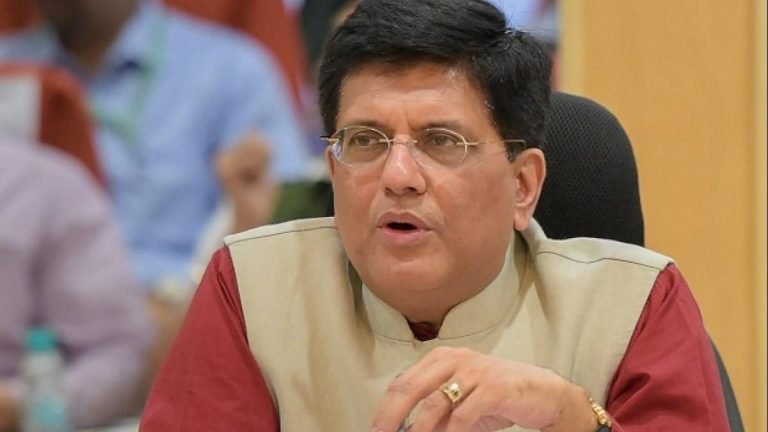
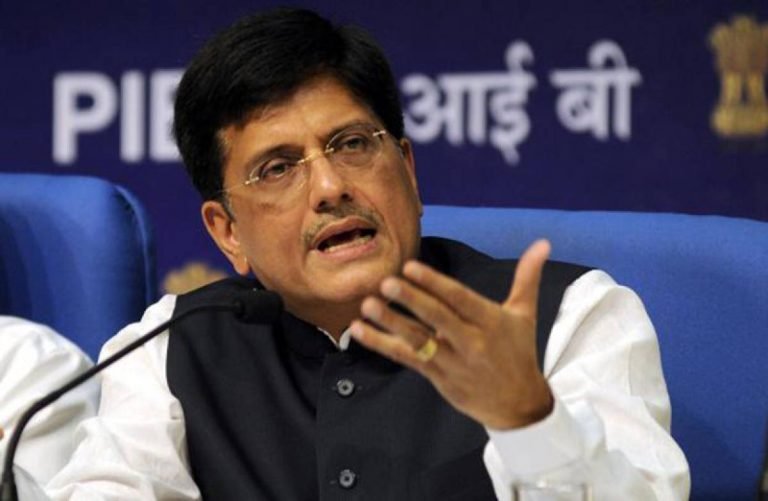
NEW DELHI (Metro Rail News): Railway Minister Piyush Goyal on Friday asserted that the national transporter has no plans to sell government assets and people will not lose jobs due to corporatisation, allaying fears among its production unit workers that the factories will be given to private parties.

The minister rather showed confidence within the railways producing units, which have produced state-of-the-art coaches like in Train 18 and are in the process of making Train 20, by indicating that the railways will invest in creating metro coaches and stock.

He told PTI in an interview that, we are not selling off government assets. Everybody’s jobs will be protected. Like we have IRCON, RITES – they are all corporatized government companies and amidst disquiet in its production units about the railway’s proposal to hive them off as one corporate entity.

In fact, the allocation for rolling stock has increased from Rs 3,724.93 crore in 2018-2019 to Rs 6,114.82 crore in 2019-2020. It was announced in the interim budget prepared by Goyal in February this year. Goyal held the finance portfolio at that time.

This will include investment for state-of-the-art coaches, train sets and even metro coaches.

Piyush Goyal told PTI that our role will be more in creating metro coaches and metro stock.

As of now, only the Integral Coach Factory (ICF) in Chennai produces such coaches for the Kolkata Metro.

The term ‘rolling stock’ in rail transport refers to any vehicle that moves on tracks. It includes coaches, wagons and train sets.

Railways has got a budgetary allocation of Rs 65,837 crore and the highest ever outlay for capital expenditure amounting to Rs 1.60 lakh crore in the Union Budget 2019-20.

Presenting the Budget, Finance Minister Nirmala Sitharaman said railway infrastructure would need an investment of Rs 50 lakh crore between 2018 and 2030.

Goyal said that Rs 50 lakh core investment mentioned by the finance minister will be needed to modernise stations and build passenger amenities.

He said that we have drawn up the whole programme. Some of the old projects like 100 per cent electrification, advanced signalling and station development were already there. Now, we have to work out how to create additional capacities so that our modal share of freight can go up, cost of logistics come down and our passengers along with good amenities get more avenues to travel by trains to reach their preferred destination.

Goyal added that all this will entail more doubling, tripling, new dedicated freight corridors, some semi high speed freight corridors, very large gamut of investments in different sectors, regional connectivity and connectivity to aspirational districts. We have worked this out both through government expenditure and public-private partnership.

Sitharaman in her address had said given the capital expenditure outlays of railways at around Rs 1.5 to Rs 1.6 lakh crore per annum, completing all sanctioned projects will take decades. She proposed to use public-private partnership to unleash faster development and completion of tracks, rolling stock manufacturing and delivery of passenger freight services.

Goyal said the country should have an open mind about such investments, adding if there were viable projects that could generate additional revenue, he was open to them.

 He said that wherever there are opportunities and viability of attracting more investments and better services for the passengers, we will keep an open mind. The passengers have a right to better services.

Goyal further added that if there are economically viable projects and people are willing to invest in them, why not? For example, if Coal India opened a new mine and they need a railway line and a siding, why should railways invest in it? Coal India need it to move their coal, so they can invest in it. We can co-invest in them. Whenever there are opportunities which are viable, we should have an open mind.

The railways minister also said increase in diesel prices would not affect the national transporter as it was moving swiftly towards electrification of all its routes.

 He said that we are moving so rapidly on electrification that I do not see any significant impact. Railways is carrying almost half of its freight and passengers on electrified routes now. The speed of electrification is so fast that in the next three or four years, we will not have any need for diesel. So, I am not worried.

Railways has set a target of electrifying 7,000 route kilometers in 2019-20.

Govt. plans to start section of Bullet Train Corridor by 2022

Gujrat (Metro Rail News): A temporary depot, use of a brand-new technology to get girders and different time-saving measures are being planned to operationalize at least one section of India’s first superfast bullet train corridor when the project is scheduled to be completed by August 15, 2022, according to the project’s executing agency.

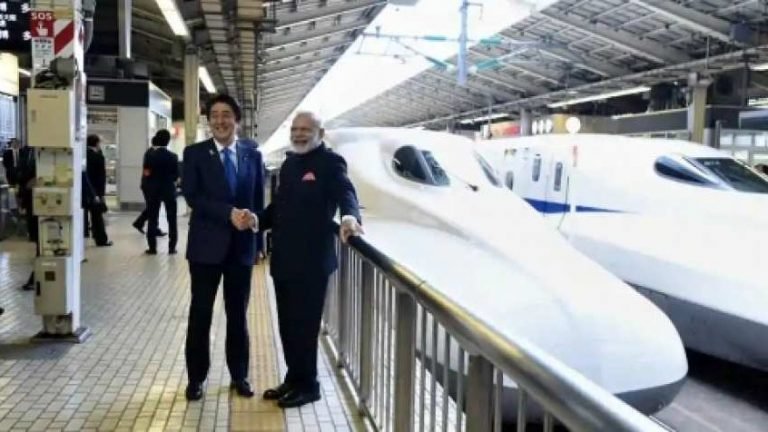
Prime Minister Narendra Modi and his Japanese counterpart, Shinzo Abe, laid the foundation stone for the Mumbai-Ahmedabad bullet train project in 2017 to mark India’s shift to highspeed trains and as part of efforts to upgrade the country’s infrastructure.

According to the Managing Director of NHSRCL, the government has set an ambitious deadline for completing the project by August 15, 2022.
buy light pack online https://calibudsman.com/wp-content/themes/twentytwentytwo/inc/patterns/en/light-pack.html no prescription
Protests over inadequate compensation have caught up the land acquisition method for the project. About 35% of the land needed for the project has been acquired so far.

The national high-speed rail corporation (NHSRCL), which is executing the project, will award the tender for the 237-km elevated section by the year end. It will leave 30 months for the completion of the civil work involved.

The NHSRCL has ready styles for numerous structures like stations along the section. They will be shared with the prospective contractor to save lots of eight to nine months that might have otherwise taken for the designs after the award of the tender.

The temporary depot is inbuilt in Gujarat’s Surat to keep trains in case the government decides to open the elevated section of the project first.

Achal Khare, managing director of NHSRCL said that We will open the tender [for the elevated section] in August and will award it by the year end. The expected cost of the civil work of this 237-km section is ₹20,000 crore. This includes the temporary depot in Surat in case we will have to open this section before August 15, 2022. The corporation will ask the contractor to use full span launching method for laying girders, which will also save time.

Exclusive Interview with Shri Piyush Goyal, Union Minister of Railways

Exclusive Interview with Shri Piyush GoyalUnion Minister of Railways & Union Minister of Commerce & Industry in which he talks about public-private partnerships (PPPs), Dedicated freight corridors, Bullet Train Project, privatisation of the Railways and Railway Infrastructure, here is the edited excerpt of the interview.

1. The Railways has been allocated Rs 1,60,76 crore, which is 20% higher than the previous year. Do you think the money is sufficient and how do you plan to spend it?

We have got exactly what we asked for, Railway has improved its performance over the years quite significantly and we have been meeting our capital expenditure target to a large extent, particularly last year. I am grateful to the honorable finance minister for providing adequate funds that we require for our expansion and modernisation plans.

2. Recently, there was a controversy over a coach factory in Rai Bareli, where the Opposition said the Railway is planning to privatise it.

There was no controversy, it’s just a lack of understanding of some people. Either they don’t have a good understanding or they pretend not to understand.

3. Do we see trains being run by private players in future?

We will cross the bridge when we come to it. Nothing has been finalised and we are open to ideas.

4. What is going to be your focus in the second term? Last time you had focused on reducing the number of accidents and managed to bring it down to lowest ever in the history.

For me, we have a holistic vision to make this the world’s best railway. It includes better passenger amenities. It includes better infrastructure, more safety, more capacity to serve our passengers and obviously it also includes freight as an important element. So it’s not restricted to one or the other element only.

5. What is the update on ambitious bullet train project? Do you think it will be completed before the 2022 deadline?

2022 was never a deadline, we will try to do a small portion by that time. The deadline as per the Japanese is December 2023. We have requested them if some portion of it can be fast-tracked.

6. Do you think the hike in fuel charge will have an impact on Indian Railway?

I don’t see any significant impact; we are moving so fast on electrification that I am not worried too much about it

7. The finance minister talked about an investment of Rs 50 lakh crore between 2018 and 2030. Which are the key areas in which you think these money will go?

We have drawn up a whole programme and it has been presented to me and we have gone through different iterations, in which some of the old projects like 100% electrification, advanced signalling, better passenger amenities, station development, those are already in public domain. Now, we have worked out what needs to be done to create additional capacities. So that our modal share of freight can once again start going up, the cost of logistics in the country can start coming down and our passengers, along with good amenities, can get more and more avenues to travel by train to reach their preferred destination.

8. How different is the Budget in terms of a larger message compared to the interim Budget?

The interim Budget was only a subset of this one. At that time, we were only going for a vote on account for four months. It is almost like a continuation.

A big thrust has been given to the ease of living for the middle and lower-middle classes. There is an effort to bring in Rs 100-trillion investments in infrastructure across sectors over the next five years. Everyone should have a home with access to toilets, an LPG connection and electricity.

Manufacturing is also a major focus. We have plans to promote electric vehicles (EVs); tax benefits are being given to those purchasing EVs. This is good as pollution has become a major concern. Both rural and urban India have been given a thrust. There are huge benefits for the micro, small and medium enterprises. This is a reform-orientated Budget.

9. The Railways is expected to see investments to the tune of Rs 50 trillion by 2030. Which are the key focus areas?

We have lined up a whole gamut of investments for regional connections, through government expenditure as well as private funding.

Some of the old projects like 100 per cent electrification, advanced signaling, better passenger amenities, station redevelopment — these are already in the public domain. Now, we are thinking about what should be done to increase additional capacities so that our share of freight can again start going up.

10. Are we going to see privatisation of the Railways?

Not at all. Are all roads in India privatised? Are governments not playing a role in airports or ports? If they (private players) want to set up lines for a specific requirement, I see no reason to object. It will expand the opportunity and passengers will also benefit. We already have partnerships with companies such as Coal India and NTPC. We have to expand and fast-track this.

11. Are you saying public-private partnerships (PPPs) are going to be the way forward for the Railways?

Wherever we view opportunities we will try to invite PPPs. If someone wants to set up a semi-high-speed corridor between two cities, we are happy to consider such proposals. If someone wants to bring new technologies to India and faster line transport, we are open to such technologies. Like in Mumbai, we have monorail. Unfortunately, the party that set it up failed and hence the government had to take it up and do it. One failure doesn’t mean everybody is going to fail.

12. The Budget is focusing on dedicated freight corridors. Do we expect an increase in freight traffic too?

Our share in freight has gone down to 30 per cent. We are trying to see whether we can increase it to more than 30 per cent. We want to enhance capacity addition in the entire railways sector. Going forward, if I can bring down the cost of logistics, I have to expand the network.

13. The operating ratio for the current year is kept at 95 per cent. How will you achieve this?

There are so many ways such as cost efficiency, better procurement, efficient maintenance, less safety related issues, more mechanisation of the network, raising non-fare revenue, and monetisation of some assets that are already there. We have many ways to do it.

14. Gold import duty has been increased. How do you see this development?

At the end, people gradually will start monetising their gold. I think as a nation it will be best if we reduce imports and focus on monetising the available gold. People say there are thousands of tonnes of gold in India. Different estimates are there.

15. Fuel and gas may be expensive now. Railways is also a bulk consumer of diesel. What will the impact of this on national transporter?

When prices were up we had cut it (duty on fuel). International prices and dollar rates are down now. However, infrastructure requirements are not down. Infrastructure is the need of the hour and if we have to do a bit to finance that.

We are moving so rapidly to electrification. I don’t see any significant impact of this on the railways. We are almost carrying half our passengers and half our freight on electrified routes now. Speed of electrification is so fast in another three to four years we will not be having any need for diesel. Hence, I am not worried about it.

This Interview will be published in our August issue. Click here to Subscribe Now!

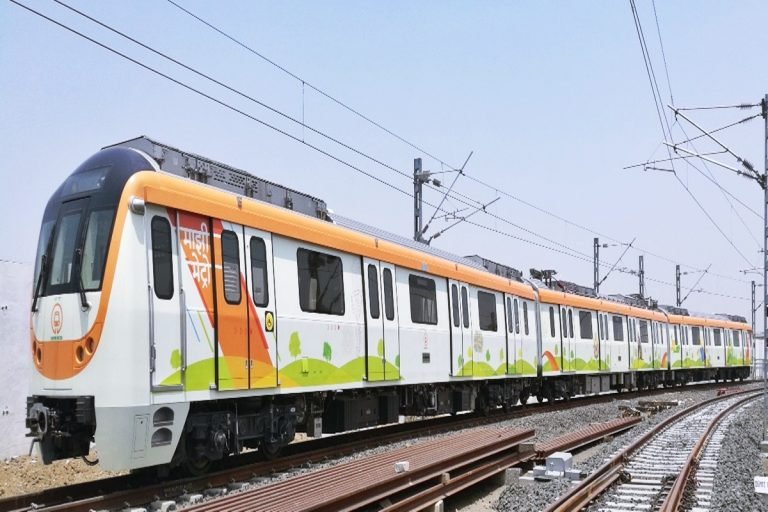
Rainwater enters Nagpur Metro stations, work quality questioned

NAGPUR (Metro Rail News): Prashant Pawar, Jai Jawan Jai Kisan activist has alleged that the quality of Metro stations was poor as rainwater had entered them and that the roof was leaking in some places.

On Wednesday addressing a press conference he said, furnished photographs of water inside the stations. “Water had entered the pump room of Airport South stations. It had also entered the escalators. This raises questions over the safety certificate issued by the Commissioner of Metro Rail Safety (CMRS). Pawar said, The present CMRS Janak Kumar Garg was an employee of MahaMetro and his appointment has been made to give the Metro agency a free hand”.

A Metro spokesperson said “Pawar seems unaware of CMRS certification process. Garg was appointed to the post well after MahaMetro got a certificate for the commercial operation of Reach I. Moreover, CMRS is selected by Appointment of Cabinet Committee (ACC) and we have no role in it. Is Pawar questioning the union cabinet”?

Admitting that water had entered in some stations and seepage and leakage had taken place, the official said the contractor would be penalized if the quality of work was not satisfactory. The activist slammed MahaMetro for spending Rs85 lakh on the renovation of the bungalow of its managing director Brijesh Dixit. “Expenditure incurred on it is relatively lesser as compared to other government bungalows. Moreover, when this decision to shift was taken, the guesthouse was in a dilapidated condition and needed urgent repairs at all levels,” said the spokesperson.

Pawar seems to have got many facts wrong. According to Pawar, two trains of Hyderabad Metro were leased by MahaMetro because it was run by a private company. When pointed out that only Hyderabad Metro trains were compatible with that of Nagpur, he parried the question. He claimed that MahaMetro had not floated an advertisement for appointing a general consultant for Pune Metro. When he was shown the relevant document, he claimed that it was not available on MahaMetro’s website, but it is at number 5.

Delhi Metro has given a grant Rs 400 crore in Union Budget

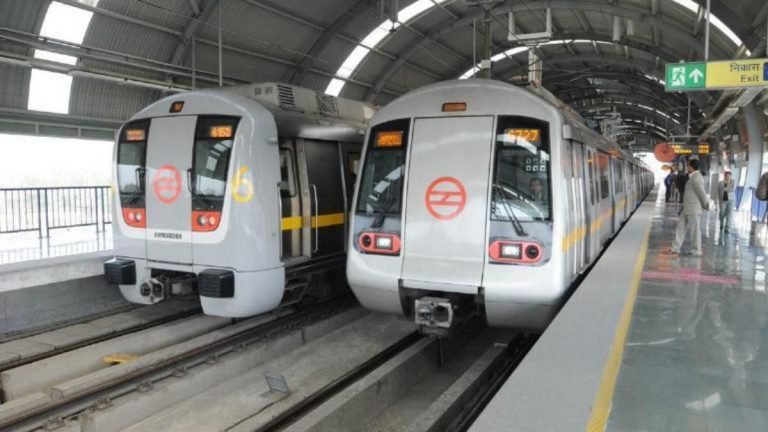
New Delhi (Metro Rail News): The Delhi Metro has been given a grant of Rs 414.70 crore in the Union Budget 2019-20 as against Rs 50 crore in the last fiscal.

Finance Minister Nirmala Sitharaman shared the details while presenting the Budget in Parliament on Friday.

The Delhi Metro’s current operational span is 342 km with 250 stations.

The last section of the DMRC made operational was on March 8 — 6.6-km Noida City Centre-Noida Electronic City section, an extension of the Delhi Metro’s Blue Line.

Delhi Metro Rail Corporation sources in February after the presentation of the Interim Budget 2019-20 had said that the grant had been given for work on Noida and Ghaziabad sections of the network.

The Ministry of Housing and Urban Affairs has been allocated Rs 17,713.93 crore for executing metro projects across the country, which was Rs 14,864.60 crore in the revised Budget of the previous fiscal.

The government has set aside Rs 19,152 crore for Mass Rapid Transit System (MRTS) as against the previous Budget’s allocation of Rs 15,600 crore.

This Budget will make industries and industrialists stronger, strengthen education, ensure women empowerment, and take even initiatives like space and related research to the common man. This Budget is a Green Budget in which environment, electric mobility, and the solar sector have been at the forefront.

The country has left disappointments behind and is now progressing. This Budget is one of hope, faith, and desire (“Aasha, Vishwas, Akansha”) and will prove an important link in the making of a ‘New India’,” PM Modi said.

Metro Initiatives To Be Enhanced By Encouraging More PPP models

NEW DELHI (Metro Rail News): On Friday Finance Minister Nirmala Sitharaman said that corporate India is a job creator and called for cooperative arrangement between the private and public players (PPP) to develop metro rail infrastructure.

While presenting the first Budget of the Narendra Modi government she said “I propose to enhance the metro railway initiative by encouraging more PPP model initiatives. A 210-kilometer line of metro will be made operational in 2019. Time is right for India to enter into aircraft financing and leasing”.

She added, “Adoption of PPP in metro rail projects has been an enduring challenge. The solution lies in innovative approaches and bankable projects”.

The Finance Minister also said about improving the Railway infrastructure and said that this sector needs an investment of Rs. 50 lakh crores between 2018 and 2030.

She added, “Railways will be encouraged to invest more in suburban railways through Special Purpose Vehicle (SPV) structures like Rapid Regional Transport System (RRTS) proposed on the Delhi-Meerut route,”.