Home Blog Page 638

Delhi-Meerut RRTS corridor gets Rs 974 crore in budget 2019

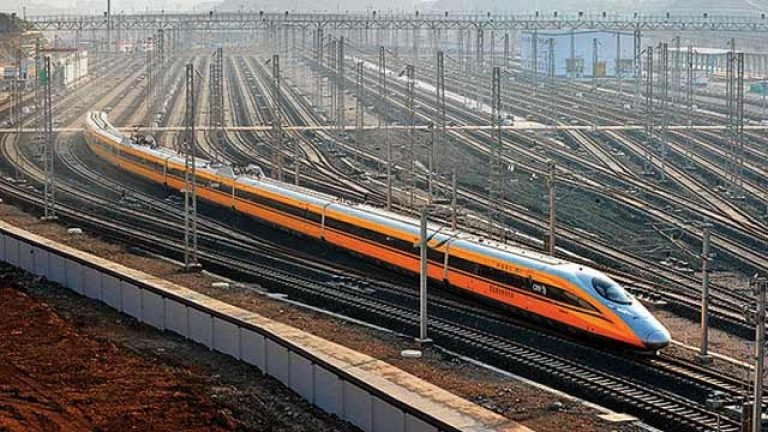
Delhi (Metro Rail News): According to NCRTC, the 82-km long Delhi-Meerut rapid rail corridor, which is the first corridor prioritized for implementation in the RRTS project, will bring down the travel time between Delhi and Meerut to 55 minutes.

FM Nirmala Sitharamam presented the Union Budget 2019 on July 5, the Modi 2.0 government has allocated a sum of Rs 974.25 crore for the regional rapid transit system (RRTS). This has been administered to the National Capital Region Transport Corporation (NCRTC), which is the nodal implementing organization of the RRTS project.

The RRTS project will be made operational across Delhi and the national capital region. According to NCRTC the 82-km long Delhi-Ghaziabad-Meerut rapid rail corridor, the very first corridor prioritized for implementation in the RRTS project, will bring down the travel time between Delhi and Meerut to just 55 minutes.

FM Sitharam said in Budget 2019 speech that, as the suburban train services of Indian Railways are becoming a major booster for increasing regional connectivity in big cities like Mumbai, Delhi, therefore the national transporter will be determined to invest more on the suburban railway system through the special purpose vehicle (SPV) structures like the RRTS project, proposed for the Delhi-Meerut route.

The RRTS project is a rail-based high-speed transit commuter system which will provide seamless connectivity, reducing pollution as well as congestion across the national capital and the regional nodes of the NCR. Under Phase-1 of the RRTS project of NCRTC,

The three rapid rail corridors have been proposed to be implemented on priority that are 82-km long Delhi-Ghaziabad Meerut corridor, which will cover the distance between the two cities in 55 minutes, the 103-km long Delhi-Sonipat-Panipat corridor, which is expected to bring down the travel time between Delhi and Panipat in just 65 minutes and the third 164 km long Delhi-Gurugram-Rewari-Alwar corridor which will be implemented in three stages, namely: Delhi–Gurugram to SNB (Shahjahanpur-Neemrana-Behror) Urban Complex, SNB Urban Complex to Sotanala and then from SNB Urban Complex to Alwar.

Recently, the Delhi-Gurugram-Alwar RRTS corridor has received the approval of Rajasthan government on the detailed project report (DPR) of the Delhi-Gurugram-SNB rapid rail corridor, which is the first phase to be constructed for the Delhi-Gurugram-Alwar RRTS network. The Delhi-Gurugram-SNB corridor will be able to reduce travel time between Delhi and SNB area to just 70 minutes.
Japan unveils 1st battery-powered bullet train

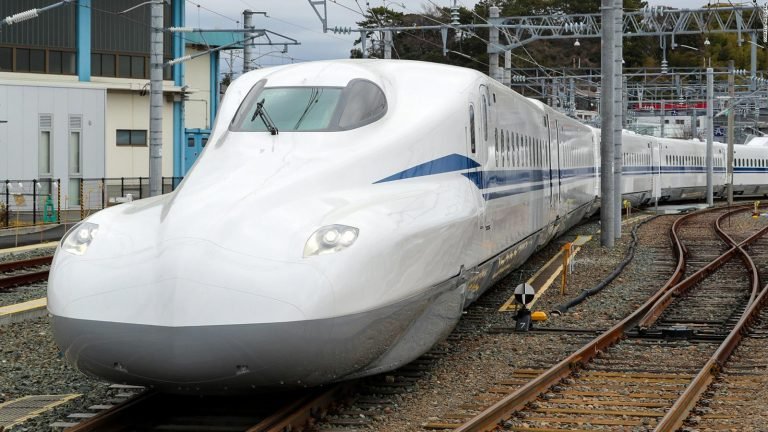
NAGOYA (Metro Rail News): Central Japan Railway Co. conducted a test run Wednesday for the press of its new Shinkansen bullet train powered by batteries, a first among the world’s high-speed trains.

JR Central said it hopes the technology will be useful in emergencies which might otherwise leave trains stranded in tunnels or on bridges during an extended power outage. The battery-powered shinkansen would be able to proceed on its own to the nearest station.

The N700S train, to be debuted in July 2020, is able to carry batteries on the underside of its carriages due to the reduced size of other technology and equipment.

The test run was held for media at a railyard in Mishima, Shizuoka Prefecture.

Pune metro will have key distinctive features: Brijesh Dixit

MAHARASHTRA (Metro Rail News): Brijesh Dixit is the managing director of the Maharashtra Metro Rail Corporation Ltd (Maha-Metro)

The metropolis of Pune has indeed become my karma bhoomi. As managing director of Maharashtra Metro Rail Corporation Limited (Maha-Metro), I am heading the team which is committed to the time and within cost completion of the Pune metro rail project. Once completed, the project is destined to become a lifeline of Punekars.

Pune metro unmistakably seeks to reverse the trend of severe traffic congestion and pollution by providing a safe, secure, convenient, comfortable, affordable, inclusive and environment-friendly solution to the vexed and rapidly worsening urban transport problem bedeviling Punekars.

Project cost

The Pune metro project developed by Maha-Metro is constructed at a total cost of ₹11,420 crore with equity funding in equal proportion from the government of India and the Maharashtra government. It is worth noting that both the municipal corporations of the city — Pune, and Pimpri-Chinchwad — have come forward with sizable grants to ensure timely completion of the project. The debt funding for the project is provided by AFD, the French funding agency.

Overview

The state-of-the-art modern metro rail system with a designed speed of 80 kmph, having modern signaling and telecommunication system and modern metro cars, is constructed as a two corridor project totaling 31.25 km in length; 30 stations and 2 metro-car maintenance depots.

The north-south corridor begins from Pimpri and Chinchwad municipal area and ends at Swargate with part underground and part elevated sections. This corridor is 16.6 km long and has 14 stations. The second corridor that connects the east with the west, starts from Vanaz and ends at Ramwadi and is 14.7 km long with 16 stations.

It is pertinent to mention that the project alignment traverses through some of the densest corridors of the city and once completed will significantly take away the current load from the city roads, in turn substantially alleviating the transportation woes of Punekars.

Distinctive features

Pune metro which shall seamlessly integrate the unique city of rivers, hills and plains are designed to have key distinctive features. It shall make the commuter experience exhilarating and simultaneously enhance the environment of the city. Some such features are —

First, it is the unique architectural features and designs of stations which are constructed to merge seamlessly with the rich tradition of the history, heritage, and culture of the city.

Second, the stations have been carefully designed to meet the unique needs of all types of commuters, including the elderly, women, children and the disabled.

Third, to complete the project with quality, on time and within the cost, Pune metro after Nagpur. Metro has become the second project in the country to implement the modern project management system known as 5D BIM (building information modeling).

Fourth, Pune metro stations and other buildings are designed not only as green buildings, but also the entire metro network will generate abundant solar power on the rooftops of station buildings, offices, and depots. These will ensure 65% of the total power needs of the metro rail will be met by solar energy.

Fifth, the project by its nature has already become an engine of job creation and economic growth during the construction phase and will get further impetus during the operation phase

Sixth, the commuters on Pune metro rail will have seamless travel experience with multi-modal integration, common mobility card for all modes of transport and efficient and high-quality feeder service.

Revenue management

Finally, unlike other metro systems and very much like Nagpur metro being constructed by Maha-Metro, fare-box revenue of Pune metro will be substantially augmented by non-fare box revenue using property development at stations and depots and transit-oriented development.

It will be no exaggeration to say that non-fare box revenue will comprise minimum of 60% of the total revenue.

The vision for Pune metro is to give a world-class sustainable urban transport to the city that Punekars will be proud of.

My earliest memories of Pune

My first tryst with Pune was in 1982 when I arrived here as a young railway engineer for training at Indian Railway Institute of Civil Engineers (IRICEN). Then the city widely dubbed as “Queen of the Deccan” had a population of barely 1.2 million. Due to the preponderance of bicycles dotting its landscape, Pune acquired the tag of ‘City of Bicycles”. As I immersed in the body fabric of Pune and Punekars, in no time I was awestruck with the great lineage of history, heritage and culture of the city.

One change that I want to see in Pune: Vision for Pune is to give a world-class sustainable urban transport to the city that Punekars will be proud of.

Wi-Fi connection to be available in Delhi metro trains soon

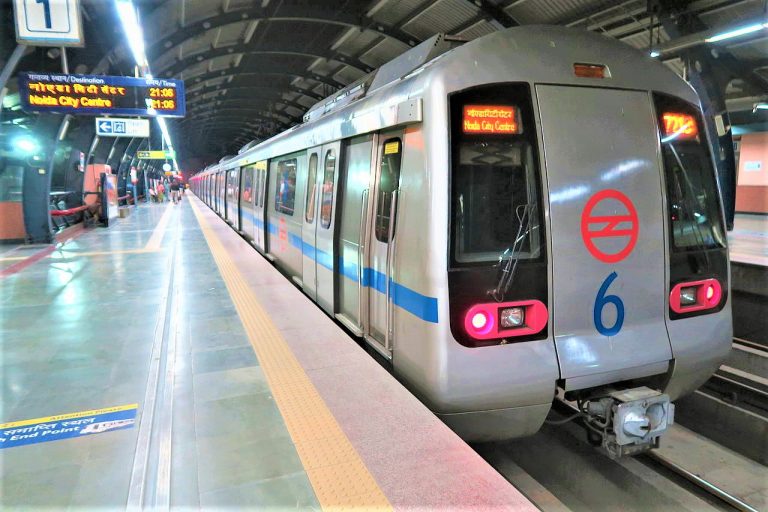
New Delhi (Metro Rail News): Commuters travelling by Delhi Metro will soon be able to enjoy free Wi-Fi not only at the stations, but even on moving trains. The six stations of the Airport Express Line were the first to provide the facility in 2016, and Delhi Metro Rail Corporation will start free Wi-Fi services in moving trains on the same corridor around end-2019.

The mechanism through which commuters will be able to access Wi-Fi onboard moving trains is a two-level network. The official explained that, “It is a train-to-tunnel (T2T) radio network that passes signal from base stations inside a tunnel to portable base stations inside head cars. The inner-train network then transmits the signal from the Wireless Access Points (WAP) in each car to the users’ devices.”

A DMRC official said, “The Wi-Fi service in Delhi Metro will be provided for free and without limitations on download speed or traffic volume. The target speed will reach up to 300 Mbps per train.” A DMRC official working on the project said that, “At the moment, the download speed for a certain user depends on the network load at the time.”

The official added that DMRC is planning to deploy a Wi-Fi network on all its corridors, except the Magenta (Janakpuri West-Botanical Garden) and Pink (Majlis Park-Shiv Vihar) Lines. Like the Airport Express Line, free Wi-Fi would be provided both at stations and in trains on all the corridors except these two lines. After the Airport Express Line, in 2017 the Blue Line (Dwarka-Noida City Centre/Vaishali) was the second corridor to provide free Wi-Fi facility to passengers at its 50 stations.

While Airport Express Line will start providing Wi-Fi facility inside moving trains by the end of this year, the Yellow Line (Samaypur Badli-HUDA City Centre) is expected to get Wi-Fi facility installed at all its stations by the end of this year.

 Blue Line is the busiest corridor of the Delhi Metro network, it started providing Wi-Fi facility two years ago and uses a facility named “Oui DMRC Free Wi-Fi” at the the 50 stations of the service. Commuters can log in by searching for the Wi-Fi options on their devices and choose “Oui DMRC Free Wi-Fi” after a one-time registration through their mobile phones.

To provide its passengers with free access to the internet, DMRC had tied up with a consortium led by M/s Techno Sat Comm, which has been providing the same amenity at the six stations of the Airport Express Line from October 2016. Techno Sat also run India’s first Wi-Fi on a train service, the Delhi-Howrah Rajdhani Express.

Shri R. K. Sharma joins as Commissioner of Railway Safety

MUMBAI (Metro Rail News): Shri R. K. Sharma has joined as Commissioner of Railway Safety (CRS), Western Circle in Mumbai. The Commission of Railway Safety is subordinate to the Ministry of Civil Aviation.

He has earlier worked as CRS in NF circle at Kolkata. He will be in charge of Western / North Western Zone and Metros of Mumbai, Ahmedabad and Jaipur.

Shri Sharma has experience of working as a Director (System) in MMRDA, handling Metro rail works in Mumbai as well as management of Mumbai Suburban system. Shri Sharma who is an Electrical Engineer by training has experience of working in railway operations & safety management, rolling stock, electrification projects, metro systems, green energy, tunnelling systems etc.

He is credited with introducing concept of Live Line Maintenance of 25 KV Traction system and First Solar pump in Indian Railway and Standardization/indigenization of Electrical Systems in Metros.

Bangalore Metro to become six-coaches train by Dec 2019

Bangalore (Metro Rail News): Bangalore Metro Rail Corporation Limited (BMRCL) has again pushed the deadline to convert all its three coach train sets into six-coaches. The new deadline is December. Earlier, BMRCL had planned to convert all 50 of its three-coach trains from Phase One by September. The deadline has been pushed because the testing of each coach is a time-consuming process.

A senior BMRCL official said that we are converting three to four trains each month into six-coach ones. We have been receiving two to three new train sets every month to be added to our existing three-coaches, but they cannot be immediately inducted. Every night after the operations are over, we start running the new coaches to test them according to our safety standards. Once satisfied, we add them. So far, we have 15 six-coach trains running on the Purple line and one six-coach train running on the Green Line. The former is a more popular route. By December, we aim to induct all 50 trains as six-coaches in the Purple and the Green line.

The official added that in total, 268 trips are being run every day on the Purple and the Green line of the Metro. Riders say that six coaches are better as not the trains are less crowded and there is also a separate reserved coach for women. In the second phase, we have only called tenders for six-coach trains so that we do not have to convert them later.

BMRCL official said that in the second phase, we have only called tenders for six-coach trains so that we do not have to convert them later

BMRCL spokesperson BL Yashavanth Chavan said that the additional coaches for conversion are being supplied by Bharat Earth Movers Limited (BEML) and the total cost of conversion into six coaches is Rs 1421 crores.

Tenders have been called for 216 new trains for Reach Five of Phase Two of Metro. 42 new train sets for extension of Phase One (East-West and North-South corridors) of Metro are also being supplied by BEML at a cost of Rs 362 crores. We are yet to call tenders for trains for Reach Six. The first six-coach train was introduced to the Purple Line in June 2018 and in January this year, it was added on the Green Line.

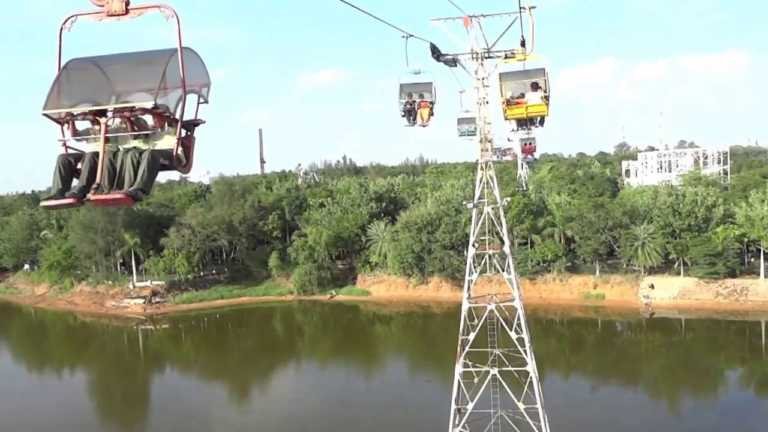
last-mile connectivity via a ropeway in Mumbai

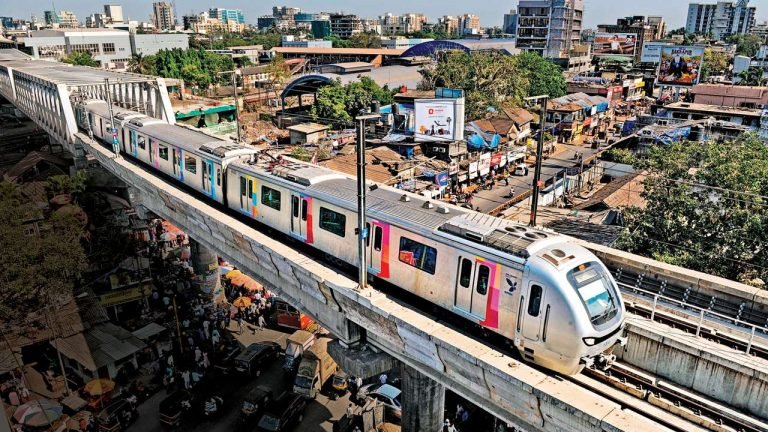
MUMBAI (Metro Rail News): People in two western suburbs might not just have the Metro rail to look forward to but also a ropeway to make their way home from the Metro station.

The Mumbai Metropolitan Region Development Authority (MMRDA) has approved a Rs 3,500-crore integration project to provide last-mile connectivity via a ropeway from Metro rail stations.

Ropeway route

Two routes, Malad-Marve and Borivali-Gorai, were approved for the ropeway project on Monday by the planning authority chaired by Chief Minister Devendra Fadnavis.

As per the plan, routes connecting Malad and Borivali Metro stations (Metro-2A) will have ropeway links to Marve and Gorai, respectively, thus providing east-west connectivity.

Sources in MMRDA looped in about the project said M/s Indian Port Rail and Ropeway Corporation Ltd (IPRCL) was appointed to prepare a detailed project report to understand if ropeways could be implemented on these two routes, both of which would be 4.5 km long.

The two routes are likely to have halts in between for people to get down.

RA Rajeev, MMRDA commissioner said that ropeway is quite popular and successful in New York, Colombia, Turkey etc. In a city like Mumbai where people are facing traffic problems, such initiatives can be useful. If these pilot projects are successful, we may initiate a few more like them.

An official said that officials from the authority said that the multi-modal project would help in facilitating or improving public amenities such as footpaths, cycle tracks, parking zones, traffic signals, street lighting, CCTVs, path-finding maps, feeder services, street furniture and so on. The project will rejuvenate the entire road network below all Metro corridors.

CM Devendra Fadnavis said that constructing Metro corridors does not mean only providing transport facility to travel from one end to another. It must be a total experience for the commuters, meaning the provision of last-mile connectivity along with the paraphernalia of facilities that will encourage you to travel.

Apart from this, the MMRDA has decided to finance Konkan Irrigation Development Corporation for construction of Kavdas Dam. This will form part of the Surya Dam project which is being implemented by MMRDA. The KIDC will secure permissions required for acquiring land, rehabilitating project-affected people and preparing an environmental impact study.

Aerial Lift

Two routes, Malad-Marve and Borivali-Gorai, approved for ropeway

The east-west link-up project would help in facilitating or improving other public amenities

There’d be space for footpaths, cycle tracks, parking zones and so on

Will also help revive road network below all Metro corridors.

Surat Metro phase I to start from Surat Dream City to Kadarshala Naval

SURAT (Metro Rail News): Metro work will start in Surat soon. A meeting was organized in Surat today in which it was decided that the first phase of Metro will be started from Surat Dream city to Kadarshala.

The meeting was done at Gandhinagar today at the chairmanship of Chief Secretary Mukesh Puri, which was attended by officials of Gujarat Metro Rail Corporation and M/o. The commissioner was present. As per the decision, the Gujarat Government has decided to implement Surat Municipal Corporation. The commissioner has been named as “Managing Director” of Surat Metro Rail Corporation
From now on every metro rail meeting will be done at Surat and every issue will be discussed in it and urgently new staff will be appointed for it. In the first phase, “Surat Dream City to Kadarsh ​​Ki Nala” will have to be metro.

It is worth mentioning that the DPR of the Metro Rail Project in Surat was approved. Rs 12,114 crore DPR has been approved for Surat Metro. In which both the central and the state government will contribute 50-50% In the first phase, two corridors of Metro will be prepared. 

The first corridor will be 22 km from Sarathana to Khajad Dreamstate while the second corridor will be ready on a 19-kilometer route from Sarolini. Now, Surat’s traffic problem will be relaxed even when Surat gets metro rail.

Bids approved for Bahrain Metro Rail project

Bahrain (Metro Rail News): Three bids to provide transaction advisory services for the Bahrain Metro Rail project has made it on to the shortlist.

Bahrain’s Ministry of Transportation and Telecommunication has announced that Al Zayani Engineering, KPMG, and PwC have been shortlisted to assist in the delivery of a USD 2billion project that forms a component of the kingdom’s Public Transport Masterplan 2030.

The successful bidder will consult on the financial, technical and legal documents that will accompany the tender of the design, construction, and operation of phase one of the development.

The project will feature a 184km network made up of six lines and is being implemented in four phases. In the first phase, two lines running 30km will be built covering 20 stations.

Bids from Deloitte, Gulf International Bank, Lazard Freres, Parsons Global Services and Ernst & Young were rejected by the ministry.

CM clears ₹3,500-crore multimodal system to connect all Metro stations in Mumbai

MUMBAI (Metro Rail News): On Monday, Chief Minister Devendra Fadnavis cleared big-ticket projects for the financial capital, including an integrated multimodal system to connect the proposed Metro stations.

The Mumbai Metropolitan Region Development Authority (MMRDA) 148th meeting of the board also cleared the appointment of the Indian Port Rail and Ropeway Corporation Ltd to prepare a detailed report for the ropeway projects between Malad and Marve and from Gorai to Borivali, each 4.5 km long.

The ropeway is vital to establish the East-West connectivity for the Metro and jetty works along the coast. This can also establish connectivity to Malad Metro station on Metro-2A corridor, Borivali station on the Western Railway, Metro-2A, and Gorai jetty.

MMRDA said, “The ropeway is successful in New York, Colombia, and Turkey,” R.A. Rajeev, Metropolitan Commissioner.

He said, “In cities like Mumbai where people are facing traffic problems, such initiatives can be useful. If these pilot projects are successful, we may undertake a few more projects”.

The ₹3,500 crore multimodal integration (MMI) project for all the proposed Metro stations will provide commuters a smooth transit experience and also achieve the State’s objective of providing the last-mile connectivity. The MMI aims to facilitate works such as widened footpaths, bicycle tracks, parking zones, traffic signal improvement, street lighting, installing CCTV cameras, path-finding maps, feeder services, and street furniture Mr. Fadnavis said.

He further added officials present in the meeting said the CM directed the MMRDA to work out a way of reducing the cost. “Constructing Metro corridors does not mean only providing transport facility from one end to another”.

He said, “It must be a total experience for the commuters, meaning the provision of last-mile connectivity along with the facilities that will encourage one to travel — and travel in comfort”. The meeting was attended by Cabinet Ministers Radhakrishna Vikhe-Patil and Yogesh Sagar, and mayors of various cities.

The CM also granted approval to the finance from the MMRDA to the Konkan Irrigation Development Corporation (KIDC) for construction of Kavdas dam, which is part of the Surya dam project. The MMRDA will soon sign an MoU with the KIDC.

“This will form part of the Surya dam project, which is being executed by the MMRDA. While we finance, it will be the responsibility of the KIDC to secure permissions, acquire land, rehabilitate PAPs, and prepare an environmental impact assessment report”, Mr. Rajeev said.

The logo of the Maha Mumbai Metro (M3) Operation Corporation was also unveiled at the meeting, which suggests an infinite loop formed with three Ms. It describes how M3 offers a seamless and continuous service in the operation and maintenance of the 12 Metro lines as they connect various parts of the metropolitan region. While the green in the identity stands for environmental consciousness, the blue stands for solidity and trust.