Home Blog Page 636

AIRF opposes Railways to purchase trains

DELHI (Metro Rail News): On Sunday All India Railwaymen Federation (AIRF) working president N. Kannaiah said that buying trains is not a viable proposition as it would not only burden the organisation financially but cost thousands of employees of their jobs in the long run.

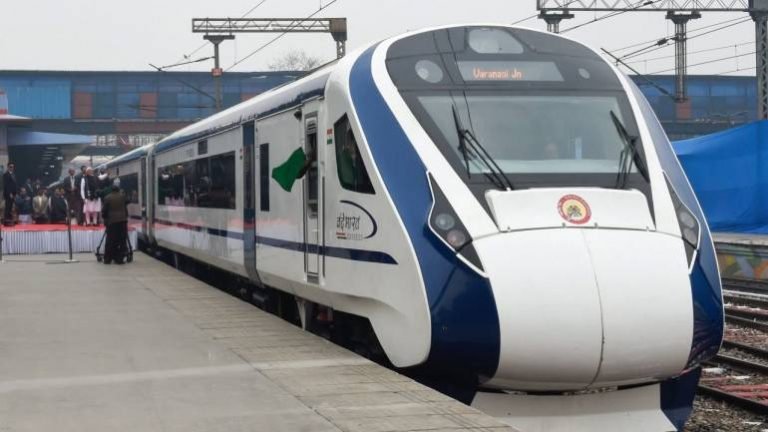
The making of Train18 (Vande Bharat Express), and Tejas Express rakes are examples of how our production units can deliver world-class products. The production capacity of ICF increased from 1,437 coaches per year in 2009-10 to 3,200 coaches in 2018-19. But the manpower has been drastically cut.  

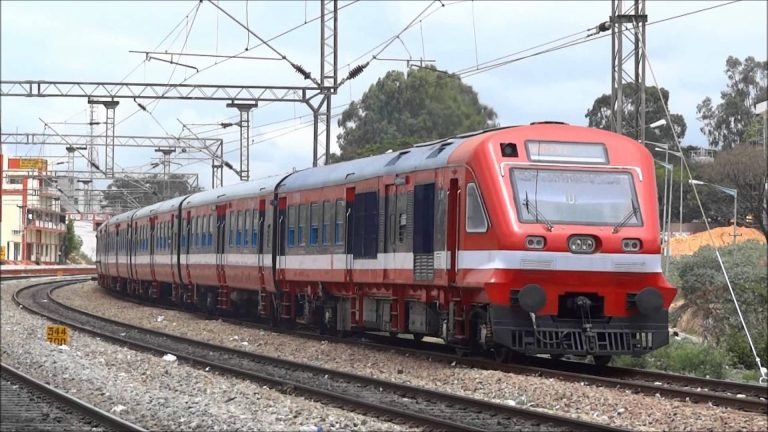
Reacting to the idea of the Railways to buy train sets, EMU and MEMU from private players, he said production units such as the Integral Coach Factory, Chennai, and Modern Coach Factory, Rae Bareli, had state-of-the-art technology and infrastructure.

Buying a readymade train from private firms is not new to the Railways. The trains run by Chennai Metro Rail Limited (CMRL) were procured as a complete set from Alstom that has a facility in Sri City.

“But, procurement from trade, whether imported or indigenous, has always been at exorbitant prices. In fact, in all Metro tenders, the production units of Indian Railways were kept out by cleverly making the international experience one of the criteria for consideration. Ironically, efforts for making Metro coaches under the Make in India initiative are being scuttled by specifying international experience as an eligibility norm. Now, with the procurement of trainsets from the trade it looks like the end of the road for Railways’ in-house production units”, the official added.

The cost of Train18 rake in the global market is ₹245 crore whereas ICF engineers rolled out the train at a cost of ₹97 crore,” he said.

Alleging that the Chairman, Railway Board, was going back on his assurance that there would be no more privatisation when a delegation of ARIF leaders met him in New Delhi recently, he said corporatisation was the first step towards privatisation.

“We also make coaches for the Indian Army and several neighbouring countries. The manpower, infrastructure and technology of ICF is among the best in the world and the current target is to roll out 4,000 new coaches,” a senior ICF official said. A majority of union leaders, officials and staff was opposed to the privatisation policy of the railways.

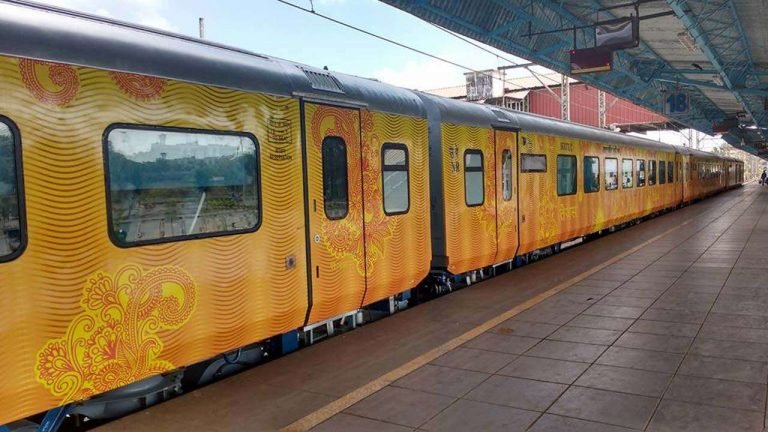
“They (the railway management) have now decided to hand over two trains in each zone to private parties. I am told that the Delhi-Lucknow-Delhi and Chennai-Madurai-Chennai Tejas Express trains would be given away on lease for ₹60 crore each.

“The next step would be to give away the Vande Bharat Express...how can they give away profit-making trains,” he wondered.

Mr. Kannaiah, who is also the general secretary of Southern Railway Mazdoor Union, said the spirit of ‘Make in India’ initiative was to protect and promote local talent in national growth and not bring in multinational companies to manufacture and deliver their products here.

He said, “The AIRF which has about 10 lakh members in 16 zonal railways and 7 production units will go all out to prevent further privatisation of the Indian Railways. This is a income generating organisation.”

Abu Dhabi Metro Tender

Abu Dhabi (Metro Rail News): Abu Dhabi Metro Tender. The project’s work area includes the construction of a subway network in Abu Dhabi.

Abu Dhabi Metro is a planned metro line that will be part of a larger transit network for the city of Abu Dhabi.

18 will be kilometers long when the entire transit network is complete, including an 11 kilometer (131 mile) underground metro line, two light rail lines and a fast bus line.
buy caverta online https://www.facebeautyscience.com/wp-content/themes/twentyseventeen/inc/en/caverta.html no prescription
1 of the network. The stage (60 kilometers (37 miles)) must be completed by 2020 and should be done later in the next stages (70 kilometers).

Abu Dabi Metro haritası 1

The system will consist of four (4) base lines:
5 km (3,1 miles) high speed line L1 line, which will be 18 km (11 miles) underground
L2 line 15 km (9,3 miles) light rail with 24 stops
L3 line 13 km (8,1 miles) with light rail and 21 stops
L4 line 14 stall (8.7 miles) bus stop and 25 stall fast transit loop
The Metro will mainly combine the proposed Central Business District with Sowwah Island, Reem Island, Saadiyat Island, Yas Island, Abu Dhabi International Airport and Masdar, Capital Region, Emerald Pass, Zayed Sports City and ADNEC.

NHSRCL plans to charge extra for baggage from passengers

Delhi (Metro Rail News): Passengers travelling on India’s first superfast bullet train may have to pay for the luggage they check in. To discourage travellers from carrying heavy luggage, the National High Speed Rail Corporation (NHSRCL), which is executing the project linking Mumbai and Ahmedabad, plans to charge them for the bags they check in.

Every coach in the train will contain sufficient space for hand baggage. In the last coach, however, some seats will likely be removed to make space for the extra check-in luggage, for which passengers may have to pay extra — a first for a train in India.

The introduction of the country’s first bullet train, known as the Shinkansen in Japan and expected to be operational in 2022, will mark India’s shift to an era of high-speed trains capable of hitting speeds of up to 350 kilometres per hour.

According to NHSRCL, the Japanese are used to travelling light and on their bullet trains, no extra space is kept apart for check-in luggage. The trains meant for India will be redesigned to accommodate luggage.

Achal Khare the managing director of NHSRCL said that basically the idea is to discourage {passengers from carrying} heavy luggage There has to be some kind of control. The idea is not to earn money from people. If we allow it free, there will be no control. There will also be specified dimension for both hand and check-in baggage.

The Narendra Modi government has set an ambitious deadline of completing the project by August 15, 2022, when India marks 75 years of Independence. NHSRCL, however, expects to open a section of the network by then and complete it by December 2023.

Khare said that to start with, we will have 24 train sets of which 18 will come from Japan while six will be manufactured here. But when we say it will be manufactured in India, it means not 100% as critical parts will still come from Japan.

Like the Shatabdi trains, bullet train coaches will have overhead bins for storing hand baggage.

Khare further added that this is different from Japan as they don’t have the culture of taking heavy luggage. We are planning to create a separate space for heavy luggage. The hand baggage will be allowed with the passengers, but those planning to carry heavy luggage will have to book it in advance. The concept will be like cabin baggage and check-in baggage

The passengers who book space for check-in luggage will be given seats in the same coach where space for the luggage will be created. The corporation will have to remove a few seats, which will reduce the capacity of the trains, to accommodate the luggage.

The corporation is yet to decide on the charges it will levy for check-in luggage and the weight limitation.

Khare said that at the time of the detailed project report, the fare was proposed as 1.5 time of the first AC fare of the Indian Railway train. For the charges related to luggage, we are yet to take a call.

About 35 % of the land required for the project has been acquired. Of the 508.17km-long corridor, 155.76km will be in Maharashtra, 348.04 km in Gujarat and 4.3km in Dadra and Nagar Haveli.

According to Khare, pre-construction activities, which include identification of utilities and critical structures, have been completed. The corporation has divided work on the network into 26 packages and expects to award contracts, including for the procurement of bullet trains, by the end of 2019.

The foundation stone for the Mumbai-Ahmedabad bullet train project was laid by Prime Minister Narendra Modi and his Japanese counterpart Shinzo Abe in 2017.

Shri Prakash the former member of the Railway Board said that since it will be a short journey, it is unlikely that people will travel with heavy luggage. But it is good to have the restriction.

.

Manesar Metro route alignment to be change

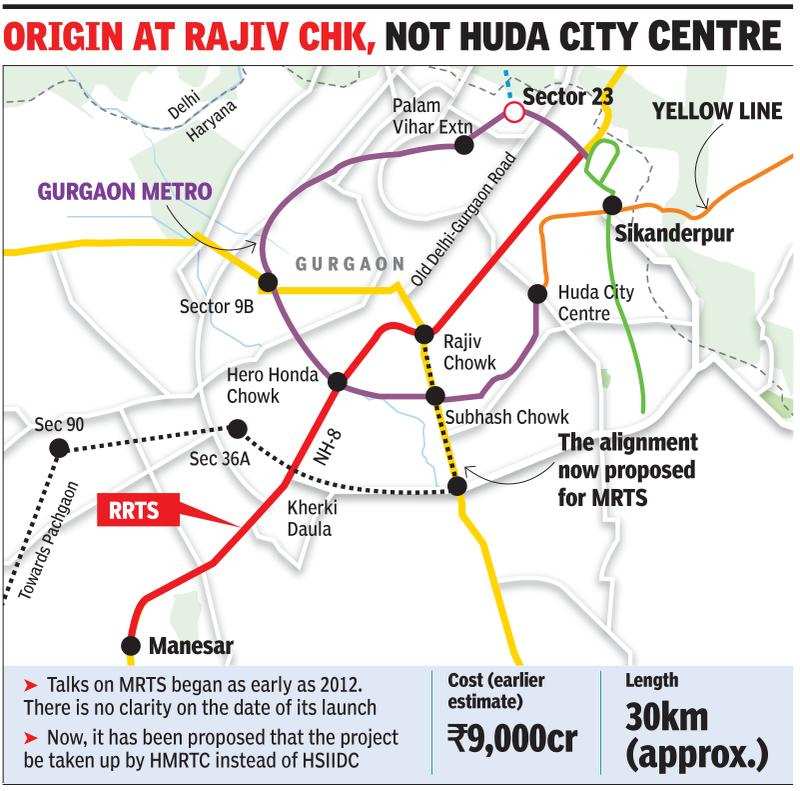
GURUGRAM (Metro Rail News): In the light of the Regional Rapid Transit System (RRTS) project, which will cross the city and go through Manesar, Rewari, Bawal and Dharuhera to Alwar, the route alignment for the proposed Mass Rapid Transport System (MRTS) project is likely to be changed. MRTS was initially supposed to go from Huda City Centre till Pachgaon Chowk in Manesar in the first phase, which was to be extended to Bawal in the second phase.

70199636

It is now expected to begin at Rajiv Chowk and go towards the Southern Peripheral Road (SPR) through Vatika Chowk and finally reach Pachgaon in Manesar. The matter was discussed at a recent GMDA meeting where RITES, the government-appointed agency for metro projects, suggested that the proposed MRTS project needed reconsideration in the view of the alignment of Gurugram metro as well as RRTS. MRTS was proposed as part of the Delhi-Mumbai Industrial Corridor being undertaken by the Haryana State Industrial and Infrastructure Development Corporation (HSIIDC).

The corridor is approximately 30km long and is expected to cost the government around Rs 9,000 crore, as per an earlier estimate. According to the sources it is stated that the metro project planned by HSIIDC should be now re-planned as a city metro up to Pachgaon, given that the RRTS will anyway provide connectivity to the commuters going beyond Manesar. Further, the initial MRTS route including Huda City Centre and Subhash Chowk is already covered under the route for the proposed Gurugram metro.

A GMDA official said that in these conditions, HSIIDC is unlikely to find justification from the point of view of ridership estimates. Consequently, it was proposed that the MRTS project should be instead developed from Sohna bus stand at Rajiv Chowk to Subhash Chowk and onwards to Manesar through the Southern Peripheral Road.

It has been further proposed that the project be taken up by Haryana Metro Rail Transport Corporation (HMRTC) instead of HSIIDC. According to the reports MRTS route was likely to be altered and the metro route which was earlier going up till Bawal was likely to terminate at Pachgaon Chowk instead.

Talks on the MRTS project began as early as 2012. It was earlier slated to be launched in September 2017, but has been delayed several times

SC orders commencement of work for Delhi Metro Phase IV

NEW DELHI (Metro Rail News): The Supreme Court (SC) directed to start the construction work for Delhi Metro’s Phase IV on Friday. It was delayed by over three years due to a tussle between the Centre and the Aam Aadmi Party (AAP) government over clearances and funding after the Delhi government said that it will approve the project.

The AAP government had not approved the project, objecting to the central government’s proposal that it would have to bear the land cost, operational losses, and repayment of the loan in case of default. It said that the land cost of Rs 2,447 crore for the three approved corridors should be equally shared by both the governments. However, it agreed with the Centre’s proposal to share the central tax burden equally.

The Delhi Metro’s Phase IV consists of six corridors with a total length of 103.94km, connecting Aerocity to Tughlakabad, Inderlok to Indraprastha, Lajpat Nagar to Saket G block, Mukundpur to Maujpur, Janakpuri West to R K Ashram and Rithala to Bawana and Narela. It is likely to add around 18.6 lakh riders per day.

The court, in the last hearing, agreed with the amicus curiae and the Environment Pollution Control Authority (EPCA) that the project is critical for the city and issued notice to the Delhi government. In a response to the notice, senior advocate Dhruv Mehta, who appeared for the AAP government, told the bench that the project will be approved so that construction work could commence. The dispute with the Centre could be adjudicated later by the court, according to a newspaper report.

It may be noted that in 2014, the project was submitted by DMRC and work was to begin in 2016 but it could not commence due to the differences.

In March, the Centre had approved three of the six corridors. As the stalemate continued, EPCA moved the Supreme Court to seek its intervention. Senior advocate Aparajita Singh, who is assisting the court as amicus curiae, told a bench of Justices Arun Mishra and Deepak Gupta that the project is essential to deal with the problem of pollution and traffic congestion and any further delay will cost the city enormously.

Delhi Government in its affidavit said that both the Centre and Delhi government are 50:50 stakeholders in the equity in DMRC. The decision (to make Delhi liable to pay the entire land cost) therefore needs to be examined by this court and appropriate directions be passed as putting the entire land cost on After recording the Delhi government’s statement, the bench directed that construction work for three corridors of Phase IV be started forthwith.

However, the tussle between the two governments crops from the National Metro Rail Policy (NMRP) of August 2017 which specifies the role of Centre in public transport infrastructure projects. According to the policy, the Centre would provide financing assistance, up to 20 percent of the cost of state Metro projects. It states that the responsibility of the project’s sustainability vests with the state government. The Delhi government has said that the ownership of Delhi Metro is divided equally between the Union and the state governments, and the Centre must share the land and taxes proportionately.  GNCTD would be too onerous to bear.

IIT Madras Avishkar project reaches finals of Hyperloop Pod Competition

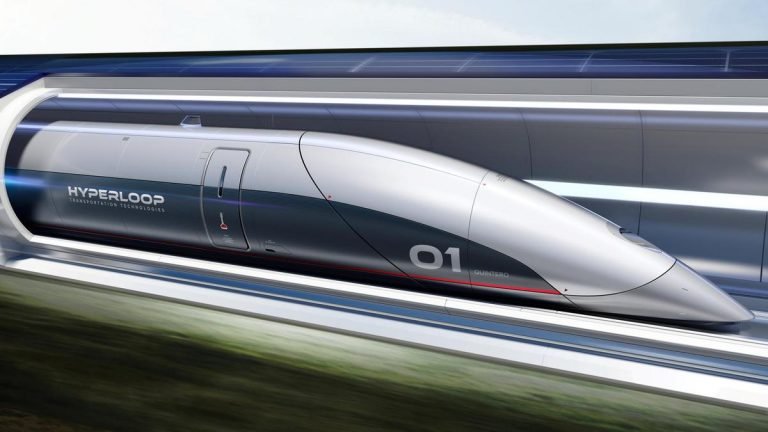
BENGALURU (Metro Rail News): An autonomous Hyperloop has been developed by a team of student engineers from Avishkar Hyperloop and the Centre for Innovation (CFI) at IIT-Madras which can cover 1,200 km in one hour and is as reliable as rail, fast as an aircraft, and economically feasible as road transport.

The team is the only Asian contender amongst the top 21 finalists out of the over 1,600 designs in the fourth edition of SpaceX’s Hyperloop Pod competition. It is a group of about 30 students from inter-disciplinary backgrounds who have been working on creating their own pod since September 2017. These students devote three-four hours every day after college and now their work has come to fruition as they have raised `1 crore from sponsors and finally built a pod and a 40-metre test track. The team’s aim is to introduce the Hyperloop from Chennai to Bengaluru, to cover the 330-km distance in half hour.

At a technical seminar on Hyperloop hosted by SAE India (Society of Automobile Engineers India) in collaboration with Atria Institute of Technology, Perepu Sai Madhav, a vehicle dynamics engineer on the Avishkar Hyperloop project at IIT-Madras, said the vision of the team is to develop technologies for future mode of high-speed transportation with applications in various fields including defense, logistics, and aerospace among others.

Sai Madhav sais that Hyperloop would be paving the path for quicker and easier travel, especially in a country such as ours, with a large population and with busy scheduled lives an environment-friendly mode of transportation. Hyperloop is seen as the future of transportation globally. Madhav believes that though the initial cost of setting up the system would be high, it would prove economical in the long run.

The Hyperloop, if installed, seeks to reduce travel time drastically.
buy levitra professional online https://lasernailtherapy.com/wp-content/themes/twentytwentytwo/inc/patterns/en/levitra-professional.html no prescription
It is supposed to be a land-based transportation service were pods, that house passengers, can levitate and zoom through tunnels by having the air pumped out of them in order to create a near-perfect vacuum for greater speed. 

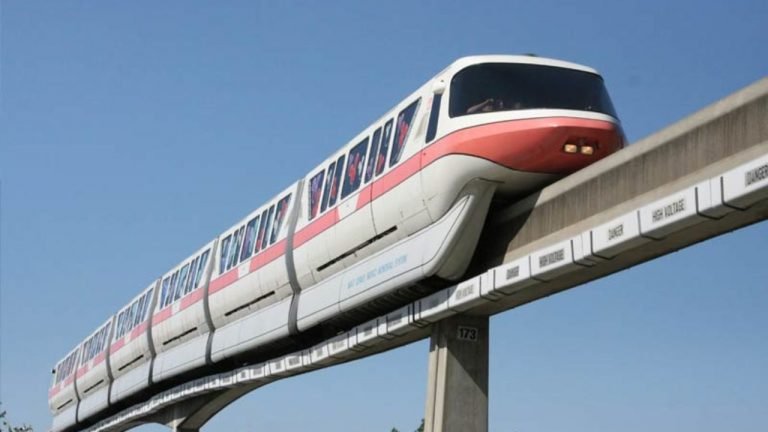
Does Vizag monorail deter the Metro

Visakhapatnam (Metro Rail News): The budget announcement of setting up a monorail in the city has raised questions about the future of the Vizag Metro Rail (VMR) project.

According to public transport experts, monorail projects are better suited to cities like Visakhapatnam because it has much lower traffic density when compared to cities like Hyderabad and Delhi. The estimated cost to build the monorail is around Rs 150 crore per km.

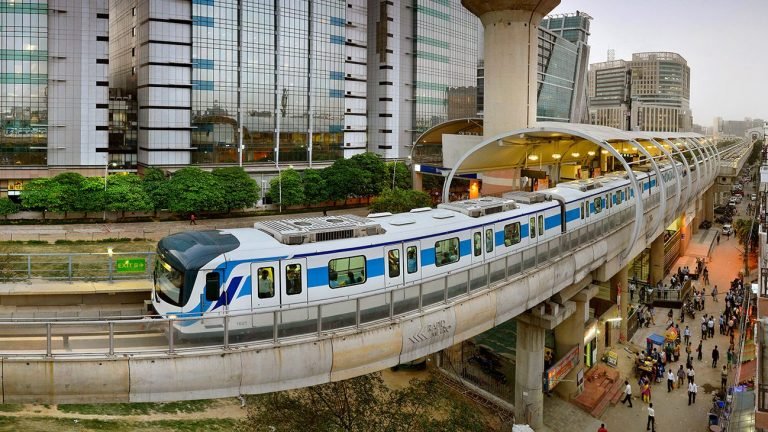
A senior railway official said, “monorails have had success in Gurgaon and Mumbai. If the government is not in a position to make huge investments, the monorail will be a good option.”

However, a reliable source working in the metro rail project in Hyderabad said that according to the Metro Rail Policy, 2017, metro rail systems include monorail.

Monorail has a lower capacity and higher maintenance cost, according to the source. “If there is no revenue from passenger traffic, it might become difficult to handle,” the source added.

Managing director of Amaravati Metro Rail Corporation NP Ramakrishna Reddy said that I am not able to comment on the monorail project as I am yet to receive any official instruction.

Moreover, the project is completely different from the previously proposed metro rail project.” According to technical staffers of AMRC, the need for land in monorail is less compared to the metro rail project. As per reports from studies on conducted in 2015, NAD Junction, Maddilapalem and Hanumanthawaka Junction have more than 10,000 PPHPD (passengers per hour per direction).

A city should necessarily have at least 15,000 PPHPD for a metro rail project. However, for a monorail project the PPHPD requirement in 5,000.
buy silvitra online https://myhst.com/wp-content/themes/twentytwentytwo/inc/patterns/en/silvitra.html no prescription

Govt. has no plans to privatize Indian Railways

DELHI (Metro Rail News): On Friday The Union Railways Minister Piyush Goyal in the Lok Sabha said that the government is allowing private investment in setting up high-speed, semi-high speed lines but the government has no plans to privatize the Indian Railways.

Goyal added by saying that the government wants to convert the Modern Coach Factory (MCF) in Raebareli into the world’s largest in the next few years. During a discussion on the demand for grants for the Railways, Goyal said: “No one can privatize the railways.”

The ambitious bullet train project between Mumbai and Ahmedabad, at an investment of Rs 1.1 trillion, is still stuck at the land acquisition stage. The minister said, “There are some issues in the Palghar area relating to land acquisition. We are trying to find a solution to this in a sensitive way.”

For the bullet train project, the final loan agreement of 100 billion yen is yet to be signed with Japanese government agency Japan International Cooperation Agency. As part of its effort to increase speed, the Railways has already launched Mission Raftaar, a multi-pronged strategy for running high-speed trains (with a speed of over 300 kmph/bullet trains), semi-high speed trains (between 160 to 200 kmph), increasing the speed of existing trains and introducing train sets similar to Train-18.

Finance Minister Nirmala Sitharaman in the Union Budget 2019-20 said that national transporter would be encouraged to have private investment in several key areas including delivery of passenger and freight services, tracks and rolling stock manufacturing.

On the MCF project, Goyal said the plan was to increase its production to 5,000 units in the next few years. The factory was planned at a cost of Rs 3,192 crore, with an annual production capacity of 1,000 coaches. In 2017-18, it manufactured 711 coaches, which increased to 1,425 coaches in 2018-19.

The national transporter will go for 100 percent electrification of its broad gauge tracks soon. “This will help the country in bringing down crude oil import bill,” he said.

Indian Railways finalizes details of India’s first ‘private’ train!

New Delhi (Metro Rail News): Top officials of the Railway Board recently met investors, developers as well as other stakeholders in order to finalize the modalities of Indian Railways’ 100-day agenda of offering two trains to private players.

According to sources, among those present in the meeting were rolling stock manufacturers, officials of cruise lines, airlines, travel agents, besides officials of Niti Aayog, Department of Logistics and Department of Economic Affairs.

They said, while the New Delhi-Lucknow Tejas Express has already been identified to be given to private players, the national transporter is yet to finalize the second train, they said.

In its 100-day roadmap, Indian Railways has indicated seeking public-private partnership (PPP) models to unleash faster development as well as delivery of passenger freight services in a bid to boost connectivity.

The national transporter is now actively looking to find private operators for this initiative. The two train rakes will be handed over to IRCTC, which in turn will invite private players to operate it through an open bidding process.

The Railway Board’s proposal in its 100-day roadmap said that Indian Railways would offer two trains to private players who would be willing to take part in the bidding process for rights to run private passenger day/overnight train sets connecting important cities in the country.

Indian Railways has said that in the next 100 days, it would float a Request for Proposal (RFP) and a Request for Quote (RFQ). However, the proposal to privatize trains has been severely criticized by the railway unions, who have also threatened large-scale protests over the proposal.

Meanwhile, recently it was reported that Railway Minister Piyush Goyal told Lok Sabha that there is no proposal to privatize Indian Railways.

 In a written reply, the minister stated that no specific passenger train has been identified to be run by private operators. While Minister of State for Railways Suresh Angadi recently said that further studies on the proposal are on and in the coming days, trials will be conducted.

Bengaluru may get a circular metro line

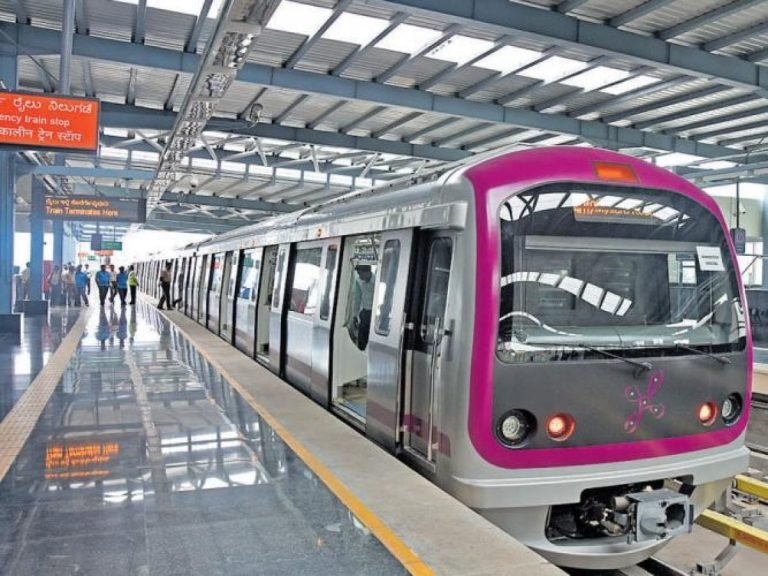
Bengaluru (Metro Rail News): Bengaluru may get an inner ring metro in the coming years as officials are set to study the best way to beat the rising congestion in the core area.

Sources in the government said the Bangalore Metro Rail Corporation Limited (BMRCL) has agreed to consider a proposal by the Indian Institute of Science (IISc) and has told the experts from IISc to conduct a simulation study after a presentation to this effect was made at a meeting on Monday.

The sources said the planned underground metro line, about 35 km in length, connects Sandal Soap Factory and Ulsoor via CV Raman Road-Jayamahal Road before reaching Wilson Garden via Domlur. The other half will connect Srinagar and turn right on Chord Road to complete the circle. “The route will undergo several changes before a proposal is made”.

BMRCL Managing Director Ajay Seth, however, said the metro was not the only option for the core area, and they will get clarity on the subject after assessing the traffic study and feasibility of metro.

He said, “Potential traffic study and construction feasibility for the inner metro ring is yet to be studied. The elevated inner ring seems difficult. We are exploring other options also for more mass transport options within the city’s core (within Outer Ring Road)”.

Seth said the BMRCL’s focus at this juncture was on completion of Phase 2 and ORR-Airport line. The Comprehensive Mobility Plan being prepared by the BMRCL and DULT should cover potential mass transport corridors, including the bus rapid transport system in the areas not connected by metro.

Experts at IISc said the traffic simulation study would focus on the potential ridership on the proposed route.

Prof Ashish Verma of Transport Engineering Department said “Over time, road infrastructure will be saturated, and mass rapid transport is the only option. Metro networks in global cities will usually have both radial and circular routes, which cover the center of the city. A circular metro, especially an underground line, will do a great job at reducing congestion in the coming years”.
buy red viagra online no prescription