Home Blog Page 635

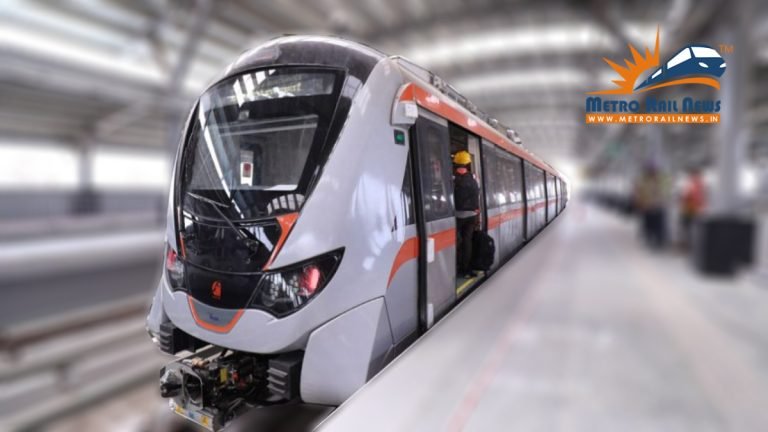
Railways mulling another Vande Bharat Express between Delhi-Katra

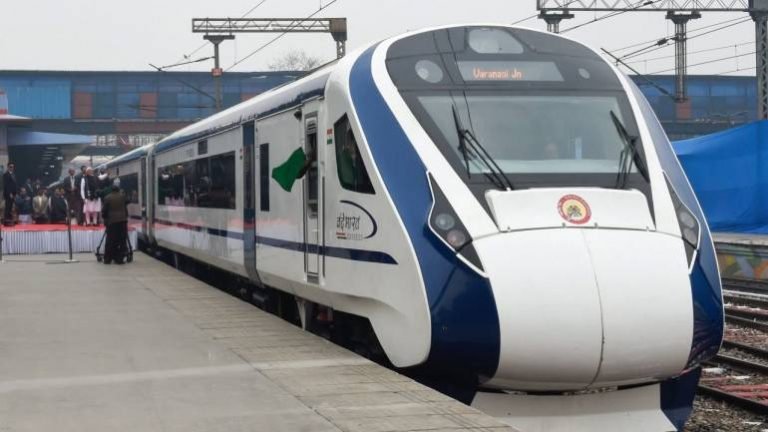
NEW DELHI (Metro Rail News): Riding high on the success of the Vande Bharat Express currently plying on the New Delhi-Varanasi route, the Indian Railways is planning another set of trains between the national capital and Katra for pilgrims traveling to the Vaishno Devi shrine.

According to senior railway ministry officials related to the development, the Indian Railways is planning to run another set of Vande Bharat Express, which was earlier known as Train 18 between New Delhi and Katra in Jammu and Kashmir.

An official said that the train, which is capable of attaining a speed of 200 km, will cut down the traveling time between the two stations by over five hours. He said currently a superfast train takes about 12 hours to reach the destination.

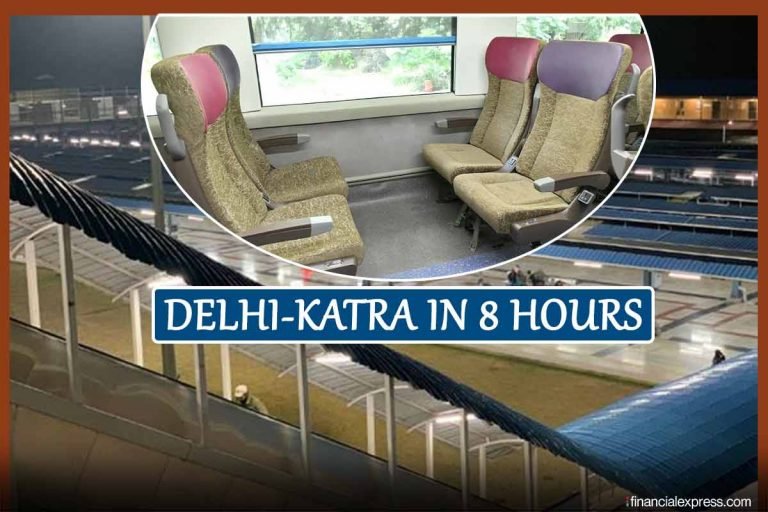
The high-speed Vande Bharat Express will cover the distance within eight hours. The official pointed out that the route has been identified by the Railway Board in order to capitalize on the high traffic volume, which sees a lot of footfall due to Vaishno Devi temple shrine.

The official said that the new set of Train 18 is likely to commence operations between Delhi and Katra from next month onwards. He said that currently it has been proposed to run the train for three days a week — Monday, Thursday and Saturday.

The official said the new Vande Bharat Express will leave from Delhi at 6:00 a.m. and reach Katra at 2:00 p.m. And on its return journey on the same day, the train will depart from Katra at 3:00 p.m. and reach the national capital at 11 p.m.

He said it has been decided to run the train at a maximum speed of 130 km on the Delhi-Katra route will have three stops en route. The train will stop at Ambala, Ludhiana, and Jammu Tawi before reaching its destination of Katra.

Prime Minister Narendra Modi had flagged off the services of first Vande Bharat Express on February 15 this year. The official said that following the recommendation from the railway officials the Integral Coach Factory, which manufactured the Train 18, has also made changes in the existing design of the train.

“To avoid damage due to cattle run-over, the train has been equipped with a sturdy aluminum-clad nose cover and to guard the window shields against stone-pelting, a special anti-spall film on windows has been provided,” he said.

The official said the ICF has also provided more space to store meals for passengers. Besides the changes in the exterior and the interior designs, the ICF has also added a slew of modern features like adjustable seats, improved washbasins, automatic doors, WiFi and infotainment system among others.
TDP govt. did not submit revised proposals on metro rail projects

VISAKHAPATNAM (Metro Rail News): The Central government on Wednesday stated that despite requests, the erstwhile TDP government in the State did not submit the revised proposals for the metro rail projects in Visakhapatnam and Vijayawada.

Responding to an unstarred question by YSRCP member V. Vijaya Sai Reddy in the Rajya Sabha, Union Minister of State for Housing and Urban Affairs Hardeep Singh Puri said the proposals of rail-based Mass Rapid Transit System for Visakhapatnam and Vijayawada submitted by the State government in December 2015 and June 2015 respectively had been returned in September 2017 with a request to review and revise them in line with the Metro Rail Policy of 2017. Mr. Puri said: “The Government of Andhra Pradesh has not submitted the revised proposals.”

The Minister also informed that the Centre had approved the metro rail projects for Bhopal (27.87 km) and Indore (31.55 km) at an estimated cost of ₹6,941.40 crore and ₹7,500 crore respectively in November 2018.

The share of the Government of India in the form of equity, subordinated debt and pass through assistance was ₹4,657.78 crore for Bhopal and ₹4,476.
buy viagra professional online no prescription
36 crore for Indore, he said.

Replying to question raised by Mr. Reddy on the condition of the survivors of GAIL pipeline blast at Nagaram in Konaseema region in 2014, Union Minister for Petroleum Dharmendra Pradhan said GAIL had provided the best treatment for them.

The Minister said that out of 17 survivors, 14 had been discharged after treatment at Apollo, Kakinada. He said GAIL was taking care of the medical requirement of the other survivors as and when required. He also gave a list of the CSR and other activities being taken up by GAIL in the area.

Delhi govt. names AAP leaders for DMRC board

NEW DELHI (Metro Rail News): Sources said, the Delhi government has nominated four representatives, including AAP leaders Raghav Chadha and Atishi, to be appointed to the Delhi Metro Rail Corporation’s board of directors.

This is the first time that non-bureaucrats have been nominated by the government.

A top official said Delhi Dialogue and Development Commission vice-chairman Jasmine Shah and AAP MP N.D. Gupta’s son Naveen Gupta are the two others nominated by Transport Minister Kailash Gahlot as the government’s representatives.
buy cialis daily online https://www.adentalcare.com/wp-content/themes/medicare/editor-buttons/images/en/cialis-daily.html no prescription

The board comprises 17 members, including five each from the Centre and the Delhi government. A source said, currently DMRC MD Mangu Singh, and former finance secretary Ramesh Chandra are serving as Delhi government nominees.

Mr. Gahlot did not respond to messages and phone calls. In his July 13 communication to the DMRC, the Minister did not specify why it nominated four persons when only three posts of directors are vacant. “It is not clear whether they wish to remove Mr. Singh or Mr. Chandra,” the source said.

The move comes at a time when the AAP government’s scheme for providing a free ride to women in public buses and metro trains is taking shape.

The issue of a free ride to women in metro trains is yet to be resolved as the DMRC has sought eight months to implement it while the AAP government wants it to be implemented before the Assembly polls scheduled early next year.

Surat Metro tenders to be issued soon

SURAT (Metro Rail news): Surat Metro Rail Corporation (SMRC) held its first meeting under the newly-appointed managing director (MD) M Thennarasan in Surat on Tuesday.

The meeting is a weekly process designed to solve issues so that SMRC can begin work to lay first 10 km of rail lines from Dream City to Kadarshala Naval. After the meeting, Thennarasan said, “We are in process of finalizing the alignment near Sarsana convention center. Once that is through, tenders will be issued.”

In the initial phase, work on 10 metro rail stations on elevated rail costing roughly Rs 250 crore per station will be taken up.

Surat metro rail project is a Rs 12,020 crore project, under which, 40km metro rail infrastructure in two corridors will be set up in three year time.

Under the revised Detailed Project Report (DPR), development of four of the 38 rail stations on 40.35km-long two corridors will be done by the local body on a PPP basis.

The cost of development of a station is estimated at Rs 111 crore. The four elevated stations that SMC will develop include Rupali Canal and Althan Tenement stations on corridor no-1 and Aquarium and Athwa Chowpatty stations in corridor no-2. “By the sale of additional FSI, SMC to develop around four stations.

We will look at an additional income of Rs 1,343 crore. SMC will get private partners for the development of all the four stations,” said an SMC official.

2,465 travel by every Metro train in Kolkata against 1,110 in Delhi

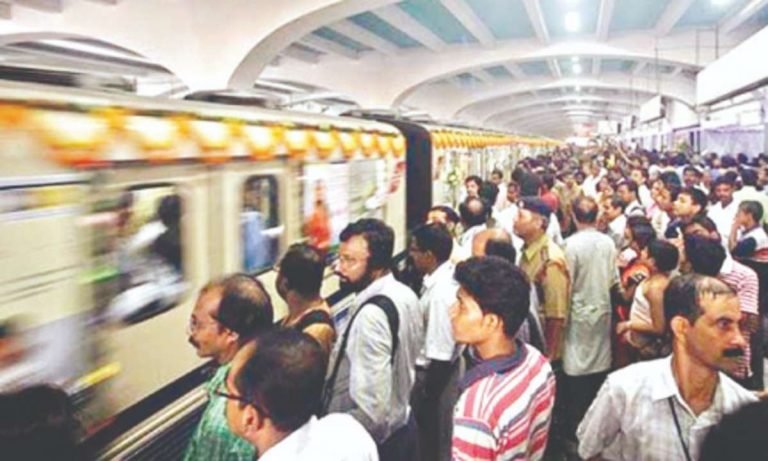
KOLKATA (Metro Rail News): The inadequate expansion of the Metro network in Kolkata over the last 35 years and its inability to keep up with the city’s burgeoning population have emerged as the key reasons for the daily struggle to get onto overcrowded Metro rakes, something that claimed a commuter’s life last Saturday.

Kolkata Metro started its journey in 1984 with a service that ran for 3.4km; three-and-a-half decades later, it continues to run in a straight line, for 27.2km.

The population, however, has grown by almost half-a-crore. The 1981 Census showed 91.9 lakh people stayed in the urban conglomerate comprising Kolkata and its neighboring areas, the latest pegged the urban conglomerate’s population at 1.4 crores.

The numbers seem even more inadequate when the load that an average Kolkata Metro rake bears is compared with the average passenger load of a Delhi Metro rake. Each service in Delhi carries an average of 1,110 people, whereas in Kolkata each service carries 2,465 people.

“All these numbers go to explain why Sajal Kanjilal — and lakhs of other commuters — continue to force their way on to overcrowded trains, ” a senior Metro Railway official said on Tuesday. “Many commuters may not be seeking to save time. They just feel that the next service maybe even more crowded,” he added.

What Delhi Metro has added since its first run in 2002 reinforces what Kolkata’s Metro has been denied. Delhi’s Red Line started with an 8.3-km run, in 2002, between Shahdara and Tis Hazari. Seventeen years later, it has eight color-coded lines running across 343 km. The tracks carry 2,700 services daily that, in turn, carry about 30 lakh commuters.

Kolkata’s single line laid out over 27.2 km, runs 284 services daily, which carry 7 lakh passengers daily. “So each Delhi Metro service carries an average of 1,111 people whereas, in Kolkata, each service carries 2,465 people,” another senior Metro official said, explaining the difference between Delhi and Kolkata and the latter’s crowd behavior. Officials also add that commuters should not expect things to change in a hurry on the north-south corridor.

Officials also say our Metro will never be able to run trains at below-four minute intervals because of technical reasons. And, even if it is feasible to run 350-400 services a day, at least 35 rakes in working order will be needed for that.

The fate of Vijayawada, Visakhapatnam metros uncertain

VIJAYAWADA (Metro Rail News): Despite provisional allocations in the recent budget, the fate of Vijayawada and Visakhapatnam metro rail projects still remains uncertain as the YSR Congress regime is yet to announce its policy concerning them.

While both the projects are put on the back-burner for the moment, a decision regarding their implementation is expected soon.

In the budget, the State government proposed an allocation of Rs 10 crore towards urban development assistance to both the projects, while another Rs 3.6 crore was earmarked for Amaravati metro rail.“A provisional allocation has been made, but we haven’t received any information on how the State government wants to proceed with the execution. As of now, things have been put on hold as a policy decision is awaited,” a senior official source explained.

Even a meeting scheduled with Systra Group, which is preparing detailed project reports of the proposed rapid transit systems, stands postponed, the official added.

With the Korea Export-Import Bank (KEXIM) backing off from extending financial assistance for the Visakhapatnam project, the officials are left in the lurch, once again, to look for a funding agency. While they said they would approach other international borrowers, Finance Minister Buggana Rajendranath’s proposition, in his budget speech, of going for a monorail in Visakhapatnam has further cast clouds on the proposed metro.
buy cialis daily online https://gilbertroaddental.com/wp-content/themes/twentyseventeen/inc/en/cialis-daily.html no prescription

Sources in the MAUD department said the new government might go ahead with the projects only if Central funds could be tapped for their implementation. “The question is: are these projects, which in the present form are estimated to cost over Rs 15,000 crore each, really needed when the State is undergoing a financial crisis? The decision will be taken at a review meeting to be held soon,” another official explained.

For the record, even though the detailed project reports of both the metros were submitted long ago, the Centre, after introducing a revised metro rail policy in 2017, directed Andhra Pradesh to resubmit them.
However, the previous State government, reluctant to do so, had explored various PPP models.

With the Centre repeatedly mentioning that the State did not submit the DPRs, the Amaravati Metro Rail Corporation had planned to send fresh proposals.

Rachna, Prerna head back home after the boring tunnel under Hooghly

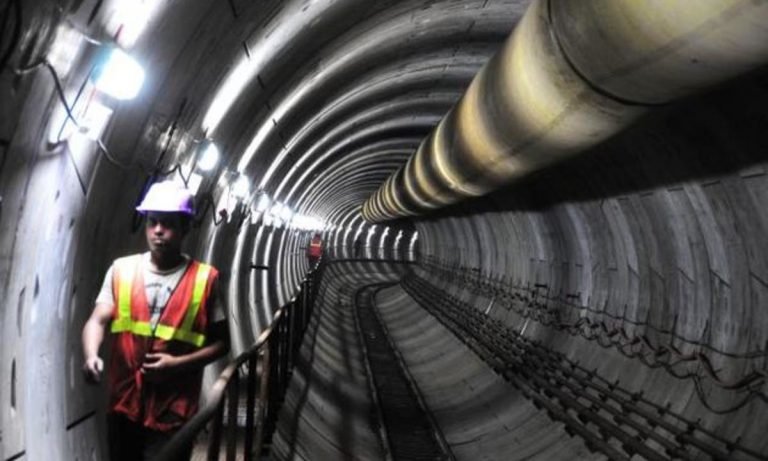
KOLKATA (Metro Rail News): After eight years, it’s time for Prerna and Rachna to bid farewell to Kolkata. The two German Herrenknecht-made tunnel boring machines—TBM S640, christened Prerna and TBM S639 named Rachna—that dug the East-West Metro tunnels under the Hooghly, joining Howrah to Kolkata, was given a formal send-off at Curzon Park by those involved in the first phase of the Metro tunneling.

“I don’t think anyone has ever heard of TBMs getting a farewell. But Rachna and Prerna are special to us,” said Satya Narayan Kanwar, project manager, Afcons-Transtonnelstroy, executing agency for East-West Metro’s underground tunneling from Howrah Maidan to Esplanade.

Afcons engaged the two TBMs in October 2011 to burrow under the Hooghly riverbed, giving Kolkata its very own Channel Tunnel. The journey, however, stopped before it began. Stuck in a route realignment impasse, the mega borers lay idle at Howrah Maidan for five years, until the nod was given to start mining from March 2016.

In May 2018, Prerna and Rachna covered 3.8km to reach their destination —Esplanade—negotiating not just the riverbed, but also crumbling buildings on Brabourne Road and Dalhousie and heritage structures, like Writers’ and Currency Building. But even after the work was done, the two TBMs could not be taken away immediately and were parked below Curzon Park.

The shaft to extract the borers couldn’t be built as Army, the custodian of Maidan, delayed handing over land to the implementing agency, Kolkata Metro Rail Corporation (KMRC), which, in turn, failed to give the site to ITD ITD-Cementation, contracted to build the Esplanade-Sealdah part of the tunnel. In the absence of the retrieval shaft, only back up parts and gantries of the TBMs —each around 90m long— were disassembled and wheeled through the 3.8km tunnels and extracted bit-by-bit from the Howrah Maidan station. The main parts, each 9m long and weighing 320 tonnes, remained buried under Curzon Park. Afcons moved the HC, demanding compensation for the machines lying idle.

KMRC told the court the shaft would be ready by July 31. But it was built before that and Afcons started pulling out the machine parts with a 160-tonne capacity crane. The heaviest component (92 tonnes) was taken out first. The last part, the 94-tonne front shield of Rachna, was fished out on Sunday. Afcons engineers, sporting saffron safety jackets and yellow helmets, lined up around Rachna’s front shield and raised a victory salute. “We share a special bond with Prerna and Rachna. We are happy they could be retrieved before the deadline,” said KMRC MD Manas Sarkar.

Metro trains can operate at two-min intervals

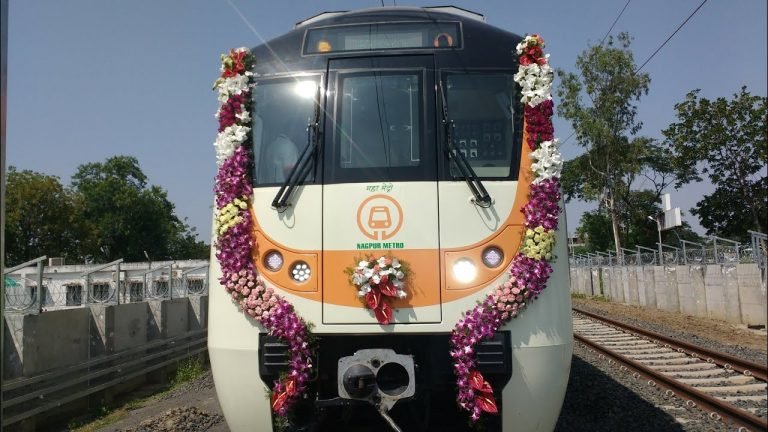
NAGPUR (Metro Rail News): MahaMetro is installing the latest technology so that trains can depart from every station at the two-minute interval. This will, however, happen years later, when the high ridership demands such a high frequency of trains.

MahaMetro managing director Brijesh Dixit while addressing a press conference on Monday said they were using communication-based train control (CBTC), automatic train operation (ATO), and automatic train protection (ATP) technologies, which were the latest in the world.

Dixit said, normally our trains will operate on a driverless enabled system. The drivers will only be there for emergency purposes. If the driver wants, he can take control of his hands. In that case, the ATP system will ensure that he operates the train properly.

The MD further said that CBTC, ATO and ATP systems would become fully operational by August-end. “We will get the approval of Commissioner of Metro Rail Safety (CMRS) for this purpose,” he added.

Explaining the difference between Indian Railways and Nagpur Metro, he said the former used a fixed block system while the latter was using moving block system. “If you use a fixed block system, the interval between two trains is minimum 10 to 15 minutes.

In the moving block system, the interval can be as less as two minutes,” he added. In CBTC, the train communicates with equipment installed along the track and the main control room. “There are three components — train antennae, wayside antennae, and the main control room.

A software operates the trains due to which it moves at a predetermined speed and halts at the designated spot on the station platforms,” said Dixit.

CBTC is used only in a few Metros, including Hyderabad and Kochi. Delhi Metro has now started using it gradually on different lines. Nagpur Metro had decided to use CBTC right from inception. Currently, however, the trial of the technology is going on and trains are being operated manually. There is no chance of people getting stuck in the doors of Nagpur Metro. “Even if there is a 5-centimeter gap between the two doors they will open and close again. This will happen three times and if the obstruction does not get removed, the doors will not close again and the train will not move,” said Dixit.
buy lipitor online https://myhst.com/wp-content/themes/twentytwentytwo/inc/patterns/en/lipitor.html no prescription

Director (rolling stock) Sunil Mathur gave a presentation on CBTC system along with engineers from Siemens, which has supplied the technology.

DMRC begins trial run on Dwarka-Najafgarh Metro corridor

NEW DELHI (Metro Rail News): On Monday, the Delhi Metro Rail Corporation (DMRC) began trial runs for the 4.29-km Dwarka-Najafgarh Metro corridor. Senior Metro officials said that by September the corridor, known as the Grey Line, is likely to be thrown open to the public.

During the trial run, the interaction of the Metro train with the civil structure will be checked to ensure that there is no physical blockage during the movement of the train on the tracks, said by DMRC in a statement.

The statement added the signaling trials are expected to begin in the days to come.

The Grey Line will comprise three stations — Dwarka, Nangli and Najafgarh. While Dwarka and Nangli stations are elevated stations, the Najafgarh station is underground. The Delhi Metro will also add a 1.
buy cipro online https://gilbertroaddental.com/wp-content/themes/twentyseventeen/inc/en/cipro.html no prescription
18-km extension to this section, taking the line till the Dhansa Bus Stand. The work for this extension is underway and is likely to be completed by December next year.

This will be the first time the Delhi Metro enters rural sections of Najafgarh. The Grey Line will be connected with the Blue Line, which connects Dwarka Sector-21 to Noida Electronic City and Ghaziabad’s Vaishali in Uttar Pradesh.

The existing Dwarka station will be connected via an 80-meter passage connecting the old station on the Blue Line to the new corridor.

Additional parking facilities have also been provided outside the Dwarka station, adhering to the multi-modal integration (MMI) model, to accommodate the increased traffic in the area.

Official DMRC estimates show that nearly two lakh commuters are likely to benefit from the new section.

A senior DMRC official said, Earlier, commuters from Najafgarh had to come till Dwarka to take the Metro. Now, they can access the line from Najafgarh and reach Dwarka station. This area is not very well connected by public transport, so the Metro will ease commuting woes to a great extent.

AIRF opposes Railways to purchase trains

DELHI (Metro Rail News): On Sunday All India Railwaymen Federation (AIRF) working president N. Kannaiah said that buying trains is not a viable proposition as it would not only burden the organisation financially but cost thousands of employees of their jobs in the long run.

The making of Train18 (Vande Bharat Express), and Tejas Express rakes are examples of how our production units can deliver world-class products. The production capacity of ICF increased from 1,437 coaches per year in 2009-10 to 3,200 coaches in 2018-19. But the manpower has been drastically cut.  

Reacting to the idea of the Railways to buy train sets, EMU and MEMU from private players, he said production units such as the Integral Coach Factory, Chennai, and Modern Coach Factory, Rae Bareli, had state-of-the-art technology and infrastructure.

Buying a readymade train from private firms is not new to the Railways. The trains run by Chennai Metro Rail Limited (CMRL) were procured as a complete set from Alstom that has a facility in Sri City.

“But, procurement from trade, whether imported or indigenous, has always been at exorbitant prices. In fact, in all Metro tenders, the production units of Indian Railways were kept out by cleverly making the international experience one of the criteria for consideration. Ironically, efforts for making Metro coaches under the Make in India initiative are being scuttled by specifying international experience as an eligibility norm. Now, with the procurement of trainsets from the trade it looks like the end of the road for Railways’ in-house production units”, the official added.

The cost of Train18 rake in the global market is ₹245 crore whereas ICF engineers rolled out the train at a cost of ₹97 crore,” he said.

Alleging that the Chairman, Railway Board, was going back on his assurance that there would be no more privatisation when a delegation of ARIF leaders met him in New Delhi recently, he said corporatisation was the first step towards privatisation.

“We also make coaches for the Indian Army and several neighbouring countries. The manpower, infrastructure and technology of ICF is among the best in the world and the current target is to roll out 4,000 new coaches,” a senior ICF official said. A majority of union leaders, officials and staff was opposed to the privatisation policy of the railways.

“They (the railway management) have now decided to hand over two trains in each zone to private parties. I am told that the Delhi-Lucknow-Delhi and Chennai-Madurai-Chennai Tejas Express trains would be given away on lease for ₹60 crore each.

“The next step would be to give away the Vande Bharat Express...how can they give away profit-making trains,” he wondered.

Mr. Kannaiah, who is also the general secretary of Southern Railway Mazdoor Union, said the spirit of ‘Make in India’ initiative was to protect and promote local talent in national growth and not bring in multinational companies to manufacture and deliver their products here.

He said, “The AIRF which has about 10 lakh members in 16 zonal railways and 7 production units will go all out to prevent further privatisation of the Indian Railways. This is a income generating organisation.”