Home Blog Page 634

29 stations dropped in revised DPR for suburban rail

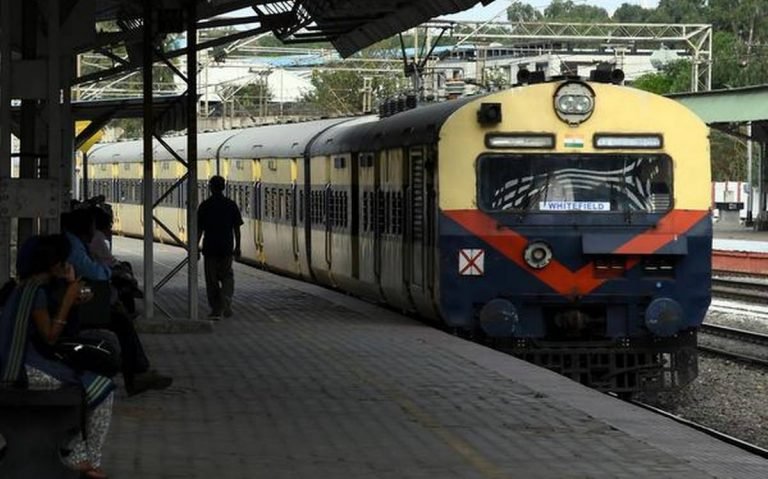
KARNATAKA (Metro Rail News): As many as 29 stations have been dropped in the revised detailed project report (DPR) on the suburban rail network, which was submitted by the Rail India Technical and Economic Service (RITES) to the Railways on Monday.

The number of stations has come down from 82 to 53.

In May, the central government had directed the Rail Infrastructure Development Company (Karnataka) Limited to revise the DPR. The company was asked to consider the option of reducing the number of stations, avoid overlap of suburban rail with Namma Metro alignments in the city, and explore the possibility of extending the network to Ramanagara, Tumakuru, Doddaballapura, and other nearby cities.

Sources in the Railways said that the revised DPR has also reduced certain sections proposed in the previous DPR. It reduced the cost of the project from the previous estimate of ₹19,000 crore to ₹16,000 crore.

A source in the Railways said, “The RITES has submitted a revised report to the SWR. The same will be submitted to the Rail Infrastructure Development Company (Karnataka) Limited, which will send the report to the Railway Board for clearance. There are certain revisions in the new report, like reducing the number of stations, minimizing the land acquisition, and bringing down the project cost. The Railway Board will take a final decision on the issue.”

As per the suburban rail network project, there is a proposal to build four corridors: Kengeri-Whitefield, KSR Bengaluru City-Rajanukunte, Nelamangala-Baiyappanahalli, and Heelalige-Devenahalli.

The Bangalore Metro Rail Corporation Limited (BMRCL) had raised objections to certain sections of the network saying that they run parallel to metro lines. Sources said several stations have been dropped on the Nelamangala-Baiyappanahalli alignment.

In its letter, the central government had also asked the agency to consider implementing individual point-to-point projects through a public-private partnership.
buy viagra super active online no prescription
Both the State government and the Union Ministry of Railways have been asked to facilitate PPP model by offering surplus land parcels, viability gap fund (VGF) and adopting revenue share models.

Maharashtra cabinet approves metro 10, 11, 12 corridors

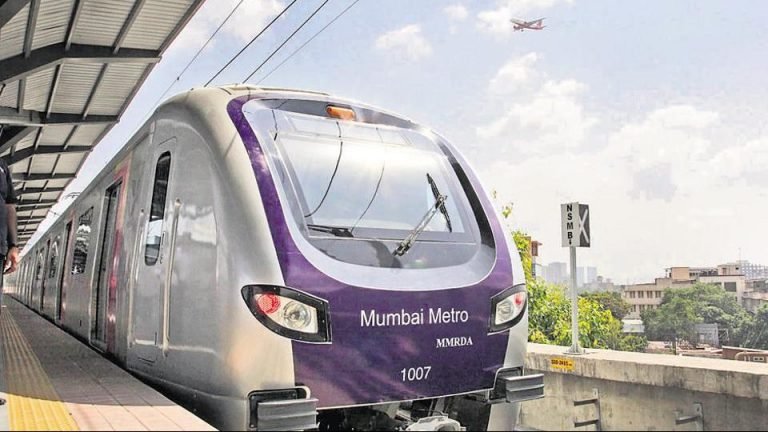
MUMBAI (Metro Rail News): The Maharashtra cabinet, today approves three metro corridor, Two of which will serve Mumbai Metropolitan Region and one will cater to Mumbaikars travelling towards General post office in South Mumbai from Wadala. This approval brings 50 km long Metro network at an estimated cost of Rs. 24,000 crore.

Metro 10: Gaimukh to Shivaji Chowk (Mira Road)

Length: 11 km

Estimated cost: Rs. 5000 crore

Stations on the route: – Gaimukh, Gaimukh Reti Bundar, Versova Chaar Phata, Kashi Mira, Shivaji Chowk.

Metro-11: Wadala to GPO corridor

Length:14-km

Estimated cost: Rs 8,000 crore

Stations on the route: – Wadala RTO, Ganesh Nagar, BPT Hospital (Elevated), Sewri Metro, Hay Bundar, Coal Bundar, Darukhana, Wadi Bundar, Clock Tower, Carnac Bundar, CSMT Metro (All Underground).

Metro 12: Kalyan to Taloja

Length: 25-km

Estimated cost: Rs 11,000 crore

Stations on the route:– APMC Kalyan, Ganesh Nagar, Pisawali Gaon, Golvali, Dombivli MIDC, Sa Gaon, Sonar Pada, Manpada, Hadutane, Kole Gaon, Nilje Gaon, Wadavali, Bale, Vaklan, Turbhe, Pisawe Depot, Pisawe, Taloja

Benefits of the Metro System:

· Reduces journey time by 50-75% compared to the road.

· Shifting of road user to the metro by 25% to 30%.

· Density on Suburban Trains will reduce from 12 persons to seven persons.

· Will help reduce traffic on the road by 30% to 35%.

· Reduces accidents on Suburban System due to a reduction in overcrowding.

Kochi Metro completes trial run to crucial cantilever bridge

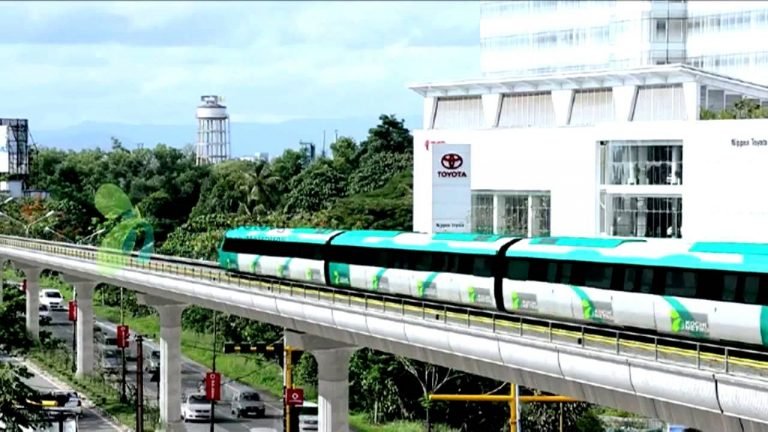
KOCHI (Metro Rail News): The Kochi Metro successfully completed the trial run along the stretch from Maharaja’s College station till the cantilever bridge near south rail overbridge in Ernakulam on Sunday.

The metro started from the Maharaja’s College around 6.30am on Sunday and traveled at a speed of 5km per hour. It stopped midway on the cantilever bridge, which is after the south station. The metro would be stationed on the bridge for 24 hours to test its strength.

The trial run would continue on Monday morning when the metro would travel back-and-forth along the stretch. Soon, the trial run till Thykoodam would also be held.

The balanced cantilever bridge over the rail lines of the Ernakulam South Railway Station and the metro track above the Vytilla overbridge are the most crucial parts of the metro construction. The metro that first started services from Aluva till Palarivattom, and that was then extended till Maharaja’s College did not have to face such critical challenges of civil construction prior to this.

The checks on these stretches are going on. Though balanced cantilever bridges are employed for metros in other cities, they are all along a straight stretch.

However, the cantilever bridge is along a semi-circle curve in Kochi. The metro, loaded with sand-filled gunny bags, from the Muttom station had reached Maharaja’s College for the trial run.

Around 900 people can travel on a metro train and the gunny bags were filled accordingly. The track was prepared for the trial run by removing the barricades and gunny bags on it in the wee hours of Sunday. Electricity was passed on through the third rail.

The metro reached the south station at a speed of 5km per hour. The focus was given to the checks on the cantilever bridge. The bridge’s strength would be checked during specific durations. If no faults were found, further trial 7/22/2019 Kochi Metro completes trial run to crucial cantilever bridge runs would be held on Monday.

This would continue for three days. Only after this, the trial run to Thykoodam would be held. Senior officials of Kochi Metro Rail Ltd (KMRL) and Delhi Metro Rail Corporation (DMRC) were also on board the metro during the trial run.


Centre Proposes Light Urban Rail ‘Metrolite’ for Smaller Cities

NEW DELHI (Metro Rail News): The Centre has proposed light urban rail transit system – ‘Metrolite’ – in small cities and towns having a lower projection of ridership, with each train having three coaches and a restricted speed of 25 kmph.

The Union Housing and Urban Affairs Ministry has issued standard specifications of the ‘Metrolite’ system which will be developed on the surface and elevated stretches.

According to the ministry, the ‘Metrolite’, which can be developed at a lower cost in comparison with an existing metro system, will also act as a feeder system to high capacity Metro.

The three-coach train will have a capacity of carrying 300 passengers. Sources said the government would provide financial assistance to states to implement the light urban rail transit system.

The ‘Metrolite’ system will have a dedicated path separating the road traffic with it. For segregation with road traffic, fencing can be provided on either side of the network.

The ministry stated that the metro rail system being developed at present is of high capacity which is required for bigger cities with very high ridership.

Seeing the success of the existing metro system, several small cities and towns want rail-based mass rapid transit system, which could be fulfilled by the light urban rail transit system.
buy cialis black online https://healthcoachmichelle.com/wp-content/themes/twentytwentyone/inc/en/cialis-black.html no prescription

In its manifesto, the BJP had promised to expand the coverage of the metro network to 50 cities.

The ‘Metrolite’ system will have shelter platforms. Metrolite platforms will not have AFC gates, platform screen doors, X-ray and baggage scanner.

“Ticket validators could be installed inside the Metrolite train and shelter with NCMC /other ticketing systems.

“With random checking, the heavy penalty shall be levied on passengers without a valid ticket in the system,” the standard specification of Metrolitestated.

It also stated, “Elevated Metrolite system will be planned only when the At-Grade system (surface) is not possible.

“Road space occupied at the median shall be maximum 2.2 m for piers.”

The ‘Metrolite’ train will comprise three non-separable coaches with a low floor height of about 300-350 mm. Unit length should be of minimum 33 m. The car structure material will be stainless steel or aluminum.

“The maximum operating speed of the Metrolite is 60 KMPH…In any case, even with the failure of On-board signaling, the speed is restricted to 25 Kmph,” it also stated.

The ministry said respective municipal corporations will identify all possible paths for providing at least single-track operation of Metrolite trains between two parallel roads.

Delhi’s first triple-deck train-vehicular flyover-underpass to decongest Mehrauli-Badarpur road

NEW DELHI (Metro Rail News): Great news for Delhiites! The Public Works Department (PWD) and the Delhi Metro Rail Corporation (DMRC), Delhi Metro’s operator, will collaborate on a comprehensive plan, for the construction of Delhi’s first triple-deck train-vehicular flyover-underpass at the Mehrauli-Badarpur corridor. This triple deck flyover-underpass is aimed at decongesting the Mehrauli-Badarpur (MB) Road, which is one of the busiest and key stretches connecting Delhi and Gurugram.

A DMRC spokesperson told that on the Tughlakabad-Aerocity corridor of Delhi Metro Phase-IV expansion, there will be a 2.5 km long stretch where there would be a double-decker viaduct. This is where the Delhi Metro train will run above a road flyover. The ramp will come out between Ambedkar Nagar and Saket G Block and will end near Batra Hospital. For this plan, a memorandum of understanding (MoU) shall be signed between DMRC and PWD.

According to the proposed plan, as many as four underpasses and two flyovers will come up on the 11.2-km-long road.

  • The first underpass, which will have two lanes and will be 400 meters long, will start on the Anuvrat Marg and facilitate a right turn on the MB Road for the Saket-bound travelers coming from the Gurugram area.
  • The second underpass, which will have six-lanes and will be 500 meters long, will help the passengers bypass the Avenue 31 intersection and the Mandir Marg T-Point, which generally remains busy.
  • The third underpass, being two-lane and 400 meters long, will be constructed beneath the flyover at the Khanpur traffic signal to help passengers from the Batra Hospital side, to take a right turn on the Lal Bahadur Shastri Road.
  • The fourth underpass, which will have six-lanes and will be 400 meters long, will start near a DDA park on the main MB road and will end near Tigri extension.

This plan will decongest the Guru Ravidas T-point on the busy stretch, which witnesses traffic from the GovindPuri area. According to PWD officials said, both the agencies had conducted various meetings to finalize the design of the plan, which had been submitted to the Unified Traffic and Transportation Infrastructure (Planning and Engineering) Centre (UTTIPEC) last month. Road and transport experts believe that the improvement of the MB corridor will not just decongest the road but will also help in decreasing the vehicular traffic on the surrounding arterial roads of Ring Road, Outer Ring Road, Aurobindo Marg as well as National Highway 8 (Delhi-Gurugram).
buy cialis sublingual online https://herbalshifa.co.uk/wp-content/themes/twentytwentytwo/inc/patterns/en/cialis-sublingual.html no prescription

Noida Metro Rail Recruitment 2019: Apply for 199 JE, Office Assistant & Other Posts

NOIDA Metro Rail Recruitment 2019:  Good News for Job Seekers, Now to apply for Noida Metro Rail Jobs 2019. You can apply for 199 BECIL Metro Rail Jobs from today onwards. Noida Metro Rail Corporation (NMRC) has released the 2019 recruitment notification through the Broadcast Engineering Consultant India Limited (BECIL) for the post of Junior Engineer, Office Assistant, Customer Relations Assistant, Station Controller /Train Operator, Maintainer & Accounts Assistant on contractual basis for deployment in Noida Metro Rail Corporation at Noida/Greater Noida. Eligible and interested candidates can apply for the posts through prescribed format from 22 July to 21 August 2019.

Important Dates of Noida Metro Rail Recruitment 2019 Notification:

  • Starting Date of Online Registration – 22 July 2019
  • Application FEE to be paid between – From Start to Last Date of application
  • Last Date of Application – 21 August 2019

Vacancy Details of Noida Metro Rail Recruitment 2019:

  • Office Assistant – 1 Post
  • Station Controller /Train Operator – 9 Posts
  • Customer Relations Assistant – 16 Posts
  • Junior Engineer / Electrical – 12 Posts
  • Junior Engineer /Mechanical – 4 Posts
  • Junior Engineer/ Electronics – 15 Posts
  • Junior Engineer /Civil – 4 Posts
  • Maintainer / Fitter – 9 Posts
  • Maintainer/ Electrician – 29 Posts
  • Maintainer/ Electronic & Mechanic – 90 Posts
  • Maintainer / Ref &AC Mechanic – 7 Posts
  • Accounts Assistant – 3 Posts

Noida Metro Rail Jobs Salary:

  • Office Assistant – Rs. 30,000/- per month
  • Station Controller /Train Operator – Rs 35000/ PM fixed
  • Customer Relations Assistant – Rs 30000/ PM fixed
  • Junior Engineer / Electrical – Rs 35000/ PM fixed
  • Maintainer – Rs 25000/ PM fixed
  • Accounts Assistant  – Rs. 30,000/- per month

Eligibility Criteria for NOIDA Metro Rail JE, Office Assistant, Customer Relations Asst & Other Posts

Educational Qualification and Experience:

  • Office Assistant – BBA/BCA
  • Station Controller /Train Operator – Graduate in Science OR Three years Engineering diploma in Electrical /Electronics/Electronics and Telecommunications /Civil/Mechanical /IT/Com Science OR B.Tech in above disciplines from a Govt. recognized University /Institute
  • Customer Relations Assistant – 03 years Graduate in any discipline from Govt recognised University/Institute
  • Junior Engineer / Electrical – 3 years Engineering diploma in Electrical Engineering /equivalent trade OR B.Tech in Electrical Engineering/Equivalent from a Govt. recognized University /Institute
  • Junior Engineer /Mechanical – 3 years Engineering diploma in Mechanical Engineering/Equivalent OR B.Tech in Mechanical Engineering from a Govt. recognized University /Institute
  • Junior Engineer/ Electronics – 3 years Engineering diploma in Electronics/Electronics and Communications Engineering OR B.Tech in Electronics/Electronics and Communication Engineering from a Govt. recognized University /Institute
  • Junior Engineer /Civil – 3 years Engineering diploma in Civil Engineering /equivalent OR B.Tech in Civil Engineering from a Govt. recognized University /Institute
  • Maintainer / Fitter – ITI/Fitter ( NCVT/SCVT)
  • Maintainer/ Electrician – ITI / Electrician ( NCVT/SCVT)
  • Maintainer/ Electronic &Mechanic – ITI / Electro Mechanic / IT /TV and Radio ( NCVT/SCVT)
  • Maintainer / Ref &AC Mechanic – ITI /Ref &AC ( NCVT/SCVT)
  • Accounts Assistant – B.Com or CA(Inter) /ICWA

Age Limit:

18 to 32 Years

How to Apply for NOIDA Metro Rail Jobs 2019:

Candidates are required to apply online through BECIL websites www.becil.com or www.nmrcnoida.com career section only from 22 July to 21 August 2019.

Application Fee for BECIL NMRC Jobs:     

Rs.675/- (Rs.500/-for SC/ST/PH) through Online Mode    

BECIL Noida Metro Rail Notification PDF

BECIL Noida Metro Rail Official Website


Govt of India issues standards for light urban metro rail ‘Metrolite’ system

The Ministry of Housing & Urban Affairs (MoHUA), Government of India has recently issued Standard Specifications of Light Urban Rail Transit System ‘Metrolite’ train in various smaller cities of India. You can download the original standard specifications (policy circular and guidelines) for the Metrolite from the link given at the end of the Index.

Standard Specifications of Light Urban Rail Transit System “Metrolite”

1. Introduction

The metro rail system being developed at present is of high capacity which is required for , bigger cities with very high ridership and Peak Hour Peak Direction Traffic (PHPDT). Seeing the success of metro rail in the country, several other cities with lower projection of ridership are also aspiring for rail based mass rapid transit system, which could be fulfilled by Light Urban Rail Transit System named “Metrolite” with lesser capacity at much less cost. ‘Metrolite’ would also act as feeder system to high capacity Metro. In addition to less capital cost, the operation and maintenance cost of Metrolite would also be less making the system more viable.

2. Standard Specifications

2.1 Civil Structure

2.1.1 At Grade Metro Lite system:

a) As far as possible, At-Grade alignment need to be planned to bring down the civil construction cost and time.
b) The system shall have a dedicated path separating the road traffic with Metro lite system
c) For segregation with road traffic, continuous plinth/Fencing can be provided on either side of network.
d) Shelter platforms shall be planned in a staggered manner in alternate side for Up and Down lines to reduce the actual road space. In this plan, road width occupied shall be minimum 8.S m.
e) The road width occupied by the system “AT GRADE” for both up and down lines is minimum 7.6 m outside Metrolite shelter location.
f) In case the road width does not permit, one line only can be provided on a particular road and the other line can be provided on a parallel road also.
g) The road width occupied by the system “AT GRADE” for single line is minimum 3.5 m outside shelter location and minimum 5.5 m inside Metrolite shelter.
h) As an alternative, entire road can be closed for road transport and only train can be operated with pedestrian plazas.
i) Conceptual layout of the At-grade Metro Lite shelter is attached with Annexure I & II with this report.
j) Platform width of minimum 1.12 m (NFPA -101) shall be proposed on either side of the track.
k) Metro Lite shelter roof can be optimized to 1I3rd of train -length in the platform area instead of providing roof in the entire shelter length.
I) Zebra crossings shall be provided on either side of the platforms for passenger movement from the side footpaths, m) Respective municipal corporations shall identify all possible paths for providing at-least single-track operation of Metrolite trains between two parallel roads.
n) Ring network shall be planned to reduce the headway.
0) Only at the location of cross-overs, signalling equipment rooms are required at the nearest Metrolite shelter. This equipment shall be planned in an underground container below the platform with required access and ventilation.
p) AFC gates, Platform screen doors, X-ray baggage scanner and DFMD are not suggested in the Metrolite shelter. This will remove any signalling and PSD equipment rooms in the Metrolite shelter platform making it un-attended shelter.
q) Ticket validators could be installed inside the Metrolite train and shelter with NCMC / other ticketing systems.
r) With random checking, heavy penalty shall be levied on the passengers without a valid ticket in the system.
s) Road traffic system:- Integrated road and rail signalling system to be provided with priority for Metrolite system. Traffic marshals can be posted initially at crossings to enforce discipline.

2.1.2 Elevated station:

a) Elevated Metrolite system shall be planned only when At-Grade system is not possible.
b) Road space occupied at the median shall be maximum 2.2 m for Piers.
c) Platform width of 1.12 m shall be proposed on either side (NFPA 101).
d) Concept of Concourse shall be avoided and only Platforms shall be used for passenger area. Station will be at a single level platform with an under-bridge (FOB) below the rail level
e) Access to the Underbridge (FOB) could be planned with one entry/exits on the road. Vertical clearance of FOB shall be maximum 5.5 m above road level and shall be used for road crossing for general public.
t) Conceptual layout of the elevated station is attached with Annexure -2.
g) Station area can be planned with more natural lighting and natural ventilation instead of heavy closed structures.
h) AFC gates, Platform screen doors, X-ray baggage scanner and DFMD are not suggested in the Metrolite shelters. This will remove any signalling and PSD equipment rooms in the station platform making it un-attended station.
i) Ticket validators could be installed inside the train and in shelters with NCMC or
other ticketing systems.
j) With random checking, heavy penalty shall be levied on the passengers without a valid ticket in the system.

2.1.3 Track:

a) Rail Gauge to be adopted is standard gauge of 1435 mm width.
b) The track curves of radius up-to 25 m shall be adopted.
c) Ballast-less track proposed in elevated sections and embedded track on road for At-grade sections
d) Concealed Point machines for operation of cross-overs shall be provided below the embedded tracks.

2.2 Rolling Stock

2.2.1 Train Configuration:

a) Metrolite trains with a maximum 12T axle load are to be adopted for passenger PHPDT capacity from 2,000 to 15,000.
b) Unit shall consist of three non-separable coaches with a low floor height of about 300-350 mm. Unit length shall be of minimum 33 m.
c) The track curves of radius up-to 25 m are adopted. Hence, the car body width of of2.65 m is to be adopted as the standard dimension.
d) The car structure material shall be stainless steel or Aluminium.
e) The train configuration will he of 3 car unit. Number of additional coaches of train may be decided by the Metrolite authority based on PHPDT in the initial design stage itself.
f) Train shall be capable of carrying full load passengers up-to a gradient of 6%. Individual metro authorities can decide the gradient requirements based upon the site conditions as Metrolite is predominantly planned At-grade.
g) Up-to 300 number of Passenger loading for 3-coach train unit. @ AW31 loading conditions.
h) Train shall be capable of travelling in elevated, at grade and tunnel sections.
i) Motorisation – Minimum 50 % motorized axles for the unit of 3 nonseparable coaches.
j) Maximum operational speed is 60 KMPH.
k) Safety certified Obstruction detection system shall be employed for the trains.

2.2.2 Emergency Evacuation System

The type of evacuation for trains is sided evacuation in between both the tracks.

2.2.3 Maintenance / Depot facility:

Due to the lesser radius of curvature of trains (25 m), the size of the depot will be considerably lesser than that for Metro-railway depots.

2.3 Traction System

a) Traction system shall be 750 V DC Over-head catenary system or embedded third rail system.
b) Catenary free technology may also have opted in short stretches were ever absolutely needed.
c) Respective cities shall decide the location and availability of the DC sub-stations
required for Metrolite system.

2.4 Signaling, Telecom & AFC Systems:

2.4.1 Signalling:

a) CBTC shall be the technology to achieve the Signalling & Train Control. CBTC medium shall provide Train to OCC Rolling Stock Information transmission.
b) Metrolite System having exclusive Right of Way shall require a full complement of Signalling & Train Control (CBTC (GOAl – ATP only), ATS & Interlocking’s) primarily because of:
i) Derailment prevention due to Over Speeding, especially when it is an Elevated and At Grade Section.
ii) Route directions
iii) When more than one Train is required to run in one Section due to better Headway requirements/ De-congest.
c) CBTC shall allow minimising of wayside cabling requirements.
d) CBTC system shall be provided with cab signalling and shall be interfaced with Road signals.
e) CBTC system shall be with safety certification of SIL4 level.
f) In case of failure of On-board ATP, train operation shall be done as per provision of MRGRI/modified MRGR for light metro.
g) No fall back system is recommended as it is required to avoid equipment at the road level. In any case, even with the failure of On-board signalling, the speed is restricted to 25 Kmph. Signalling shall be available in only one cab and with redundancy within the single ATC cabinet inside the cabin.
h) To reduce the cost of CBRC implementation, the following is suggested:
– Instead of having Distributed Interlocking’s at various Stations, Centralised Interlocking at OCC with Object Controllers at Point/Crossing Stations shall be planned.
– Reduce the number of On-Board ATP by having a Single ATP Unit for the whole Train.

2.4.2 Telecom:

(a) The system uses CCTV cameras in platforms and train communication through Tetra radio.

2.4.3 AFC

a) AFC gates, Platform screen doors, X-ray baggage scanner and DFMD are not suggested in the Metrolite shelters. This will remove any signalling and PSD equipment rooms in the station platform making it un-attended station.
b) Ticket validators could be installed inside the train and in shelters with NCMC / other ticketing systems.
c) With random checking, the heavy penalty shall be levied on the passengers without a valid ticket in the system.

3. Indigenisation

a) For larger quantities (ex More than 100 coaches), the concerned metros may look at the possibility of stimulating local manufacturing of coaches and sourcing of certain components to the extent possible.
b) Systems equipment and technology should be modular such that indigenization is possible.

Special Note:

  1. The above broad standards of Metrolite. Detailing, wherever required, should be done within the ambit of above standards by metro rail companies/implementing agency at the time of implementation.
  2. Any deviation from the above standards will require prior approval of the Ministry of Housing and Urban Affairs.

From here you can download the original Standard Specifications of Light Urban Rail Transit System ‘Metrolite’ issued by Ministry of Housing & Urban Affairs (MoHUA), Government of India

Download the Metrolite Standards issued by the Govt. of India

Bangalore Metro to auction items left behind by commuters

BANGALORE (Metro Rail News): A unique auction to be held in the city will see bidders hoping to lay their hands on helmets, lunch boxes, and umbrellas, among other things.

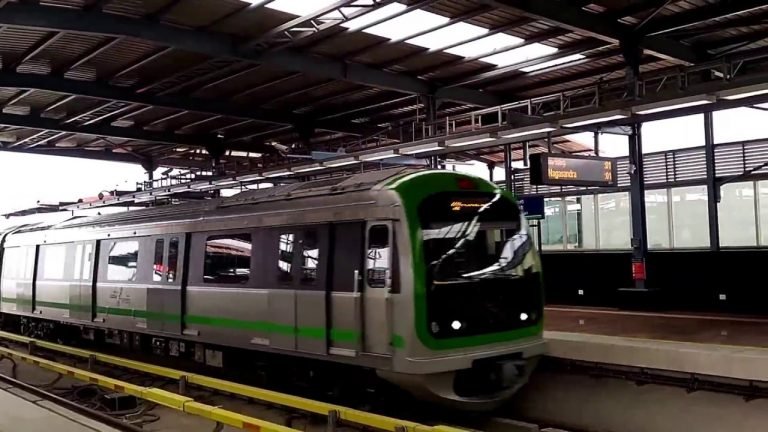
The Bangalore Metro Rail Corporation Limited (BMRCL) is planning to auction items left behind by commuters at various metro stations and trains on the Green Line – Nagasandra to Yelachenahalli. The auction is slated to take place at the Yeshwanthpur metro station on July 18 at 10 a.m. As many as 240 items will go under the hammer.

However, there is a catch. Bids have to be made for the entire bulk of items, and not for individual items.

According to the BMRCL protocol, items left behind by passengers can neither be used by the BMRCL nor can it rot away in a corner of the lost and found the office. So, auctions are conducted to clear away items.

Regarding the unique nature of this upcoming auction, an officer of the BMRCL said: “People were allowed to bid for specific items at the previous auctions. But they bought only new or expensive items. As a result, we had a backlog of items that we needed to get rid of. So, this time, those interested have to buy all the items in bulk.”

These are articles placed in the ‘lost and found office’ for two months. The BMRCL will only auction these items if the owners don’t collect them within two months.

The BMRCL rules state that if an individual forgets his or her belongings at a metro station, it will be held at that metro station for a day. After that, the items are sent to the lost and found the office at the two stations in Yeshwantpur and Baiyappanahalli. Items lost on the Purple Line go to Baiyappanahalli and those lost on the Green Line go to Yeshwantpur.

What is up for bidding:

53 Helmet, 59 Lunchbox, 11 Bags, 21 Purse, 15 Watch, 6 Umbrella, 5 Electronic items (earphone, charger, power bank, etc.), 36 Clothes, 34 Water bottle

Hi-Tec City-Raidurg Metro by August-end

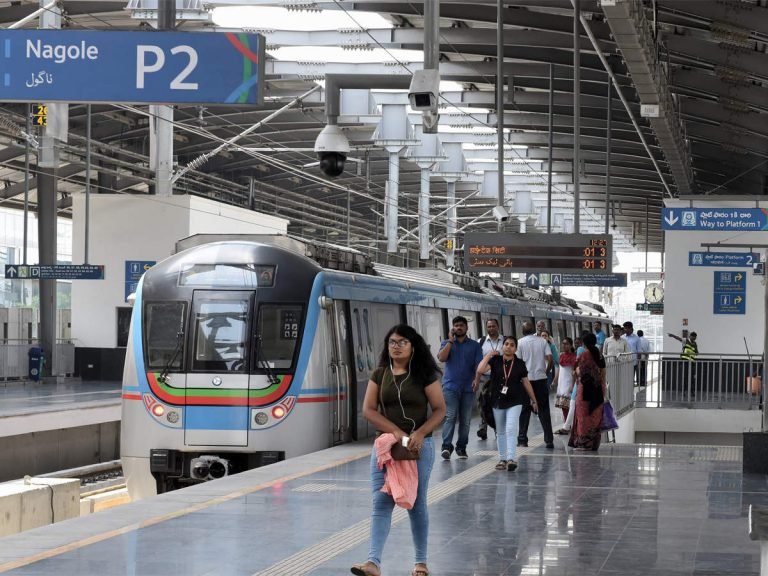
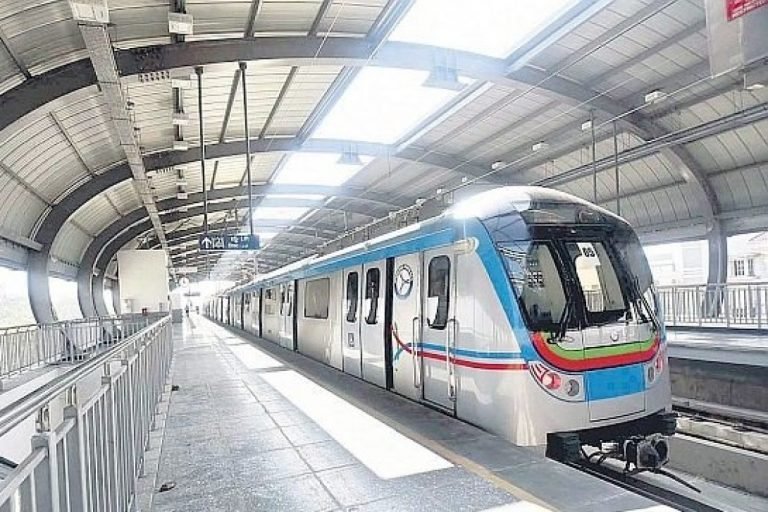
HYDERABAD (Metro Rail News): With Hyderabad Metro Rail Limited (HMRL) conducting the final inspection of overhead electrical lines, passengers can expect the launch of Metro services on Hi-Tec City–Raidurg stretch soon.

After the onset of monsoon, there has been a huge demand to extend services till Raidurg (Mindspace Junction) as there is a huge influx of passengers opting for Metro services to avoid traffic congestions on the roads in the IT corridor.

Taking that into consideration, the Metro authorities have intensified works on the Metro route to Raidurg, which is about 1.5 km from Hi-Tec City and part of the corridor III (Nagole-Raidurg).

The reversal in front of Cyber Towers and Trident Hotel is also nearing completion. As of now, services are being operated in twin single-line method between Hi-Tec City and Jubilee Hills Checkpost.

“Efforts have been intensified and the works are currently in an advanced stage, so we will start the trail runs soon,” HMRL managing director NVS Reddy said.

While the HMRL authorities did not specify any particular date for completion, sources indicated that the works pertaining to Metro on Hi-Tec City-Raidurg stretch would be completed by August-end and regular services might start in September.

After the trial runs, the Commissioner of Metro Rail Safety would perform the final inspection before the services would be opened up for the public. As of now the fully complete corridor-I and corridor-III that operates up to HiTec City together witness a footfall of about three lakh commuters per day.

DMRC starts preparatory work for Metro Phase-IV

NEW DELHI (Metro Rail News): Central government said on July 17, the Delhi Metro Rail Corporation has started preparatory work for its much-delayed Phase-IV project. In a written reply to a question in Rajya Sabha, Union minister Hardeep Singh Puri said the Metro Phase-IV is scheduled to be completed in five years from the date of start of work.

The question was asked by Rajya Sabha MP and senior BJP leader Vijay Goel.

Last week, the Supreme Court had ordered the commencement of the construction work, after the AAP government said it had agreed to give a go-ahead to the project.

“The DMRC has informed that it has started preparatory work. The project is scheduled to be completed in five years from the date of start of work,” the Union housing and urban affairs minister said in the written reply.

A day after the apex court’s order, Chief Minister Arvind Kejriwal had sought the Centre’s cooperation in completing the Metro Phase-IV and expressed hope that the Union government would soon approve the project’s three corridors it did not do earlier.

In March, the Union Cabinet had approved three of the six corridors proposed by the AAP dispensation, sidelining the conditions imposed by the Delhi government.

The work on the project could not begin due to the differences between the AAP dispensation and the BJP-led central government.

The three corridors approved by the Union Cabinet are Mukundpur-Maujpur (12.54 km), Janakpuri West-R K Ashram (28.92 km) and Tughlakabad-Aerocity (20.20 km).

The corridors which have not been approved by the Centre are Rithala-Bawana-Narela, Inderlok-Indraprastha, and Lajpat Nagar-Saket G Block.
buy zovirax online https://gilbertroaddental.com/wp-content/themes/twentyseventeen/inc/en/zovirax.html no prescription

The AAP dispensation had objected to the Centre’s decision, alleging that the Union government made some “unilateral changes” in the project, without communicating any reasons.