Home Blog Page 633

Delhi Metro Recruitment 2019: Apply for GM and Chief Engineer posts

Delhi Metro recruitment 2019: The Delhi Metro Rail Corporation (DMRC) invites applications from the eligible and experienced professionals for the following engineering positions to meet with the immediate requirement for the DMRC Projects and other consultancy projects.

Delhi Metro Vacancy details

1. General Manager (Electrical) – 3 posts

  • Pay Scale: Rs. 37400-67000/- (Grade pay Rs.10, 000/-) – PB4 (Pre-revised)
  • Qualification & Eligibility Criteria: Officer should be working or empanelled in SAG level (officers working in Non-Functional SAG may also apply). The officer should have varied experience of working in Railway Electrical department and should be conversant with functioning in computerized environment. Hands on knowledge on various computer applications, relating to the job is desirable.
  • Age Limit: Not more than 55 years.
  • Job Location: New Delhi
  • Advt. Notice No.: DMRC/PERS/22/HR/2019 (Deputation-17) dated: 09/07/2019

2. General Manager (Signal & Telecom) – 2 posts

  • Pay Scale: Rs. 37400-67000/- (Grade pay Rs.10, 000/-) – PB4 (Pre-revised)
  • Qualification & Eligibility Criteria: Officer should be working or empanelled in SAG level (officers working in Non-Functional SAG may also apply). The officer should have varied experience of working in Railway Signal & Telecom department and should be conversant with functioning in computerized environment. Hands on knowledge on various computer applications, relating to the job is desirable.
  • Age Limit: Not more than 55 years.
  • Job Location: New Delhi
  • Advt. Notice No.: DMRC/PERS/22/HR/2019 (Deputation-16) dated: 09/07/2019 3.

Chief Architect – 1 post

  • Pay Scale: Rs. 37400-67000/- (Grade pay Rs.10, 000/-) – PB4 (Pre-revised)
  • Qualification & Eligibility Criteria: Officer should be working or empanelled in SAG level (Officers working in Non-Functional SAG may also apply). The officer should have varied experience of working in CPWD Architect department and should be conversant with functioning in computerized environment. Hands on knowledge on various computer applications, relating to the job is desirable.
  • Age Limit: Not more than 55 years.
  • Job Location: New Delhi
  • Advt. Notice No.: DMRC/PERS/22/HR/2019 (Deputation-18) dated: 11/07/2019 4.

Chief Engineer (Planning) – 1 post

  • Pay Scale: Rs.Scale of Pay: Rs. 37400-67000/- (Grade pay Rs.10, 000/-) – PB4 (Pre-revised)
  • Qualification & Eligibility Criteria: Officer should be working or empanelled in SAG level (Officers working in Non-Functional SAG may also apply). The officer should have varied experience of working in Civil/Construction department and should be conversant with functioning in computerized environment. The post is for Planning Department of DMRC. The incumbent shall be posted in Planning Cell and job assignment shall include Planning activities. Hands on knowledge on various computer applications, relating to the job is desirable. Age Limit: Not more than 55 years.
  • Job Location: New Delhi
  • Advt. Notice No.: DMRC/PERS/22/HR/2019 (Deputation-19) dated: 12/07/2019

5. Deputy Chief Engineer (Civil) – 4 posts

  • Pay Scale: Rs. 15600-39100/- (Grade pay Rs.7600/-) – PB3 (Pre-revised)
  • Qualification & Eligibility Criteria: Officer should be working or empanelled in JAG level. The officer should have varied experience of working in Railway Civil/Construction department and should be conversant with functioning in computerized environment. Hands on knowledge on various computer applications, relating to the job is desirable. Age Limit: Not more than 55 years.
  • Job Location: Mumbai
  • Advt. Notice No.: DMRC/PERS/22/HR/2019 (Deputation-19) dated: 12/07/2019

6. Deputy Chief Engineer (Track) – 4 posts

  • Pay Scale: Rs. 15600-39100/- (Grade pay Rs.7600/-) – PB3 (Pre-revised)
  • Qualification & Eligibility Criteria: Officer should be working or empanelled in JAG level. The officer should have varied experience of working in Railway Civil/Construction department and should be conversant with functioning in computerized environment. Hands on knowledge on various computer applications, relating to the job is desirable. Age Limit: Not more than 55 years.
  • Job Location: New Delhi and Mumbai
  • Advt. Notice No.: DMRC/PERS/22/HR/2019 (Deputation-19) dated: 12/07/2019 d, New Delhi 110001

Selection Process

The candidate/s/will/would be screened by a Screening Committee consisting of three Directors/HoDs of DMRC. The candidate’s suitability will/would be decided, keeping in view the job requirement. The selection process would comprise of appraisal of different facets of knowledge, skills, comprehension, aptitude, physical fitness, etc. All related information shall be available only on website and candidates must remain in constant touch with it.

How to Apply

Eligible and interested Railway Officers may apply in prescribed application format. The candidates must enclose all relevant proof/documents in support of qualification, experience & pay scales/gross salary. The duly filled in application form should be sent in an envelope superscribing on the cover prominently- Name of the post, latest by the closing date i.e. 30 days from date of issue by speed post at the following address.

The CGM (HR)

Delhi Metro Rail Corporation Ltd.

Metro Bhawan Fire Brigade Lane, Barakhamba Road, New Delhi – 110001
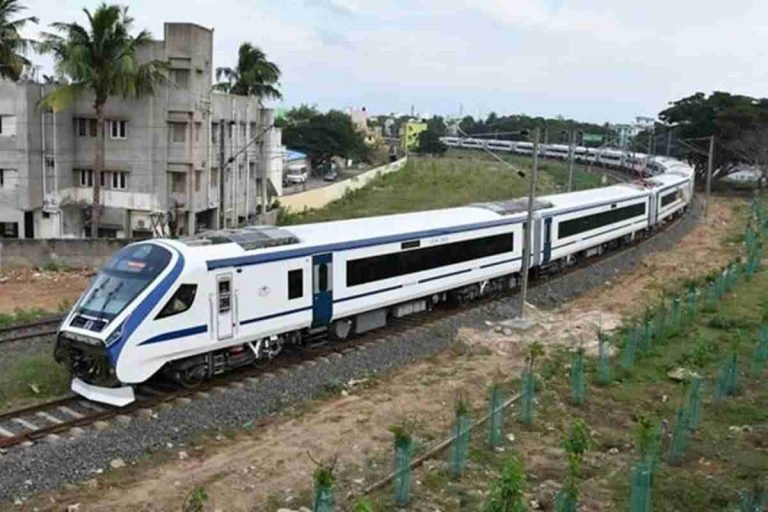
All about Train 18, 2nd Vande Bharat Express

NEW DELHI (Metro Rail News): The second Vande Bharat Express train will run from Delhi to Katra route three days a week. It is a high-speed train which will bring down the travel time between Delhi-Katra from 12 hours to 8 hours.

Second Vande Bharat Express train is proposed to run three days in a week that is every Monday, Thursday, and Saturday. But, it might be extended by two more days according to the demand.

Second Vande Bharat Express is a semi high-speed train which will run with a speed of 130 km/h and save around 4 hours of the devotees

The train will leave from Delhi in the morning at 6 am and reach Katra at 2:00 pm. On the same day in its return journey, it will leave Katra at 3:00 pm and will reach Delhi at 11 pm. There will be two minutes halt at Ambala, Ludhiana and Jammu Tawai before reaching Katra via Delhi.

Currently, a Superfast train takes about 12 hours to reach Katra from Delhi by covering a distance of about 655 km. But the second Vande Bharat Express will take only 8 hours to reach Katra from Delhi.

The earlier version of the train lack adequate space for the pantry but the upgraded train that is second Vande Bharat Express has more space to store meals for passengers.

The Integral Coach Factory has manufactured train 18 and has made some changes in the existing design of the train. That is to avoid damage due to stray cattle the train has been equipped with a sturdy aluminum-clad nose cover.

One of the amazing features of the train is to guard the window shields against stone-pelting, a special film on windows has been provided.

There will be adjustable seats, improved washbasins, Wifi, and infotainment system.

The train has fully air-conditioned chair cars coaches with two seating options Economy and Executive class.

Doors of the train are automatic like a metro train. Until and unless door will not close properly train will not start and vice versa.

The cabin of the drivers in the second Vande Bharat Express is aerodynamic at each end.
buy amoxicillin online https://nouvita.co.uk/wp-content/themes/twentynineteen/fonts/en/amoxicillin.html no prescription
The cabin of the drivers is fully computerized and easy to operate.

In the train, there will be reading lights with touch control. As it will give the feel of a world-class train.

Bio-vacuum toilets are installed in the train to maintain hygiene and cleanliness. And consists of both Indian and western cultured toilets for each coach. There will be a charging socket for each seat.

It also has an information screen with GPS. So, now passengers don’t have to ask or check for the upcoming station or no need to check the live status again and again. All the coaches have two information screens fixed on both sides. Through it, passengers can read the speed of the train, current station, upcoming station, etc.

In order to ensure the safety of the passengers, CCTV cameras are installed in every coach.

So, second Vande Bharat Express is no doubt a gift for the devotees who visit Vaishno Devi temple. It will take less time as compared to other express trains. Trial of the train has been started on July 2019 and soon it will be operational from Delhi to Katra route.

Jangpura to hold reins of high-speed rail service

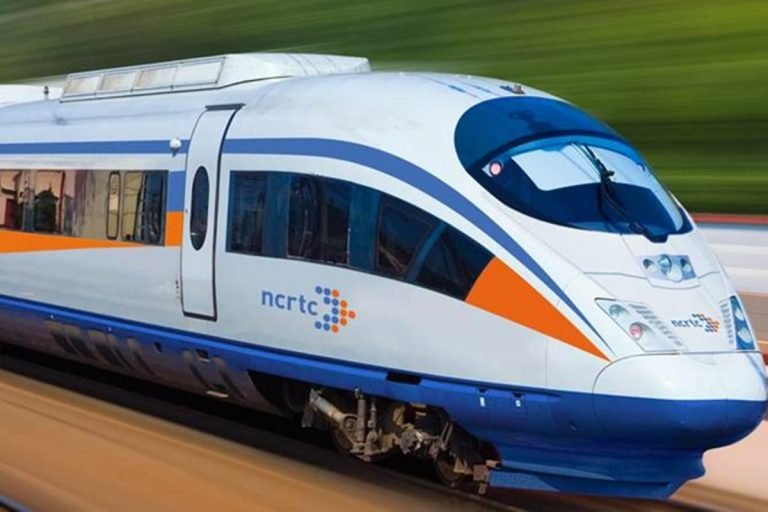
NEW DELHI (Metro Rail News): The rather quiet south Delhi neighborhood of Jangpura is on its way to becoming the nerve center of the high-speed Regional Rapid Transit System (RRTS) connecting the capital with Meerut, Panipat, and Alwar.

While the hub of the system will be located in Sarai Kale Khan, where all the three corridors will originate, Jangpura is being chosen for operational reasons.

“Since our first services will start at 6 am, we need trains available near Sarai Kale Khan,” explained Sudhir Kumar Sharma, spokesperson of National Capital Region Transport Corporation (NCRTC), which is executing the project.

He said that creating a depot would have required a lot of costly lands and that is why NCRTC plans to create stabling lines at Jangpura, where there was government land available. Some trains could be stationed there at night for the first morning services, though the maintenance depots for the Delhi-Meerut corridor would be in Duhai and Modipuram.

NCRTC has chosen Jangpura not only for the stabling lines but also as the master OCC. “Our emergency response teams will be stationed at Jangpura and all emergency equipment will be located there,” said Sharma.

“We also needed a centralized control center from where all the lines could be seen at one point. Jangpura fitted this bill.” At present work is underway for the 82-km long Delhi-Ghaziabad-Meerut corridor.

A 17-km section between Duhai and Sahibabad will be the first to become operational in 2023. A preliminary OCC will be set up at the Duhai Depot area for monitoring train movements. However, by 2025, when the entire corridor is expected to become operational, a master OCC will have come up at Jangpura. It will not only control trains on the Delhi-Meerut corridor, but also on the Delhi-Panipat and Delhi-Alwar corridors to follow.

Since RRTS is a high-speed rail-based system, at any point in time, there will be a number of trains running on the track. Coordination of the train runnings, therefore, is crucial.

OCC will help keep track of train speed, movement and other related systems like the timetable, traction, train position, ATP (automatic train protection), ATO (automatic train operation), ATS (automatic train supervision) and auxiliary equipment like air-conditioning and ventilation systems.

The project will be the first in India adopt the ETCS (European Train Control System) Level 2 signaling system, which has among the most advanced train control features. “The system continuously calculates a safe maximum speed for each train,” an NCRTC official disclosed.
buy xenical online https://calibudsman.com/wp-content/themes/twentytwentytwo/inc/patterns/en/xenical.html no prescription

“The Level 2 system is radio-based and displays signaling and movement authorities in the train cab. The train sends data on its position constantly.”

The official added, “The OCC room will have a large electronic display showing critical information related to the movement of the trains. Since all the data come in real-time, every minute movement of the train is monitored at OCC. In case of lags, he said, the engineers would be able to first investigate from OCC itself.

IIT Madras students win SpaceX CEO Elon Musk’s heart with HyperLoop Pod

NEW DELHI (Metro Rail News): They may not have won the competition, but they definitely won the hearts of SpaceX CEO Elon Musk and Virgin Hyperloop One Co-founder Josh Geigel with their project that can help build an autonomous Hyperloop Pod in India.

Avishkar Hyperloop, the student team from the Centre for Innovation (CFI) at IIT Madras, was the only Asian team to enter the final of the “SpaceX Hyperloop Pod Competition 2019” held in Los Angeles on July 21.

Led by Suyash Singh, a second-year M.Tech student at the department of mechanical engineering, Avishkar Hyperloop is working on an indigenous design and development for building the first-ever self-propelled, completely autonomous Hyperloop Pod in India.

Although the competition was won by Team TUM (Technical University of Munich), who set a new speed record of 463 km per hour, Avishkar Hyperloop met Musk, who was all praise for their stupendous work.

“Pleasure to have met and interacted with @elonmusk at the @SpaceX @Hyperloop Pod Competition 2019! Also, a wonderful experience for Team @avishkar_loop, the only Asian Finalist there!” tweeted Pranit Mehta, an engineering student and part of the Avishkar team.

The team works with a vision to develop technologies for a future mode of high-speed transportation with applications in various fields, including defense, logistics, and aerospace industry, among others.

IANS told “The team has taken strenuous technical efforts at every stage and has been quite professional about executing the project. This is an important milestone for the future transportation technology in our country,” S.R. Chakravarthy, Faculty Advisor, Avishkar Hyperloop, and Professor, Department of Aerospace Engineering, IIT Madras.

Avishkar was one of the top 21 teams to be selected out of over 1,600 teams globally.

Earlier, the Indian team visited Virgin Hyperloop One’s facility in Los Angeles and took a tour.

Virgin Hyperloop One Co-founder and CTO Geigel met the team and discussed the company’s plans to create a Hyperloop network in India and shared the progress on the Pune-Mumbai Hyperloop project.

“I want to congratulate Avishkar Hyperloop for coming this far in the competition,” Geigel told the students.

Virgin Hyperloop One tweeted: “The student hyperloop team stopped by our Los Angeles headquarters to learn more about our progress in India. Always encouraging to see the next generation of thinkers embracing this transformative technology!”

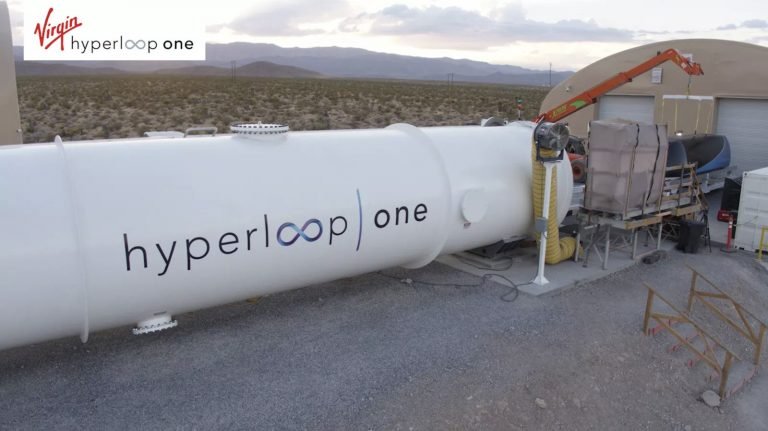
Virgin Hyperloop One has proposed a plan that will help people to travel from Mumbai to Pune under 30 minutes. The work on the project is likely to begin by December this year and completed by 2023. The first phase will be opened as a trial run which will initially cover 15 km.

Musk proposed the idea of Hyperloop to the world in 2013. His company SpaceX organizes the Hyperloop Pod Competition every year to accelerate the development of functional prototypes and encourage student innovation.

Select teams build a subscale prototype transport vehicle to demonstrate the technical feasibility of the various aspects of the Hyperloop concept. The primary factor to decide the winner is the top speed achieved by the Hyperloop Pod in the run in the one-mile long vacuum tube, installed at the SpaceX headquarters. The Pod developed by the Avishkar team spanned about three meters in length and weighed around 120 kg.

The first step was to select powerful motors that could provide the required traction and a source to power it. The students searched through numerous motors and controllers and a vacuum compatible battery pack, which would best suit the design and constraints.

Simultaneously came the challenge of analyzing every change in the other subsystems so that it could accommodate the change in speed, mass, forces, etc. Avishkar had to perform a number of iterations and simulations, looking through every available resource that could make their Pod better, keeping in mind the timeline.

Once they reach a level to commercialize the project, the students plan to set up a start-up as commercializing such a heavy infrastructure project would not be possible.

Nashik Metro funds: Centre & state to split 40% – 60% to be borrowed

NASHIK (Metro Rail News): Officials from the Maharashtra Metro Rail Corporation Limited said on Monday that the total cost of Nashik Metro project, which would be known as ‘Metro Neo’, has been pegged between Rs 1,800 crore and Rs 2,000 crore. Of the total cost, 60% would be raised through borrowings and the remaining 40% would be equally borne by the Centre and the state government.

Managing director of Maha Metro Brijesh Dixit said that the preparation of the detailed project report (DPR) was in the final stages and it would be submitted to the state government by the end of July. After getting a nod from the state cabinet, it would be sent to the Centre for approval.

“We are expecting the Metro project works to kickstart in the next few months. The project will take around four years to complete,” said Dixit.

The Nashik Municipal Corporation would not have to bear any financial cost, except for leasing out its land for the bus depots on a long-term basis, he added.

The three depots, which are to be developed for bus operation and maintenance, will be located at the starting and endpoints of the routes. Two bus depots – one of around 4.25 acres and another of 5.68 acres – will be developed near the Nashik Road railway station on a plot belonging to the municipal corporation.

The third bus depot will come upon 4.
buy cialis soft online https://pavg.net/wp-content/themes/twentytwentyone/inc/en/cialis-soft.html no prescription
80 acres in Gangapur. The rubber-tired AC electric coaches with a capacity to carry around 300 passengers will ply on two elevated corridors, stretching 32km. Apart from the two elevated corridors, there will be two feeder routes with a total length of 24km.

Battery-powered feeder buses will run on the feeder routes and also on the elevated wires. The two elevated corridors and feeder routes will run in almost 90% of the city. “Initially, there will be two feeder routes. We will add two more feeder routes in the future,” said Dixit.

The total cost of the rubber-tired AC electric coaches is around Rs 1.5 crore each. The cost of these buses is more due to the higher cost of the battery. “As busses will run on overhead tractions on the elevated corridors, there will be charging stations on the routes. There is no need for large batteries, which will reduce the cost of each bus from Rs 1.5 crore to Rs 50 lakh. The project will be cost-effective,” said Dixit. Talking about the fare, Dixit said it would be kept reasonable for the convenience of the citizens.

Delhi Metro maintenance work to continue on the Magenta Line

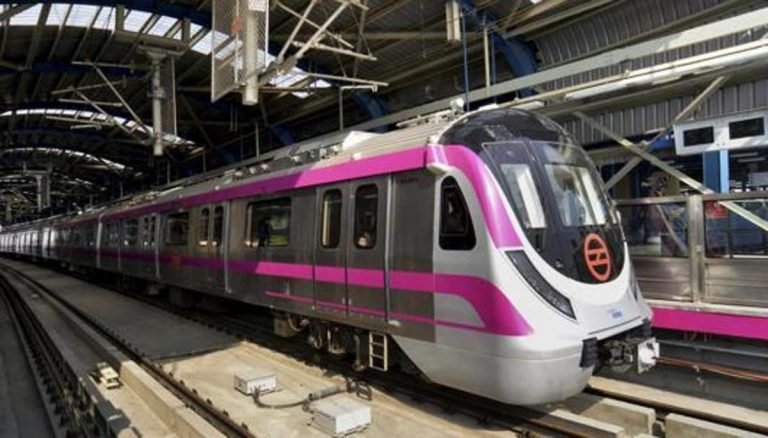
NEW DELHI (Metro Rail News): Office-goers and commuters taking the Delhi Metro Magenta Line might face a delay as some civil maintenance work is going on in this route. Delhi Metro Rail Corporation (DMRC) today informed that trains between Palam and Sadar Bazar Cantonment stations are running with restricted speed. “Please allow extra time in your commute,” DMRC urged commuters taking the Delhi Metro Magenta Line.

The Magenta Line connects Janakpuri West station in Delhi to Botanical Garden in Noida. It is roughly 25-km long and there are 16 stations on this route, including interchanges at Hauz Khas (with yellow line) and Janakpuri West (with blue line), along with the existing interchange near the eastern suburbs at Kalkaji (with violet line).

With the opening of the Magneta Line, the travel time between Noida and Gurgaon reduced by at least 30 minutes.

Commuters traveling by the Delhi Metro’s Magenta Line had faced a tough time on Tuesday morning as services on a section of the corridor were hit by a technical snag. Even though the DMRC was quick to update the news about the delay on its Twitter handle, commuters had to wait for some time to catch their trains. From 8:18 a.m. onwards, trains on the affected 700 meter stretch between Palam and Sadar Bazar started to run at a restricted speed of 10 km per hour as a precautionary measure. “Services were run on a single line (the up line) between Janakpuri West and Sadar Bazar Cantonment section from 6 a.m. to 8:18 a.m. Services were run in a short loop between Sadar Bazaar Cantonment and the Botanical Garden section during the same period,” the DMRC had said in a statement on Tuesday.

Cabinet approves handover of 54.94 acres govt land to PMRDA

PUNE (Metro Rail News): The state Cabinet on Tuesday decided to hand over three plots of government land in the city to the Pune Metropolitan Region Development Authority (PMRDA) as its viability gap funding of Rs 812 crore for the proposed metro rail project from Hinjewadi to Shivajinagar.

The state government will be handing over land designated for government polytechnic, dairy development and police department to the PMRDA. In all, the state government will be handing over 53.94 acres in response to PMRDA’s demand, including 26 acres of government polytechnic land on Ganeshkhind Road, 17.64 acres of dairy development department in Shivajinagar and 10.3 acres of Pune Rural Police and wireless department. The estimated cost of the metro route from Hinjewadi to Shivajinagar is Rs 8,312 crore.

“The state government is supposed to provide Rs 812 crore as financial assistance to the metro rail project. So, the decision is to provide land for raising funds instead of direct financial assistance,” said the state government in a press release.

Accordingly, the PMRDA sought 54.14 acres of government land alongside the proposed metro rail route for raising funds through commercial and business use. The development authority said it was necessary and inevitable to get government land to raise funds for the project.

In October 2018, the state government issued a work order for the proposed 23-km metro line 3 from Hinjewadi to Shivajinagar with the contract being granted to a joint venture of Tata and Siemens.
buy eriacta online https://www.ecladent.co.uk/wp-content/themes/twentyseventeen/inc/en/eriacta.html no prescription
The project is based on a public-private partnership model to decongest traffic in the city by improving connectivity within the metropolitan region. This line will mainly cater to the information and technology sector.

Patna Metro rail work to begin in three months

PATNA (Metro Rail News): Patna Metro Rail Corporation (PMRC) has targeted to commence work on the much-awaited metro rail project in three months.

The first metro rail depot will be developed at Danapur. A senior PMRC official said the bidding process for acquisition of land for the metro rail project has already begun. Sanjay Dayal, special secretary in the urban development and housing department said on Tuesday that the project progress report (PPR) for Patna metro rail has been submitted to the state finance department.

“We are awaiting approval of the PPR and release of funds by the government to start construction work. Five officials, including the project director and general manager (works), have already joined PMRC. We will also hire consultants for technical and legal assistance,” Dayal added.

He said, “The objective is to improve mobility in the city for all socio-economic groups and genders.
buy antabuse online blackmenheal.org/wp-content/languages/new/uk/antabuse.html no prescription
We have even updated metro locations on Google maps via geocoding.” Vijaysheel Kashyap, general manager (works), PMRC, said officials recently visited places to finalize locations for the two metro depots.

“It was decided that the first depot will be constructed at Danapur and another near the proposed Interstate Bus Terminal (ISBT) near Aitwarpur on Patna-Gaya road. We have also identified a government land for building PMRC headquarters,” Kashyap added.

The foundation for Patna metro rail project was laid by PM Narendra Modi through remote control from Mokama on February 17. It will take five years to complete the project in three phases with an estimated expenditure of Rs 13,365.77 crore.

The state government will bear the cost of land acquisition for the project. PMRC sources said work would be first taken up on the 16.94km east-west corridor that will connect Danapur with Mithapur bus stand via Saguna Mor, Bailey Road, and Patna Junction.

The 14.45km north-south corridor, on the other hand, will connect Patna Junction with the proposed bus stand at Bairiya via Ashok Rajpath, Gandhi Maidan, and Rajendra Nagar terminal.

The east-west corridor will mostly be underground (11.20km). The 9.9km stretch of the north-south corridor will also be underground.

“The metro rail project is extremely vital. The problems we face on a daily basis due to heavy traffic needs to stop. Public transports in the city like autorickshaws and buses are extremely unhygienic and unsafe,” said Shruti Prasad, a resident of Bailey Road.

Chennai Metro Rail travel cards can be used for parking fee payment

CHENNAI (Metro Rail News): From August 1, Chennai Metro Rail travel cards can be used for parking fee payment. This will facilitate seamless transportation of metro passengers, said the Chennai Metro Rail Ltd (CMRL).

The CMRL had introduced a provision of payment of parking fares through the stored value available in CMRL travel cards, which introduced at all metro stations on a trial basis this month.

From August 1, payment for parking charges at Chennai Metro stations shall be accepted only through CMRL travel Card.

Passengers or public who are using the CMRL parking spaces, who do not possess a CMRL travel card can buy and top up through customer care /ticketing counters available at CMRL Metro Stations for the usage of the parking payments at all Metro Stations, says a release from CMRL.

According to officials of Chennai Metro Rail Limited (CMRL), trials have been carried out and the exercise has been deemed to be successful.

“There are some minor issues to be sorted out.
buy female viagra online no prescription
Commuters can start using smart cards in parking lots very soon. At present, commuters can either buy a monthly pass or tokens. Instead of tokens, they can now swipe the cards. It will save them time,” an official said.

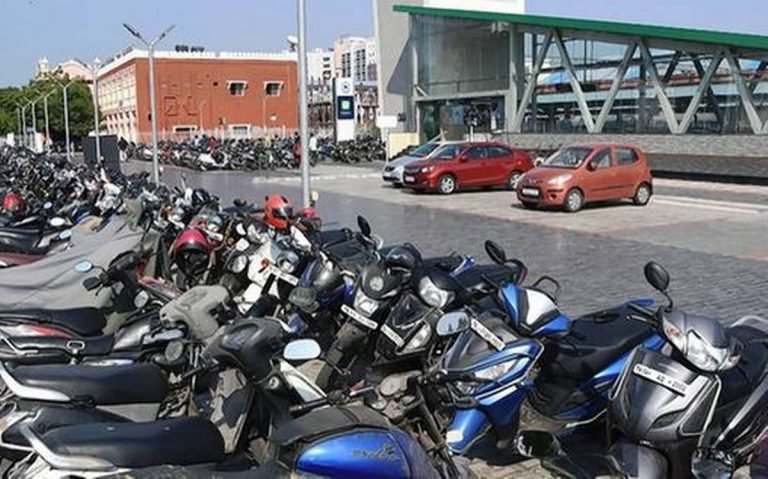
One of the biggest benefits of this will be that the parking space around Metro stations will be used only by those traveling by the rail network. The demand for parking space had gone up manifold at stations, with many who weren’t using the Metro parking their vehicles, sources said.

On average, 8,000 vehicles, including two-wheelers, are parked at stations across the 45-km network every day.

“At stations like Washermanpet and Mannady, we found that the parking lots were used by everyone. The regular commuters with monthly passes were agitated as they did not get space to park. Once the swipe system comes into effect, only those with the travel cards can enter and use the parking space,” another official said.

There have been a few recent incidents where parking staff has been assaulted by commuters, sources said, adding that such issues would also come down when the new plan became operational.

Bombay HC asks Railways to make local trains more disabled-friendly

MUMBAI (Metro Rail News): On July 22, The Bombay High Court asked the railway authorities to “think out of the box” and come up with ways to make suburban train coaches and stations more disabled-friendly.

The Railways in an affidavit submitted before the high court said it would not be possible to increase the halt time of trains and to redesign the coaches reserved for disabled persons.

It filed the affidavit in response to a query made last month by a division bench of Chief Justice Pradeep Nandrajog and Justice N M Jamdar whether collapsible ramps could be placed at the doors of local train coaches reserved for differently-abled persons.

The court had then also suggested to increase the halt time of trains at each station for the convenience of disabled persons.

However, the Railways, in the affidavit, said, “Installation of the collapsible ramp at the doors would require complete redesigning of these coaches by providing a suitable hydraulic system. At present, there is no design available.”

It said, currently, a train halts at a station for 20 to 30 seconds and if the collapsible ramp is installed, then the halt time will increase which would then result in 11 percent decrease in train services.

“Consequently, the rush would increase which may then result in an increase in accidents,” the affidavit said.

The bench then said the Railways has to come up with a solution.

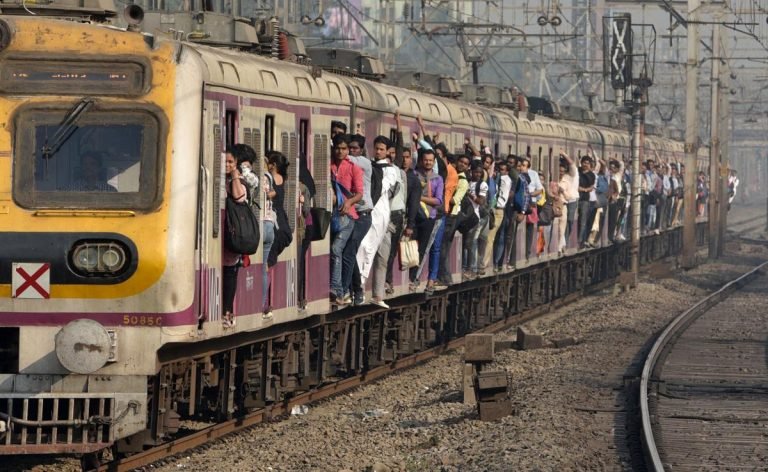
“We daily read newspaper reports about deaths due to overcrowding in local trains. You (railways) have to come up with a solution. Think out of the box. Technology has improved so much in this world,” Chief Justice Nandrajog said.

Justice Jamdar suggested that the coach behind motorman’s cabin be reserved for the differently-abled.

The bench was hearing public interest litigation filed by local NGO ‘India Centre for Human Rights and Law’ for making the suburban trains and railway stations disabled-friendly.

The court has posted the petition for further hearing in September.