Home Blog Page 630

Matrix becomes the first company to get TEC Certificate under the newly launched MTCTE Program

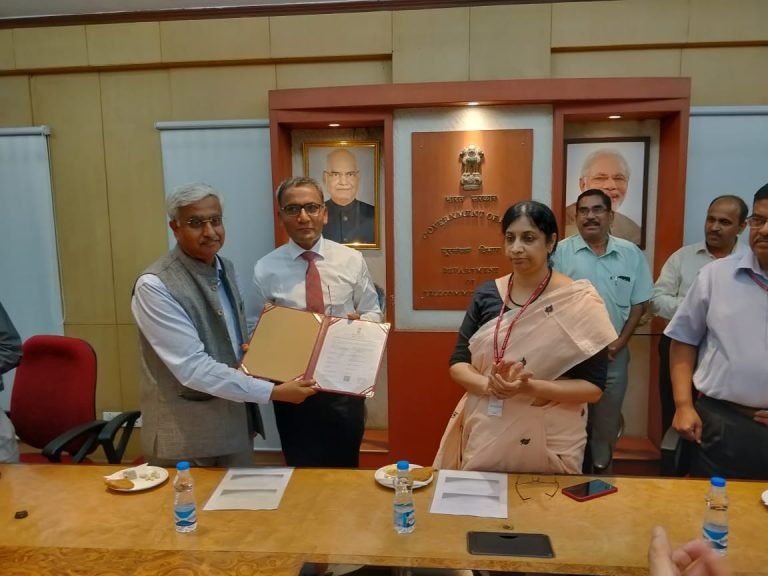
Matrix, a leading manufacturer of enterprise-grade Telecom and Security solutions, is the first company to get TEC certificate under Mandatory Testing and Certification of Telecom Equipment (MTCTE) launched by TEC, Govt. of India. Mr Ganesh Jivani, Managing Director of Matrix was honored with the TEC certificate from Mr. Anshu Prakash, Secretary Telecom, Government of India at an event organized by TEC at Sanchar Bhavan, New Delhi.
“Having been a leading provider of IP-PBX, VoIP phones, Media Gateways and other telecom equipment, we recognize the necessity and importance of TEC certification.” said Ganesh Jivani, Managing Director of Matrix. “Matrix Telecom solutions are offered in 50+ countries including India, USA, Canada, UK, Ireland, Italy, Spain, Portugal, Australia, Philippines, Indonesia, UAE, Africa and others. We invest a significant amount of R&D resources to ensure Matrix products meet the standards enforced in these countries. Compliance is an integral and important dimension of product quality at Matrix. ”

About Matrix
Established in 1991, Matrix is a leader in Security and Telecom solutions for modern businesses and enterprises. As an innovative, technology driven and customer focused organization, the company is committed to keep pace with the revolutions in the Security and Telecom industries. With around 40% of its human resources dedicated to the development of new products, Matrix has launched cutting-edge products like Video Surveillance Systems – Video Management Software, Network Video Recorder and IP Camera, Access Control and Time-Attendance Systems as well as Telecom Solutions such as Unified Communications, IP-PBX, Universal Gateways, VoIP and GSM Gateways and Communication Endpoints. These solutions are feature-rich, reliable and conform to the international standards. Having global footprints in Asia, Europe, North America, South America and Africa through an extensive network of more than 2,500 channel partners, Matrix ensures that the products serve the needs of its customers faster and longer. Matrix has gained trust and admiration of customers representing the entire spectrum of industries. Matrix has won many international awards for its innovative products.

John Holland signs MOU with RATP Dev to operate & maintain Sydney Metro

SYDNEY (Metro Rail News): Australian leading engineering contractor John Holland and global automated metro operator RATP Dev has been signed a memorandum of understanding to partnering for upcoming bids to operate and maintain Sydney Metro West and Sydney Metro Greater West.

The world-class automated metro operator RATP Dev, whose parent company RATP Group runs the Paris Metro, has partnered with John Holland in order to enter the Australian market for the first time thanks to the significant metro program in place.

John Holland CEO, Joe Barr, said that the new partnership would harness the expertise of both companies in customer service, rail operations and maintenance.

“As Australia’s leading rail group, it is only natural that we want the next generation of Sydney Metro to grow and improve, and Sydney Metro West and Greater West are opportunities to create a new level of service for our customers.”

The Sydney Metro Greater West will create connections to Western Sydney’s first airport, and Metro West will more than double the rail capacity from Parramatta to the Sydney CBD. 

“We want to make sure our proposals to run these projects lead to the most comfortable, reliable and modern service for customers,” Mr Barr said.

John Holland is currently delivering the tunnels for Sydney Metro City and Southwest and celebrated the successful construction of Sydney Metro Northwest in May. It is also part of the Metro Trains Sydney consortium that operates and maintains Sydney Metro Northwest.

RATP Dev CEO, Laurence Batlle, said that the company was excited to enter the Australian market for the first time, bringing with them their unrivalled experience of operating and maintaining public transport in Europe, Asia, Africa and the Americas, especially with 200km of new driverless metro operation contracts being executed.

“Our transport networks look after 1.5 billion passengers across 12 countries every year, it is that wealth of expertise that we are so keen to bring to Australia.

“Our priority is to put the customer first at all times, which is why we will work with John Holland to create a service designed around what passengers want.”

RATP Dev will soon be opening a new unit in Sydney to become its headquarters for Australia & New Zealand

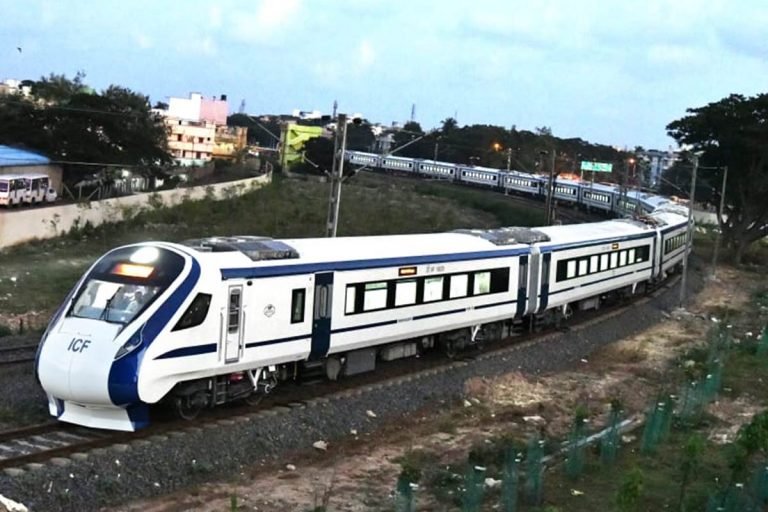
Railways deny scam in Vande Bharat manufacture

NEW DELHI (Metro Rail News): The top Indian Railways official has denied of any scam in the manufacturing of Train 18 named Vande Bharat Express. Recently, a preventive vigilance inquiry was ordered and the Chairman Railway Board VK Yadav said it was a routine procedure, a new kind of train is introduced. Now, the Railways will manufacture 40 new Train-18s. 

In the next couple of months, they will call tenders for the same. Senior railway officials said that there are technical changes that shall be carried out in the new trains. “These changes would namely be kind of an upgrade to the electrical components and overall technical upgrade,” said a senior official from Railway ministry.

There were allegations about not following a correct procedure while procuring electrical equipment for self-propelled trains. The ministry received complaints about giving undue favor to companies supplying components.

Sources said that this vigilance inquiry is one of the reasons behind the alteration in the electrical components.

As of today, there are two Vande Bharat Express’ running. The second route proposed in on the Delhi-Katra sector. There is already another upgrade planned in Train 18, which is to have sleeper class like seats so that it can be operated on longer routes too. 

Moreover, a new system called Distributed Power Rolling Stock too is being proposed in higher versions of Train 18s. 

HCC completes 3.82 km tunnel for Mumbai Metro 3

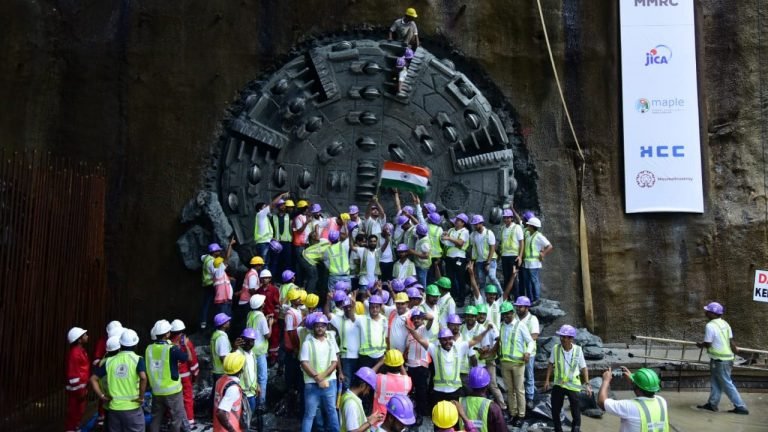
MUMBAI (Metro Rail News): The Hindustan Construction Company (HCC) had completed boring the first 3.82 km long tunnel passing underneath some of the most thickly populated areas of south Mumbai for the upcoming Mumbai Metro III project.

Spokesperson Said that HCC has finished the south-bound tunnel between Chhatrapati Shivaji Maharaj Terminus (CSMT) and Mumbai Central stations, becoming the first contractor among all others to complete the entire length of a tunnel for the Metro III project.

An average drilling rate of around 8.
buy Nootropil generic buybloinfo.com over the counter
20 metres per day maintained by HCC for the 3.82 km long tunnel passing via the station boxes of Kalbadevi, Girgaon and Grant Road.

This section is part of the 33.50 km long Mumbai Metro III line connecting Colaba-Bandra-SEEPZ (Andheri East) and will be the first fully underground metro in the city. It is being built at a cost of around Rs 23,136 crore, with a Rs 13,325 crore loan from the Japan International Cooperation Agency (JICA).

“Our teams encountered several geological and urban challenges, including proximity to the Arabian Sea, tunneling through heterogeneous reclaimed land, congested working areas and drilling below some of the oldest residential and other buildings, many over a century old, without disturbing their foundation,” said HCC spokesperson

The Mumbai Metro Rail Corporation Ltd (MMRCL) had awarded the contract to HCC in July 2016 for the design and construction of twin tunnels by Tunnel Boring Machines (TBM) and construction of four underground metro stations at CSMT, Kalbadevi, Girgaon and Grant Road.

HCC procured two TBMs from China for the work with 117 metre long single-shield dual-mode hard rock with a 6.68 metre diameter and weighing 848 tonnes.

These TBMs are equipped to operate in both – open or closed – modes, in the predominantly fresh, and slightly to moderately weathered Basalt and Breccia that was anticipated in the Mumbai Metro projects.

The first TBM, Vaitarna I, was launched at CSMT on December 4, 2017, After months of geotechnical investigations, planning and procurement processes. Its initial drive was completed on January 11, 2018, while the main drive ended in mid-February 2018 with a team of 32 people working on it, the spokesperson said.

Since congested residential areas are located above the tunnel, structural surveys using sophisticated instruments were carried out prior to starting the boring work in a 30 metre influence zone on either side of the alignment to assess its impact on the buildings.

The HCC has now taken up the work of constructing the underground metro stations with the tunneling work completed well within the stipulated time, each with a unique design.

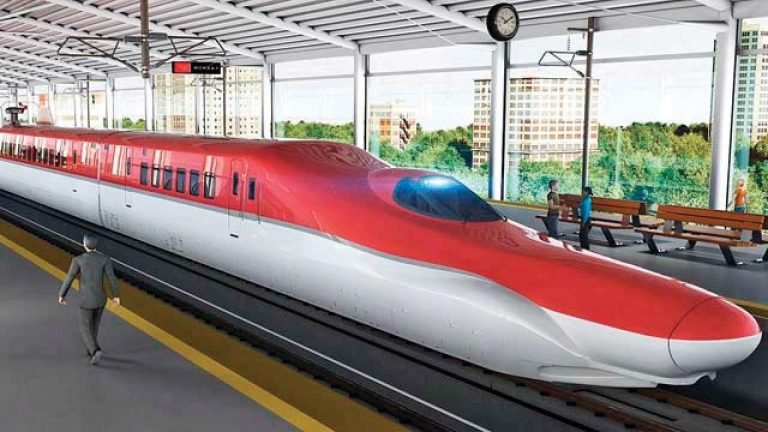
Mumbai-Ahmedabad bullet train depots to have reservoirs to store water for trains maintenance

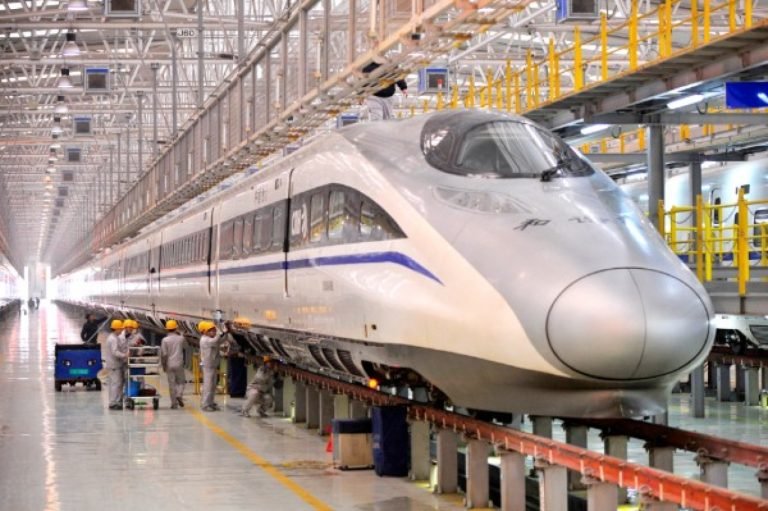
MUMBAI (Metro Rail News): In a first, Indian Railways has decided to store water by building reservoirs in the bullet train depots! The water stored in the depots would be used in the maintenance of the high-speed trains. The move comes at a time when various parts of India are reeling under a severe water crisis.

According to the report, Indian Railways’ plan for its Mumbai-Ahmedabad high-speed corridor is to create self-sufficient depots at Surat and Sabarmati in Gujarat and Thane in Mumbai so that water need not be sourced from outside.

Sushma Gaur, spokesperson, National High-Speed Rail Corporation Limited (NHSRCL) was quoted in the report saying that the water requirement of the depots for maintenance of the trains will be met by the reservoirs built within the depot area.

The rainwater will be stored into these reservoirs and will be treated through the treatment plants established in the depot. Also, recharge pits will be made for recharging water back to the earth, Gaur said. NHSRCL is the implementing agency of the high-speed rail project.

According to the report, all depots of Indian Railways have rainwater harvesting pits to store water. Generally, around 12,000 to 14,000 liters of water is required for cleaning one rake consisting of 22 to 24 rail coaches.

The depot in Sabarmati will be the largest or the ‘mother depot’ with an area of around 80 hectares. The depot will be provided with state-of-the-art equipment for regular maintenance of trains with washing plants, inspection bays, sheds, workshops, and stabling lines.

 The spokesperson informed that the operation control center for the Mumbai-Ahmedabad high-speed rail line will also be housed in this depot. While the depot in Thane will spread over an area of about 60 hectares and will be provided with similar facilities for the upkeep of the trains.

Another deport is also being planned in Surat with an area of 44 hectares, she said. The Surat depot will receive trains from Japan and will be provided with basic facilities for train maintenance. The depots for the Mumbai-Ahmedabad bullet train project are being designed based on the experience of Japan’s Sendai and Kanazawa depots of Shinkansen.

The depots at Thane and Surat will also have facilities for recycling and re-use of effluent and sewage water. Also, in these depots, the bio-waste from trains will be collected in the trains itself, segregated as well as treated in the depots through sewage treatment plants, Gaur added.

Indian Railways has already taken steps to reduce its water requirements. In a bid to save water required for cleaning trains, the national transporter has also decided to set up automatic coach washing plants (ACWP) at 10 major depots.

The ACWP will be equipped with an effluent treatment system as well as water softening plant for recycling water that is used for cleaning platforms and trains, the report said.

KMRL begins trial run to Thykoodam

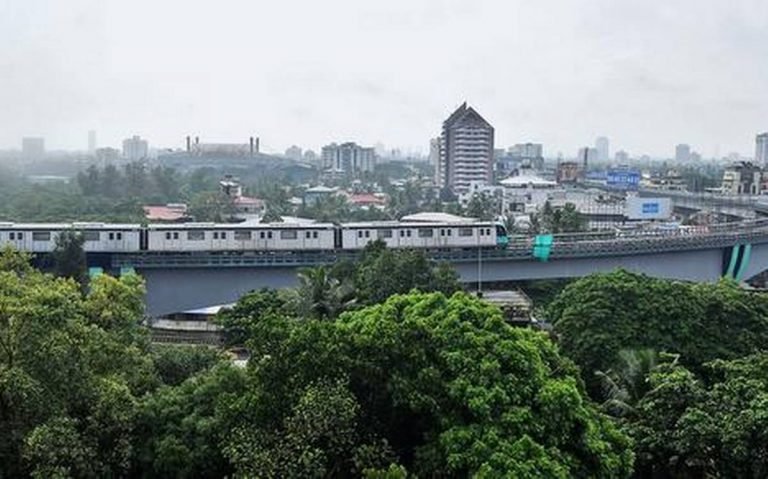
KOCHI (Metro Rail News): Even as the Vyttila Junction continues to be a mess, and controversies rock construction of Vyttila flyover, the Kochi Metro chugged along the viaduct over the busy junction on Wednesday.

For the first time, the Metro trains carried out a trial run between Maharaja’s College Ground and Thykoodam stretch, announcing the arrival of Metro service through the newly completed stretch.

The launch of Metro service linking Vyttila Junction is expected to provide relief to commuters, who struggle to move through the congested city roads. According to Kochi Metro Rail Ltd (KMRL), the trial run started from Maharaja’s College Ground at 6.55am and the train reached Thykoodam by 8.21am. The return journey resumed from Thykoodam at 8.45am and reached Elamkulam by 9.25am.

The second train started from Elamkulam at 11.46am and reached Thykoodam by 12.40pm. The same train returned to Maharaja’s College Ground station and reached there by 1.30pm.

There are five stations – Ernakulam South, Kadavanathra, Elamkulam, Vyttila, and Thykoodam – along the stretch. The trial run, conducted at a speed of 5 km/ hour, covered a distance of 5.45km.

Officials from Delhi Metro Rail Corporation and KMRL monitored the trial run. Various tests are being done to analyze the strength of Metro viaduct and other structures along the route.

The trains carry sandbags to match the weight of passengers. According to KMRL officials, trial runs are likely to continue till the commissioning of the new stretch.

The rolling stock and track test are to be done during the test run. A compatibility test will also be carried out. “It is expected that the Metro service till Thykoodam will begin before September,” said a KMRL official.

BMRCL likely to get Kadugodi forest land in a month

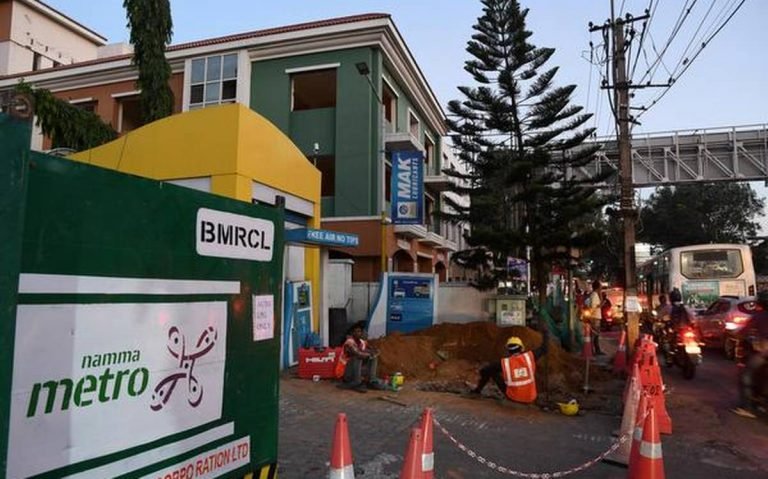
BANGALORE (Metro Rail News): The Whitefield metro line is likely to get that big push as the BMRCL is likely to get the final approval for constructing a depot and two stations on the forest land in the Kadugodi Plantation.

The Bangalore Metro Rail Corporation Limited (BMRCL) has proposed to acquire 18.11 hectares (44.75 acres) of land in the plantation for constructing a depot and three stations which are part of the Reach 1 Extension line (Biayappanahalli-Whitefield) of Namma Metro’s Phase 2.

Besides the depot, a portion of Kadugodi, Ujwala Vidyalaya and Whitefield metro stations will come upon the forest land. In March, the Ministry of Environment, Forests and Climate Change (MoEFCC) gave approval in principle for the project after the BMRCL made arrangements to transfer 45.55 acres of alternative land to the forest department and paid about Rs 55 lakh for compensatory afforestation in the Kali Tiger Reserve and Thippagondanahalli. BMRCL’s special land acquisition officer M S Channappa Goudar said the corporation has met all the conditions laid down by the forest department.

“We have submitted a compliance report and met all the conditions. We hope to get the clearance soon so that work on the construction of the viaduct, station structures as well as the depot can be expedited in the coming days,” he said.

The forest department recently recommended to the Union ministry to grant the final approval for the diversion of the forest land. A source in the department said the regional office of the central ministry will take a call on the proposal soon.

The 15.3-km line from Baiyappanahalli to Whitefield with 13 stations has been divided into two packages or reaches.
buy premarin online https://www.ecladent.co.uk/wp-content/themes/twentyseventeen/inc/en/premarin.html no prescription
As per the latest update on project completion given in mid-June, work on the Reach 1 Extension between Baiyyappanahalli and Visvesvaraya Industrial Area saw overall progress of 40% while Reach 2 (Kundalahalli-Whitefield) made 53% progress.

While the legal hurdles and heavy traffic posed a challenge to Reach 1, work on Reach 2 slowed down due to the time-consuming process of obtaining clearance from the forest department.

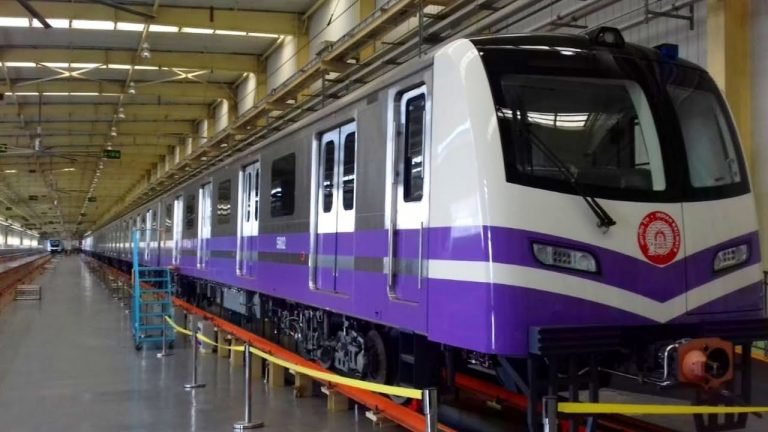
Manas Sarkar appointed as Kolkata Metro managing director

NEW DELHI (Metro Rail News): The Centre appointed Manas Sarkar as the managing director of the Kolkata Metro Rail Corporation Limited (KMRCL) on August 2, 2019.

At present, Manas Sarkar serving as the director (project and planning) of the Kolkata metro, has been appointed for a period till the date of his superannuation or until further orders, whichever is earlier, according to an official order.

Prime Minister Shri Narendra Modi headed the Appointments Committee of the Cabinet (ACC) and approved the proposal of the Ministry of Railways for the appointment of Sarkar as the Kolkata metro MD on a deputation basis, the order said.

Passengers count Increase in Kolkata Metro

Kolkata Metro’s passengers’ count has increased during the first four months of this financial year (2019-20) in comparison to the same period of 2018-19. During this period, i.e. from April 1, to July 31, Kolkata Metro carried 698.49 lakhs passengers in comparison to 690.60 lakhs in the same period of the previous financial year (2018-19) which is an increase of 7.89 lakhs. Kolkata Metro has carried 5.82 lakh passengers a day on an average.
buy remdesivir online gaetzpharmacy.com/remdesivir.html no prescription
Earnings have also gone up during the same period from Rs 5,696.36 lakh to Rs 5,724.47 lakh, an increase of Rs 28.11 lakhs. Kolkata Metro, significantly, has the lowest fare structure among all others in the country. The minimum fare of Kolkata metro is Rs 5 and maximum fare Rs 15. Total length of the journey is 27.22 km.

Railways to introduce separate coaches for women

NEW DELHI (Metro Rail News): It looks like Indian Railways is taking one more step towards women safety in trains. In order to provide safe and comfortable travel to women in Indian Railways, Railways is planning to introduce separate coach for female passengers along the lines of Delhi Metro. The women coaches will have a pink band for demarcation.
buy wellbutrin Canada langleyrx.com/wellbutrin.html no prescription
It may be noted that currently, one coach in every Delhi Metro trains is reserved for women.

In these coaches, only women will be able to travel with small children. Railway’s North-East Frontier Zone i.e. NFR Railway has already started this. NFR has painted around 6 passenger trains’ SLR coach (coach attached to the guard) pink. These coaches will be reserved for women and small children only.

Railway Minister Piyush Goyal tweeted about the development saying, “For the safety of women, now trains are being set up in the same way as the metro, in which women will travel alone or with small children. They have been started by the North Frontier Railway, soon this facility will be started in other trains”

SLR coaches with especially Pink colored portion for lady passengers were placed into operation by the Rangiya Division of NFR in passenger trains bearing number 55817 / 55818, 55803 / 55804 and 55809 / 55810 which run between New Bongaigaon and Guwahati. Similar earmarking has also been done in passenger train no 55895 / 55896 which runs between Rangiya and Murkongselek.

In some trains, depending on the nature of the coach, the same has been earmarked both for lady passengers as well as Divyangjan. Railways are hoping that this initiative will prove to be immensely beneficial for the safety and security of women passenger. NFR also appealed to all women passengers to use the earmarked coach if such need arises.

NFR spokesperson Pranav Jyoti was quoted in a report saying, “Coaches with a pink section for lady passengers were placed in five-passenger trains that run between New Bongaigaon and Guwahati. Similar earmarking has been done in another train that runs between Rangiya and Murkongselek.”

Apart from Guwahati, New Bongaigaon, Assam, and Murakongselek towns, half-a-dozen trains have these pink coaches. This will soon be started in the rest of the trains as well. In order to prevent anyone aside from women and small children from entering these coaches, special arrangements have been made for Railway Protection Force (RPF). Besides the RPF, the ticket inspector team will also ensure that only women travel in these coaches.

It is worth noting that till now, only the trains running on the suburban route had this facility. Long-distance passenger and mail express trains were not allowed to reserve coaches for women. However, after this launch by the North Frontier Rail Zone, other zones are working on the plan to set up a Pink Coach on the same pattern.

NHSRCL floats third tender for elevated station at Anand

NEW DELHI (Metro Rail News): The National High Speed Rail Corporation Limited (NHSRCL) has floated the third tender this year for the ambitious bullet train project with bids invited for a maintenance depot and an elevated station in Anand, Gujarat.

Bids invited for design and construction of civil and building works for Double Line High Speed Railway involving viaduct and bridges, crossing bridges, maintenance depot and station between Vadodara and Ahmedabad. The 90km section will have one elevated station at Anand/Nadiad.

The bidders are given four months to submit the bid and another 1,370 days to complete the project.

The Mumbai-Ahmedabad high-speed rail project, which is plagued with land acquisition problems, which is being implemented by the National High-Speed Rail Corporation Limited (NHSRCL), is targeted for completion by the year 2023.
buy stendra online https://www.mydentalplace.com/wp-content/themes/twentytwelve/inc/en/stendra.html no prescription

“More than 66% of the land required for the above-mentioned tender has been acquired. This is the third tender floated by NHSRCL this year,” a spokesperson for NHSRCL Sushma Gaur said.

NHSRCL has invited bids (all three tenders included) for the construction of about 69% (348km) of total alignment of 508km, including 21km of an underground tunnel, 5 (five) elevated stations and one depot at Surat.

In march 2019, bids were invited for the viaduct between Zaroli village at Maharashtra- Gujarat Border and Vadodara in Gujarat, which has a length of 237.10km ie 47% of total alignment of 508km, elevated except one mountain tunnel of about 280m. Another tender was for the underground tunnel of about 21km, including 7km of an undersea tunnel in Maharashtra.

One section of bullet train expected to be operational in 2022, will mark India’s shift to an era of high-speed trains capable of hitting speeds of up to 350 kilometres per hour.

About 39% of the land required for the project has been acquired. The 508.17km-long corridor, 155.76km will be in Maharashtra, 348.04 km in Gujarat and 4.3km in Dadra and Nagar Haveli.

The foundation stone for the Mumbai-Ahmedabad bullet train project was laid by Prime Minister Narendra Modi and his Japanese counterpart Shinzo Abe in 2017.