Home Blog Page 628

Phase-2 rapid rail corridors to reach till Palwal, Rohtak, Baraut

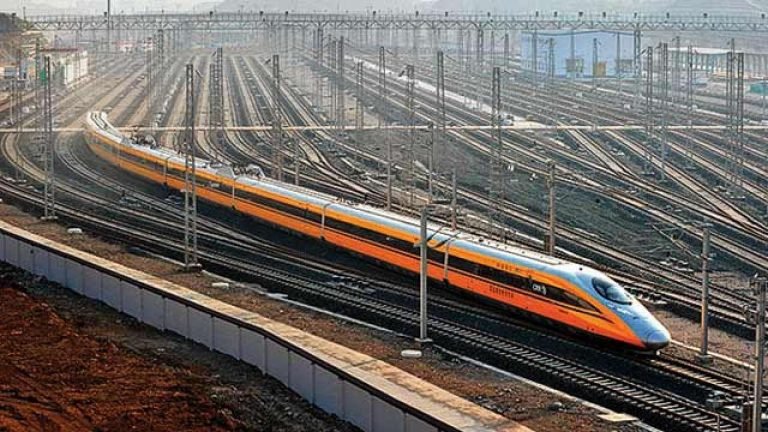
NEW DELHI (Metro Rail News): The much-awaited regional rapid corridors will not just connect Delhi to Meerut, Alwar, and Panipat but also to five other far-flung areas of the national capital region! The regional rapid transit system (RRTS) has identified the corridors of phase-2 which will be planned and implemented across several cities of Haryana and Uttar Pradesh such as Palwal, Rohtak, Baraut. According to information shared by National Capital Region Transport Corporation (NCRTC), the following corridors have been identified under RRTS phase-2:

  • Delhi – Faridabad – Ballabgarh – Palwal
  • Ghaziabad to Khurja
  • Delhi – Bahadurgarh – Rohtak
  • Ghaziabad to Hapur
  • Delhi-Shahadra-Baraut

NCRTC is the official implementing body of the RRTS project and is a special purpose vehicle for the same. NCRTC has planned these routes for the RRTS network in a bid to decongest the existing vehicular load on the roads and to ease these areas with the inclusion of reliable public commuter service.

The RRTS phase-1 corridors have the priority sections of Delhi-Ghaziabad-Meerut, Delhi-Gurugram-Rewari-Alwar, and Delhi-Sonipat-Panipat. The construction work of Delhi-Ghaziabad-Meerut has already begun.
buy vibramycin online https://www.mydentalplace.com/wp-content/themes/twentytwelve/inc/en/vibramycin.html no prescription
It is the very first rapid rail corridor targeted for completion by the year 2025. However, the priority section of the Delhi-Meerut RRTS is Sahibabad to Duhai which has been targeted for operations by the year 2023 by NCRTC. Here are some interesting facts and features of the Delhi-Meerut RRTS:

  • The 82 km long Delhi-Ghaziabad-Meerut RRTS line will bring down the travel time between Delhi and Meerut to just 55 minutes. It will have 16 RRTS stations on the route at both elevated and underground stretches.
  • The country’s first mega transit hub with multi-model integration is going to be developed at the Sarai Kale Khan station where it will have connectivity to other RRTS corridors and also with inter-state bus terminals, Delhi Metro as well as Indian Railways station.
  • The RRTS trains will have a high operational speed of 160 km and a frequency of 5-10 minutes on the network. The trains have specially reserved seats, ladies coach, executive coach, reserved facilities for senior citizens and specially-abled.
  • The Delhi-Meerut RRTS will also be connected with Meerut metro stations on the route. It will have two depots, one near Duhai and the other near Modipuram.
Maha Metro Constructs `Vierendeel Truss’ at Sitabuldi Interchange

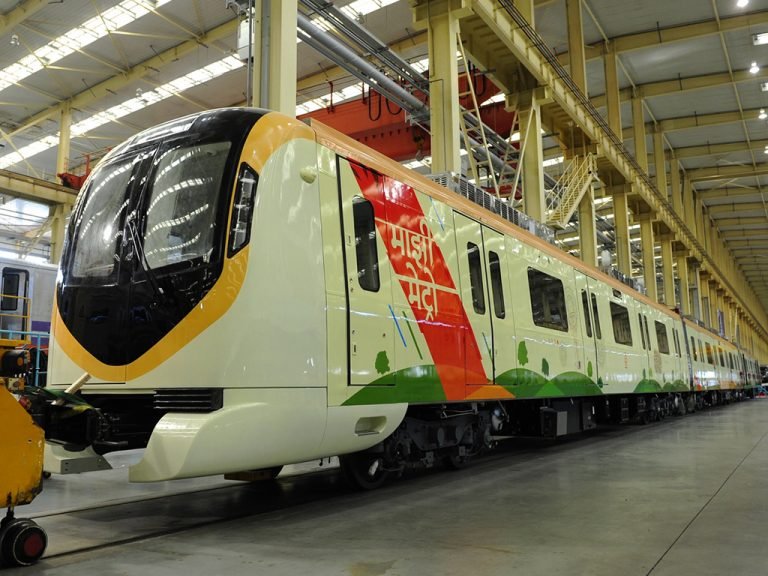
NAGPUR (Metro Rail News): The Maharashtra Metro Rail Corporation Maha Metro had to face a multiple challenges while executing the project, but one of the toughest challenge it had encountered was undertaking construction at Sitabuldi Intersection. Sitabuldi is one of the busiest junctions in the middle of the city and any elevated interchange station between two corridors and construction work above such a congested road junction had to be an engineering challenge.

The challenge lied in designing the structure as much as it lied in managing the crowd. Sitabuldi Interchange is crucial for Nagpur Metro project as the two corridors cross each other there. The construction work above the road surface requires precision in planning and absolute competence in execution since even a minor error or oversight on the part of the designers and engineers may lead to disastrous results.

Thus, the most critical and challenging activity in construction was erecting central portion of station, which had to be constructed on exactly the busiest part of junction. It was a structural challenge also because of large span of 40m which had to take train loads of two lines above. The solution to this technical challenge was found in Vierendeel truss of 40m span.

The Vierendeel frame is a series of rectangular frames which achieves stability by the rigid connection of the vertical web members to the top and bottom chord. It is named after Arthur Vierendeel, a civil engineer, who also held the post of Director for the Ministry of Public Works in Belgium. He had designed the structure for the first time 1895 and was named after him.
buy doxycycline online gaetzpharmacy.com/doxycycline.html no prescription

This concrete truss (A truss is an assembly of beams or other elements that creates a rigid structure) was constructed in one go. Work on these is in the last stage of completion. The challenge was also to execute work without erecting a pillar at the centre in one of the busiest squares of the city. Presence of a pillar is a hindrance in the smooth flow of traffic. Vierendeel Truss was solution to this challenge.

Being one of Nagpur’s arterial roads, hundreds of vehicles pass through it every hour. It is hence next to impossible to stop or divert traffic on such a busy road even for short durations. The platforms of the two corridors are placed one above the other. The location of Interchange Station is important as it is one of the busiest traffic junctions of the city with a cinema hall, food mall and two bank buildings surrounding it.

By incorporating Vierendeel Truss in its project at one of the crucial junction, Maha Metro not just ensured stability but also incorporated a unique structure in its project.

Bombardier signs US$4.5b contract to build Cairo monorail

MONTREAL (Metro Rail News):  Canadian manufacturing group Bombardier announced on Monday it had signed a multi-billion dollar agreement to build two automated monorail lines in Egypt’s notoriously congested capital Cairo.

The US$4.5 billion agreement, which was signed with Egypt’s National Authority for Tunnels, is subject to “final signatures of supplementary documents,” Bombadier and its Egyptian partners Orascom Construction and Arab Contractors said in a joint statement.

The monorails, which will be able to transport 45,000 passengers per-hour in either direction, “will dramatically improve the quality of life for millions of residents by significantly reducing their daily commuting time,” said Danny Di Perna, president of the company’s railway division Bombardier Transportation.

He noted the monorails will also reduce traffic congestion in the city that’s home to more than 20 million people.

The three companies will be responsible for the construction, development, and maintenance of the new monorail lines for 30 years, according to the statement.

The first line will run 54km from east Cairo to the new administrative capital being built in the desert. The second line, which will run for 42km, will connect 6th October City to Giza.

Bombardier Transportation, which will build the system’s 70 four-car Innovia Monorail 300 trains, has a US$2.85 billion share in the project, and Orascom has a US$900 million share, the statement said.

The Innovia Monorail 300 trains are already in use in Sao Paulo, Brazil, and set to be deployed in similar projects in Bangkok, Thailand and Wuhu, China.

Bombardier’s stock plummeted on Thursday after higher-than-expected losses in the second quarter and, for the second time in three months, a downward revision of earnings guidance for 2019.

Chennai metro Rail launches feeder service cab at Rs 10

CHENNAI (Metro Rail News): Aimed at increasing patronage for metro services, the Chennai Metro Rail Limited (CMRL) has launched a feeder service cab at a flat rate of Rs 10 to enable metro users to travel between the stations and their residences.

According to reports, the service was launched on Monday and will help commuters book a seat in the cab and pay using their Metro smart card. The service was launched on Monday by the state Minister for Industries MC Sampath. The feeder service will operate through a mobile app in collaboration with Bengaluru Mega cabs Private Limited. 

Designed to work like Ola and Uber cab aggregator apps, this application will enable users to choose the nearest pickup point following which the app will provide the arrival time of the cab. Every station is provided with at least five pickup points within an area of six to eight kilometers from the station. The users can either pay upfront or finish the trip and pay for the ride. 

The service, which was inaugurated at the Nandanam station on Monday, will soon be made available at all stations in the next three months, CMRL said.

In January this year, the CMRL launched feeder services to the Old Mahabalipuram Road (OMR) in collaboration with Ford’s corporate shuttle feeder services. The service was launched at the Alandur Metro station and was designed to ferry commuters to their offices on the IT corridor.

CMRL started feeder services in August 2018 on a trial basis for six months. The services constituted share autos and cabs from 13 stations up to a 3-km radius from the stations. The services were also made available between 6.30 am and 9.30 pm. MTC had also run mini-bus services to some of the metro stations to ferry users to and from the stations.

India to have the World’s First Hyperloop System

MAHARASHTRA (Metro Rail News): Typically, a journey from Mumbai to Pune could take up to 3.5 hours. But with the Hyperloop project, the first-of-its-kind in the world, this duration could come down to 35 minutes.

The government of Maharashtra has deemed hyperloop a public infrastructure project and given a green signal to Virgin Hyperloop One to develop the world’s first hyperloop train between Mumbai and Pune.

As mentioned on Virgin’s website, “The DP World – Virgin Hyperloop One consortium was also named as the Original Project Proponent for the Mumbai-Pune hyperloop project and preparing to start the public procurement process. This landmark announcement for building the Pune-Mumbai hyperloop transportation system recognizes hyperloop technology alongside other more traditional forms of mass transit.”

DP World, a Dubai-based port operator, and Virgin Hyperloop One’s partner will spend $500 million to complete phase one of the project while the rest of the funds will come from other investors, the Verge notes.

Around 75 million passengers travel between Mumbai and Pune every day and the number is expected to rise to 130 million by 2026. The upcoming project, passing through the Navi Mumbai international transport, will undertake 150 million trips each year.

The hyperloop transport system envisioned and modeled by Tesla founder Elon Muck is a new form of passenger or freight transport that includes pods floating in low-pressure hyperloop tubes. Richard Branson backed Virgin Hyperloop One was the first company to test the technology last year.

“It will generate hundreds of thousands of new high tech jobs, create over $36 billion USD in wider socio-economic benefits, and create new hyperloop component and manufacturing opportunities for Maharashtra to export to India and the rest of the world,” said Virgin.

Myanmar to start Yangon sky train project in 2020

YANGON (Metro Rail News): Aug. 5 (Xinhua) — Myanmar planned to implement a sky train project in the commercial city of Yangon starting 2020, according to the Ministry of Transport and Communications Monday.

The over 1-billion-U.S. dollar project, which includes 13 stations, is expected to be completed by 2027.

The project, which is also called the Yangon Urban Mass Rapid Transit, will connect the eastern and western parts of Yangon.

The 18-km sky train project will start from Hlaingthaya township Station, run along the Yangon-Pathein road, cross over Hlaing River in the south of Bayinnaung Bridge and then run from Okkyin Station along the Parami Road before reaching Tokyaung Kalay Station.

The sky train is claimed to be based on standard models of Thailand and Indonesia.

Indian Railways offers aircraft-like services in Vande Bharat Express

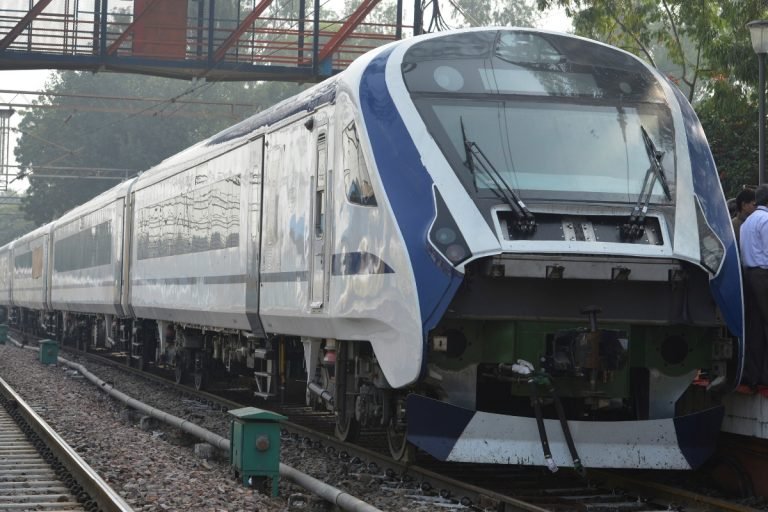
NEW DELHI (Metro Rail News): Indian Railways passengers are getting flight-like hospitality in Vande Bharat Express! Indian Railways has started a pilot project whereby the Indian Railway Catering and Tourism Corporation (IRCTC) has been entrusted with the responsibility to supervise the pilot project which has been implemented in Vande Bharat Express.

Flight like air hostesses, flight steward: The IRCTC has already deployed stewards and train hostesses to look after Indian Railways passengers’ convenience in the Delhi-Varanasi Vande Bharat Express train. Thirty-four trained train hostesses and flight steward have been hired for the Vande Bharat Express train, according to the sources.

The IRCTC has been working on to provide premium services to Indian Railways train passengers, according to the IRCTC spokesperson.
buy vibramycin online https://nouvita.co.uk/wp-content/themes/twentynineteen/fonts/en/vibramycin.html no prescription
Usually, a person, who serves food to passengers, earns Rs 8,000- Rs 10,000 from a licensed caterer. However, train hostesses and stewards in Vande Bharat Express will be paid Rs 25,000 per month for providing better services, the IRCTC spokesperson was quoted as saying in the report.

The trial service has been launched for six months. If this turns out to be successful, then the service will be extended to other Indian Railways trains, the report says.

Prime Minister Narendra Modi flagged off Vande Bharat Express’ first journey from Delhi to Varanasi. The Vande Bharat Express was earlier known as Train 18. Vande Bharat Express was designed and developed by the Integral Coach Factory, Chennai in 18 months.

This train is a product of ‘Make in India’ project. The train has a regenerative braking system in coaches which helps save 30 percent of electrical energy. In April, Vande Bharat Express, which is the first Indian Railways engine-less semi-high speed train, created a record for being on-time on the most days.

Indian Railways has also conducted the trial of the second Vande Bharat Express on the Delhi-Katra route. It has been learned that soon the commercial operations will begin on this route. Vande Bharat Express on the Delhi-Katra route will reduce travel time to only eight hours from the existing 12 hours to 8 hours.

More than 3,000 Bangalore Metro smart cards affected by the glitch

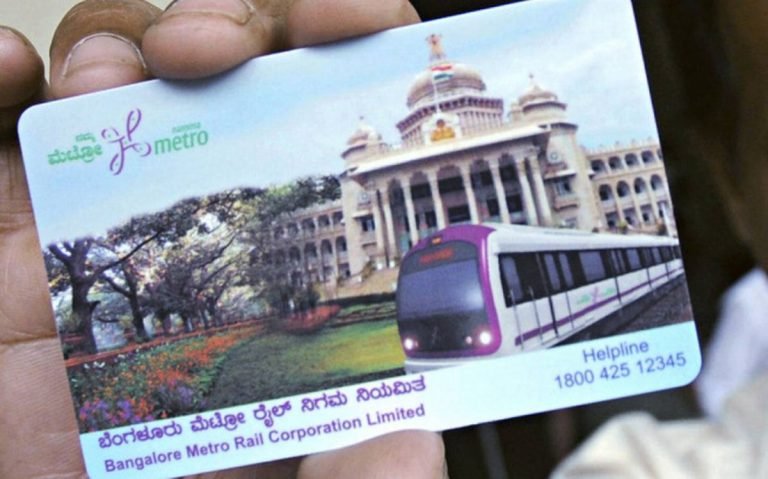
BANGALORE (Metro Rail News): More than 3,000 metro passengers are still waiting for the Bangalore Metro Rail Corporation Limited (BMRCL) to credit their money into their smart cards. Metro officials attributed the delay to a ‘technical snag’ and issues with the server.

Regular passengers, who depend on the smart card for their daily commute, are frustrated by the BMRCL’s failure to fix the problem, which began a few days ago. While some recharged their cards for ₹50, others have paid as much as ₹2,750.

Of the 3,000 passengers affected, the majority 2,874 recharged their accounts through the website. BMRCL has put a list of affected cards on its website.

Many commuters expressed frustration by the lack of support from the ground staff. Keerthana, a metro passenger, said she has been waiting for four days for the ₹200 she paid to be reflected. “The amount is yet to be credited to my card. When I checked at the ticketing counter, the staff were unable to give me a clear answer,” she said.

Niranjan R., another passenger, said, “I contacted the BMRCL call center but received no response. I then dialed another landline number that was available on the website for travel-related inquiries. An employee who received the call told me that they have been informed that the matter would be resolved in two days. That was two days ago, and nothing has happened.”

A majority of passengers had topped up their smart cards in the last week of July. The smart card is popular as it provides a 15% discount over the token. In June, 61.3% of Namma Metro commuters on the Purple Line used smart cards. More than half (54.62%) the commuters on the Green Line use the card.

“We are working on the problem. We will fix the problem in a day or two,” said B.L. Yashwanth Chavan, Chief PRO of BMRCL.

The BMRCL resumed normal train services from 11.25 a.m. on Sunday after it had suspended operations temporarily between Baiyappanahalli and M.G. Road stations to carry out maintenance work at Indiranagar.

Mr. Chavan said, “On Sunday morning, the train services were normal between Mysuru Road station and M.G. Road station. After 11.25 a.m., trains were operated on the entire Purple Line.”

During the suspension of services, the Bangalore Metropolitan Transport Corporation (BMTC) operated additional buses from various metro stations on the reach. Some passengers expressed unhappiness over BMRCL failing to offer bus services for free as it had done the last time it carried out repair work at Trinity station.

Only 2% of city commuters take Metro Rail

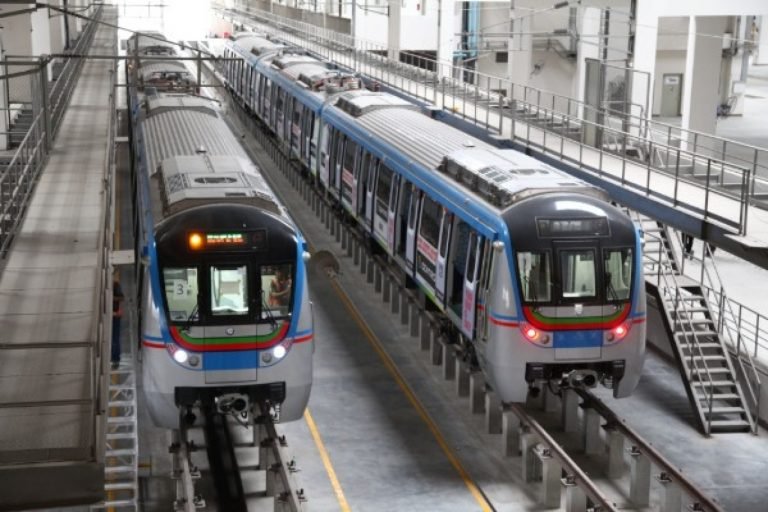
HYDERABAD (Metro Rail News): Commuters in the city depend heavily on personal vehicles to travel, with 47.8% using them and only a meager 2% taking the Metro Rail.

Analyzing the latest government report on road transport in Hyderabad, experts said it was alarming to note that 1,200 new vehicles are added to the roads every day, and shared autorickshaw’s share is about 64%, while the model share of bus transport has declined over the years.

The city’s daily bus ridership is about 3,300,000, reveals an analysis of Administrative Staff College of India (ASCI).

“Forty electric buses were introduced into the TRSRC fleet, but we need to encourage E-vehicles, especially in the public transport system,” said professor Srinivas Chary, center head for Centre for Energy, Environment, Urban Governance & Infrastructure Development.

While Metro Rail caters to the commuting needs of about 2 lakh passengers every day, being a major public transport, the share of Metro is just 2%. However, Metro has the potential to make it big, as more lines get added in the future.

The total share of the private mode of transport, including intermediate public transport like share autos, stands at 64%, which underscores the need for encouraging more public transport.

The transport supply and demand pattern in the city shows that the share of buses has dropped from 64.3% in 1988 to 34.5% in 2018. In the same period, the model share of personal vehicles has increased from 28.8% to 47.8%. “I own a car, but I have reduced its usage.

Instead, I take Metro Rail or buses for longer distances,” said SK Rao, a retired private employee from Himayatnagar. Non-motorised cycles account for 22% of all travelers and 40% of trips within the city.

Commuters clueless on the scope of Kochi1 Card

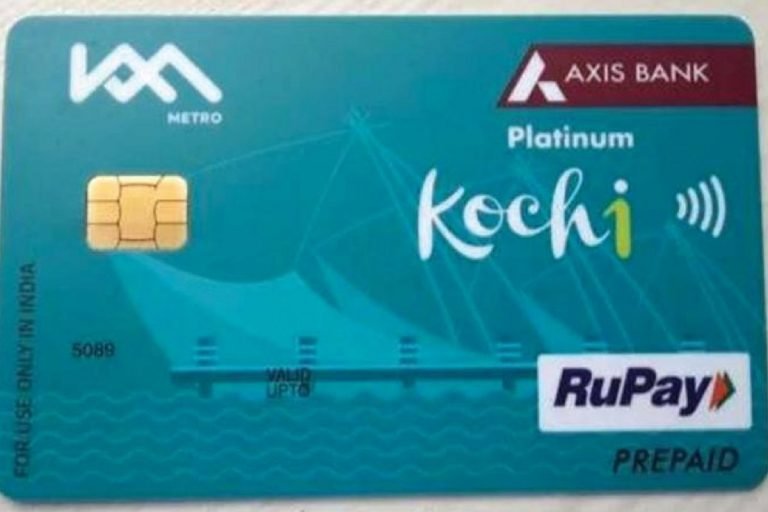
KOCHI (Metro Rail News): With the Centre launching the common mobility card ‘One Nation One Card’, those who are holding a Kochi1 Card, which is currently in use in Kochi Metro and a few private buses, are wondering whether they could use it in other public transport systems across the country.

“I have a Kochi1 Card, but I do not know whether I can use this card for traveling in Delhi Metro, Bengaluru Metro or any other metro system or public transport system in the country,” said V M Suhaib (name changed), who holds a Kochi1 Card. Commuters like Suhaib are confused whether they should buy another smart card to enjoy the benefits of making payments for public transport across the country, including bus, metro and rail services, and toll booths.

The Kochi1 Card has been introduced with the aim of providing seamless transport systems and also facilitates payments after shopping. It is a prepaid Rupay payment card, issued by Axis Bank and Kochi Metro Rail Ltd (KMRL).

D Dhanuraj, chairperson, Centre for Public Policy Research (CPPR) said that there needs to be clarity on how commuters using the Kochi1 Card could get the benefits of One Nation One Card system.

“It remains unclear how commuters will get the benefit of traveling on various modes of transport across the country using the Kochi1 Card.
buy aciphex online https://sextherapyhawaii.com/wp-content/themes/twentytwentyone/inc/en/aciphex.html no prescription
Though there is the possibility to integrate these smart cards on a common platform, it is still not known how and when the process will be executed,” he said.

Meanwhile, officials with Kochi Metro said the Kochi1 Card meets the specifications of national common mobility card (NCMC). Though currently, it is not possible to use the Kochi1 Card at other metros and public transport systems in the country, “it would be made possible in course of time”.

However, he said there would be considerable delay in ensuring the benefits of One Nation One Card to Kochi1 Card holders. “This is due to technical aspects,” he said. Issues related to bank specifications, security concerns and related matters need to be sorted out. “We cannot say how long it will take to complete the process,” added the official.

The One Nation One Card launched by Prime Minister Narendra Modi In March 2019 is essentially an amalgamation of all the smart cards used for different public transport services and can be used for paying for any mode of travel across the country.