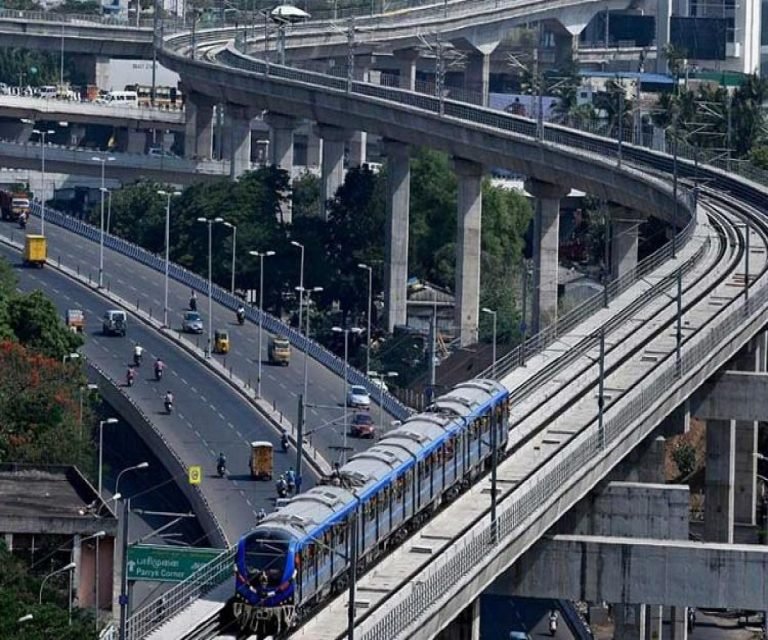
New Delhi: Prime Minister Narendra Modi has flagged-off the Delhi-Faridabad Metro Line that would allow hassle free travel for around two lakh daily commuters between the national capital and the industrial hub in Haryana.
The extension of the Delhi Metro connects Badarpur to Escorts Mujesar in Faridabad.
The total cost of the project from Badarpur to Escorts Mujesar is nearly Rs. 2,500 crore. Out of this, Rs. 1,557 crore was borne by the Haryana Government, the Centre contributed Rs. 537 crore, while the Delhi Metro provided Rs. 400 crore.
All these are elevated and located on either side of the Delhi-Mathura Road (NH-2).
“The nine-station metro corridor which was 95 per cent indigenously built will provide people a safe, affordable, quick, comfortable, reliable, environment-friendly and sustainable transport facility,” a Haryana government spokesperson said.
Haryana Chief Minister ML Khattar, addressing a press conference on Saturday, had thanked the Prime Minister for “gifting” the Metro service which would take the city to “another level of progress” with better connectivity with other NCR towns.
He had also said that the Prime Minister would be announcing the go-ahead for connecting Gurgaon with Faridabad by Metro.
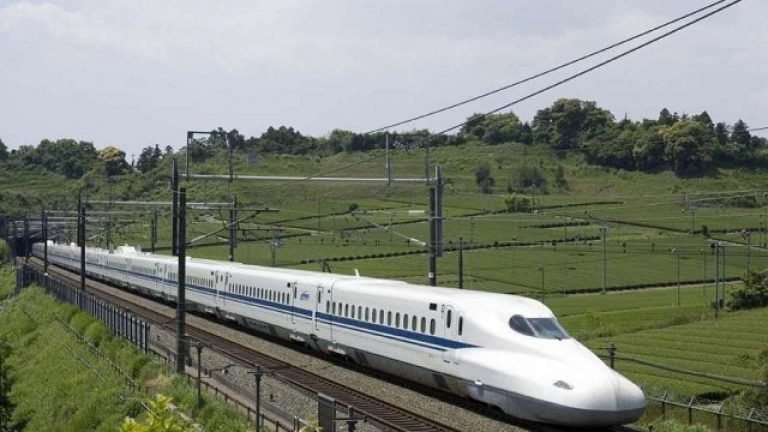
GUJARAT (Metro Rail News): On Tuesday, the High-Speed Rail Innovation Centre formed by National High-Speed Rail Corporation organized a seminar at IIT, Gandhi Nagar in Gujarat.
Achal Khare, Managing Director, NHSRCL and Dr. buy orlistat online https://gilbertroaddental.com/wp-content/themes/twentyseventeen/inc/en/orlistat.html no prescription
Norimachi Kumagai, President, Railway Technical Research Institute (RTRI) Japan addressed researchers, students, and faculty of the Institute and discussed the maiden HSR project in India and technological aspects associated with it.
This was followed by
a panel discussion where the advisory council members interacted with the young
minds and also responded to the questions of students and faculty of IIT,
Gandhi Nagar.
During his address, MD/NHSRCL Shri Achal Khare said, “India
has long been a technological powerhouse and young Indian minds are bubbling
with innovative technological ideas. NHSRCL would like to collaborate with them
and provide them a platform to develop sustainable and indigenous technological
solutions for High-speed railways in India.”
The High-Speed Rail Innovation Centre
Trust has a mandate to undertake targeted, applied collaborative research to
solve issues raised by the railway industry to enhance railway safety,
reliability, productivity, efficiency, and sustainability in order to ensure
customer satisfaction.
The trust will also leverage Indian
technical capabilities and develop indigenous capabilities in relevant fields
of High-Speed Railways to develop professional expertise in all aspects of
High-Speed Railways so as to provide innovative, indigenous, cost-effective
solutions, technological guidance, strategic analysis, and advice to the Indian
Rail Transportation Industry on significant challenges and opportunities.
The trust will also provide
eco-friendly and environmentally sustainable solutions. It will also contribute
to the development of HSR specific standards in India.
HSR Innovation Centre which was
registered on January 22, 2019, is managed by a Board of Trustees Chaired by
Managing Director, NHSRCL and supported by Executive Council, which is assisted
by the Advisory Council to review nature of the projects to be undertaken by
the Innovation Centre.
WEST BENGAL (Metro Rail News): India-based railway wagon builder Titagarh Wagons has decided to exit its French rolling stock manufacturing subsidiary Arbel Fauvet Rail (AFR).
The Indian
firm decided to leave AFR just weeks after a commercial court in Paris ordered
the liquidation of the French subsidiary.
Titagarh
Wagons vice-chairman and MD Umesh Chowdhary said: “We have resolved to move out
from AFR, as it was making losses of 4-5 million Euros annually for the last
three years, due to a general slowdown, and it required more capital. Also, we
decided to pump in funds where growth lies.”
Titagarh
Wagons acquired AFR in 2010, following which it was renamed AFR Titagarh. Since
its acquisition, Titagarh Wagons has invested more than Rs1bn ($13.93m) in the
company.
Chowdhary
told PTI that the Indian rail wagon builder will now put more focus on
manufacturing metro coaches.
Titagarh Firema recently emerged as the lowest bidder to supply 102 metro coaches for Pune Metro Rail in India. The tender was issued by Maharashtra Metro Rail.
The scope of
works under the contract includes design, manufacturing, supplying, testing and
commissioning of the metro rail units. Titagarh will also provide necessary
training to Pune Metro personnel.
Overall, the
value of the contract is approximately Rs11.25bn ($156.73m).
The majority
of the metro coaches will be built in its Indian manufacturing plant in Nagpur
while some of the units will be delivered by the Italian facility.
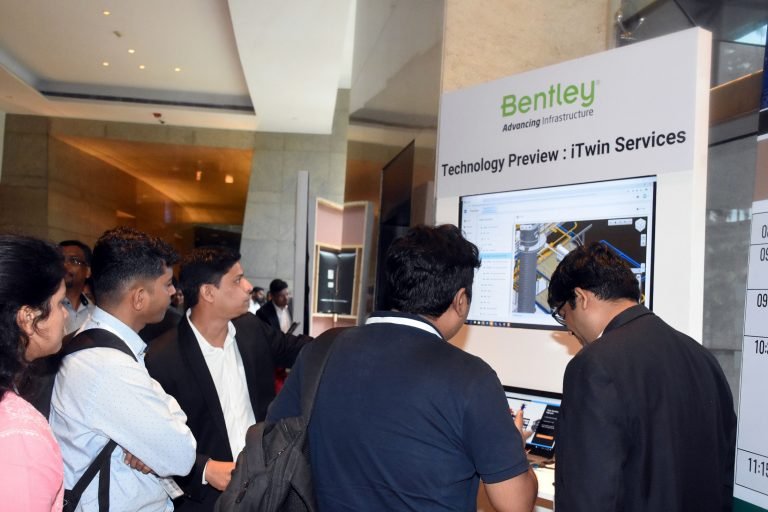
MUMBAI (Metro Rail News): Bentley Systems, Incorporated, the leading global provider of comprehensive software and digital twins services for advancing the design, construction, and operations of infrastructure, recently held its Going Digital 2019 event in Mumbai. More than 330 infrastructure professionals attended the event, which featured live demonstrations of Bentley Systems’ solutions and services that help professionals learn how to integrate digital context, digital workflows, and digital components into their infrastructure projects, enabling better decision making for improved project outcomes and better performing infrastructure assets.
Phil Christensen at the keynote address of Going Digital 2019
In his keynote presentation, Phil Christensen, senior vice president, Reality Modeling, iTwin Services, Bentley Systems, discussed how infrastructure digital twins empower users with continuous and comprehensive design review, immersive visualization, and analytics visibility to understand the impact of change and predictively model the performance of a project or infrastructure asset in the real world. He highlighted the benefits of digital workflows and how organizations can use technologies such as 3D/4D visualization, reality modeling, mixed reality, and geotechnical engineering for immersive visualization and analytics visibility.
Phil Christensen said, “It was great to see such an enthusiastic turnout for our event in Mumbai. Digital workflows are becoming integral to every infrastructure project—from design through to operations. And what we’re demonstrating here is that going digital is not merely a convenience or a useful tool, it is a necessity for designers, engineers, constructors, and owner operators to make informed decisions, optimize asset performance, and ensure the resilience of cities, sites, and buildings. Leveraging digital twins for analytics and immersive visualization of real-time project and performance conditions is a vital piece of the going digital journey.”
Participants attended insightful sessions with industry leaders from Siemens and Microsoft discussing digital twin technology and cloud solutions for industry to accelerate the digitalization of plants and smart infrastructure around the world. Paul King, industry sector director, construction, Bentley Systems gave a technology update on digital solutions and processes that can help initiate improvements in project performance and how companies that embrace emerging technologies can gain a strong competitive advantage. He also showcased Bentley’s project delivery solutions that are enabling better project team collaboration and safer, more efficient construction in the field.
The Going Digital 2019 event also included industry forums for attendees to learn about technology and solutions for their specific interests including Digital Cities; Geostructural; Rail, Road and Airport; and Process Plant.
Bentley’s next Going Digital 2019 event will be held on 19 September in Moscow.
About Bentley Systems
Bentley Systems is the leading global provider of software solutions to engineers, architects, geospatial professionals, constructors, and owner-operators for the design, construction, and operations of infrastructure. Bentley’s MicroStation-based engineering and BIM applications, and its digital twin cloud services, advance the project delivery (ProjectWise) and the asset performance (AssetWise) of transportation and other public works, utilities, industrial and resources plants, and commercial and institutional facilities.
Bentley Systems employs more than 3,600 colleagues, generates annual revenues of $700 million in 170 countries, and has invested more than $1 billion in research, development, and acquisitions since 2014. From inception in 1984, the company has remained majority-owned by its five founding Bentley brothers. Bentley shares transact by invitation on the NASDAQ Private Market. www.bentley.com
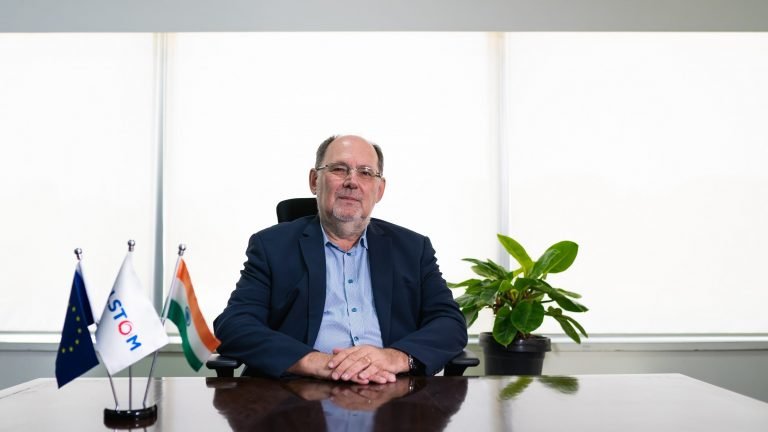
Mr. Alain Spohr, Managing Director, India & South Asia, Alstom has a keen understanding of the country’s business environment and also its culture and growth trajectory. Mr. Spohr has over four decades of experience in leadership and managerial roles. Mr Spohr’s strong exposure in industrial and factory operations have helped steer companies through rapid localization and cost reductions, helping business verticals secure significant market share and overall development. In this current role, his key focus is to expand Alstom’s business across all locations for optimized delivery of on-going projects within India and South Asia.
With several large projects underway in the mainline and urban networks, Alstom is uniquely positioned to meet India and Asia Pacific’s changing and growing mobility needs, believes Alain Spohr, Managing Director for India and South Asia. In an exclusive interview with Metro Rail News, Spohr talks about the recent 100th Made in India Trainset, manufacturing facility at Sricity, CBTC technology, Future expansion plan, company’s projects and strategies.
Metro Rail News:Firstly, Congratulations for rolling out 100th Made-in-India metro trainset. What is your current market share in India?
Mr. Alain Spohr: Thank you. The milestone of rolling out 100th ‘Made-in-India’ trainset is indeed a matter of pride for us. The global vision of Alstom is to become the preferred partner of our customers for transport solutions, and delivery of the centurion set to Kochi Metro reinforces this vision.
Urban transport sector in India is evolving and we are contributing to this phenomenon significantly. Currently, Alstom is part of a large number of important mobility projects in the country. Our flagship rolling stock manufacturing facility at Sricity has delivered rolling stocks for both international and domestic projects. Rolling stocks for Chennai, Lucknow, Kochi and Sydney metro projects were manufactured and supplied from Sricity. Our order book for rolling stock is healthy. We are currently gearing up to deliver Mumbai Line 3 and Montreal Metro.
Apart from rolling stock, we also provide the latest and advanced Urbalis 400 communications-based train control (CBTC) solution and other heavy engineering solutions. Our first CBTC solution was deployed at Kochi Metro. Alstom India won all the new CBTC projects awarded in FY18. Presently, India has 473 km of CBTC under execution, of which Alstom is executing close to 40%. We also won the signalling contracts to equip Mumbai Metro Line 3 as well as Mumbai Line 2A, 2B and 7, and are equipping Pune Metro lines 1 and 2 with Urbalis 400.
Metro Rail News:How “Make in India” initiative help you to set up a global manufacturing centre at Sri City, Andhra Pradesh, India
Alstom_100 TS from Sricity_Infographic
Mr. Alain Spohr: Make-In-India has encouraged companies to manufacture and invest in India. Alstom has been a strong supporter of the initiative and promotes manufacturing and job creation at the local level. We have synchronised our business goals with the government’s outcome-focused initiatives. As a result—from manufacturing to localisation to employment—we have been able to contribute significantly to ‘Make in India’.
Sricity plant is Alstom’s first global manufacturing centre for
rolling stock in the Asia-Pacific region. Established in 2012, the facility
currently employs 600+ workforce and has a production capacity of 240 cars per
year. In the last six years, Sricity facility has established itself as the
manufacturing hub for both domestic and international clients.
As far as international orders are concerned, we completed the order of delivering 22 Metropolis trains for Sydney Metro in December last year. After the timely and successful delivery for the Sydney project, we are gearing up to commence production for Mumbai Metro Line 3, which is Alstom’s biggest urban rolling stock contract in the country. Mumbai Metro Line 3 will be 33.5-km long and will be the first and longest underground metro line in Mumbai. In addition to this, the facility is also gearing up to commence production of its second international order – Montreal metro—for which we will supply 106 trains comprising 212 coaches.
Metro Rail News:What are the features of new metro coaches and where It will be delivered?
Mr. Alain Spohr: The new Metropolis metro coaches will be delivered for Mumbai Metro Line 3. Being the business capital of the country, Mumbai requires a sustainable transport system which can match the international standards. Mumbai Metro Line 3 is Alstom’s biggest urban rolling stock order in India.
Alstom Metropolis has high
benchmarks in terms of reliable and attractive metro trains. It has an extensive
track record, comes with a wide range of configurations, has low lifecycle
costs and a keen focus on the passenger experience. The Metropolis trainsets
are configured to suit customer’s requirements, be it design, length, width or
seating arrangements. The solution is fully scalable, capable of working in
multiple units or being lengthened by adding additional cars. Metropolis not
only operates in driver mode but also driverless, leading a growing trend for
automatic train operation (ATO).
Alstom is also leading in innovation
with designing energy-efficient products. Metropolis is a great example of
that. Our initiatives and solutions include full electrical braking, light
weight design, highly efficient power converters, regulation of climate control
according to passenger load, and LED lighting. Metropolis displays low
lifecycle costs due to extended maintenance intervals and easier maintenance.
The Mumbai metro cars will also
have 75% motorisation, as stipulated by the Ministry of Urban Development
guidelines. This will enable quick acceleration and deceleration, thereby
bringing about greater efficiency in operations. It will be Mumbai’s first and
India’s second UTO (Unattended Train Operation) project.
Metro Rail News:What is the current capacity and expansion plan for Sricity facility?
Mr. Alain Spohr: Sricity has a production capacity of 240 cars per year. The factory is currently scaling up to double production capacity and also introducing the latest industrial technologies.
Metro Rail News:What is new in CBTC technology?
Mr. Alain Spohr: The communications-based train control (CBTC) system is a continuous, automatic train control system, which offers improvement in essential headway and average speed performance. Alstom’s state of the art CBTC solution is Urbalis400, which uses moving block automatic train protection to shorten headways between trains. This means that more trains can be deployed, resulting in 30% higher capacity on an average. The technology is designed for metros with heavy ridership. Alstom is the first company to introduce CBTC in India with Kochi and Lucknow metro. We would also be deploying our latest generation of CBTC solution – Urbalis 400 at Mumbai Metro lines 3, 2A, 2B and 7, along with Pune Metro lines 1 and 2.
Globally, from Mexico to Italy and Singapore to Canada, clients all over the world testify to Alstom’s project management capabilities in conducting the installation and migration process. We are today a preferred partner to many transport authorities wishing to revamp and increase the capacities of their urban rail networks with Urbalis 400.
Metro Rail News:What are the next big orders expecting you for Rolling Stock?
Mr. Alain Spohr: India is a fast-emerging market in terms of sustainable mobility, and we have been a key contributor to a host of metro projects being implemented currently in the country. Several metro projects are coming up, and as a key transport player with strong project references in the country, we would be actively participating in the upcoming opportunities in the market. As the Government is pushing for smarter cities with better mobility solutions, we hope that a lot of new opportunities will be coming our way in the near future.
CHENNAI (Metro Rail News): The Chennai Metro Rail Limited (CMRL) recently released the phase two map featuring localities in the neighbourhood, that will be connected to other parts of the city.
The map
shows, the train service starts from Madhavaram Milk depot, connecting
Sholinganallur via MMBT, Anna Nagar, CMBT, Alwar Thirunagar, Mugalivakkam,
Alandur, St Thomas Mount, Adambakkam, Vanuvampet, Puzhuthivakkam, Madipakkam,
Keelkattalai, Echangadu, Kovilambakkam, Vellakal, Medavakkam Koot Road.
As soon as the phase 1 was completed, residents of Alalndur, Meenambakkam and Nanganallur were benefited. Now, the residents of Madipakkam, Keelkattalai and Kovilambakkam are looking forward to the completion phase 2 corridor 5 of CMRL.
Bhargav Sai,
a resident of Keelkattalai, said, “We are happy that Madipakkam, Keelkattalai
and Kovilambakkam will be connected to other parts of the city sooner. Unlike
many other parts of the city, we don’t have local EMU trains. The nearest
railway station is St Thomas Mount and it is more than eight kilometers from
here. MTC buses are the only mode of public transport we have here, as of now.
Once the metro train service begins, it will be a great relief for us. buy stromectol online https://www.adentalcare.com/wp-content/themes/medicare/editor-buttons/images/en/stromectol.html no prescription
”
Mythreyi
Sharma, a resident of Kovilambakkam, said, “For the past few months, traffic is
the huge problem, that we have in Kovilambakkam. Now that the flyover in
Echangadu junction is nearing its completion, the traffic will be reduced to a
larger extent. Once the construction for metro train starts, again, the traffic
will increase. But after the completion of the same, it will be very easy for
us to travel to all parts of the city, unlike now.”
G Mathangi,
a resident of Puzhuthivakkam, said, “This road was relaid recently and now the
CMRL has dug up the road for construction work. It is a good news for us, but
the traffic in this stretch has doubled, and it feels like a nightmare to drive
on this road during the peak hours.”
An official
from CMRL said that only the soil testing has been started and there is a long
process that needs to be carried out before starting the construction.
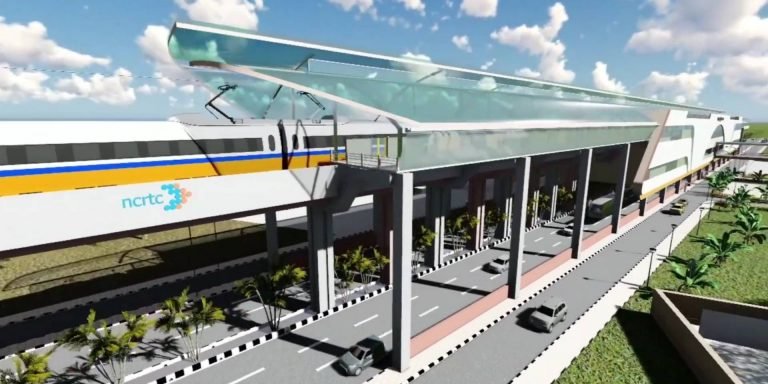
NEW DELHI (Metro Rail News): To ensure hassle-free commuting, the National Capital Region Transport Corporation said all three Rapid Rail Transit System (RRTS) corridors will be interoperable.
An official of the NCRTC said commuters will be able to travel from one corridor to another without changing the train.
According to the NCRTC, which is the implementing agency for the RRTS project in Delhi-NCR, three corridors of phase-1 such as Delhi-Ghaziabad-Meerut, Delhi-Panipat, and Delhi-Gurugram-SNB (Shahjahanpur-Neemrana-Behror Urban Complex) will be converging at Sarai Kale Khan RRTS station in Delhi.
For instance, if a commuter boards an RRTS train from Rajiv Chowk station of Delhi-SNB corridor and wish to travel to Ghaziabad RRTS station of the Delhi-Ghaziabad-Meerut corridor, he or she can directly reach Ghaziabad RRTS station without changing the train. buy viagra black online no prescription
The NCRTC
will adopt European Rail Traffic Management System (ERTMS) Level 2 to implement
interoperability in the RRTS system, the official said.
“This will be the first time in India that ERTMS level 2 signaling system will be used for a commuter train operating at a speed of 160 kmph,” he said.
Interoperability
of the three RRTS corridors will provide a hassle-free, comfortable and
seamless travel experience to the commuters which will motivate them to leave
their private vehicles and switch to RRTS, the official added.
NEW DELHI (Metro Rail News): The Delhi assembly on Monday passed the government’s demands for grants of Rs 290 crore for free travel to women passengers in buses and metro trains.
Supplementary Demand of Rs 142 Cr
Deputy Chief Minister Manish Sisodia also tabled a proposal of supplementary demands for grants of Rs 142 crore to fund deployment of marshals in buses and Rs 47 crore for the regional rapid transit system corridors, which were approved with a voice of votes.
According to the supplementary demands for grants tabled by Sisodia, the government has set aside Rs 140 crore for free travel for women in the Delhi Transport Corporation (DTC) buses and cluster buses, while Rs 150 crore in metro trains. buy fluoxetine online https://pridedentaloffice.com/wp-content/themes/twentytwentyone/inc/en/fluoxetine.html no prescription
Free Rides for women from 29 October 2019
Chief Minister Arvind Kejriwal had, in his Independence Day address, announced that rides on DTC and cluster buses would be free for women from October 29.
Sisodia said the free-ride scheme would be implemented soon in the public transport buses, but it would take some time in case of metro trains as the Delhi Metro Rail Corporation (DMRC) had to make preparations for it.
PATNA (Metro Rail News): Delhi Metro Rail corporation has started work on CM Shri Nitish Kumar’s dream project Patna Metro Project work start. For the first time, the work of Patna metro project is going to start on ground.
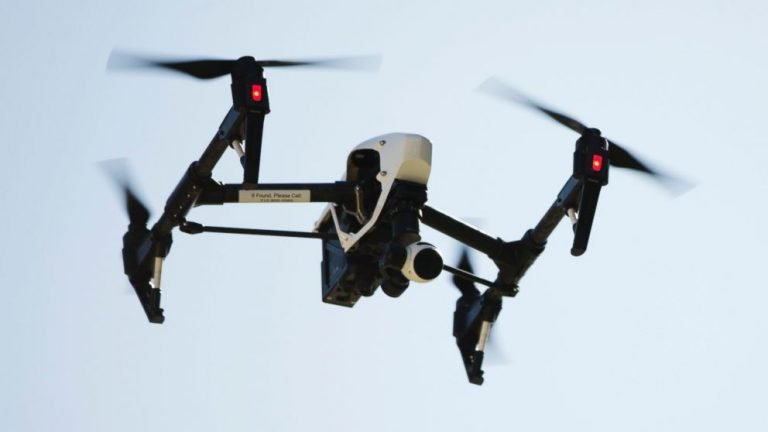
It will start from the drone survey of the alignment of both the corridors of the metro. The Delhi Metro Rail Corporation (DMRC) team is going to start this work. Significantly, the land will be marked for the metro route only on the basis of drone survey.
According to source, the metro will run on two routes in Patna. The first corridor is from Danapur to Bailey Road, Patna Junction, Ithapur via Mithapur. buy levaquin online https://blackmenheal.org/wp-content/themes/twentytwentytwo/inc/patterns/en/levaquin.html no prescription
The second corridor is proposed from Patna Junction to Gandhi Maidan, Science College, Rajendra Nagar to Malahi Caught, Zero Mile to New ISBT.
In the board meeting of Patna Metro Rail Corporation Limited (PMRCL), it has been decided to give the work of construction of both the corridors of the Metro to DMRC. It has been sent to the cabinet for approval. DMRC has to complete the work in five years, so from today it is going to start a drone survey of both corridors. This work is to be completed between 23 August to 15 October.
MAHARASHTRA (Metro Rail News): Developing effective transportation of the future is a key sector witnessing immense attention from several companies in recent times. And while futuristic ideas have always existed since the last century, a major leap forward is the concept of Hyperloop.
Hyperloop, the brainchild of Elon Musk of SpaceX and Tesla, has recently seen the light of the day with one of the first prototypes to be tested in India. This could certainly reduce travel time between cities to just minutes. However, how the project could take off without minimum hassles is something the government, as well as concerned enterprises in this project, should take a serious note of.
India, the land of the tiger and peacock, has been the focus of immense business development from international companies. Even though the region offers a magnanimous scope for ushering a new era of travel through Hyperloop One Pods, one cannot ignore the preexisting issues.
In this
country, while sorting out preexisting problems and developments seems to take
decades, the offer of starting something new is too good to be refused by the
government. Key examples include the existing condition of roads in several
cities, accessibility to rural areas, and most important of all – provision of
healthcare to those who cannot afford it.
Certainly, steps are being taken by the government in this direction, but it is not enough. And more so, when projects like Hyperloop come to town, businesses have no option but to get drawn to it like a moth to a flame. The next decade is sure to unveil what international development has in store for India, be it in a progressive or regressive direction.
NAGPUR (Metro Rail News): The commissioner of Metro Rail Safety (CMRS) and his team will inspect Sitabuldi-Lokmanya Nagar stretch of Nagpur Metro (Reach III) on August 30. MahaMetro will start commercial operations on this section after he issues a certificate. It is trying to invite Prime Minister Narendra Modi for the flagging off ceremony.
MahaMetro managing director Brijesh Dixit said that CMRS Janak Kumar Garg had conducted a preliminary inspection of Reach III on August 20.
“He traveled by trolley and train from Sitabuldi to Lokmanya Nagar. He also walked some distance on the track. He inspected the four stations that will be opened after commercial operations — Sitabuldi, Institution of Engineers, Subhash Nagar and Lokmanya Nagar.
He also checked our signaling system,” said the MD. According to Dixit, Garg told Metro officials about the improvements they needed to make. These should be done by the time he comes for final inspection on August 30,” the MD said.
MahaMetro wants to start commercial operations before the code of conduct for Assembly elections comes into force. The Election Commission is expected to announce state polls in mid-September. In 2014, it had declared polls on September 12. Dixit said that the work of Reach III was 100% complete barring the top level of Sitabuldi station, which was 98% complete.
“It will be completed by the time CMRS comes for the inspection,” he added. Work on Reach III had begun on December 1, 2016. The viaduct was completed on June 13 this year while track laying was finished on July 25. Charging of the power supply cable was done on August 1. Dixit said that unlike Sitabuldi to Khapri stretch (Reach I), both up and down lines will be started simultaneously in the 11-kilometre-long Reach III.
“The track goes 300 meters beyond Sitabuldi station on Reach IV. The train will switch from up line to down line in this portion,” he added.
“A lift, an escalator, and a staircase have been provided on one side from ground level to concourse level, where ticket windows are situated at Lokmanya Nagar, Subhash Nagar, and Institution of Engineers station. On the other side, an escalator and a staircase will be provided. Sitabuldi station will have more lifts and escalators,” Dixit added.